

Author: Stephan Weynicz
How Cities Are Preserving Affordable Housing
The U.S. needs more affordable housing. A lot more. Between 2001 and 2013 the countrylost 2.4 million rental housing units (both market-rate and subsidized) that were affordable to people making less than 50 percent of area median income. Building more units will help, but preserving existing affordable housing is critical too: It’s generally cheaper than new construction, prevents displacement, takes advantage of existing land use patterns and allows people to remain where they already live. But preservation also presents challenges of its own, often necessitating the blending of multiple federal, state and local funding sources and greater collaboration between developers, policymakers and other stakeholders.
In a bid to better understand how affordable housing preservation happens, the Urban Institute has released a new report and a series of six case studies under the title “Anatomy of a Preservation Deal.” While the report emphasizes that every case is different, it identifies five key lessons for other groups seeking to preserve affordable housing.
First, write the authors, federal subsidies may play a crucial role in funding a project, but they’ll likely be insufficient. Federal subsidies have been flat or declining since 2004. According to the report, between 2004 and 2014 the number of housing vouchers increased from 2.1 million to 2.2 million, but 106,000 public housing units and 146,000 project-based rental assistance units were lost. Another 400,000 units are at risk of losing their affordability because of expiring contracts, and 50,000 are at risk because of deteriorating physical conditions.
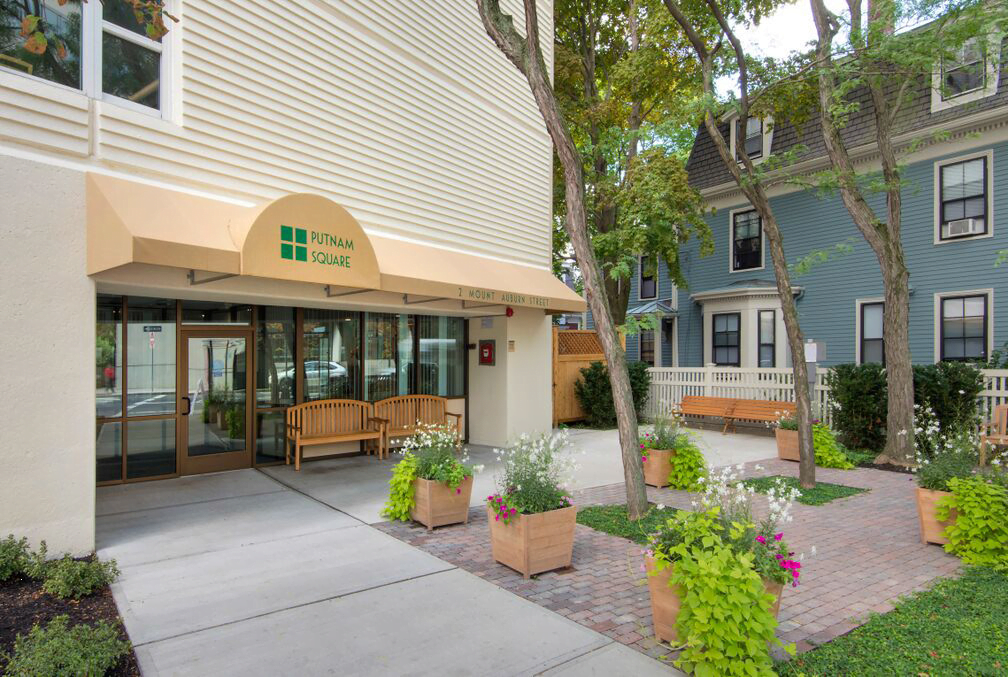
Therefore, state and local resources are critical as well. Putnam Square, for example, an affordable rental property in Cambridge, Massachusetts, with 94 units for senior citizens and residents with disabilities, utilized both Low-Income Housing Tax Credits (LIHTC) and Project-Based Rental Assistance (PRBA) funding from the federal government. But the project also received acquisition and predevelopment funding from the state’s Community Economic Development Assistance Corporation and financing through the city of Cambridge and the Cambridge Affordable Housing Trust.
Funding these sorts of projects is a complex endeavor, often involving a host of stakeholders. Funding Putnam Square alone involved 13 agencies and organizations. Hence the second lesson identified in the Urban Institute report relates to developer capacity: “The bigger a project, the more sophisticated the methods needed — and partners involved — to make it successful.” Projects are further complicated by expensive, competitive markets or by the need to preserve historic structures or serve the needs of special populations, like the elderly.
And sophisticated, mission-driven developers are particularly necessary in areas where private capital can’t be attracted. The report cites as an example 4657 West Madison in Chicago. A private local buyer wanted to purchase and renovate the vacant building, but a bank wouldn’t finance it. Community Investment Corporation, a local CDFI did. Now the building provides 10 units that are naturally affordable because of low market rents in the area.
The report also highlights the need for collaborative relationships, which are often led by mission-driven sellers. Putnam Square, for example, had previously been owned by Harvard University, which sold the property to nonprofit developer Homeowner’s Rehab with the explicit desire to keep the units affordable. Harvard continues to fund a resident services program there. A similar relationship ensures the affordability of Billings Forge, a development in Hartford, Connecticut.
Relationships and social goals were key in the two deals above, but the report notes that policy is also key in supporting preservation efforts. Putnam Square was aided by Massachusetts’s 40T expiring use preservation law, which requires affected parties to be notified when affordability restrictions are going to expire, protects against displacement of current residents, and gives the state an opportunity to make or match purchase offers on subsidized properties up for sale.
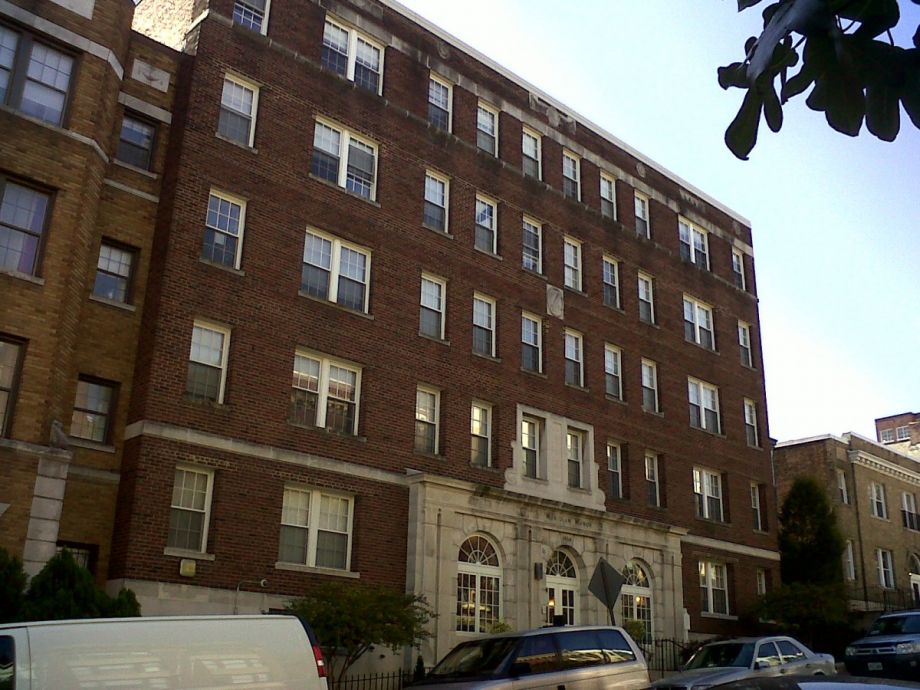
Both Oregon and Washington, D.C., have Opportunity to Purchase Acts, which require landlords planning to sell their properties to give tenants the chance to buy their homes. In D.C., they have a set period of time to secure financing and negotiate a sale, or to assign their rights to a third party to do so. The latter occurred at the Monseñor Romero Apartments in D.C., purchased by a nonprofit organization.
The final lesson included in the report is the importance of communicating these successes and the policies that made them possible to other interested groups around the country. This can include sharing how financing was structured or how policy frameworks were created — any strategies that helped preserve affordable housing. The report cites the example of the National Preservation Working group, a coalition of affordable housing advocates, developers and other stakeholders who are lobbying for more effective preservation policy. Locally, the Preservation Compact does similar work in the Chicago region.
The report concludes with a lesson that should have been learned from the failures of large-scale public housing. “Initial funds for construction were not enough to ensure stable, secure, and solvent developments in the long term,” write the authors. “Buildings get old. Contracts and rent restrictions expire. Residents and community needs change. Funding for renovations and repair, services, and other features need to come from somewhere. Tax credits and the like can help, but the reality is that affordable housing can be lost for a number of reasons. Preservation requires the continuing efforts of those in the affordable housing field to obtain funding and respond to ever-changing local contexts.”
https://nextcity.org/daily/entry/five-lessons-for-preserving-affordable-housing
Two Community Development Nonprofits Receive $1.3M

Two Community Development Nonprofits Receive $1.3M
August 19, 2016 — The Community Economic Development Assistance Corporation, a public-private community development finance institution that provides financial resources and technical expertise to promote community development in Massachusetts, yesterday announced that it is providing $1,323,100 to two Boston-based nonprofits.
The loan financing will support development of affordable housing in the Boston’s Roxbury neighborhood and improvements to a parent support program in the city’s Dorchester neighborhood.
The Community Economic Development Assistance Corporation (CEDAC) provided $1,200,000 in acquisition financing to Urban Edge in Boston, which helps build affordable housing and diverse communities in Boston and surrounding neighborhoods. The funding will support the purchase and development of a new affordable housing project on Columbus Avenue in Roxbury.
Located just south of Jackson Square, Urban Edge’s Columbus Avenue site will include 38 units of multifamily affordable rental housing and 1,000 square feet of commercial space.
CEDAC has been involved in the redevelopment of Jackson Square since 2006 and provided over $1.5 million in early stage financing for the master planning of the neighborhood and other affordable housing development projects. The new affordable housing project will serve low- and extremely low-income families in the community and continue the trend of growth in the area in- and around Jackson Square.
“We have been extremely proud to support the efforts by the Jackson Square Partners to revitalize the neighborhood in a way that helps current residents,” said CEDAC’s Executive Director Roger Herzog. “The current site is blighted and the neighborhood will greatly benefit from quality housing on that site. It is a pleasure to continue our effective relationship with Urban Edge, which goes beyond the Jackson Square redevelopment and into other nearby neighborhoods in Roxbury and Jamaica Plain.”
CEDAC also provided $123,100 to Family Nurturing Center of Massachusetts (FNC) in Dorchester, which provides support services to families promote skill-building and access to educational, social, and health resources. The funding, made through CEDAC’s affiliate Children’s Investment Fund, will support expansion of FNC’s Bowdoin Street site in Dorchester.
The commitment is in addition to $375,000 previously provided to FNC by the fund for this project. To allow for the expansion of programmatic and administrative space, FNC, which has provided comprehensive family support services to low-income families throughout Boston, is renovating and enlarging its existing Bowdoin Street center to include two additional floors.
“The fund is proud to continue to support mission-focused providers like the Family Nurturing Center of Massachusetts,” said Theresa Jordan, director of Children’s Facilities Finance for the fund. “Supporting children and their families builds strong communities and encourages positive environments for children to learn and grow both in the center and in their homes.”
© 2016 www.massnonprofit.org. All rights reserved.
State grant to benefit Boston Street affordable housing 2 rooming houses will become units for formerly homeless

State grant to benefit Boston Street affordable housing
2 rooming houses will become units for formerly homeless
By Dustin Luca Staff Writer
Aug 19, 2016
SALEM — Harborlight Community Partners just landed a valuable chunk of change toward its $6.5 million overhaul of two Boston Street properties.
Gov. Charlie Baker’s administration said this week that Boston Street Crossing is one of 26 projects in the state that will receive state grants aimed at developing and preserving affordable rental housing. Andrew DeFranza, executive director of Harborlight, said he didn’t know yet just how much money the project will receive.
The project grew out of a homelessness task force that has been meeting on the North Shore for about a year and a half.
“This is sort of springing from that soil,” DeFranza said. “It’s going to take two existing rooming houses in Salem — 43 Boston St. and 179 Boston St. — and make dramatic physical improvements to those buildings.”
There are currently 37 rooms in the two buildings. Once the project is finished, the buildings will house 26 studio apartments tailored for formerly homeless individuals. All 26 units will be reserved for people making less than 30 percent of the area’s median income.
Lifebridge, the nonprofit that runs the shelter for the homeless in downtown Salem, is a partner in the project.
“They’re going to provide the case management services,” DeFranza said. “We do the development and run the property, but we bring in partners to provide services.”
The state grant is one of several funding sources for the $6.5 million project.
“The (Community Preservation Act) funded it and the city of Salem funded it,” DeFranza said. “It was funded with North Shore Home Consortium funds. It also has a redevelopment loan from CEDAC (the Community Economic Development Assistance Corp.).”
The City Council voted earlier this year to approve $59,000 in funding from CPA funds. The money comes from a small surcharge on property taxes that is dedicated to historic preservation, open space and affordable housing.
This project represents one of the best ways to fight against homelessness, said DeFranza.
“Creating (good quality) affordable housing is the key method for making it possible for those who are homeless to be housed again,” he said. “You have to create housing they can afford with their income levels and have the services that allow them independence.”
The homelessness task force, meanwhile, “created the space to help allow solutions addressing that problem,” he continued. “This is one of the mechanisms to address the problem in the region.”
The Beverly-Salem Mayors Regional Task Force on Homelessness began meeting in December of 2014, bringing together local officials, law enforcement and social service agencies to come up with solutions to the problems of homelessness.
© Copyright 2016 Salem News
CEDAC Provides $1.3M In Funding To Support Boston Housing And Child Care

CEDAC Provides $1.3M In Funding To Support Boston Housing And Child Care
Aug 19, 2016
The Community Economic Development Assistance Corporation (CEDAC) recently approved acquisition and predevelopment loans totaling over $1.3 million to Urban Edge Housing Corp. and Family Nurturing Center of Massachusetts. CEDAC’s financing will support the development of affordable housing in the Roxbury neighborhood and improvements to a parent support program in the Dorchester neighborhood of Boston.
CEDAC provided $1.2 million in acquisition financing to Urban Edge Housing Development for the purchase and development of a new affordable housing project on Columbus Avenue in Roxbury, which includes 38 units of multifamily affordable rental housing and 1,000 square feet of commercial space. This new affordable housing project, which will be located just blocks from the Jackson Square MBTA station, will serve low- and extremely low-income families in the community and continue the trend of growth in the area in and around Jackson Square.
“We have been extremely proud to support the efforts by the Jackson Square Partners to revitalize the neighborhood in a way that helps current residents,” Roger Herzog, CEDAC’s executive director, said in a statement. “The current site is blighted and the neighborhood will greatly benefit from quality housing on that site. It is a pleasure to continue our effective relationship with Urban Edge, which goes beyond the Jackson Square redevelopment and into other nearby neighborhoods in Roxbury and Jamaica Plain.”
Family Nurturing Center of Massachusetts (FNC) also received $123,100 from CEDAC, through its affiliate Children’s Investment Fund, for the expansion of a Dorchester location. This commitment is in addition to $375,000 previously provided to FNC by the fund for this project. For over two decades, FNC has provided comprehensive family support services to low-income families throughout Boston. To allow for the expansion of programmatic and administrative space, FNC is renovating and enlarging its existing Bowdoin Street center to include two additional floors.
Copyright © 2016 The Warren Group | All Rights Reserved |
Baker Administration Announces Affordable Housing Development Awards

Baker Administration Announces Affordable Housing Development Awards
Aug 16, 2016
The Baker Administration announced awards to fund the development, renovation and preservation of affordable rental housing across the commonwealth on Monday. The money will be used to create or preserve 1,420 housing units.
“These affordable housing awards reflect our administration’s commitment to a stronger, more prosperous and more inclusive commonwealth,” Gov. Charlie Baker said in a statement. “By increasing affordable housing production, and stabilizing working families, low-income senior citizens and homeless families or those at risk, these housing awards will strengthen communities across Massachusetts.”
The announcement was made at48 Boylston St. in Boston, a historic rehabilitation project for formerly homeless residents sponsored by St. Francis House and the Archdiocese of Boston’s Planning Office for Urban Affairs.
The 26 projects awarded will create or preserve 1,420 rental units, including 1,334 affordable units, across 16 Massachusetts communities. The Department of Housing and Community Development is awarding over $31 million in state and federal low-income housing tax credits, which will generate over $218 million in equity for these projects. Additionally, the administration is awarding over $59 million in housing subsidy funds, including federal HOME funds and state capital funds, across the 26 projects.
Projects will serve a wide variety of constituents, including individuals and families transitioning out of homelessness, persons with disabilities and the elderly. Four projects are focused on senior housing, five will provide supportive services to residents and all 26 will include deeply affordable units. The Baker Administration prioritized applications that included a 10 percent allotment for individuals and families who are, or are at risk of becoming, homeless.
In May, the administration unveiled a five-year capital budget plan that includes a $1.1 billion commitment to increasing housing production, an 18 percent funding increase for mixed-income housing production, and affordable housing preservation. In May, the Administration and MassHousing committed $100 million, to support the construction of 1,000 new workforce housing units. Since 2015, the administration has provided funding to create and preserve 2,856 units of affordable housing, including 874 deeply affordable units for at-risk populations.
“St. Francis House is a perfect example of an organization committed to ending homelessness for individuals and families by providing safe and affordable housing and meeting the full needs of their tenants,” Secretary of Health and Human Services Marylou Sudders said in a statement. “These awards will help support vulnerable citizens in the commonwealth.”
The award will include 46 units of affordable housing at the former Boston Young Men’s Christian Union building at 48 Boylston St. The state Department of Housing and Community Development (DHCD) will support the project with federal and state low income housing tax credits that will leverage about $11.8 million in equity and $4 million in subsidies from DHCD.
St. Francis House and the Planning Office for Urban Affairs of the Archdiocese of Boston (POUA) purchased the building in April of this year, and the two entities plan to rehabilitate the historic, but presently vacant, building into affordable housing. The completed development will include units reserved for people who have experienced homelessness and others with very modest incomes. Twenty-six of the units will be reserved for individuals earning less than 30 percent of the area median income.
Copyright © 2016 The Warren Group | All Rights Reserved |
Our view: Cape Ann leading the way on affordable housing

Our view: Cape Ann leading the way on affordable housing
July 28, 2016
The last several days have brought good news in the struggle to make Cape Ann a less expensive place to live for its residents.
Last week, the Gloucester Zoning Board of Appeals signed off on plans to transform the long-shuttered Cameron’s restaurant on Main Street into a new building with 30 affordable rental units and a first floor set aside for retail space. And earlier this week, the Community Economic Development Assistance Corporation, a public-private agency that helps nonprofit developers, backed a proposal for a new affordable housing complex on Granite Street in Rockport with a $564,000 interest-free loan.
That neither piece of news was seen as earth-shattering is a positive sign. Both projects, while far from complete, are examples of city officials, nonprofits and interested citizens working together to address one of the region’s most serious issues. Other communities on the North Shore where the first response to an affordable housing proposal is “not in my back yard,” should watch and learn.
There are several factors working in Cape Ann’s favor. First, the Gloucester and Rockport plans are backed by nonprofits with a long, solid track record in the region. The Cameron’s proposal is led by Gloucester’s Action Inc. and the North Shore Community Development Corporation, which manages several affordable housing initiatives across the region. So does Harborlight Community Partners, the nonprofit behind the Rockport proposal. (Harborlight already runs two elder housing sites in town, the Rockport High School Apartments and Pigeon Cove Ledges.)
All three agencies know how to listen. Both the Cameron’s and Rockport plans are so-called 40B projects, which allows developers to bypass most local permitting in communities where affordable housing makes up less than 10 percent of the housing stock. In Gloucester, 7.2 percent of the housing stock is considered affordable; in Rockport, the number is 3.3 percent.
The Cameron’s project, as approved by the Zoning Board of Appeals last week, is significantly different than what was first proposed. And that’s fine — the North Shore CDC held a series of sometimes-contentious forums in the city to hear what residents had to say, and took their concerns, and the suggestions of city officials, seriously.
The zoning board permit, for example, calls for the agencies to press the state to ensure preference is given to Gloucester residents and local veterans in need of affordable housing. And Action Inc. and the North Shore CDC made several design changes along the way. Their willingness to cooperate drew praise from city officials, including Mayor Sefatia Romeo Theken.
“Affordable housing is critical for downtown development,” she said, “but hearing from all the voices within our community shaped improvements to the plans, making this project even better.”
North Shore CDC CEO Mickey Northcutt was similarly effusive.
“We have thoroughly enjoyed working with the city of Gloucester and can’t wait to get it built,” he said.
In Rockport, Harborlight CEO Andrew DeFranza has been meeting with local officials and neighbors of the 5 Granite St. site. The nonprofit has reached out to the Planning Board for input, and will make a presentation at its Aug. 18 meeting.
“The Planning Board is being asked to give input just because it’s a residential development,” Rockport town planner Kirk Baker told reporter Ray Lamont. “But I have done a site visit out there, and have met with (DeFranza) to discuss the idea of what they are going to be doing.”
Both projects have a long way to go before they begin. But the early signs are positive, and show what can be achieved when municipal officials and residents realize they can be partners instead of opponents.
Here’s hoping the rest of the region is watching.
© Copyright 2016 Gloucester Daily Times
Proposed Rockport housing development gets $564,000 boost

Proposed Rockport housing development gets $564,000 boost
By Ray Lamont Staff Writer
July 28, 2016
ROCKPORT — The nonprofit development group looking to build 23 units of affordable rental housing on Granite Street has received a boost of more than $500,000 from a state-created financing agency to advance the project.
The Community Economic Development Assistance Corporation, a public-private agency that provides financial, technical and other assistance to nonprofit developers, has extended $564,000 to the Beverly-based Harborlight Community Partners as an interest-free loan in its bid to build a new affordable housing complex at 5 Granite St.
The proposal, outlined in June by Harborlight CEO Andrew DeFranza, is pegged to include four one-bedroom units, 16 units of two bedrooms each, and a trio of three-bedroom apartments, all geared toward federal and state-recognized affordable housing eligibility standards.
DeFranza said Wednesday evening that the loan will enable Harborlight to accelerate acquiring the property and advancing its design work. He said the purchase is pegged at $470,000.
“This is a huge piece of support in terms of being able to hold it, and to do the planning work that’s needed,” DeFranza said. “But emotionally, it’s also a significant state boost that shows that folks at the state level are interested in the concept and the site.”
Rockport Planner Kirk Baker and DeFranza both said Wednesday that Harborlight has not yet submitted specific plans for the 1.3-acre site and the project, which Harborlight has titled Granite Street Crossing.
Both also said the project will be filed as a comprehensive permit under the state’s Chapter 40B affordable housing legislation, which limits local permitting for projects and can be utilized in communities whose current affordable units represent less than 10 percent of the town’s housing stock.
Rockport’s affordable housing percentage sits at 3.3 percent, according to the Massachusetts Department of Housing and Community Development.
DeFranza termed the application a “friendly Chapter 40B” filing, adding that he and other Harborlight officials have met with the site’s neighbors.
© Copyright 2016 Gloucester Daily Times
Baker-Polito Administration Awards $3.6 Million in Grants for Facilities Development to Increase Quality in Early Education Programs
For Immediate Release – June 14, 2016
Baker-Polito Administration Awards $3.6 Million in Grants for Facilities Development to Increase Quality in Early Education Programs
WEBSTER – The Baker-Polito Administration and the Community Economic Development Assistance Corporation (CEDAC) today announced $3.6 million in grant awards for facility improvements at early education and care programs that serve low income children. Six agencies were selected to receive an Early Education and Care and Out of School Time grant, which will help increase the quality of their early education programs through critical facility repairs and renovations. Lieutenant Governor Karyn Polito made the announcement at the new Guild of St. Agnes early education program in Webster, the site of one of the facilities funded by the 2016 grant awards.
“The Early Education and Care and Out of School Time grants are a critical resource for helping ensure that our early learning program environments support children’s learning,”said Lieutenant Governor Karyn Polito. “By providing high quality facilities for children to grow and thrive in, we are both helping foster their success and building a more prosperous future for all of us.”
The $3.6 million in FY16 grant awards will improve the quality of existing settings for approximately 500 children in programs licensed by the Department of Early Education and Care, will increase the capacity of these programs to serve an additional 119 children in higher quality settings, and will support the creation of 179 jobs during the grant period.
The Early Education and Care and Out of School Time grants are financed through the state’s capital budget and provide matching funds that leverage private investment. The Baker-Polito Administration’s FY17 Capital Budget Plan included $4 million for the Early Education and Out of School Time grant program.
“It is well established through research that environments influence the architecture of a child’s developing brain, so having program spaces that facilitate positive experiences for children is critical,” said Early Education and Care Commissioner Tom Weber. “The planned facility developments will modernize spaces, improve the efficiency of systems, and provide better environments for the children that support their optimum growth and learning.”
All of the programs selected to receive a grant award serve publicly subsidized families, have demonstrated financial need, and have secured additional funding to pay for a portion of their project costs. The Department of Early Education and Care partnered with CEDAC’s affiliate, the Children’s Investment Fund, to administer the grant awards. All of the grantees are tax-exempt non-profit corporations or organizations in which a non-profit corporation has a controlling interest.
“The EEOST Capital Fund is a critical resource for helping non-profit child care providers improve the spaces where so many low income children attend child care,” said Theresa Jordan, Program Manager of Children’s Investment Fund. “It has helped fund renovations and construction of centers, creating wonderful learning environments across the Commonwealth. The child care community is grateful that policymakers had both the vision and commitment to quality that led to establishment of the Capital Fund. This Fund has made Massachusetts a national leader in developing facilities that support children’s education and wellbeing.”
Sixteen organizations submitted requests for funding that totaled over $12 million combined. The applicants selected for a grant award demonstrated sound feasibility of project, readiness for implementation, and likely potential for long-term sustainability and success. The grantees and their award amounts are listed below:
| Lead Agency | Service Area | Award |
| Aspire Developmental Services | Lynn | $1,000,000 |
| Brookview House, Inc | Boston | $450,000 |
| Community Art Center | Cambridge | $750,000 |
| Epiphany School | Boston | $500,000 |
| Guild of St. Agnes | Webster | $700,000 |
| Rainbow Child Development Center | Worcester | $200,000 |
The grants were financed through the Early Education and Care and Out of School Time Capital Fund, which was established in 2013 through An Act Financing the Production and Preservation of Housing for Low and Moderate Income Residents. The legislation that established the capital fund provided $45 million in general obligation bond funding over five years.
© 2016 Commonwealth of Massachusetts.
Mass.Gov® is a registered service mark of the Commonwealth of Massachusetts.