BPDA votes to acquire 104-108 Walter St. in Roslindale, advancing community conservation priority

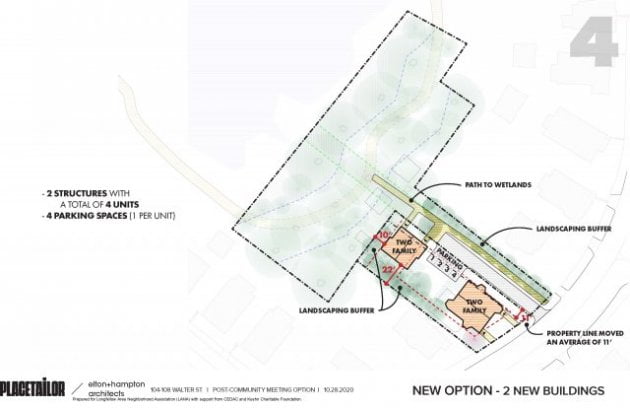
At its December 17 meeting, the Boston Planning and Development Agency voted to acquire 104-108 Walter St. in Roslindale, a property that has been a conservation priority for neighbors for decades because it abuts the Roslindale Wetlands Urban Wild and absorbs stormwater runoff from throughout the area. The BPDA action paves the way to take this property off the market for private development and represents a step toward conserving 108 Walter St. as open space – one of Boston’s top five priority land acquisition sites – as well as creating four units of affordable ownership housing at 104 Walter.

Stormwater runoff management has become increasingly important as climate change brings more heavy and intense storms. Climate concerns and development pressures galvanized a group of neighbors and abutters who have worked with city and state officials to advocate for the acquisition of 108 Walter Street, a 37,000 square foot parcel that would be appended to the 9.5-acre Roslindale Wetlands Urban Wild. As part of their efforts, Roslindale Wetlands advocates joined with neighborhood groups from around the city to support the passage of Boston’s local wetlands ordinance in December 2019.

The second part of the community’s vision for the future of these parcels is to create four units of affordable ownership housing at 104 Walter Street. The housing component will advance equity and inclusion in an increasingly expensive neighborhood.

In a parallel project, the city is investing $500,000 in capital improvements elsewhere in the Roslindale Wetlands Urban Wild, such as wetlands crossings, trail upgrades, removing piles of dumped construction debris, and other ecological restoration work. These planned improvements increased the imperative of adding 108 Walter to the conservation area.

In November, the city received a $387,000 grant from the Commonwealth to help pay for the purchase of 104 and 108 Walter, which were offered for sale jointly. The Longfellow Area Neighborhood Association (LANA) received a planning grant and hired architectural firm PlaceTailor Design to work with neighbors during two October workshops. A preferred site plan was developed for affordable home ownership opportunities and open space conservation for climate resiliency. The resulting consensus proposal makes possible the preservation of 108 Walter Street, which is closest to the wetlands boundary and the most ecologically sensitive, and proposes four units of affordable ownership housing at 104 Walter, which has already been developed and now includes a single-family house and a dilapidated barn.

Following the BPDA vote, a closing to effect the purchase is expected before the end of the year, after which the agency will transfer most of the 108 Walter Street parcel to the Boston Conservation Commission for permanent protection and stewardship.

The Roslindale Wetlands Task Force and Longfellow Area Neighborhood Association expressed thanks to the elected officials who supported the project, especially Mayor Marty Walsh, City Councilors Ricardo Arroyo, Andrea Campbell, Annissa Essaibi-George, Matt O’Malley, and Michelle Wu; State Representatives Nika Elugardo and Ed Coppinger; and State Senator Mike Rush. CEDAC (Community Economic Development Assistance Corporation) and the Kuehn Charitable Foundation provided assistance with a planning grant to LANA.

More information about the consensus vision for the property, developed during the two October workshops, is available at www.LongfellowArea.org and www.RoslindaleWetlands.org.
SourceUniversal Hub

Biden-Harris Administration Transition Memo: Opportunities for Advancing the Nation’s Early Care and Learning Infrastructure

SourceNational Children’s Facilities Network

YW building in Back Bay to become affordable housing complex

The longtime home of Boston’s YWCA will soon get a new life as affordable housing in one of the city’s swankiest neighborhoods.

Developers Beacon Communities and Mount Vernon Co. are set to file plans with the city Friday to convert the 13-story building at the corner of Clarendon and Stuart streets in the Back Bay into a 210-unit affordable housing development, with nearly half set aside as permanent supportive housing for formerly homeless people. They’ll keep current tenants — including the Snowden International School and the Lyric Stage theater — and will partner with the Pine Street Inn to provide counseling and other services for residents.

And perhaps most crucially, said Beacon CEO Dara Kovel, they’ll maintain the building’s historical use as a community hub while providing affordable housing in a part of the city where it’s in short supply.

“That’s important,” she said. “This will ensure for a long time that there will be diversity in this neighborhood.”

It’s a project that likely wouldn’t have happened if not for the COVID-19 pandemic.

YW Boston, as the YWCA is now known, put the building on the market in the summer of 2019, hoping to capitalize on the hot real estate market to secure its financial future. By early this year, the nonprofit had a deal in place with a different developer, who had hoped to upgrade its 66-room hotel and convert some of its apartments into higher-end units. Then the pandemic hit, and financing dried up for hotel and luxury housing developments. The deal fell apart.

Enter Beacon, a veteran Boston affordable housing developer, and Mount Vernon, a large market-rate landlord that recently converted another YWCA in the South End into the Revolution hotel. They’d partnered on an offer on the project originally, but were outbid. So they came back with a new plan: Make the building entirely affordable, financed with an array of federal and state loans, along with tax credits and city-allocated vouchers.

The new offer was “substantially discounted” from YW’s original price, Kovel said, but — with the support of Mayor Martin J. Walsh — the financing was solid. Last month, YW’s board approved a purchase and sale agreement, with the deal to close next year.

“Covid has created a window for opportunities like this for affordable housing,” said Mount Vernon chairman Bruce Percelay. “It’s a unique situation.”

Neither party would disclose a sale price — though Kovel said she expects the purchase and renovation combined will cost $108 million — but YW CEO Beth Chandler said the proceeds would allow her organization to focus on its mission, which has evolved over the years from providing housing and classes for young women arriving in Boston to leading racial and social justice training that largely happens offsite.

“We’re thrilled. We think this is a great partnership,” Chandler said. “We don’t have to think anymore about managing a building and, given all that’s going on in the world, we can focus on the work we need to do.”

Like the building’s commercial tenants, YW Boston will keep its office space in the building; Kovel said she expected those spaces will be able to stay open while residential units upstairs are renovated. Hotel 140, as the 66-unit hotel is known, will close and be converted to apartments. About 100 units will be set aside as supportive housing for formerly homeless people, with services run by the Pine Street Inn, similar to a project that the nonprofit is codeveloping in Jamaica Plain.

The renovation won’t change the historic exterior of the 13-story brick building across Stuart Street from Boston’s tallest skyscraper — 200 Clarendon — and down the block from a glassy 33-story condo tower now under construction. But Beacon plans to upgrade the roof, elevators and other systems, and will add bathrooms to the many single-room-occupancy units that don’t currently have them. Friday’s filing with the Boston Planning & Development Agency was an initial letter of intent. More detailed plans, likely to come in several weeks, will then kick off community review. Kovel said she hopes work can start in the fall and finish in mid-2023.

She said the project is a rare chance to add high-quality housing for low-income people in the increasingly expensive core of the city. Many other buildings like this one have sold at huge prices in recent years. But the pandemic provided a chance to do something that otherwise might not have been financially feasible.

“The world fell apart, and we took that opportunity,” Kovel said. “If luxury hotels and apartments aren’t working right now, maybe affordable housing will.”

SourceThe Boston Globe

Decade-old law has preserved 20,000 affordable housing units

BOSTON – In its first 10 years in effect, a state law meant to preserve affordable housing in Massachusetts has protected almost 20,000 units but one national advocate said Wednesday that preservation alone will not be enough to meet the demand for affordable housing.

To mark a decade of a state law known as Chapter 40T, the Community Economic Development Assistance Corporation released its latest research on the impact the law has had and brought together a group of advocates to discuss the past and future of affordable housing retention.

“Chapter 40T has been a big success, contributing to the preservation of almost 20,000 units while only losing 204,” Bill Brauner, director of housing preservation and policy at CEDAC, said.

Chapter 40T was enacted late in 2009 and applies to properties that are funded through 16 specific housing programs, like the federal Section 8 program and state rental vouchers. When a property’s affordable housing restriction is set to expire — often through a mortgage maturity, contract expiration or the end of a tax credit use restriction, Brauner said — the law requires notices of the expiration be sent to tenants and local officials, and provides the state Department of Housing and Community Development the right of first offer and the right of first refusal on the property.

Though the non-binding nature of the right of first offer may seem “toothless,” Brauner said that 10 of the 14 properties that have been purchased to date by DHCD designees have been purchased with the right of first offer.

The law also offers tenant protections. For three years after a termination, rents cannot be increased by more than the Consumer Price Index plus 3 percent for low-income residents who do not receive enhanced vouchers, Brauner said.

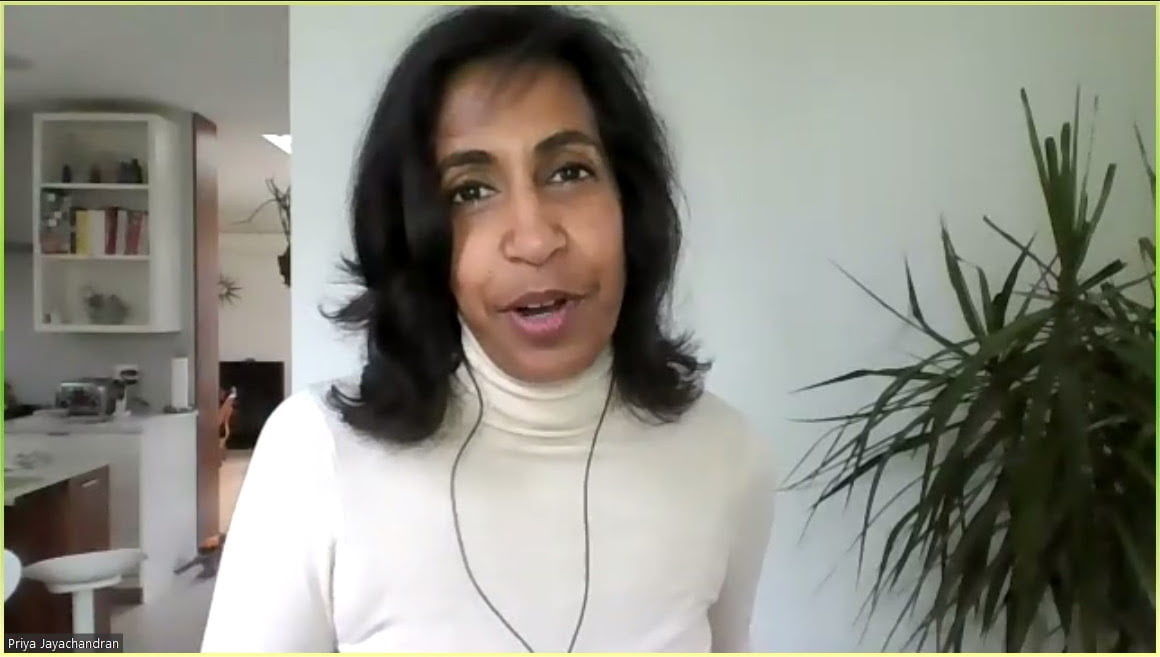
Priya Jayachandran, president of National Housing Trust, said she considers Chapter 40T “a model law for housing preservation” and that her organization often shares the law with other states that seek its expertise. But she argued that housing advocates should begin to take a broader view of housing and housing preservation.

Many organizations have long focused on preserving subsidized affordable housing units, as Chapter 40T does, but Jayachandran said “the vast majority of affordable housing is, in fact, in unsubsidized units that fall under the radar” and that the scope of preservation should be expanded to also capture those units.

She also made the case for housing advocates to join forces with environmental activists focused on stemming the tide of climate change to promote affordable housing preservation.

“I think the more that we can link housing preservation to infrastructure and climate change, to share that the energy burden from new construction — from all aspects of that, from the materials cost, from the transportation of those new materials, from the construction costs — the whole process is much more energy consumptive than is housing preservation,” Jayachandran said. “So how can we partner with our energy advocates to make that claim? … And how do we forge those partnerships to make preservation an environmental issue as well as a housing issue?”

But she also acknowledged that preservation alone is not enough.

“Notwithstanding what I just said about energy consumption, the reality is that we need to be preserving units and creating units at the same time,” Jayachandran said. “When NHT was created in 1990 to focus on preservation, it was because housing preservation was the most pressing affordable housing issue of our time. It continues to be pressing, but the reality today is that even if we did preserve every one of our units, it’s not enough. We have simply not built up over the past 30 years the way we should have.”

Gov. Charlie Baker has been pushing since 2017 for lawmakers to agree to a zoning reform measure intended to spur housing production, and the governor has pointed to it again as one of the items he would like to see the Legislature pass before the session ends early next month.

The House and Senate each included Baker’s long-sought zoning reforms in the differing versions of the economic development bill that has been under private House-Senate negotiations since July 30.

Housing Committee Co-chair Rep. Kevin Honan spoke during CEDAC’s virtual event Wednesday morning and said that he had been involved with the issue of expiring affordability protections since his very first days in office.

“The first issue I was involved in was expiring use. We got a call from the 10 O’Clock News on Channel 2 who were doing a story on Glenville Ave. in Allston,” Honan said. “That was the first time I was interviewed as a legislator, in early 1987.”

SourceSentinel and Enterprise

Here’s how the YMCA plans to use a $1 million grant to improve child care in Brockton

BROCKTON — The Old Colony YMCA plans to use a $1 million state grant to renovate child care space in the city to better serve the community and invest in the downtown.

“It’s a win-win all the way around,” said CEO and President Vinnie Marturano.

The renovation project will be at the youth division building at 465 Main St., which is down the street from the city’s central branch.

Improvements will be made in the lower portion of the building to create more space and repurpose underused areas.

Kim Moran, senior vice president of child development and protection for Old Colony YMCA, said the project will add another classroom, create an open indoor place space, update bathroom facilities and add more office space.

Accessibility improvements and electric and ventilation system upgrades will be done during the renovation, Marturano said.

The classrooms in the basement of the Old Colony YMCA in brockton pictured on Thursday, Dec. 3, 2020, at 465 Main St are going to be renovated as part of the grant the YMC received.

The youth division building is used for before- and after-school programs for school-aged children. Now it is used for full-day remote learning, Moran said.

In Brockton, the YMCA has another space at Centre Street for students to participate in remote learning. There is also programming for students learning in a hybrid model in districts in the other communities the organization serves.

“We’re trying to fill the need for parents,” she said. “It’s about where they need us the most.”

The grant helps nonprofit organizations serving primarily low-income families and communities renovate or build new child care facilities.

Marturano said the YMCA applied to the competitive grant previously, and this year it was successful. The organization was one of seven organizations from around the state selected.

The entire project will cost about $2.4 million, so the YMCA will need to raise money to make up the rest of the costs, he said.

The small pool that is no longer in use at the Old Colony YMCA child care center pictured on Thursday, Dec. 3, 2020, at 465 Main St. in Brockton is going to be filled in to make room for new classrooms, bathrooms and an indoor play space.

Pre-pandemic, child care represented 25 percent of Old Colony YMCA’s operating revenue, Marturano said. It had the licensed capacity to care for 2,800 kids at 48 different sites around the South Shore.

The number of children the organization can care for has been reduced to meet state requirements aimed to minimize the spread of COVID-19.

This year, people have realized how important and critical child care is to families and the economic system, he said.

“We continue to follow the crisis in child care that has been significantly heightened during the pandemic situation we all find ourselves in,” Marturano said.

The grant also helps the YMCA show its commitment to Brockton and development in downtown, he said.

The entrance of the Old Colony YMCA child care center pictured on Thursday, Dec. 3, 2020, at 465 Main St. in Brockton will be moving to the side of the building after renovations. There will be a new handicap ramp as well as an elevator that goes to all floors including the basement.

Marturano said the city and state have shown a similar commitment to bringing more proactive development to Main Street near the Brockton central branch.

Upgrading the child division building is a way to invest in downtown and provide infrastructure to serve the community, he said.

Marturano is hopeful that this will lead to other investment in the area.

SourceThe Enterprise

Construction Begins on Holtzer Park Project

Construction has begun on an unutilized Boston Housing Authority (BHA) parcel that will result in 62 new units of affordable housing.

Mayor Martin Walsh made the announcement earlier this week that the Urban Edge Housing Corporation has broken ground at the new Holtzer Park housing development in Jackson Square.

Mayor Walsh said the new project is part of the BHA’s 125 Amory Street phased redevelopment project in Jackson Square. The development is a joint venture between The Community Builders (TCB), Jamaica Plain Neighborhood Development Corporation (JPNDC), and Urban Edge to renovate and preserve 199 public housing units as affordable housing. The project will also repurpose BHA administrative offices into 12 new affordable units, and build approximately 133 units of affordable housing and 214 market-rate apartments in three new buildings on adjacent BHA-owned property.

“It’s great to see the start of construction at the Holtzer Park housing development, which will create many new and affordable homes here in Jackson Square,” said Walsh. “Projects like these are part of our overall strategy to increase the availability of affordable housing in the city, and I want to thank Urban Edge and our partners for their work to make these new homes possible.”

According to BHA Administrator Kate Bennett, Holtzer Park will create 41 affordable units for households whose income is less than $76,740 for a family of 4 and are supported with Low Income Housing Tax Credits. An additional 21 of these units will have project-based vouchers to provide even deeper affordability for households whose income is less than $38,350 for a family of 4.

“It’s exciting to see underutilized BHA land transformed into such an important use for dozens of low-income families,” said BHA Administrator t. “We are forging exciting opportunities in Jackson Square and I am grateful to all of our partners and staff that have made this happen.”

Holtzer Park is named for the Holtzer-Cabot Electric Company, where a variety of electrical devices were manufactured. In 1970, BHA converted the building into senior housing.

“It is exciting to begin construction at Holtzer Park, which will bring much-needed, high-quality affordable housing to Jackson Square,” said Emilio Dorcely, CEO of Urban Edge. “Jackson Square has undergone a transformation over the last several years, but because of the hard work of our partners at the City of Boston,  Boston Housing Authority, Jamaica Plain Neighborhood Development Corporation, and The Community Builders, current residents are benefitting from those changes. We look forward to being able to celebrate the opening of Holtzer Park – and 62 new affordable homes – in person, when it is safe to do so.”

Last year, the Boston Planning and Development Agency voted to extend Jackson Square Partners, LLC status as tentative designated developer for the Jackson Square Master Plan project–a mixed use development in Jackson Square of largely vacant public and privately owned land where the Jamaica Plain and Roxbury communities meet.

Since the BPDA’s plan to revitalize this area of Jackson Square began over a decade ago several milestones have been completed by Jackson Square Partners, LLC.

Already the development team has completed Jackson Commons. This project cost more than $21 million and consists of a 37 unit, mixed-use and mixed income housing development near the Jackson Square MBTA stop. The development is more than 10,000 square feet of ground floor retail, as well as 2,000 square feet of retail and commercial space. The redevelopment consisted of the adaptive re-use and renovation of the 100 year old, three story, 23,600 square foot Webb Building. The residential unit mix includes 25 two-bedrooms, 7 one bedrooms and 5 three-bedrooms.  Eight units are reserved for homeless/formerly homeless residents while the remaining 29 units are affordable units.

The city and developer recently celebrated the groundbreaking of 75 Amory Ave. This development kicked off the third phase of a $16 million development that will create 39 units of affordable housing for families. The project also secured $200,000 from the EPA in the form of brownfields grant for the remediation of the former industrial sites next to Jackson Commons at 1542 Columbus Avenue in Roxbury. This land will be transformed into a recreation center for the neighborhood.

Walsh and the BHA said in accordance with the City of Boston’s Green Affordable Housing Program, Holtzer Park will utilize a high-efficiency heating system and building envelope, as well as Energy Star-rated appliances. The development will employ environmentally friendly design features throughout and will meet the U.S. Green Building Council LEED Homes Gold certifiable standard. The housing development will also meet the U.S. Environmental Protection Agency’s Energy Star standards. The development team is made up of Urban Edge, ICON Architecture, and NEI General Contracting.

Walsh said Holtzer Park has been made possible in part by more than $2.71 million in funding from the City of Boston, $750,000 in Neighborhood Housing Trust, as well as more than $15.8 million in State and Federal Low Income Housing Tax Credits from the Commonwealth’s Department of Housing and Community Development (DHCD). Financing team members also include the Community Economic Development Assistance Corporation, MassDevelopment, MassHousing, Massachusetts Housing Investment Corporation, Citizens Bank, Massachusetts Housing Partnership,  the Federal Home Loan Bank of Boston, Boston Private, The Life Initiative, and the US Department of Housing and Urban Development.

“This project is a fantastic example of how our strong non-profit partners like Urban Edge are able to layer multiple state, federal, and local funding sources to create opportunities for our families,” said Housing and Community Development Undersecretary Jennifer Maddox. “We are excited to see the Baker-Polito Administration’s investments in the neighborhood, through MassWorks Infrastructure funding, MassDevelopment’s Brownfields program and our own affordable housing awards help advance this great work.”

SourceJamaica Plains Gazette

Urban Edge Begins Construction on 62-Unit Holtzer Park

Urban Edge is announcing that construction has begun on Holtzer Park, a 62-unit affordable housing development near Jackson Square in Jamaica Plain, MA.

Holtzer Park is part of the Boston Housing Authority’s (BHA) 125 Amory Street redevelopment, a joint venture between The Community Builders (TCB), Jamaica Plain Neighborhood Development Corporation (JPNDC), and Urban Edge.

The project has been made possible with the generous support from a number of public and private financing organizations, including the City of Boston, Massachusetts Department of Housing and Community Development (DHCD), Community Economic Development Assistance Corporation (CEDAC), MassDevelopment, MassHousing, Massachusetts Housing Investment Corporation, Citizens Bank, Massachusetts Housing Partnership, the Federal Home Loan Bank of Boston (FHLBank Boston), Boston Private, The Life Initiative, and the U.S. Department of Housing and Urban Development (HUD).

“We are so grateful to the funders for Holtzer Park,” said Emilio Dorcely, Urban Edge’s Chief Executive Officer. “Through their assistance, we will bring new units of much-needed affordable housing to the Jackson Square neighborhood. Now more than ever, it is clear that quality affordable housing is a necessity in Boston’s Black and Brown communities, and we appreciate the support from both public and private institutions to make this project a reality.”

Named for the Holtzer-Cabot Electric Company, where on the site, electrical devices were manufactured in the 20th century, Holtzer Park will meet the U.S. Green Building Council LEED Homes Gold certifiable standard and utilize a high-efficiency heating system and building envelope. The development team for the project includes Urban Edge, ICON Architecture, and NEI General Contracting.

The project will cost an estimated $32 million in total, and has received more than $2.7 million in funding from the City of Boston Department of Neighborhood Development, $750,000 from the Neighborhood Housing Trust, and more than $15.8 million in State and Federal Low Income Housing Tax Credits and more than $5 million in subsidies from DHCD.

“This project is a fantastic example of how our strong non-profit partners like Urban Edge are able to layer multiple state, federal, and local funding sources to create opportunities for our families,” said Housing and Community Development Undersecretary Jennifer Maddox. “We are excited to see the Baker-Polito Administration’s investments in the neighborhood, through MassWorks Infrastructure funding, MassDevelopment’s Brownfields program, and our own affordable housing awards help advance this great work.”

“The Life Initiative is proud to have supported Urban Edge’s efforts in the development of Holtzer Park,” said Mollye Lockwood, Vice President at The Life Initiative. “The Holtzer Park project represents a wonderful example of Urban Edge’s ability to forge partnerships to make transformative development happen. After over four years of working with community and its development partners of TCB and JPNDC, Urban Edge has made its project in the 125 Amory master plan a reality and will be providing 62 affordable homes to the Jamaica Plain community.”

“Holtzer Park is a transformative initiative that will introduce much-needed affordable rental housing in a rapidly evolving part of Boston,” said Kenneth Willis, Senior Vice President and Director of Housing and Community Investment at FHLBank Boston. “FHLBank Boston is proud to provide financial support for this transit-oriented project through our Affordable Housing Program, and we’re pleased that it is under development.”

“We are grateful to be involved in the creation of new affordable rental housing at Holtzer Park. We want to thank and congratulate our long-time partner, Urban Edge; the Federal Home Loan Bank of Boston; and our other key partners, especially Boston’s Department of Neighborhood Development and the State, in planning and financing this important development,” said Boston Private CEO Anthony DeChellis. “Boston Private was the lead lender for the construction and permanent financing. We are grateful for Urban Edge’s leadership in bringing together a complex initiative during these extraordinary times with the COVID-19 pandemic.”

“It’s exciting to see underutilized BHA land transformed into such an important use for dozens of low-income families,” said BHA Administrator Kate Bennett. “We are forging exciting opportunities in Jackson Square and I am grateful to all of our partners and staff that have made this happen.”

“Holtzer Park is yet more evidence of the innovative and successful effort to redevelop the Jackson Square neighborhood through the work of community-based non-profit developers,” said Roger Herzog, CEDAC’s executive director. “The project will result in 62 new transit-oriented affordable apartments, and will include supportive housing units. This project will set aside units for people who live with disabilities, as well as families who have experienced homelessness, providing stable, affordable homes to some of Boston’s most vulnerable residents. CEDAC could not be more pleased to support Urban Edge and to help them turn the vision of Holtzer Park into a reality.”

“We are pleased to work with our longtime partner Urban Edge to bring 62 much needed affordable housing units to Boston. We are proud to support such an important project and continue to advance the creation of healthy communities,” said Joseph Flatley, President and CEO of the Massachusetts Housing Investment Corporation.

“The Holtzer Park project in Jamaica Plain meets an important need in our community and demonstrates Citizens’ strong commitment to support more affordable housing options for Boston residents,” said Jerry Sargent, President of Citizens Bank, Massachusetts and Head of the Northeast.

“ICON Architecture is thrilled to be part of the Holtzer Park team. Creating equitable and healthy new homes for families is part of ICON’s mission,” Kendra Halliwell, Associate Principal and Practice + Design Team Leader at ICON Architecture.

“With our dedication to building affordable housing, NEI shares Urban Edge’s mission of strengthening communities and families by building affordable housing and vibrant, prosperous neighborhoods,” said Josef Rettman, president of NEI General Contracting.

“MassDevelopment is proud to support the development of Holtzer Park, with both a $27,000 award from the Brownfields Redevelopment Fund last year to assess the site and a $17.2 million tax-exempt bond more recently to aid construction,” said MassDevelopment President and CEO Lauren Liss. “Holtzer Park will add critical affordable housing units for residents of Boston’s Jamaica Plain neighborhood, and we’re pleased to be part of a tremendous team of financing partners helping to make this project a reality.”

SourceBoston Real Estate Times

Guild of St. Agnes will use $1M state grant to run daycare center in Creative Hub

Childcare nonprofit Guild of St. Agnes will run a daycare center as a future tenant of the Creative Hub Community Arts Center Worcester, powered by a $1-million grant from the Early Education and Out-of-School Time grant program, the Massachusetts Department of Early Education and Care announced on Thursday.

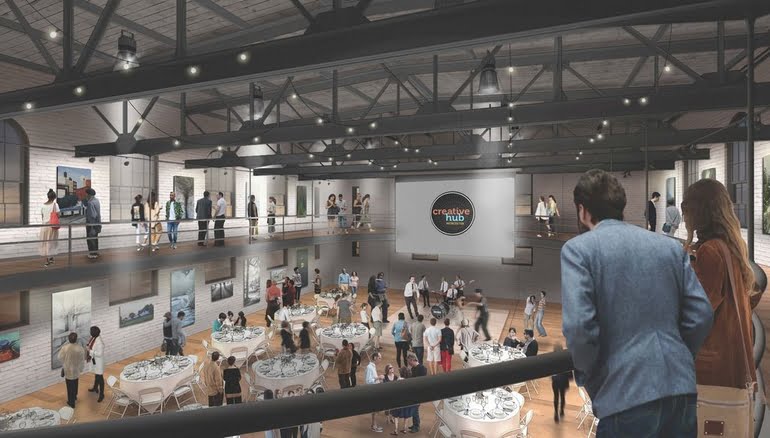
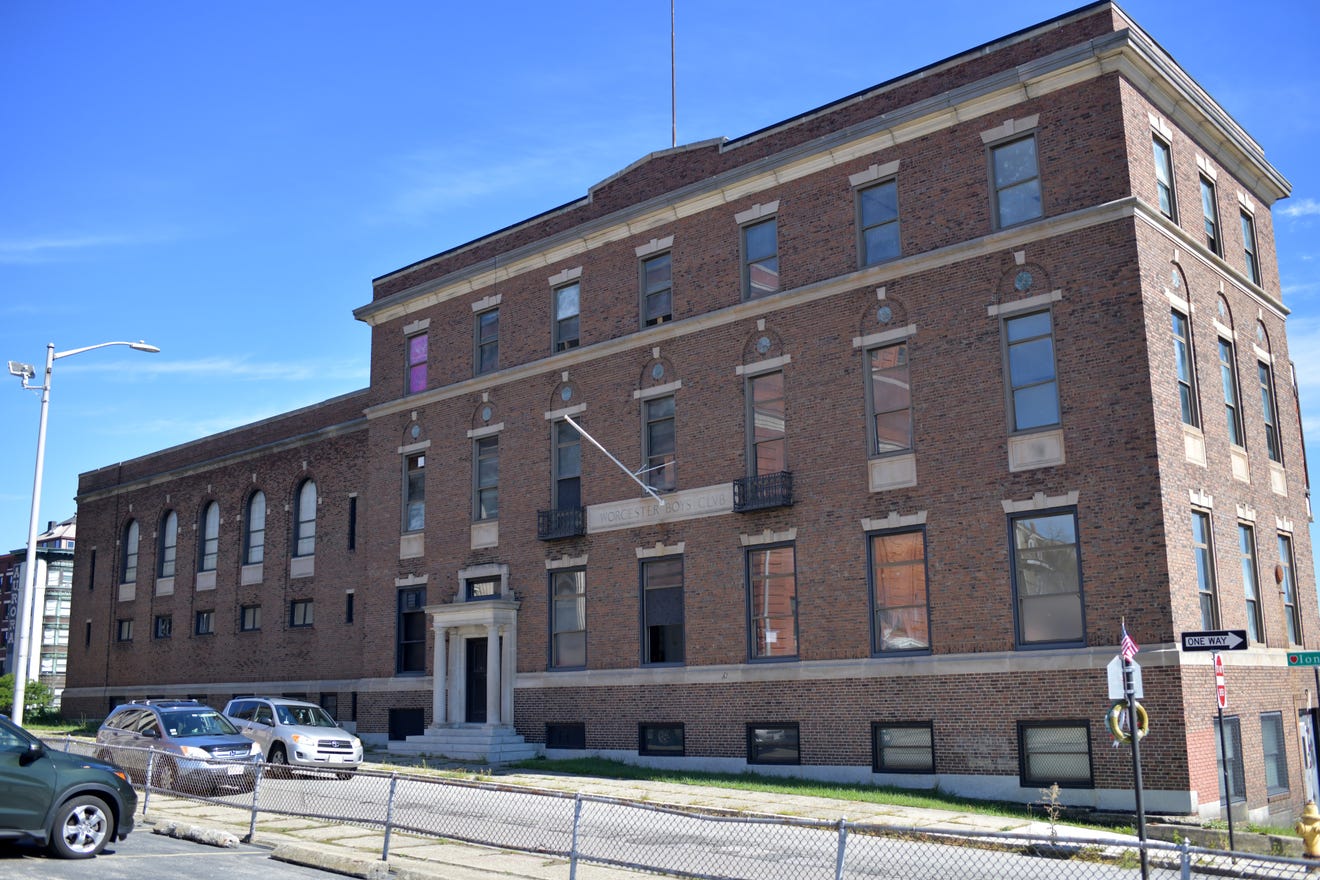
The Guild will create a new early learning program at Creative Hub, providing an additional 88 toddler and preschool slots, according to DEEC. Creative Hub is a $14.4-million arts and creative complex being developed in an old Boys Club at 2 Ionic Ave. in Worcester.

“As Creative Hub’s mission is to provide accessible and equitable space for our community, we realized that childcare is a perfect fit for our programming,” Laura Marotta, Creative Hub’s executive director, said in an interview with WBJ. “Not only will Main South and Worcester families (of all income levels) have access to subsidized and safe childcare, but they will also have access to the rest of the arts programming that will be happening in the building.”

Creative Hub will aim to provide comprehensive support to the community, Marotta said, which includes providing affordable childcare.

“We are more than blessed to have the Guild as a future tenant of Creative Hub Community Arts Center …  and their presence will only enhance our programs and plans for the building, which still includes studio space for artists, classroom space, event space that will host cultural, musical, and dance programs, a makerspace, and more,” she said.

SourceWorcester Business Journal

Early education funds to expand facilities, increase child care capacity essential in public health crisis (Editorial)

In 2018, the reauthorization of the Early Education and Out-of-School Time Capital Fund (EEOST) in the state’s housing bond bill was important news. There was a need for sustained targeted improvements in Massachusetts early education programs. Since its original passage in 2013, the Department of Early Education and Care and the Children’s Investment Fund at the Community Economic Development Assistance Corporation have awarded four rounds of EEOST Capital Funds grants that provided $19 million to 25 agencies across the state. Beneficiaries included, $1 million in 2018 to Holyoke-Chicopee-Springfield Head Start, and $1 million in 2015 to the Valley Opportunity Council in Chicopee.

The recent Baker-Polito administration announcement of an additional $6.5 million in EEOST grant funding to seven organizations will allow renovations and expansions of childcare facilities that serve mostly low-income children. This is welcome news in an environment where facilities must meet new standards due to COVID, and parents experience waiting lists for childcare.

“As a result of the COVID-19 pandemic, so many early childhood education providers are struggling to meet the needs of vulnerable families and communities. It is gratifying to be able to announce that these seven programs will receive the necessary funding to create high-quality, safe and healthy learning environments,” said Theresa Jordan, director of the Children’s Investment Fund, an affiliate of CEDAC.

One of the recent recipients was a $1 million grant to the Boys and Girls Club of greater Westfield. The facility plans to build an addition to expand its out-of-time program and build a new preschool classroom.

According to data from 2018, around 74% of children under the age of 6 have both parents in the workforce. And during COVID, providing children with a safe out-of-school time place has become increasingly challenging. While Massachusetts childcare system is primarily a private funding system, this funding fills a gap that allows facilities such as the Westfield Boys and Girls club to begin expanding immediately and offer more opportunities to those families in dire need.

SourceMassLive

Baker Announces Funds for Early Education Programs

HYANNIS – Governor Charlie Baker and the Community Economic Development Assistance Corporation recently announced $6.5 million in Early Education and Out-of-School Time grant funding.

The funding has been awarded to seven organizations to help them renovate childcare facilities that serve low-income children.

“We are grateful to the educators and childcare providers statewide who have worked tirelessly to adapt over the last several months as we continued to combat the COVID-19 public health crisis,” said Baker in a statement.

“Through these grants, we are able to make improvements to child care programs that boost the quality of early education and care and provide families in communities throughout the Commonwealth with the resources necessary for success in the classroom and beyond.”

Early childhood education programs could receive awards up to $1 million for major capital projects during the FY20 grant funding round.

Organizations who received FY20 EEOST awards include Berkshire Family YMCA, Boys and Girls Club of Greater Westfield, Community Action Incorporated, East Boston Social Centers, Guild of St. Agnes, Old Colony YMCA and South Middlesex Opportunity Council (SMOC).

SourceCapeCod.com