


MassHousing has provided a total of $14.3 million in financing to the
nonprofit Fenway Community Development Corporation, for the renovation and preservation of 52
affordable housing units at the Fenway CDC’s Burbank Gardens community in Boston’s Fenway
Neighborhood. The MassHousing financing package will enable major renovations at the four-story
development, and will resolve expiring affordability challenges at the property by extending affordability
in perpetuity.
MassHousing provided Fenway CDC with a $3.8 million construction and permanent loan, a $5.5 million
bridge loan, and $5 million from the Agency’s Opportunity Fund, which provides financing for
MassHousing’s Workforce Housing Initiative and 13A Preservation Initiative. Twenty-eight of the 52
units preserved at Burbank Gardens were originally financed under the state’s Section 13A housing
affordability program, making them high preservation risks.
“With this refinancing, Burbank Gardens will remain a true mixed-income community, preserving a
critical housing affordability resource in Boston,” said MassHousing Acting Executive Director Tom
Lyons. “The scope of Massachusetts’s 13A preservation challenge is significant, with roughly 2,800
affordable units set to lose their affordability protections over the next three years, and no federal
resources available for their preservation. The successful preservation of Burbank Gardens shows that,
with committed partners like the Fenway CDC, the Department of Housing and Community
Development, and the City of Boston, we can overcome the preservation challenges we face, and
protect tenants at risk of displacement.”
The Commonwealth’s Section 13A program was created by the Massachusetts Legislature in the 1970s
to provide low-interest mortgage financing to affordable housing communities. Today, 13A communities
serve some of the lowest-income and most vulnerable populations in Massachusetts, including many
elderly residents. The mortgages on these 13A housing communities are nearing maturity. In response,
MassHousing and the Department of Housing and Community Development (DHCD) have committed a
total of $100 million in capital to help preserve affordable 13A units that otherwise would convert to
market rates.
Major Renovation of the 52-Unit Burbank Gardens in Boston is Underway, Resulting from
$14.3 Million in MassHousing Financing
| Page 2 of 3 |
The Burbank Gardens refinancing transaction resolves the expiring Section 13A rental subsidy on 28 of
the 52 affordable units. Thirteen currently unrestricted units will convert to workforce housing
apartments that will be affordable to moderate-income households earning up to $93,100 a year for a
family of four. The remaining 39 units will be for low-income households earning between $31,000 and
$62,040 a year for a family of four.
Fenway CDC acquired and preserved Burbank Gardens under Chapter 40T, a state law designed to help
prevent affordable housing from being sold and converted to market-rate rents. DHCD administers
Chapter 40T.
DHCD provided $3 million in financing and allocated Low-Income Housing Tax Credits that generated
$4.8 million in financing for the $20.8 million transaction. The Community Economic Development
Assistance Corporation (CEDAC) provided an $8.6 million acquisition loan, and the City of Boston
contributed a total of $3.5 million in acquisition and preservation financing.
“We had been working with the management and residents at Burbank Gardens for a couple of years,
laying the groundwork for preserving affordability for the residents,” said Leah Camhi, Fenway CDC’s
Executive Director. “When the property came on the market, we dropped everything else to make sure
that the tenants would be protected. Unlike most affordable housing deals, this was a sprint to the
finish. We’re thrilled to be able to preserve the affordability in perpetuity as well as do much-needed
updates to the building.”
Fenway CDC is undertaking approximately $4 million in property renovations at Burbank Gardens,
including:
• Construction of an accessible entry ramp and installation of a groundwater recharge system;
• Repair and replacement of exterior balconies, windows, and doors;
• Repair and replacement (including accessibility upgrades) of interior stairs, walkways, elevators
and common areas, including the trash room, laundry room, mail room, and kitchen;
• Repair and replacement (including accessibility upgrades) of unit kitchens, bathrooms, and
flooring;
• Life and safety improvements including fully-compliant fire alarm and sprinkler systems; and
• Plumbing, electrical, and mechanical improvements.
Burbank Gardens is located at 31 Burbank St. in Boston and has 28 studio units, 22 one-bedroom
apartments and 2 two-bedroom apartments in a four-story, brick building.
MassHousing has financed 6 affordable rental housing communities in the Fenway/Kenmore
neighborhood totaling 766 units with $135.5 million in financing and has provided $1.1 billion in home
mortgage financing for 8,217 homeowners in Boston.
Major Renovation of the 52-Unit Burbank Gardens in Boston is Underway, Resulting from
$14.3 Million in MassHousing Financing
| Page 3 of 3 |
About Fenway Community Development Corporation
Fenway CDC was incorporated in 1973 with a vision to both preserve and develop affordable housing
and affirmatively advance the community’s vision. Since their founding, Fenway CDC has expanded to
provide programs and services to improve the quality of life of residents and build a healthier
community by providing mixed-income housing, social support services, workforce development, and
civic engagement programs. On their own and in partnership, Fenway CDC has developed nearly 500
affordable homes, housing about 1,500 people, including people with AIDS and mental illness, seniors,
and families. For more information please visit www.Fenwaycdc.org.
About MassHousing
MassHousing (The Massachusetts Housing Finance Agency) is an independent, quasi-public agency
created in 1966 and charged with providing financing for affordable housing in Massachusetts. The
Agency raises capital by selling bonds and lends the proceeds to low- and moderate-income
homebuyers and homeowners, and to developers who build or preserve affordable and/or mixedincome
rental housing. MassHousing does not use taxpayer dollars to sustain its operations, although it
administers some publicly funded programs on behalf of the Commonwealth. Since its inception,
MassHousing has provided more than $22 billion for affordable housing. For more information, visit the
MassHousing website at www.masshousing.com, follow us on Twitter @MassHousing, subscribe to our
blog and Like us on Facebook.
Category: Housing Preservation
MassHousing Provides $10.8M To Renovate 61 Units In Springfield
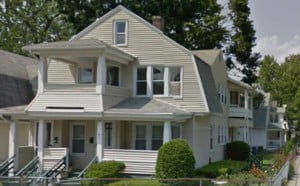
MassHousing announced yesterday it provided $10.8 million in financing to the nonprofit developer Home City Development Inc., to advance the second phase of the substantial rehabilitation of the 136-unit E. Henry Twiggs Estates in Springfield. The project will complete major renovations of 61 scattered-site apartments for low-income families in the Mason Square neighborhood of Springfield.
MassHousing is supporting the redevelopment of E. Henry Twiggs Estates by issuing $10.8 million in short-term, tax-exempt debt, in a private placement with TD Bank. TD Bank will serve as both construction and permanent financing lender on the project. Permanent financing will result from a taxable execution with the Federal Home Loan Bank of Boston. This transaction is MassHousing’s first tax-exempt conduit loan outside Greater Boston.
“MassHousing’s partnership with TD Bank, and Home City Development, will preserve a key affordable housing resource in Springfield,” MassHousing Acting Executive Director Tom Lyons said in a statement. “Safe, modern affordable housing supports healthy families. Many of properties involved in this transaction are more than 100 years old and in need of major upgrades. By delivering major renovations to the interiors and exteriors of the E. Henry Twiggs Estates properties, this project will dramatically improve the quality of life enjoyed by the residents of the Twiggs Estates, and support the revitalization of the surrounding neighborhood.”
The E. Henry Twiggs Estates are comprised of 136 affordable units located in 59 scattered-site buildings, including 41 more than 100 years old, and 18 structures built in the 1980s. Phase One of the rehabilitation effort, which MassHousing was not involved with, completely renovated 75 affordable housing units. The second phase of the project will completely upgrade the remaining 61 units, delivering upgraded heating systems and insulation, new kitchens and bathrooms in all units, new roofing and siding and energy efficiency upgrades, including the replacement of boilers and updated electrical wiring.
Of the 61 units in Phase Two, 16 will be reserved for households at or below 30 percent of the Area Median Income ($24,600 a year for a family of four), and 45 units will be for households earning at or below 60 percent AMI ($39,960 a year for a family of four). Twenty-eight of the units are supported through the Massachusetts Rental Voucher Program and four units are subsidized through the Massachusetts Supportive Housing Initiative.
In addition to the MassHousing and TD Bank financing, the transaction involved $13.8 million in equity from an allocation of Low-Income Housing Tax Credits by the Massachusetts Department of Housing and Community Development (DHCD), $1.9 million in DHCD financing, $1 million from the Affordable Housing Trust Fund, which MassHousing manages on behalf of DHCD, a $2.5 million seller note, $450,000 from the Massachusetts Facilities Consolidation Fund, which supports housing for clients of the Department of Mental Health andDepartment of Developmental Services, and $50,000 from the city of Springfield.
https://www.bankerandtradesman.com/masshousing-provides-10-8-million-to-renovate-61-units-in-springfield/?utm_campaign=Daily&utm_source=hs_email&utm_medium=email&utm_content=59536268&_hsenc=p2ANqtz–VAH-TFay6pBfGcFZEscdOFFvrW6r5LoDB5q2mcwIXW5RA0YnKsRxYsD9h4U7L3NFO-RYVaia9fMSc163CbFWrlVqr7A&_hsmi=59536268
Sixteen Lexington affordable housing units locked in for good
Lexington Housing Authority (LHA) is “now the proud owner of five condos at
Pine Grove Village,” according to LHA Executive Director Caileen Foley. Foley
made the announcement at the Dec. 13 Lexington Housing Authority meeting.
The announcement was not sudden, but rather a summing-up of months of
work that went into preventing 16 housing units at Pine Grove Village from
losing their affordable status and reverting to fair market value. LHA’s five newly
acquired units—they officially turned over to the agency on Dec. 1–are rental
properties, while 11 other units made the transition from a co-op to
condominiums. The five rental units, now belong to the Lexington Housing
Authority. They are, and will continue to be, leased to Section 8 voucher holders
and Massachusetts Rental Voucher Program (MVRP) voucher holders.
The latter units are owned outright by those living there. LHA is one of the
trustees on the newly created condo board, according to Foley.
Elizabeth Rust of the Regional Housing Services Office spearheaded the effort,
operating as an agent for the town of Lexington. Pine Grove Village “was
probably one of the first 40Bs in the commonwealth,” Rust said, referring to the
state’s Chapter 40B affordable housing law that lets developers skirt local zoning
regulations in return for the inclusion of a substantial percentage of affordable
units. It was created under the auspices of Massachusetts’ 13A Preservation
Initiative, begun in the 1970s. The program was set up with a 30-year restriction
that expires in 2018, Rust said, meaning that a chunk of Massachusetts’
affordable housing, Pine Grove Village included, stands to revert to market value
next year.
Project used CPA funds
Sixteen Lexington aordable
housing units
locked in for good
The town of Lexington, LHA, MassHousing and co-op (now condo) residents
worked together to make sure that wouldn’t happen. They used just over $1
million in Community Preservation Act (CPA) funds approved with the passage
of a 2017 annual Town Meeting article to fund the necessary shifts. Worried by
the prospect of losing their affordable housing, co-op residents initially
approached the town in May 2016, according to Rust. Those residents and the
town initially disagreed on how to proceed, ultimately concluding that it would
be better to forge ahead together to find a mutually agreeable solution, rather
than head to litigation, she explained.
In the end, they did, after much “work toward a common, beneficial solution for
all parties,” Rust said. “In the end, everyone had the same goal.”
The conversion of the co-op into 11 condominiums was a key component. The
key change for the five rental units is that they’re now owned by LHA.
“We’re excited for the opportunity,” Foley said in an interview after the meeting.
“It was fun to work with the town, and get it done so quickly.”
Units now affordable forever
The town contributed money to the conversion, and in return received a
“perpetual deed restriction restricting the resale of the units,” Rust said.
This deed restriction is different from that instituted under 13A. Now, “there’s
no risk of losing them, or having to do this again,” Rust said of the housing.
“They’re properly secured from the affordable housing perspective.”
It took many steps to get to this point, in what was an unusually involved
process, due to several factors. For one thing, the co-op was “a nontraditional,
nonstandard set-up,” Rust said. Moreover, the work had to be done not only for
rental properties, but for owned properties as well, and “there was a capital needs
study done, and analysis,” she explained.
“Each one was a standard piece, but it was a project that brought all pieces
together,” in an unusual way, Rust added.
The journey from potential litigation to preserving 16 affordable housing units
in a community with still-rising property values “shows that the town is really
committed to preserving its affordable housing,” Rust said. “The town was
proactive and cooperative and supportive. No one got the better deal or outdid
each other.”
http://lexington.wickedlocal.com/news/20171215/sixteen-lexington-affordable-housing-units-locked-in-for-good
Renovations complete at Framingham’s Tribune Apartments
When he first arrived in Massachusetts in the early 1980s, Samuel Salguero had no trouble finding an affordable place to live.
The 67-year-old immigrated to the United States from Guatemala decades ago, settling first in Los Angeles, then moving to the Bay State for work.
Salguero said he didn’t worry as much back then about making rent. But Salguero — who got a job driving cars at ADESA, the auction house in Framingham — suffered a health setback. A car accident in 2004 left him with a broken neck and broken back.
He was forced into early retirement, and as housing costs began to rise, Salguero saw his options dwindling. Salguero says he was lucky to find a spot in the Tribune Apartments, a 53-unit complex on Irving Street that offers affordable rents to seniors and people with disabilities.
After living in the building for nearly a decade, Salguero was especially delighted this summer when construction crews arrived to renovate his apartment. They overhauled the kitchen, fixed the leaky ceiling and finished the work in time for his wife to cook a turkey in their brand new stove for Thanksgiving.
“I’m so happy,” Salguero said. “I live nice and comfortable. We got a brand new AC, nice kitchen and everything. I don’t have any complaints about it.”
State and local officials gathered with Salguero and other tenants of the apartment complex Friday to celebrate the completion of major renovations. The multimillion dollar project, funded in part by the state, helped shore up the century-old building, ensuring a supply of affordable housing is available in South Framingham in the future.
“We need to really make a concerted effort to ensure that people have quality affordable housing at all levels,” state Sen. Karen Spilka, an Ashland Democrat, said, “especially in light of the way that housing prices are skyrocketing and affordable housing options are becoming increasingly limited.”
Located at 46 Irving St., the Tribune Apartments comprises a pair of four-story buildings, one of which was previously the home of the Framingham Tribune newspaper. The Tribune Building was constructed in 1892 to house the weekly publication.
Next door, the Victory Building was added in the early 1900s. The buildings were joined in 1982 and converted to housing for seniors and people with disabilities. The complex is now listed on the National Register of Historic Places.
Preservation of Affordable Housing, a nonprofit that owns and operates low- and moderate-income housing in nine states, acquired the facility in 2013.
POAH looks for opportunities to preserve affordable housing in markets with rising rents. It began renovations in January 2017 on the Tribune Apartments, tapping a major grant from the state.
The organization received nearly $3.6 million from the state’s Housing Preservation and Stabilization Trust Fund. The money paid for a roof replacement, upgrades to kitchens and bathrooms, energy efficient appliances, new windows, a new sprinkler system, accessibility improvements and a new management office.
The state also helped fund a partnership with BayPath Elder Services, which will maintain a full-time office at the apartment building. BayPath will help connect tenants with health programs, financial education, computer classes and other services.
Reflecting on her own time living on the Southside, Mayor-Elect Yvonne Spicer said her first apartment in Framingham was located a short distance away on Eames Street. Working as a teacher and living on a salary of $18,000, Spicer said it was vital to find an affordable place to live in the community.
Spicer said she plans to work toward increasing the amount of affordable housing in the community when she begins her first term in office next year.
“If our people are not thriving in downtown, then we as a whole community cannot thrive,” she said, “and so I am putting a lot of my energy in thinking about our underserved areas, making sure that there’s more affordable housing — that people can stay here.”
http://www.metrowestdailynews.com/news/20171215/renovations-complete-at-framinghams-tribune-apartments
Upgrades Set To Begin At Fenway Complex
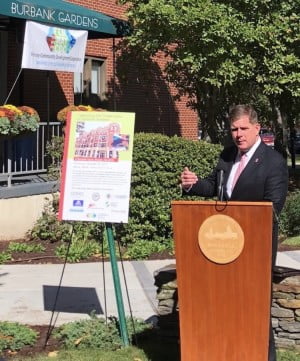
Longtime renters in the Boston’s Fenway neighborhood have felt the squeeze from rising rents and conversion of apartments into off-campus housing.
The acquisition of the Burbank Gardens property by the Fenway Community Development Corp. will retain 52 income-restricted units for low-income and disabled residents, averting the Haviland Street complex’s conversion to market-rate housing. Renovations to the property are scheduled to begin in January.
The complex is one of 12 in the city that will lose their funding under the state’s 13A mortgage subsidy program in the next few years. The property is the first in Boston to be acquired by a nonprofit group.
“The seller had an opportunity to sell it on the full market and we were able to strike a deal (through) some shrewd negotiating by our real estate director and maintain the affordability in perpetuity for the residents in the 52 units residing in this absolutely beautiful building,” said Leah Camhi, executive director of the Fenway CDC.
The financing package includes $2.5 million in acquisition financing and $2.5 million in permanent financing from community development block grant funding from the city of Boston. MassHousing provided $5 million in acquisition debt, a $3.8 million construction and permanent tax-exempt bond financing and a $5.4 million bridge loan. Community Economic Development Assistance Corp. provided a $8.3 million temporary acquisition loan.
As a result, 39 units will be retained for households earning a maximum 60 percent of the area median income. Nine will be set aside for households earning 80 percent of AMI, and four will be preserved at 90 percent of AMI.
Leah Camhi, executive director of the Fenway CDC, discusses the preservation of affordability at Burbank Gardens:
https://www.bankerandtradesman.com/upgrades-set-to-begin-at-fenway-complex/?utm_campaign=Daily&utm_source=hs_email&utm_medium=email&utm_content=57398756&_hsenc=p2ANqtz-8BlMFAdSmQYy_2Pt79GPPRct5_TVaVnHCqZLUy86x70BhX9cjX6i7AQjEZH0klaIaSOn2uUcU7zBrgt7BilXrojwtRAw&_hsmi=57398756
CEDAC provides predevelopment loans to housing in Lexington
The Community Economic Development Assistance Corporation approved $341,500 in predevelopment financing to Pine Grove Village Inc. and Women’s Institute Realty Inc. for the preservation and production of affordable housing, respectively.
In Lexington, Pine Grove Village Inc. received a $130,000 predevelopment loan commitment from CEDAC for the preservation of Pine Grove Village, an existing resident-owned cooperative development. Originally constructed in 1976 with an affordability restriction, the coop residence requires five of the 16 units to be affordable to low-income families, with the remaining units affordable to moderate-income families.
Pine Grove Village Inc. will convert the 11 moderate income units to condominium ownership and transfer the five low-income condo units to the Lexington Housing Authority. New affordability restrictions will be established for the 16 units for 40 additional years under an innovative preservation plan.
For information: https://cedac.org.
http://lexington.wickedlocal.com/news/20171003/strongcedac-provides-predevelopment-loans-to-housing-in-lexington-strong
Baker-Polito Administration Awards $72 Million to Create, Rehabilitate and Preserve Nearly 2,000 Housing Units
BOSTON – Today, Governor Charlie Baker announced $72 million in housing subsidy funds and additional state and federal tax credits to 25 projects in 17 communities for the creation, rehabilitation, and preservation of 1,970 housing units across the Commonwealth, including 402 units reserved for very low-income families and families making the transition out of homelessness, building on the Baker-Polito Administration’s commitment to increasing the production and preservation of affordable housing for all residents.
“Safe and affordable housing is a cornerstone to the success of our Commonwealth’s families, including access to job opportunities for many of our most vulnerable populations,” said Governor Charlie Baker. “Through our combined efforts and investments to date, over 5,200 affordable housing units are being created, preserved or rehabilitated to support the growth of Massachusetts, our workforce, communities and families.”
The administration is awarding over $72 million in housing subsidy funds, including federal HOME funds and state capital funds. Additionally, the Department of Housing and Community Development is awarding more than $28 million in state and federal low-income housing tax credits, which will generate more than $180 million in equity for these projects. The awards will create or preserve 1,978 rental units, including 1,698 affordable units, in 25 projects across the state. Three projects will reserve units for individuals with disabilities, two are transit-oriented developments and three projects will include Single-Room Occupancy (SRO) units, including a building dedicated to youth aging out of foster care.
“Massachusetts is strongest when all of our families and residents have access to opportunities to thrive,” said Lieutenant Governor Karyn Polito.“Today’s awards will support affordable housing options for families in communities across the Commonwealth’s, regardless of income or zip code, including projects with housing for low-income or formerly homeless families, individuals with disabilities, veterans and the elderly.”
Governor Baker joined Boston Mayor Marty Walsh, Housing and Economic Development Secretary Jay Ash, Housing and Community Development Undersecretary Chrystal Kornegay and MassHousing Executive Director Tim Sullivan to make the funding announcement at Olmsted Green in Mattapan. Olmsted Green is a 38-acre, existing mixed-income housing community on the former site of the Boston State Hospital.
“Today was a big day for housing here in Boston and across the Commonwealth. Not only did we break ground on mixed-income housing units today, we were given the support to continue our work in creating affordable homes for those in this thriving city and create more construction jobs in our neighborhoods,” said Mayor Walsh. “I want to thank the Governor for making these funds available and for supporting important projects like Olmsted Green in Boston.”
Lena New Boston’s efforts are one piece of the larger redevelopment of the former Boston State Hospital into a mix of housing, community and green space. The site includes the Mass Audubon’s Boston Nature Center and Wildlife Sanctuary, which sits on 67 acres. While the site sat vacant after the hospital’s closure in 1979, the past decade has seen the complete transformation of the space, bringing significant affordable and mixed-income housing to the Mattapan neighborhood, with rental and home-ownership opportunities for residents.
The Lena Park Community Development Corporation and New Boston Fund, together known as Lena New Boston LLC, are currently completing a 41-unit affordable, home-ownership development, with previous support from MassHousing’s Workforce Housing Initiative, a joint initiative with DHCD. Lena New Boston will also build an additional 100 units of mixed-income rental housing in the next phase of the development with support from today’s awards.
“Today’s announcement of significant investments in affordable housing represents a key part of the administration’s inclusive strategy to support families and residents, and meet the needs of every community in Massachusetts,” said Housing and Economic Development Secretary Jay Ash. “Creating and preserving housing for families across the income spectrum will allow us to build and retain a skilled workforce across the state, and give our residents access to more opportunities.”
“Our administration is committed to supporting projects that support our most vulnerable communities, from very low-income families, to seniors, veterans and individuals with disabilities,” said Housing and Community Development Undersecretary Chrystal Kornegay. “Affordable housing is a strong tool for community development, and our investments using the Low Income Housing Tax Credit reflect those priorities.”
The 2017 affordable rental housing award round reflects the Baker-Polito Administration’s ongoing commitment to substantially invest in housing across the Commonwealth. In April, Governor Baker filed a housing bond bill seeking $1.287 billion in additional capital authorization to advance the administration’s commitment to affordable housing. In May 2016, the administration unveiled a five-year capital budget plan that includes a $1.1 billion commitment to increasing housing production, an 18% funding increase over previous funding levels. The $1.1 billion capital commitment provides for significant expansions in state support for mixed-income housing production, public housing modernization, and affordable housing preservation.
Since 2015 the Baker-Polito Administration has provided direct funding to create and preserve over 5,200 units of affordable housing across Massachusetts.
In addition, the administration and MassHousing have previously committed $100 million to support the construction of 1,000 new workforce housing units. To date, the Workforce Housing Initiative has advanced the development of 1,317 housing units across a range of incomes, including 387 workforce housing units.
2017 Awardees
Mechanic Mill is a mixed-income historic rehabilitation project located in Attleboro. The project sponsor is WinnDevelopment. When completed, Mechanic Mill will offer 91 total units, with 56 affordable, including 10 units reserved for households earning less than 30 percent of area median income (AMI). All 91 units will be reserved for persons who are at least 55 years old.
Burbank Gardens is a preservation project of an existing 52-unit development located in Boston’s Fenway neighborhood. Fenway Community Development Corporation, with assistance from DHCD, MassHousing, and the City of Boston, will rehabilitate and preserve the existing property and restrict 39 of the 52 units for rental to low and moderate-income tenants.
Cote Village is a 76-unit new construction project in Dorchester sponsored by Caribbean Integration Community Development and the Planning Office for Urban Affairs of the Archdiocese of Boston. The City of Boston also will provide substantial support to the project. When completed, Cote Village will include 56 affordable units, including eight units reserved for formerly homeless individuals or families, and several units reserved for persons with disabilities.
General Heath Square Apartments is a 47-unit new construction project in Boston’s Jamaica Plain neighborhood. The sponsor is the non-profit Jamaica Plain Neighborhood Development Corporation. The city of Boston also will provide substantial support to the project. When completed, this transit-oriented project will include 40 affordable units, including 20 units reserved for households earning less than 30 percent of AMI.
Olmsted Green Mixed-Income is a 100‑unit mixed-income new construction project in Boston to be built on the site of the former Boston State Hospital. Previously, the state and the City of Boston have helped finance over 500 units on the former hospital site. Sponsored by the New Boston Fund, the completed project will offer 40 affordable rental units, including 16 units for households earning less than 30 percent of AMI and several units for persons with disabilities. Sixty units within the project will be made available as workforce and market-rate rental units. The City of Boston also will provide funding for this project.
Talbot Commons Phase 1 is a new construction/rehabilitation project located in Boston’s Codman Square neighborhood. The sponsor is the non-profit Codman Square Neighborhood Development Corporation. The City of Boston also will provide significant support to Talbot Commons. The completed project will offer 40 affordable family units, including nine units reserved for households earning less than 30 percent of AMI.
The Clarion is a new construction mixed-income family housing project to be built on Blue Hill Avenue in Boston. The sponsor is the non-profit The Community Builders (TCB). The City of Boston also will provide significant support to The Clarion. The site is located near major transit and retail opportunities and will offer 39 total units. Twenty seven units will be affordable, including seven units reserved for households earning less than 30 percent of AMI. Several affordable units also will be reserved for persons with disabilities.
Washington Westminster House in Boston is a new construction project sponsored by the non-profit Elizabeth Stone House. The 32-unit project will provide affordable housing as well as support services for at-risk and homeless families. All 32 units will be reserved for households with incomes below 30 percent of AMI. The City of Boston also will provide funds to Washington Westminster House.
Wilshire Westminster in Boston is a scattered-site preservation project sponsored by the non-profit Urban Edge to rehabilitate existing properties consisting of 99 total units for families. Eighty-nine of the rehabilitated units will be affordable, including 10 units reserved for households earning less than 30 percent of AMI.
JAS Consolidation is a scattered-site preservation and production project located in Cambridge and sponsored by the non-profit Just-A-Start Inc. The 112-unit consolidation project includes multiple properties located between Kendall Square and East Cambridge. Several of the properties, including St. Patrick’s Church, were destroyed in a massive fire in December 2016. The fire-impacted properties will be demolished and replaced with new, affordable housing, including 12 units reserved for households earning less than 30 percent AMI. Other properties included in the consolidation will be rehabilitated with support from DHCD and from the City of Cambridge.
MacArthur Terrace in Chicopee is a preservation project, an existing large-scale family development sponsored by Dimeo Properties. The City of Chicopee also will provide support to the project. When completed, MacArthur Terrace will offer 222 total units, with 182 affordable units, including 44 units for households earning less than 30 percent of AMI.
Brownstone Gardens in Easthampton is a preservation project sponsored by Carr Property Management. Originally financed through MassHousing’s Chapter 13A program, the property will be rehabilitated with subsidy funds from DHCD and assistance from MassHousing. When completed, Brownstone Gardens will offer 132 total units, with 107 affordable units, including 33 units reserved for households earning less than 30 percent of AMI.
Bostwick Gardens in Great Barrington is a new construction/rehabilitation project for seniors sponsored by Berkshire Housing Development Corporation. The completed project will offer 31 new affordable units for seniors as well as 29 rehabilitated units in an existing building. Eighteen of the total units will be reserved for individuals or couples earning less than 30 percent of AMI. The non-profit Berkshire Housing Development Corporation will make certain services for seniors available on-site and also will help senior residents access off-site services.
98 Essex in Haverhill is a new construction family housing project sponsored by Affordable Housing and Services Collaborative, Inc. The City of Haverhill also will provide funds to 98 Essex. When completed, the project will feature 62 total units, all of which are affordable, with seven units reserved for households earning less than 30 percent of AMI.
The Gerson Building in Haverhill is a new construction project sponsored by the non-profit Coalition for a Better Acre. The City of Haverhill also will provide funds to the Gerson Building. The completed project will offer 44 units for families as well as a preference for households that include veterans. All 44 units will be affordable, with eight units reserved for households earning less than 30 percent of AMI.
Holyoke Farms Apartments is a large-scale family preservation project located in Holyoke. The sponsor is Maloney Properties, Inc. The City of Holyoke also will provide funds in support of the rehabilitation. When completed, Holyoke Farms will offer 229 family housing units, with 191 affordable units, including eight units reserved for households earning below 30 percent of AMI and 12 new construction units.
Carter School in Leominster is a historic rehabilitation project sponsored by the non-profit NewVue Communities. The sponsor will rehabilitate a vacant and fire-damaged school building into 39 family housing units. All units will be affordable, including 16 units affordable to households earning less than 30 percent of AMI. The City of Leominster also will provide funds to the project.
Willis Street Apartments in New Bedford is a new construction project sponsored by the non-profit Women’s Development Corporation. The project will consist of 30 affordable single-room occupancy (SRO) units, and the sponsor will offer a veteran’s preference for each unit. All units will be affordable, including 23 units reserved for individuals earning less than 30 percent of AMI.
Transitional and Supportive Housing is a scattered-site project located in North Adams and Adams and sponsored by the non-profit Louison House. The sponsor currently operates the only comprehensive shelter program for homeless families in northern Berkshire County. The Transitional and Supportive Housing project will consist of the rehabilitation of 22 family shelter units destroyed by fire as well as the construction of five new permanent housing units for homeless families. All units will be affordable to households earning less than 30 percent of AMI, and the sponsor will provide extensive services to resident families.
King Pine is a large-scale family preservation project located in Orange. The sponsor is The Schochet Companies. The sponsor will rehabilitate this project and extend restrictions on rental rates well into the future. The completed project will offer 234 affordable units, including 24 units affordable to households earning less than 30 percent of AMI.
Cape Cod Village is a new construction project in Orleans. The sponsor is the non-profit Cape Cod Village, Inc. When completed, the project will offer 15 affordable housing units and services to persons with disabilities, including autism. DHCD will support Cape Cod Village with subsidy funds, and seven communities on Cape Cod have committed Community Preservation Act or other local funds to the project.
Harbor and Lafayette Homes is a preservation project consisting of two properties, which are single-room occupancy (SRO) buildings, located in Salem. The project sponsor is the non-profit North Shore Community Development Coalition. The City of Salem also will provide funds to the project. When rehabilitation work has been completed, Harbor and Lafayette Homes will offer 27 SRO units. Twenty-six units will be affordable, including seven units reserved for individuals earning less than 30 percent of AMI. The property located at Harbor Street will provide housing and services to youth aging out of foster care.
The Residences at Salisbury Square is a new construction and adaptive re-use project in Salisbury. The sponsor is the non-profit YWCA of Greater Newburyport in partnership with L. D. Russo. When completed, the project will offer 42 total units, all of which will be affordable, with 16 units further restricted for rental to households earning less than 30 percent of AMI.
Chestnut Crossing is a 104-unit preservation project located in downtown Springfield. Formerly owned by the YMCA of Springfield, the project now is owned by the non-profit Home City Housing. Home City Housing will rehabilitate the project as single-room occupancy (SRO) units with kitchenettes and baths. The City of Springfield also will provide funds in support of Chestnut Crossing. Seventy-nine of the completed SROs will be affordable, including 26 SROs affordable to individuals earning less than 30 percent of AMI.
Moseley Apartments in Westfield involves the historic rehabilitation of a vacant school building into affordable housing for families. The sponsor is the non-profit Domus; Moseley Apartments will be the sponsor’s second school re-use project in Westfield. When completed, Moseley Apartments will offer 23 affordable units, including six units affordable to households earning less than 30 percent of AMI.
http://www.mass.gov/governor/press-office/press-releases/fy2018/awards-to-create-rehab-and-preserve-2000-housing-units.html#
Massachusetts Sets Record In Affordable Housing Preservation
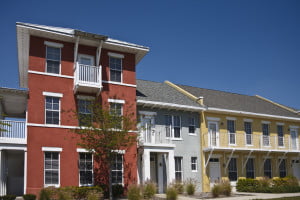
Massachusetts preserved more than 6,000 units of affordable rental housing in 2016, according to a statement released yesterday by the Community Economic Development Assistance Corporation (CEDAC), the public-private, community development finance agency.
It is the largest number of units preserved for affordable housing using state resources in a single calendar year since CEDAC began collecting data. The previous record was nearly 4,400 units, set in 2015.
CEDAC concludes that 7,054 total units in 46 mixed-income project developments across the state were preserved using various types of state financing in 2016. From the total, 6,058 units were affordable and the remainder were market rate. In addition to the units maintained through state financing programs, long-term federal Section 8 contract renewals preserved 2,002 additional affordable apartments. The projects span the state and consist of large- and small-scale developments in urban, suburban and rural communities, including Barnstable, Boston, Brookline, Fall River, Framingham, New Bedford, Springfield and Worcester.
“I am thrilled that Massachusetts has set another record for affordable housing preservation,” Bill Brauner, CEDAC’s director of housing preservation and policy, said in a statement. “Preservation is a critical part of the affordable housing equation and the state has maintained its commitment to preserving these properties for families and individuals. The fact that more than 6,000 units were preserved demonstrates that the innovative tools the state put in place are effective.”
Massachusetts Sets Record In Affordable Housing Preservation
Housing Bond Bills Aim To Add $1.3B To State Programs

Massachusetts is a national leader in affordable housing by creating a system that provides reliable capital funds to affordable housing developers and because of leadership that consistently supports it. Current legislative proposals aim to recapitalize these programs through the introduction of new housing bond bills that seek over $1.3 billion in additional capital authorization for affordable housing.
The housing bond bill is critically important to ensuring that community development agencies and affordable housing developers have access to public financing options that make their projects feasible. In recognition of the importance of quality housing to the region’s economic competitiveness, the Commonwealth of Massachusetts has bold housing production and preservation goals over the next several years. These goals were expressed in the Baker-Polito administration’s ambitious capital budget plan for fiscal years 2018–22, which increased housing funding by 18 percent over prior levels. The enactment of a new Housing Bond Bill in the current legislative session is essential for the state to meet these goals.
The bills are important because they include resources that promote the production and preservation of affordable housing in general, including an extension of the state’s housing tax credit program. I want to focus on one specific area of community development for which both legislative proposals include significant funding – supportive housing. The commonwealth’s ability to create supportive housing units that provide case management and other services to some of the state’s most vulnerable populations is a quiet but important success story. The commonwealth produced 1,750 supportive housing units through these programs over the past three years.
The Community Economic Development Assistance Corporation (CEDAC) manages three supportive housing loan programs on behalf of the Department of Housing and Community Development (DHCD). The Housing Innovations Fund (HIF), the Facilities Consolidation Fund (FCF) and the Community Based Housing (CBH) programs provide resources to community-based developers. These loans not only offer developers much needed funds for their projects, they also help those organizations meet the housing needs of their most vulnerable community members.
Over the past 29 years, DHCD and CEDAC have through the HIF program allocated over $248 million to produce more than 13,500 units to assist homeless families and individuals, victims of domestic violence and their families, individuals living with HIV/AIDS, disabled veterans and single working adults. Through FCF funding, we have financed another 2,400 units with over $140 million to provide service-enriched housing to clients of the Departments of Mental Health and Developmental Services. And with the newest supportive housing bond program, CBH, CEDAC has allocated over $48 million to produce 342 fully accessible units for disabled persons. Ninety percent of these units serve extremely-low and very low-income residents of Massachusetts.
Continued Success
The success of the state’s investment in supportive housing programs is exemplified by the recent opening of the New Joelyn’s Home in Roxbury. Victory Programs, an experienced provider of housing and services, was forced to create a new residential facility serving those struggling with addiction after their original site on Long Island was abruptly shut down in 2014. As the city and state continue to deal with the opioid crisis and finding ways to treat individuals looking for a way out of addiction, facilities like New Joelyn’s Home become even more important. DHCD and CEDAC committed almost $1 million in HIF funds to Victory Programs, the state’s Department of Public Health provides over $750,000 in annual operating funds, and the nonprofit agency is now serving 24 women with supportive housing.
The bond bill also supports two other programs that CEDAC manages – the Home Modification Loan Program (HMLP), administered with the Massachusetts Rehabilitation Commission, which provides low- and no-interest loans to individuals and families with a disabled loved one to construct accessibility improvements that help them stay in their homes; and the Early Education and Out of School Time (EEOST) Capital Fund, managed in conjunction with the Department of Early Education and Care, which offers loans to community-based child care providers looking to upgrade or renovate their facilities. All of these programs help to strengthen Massachusetts’ cities and towns.
The commonwealth last passed a housing bond bill in 2013. In doing so, it strengthened community development agencies across Massachusetts and effectively created thousands of supportive housing units in cities and towns across the state. The challenges for homeless families or individuals living with addictions or disability have only grown since then. These bond programs work, for individuals and families, for the communities they live in and for the programs that help them. Let’s keep building on that success.
Roger Herzog is the executive director of the Community Economic Development Assistance Corporation (CEDAC).
http://www.bankerandtradesman.com/2017/06/housing-bond-bills-aim-add-1-3b-state-programs/
Fenway’s Burbank Gardens to Remain Affordable After Purchase By CDC
Much of the commonwealth’s stock of affordable housing, built in the 1960s, 1970s and 1980s, is at risk of losing affordability. Currently, there are more than 104,000 affordable housing units at risk of converting to market rate; while not all of those are at high risk, we still face the possibility of more than 14,000 converting before January 2020.
Until earlier this month, Burbank Gardens accounted for 52 of those units. The purchase of Burbank Gardens by Fenway Community Development Corporation (Fenway CDC) not only demonstrates the state and local government commitment to preserving affordable housing, but also its continued dedication to finding innovative ways to address the expiring use challenge.
As properties financed through subsidized mortgages issued almost 40 years ago reach maturity, the low income use restrictions accompanying these mortgages expire and long-
time residents face the threat of displacement. Project owners must decide whether to utilize new public financing resources to preserve long-term affordability or opt out of public programs and convert this housing to market rate.
The state legislature, which passed Chapter 40T in 2009 to tackle the expiring use housing challenge, provided the Massachusetts Department of Housing and Community Development (DHCD) and CEDAC tools to monitor and address it. Among the law’s most important provisions are purchase rights, which allow DHCD or its designated
agent to acquire and preserve these expiring affordable housing projects if an owner offers to sell a building. Burbank Gardens is an excellent example of the effective use of these 40T purchase rights, and Fenway CDC successfully acquired the property on April 10. CEDAC provided a $313,000 predevelopment loan and, with participation by Eastern Bank, an $8.2 million acquisition loan. Fenway CDC plans to rehabilitate Burbank Gardens and to ensure that 51 of the 52 apartments remain affordable for low- and moderate-income households.
Located next to Symphony Community Park in the Fenway neighborhood of Boston, the property consists of studio, and one- and two-bedroom apartments, as well as community space. It was one of many 13A properties financed by MassHousing whose 40 year mortgage term will reach maturity in March 2018. Because the project faced imminent risk of market conversion, its preservation became a priority for the state. When the previous owner put the property on the market in early 2016, Fenway CDC was designated by DHCD through Chapter 40T to purchase and preserve the 52-unit residence.
State Policy And Investments Make Significant Impact
Since Chapter 40T was enacted, the law has helped to preserve 24,380 units of privately- owned affordable housing across the commonwealth, ensuring that families are able to stay in their homes and neighborhoods. But still, thousands of units remain at risk. Preserving these affordable units requires a combination of resident and community initiative, technical expertise, and private and public investment.
In the case of Burbank Gardens, public investment has played a significant role. Though not all of the project’s long-term financing is committed, it is anticipated that the majority will come from state resources. This includes millions of dollars in resources from DHCD and MassHousing, along with equity raised from federal and state housing tax credits. In addition to state resources, the city of Boston, through the Department of Neighborhood Development, has shown its support for preservation by committing significant resources to this important preservation effort.
Assembling the right combination of resources to help preserve large-scale affordable housing developments can be a complex endeavor. But over the past several years, Massachusetts has learned how to do that well. Last year, the Urban Institute released data ranking the counties across the United States doing the best job of housing extremely low income families – of the top 10 counties, five were in Massachusetts, in part because of the commonwealth’s successful housing preservation efforts. Suffolk County was ranked first in the nation. CEDAC has supported and advised the city of Boston on preservation strategies – and worked with Boston-area nonprofits like Fenway CDC – for many years.
Burbank Gardens is a success story because, in a time of much uncertainty, the Commonwealth of Massachusetts has maintained its commitment to producing and preserving affordable housing. Beyond the state’s support of housing tax credits, Gov. Charlie Baker and Lt. Gov. Karyn Polito just last week unveiled their housing bond bill, which includes more than $1.3 billion for affordable housing production and preservation over the next five years. With such support, we expect to see more such successful preservation efforts, like Burbank Gardens, going forward.
Roger Herzog is the executive director of the Community Economic Development Assistance Corporation (CEDAC). Bill Brauner is CEDAC’s director of housing preservation and policy.
http://www.bankerandtradesman.com/2017/04/fenways-burbank-gardens-remain-affordable-purchase-cdc/?utm_campaign=shareaholic&utm_medium=twitter&utm_source=socialnetwork