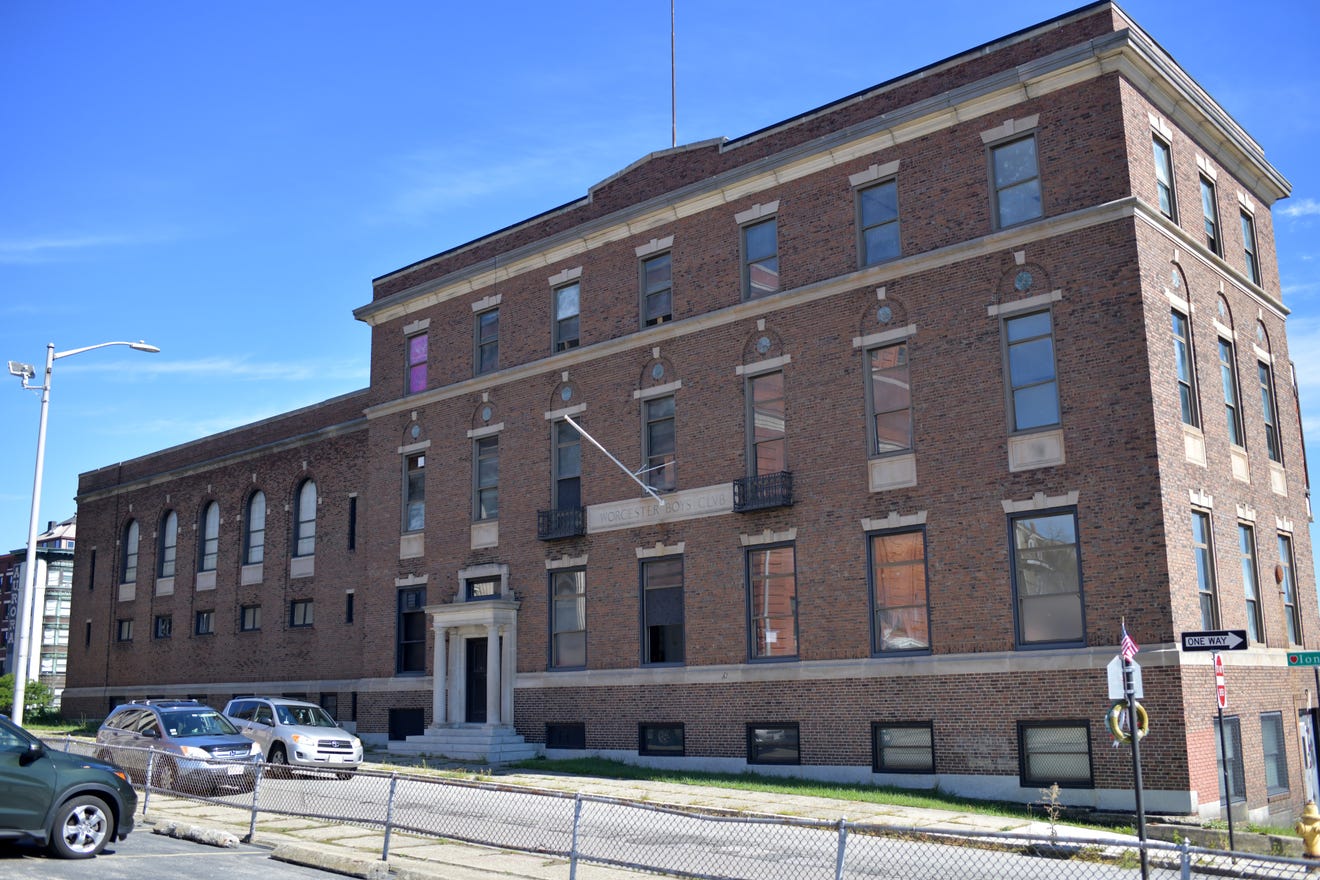
Guild of St. Agnes child care center, to be built at old Worcester Boys & Girls Club, gets $1M grant

WORCESTER – A day care center for low-income children to be built in the former Boys & Girls Club on Ionic Avenue and run by the Guild of St. Agnes received a $1 million state grant Thursday.

“This is terrific,” said Edward P. Madaus, the Guild’s executive director, expressing gratitude to Lt. Gov. Karyn Polito and Gov. Charlie Baker for “seeing the need.”

The new center will be in the long-vacant 30,000-square-foot Boys & Girls Club building, to be reshaped into a $14.4 million creative arts complex, Creative Hub Worcester Arts Center. The project is expected to be completed in 2022

The Baker-Polito administration and the Community Economic Development Assistance Corp. announced a series of early education grants on Thursday.

The Guild of St. Agnes project will expand its child care capacity, with 88 additional toddler and preschool slots.

“There aren’t a lot of child care facilities in Main South. We thought we would be servicing a clientele that needs more child care down there,” Madaus said.

The Guild received a similar grant for $700,000 three years ago to purchase a building at 58 Bigelow St. in Webster to operate a child care center.

The Guild of St. Agnes, started in 1913 by a group of parishioners at Ascension Church on Vernon Street, operates 11 child care centers in Worcester County (six in the city), and an additional six in the Worcester Public Schools. Before the pandemic, the centers served about 1,700 children, ages 6 weeks to 12 years old. The number is now about 1,300. The centers in the schools are currently closed.

The $1 million state grant announced Thursday is part of $6.5 million in Early Education and Out-of-School Time funding awarded to seven organizations. The capital improvement grants help nonprofit center-based child care programs renovate or build high-quality child care facilities that serve mostly low-income families. The grants are managed by the Children’s Investment Fund and the Massachusetts Department of Early Education and Care.

“We are grateful to the educators and child care providers statewide who have worked tirelessly to adapt over the last several months as we continue to combat the COVID-19 public health crisis,” Baker said in the announcement. “Through these grants, we are able to make improvements to child care programs that boost the quality of early education and care and provide families in communities throughout the commonwealth with the resources necessary for success in the classroom and beyond.”

SourceTelegram & Gazette

Westfield Boys and Girls Club receives $1M early education grant

WESTFIELD, MA (WGGB/WSHM) — The Westfield Boys and Girls Club will expand its out-of-school time program.

This comes after Governor Charlie Baker announced a $6.5 million grant in early education and out-of-school time.

The money was awarded to seven organizations to help them renovate childcare facilities that serve low-income children.

The state awarded $1 million went to Westfield’s Boys and Girls Club.

The organization said one of the projects it will put the money towards is building a new pre-school classroom that will be able to fit 20 preschoolers.

SourceWestern Mass News

Baker-Polito Administration Awards $6.5 Million for Early Education Programs; SMOC Receives $475,000 For Framingham Suburban Child Care

BOSTON – The Baker-Polito Administration and the Community Economic Development Assistance Corporation (CEDAC) today announced $6.5 million in Early Education and Out-of-School Time (EEOST) grant funding awarded to seven organizations to help them renovate childcare facilities that serve low-income children.

Managed by the Children’s Investment Fund, CEDAC, and the Massachusetts Department of Early Education and Care, EEOST capital improvement grants help non-profit center-based childcare programs renovate or build high-quality childcare facilities which serve mostly low-income families.

“We are grateful to the educators and childcare providers statewide who have worked tirelessly to adapt over the last several months as we continue to combat the COVID-19 public health crisis,” said Governor Charlie Baker. “Through these grants, we are able to make improvements to child care programs that boost the quality of early education and care and provide families in communities throughout the Commonwealth with the resources necessary for success in the classroom and beyond.”

South Middlesex Opportunity Council (SMOC)  in Framingham received $475,000.

SMOC plans to improve the existing Framingham Suburban Childcare program by installing a new HVAC system, as part of a larger renovation project at the facility.

The program has capacity for 140 infants, toddlers, and preschoolers, and 156 school-age children, the majority of whom are from low-income families.

“Now more than ever, quality childcare and resources are critical to families and children across the state,” said Lt. Governor Karyn Polito. “Our Administration is pleased to support these critical investments that provide safer environments for children to learn in, while providing educators with modernized facilities.”

During the FY20 grant funding round, early childhood education programs could receive awards up to $1 million for major capital projects.

“Child care providers across the Commonwealth are working every day to make sure that families are able to go to work and our youngest children receive the education, support and care that they need,” said Education Secretary James Peyser. “In the upcoming round of grants that will be made available, group and school-age providers will be able to take care of critical repairs and improvements to meet new standards due to COVID.”

“The current public health crisis underscores the need for safe learning environments that support the healthy growth and development of all children,” said Samantha Aigner-Treworgy, Commissioner of the Massachusetts Department of Early Education and Care. “We are thrilled to be able to support these seven programs across the Commonwealth as they turn their projects into reality.”

The EEOST grants are financed through the state’s capital budget and provide matching funds that leverage private investment. The $6.5 million awarded by the Baker-Polito Administration for the FY20 EEOST grants will leverage more than $36 million in additional financing to improve learning environments for nearly 900 children.

“As a result of the COVID-19 pandemic, so many early childhood education providers are struggling to meet the needs of vulnerable families and communities. It is gratifying to be able to announce that these seven programs will receive the necessary funding to create high-quality, safe and healthy learning environments,” said Theresa Jordan, director of the Children’s Investment Fund, an affiliate of CEDAC.

“We are happy to be working with providers across the Commonwealth to ensure that young children from vulnerable communities have access to high-quality early education, and we thank Governor Baker and Lt. Governor Polito for their ongoing support of the EEOST Capital Fund,” said Roger Herzog, CEDAC’s executive director. “Grants from the EEOST Capital Fund are vital to the early education sector, which in turn supports families and strengthens communities.”

Other organizations receiving awards were:
  • Berkshire Family YMCA (Pittsfield) will modernize its current early education and out-of-school time program space as a part of a larger renovation at the Pittsfield YMCA building. The project will increase slots available for infants, toddlers, and preschool-aged children. Once complete, the program will have the capacity to serve 95 infants, toddlers, and preschoolers, and 39 children in out-of-school time programs.
  • Boys and Girls Club of Greater Westfield (Westfield) will build an addition to expand its existing out-of-school time program, including a new preschool classroom. Once complete, the program will have the capacity for 20 preschoolers and 280 children in out-of-school time programs. Grant award: $1,000,000
  • Community Action Incorporated (Haverhill) plans to upgrade the facility at the existing Fox Center Head Start program by installing a new HVAC system and roof. The program serves 106 toddlers and preschoolers, all of whom come from low-income families. Grant award: $1,000,000
  • East Boston Social Centers (East Boston) plans to create a new early learning program within the former Barnes School. The new center will encompass the ground floor of a multi-use building that contains affordable senior housing on the upper floors. Once complete, the center will have the capacity for 41 new infants and toddler-age children, a majority of whom come from low-income families. Grant award: $1,000,000
  • Guild of St Agnes (Worcester) will create a new early learning program within the vacant former Boys and Girls Club building. Once construction is complete, the Guild will operate the center, which is located within a new $14.4M arts and creative complex being developed in partnership between two non-profit organizations. The project will expand child care capacity with 88 additional toddler and preschool slots.  Grant award: $1,000,000
  • Old Colony YMCA (Brockton) will renovate the existing out-of- school time program spaces within the Brockton YMCA building, adding 26 new slots for out-of-school time children and improving the facility which cares for nearly 200 children.

All the programs receiving a grant award serve publicly subsidized families, have demonstrated financial need and have secured additional funding to pay for a portion of their project costs. The Department of Early Education and Care partnered with CEDAC’s affiliate, the Children’s Investment Fund, to administer the grants.

***

Applications for FY21 grants are being accepted now. The new round of grants will allow for smaller amounts of funding, between $100,000 and $250,000, to offset capital improvement expenses related to the COVID-19 public health emergency. This special round of grant funding is intended to give early education and care centers funding resources to make improvements and emergency repairs to address health and safety.

SourceFramingham SOURCE

Register today for a free virtual training on the Massachusetts Housing Preservation Law, Chapter 40T

In its first 10 years, Chapter 40T has played a crucial role in the preservation of over 9,500 affordable units in almost 100 properties across the state. This forum will describe the statute, and look at the key factors that have led to its success.

Keynote Speaker: Priya Jayachandran, Chief Executive Officer, National Housing Trust
Topic: Reimagining Preservation

Speakers and Panelists:
– Bill Brauner, Director of Housing Preservation and Policy, CEDAC
– Roberta L. Rubin, Chief Counsel, Massachusetts Department of Housing and Community Development
– Rachel Heller, Chief Executive Officer, Citizens’ Housing and Planning Association
– Suneeth P. John, Director of Real Estate, Fenway Community Development Corporation

Registration is now open. Event is free of charge.

Click here to register.

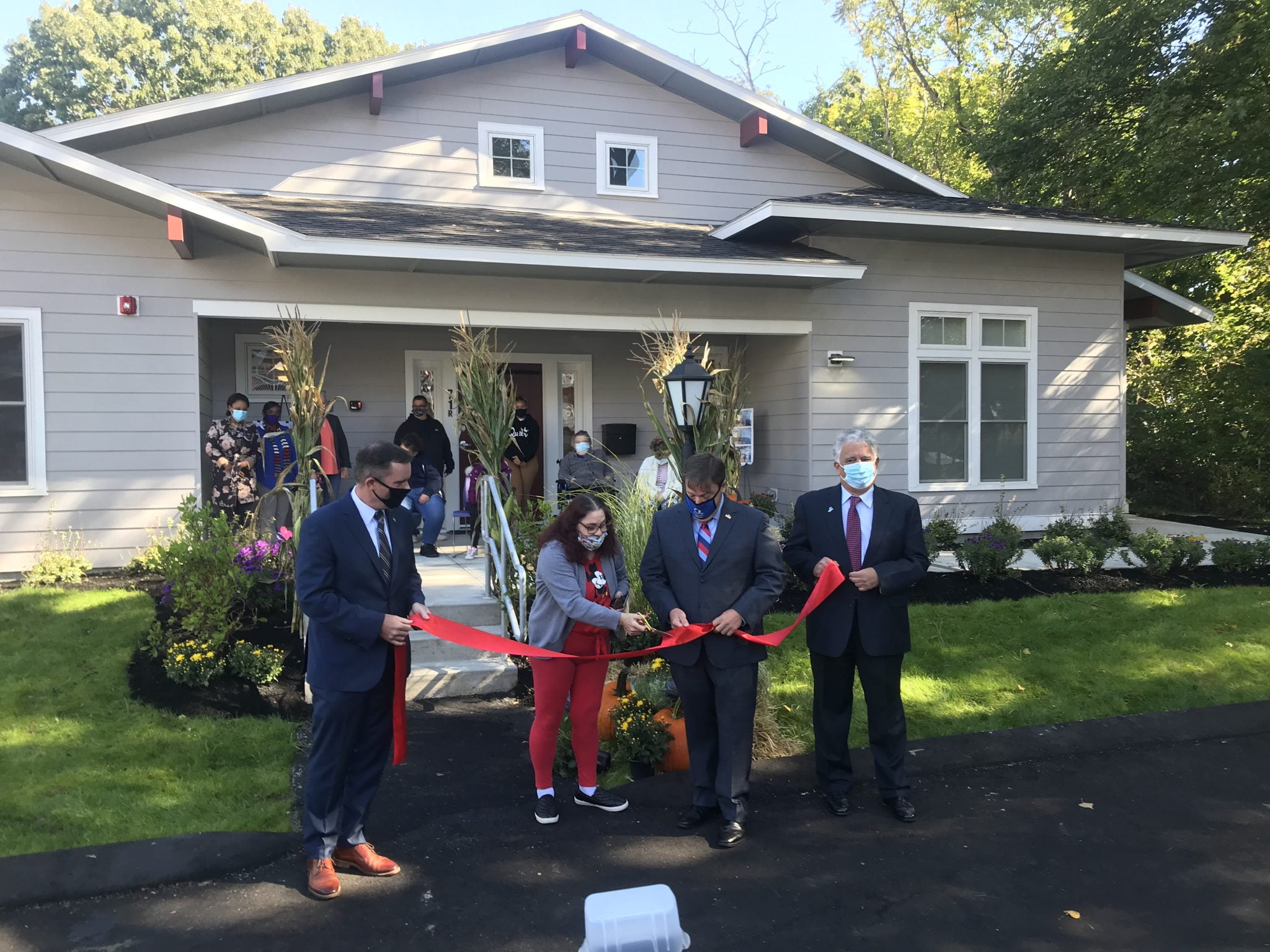
Deaf-friendly home for the disabled opens in Quincy’s Germantown

The group home currently houses five adults with intellectual and developmental disabilities, has staff available 24 hours a day, and includes smart technology for the deaf staff and residents.

QUINCY — The first completely deaf-friendly group home for adults with disabilities in eastern Massachusetts has opened in Quincy’s Germantown neighborhood.

NeighborWorks Housing Solutions, a Quincy-based nonprofit that builds homes for veterans, homeless families, and people with disabilities, collaborated on the Bicknell Road project with WORK Inc., a nonprofit based that operates residential group homes for people with disabilities. The home currently houses five adults with intellectual and developmental disabilities, has staff available 24 hours a day, and includes smart technology for the deaf staff and residents.

“This has been an honor to collaborate with WORK Inc. on this project, which will truly be a home to five individuals who have a unique set of needs,” Robert Corley, chief executive officer of NeighborWorks, said in a statement. “We’re excited to show the community how important this type of housing is for the community. We look forward to partnering with WORK Inc. and other similar agencies to help create more housing like the home in Germantown.”

The group home was designed by Elton Hampton Architects and was funded by the Massachusetts Department of Housing and Community Development, the Massachusetts Department of Developmental Services and the City of Quincy.

NeighborWorks Housing Solutions is responsible for various Quincy developments, including 140 units at The Watson on East Howard Street, 24 units at Winter Gardens on Winter Street, and 1116 Sea St. — a two-family home at the former Houghs Neck American Legion Post that houses two veterans and their families.

The nonprofit also received a $500,000 federal grant in February and was approved by the Quincy Planning Board in January for a project that will demolish four Quincy Point homes to build 18 low-income apartments in their place.

SourceThe Patriot Ledger

Eviction protection bill clears Housing Committee

A BILL THAT WOULD BAN most evictions and foreclosures for up to a year after Gov. Charlie Baker ends the coronavirus state of emergency cleared a key legislative hurdle on Thursday  

The Joint Committee on Housing advanced the bill in a party line vote, 14-2, just 18 days before the state’s eviction ban is set to expire. The effort, led the House chairman of the housing committee, Rep. Kevin Honan, Rep. Mike Connolly, and Sen. Pat Jehlen, would effectively extend the current eviction moratorium a full year after the end of the state of emergency and freeze all rent increases.  

All 14 Democrats on the panel voted to advance the legislation. Republican Reps. David DeCoste and Will Crocker voted no, while Republican Sen. Patrick O’Connor of Weymouth abstained. 

The committee made a several changes in its final version of the bill, which was originally filed in late June. The most significant was to allow landlords to apply for a tax credit from the state, equal to the amount of rent owed to them, if they forgive the corresponding rental debt of tenants who can’t pay because of COVID-19related financial hardship.  

The bill also allows smaller landlords with fewer than 15 units to pause mortgage payments for up to six months and add those payments onto the end of their loan. The bill additionally calls for a housing stability fund to be established to aid smaller landlords, but the revenue source for such assistance is unclear.   

Eligibility for the Residential Assistance for Families in Transition program would be expanded. Under the program, households meeting certain income requirements that have been impacted by the pandemic are eligible to receive up to $10,000 to be used for rental payments. 

Tenant advocates lauded the bill’s movement, but landlord groups and some housing attorneys aren’t as pleased. 

Douglas Quattrochi, director of trade group MassLandlords, said the bill authorizes tax credits for landlords “subject to availability.”  

It looks like it’s funded, but the fine print matters,” he said, suggesting the bill could amount to an “empty promise” for landlords struggling without rental payments coming in. 

Connolly said the “funding structure is something intentionally left out” so legislators could focus on the framework of the legislation. He said the continued standoff in Washington over further stimulus aid has left federal funding that the state might receive in flux. 

The bill now moves to the House Ways and Means Committee, which, Connolly said, will focus on the funding and cost aspects of the bill.”  

The Housing Committee broadened the scope of tenant protections in the legislation, limiting no-fault evictions and requiring landlords to show just-cause in the rare instances they are allowed to file for such action in housing court. A separate bill limiting such evictions failed in the Legislature a previous year. 

Showing just-cause means that landlords have to give specific reasons, such as failure to pay rent, violation of the terms of a lease, or nuisance complaints for an eviction to even be considered.  

The committee also recommended the creation of a legislative commission to study the impact of the pandemic and economic fallout on housing.  

Quattrochi said he had concerns that the commission didn’t offer a seat to his organization, which represents 2,000 Massachusetts landlords, half of whom own less than six units. “You think we’re going to support this? Rep. Connolly is either careless or trying to stick it to us,” he wrote in an email.  

Among the members proposed are: Honan and Sen. Brendan Crighton as chairs of the joint committee on housing; the chief justice of the housing court or a surrogate; a member of Attorney General Maura Healey’s office, directors of the Massachusetts Housing Finance Agency, Housing Partnership Fund, Community Economic Development Assistance Corporation, executive directors of tenant rights groups like City/Life Vida Urbana, academics, directors of local housing authorities, affordable housing developers, a member of the Small Property Owners Association, and others.  

Baker has indicated he plans to allow the eviction moratorium law to expire on October 17, but has not made a final commitment.  

In a recent court decision on a lawsuit brought by landlords challenging the moratorium, US District Court Judge Mark Wolf rejected their request to temporarily stop the eviction ban, but indicated it needs to end at some point.  

“What is constitutionally permissible for a limited period of time may become unpermissible at some point,” Wolf said. 

The landlords’ attorney, Richard Vetsteinsaid he took Wolf’s comments to suggest a 12-month extension of the moratorium would “likely be unconstitutional.”  
SourceCommonWealth Magazine

CEDAC Approves $8.4 Million in Acquisition Financing to Preserve Long-Term Affordability of 100 Housing Units in Attleboro

The Community Economic Development Assistance Corporation (CEDAC) recently committed more than $8.4 million in acquisition financing for the preservation of affordable housing in Attleboro, MA.

The financing commitment was made to Retirement Housing Foundation (RHF), working in partnership with The Schochet Companies, to acquire Hillcrest Acres in Attleboro. The partners recently finalized the transaction, ensuring that this property will remain affordable going forward.

“Preserving affordable housing is an important part of CEDAC’s mission. Hillcrest Acres was far along the path of conversion from affordable housing to market rate, but thanks to this acquisition, all 100 apartments will have long-term affordability restrictions,” said Roger Herzog, CEDAC’s executive director. “Congratulations to our partners, Retirement Housing Foundation and The Schochet Companies, on this important milestone that will preserve a total of 100 units of affordable housing while preventing existing tenants from displacement.”

The 100-unit property was constructed in 1974 and faced expiring affordability restrictions in 2019. CEDAC participated with Eastern Bank to provide the acquisition financing. Funding sources included program-related investments (PRIs) from both Bank of America and the John D. and Catherine T. MacArthur Foundation.

“I am pleased to welcome Hillcrest Acres to the RHF family of 198 communities,” said Dr. Laverne Joseph, President and CEO of RHF. “There is a large and growing need for affordable housing and we are doing our best to address that need.”

Hillcrest Acres is a garden style multifamily community located on just over nine wooded acres in Attleboro, with a mix of 1-, 2-, and 3-bedroom units. Consisting of 10 residential buildings spread throughout the property, the development offers picnic and barbecue areas, play areas, and a 3,000 square foot community/office building. The property is close to public transportation, including the MBTA commuter rail station with trains to both Providence and Boston.

“We are so appreciative of the efforts of CEDAC and the Massachusetts Department of Housing and Community Development (DHCD) in helping us to acquire and preserve this key asset as affordable for the folks who currently reside there as well as those who will come after them,” said Richard Henken, president of The Schochet Companies. “With their help we were able to get the seller an acceptable price so as to not lose these apartments to the market. We look forward to completing the second leg of this transaction, which will refresh and reinvigorate the property providing significant quality of life benefits for our residents.”

“This closing was made possible by the efficient and collaborative work with our partners,” said Bill Brauner, CEDAC’s Director of Housing Preservation. “We look forward to continuing to work with Retirement Housing Foundation as they seek long-term funding from the Massachusetts Department of Housing and Community Development (DHCD) and from MassHousing, which will ensure that this development remains affordable for many years in the future.”

SourceBoston Real Estate Times

Belchertown Day School Opens Its Doors

After a three-year wait, the Belchertown Day School has opened its doors
to children and their families, with some restrictions due to COVID-19. Belchertown Day School Executive Director Pat Bruni and School Age Director Heidi Gutekenst said they are “excited to be in (their) forever home.”

»

SourceBelchertown, Granby & Amherst Sentinel

Hillcrest Acres in Attleboro acquired, to be kept as affordable housing

The nonprofit Retirement Housing Foundation and The Schochet Companies have closed on the acquisition of Hillcrest Acres Apartments, preserving 100 units of affordable housing, it was announced Friday.

Hillcrest Acres, located at 1101 Hillside Ave., is an expired Rent Supplement and Section 236 property, with a mixed income, but mostly affordable, resident population, the announcement said.

“With all affordability restrictions having expired, the project was at high risk of being lost to a market rate buyer, potentially leading to community disruption and displacement of many lower income households,” it said.

advertisement

“I am pleased to welcome Hillcrest Acres to the RHF family of 198 communities,” RHF President and CEO Laverne Joseph said. “There is a large and growing need for affordable housing and we are doing our best to address that need.”

According to the announcement, the development team worked with the property owner for over a year to reach agreement on a transaction. To facilitate preservation, the Community Economic Development Assistance Corporation has provided a $8.4 million acquisition loan, allowing for a bridge to a low-income housing tax credit transaction. Coupled with financing and funding from other public sources, it “allows for a major rehabilitation of dwelling units and most major systems.”

“Preserving affordable housing is an important part of CEDAC’s mission,” said Roger Herzog, CEDAC’s executive director. “Hillcrest Acres was far along the path of conversion from affordable housing to market rate, but thanks to this acquisition, all 100 apartments will have long-term affordability restrictions.”

advertisement

The acquisition will preserve 100 units of affordable housing “while preventing existing tenants from displacement,” Herzog said.

Completed in 1974, Hillcrest Acres is a garden-style multi-family community located on just over 9 wooded acres. It consists of 10 residential buildings spread throughout the property and has picnic and barbecue areas, play areas, and a 3,000-square-foot community/office building on site.

Founded in 1961, RHF is a national nonprofit organization with a mission to provide a range of housing options and services for older adults, low-income families, and persons with disabilities.

It is affiliated with the Council for Health and Human Service Ministries of the United Church of Christ and LeadingAge and its state affiliates, and also co-sponsors housing development with other varied denominational and community organizations. RHF sponsors and manages 198 communities in 29 states and Washington, D.C., Puerto Rico and the Virgin Islands. This will be RHF’s 12th community in Massachusetts.

Schochet Associates Inc. is a real estate development and management company founded in 1973. Since that time, the company has developed, owned, and/or managed in excess of 7,000 apartments and over 600,000 square feet of retail and commercial space throughout New England and on the West Coast. Today, it owns and/or manages 5,000 apartments and 100,000 square feet of commercial space throughout New England.

CEDAC is a public-private community development finance institution that provides financial resources and technical expertise for community-based and other nonprofit organizations engaged in community development in Massachusetts.

SourceThe Sun Chronicle

New 6-Unit Building in Hyde Park

Dear Friends and Supporters,

We are very pleased to announce that we have acquired a new supportive housing project, a 6-unit building in Hyde Park. The project was originally developed more than twenty years ago by New Communities Services, a Cambridge-based nonprofit, to provide housing and supportive services to single adults at risk of homelessness. As the new owner, Mainstay will continue to operate the development as a supportive housing project for individuals at risk of homelessness.

This project was undertaken in partnership with the Community Economic Development Assistance Corporation (CEDAC) and the Massachusetts Department of Mental Health. Roger Herzog, executive director of CEDAC, said “I’d like to thank Mainstay for ensuring the stability of this important project and congratulate them on their incredible work serving vulnerable populations, especially during these unprecedented times. The current public health crisis demonstrates how crucial it is for everyone to have access to a safe, affordable place to live and reaffirms our commitment to supporting the non-profit community development sector across the state. We would also like to thank the Massachusetts Department of Mental Health for their longstanding partnership as we continue to work together to produce and preserve permanent supportive housing in the Commonwealth.”

We were thrilled to be asked last year to step in to preserve this Supportive Housing development as its new owner. The City of Boston needs every unit of Supportive Housing it can get in its fight to end homelessness, and safeguarding and preserving these six units helps that cause immensely.

Mainstay is proud to say that we continue to deliver the services and supports, including safe and supportive housing, and person-centered home care, that people need to thrive in their residences and communities.

Thank you for your support.

Larry Oaks and the Mainstay Team

SourceMainstay