‘Herculean’ Efforts Preserve 97 Affordable Units in Lower Roxbury

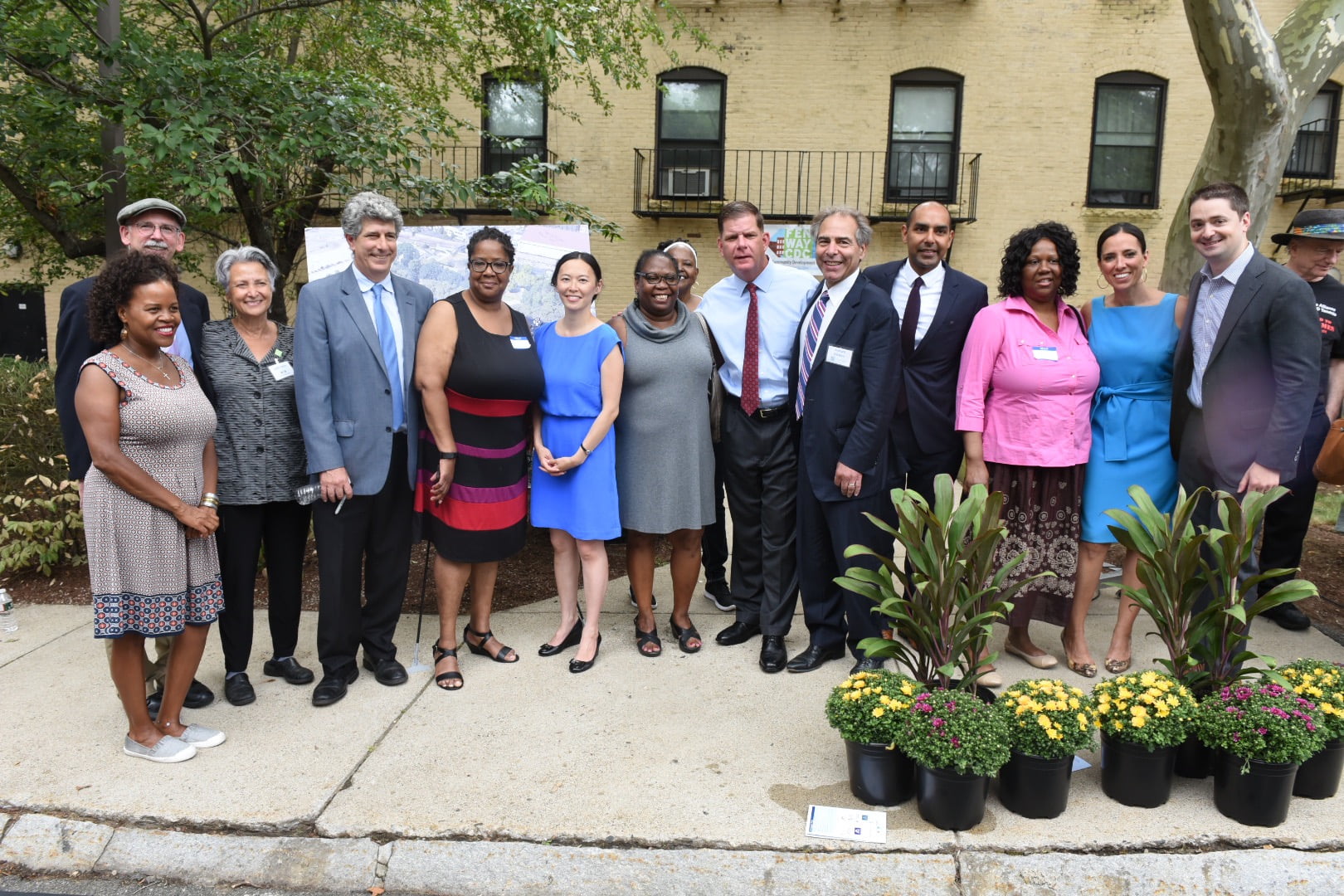
A partnership led by the Fenway Community Development Corp. will renovate and preserve affordability for 97 housing units in Lower Roxbury.

The Fenway CDC and development partner Schochet Cos. of Braintree acquired the Newcastle/Saranac Apartments at Columbus Avenue and Northampton Street in January. Affordability restrictions were set to expire as the former owners paid off the mortgage they received from MassHousing’s 13A program, threatening displacement for residents of 97 units that could have been converted into market-rate housing.

“It took the city of Boston, the commonwealth, and numerous quasi-public entities, banks and investors to rescue these apartments,” Leah Camhi, executive director of the Fenway CDC, said at a groundbreaking ceremony Wednesday. “The families at Newcastle/Saranac are now guaranteed affordable homes for years to come due to all their herculean efforts.”

Funding was provided through Boston’s inclusionary development policy off-site contributions from three projects: 1000 Boylston St., 60 Kilmarnock St. and 212 Stuart St. The policy requires developers who don’t include income-restricted units on-site to make cash payments to support affordable housing in the surrounding area.

Additional funding came from the city’s Department of Neighborhood Development, the Boston Planning & Development Agency, Massachusetts Department of Housing and Community Development, MassDevelopment, MassHousing, Massachusetts Housing Investment Corp. and the Community Economic Development Assistance Corporation.

Members of the project team include The Architectural Team, attorneys Klein Hornig and Holland & Knight, Keith Construction, development consultant David Levy and Community Square Assoc.

SourceBanker & Tradesman

Affordable Housing in Lower Roxbury Preserved

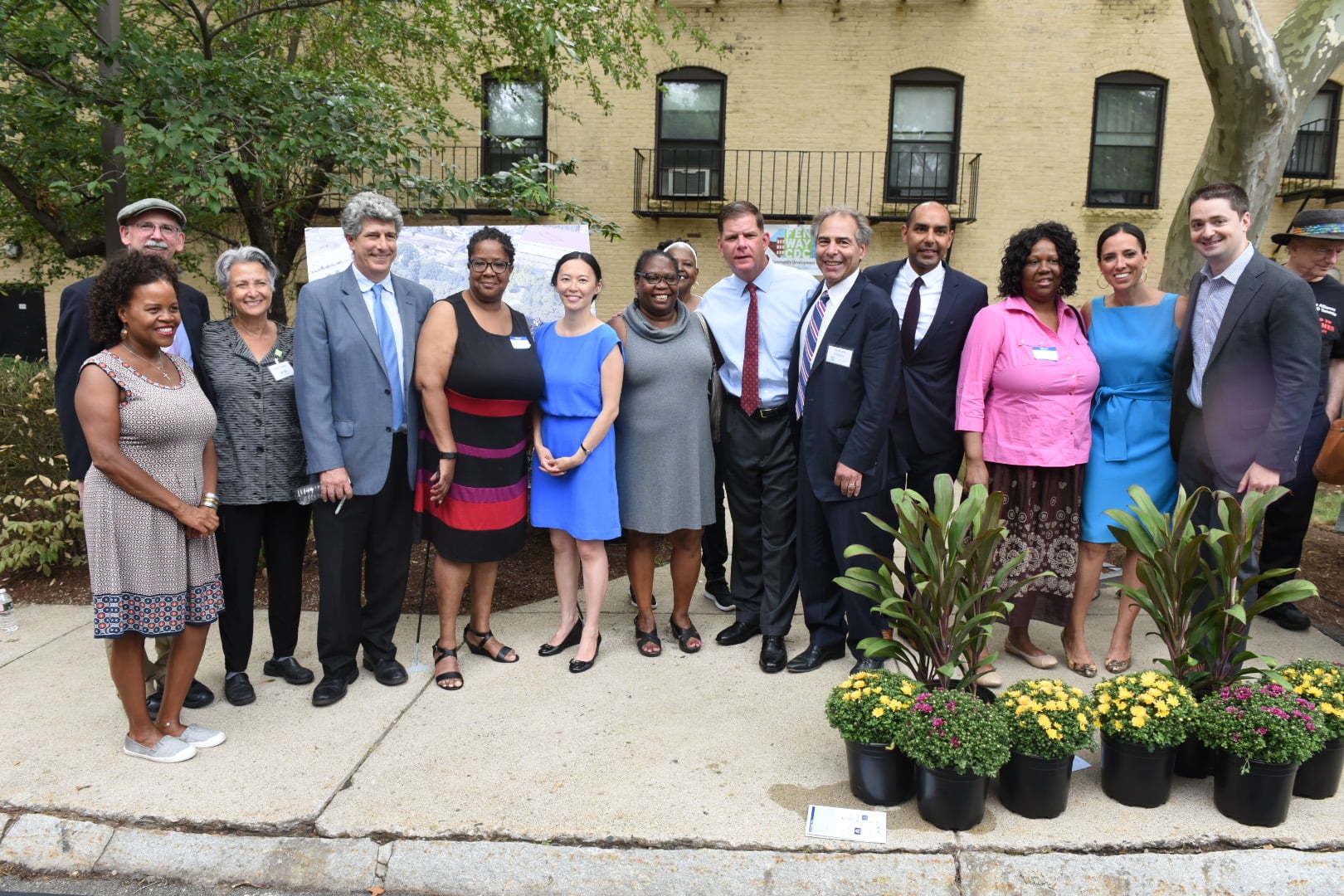
Building on his commitment to preserve affordable housing in Boston, Mayor Martin J. Walsh today joined the Fenway Community Development Corporation, their development partner Schochet Companies and Lower Roxbury residents to celebrate the acquisition and preservation of 97 affordable housing units at the Newcastle/Saranac Apartments.

“Preserving Boston’s affordability is key to ensuring everyone who wants to live here can afford to do so, and I’m particularly pleased our commitment to the Newcastle/Saranac Apartments will both preserve and renovate 97 units of our existing affordable housing stock,” said Mayor Walsh. “I want to thank the Fenway CDC and our partners for working with us to make sure families can stay in their homes. Together, we’re protecting long-time residents from displacement, and we’re helping maintain the character of this community.”

Celebration of affordable housing in Lower Roxbury

The preservation of the units is made possible through Inclusionary Development Policy (IDP) off-site unit contributions by three housing development projects: 60 Kilmarnock Street, 1000 Boylston Street, and 212 Stuart Street, negotiated by the Boston Planning & Development Agency (BPDA). IDP requires that market-rate housing developments with 10 or more units and need zoning relief contribute to income-restricted housing.

“Newcastle/Saranac has been my home for years, I raised my family here and I love this neighborhood,” said Patricia Rogers, a 30-year resident of Newcastle/Saranac Apartments. “This building is in at a convenient location, but the best part of living here is my neighbors. We look out for each other. I want to thank the Mayor, Fenway CDC and all of the people here today for helping us stay in our homes.”

The City’s Department of Neighborhood Development (DND) worked with the Fenway CDC to acquire the building and assist in the plan for the renovation of its 97 apartments, located on Columbus Avenue and Northampton Street in Lower Roxbury. Newcastle Saranac’s long-term affordability restrictions were set to expire as the former owners paid off the mortgage they’d received using the MassHousing 13A program. If the building converted to market-rate, all of the tenants were likely to be displaced from homes they had lived in for decades. With help from City of Boston, Fenway CDC was able to purchase the building from its owners, protecting existing tenants from displacement, and preserving the long-term affordability of this mixed-income development.

“You know the old saying ‘It takes a village?’ Well, in order to save 97 units of affordable housing at Newcastle/Saranac, it took the City of Boston, the Commonwealth, and numerous quasi-public entities, banks and investors to rescue these apartments,” said Leah Camhi, executive director of the Fenway CDC. “The families at Newcastle/Saranac are now guaranteed affordable homes for years to come due to all their herculean efforts.”

The Newcastle/Saranac acquisition and preservation was made possible with the significant support from the City’s Department of Neighborhood Development, the Boston Planning & Development Agency, the State’s Department of Housing and Community Development, MassDevelopment, MassHousing, Massachusetts Housing Investment Corp and the Community Economic Development Assistance Corporation.

Today’s celebration builds on the release of Housing a Changing City: Boston 2030, Boston’s latest quarterly housing report, and the City’s overall housing goal of 69,000 new units by 2030, to meet Boston’s faster than expected population growth. These 69,000 new units include 15,820 new income-restricted units, which would elevate Boston’s income-restricted inventory total to 70,000, or one in five of all housing units. In addition, the plan set a goal to preserve 85 percent of Boston’s most at-risk privately-owned affordable units, and to purchase 1,000 units of rental housing stock from the speculative market and income-restrict them for perpetuity.

Mayor Walsh’s 2019 housing security legislative package focuses on expanding upon the work that Boston has done to address the region’s affordable housing crisis and displacement risks for tenants. The housing security bills proposed seek to help existing tenants, particularly older adults, remain in their homes, and creates additional funding for affordable housing.

###

SourceMayor's Office

Dorchester Bay Project Receives Funding from State to Preserve Affordable Housing in Uphams Corner

Governor Charlie Baker announced Dorchester Bay Economic Development Corporation (DBEDC) as one of 28 state-wide recipients of the 2019 Affordable Rental Housing Awards. The award will support the renovation of Dudley Terrace Apartments, a 56-unit affordable housing development in Boston’s Dorchester neighborhood. The project will include funding from the Department of Housing and Community Development (DHCD) with Low Income Housing Tax Credits (LIHTC), subsidy funds, and additional local funding from the City of Boston. Community Economic Development Assistance Corporation (CEDAC) has provided critical pre-development support for the project.

The rental units located in four scattered-site buildings on Dorchester Avenue, Massachusetts Avenue, Roach Street, and Dudley Terrace offer 56 units of affordable rental housing to households earning less than 60% of AMI. Twenty units are further restricted for extremely low-income households earning less than 30% of AMI, including formerly homeless households. Three units will be set aside for residents who receive services from the Department of Mental Health.

Dorchester Bay is committed to serving Dorchester’s low-income residents and expanding affordable housing opportunities. The renovation of Dudley Terrace Apartments is in keeping with Dorchester Bay’s commitment to ensuring that Dorchester residents can remain and thrive in their neighborhoods.

“Dorchester Bay is committed to preserving Dudley Terrace Apartments as high-quality, affordable homes into the future. Of particular importance, this funding will improve the air quality and comfort of residents by improving ventilation, windows, and building envelopes. Not only are these homes affordable, but they are close to public transportation and jobs – important factors for residents,” said K. Beth O’Donnell, Director of Real Estate Development at Dorchester Bay Economic Development Corporation.

About Dorchester Bay Economic Development Corporation
Dorchester Bay Economic Development Corporation (DBEDC) is a community development corporation founded by local civic associations in 1979 to address the problems of economic disinvestment, unemployment, crime, community tensions and the shortage of quality affordable housing undermining Boston’s Dorchester neighborhoods. Over the last 40 years, we have worked in partnership with local leaders and stakeholders to build and preserve 1,100 units of affordable housing and over 200,000 square feet of commercial space, to engage residents in community life, and to support a robust economy through small business support and economic development. The structures we have built are physical manifestations of our work, but at its core, our work is about strengthening our community, which is made up of the people who live and work in our neighborhood.

For more information, visit the DBEDC website at www.dbedc.org, follow us on Twitter @dbedc, like us on Facebook, connect with us on LinkedIn, and subscribe to our email list.

###

SourceDorchester Bay Economic Development Corporation

The Community Economic Development Assistance Corp. celebrates opening of the 25-unit Blanchard School Apartments in Uxbridge, MA

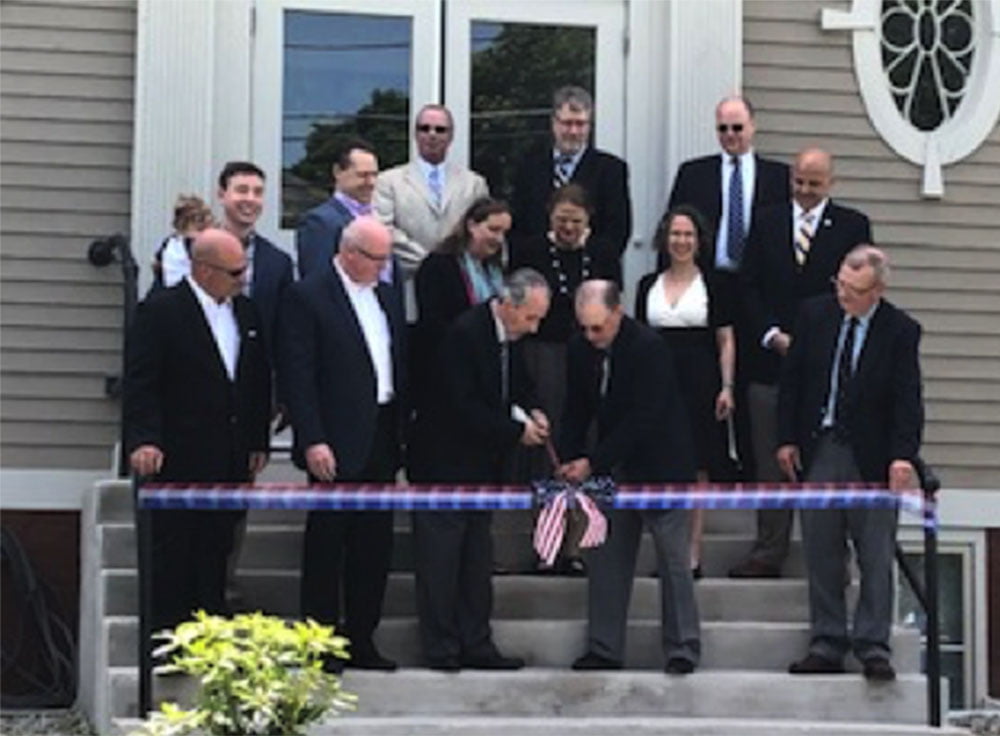
The Community Economic Development Assistance Corp. (CEDAC) joined Virginia Blanchard Memorial Housing Association (VBMH) and Jon Juhl of JNJUHL and Associates to celebrate the grand opening and ribbon cutting for Blanchard School Apartments at the Uxbridge Progressive Club. Built in 1873 as an elementary school and vacant since 2002, the property is named for the beloved local educator Virginia Blanchard, who served as a teacher and principal at the school for 45 years. VBMH and JNJUHL have redeveloped the historic building and added an adjacent annex to create 25 units of affordable rental housing.

Blanchard School Apartments contains a mix of one, two and three-bedroom apartments. All units will be reserved for households with incomes below 60% of area median, and the property will be managed by The Community Builders (TCB). With an initial loan in 2013, CEDAC provided more than $300,000 in pre-development financing, as well as valuable technical assistance, to support this project. Major sources of funding include: Massachusetts Housing Investment Corp. ($6.2 million in federal low-income and historic tax credit financing); The Life Initiative ($6 million construction loan); the state Department of Housing and Community Development (DHCD) ($1.8 million); MHP ($250,000 permanent loan), and state low-income and historic tax credits ($1.7 million purchased by Unibank).

Additionally, the project received $367,000 through the Community Based Housing (CBH) program to include two units that provide enhanced accessibility features for households with a member at risk of institutionalization or homelessness as a result of their disability. The development also has a preference for military veterans. CEDAC works with the Massachusetts Department of Housing and Community Development (DHCD) to manage several supportive housing programs, including CBH.

Nunes Trabucco Architects and general contractor Sugrue & Associates, were part of the development team.

Finally, acquisition proceeds from the project to the town have capitalized a scholarship fund to be awarded annually in memory of Virginia Blanchard, to a graduating student who plans to pursue a career in education.

“Congratulations to VBMH and Jon Juhl on the completion of the Blanchard School Apartments,” said CEDAC’s executive director Roger Herzog. “CEDAC is pleased to support this project, which will provide 25 high-quality affordable homes for families in Uxbridge, including units for veterans and people living with disabilities. The deep commitment of VBMH and the Town of Uxbridge to preserving the historic Virginia Blanchard School for affordable housing will benefit residents for many years to come.”

“We are thrilled to celebrate the successful transformation of a historic school building into a unique and affordable apartment complex,” said Harry Romasco, board president of VBMH. “We are proud to provide safe, secure and affordable rental housing options to families, veterans, elderly households, and people with disabilities in the Uxbridge area.”

The development team of the Blanchard School Apartments received an Excellence in Affordable Housing award at the Massachusetts Housing Investment Corporation’s (MHIC) annual meeting and awards ceremony. The award was given for the team’s “perseverance and innovation in executing the community’s vision to preserve the rich history of the Virginia Blanchard School.”

When presenting the award, MHIC president Joe Flatley, said, “We are more than pleased to have this opportunity to publicly recognize the development team of the Blanchard School Apartments. Clearly, VBMH and Jon Juhl were tenacious and focused and in the end not only created new affordable housing, but they also helped to preserve the rich history of Uxbridge.”

SourceNew England Real Estate Journal

Baker-Polito Administration Advances Production and Preservation of 1,500 Housing Units Across Commonwealth

Today, Governor Charlie Baker announced the 2019 Affordable Rental Housing Awards. Today’s awards will support the preservation and production of 1,581 rental units, including 1,349 affordable units. This includes 273 units that will be reserved for extremely low-income households.

Today’s awards will advance three transit-oriented projects, five projects for seniors, and two projects that will significantly rehabilitate public housing. Affordable rental housing awards have led to the production, renovation and preservation of more than 7,800 housing units, representing nearly half of all the housing units supported by the Baker-Polito Administration since 2015 though funding mechanisms like the MassWorks Infrastructure Awards Program, the Housing Development Incentive Program and more.

“We are pleased to announce these Affordable Rental Housing Awards to advance the production and preservation of more than 1,500 rental housing units throughout the state,” said Governor Charlie Baker. “Our administration has already invested more than $1 billion in affordable housing and we look forward to working with our colleagues in the Legislature to pass our Housing Choice bill to facilitate the production of more new housing units in communities across Massachusetts.”

“Each housing unit advanced today will benefit entire communities, by bringing more people to downtowns, transforming long-vacant properties, and providing new customers for local businesses,” said Lt. Governor Karyn Polito. “Housing is both a valuable tool and critical precursor for economic development, and these projects will provide stability to many households in need. Congratulations to all of today’s awardees.”

The Department of Housing and Community Development is awarding nearly $80 million in direct subsidies from seven state bond accounts and federal HOME funds, and allocating $38 million in state and federal Low Income Housing Tax Credits (LIHTC) to 28 projects. The tax credit allocations will generate more than $260 million in equity to support these projects. Massachusetts is one of just 17 states to offer a state tax-credit program to complement the federal LIHTC program to support the development and rehabilitation of affordable housing.

“The housing crisis in Massachusetts has far reaching effects on our Commonwealth, and is a major obstacle to long-term growth,” said Housing and Economic Development Secretary Mike Kennealy. “Our workforce and low-income households need more housing options that connect them to employment opportunities, transportation and amenities. Our administration is proud to support today’s projects, which will further diversify our housing portfolio and help more families access stable housing.”

“Housing that meets the needs of residents is the foundation for thriving communities, supporting strong neighborhoods and vibrant downtowns,” Housing and Community Development Undersecretary Janelle Chan. “Today’s awards enable the creation of housing for low-income families, seniors, and individuals, including those transitioning out of homelessness. These high-impact projects will bring new residents to Fitchburg, Gloucester, and Methuen’s downtown districts, redevelop vacant school properties in Southbridge, Swampscott and Taunton, and leverage town-owned land in Williamstown. This is just a sample of the amazing developments we are supporting, all of which will benefit thousands of residents upon their completion.”

Governor Baker joined Housing and Economic Development Secretary Mike Kennealy, Housing and Community Development Undersecretary Janelle Chan and local leaders to announce the awards in Swampscott, near the site of the future Senior Residence at the Machon, which received funding today. The project will redevelop a vacant elementary school into 38 affordable rental units for seniors, with eight units reserved for extremely low-income seniors. The developer, B’Nai B’rith, will also provide long-term services at the site to support residents. DHCD is supporting the project with a federal LIHTC allocation and direct subsidy funding.

“A few years back the Town of Swampscott took an important step in making the former Machon Elementary School available for affordable housing. Together with a strong partner in B’nai B’rith Housing and the required financial support from the Baker Administration, 38 units of very affordable senior housing are becoming a reality in Swampscott,” said Peter Spellios, Chair of the Swampscott Select Board. “The need for affordable housing in every community is real. By supporting the Senior Residences at Machon in his hometown of Swampscott, Governor Baker is setting an important example for all communities. We are grateful for his leadership and support.”

“We are so grateful for the State’s support and for our partnership with the Town of Swampscott to bring much-needed affordable housing to seniors and older adults in Swampscott,” said Susan Gittelman, Executive Director B’nai B’rith Housing. “Seniors and older adults are a fast growing demographic, and we believe this community development will help fill the need for affordable housing in Massachusetts.”

“With the current high demand for housing, unlocking the potential of developments like this is of paramount importance,” said Senator Brendan Crighton. “This project perfectly combines the need for senior housing with an unutilized building ripe for redevelopment and reuse.”

“This project is an excellent use of the Old Machon School building, supporting seniors who increasingly cannot afford Massachusetts’ skyrocketing housing costs,” said Representative Lori Ehrlich. “I am grateful to the administration for including this project in its award round, and I look forward to continuing to work with my colleagues and the administration to reduce housing costs on the North Shore and increase the supply of housing options.”

Today’s awards further the Baker-Polito Administration’s efforts to increase significant housing production across the Commonwealth, including affordable and market-rate housing. Since 2015, the administration has injected more than $1 billion in affordable housing, resulting the production and preservation of more than 17,000 housing units, including 15,000 affordable units. In 2018, Governor Baker signed the largest housing bond bill in Massachusetts history, committing more than $1.8 billion to the future of affordable housing production and preservation. The Baker-Polito Administration has also advanced the development of more than 11,000 mixed-income housing units through the successful MassWorks Infrastructure Program, reformed the Housing Development Incentive Program, and worked with communities to implement smart-growth development and planning efforts.

In February 2019, Governor Baker refiled the Housing Choice legislation to deliver necessary, targeted zoning reform to benefit communities pursuing new housing production and support the administration’s goal of producing 135,000 new housing units by 2025. In May, Governor Baker, Lt. Governor Polito, and Housing and Economic Development Secretary Mike Kennealy testified in support of the legislation in front of the Joint Committee on Housing.

###

Cabot Street (Beverly) is an existing single-room occupancy (SRO) project located in the city’s central business district. The sponsor is the non-profit YMCA of the North Shore. The project will rehabilitate 45 existing SRO units and construct 24 new SRO units. DHCD will support the project with federal and state low-income housing tax credits (LIHTC) as well as subsidy funds. The City of Beverly will also support the project with local funding. When construction is completed, Cabot Street will offer 69 total SRO units. All units will be restricted for individuals earning less than 60% of area median income (AMI), with 20 units further restricted for individuals earning less than 30% of AMI.

Bartlett Station Building A (Boston) is part of a multi-phase redevelopment of a former MBTA lot in Roxbury. The sponsor is the non-profit Nuestra Comunidad Development Corporation. DHCD will support the project with LIHTC and subsidy funds, and the City of Boston also will support the project with local funding. When completed, this phase of Bartlett Station will offer 42 new rental units. Thirty units will be affordable to households earning less than 60% of AMI. Twelve units will be further restricted for extremely low-income households earning less than 30% of AMI. When fully redeveloped, Bartlett Station will transform an underutilized urban site into a mixed-use, mixed-income, mixed-tenure community, with over 300 new homes – affordable, workforce and market rate – and space for community activities and commercial and retail businesses.

Dudley Terrace Apartments (Boston) is an existing scattered-site occupied project located in the Dorchester neighborhood. The sponsor is the non-profit Dorchester Bay Economic Development Corporation. The project will fully renovate 56 rental units. DHCD will support the project with LIHTC and subsidy funds, and the City of Boston will support the project with additional local funding. When completed, Dudley Terrace Apartments will offer 56 units of affordable rental housing to households earning less than 60% of AMI. Twenty units will be further restricted for extremely low-income households earning less than 30% of AMI, including formerly homeless households.

Holtzer Park (Boston) is a new construction transit-oriented housing project for families located in the Jamaica Plain neighborhood. The sponsor is the non-profit Urban Edge. DHCD will support the project with federal and state LIHTC and subsidy funds. The City of Boston will support the project with additional local funding. When completed, Holtzer Park will offer 62 new rental units. Fifty-four units will be reserved for households earning less than 60% of AMI, including thirteen units further restricted for households earning less than 30% of AMI, including formerly homeless households.

Old Colony Phase Three B4 (Boston) is part of the ongoing redevelopment of an 840+ unit public housing project in the South Boston neighborhood. The sponsor, Beacon Communities, is working with the Boston Housing Authority (BHA). DHCD will support this phase of Old Colony with federal and state LIHTC and subsidy funds with additional support from the City of Boston with local funding. The project is transit-oriented and located in proximity to extensive park and recreation areas and Boston Harbor beaches. When completed, this phase of Old Colony will offer 88 total units. All units will be affordable to households earning less than 60% of AMI. Nine units will be further restricted for extremely low-income households earning less than 30% of AMI, including formerly homeless families.

Old Colony Phase Three B9 (Boston) is also part of the ongoing redevelopment of an 840+ unit public housing project located in South Boston. The sponsor is Beacon Communities, working with the Boston Housing Authority (BHA). DHCD will support this phase of Old Colony with federal low-income housing tax credits and subsidy funds. The city of Boston also will support this phase with funds. The project is transit-oriented and located in close proximity to extensive park and recreation areas and Boston Harbor beaches. When completed, this phase of Old Colony will offer 27 total units affordable to households earning less than 60% of AMI. Three units will be further restricted for extremely low-income households earning less than 30% of AMI, including formerly homeless families.

Olmsted Green Rental Phase IV (Boston) is a new construction project and one of the final phases of the redevelopment of the former Boston State Hospital site located in the Mattapan neighborhood. Sponsored by the New Boston Fund, this phase of the project will offer 47 total units. Forty units will be restricted to households earning less than 60% of AMI with eight units further restricted to households earning less than 30% of AMI, including formerly homeless households. DHCD will support the project with LIHTC and subsidy funds, and the City of Boston also will provide additional funding.

Parcel 25 Phase 2 (Boston) is a new construction transit-oriented housing project for families located in the Mission Hill neighborhood. The project will be located one block from an MBTA subway stop and several major bus routes. The sponsor is the non-profit Mission Hill Neighborhood Housing Services. DHCD will support the project with federal and state LIHTC and subsidy funds. The City of Boston will also support the project with local funding. When completed, Parcel 25 Phase 2 will offer 46 total units. Forty-three units will be affordable to households earning less than 60% of AMI, including eight units further restricted for extremely low-income families earning less than 30% of AMI, including formerly homeless families.

Whittier Choice Neighborhood Phase 2 (Boston) is part of the ongoing major redevelopment of a significant public housing project in need of significant rehabilitation. The sponsor is the non-profit Preservation of Affordable Housing. This new construction phase of the project will be located on a site near Melnea Cass Boulevard and Tremont Street. DHCD will support this phase of Whittier with federal and state LIHTC and subsidy funds. The City of Boston also will support the project with local funding. When completed, this phase of Whittier will offer 52 new rental units. Thirty-one units will be restricted for households earning less than 60% of AMI. Six units will be further restricted for households earning less than 30% of AMI, including formerly homeless families.

St. Therese Condo I (Everett) is part of a two-phase new construction project. The non-profit sponsor is The Neighborhood Developers (TND). The two-phase project consists of the redevelopment of a site as low-income housing with services for seniors. DHCD will support the project with low-income housing tax credits and subsidy funds. The city of Everett also will support the project with funds. When completed, St. Therese Condo I will feature 44 units, all of which will be affordable to seniors earning less than 60% of AMI. Eight units will be further restricted for extremely low-income seniors earning less than 30% of AMI, including formerly homeless seniors.

St. Therese Condo II also is part of a two-phase new construction project in Everett. The non-profit sponsor is The Neighborhood Developers (TND). The two-phase project consists of the redevelopment of a site as low-income housing with services for seniors. DHCD will support the project with low-income housing tax credits and subsidy funds. The city of Everett also will provide support for the project with funds. When completed, St. Therese Condo II will feature 33 units, all of which will be affordable to seniors earning less than 60% of AMI. Six units will be further restricted for extremely low-income seniors earning less than 30% of AMI.

Megansett Crossing (Falmouth) is a new construction housing project for families. The sponsor is Michael Galasso (Megansett Crossing LLC). DHCD will support the project with subsidy funds. The town of Falmouth also will support the project with Community Preservation Act funds. When completed, Megansett Crossing will offer 10 total units, three of which will be affordable for families earning less than 80% of AMI.

Moran Square Redevelopment (Fitchburg) is a housing project involving the adaptive re-use of two historic buildings and the construction of a new five-story building. The project will create new mixed-income units and commercial/retail space in downtown Fitchburg. The project sponsor is Jon Rudzinski (Rees-Larkin Development LLC). DHCD will support the project with federal and state LIHTC and subsidy funds, and the City of Fitchburg will support the project with local HOME funds. When completed, the project will offer 44 new rental units. Twenty units will be affordable to households earning less than 60% of AMI, with five units further restricted for extremely low-income households earning less than 30% of AMI.

Harbor Village (Gloucester) is a mixed-use project consisting of affordable rental units and ground-floor commercial/retail space in the city’s downtown district. The sponsor is the non-profit North Shore Community Development Coalition. The Department will support the project with federal LIHTC and subsidy funds, and the City of Gloucester also will support the project with local funds, including Community Preservation Act funds. When completed, the project will offer 30 new units. All 30 units will be affordable to households earning less than 60% of AMI, with eight units further restricted for extremely low-income households earning less than 30% of AMI.

Depot Village (Hanson) is a new construction housing project for families. The sponsor is Dakota Properties. DHCD will support the project with federal and state LIHTC and subsidy funds. When completed, Depot Village, located near an MBTA commuter rail stop, will create 48 new rental units. All 48 units will be affordable to households earning less than 60% of AMI, including five units further restricted for extremely low-income households earning less than 30% of AMI.

PAC 10 Lofts Phase II (Lawrence) is the continuation of the adaptive re-use of a historic mill project.  The sponsor is Reed Community Partners, LLC. DHCD will support the project with federal and state LIHTC and subsidy funds. The City of Lawrence will support the project with local funding. The completed project will offer 96 new rental units. Sixty-three units will be affordable to households earning less than 60% of AMI, with ten units further restricted for extremely low-income households earning less than 30% of AMI.

Sirk and Chestnut Square Redevelopment (Lowell) is a preservation project with two existing occupied projects in need of rehabilitation. The non-profit sponsor is The Caleb Foundation. DHCD will support the rehabilitation of the properties with LIHTC and project-based rental assistance. When the rehabilitation work is completed, Sirk and Chestnut Square will offer 87 total units. Seventy-one units will be restricted for individuals or families earning less than 60% of AMI, with eight units further restricted for extremely low-income households earning less than 30% of AMI.

Lunenburg Senior Living (Lunenberg) is a new construction housing project located on the site of a former amusement park. The sponsor is Great Bridge Properties. The sponsor already has completed two successful phases of affordable rental housing on the Lunenburg site. DHCD will support the project with LIHTC and subsidy funds. When completed, Lunenburg Senior Living will offer 70 new rental units for seniors. Fifty-six units will be restricted for seniors earning less than 60% of AMI, with eight units further restricted for extremely low-income seniors earning less than 30% of AMI. Support services will be available at Lunenburg Senior Living.

Broadway Building (Methuen) is a new construction housing project for families to be built in downtown Methuen. The sponsor is DS Development LLC. DHCD will support the project with federal and state LIHTC and subsidy funds, and the City of Methuen will support the project with local HOME funds. When completed, Broadway Building will offer 40 new rental units, all of which will be affordable to households earning less than 60% of AMI. Four units will further be restricted for extremely low-income households earning less than 30% of AMI.

The Tannery (Peabody) is an existing occupied housing project. Winn Development will purchase and rehabilitate the project as DHCD’s designee under provisions of the state’s preservation law, Chapter 40T. DHCD will support the project with federal and state LIHTC and subsidy funds. MassHousing will also support the project, which was originally financed through Chapter 13A, with subsidy funds. In addition, the City of Peabody will also provide local funding. When rehabilitation is complete, the Tannery will offer 284 total units, with 200 units reserved for households earning less than 60% of AMI. Thirty-five units will be further restricted for households earning less than 30% of AMI.

Terrapin Ridge (Sandwich) is a new construction housing project for families. The Women’s Institute is the non-profit sponsor. DHCD will support the project with LIHTC and subsidy funds. The Town of Sandwich will support the project with $1.4 million in Community Preservation Act funds. When completed, Terrapin Ridge will offer 30 new rental units. All units will be restricted for households earning less than 60% of AMI, with 14 units further restricted for extremely low-income households earning less than 30% of AMI.

Lawson Green (Scituate) is a new construction housing project for seniors located next to the newly renovated and expanded public library. The sponsor is The Grantham Group, LLC. DHCD will support the project with federal LIHTC and subsidy funds, and the Town of Scituate will support the project with $2.5 million in Community Preservation Act funds. When completed, Lawson Green will offer 30 new rental units, all of which will be affordable to senior households earning less than 60% of AMI. Eight units will be further restricted for extremely low-income senior households earning less than 30% of AMI. Support services for seniors will be available at Lawson Green.

Wells School Apartments (Southbridge) is the adaptive reuse of a former Southbridge school into affordable housing for residents age 55 and over. The sponsor is Arch Communities LLC. DHCD will support the project with federal and state LIHTC and subsidy funds. When completed, the project will offer 56 new rental units, all of which will be affordable to households earning less than 60% of AMI. Six units will be further restricted for extremely low-income households earning less than 30% of AMI.

Senior Residences at The Machon (Swampscott) is a redevelopment project of a vacant elementary school located across from a park and near the senior center and high school. The sponsor is the non-profit B’nai B’rith Housing New England, Inc. DHCD will support the project with federal LIHTC and subsidy funds. When completed, the project will offer 38 new rental units, all of which will be affordable to senior households earning less than 60% of AMI. Eight units will be further restricted for extremely low-income senior households earning less than 30% of AMI.  B’nai B’rith will offer support services at the Machon for residents.

Walker School Apartments (Taunton) is a historic rehabilitation project for seniors. The sponsor is the non-profit Affordable Housing and Collaborative Services, Inc. DHCD will support the project with federal and state LIHTC and subsidy funds. The City of Taunton will also provide local funding to support the project. When completed, Walker School Apartments will offer 40 units, all of which will be affordable to seniors earning less than 60% of AMI. Sixteen units will be further restricted for extremely low-income seniors earning less than 30% of AMI. The new residents of the project also will be able to access support services tailored to seniors’ needs.

Cole Avenue (Williamstown) is a new construction housing project on a town-owned, former industrial site located near the Hoosic River. The sponsor is the non-profit Berkshire Housing Development Corp. DHCD will support the project with federal LIHTC and subsidy funds, and the Town of Williamstown will provide additional funds through the Community Preservation Act. When completed, Cole Avenue will offer 41 new rental units. Thirty-eight will be affordable to households earning less than 60% of AMI, with eight units will be further restricted for extremely low-income households earning less than 30% of AMI.

126 Chandler (Worcester) is a new construction and adaptive re-use housing project. The project will revitalize a long-vacant mill building and construct new units in the Piedmont neighborhood of Worcester. The sponsor is the non-profit Worcester Common Ground. DHCD will support the project with federal and state LIHTC and subsidy funds, and the City of Worcester will support the project with local HOME funds. When completed, the project will offer 31 total units, all of which will be affordable to households earning less than 60% of AMI. Nine units will be further restricted for extremely low-income households earning less than 30% of AMI.

Residences at Yarmouth Gardens (Yarmouth) is a new construction project for families. The sponsor is Commonwealth Community Developers, LLC. DHCD will support the project with federal and state LIHTC and subsidy funds, and the Town of Yarmouth will provide $1.2 million in Community Preservation Act funds. When completed, the Residences at Yarmouth Gardens will offer 40 new rental units. All units will be affordable to households earning less than 60% of AMI, with eight units further restricted for households earning less than 30% of AMI.

###
SourceOffice of Governor Charlie Baker and Lt. Governor Karyn Polito

Amherst to consider single-room occupancy units along Route 9

The Town Council will convene a special “Open Meeting of the Residents” Monday, June 24, to consider 28 single-room occupancy units along Route 9.

The nonprofit Valley Community Development Corporation of Northampton is requesting $500,000 of the municipality’s Community Preservation Act funds that, if approved, would go towards constructing the units at 132 Northampton Road.

The meeting will be held at Bangs Community Center, located at 70 Boltwood Walk, located off of Main and North Pleasant streets in downtown Amherst, beginning at 6:30 p.m.

Valley Community Development Corporation will make a presentation that night, as will Amherst Community Preservation Act Committee, and the Amherst Affordable Housing Trust.

Abutters to the proposed project and residents have also been invited to make presentations to the Town Council.

“There will be ample time for residents and others to comment. Comments will be limited to 3 minutes. If questions arise that are able to be answered during the meeting, the Town Council President will recognize the person(s) who will respond. All questions will be recorded and, to the extent possible, answers will be provided on the Town’s website within a week,” a meeting notice for the public forum says.

The $500,000 Community Preservation Act fund request by Valley is contingent on Town Council approval.

The Council’s Finance Committee is expected make a recommendation on the CPA funding request the next day, during a June 25 meeting scheduled to begin at 9:30 a.m. The full Council is slated to decide whether to approve it on July 1, according to the town’s website.

Valley Community Development Corporation purchased the Northampton Road property in January for $407,500, having secured a mortgage in that amount from Community Economic Development Assistance Corporation.

The CEDAC is a quasi-state agency that describe themselves as “a public-private community development finance institution that provides financial resources and technical expertise for community-based and other non-profit organizations engaged in effective community development in Massachusetts.”

The lending agency’s board chairwoman is Janelle Chan, Undersecretary for Housing and Community Development in the state’s Executive Office of Housing and Economic Development.

CEDAC’s 10-person governing board also includes Beth Rubenstein, Deputy Commissioner, Office of Real Estate, at the state’s Division of Capital Asset Management and Maintenance.

According to a document prepared by Valley Community Development Corporation on the town’s website, the organization aims to: “Renovate the existing vacant single family house on the site plus construct an addition to accommodate 28 small studio units (approximately 240 sf each) plus common areas and provider office.”

The Valley document states: “The Town of Amherst has conducted extensive community process regarding the issue of homelessness. A Forum on Homelessness (July 2016) attracted several hundred residents. One of the primary strategies identified to address homelessness was the creation of subsidized, small studio apartments with supportive services for low income single adults. There are currently no units of this type in Town.”

An additional “$200,000 to fund architectural fees and energy consulting for SRO project” has been requested via Amherst’s Community Development Block Grant program, the town’s website says.

SourceMassLive

Five items on area businesses for June 11, 2019

The Community Economic Development Assistance Corporation (CEDAC) recently joined Virginia Blanchard Memorial Housing Association (VBMH) and Jon Juhl of JNJUHL and Associates to celebrate the grand opening and ribbon cutting for Blanchard School Apartments at the Uxbridge Progressive Club. Built in 1873 as an elementary school and vacant since 2002, the property is named for the local educator Virginia Blanchard, who served as a teacher and principal at the school for 45 years. VBMH and JNJUHL have redeveloped the historic building and added an adjacent annex to create 25 units of affordable rental housing. Blanchard School Apartments contains a mix of one-, two- and three-bedroom apartments. All units will be reserved for households with incomes below 60 percent of area median, and the property will be managed by The Community Builders. With an initial loan in 2013, CEDAC provided more than $300,000 in pre-development financing, as well as valuable technical assistance, to support this project. Major sources of funding include Massachusetts Housing Investment ($6.2 million in federal low-income and historic tax credit financing); The Life Initiative ($6 million construction loan); the state Department of Housing and Community Development (DHCD) ($1.8 million); MHP ($250,000 permanent loan), and state low-income and historic tax credits ($1.7 million purchased by Unibank). Additionally, the project received $367,000 through the Community Based Housing program to include two units that provide enhanced accessibility features for households with a member at risk of institutionalization or homelessness as a result of their disability. The development also has a preference for military veterans. CEDAC works with the Massachusetts Department of Housing and Community Development to manage several supportive housing programs, including CBH.

SourceWicked Local Middleton

Blanchard School Apartments ribbon cutting held

The Community Economic Development Assistance Corporation joined Virginia Blanchard Memorial Housing Association and Jon Juhl of JNJUHL and Associates to celebrate the grand opening and ribbon cutting for Blanchard School Apartments recently at the Uxbridge Progressive Club.

Built in 1873 as an elementary school and vacant since 2002, the property is named for the beloved local educator Virginia Blanchard, who served as a teacher and principal at the school for 45 years. VBMH and JNJUHL have redeveloped the historic building and added an adjacent annex to create 25 units of affordable rental housing.

Blanchard School Apartments contains a mix of one-, two- and three-bedroom apartments. All units will be reserved for households with incomes below 60% of area median, and the property will be managed by The Community Builders. With an initial loan in 2013, CEDAC provided more than $300,000 in predevelopment financing, as well as valuable technical assistance, to support this project. Major sources of funding include: Massachusetts Housing Investment ($6.2 million in federal low-income and historic tax credit financing); The Life Initiative ($6 million construction loan); the state Department of Housing and Community Development (DHCD) ($1.8 million); MHP ($250,000 permanent loan), and state low-income and historic tax credits ($1.7 million purchased by Unibank).

Additionally, the project received $367,000 through the Community Based Housing program to include two units that provide enhanced accessibility features for households with a member at risk of institutionalization or homelessness as a result of their disability. The development also has a preference for military veterans. CEDAC works with the Massachusetts Department of Housing and Community Development to manage several supportive housing programs, including CBH.

SourceMilford Daily News

New Affordable Housing Development Opened in Downtown Boston, MA

The building, called the Union, includes forty six new units of housing for people who are currently experiencing homelessness

BOSTON, MA (STL.News) – Building on his commitment to build more affordable housing and end chronic homeslessness in the City of Boston, Mayor Martin J. Walsh Wednesday, May 29, 2019, joined Cardinal Seán Patrick O’Malley, Governor Charlie Baker, President of the Planning Office for Urban Affairs of the Archdiocese Lisa Alberghini, President and CEO of St. Francis House Karen LaFrazia, and residents to celebrate the ribbon cutting for The Union, a historic redevelopment in downtown Boston that creates 46 units of affordable supportive housing.

“The Union represents our belief that every single person in our City deserves compassion, support, and a safe place to call home,” said Mayor Martin J. Walsh.  “This project couldn’t have been possible without the compassionate leadership of The St. Francis House and The Planning Office for Urban Affairs of the Archdiocese, as well as the City and State.”

“The Archdiocese of Boston, through the Planning Office for Urban Affairs, is pleased to have collaborated with St. Francis House as together we received support and assistance from Governor Baker and Mayor Walsh in developing this greatly needed affordable housing,” said Cardinal Seán O’Malley.  “The Union’s new residents, those of limited income and those formerly homeless, now have a home from where they can fully participate in civic and community life.  It is a blessing for the Archdiocese to be able to work with the Commonwealth and the City of Boston to provide sustainable, dependable and affordable housing for people in need.  As we celebrate the successful completion of this project we look forward to further opportunities for continuing the mission of lifting people from the instability and anxiety of not knowing where they will spend the coming day or night to the dignity, respect and confidence of having a home.”

“Our administration remains committed to addressing the Commonwealth’s housing crisis by supporting development at all levels, including boosting affordable housing stock,” said Governor Charlie Baker.  “The Union is a key step toward that goal, and the project’s focus on supporting people struggling with homelessness is crucially important.  We look forward to working with all stakeholders to encourage future development modeled on the successful partnership that made The Union possible.”

This development creates permanent affordable homes for people experiencing homelessness or with low incomes. The Union has 26 units set aside units for people who are currently homeless or have experienced homelessness in the past, and 20 units set aside for residents with incomes at or below 50-60 percent of area median income (households making up to $51,780 a year).  In addition to this new housing, St. Francis House, located across the street, has relocated their administrative offices into the development, will provide the wrap around support services needed to ensure the residents are stable and able to thrive in their new homes.

The new homes at The Union were created by renovating the historic Boston Young Men’s Christian Union, completed in 1875 and designated a Boston Landmark in 1977.  This adaptive reuse of the 48 Boylston Street property was completed to the standards for historic preservation and utilized both Federal Historic Tax Credits and Massachusetts Historic Tax Credits provided by the Massachusetts Historical Commission. Financing was made possible by funding from the City of Boston Neighborhood Housing Trust; the City of Boston Department of Neighborhood Development; the Massachusetts Department of Housing and Community Development; MassHousing; Bank of America Merrill Lynch; the Community Economic Development Assistance Corporation; and the Federal Home Loan Bank of Boston. Additionally, Eastern Bank is participating in the Bank of America financing.

The Union was developed through a unique partnership between the Planning Office for Urban Affairs (POUA) and St. Francis House, two non-profits rooted in a commitment to social justice and serving others.  With the completion of The Union, POUA has developed nearly 3,000 units of affordable and mixed-income housing, over 1,200 of which are in Boston.

“We are so grateful for our partnership with the Planning Office for Urban Affairs and the extraordinary commitment of the City and Commonwealth for the development of this housing.  Together we are creating an inclusive community where men and women once homeless will live a new life contributing to and enjoying the vitality and prosperity of the neighborhood.” said Karen LaFrazia, President and CEO of St. Francis House.

“Providing housing options for a diverse group of people is key to a vibrant community and illustrates what can happen when we work together for the common good,” said Lisa Alberghini, President of the Planning Office for Urban Affairs.  “We’re grateful to the Commonwealth, the City, our funders and supporters who made this possible, and especially to our partner St. Francis House.”

St. Francis House, which partners with homeless individuals to help them move from the streets and shelters to permanent homes, operates more than 102 units of permanent and supportive housing in downtown Boston.  The Union will help St. Francis House meet the growing need for safe, secure and affordable long-term housing solutions.

Creating new permanent supportive housing like these new units at The Union, are an important component of Boston’s Way Home, the Mayor’s action plan to end veteran and chronic homelessness in Boston.  Permanent supportive housing provides individuals with subsidized rents and individualized support services so that they receive the assistance needed to stay housed.  The housing is designed to build independent living skills and connect people with services such as community-based medical and mental health care, job training and employment services.

“As with many people who end up at the front door of SFH, it has been a long and winding road, filled with pain and shame but ultimately triumph.  I can’t emphasize enough the importance of stable housing for people like me.  The safety and dignity of a home and the support of people that care about you makes all things possible,” said Andrew Moskevich, a resident at The Union.

Over the past five years, the City has transformed its system so that every homeless veteran in Boston has access to shelter and a path to permanent housing. As a result, Boston has the lowest rate of unsheltered homelessness of any major U.S. city, as well as one of the lowest rates of unsheltered veteran homelessness nationally.  Mayor Walsh recently announced that since the inception of the Boston’s Way Home plan to end chronic and veteran homelessness, the City of Boston has housed more than 1,000 homeless veterans.

Since 2016, there has been a 36 percent reduction in veteran homelessness. During that time there has been a 20 percent reduction in the chronically homelessness population and more than 770 chronically homeless individuals have been housed.

SourceSTL.News

From the Ground Up: Improving Child Care and Early Learning Facilities

Increasingly, discoveries in neuroscience show that a child’s earliest years
are crucial to their social, emotional, physical, and cognitive development,
and that the settings in which they learn, play, and grow have an enormous
impact on their future development. High-quality and developmentally
appropriate environments promote healthy behaviors, independence, and
social-emotional skills in young children. Yet, too often, the conversation
about child care quality focuses on workforce and curriculum, and rarely
does it include the physical environment in which children are cared for.


Nearly 15 million children under age 6 live in households in which all parents
work, leaving these children in need of high-quality child care.1 The physical
infrastructure of these spaces has been long neglected, and parents
are forced to place their children in substandard settings. It is critical to
recognize that high-quality environments lead to better outcomes for young
children and that the nation’s children cannot wait for greater investments in
early learning infrastructure that supports their development.


To support city- and local-level officials in addressing their child care facility-related challenges, this catalog provides examples of federal-, state-, and
local-level models across government, philanthropy, and public-private
partnerships.

SourceBipartisan Policy Center