
This week, Suzanne sits down with Roger Herzog, the executive director of the Community Economic Development Assistance Corporation (CEDAC), about the organization’s 40th anniversary and why they are honoring former State Representative Mel King.


This week, Suzanne sits down with Roger Herzog, the executive director of the Community Economic Development Assistance Corporation (CEDAC), about the organization’s 40th anniversary and why they are honoring former State Representative Mel King.

By Roger Herzog
Special to Banker & Tradesman

In 1978, then- state representative Mel King introduced legislation that created the Community Economic Development Assistance Corporation (CEDAC), the nation’s first state agency designed to provide technical assistance to the burgeoning non-profit community development movement. The idea of such an agency grew out of the Wednesday Morning Breakfast Group meetings convened by Mel at MIT with community activists and planners. In Boston, the Group’s primary focus was the desire to establish community control over the redevelopment of acres of land in the heart of neighborhoods in the southwest area of the city that the state had taken by eminent domain for an inner belt highway. The highway was stopped through community activism and by 1978, it had become clear that there was a need for an agency like CEDAC.
In the 40 years since we were established by an act of the legislature, Massachusetts and the community development sector have changed tremendously. And so has CEDAC. We started as an economic development organization that provided technical assistance to community-based non-profits focused on small business development and job creation. But as the Commonwealth’s economy changed, we’ve evolved into a community development financial institution that provides early stage financing and technical assistance to non-profits seeking to produce and preserve affordable housing and non-profit early education facilities, through our affiliate, Children’s Investment Fund.
While it’s not easy to sum up 40 years of community development work, with its complications and challenges, the best way to share our accomplishments is to look at a sample of some of the non-profit development projects we’ve assisted:
Preserving affordable housing – the Chapman Arms story: since the early 1980s, CEDAC has fought to preserve the long-term affordability of subsidized multifamily housing, which is threatened by the time-limited use restrictions used as part of federal and state financing programs in the 1960s and 1970s. In 2009, the state passed an affordable housing preservation law, Chapter 40T, which provided the Commonwealth with new tools to monitor and address this expiring use challenge. One of the key tools is purchase rights that allow the Commonwealth’s Department of Housing and Community Development (DHCD) or its designee to acquire and preserve expiring affordable housing projects if an owner proposes to sell a building. In 2011, Chapman Arms, in Cambridge’s Harvard Square, became the first major project whose affordability was preserved through the use of Chapter 40T’s purchase rights. CEDAC delivered technical assistance to DHCD and its non-profit designee, Homeowner’s Rehab Inc., as well as a rapid commitment and closing on acquisition financing to preserve this mixed income 50-unit property.
Revitalizing neighborhoods – Northampton’s Live 155: Last year, Way Finders, a community development corporation (CDC) focused on Western Massachusetts, opened Live 155 in Northampton. The mixed-use, mixed-income, new construction development of 70 apartments has helped to transform an important neighborhood in that city, a gateway into the downtown district. CEDAC provided $2.6 million in early stage acquisition and predevelopment funding for that project, and similarly provided financing for Lumber Yard Apartments, a project by the Valley CDC across the street. These two projects have spurred significant public investment from the city, the state, and private partners. This is only one recent example of the effective role of CEDAC’s early stage assistance that supports community non-profits’ transformative efforts. Boston’s Jackson Square (where the original neighborhood battle against highway construction was waged) and Worcester’s Kilby-Gardner-Hammond are also examples where we’ve worked with community partners to reinvigorate those neighborhoods.
Supporting equitable transit-oriented development – the Residences at Fairmount Station: Late last year, Southwest Boston CDC and their development partner Traggorth Companies opened the Residences at Fairmount Station in Hyde Park, a 27-unit affordable housing development. The Residences represent equitable transit-oriented development – affordable housing built near the MBTA’s new Fairmount Corridor commuter rail line. Locations near transit offer opportunities for increased development density, and CEDAC and its financing partners provided $1.2 million in acquisition and predevelopment financing to ensure that low and moderate income residents can access these desirable locations.
CEDAC is celebrating our 40th anniversary at an event this March and we will honor Mel King for both his vision and his belief in the power of people to strengthen their communities. In the four decades since he introduced that legislation, Massachusetts has evolved into a national model of community development, in large part because of the institutional framework he helped to create. It’s gratifying for us to look at the innovative projects above and recognize we are carrying on an important legacy.
Roger Herzog is the executive director of the Community Economic Development Assistance Corporation.
Today, Lt. Governor Karyn Polito, Housing and Economic Development Secretary Mike Kennealy, and Housing and Community Development Undersecretary Janelle Chan joined Worcester City Manager Edward M. Augustus Jr., Senator Harriette Chandler, Representative Mary Keefe and local leaders and developers to announce affordable housing awards to support the creation of 643 new rental housing units, including 397 units of affordable housing.
The awards represent an investment by the administration through more than $45 million in direct subsidy, and the allocation of more than $22 million in state and federal low-income housing tax credits. The announcement took place at the former Worcester Courthouse, a development that will benefit from state funding announced today, and will be revitalized and transformed into 117 new, mixed-income housing units.
“We will continue investing in the production and preservation of affordable housing here in Massachusetts to meet the needs of residents across the income spectrum and support the continued growth of our economy,” said Governor Charlie Baker. “Since 2015, we’ve infused more than $1 billion in the affordable housing ecosystem, from new production to the rehabilitation of existing private and public housing stock, and we look forward to working with our partners in the Legislature to pass our Housing Choice Legislation into law, which will help communities advance new housing production and facilitate long-term, forward-thinking planning.”
“It is inspiring to see the historic Worcester Courthouse receive new life with today’s awards, and our administration is pleased to support innovative and adaptive housing projects like this that transform a property to meet the needs of cities and towns across the state,” said Lt. Governor Karyn Polito. “New, affordable rental housing provides families and residents with not only a home, but with stability in their community, and a foundation from which to thrive, and we will continue to invest in affordable, quality housing options for all.”
“Our strong economy and high quality of life here in Massachusetts continues to attract new residents in cities and towns throughout the Commonwealth, and it is crucial that we have a healthy supply of housing affordable to all families,” said Housing and Economic Development Secretary Mike Kennealy. “Today’s awards represent an important component of our strategy to encourage housing development in our diverse cities and towns, complementing other programs that help advance housing production – such as MassWorks Infrastructure Awards, the Housing Development Incentive Program, Open for Business, and our Housing Choice Initiative – to support smart, forward-thinking housing development.”
“When our families are stable, so are our communities. Neighborhoods with housing that is affordable to a wide range of incomes can build and preserve inclusive communities,” said Housing and Community Development Undersecretary Janelle Chan. “These nine projects will bring substantial new housing to neighborhoods across Massachusetts, and we are proud to increase the number of opportunities throughout the year for projects to receive funding and tax credit allocations from the Department of Housing and Community Development. We look forward to celebrating more milestones, and welcoming residents to their new homes.”
Yesterday, Governor Baker and Lt. Governor Polito announced the refiling of Housing Choice legislation, originally submitted to the Legislature last session to better facilitate the production of housing in every region of the state. The legislation, which complements the Governor’s Housing Choice Initiative, will deliver targeted zoning reform related to housing. The legislation lowers the voting threshold for cities and towns from a supermajority to a simple majority to adopt certain, housing related zoning changes.
“I want to thank Governor Baker and Lieutenant Governor Polito for their continued support of economic development in the City of Worcester and the revitalization of Lincoln Square,” said Worcester Mayor Joseph M. Petty. “The old courthouse is truly one of the most anticipated projects currently under construction in Worcester and I look forward to the great work Trinity is doing here. With rentals being offered at five different income levels this is truly a mixed income community that will help anchor future development of north Main Street.”
“The Worcester Courthouse Apartments project is a historic rehabilitation that will transform one of the city’s architectural gems into 47 affordable rental units as well as 70 units at workforce and market rate rents,” said Worcester City Manager Edward M. Augustus Jr. “We’re grateful for the continued support of the Baker-Polito Administration in making affordable housing a priority in Worcester and throughout the Commonwealth.”
“Having a place to call home should be more than just a hopeful aspiration. Rich or poor, we must ensure that everyone in the Commonwealth has a place to live. I am happy that this funding has been secured to ensure affordable housing in Worcester and Central Massachusetts,” said Senator Harriette L. Chandler.
“This apartment project is going to have significant impact and create big change, not only in the southwest corner of Lincoln Square, but also on the Cultural District and the North end of Main Street,” said Representative Mary Keefe. “However, while we dream of what’s to come, I am really happy to see us look to our past to appreciate the historic significance of this building and area, and that we’re inviting the public ‘in’ to celebrate and share.”
“We are thrilled to receive this award and are grateful for the support of Lieutenant Governor Polito, Senator Chandler, Representative Keefe, and the City of Worcester,” said Trinity Financial principal and co-founder Patrick Lee. “This will be an important piece of Worcester’s ongoing revitalization and will help create new mixed-income homes while bringing this historic building back to life.”
The Baker-Polito Administration has shown a deep commitment to increasing the production of housing across income levels. Since 2015, the administration has invested more than $1 billion in affordable housing, resulting in the production and preservation of more than 17,000 housing units, including 15,000 affordable units. In 2018, Governor Baker signed the largest housing bond bill in Massachusetts history, committing more than $1.8 billion to the future of affordable housing production and preservation. The Baker-Polito Administration has also advanced the development of more than 7,000 mixed-income housing units through the successful MassWorks Infrastructure Program, reformed the Housing Development Incentive Program, and worked with communities to implement smart-growth development and planning efforts.
###
This 48-unit new construction project is located on two sites in Arlington. The sponsor is the non-profit Housing Corporation of Arlington. DHCD is providing federal and state low income housing tax credits and subsidy funds in support of the project and the Town of Arlington is also supporting the project with significant local funding. When completed, Downing Square will offer 48 affordable family rental units.
Cote Village, Boston
A two-phase, 76-unit new construction project located on the former Cote Ford site in Boston is sponsored by the non-profit Caribbean Integration Community Development Corporation and the Planning Office of the Archdiocese of Boston. DHCD is supporting both phases of the transit-oriented project with a blend of federal and state low income housing tax credits and subsidy funds and the City of Boston also is providing funds in support of Cote Village. When completed, the project will offer 57 affordable rental units for families as well as 19 workforce or market rate units.
Indigo Block, Boston
Indigo Block is an 80-unit new construction project located in Boston. The non-profit sponsor is Escazu Development. DHCD is supporting the project with federal and state low income housing tax credits and subsidy funds, and the City of Boston also is providing substantial support for Indigo Block. When completed, the project will offer 44 affordable family rental units as well as 36 workforce or market rate rental units on a transit-oriented site.
Michael Haynes Arms, Boston
This 55-unit new construction project located in Boston is sponsored by Cruz Development Corporation. DHCD is supporting the project with federal and state low income housing tax credits as well as subsidy funds. The City of Boston also is supporting Michael Haynes Arms with local funding. When completed, the project will offer 39 affordable rental units as well as 16 workforce or market rate rental units.
Library Commons, Holyoke
The project is a 38-unit scattered site project located in Holyoke, sponsored by the non-profit Way Finders, Inc. DHCD is supporting the project with federal and state low income housing tax credits and subsidy funds, and the City of Holyoke also is providing support to Library Commons. When completed, the project will offer 38 affordable rental units for families.
Parcels 8 and 9, Lowell
This project is a mixed-income historic rehabilitation project located in Lowell, sponsored by WinnDevelopment. DHCD is supporting the project with federal and state low income housing tax credits and subsidy funds. The City of Lowell also is providing support to Parcels 8 and 9 through local funding. When completed, the project will offer 32 affordable rental units as well as 86 workforce or market rate rental units.
571 Revere, Revere
The development is a 51-unit mixed-income new construction project located in Revere. The sponsor is the non-profit The Neighborhood Developers. DHCD is supporting the project with federal and state low income housing tax credits as well as subsidy funds. The City of Revere also is supporting the project with local funding. When completed, the project will offer 32 affordable rental units and 19 workforce rental units.
Mason Square, Springfield
Mason Square is a 60-unit project located in Springfield. The sponsor is First Resource Development. DHCD is supporting the project with federal and state low income housing tax credits and subsidy funds. The City of Springfield also is supporting the project with local funding. When completed, Mason Square will offer 60 affordable rental units for families, including several units in the historic re-use of a former fire station.
Worcester Courthouse Apartments, Worcester
The 117-unit historic rehabilitation project located in Worcester is sponsored by is Trinity Financial, Inc. DHCD is supporting the project with federal and state low income housing tax credits and subsidy funds. The City of Worcester also is supporting the project with local funding, re-zoned the site, and has helped expedite the permitting process. When completed, Worcester Courthouse Apartments will offer 50 affordable rental units for families as well as 67 units at workforce or market rate rents.
###
Today, Governor Charlie Baker filed legislation to further the administration’s Housing Choice Initiative, a bold plan to support the production of 135,000 new housing units by 2025. This bill builds on efforts undertaken last legislative session to deliver necessary, targeted zoning reform to benefit communities pursuing new housing production.
The Baker-Polito Administration developed the Housing Choice Initiative to offer a combination of incentives, technical assistance and new capital grant funding to facilitate community-led housing production across the Commonwealth. This diverse set of tools for communities is intended to create the conditions for sustainable housing development that meets the needs of current and future residents.
“Today, we have more people working in Massachusetts than at any time in our Commonwealth’s history, and the need for substantially increased housing production –for residents across the income spectrum – is necessary to match Massachusetts’ booming economic growth,” said Governor Charlie Baker. “This legislation is critical, will unlock the potential of our cities and towns committed to responsible growth, development and enacting best practices in sustainable housing production and we are committed to working with stakeholders and our partners in the legislature to make it a reality.”
“The Commonwealth’s cities and towns are eager to meet the needs of their residents and we are thrilled that 69 communities have already received a Housing Choice Community designation, showing their commitment to housing production,” said Lt. Governor Karyn Polito. “This legislation is the next step in fulfilling our commitment to Massachusetts residents, creating the conditions for all of our families and individuals to live, work, and thrive across the state.”
When the Baker-Polito Administration first unveiled the Housing Choice Initiative in 2017, in addition to the changes proposed through legislation, the comprehensive initiative also created a new system of incentives and rewards for municipalities to deliver sustainable housing growth by designating communities that are producing new housing units and have adopted best practices with a new “Housing Choice Communities.” It also created a new technical assistance toolbox empowering cities and towns to plan for new housing production.
Since the Housing Choice Initiative program’s inception, the Baker-Polito Administration has awarded $5 million in capital funding to 31 communities, and with its partnership with MassHousing, 14 communities have received technical assistance to advance the production of more than 4,000 new housing units.
The bill filed by the Governor today mirrors the legislation filed by the Governor in the last legislative session and includes changes made by the legislature in House Bill 4290 An Act to Promote Housing Choices.
This proposal will enable cities and towns to adopt certain zoning best practices related to housing development by a simple majority vote, rather than the current two-thirds supermajority. This legislation will not mandate cities and towns to make any of these zoning changes; but will allow municipalities that want to rezone for denser, transit or downtown oriented, and new housing development to do so more easily.
Zoning changes that promote best practices for housing growth that would qualify for the simple majority threshold include:
This legislation also includes a provision, added by the Joint Committee on Housing, that would reduce the voting threshold for a special permit issued by a local permit granting authority to a simple majority vote, for certain multi-family or mixed-use projects with at least 10% affordable units in locations near transit or, in centers of commercial activity within a municipality.
Massachusetts is currently one of only a few states to require a supermajority to change local zoning.
“We have an incredible economy here in Massachusetts, capitalizing on our talented workforce, thriving innovation ecosystem,” said Housing and Economic Development Secretary Mike Kennealy. “Attracting and retaining talent – including the Commonwealth’s newly graduated students, young families and workforce – continues to be a paramount concern. This legislation is an important step in ensuring Massachusetts cities and towns can create welcoming communities that leverage their existing assets, like thriving downtowns and vital transportation hubs.”
“Since launching our Housing Choice Initiative, we have provided technical assistance and access to new capital grant funding to numerous communities committed to housing production,” said Housing and Community Development Undersecretary Janelle Chan. “This legislation is a necessary component to our overall effort to encourage and support municipalities and, together, pro-actively move high-quality projects forward to address our current and growing need for new housing in Massachusetts.”
“There is perhaps no more critical issue impacting Massachusetts’ cities and towns today than the issue of housing. Like many communities in Greater Boston, Salem is witnessing a sharp decline in the affordability and availability of housing for people who live and work here. We are fortunate to have a city that has a rich mix of people from different backgrounds, income levels, cultures, and more. That diversity contributes to the character of our community in a meaningful way and is a part of our nearly 400 year old history. However, the current housing crisis is threatening that character as, too often, the many faces of Salem – seniors on fixed incomes, working families, young adults – all are finding our city increasingly unaffordable. We want Salem to continue to be a place that people of all means can call home. While we are pushing for policies and investments on the local level to address this growing challenge, we need a strong partnership with state leaders to advance legislation, including Housing Choice, that can make these reforms possible in the first place. I am proud to stand with Governor Baker and other advocates for sensible, compassionate housing policy, to ensure that Salem can be home for anyone,” said Salem Mayor Kim Driscoll.
“Easthampton’s designation as a Housing Choice community gave our city access to multiple tools that unlocked long standing impediments to growing our housing stock and encouraging mixed – use development. This designation allowed our city to vertically stack grants and economic incitements. Our ability to leverage public dollars to attract private investment makes tangible the vital connection between housing, jobs and sustainable smart growth,” said Easthampton Mayor Nicole LaChapelle.
“Creating more housing choices requires local communities across the Commonwealth to be creative and adaptable. It also requires an approach that’s appropriate for each individual community. That’s what makes the Housing Choice Initiative such a great approach. It gives every community new tools, from grant opportunities to technical assistance to best practices, that allows each to craft plans that make sense locally while at the same time helping address the overall housing challenge,” said Cohasset Town Manager Christopher Senior.
“This important legislation will provide communities with vital tools and authority to address our housing production needs,” said Massachusetts Municipal Association Executive Director Geoff Beckwith. “We applaud the Baker-Polito Administration for recognizing that true progress in making housing more affordable can only be achieved when the state and cities and towns work together as partners. This bill embraces that partnership, and the MMA looks forward to working with all coalition partners to bring meaningful zoning reform that respects local decision-making across the finish line.”
“We can’t confront our housing and climate crises without local zoning changes, so we hope to see the Legislature fast-track this bill in 2019,” said André Leroux, Executive Director of the Massachusetts Smart Growth Alliance. “Thanks to the Governor’s support and the work of the Joint Committee on Housing, it also includes a key reform to encourage developers to build more of the affordable homes that our state desperately needs.”
“Housing Choice needs to pass, preferably over the next few months, before town meetings start in the spring,” said Marc Draisen, Executive Director of the Metropolitan Area Planning Council (MAPC). “The bill would really help cities and towns to amend zoning and issue permits that will boost housing production. The legislation was thoroughly vetted in the last session, so MAPC hopes it can pass quickly this time around.”
“Passage of the Housing Choices Bill is our top priority,” said Hunter Marosits, Vice-President of H and R Homes Remodeling, Inc. in Wilbraham and President of the Home Builders and Remodelers Association of Massachusetts. “Making it easier for communities to adopt zoning for housing will benefit young couples seeking to buy their first home, growing families looking to trade up, and downsizing baby boomers wishing to live near their children and grandchildren.”
“The Greater Boston Chamber of Commerce applauds Governor Baker for his continued focus on remedying the Commonwealth’s housing shortage, and we are pleased to see the Administration’s Housing Choice bill back on the legislative track,” said James E. Rooney, President and CEO of the GBCC. “The rising cost of living in Greater Boston is a critical issue impacting our regional and economic competitiveness. Governor Baker’s proposal would take meaningful steps forward by increasing workforce housing development and rewarding that development with potential transportation investments, two initiatives that are strongly supported by the business community. We are eager to see this bill advance, and quickly.”
“The state’s housing crunch is not just a Boston problem, but also a suburban problem. The legislation will help communities allow the type of housing in the right area that helps promote community stability and economic growth. It is as much an economic development bill as it is a housing bill,” said Peter Forman, President & CEO of the South Shore Chamber of Commerce.
“We know the vast majority of people age 50 and older want to stay in their homes and communities for as long as possible. With the Housing Choice bill, Governor Baker is again taking steps to help Massachusetts residents age in place. This bill allows for the development of new housing models, promotes accessory dwellings, and encourages construction in areas and neighborhoods that have accessible resources,” said Mike Festa, State Director of AARP Massachusetts.
The Baker-Polito Administration has shown a deep commitment to increasing the production of housing across income levels. Since 2015, the administration has invested more than $1 billion in affordable housing, resulting in the production and preservation of more than 17,000 housing units, including 15,000 affordable units. In 2018, Governor Baker signed the largest housing bond bill in Massachusetts history, committing more than $1.8 billion to the future of affordable housing production and preservation. The Baker-Polito Administration has also advanced the development of more than 7,000 mixed-income housing units through the successful MassWorks Infrastructure Program, reformed the Housing Development Incentive Program, and worked with communities to implement smart-growth development and planning efforts.
###

Theresa Jordan, Director of Children’s Facilities Finance of CEDAC’s affiliate Children’s Investment Fund, was pleased to be a panelist for the Enterprise Community Partners webinar in February entitled “Designing Home & Hope: Pairing Housing and Early Childhood Education Facilities — Case Studies from Boston and Seattle.” Enterprise published the Home & Hope report in 2018 to document the development process and considerations for co-locating housing and early education and care. Over 70 participants from across the country joined the webinar.
Check out the recorded webinar online.
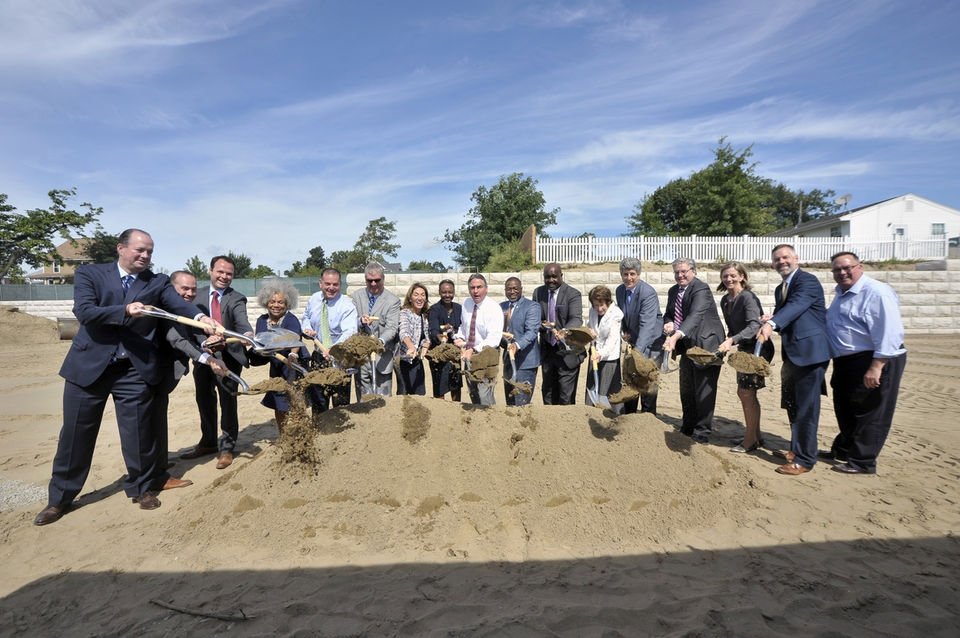
The biggest development in education in Western Massachusetts this year is aimed at the tiniest learners – children from birth to 5 years old.
Educare Springfield – a $14 million, nationally recognized early childhood center under construction in the Old Hill neighborhood, one of the poorest in the city – will open this fall, serving 141 children and their families who will be selected from the region’s Head Start program.
The Davis Foundation, an early childhood education advocate, is the lead partner in pushing for the new center, which will be one of 25 Educare centers operating in 15 states – plus one in Washington, D.C. and another in the Winnebago nation – supported by the Buffett Early Childhood Fund.
EduCare Springfield – rising on Hickory Street adjacent to the Elias Brookings School on land donated by Springfield College – was financed with a $9 million contribution from an anonymous out-of-state donor. Holyoke, Chicopee, Springfield HeadStart, a federally funded program, will operate the new center.
The anonymous donation – which John Davis says made him believe in miracles – paved the way for Springfield to land the program that has been a model for best practices in early childhood development. The Davis Foundation has made advocacy for quality early childhood education its mission in its quest to help insure that city children are ready to read by 4th grade.
Currently, only 33 percent of city children read at grade level by 4th grade, compared to peers in suburban schools, Davis said at a recent educational summit in Springfield sponsored by the Urban League.
“Urban kids can perform at high levels, but we need to do a lot for work to get them there. And, we can do it,” Davis said.
Janis Santos, executive director of the HeadStart, says the new center is a “dream come true.”
Santos, who has spent her 45-year career in early childhood education, says the EduCare model recognizes that the ages from birth to 5 years old are the most critical to a child’s development and that early educators need to be well-trained and well-compensated.
The new center also recognizes that parent involvement is “the backbone for success,” Santos adds.
When Susie Buffett, daughter of billionaire philanthropist Warren Buffett, created the first EduCare center in 2000, there was no vision for a national network to provide a higher- level education for infants, toddlers and preschoolers, according to Michael Burke, the Chicago-based vice president of the Buffett Early Childhood Foundation.
“What science was telling us is that there is a critical need for high-quality early childhood education,” Burke said during a telephone interview. “It takes more than a loving teacher to change the trajectory of a disadvantaged child.”
The 27,000-square-foot, state-of-the-art EduCare Springfield facility is being designed – like others in the network – to be a model for the high-impact educational practices aimed at preparing children for long-term academic success.
The goals of those practices are to improve kindergarten readiness; promote higher vocabulary skills; enrich social emotional skills; improve behavior’ reduce high school drop-out rates and promote long- term career and college success.
EduCare will be a lab school, of sorts, sharing its resources with other early childhood educators about the best methods to help children become successful learners.
There are four components to the continuous-improvement EduCare model, Burke explained: the use of data to inform instruction; ongoing coaching of teachers, support for families whose children attend EduCare and a series of professional development training sessions for teachers and staff.
“We can’t build an EduCare on every corner,” Burke said. “But the ones that we have can become real showrooms, a place where children, families and the staff walk in and say, ‘Wow, this is important.'”
When visiting Springfield, Burke said he was impressed with the local collaboration and commitment to early childhood education. “We’re glad to be operating in Springfield, rather than Boston,” he said.
In the next few weeks and months, EduCare will be building a website and writing a job descriptions for an executive director with a master’s degree, who will be an EduCare employee, and a school director with a master’s degree, who will be a HeadStart employee.
In addition to the benefits EduCare will bring to children and families in need, it will also have a huge positive economic impact on the region and the neighborhood where it is located.
The EduCare site is located in the Old Hill neighborhood that was severely impacted by the June 1, 2011 tornado. Investments in the neighborhood after the tornado included the construction of a $28 million dollar Brookings School, nearby parks and street improvements.
Mayor Martin J. Walsh together with LIHC Investment Group, one the nation’s largest investors in affordable housing, the Boston Housing Authority, Mass Alliance of HUD Tenants (MAHT), and Greater Boston Legal Services (GBLS), today announced HUD approval of a creative plan to keep Concord Houses in the South End affordable for at least the next 40 years, with the support of the building’s tenants.
“As we build more affordable housing, it is critical that we do not lose sight of the need to preserve Boston’s inventory of income-restricted housing,” said Mayor Martin J. Walsh. “This agreement marks a positive resolution reached to keep these residents in their homes for decades to come. I thank all the residents for their advocacy, and all partners involved who helped ensure the long-term affordability and viability of the Concord Houses.”
“This agreement is the culmination of a multi-year effort to establish a new HUD program that will protect current and future residents of Concord Houses while providing funds for repairs and upgrades throughout the property,” said Charlie Gendron, Principal, LIHC Investment Group. “We appreciate the support we received from the tenants; Congress, especially the efforts of Sen. Susan Collins; HUD; the City of Boston; BHA; MAHT; and GBLS in our drive to preserve this property for future generations.”
Spanning two buildings located at 705-715 Tremont Street in the heart of the South End, Concord Houses has served as an important source of income-restricted housing in the South End for decades. In 2017, the HUD subsidy provisions governing the property expired, putting it at risk of losing its long-term affordability.
Of the 181 households at Concord Houses, 171-or 95 percent of households-chose to sign a waiver to convert their Enhanced Vouchers (EVs) to a new project-based rental assistance (PBRA) contract to make the plan work. The new HUD contract ensures homes at Concord Houses will be reserved for individuals earning no more than 80 percent area median income (AMI) and is renewable for a total of 40 years.
The agreement also guarantees that current and future tenants pay no more than 30 percent of their income toward rent, which will actually reduce the rent burden for 30 existing households at the property. The remaining ten households will receive rent protections in the form of EVs administered by BHA.
“Preserving units of affordable housing like those at Concord House is a key element of Boston’s housing strategy,” said Roger Herzog, Executive Director of the Community Economic Development Assistance Corporation (CEDAC), which works closely with DND on preservation issues and provided technical assistance in this case. “Congratulations to the City of Boston, the project residents, and LIHC Investment Group, and their partners, for thinking creatively to find a way to keep Concord House affordable for individuals and families in the South End.”
“It’s a dream to secure permanently affordable housing here — not just for ourselves, but other people who will be here long after we’re gone,” said Pauline Durant, 85, a 20-year resident of Concord Houses and member of the Concord Houses Tenants Association. “It’s been a long journey. When tenants stay together and fight, we win!”
“We’re very elated by this victory,” added Adella Quinn, 76, a retiree from Fidelity Investments and 24-year resident of Concord Houses. “We’re losing too many people in the South End who are assets to the neighborhood due to rising rents. We need to come up with more ways like this to keep our community affordable.”
“This is an historic victory,” commented Michael Kane, Director of MAHT, which helped the tenants organize. Since 1983, MAHT has saved more than 12,450 homes like Concord Houses as affordable housing, one building at a time, through tenant organizing. “Saving affordable housing in the heart of the South End will help maintain the neighborhood’s racial and economic diversity well into the future. The 171 tenants who signed up to preserve their apartments are to be commended for making this possible.” Kane also lauded LIHC and the City of Boston for supporting the tenants’ preservation plan and working creatively with Congress and HUD to make it work.
Attorneys for GBLS, Susan Hegel and Ann Jochnick, said they are pleased with the creative and collaborative process, which resulted in preserving much-needed affordable housing in the South End. “It’s a win for current and future tenants, a win for the city and a win for the owner. We hope that this may serve as a model for future preservation efforts.”
LIHC Investment Group is undertaking a $7 million repair and capital improvement campaign at the property, which includes a new entry system and security cameras; flooring and ceiling replacement; lighting upgrades in the building’s common areas; and exterior work ranging from masonry repair to new fencing and landscaping. Under LIHC’s ownership, apartments in the building have already received new kitchen cabinets, granite countertops and appliances; upgraded bathroom fixtures, tubs, and tiles; and vinyl plank flooring.
About the City of Boston’s Housing Agenda
In 2018, Mayor Martin J. Walsh updated his comprehensive housing strategy, Housing A Changing City: Boston 2030 to increase the City’s overall housing goal from 53,000 to 69,000 new units by 2030, including 15,820 new income-restricted units, to meet Boston’s population growth. In addition, the updated plan also set a goal to preserve 85 percent of Boston’s most at-risk privately-owned affordable units, like those at Concord House. Mayor Walsh’s recently announced housing security legislative package focuses on expanding upon the work that Boston has done to address the region’s affordable housing crisis by proposing new and strengthening current tools to create more ways to leverage Boston’s prosperity and create sustainable wealth opportunities that make Boston a more inclusive and equitable city. The housing security bills proposed for the 2019 Legislature seek to help existing tenants like those at Concord House, particularly the elderly, remain in their homes, and creates additional funding for affordable housing.
About LIHC Investment Group
Based in Portland, Maine, LIHC Investment Group has been active in the Greater Boston housing market for over two decades. In July 2017, the company donated its ownership stake in the Close Building, a 61-unit affordable housing community in Cambridge, to the nonprofit Just-A-Start Corporation, which develops, own and maintains affordable housing; provides housing resources and services; and offers education and workforce training for youth and adults in Boston. In August 2017, LIHC and Weston Associates forged an agreement to keep 380 homes at Shore Plaza Apartments in East Boston affordable and have since completed a major capital repair campaign for the property.
Mayor Martin J. Walsh together with LIHC Investment Group, one the nation’s largest investors in affordable housing, the Boston Housing Authority, Mass Alliance of HUD Tenants (MAHT), and Greater Boston Legal Services (GBLS), today announced HUD approval of a creative plan to keep Concord Houses in the South End affordable for at least the next 40 years, with the support of the building’s tenants.
“As we build more affordable housing, it is critical that we do not lose sight of the need to preserve Boston’s inventory of income-restricted housing,” said Mayor Martin J. Walsh. “This agreement marks a positive resolution reached to keep these residents in their homes for decades to come. I thank all the residents for their advocacy, and all partners involved who helped ensure the long-term affordability and viability of the Concord Houses.”
“This agreement is the culmination of a multi-year effort to establish a new HUD program that will protect current and future residents of Concord Houses while providing funds for repairs and upgrades throughout the property,” said Charlie Gendron, Principal, LIHC Investment Group. “We appreciate the support we received from the tenants; Congress, especially the efforts of Sen. Susan Collins; HUD; the City of Boston; BHA; MAHT; and GBLS in our drive to preserve this property for future generations.”
Spanning two buildings located at 705-715 Tremont Street in the heart of the South End, Concord Houses has served as an important source of income-restricted housing in the South End for decades. In 2017, the HUD subsidy provisions governing the property expired, putting it at risk of losing its long-term affordability.
Of the 181 households at Concord Houses, 171-or 95 percent of households-chose to sign a waiver to convert their Enhanced Vouchers (EVs) to a new project-based rental assistance (PBRA) contract to make the plan work. The new HUD contract ensures homes at Concord Houses will be reserved for individuals earning no more than 80 percent area median income (AMI) and is renewable for a total of 40 years.
The agreement also guarantees that current and future tenants pay no more than 30 percent of their income toward rent, which will actually reduce the rent burden for 30 existing households at the property. The remaining ten households will receive rent protections in the form of EVs administered by BHA.
“Preserving units of affordable housing like those at Concord House is a key element of Boston’s housing strategy,” said Roger Herzog, Executive Director of the Community Economic Development Assistance Corporation (CEDAC), which works closely with DND on preservation issues and provided technical assistance in this case. “Congratulations to the City of Boston, the project residents, and LIHC Investment Group, and their partners, for thinking creatively to find a way to keep Concord House affordable for individuals and families in the South End.”
“It’s a dream to secure permanently affordable housing here — not just for ourselves, but other people who will be here long after we’re gone,” said Pauline Durant, 85, a 20-year resident of Concord Houses and member of the Concord Houses Tenants Association. “It’s been a long journey. When tenants stay together and fight, we win!”
“We’re very elated by this victory,” added Adella Quinn, 76, a retiree from Fidelity Investments and 24-year resident of Concord Houses. “We’re losing too many people in the South End who are assets to the neighborhood due to rising rents. We need to come up with more ways like this to keep our community affordable.”
“This is an historic victory,” commented Michael Kane, Director of MAHT, which helped the tenants organize. Since 1983, MAHT has saved more than 12,450 homes like Concord Houses as affordable housing, one building at a time, through tenant organizing. “Saving affordable housing in the heart of the South End will help maintain the neighborhood’s racial and economic diversity well into the future. The 171 tenants who signed up to preserve their apartments are to be commended for making this possible.” Kane also lauded LIHC and the City of Boston for supporting the tenants’ preservation plan and working creatively with Congress and HUD to make it work.
Attorneys for GBLS, Susan Hegel and Ann Jochnick, said they are pleased with the creative and collaborative process, which resulted in preserving much-needed affordable housing in the South End. “It’s a win for current and future tenants, a win for the city and a win for the owner. We hope that this may serve as a model for future preservation efforts.”
LIHC Investment Group is undertaking a $7 million repair and capital improvement campaign at the property, which includes a new entry system and security cameras; flooring and ceiling replacement; lighting upgrades in the building’s common areas; and exterior work ranging from masonry repair to new fencing and landscaping. Under LIHC’s ownership, apartments in the building have already received new kitchen cabinets, granite countertops and appliances; upgraded bathroom fixtures, tubs, and tiles; and vinyl plank flooring.
About the City of Boston’s Housing Agenda
In 2018, Mayor Martin J. Walsh updated his comprehensive housing strategy, Housing A Changing City: Boston 2030 to increase the City’s overall housing goal from 53,000 to 69,000 new units by 2030, including 15,820 new income-restricted units, to meet Boston’s population growth. In addition, the updated plan also set a goal to preserve 85 percent of Boston’s most at-risk privately-owned affordable units, like those at Concord House. Mayor Walsh’s recently announced housing security legislative package focuses on expanding upon the work that Boston has done to address the region’s affordable housing crisis by proposing new and strengthening current tools to create more ways to leverage Boston’s prosperity and create sustainable wealth opportunities that make Boston a more inclusive and equitable city. The housing security bills proposed for the 2019 Legislature seek to help existing tenants like those at Concord House, particularly the elderly, remain in their homes, and creates additional funding for affordable housing.
About LIHC Investment Group
Based in Portland, Maine, LIHC Investment Group has been active in the Greater Boston housing market for over two decades. In July 2017, the company donated its ownership stake in the Close Building, a 61-unit affordable housing community in Cambridge, to the nonprofit Just-A-Start Corporation, which develops, own and maintains affordable housing; provides housing resources and services; and offers education and workforce training for youth and adults in Boston. In August 2017, LIHC and Weston Associates forged an agreement to keep 380 homes at Shore Plaza Apartments in East Boston affordable and have since completed a major capital repair campaign for the property.

A second series of workshops aimed at helping Worcester’s community development organizations (CDCs) build capacity began this week with a session on fundraising.
Held on January 9 at the Worcester Clean Tech Incubator, the event featured presentations by fundraising consultant Sarah Tanner and John Fitterer of the Massachusetts Association of Community Development Corporations. Fitterer talked about how CDCs have raised funds through the state’s Community Investment Tax Credit Program.
The event was attended by board and/or staff members from the Oak Hill CDC, the East Side CDC, Main South CDC, Worcester Common Ground and Centro Inc.
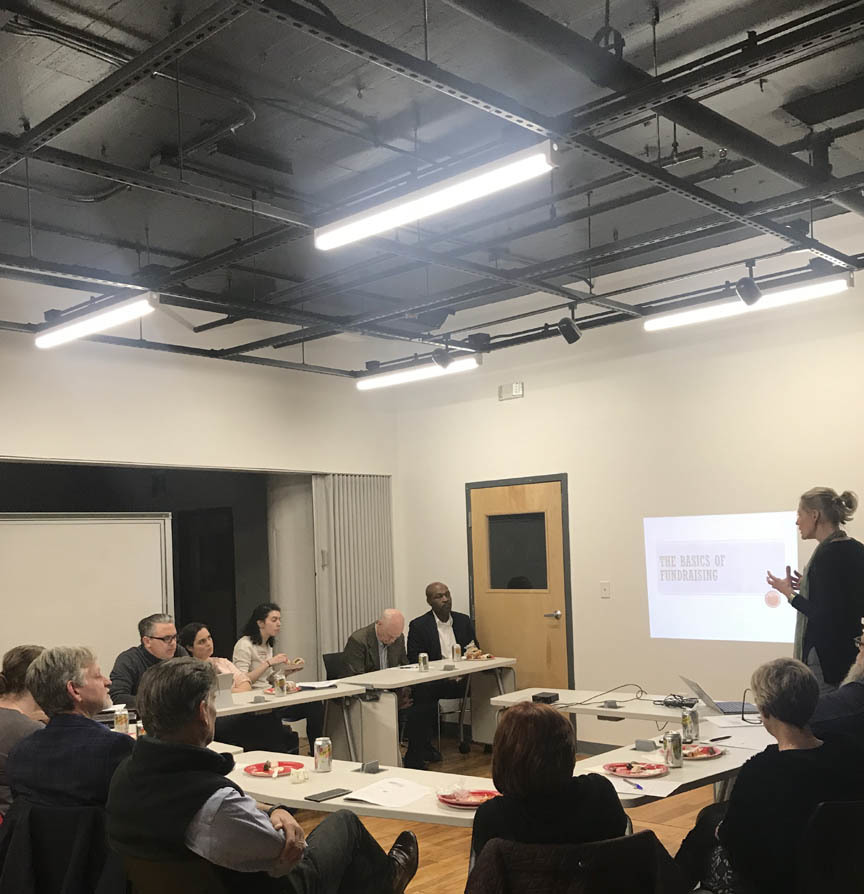
Sponsored by the Massachusetts Housing Partnership, the Community Economic Development Assistance Corporation (CEDAC) and Clark University, the 2019 training series is planning future sessions on public health and housing, board development and training, collaboration and partnership models and taxes.
In 2018, CEDAC, MHP and Clark hosted two-hour workshops on financial reporting, board development, asset management and collaboration.
The January 9 session on fundraising was preceded by a dinner and networking event hosted by Lionel Romaine of CEDAC, Kate Bosse of MHP and Kathyrn Madden, an urban planner and visiting lecturer at Clark University who has over 25 years of experience helping cities and institutions shape their future development.
The CDC workshop series builds upon CEDAC and MHP’s longstanding support of Worcester CDCs and neighborhoods. MHP efforts include supporting rental development and homeownership efforts of Worcester Common Ground, the Main South CDC and in the Bell Hill-East Side neighborhood in collaboration with the East Side CDC and UMass Memorial Hospital.
In all cases, MHP used its ability to bring in private financing to support community reinvestment through its bank-funded loan pool and its ONE Mortgage Program for low- and moderate-income first-time buyers. MHP has used its bank-funded loan pool to provide $16.9 million in loans and commitments for the financing of 32 rental projects and 521 apartments, 367 of them affordable. MHP’s ONE Mortgage Program has helped 816 low- and-moderate-income households in Worcester purchase their first home, generating $125.6 million in private mortgage financing from participating banks. About 69 percent of those buyers had incomes below 80 percent of area median income.
For more information about this program and MHP’s community assistance work with CDCs, contact Katie Bosse at kbosse@mhp.net or 617-330-9944 x128.
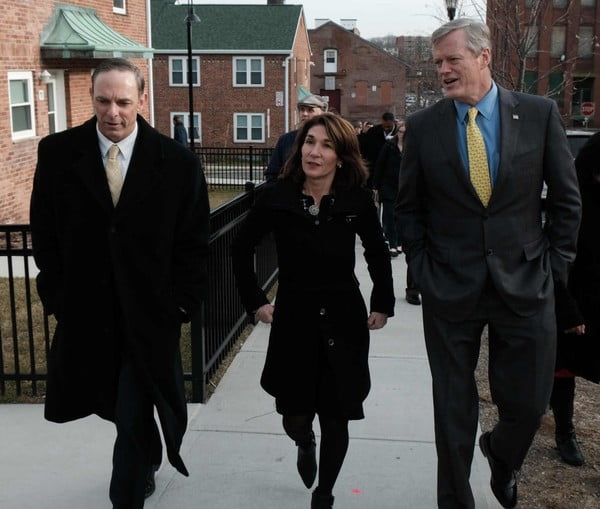
Gov. Charlie Baker and Lt. Gov. Karyn Polito stressed a “Focus on Housing” in Massachusetts during a tour Friday of Lyman Terrace, a 167-unit complex undergoing a $60 million transformation.
Baker and Polito crossed the state a day after the start of their second term in office. Baker and his team made stops in Lee, Springfield, Worcester and the one-hour appearance in Holyoke.
Lyman Terrace, built as Depression era housing in 1939, nearly faced the wrecking ball only a few years back. Tenants, local groups and city government opposed the demolition scheme, favoring a wholesale renovation of the then cramped, below standard apartments.
The Holyoke Housing Authority owns and operates Lyman Terrace, located a short walk from City Hall.
Baker said the state continues to fall short in meeting future housing needs. He visited Lyman Terrace in the summer of 2015. “The road and the journey to get to this point is a long and difficult one,” he said.
The governor said the project experienced “fits and starts,” delays and rejiggering the final vision for Lyman Terrace. “We don’t invest in things we don’t think are going to be successful,” he said.
Baker said his administration examines a project’s worthiness, the team in place and if there is widespread support. “I don’t want to make empty promises. I don’t want us to engage in commitments we can’t deliver on,” he said.
He wants to ensure projects like Lyman Terrace are fully funded and ready to commence.
“This was an important stop for the both of us,” Baker said. “It reflects a lot of key issues and opportunities associated with not only the way we think about housing but the way we think about community building, community development, and partnerships and possibilities.”
Baker called for passage of a new housing bill in the current term. “We in Massachusetts struggle to build housing. We just do,” he said. “Some of it’s the way the game is played. Some of it’s the way the rules are set up. Some of it’s we don’t appreciate the holistic issues that are at play here.”
The governor wants more cooperation in meeting the housing needs for future generations. “If we don’t, the supply we have is never going make it,” he said.
Polito wanted to highlight the impacts housing and economic and community development have on a community. She said the city partnered with state agencies and local nonprofits to make the Lyman Terrace renovations possible.
Matthew A. Mainville, the Holyoke Housing Authority executive director, led Baker, Polito and state housing officials on the tour, which included viewing a pre-renovated unit in need of serious repair and a newly renovated apartment occupied by Sonia Gonzalez, a longtime resident who led the effort to save Lyman Terrace.
Mainville said 88 of the 167 one-and-two bedrooms apartments are reoccupied. The apartments contain new kitchen appliances, wood-laminated floors, washers and dryers, updated bathrooms, energy-efficient windows and more secure doors.
A series of federal and state housing grants and tax credits support the project, including grants from MassWorks. The housing authority obtained an additional $20 million in funding to build a community center at Lyman Terrace.
Mainville said the administration is a model for bipartisan cooperation, which their “federal counterparts could learn from.” He said the Baker-Polito Administration identifies critical issues germane to Massachusetts, such as housing, education, and economic development
“The Baker-Polito Administration understands that without good housing, achieving one’s goals becomes infinitely more difficult,” Mainville said. Without good housing, succeeding in school, living a healthy lifestyle or obtaining gainful employment is nearly impossible.”
In 2018, the Baker Administration pushed and secured a $1.8 billion affordable housing bond, the largest in the commonwealth’s history. The state allocated $600 million for public housing modernization and redevelopment, which included a boost in housing subsidies.
Mainville said Lyman Terrace represents the positive effect such funding has on a community. He said the complex now offers stable housing for residents.
The Holyoke Housing Authority partnered with Community Builders, a Northampton nonprofit, on the Lyman Terrace project.
Housing authority commissioners, state Rep. Aaron Vega, D-Holyoke, and Marcos Marrero, the director of the Holyoke Economic and Planning Department, were in attendance.