Brockton nonprofit builds another building for homeless veterans

The head of Father Bill’s & MainSpring said that the new Montello Welcome Home II project is another step toward adequately addressing the homelessness problem in the city with a “housing first” approach. The three-story building features 23 new housing units for homeless veterans and individuals. The $5 million project, with a combination of public and private funding, replicates the building across the street from it called Jack’s Place that opened two years ago.

BROCKTON – Some Brockton residents complain about the presence of the MainSpring House in the downtown area, and the large crowds of homeless people who hang around Perkins Park.

But the best way to get people out of the downtown emergency shelter and off the streets is by supporting housing like the three-story building that’s now being completed on the north side of the city, according to the Brockton nonprofit behind the project.

“Our whole model is housing first,” said John Yazwinski, longtime president and CEO of Father Bill’s & MainSpring, explaining how homelessness is typically the end result of addiction and mental health problems. “Get somebody into housing, out of Perkins Park, off the streets, and out of Mainspring. And when we get them into a building like this, we can provide better case management services here, and better help them with what’s causing their homelessness, than when people are sleeping outside or staying at MainSpring. … We hope we would be able to continue to develop this type of housing response, instead of having a large MainSpring house.”

Father Bill’s & MainSpring is reaching the final stretch of its $5 million construction project for a 10,000-square-foot-building with 23 efficiency apartments for homeless individuals, including 12 units with a priority for U.S. military veterans. The building is being called “Montello Welcome Home II.”

The project included the demolition of the old Phaneuf Hospital (and former Catholic Charities site) at 682 N. Main St. last year, before construction of the new building began in its place in October. The new building replicates the design and concept of Jack’s Place, a 20-unit supportive housing that was completed two years ago, which also has a priority for homeless veterans. In addition to Jack’s Place, there’s Jeff’s Place, the nonprofit’s original supportive housing project in Brockton, which opened on Spring Street in 2010 with 32 units.

Yazwinksi said that Father Bill’s & MainSpring has a 95 percent success rate in its supportive housing when it comes to retaining formerly homeless tenants, who must contribute 30 percent of any income toward rent and abide by rules, such as no drug use or staying out at night.

“We know that the answer to ending homelessness is supportive housing like this,” Yazwinski said. “What it’s showing is a successful model.”

Yazwinski said public entities and private investors are buying into the project and the overall strategy of housing first. Yazwinski said they see the success rate and how the buildings improve the neighborhood.

For this project, according to Father Bill’s & MainSpring, $3.1 million came from the Massachusetts Department of Housing and Community Development; $50,000 came from the city of Brockton’s federal HOME funds; and $100,000 came from the Home Depot Foundation; $75,000 came from MassHousing’s Center for Community Recovery Innovations; $50,000 came from the Amelia Peabody Charitable Foundation; and the rest was financing from the banks.

There are also project-based subsidies, both Section 8 and Massachusetts rental vouchers, that go into each unit to keep them affordable, Yazwinski said.

Medicaid is contributing some to case management, amounting to about $5,000 per person each year, Yazwinski said.

“People are seeing it as cost-effective,” Yazwinski said. “What we’re targeting here is people who have struggled a long time with homelessness and have been very expensive to the taxpayer. We’re talking about the people who utilize the emergency rooms at Signature (Healthcare Brockton Hospital) a lot and detoxes and that have high costs. Medicaid is actually helping us because they are seeing … all those costs decrease drastically.”

SourceThe Enterprise

Homeless Youth Housing Development Receives Renovations Financing

MassDevelopment has issued a $3.448 million tax-exempt bond on behalf of Harbor Lafayette Homes Limited Partnership in Salem.

The partnership will use bond proceeds to buy and renovate two residential facilities in Salem’s Point neighborhood at 15-17 Harbor St. and 104-106 Lafayette St. The North Shore Community Development Coalition (NSCDC) is the project sponsor. Renovations to these buildings will create 27 single-room occupancy rental units. The renovations will also reduce commercial space in the building and create space for facilities that will serve as transitional housing for young, homeless individuals, along with various CDC programs. Renovations will also include replacing exterior stucco, the roof, windows and brick veneer; upgrading bathrooms and kitchens and installing new mechanical systems and new insulation. Beverly Bank purchased the bond.

“We are thrilled that Harbor-Lafayette Homes is under construction and will soon provide critically-needed affordable housing for a very vulnerable population – homeless youth,” Mickey Northcutt, NSCDC’s CEO, said in a statement.

SourceBanker & Tradesman

Early education gets another needed boost (Editorial)

The need for a sustained, targeted improvement of Massachusetts early education programs is captured by some disturbing numbers from 2011.

According to research done by the Children’s Investment Fund, 20 percent of facilities had one or more classrooms with no windows. A third had inadequate heating and cooling. Two-thirds lacked sufficient technology for teachers.

That’s why the re-authorization of the Early Education and Out-of-School Time Capital Fund (EEOST Capital Fund) in the state’s housing bond bill is such important news.

The new emphasis on better early education will benefit low-income families as well as others. It addresses the need to get an early start to the education of children, because the price of not doing so has proven to be steep: neglect of the early years puts children at such a disadvantage that some of them never catch up.

Quality education at any level involves personnel, an applicable philosophy and other considerations. It must also provide for adequate facilities. This bill addresses that need in a state where more than 20,000 children are stuck on waiting lists for early education or after-school care.

Since its original passage in 2013, the EEOST Capital Fund has distributed more than $15 million to 21 projects. Communities experiencing its benefits include Chicopee, Belchertown and North Adams.

The political challenge of funding early education and its after-school component is that it does not produce immediate, easily identifiable results. Those benefits come later with better education and more well-adjusted children emerging into adolescence and, down the road, adulthood.

If the benefits of upgraded early education are not immediate, however, the cost of neglecting it has been all too painfully clear. That’s why improvement in this field has won bipartisan support and a commitment to see it to success, even at an economically challenging time with many education needs tugging at the state’s resources and budget.

Better early education and after-school care is not achieved with one sweeping measure, but by an extended commitment over time. The Baker Administration and the Legislature seem to understand that are are prepared to see it through.

It’s the right approach that is already showing dividends and with time will show more. The latest measure is not the last step in that process, but upgrading facilities is a crucial component that the Early Education and Out-of-School Time Capital Fund will address, and not a moment too soon.

SourceMassLive

Governor Baker Signs $1.8 Billion Affordable Housing Bill to Increase Housing Production, Preserve Housing Affordability

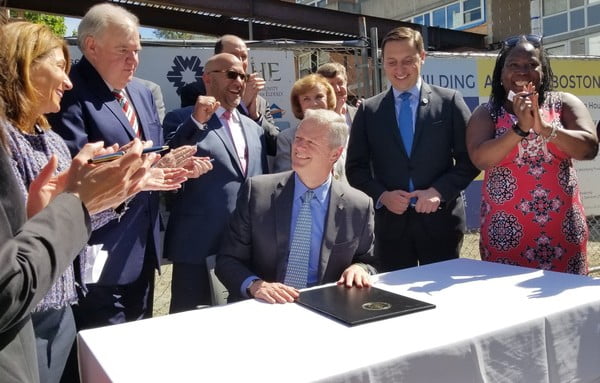
BOSTON — Today, Governor Charlie Baker signed An Act Financing the Production and Preservation of Housing for Low and Moderate Income Residents (H.4536), to ensure long-term support for the Baker-Polito Administration’s comprehensive efforts to increase the production of affordable housing, diversify the state’s housing portfolio, modernize public housing, preserve the affordability of existing housing and invest in new, innovative solutions to address Massachusetts’ rising demand for housing.

“This bill will help expand our administration’s commitment to ensuring residents across the Commonwealth have more access to quality, safe and affordable housing and economic development opportunities,” said Governor Charlie Baker.“Municipalities, developers, and local housing authorities will be supported by a toolbox of flexible resources to create more affordable options and explore new avenues to meet a growing demand. We thank our partners in the Legislature for working with us to pass this legislation and look forward to our continued collaboration on the administration’s Housing Choice Bill to create even more affordable housing options.”

Today’s legislation authorizes $1.8 billion in new capital spending for the production and preservation of affordable housing for low- to moderate-income households, supportive housing and housing serving vulnerable populations. Additionally, the legislation authorizes $650 million for public housing modernization and redevelopment, as well as $45 million for capital improvements at Early Education and Care facilities.

“Our administration continues to seek collaborative partnerships with communities to increase affordable and market-rate housing production across the Commonwealth, through this bill, our pending Housing Choice Initiative, affordable housing awards, the Workforce Housing Initiative and the Housing Development Incentive Program,” said Lt. Governor Karyn Polito. “The housing bond bill builds on these efforts, and we are proud to have worked collaboratively with our dedicated partners in the Legislature to ensure continued funding for critical housing programs.”

The administration’s first three capital budgets supported the creation or preservation of approximately 7,500 affordable housing units, provided $17.8 million to four public housing developments for comprehensive modernization of housing for seniors and individuals with disabilities and allowed the Department of Housing and Community Development (DHCH) to award $150 million for deferred maintenance projects to more than 45,000 units of extremely low-income state public housing across 234 communities.

“Massachusetts’ growing economy has increased pressure on our housing market, creating challenges for families, communities, and employers’ ability to attract and retain talent,” said Housing and Economic Development Secretary Jay Ash. “This housing bond bill provides tools to increase housing production, including extending the State Low-Income Housing Tax Credit and the Housing Development Incentive Program. These programs support the diverse needs for housing development, which together will help us achieve our goal of stronger, more inclusive Massachusetts economy.”

The bill signing took place in Boston’s Brighton neighborhood at the Harry and Jeanette Weinberg House, operated by Jewish Community Housing for the Elderly.

“Our goal is to ensure Massachusetts families and residents, despite their income, have access to safe, quality housing they can afford,” said Housing and Community Development Undersecretary Janelle Chan. “Housing, in particular housing affordable to the spectrum of households, drives economic development, supports vibrant and walkable downtowns, promotes neighborhood stability, and enables families and residents to thrive.”

“The Housing Bond Bill will continue to give the Commonwealth the tools it needs to continue confronting its housing challenges and produce and preserve the housing we need in a growing economy,” said MassHousing Executive Director Chrystal Kornegay. “The legislation will also allow MassHousing to increase the number of the Commonwealth’s residents who can have access to stable, quality housing. We thank the Legislature for their important leadership on this issue.”

“Preserving and producing affordable housing is central to sustaining the Commonwealth’s economic prosperity,” said Senator Boncore, Senate Chair Joint Committee on Housing. “This bond bill makes thoughtful and innovative investments that will serve as tools for municipalities and developers in the modernization and production of our state’s housing stock.”

“We are all well aware of the housing crisis in Massachusetts” said Representative Kevin G. Honan, chairman of the Joint Committee on Housing. “This Housing Bond Bill is a tangible commitment to affordable housing. The provisions of this bill are the tried and true affordable housing tools that are at our disposal. Through this bill, we will recommit ourselves to housing the elderly, disabled and homeless.”

“Today is a great day for the Commonwealth.  This bond bill will allow us to continue to make important investments in housing for years to come,” said Assistant Minority Leader Bradley Hill. “I am proud to have been a part of passing this legislation and am thankful to the Governor and Lt. Governor for their leadership.”

“The housing bond bill expands opportunities for children, seniors, people with disabilities, and families at risk of homelessness to find safe, healthy, and affordable homes,” said Rachel Heller, chief executive officer of Citizens’ Housing and Planning Association. “This legislation is the result of strong partnerships among advocates, the Legislature, and the Administration who worked together to pass the bill. As one of the first bond bills filed and passed this session, the Housing Bond Bill demonstrates that creating and preserving more affordable housing is a top priority in the Commonwealth.”

“Today’s signing of the $1.8 billion Housing Bond Bill reflects the collective determination of the Baker-Polito Administration, the Legislature and housing advocates to address the need for affordable housing in Massachusetts,” said Clark Ziegler, executive director of the Massachusetts Housing Partnership. “The combination of a strong state economy, high housing demand and low production has created one of the largest affordability gaps in the U.S.  More than 240,000 low-income individuals and families in Massachusetts now pay more than half of their income on rent.  Private housing production alone will not solve that problem. The programs authorized in this bill are one of the few ways we can close this gap. Congratulations to all those who worked so hard to address the Commonwealth’s housing needs.”

“It is an incredible honor for JCHE to host this historic bill signing,” said Amy Schectman, president and chief executive officer of Jewish Community Housing for the Elderly. “Prior bond bill funds have allowed us to build our award-winning supportive, affordable housing and these new funds will be vital to creating additional opportunities for older adults to age in community.  Kudos to Governor Baker and Chairmen Honan and Boncore for their brilliant leadership on this life-or-death issue.”

The housing bond bill includes:

  • State Low-Income Housing Tax Credit: Extends the state’s ability to commit $20 million per year in tax credits to affordable housing projects until 2025 and authorizes an additional $5 million per year in tax credits specifically to support preservation of existing affordable housing. Current law would cut the size of this tax credit to $10 million on January 1, 2020.
  • Housing Development Incentive Program: Extends the state’s ability to commit $10 million per year in tax credits to market-rate housing projects in Gateway Cities until 2024. Current law would cut the size of this tax credit in half, to $5 million, on January 1, 2019.
  • Accessory Dwelling Unit Construction and Landlord Modifications: Authorizes the use of home modification funding to construct accessory dwelling units for elders and individuals with disabilities and also authorizes up to 10% of the funds to be used to support landlord expenditures to modify units for tenants with disabilities, implementing recommendations of the administration’s Interagency Council on Housing and Homelessness.
  • MassHousing Services: Expands MassHousing’s authorizing language, to allow the quasi-public agency to provide contract administration, loan servicing, and other services to other states’ housing finance agencies.
  • Early Education and Out-of-School Time (EEOST) Capital Fund Facilities Improvement Grant Program: Provides funding to non-profit child care programs licensed by the Department of Early Education and Care to renovate, acquire, or construct high-quality child care program facilities that serve low-income families and communities, fostering high quality child care environments that support positive outcomes for children.

The Baker-Polito Administration is committed to meeting Massachusetts’ housing challenge through key investments, new initiatives and program reforms. With the addition of the FY19 capital plan, the Administration will have dedicated $884 million to housing from FY16 to FY19, an increase of $100 million over the previous four years’ capital plans.

In December 2017, the administration announced the Housing Choice Initiative, a comprehensive proposal to create 135,000 new housing units by 2025. The initiative, which is currently pending before the Legislature, includes a new set of incentives and rewards for municipalities committed to sustainable housing growth in their communities. The Housing Choice Initiative is a multi-pronged effort that includes a program to designate Housing Choice municipalities and new technical assistance opportunities through MassHousing, in addition to proposed legislative changes that will help deliver smart, effective zoning at the local level.

Additionally, the highly effective MassWorks Infrastructure Program continues to be a key catalyst for housing production, supporting the creation of more than 3,000 housing units. The Open for Business Initiative will drive the production of more than 2,200 units of housing on state land. MassHousing’s $100 million Workforce Housing Initiative has advanced the development of 2,309 housing units across a range of incomes, including 616 workforce housing units. And, the administration reformed the Housing Development Incentive Program, which is on track to facilitate more than 900 new units in Gateway Cities.

###

SourceOffice of the Governor

Massachusetts Early Education and Out-of-School Time Leaders Celebrate Passage of Critical Funding to Benefit Low-Income Children

BOSTON – Leaders from four leading organizations focused on improving the quality of early education and out-of-school time programs today celebrated the passage of critical funding for the construction and renovation of facilities serving low-income children in the Commonwealth. The Children’s Investment FundMassachusetts Association of Early Education and Care (MADCA)Strategies for Children and United Way of Massachusetts Bay and Merrimack Valley today praised the Baker Administration, the Massachusetts State Senate and the Massachusetts House of Representatives for including the re-authorization of the Early Education and Out-of-School Time Capital Fund in the Housing Bond Bill signed into law today.

The Early Education and Out-of-School Time Capital Fund program is a unique source of funding for early education and care and afterschool programs throughout the Commonwealth. It supports major renovation and construction projects for facilities serving low-income children.  The Housing Bond Bill signed into law today re-authorizes the EEOST Capital Fund through 2023.

The results of an assessment of the quality of early education and out of school time learning spaces across the Commonwealth, conducted in 2011 by the Children’s Investment Fund were alarming:

  • 20% had one or more classrooms without windows.
  • 34% had inadequate heating and cooling,
  • 65% lacked appropriate technology for teachers

Additionally, as of December 2017, 20,873 children were on waiting lists for early education and care or afterschool care.

“The Commonwealth needs an improved and expanded supply of facilities to meet the demands of families across the state who are looking for convenient, high-quality centers for their children,” said Michael K. Durkin, President and CEO at United Way of Massachusetts Bay and Merrimack Valley.

Access to safe, stable housing and affordable high-quality child care provide the critical foundation and peace of mind for individuals and families to seek and retain jobs that will allow them to support themselves and their families.”

Chris Martes, CEO and President of Strategies for Children added, “What a great day for children, families and programs across the Commonwealth. Facilities are a critical – and often overlooked – element to quality early education and afterschool centers. We have seen such dramatic results and positive outcomes for children from the Early Education and Out-of-School Time Capital Fund know that there is a long list of programs that could use funding.”

Since its original passage in 2013, the EEOST Capital Fund has:

  • Distributed over $15M to 21 projects, helping organizations modernize their spaces and improve the quality of learning environments for children.
  • Served children from primarily low-income families (more than 86%) and added 448 slots to the early education and care system.
  • Improved the quality of learning for 2,036
  • Created an estimated 34 full-time educator jobs and 360 construction jobs.
  • Leveraged $44M in additional investment from foundations, banks, and other sources.

Communities that have benefited to date from EEOST funding include Beverly, Lynn, Lowell, Revere, Attleboro, Southbridge, Boston, Lawrence, Chicopee, Cambridge, Webster, Worcester, Belchertown, North Adams and New Bedford.

Bill Eddy, Executive Director of MADCA, the MA Association for Early Education and Care which represents early education and school age providers who serve low income families across the state, said, “This is an exciting renewal of the Early Education and Out of School Time Facilities Fund with $45m over the next five years to continue to improve the facilities and playgrounds where our youngest children are educated and cared for every day. These facility improvement funds create state-of-the-art spaces designed for young children and allow providers to expand facilities creating additional access to early education for low income children and their families, which also expands our workforce by creating new teaching positions. We are grateful that the Legislature included this once again and we applaud Governor Baker for signing this comprehensive bill with this Early Education Facilities Fund included.”

There is a strong demand for additional capital, with new projects emerging every year. Since 2014, 24 organizations, which collectively serve 3,500 low-income children, have applied to EEOST but were not funded.

“EEOST is unique in the country for providing a large-scale public source of funding for facilities,” noted Theresa Jordan, Director of Children’s Facilities Finance for the Children’s Investment Fund. “The reauthorization of an additional five years places Massachusetts further ahead as a national leader in the provision of high-quality early education and care.”

SourceUnited Way of Massachusetts Bay and Merrimack Valley

Sisters of Providence break ground on $10M affordable housing with elder care services in West Springfield

WEST SPRINGFIELD — The Sisters of Providence have broken ground on Hillside Residence, a $10 million project to build 36 units of affordable, elder care housing on the 27-acre Providence campus at 2112 Riverdale St.

The project calls for integrating housing for residents age 62 or older with the health services they will need as they grow older, according to Sister Kathleen Popko, president of the Sisters of Providence.

“At times, the dream seemed futile,” Popko told the crowd gathered Friday at the site where the housing will soon rise, recalling the ups and downs of trying to secure project funding over the years.

The goal, the Catholic nun said, is to build safe, affordable housing for “frail elders” who will also require health services as they age. That is where Mercy LIFE’s PACE program — “Program for All-inclusive Care of the Elderly” — enters the picture.

PACE, a Medicare and Medicaid program, will help low-income seniors at risk of being institutionalized who also need the level of care provided in nursing facilities. Because the project has secured a commitment from the state to help with rental subsidies, the housing cost for residents of Hillside will be capped at 30 percent of their income, according to Popko.

In addition to helping at-risk seniors secure a home, Joseph Larkin, executive director of Mercy LIFE, says Hillside will provide older residents with the human connection they need, including opportunities to share meals and other forms of socialization.

“Loneliness is a significant risk factor,” Larkin said.

Popko praised West Springfield Mayor William C. Reichelt for his ongoing support of the project. “He has facilitated our efforts,” she said of the mayor, calling him “a friend and supporter.”

Sen. James T. Welch and Rep. Michael J. Finn, West Side’s Statehouse delegation on Beacon Hill, were also on hand for the event, which drew about 100 people including local and state dignitaries. Popko says Welch and Finn have been strong supporters of the project by the Sisters of Providence.

“This really is the next cutting-edge of health care in Massachusetts. These are the types of projects we’re always continuously looking for,” Welch, Senate chairman of the Joint Committee on Health Care Financing, said of Hillside Residence.

“Congratulations and thank you for your tenacity and stick-to-itiveness,” he said, directing his remarks to the Sisters of Providence and Mercy LIFE officials in attendance.

“We’re all here today because we’re invested in Hillside Residence,” said Janelle Chan, newly appointed undersecretary for Housing and Community Development, which oversees the state’s affordable housing programs, community service, and assistance for homeless people.

State Elder Affairs Secretary Alice Bonner noted that Popko and Sister Mary Caritas Geary, vice president of Sisters of Providence, have been “powerful and tenacious” advocates for the Hillside Residence project, never giving up “despite rejection after rejection.”

“It’s about creating campuses where people can age together with the services they need,” said Bonner, adding that Hillside Residence will serve as a model for how to live and age well in Massachusetts. To create a truly integrated support system for older residents, “it has to be about housing plus services,” she said.

The project will cater to people age 62 or older with incomes at 50 percent of the area median income or lower, and those whose healthcare needs and “housing instability” can be helped by the integrated program.

The project is being financed by public and private sources, including state and federal assistance, $750,000 in Community Preservation Act funds from the Town of West Springfield, and grants from the Harry and Jeanette Weinberg Foundation.

Also speaking at the event were Roger Herzog, executive director of the Community Economic Development Assistance Corporation, and Paul Boudo, chairman of the West Springfield Community Preservation Committee.

Boudo and Popko pitched the project to the West Springfield Town Council in January. The following month, the council unanimously authorized using $750,000 in CPA funds for the project.

Boudo says Hillside Residence will help West Side reach its state-mandated 10 percent affordable housing goal. Only around 3.5 percent of the town’s housing is considered affordable.

The project’s “development team” includes Kathleen Lingenberg of Community Outcomes LLC; John Wesolowski, chief financial officer of Sisters of Providence Inc.; architects Greg Zorzi and Chris Novelli of Studio One Inc.; Randall Locklin of Locklin Construction Co., and Christopher Boino and his team at Western Builders Inc.

Bishop Mitchell T. Rozanski, leader of the Roman Catholic Diocese of Springfield, gave the closing blessing at Friday’s ceremony.

SourceMassLive

Brookview House breaks ground on affordable rentals

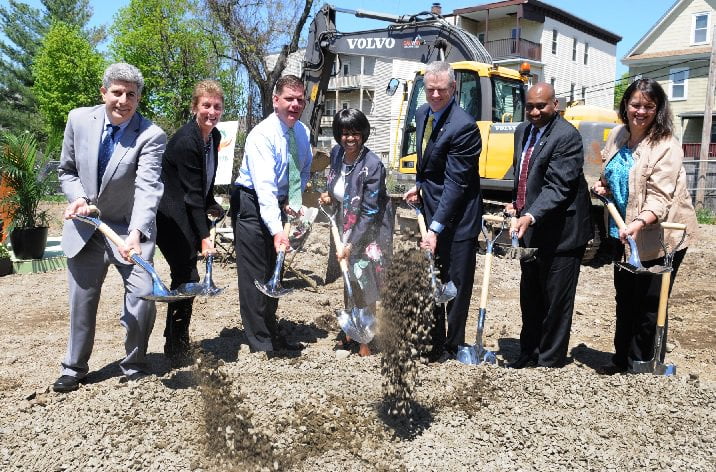
Assembled for last Tuesday groundbreaking for Brookview III were, from left: Roger Herzog, executive director, Community Economic Development Assistance Corporation; Pamela Feingold, senior VP of Eastern Bank; Mayor Martin J. Walsh; Deborah Hughes, president & CEO of Brookview House; Governor Charlie Baker; Representative Russell E. Holmes, and City Councillor At-Large Annissa Essaibi-George.
Randy H. Goodman photo

With Gov. Charlie Baker and Mayor Martin Walsh looking on approvingly, Brookview House, a Dorchester-based provider of services to homeless women and children, broke ground on a new affordable housing building on Hansborough Street last Tuesday. The building, dubbed “Brookview III,” will include a dozen new two- and three-bedroom apartment units, bringing the total number at Brookview to 54.

“We recognize that family homelessness is a multi-faceted issue, but one of the primary causes of the high rate of family homelessness in Massachusetts is the lack of affordable housing for low-income families,” said Deborah Hughes, the president and CEO of Brookview House Hughes. “This new building will help us assist even more families each year in addressing the trauma of homelessness and set them up for long-term stability and independence.”

The need to address family homelessness has grown more urgent in recent years, with a 2017 Boston Foundation study showing that more than 60 percent of the 13,000 homeless individuals in Massachusetts are children. Family homelessness in the state has nearly doubled since 2016, with Boston ranking as the city with the fourth most homeless families nationwide. Hughes said she hopes Brookview’s new facility with help address this crisis.

Brookview III will be located off Blue Hill Avenue on Hansborough Street, just north of Mattapan Square and a block from the original 12-unit building at 2 Brookview St.

Each year, the facility provides 370 homeless women and children with a safe, supportive living environment as well as a variety of programs and services including health, education, life skills, employment training, civic engagement, and financial, emotional, and behavioral support.

Established in 1990, Brookview House has garnered nationwide acclaim for its successful model; 92 percent of mothers who have lived there maintain permanent housing after leaving and 88 percent of the children who participate in Brookview’s Youth Development Program graduate from high school, compared to the national average of only 25 percent.

In addition to commercial loans and Brookview’s own fundraising, the $5.5 million needed to finance Brookview III was secured with $1.5 million from the city of Boston’s Department of Neighborhood Development (DND) and Boston Community Development, and a $450,000 grant from the Early Education and Out of School Time (EEOST) facilities improvement fund, which is financed through the state’s capital budget and jointly administered by the Department of Early Education and Care and the Community Economic Development Assistance Corporation (CEDAC), and its affiliate, the Children’s Investment Fund (CIF).

Mayor Walsh acknowledged the importance of planning for future affordable housing. “In Boston, we are committed to making sure that every person has a place to call their home,” he said. “Providing families a roof over their heads and the wraparound services needed to build a better life is critical to tackling homelessness. I thank Brookview for their role in creating stable, affordable housing that is vital to the health and success of our neighborhoods.”

Brookview III is slated for occupancy starting next June.

SourceDorchester Reporter

Baker-Polito Administration Announces $8 Million in Funding to Support Nearly 100 Units of Supportive Housing

Seven housing projects will provide comprehensive supportive services for individuals, families and seniors


Executive Office of Housing and Economic Development
Housing and Community Development
Office of Governor Charlie Baker and Lt. Governor Karyn Polito

DENNIS, MA — Today, the Baker-Polito Administration awarded nearly $8 million in funding to support the creation or preservation of almost 100 units of supportive housing. Lt. Governor Karyn Polito and Housing and Community Development Undersecretary Janelle Chan joined Roger Herzog, Executive Director of Community Economic Development Assistance Corporation (CEDAC), Kathy Ohman, President of FORWARD, and members of the Legislature to announce the awards which include $5.5 million in state funding, 28 project-based state housing vouchers, and will leverage $2.5 million from the National Housing Trust Fund. These seven developments will provide housing with supportive services for vulnerable populations across the state, including homeless families and individuals, veterans, persons with disabilities and adults with autism. Since 2015, the Baker-Polito Administration has supported the creation or preservation of more than 600 units of housing with comprehensive support services, including today’s awards.
“The Baker-Polito Administration is committed to creating housing opportunities across Massachusetts that meet the needs of all our residents,” said Governor Charlie Baker. “The awards we are announcing today will create, expand and preserve critical housing resources for those who need it most and our Administration is proud to continue supporting these developments throughout the Commonwealth.”“I am proud to join FORWARD in Dennis to announce these important awards, which will provide services to communities across the Commonwealth, from here on Cape Cod, to Pittsfield,” said Lt. Governor Karyn Polito. “Our Administration looks forward to continuing to working with our partners at the local level to develop new housing opportunities for cities and towns in Massachusetts.”Lt. Governor Polito and Housing and Community Development Undersecretary Janelle Chan made the announcement at the future site of FORWARD at the Rock. The development will create eight units of supportive housing for adults with autism. FORWARD, Friends or Relatives With Autism and Related Disabilities, is an advocacy group founded in 2013, and will work with Housing Assistance Corporation on Cape Cod to develop the project with specific supports for this community.

“Today’s awards will provide critical, wraparound services for low-income individuals with disabilities, formerly homeless veterans, families, and adults with autism,” said Housing and Community Development Undersecretary Janelle Chan. “These projects will provide residents with long-term stability and opportunities to thrive by locating comprehensive services where they live.”

The National Housing Trust Fund is a federal program to support the development of affordable housing for low-income individuals and households, with supportive services. The Department of Housing and Community Development worked in coordination with the Community Economic Development Assistance Corporation (CEDAC) to make the combined $8 million available for the seven projects. Comprehensive support services, may include education, skills training, childcare, substance abuse treatment, mental health services, and comprehensive case management.

“CEDAC is pleased to work with DHCD on these important supportive housing projects benefitting veterans, disabled persons, elders, and other low income families in seven Massachusetts communities,” said Roger Herzog, Executive Director, CEDAC.  “We continue to look for new opportunities to work with local communities and non-profit organizations to create and preserve affordable housing options that meet the needs of all families and individuals in Massachusetts.”

“In 2013, the Town of Dennis perceived a need for affordable housing for adults with autism and identified Town-owned land that could be dedicated to fill that need. At age 22, adults with autism “age out” of special education programs in public schools. This results in 80 percent of adults with autism living at home with little opportunity for social interaction. As parents age, they may no longer be able to care for their children with autism.  There is not enough support or resources for adults with autism, particularly with regards to long term living arrangements,” said Paul McCormick, Chairman of the Dennis Board of Selectmen. “Dennis is committed with the Commonwealth of Massachusetts in supporting our adults with autism through this partnership with Project FORWARD.”

“The partnership between FORWARD, The Housing Assistance Corporation, and the Town of Dennis to create a residential community for adults with autism is an extraordinary accomplishment and an innovative model for other communities to emulate,” said State Senator Julian Cyr. “I want to extend a special thank you to Kathy Ohman, President of FORWARD, for her dogged commitment and leadership of the project; Kathy’s vision of a residence where adults with autism can age-in-place with dignity and respect is now one step closer to reality.”

“I’d like to thank the Baker-Polito Administration, as well as Secretary Jay Ash for their continued commitment to serving persons on the autism spectrum and ensuring access to safe and supportive housing,” said Representative Tim Whelan. “This has been a fantastic collaboration between local, concerned citizens and their state government.”

“HAC is excited to be a part of this project which has received significant support from the community, local representatives and the state,” said Housing Assistance Corporation CEO Alisa Galazi. “Our region badly needs affordable housing and especially for the autistic adults, and this project is exemplifies the kind of housing we need.”

“FORWARD is a unique collaboration of non-profits, state and local agencies to provide much needed affordable housing for cape cod adults with autism and related disabilities here in Dennis,” said Kathy Ohman, FORWARD. ”We are thankful to Undersecretary Chan and the Baker-Polito Administration, and congratulations to the other recipients of these important funds.”

In 2017, the Baker-Polito Administration unveiled the new Housing Choice Initiative, which created a new system of incentives and rewards for municipalities that deliver sustainable housing growth; created a new technical assistance toolbox to empower cities and towns to plan for new housing production; and proposed legislative changes, through An Act to Promote Housing Choices, to deliver smart, effective zoning at the local level.

The Baker-Polito Administration is deeply committed to meeting this housing challenge, through key investments, new initiatives and program reforms. In April, Governor Baker filed a housing bond bill seeking $1.287 billion in additional capital authorization to advance the administration’s commitment to affordable housing and has increased funding for affordable housing by 19 percent and is on course to invest $1.1 billion over five years in affordable housing. The highly effective MassWorks Infrastructure Program continues to be a key catalyst for housing production, supporting the creation of more than 3,000 housing units. The Open for Business Initiative will drive the production of more than 2,200 units of housing on state land. MassHousing’s $100 million Workforce Housing Initiative has advanced the development of 2,309 housing units across a range of incomes, including 616 workforce housing units. And, through An Act Relative to Job Creation and Workforce Development, the administration reformed the Housing Development Incentive Program, which is on track to facilitate more than 900 new units in Gateway Cities.


2018 Supportive Housing Awards

FORWARD at the Rock, Dennis        

FORWARD at the Rock is a production project that will create eight units of permanent supportive, single-room-occupancy (SRO) housing for adults with autism. The project sponsor, FORWARD (Friends Or Relatives With Autism and Related Disabilities), is an advocacy group founded in 2013 for the specific purpose of developing housing for this vulnerable population, and has partnered with the Housing Assistance Corporation on Cape Cod.  CapeAbilities will provide comprehensive supportive services.

Carlos Vega Townhomes, Holyoke

Carlos Vega Townhomes will preserve 18 units of family housing for farmworkers in Western Massachusetts, and provide necessary accessibility improvements to the property, allowing existing households to age in place. The project is owned by Valley Housing Development Corporation. Wayfinders is the project sponsor and will provide resident services to tenants.

Sergeant House Expansion, Northampton

Sergeant House Expansion will update and expand a traditional 15-room SRO owned by Valley Community Development Corporation, and create 31 enhanced SRO units (16 new units; 15 preserved units), each with its own kitchenette and bathroom.

Gordon H. Mansfield Veterans Village Phase II, Pittsfield

Gordon H. Mansfield Veterans Village Phase II, sponsored by Soldier On, Inc., is a new production project that will create 14 units of permanent supportive housing for formerly homeless female veterans. Soldier On will provide supportive services targeted to female veterans who have experienced trauma, including military sexual trauma and post-traumatic stress.

Germantown House, Quincy

Germantown House will produce a five-unit congregate home for extremely low income adults with physical and developmental disabilities. The project sponsor is NeighborWorks of Southern Mass., and 24-hour on-site services will be provided by Work, Inc.

Headwaters Replacement Housing, Wareham/Sandwich

Headwaters Replacement Housing, sponsored by Residential Rehabilitation Housing, Inc., will produce 10 units of SRO housing for very low income adults with disabilities. The project design is highly responsive to the particular physical and environmental needs of the population to be served. Twenty-four hour on-site supportive services will be provided by Latham Centers.

149 Belmont Street Preservation and Stabilization, Worcester

149 Belmont Street is an existing supportive housing project owned by Worcester East Side Community Development Corporation. The project currently provides nine studio apartments for formerly homeless adults with disabilities.


###
Source Executive Office of Housing and Economic Development Housing and Community Development

New Tool in the Fight for Boston’s Affordability

Public-Private Partnership Creates Fund to Support Nonprofit Development

By Roger Herzog and Sara Barcan

Special to Banker & Tradesman

As observers of the Boston real estate market know, our historic city is heavily “built out,” with relatively few opportunities to develop vacant parcels. While the charm of our densely built city means there is great demand to live here, the relative scarcity and high cost of available development sites present a challenge to policymakers and the community development sector who seek to increase the stock of Boston’s affordable housing. Nonprofit developers tell us that when they identify vacant or underutilized parcels with potential for affordable housing development, they frequently have difficulty competing for acquisition against private developers, and when they can acquire, may need to hold sites for several years before they can assemble project financing and move into construction.

Last year, our colleagues at the city of Boston’s Department of Neighborhood Development (DND) approached CEDAC and the Local Initiatives Support Corporation (LISC Boston) with an idea for an acquisition fund that could help level the playing field for nonprofits: the Vacant Site Acquisition Fund. This fund targets sites that are often sources of neighborhood blight. CEDAC has long helped nonprofit developers acquire sites that are both eyesores and in need of cleanup and our participation in the Vacant Site Acquisition Fund is an extension of that work.


Boston Mayor Marty Walsh, along with CEDAC and LISC Boston, announced the creation of the fund last fall. Its program design resulted directly from conversations that DND, CEDAC and LISC conducted with nonprofit housing developers and reflects their priorities: a predictable, competitive interest rate; a longer loan term than typical acquisition loans; a streamlined approval process; and assistance with site control and holding costs.

The Vacant Site Acquisition Fund established a pilot funding source of more than $8 million to help nonprofit developers purchase vacant or underutilized land appropriate for the development of multifamily housing. The city has committed $2.5 million, while CEDAC and LISC Boston have provided a combined $6 million. CEDAC manages the day-to-day operations of the fund, which has an efficient “one-stop” approval process enabling nonprofit developers to better compete in the private market.

The fund has three components:

· Site deposit assistance: DND has set aside $200,000 for short-term, zero interest bridge loans, available to nonprofit developers who need to make cash deposits to secure site control of potential acquisition sites.

· Acquisition fund: A combined $8 million contributed by the city, CEDAC, and LISC Boston funds low interest rate acquisition financing with longer terms to acquire sites and plan for future affordable housing development. CEDAC’s streamlined approval process allows developers to respond quickly when opportunities arise, and create additional opportunities for properties not currently on the market.

· Holding cost assistance: DND has also allocated $300,000 for zero interest loans to cover interest, insurance, real estate taxes and other holding costs while nonprofits conduct community process, secure regulatory approvals and assemble complex packages of public and private financing.

Combatting Displacement in Jackson Square

Since the fund was established, one project has closed using its resources, with a second loan approved. Urban Edge Inc., a community development corporation that serves Roxbury and Jamaica Plain, in January acquired two lots on Columbus Avenue, adjacent to a third parcel that the CDC purchased through a prior CEDAC acquisition loan. Located just outside of Jackson Square, those underutilized parcels include a commercial building in need of repair and a parking lot. These sites are within an area that the Boston Planning and Development Agency (BPDA) deemed PLAN: JP/ROX, about which the city of Boston has made recommendations regarding affordable housing, transportation and open space improvements. Urban Edge’s project will both combat displacement, which remains a problem in the surrounding neighborhood, and contribute to Jackson Square’s revitalization.

“The Vacant Site Acquisition Fund is an important new resource for nonprofit organizations in Boston who otherwise might find it challenging to compete in the real estate market,” said Frank Shea, CEO of Urban Edge. “Along with providing resources, working with the city, CEDAC and LISC Boston made this a much easier process.”

CEDAC, DND and LISC have heard about many exciting opportunities as we speak with our nonprofit partners, all of whom are working hard to compete in a difficult real estate market, to ensure that long-term residents and newcomers alike can afford to live here. The Vacant Site Acquisition Fund demonstrates the kind of innovative public-private partnership that shows why Boston is a national leader in community development – and ways we can be effective in creating a diverse and equitable community.

Roger Herzog is the executive director of the Community Economic Development Assistance Corporation (CEDAC). Sara Barcan is CEDAC’s director of housing development.

https://cedac.org/wp-content/uploads/2018/05/BT_May072018_Reprint_BostonsAffordability.pdf

»

SourceBanker & Tradesman

Baker-Polito Administration Successfully Preserves Affordable Housing

Challenges Ahead as Thousands of Units Approach Affordability Expiration

Preserving affordable housing is an important priority in Massachusetts, and has become a special focus of policymakers and advocates as the region’s hot real estate market has constrained the ability of nonprofit developers and others to produce new affordable units. But while some of the challenges we face in maintaining affordability are new, many of the most intractable issues are legacy challenges from decades ago. The commonwealth has spent years – decades, even – finding innovative solutions to address these old problems. Even with all of the hard work, threats remain.

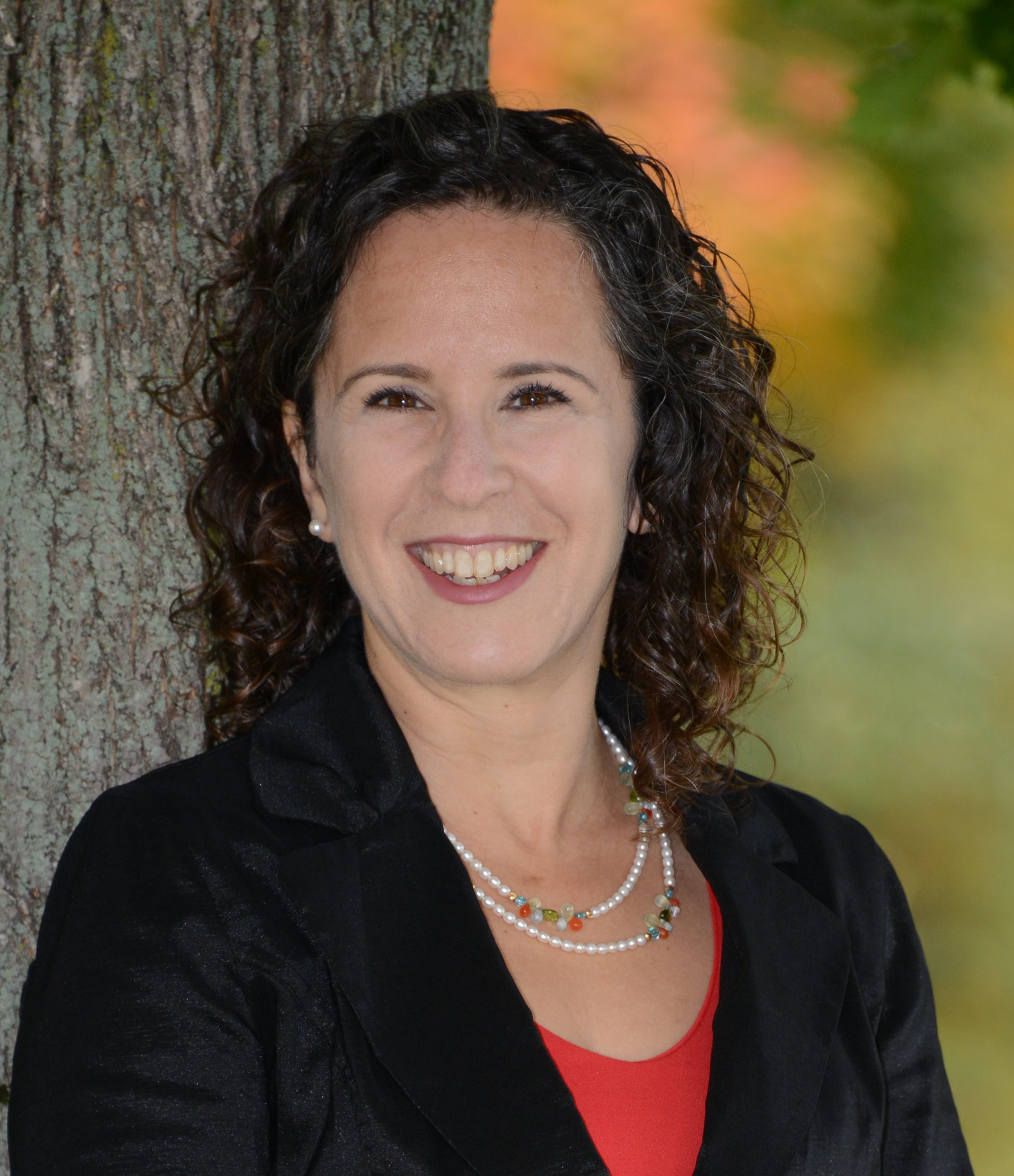
Roger Herzog
Roger Herzog

March 1 marked an important date in affordable housing preservation – it was the day in which a large number of affordable housing projects built in the 1970s hit their mortgage expiration date. This “expiring use” problem stems from how many large-scale affordable developments were financed during that era – these apartments were built by private owners utilizing state and federally funded mortgage programs with 40-year terms. In return for the below market rate loans, owners are required to comply with affordable housing use restrictions. Many of those mortgages have reached or are reaching maturity in the next few years, at which point the use restrictions terminate and the owners may convert the affordable housing to market rate. And in a real estate market that is as super-charged as Greater Boston, it’s easy to imagine why an owner would be tempted to convert their development.

Affordability Preserved

First, the good news – over the past three years, the state’s Department of Housing and Community Development (DHCD) and its state agency partners have preserved the long-term affordability of over 15,000 housing units across the commonwealth. Due to significant capital investments in affordable housing by the Baker-Polito Administration more than 4,400 units maintained their affordability in 2017 alone.

Bill Brauner

It is also due to the state’s affordable housing preservation law, Chapter 40T, which was passed nine years ago to address the expiring use challenge. Chapter 40T established public notification provisions for tenants and state and local officials, purchase rights through a right of offer and right of first refusal for DHCD or its designee to acquire this housing if the owner decides to sell, and modest tenant protections for projects with affordability restrictions that terminate. The state has helped to preserve almost 30,000 units of affordable rental housing since the law was enacted. Through the investment of federal, state and local resources and Chapter 40T, the state’s affordable housing programs have ensured that families are able to stay in their homes and neighborhoods.

CEDAC offers its technical assistance and early stage financing to nonprofit developers seeking to preserve affordable multifamily housing facing expiring use restrictions. In 2017, two preserved projects exemplify our preservation success. In the high-cost market of Lexington, CEDAC supported efforts by MassHousing, the town of Lexington and its housing authority, and project residents to preserve 16 units of low- and moderate-income cooperative housing. Worcester’s Fruit Sever Apartments is another good example of the kind of affordable housing being preserved. In January 2016, CEDAC approved a $9 million acquisition loan to The Community Builders Inc. to help the nonprofit developer preserve the 132 affordable apartments there. The building was preserved through the Chapter 40T purchase process and state financing

Housing at Risk

In spite of these efforts, a significant portion of the state’s portfolio of federal and state-assisted affordable housing remains at risk. Thousands of additional affordable units continue to face the potential of  market-rate conversion. In one state mortgage program, 3,200 units are at high risk due to expiring mortgages. A decision by property owners to convert these into market-rate apartments could leave the residents, including many elders, facing much higher rents. And unlike most federally financed projects, tenants in these projects are not able to receive federal rent vouchers that allow them to remain in the housing post-conversion. State housing officials have responded to this challenge by creating a $100 million fund, combined with federal housing tax credits and bond financing, to offer new financial incentives to the private owners to preserve this housing.

The truth is that the March 1 milestone is a reminder that we will be facing crunch time over the next few years when it comes to preserving affordable housing. Thousands of vulnerable Massachusetts families and individuals are counting on us to effectively solve these old problems – and as we look at the actions of policymakers on both the state and federal levels, we must continue to find and implement innovative solutions, just as we’ve done in the past.

Roger Herzog is the executive director of the Community Economic Development Assistance Corporation (CEDAC). Bill Brauner is CEDAC’s director of housing preservation and policy.

Baker-Polito Administration Successfully Preserves Affordable Housing

SourceBanker & Tradesman