MassDev Bonds Finance Roxbury Affordable Housing Facility

MassDevelopment has issued $9.4 million in bonds for Walker Park, a project from the Urban Edge Housing Corp., a community development organization in Roxbury.

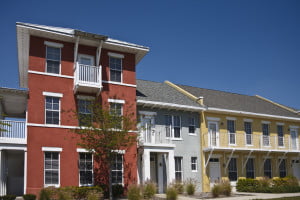
Urban Edge will use bond proceeds to build Walker Park, a 49-unit affordable rental housing facility in the Egleston Square section of Roxbury. Urban Edge will demolish a blighted building and revitalize two blighted lots to make way for the construction of two buildings that will house the rental units. Eight of the units will be available to households earning 30 percent of the area median income and to homeless individuals and families, and the remaining 41 units will be available to households earning no more than 60 percent area median income. MassDevelopment also assisted the Massachusetts Department of Housing and Community Development with the approval of federal low income housing tax credits that will provide $5.8 million in equity for the project. Bank of America purchased the bonds.

“Building sustainable housing options for Massachusetts residents is a central tenet of MassDevelopment’s mission,” MassDevelopment Executive Vice President of Finance Programs Laura Canter said in a statement. “We are proud to lend our support to the Walker Park project, which will revitalize a formerly underused parcel of land and provide affordable housing options for this vibrant, diverse Boston neighborhood.”

Urban Edge Housing Corp. is a national leader in the community development field. With its heart in Boston’s culturally and economically diverse Egleston and Jackson squares, Urban Edge works with others across the city of Boston and region to promote high-quality, sustainable and affordable communities.

“We are grateful for the support from MassDevelopment for the Walker Park project,” Urban Edge CEO Frank Shea said in a statement. “The development will provide families living in Egleston Square access to 49 new units of quality affordable housing and services while also revitalizing the neighborhood by renovating blighted properties. We thank MassDevelopment for its support and we look forward to the completion of the project.”

http://www.bankerandtradesman.com/2017/08/massdev-bonds-finance-roxbury-affordable-housing-facility/?utm_campaign=Daily&utm_source=hs_email&utm_medium=email&utm_content=54848473&_hsenc=p2ANqtz-9OK6K-xlTOEnRAo2SC_o6enctg68qswlzHuDZPROkJXeQNYSu-1QdOpAVOTyATjxZ8zg28tGdy0WXHw4ozwYVKMtvHpg&_hsmi=54848473

SourceBanker & Tradesman

Baker-Polito Administration Announces Nearly $1.5 Million In Brownfields Funding For Nine Projects

Today, Baker-Polito Administration announced nearly $1.5 million in Brownfields Redevelopment Fund awards to support the environmental assessment and cleanup of contaminated and challenging sites across the Commonwealth.

BROCKTON, MA – July 26, 2017 – Today, Baker-Polito Administration announced nearly $1.5 million in Brownfields Redevelopment Fund awards to support the environmental assessment and cleanup of contaminated and challenging sites across the Commonwealth.

“The Brownfields Redevelopment Fund is a critical tool that unlocks the potential of many former industrial sites throughout Massachusetts,” said Governor Charlie Baker, “transforming them into places where our communities and families can build homes and businesses.”

In Brockton, Lieutenant Governor Karyn Polito joined Mayor Bill Carpenter to announce the awards at a site in the city’s downtown Transformative Development Initiative District. NeighborWorks of Southern Massachusetts is receiving an award to conduct environmental assessments at this site in order to redevelop it into 48 units of affordable and market-rate housing and ground floor retail.

“These awards will revitalize downtowns, eliminate blight, and unlock private investment and job growth across the Commonwealth,” said Lt. Governor Karyn Polito. “We are pleased to provide these resources to advance the economic development goals of communities throughout Massachusetts.”

“Giving cities and towns the ability to create shovel-ready sites is a no brainer in terms of economic development,” said Housing and Economic Development Secretary Jay Ash. “These unused sites are often some of the largest in the Commonwealth and now can be transformed into housing, commercial or industrial spaces that create jobs and enliven communities.”

The Brownfields Redevelopment Fund, established in 1998, is administered by MassDevelopment of behalf of the Commonwealth. The Fund helps to transform vacant, abandoned, or underused industrial or commercial properties. In most cases, redevelopment is complicated by real or perceived environmental contamination and liability. In FY17, the Commonwealth authorized $45 million in capital funding for the Brownfields Redevelopment Fund.

“Since 1998, MassDevelopment has been pleased to administer the Brownfields Redevelopment Fund, which has led to the creation of more than 4,400 jobs and 2,750 units of housing,” said MassDevelopment Executive Vice President of Finance Programs Laura Canter. “We are grateful to the Baker-Polito Administration and the Legislature for its support of this fund, and to Massachusetts’ 351 cities and towns for partnering with us on our brownfields projects.”

“Thank you to the Baker-Polito administration for helping us provide the funds to conduct the necessary steps to better plan and redevelop our downtown and provide the necessary handicap accessible housing our community needs,” said Senator Michael D. Brady. “The Old Kresge building was a landmark in downtown Brockton and it would be great to see that area built back up to help revitalize the city.”

“The funding from the Brownfields Redevelopment Fund will help transform the area in Brockton’s TDI district into a 48 unit affordable and market-rate housing development ,” said Representative Claire Cronin. “We look forward to seeing the benefits that this revitalization will have in our community. Thank you to MassDevelopment and NeighborWorks for their continued investment in our city.”

“These funds are vital to continuing our efforts at revitalizing downtown Brockton, by ensuring healthy and environmentally safe construction,” said Representative Gerry Cassidy. “NeighborWorks is a great asset to our community and I have no doubt they will continue their hard work. Thank you to MassDevelopment and the Baker-Polito administration for investing in Brockton.”

“As a State Representative for Brockton and East Bridgewater, I am grateful for the investment by the Brownfields Fund and the administration to start the clean-up of these sites and get them back onto the tax-rolls,” said Representative Michelle DuBois.

The following municipalities and organizations received Brownfield Redevelopment Fund awards in FY17:

Brockton’s NeighborWorks of Southern Massachusetts, $26,000

NeighborWorks of Southern Massachusetts will use the award to conduct environmental assessment at this highly visible, vacant site in Brockton’s TDI District. NeighborWorks of Southern Massachusetts plans to redevelop this site into 48 units of affordable and market-rate housing with ground floor retail.

Lawrence CommunityWorks Duck Mill project, $334,365

Lawrence CommunityWorks will use this award to perform environmental clean up at the Duck Mill site to transform the former mill building into 10,000-square-feet of retail and 73 units of affordable rental housing.

Lawrence CommunityWorks Union & Milford Street projects, $160,509

Lawrence CommunityWorks will use the award to perform remediation required to build five units of single-family, owner-occupied affordable housing on five vacant lots in Lawrence.

Gardner’s Newvue Affordable Housing Corporation, $18,000

Newvue Housing Corporation will use the award to conduct soil and air testing at a two-story downtown block building in Gardner. Once the property is safe for occupancy, NewVue, a community development corporation, will open a career and homeownership center on the ground floor and create three units of affordable housing on the upper floors.

City of Gardner Theatre Project, $490,475

The City will use this award to demolish and perform hazardous abatement of the former Orpheum Theatre in downtown Gardner, which the City will transform into a public park and parking lot useable to downtown businesses and residents.

Town of East Bridgewater, $99,400

The Town will use this award to perform assessment and find a permanent solution for the Eastern States Steel site, a contaminated, blighted, and highly visible site.

Town of East Bridgewater, $99,700

The Town will use this award to perform environmental assessment at the Precise Engineering site, which it ultimately plans to redevelop into a commercial or light industrial use.

Town of Seekonk, $99,800

The Town will use this award to assess the former Attleboro Dyeing and Finishing site, which it is seeking to redevelop into mixed-income housing and retail that will provide access to the Ten Mile River on which the property sits.

Worcester East Side CDC, $125,000

Worcester East Side CDC will use this award for assessment of a site that will become eight units of garden-style, handicap-accessible housing for extremely low-income or potential homeless residents while they continue to receive supportive services from the Department of Mental Health.

About MassDevelopment:

MassDevelopment, the state’s finance and development agency, works with businesses, nonprofits, financial institutions, and communities to stimulate economic growth across the Commonwealth. During FY2016, MassDevelopment financed or managed 352 projects generating investment of more than $4 billion in the Massachusetts economy. These projects are projected to create about 8,200 jobs and build or rehabilitate about 4,200 residential units.

http://www.mass.gov/hed/press-releases/administration-announces-1-5m-in-brownfields-funding.html

SourceExecutive Office of Housing and Economic Development

Housing and Community Development Undersecretary Kornegay and Congressman Keating Celebrate Ground Breaking at Canal Bluffs

Today, the Department of Housing and Community Development Undersecretary, Chrystal Kornegay, joined Congressman Bill Keating, Preservation of Affordable Housing (POAH), the Housing Assistance Corporation of Cape Cod (HAC) and MassHousing to celebrate the groundbreaking of Canal Bluffs Phase III. When completed, the Canal Bluffs development will feature 117 mixed-income housing units, with both rental and homeownership opportunities.

“Workforce and affordable housing provides Massachusetts residents and families across all incomes and zip codes access to stability and opportunity,” said Governor Charlie Baker. “Through our workforce housing and preservation initiatives, we are pleased to support Canal Bluffs and developments like it throughout the Commonwealth, to provide affordable rental and homeownership opportunities to families in Bourne, the region and across the state.”

“Dedicated partners like POAH, HAC and the Bourne community worked closely with our administration to bring this project closer to housing the families and residents who need it most,” said Lieutenant Governor Karyn Polito. “We are committed to engaging local and non-profit partners across all our communities to support more projects and opportunities for affordable housing production in the Commonwealth.”

The third phase of the development includes 44-units of rental housing, with 35 affordable units and nine workforce housing units. In 2016, the Baker-Polito Administration awarded the project Low Income Housing Tax Credits that will raise over $7.5 million in equity, and supported the project with over $850,000 in direct subsidies from the Department of Housing and Community Development. Barnstable County also allocated $250,000 HOME funds towards the project. The state’s quasi-public financing agency, MassHousing, is supporting the development of Canal Bluffs through a $3.4 million permanent loan, $700,000 from the Opportunity Fund, and $1 million in subordinate debt from the Affordable Housing Trust Fund.

“Like many of our seasonal communities, Bourne faces the acute challenge of providing affordable housing to their year-round population,” said Undersecretary Kornegay. “The completion of Canal Bluffs will add 44 units of mixed-income rental housing, increasing Bourne’s housing options for the diverse needs of their community.”

The Canal Bluffs project advances the Baker-Polito Administration’s goal of creating up to 1,000 new workforce housing units affordable to middle-income families and households, through MassHousing’s $100 million Workforce Housing Initiative. Nine of the 44 units at Canal Bluffs III will be workforce housing units, affordable to households earning 70 percent of area median income.

“MassHousing’s Opportunity Fund helps create more economically diverse communities, by delivering types of affordable housing at that wouldn’t be possible otherwise,” said MassHousing Executive Director Tim Sullivan. “Our Workforce Housing Initiative is the first state-level program in the country to specifically address affordability for moderate-income households who don’t qualify for traditional affordable housing, but who still struggle to meet housing costs. Through projects like Canal Bluffs, we are state and local stakeholders to deliver new homes that are affordable to a broad range of working families, and advancing housing affordability across Massachusetts.”

“Canal Bluffs III serves as a prime example of local, state, and federal governments working together to relieve the high housing costs we are seeing throughout Cape Cod,” said Congressman Keating. “This project will help to ease some of the burden on families struggling to find affordable housing in our area – a responsibility we all share. I commend Preservation of Affordable Housing and HAC for the time and dedication they have dedicated to these projects in order to ensure their success.”

“Quality affordable housing that respects the unique character of Cape Cod is vital to our regional economy,” said State Senator Vinny deMacedo (R-Plymouth). “I am grateful to the Baker-Polito Administration for supporting the Canal Bluffs project as well as for their continued collaboration with HAC to support our economy and our workers by investing in housing on Cape Cod.”

“It’s no secret that Cape Cod is short on affordable housing, and I’m heartened that projects like Canal Bluffs are moving forward to fill that need,” said State Representative Randy Hunt. “Currently, Canal Bluffs offers 73 affordable residences; with the completion of phase three, that number will be bumped up to 117. Every home that’s built or made available for those who live and work here—and want to continue to—counts. Forty-four new units means 44 new home bases for the community members and families who will help build Cape Cod’s future. Thank you to our local and nonprofit partners at HAC and POAH, and the Baker-Polito Administration for their leadership and support; especially Undersecretary Kornegay and her team at DHCD.”

“We could not have made this vision a reality without the strong working relationship with HAC and the support of the Town of Bourne and the Barnstable County partners and agencies that worked with us to make this such a success,” said POAH President and CEO Aaron Gornstein.

“These types of partnerships between HAC and POAH are critical to addressing the region’s housing issues,” said HAC CEO Alisa Galazzi. “By combining our strengths and expertise, our two agencies are able to make projects like Canal Bluffs a reality which is vitally important because there is such a shortage of affordable apartments on Cape Cod for year-round residents.”

In April, Governor Baker filed a housing bond bill seeking $1.287 billion in additional capital authorization to advance the administration’s commitment to affordable housing. Last May, the administration unveiled a five-year capital budget plan that includes a $1.1 billion commitment to increasing housing production, an 18 percent funding increase over previous funding levels. The $1.1 billion capital commitment provides for significant expansions in state support for mixed-income housing production, public housing modernization, and affordable housing preservation. The housing bond bill filed today provides the authorization to fully fund this capital expansion.

Under the MassHousing Workforce Housing Initiative, the agency has committed or closed workforce housing financing totaling $33.5 million, to 14 projects, located in 10 cities and towns. To date, the Workforce Housing Initiative has advanced the development of 1,285 housing units across a range of incomes, including 363 workforce housing units.

Since 2015 the Baker-Polito Administration has provided direct funding to create and preserve over 3,500 units of affordable housing across Massachusetts.

http://www.mass.gov/hed/press-releases/kornegay-keating-break-ground-at-canal-bluffs.html

SourceExecutive Office of Housing and Economic Development

Lowell’s House of Hope opens new Shelter (Video)

The House of Hope celebrated a milestone expansion on Tuesday that has nearly doubled the number of homeless families it can serve.

The nonprofit organization has opened a new 31-family property at 520 Fletcher St., which formerly housed a home for elderly women. With the help of $2.8 million in state aid, House of Hope was able to purchase, renovate, and reopen the facility in just over a year, and the expansion will continue with another project underway on Smith Street.

House of Hope’s leaders chalked their success up to vibrant partnerships with the Department of Housing and Community Development and several community organizations.

“It’s the desire of everybody in this community to reach out to the poorest of the poor,” said Deb Chausse, executive director of the House of Hope. “The want a vehicle they can trust to do that and House of Hope can.”

Chrystal Kornegay, undersecretary of the DHCD, attended the ceremony, inside the building’s elegant dining room. She credited the program, and others of its kind, for the sharp reduction in the number of homeless families the state had housed temporarily in hotels.

In 2015, there were approximately 1,500 homeless families lodged in hotels and motels. That number has dropped to just a handful, Kornegay said.

“The 24-hour access to services and support you can do here, and not in a hotel,” she added. “The ability to help people as they encounter different obstacles and struggles as they’re on their path to greatness, you’re very limited to do that in a hotel or motel.

“In addition to shelter, the Fletcher Street facility also provides workforce development training and a room for early childhood education.

Mabel, a resident of the building who spoke at the opening ceremony, said turning to the House of Hope was the best decision she had ever made and that her job at the on-site culinary program was the first one she had enjoyed.

“Each member of the team has played an important role,” she said. “This place has changed my life for the better.”

State Sen. Eileen Donoghue and City Councilor Rita Mercier heaped praise on Chausse and other members of the House of Hope team for their accomplishments in the face of a homelessness problem that is too often viewed as intractable.

“You’re saving lives and I couldn’t be happier or prouder,” Mercier said.

Read more: http://www.lowellsun.com/breakingnews/ci_31150153/lowells-house-hope-opens-new-shelter#ixzz4nOKrfC4O

Read more: http://www.lowellsun.com/breakingnews/ci_31150153/lowells-house-hope-opens-new-shelter#ixzz4nOKnZv6i

SourceLowell Sun

On the right track: New home for Metropolitan Boston Housing Partnership

This fall, the Metropolitan Boston Housing Partnership — a nonprofit and the state’s largest regional provider of rental-housing voucher assistance — will get a new home of its own: a vacant two-acre parcel formerly owned by the MBTA, across from the Roxbury Crossing Orange Line station.

Mission Hill Neighborhood Housing Services is building out a five-story building that will create 40 units of affordable housing an a 27,000-square-foot office for MBHP. The project is partially funded with $2.75 million from Boston Mayor Martin J. Walsh’s $39 million commitment toward affordable housing projects, as well as an expected $2 million from a MBHP capital campaign.

Enlarge

A formerly vacant two-acre parcel owned by the MBTA at Roxbury Crossing will soon be the… more

Courtesy rendering

Chris Norris, MBHP’s executive director, said the organization wanted to be located along the Orange Line for easier access to the 25,000 families it serves annually. “To both be on a transit node closer to the majority of families we work with, as well as closer for our employees, many of whom live in or around the neighborhood, was a key part of our decision to relocate,” Norris said.

The organization’s longtime home has been 125 Lincoln St., on the edge of downtown Boston’s Leather District. But in the past 15 years, MBHP’s rent has doubled, Norris said.

“We wanted to be able to take control of or own destiny, fiscally, and lock into a mortgage and have the opportunity to build equity in something that we owned,” he said.

The housing partnership expects to move in this fall.

“It’s an exciting opportunity for us to be, if you will, on the ground floor of what the city and state have prioritized as a key development corridor,” Norris said. “We’re very excited.”

Margulies Perruzzi Architects is the interior architect for MBHP’s office.

https://www.bizjournals.com/boston/news/2017/07/14/on-the-right-track-new-home-for-metropolitan.html?ana=e_bost_real&s=newsletter&ed=2017-07-14&u=rwmEzJfOBoac14kG99ibvLXYsMp&t=1500045845&j=78549271

SourceBoston Business Journal

Howland mansion coming back from the brink of destruction

The stately 10,000-square-foot red brick mansion at 38 S. Sixth St. in New Bedford is a shell of its former self.

On the outside, scaffolding flanks the Federal-Greek Revival and plywood remains on what were the home’s 64 windows.

The interior is a maze of wooden frameworks and staircases, giving few clues about what it will look like when it is completed in November.

Standing on the ground floor, construction superintendent Phil Pereira points to the charred beams of the John Howland Jr. house.

“They’re like this all the way up all the way into the roof,” he says.

The initial damage caused by a three-alarm January 2005 fire has been compounded over the years by exposure to the elements and neglect, and there is little left of the building’s interior but studs and flooring. F&S Enterprises Inc., a Rhode Island company, bought the home after the fire in 2005 and stripped it of its architectural details, including the mantelpieces.

In fact, so much had been stripped that the house was on the verge of collapse, says Patrick Sullivan, the city’s director of Planning, Housing and Community Development. The city, together with the Attorney General’s office, in 2008 started pressuring the owner to make repairs or sell.

“It was stripped, that’s true,” says Michael Galasso, of nonprofit developer The Resources Inc. (TRI). “When we got involved, everything was gone from the interior — no plumbing, no doors.”

F&S applied for demolition in April 2010, but the city’s Historical Commission voted 5-0 that December that the building was architecturally significant and preferably preserved.

The Waterfront Historic Area League bought the home in 2010 for $237,000. WHALE stabilized the property, including a new roof, putting back the original roofline seen in historic photos.

Over the years, TRI, WHALE and architect Christopher “Kit” Wise have worked on plans and have pieced together the $2.9 million it will take to restore life to the Howland house. D.F. Pray has been hired as general contractor.

ABOUT THE JOHN HOWLAND JR. HOUSE:

  • Built in 1834 for John and Sarah Howland Jr.
  • Exceptional example of transitional Federal/Greek Revival style architecture and the substantial wealth that was
    made in the whaling industry in New Bedford.
  • Contributing building in the County Street National Register Historic District.
  • One of a complex of three remarkable and extremely rare, brick mansions built for the Howland family
    on South Sixth Street.

ABOUT THE HOWLAND FAMILY:

  • The Howland family was among New Bedford’s most prominent and wealthy families. A native of New Bedford, John Howland Jr. partnered with his brother James in “J & J Howland Merchants” on Middle Street and he was one of 15 original trustees of the New Bedford Institution for Savings. The Howland family, unlike many of their Quaker counterparts, chose to build their grand mansions and fine homes along Sixth Street. The County Street Historic District Nomination states that, of the city’s wealthiest men, only members of two branches of the Howland family – George Howland Sr. and Jr. and John Howland Sr. and his sons John Jr. and James II – did not build on County Street. One of Howland’s relatives even “warned his children that building a house on County Street would expose them to ‘pernicious influence’.

http://www.southcoasttoday.com/news/20170708/howland-mansion-coming-back-from-brink-of-destruction

SourceSouth Coast Today

Massachusetts Sets Record In Affordable Housing Preservation

Massachusetts preserved more than 6,000 units of affordable rental housing in 2016, according to a statement released yesterday by the Community Economic Development Assistance Corporation (CEDAC), the public-private, community development finance agency.

It is the largest number of units preserved for affordable housing using state resources in a single calendar year since CEDAC began collecting data. The previous record was nearly 4,400 units, set in 2015.

CEDAC concludes that 7,054 total units in 46 mixed-income project developments across the state were preserved using various types of state financing in 2016. From the total, 6,058 units were affordable and the remainder were market rate. In addition to the units maintained through state financing programs, long-term federal Section 8 contract renewals preserved 2,002 additional affordable apartments. The projects span the state and consist of large- and small-scale developments in urban, suburban and rural communities, including Barnstable, Boston, Brookline, Fall River, Framingham, New Bedford, Springfield and Worcester.

“I am thrilled that Massachusetts has set another record for affordable housing preservation,” Bill Brauner, CEDAC’s director of housing preservation and policy, said in a statement. “Preservation is a critical part of the affordable housing equation and the state has maintained its commitment to preserving these properties for families and individuals. The fact that more than 6,000 units were preserved demonstrates that the innovative tools the state put in place are effective.”

Massachusetts Sets Record In Affordable Housing Preservation

SourceBanker & Tradesman

Housing Bond Bills Aim To Add $1.3B To State Programs

Massachusetts is a national leader in affordable housing by creating a system that provides reliable capital funds to affordable housing developers and because of leadership that consistently supports it. Current legislative proposals aim to recapitalize these programs through the introduction of new housing bond bills that seek over $1.3 billion in additional capital authorization for affordable housing.

The housing bond bill is critically important to ensuring that community development agencies and affordable housing developers have access to public financing options that make their projects feasible. In recognition of the importance of quality housing to the region’s economic competitiveness, the Commonwealth of Massachusetts has bold housing production and preservation goals over the next several years. These goals were expressed in the Baker-Polito administration’s ambitious capital budget plan for fiscal years 2018–22, which increased housing funding by 18 percent over prior levels. The enactment of a new Housing Bond Bill in the current legislative session is essential for the state to meet these goals.

The bills are important because they include resources that promote the production and preservation of affordable housing in general, including an extension of the state’s housing tax credit program. I want to focus on one specific area of community development for which both legislative proposals include significant funding – supportive housing. The commonwealth’s ability to create supportive housing units that provide case management and other services to some of the state’s most vulnerable populations is a quiet but important success story. The commonwealth produced 1,750 supportive housing units through these programs over the past three years.

The Community Economic Development Assistance Corporation (CEDAC) manages three supportive housing loan programs on behalf of the Department of Housing and Community Development (DHCD). The Housing Innovations Fund (HIF), the Facilities Consolidation Fund (FCF) and the Community Based Housing (CBH) programs provide resources to community-based developers. These loans not only offer developers much needed funds for their projects, they also help those organizations meet the housing needs of their most vulnerable community members.

Over the past 29 years, DHCD and CEDAC have through the HIF program allocated over $248 million to produce more than 13,500 units to assist homeless families and individuals, victims of domestic violence and their families, individuals living with HIV/AIDS, disabled veterans and single working adults. Through FCF funding, we have financed another 2,400 units with over $140 million to provide service-enriched housing to clients of the Departments of Mental Health and Developmental Services. And with the newest supportive housing bond program, CBH, CEDAC has allocated over $48 million to produce 342 fully accessible units for disabled persons. Ninety percent of these units serve extremely-low and very low-income residents of Massachusetts.

Continued Success

The success of the state’s investment in supportive housing programs is exemplified by the recent opening of the New Joelyn’s Home in Roxbury. Victory Programs, an experienced provider of housing and services, was forced to create a new residential facility serving those struggling with addiction after their original site on Long Island was abruptly shut down in 2014. As the city and state continue to deal with the opioid crisis and finding ways to treat individuals looking for a way out of addiction, facilities like New Joelyn’s Home become even more important. DHCD and CEDAC committed almost $1 million in HIF funds to Victory Programs, the state’s Department of Public Health provides over $750,000 in annual operating funds, and the nonprofit agency is now serving 24 women with supportive housing.

The bond bill also supports two other programs that CEDAC manages – the Home Modification Loan Program (HMLP), administered with the Massachusetts Rehabilitation Commission, which provides low- and no-interest loans to individuals and families with a disabled loved one to construct accessibility improvements that help them stay in their homes; and the Early Education and Out of School Time (EEOST) Capital Fund, managed in conjunction with the Department of Early Education and Care, which offers loans to community-based child care providers looking to upgrade or renovate their facilities. All of these programs help to strengthen Massachusetts’ cities and towns.

The commonwealth last passed a housing bond bill in 2013. In doing so, it strengthened community development agencies across Massachusetts and effectively created thousands of supportive housing units in cities and towns across the state. The challenges for homeless families or individuals living with addictions or disability have only grown since then. These bond programs work, for individuals and families, for the communities they live in and for the programs that help them. Let’s keep building on that success.

Roger Herzog is the executive director of the Community Economic Development Assistance Corporation (CEDAC).

http://www.bankerandtradesman.com/2017/06/housing-bond-bills-aim-add-1-3b-state-programs/

»

SourceBanker & Tradesman

Western Mass. Nonprofit Seeks To Build Homeless Female Vets Back Up

LouAnn Hazelwood was fleeing her second abusive marriage when she found one of the nation's few transitional programs for homeless female veterans. (Rebecca Sheir/American Homefront Project)

The federal government estimates that on any given night, 3,000 to 4,000 female veterans are homeless.

But that estimate is probably on the low side, according to Sara Scoco, who directs the Women’s Program of the western Massachusetts-based nonprofit group Soldier On.

“When people are doing homeless counts, they’re going to shelters, they’re seeing people on the street,” Scoco said. “A female veteran is not the person you see on the street holding a sign.”

Instead, she’s holing up in her car or couch surfing at friends’ houses. She might be a single mom, or she may have experienced sexual trauma.

“The issue of female veteran homelessness is so under-looked, understudied,” Scoco said. “It’s not understood because it’s not in your face all the time.”

So Soldier On decided to do its part by building a transitional housing facility just for women.

In a bright and airy three-story building on the Department of Veterans Affairs campus in Leeds, the Women’s Program houses 16 women. It caters to their special needs with things like art and yoga classes, support groups and job counseling.

“A lot of women that come to us have really lost everything,” Scoco said. “They’ve lost all sense of hope. And so all of what we do is build them back up.”

Scoco said all of the residents suffered some sort of trauma before, during or after they served.

LouAnn Hazelwood was fleeing her second abusive marriage when she found one of the nation's few transitional programs for homeless female veterans. (Rebecca Sheir/American Homefront Project)
LouAnn Hazelwood was fleeing her second abusive marriage when she found one of the nation’s few transitional programs for homeless female veterans. (Rebecca Sheir/American Homefront Project)

Sixty-one-year-old LouAnn Hazelwood, who was in the Army in the 1970s and ’80s, said her verbal, physical and sexual trauma started early in life.

“I more or less wanted to join the military as a way of escape,” Hazelwood said.

But she experienced more trauma in the military and after she got out. When she came to the Women’s Program, she was fleeing her second abusive marriage and was so traumatized she didn’t speak. Being only around women made her feel safer.

“For me, it was a way of recouping from all the abuse that I went through,” Hazelwood said. “I have yet to totally trust being around a man.”

Page, 33, is another resident of the program. The former Air Force technician asked that we not use her last name.

She struggled with depression and self-esteem issues long before she enlisted. She thought being in the military might help.

“I was thinking I was going to get some sort of approval and pat on the back,” she said. Instead, Page got verbally harassed — called “whore,” “fat” and “bitch” — and she fell into a culture of drinking.

“I remember going through Walmart after work one day; this is when I was drinking,” she recalled, “and I wanted to crawl under a rock and die because a lady stopped with her daughter and pointed to me and said, ‘See, honey? That’s a hero.’ “

Page confided in a therapist, but she said he threatened to have her thrown out of the military. In the end, she was allowed to resign with an honorable discharge.

After rotating through several coed detox programs for vets, she found the Women’s Program.

“I haven’t had a drink since,” she said.

By 2020, the number of female veterans is expected to reach 2.2 million. So Soldier On’s Scoco said there’s an intense need for more gender-specific services. But demand for women-only services vastly exceeds supply. For the 16 rooms in western Massachusetts, the Women’s Program often has a waiting list and has received referrals and applications from as far away as Hawaii.

“There are women who have served the hell out of our country, and they’re not being recognized, and they need to be,” Scoco said. “They need to be treated, not the same way as males, but they need to be treated. Period.”

This story comes via the New England News Collaborative and was first published by the American Homefront Project.

This segment aired on June 2, 2017.

http://www.wbur.org/news/2017/06/02/female-homeless-veterans-soldier-on

SourceWBUR

Codman Square Affordable Housing Facility Gets Grand Opening

Local officials recently celebrated the grand opening of new affordable housing facility Whittier Lyndhurst Washington.

The $20.1 million redevelopment created 44 units of affordable rental housing and 1,000 square feet of commercial space on four sites in Dorchester’s Codman Square. The city of Boston reported in its Housing Boston Two Year Snapshot that it is currently on track to reach 53,000 new units by 2030, with more than 12,000 units of housing now completed and on line.

Located in Codman Square, Whittier Lyndhurst Washington Homes includes the redevelopment of four sites and the renovation of 15 units of public housing at the Whittier School site; the creation of 13 new units of affordable rental housing and a community room adjacent to the School on Southern Avenue and Darlington Street; the renovation of eight units on Lyndhurst Street; and the creation of 1,000 square feet of commercial space with another eight new units at 472 Washington St.

The redevelopment entailed reclaiming a former gas station site at 472 Washington and the historic preservation of the Lyndhurst site, for which CSNDC received federal and state historic tax credits. High-efficiency heating and cooling systems and fixtures, as well as Energy Star rated appliances have been installed through the redevelopment. Whittier Lyndhurst Washington uses environmentally friendly design features throughout and is expected to be certified LEED Silver. The development also aims to meet the U.S. Environmental Protection Agency’s Energy Star standards and Enterprise Green Communities standards.

SourceBanker & Tradesman