
Public-Private Partnerships Form To Create Supportive Housing For Homeless Vets

Several new developments providing supportive housing to homeless veterans in Massachusetts have recently opened their doors. The commonwealth remains a leader in providing resources to the men and women who have served the country, especially when it comes to housing. Massachusetts has made a commitment to making sure homeless veterans have the housing and services they need to stabilize their lives, and these new developments are testament to the hard work taking place at the federal, state and local levels.

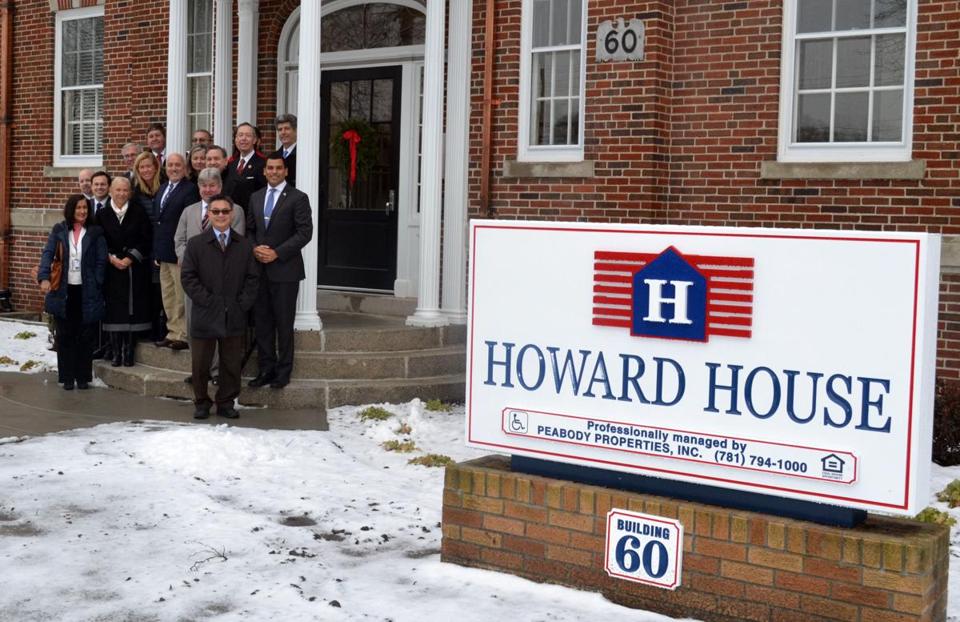
In December, the openings of the New England Center and Home for Veterans’ newly renovated space in Boston, a 94-unit permanent supportive housing development for homeless veterans, and Howard House, a refurbished building also targeting homeless veterans located on the campus of the U.S. Department of Veteran’s Affairs (VA) medical center in Brockton, demonstrate

how creative nonprofits are working with governmental agencies to address the problem of homelessness among veterans. But these two projects are only the most recent in a series of supportive housing developments for veterans across the commonwealth.

The Community Economic Development Assistance Corporation (CEDAC) provided the first financing commitment to the New England Center and Home for

(DHCD) for the project, and is working closely with the VA and the state Department of Veterans’ Services to make sure that the residents have the rental subsidies and services they need. This project, among others, contributed to Boston’s success in ending chronic homelessness among veterans and ensuring that newly homeless veterans move quickly into housing with services.Veterans in 2013, a $250,000 predevelopment loan that helped the nonprofit to plan and implement its $35 million project. While the project won’t be fully complete until March, more than 30 formerly homeless veterans moved into their new homes in time to celebrate the winter holidays. The center also received $1 million from the city of Boston and over $17 million in funding from the commonwealth’s Department of Housing and Community Development

The VA has been an excellent federal partner to state and local governments through their creative use of medical campuses. Howard House is the latest example of the VA’s partnership with private developers to turn surplus property into supportive housing. The historic 1924 structure had recently been underutilized as storage space. The VA worked with development partners Peabody Properties Inc., Windover Construction and Affordable Housing and Services Collaborative Inc., to create 14 units of supportive housing. Residents moved in a few weeks before the New Year.


Partnerships Provide Resources

This follows a similarly constructive partnership between the VA and the same organizations to create supportive housing for 69 elderly veterans on the campus of the Rogers VA Medical Center in Bedford. The Bedford Green Apartments, which opened in 2015, was the brainchild of the leadership at the medical center, who recognized an opportunity to utilize their campus to provide housing options for the senior men and women who served our nation. The new construction development also comes with the medical and social services needed by low-income and formerly homeless veteran seniors. In addition to utilizing surplus land for both developments, the VA provided $1.2 million and 14 rental subsidies for Howard House and $2.4 million and 69 rental subsidies for Bedford Green.

CEDAC, along with DHCD, supported Peabody Properties and the Affordable Housing and Services Collaborative with both of these developments, helping them secure $3 million in funding for Howard House and $2 million in funding for the Bedford Green Apartments through a state supportive housing fund and an innovative state pilot program that promoted the production of supportive housing for vulnerable populations across the commonwealth.

These are not the only organizations creating housing for homeless veterans. In Western Massachusetts, a nonprofit called Soldier On has developed several supportive housing projects for struggling veterans and has also focused on the unique challenges that women veterans face. And on the South Shore, the nonprofit Father Bill’s & MainSpring built Jack’s Place and Patti’s House, which created 22 units of permanent supportive housing there. CEDAC works with all of these organizations, providing financial and technical support to make these projects a reality.

Solving the problem of veterans’ homelessness takes cooperation from all levels of government and sustained commitment from the nonprofit sector. By being resourceful and imaginative, nonprofits and governmental agencies in Massachusetts have reduced homelessness among veterans. Fortunately, we’re well on our way to meeting the challenge of ending homelessness among the men and women who served – but more work needs to be done.

Roger Herzog is the executive director of CEDAC; Bronia Clifton is a senior project manager.


http://www.bankerandtradesman.com/2017/02/public-private-partnerships-form-create-supportive-housing-homeless-vets/
SourceBanker & Tradesman

Northampton receives funding for affordable housing project

NORTHAMPTON, Mass. (WWLP) – The Baker administration announced on Tuesday millions of dollars in funding for an affordable housing complex in Northampton. The project is planned for the former Northampton Lumber Yard property on Pleasant Street.

The Governor’s office said funding will come from low-income housing tax credits, rental housing subsidies and other state funds. The plan includes developing 55 units of affordable family housing and retail space in the downtown area

“We are strengthening cities and towns across the Commonwealth, by partnering with local stakeholders to deliver on their unique visions for community development,” said Governor Charlie Baker. “The tools we are bringing to bear in Northampton, in public infrastructure and affordable housing funding, will allow this city to create a dynamic new entrance to its downtown, while opening up new housing options for families.”

“Northampton has displayed a remarkable level of collaboration and partnership to craft its Pleasant Street corridor master plan, and we are pleased to partner with the city to help deliver on that plan’s promise,” said Lieutenant Governor Karyn Polito. “We are growing strong regional economies, by empowering communities to pursue long-term planning, and then providing them with the necessary resources to reach their goals for economic growth and new housing development.”

Some local business owners told 22News they’re worried parking will be a problem. The owner of Harold’s Garage, Michael Willard, said, “Well it’s going to affect everybody. All these store fronts across the street. People aren’t gonna spend how long looking for a parking place, they’ll just go back to the malls like they always do.”

According to the Governor’s office, the Department of Housing and Community Development awarded the project $1.79 million in state and federal low-income housing tax credits and $3.3 million in direct rental housing subsidies.

Construction could start as soon as September of 2017.

http://wwlp.com/2017/01/10/northampton-receives-funding-for-affordable-housing-project/

‘Lumberyard’ affordable housing in Northampton wins $5 million from state

The Lumberyard Apartments — a 70,000-square-foot affordable housing project planned at 265 Pleasant St. — will move forward with a $5 million investment from the state.

The Baker administration announced Tuesday that its Department of Housing and Community Development will award the project $1.79 million in state and federal low-income housing tax credits and $3.3 million in direct rental housing subsidies.

The Valley Community Development Corporation plans 55 rental units, with 11 reserved for very low-income households, at the site of the former Northampton Lumber.

The Lumberyard Apartments — a 70,000-square-foot affordable housing project planned at 265 Pleasant St. — will move forward with a $5 million investment from the state.

The Baker administration announced Tuesday that its Department of Housing and Community Development will award the project $1.79 million in state and federal low-income housing tax credits and $3.3 million in direct rental housing subsidies.

The Valley Community Development Corporation plans 55 rental units, with 11 reserved for very low-income households, at the site of the former Northampton Lumber.

http://www.masslive.com/news/index.ssf/2017/01/lumberyard_affordable_housing.html

© 2016 MassLive LLC. All rights reserved

SourceMassLive

AT HOME IN NORTHAMPTON: Nonprofit Developers Tackle Two Projects On Northampton’s Pleasant Street; Efforts Help Revitalize Neighborhoods, Provide Housing Options For Individuals And Families

The nonprofit housing development community is playing an increasingly prominent role in revitalizing neighborhoods throughout the commonwealth that have gone through years of neglect and disinvestment. In some cities, the economics often don’t work for private sector investment, but nonprofit development of mixed-use projects, coupled with public infrastructure funding, can transform the perception of value and the actual experience for local residents. More and more, we are seeing community-based, nonprofit affordable housing developers – and the commonwealth’s affordable housing finance system – step in, to positive results.

Massachusetts has a well-regarded affordable housing financing and community development system that continues to produce and preserve affordable units across the state. CEDAC works with nonprofit developers in many different settings – from rural areas in Western Massachusetts to neighborhoods in Boston – to ensure that they have the resources they need early in their projects to turn an

idea into reality. We provide the early stage capital financing and technical assistance that community-based organizations need to get an affordable housing project off the ground. And for many municipalities, those efforts help revitalize neighborhoods and provide housing options for individuals and families across a range of incomes.

Gateway To Downtown Northampton

We have seen that kind of nonprofit reinvestment happen in Boston, in places like Roxbury’s Jackson and Dudley squares, but this isn’t only happening in the region’s largest city. It’s also taking place in Northampton, where in recent months CEDAC has been involved with two separate nonprofit-led projects that are helping to improve an important district of the city to turn it into a more welcoming gateway for visitors and residents alike.

One project to transform an underutilized, single-room occupancy building on Pleasant Street in Northampton into new affordable units with both housing and services was more than a decade in the making. The city of Northampton had long looked for a nonprofit developer to address this troubled property but was unsuccessful until HAP Housing, a regional affordable housing developer based in Springfield, decided to take on the challenge. CEDAC provided HAP Housing with a $1.6 million acquisition loan and $1 million in predevelopment funding, which allowed HAP to acquire the site and undertake architectural, legal and financial planning for the project. The city of Northampton has also made $450,000 in funds available for the development and the commonwealth’s Department of Housing and Community Development awarded the project $6.6 million in housing tax credits and other capital funds. Now under construction, Live 155 will offer 70 studio- and one-bedroom apartments above street-level commercial space, which aligns with Northampton’s new urban design goals.

Another community-based organization based in Northampton, Valley CDC, is undertaking a similarly ambitious and important project on Pleasant Street across the street from Live 155. Formerly occupied by Northampton Lumber, this 1.23 acre site will create 55 new units of housing as well as commercial space. CEDAC is providing $1.8 million in loans to help the organization gain site control and address other early costs associated with the project. Furthermore, both Live 155 and the Northampton Lumber sites are close to transit options, including area Amtrak and bus stations, which will give residents transit opportunities for work.

CEDAC’s investment is already spurring additional interest and resources into this part of Northampton. In November, Massachusetts Secretary of Housing and Economic Development Jay Ash announced that Northampton had received a $2.5 million MassWorks infrastructure grant that will fund the replacement of a storm drain under the Northampton Lumber site, while also improving the overall character and function of Pleasant Street, with enhanced bike lanes, sidewalks and benches, among other upgrades. In total, the cumulative public and private investment in both projects is an estimated $42.6 million.

The experience in Northampton shows that knowledgeable nonprofit organizations, dedicated community planners and an efficient, functioning community development system can play an important role in creating sustainable, thriving communities that also meet the housing needs of vulnerable residents. As other communities, including some of the region’s more distressed cities and towns, think about ways to revitalize their neighborhoods, they would do well to look to their community development agencies and nonprofit real estate developers to provide similar inspiration.

Roger Herzog is the executive director of the Community Economic Development Assistance Corporation (CEDAC). Lionel Romain is CEDAC’s director of housing for Central and Western Massachusetts.


http://www.bankerandtradesman.com/2016/12/nonprofit-developers-tackle-two-projects-northamptons-pleasant-street/?utm_campaign=Daily&utm_source=hs_email&utm_medium=email&utm_content=39750107&_hsenc=p2ANqtz-8YaoO2DQrMys0ygxPy29WYpgEU-AzBVqf4n7rYfBiE4_JLOEJ2BQKtee9Pf2lfSC_6TT_8rWsUC5xwf21EIIcI5CwRSQ&_hsmi=39750107

SourceBanker & Tradesman

Openings, closings, and more in the south suburbs

The first residents of a renovated apartment building for homeless veterans on the campus of the VA Medical Center in Brockton moved in earlier this month.

Rent for the 14 single-occupancy apartments at Howard House will be covered by a federal government program. The building has served many functions through the years, including as living quarters for hospital employees, a daycare center, and most recently as storage space. The renovation was the product of a partnership between the City of Brockton, the VA Boston Healthcare System, Peabody Properties, and Windover Construction. A grand opening, including a tour of the building, was held on Dec. 12. Other residents will move in by next month.

The South Shore YMCA will open a fitness and wellness center in a business park in Norwell next month. ZoneWellness will primarily be for the use of those working in Assinippi Park, according to Emily Hubert, who will be the center’s director. It will also be open to members of the South Shore YMCA’s Quincy, Hanover, and Norwell locations. ZoneWellness will offer weekly group exercise classes and employ certified personal trainers and lifestyle coaches. It is being developed in collaboration with Quincy-based FoxRock Properties.

Full Spectrum Benefits, which consults businesses on employee benefits, recently moved its offices from Hanover to Hingham.

https://www.bostonglobe.com/metro/regionals/south/2016/12/16/openings-closings-and-more-south-suburbs/9I1L4fWXc9DmYSbRAQQ2DJ/story.html

SourceThe Boston Globe

88 Hudson revitalizes Chinatown with more affordable homes for working families

Asian Community Development Corporation (ACDC), a 29-year-old nonprofit developer in Boston, is proud to create more affordable homes for working families at 88 Hudson Street in Chinatown. The project will create 51 condos available to families making 60 to100% of the area median income (AMI), with the majority of the condos available to families at or below 80% AMI. The $20 million project has generated 130construction jobs to date and expected to gene

rate an additional 220 jobs during the remainder of the project, including jobs for Chinatown residents. Construction began in May 2016, and ACDC expects completion by late 2017.

88 Hudson is Phase 2 of the Parcel 24 project and when completed, it will represent the culmination of more than a decade of planning, advocacy, and hard work to restore this site to a thriving community in Chinatown once again.

Located on historic Hudson Street in Chinatown, 88 Hudson is one of ACDC’s longtime efforts to revitalize and restore families to a part of Chinatown that was once home to hundreds of immigrants before the highway projects of the 1950s and 60s, which displaced many families living on Hudson Street, including one of ACDC’s founding board members and current board president, Paul W. Lee. “I’m proud to be working with ACDC to create affordable housing for new immigrant families on the site where I have fond memories of growing up in a vibrant, immigrant community over 50 years ago.”

The six-story development will feature 20 one-bedroom units, 22 two-bedroom units, and 9 three-bedroom units, including fully handicap accessible units.  The project team consists of ACDC as the developer, Maloney Properties as the broker and management company, Utile as the architect firm and NEI as the general contractor. The project was financed by the State Department of Housing and Community Development; the City of Boston’s Department of Neighborhood Development, construction financing from Eastern Bank, and predevelopment financing from Community Economic Development Assistance Corporation.

Eligible applicants will be selected through a lottery. Interested parties can sign up for a mailing list that will send alerts about the lottery and when applications will be made available at www.88hudson.com. Questions about the application process should be directed to Maloney Properties.


About Asian Community Development Corporation

The Asian Community Development Corporation (ACDC), a 29-year old community-based organization, serves the Asian American community of Greater Boston, with an emphasis on preserving and revitalizing Boston’s Chinatown. ACDC develops physical community assets, including affordable housing for rental and ownership; promotes economic development; fosters youth leadership development; builds capacity within the community and advocates on behalf of the community. ACDC has developed over $100 million in mixed-use real estate that is home to over 1,200 residents in Boston and Quincy, and provides housing counseling and homebuyer workshops throughout the year. For more information or to sign up for a workshop, visit www.asiancdc.org.


http://sampan.org/2016/12/88-hudson-revitalizes-chinatown-with-more-affordable-homes-for-working-families/

SourceSampan

$20M Chinatown Project Will Add 51 Affordable Housing Units

A 51-unit condo complex in Boston’s Chinatown neighborhood will create new housing options for families earning 60 to 100 percent of the area median income.

Boston-based Asian Community Development Corp. (ACDC) is leading the $20 million project at 88 Hudson St. The 6-story building will include 20 one-bedroom units, 22 two-bedroom units and nine three-bedroom units, including handicap-accessible units.

The project team consists of ACDC as the developer, Maloney Properties as broker and management company, Utile as the architect and NEI as general contractor. The project was financed by the state Department of Housing and Community Development, the city of Boston’s Department of Neighborhood Development, construction financing from Eastern Bank and predevelopment financing from Community Economic Development Assistance Corp.

A majority of the condominiums will be reserved for families earning 80 percent or less of the area median income. Completion is expected in late 2017.

88 Hudson is part of ACDC’s efforts to restore affordable housing in Chinatown, where apartments were demolished in the 1950s and 1960s to make way for highway projects.

Eligible applicants will be selected through a lottery. Interested parties can sign up for email alerts to request an application.


http://www.bankerandtradesman.com/2016/12/20m-chinatown-project-will-add-51-affordable-housing-units/

SourceBanker & Tradesman

City celebrates completion of Harborlight House renovation

Harborlight House is complete, and Tuesday afternoon was a time to celebrate.

Officials from Harborlight Community Partners and the city, along with residents, gathered at 1 Monument Square to celebrate the end of the 15-month renovation at the home that provides services and support to elderly residents living on limited incomes.

Along with larger rooms, the home also features a large porch, a treatment room where residents can receive health care, a new elevator, plus an overnight room for staff in case of inclement weather.

The completion of the project last month helps the Harborlight House to continue the mission it’s had for more than 50 years — to provide supportive living for seniors in need.

“I think in every respect, it’s as elegant as we hoped it would be,” said Neil Douglas of First Baptist Church, which founded Harborlight House.

The home now has 30 rooms, 28 of which are occupied, according to Beth Brenner, Harborlight House’s property manager. There used to be 35 rooms, but some of the rooms were “really small,” she said.

“A few of the rooms got larger,” she said, adding that most had twin beds.

Andrew DeFranza, Harborlight Community Partners executive director, said the organization is “very excited” to have the renovation complete, noting the home is its oldest property.

“It’s a wonderful and unique way to provide affordable housing and supportive services in a way that helps elders age in a place and avoid long-term care facilities,” he said.

The home is not considered assisted living, DeFranza said, noting his organization no longer has a certification for that. He added that assisted living has become somewhat of a “lifestyle model” whereas Harborlight is more concerned with providing affordable housing for elders that also meets their needs.

“It’s really an affordable housing setting with a service package built on top of it,” he said.

Harborlight House, a combination of two Victorian homes, has housed seniors with limited incomes since 1963, according to the Harborlight website.

First Baptist Church purchased the home and remodeled it, turning it into a home for seniors that offered not only living quarters, but meals and other services.

It was in the 1990s that Harborlight decided it was time to renovate the home the first time.

Funding for this round of renovations came from multiple sources, including the state as well as the city’s Community Preservation Committee.

http://www.salemnews.com/news/local_news/city-celebrates-completion-of-harborlight-house-renovation/article_36332a94-02f0-5bbc-ade2-197ab319fdb5.html

SourceThe Salem News

Pleasant Street, Northampton awarded $2.5 million

The City of Northampton has received one of the state’s biggest infrastructure investments this year. $2.5 million of your state tax money will help make Northampton’s Pleasant Street, more pleasant for residents, visitors and business owners, like Tess Poe of Beehive Sewing Studio.

“It’s so important for me to know that there’s an investment in making that part of Northampton a more walkable, more urban dense environment that really draws customers and visitors from all over,” Poe told 22News.

Northampton was one of just a few dozen communities in Massachusetts to receive money through the state’s highly competitive MassWorks program this year. 22News asked Massachusetts Housing and Economic Development Secretary Jay Ash why the city was overlooked for this grant money in 2015, but received one of the largest amounts this year.

“After the last round, talked to the mayor about what he could do to improve the application to move it ahead of others in line and we were all very supportive of the project,” said Secretary Ash. He said State Senate President Stanley Rosenberg and Northampton State Representative Peter Kocot advocated for the city’s proposal to MassWorks.

Technically Pleasant Street is Route 5, a highway, but the goal of this infrastructure investment is to make it more like an extension of Main Street, just a few blocks down the road. Through that investment, there will be new sidewalks, making it more accommodating for people walking and biking. Mayor David Narkewicz told 22News he hopes the new rotary will divide Pleasant Street/Route 5 into two pieces: a busy highway before the rotary, and a city street with businesses and commerce after the rotary.

That’s important to support two major housing development projects on Pleasant Street that will create 125 new housing units and mixed-use space on the street. The first, HAPHousing’s Live155 is already under construction at 155 Pleasant Street. It’s expected to open by the end of 2017. Valley CDC’s plan to redevelop the abandoned lumber yard on Pleasant Street will likely be complete by 2018.

“It’s a great example of how the City can make investments in its infrastructure, and not only sidewalks, but also storm sewer infrastructure, to help leverage private investments,” said Northampton Mayor David Narkewicz.

During the announcement Monday morning at City Hall, Senate President Rosenberg said former U.S. President and Northampton resident Calvin Coolidge would be proud of the city on a day like this.

22News asked Mayor Narkewicz if this new affordable housing would house Syrian refugees moving to Northampton. He said if the refugees can afford the units, then perhaps, but not immediately, because the refugees will be arriving almost a year before the complexes are complete.

http://wwlp.com/2016/11/28/northampton-awarded-2-5-million-to-invest-in-new-infrastructure-projects-on-pleasant-street/

SourceWWLP-22News

CEDAC Fall 2016 Newsletter

Dear Friends,

In this newsletter, we highlight recent successes and transitions for CEDAC and our affiliates, Children’s Investment Fund and Commonwealth Workforce Coalition.  As we note in the article on supportive housing, Massachusetts has a lot of good news to share when it comes to producing supportive housing units.  Through a state interagency effort, we created more than 1,750 in just three years and because of new state and federal resources, we will be able to produce even more.

SourceCEDAC