

Harborlight Community Partners has received a MassDevelopment bond to fund a renovation of its affordable senior supportive living facility.
MassDevelopment issued a $4 million tax-exempt bond on behalf of Harborlight House LLC, an affiliate of Harborlight Community Partners, an affordable housing manager and developer.
The developers plan to improve the building’s energy efficiency and renovate the units to improve wheelchair accessibility. The facility is located at 1 Monument Square in Beverly.
MassDevelopment also assisted the Department of Housing and Community Development with the approval of federal low-income housing tax credits, providing approximately $2 million in equity. East Boston Savings Bank purchased the bond. The project is expected to support 14 construction jobs.
“Seniors throughout our North Shore communities deserve to be able to remain in this region where they have lived, worked and raised their families, but there is a shortage of affordable options to support them,” Andrew DeFranza, executive director for Harborlight Community Partners, said in a statement. “This critical collaboration with MassDevelopment and others ensures that Harborlight House will remain viable and affordable for decades to come.”
Category: CEDAC
Citizens Kicks In $6M For Dartmouth Affordable Housing Development
A 36-unit affordable rental housing development in Dartmouth will move forward with a $6.46 million construction loan from Citizens Bank.
Local developers Paul and Robert Carrigg will build Lincoln Park Place LLC at the former Lincoln Park Amusement Center.
Besides the loan provided through Citizens’ Community Development Lending Group, financing for the project also includes $7 million in state and federal low income housing tax credit equity, $3.5 million in state funding, $100,000 in town funding and a permanent loan through Bay Coast Bank in Fall River.
“We enjoyed working with Citizens Bank on this project,” Paul Carrigg said in a statement. “Citizens Bank moved forward in a timely fashion to help get this transaction closed. This development offers Southeastern Massachusetts residents more options for affordable housing, which is an important goal for us and for Citizens.”
Lincoln Woods Apartments Receives $15.6M From MassHousing
Lincoln Woods Apartments Receives $15.6M From MassHousing
Aug 31, 2015
The Lincoln Woods Apartments in Lincoln will receive $15.6 million in MassHousing financing to improve facilities and maintain affordability at the 125-unit complex.
Lincoln Woods is owned by an affiliate of The Community Builders (TCB) of Boston. TCB is using the MassHousing financing to renovate the property, which includes 72 apartments that are affordable to lower-income families. The remaining 53 apartments are rented at market rates.
TCB will use funds to replace all windows and exterior doors, replace or repair wood siding, renovate community rooms, install a fitness area, new kitchens, bathrooms and a new boiler plant, improve ventilation and add solar panels. The number of accessible apartments will be increased from two to six and the wastewater treatment plant will be upgraded to ensure compliance with current requirements.
The 72 affordable units will remain so for at least 30 years under the Low-Income Housing Tax Credit (LIHTC) program, and of the 72 units, 32 will be subsidized through the Massachusetts Rental Voucher Program.
MassHousing’s financing includes a $12.6 million construction and permanent loan and a $2.8 million bridge loan. Other financing sources for the transaction were the state Department of Housing and Community Development, the town of Lincoln and the use of federal LIHTCs.
“At a time when the nation is talking about expanding ways for families of all incomes to live in high-opportunity communities with great schools, The Community Builders could not be more proud of Lincoln Woods Apartments, where 125 families with a wide range of incomes live in well-designed housing in the center of Lincoln, adjacent to grocery shopping, green space and the commuter rail,” Bart Mitchell, TCB president and CEO, said in a statement. “We are delighted that this investment will keep Lincoln Woods Apartments beautiful, energy-efficient and affordable for decades to come.”
Copyright © 2015 The Warren Group | All Rights Reserved
http://www.bankerandtradesman.com/2015/08/lincoln-woods-apartments-receives-15-6m-from-masshousing/?utm_source=btDaily&utm_medium=Daily&utm_campaign=btdaily083115
Asian Community Development Corporation Completes Rehabilitation
Asian Community Development Corporation (ACDC), a 27-year old nonprofit organization serving the Asian American community of greater Boston, has just completed the rehabilitation of Tremont Village, a 20-unit low-income apartment building at the border of Chinatown and Bay Village. An open house was held at the property, on August 18.
“This rehabilitation project preserves an important affordable housing asset and allows low-income families to remain in Chinatown and access the amenities, services and opportunities this community offers,” said Janelle Chan, executive director of Asian Community Development Corporation. Owned by the state Department of Housing and Community Development (DHCD), Tremont Village consists of 20 state public housing units originally constructed in 1987. ACDC was selected by DHCD as the redeveloper for Tremont Village through a 2010 RFP.
“DHCD is pleased with the work ACDC has done to rehabilitate and preserve affordable housing in Chinatown,” said Department of Housing and Community Development undersecretary Chrystal Kornegay. “Retaining low income access to neighborhoods and communities is an essential part of DHCD’s mission, and Tremont Village will ensure that families from across the income spectrum can participate in the neighborhood’s continued growth and development.”
ACDC undertook renovations to address life-safety and quality-of-life issues, as well as improve the energy efficiency of the property, in order to preserve these affordable housing units for low-income residents. The building includes four two-bedroom units and 16 three-bedroom units.
This project was financed by DHCD, MassDevelopment, Boston Private and Massachusetts Housing Investment Corporation. Predevelopment financing was provided by the Community Economic Development Assistance Corporation (CEDAC).
“The renovation of 20 affordable units will continue to provide high-quality options for those who might otherwise struggle to find good places to live in Boston’s tight housing market,” said MassDevelopment president and CEO Marty Jones. “MassDevelopment is thrilled to work with private and public partners to help to meet vital community needs and congratulates the Asian Community Development Corporation for its leadership in housing preservation.”
“We are pleased to support the important work ACDC is doing to address the need for affordable housing in the community,” said George Schwartz, president of Boston Private. “Investing in low- and moderate-income housing is a key part of our business strategy, and the kind of opportunity that we actively seek out, especially with experienced developers like ACDC. We value our partnerships with those that share our commitment to active participation in projects that have a real impact on the communities in which we work and live.”
“MHIC was pleased to provide critical financing generated from the use of low-income housing tax credits to preserve this affordable housing for families and to further the revitalization of this vibrant Boston neighborhood,” said Joe Flatley, president of Massachusetts Housing Investment Corporation.
“The Asian Community Development Corporation has a strong track record of producing quality affordable housing for the community,” said Roger Herzog, executive director of the Community Economic Development Assistant Corporation (CEDAC). “Tremont Village is their first preservation project and CEDAC is proud to have supported it in its early stages with a loan of $300,000. We are also pleased that the completed project will maintain the affordability of 20 units of quality housing for low income residents living in Boston’s Chinatown and Bay Village neighborhoods, who are facing increasing financial pressures in a neighborhood that is becoming ever-more expensive.”
The project team included Davis Square Architects, Pinck & Company and Page Building Construction.
About Asian Community Development Corporation
Asian Community Development Corporation (ACDC), a 27-year old community-based non-profit organization, serves the Asian American community of Greater Boston, with an emphasis on preserving and revitalizing Boston’s Chinatown. ACDC develops physical community assets, including affordable housing for rental and ownership; promotes economic development; fosters youth leadership development; builds capacity within the community and advocates on behalf of the community. ACDC has developed over $110 million in mixed-use real estate that is home to over 900 residents in Boston and Quincy, and provides housing counseling and homebuyer workshops throughout the year. For more information, visit www.asiancdc.org.
http://sampan.org/2015/08/asian-community-development-corporation-completes-rehabilitation-of-tremont-village-and-preserves-affordable-housing-in-chinatown/
CDC Completes Rehabilitation Of Tremont Village Apartments
Asian Community Development Corp. (ACDC) recently completed the rehabilitation of Tremont Village, a 20-unit low-income apartment building at the border of Boston’s Chinatown and Bay Village.
An open house was held at the property on 339-351 Tremont St. on Tuesday.
“This rehabilitation project preserves an important affordable housing asset and allows low-income families to remain in Chinatown and access the amenities, services and opportunities this community offers,” Janelle Chan, executive director of ACDC, said in a statement.
ACDC worked to improve safety issues, as well as improve the energy efficiency of the property. The building includes four two-bedrooms and 16 three-bedrooms.
http://www.bankerandtradesman.com/news165139.html#sthash.H6JuZ7ZR.dpuf
Mass. Advocates Warn Of Loss Of Thousands Of Affordable Housing Units

Cambridge, Mass. – The Briston Arms housing complex is tucked into a quiet corner of North Cambridge, not far from Fresh Pond. With trees and bushes aplenty, birds chirping and even a place residents can lock their bikes, it’s a neighborhood of about 150 garden-style apartments.
And most of them are reserved for low-income tenants.
“There’s a great amount of comfort in having something stable to rely on,” said Briston Arms resident Ted McCabe.
McCabe pays a little over $400 a month for his apartment. Without government subsidies, it would go for $1,950. Suffering from depression, McCabe lives on disability and federal Section 8 vouchers.
He sees himself as part of the neighborhood fabric.
“It’s nice to see that there’s a larger variety of people who are still just people,” he said. “It shows that the community cares about each other, whereas if it’s just a matter of the people living here being the ones who can afford it, then you lose that sense that the people care about each other.”
McCabe has called Briston Arms home for two decades. But this year, when the development’s owners put it up for sale, his home, and about 100 other subsidized apartments like it, were in jeopardy.
‘Now The Time’s Up’
“The fear was that this was simply a prelude for conversion to market, and that’s pretty scary,” said Bill Brauner, who works for the Community Economic Development Assistance Corporation (CEDAC), a quasi public agency that works to protect affordable housing around the state.
And Brauner says things could get even scarier in several years.
He says across Massachusetts, 20,000 privately owned affordable apartments could go market rate by the end of the decade.
According to CEDAC, as many as 5,000 apartments are most at risk for losing affordability. That’s because they were financed through 40-year government loans, made on the condition that they stay affordable.
“At the time, you can imagine, people thought 40 years is a huge period of time for affordability,” Brauner said. “And it was. But now the time’s up.”
Affordability at Briston Arms was set to expire in 2018. The owners put the development on the market, and three companies bid, according to one of the bidders, the nonprofit Preservation of Affordable Housing.
Julie Creamer, a vice president at the nonprofit, said Briston Arms was primed for conversion.
“Properties like Briston Arms and some of our properties in Boston — in very high rent, low vacancy markets — are really harder to capture because the upsides are so great once the affordability restrictions have expired,” Creamer said.
Creamer says Briston Arms’ location, amenities and construction type meant the apartments could be easily converted to market rate — some of them already are. Fortunately for low income residents, the sellers, whose father founded Briston Arms, didn’t want that to happen.
“I think in their minds this was something their father had set out to do, and it was important for them to try and find a nonprofit or someone who would keep the property affordable,” Creamer said.
But ideals aside, Creamer’s company needed to come up with a lot of cash — $42.5 million was their final offer. They got it from a variety of sources — one of them, Cambridge Affordable Housing Trust. And now, Preservation of Affordable Housing owns Briston Arms.
‘Red Tape Does Work. And It Has.’
It isn’t just the funding that makes acquisitions like this possible. There’s also a state law that gives affordable developers first dibs when a property hits the market. It’s known as Chapter 40 T. Basically, 40 T imposes extra burdens on those trying to convert affordable housing to market rate.
Howard Cohen was one of the top advocates for the law when it passed six years ago. Cohen says 40 T is red tape by design.
“And we did it intentionally,” Cohen emphasized. “We knew we were creating the red tape. Some people were skeptical that the red tape would work. Some people like me thought, based on our real estate experience, red tape does work. And it has.”
Cohen chairs the board of Beacon Communities, a for-profit company that owns some 5,000 affordable apartments across the state. He says 40T gives his company and others like it a shoulder up in the bidding process. Here’s how it works: When a property goes on the market, the state can designate a buyer that will maintain affordability, and that buyer gets extra time to put together the financing. For sellers, time is money, and by choosing an affordable developer, they can speed up the sale.
It worked for Cohen. Two years ago, 40T was triggered when a development in Framingham called Edmands House went on the market.
“Very nice development, could’ve easily been converted to market rate housing, in one of our stronger economic communities,” Cohen said. “And as the owners … were considering their alternatives, they ultimately saw the obstacles imposed by 40 T, and were willing to sell it to us.”
It was a win-win for his company, which got to add Edmands House to its portfolio, and the low income tenants who got to stay in their homes.
‘You Have To Buy The Affordability Over And Over Again’
Not everyone is a fan of the model of privately owned, publicly subsidized housing. Steve Meacham, an organizer with the community housing organization City Life/Vida Urbana, calls it a nationwide disaster. Meacham says it’s especially problematic in communities like Cambridge, where property rates have soared since the developments were first built.
“All of the owners who built in rundown areas with public subsidy, and then those areas take off, then they want to cash out and you have to spend fortunes to keep them in subsidized programs,” Meacham said. “So you have to buy the affordability over and over again.”
And Meacham said the government can be stuck paying the subsidy.
Though advocates say Chapter 40T has done its job since being passed — preserving some 11,000 units, according to CEDAC — Massachusetts’ affordable housing market is going to get tighter in the coming years.
“Unfortunately,” CEDAC’s Brauner said, “we have this bulge of mortgage maturities that are going to occur, and the resources that the state and local and federal organizations have are just not sufficient to preserve all of that.”
By resources, Brauner said he means money, whether that means tax credits, housing vouchers, government grants or low-interest loans. And there’s just not enough to save every affordable apartment in the state.
Given today’s booming real estate market, Brauner said, some people are bound to be displaced.
But not McCabe, who — thanks to efforts by affordable housing activists, and a bit of red tape — will get to stay in his apartment at Briston Arms.
“I would not have been able to live in Cambridge, I don’t think I could’ve lived within 20 miles of the city,” McCabe said. “All of the support that I have, it’d be gone, just because I’d have to move.”
http://www.wbur.org/2015/08/12/affordable-housing-expiration
MassDevelopment Puts $208K Toward Downtown Lawrence Mixed-Use Project

The nonprofit Lawrence CommunityWorks (LCW) has been awarded a $208,000 grant from the Brownfields Redevelopment Fund to go towards the Duck Mill/Union Crossing Phase II redevelopment in Lawrence.
The funds will be used for cleanup and adaptive reuse of the five-story Duck Mill (formerly a cotton and wool manufacturing facility) located on the North Canal in downtown Lawrence. When completed, the 2.2-acre site will consist of 10,000 square feet of commercial space and 73 units of affordable rental housing.
“MassDevelopment is pleased to partner with LCW in its efforts to redevelop the Duck Mill, thereby increasing affordable housing and sparking economic activity in a Gateway City,” MassDevelopment President and CEO Marty Jones said in a statement. “The money from the Brownfields Redevelopment Fund over the last five years has helped this project revitalize a part of the heart of Lawrence.”
In total, MassDevelopment has provided $338,510 for the second phase of the Union Crossing redevelopment. Additional funding has come from state and federal historic tax credits, state and federal low-income housing tax credits, HOME funds and several other housing program funds.
Worcester affordable housing developments to get $115,000 boost
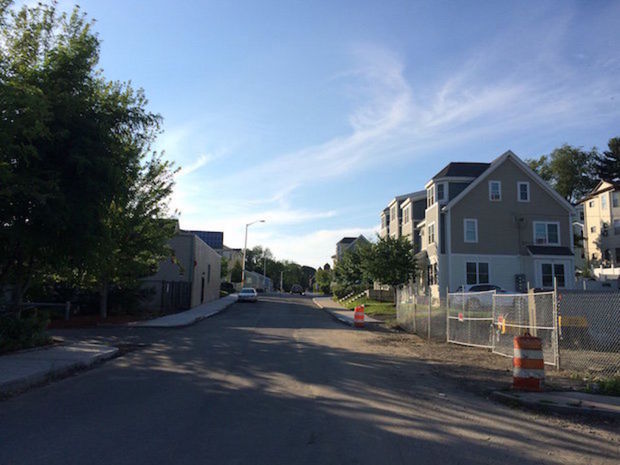
Two affordable housing developments in Main South and in downtown Worcester are set to receive a total of $115,000 in financing from the Community Economic Development Assistance Corporation (CEDAC).
The CEDAC recently approved $50,000 for an affordable housing residence on Kilby Street and $65,000 for the renovation of the Abby Kelley Foster House on High Street.
The money for the Kilby Street residence is going to the Main South CDC, which acquired a 100-year-old building on the street in August 2014 with plans to renovate the four-story home to create nine affordable rental units, including two accessible units reserved for homeless veterans.
“This project will complement the important revitalization taking place with the Kilby-Gardner-Hammond Revitalization project,” said Roger Herzog, CEDAC’s executive director, in a press release. “We are proud to continue to support the strong efforts of Main South CDC in their work in this neighborhood.”
The money going to Abby Kelley Foster House, more commonly known as Abby’s House, will renovate their building at 52 High St., which operates a 54-unit single room occupancy residence for women who are homeless, battered or low-income. The building also includes a thrift shop, program space, service offices, and Abby House’s Women’s Center. Abby’s House plans to replace building systems, add an elevator, and reconfigure the communal kitchen and bath facilities to improve building accessibility.
“Abby’s House has faithfully served at-risk women and children for nearly 40 years,” Herzog said. “The renovations planned for this location will enable the organization to continue to serve some of Worcester’s most vulnerable individuals for many decades to come.”
MassDevelopment Provides $9M For Affordable Pittsfield Apartments

Pittsfield April Lane LLC will use $9 million in MassDevelopment funds for the acquisition and renovation of an apartment complex in Pittsfield.
The organization plans renovate and preserve all 100 units as affordable to households earning no more than 60 percent of area median income with the $1.1 million taxable and $7.9 million tax-exempt bonds, purchased by Bank of America.
The 45-year old Dalton Apartments are located at 51 April Lane and consist of 11 buildings containing 28 one-bedroom units, 44 two-bedroom units and 28 three-bedroom units.
The developers plan to replace roofs, windows, furnaces, hot water tanks, kitchens, appliances, floors and lights, while creating five handicapped-accessible units.
In addition to the tax-exempt bond, MassDevelopment assisted the Department of Housing and Community Development with the approval of federal low-income housing tax credits, which provided approximately $3.2 million in equity.
Massachusetts Housing Investment Corp. Provides $11.5M Financing for Allston Affordable Housing
Massachusetts Housing Investment Corp. (MHIC) and the Allston-Brighton Community Development Corp. (ABCDC) have finalized $11.5 million in financing for 235 units of affordable housing in Boston’s Allston neighborhood.
MHIC is providing an $11.5 million low-income housing tax credit investment to renovate the Commonwealth and Glenville Apartments; the investment is split between a multi-investor fund ($8.8 million) and Rockland Trust Bank ($2.6 million). Financing for the project also includes $25.7 million in construction and permanent loans from Boston Private, financed through tax exempt bonds issued by MassDevelopment.
The Commonwealth and Glenville Apartments are on 17 scattered properties, all on the same city block bounded by Commonwealth and Glenville avenues. Rehabilitation of the buildings will primarily include major masonry repairs, maintenance and structural repairs on all buildings; energy efficiency and safety upgrades; accessibility and common area enhancements; and new doors, kitchen and bathroom fixture replacement, and similar work as needed in individual units. Exterior improvements will include paving alleys and walkways. Work will begin in August and be completed in September 2016. The total development cost is $56 million.
The Commonwealth and Glenville Apartments buildings are more than 100 years old, and have been owned by two separate but related companies whose members include ABCDC and a corporation of elected tenant representatives, the Commonwealth Tenants Council. The properties originally were acquired and developed in 1998 using HUD financing that was prepaid by the owners in 2011 and 2013. As part of this refinancing, the current owners are selling the two projects to a single new LLC, which will undertake a rehabilitation program and ensure the rental apartments’ long-term affordability.
“In a community that has become very transitory, with even a studio apartment going for almost $2,000 in this neighborhood, keeping these units affordable for low- and moderate-income families is of paramount importance,” Carol Ridge-Martinez, executive director of ABCD, said in a statement. “Now that we have this financing in place, we can finally begin the renovations and we will be able to sustain affordability of these apartments for many more decades.”