State to give new Father Bill’s project in Quincy $4 million
The state has vowed to chip in $4.2 million toward the planned new Father Bill’s & MainSpring facility for the homeless in Quincy.
Gov. Charlie Baker announced the funding Wednesday after touring Father Bill’s and meeting with guests there.
Baker said the money for Father Bill’s is part of $20 million that would go toward housing initiatives throughout the state.
He said the state needs more housing projects of all kinds to contend with a housing shortage in Massachusetts.
“Housing is expensive because we don’t make enough of it,” Baker said.
The current Father Bill’s building at 38 Broad St. is scheduled to be torn down to make way for a new public safety building that will hold Quincy’s police department.
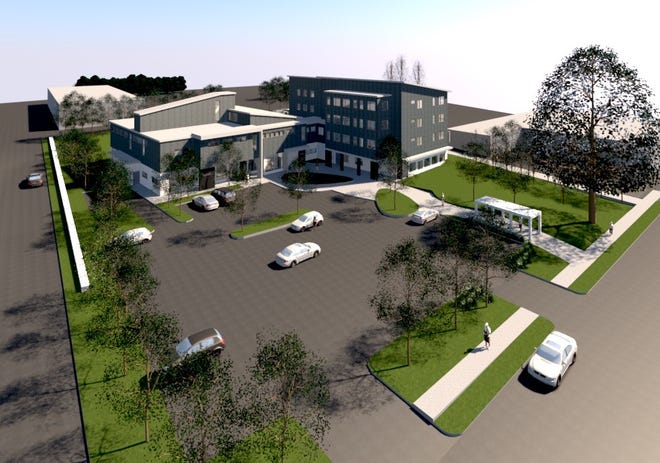
The nonprofit is planning to move across the street into two new buildings.
One building, which will be built first, will consist of a day center with space for programs and training, an emergency shelter and a health care clinic, among other amenities.
The other building, which will be built in a second phase, will hold 30 small apartments for permanent housing.
The project overall will cost about $24 million, said John Yazwinski, president and CEO of Father Bill’s & MainSpring.
Yazwinski said the state money will go toward the first building.
He said the nonprofit needs to find $7 million in private funding for the new facilities, but before even starting a fundraising campaign it has already received $3.2 million in donations.
Construction on the first phase of what is being dubbed the Housing Resource Center is set to begin later this year.
Quincy Mayor Thomas Koch called the project a “new beginning.”
Lt. Gov. Karyn Polito, who was also in Quincy, said the new Father Bill’s facility exemplifies a state push toward “supportive housing” for those experiencing homelessness, combining programming and resources with places to live.
“Hopefully, some of the guests can move into affordable housing and free up room at shelters,” Polito said. “This model (lets people) access the support they need.”
The Father Bill’s project was awarded $4 million through the Department of Housing and Community Development’s supportive housing funding for construction costs and an additional $250,000 through the state’s Housing Choice Community Capital Grant Program for design and engineering services
The new emergency shelter will have 75 beds, about 60 fewer than the current shelter, but the facility will be configured to be able to expand if necessary.
“We want to end homelessness, not manage it, and the Housing Resource Center will move us closer to that goal,” Yazwinski said. “The (center) is a solutions-based, proactive approach that meets individuals further upstream in their housing crisis. By investing in day services that re-house homeless individuals more quickly and prevent more people from entering shelter, we will lower public costs, reduce reliance on shelter beds and downtown spaces, and provide our neighbors in need with stability and a pathway to self-sufficiency.”
In September 2020, Father Bill’s signed a 99-year-lease with Quincy for the new site at 39 Broad St.
Speaker of the House Ron Mariano, D-Quincy, attended Baker’s announcement Wednesday along with the rest of Quincy’s delegation to the Legislature. Mariano called Father Bill’s a “truly great mark on Quincy.”
Yazwinski said, “Father Bill is looking down from heaven and he’s very happy today.”
Thanks to our subscribers, who help make this coverage possible. If you are not a subscriber, please consider supporting quality local journalism with a Patriot Ledger subscription.
Community Development Corporation of South Berkshire awarded funds for new affordable housing complex
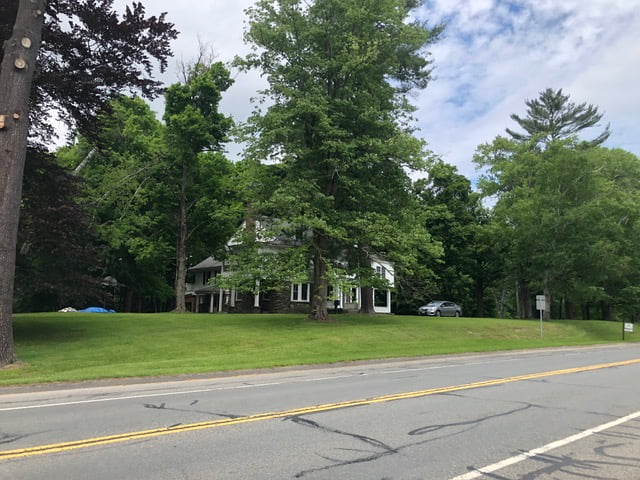
The Commonwealth of Massachusetts’ Housing and Economic Development Secretary Mike Kennealy and Housing and Community Development Undersecretary Jennifer Maddox recently announced the Community Development Corporation of South Berkshires (CDCSB) and project co-sponsor Way Finders, Inc. have been awarded approximately $14 million. These funds will provide the majority of financing for Windrush Commons, a new $19 million, 49-unit affordable housing complex at 910 South Main Street in Great Barrington.
The only project to receive funding in Western Massachusetts in this round, the initiative will be supported with federal and state low-income housing tax credits and subsidy funds from the Department of Housing and Community Development (DHCD). The town of Great Barrington also will support the project with Community Preservation Act funds.
Qualified families, individuals, and seniors will be offered the opportunity to rent apartments at significantly lower than market rates. All units will be “Net Zero ready” energy efficient. Windrush Commons will include a community gathering space with a kitchen, green space, and laundry facilities. The apartments will sit on approximately 2.5 acres. The additional 5.47 acres of the site will be permanently conserved land.
“This award of funds comes at a critical time for Great Barrington. With very few housing units on the market, and a zero percent rental vacancy rate, home prices and rents are out of reach for most households,” said Assistant Town Planner Chris Rembold.
The development team for Windrush Commons includes project co-sponsor Way Finders, Inc. of Springfield; Elton and Hampton Architects; civil engineering by White Engineering; Berkshire Housing Development Corporation as the management agent; and Allegrone Construction. Greylock Federal Credit Union will serve as the Federal Home Loan member bank.
Construction is expected to begin this summer/fall. The project is located in Great Barrington’s Smart Growth Overlay District, which was designed for this kind of development: high-density affordable housing within walking distance of shopping, health services, public transportation, and downtown attractions.
This new project award comes as the CDCSB is putting the finishing touches on Bentley Apartments, its new 45-unit affordable housing complex on Bentley Road, within walking distance of downtown Great Barrington.
“The projects that the CDCSB develops, including Bentley Apartments and Windrush Commons, enable us to address the housing crisis in the Berkshires,” said James Harwood, CDCSB Board of Directors president. “The positive impact on residents who will call these new apartments home is immense,” he said. “It changes people’s lives.”
More information about Windrush Commons and CDCSB economic development efforts can be found online or by contacting Executive Director Allison Marchese at allison@cdcsb.org.
SourceThe Berkshire Edge
MassHousing Closes on $5.5 Million in Financing for 181 Chestnut Street in Chelsea
BOSTON– MassHousing has closed on a total of $5.5 million in affordable and workforce housing financing to the non-profit The Neighborhood Developers, Inc. (TND), to transform a formerly market-rate rental property at 181 Chestnut Street in Chelsea into a mixed-income housing community.
The MassHousing financing will allow TND to extend long-term affordability to households across a wide range of incomes, from very-low-income households to middle-income households.
“By converting existing market-rate apartments to affordable homes with long-lasting affordability protections, this transaction will help ensure that Chelsea residents facing rising rents will be able to continue living and working in this vibrant city,” said MassHousing Executive Director Chrystal Kornegay. “TND is a mission-oriented housing developer, and MassHousing is pleased to partner with them on this exciting project.”
“Preserving a historic building as permanent affordable housing in Chelsea’s downtown will help advance long-term community goals and will keep families in stable and healthy housing through and beyond the COVID-19 pandemic,” said The Neighborhood Developer’s Executive Director Rafael Mares. “We believe this project will also serve as a model for how community development corporations in Massachusetts can convert naturally occurring affordable housing into deed-restricted homes for low-income families.”
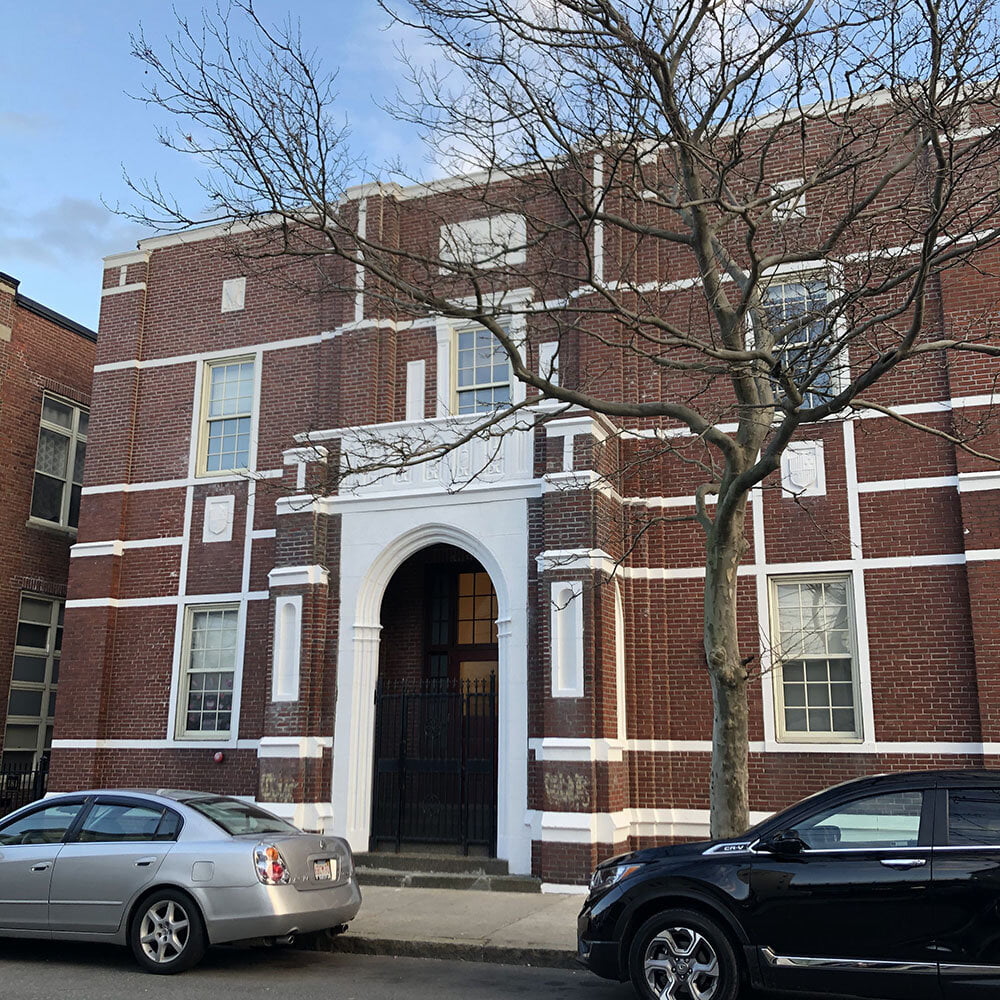
TND acquired the three-story brick and masonry building at 181 Chestnut Street in 2019. The MassHousing financing will allow TND to rent 30 of the previously unrestricted market-rate units to income-eligible households across a range of incomes, while two of the apartments will be rented at market rates.
Eight apartments will be subsidized with federal housing vouchers and restricted to households earning up to 30 percent of the Area Median Income (AMI), and nine apartments will be restricted to households earning up to 60 percent of AMI. There will be 13 workforce housing units, of which six will be restricted to households earning up to 80 percent of AMI and seven for households earning up to 120 percent of AMI. The AMI for Chelsea is $119,000 for a family of four. None of the existing tenants will be displaced.
MassHousing is providing TND with a $4.9 million permanent loan and $650,000 in financing from the Agency’s Workforce Housing Initiative.
The transaction also involved $1 million in financing from the Massachusetts Department of Housing and Community Development (DHCD), $1.1 million from the Affordable Housing Trust Fund, which MassHousing manages on behalf of DHCD, approximately $1.5 million in state HOME funds, $700,000 in local HOME funds provided by the North Suburban Consortium through the Malden Redevelopment Authority, $640,000 in financing from the Community Economic Development Assistance Corporation (CEDAC), and $238,052 from a TND loan fund. CEDAC also provided $8.5 million in acquisition financing in partnership with LISC Boston’s Equitable Transit-Oriented Development Accelerator Fund and supported by Partners HealthCare and other fund investors.
181 Chestnut Street advances the Baker-Polito Administration’s goal of creating at least 1,000 new workforce housing units affordable to middle-income households through MassHousing’s Workforce Housing Initiative. Since the inception of the initiative in 2016, MassHousing has committed or closed workforce housing financing totaling $116.5 million, to 54 projects, located in 22 cities and towns. To date, the Workforce Housing Initiative has advanced the development of 4,669 housing units across a range of incomes, including 1,308 middle-income workforce units.
181 Chestnut Street was originally built as a school and convent and was converted to housing in 2015. It is within walking distance to retail shops, restaurants and the city’s commuter rail station and serviced by multiple MBTA bus routes.
The property is managed by WinnCompanies.
MassHousing has financed seven rental housing communities in Chelsea totaling 640 units of housing with an overall original loan amount of $75.6 million. The Agency has also provided home mortgage loans to 754 homebuyers and homeowners in Chelsea with an original purchase principal balance of $90.5 million.
SourceBoston Real Estate Times
Underutilized hotels can help curtail homelessness
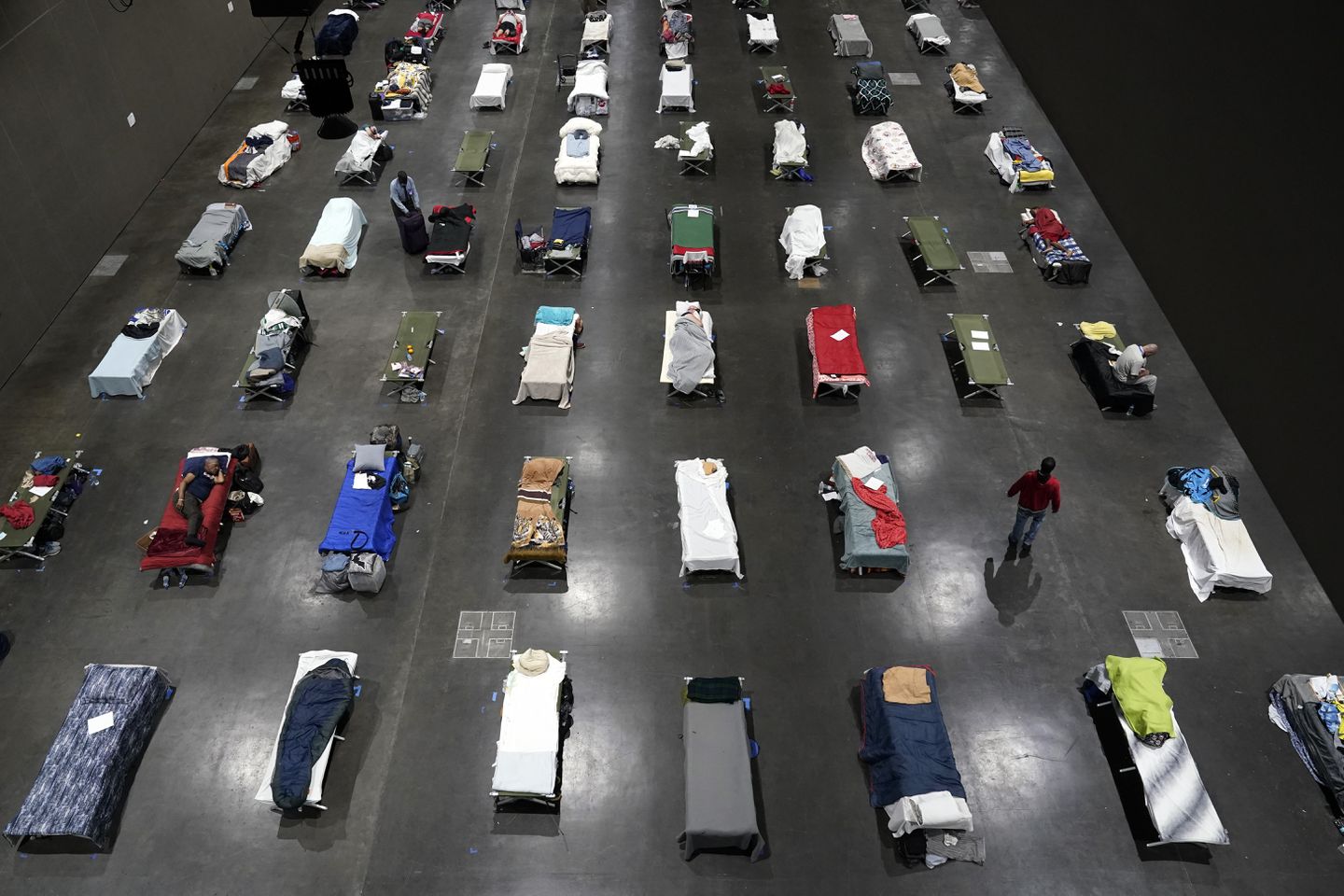
COVID-19 has exposed the flaws in our society’s response to homelessness. When the highly contagious novel coronavirus was spreading across the country early last year, emergency shelters were packed to capacity with dormitory-style beds, many with overflow mattresses spread across floors. Individuals slept within three feet of one another at a time when personal space literally meant the difference between life and death. Communities across Massachusetts reported increases in people sleeping outside, given the need to reduce shelter capacity for social distancing and some individuals’ hesitancy about sleeping in a congregate shelter during the crisis.
As a matter of public health and moral principle, we must do better.
This is an opportunity to reenvision how we approach homelessness and protect our most vulnerable neighbors in a public health crisis. One potential solution is to acquire unused or underutilized properties such as hotels and convert them into permanent supportive housing for people experiencing homelessness.
Our organization, Father Bill’s & MainSpring, is in the process of partnering with the state and City of Brockton to purchase a hotel in Brockton to convert 69 rooms into efficiency-style apartments. This would reduce the city’s individual shelter population by 50 percent.
This is a relatively quick solution, and one that could be put to scale across Massachusetts. State and local governments must transition from the current system of overreliance on emergency shelters and grouping hundreds of people into single overcrowded buildings.
The conversion of hotels into efficiency apartments is being done on a larger scale in California, Oregon, and Washington. Hotel owners, seeing a sharp decline in travel due to the pandemic, are exploring opportunities to sell their properties at a time when there is a population in desperate need of housing.
For the past nine months, the hotel we are purchasing in Brockton has served as a satellite shelter, providing refuge to more than 60 individuals per night who are experiencing homelessness. Repurposing the hotel, which otherwise would have sat empty during the pandemic, allowed our organization to depopulate our main shelter in downtown Brockton, creating space for social distancing.
Many guests are elderly, immunocompromised, or at high risk with other medical conditions. The positive COVID-19 rate among our Brockton guests plummeted from an initial high of 30 percent to less than 1 percent after they moved into the hotel.
In Quincy, we are also partnering with city officials and utilizing a local hotel to depopulate our main shelter.
Once we purchase the Brockton hotel, we will install kitchenettes in each room to turn them into efficiency apartments. Case managers will provide individualized support to tenants, helping them remain housed and become more self-sufficient. This can include assistance securing employment or accessing health care and other community resources.
The national “Housing First”approach works. It prioritizes permanent housing to help individuals and families address the issues that had contributed to their homelessness.At Father Bill’s & MainSpring, we operate more than 550 permanent supportive housing units; 99 percent of our tenants stay housed for at least one year, while 93 percent stay housed for at least three years.
Converting existing properties is much easier than developing a new apartment building in an overheated real estate market. For example, it can take three years or more to site, finance, and construct a 25-unit building for homeless individuals. During that same time, dozens, if not hundreds, more individuals in that same community will become homeless and enter an already crowded and costly shelter system.
These conversions just got easier thanks to housing legislation enacted by Governor Charlie Baker and the Legislature. The law, which lowers the threshold to change zoning rules for new housing, will play an important role as communities strategize for a post-pandemic environment where empty commercial properties could be quickly repurposed for residential space.
The efficiency of converting underutilized properties into housing is a game-changer, as well as a proactive and cost-effective approach to health care. A recent study by the Blue Cross Blue Shield of Massachusetts Foundationfound that expenditures by MassHealth, the Medicaid program administered by the state, were lower for formerly homeless individuals in supportive housing than they were for individuals living in shelters and on the streets.
Turning hotels into housing works because it’s cost-effective, it can happen quickly, and it leads to better health care outcomes. But for the state to achieve this on a larger scale, to help our most vulnerable neighbors, it needs political good will and backing from local communities as well as funding and support from the private and public sectors.
In times of crisis, it’s always those who have the least who suffer the most. COVID-19 is no different. But we’re hopeful that this crisis can be a turning point in our fight to end homelessness.
SourceThe Boston Globe
Housing, health care for seniors will rise on site of former Everett church
The site of the former St. Therese church in Everett will soon see new life as a mixed-use development focused on the housing and health care needs of local seniors.
The Neighborhood Developers recently began constructing 77 affordable rental apartments for adults aged 62 and up at Broadway and Gledhill Avenue. The new building will include a ground-floor health care center for the tenants and other seniors that East Boston Neighborhood Health Center will operate through a partnership with TND.
The $33 million project also involves erecting six adjacent three-bedroom townhouses to be sold at affordable prices with no age restrictions, according to Rafael Mares, executive director of Chelsea-based TND.
The project, which has been warmly received by city officials, marks the first undertaken in Everett by the nonprofit, which owns and manages 461 rental apartments in Chelsea and Revere, many of which it developed.
“Everett is a neighboring community to Chelsea and Revere and has similar demographics,” Mares said. “There is a practical need in Everett for affordable housing for seniors so people can age in place in the community. So we felt compelled to offer our help and play whatever role we could in Everett.”
He said TND included a health care center in the project to enhance its goal of creating a place that could fully support people in their older years. Because it serves a similar region, East Boston Neighborhood Health Center was the “perfect partner” in that effort.
“We are excited about this and hope it can be a future model in our region and beyond,” Mares said of combining affordable senior housing and health care on one site.
East Boston Neighborhood Health Center maintains facilities in Boston, Revere, and Winthrop, including four community health centers, and three centers that operate under Program of All-inclusive Care for the Elderly, or PACE, a federal program which provides comprehensive care for older people with complex medical conditions, according to Greg Wilmot, East Boston’s senior vice president and chief operating officer.
The future Everett health center will serve PACE as well as regular primary care patients. But Wilmot said the focus will be employing PACE to provide medical and home health care services to tenants and other seniors that can help them remain independent.
“We know well that when seniors are able to stay in their communities, they are going to have better health outcomes,” he said, “and this partnership is going to give us a great opportunity to do that for the Everett community.”
St. Therese parish closed in 2004. TND purchased most of the site from the Archdiocese of Boston in 2018 after acquiring the remaining portion from another owner in 2017. The project is being financed with the help of federal and state low-income housing tax credits.
The church and other buildings have all been demolished. But Maras said TND is taking care to honor the history of the parish, including naming the development “St. Therese” and installing an interpretive exhibit about the church in a small park that it is renovating.
The rental units must be affordable to people earning up to 60 percent of area median income; with a portion affordable to those earning up to 30 percent of the median. Tenants above the 30 percent median will pay about $1,296 for a one-bedroom, and $1,550 for a two-bedroom. Other rents will be income-based. Townhouse prices will likely range from $235,000-$390,000.
The future apartment building will enjoy such common amenities as a large community room and a fitness center, along with activities that could range from cooking classes to potlucks and holiday celebrations. TND staff will also assist them in accessing services.
The project is set for completion in May 2022.
SourceThe Boston Globe
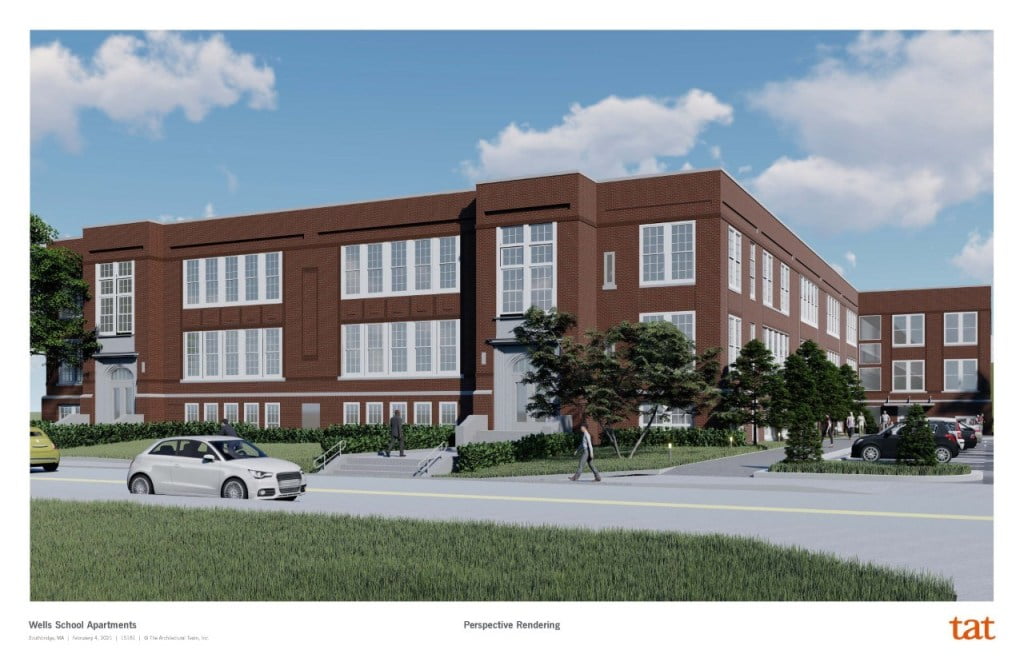
Arch Communities and WinnDevelopment Begin Construction on the Adaptive Reuse of the 104-year-old Wells School in Southbridge
Arch Communities and WinnDevelopment announced that construction is underway on a $25.7 million adaptive reuse project to transform a 104-year-old school building in Southbridge, MA, into 62 apartments for seniors age 55 and older.
Of the 62 apartments, 56 of the units will provide affordable housing at rents set at 60 percent of Area Median Income (AMI), including eight apartments reserved for residents at or below 30 percent of the AMI. Six apartments will be available at market-rate rents. Six apartments will be customized for handicapped and sensory-impaired households.
“This is such a challenging time, particularly for our seniors who have been impacted significantly over the last year, and we’re thrilled to be providing this much needed safe and affordable housing for the Southbridge community,” said Arch Communities Principal Richard Relich. “We’re extremely fortunate to work with our key partners who continue to support our efforts with critical funding including Gov. Baker and Lt. Gov. Polito, Secretary of State William Galvin and the staff at the Massachusetts Historical Commission, as well as our valuable partners at the Massachusetts Department of Housing and Community Development, MassHousing, CEDAC, BlueHub Capital and The Massachusetts Housing Partnership.
“I would also like to our acknowledge our equity partner, Bank of America, who continues to make critical investments in communities across Massachusetts, including at the Wells School Apartments where Bank of America purchased all of the tax credits available and provided construction financing for the project. Without the support from our partners, redeveloping historic properties such as the Wells School into mixed-income housing wouldn’t be possible,” Relich added.
The support of U.S. Rep. Richard Neal, whose district includes Southbridge, along wih State Sen. Ryan Fattman and State Rep. Michael Durant, also helped pave the way for the project’s financing and approval.
“Adaptive reuse projects like the Wells School hold a special place among all of the development work we do,” said WinnDevelopment Executive Vice President Adam Stein. “We’re proud to have the opportunity to restore this historic landmark and return it to service on behalf of the community.”
The Mary E. Wells school was built in 1916 as the first public high school in Southbridge and operated continuously for nearly a century. As the town’s population increased, fueled by the growth of the American Optical Company headquartered down the road, a new high school was built. In 1960s, the Wells building began being used as the town’s junior high school. The building has been vacant since 2012. The three-story school, 90,000-square-foot building was named for the wife of the co-founder and president of the American Optical. Mary E. Wells became the first woman elected to public office in Southbridge when voters chose her to serve on the town’s Board of Education in the 1890s.
“We are excited to have this project come to Southbridge,” said Southbridge Town Manager Michael F. McCall. “Not only does this project breathe new life into a historic school that has been an important fixture in the community over 100 years, it affords our seniors an opportunity to downsize and remain in the community they call home. Additionally, we see the project as the beginning of a revitalization initiative that will spur further economic development and yield economic benefits to our community. ”
Added Southbridge Town Councilor David Adams: “I am excited to see this historical building within our community, that means so much to so many, redeveloped while bringing with it new economic growth and much needed private senior housing,”
The project is utilizing both federal and state historic credits, along with federal and state low-income housing tax credits (LIHTC). The Department of Housing and Community Development (DHCD) is providing the federal and state LIHTC, while the U.S. National Park Service and Massachusetts Historical Commission are providing the federal and state historic credits. In addition to purchasing all tax credits, the Bank of America is providing a construction loan for the project. Additional funding is being provided by The Massachusetts Housing Partnership (MHP) and the Community Economic Development Assistance Corporation (CEDAC).
“The Wells School project will transform a vacant school building into a thriving community for senior residents in the town of Southbridge,” said Miceal Chamberlain, Massachusetts Market President for Bank of America. “Everyone deserves to have safe and affordable housing. We look forward to the opening of this community in the spring of 2022.”
The adaptive reuse effort is expected to be completed by March 2022 with Keith Construction serving as the general contractor and The Architectural Team serving as the architect. The project has been designed to achieve the Enterprise Green Communities certification – the leading U.S. standard for the design, construction, and operation of healthy, energy efficient and environmentally responsible affordable housing. WinnResidential will provide Property Management services to the property.
“We have a long history of supporting WinnDevelopment and Arch Communities, and many of our loans have supported the hard work of turning historic mills or schools into housing,” said MHP Executive Director Clark Ziegler. “These aren’t easy developments to do, but WinnDevelopment and Arch Communities are experienced at making these types of projects come true and we’re pleased to support their partnership in transforming Southbridge’s Mary E. Wells School into mixed-income senior housing that will serve the community for years to come.”
Once completed, the Wells School Apartments will feature a substantial amenity package, including an in-building laundry, fitness & yoga studio, tenant lounge, activity room, movie room, play space, a game room, library and work pods, a wellness suite, storage, and an internal courtyard. The property will include 66 parking spaces, of which four will be accessible. In partnership with WinnResidential, Tri-Valley Elder Services will provide a support services program available to residents living at Wells School Apartments.
Adaptive reuse techniques will preserve the historic features of the building, which was designed by Peabody and Stearns, one of the premier architectural firms in the eastern United States during the late 19th century and early 20th century. WinnDevelopment has completed more than three dozen historic adaptive reuse projects in five states and the District of Columbia. The company has won more awards for transforming vacant schools, mills and other historic buildings into multifamily housing than any other developer in the United States.
Nominated for the National Historic Register in March 2017, the property is located at 80 Marcy Street in downtown Southbridge, a central Massachusetts town along the Connecticut border. Local transportation, services, shopping and amenities are within walking distance from the property. The site is also within close proximity to Harrington Hospital and the public bus route.
SourceBoston Real Estate Times
The Clarion Opens and Includes New Home for Future Chefs
Mayor Martin J. Walsh, developer The Community Builders (TCB) and non-profit Future Chef’s today announced the opening of The Clarion, a mixed-income, mixed-use housing development in Grove Hall. This residence consists of 39 units of rental housing, including 32 income restricted units at a range of income levels and 7 market-rate units. The building includes 5,750 square feet of commercial space on the first floor which is the new home of Future Chefs, a youth development non-profit that uses a work-based learning model to engage teens in paid work to develop culinary and essential life skills, setting youth up for successful careers in any field they choose. The Clarion also meets rigorous energy-efficient goals and is a Leadership in Energy and Environmental Design (LEED) Gold certified building.
Photo credit: The Community Builders, Inc.
“I’m excited that this holiday season we will welcome 39 families to their new home at The Clarion, a state-of-the-art building that includes incredible amenities and space reserved for Future Chefs, which provides crucial life skills to Boston youth,” said Mayor Walsh. “I want to thank The Community Builders, the Grove Hall community, Future Chefs and all of our partners for working with us to create new affordable and mixed-income housing, as well as opportunities for youth development here in Grove Hall. Together we will continue to work to improve every neighborhood in Boston by making sure all residents and their families have accessible, safe and affordable housing options.”
“The Clarion and the partnership with Future Chefs is a great expression of The Community Builders’ mission—providing housing for people at a wide range of income levels, enriching a community, and creating opportunities for advancement. We are proud that today The Clarion is fully occupied and a place that 39 households and a very special organization now call home,” said Andy Waxman, Regional Vice President of Real Estate Development at The Community Builders. “I want to thank our partners for all of their work to make this development possible.”
The Clarion has 27 new affordable apartments for households earning at or below 60% of area median income (AMI) or $76,740 for a family of four. Seven of these units are set-aside for households who earn at or below 30% AMI or $38,350 for a family of four. Of the seven, three units are set-aside for persons with disabilities and four are for formerly homeless households directly referred by HomeStart. The Clarion also includes 7 market-rate units and 5 income restricted units at a range of AMIs financed by the City of Boston Department of Neighborhood Development intended for households earning at or below 100% AMI or $119,000 for a family of four.
“We’re thrilled to be working once again with the City of Boston and The Community Builders on cutting edge affordable housing that will help provide opportunities for the city’s youth through the Future Chefs program,” said Clark Ziegler, executive director of Massachusetts Housing Partnership (MHP). “We’ve now financed eight TCB developments and have financed 194 projects and 7,270 apartments in the City of Boston. This development addresses a lot of our priorities and we’re looking forward to financing more homes like this.”
The Clarion includes 15 one-bedroom units, 21 two-bedroom family units, and 3 three-bedroom family units, and a spacious lobby and property management office suite fronting on Blue Hill Avenue. There is on-site resident parking at the back of the building and a landscaped plaza on the corner of Quincy and Blue Hill Avenue. Nola Shea, a new occupant of The Clarion said, “I am really happy to be a resident of the Clarion living complex. The apartments are new, really nice, and comfy; the location is convenient and city friendly…and the staff and management team are awesome!”
Future Chefs formerly operated out of the old Flower Exchange building, but when the Albany Street property was slated for redevelopment in 2018, Future Chefs connected with TCB to make the Clarion the new Future Chefs home base. The interior build out for the 5,750 square feet of ground-floor commercial space creates a new home for Future Chefs. Future Chefs was founded by Toni Elka in 2008, based on the belief that as a society we have a collective obligation to prepare young people to find employment and lead productive lives.
“Future Chefs is making a monumental shift at a really important time. Our contribution and response to change is on the side of positivity, growth, progress, and togetherness with a focus on youth development and empowerment. I grew up in Roxbury and Dorchester, the new home of Future Chefs – everything coming together makes me so proud to be a part of this wonderful Future Chefs family since its inception!”, said Aquila Kentish. Kentish earned a bachelor’s degree in Hospitality Management on a Future Chefs scholarship and has rejoined Future Chefs as the Culinary Operations Manager.
“We are excited to bring our values into focus in this beautiful new facility. We believe that every young person should be able to imagine a purposeful, joyful life. This collaboration gives Future Chefs a warm and inviting home to create food-centric, youth development magic with our neighbors for years to come,” said Toni Elka, Founder and Executive Director of Future Chefs.
The mix of housing and youth-development brings new beginnings into this site. “We are excited that where once was an empty lot, now sits a beautiful building that provides housing and brings hope to the community. Future Chefs and Commonwealth Kitchen now anchor our culinary district and provide people a clear career path into the culinary arts, entrepreneurship, and a multitude of other endeavors,” said Ed Gaskin, Executive Director of Greater Grove Hall Main Streets.
The Clarion development was made possible by a contribution of $1.5 million from the Department of Neighborhood Development funding and $750,000 in Neighborhood Housing Trust Funds. The Massachusetts Department of Housing and Community Development (DHCD) contributed $1.25 million via CATNHP and HSF funds, $1 million from Massachusetts Affordable Housing Trust Fund, and Community Economic Development Assistance Corporation (CEDAC) provided $450,000 in Community Based Housing (CBH) funds. TD Bank provided the $10.2 million construction loan and Massachusetts Housing Partnership (MHP) is providing permanent funding via a $2.8 million permanent loan. Boston Capital was the tax credit syndicator for $6.2 million in Federal Low-Income Housing Tax Credit equity and $3 million State Low-Income Housing Tax credits. Additionally, The Community Builders provided a $1.35 million sponsor loan.
ABOUT THE DEPARTMENT OF NEIGHBORHOOD DEVELOPMENT (DND)
The Department of Neighborhood Development is responsible for housing the homeless, developing affordable housing, and ensuring that renters and homeowners can find, maintain, and stay in their homes. As part of the ongoing coronavirus response, the Office of Housing Stability is also conducting tenant’s rights workshops to educate residents about the eviction moratorium and their rights. The Boston Home Center continues to provide down payment assistance to first-time homebuyers and home repairs for seniors and low-income residents. The Supportive Housing Division works with various partners around the city to rapidly house individuals who are experiencing homelessness. For more information, please visit the DND website.
ABOUT THE COMMUNITY BUILDERS (TCB)
The Community Builders (TCB) is one of America’s leading nonprofit housing organizations. Our mission is to build and sustain strong communities where all people can thrive. We realize our mission by developing, financing and operating residential communities, neighborhood amenities and resident opportunity programs. Since 1964, we have constructed or preserved hundreds of affordable and mixed-income housing developments and pioneered the Community Life (CL) model for resident success. Today, anchored by offices in Boston, Chicago, Cincinnati, New York and Washington, D.C. we own or manage 13,000 apartment homes in more than 14 states. For more information, please visit: www.tcbinc.org
ABOUT FUTURE CHEFS
Future Chefs prepares teens for success after high school, and a lifetime of economic security. We intervene in the cycle of intergenerational poverty by supporting Boston’s low-income youth to develop job skills while engaged in authentic, productive work in our kitchen, a medium in which teens are engaged, inspired, and challenged. The three-phased program supports teens to (1) explore culinary and job-readiness skills, (2) earn and learn in paid work-based employment while practicing transferable skills, and (3) work their plan for after high school with coaching and support from the staff.
Our new headquarters at the Clarion brings a state-of-the-art production and teaching kitchen and community resource to Roxbury. This new hub will allow Future Chefs to expand our social enterprise program, employ more students, and provide positive youth space and career support services for both teens and their families.
SourceCity of Boston Department of Neighborhood Development
South Shore Homeless Service Organization Plans To Convert Hotel Shelter To Permanent Housing
A South Shore homeless service organization is taking a step some hope will start a trend in efforts to end chronic homelessness.
Father Bill’s & Mainspring is purchasing a Brockton hotel it’s currently renting as extra shelter space to keep its guests as spread out as possible during the pandemic. It’s going to convert the former Rodeway Inn into permanent supportive housing for people who’ve been homeless.
About 70 adults experiencing homelessness are currently staying at the hotel. But they could soon call it their permanent home — with units to rent as their own and support services to help them address their medical, mental health, financial and employment needs.
John Yazwinski, president and CEO of Father Bill’s & Mainspring, said the organization signed a purchase and sale agreement on the property and is applying to the state for funding to turn the building’s rooms into 69 studio apartments.
“Projects like this, when you do it with the state in a normal year, could take two to three years,” Yazwinski said. “We’re going to try to do this in less than a year. So our game plan right now is … we hope to acquire the property by late winter, start renovations and convert it to permanent housing hopefully by late spring.”
The project is expected to cost about $9 million — in the ballpark of $140,000 per apartment, according to Yazwinski. That’s about half of what it costs to develop typical affordable housing units in the Boston area.
The state dollars would come through a special round of housing funding announced in response to the pandemic. Loans and private fundraising would cover most of the rest of the project’s costs.
Lyndia Downie, president and executive director of the Boston shelter and housing organization Pine Street Inn, applauds the move.
“It is a faster, cheaper way to find housing for single people who really have almost no options in what is still a pretty expensive market,” Downie said.
Pine Street has some housing development projects underway. It isn’t currently looking to purchase any hotels or motels, though it is renting a hotel as extra shelter space because of distancing restrictions. But Downie said it’s a potential model for the future.
Hotel conversion could be an upside of the economic downturn, according to Joyce Tavon, senior director of policy and programs for the advocacy organization Massachusetts Housing and Shelter Alliance. Tavon said she’d like to see other providers pursue it.
“We had hoped that all of us, collectively as a state, were going to take advantage of this opportunity, where there are kind of vacant hotels that may be put on the market — to be able to use them as shelter and then convert them into permanent supportive housing,” Tavon said. “There’s not as much of that happening as we would have liked to see … But we’re also aware that at this moment we’ve got to deal with the emergency that’s in front of us.”
The emergency of a vulnerable population living in busy shelters, at heightened risk from COVID-19.
SourceWBUR
Fire-Damaged Westfield Property to Receive $28M Renovation
A 248-unit Westfield multifamily complex that was damaged in a 2018 fire will receive financing from MassHousing, enabling a nonprofit developer to begin a $28-million renovation project.
Braintree-based Affordable Housing and Services Collaborative Inc. will rehabilitate all 12 buildings at the Powdermill Village complex, including one building that was partially destroyed by the fire. The renovations, designed by The Architectural Team of Chelsea and performed by NEI General Contracting, include new roofing, siding, balconies, decks and accessibility upgrades.
MassHousing provided a $14.5 million tax-exempt construction and permanent loan and an $11.9 million tax credit equity bridge loan. The project is also receiving a total of $18.9 million in federal and state low-income housing tax credit equity financing. The LIHTC syndicator is Boston Financial Investment Management. The Massachusetts Department of Housing and Community Development, which allocated the federal and state LIHTCs, is also contributing $3.6 million in direct affordable housing subsidy.
The Affordable Housing Trust Fund, which MassHousing manages on behalf of DHCD, contributed $1.3 million to the project, while the city of Westfield is providing $275,000 in Community Preservation Act and HOME financing.
The transaction also involved approximately $1.7 million in insurance proceeds related to the 2018 fire, a $3.4 million seller loan, and $67,281 in owner financing.
The complex includes 50 units supported by the Massachusetts Rental Voucher Program and reserved for households earning a maximum 50 percent of area median income. The remainder of the complex is restricted to households earning 60 to 80 percent of AMI, along with six market-rate units.
Editor’s note: This article has been updated to correct that MassHousing was a source of the project financing.
SourceBanker & Tradesman
BPDA votes to acquire 104-108 Walter St. in Roslindale, advancing community conservation priority
At its December 17 meeting, the Boston Planning and Development Agency voted to acquire 104-108 Walter St. in Roslindale, a property that has been a conservation priority for neighbors for decades because it abuts the Roslindale Wetlands Urban Wild and absorbs stormwater runoff from throughout the area. The BPDA action paves the way to take this property off the market for private development and represents a step toward conserving 108 Walter St. as open space – one of Boston’s top five priority land acquisition sites – as well as creating four units of affordable ownership housing at 104 Walter.
Stormwater runoff management has become increasingly important as climate change brings more heavy and intense storms. Climate concerns and development pressures galvanized a group of neighbors and abutters who have worked with city and state officials to advocate for the acquisition of 108 Walter Street, a 37,000 square foot parcel that would be appended to the 9.5-acre Roslindale Wetlands Urban Wild. As part of their efforts, Roslindale Wetlands advocates joined with neighborhood groups from around the city to support the passage of Boston’s local wetlands ordinance in December 2019.
The second part of the community’s vision for the future of these parcels is to create four units of affordable ownership housing at 104 Walter Street. The housing component will advance equity and inclusion in an increasingly expensive neighborhood.
In a parallel project, the city is investing $500,000 in capital improvements elsewhere in the Roslindale Wetlands Urban Wild, such as wetlands crossings, trail upgrades, removing piles of dumped construction debris, and other ecological restoration work. These planned improvements increased the imperative of adding 108 Walter to the conservation area.
In November, the city received a $387,000 grant from the Commonwealth to help pay for the purchase of 104 and 108 Walter, which were offered for sale jointly. The Longfellow Area Neighborhood Association (LANA) received a planning grant and hired architectural firm PlaceTailor Design to work with neighbors during two October workshops. A preferred site plan was developed for affordable home ownership opportunities and open space conservation for climate resiliency. The resulting consensus proposal makes possible the preservation of 108 Walter Street, which is closest to the wetlands boundary and the most ecologically sensitive, and proposes four units of affordable ownership housing at 104 Walter, which has already been developed and now includes a single-family house and a dilapidated barn.
Following the BPDA vote, a closing to effect the purchase is expected before the end of the year, after which the agency will transfer most of the 108 Walter Street parcel to the Boston Conservation Commission for permanent protection and stewardship.
The Roslindale Wetlands Task Force and Longfellow Area Neighborhood Association expressed thanks to the elected officials who supported the project, especially Mayor Marty Walsh, City Councilors Ricardo Arroyo, Andrea Campbell, Annissa Essaibi-George, Matt O’Malley, and Michelle Wu; State Representatives Nika Elugardo and Ed Coppinger; and State Senator Mike Rush. CEDAC (Community Economic Development Assistance Corporation) and the Kuehn Charitable Foundation provided assistance with a planning grant to LANA.