We are pleased to share with you the latest annual report from the Community Economic Development Assistance Corporation (CEDAC).


We are pleased to share with you the latest annual report from the Community Economic Development Assistance Corporation (CEDAC).
We are pleased to share with you the latest annual report from the Community Economic Development Assistance Corporation (CEDAC).

We are pleased to share with you the latest annual report from the Community Economic Development Assistance Corporation (CEDAC).
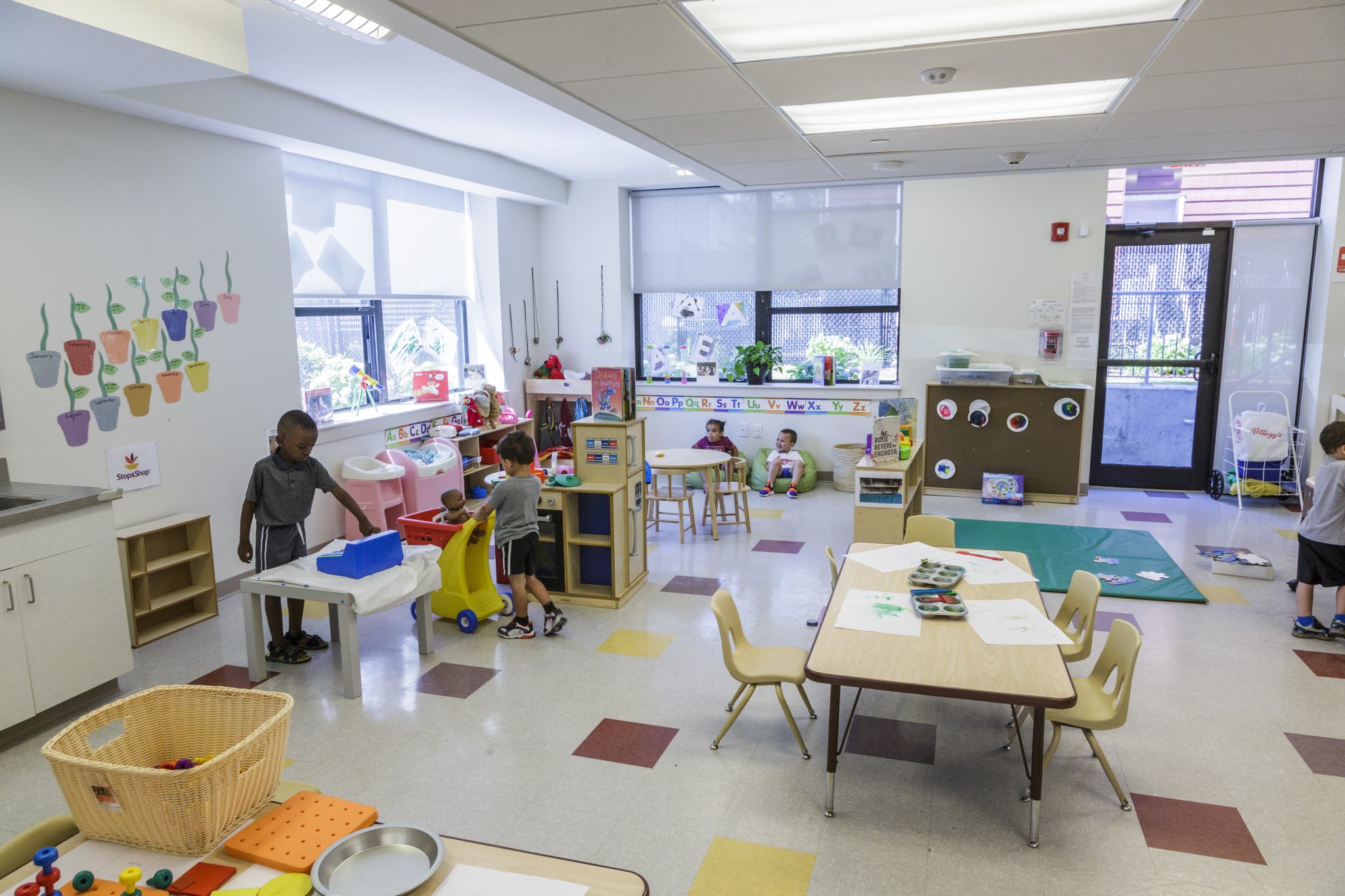
CHILD CARE is vital to our economy. This has never been more apparent than over the past 18 months as the COVID-19 pandemic shut down schools and child care centers across the Commonwealth – and the country. Parents and families rely on child care to work each day, and businesses rely on those employees to stay open and operational. The hope and expectation is that their children receive education and care in a safe and healthy environment that enables them to learn, socialize, and develop. The quality of these spaces is a crucial component of program quality.
Child care is essential, yet the nation’s system has faced scarce funding for decades. The physical infrastructure has suffered, as evidenced by a 2011 report by Children’s Investment Fund, which discovered that many child care centers in Massachusetts lacked necessities like efficient ventilation systems, sinks in classrooms for handwashing, adequate outdoor play spaces, and sufficient natural light.
Unfortunately, 10 years later, many child care centers throughout the Commonwealth still require much-needed investment to provide the high-quality care children and their educators deserve. While Children’s Investment Fund has provided support, training, and investments to centers, more work is to be done. The infrastructure challenges facing child care centers were made even more apparent in the wake of the COVID-19 pandemic, exposing the need to upgrade facilities to include proper ventilation and enough play and learning spaces that enable social distancing.
Children’s Investment Fund recently released a report, Building Quality: Transforming Early Learning Environments in Massachusetts, reflecting on the organization’s 30 years of work and highlighting the Early Education and Out of School Time Capital Fund created in 2013 together with the Department of Early Education and Care. The report rebrands the program as the Building Quality Capital Fund. Since its establishment, the Building Quality Capital Fund has invested a total of $39.2 million in child care facilities across Massachusetts, including $7.5 million in additional grants announced this summer to address emergency COVID-related needs.
Over half of the facilities are located in Gateway Cities. Ensuring that safe, viable child care facilities exist in these cities will only further efforts to revitalize these cities, support workers, and support their local economies.
One of the grantees, For Kids Only Afterschool, received a $400,000 award to help construct an afterschool building in Revere to serve up to 140 children. The funds allowed the organization to move from a leased storefront with no outdoor play space to a brand-new building with a commercial kitchen, large gym, and better ventilation. The impact on the program was transformative. The ample space, operable windows, and outdoor space became essential once the COVID-19 pandemic hit years later.
Not all environments produce equal results for all children. Through research and our 30 years of experience, Children’s Investment Fund has learned that child well-being is enhanced when facilities incorporate spacious classrooms, a bathroom in each room, natural light, indoor and outdoor play areas, and proper ventilation. The Building Quality Capital Fund has demonstrated that these improvements are possible and that a mix of public and private funding can achieve these results. The funding has helped improve learning environments for over 9,000 children, more than 80 percent of whom live in low-income households.
For the first time in decades, our society seems to understand the value of child care in our communities. Most parents need to work, and their children need stimulating environments that support their healthy social-emotional, physical, cognitive, and language development during the long hours spent away from home. We must continue to raise the bar for our children and support the organizations who care and educate them as they seek to revitalize their spaces to provide high-quality learning environments. We have an opportunity to meet the moment and give these centers the investments and tools they need.
Theresa Jordan is director of the Children’s Investment Fund.
The Baker-Polito Administration, along with the Community Economic Development Assistance Corporation (CEDAC) and its affiliate Children’s Investment Fund (CIF), recently announced $7.5 million in Early Education and Out of School Time Capital Fund (EEOST) capital improvement grants. Lt. Governor Polito joined Massachusetts Department of Early Education and Care (EEC) Commissioner Samantha Aigner-Treworgy at East Boston Social Centers to announce the 36 organizations that received grant awards to fund expenses for key COVID-19-related facility challenges, emergency repairs, and/or accessibility upgrades.
EEC, CIF, and CEDAC manage the EEOST Capital Fund. The program traditionally provides grants of up to $1 million to non-profit childcare centers seeking to renovate or develop new high-quality learning spaces for children living in low-income communities. The FY21 EEOST funding round was modified to award grants between $100,000 and $250,000 to provide early childhood education and out-of-school time programs with the resources they need to make improvements and emergency repairs that address health and safety issues.
“The FY21 EEOST grant awards are funding critical improvements needed during the COVID-19 pandemic while strengthening the Commonwealth’s childcare infrastructure,” said Theresa Jordan, Children’s Investment Fund’s director. “This funding acknowledges that all children, regardless of family income or circumstances, should be educated in high-quality physical environments that support healthy development and learning.”
“Many families rely on essential childcare services to return to work during the public health crisis,” said Roger Herzog, CEDAC’s executive director. “We are grateful to the Baker-Polito Administration for funding health and safety upgrades that are critical to the well-being of children, parents, and staff alike.”
One of the funded projects is the Boys & Girls Clubs of Stoneham & Wakefield (The Clubs), which has operated an out-of-school time program in their Stoneham building for nearly 50 years and has a licensed care program for up to 100 children. The Clubs received $225,000 to convert storage space into two accessible restrooms and install a new Heating, Ventilation and Air Conditioning system. It will also upgrade all bathrooms to have touchless controls.
The Clubs provide educational afterschool and summer programming to over 3,000 members across two locations and a teen center each year. The organization works with youth aged 5 to 18 from various economic, social, and family circumstances.
“The Clubs have been building pillars in the local community and across Greater Boston for nearly 50 years. We are proud to provide an environment of stability, consistency, and physical and emotional safety for our youth members,” said Adam Rodgers, Boys & Girls Clubs of Stoneham & Wakefield’s chief executive officer. “We are grateful for this funding, which will enhance the accessibility and safety of our Stoneham location.”
About CEDAC
CEDAC is a public-private community development finance institution that provides financial resources and technical expertise for community-based and other non-profit organizations engaged in effective community development in Massachusetts. CEDAC’s work supports two key building blocks of community development: affordable housing and early care and education. CEDAC is also active in state and national housing preservation policy research and development and is widely recognized as a leader in the non-profit community development industry. For additional information on CEDAC and its current projects, please visit www.cedac.org.
About Children’s Investment Fund
Children’s Investment Fund’s (CIF) mission is to improve the quality of and expand access to early childhood education and out-of-school-time programs for children from low- and moderate-income families. In order to broaden the impact of its work, CIF also seeks to support affordable housing for low-income families through place-based, two-generation, and other strategies that result in safer, healthier, and more stable environments in which to raise young children. The organization is affiliated with the Community Economic Development Assistance Corporation (CEDAC). For additional information on CIF, please visit www.cedac.org/cif.
The West Springfield Boys and Girls Club was recently awarded $250,000 from the Baker-Polito Administration and the Children’s Investment Fund (CIF), with its affiliate the Community Economic Development Assistance Corporation (CEDAC). Altogether, these organizations awarded $7.5 million in Early Education and Out of School Time Fund (EEOST) capital improvement grants to 36 organizations across the state of Massachusetts. These awards are to be utilized for renovations on childcare facilities that serve primarily low-income families.
Through a press release provided by the Massachusetts Department of Early Education and Care, the grants to child care centers and out-of-school time programs range from $100,000 to $250,000. Therefore, the Boys and Girls Club received the most aid possible.
With these grants, the focus was on providing necessary funds and addressing health and safety concerns related to the COVID-19 pandemic. “The EEOST grants are financed through the state’s capital budget and provide matching funds that leverage private investment,” read the press release.
Dan D’Angelo, executive director of the West Springfield Boys and Girls Club, said they applied for this capital improvement grant back in December. On July 9, they were notified that their grant was accepted and awarded. Through his understanding, D’Angelo believes that there were over 100 applications across the state.
To utilize this grant, D’Angelo said they began with the renovation of the Boys and Girls Club lobby.
He explained that this project is two fold: “One is to open up more space – more space to congregate and for our families – and the second part is security of the building.”
The club has installed security cameras both inside and outside of the building. D’Angelo said the security system will protect everyone, especially their younger population, i.e. preschoolers. He explained that to get into the preschool, you must know someone or show a proof of I.D. These doors are always locked, however, the entire building will now be more secure.
The other area of renovation addresses the “dead areas,” as described by D’Angelo. The dead areas include the showers and locker rooms that are no longer utilized.
“All programs are licensed to the EEC (Department of Early Education and Care),” said D’Angelo. With this, the policy and procedures are that there must be one toilet per 20 kids. In an effort to bring in more kids, the Boys and Girls Club decided to expand their facilities.
In addition, there will be a new office and program space constructed, along with a steam and art program. D’Angelo said that this phase of renovations will cost about $565,000.
“When we applied in December, we were just about to go out and bid and start the process,” explained D’Angelo. Renovations began in February and are predicted to be completed within a few weeks.
Currently, the lobby and program space is being utilized.
“It’s worked out well,” claimed D’Angelo. “We’re thrilled for the new program space and we’re proud of the lobby. It’s welcoming and people feel safe.”
When the club closed for four months during the pandemic, D’Angelo said that all of the renovations they had in place were gone, along with the finances and rainy day funds.
“When we were awarded this grant, it finished off a lot of the project,” he said.
D’Angelo expressed his gratitude to Gov. Charlie Baker and Lt. Governor Karyn Polito.
Although it’s been a long time coming, D’Angelo said, “It’s more than worth the wait.”
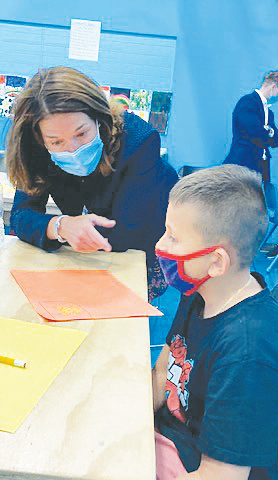
Last Tuesday afternoon, Lt. Gov. Karyn Polito and Early Education and Care Commissioner Samantha Aigner-Treworgy stopped by the East Boston Social Centers (EBSC) in Central Square for a tour, and to announce $7.5 million in Early Education and Out of School Time Capital Fund (EEOST) capital improvement grants to 36 organizations to renovate childcare facilities that serve primarily low-income families like EBSC.
Polito said the Baker-Polito Administration teamed up with the Children’s Investment Fund (CIF) and its affiliate the Community Economic Development Assistance Corporation (CEDAC) for the $227,000 in grant money towards the Social Centers. EBSC and the other thirty-five recipients all received grants between $100,000 to $250,000 to provide capital funding needed to address health and safety concerns related to COVID-19.
“These awards announced today – which mark the largest total amount awarded since the inception of the EEOST grants – will improve child care programs across the state,” said Polito last week at the Social Centers. “Now more than ever, as families return to workplaces, investments in early education and care settings are vital to provide necessary resources to children and their families through high-quality early childhood education and out-of-school time programs.”
The capital grants will help continue to support major renovation and construction projects at EBSC and improve the quality of learning environments for the over 300 children they serve.
The Social Centers previously received an EEOST grant last July and EBSC Executive Director Justin Pasquariello was excited to show Polito how the previous round of funding helped improve the Social Centers’ facilities. He also thanked the Lieutenant Governor for continuing to support EBSC’s capital improvements with the latest round of funding.
“We at the East Boston Social Centers were honored to host Lt. Gov. Karyn Polito and EEC Commissioner Samantha Aigner-Treworgy for a tour of our early education and school age programs,” said Pasquariello. “We were grateful to show them the high-quality, safe facilities the EEOST grant has funded at the East Boston Social Centers. The Commonwealth’s recognition of the increased cost of providing high-quality, safe care during the COVID pandemic has been essential for our ability to be fully open for early education, school age programs, and full-day in-person remote learning support from July 2020. Their investments in our facilities, commitment to paying parent fees, additional grants, and investments in our workforce are critical as our essential sector continues to meet the needs of children and families across the commonwealth.”
The Early Education and Out of School Time capital improvement grants are financed through the state’s capital budget and provide matching funds that leverage private investment. More than $200 million in public and private investments have been leveraged throughout the life of the grant program. The Baker-Polito Administration’s FY21 Capital Budget Plan included funding for the Early Education and Out of School Time capital improvement grant program.
“Every child deserves the opportunity to learn in high-quality, safe, healthy, and joyous education environments,” said Commissioner Aigner-Treworgy at last week’s event. “Well-designed classrooms and play spaces can greatly enhance early learning and support children to grow and thrive.”
In a statement after the event Gov. Charlie Baker said his administration is committed to supporting childcare providers like the Social Centers who have worked tirelessly throughout the COVID-19 pandemic to care for children and support families returning to work.
“Since the start of this grant program, we’ve invested more than $39.2 million in capital funding at childcare programs that impact the learning experiences of more than 9,000 children in communities across Massachusetts,” he said.
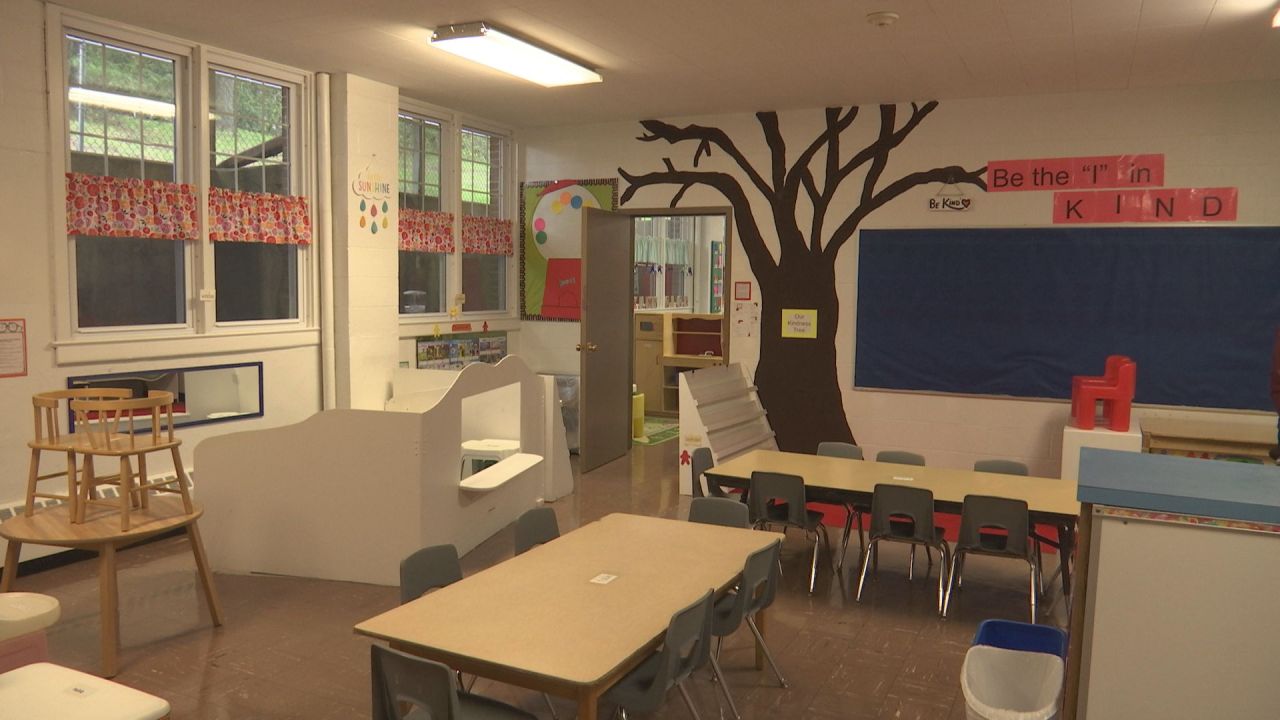
The state has awarded $7.5 million in Early Education and Out of School Time Capital Fund (EEOST) capital improvement grants to thirty-six organizations across the state to renovate childcare facilities that serve primarily low-income families.
The Baker-Polito Administration and the Children’s Investment Fund (CIF), with its affiliate the Community Economic Development Assistance Corporation (CEDAC) is providing grants to child care centers and out-of-school time programs range from $100,000-$250,000. This year the emphasis shifted to provide capital funding needed to address health and safety concerns related to COVID-19, including major renovation and construction projects at facilities.
“Our Administration is pleased to support childcare providers across the Commonwealth who have worked tirelessly throughout the COVID-19 pandemic to care for children and support families returning to work,” said Governor Charlie Baker. “Since the start of this grant program, we’ve invested more than $39.2 million in capital funding at childcare programs that impact the learning experiences of more than 9,000 children in communities across Massachusetts.”
The Early Education and Out of School Time capital improvement grants are financed through the state’s capital budget and provide matching funds that leverage private investment. The Baker-Polito Administration’s FY21 Capital Budget Plan included funding for the Early Education and Out of School Time capital improvement grant program.
The following organizations received grants:
| Project Location | Applicant | Funding |
| Beverly | Beverly Children’s Learning Center | $207,000 |
| Boston | Kwong Kow Chinese School | $146,000 |
| Boston | United South End Settlements | $250,000 |
| Brockton | Boys and Girls Clubs of Metro South | $177,000 |
| Brockton | Fuller Arts & Sciences dba Westfield Child Center | $115,000 |
| Brockton | Brockton Day Nursery | $131,000 |
| Brockton | Old Colony YMCA | $247,000 |
| Dorchester | Catholic Charities Yawkey Child Care Center | $179,000 |
| Dorchester | Greenwood Shalom Outreach Community, Inc. | $250,000 |
| Dudley | Boys and Girls Club of Webster-Dudley | $204,000 |
| East Boston | East Boston Social Centers | $227,000 |
| Framingham | SMOC | $250,000 |
| Gloucester | Pathways for Children | $250,000 |
| Haverhill | YMCA of the North Shore (Haverhill YMCA) | $242,000 |
| Holyoke | Boys and Girls Club of Greater Holyoke | $250,000 |
| Holyoke | Holyoke YMCA | $200,000 |
| Lawrence | Community Day Care Center of Lawrence, Inc. (d.b.a. The Community Group) | $102,000 |
| Lawrence | YWCA of Northeastern Massachusetts | $243,000 |
| Lynn | YMCA of Metro North | $186,000 |
| Lynn | Boys and Girls Club of Lynn | $250,000 |
| Nantucket | Small Friends on Nantucket | $129,000 |
| New Bedford | PACE | $250,000 |
| New Bedford | YMCA Southcoast | $250,000 |
| New Bedford | West End Day Nursery | $250,000 |
| North Adams | Child Care of the Berkshires | $207,000 |
| Revere | For Kids Only Afterschool | $247,000 |
| Roxbury | Hattie B. Cooper Community Center | $250,000 |
| Roxbury | Paige Academy | $250,000 |
| Roxbury | YMCA of Greater Boston | $221,000 |
| Somerville | Elizabeth Peabody House Association | $205,000 |
| Springfield | Springfield Day Nursery (d.b.a Square One) | $157,000 |
| Stoneham | Boys and Girls Clubs of Stoneham and Wakefield | $225,000 |
| Waltham | Waltham Boys and Girls Club | $105,000 |
| West Springfield | West Springfield Boys and Girls Club | $250,000 |
| Whitinsville | George Marston Whitin Memorial Community Association (d.b.a. The Whitin Community Center) | $250,000 |
| Worcester | YWCA of Central Massachusetts | $142,000 |
The Baker-Polito Administration and the Children’s Investment Fund (CIF), with its affiliate the Community Economic Development Assistance Corporation (CEDAC), awarded $7.5 million in Early Education and Out of School Time Capital Fund (EEOST) capital improvement grants to thirty-six organizations to renovate childcare facilities that serve primarily low-income families. Lt. Governor Karyn Polito made the announcement today at East Boston Social Centers, a child care provider in East Boston that serves more than 300 children.
The grants to child care centers and out-of-school time programs range from $100,000-$250,000, and this year the emphasis shifted to provide capital funding needed to address health and safety concerns related to COVID-19.
The capital grants support major renovation and construction projects at early education and out-of-school time facilities to improve the quality of learning environments for children in Massachusetts.
“Our Administration is pleased to support childcare providers across the Commonwealth who have worked tirelessly throughout the COVID-19 pandemic to care for children and support families returning to work,” said Governor Charlie Baker. “Since the start of this grant program, we’ve invested more than $39.2 million in capital funding at childcare programs that impact the learning experiences of more than 9,000 children in communities across Massachusetts.”
“These awards announced today – which mark the largest total amount awarded since the inception of the EEOST grants – will improve child care programs across the state,” said Lt. Governor Karyn Polito. “Now more than ever, as families return to workplaces, investments in early education and care settings are vital to provide necessary resources to children and their families through high-quality early childhood education and out-of-school time programs.”
The Early Education and Out of School Time capital improvement grants are financed through the state’s capital budget and provide matching funds that leverage private investment. More than $200 million in public and private investments have been leveraged throughout the life of the grant program. The Baker-Polito Administration’s FY21 Capital Budget Plan included funding for the Early Education and Out of School Time capital improvement grant program.
EEOST was designed to support the learning and healthy development of young children, many of whom spend more than 40 hours a week in early learning and after-school settings. Approximately 80% of the children in EEOST-funded programs are from low-income families. EEOST grants transform these learning environments so that children have safe, developmentally appropriate spaces.
“With these critical investments, we can help child care providers, serving low-income communities, improve their facilities in order to boost quality and provide young learners with resources to succeed in the classroom and beyond,” said Education Secretary James Peyser. “We are pleased to provide these critical resources necessary to sustain the Commonwealth’s essential childcare infrastructure.”
“Every child deserves the opportunity to learn in high-quality, safe, healthy, and joyous education environments,” said Early Education and Care Commissioner Samantha Aigner-Treworgy. “Well-designed classrooms and play spaces can greatly enhance early learning and support children to grow and thrive.”
“This year’s grants will reach five times as many providers as last year,” said Theresa Jordan, Director of the Children’s Investment Fund, an affiliate of CEDAC. “It is funding critical improvements needed during the COVID-19 pandemic, recognizing the enormous effort undertaken by child care providers over the past year to create safe environments for children.”
The following organizations received grants:
| Project Location | Applicant | Funding |
| Beverly | Beverly Children’s Learning Center | $207,000 |
| Boston | Kwong Kow Chinese School | $146,000 |
| Boston | United South End Settlements | $250,000 |
| Brockton | Boys and Girls Clubs of Metro South | $177,000 |
| Brockton | Fuller Arts & Sciences dba Westfield Child Center | $115,000 |
| Brockton | Brockton Day Nursery | $131,000 |
| Brockton | Old Colony YMCA | $247,000 |
| Dorchester | Catholic Charities Yawkey Child Care Center | $179,000 |
| Dorchester | Greenwood Shalom Outreach Community, Inc. | $250,000 |
| Dudley | Boys and Girls Club of Webster-Dudley | $204,000 |
| East Boston | East Boston Social Centers | $227,000 |
| Framingham | SMOC | $250,000 |
| Gloucester | Pathways for Children | $250,000 |
| Haverhill | YMCA of the North Shore (Haverhill YMCA) | $242,000 |
| Holyoke | Boys and Girls Club of Greater Holyoke | $250,000 |
| Holyoke | Holyoke YMCA | $200,000 |
| Lawrence | Community Day Care Center of Lawrence, Inc. (d.b.a. The Community Group) | $102,000 |
| Lawrence | YWCA of Northeastern Massachusetts | $243,000 |
| Lynn | YMCA of Metro North | $186,000 |
| Lynn | Boys and Girls Club of Lynn | $250,000 |
| Nantucket | Small Friends on Nantucket | $129,000 |
| New Bedford | PACE | $250,000 |
| New Bedford | YMCA Southcoast | $250,000 |
| New Bedford | West End Day Nursery | $250,000 |
| North Adams | Child Care of the Berkshires | $207,000 |
| Revere | For Kids Only Afterschool | $247,000 |
| Roxbury | Hattie B. Cooper Community Center | $250,000 |
| Roxbury | Paige Academy | $250,000 |
| Roxbury | YMCA of Greater Boston | $221,000 |
| Somerville | Elizabeth Peabody House Association | $205,000 |
| Springfield | Springfield Day Nursery (d.b.a Square One) | $157,000 |
| Stoneham | Boys and Girls Clubs of Stoneham and Wakefield | $225,000 |
| Waltham | Waltham Boys and Girls Club | $105,000 |
| West Springfield | West Springfield Boys and Girls Club | $250,000 |
| Whitinsville | George Marston Whitin Memorial Community Association (d.b.a. The Whitin Community Center) | $250,000 |
| Worcester | YWCA of Central Massachusetts | $142,000 |
All the programs receiving a grant award serve publicly subsidized families and have demonstrated financial need. All the grantees are non-profit corporations or organizations in which a non-profit corporation has a controlling interest. The Department of Early Education and Care partners with CEDAC’s affiliate, the Children’s Investment Fund, to administer the grants.
###