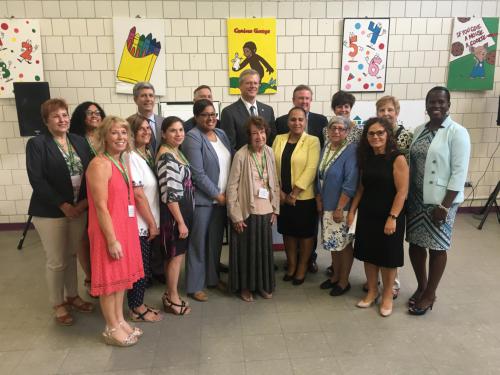
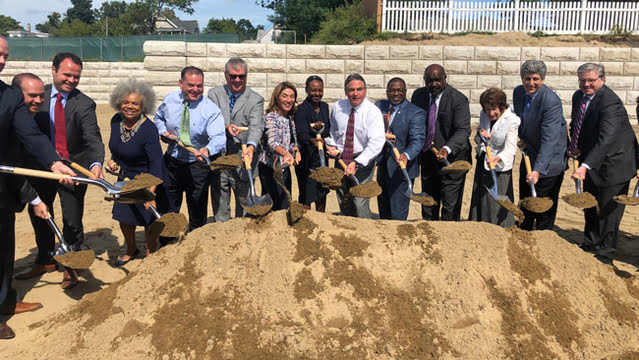
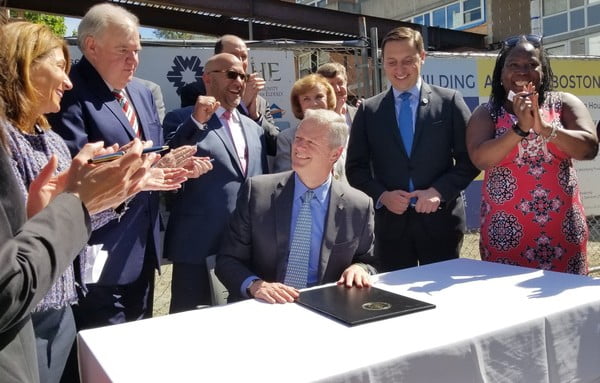
Horizons for Homeless Children and WaterMark Development, Inc Break Ground on New Horizons Center

State-of-the-Art building will provide critical social and early education services to homeless children and their families

Roxbury, MA – September 21, 2018 – Horizons for Homeless Children, a nonprofit organization dedicated to improving the lives of young homeless children and their families, and WaterMark Development, Inc. today broke ground on the new Horizons’ Center, a 140,000-square-foot social services center in Roxbury.

The center, located at 1785 Columbus Ave., is the first-of-its-kind in Massachusetts and will improve the education, health and well-being of the city’s homeless families by providing on-site early education programs as well as access to a variety of social services to help parents navigate the many complexities of homelessness.

“We are very excited to expand our reach and provide services to more children and their families through the additional space and resources in the new center,” said Kate Barrand, CEO of Horizons for Homeless Children. “We are grateful to WaterMark for partnering with Horizons on the new building, as well as the many donors who are making it possible for us to change the trajectory of our city’s homeless families.”

In addition to serving as the headquarters for Horizons and the location of their new 35,000-square-foot Early Education Center serving 225 children (ages two months to five years), the building will house the Department of Children and Families regional office, the national offices of YouthBuild USA, the Boston office of Room to Grow and a new restaurant concept owned by the local Abreu family.

The unique public/private joint venture between Horizons and WaterMark Development features the collaborative design efforts of studioMLA Architects and Embarc Studio and will be built by Commodore Builders.   The project is a significant investment in the Roxbury community, providing valuable new services and bringing approximately 400 new jobs to the Jackson Square area. The Horizons Center is scheduled to open its doors in 2020.

Funding for this project is made possible through a unique combination of private gifts, new markets tax credits and construction financing provided by a bank consortium led by Eastern Bank and including Boston Private, The Life Initiative and Boston Community Capital. New Markets Tax Credit funding for the project was provided by MassDevelopment, Rose Urban Green Fund, Massachusetts Housing Investment Corporation (MHIC), The Community Builders, Building America CDE, Partners for the Common Good, and Northern Trust.  Additional funding was provided by Children’s Investment Fund, an affiliate of CEDAC.

About Horizons for Homeless Children
Horizons for Homeless Children is a nonprofit organization dedicated to improving the lives of young homeless children and their families. Horizons provides high quality early education, comprehensive family support services, opportunities for play, and statewide advocacy work. Today, Horizons serves more than 1,600 young homeless children each week in Massachusetts through three early education centers and more than 90 shelter-based Playspaces. For more information about Horizons for Homeless Children, please visit: www.horizonschildren.org.

About WaterMark Development, Inc.

For nearly 30 years WaterMark Development, Inc. has worked to restore Jamaica Plain and its surrounding area. By focusing on important historic buildings and forgotten or contaminated sites, we improve our neighborhood.  With great attention paid to the accurate historic renovation of notable buildings, combined with the cutting edge building techniques and time honored craftsmanship, our diligence has made a lasting impression on the community. WaterMark is a full service developer and builder involved from the site acquisition, to neighborhood permitting process through the conclusion of each building project. WaterMark ensures best practices along every step of the process creating good will in every community in which we work.

SourceHorizons for Homeless Children

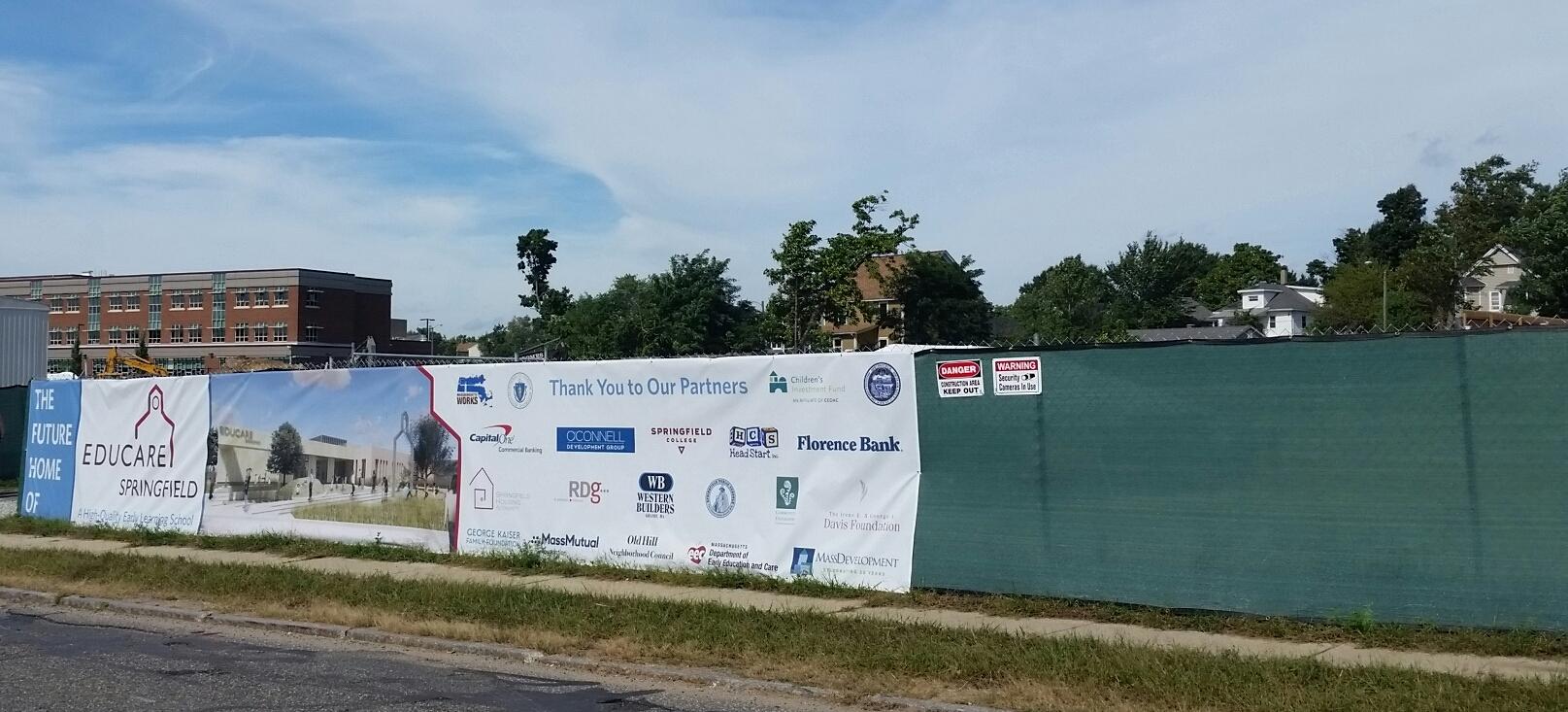
Educare Springfield: Early education takes a giant step forward

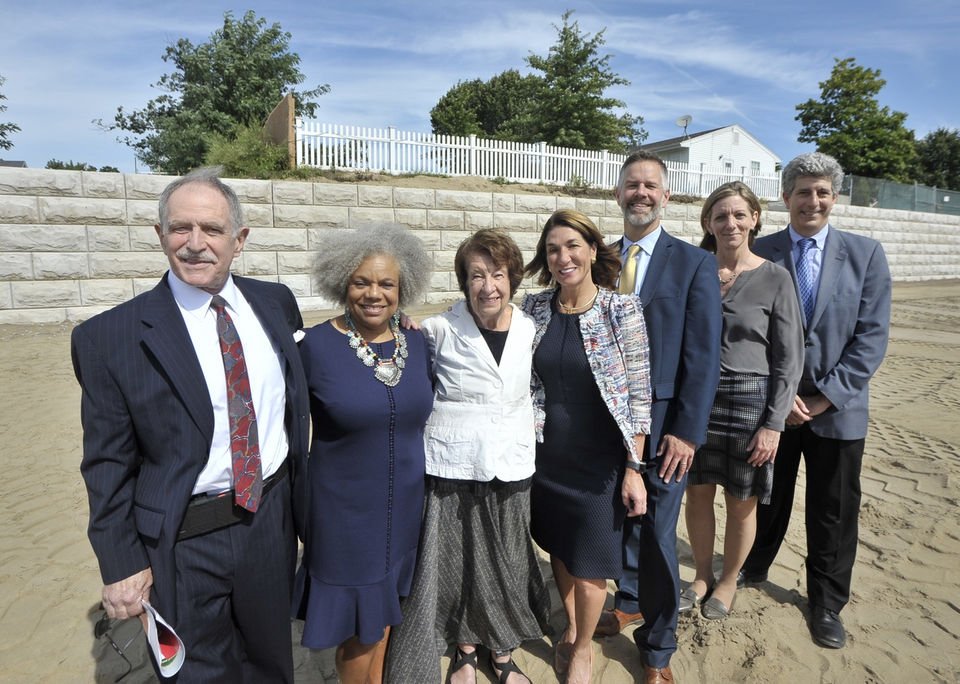
On Monday, civic partners gathered in the city of Springfield and broke ground on what will be a $14 million Educare Center, a school that will open next year and provide “a full-day and full-year program for up to 141 children from birth to age five each year,” MassLive.com reports.

As we’ve blogged, Springfield’s educators and philanthropists have called this Educare project a “dream come true,” one that promises to provide the city’s children with increased access to a high-quality early education program.

Educare “began in Chicago in 2000,” public radio station WAMC reports. It’s a research-based model that has four core features: “data utilization, embedded professional development, high-quality teaching practices, and intensive family engagement,” according to Educare’s website.

“Among the innovations at Educare,” WAMC adds, “is the placement of teachers with the same children from the time they enroll as infants up to age 3. Parents are required to participate in school activities, home visitations, and regular parent-teacher conferences.”

Several years of rigorous evaluation shows that when children leave Educare for elementary school, the majority are academically, socially and emotionally prepared for kindergarten.”

There are “23 Educare schools in 15 states,” including California, Florida, Maine, Michigan, Washington, D.C., and Wisconsin. “Educare Springfield will be the first in Massachusetts.”

Springfield is putting the Educare Center in its Old Hill neighborhood, the home of many children who live in poverty. The neighborhood suffered considerable damage from the 2011 tornado that struck the Springfield area.

At the ground-breaking ceremony, Lieutenant Governor Karyn Polito pointed to the economic significance of the Educare Center, praising Springfield for “rebuilding this neighborhood” and noting that the school will serve children who are born in Springfield and grow up to become part of the city’s workforce, MassLive reports.

Springfield Mayor Domenic Sarno added, “Educare is a significant investment here in the city of Springfield and it’s another public and private partnership, with everybody working together for the same goal for our children.”

There are many members of this public/private partnership including: the Davis Foundation, which provided fundraising support and overall leadership for the project; Springfield College, which donated land; and the state of Massachusetts, which provided both a $1 million facilities grant to help finance construction as well as infrastructure funding from the MassWorks program at the Massachusetts Executive Office of Housing and Economic Development. Among the other partners are the Children’s Development Fund, the Mass Mutual Fund, Capital One Commercial Banking; and a number of anonymous donors. (The full list is on the City of Springfield’s website.)

Educare Springfield will be operated in partnership with Holyoke Chicopee Springfield Head Start. All Educare sites build upon strong partnerships with Head Start, and this one is no different. HCS Head Start Executive director Janis Santos spoke at Monday’s groundbreaking and shared her extensive conversations with other Head Start colleagues nationally who have partnered with Educare.

“They all told me, ‘It’s a lot of work, but it’s worth it,’” she said.

The center will also serve as a learning laboratory “for best practices” as well as “an essential resource for Springfield College, Springfield Technical Community College, Springfield Public Schools, and the early education community across the state for training and providing professional development for future teachers, social workers, evaluation and research.”

It’s an ambitious project with a great deal of promise that could transform children’s lives. As Tom Weber, the commissioner of the Department of Early Education and Care, explained to WAMC, “despite the success the state has seen with rising test scores and graduation rates in the last 25 years, it still has one of the largest achievement gaps in the country.”

“We have to take risks,” Weber added. “It is worth taking risks. If the solutions were obvious to us, we would have solved these problems already, so we have to be daring.”

Stay tuned. We hope to share more about Educare Springfield as the project develops. The center is scheduled to open in late 2019.

SourceEye on Early Education

Space matters: Massachusetts invests in improving early education buildings and facilities

This summer, Massachusetts awarded $4 million in grants to help early education and after-school programs improve their physical spaces. The money comes from the Early Education and Care and Out of School Time (EEOST) Capital Fund, which was created by the state Legislature.

As we’ve blogged before, engaging classrooms, lively safe playgrounds, and well-designed bathrooms are some of the key features that create nurturing environments for young children.

But programs often can’t afford the costs of badly needed construction and renovations. That’s why these capital improvement funds are so important.

In a statement, Governor Charlie Baker said, “Renovating and repairing facilities helps achieve our goal of improving the quality of early education and care.”

Massachusetts’ Secretary of Education James Peyser said. “We know that building deficiencies impact the quality of teaching and learning in early childhood and out-of-school time facilities. These grants were created to help non-profit providers serving children living in low-income communities improve their facilities.”

Administered by the Children’s Investment Fund, an affiliate of CEDAC (the Community Economic Development Assistance Corporation), the grant funds were given to four organizations:

Citizens for Citizens, Fall River, $1 million

The funds will pay for “playground improvements, window replacements, and critical safety and security upgrades to an existing Head Start program in a 118-year-old building,” according to the Children’s Investment Fund.

Crispus Attucks Children’s Center, Dorchester, $1 million

The center “will replace the HVAC system and make building envelope upgrades. It also plans to improve the design of its infant area and reconfigure toddler classrooms.

Elizabeth Stone House, Roxbury, $1 million

The funds will be used to build “a 5-story multi-service building which will include 32 units of affordable housing and a licensed early childhood education (ECE) program serving 51 children.”

Holyoke-Chicopee-Springfield Head Start, Springfield, $1 million

Head Start officials plan to build “an Educare model facility for 141 ECE children.”

All four organizations “serve publicly subsidized families, have demonstrated financial need, and have secured additional funding to pay for a portion of their project costs,” the statement from Governor Baker’s office explains.

The benefits of these efforts will be substantial. As Lieutenant Governor Karyn Polito explained, “High-quality programs help young children develop healthy learning habits, which is good for the community and for our Commonwealth as a whole.”

And as Tom Weber, commissioner of the Department of Early Education and Care, adds, “We are pleased to make these awards as this public investment in building construction and renovation of early education programs will benefit children, local communities, and the state for years to come.”

SourceEye on Early Education

Ground broken for low-income childcare program in Springfield

Ground was broken Monday for a new childcare program in Springfield that will serve low-income families.

According to a news release sent to 22News, the Educare Springfield will serve 141 children with a full-day, year-round program.

The release said the program will target the children’s education needs as well as other needs their families may have.

The 26,000 square-foot program will be built in the Old Hill Neighborhood near the Elias Brookings Elementary School.

Educare Springfield is scheduled to open by the fall of 2019.

The new facility will create 110 construction jobs, 46 existing Head Start jobs, and another 10 jobs within two years after opening.

The program has already received two separate $1 million grants, one from the Department of Early Education and Care and one from the Baker-Polito Administration.

The program will be the 25th Educare Learning Network in the country, and the first one in the state of Massachusetts.

SourceWWLP

Construction Underway On $14 Million Educare Preschool

An early childhood education center that will be part of an innovative national network of preschools is under construction in western Massachusetts.

A $14 million state-of-the-art preschool is being developed by the Educare Learning Network in Springfield’s Old Hill neighborhood – one of the poorest urban areas in the country.

It is an ideal location because the goal of Educare, according to executive director Cynthia Jackson, is to “level the playing field” by helping children living in poverty start kindergarten prepared to learn at the same pace as other children.

“Our schools serve as places of innovation and learning,” said Jackson. “This is a learning lab. We don’t have all the answers. We are learning together.”

Among the innovations at Educare is the placement of teachers with the same children from the time they enroll as infants up to age 3.  Parents are required to participate in school activities, home visitations, and regular parent-teacher conferences.

The pre-school program began in Chicago in 2000.  There are now 23 Educare schools in 15 states.  Educare Springfield will be the first in Massachusetts.

“We know the work you will do here in Springfield, Massachusetts will inspire other communities across the country to do what is best and right for our young children and families,” said Jackson.

She  spoke at a groundbreaking ceremony Monday that was attended by close to 100 local and state officials, advocates for early childhood education, community leaders, and benefactors.

Tom Weber, Commissioner of the Massachusetts Department of Early Education, said despite the success the state has seen with rising test scores and graduation rates in the last 25 years, it still has one of the largest achievement gaps in the country.

” We have to take risks,” he said. “It is worth taking risks. If the solutions were obvious to us, we would have solved these problems already, so we have to be daring.”

Educare Springfield will be operated by Head Start.  Janis Santos, executive director of the local Head Start program said its one of the most exciting projects in her 45-year career in early education.

“It is just an incredible exciting opportunity here in Springfield and in the state of Massachusetts for our children and families,” said Santos.

The new preschool is scheduled to open in the fall of 2019 with an enrollment of 141 children.

The effort to bring an Educare school to Springfield was spearheaded by the Davis Foundation which put up some of the initial funding and raised money from several sources including $9 million from an anonymous donor.     In addition to the money to build the school, $7 million has been raised for an endowment to support operations.

Springfield College donated the land for the school.

Massachusetts put $1 million towards the construction of the school, and Lt. Gov. Karyn Polito Monday announced a $1 million award from the MassWorks program to build public infrastructure to support the new school.

“This is the way we do business in this Commonwealth,” said Polito. “We work together. We find collaborations and common ground and find the ability to get to ‘Yes’.”

Polito was filling in for Gov. Charlie Baker, who was in Lawrence for a meeting on the recovery efforts after last week’s gas explosions and fires.

The area where the new school is under construction was heavily damaged by a tornado seven years ago.

SourceWAMC

Springfield breaks ground on $14 million Educare early education facility

Local, city and state leaders joined early education advocates, and others Monday to officially break ground on Educare Springfield, a nationally recognized school model that is among just 24 of its kind in the country.

Lt. Gov. Karyn Polito, Springfield Mayor Domenic Sarno and project leaders gathered at a construction site on Hickory Street to celebrate the project’s groundbreaking and reflect on the seven years of work that went in to bringing the nearly $14 million facility to the city.

John Davis, a trustee of The Irene E. & George A. Davis Foundation which helped lead the effort to bring Educare to Springfield, said the new school will provide “an incredible opportunity for Springfield’s youngest citizens.

“Educare Springfield: It’s here,” he said. “This is a clear demonstration that we are investing in the education of the children beginning at birth.”

Polito praised local leaders and partners for their “incredible” work in attracting Educare to Springfield, particularly to a part of the city ravaged by the 2011 tornado.

“What you’re doing is rebuilding this neighborhood. Because these are children who are born here, literally, starting their education here and then being part — eventually, the hope is — of the workforce that will then become employed here in this neighborhood or nearby,” she said. “And then lay their own roots and create the next generation of talent, of leaders — really bringing this city forward to where we all know it could be.”

Polito said it’s “quite an honor” to partner with the city on effort.

Sarno welcomed Educare to Springfield, calling the project a “win-win opportunity” for the city.

“Educare is a significant investment here in the city of Springfield and it’s another public and private partnership, with everybody working together for the same goal for our children,” he said. “Giving them this foundation is going to allow them and their families to be able to avoid poverty, to avoid public safety issues — you just can’t put a price tag on that.”

Mary Walachy, executive director of the Irene E. & George A. Davis Foundation, said while officials had walked away from the project at one point out of cost concerns, they received $9.6 million in funding from an anonymous, out-of-state donor.

The project also received about $3.5 million in New Markets Tax Credits, a $1 million Early Education and Out of School Time grant and a $1 million MassWorks grant for public infrastructure work, as well as private and corporate support, Walachy said.

In addition to money raised for the project, she noted that officials have set aside $7 million for an endowment to support the school’s operating expenses.

“At the end of the day, what matters is what happens in this building. What matters is that we make good on our promise to the children that you were able to see today and their families, and many others who will be in this building,” she said. “This is going to be Head Start on steroids.”

Educare Springfield, which is slated to open in late 2019 on land provided by Springfield College adjacent to Brookings School, will offer local students an early education model that aims to narrow the achievement gap for children living in poverty. It will provide a full-day and full-year program for up to 141 children from birth to age five each year.

The Educare model incorporates embedded and ongoing professional development of teachers, intensive family engagement and high quality teaching practices, as well as uses data to advance student outcomes.

Educare, a national collaboration between the Buffett Early Childhood Fund, Ounce of Prevention Fund and other public-private partnerships across the country, has 23 schools located in 15 states and the District of Columbia.

SourceMassLive

State investing $1 million for Fall River CFC Head Start renovations

The little preschoolers in the Citizens for Citizens’ Head Start program probably won’t notice the new fire suppression system, windows or paint in the building, but their parents can feel good about those safety and aesthetic updates.

CFC was recently awarded a $1 million grant from the state’s Community Economic Development Assistance Corp. It was one of four $1 million capital improvement grants awarded state-wide to child care agencies that serve children from low-income families.

The grants, awarded on behalf of the Baker-Polito administration, are to make critical facility repairs and renovations to improve the environments used by young children.

“This floor will be renovated,” said Pamela Wildnauer, CFC’s Head Start and Early Head Start director, standing on the first level of the former Aldrich School, 295 Harrison St.

The Aldrich School was an elementary school built in 1920. CFC has been using the building since the 1980s for its Head Start program.

“We really haven’t had the funding to do much over the years,” Wildnauer said.

Some 200 children attend CFC Head Start in the Aldrich School building during the school year, just about to get underway after Labor Day. A smaller program runs during the summer.

Wildnauer said the school that has “great bones, great architecture” will be updated with a new electrical system, fire suppression system, fire doors, new flooring, and replacement windows.

“The opportunity presented itself for capital improvement funding,” Wildnauer said.

She said it would allow CFC to offer its families a high quality space for education that is “safe and healthy.”

Once the major repairs — to take place next summer — are finished, Wildnauer is hoping there will be funds left to update the basement for rainy-day activities when the children can’t go outside, for a conference room, and to enclose the kitchen.

The kitchen is used to prepare more than 400 meals each day for the children in Head Start programs at the Aldrich School, as well as CFC’s Robeson Street site, and other smaller sites in the city and in Swansea.

The basement space is also used for free GED classes for parents of Head Start children. Besides class, they receive free transportation, child care and meals.

Repairs were made to the second floor and playground last year with grant funding.

“It’s nice and homey, more comfortable,” said teacher assistant Dawn Mello, working to set up her second-floor classroom.

In the next phase, CFC will seek grant funding for a new heating and air conditioning system. Other repairs needed include a new roof at the Robeson Street building.

The three other child care facilities to receive a $1 million grant are located in Dorchester, Roxbury and Springfield. The grant was awarded by the Department of Early Education & Care through the Early Education & Care & Out of School Time Capital Fund.

“With these grants, we will improve the learning environments of our youngest children, boost the capacity of programs to serve more children and create new jobs,” Gov. Charlie Baker said in a press release. “Renovating and repairing facilities helps achieve our goal of improving the quality of early education and care.”

To learn more about CFC’s Head Start program, visit http://cfcinc.org.

Email Deborah Allard at dallard@heraldnews.com

SourceThe Herald News

Baker-Polito Administration Awards $4 Million for Early Education Programs

The Baker-Polito Administration and the Community Economic Development Assistance Corporation (CEDAC) today announced $4 million in grant awards for facility improvements at early education and care programs that serve low income children.  Four agencies were selected to receive an Early Education and Care and Out of School Time (EEOST) capital improvement grant, which will help increase the quality of their early education programs through critical facility repairs and renovations.

Governor Charlie Baker made the announcement today at the Crispus Attucks Children’s Center in Dorchester, the site of one of the facilities funded by the 2018 grant awards.

“With these grants, we will improve the learning environments of our youngest children, boost the capacity of programs to serve more children and create new jobs,” Governor Charlie Baker said.  “Renovating and repairing facilities helps achieve our goal of improving the quality of early education and care.”

“These capital improvement grants support facility construction and renovations that modernize early education spaces and provide more enriching environments for children,” Lt. Governor Karyn Polito said. “High-quality programs help young children develop healthy learning habits, which is good for the community and for our Commonwealth as a whole.”

“We know that building deficiencies impact the quality of teaching and learning in early childhood and out-of-school time facilities,” Education Secretary James Peyser said. “These grants were created to help non-profit providers serving children living in low-income communities improve their facilities.”

The Early Education and Care and Out of School Time capital improvement grants are financed through the state’s capital budget and provide matching funds that leverage private investment.  The Baker-Polito Administration’s FY18 Capital Budget Plan included $4 million for the Early Education and Out of School Time grant program.  In May, Governor Baker signed An Act Financing the Production and Preservation of Housing for Low and Moderate Income Residents (H.4536), which authorized $45 million for the EEOST Capital Fund.

“The EEOST capital improvement grants provide critical funding for non-profit early education programs to upgrade their facility spaces and provide better physical environments for the children they serve,” Early Education and Care Commissioner Tom Weber said.  “We are pleased to make these awards as this public investment in building construction and renovation of early education programs will benefit children, local communities, and the state for years to come.”

“The EEOST Capital Fund is helping providers create well-designed facilities that support children’s healthy development and learning, and the commitment and effectiveness of educators,” said Theresa Jordan, Director of Children’s Facilities Finance of Children’s Investment Fund. “Over time, this innovative capital resource has the potential to transform the early care and education and out-of-school time landscape for the neediest and most vulnerable children in the Commonwealth.”

The following organizations received grants:

Lead Agency Service Area Award
Citizens for Citizens Fall River $1,000,000
Crispus Attucks Children’s Center Dorchester $1,000,000
Elizabeth Stone House Roxbury $1,000,000
Holyoke-Chicopee-Springfield Head Start Springfield $1,000,000

“All of us at Crispus Attucks Children’s Center are grateful, excited and humbled to be receiving generous and much-needed funding from the Department of Early Education and Care,” said Maritza Juliao, Executive Director of Crispus Attucks Children’s Center.  “For nearly fifty years, Crispus Attucks has been providing quality early childhood education at an affordable price to some of Boston’s most vulnerable children and families.  Our facilities are in critical need of upgrades and improvements so that we may sustain our mission, and this grant will enable us to give our buildings the attention they need so that we as educators can focus our attention on our dearest assets: the children and families we serve.”

All of the programs selected to receive a grant award serve publicly subsidized families, have demonstrated financial need, and have secured additional funding to pay for a portion of their project costs.  The Department of Early Education and Care partnered with CEDAC’s affiliate, the Children’s Investment Fund, to administer the grant awards.  All of the grantees are non-profit corporations or organizations in which a non-profit corporation has a controlling interest.

###

SourceGovernor's Office

Early education gets another needed boost (Editorial)

The need for a sustained, targeted improvement of Massachusetts early education programs is captured by some disturbing numbers from 2011.

According to research done by the Children’s Investment Fund, 20 percent of facilities had one or more classrooms with no windows. A third had inadequate heating and cooling. Two-thirds lacked sufficient technology for teachers.

That’s why the re-authorization of the Early Education and Out-of-School Time Capital Fund (EEOST Capital Fund) in the state’s housing bond bill is such important news.

The new emphasis on better early education will benefit low-income families as well as others. It addresses the need to get an early start to the education of children, because the price of not doing so has proven to be steep: neglect of the early years puts children at such a disadvantage that some of them never catch up.

Quality education at any level involves personnel, an applicable philosophy and other considerations. It must also provide for adequate facilities. This bill addresses that need in a state where more than 20,000 children are stuck on waiting lists for early education or after-school care.

Since its original passage in 2013, the EEOST Capital Fund has distributed more than $15 million to 21 projects. Communities experiencing its benefits include Chicopee, Belchertown and North Adams.

The political challenge of funding early education and its after-school component is that it does not produce immediate, easily identifiable results. Those benefits come later with better education and more well-adjusted children emerging into adolescence and, down the road, adulthood.

If the benefits of upgraded early education are not immediate, however, the cost of neglecting it has been all too painfully clear. That’s why improvement in this field has won bipartisan support and a commitment to see it to success, even at an economically challenging time with many education needs tugging at the state’s resources and budget.

Better early education and after-school care is not achieved with one sweeping measure, but by an extended commitment over time. The Baker Administration and the Legislature seem to understand that are are prepared to see it through.

It’s the right approach that is already showing dividends and with time will show more. The latest measure is not the last step in that process, but upgrading facilities is a crucial component that the Early Education and Out-of-School Time Capital Fund will address, and not a moment too soon.

SourceMassLive

Governor Baker Signs $1.8 Billion Affordable Housing Bill to Increase Housing Production, Preserve Housing Affordability

BOSTON — Today, Governor Charlie Baker signed An Act Financing the Production and Preservation of Housing for Low and Moderate Income Residents (H.4536), to ensure long-term support for the Baker-Polito Administration’s comprehensive efforts to increase the production of affordable housing, diversify the state’s housing portfolio, modernize public housing, preserve the affordability of existing housing and invest in new, innovative solutions to address Massachusetts’ rising demand for housing.

“This bill will help expand our administration’s commitment to ensuring residents across the Commonwealth have more access to quality, safe and affordable housing and economic development opportunities,” said Governor Charlie Baker.“Municipalities, developers, and local housing authorities will be supported by a toolbox of flexible resources to create more affordable options and explore new avenues to meet a growing demand. We thank our partners in the Legislature for working with us to pass this legislation and look forward to our continued collaboration on the administration’s Housing Choice Bill to create even more affordable housing options.”

Today’s legislation authorizes $1.8 billion in new capital spending for the production and preservation of affordable housing for low- to moderate-income households, supportive housing and housing serving vulnerable populations. Additionally, the legislation authorizes $650 million for public housing modernization and redevelopment, as well as $45 million for capital improvements at Early Education and Care facilities.

“Our administration continues to seek collaborative partnerships with communities to increase affordable and market-rate housing production across the Commonwealth, through this bill, our pending Housing Choice Initiative, affordable housing awards, the Workforce Housing Initiative and the Housing Development Incentive Program,” said Lt. Governor Karyn Polito. “The housing bond bill builds on these efforts, and we are proud to have worked collaboratively with our dedicated partners in the Legislature to ensure continued funding for critical housing programs.”

The administration’s first three capital budgets supported the creation or preservation of approximately 7,500 affordable housing units, provided $17.8 million to four public housing developments for comprehensive modernization of housing for seniors and individuals with disabilities and allowed the Department of Housing and Community Development (DHCH) to award $150 million for deferred maintenance projects to more than 45,000 units of extremely low-income state public housing across 234 communities.

“Massachusetts’ growing economy has increased pressure on our housing market, creating challenges for families, communities, and employers’ ability to attract and retain talent,” said Housing and Economic Development Secretary Jay Ash. “This housing bond bill provides tools to increase housing production, including extending the State Low-Income Housing Tax Credit and the Housing Development Incentive Program. These programs support the diverse needs for housing development, which together will help us achieve our goal of stronger, more inclusive Massachusetts economy.”

The bill signing took place in Boston’s Brighton neighborhood at the Harry and Jeanette Weinberg House, operated by Jewish Community Housing for the Elderly.

“Our goal is to ensure Massachusetts families and residents, despite their income, have access to safe, quality housing they can afford,” said Housing and Community Development Undersecretary Janelle Chan. “Housing, in particular housing affordable to the spectrum of households, drives economic development, supports vibrant and walkable downtowns, promotes neighborhood stability, and enables families and residents to thrive.”

“The Housing Bond Bill will continue to give the Commonwealth the tools it needs to continue confronting its housing challenges and produce and preserve the housing we need in a growing economy,” said MassHousing Executive Director Chrystal Kornegay. “The legislation will also allow MassHousing to increase the number of the Commonwealth’s residents who can have access to stable, quality housing. We thank the Legislature for their important leadership on this issue.”

“Preserving and producing affordable housing is central to sustaining the Commonwealth’s economic prosperity,” said Senator Boncore, Senate Chair Joint Committee on Housing. “This bond bill makes thoughtful and innovative investments that will serve as tools for municipalities and developers in the modernization and production of our state’s housing stock.”

“We are all well aware of the housing crisis in Massachusetts” said Representative Kevin G. Honan, chairman of the Joint Committee on Housing. “This Housing Bond Bill is a tangible commitment to affordable housing. The provisions of this bill are the tried and true affordable housing tools that are at our disposal. Through this bill, we will recommit ourselves to housing the elderly, disabled and homeless.”

“Today is a great day for the Commonwealth.  This bond bill will allow us to continue to make important investments in housing for years to come,” said Assistant Minority Leader Bradley Hill. “I am proud to have been a part of passing this legislation and am thankful to the Governor and Lt. Governor for their leadership.”

“The housing bond bill expands opportunities for children, seniors, people with disabilities, and families at risk of homelessness to find safe, healthy, and affordable homes,” said Rachel Heller, chief executive officer of Citizens’ Housing and Planning Association. “This legislation is the result of strong partnerships among advocates, the Legislature, and the Administration who worked together to pass the bill. As one of the first bond bills filed and passed this session, the Housing Bond Bill demonstrates that creating and preserving more affordable housing is a top priority in the Commonwealth.”

“Today’s signing of the $1.8 billion Housing Bond Bill reflects the collective determination of the Baker-Polito Administration, the Legislature and housing advocates to address the need for affordable housing in Massachusetts,” said Clark Ziegler, executive director of the Massachusetts Housing Partnership. “The combination of a strong state economy, high housing demand and low production has created one of the largest affordability gaps in the U.S.  More than 240,000 low-income individuals and families in Massachusetts now pay more than half of their income on rent.  Private housing production alone will not solve that problem. The programs authorized in this bill are one of the few ways we can close this gap. Congratulations to all those who worked so hard to address the Commonwealth’s housing needs.”

“It is an incredible honor for JCHE to host this historic bill signing,” said Amy Schectman, president and chief executive officer of Jewish Community Housing for the Elderly. “Prior bond bill funds have allowed us to build our award-winning supportive, affordable housing and these new funds will be vital to creating additional opportunities for older adults to age in community.  Kudos to Governor Baker and Chairmen Honan and Boncore for their brilliant leadership on this life-or-death issue.”

The housing bond bill includes:

  • State Low-Income Housing Tax Credit: Extends the state’s ability to commit $20 million per year in tax credits to affordable housing projects until 2025 and authorizes an additional $5 million per year in tax credits specifically to support preservation of existing affordable housing. Current law would cut the size of this tax credit to $10 million on January 1, 2020.
  • Housing Development Incentive Program: Extends the state’s ability to commit $10 million per year in tax credits to market-rate housing projects in Gateway Cities until 2024. Current law would cut the size of this tax credit in half, to $5 million, on January 1, 2019.
  • Accessory Dwelling Unit Construction and Landlord Modifications: Authorizes the use of home modification funding to construct accessory dwelling units for elders and individuals with disabilities and also authorizes up to 10% of the funds to be used to support landlord expenditures to modify units for tenants with disabilities, implementing recommendations of the administration’s Interagency Council on Housing and Homelessness.
  • MassHousing Services: Expands MassHousing’s authorizing language, to allow the quasi-public agency to provide contract administration, loan servicing, and other services to other states’ housing finance agencies.
  • Early Education and Out-of-School Time (EEOST) Capital Fund Facilities Improvement Grant Program: Provides funding to non-profit child care programs licensed by the Department of Early Education and Care to renovate, acquire, or construct high-quality child care program facilities that serve low-income families and communities, fostering high quality child care environments that support positive outcomes for children.

The Baker-Polito Administration is committed to meeting Massachusetts’ housing challenge through key investments, new initiatives and program reforms. With the addition of the FY19 capital plan, the Administration will have dedicated $884 million to housing from FY16 to FY19, an increase of $100 million over the previous four years’ capital plans.

In December 2017, the administration announced the Housing Choice Initiative, a comprehensive proposal to create 135,000 new housing units by 2025. The initiative, which is currently pending before the Legislature, includes a new set of incentives and rewards for municipalities committed to sustainable housing growth in their communities. The Housing Choice Initiative is a multi-pronged effort that includes a program to designate Housing Choice municipalities and new technical assistance opportunities through MassHousing, in addition to proposed legislative changes that will help deliver smart, effective zoning at the local level.

Additionally, the highly effective MassWorks Infrastructure Program continues to be a key catalyst for housing production, supporting the creation of more than 3,000 housing units. The Open for Business Initiative will drive the production of more than 2,200 units of housing on state land. MassHousing’s $100 million Workforce Housing Initiative has advanced the development of 2,309 housing units across a range of incomes, including 616 workforce housing units. And, the administration reformed the Housing Development Incentive Program, which is on track to facilitate more than 900 new units in Gateway Cities.

###
SourceOffice of the Governor