Massachusetts Early Education and Out-of-School Time Leaders Celebrate Passage of Critical Funding to Benefit Low-Income Children

BOSTON – Leaders from four leading organizations focused on improving the quality of early education and out-of-school time programs today celebrated the passage of critical funding for the construction and renovation of facilities serving low-income children in the Commonwealth. The Children’s Investment FundMassachusetts Association of Early Education and Care (MADCA)Strategies for Children and United Way of Massachusetts Bay and Merrimack Valley today praised the Baker Administration, the Massachusetts State Senate and the Massachusetts House of Representatives for including the re-authorization of the Early Education and Out-of-School Time Capital Fund in the Housing Bond Bill signed into law today.

The Early Education and Out-of-School Time Capital Fund program is a unique source of funding for early education and care and afterschool programs throughout the Commonwealth. It supports major renovation and construction projects for facilities serving low-income children.  The Housing Bond Bill signed into law today re-authorizes the EEOST Capital Fund through 2023.

The results of an assessment of the quality of early education and out of school time learning spaces across the Commonwealth, conducted in 2011 by the Children’s Investment Fund were alarming:

  • 20% had one or more classrooms without windows.
  • 34% had inadequate heating and cooling,
  • 65% lacked appropriate technology for teachers

Additionally, as of December 2017, 20,873 children were on waiting lists for early education and care or afterschool care.

“The Commonwealth needs an improved and expanded supply of facilities to meet the demands of families across the state who are looking for convenient, high-quality centers for their children,” said Michael K. Durkin, President and CEO at United Way of Massachusetts Bay and Merrimack Valley.

Access to safe, stable housing and affordable high-quality child care provide the critical foundation and peace of mind for individuals and families to seek and retain jobs that will allow them to support themselves and their families.”

Chris Martes, CEO and President of Strategies for Children added, “What a great day for children, families and programs across the Commonwealth. Facilities are a critical – and often overlooked – element to quality early education and afterschool centers. We have seen such dramatic results and positive outcomes for children from the Early Education and Out-of-School Time Capital Fund know that there is a long list of programs that could use funding.”

Since its original passage in 2013, the EEOST Capital Fund has:

  • Distributed over $15M to 21 projects, helping organizations modernize their spaces and improve the quality of learning environments for children.
  • Served children from primarily low-income families (more than 86%) and added 448 slots to the early education and care system.
  • Improved the quality of learning for 2,036
  • Created an estimated 34 full-time educator jobs and 360 construction jobs.
  • Leveraged $44M in additional investment from foundations, banks, and other sources.

Communities that have benefited to date from EEOST funding include Beverly, Lynn, Lowell, Revere, Attleboro, Southbridge, Boston, Lawrence, Chicopee, Cambridge, Webster, Worcester, Belchertown, North Adams and New Bedford.

Bill Eddy, Executive Director of MADCA, the MA Association for Early Education and Care which represents early education and school age providers who serve low income families across the state, said, “This is an exciting renewal of the Early Education and Out of School Time Facilities Fund with $45m over the next five years to continue to improve the facilities and playgrounds where our youngest children are educated and cared for every day. These facility improvement funds create state-of-the-art spaces designed for young children and allow providers to expand facilities creating additional access to early education for low income children and their families, which also expands our workforce by creating new teaching positions. We are grateful that the Legislature included this once again and we applaud Governor Baker for signing this comprehensive bill with this Early Education Facilities Fund included.”

There is a strong demand for additional capital, with new projects emerging every year. Since 2014, 24 organizations, which collectively serve 3,500 low-income children, have applied to EEOST but were not funded.

“EEOST is unique in the country for providing a large-scale public source of funding for facilities,” noted Theresa Jordan, Director of Children’s Facilities Finance for the Children’s Investment Fund. “The reauthorization of an additional five years places Massachusetts further ahead as a national leader in the provision of high-quality early education and care.”


SourceUnited Way of Massachusetts Bay and Merrimack Valley

Brookview House breaks ground on affordable rentals

Assembled for last Tuesday groundbreaking for Brookview III were, from left: Roger Herzog, executive director, Community Economic Development Assistance Corporation; Pamela Feingold, senior VP of Eastern Bank; Mayor Martin J. Walsh; Deborah Hughes, president & CEO of Brookview House; Governor Charlie Baker; Representative Russell E. Holmes, and City Councillor At-Large Annissa Essaibi-George.
Randy H. Goodman photo

With Gov. Charlie Baker and Mayor Martin Walsh looking on approvingly, Brookview House, a Dorchester-based provider of services to homeless women and children, broke ground on a new affordable housing building on Hansborough Street last Tuesday. The building, dubbed “Brookview III,” will include a dozen new two- and three-bedroom apartment units, bringing the total number at Brookview to 54.

“We recognize that family homelessness is a multi-faceted issue, but one of the primary causes of the high rate of family homelessness in Massachusetts is the lack of affordable housing for low-income families,” said Deborah Hughes, the president and CEO of Brookview House Hughes. “This new building will help us assist even more families each year in addressing the trauma of homelessness and set them up for long-term stability and independence.”

The need to address family homelessness has grown more urgent in recent years, with a 2017 Boston Foundation study showing that more than 60 percent of the 13,000 homeless individuals in Massachusetts are children. Family homelessness in the state has nearly doubled since 2016, with Boston ranking as the city with the fourth most homeless families nationwide. Hughes said she hopes Brookview’s new facility with help address this crisis.

Brookview III will be located off Blue Hill Avenue on Hansborough Street, just north of Mattapan Square and a block from the original 12-unit building at 2 Brookview St.

Each year, the facility provides 370 homeless women and children with a safe, supportive living environment as well as a variety of programs and services including health, education, life skills, employment training, civic engagement, and financial, emotional, and behavioral support.

Established in 1990, Brookview House has garnered nationwide acclaim for its successful model; 92 percent of mothers who have lived there maintain permanent housing after leaving and 88 percent of the children who participate in Brookview’s Youth Development Program graduate from high school, compared to the national average of only 25 percent.

In addition to commercial loans and Brookview’s own fundraising, the $5.5 million needed to finance Brookview III was secured with $1.5 million from the city of Boston’s Department of Neighborhood Development (DND) and Boston Community Development, and a $450,000 grant from the Early Education and Out of School Time (EEOST) facilities improvement fund, which is financed through the state’s capital budget and jointly administered by the Department of Early Education and Care and the Community Economic Development Assistance Corporation (CEDAC), and its affiliate, the Children’s Investment Fund (CIF).

Mayor Walsh acknowledged the importance of planning for future affordable housing. “In Boston, we are committed to making sure that every person has a place to call their home,” he said. “Providing families a roof over their heads and the wraparound services needed to build a better life is critical to tackling homelessness. I thank Brookview for their role in creating stable, affordable housing that is vital to the health and success of our neighborhoods.”

Brookview III is slated for occupancy starting next June.

SourceDorchester Reporter

UTEC celebrates opening of early-childhood center, community kitchen

LOWELL — Although Brenda Anderson was excited to get accepted into an employment training program at Massachusetts General Hospital, the news also created a challenge for her: with her limited network, what would she do with her three young children while she was there?

Anderson, 25, no longer needs to fret, though. A new facility at UTEC, with whom she has worked for four years, offers free early-childhood education for its members’ children, a way of extending the Lowell organization’s mission to reach across multiple generations and support rebounding families more fully.

“I don’t have a lot of support outside of here,” Anderson said Thursday at the new facility. “For them to open up this early childhood center is really big for me.”

The facility, officially called the Nancy L. and Richard K. Donahue Hub for Social Innovation, hosted hundreds of people Thursday for a celebratory, energetic ribbon-cutting, featuring tours of the building, a DJ and, in place of a red carpet, an orange one — the organization’s main color — made from UTEC-recycled mattresses.

UTEC purchased the building at 17 Warren St., close to its existing operations, about two years ago from the Lowell Community Health Center. Public and private sources, particularly the Donahues for which it is named, contributed a total of about $2.5 million to fund its renovation.

The new center hosts several features, all of which leaders say are key to the organization’s mission of combatting recidivism and providing opportunities and resources to disadvantaged youth.

Professional, daily childcare is available for UTEC families free of charge. The third floor will hold various programs and activities, while the bottom floor is a large industrial kitchen that will host not only UTEC work but various community groups as well.

“The opportunities we think are going to ooze from the bricks of this building, they’re going to truly represent a collective mission to ensure the young people in this room are never seen as ‘those kids’ but instead as ‘our kids,'” said Gregg Croteau, UTEC’s executive director.

Eight children are already enrolled in the early-childhood education programs, UTEC officials said. The evidence was apparent during tours Thursday as preschoolers showed off their toy bug collection and finger-painting accomplishments to onlookers in business suits.

The kitchen in the bottom floor has space for several different simultaneous activities. One corner holds equipment for UTEC Cafe workers to make homemade nut butter, which will soon be available for sale. Other areas can be booked for use by startups, budding entrepreneurs, schools and nonprofits.

“The synergies are just wonderful,” said Chris Austin, UTEC’s director of food administration. “It’s really a true community space.”

During tours before Thursday’s grand opening, six different groups used the kitchen to discuss their work and hand out free samples: UTEC Cafe, Middlesex Community College, naturally sourced empanada business del Sur, workers from local food trucks Shuck Truck and Spoko, and Hidden Battles, an organization that works to assist veterans and first responders with PTSD.

Chris Hurst, who does marketing and social media for Hidden Battles, said the organization is able to offer two cooking therapy classes per month instead of one because of the new space at UTEC.

“This is definitely a hidden gem,” he said. “This is huge.”

Once tours concluded Thursday, the several hundred attendees gathered in the new center’s third floor to hear remarks by local leaders, UTEC participants and members of Gov. Charlie Baker’s administration.

All spoke with high praise for UTEC and its work in the community. Baker’s opening line alone — “This is what success looks like” — drew a rousing round of applause from the room.

“This is just one more step in what will be the future of this great organization that has proven time and time again that if you find a way to reach out and connect and you create opportunity and hope and possibility around that, together, you can do great things,” Baker said. “I have no doubt that your best days are ahead of you.”

Follow Chris on Twitter @ChrisLisinski

Blue Cross Blue Shield of Massachusetts 2017 Annual Report

Building a Healthy Living Network

In 2017, we created the Healthy Living Network as a way to deepen our relationships with nonprofit partners and provide more opportunities for them to try new ideas and share best practices. As part of that effort, we awarded nearly $500,000 in Healthy Living Accelerator grants to 23 nonprofits across Massachusetts, including those described below, so they can test innovative solutions to health challenges in their communities.

In addition to grants, members of our Healthy Living Network have access to workshops and events where they can share their successes and challenges with their peers and participate in skills-based training.

The Food Project

Food ProjectBuild-a-Garden, a program of The Food Project, gives third-graders in eight Lynn elementary schools a hands-on opportunity to plant seeds, tend their gardens, and harvest the greens to eat. “What never fails to amaze me about the gardens is just how excited kids get about eating the food they grew,” says James Harrison, The Food Project’s executive director. “Kids who may otherwise not think of themselves as liking vegetables start coming back for seconds and thirds!” Our grant will help fund the building of 100 new raised-bed gardens in urban backyards and community spaces, while supporting 750 existing gardens built in previous years.

The Children’s Investment Fund

Lets take it outsideLet’s Take It Outside (LTIO), a training program designed by the Children’s Investment Fund, helps early education and after-school organizations create safe, healthy, and developmentally appropriate outdoor play and learning spaces. It is based on the principle that physically strenuous play contributes to healthy brain development, enhances learning, and improves memory. “All children deserve access to high-quality play opportunities that fuel their minds, bodies, and imaginations,” says Theresa Jordan, Director of Children’s Facilities Finance. But, as she points out, many early education and after-school organizations have limited resources. “Our training helps organizations accelerate their vision for a new or improved outdoor play space by connecting them with the knowledge and resources they need.”

Black Ministerial Alliance

BMAFit Church/Fit Community, an initiative of the Black Ministerial Alliance of Greater Boston, partners with congregations in low-income, minority neighborhoods to improve health outcomes for local residents. Their objective is to reduce health disparities in the black community, particularly in the urban congregations of Boston and the local communities they serve, using a three-pronged strategy: (1) improve eating habits (2) increase physical activity, and (3) promote regular access to health care. Reverend David Wright, executive director for the Alliance, says that the Blue Cross grant has given their network of local churches the ability to build stronger health resources within their communities. “We use health fairs to connect community members to critical health information and to local health centers where necessary,” he says. “Our Zumba classes, family fun days, and walking clubs help our neighbors increase their physical activity in community settings that also promote the building of relationships.”


YWCA rejoices as expansion set to start Monday in New Bedford

NEW BEDFORD — Jovial voices filled the yard at the YWCA in downtown New Bedford on Friday as supporters gathered to celebrate an expansion 16 years in the making.

“I’m beyond excited,” executive director Gail Fortes said. “It’s almost unbelievable.”

The YWCA Southeastern Massachusetts held a ceremonial groundbreaking for a 6,500-square-foot, two-story addition that will allow the organization to bring its after-school child care and supportive women’s housing — now spread out in other locations — under one roof.

Construction is slated to start Monday at the historic Levi Standish House at 20 S. Sixth St. The work should last about 10 months, Fortes said.

The project will create purpose-built spaces designed to suit the needs of the programs, allow for better coordination of staff time and services, and eliminate the cost of renting space elsewhere, according to YWCA staff and current and former board members.

An earlier plan for a three-story, 12,000-square-foot expansion was pared back to two stories to get the project off the ground. The basement of the original building will be renovated for child-care classrooms to make up for the lost space, Fortes said.

The groundbreaking opened with thank-yous by Fortes, board president Juli Parker and others.

Parker said she felt honored to participate, but she wanted to recognize the work of many previous YWCA leaders.

“There are so many women who came before me to get to this place,” she said.

The child care program, YWkids, will serve 50 children ages 5 to 13. The second floor of the new wing will hold the housing, with eight single bedrooms for low-income women who are employed and/or attending school full time.

Parker said the three-part project started in 2002 with a feasibility study under then-president Dr. Patricia Andrade and the executive director at the time, Yvonne Drayton. That study led to the Under One Roof campaign.

Phase 1 of the campaign included raising $750,000 to address much-needed work on the Levi Standish House. Phase 2, completed in 2006, raised more than $250,000 for additional updates to the existing building, including exterior work.

The new wing is Phase 3. Raising the necessary $4.2 million wasn’t easy, Parker said. It came from numerous sources, and she credited Fortes for her strong grant-writing ability.

Fortes in turn gave credit to state Sen. Mark Montigny and state Rep. Antonio Cabral, both New Bedford Democrats, for securing $1 million that catapulted the YWCA toward getting the building funded.

Referring to the national YWCA slogan, “Eliminating racism. Empowering women,” Montigny said, “Perhaps it should continue, and we should say, ‘loving children and enlightening men,’” because he recalls learning important life lessons at YWCA swim lessons as a boy.

Other speakers at the groundbreaking included Cabral, New Bedford Mayor Jon Mitchell, City Council President Linda Morad, Roger Herzog of the Community Economic Development Assistance Corp., Theresa Jordan of the Children’s Investment Fund, and Susan Terrey of the Massachusetts Department of Housing and Community Development.

On-site child care for the women in residence was a big selling point of the project, Terrey said.

Drayton, the former YWCA director, said she wouldn’t have missed the groundbreaking.

“It’s a big accomplishment to stay in the center of the city and provide the services that will be provided,” she said.

Follow Jennette Barnes on Twitter @jbarnesnews.

SourceSouthCoast Today

Nonprofit Service Providers Become Developers to Better Serve Families


Roger Herzog

Roger Herzog

Community-based organizations serving low-income families, women and children have long understood the benefits of integrating housing and early education services as core aspects of their missions serving these vulnerable populations.

A number of Massachusetts nonprofit service providers have entered the development arena to create projects that co-locate affordable housing and high-quality, licensed early care and education facilities. For providers considering mixed-use developments, there are challenges associated with combined affordable housing/early care and education programs, especially for those new to managing real estate projects. However, planning, a knowledgeable project team and technical assistance from organizations like the Community Economic Development Assistance Corporation (CEDAC) and our affiliate, the Children’s Investment Fund (CIF), can assist with these projects’ success. When done well, a combined facility

can provide an effective means to support residents as they seek education opportunities and create stronger communities.

The commonwealth of Massachusetts is committed to supporting the production of supportive housing and development of early care and education facilities. With the 2013 establishment of the Early Education and Out of School Time Capital Fund (EEOST), which CEDAC/CIF administer with the Department of Early Education and Care (EEC), Massachusetts’ nonprofit childcare providers have a source of capital funding to create and improve licensed early education facilities serving low-income children. Funding from EEOST, state agencies including the Department of Housing and Community Development (DHCD) and other public/private financing agency resources can make up a matrix of sources that offset the considerable real estate development costs in Massachusetts.

Bree Horwitz

Bree Horwitz

Three organizations that primarily provide supportive services recently created brick-and-mortar projects with CEDAC/CIF support, including our technical assistance and predevelopment funding, each demonstrating a novel approach to addressing their communities’ needs.

New and Expanded Services

Dorchester’s Brookview House has provided housing and early education to families and children experiencing homelessness in Roxbury and Dorchester since 1990. With 30 affordable apartments and two licensed centers providing educational programming, Brookview is about to start construction on a new $5 million facility that will provide an additional 12 affordable rental housing units for families on the upper floors and an out-of-school program located on the first floor. The project has secured funding commitments from EEOST, DHCD and the city of Boston’s Department of Neighborhood Development, in addition to commercial loans and the organization’s own fundraising.

In Roxbury, Elizabeth Stone House outgrew its outdated building containing its shelter, housing and supportive services. The new development will create 32 units of family housing for survivors of domestic violence with an early care and education and out-of-school program for 51 children, and a therapeutic program for young people recovering from trauma. The project’s funding includes federal new markets and housing tax credits, city and state support, and an extensive fundraising effort.

Finally, the YWCA of Southeastern Massachusetts in New Bedford will soon break ground on the expansion of its historic headquarters, creating housing for eight formerly homeless women and licensed year-round care for 50 children. The Y’s project required a thoughtful approach to combine these uses within a 19th century structure in a tight urban lot, but the Y’s innovative proposal gained support from federal, state and local sources.

Multi-Use Considerations

If a provider is contemplating developing a multi-use project, they should consider the following. First, they must plan for the early education and care space early in the process, due to important design considerations. High-quality spaces for children have their own set of design considerations, and teams need to find an architect experienced with early education spaces to ensure the project will meet EEC’s licensing standards.

These aspects cannot be an afterthought and must be included in the project’s initial plans. It may be necessary to bring together architects with residential design expertise in addition to early education and care, as EEOST requires high-quality physical design that often exceeds licensing requirements to create healthy spaces for children. Teams need to consult with experienced consultants to assist with the creation of a sound financing strategy, and coordinate the often complex funding sources that may include new markets and low income housing tax credits, debt, fundraising and state bond financing.

Finally, developers should reach out to CEDAC and CIF early in the conceptual planning phase. The technical assistance our staff offers can help nonprofit developers avoid pitfalls and ultimately save the project time and money by connecting teams with experienced professionals. At CEDAC/CIF, we know that these projects’ educational and residential programs create opportunities and stability for the families served within – and we’re ready to help.

Roger Herzog is the executive director of the Community Economic Development Assistance Corporation. Bree Horwitz is the senior project manager for the Children’s Investment Fund.

Nonprofit Service Providers Become Developers to Better Serve Families

SourceBanker & Tradesman

Aspiring to Reach New Heights on Franklin Street in Lynn

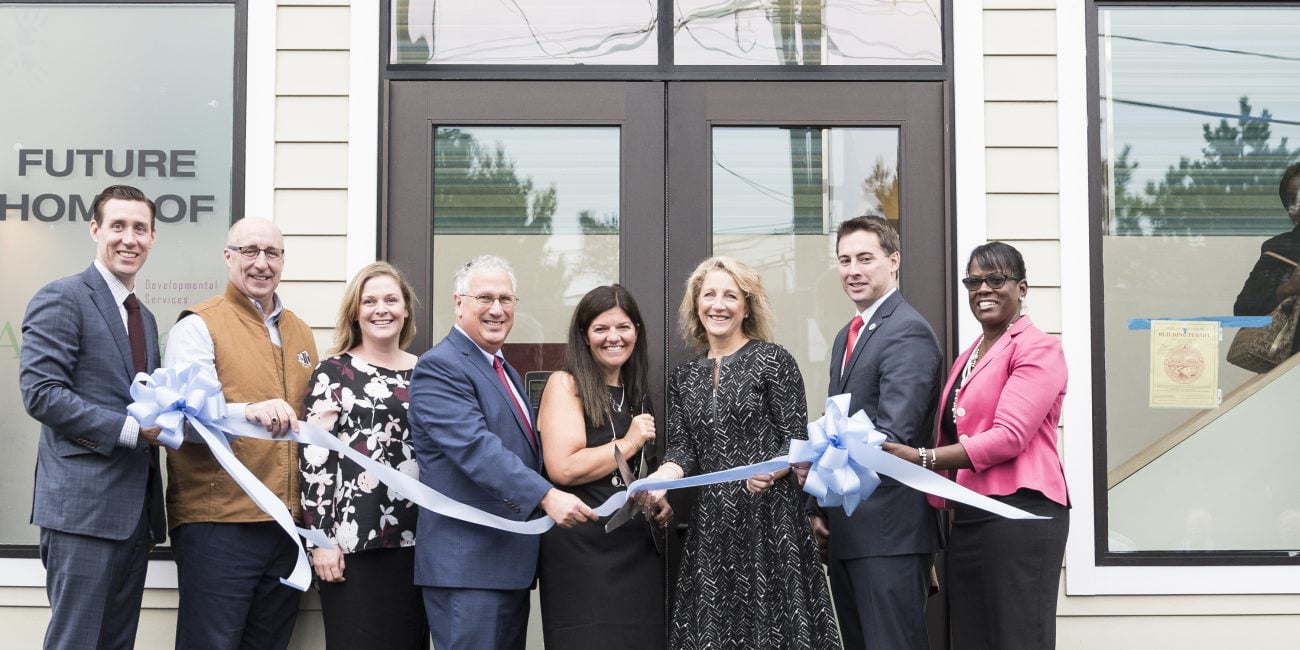
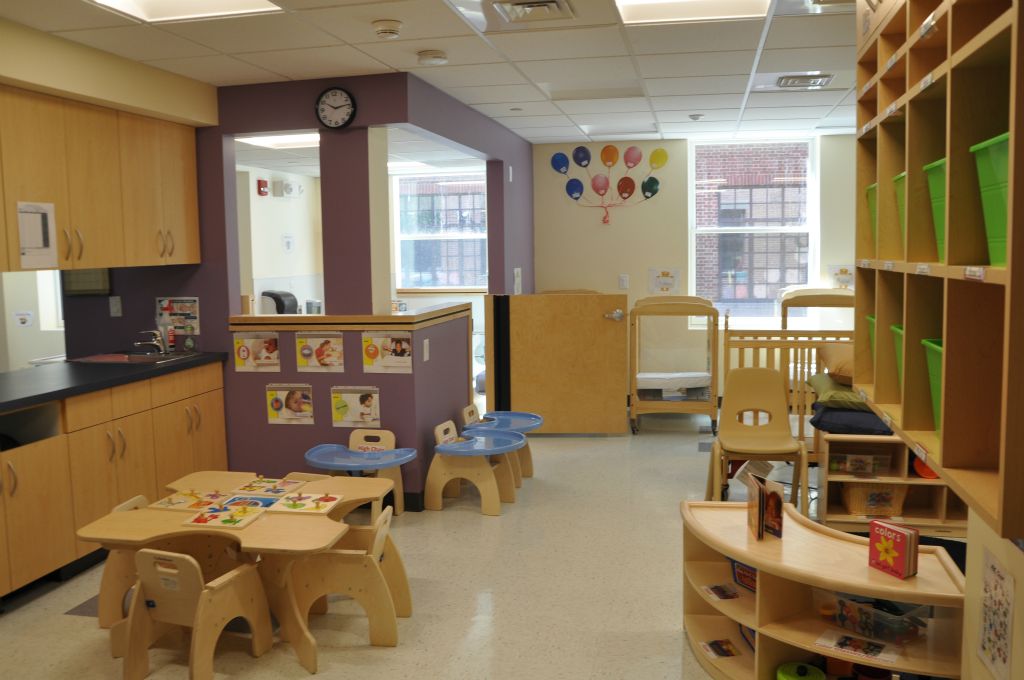
The $4.5 million transformation of the former O’Keefe Alternative School on Franklin Street into a state-of-the-art early education center for Aspire Developmental Services is complete.

“We have gone from a very small program to a program triple the size,” said Aspire’s executive director Lori Russell.

All services will be moved from the former location on Johnson Street to the bright new facility mid-November. Before the renovation, the halls were dark and the windows were small, said Russell.

“It’s now everything that our clients and staff hoped for and everything our board envisioned,” she said.

The building, which was built in 1900 and was on the brink of demolition, was purchased in August 2015 for $750,000 by Aspire Developmental Services. An adjacent lot was purchased for $141,000 to create a parking lot. Construction began a year ago.

Aspire has been serving children with developmental needs and their families since 1951. It provided services to more than 1,950 children in 10 local communities in 2016.

The project received a huge boost last summer when the organization won a $1 million grant from the Community Economic Development Assistance Corp. (CEDAC), the Boston-based community development finance agency that assists nonprofits, in partnership with the Children’s Investment Fund, a CEDAC affiliate. More than $1 million was raised in a capital campaign.

Aspire’s mission is to provide early intervention services to children up to the age of three. Children served are eligible for a variety of reasons, including Down syndrome, autism, hearing and vision loss, speech and motor delays, and mental health issues.

The nonprofit now has 15,000 square feet of space, triple its home on Johnson Street. The new building will allow Aspire to provide twice as many play groups for children receiving early intervention services, and space for parent training.

The preschool program expanded from 20 students to 40, and a toddler class was added with space for nine students, said Russell.

“I am blown away by how cool this facility is,” said first lady of Massachusetts Lauren Baker. “We know how important early childhood intervention is for all children. A quality early childhood education can make a huge difference in children’s lives. Aspire is a shining star of an example of how this can work. It’s a thrill for me to be here to share it with you.”

Baker said she has learned a lot about the importance of the kind of work the organization provides, especially for the state’s most vulnerable children.

Aspiring to reach new heights on Franklin Street in Lynn

SourceThe Daily Item

Massachusetts’ Financing For Child Care Providers A Model For Other States

Roger Herzog

Roger Herzog

The statistics are troubling. The United States ranks 36th out of 40 developed nations for the percentage of 3- to 5-year-olds enrolled in “pre-primary” or primary school. Enrollment rates vary widely across the U.S.; for example, 59 percent of 3- and 4-year-olds are enrolled in a formal early education and care program in Massachusetts, as compared to 37 percent of 3- and 4-year-olds in Arizona, according to 2013-2015 National KIDS COUNT data. Lack of access to early education and care, especially for families living in low-income communities, is complicated and involves a number of factors. But at least one of those factors is available and appropriate physical space, and that is a problem that Massachusetts has set out to solve.

Theresa Jordan

Theresa Jordan

Massachusetts in 2013 became only the second state to make state bond financing available to improve the quality of early education and out-of-school time facilities – and we were the first to include it in a larger community development bond bill. In the four years since the Early Education and Out of School Time (EEOST) Capital Fund was launched, the Massachusetts Department of Early Education and Care (EEC) has awarded over $15 million to 21 nonprofit early care providers across the commonwealth. As EEOST enters its fifth year, the Legislature is considering a $45 million reauthorization for the next five years as a part of the Housing Bond Bill filed earlier this year.

CEDAC and our affiliate, Children’s Investment Fund, last month laid out the challenges child care providers face in trying to create high-quality learning space – and the success that Massachusetts has achieved because of EEOST – at the annual Opportunity Finance Network (OFN) conference in Washington, DC. OFN is the leading national network of community development financial institutions (CDFIs) investing in opportunities that benefit low-income, low-wealth, and other disinvested communities in the U.S. CDFI representatives from Detroit and San Francisco also presented worthwhile public capital financing opportunities that benefit child care providers.

In lower-income neighborhoods from Boston to Detroit to San Francisco, the difficulties in upgrading child care facilities are similar. Providers need capital to repair and maintain learning sites, to improve and renovate classroom space, and to build and expand facilities. But the barriers to capital are substantial: many providers have low operating margins and little to no reserves. Their ability to generate private donations is limited and their capacity to manage a building process is similarly challenged. As with nonprofit affordable housing developers, providers need financial support in the early stages to get their projects going, and require technical assistance throughout the development process to meet their goals.

A Model In Massachusetts

The United Way of Massachusetts Bay and Merrimack Valley, the Ford Foundation and the Hyams Foundation created the Children’s Investment Fund in 1991 to help providers address these facility challenges. Since then, the fund has provided loans and grants, training and technical assistance to child care providers planning to create high-quality space. Six years ago, CEDAC and the fund recognized the demand for quality child care facilities was far outstripping the supply and that early care providers needed a new source of public capital funding if the commonwealth was going to maintain its educational and economic competitiveness.

While still in its own early stages, the successes of the EEOST Capital Fund are clear. In a competitive process, providers apply for grants up to $1 million to improve or create new facilities. The program is managed by EEC and CEDAC along with the fund. With 21 projects already funded, more than 2,000 children will be impacted, and nearly 450 new child care slots will be created. Eighty-six percent of these children come from low-income families. More than 360 construction jobs and more than 30 educator jobs are being generated. The public financing is leveraging an additional $36 million in private investment. There is strong demand for this capital funding – since 2014, requests from applicants to EEOST totaled $37.8 million with $15 million available for funding.

Programs with results like these are worthy of replication. EEOST is a model that other states can follow if they are willing to make a commitment to funding early education and care. While it won’t solve all of the challenges associated with access to care, it eases the burdens that the state and the providers face when it comes to one significant obstacle – accessible funds for high-quality learning facilities. And it shows that once again, Massachusetts is an innovator when it comes to strengthening communities.

Roger Herzog is the executive director of the Community Economic Development Assistance Corporation. Theresa Jordan is director of Children’s Facilities Finance for Children’s Investment Fund.

Massachusetts’ Financing For Child Care Providers A Model For Other States

SourceBanker & Tradesman

Renovations at 66 Berkeley Street Completed

Ellis is proud to announce that it’s historic building at 66 Berkeley Street opened on June 26, 2017, after significant renovations to the facility. The building has been owned by Ellis since 1924 and now houses education and care programs for children ages two months through 12 years old. The Boston-based nonprofit, which celebrated its 130th anniversary in 2015, serves inner city working families with programs ranging from early education and care to afterschool and summer programs for School-Age youth and a day program for vulnerable adults.

With the renovation of the building, Ellis is able to expand its Early Education Program to support an additional 32 families and provide newly designed space for the 60 children enrolled in its School-Age Program. Announcing the grand opening, CEO Leo Delaney said, “Renovating 66 Berkeley has been an important milestone in Ellis history, capping the close of a three part capital investment in our community space here in Boston’s South End. The leadership of our Board of Directors and the support from Boston’s philanthropic community have been the keys to this project’s success.”

Ellis’ three part capital campaign began with the creation of the Ellis Children’s Park, which turned a vacant lot on Chandler Street into a playground for very young children. In the second phase, Ellis acquired and renovated an abandoned building to create a state of the art Early Education Center. With the close of the campaign and completion of renovations to their historic 66 Berkeley Street building, the agency has created an Ellis campus in the South End. The renovations were made possible through the support of CEDAC and its affiliate, Children’s Investment Fund (CIF), a $800,000 grant from the state’s Early Education and Care and Out-of-School Time (EEOST) Capital Fund, corporate partners, community foundations, and individual donors.

To see full photo galleries of the transformation of 66 Berkeley Street and our grand opening events, please click here.

SourceEllis Memorial Newsletter

Housing Bond Bill Advances Reauthorizations of Community Investment Tax Credit and Early Education and Out-of-School-Time Capital Fund

United Way praised the Joint Committee on Housing for including two key provisions in the Housing Bond Bill that advanced today on Beacon Hill that would strengthen neighborhoods and early education programs.  The Housing Bond Bill, a comprehensive package aimed at helping more individuals and families secure safe, affordable housing, included reauthorizations of two successful programs: the Community Investment Tax Credit and the Early Education and Out of School Time Capital Fund.

“The legislation reported out favorably today by the Joint Committee on Housing recognizes the comprehensive approach needed to ensure neighborhoods and communities thrive,” said Michael K. Durkin, President and CEO at United Way of Massachusetts Bay and Merrimack Valley. “More affordable housing is critical, but communities also need high-quality affordable child care and healthy economies. Reauthorization of the Community Investment Tax Credit and the EEOST Capital Fund are positive steps toward advancing economic and neighborhood development in low-income communities.”

The Early Education and Out of School Time Capital Fund (EEOST) program is a unique source of funding for early education and care and afterschool programs throughout the Commonwealth. It supports major renovation and construction projects for facilities serving low-income children. Since the passage of the Housing Bond Bill in 2013, legislation that included a $45 million bond authorization to create the fund to improve the quality of center-based facilities, the EEOST Capital Fund has distributed over $15 million to help organizations modernize their space and improve the quality of the learning environments for children.

“The Commonwealth needs an improved and expanded supply of facilities to meet the demands of families across the state who are looking for convenient, high quality centers for their children,” said Durkin. “High quality, professional facilities, projects that better utilize existing facilities, and those that add additional space for planning and professional development, will allow the Commonwealth to best compete and retain top tier educators.”

The Housing Bond Bill reported out today also includes reauthorization of the Community Investment Tax Credit, which provides a 50% state tax credit for private donations to support the work of community development corporations across Massachusetts.  Since the program’s inception in 2014, United Way has raised over $4 million from donors to support CDCs across the state through the Community Investment Tax Credit (CITC). Nearly $24 million has been raised to support CDCs statewide.

“Every day, in neighborhoods and cities across the Commonwealth, Community Development Corporations (CDCs) are working hard to spur affordable housing and job creation, incubate small businesses and revitalize neighborhoods,” Durkin said. “CDC’s are an important source of innovation. The CITC Program is helping to greatly accelerate and deepen their work, as well as provide new and sustainable sources of funding.”

The Housing Bond bill will now advance to the House Committee on Bonding.

https://unitedwaymassbay.org/news/housing-bond-bill-advances-reauthorizations-of-community-investment-tax-credit-and-early-education-and-out-of-school-time-capital-fund/

SourceUnited Way of Massachusetts Bay and Merrimack Valley