New Facilities Funding for Early Education Programs in Massachusetts

Massachusetts has just announced the release of $4.1 million in facilities grants. Typically, these funds help early education and after school programs repair, renovate, and expand their buildings. This round of funding will focus on early education and care facilities that serve low-income children.

“Lieutenant Governor Karyn Polito made the announcement at the Worcester Community Action Council’s (WCAC) early education program in Webster, the site of one of the facilities funded by the 2017 grant awards,” according to a press release from the state’s Executive Office of Education.

“Facility improvements like these, coupled with an already announced 6 percent rate increase for early education providers, ensure that more children have access to high-quality environments and staff that will improve their learning experience,” Governor Charlie Baker added.

The five grant recipients are Child Care of the Berkshires, Belchertown Day School, Inc., Action for Boston Community Development, the YWCA of Southeastern Massachusetts, and the previously mentioned Worcester Community Action Council. An estimated 301 children will benefit from this investment.

Worcester’s project is a building conversion. The Telegram and Gazette reports:

“Ever since the roof of a Head Start program in Oxford collapsed under extreme winter conditions in 2015, dozens of Webster children have had to use a Head Start program in Southbridge.” So, the Worcester Community Action Council is using its grant to turn a former senior center into a Head Start facility that’s slated to open in the fall of 2018.

The need for this investment was documented in a 2011 report from the Children’s Investment Fund, part of CEDAC, the Community Economic Development Assistance Corporation. CEDAC also administers the state’s facilities funding grants.

For children, the impact is substantial. As Tom Weber, commissioner of the Department of Early Education and Care, says in the press release, “Thoughtfully designed and developmentally-appropriate environments help children learn and grow successfully.”

“This strategic investment of public resources helps early education and out-of-school time programs leverage private funding to create high-quality learning spaces for children that otherwise might be out of reach.”

https://eyeonearlyeducation.com/2017/09/13/new-facilities-funding-for-early-education-programs-in-massachusetts/

SourceEye on Early Education

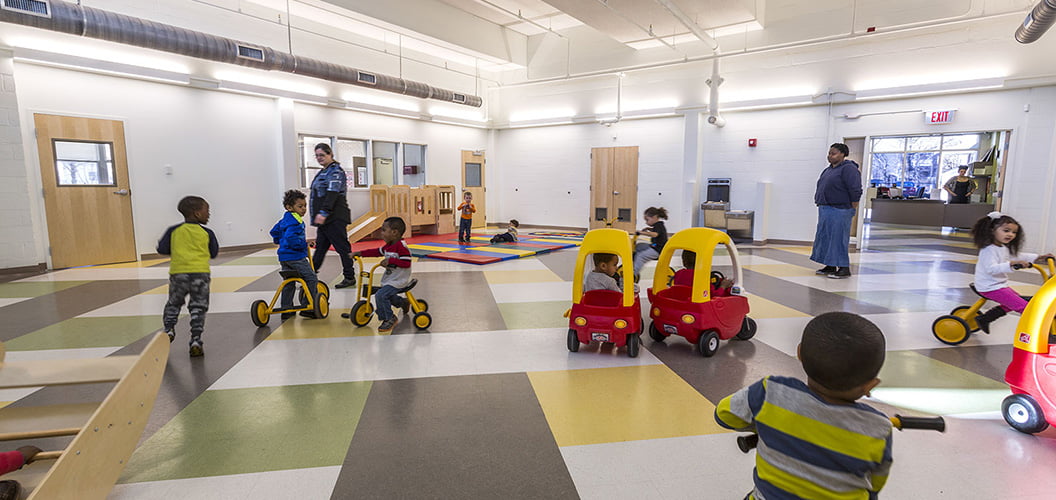
Worcester early education center serving at-risk students unveils new playspaces

Rotting wood and rusted bolts at the Rainbow Child Development Center’s old play area have been replaced by brand-new playsets, thanks to the generosity of donors and a six-figure government grant.

Just as important, said officials at the Edward Street-based early education and after-school center, which serves disadvantaged children in the area, the gleaming playground introduced at a ceremony on Friday will enable safer, better playtime for those kids and, in the process, hopefully help close an achievement gap separating them and their more well-off peers.

“We know you have to have healthy, happy children for them to thrive academically,” said the center’s executive director, Joyce Rowell, who explained the Rainbow Center has adopted a range of new programs and activities aimed at instilling healthy living habits in its students and their families. “It’s a whole mindset we’re trying to work on together.”

Unlike many private preschool centers, however, the Rainbow Center cannot rely on its clients to pay for those initiatives. It primarily serves low-income and single-parent families living in some of the area’s poorest neighborhoods, as well as students under the care of the Massachusetts Department of Children and Families, and derives around 85 percent of its funding from the state.

The problem is not unique to the Rainbow Center, according to state officials; a recent study undertaken by the Community Economic Development Assistance Corporation’s Children’s Investment Fund identified “shortcomings at many of the centers” around the state serving similar populations, said Bree Horowitz, senior project manager at the fund.

In response, the state established the Early Education and Out of School Time Capital Fund Program, which has provided millions of dollars over the past three years for infrastructure improvement projects at childcare centers across Massachusetts. The Rainbow Center was among them, applying for and receiving a $200,000 grant last year.

The center put that funding toward its play area project this year, which was still largely paid for through a capital campaign. The total work, costing around $750,000, required a major overhaul of the center’s rear property, including the removal of three utility poles, as well as the replacement of the old playset, which had recently been deemed unsafe for children to use.

On Friday, the center unveiled the new playground, which includes a playset and other activity stations for its younger students, as well as an obstacle course for the older students who enroll in the outside-school-hours program.

“It’s not an ordinary place to play, it’s not an ordinary playground,” primarily because it’s not for ordinary students, said Dr. Marianne Felice, a pediatrician and co-chairwoman of the Rainbow Center’s capital campaign for the project. “It’s not like going out in your backyard (to play) – these children need special kinds of space and special activities to stimulate them.”

That philosophy extends to other areas of the center’s educational model, pointed out Nancy Thibault, its strategic communication and development manager, who said many of the students there “are victims of adverse experiences every day.” Providing them a routine, avoiding the triggers that make them upset – there’s no yelling, Ms. Thibault said – and making them feel safe are all part of the Rainbow Center’s approach.

While it currently serves 250 students in total, 54 of whom are in the preschool program, “we could serve more children if we could fill additional staff (positions),” said Ms. Rowell. But like many early childhood centers, especially those dependent on government funding, the Rainbow Center struggles to attract staff, who only earn $12 to $16 an hour for a job that requires a college degree.

“We put a lot of demands on our early educators – as soon as they reach the benchmarks (necessary for the job), they’re leaving to go into the public (school) systems, where the support and benefits are much higher,” said state Sen. Michael O. Moore, who spoke at Friday’s playground ceremony. “It’s a vicious cycle,” he added, one that ultimately harms students, who are most closely affected by the industry’s high staff turnover rate.

Ms. Thibault said it’s taken a “team effort” from the Rainbow Center and its network of donors to build a robust financial support system for the center’s many initiatives. But when it comes to the central task of running an early childhood center, “the state does need to step up” its support as well, Ms. Rowell said.

According to Thomas Weber, commissioner of the state’s Early Education and Care Department, it has; the state increased its subsidy rate to centers serving at-risk students over the past few years, and is bumping it up 6 percent this year alone, he said. But he acknowledged alleviating the industry’s workforce issues remains “priority 1A for us.”

“We’ve been really working to try to enhance what we’re able to provide through subsidy support,” in addition to the “unprecedented” step of finally providing a capital fund program for the state’s early childhood centers, he said. “We’re making progress.”

http://www.telegram.com/news/20170908/worcester-early-education-center-serving-at-risk-students-unveils-new-playspaces

SourceWorcester Telegram

Baker-Polito Administration Awards $4.1 Million for Early Education Programs

The Baker-Polito Administration and the Community Economic Development Assistance Corporation (CEDAC) today announced $4.1 million in grant awards for facility improvements at early education and care programs that serve low income children.  Five agencies were selected to receive an Early Education and Care and Out of School Time (EEOST) capital improvement grant, which will help increase the quality of their early education programs through critical facility repairs and renovations.

Lieutenant Governor Karyn Polito made the announcement at the Worcester Community Action Council (WCAC), early education program in Webster, the site of one of the facilities funded by the 2017 grant awards.

“These grants will support the renovation and construction of early education and care programs for our youngest children,” said Governor Charlie Baker. “Facility improvements like these, coupled with an already announced 6% rate increase for early education providers, ensure that more children have access to high-quality environments and staff that will improve their learning experience.”

“The facility improvements funded through the EEOST capital improvements grants are modernizing spaces and providing a better environment for the children to grow and learn,” Lt. Governor Karyn Polito said. “We are proud today’s grants will improve the early education experience for families in North Adams, New Bedford, Belchertown, Roxbury, and Webster.”

The $4.1 million in FY17 grant awards will improve the quality of existing settings for approximately 301 children in programs licensed by the Department of Early Education and Care; increase the capacity of these programs to serve an additional 75 children in higher quality settings; and will support the creation of an estimated 13 educator positions and 72 construction jobs during the grant period.

Since taking office in Jan 2015, the Baker-Polito Administration has awarded more than $15.1 million to 21 grantees.

“In 2011, a study on the condition of early childhood and out-of-school time facilities in Massachusetts found that deficiencies in the buildings impacted the quality of teaching and learning, and recommended the development of a sustainable source of public capital to help non-profit providers serving children living in low income communities improve their facilities,” Education Secretary James Peyser said. “We have made a commitment to invest in these facilities, and know that it will positively impact the learning environments of our youngest students.”

The Early Education and Care and Out of School Time capital improvement grants are financed through the state’s capital budget and provide matching funds that leverage private investment.  The Baker-Polito Administration’s FY18 Capital Budget Plan included $4 million for the Early Education and Out of School Time grant program.

“Thoughtfully designed and developmentally-appropriate environments help children learn and grow successfully,” said Early Education and Care Commissioner Tom Weber.  “This strategic investment of public resources helps early education and out-of-school time programs leverage private funding to create high-quality learning spaces for children that otherwise might be out of reach.”

All of the programs selected to receive a grant award serve publicly subsidized families, have demonstrated financial need, and have secured additional funding to pay for a portion of their project costs.  The Department of Early Education and Care partnered with CEDAC’s affiliate, the Children’s Investment Fund, to administer the grant awards.  All of the grantees are tax-exempt non-profit corporations or organizations in which a non-profit corporation has a controlling interest.

“The EEOST Capital Fund is a critical resource for helping non-profit child care providers improve the spaces where so many low income children attend child care,” said Theresa Jordan, Program Manager of Children’s Investment Fund. “It has helped fund renovations and construction of centers, creating wonderful learning environments across the Commonwealth.  The child care community is grateful that policymakers had both the vision and commitment to quality that led to establishment of the Capital Fund.  This Fund has made Massachusetts a national leader in developing facilities that support children’s education and wellbeing.”

Ten organizations submitted requests for funding that totaled nearly $9 million combined.  The applicants selected for a grant award demonstrated sound feasibility of project, readiness for implementation, and likely potential for long-term sustainability and success.  The grantees and their award amounts are listed below:

Lead Agency Service Area Award
Child Care of the Berkshires North Adams $1,000,000
Belchertown Day School, Inc. Belchertown $1,000,000
Action for Boston Community Development Roxbury $743,740
YWCA of Southeastern Massachusetts New Bedford $800,000
Worcester Community Action Council Webster $600,000

“We are thrilled to be receiving this important state grant which will allow us to bring these critical Head Start services back to a community where they are needed,” said WCAC Executive Director Jill Dagilis. “Today represents the culmination of several years of hard work to identify a good site which addresses the needs of Webster’s working families and their children. WCAC is indebted to the many generous funders, public officials and other partners for helping to make this project possible.”

The grants were financed through the Early Education and Care and Out of School Time Capital Fund, which was established in 2013 through An Act Financing the Production and Preservation of Housing for Low and Moderate Income Residents.  The legislation that established the capital fund provided $45 million in general obligation bond funding over five years.

http://www.mass.gov/edu/government/departments-and-boards/department-of-early-education-and-care/press-releases/baker-polito-administration-awards-4-1m-in-facilities.html

SourceExecutive Office of Education

$1.1M announced for Head Start in Webster

Federal, state and local officials converged on a vacant School Street building Thursday to celebrate its future as an early childhood education facility, and the infusion of more than $1 million toward the effort.

Lt. Gov. Karyn Polito announced $600,000 in state funding for the project, while U.S. Rep. James McGovern, D-Worcester, revealed a $500,000 commitment from the federal Administration for Children and Families.

The Worcester Community Action Council aims to repurpose the former senior center at 116 School St. into a Head Start facility, for an estimated $1.7 million.

Ever since the roof of a Head Start program in Oxford collapsed under extreme winter conditions in 2015, dozens of Webster children have had to use a Head Start program in Southbridge.

Head Start is a program of the U.S. Department of Health and Human Services that provides early childhood education, health, nutrition and parent involvement services to low-income children and families.

In early 2015, the WCAC shut down its Head Start program in Oxford when the roof was deemed dangerous because of exceptional winter weather. WCAC officials said busing children from surrounding towns to Southbridge is a considerable expense to the organization, and an inconvenience to families.

WCAC negotiated a 25-year lease, with a five-year extension, with Webster. But the two-story brick building will need to be rehabbed.

In addition to Webster, Ms. Polito said she was highlighting $4.1 million in capital grants for the modernization of spaces for early education programs in Boston, Belchertown, North Adams and New Bedford.

The state funding is from the early education and out-of-school time capital fund, which has provided up to $45 million in general obligation bond funding during five years, for grants to group and school-age child care facilities that are licensed by the state Department of Early Education and Care. The money is to renovate, improve or acquire and construct new program facilities for nonprofit corporations and organizations that serve low-income families.

The lieutenant governor said early educators are as important as the buildings that house the programs.

She said that under the leadership of state education secretary James Peyser, who was also in attendance, she and Gov. Charles D. Baker were pleased to provide a 6 percent rate increase to early educators across the state, the largest rate hike for subsidized early education programs in 10 years, Ms. Polito said.

“We need talented, caring people to choose the line of work as early educators to be on the team to make a difference for the children,” she said, noting that subsidized programs support approximately 56,000 children daily in Massachusetts.

Mr. McGovern thanked the WCAC for serving the most vulnerable people in a large chunk of his congressional district.

Mr. McGovern noted that the federal funding hadn’t been confirmed until 1 p.m. Thursday. He said he made yet another plea earlier in the day, and joked that he would have been embarrassed to show up in Webster empty-handed.

“I couldn’t be happier because I believe in all that is going to occur in this building,” he said.

State Sen. Ryan C. Fattman, R-Webster, who often reads to children in Head Start in Southbridge, said that transforming the facility from a senior center to a Head Start facility symbolized a changing of the guard and shifting of generations. Mr. Fattman nodded to the children of the program positioned to his right and said that if America doesn’t invest in their future, their future will be in question.

WCAC Executive Director Jill Dagilis thanked state Rep. Joseph McKenna, R-Webster, for his dedication to Webster families and the WCAC program. She said he opened many doors and kept the priority for funding the project on everyone’s radar. As a result, the WCAC gave Mr. McKenna its community action award earlier this year.

Mr. McKenna called the effort “one of those rare projects where everyone comes together and pulls in the same direction.”

The project calls for construction of four classrooms, a reception area and office spaces, installation of a new sprinkler system, elevator, flooring and lighting. Improvements will be made to the kitchen, restrooms and electrical system, alongside accessibility upgrades and the installation of a playground.

The building will serve 71 low-income children and 15 staff members.

It was originally designed as a private school built in the 1950s, with a renovation in 1979 to serve as the senior center, which has since moved.

The new Head Start’s anticipated opening is fall 2018.

Currently, 31 Webster children are enrolled in the half-day program, and the 10 children enrolled in the full-time program from Webster are bused daily to WCAC’s site in Southbridge.

There are an additional 30 children from Webster on the agency’s waiting list for Head Start.

The winter snowfall of 2015 was a FEMA-designated disaster. The roof collapse displaced 87 children and 15 staff in Oxford.

A Webster mother, Delilah Charest, whose children are 7 and 4, said she continued to take her children to Head Start in Southbridge when the Oxford facility closed because “it’s done a lot for my family,” she said.

Ms. Charest credited WCAC for allowing her to get training and get back to full-time work while her children were in the program. She said it also helped her son with a speech problem.

Ms. Charest said she is happy that the program will be closer to home.

Another Webster mother, Nicole Swift, said she has a 4-year-old child with ADHD in the Southbridge Head Start. She said she believes in the program because of its understanding teachers who are helpful with her daughter’s behavioral problems.

Ms. Dagilis, the executive director, also thanked Webster Selectman Randall V. Becker and his wife, Donna, for kicking off the private fundraising campaign by pledging $200,000, the largest individual donation in the agency’s history.

http://www.telegram.com/news/20170831/11m-announced-for-head-start-in-webster
SourceWorcester Telegram

Child Care of Berkshires Plans $1.75M Renovation of Haskins School

The historic Sarah T. Haskins School is about to get a $1.75 million facelift and modernization to better serve Child Care of the Berkshires and its programs.
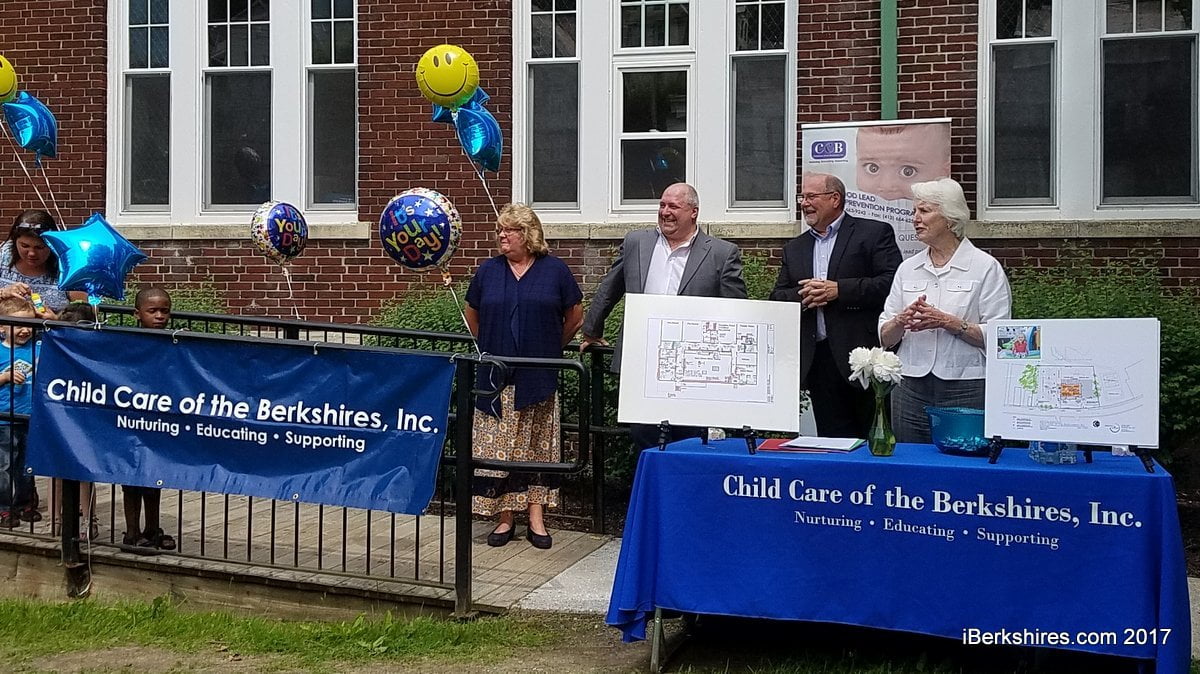
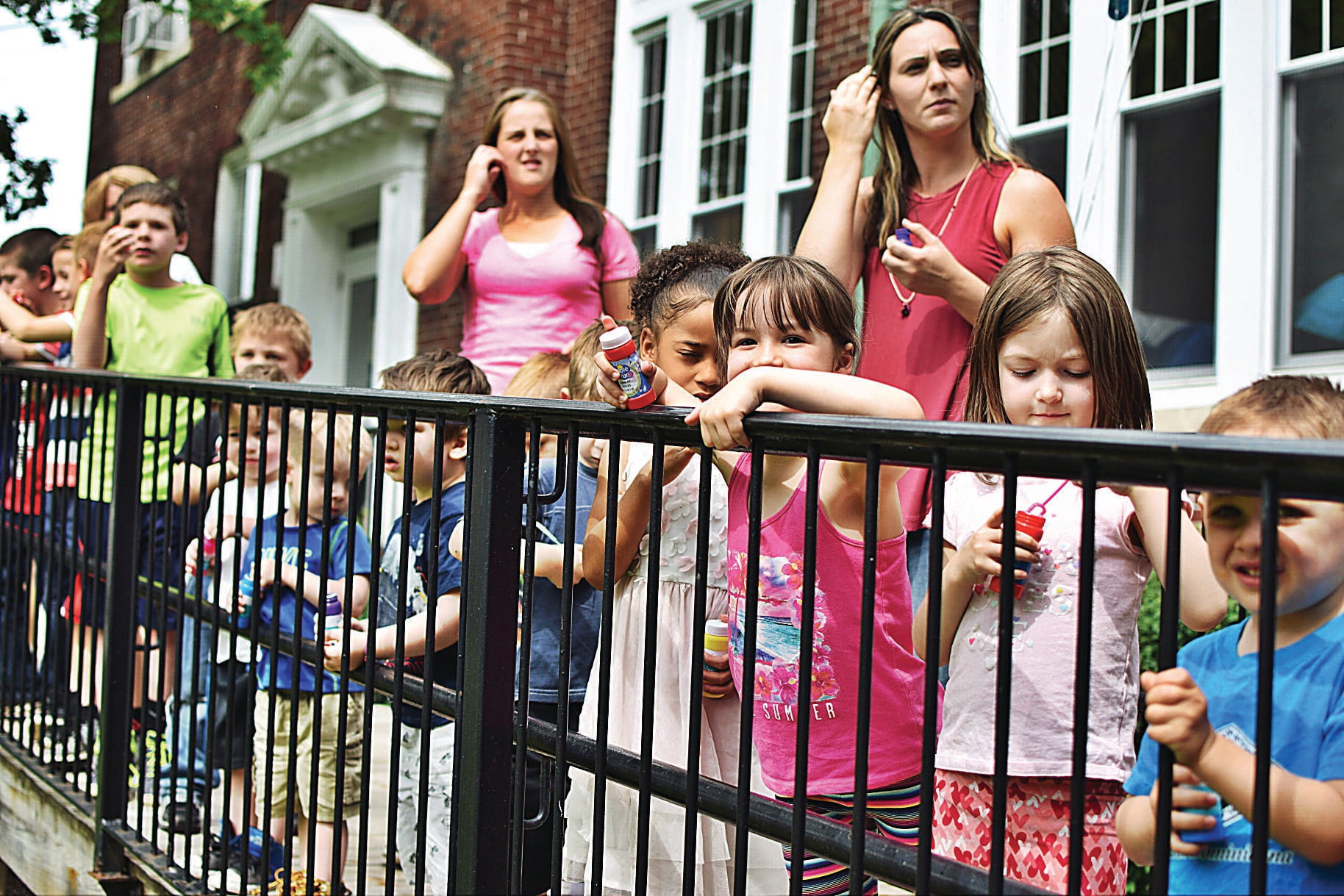
The bulk of the funding, a $1 million grant from the state Department of Early Education and Children’s Investment Fund was announced on Thursday afternoon with balloons and bubbles at the child-care center.
“I have to tell you we have chasing this grant for three years but the process started a long lont time ago,” longtime President and CEO Anne Nemetz-Carlson said on the front lawn of the State Street school while children blew bubbles. “Rewards are so exciting that come late. They require hard work dedication passion and … I am not just pleased but thrilled to get this award.”
The goal, said officials, is to create an environment that is “warm, inviting, enriching and welcoming to both children and families. These improvements will transform the facility into an accessible, safe and modern space.”
Over the next two years, an elevator will be added on the exterior; windows and interior and exterior doors will be upgraded for utility and security; the heating will be switched to natural gas; air-handling units will upgraded; bathrooms will be made handicapped accessible; the roof will be repaired and brick exterior repointed and the parking lot revamped; a new fire-suppression system will be installed along with updated technology; a new entrance will be designed with security and safety in mind; and a new classroom will be built on the second floor above the gym to accommodate school-aged children who now meet in basement classrooms.
“My program is going to benefit so greatly,” said Kelly Phillips, director of the Monument Square Early Childhood Center. “Our school-age children who are blowing bubbles for you all will have a wonderful space to be in … it’s just so fitting that we have the families of North Adams [here] and how much we value the parents and the children and what they bring to our center and what we can bring to them.”
The child-care program has been housed in the 1922 building since 1980 and initially shared space with the public school until it closed a few years later. There have been a few updates, including two small renovations of about $50,000 each that addressed flooring, storage, and rooms, particularly the renovation of an infant room a few years ago.
But the nonprofit has been limited in what it can do without triggering more extensive modernization to comply with state and federal codes, particularly the Americans with Disabilities Act. Nemetz-Carlson said a decision was made with the nonprofit’s board to pull that trigger.
“We going to put an elevator on the outside that triggers all our building codes,” she said. “It’s just a really nice list of many, many projects to bring the facility up to code.”
A clearly delighted Nemetz-Carlson said there were “a million things to do” that will probably start with a separate U.S. Department of Agriculture grant to begin addressing the bathrooms.
The grant, a big, thick application, took three years to be approved as the center pinned down the requirements — schematics, estimates, facts, and fundraising.
Nemetz-Carlson said the support of the board and especially of the faculty who ensure that CCB has a high-quality children’s center — which is accredited and ranked by the state at Level 3 (4 being top) — were instrumental in obtaining the grant.
The board launched a capital campaign, run by former board member John Craig, that has so far raised $250,000 and has had 100 percent board participation.
“We had a lot of funders that really believed in us,” she said, and received support from the Northern Berkshire United Way, Williamstown Community Chest, Barrett and Hardman funds, Adams Community Bank, the Ruth Proud Trust and Feigenbaum Foundation.
David Westall of Westall Architects was brought on to make the design plans submitted with the application.
William Robinson, chairman of the board, also gave thanks to those who helped with the grant application, including Mayor Richard Alcombright, CCB’s landlord, who with the City Council approved a 25-year lease that gave the facility the site control needed for the grant to be approved.
“We’re going to have a home here for the next 25 years … without that wouldn’t have this great opportunity,” he said. “We have to do something if we wanted to do be here long term. …
“To make this a state-of-the-art facility for child care that people want to be at for years to come.”
The center serves 81 children ranging from infants to school age and sees some 2,000 parents and children a year. In addition to the child care, it operates the Family Center of Northern Berkshire providing parent resources and training, and a free clothing exchange. The Parent Child Home Program served 46 families in North Berkshire and, between that program and one in Pittsfield, conducted 2,650 home visits.
One of the requirements of the grant was that center serve a 25 percent population of low-income families; in fact, 95 percentof the children served through Child Care of the Berkshires come from low-income homes.
“The city of North Adams could not be more pleased to have this facility right here and guaranteed to be here for the next 25 years to provide services to families here that are just unprecedented anywhere in the region,” Alcombright said.
Phillips later led a tour of the building, pointing out where improvements have been made over the years and where changes will be made. She’s particularly focused on moving the school-age children out two rooms in the basement level and bringing them up to the new room that will be constructed by extending the second floor over part of the gym.
The plan is to continue keeping the gym as a place for movement and play as well as using its large arched windows to emit light into the new second floor room. The new room will allow the program to open up slots for five more children, for 30 total.
The building is not on the Register of Historic Places but the Historical Commission has asked CCB to continue to recognize Haskins, whose name is large across the front of the school. Haskins was a longtime educator in the North Adams Public Schools and had retired as principal of the former State Street School. Nemetz-Carlson said the name and her picture will remain up.
Robinson credited Nemetz-Carlson for her passion and perseverance — as well as her extensive contacts — in pushing the application through.
“She has such a strong vigor and so much clout through the state of Massachusetts,” he said. “When they hear her name … she puts North Adams and child care on the map of the the state.”
Nemetz-Carlson is now focused on rejuvenating the nearly century-old school.
“We want it to be safe and secure and really warm and inviting,” she said.
http://www.iberkshires.com/story/54773/Child-Care-of-Berkshires-Plans-1.75M-Renovation-of-Haskins-School.html

SourceiBerkshires

$1M for renovations at Child Care of Berkshires

Students of the Monument Square Early Childhood Center at Child Care of the Berkshires lined up outside the Haskins facility on Thursday to celebrate more than $1 million in renovations announced for the school building. Thursday, June 8, 2017. Adam Shanks — The Berkshire Eagle

Child Care of the Berkshires announced a $1 million grant for renovations to its Haskins facility on State Street on Thursday.

The funding will pay for the installation of an elevator, construction of handicapped accessible bathrooms, and a new classroom above the gymnasium.

The work will also include the installation of more energy efficient windows, a fire suppression system, and conversion from heating with oil to natural gas.

“We’re going to do a million different things,” said Anne Nemetz-Carlson, president and CEO of Child Care of the Berkshires Inc.

The Haskins facility on State Street was formerly a North Adams public elementary school and is still owned by the city, but now houses Child Care of the Berkshires’ Monument Square Early Childhood Center.

The nonprofit, which was founded in 1960, provides assistance to more than 2,000 people in the Berkshires every year. Headquartered in North Adams, it operates three child care centers but also offers an array of family support programs, such as the Family Center and the Healthy Families Program.

The funding for the roughly $1.75 million renovation project comes via the federal Department of Early Education and Care’s Early Education and Out of School Time Grant program and private donations through a capital fundraising campaign.

“We’ve already raised $250,000, so we have $500,000 to go,” Nemetz-Carlson said. “We’re applying for grants as well as looking for more support in the community.”

A requirement of the grant was that at least 25 percent of the students in the program are from low-income families, and about 95 percent of the 81 students in the Monument Square Early Childhood Center meet that standard.

The program serves infants, toddlers, preschoolers and school-age children.

Child Care of the Berkshires has utilized the former elementary school for more than 30 years, making smaller improvements along the way, but the 1922 building has not seen a renovation on the scale of the one planned in the coming months.

“My program is going to benefit so greatly with the reinventions of the classrooms and the facility, and all of the improvements to be made,” said Kelly Phillips, director of the Monument Square Early Childhood Center. “It just shows the commitment we have to the families of North Adams.”

Phillips pointed specifically to the benefits of a new classroom for school-age children, which will be lofted above the gymnasium.

Renovations also include installing classroom doors that lock, addressing air conditioning issues, and fixing some flooring.

“It’s just a really nice list of many, many projects to bring the facility up to code,” Nemetz-Carlson said. “Our staff is really excited about the elevator because we have programs on the second floor and the first floor.”

The renovations are required to be complete within the next two years, according to Nemetz-Carlson.

The city and Child Care of the Berkshires took the first step to winning the grant last year.

A condition of the funding was that the nonprofit have long-term site control, so it agreed to a 25-year lease with the city in 2016.

The lease is rent-free for the first five years until rent payments of $1,100 per month begin in year six. As a condition of the site control, the nonprofit has also become responsible for the building’s maintenance and upkeep.

“For 25 years, we’re going to have a home here,” said William Robinson, chair of the nonprofit’s board of directors, who thanked Mayor Richard Alcombright for making the long-term lease possible.

http://www.berkshireeagle.com/stories/1m-for-renovations-at-child-care-of-berkshires,509983

SourceBerkshire Eagle

ASPIRE BUILDING PROJECT HITS HALFWAY POINT

LYNN — Aspire Developmental Services is halfway to completing its $4.3 million headquarters on Franklin Street.

When the renovation of the former O’Keefe Alternative School is finished, the nonprofit will have 15,000 square feet of space, triple its home on Johnson Street. The new building will allow Aspire to provide twice as many play groups for children receiving early intervention services, and space for parent training.

Aspire purchased an adjacent lot last year for $141,000 which will be used for parking, and an expanded playground, according to executive director Lori Russell. She said the three child care classrooms will have direct access to the playground.

“We’re hoping to have it completed by late summer and to be in the building by early fall,” Russell said.

Landmark Structures Corp. of Woburn is the general contractor and Benjamin Joyce serves as project manager.

“They have been excellent to work with,” she said.

The project received a huge boost last summer when the organization won a $1 million grant from the Community Economic Development Assistance Corp. (CEDAC), the Boston-based community development finance agency that assists nonprofits, in partnership with the Children’s Investment Fund, a CEDAC affiliate.

Aspire is in the midst of a $2 million capital campaign for the building project, having raised about $1.3 million so far.

“Our fundraising is ongoing,” Russell said. “We appreciate the support of everyone who has gotten behind this project.”

Aspire has been serving children with developmental needs and their families since 1951. Last year, the organization provided services to nearly 2,000 children.

Its mission is to provide early intervention services to children up to the age of three. Children served are eligible for a variety of reasons, including Down syndrome, autism, hearing and vision loss, speech and motor delays, and mental health issues.

SourceItem Live

Video: Communities Built for Children

What makes communities strong?

“For many families a good place to live is a community that provides for the safety and healthy development of its children,” CEDAC’s executive director, Roger Herzog, says in the video.

The video was produced by Boston-based CEDAC (the Community Economic Development Assistance Corporation) and its affiliate, the Children’s Investment Fund.

“Numerous studies show that high-quality early care and education has a unique capacity to prepare low-income children for future academic and lifetime success,” Herzog adds. “The key phrase is high-quality.”

Nurtury, a state-of-the-art early learning facility in Jamaica Plain, is featured in the video, as is Representative Jeffrey Sanchez (D-Boston), who discusses how important Nurtury was to him and his family when he was a child.

The video also touches on a policy victory, the Early Education and Out-of-School-Time Capital Fund, which provides funds to improve physical early education and out-of-school-time facilities.

To learn

• watch the video

• check out the Children’s Investment Fund website, or

• read about some of the Children’s Investment Fund’s work in a report about building strong pre-K programs


https://eyeonearlyeducation.com/2017/02/07/video-communities-built-for-children/

SourceEye on Early Education

CEDAC Fall 2016 Newsletter

Dear Friends,

In this newsletter, we highlight recent successes and transitions for CEDAC and our affiliates, Children’s Investment Fund and Commonwealth Workforce Coalition.  As we note in the article on supportive housing, Massachusetts has a lot of good news to share when it comes to producing supportive housing units.  Through a state interagency effort, we created more than 1,750 in just three years and because of new state and federal resources, we will be able to produce even more.

SourceCEDAC

State Bonds For Early Education Prove Successful

The research has been consistent – children from low-income communities make tremendous educational gains when they have access to high quality early education programs. Early education has become an important priority for Massachusetts, which is why, three years ago, the commonwealth made history by becoming the second state to make state bond financing available to improve the quality of early education and out of school time facilities – and the first to include that financing in a larger community development bond bill.

The Housing Bond Bill that passed in 2013 created the Early Education and Out of School Time (EEOST) Capital Fund and for 16 child care providers, EEOST has made all the difference in ensuring they have quality learning space.

The physical space in which children in early childhood education (ECE) and out-of-school time (OST) programs spend most of their time is critical to their educational development. Proximity to classroom sinks, the installation of adequate HVAC systems, and access to indoor and outdoor play spaces are all as important as programming quality in early education. Nonprofit, community-based child care providers, especially those serving children in low-income neighborhoods, are often located in spaces not designed for learning – old storefronts, gloomy church basements and other sites that are inexpensive but not ideal. While many want to upgrade their facilities, most providers find it infeasible to fundraise the necessary capital or borrow loans from traditional banks.

Roger Herzog

Roger Herzog

For more than two decades, Children’s Investment Fund had offered both loans to child care providers planning to improve their facilities and the technical assistance that they require to complete those plans. But it had become apparent that to address the facility challenges of so many community-based providers, a new form of public capital funding would be needed. That’s why the EEOST Capital Fund was created. Luckily for Massachusetts, we already had a successful affordable housing financing example – of which CEDAC plays a critical role – to model the program after.

The 2013 legislation authorized $45 million to create the EEOST Capital Fund program to improve the quality of center-based child care facilities. In the first three years, Massachusetts has allocated $4 million per year for this purpose. The EEOST program, which is administrated by CEDAC and the Children’s Investment Fund in partnership with the Massachusetts Department of Early Education and Care (EEC), awards grants of up to $1 million to large group early education and out-of-school time programs for major capital facilities projects.

Theresa Jordan

Theresa Jordan

Sixteen child care centers have received grant awards from the EEOST Capital Fund program. Nearly 1,900 children across the commonwealth, of which more than 85 percent are from low-income families, will benefit from improved learning environments. The state’s $11 million of capital grants to date have leveraged more than $30 million in private investment from banks, social lenders, charitable foundations and other sources. All in all, the program is a great investment in supporting community-based nonprofits and Massachusetts’ children – and we’d be smart to build upon that success.

Among two of the providers to receive EEOST grants were the Catholic Charities Lynn Child Care Center and Valley Opportunity Council. The Lynn Child Care Center received a $750,000 EEOST award to transform a 13,000-square-foot building by replacing the roof, reconfiguring classrooms with new walls and floors, and installing a new heating and ventilation system as well as a limited use elevator, creating a more modern and child-friendly atmosphere. The center currently serves 100 children from Lynn, Nahant and Saugus, 95 percent of whom receive some form of public subsidy.

Valley Opportunity Council (VOC) in Chicopee demolished a concrete building – a cramped, dark former dentist’s office and single-family home – they had owned and operated since 2009. Through a $1 million EEOST grant, VOC constructed a new, open, bright and energy efficient 6,800-square-foot building to meet their program needs. The new facility added 50 percent more space, including expanded classrooms, and now serves 60 preschoolers and 22 out-of-school time children. VOC serves a diverse population, with 97 percent of the children coming from low income families.

Massachusetts has once again demonstrated it is a community development leader with the creation of the EEOST Capital Fund, and it is doubly sweet that the fund’s creation also reinforces our status as a national education leader. We’re looking forward to continuing our work improving environments for low-income children throughout the commonwealth.

Roger Herzog is the executive director of the Community Economic Development Assistance Corporation. Theresa Jordan is director of Children Facilities Finance for Children’s
Investment Fund.

http://www.bankerandtradesman.com/2016/11/state-bonds-early-education-prove-successful/?utm_campaign=Daily&utm_source=hs_email&utm_medium=email&utm_content=37488559&_hsenc=p2ANqtz-8b4wmUfwMSbvbnocc5StOdQdOx33G46_0DGMnJ6UQpTfb56BMr_qjktlanst_hftYAPEA2JaaVYIB0YERH8yMaSaYlVg&_hsmi=37488559

SourceBanker & Tradesman