Aspire Developmental Services Relocates Lynn Headquarters with MassDevelopment Bond

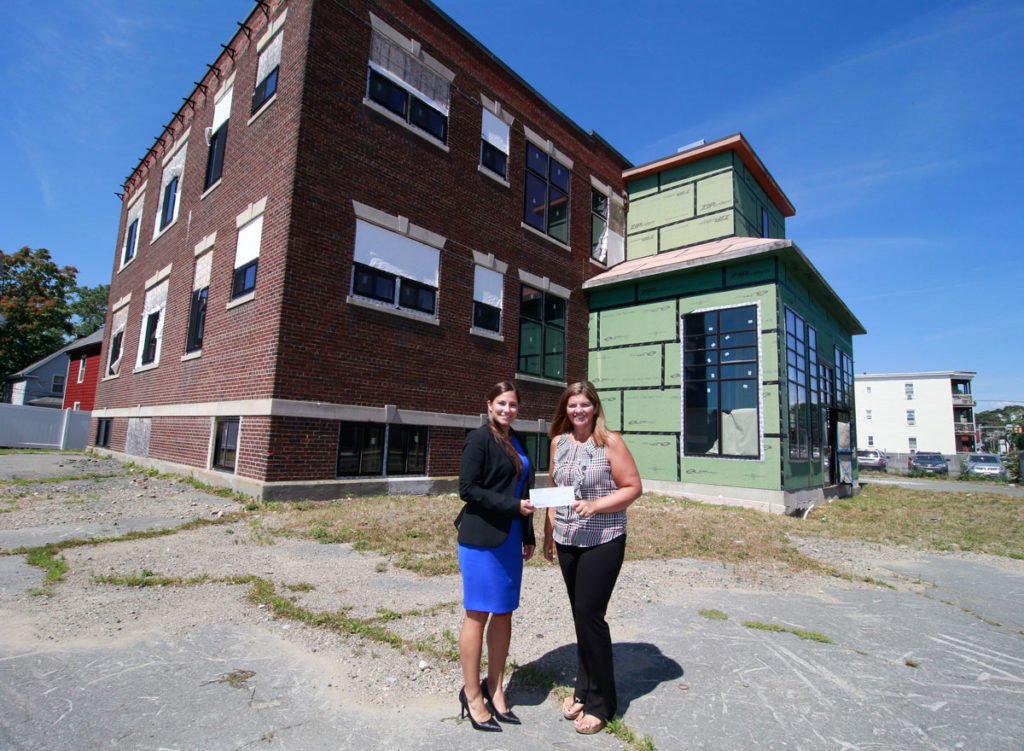
MassDevelopment has issued a $2,420,000 tax-exempt bond on behalf of Aspire Developmental Services, Inc., an organization in Lynn and Salem that provides programs for children and adults with physical and developmental disabilities. Aspire is using bond proceeds to renovate, furnish, equip and insure the 15,912-square-foot former O’Keefe School building at 176 Franklin Street as its Lynn headquarters. The new building will allow Aspire to expand its day care, early intervention and other services. East Boston Savings Bank purchased the bond.

“Aspire Developmental Services’ focus on early intervention ensures a bright future for the children and families it serves on the North Shore,” said MassDevelopment President and CEO Marty Jones. “We are pleased to help this organization expand its services and update its Lynn headquarters with this low-cost financing.”

Founded in 1951 as the Cerebral Palsy Council of the North Shore, Aspire Developmental Services, Inc. is a private, nonprofit healthcare and educational agency that provides programs for children and adults with physical and developmental disabilities and their families. The agency was organized by parents and professionals interested in providing services for persons with cerebral palsy. In 2015, the organization became Aspire Developmental Services, Inc. Aspire provided services to 1,856 children in 10 communities in 2015 through Early Intervention, the Early Intervention Partnership Program and its Aspire Early Education Center, which is open to typically developing children and those with mild developmental delays.

“We are very excited to begin this project, which will allow for the continued growth of Aspire Developmental Services,” said Lori Russell, Acting Executive Director at Aspire. “The project, which is expected to be completed in the summer of 2017, will enable us to serve more at-risk families on the North Shore.”

MassDevelopment, the state’s finance and development agency, works with businesses, nonprofits, financial institutions, and communities to stimulate economic growth across the Commonwealth. During FY2016, MassDevelopment financed or managed 352 projects generating investment of more than $4 billion in the Massachusetts economy. These projects are projected to create about 8,200 jobs and build or rehabilitate about 4,200 residential units.

http://www.massdevelopment.com/news/aspire-developmental-services-relocates-lynn-headquarters-with-massdevelopm/

SourceMassDevelopment

5 Ways to Help Scale Financing for Pre-K Facilities

Based in the Bronx, New York City, Little Scholars exemplifies what a preschool can become with adequate facilities funding. Children stack blocks and point at pictures in books in a classroom that is filled with natural light and has brightly painted walls. Outside, other children splash at a water table in an alley converted into a sunny playground made of natural materials. Yet, nationwide, these conditions represent an ideal that is out of reach for all but the most well-resourced schools.

Little Scholars is one of eight pre-Kindergarten (pre-K) schools that the Low Income Investment Fund (LIIF) financed in 2015 with philanthropic support from Deutsche Bank. Through the program, LIIF provided no-cost bridge financing for repairs and improvements to pre-K facilities to enable the schools to be ready to provide pre-K under contracts with the New York City Department of Education. LIIF’s new report, “Building Pre-K,” examines efforts aimed at financing quality preschool facilities at scale and highlights the potential for increasing the impact of collaborations among philanthropy, community development financiers and the public sector.The report combines LIIF’s experience with its New York pre-K program, and its 20 years of work in the field, together with findings from programs nationwide led by the Children’s Investment Fund, First Children’s Finance and Reinvestment Fund.

Little Scholars, pictured above, exemplifies what a preschool can become with adequate facilities funding.

The importance of high quality early education is well-established, but a poor facility can take away from the impact of an otherwise high quality program. A report on Massachusetts preschool and afterschool facilities found that 22 percent had elevated carbon dioxide levels in indoor air; 34 percent lacked adequate heating and cooling; 54 percent lacked indoor active play space; and 70 percent lacked classroom sinks. Nationally, the situation is comparable. Preschools commonly rent space wherever they can find it, from church basements to more unusual arrangements like a repurposed hair salon, a former bar or, in one case, a converted turkey coop.

LIIF estimates that at least $10 billion—twice the size of the current federal Child Care and Development Block Grant—is needed nationwide to upgrade existing facilities to a standard that better promotes learning. Preschools, which are largely operated as small businesses, bear the nationally underfunded mandate to finance, construct and maintain facilities that are safe, healthy and supportive of cognitive development. After paying for the immediate care and education needs of their students, insufficient funds remain for facilities maintenance, improvements, or construction. While current policy and advocacy is focused on important issues such as affordability, curriculum, teacher training and evaluation, few resources and limited attention are dedicated to preschool facilities.

LIIF estimates that at least $10 billion—twice the size of the current federal Child Care and Development Block Grant—is needed nationwide to upgrade existing facilities to a standard that better promotes learning.

Within the current context, philanthropy can play a critical role in partnering with the community development and public sectors to improve the quality of new and existing pre-K facilities. In particular, foundations could take five specific actions:

  1. Fund research and advocacy that makes the child care facilities problem tangible to politicians, funders and families. Despite a handful of studies, the evidence around preschool facility quality is primarily anecdotal.
  2. Fund community development financial institutions and nonprofit lenders to collaborate with states and localities on child care facilities financing strategies. These organizations, such as LIIF, Reinvestment Fund, Children’s Investment Fund and First Children’s Finance, have cultivated expertise and relationships over the years.
  3. Fund an expansion of preschool business technical assistance training, emphasizing partnership with existing small business training and early education training institutions. Business technical assistance training will strengthen the operations of these small businesses, helping them become more efficient and effective.
  4. Fund facilities construction and renovation technical assistance for preschool businesses in addition to initiatives to train construction industry professionals in early childhood facilities design and development.Preschools commonly manage facilities projects on their own, but more sustainable solutions are required long-term.
  5. Fund the start-up of nonprofit, turn-key child care facilities development companies, modeled after those existing in the charter school field such as Civic Builders or Pacific Charter School Development. Such companies promise to let educators focus on education rather than real estate.

http://www.liifund.org/justgoodcapital/2016/10/25/5-ways-help-scale-financing-pre-k-facilities/

SourceLow Income Investment Fund (LIIF)

FY17 Early Education and Out Of School Time Capital Fund Program

The FY2017 Early Education and Out of School Time (EEOST) Grant Program has begun. This program awards grants, of up to one million dollars ($1,000,000), to large group early education and out of school time programs for major capital building projects. The Department of Early Education and Care (EEC) has worked closely with the Community Economic Assistance Development Corporation (CEDAC) and its affiliate, The Children’s Investment Fund (CIF), in the development of the pre-application, application materials and Program Guideli nes.  The Secretary of Administration and Finance has authorized $3,600,000 dollars to be awarded by June 30, 2017.

INFORMATIONAL MEETINGS ABOUT THE FY2017 EARLY EDUCATION AND OUT OF SCHOOL TIME CAPITAL FUND

UPDATED PROGRAM GUIDELINES AND APPLICATION PROCESS

The Department of Early Education and Care (EEC) has scheduled three informational meetings about the FY2017 Early Education and Out of School Time (EEOST) Capital Fund Program application process.  EEC expects to award funds for major capital facilities’ projects, through a competitive grant process, to eligible large group child care programs, including out-of-school time programs.  Applicants will be required to submit a pre-application in late October 2016 and qualified applicants will be invited in December 2016 to submit a full application in January 2017.

Pre-applications will be due to EEC on Monday, October 31, 2016 by 4:00 PM.

Questions regarding this Grant Application must be submitted in writing to eec.eeost@massmail.state.ma.us by October 11, 2016 at 4:00 PM.  EEC expects to post responses to written questions on or around October 21, 2016.

The information sessions will include an overview of the EEOST Program Guidelines and application process, including the new Pre-Application requirement.  There will also be a question and answer period, as well as a review of the grant application timetable. Meetings will be held as follows:

THURSDAY SEPTEMBER 29, 2016, 2:00 – 4:00 P.M.
DEPARTMENT OF EARLY EDUCATION AND CARE CENTRAL OFFICE
51 SLEEPER STREET, FOURTH FLOOR, BOSTON, MA  02210
RSVP by September 27, 2016, 2016 to Denise.Karlin@State.Ma.Us

THURSDAY OCTOBER 6, 2016, 10:00 A.M. – 12:00 P.M.
DEPARTMENT OF EARLY EDUCATION AND CARE
CENTRAL REGIONAL OFFICE
10 AUSTIN STREET, WORCESTER, MA  01609
RSVP by October 5, 2016 to Denise.Karlin@State.Ma.Us

THURSDAY OCTOBER 6, 2016, 2:00 – 4:00 P.M.
DEPARTMENT OF EARLY EDUCATION AND CARE
WESTERN REGIONAL OFFICE
1441 MAIN STREET, SUITE 230
SPRINGFIELD, MA  01103
RSVP by October 5, 2016 to Denise.Karlin@State.Ma.Us

Please note that Program Regulations, Guidelines, Pre-Application materials and sample Application materials may be found at https://www.commbuys.com/

FY2017 EEOST Capital Fund Regulations  pdf format of FY2017 EEOST Capital Fund Regulations
docx format of                             FY2017 EEOST Capital Fund Regulations

FY2017 EEOST Procurement Information  docx format of FY2017 EEOST Procurement Information

FY2017 EEOST Program Guidelines  docx format of FY2017 EEOST Program Guidelines

FY2017 EEOST Pre-Application Checklist  docx format of FY2017 EEOST Pre-Application Checklist

FY2017 EEOST Pre-Application Form  docx format of FY2017 EEOST Pre-Application Form

FY2017 EEOST Application Sample  docx format of FY2017 EEOST Application Sample

FY2017 EEOST Appendix A: EEOST Evaluation Criteria and Scoring  docx format of Appendix A: EEOST Evaluation Criteria and Scoring

FY2017 EEOST Informational Sessions  docx format of FY2017 EEOST Informational Sessions

FY2017 EEOST Summary  docx format of FY2017 EEOST Summary

SourceExecutive Office of Education

Aspiring to Early Education in Lynn

Annie Walsh first got involved with Aspire Developmental Services when her twins, Maeve and Myles, needed early intervention care.

Aspire provides early intervention services to children who have, or are at risk for, developmental delays.

Walsh’s daughter received services for about a year, but her son needed more care. Once the twins aged out of the program, Walsh began fundraising and eventually joined the Board of Directors as a way to give back.

“It means the world to me what you’ve done for my family,” she said during a groundbreaking for Aspire’s new Franklin Street headquarters on Wednesday. “Aspire provides incredible services. They do so much for the kids who really need it.”

The organization is renovating the former O’Keefe School building on Franklin Street. Lori Russell, acting executive director of Aspire, is hoping for a summer 2017 grand opening.

Mayor Judith Flanagan Kennedy said she remembers the school being in operation when she was a child. After the school sat unused for 15 to 20 years, she couldn’t think of a better use for it than to help the children in the city of Lynn.

City Council President Dan Cahill added that at one point, a recommendation was made to the panel to tear down the building.

“As a parent whose daughter went through services of early intervention, seeing the help that she got, I’m blown away,” he said.

Sen. Thomas McGee said he was glad to see the building be brought back to life, educating and helping children again.

“It’s good for the neighborhood but more importantly, it’s great for the children,” he said.

Aspire provided services to more than 1,850 children last year. Two-thirds of the families served were minority and 78 percent were below 200 percent of the federal poverty level.

The new facility will provide 15,000 square feet, or three times as much space, allowing play group opportunities for children receiving early intervention services to double. Capacity for childcare and preschool students will also increase, said Russell.

“The old Johnson Street facility reached capacity a long time ago,” Walsh said.

She’s thrilled that Aspire will be able to offer services to families in Lynn that weren’t possible at the old building.

The cost of the project is estimated to be $4.3 million and about half was funded by a state grant, bank financing and the sale of their existing property.

In June, the Community Economic Development Assistance Corporation, in partnership with the Children’s Investment Fund, awarded Aspire a $1 million Early Education and Care and Out of School Time grant.

SourceItemlive.com

Aspiring to Good Cause

North Shore Bank recently presented Aspire Developmental Services with a check for $1,160, the proceeds donated by bank employees as part of their weekly “Jeans Day” program. Pictured from left, Tina Bohondoney, North Shore Bank Assistant Vice President, and Lori Russell, acting Executive Director of Aspire Developmental Services. Courtesy Photo

PEABODY — North Shore Bank employees raised more than $1,000 for Aspire Developmental Services of Lynn by wearing jeans.

“This contribution from the Peabody-based bank employees will play a major role in bringing our new corporate office building closer to reality,” said Lori Russell, acting executive director of Aspire in a statement.

For $5 each Friday, bank employees can opt to wear denim in place of their usual dark suits and dresses. The purpose of the weekly Jeans Day program is to raise money for local non-profit organizations.

The program has raised more than $22,000 for local nonprofits.

The money collected throughout July was donated to Aspire, which has a mission to provide early intervention service to children who have, or at risk for, developmental delays.

The organization, founded in 1951 as the Cerebral Palsy Council of the North Shore, was recommended as a recipient by Tina Bohondoney, a North Shore Bank assistant vice president and commercial lender.

Bohondoney, who is also a member of Aspire’s board of directors, said the agency purchased the former O’Keefe School building at 176 Franklin Street to increase its capacity.

The new facility will provide 15,000 square feet, or three times as much space, allowing play group opportunities for children receiving early intervention services to double. Capacity for childcare and preschool students will also increase.

“The new building will allow us to serve more families in more modern and appropriate space,” said Russell. “We will also be able to provide parent-child groups and parent training workshops.

The cost of the project was estimated to be $4.3 million and about half was funded by a state grant, bank financing and the sale of their existing property, Bohondoney said.

“When we embarked on a capital campaign to cover the rest, I thought our North Shore Bank Jeans Day program would be the perfect vehicle to raise some money for the organization’s cost,” Bohondoney said in a statement.


Bridget Turcotte can be reached at bturcotte@itemlive.com. Follow her on Twitter @BridgetTurcotte.

SourceItemlive.com

Valley Opportunity Council opens rebuilt Chicopee early education center

It took less than two weeks for 60 children to fill the Valley Opportunity Council’s newly rebuilt early childcare center after it opened in late August.

“The demand for slots is overwhelming,” said Stephen C. Huntley, executive director for the Valley Opportunity Center. Since the center opened on Aug. 22, parents transferred 14 children from other Valley Opportunity Council locations and another 46 enrolled their children in the open slots.

The Valley Opportunity Council initially purchased the building at 374 Montgomery St. from STEPS Development Day Care Center a decade ago. But the center, which was originally a dental office, was not well designed for a day care center, Huntley said.

The 3,000-square-foot center did not have enough room to meet the demand and it was laid out inefficiently for a preschool. A 2011 study of the center by the state Department of Early Education and Care found the deficiencies affected the quality of teaching and learning, he said.

Valley Opportunity Council wanted to rebuild to make a larger and better-designed center, but did not have a way to pay for the project, Huntley said.

“This project has been lingering for a long time and then we received $1 million from the state and that was the tipping point,” he said.

Using the grant, combined with federal Community Development Block Grant money from the city and a Chicopee Savings Bank loan, the Valley Opportunity Council razed the existing building and constructed a new 5,200-square-foot, $1.6 million building designed for young children, Huntley said.

The new building has four classrooms and a large outdoor playground. It accepts preschool children from ages 2 years, 9 months to 5 and also has an after-school program for 26 children in kindergarten through grade four, Huntley said.

The school is considered a “mixed delivery system” that combines children of low-income parents who have vouchers to attend and those of parents who pay tuition, Huntley said.

The day care closed last year on Labor Day for the yearlong construction project. A total of 14 children were transferred to other Valley Opportunity Council preschools, but the majority were heading to kindergarten, so it was a good time to close the center temporarily, he said.

The Valley Opportunity also runs preschools at its headquarters on Mount Carmel Avenue, at Cabot Manor in Chicopee. In Holyoke it has schools in Beaudoin Village, at Churchill Homes and operates two preschool classrooms in the Lt. Clayre Sullivan and Morgan schools.

The Valley Opportunity Council will hold a grand opening of the new center on Friday. Expected to attend are Mayor Richard Kos; Thomas Weber, the commissioner of the Massachusetts Department of Early Education and Care; Michael Knapik, a representative of Gov. Charlie Baker’s Springfield office; and local lawmakers.

© 2016 MassLive LLC. All rights reserved (About Us).

http://www.masslive.com/news/index.ssf/2016/09/valley_opportunity_council_ope_1.html

SourceMassLive

Two Community Development Nonprofits Receive $1.3M

Two Community Development Nonprofits Receive $1.3M
August 19, 2016 — The Community Economic Development Assistance Corporation, a public-private community development finance institution that provides financial resources and technical expertise to promote community development in Massachusetts, yesterday announced that it is providing $1,323,100 to two Boston-based nonprofits.

The loan financing will support development of affordable housing in the Boston’s Roxbury neighborhood and improvements to a parent support program in the city’s Dorchester neighborhood.

The Community Economic Development Assistance Corporation (CEDAC) provided $1,200,000 in acquisition financing to Urban Edge in Boston, which helps build affordable housing and diverse communities in Boston and surrounding neighborhoods. The funding will support the purchase and development of a new affordable housing project on Columbus Avenue in Roxbury.

Located just south of Jackson Square, Urban Edge’s Columbus Avenue site will include 38 units of multifamily affordable rental housing and 1,000 square feet of commercial space.

CEDAC has been involved in the redevelopment of Jackson Square since 2006 and provided over $1.5 million in early stage financing for the master planning of the neighborhood and other affordable housing development projects. The new affordable housing project will serve low- and extremely low-income families in the community and continue the trend of growth in the area in- and around Jackson Square.

“We have been extremely proud to support the efforts by the Jackson Square Partners to revitalize the neighborhood in a way that helps current residents,” said CEDAC’s Executive Director Roger Herzog. “The current site is blighted and the neighborhood will greatly benefit from quality housing on that site. It is a pleasure to continue our effective relationship with Urban Edge, which goes beyond the Jackson Square redevelopment and into other nearby neighborhoods in Roxbury and Jamaica Plain.”

CEDAC also provided $123,100 to Family Nurturing Center of Massachusetts (FNC) in Dorchester, which provides support services to families promote skill-building and access to educational, social, and health resources. The funding, made through CEDAC’s affiliate Children’s Investment Fund, will support expansion of FNC’s Bowdoin Street site in Dorchester.

The commitment is in addition to $375,000 previously provided to FNC by the fund for this project. To allow for the expansion of programmatic and administrative space, FNC, which has provided comprehensive family support services to low-income families throughout Boston, is renovating and enlarging its existing Bowdoin Street center to include two additional floors.

“The fund is proud to continue to support mission-focused providers like the Family Nurturing Center of Massachusetts,” said Theresa Jordan, director of Children’s Facilities Finance for the fund. “Supporting children and their families builds strong communities and encourages positive environments for children to learn and grow both in the center and in their homes.”

© 2016 www.massnonprofit.org. All rights reserved.

http://www.massnonprofit.org/news.php?artid=4625&catid=12

SourceMassNonprofit News

CEDAC Provides $1.3M In Funding To Support Boston Housing And Child Care

CEDAC Provides $1.3M In Funding To Support Boston Housing And Child Care

Aug 19, 2016

The Community Economic Development Assistance Corporation (CEDAC) recently approved acquisition and predevelopment loans totaling over $1.3 million to Urban Edge Housing Corp. and Family Nurturing Center of Massachusetts. CEDAC’s financing will support the development of affordable housing in the Roxbury neighborhood and improvements to a parent support program in the Dorchester neighborhood of Boston.

CEDAC provided $1.2 million in acquisition financing to Urban Edge Housing Development for the purchase and development of a new affordable housing project on Columbus Avenue in Roxbury, which includes 38 units of multifamily affordable rental housing and 1,000 square feet of commercial space. This new affordable housing project, which will be located just blocks from the Jackson Square MBTA station, will serve low- and extremely low-income families in the community and continue the trend of growth in the area in and around Jackson Square.

“We have been extremely proud to support the efforts by the Jackson Square Partners to revitalize the neighborhood in a way that helps current residents,” Roger Herzog, CEDAC’s executive director, said in a statement. “The current site is blighted and the neighborhood will greatly benefit from quality housing on that site. It is a pleasure to continue our effective relationship with Urban Edge, which goes beyond the Jackson Square redevelopment and into other nearby neighborhoods in Roxbury and Jamaica Plain.”

Family Nurturing Center of Massachusetts (FNC) also received $123,100 from CEDAC, through its affiliate Children’s Investment Fund, for the expansion of a Dorchester location. This commitment is in addition to $375,000 previously provided to FNC by the fund for this project. For over two decades, FNC has provided comprehensive family support services to low-income families throughout Boston. To allow for the expansion of programmatic and administrative space, FNC is renovating and enlarging its existing Bowdoin Street center to include two additional floors.

Copyright © 2016 The Warren Group | All Rights Reserved |

http://www.bankerandtradesman.com/2016/08/cedac-provides-1-3m-funding-support-boston-housing-child-care/?utm_source=hs_email&utm_medium=email&utm_content=33169404&_hsenc=p2ANqtz-8wvMIh6gr9gT1JzOkgQ-Nl0z5oLwGNaV6cA3temFg9mGhm13s8ZxClkyMLjH92CdQg_An52pdaVZgaNcNOHnYP-1nrLg&_hsmi=33169404

SourceBanker & Tradesman

Lynn School Gets A Reason to Aspire

LYNN SCHOOL GETS A REASON TO ASPIRE
A rendering of Aspire Developmental Services’ plan to convert the former O’Keefe School on Franklin Street into an early intervention center.

BY PAUL HALLORAN

LYNN — Aspire Developmental Services’ efforts to raise funds for a new headquarters got a major boost when the agency was awarded a $1 million state grant. Aspire, which provides Early Intervention services to children up to age 3, was one of six agencies to receive the Early Education and Care and Out of School Time grant from the state Community Economic Development Assistance Corporation, in partnership with the Children’s Investment Fund. The state awarded competitive grants totaling $3.6 million to be used for major capital facilities projects. Aspire got the largest grant and was the only agency to receive the maximum of $1 million.

“We are extremely grateful to receive this funding,” said Lori Russell, acting executive director of Aspire. “This will play a major role in bringing our new building closer to reality. It was a very competitive process. We’re thrilled to be the only agency to receive $1 million.”

“We are very pleased that Aspire will be expanding their operation and capacity to provide critical services to children and families in Lynn and the surrounding area,” said Mayor Judith Flanagan Kennedy. Russell said while the grant is a big help, the capital campaign is ongoing, with the agency hoping to raise at least an additional $1 million for the $4.2 million project.

“This grant is very important, and we are extremely grateful, but we still have funds to raise in order to reach our goal,” said capital campaign committee member Debby Regan, co-owner ofMeninno Construction. “We plan to continue to make the case that this is a project worthy of the community’s support.” Aspire will renovate the former O’Keefe School building on Franklin Street. The new facility will provide 15,000 square feet of space — triple what it has now on Johnson Street. The additional space will allow Aspire to double the play group opportunities for children receiving Early Intervention Services. Aspire will also increase its capacity for child care from 20 to 49 toddlers and pre-school students.

The purpose of the grant is to improve the quality of early education settings.“The new building will allow us to serve more families in more modern and appropriate space,” Russell said. “We will also be able to provide parent-child groups and parent training workshops.”

“The Early Education and Care and Out of School Time grants are a critical resource for helping ensure that our early learning program environments support children’s learning,” said Lieutenant Governor Karyn Polito in announcing the grant recipients.

“By providing high quality facilities for children to grow and thrive in, we are both helping foster their success and building a more prosperous future for all of us.”

Aspire provided services to more than 1,850 children last year. Two-thirds of the families served were minority and 78 percent were below 200 percent of the federal poverty level.
Groundbreaking is scheduled for this fall.

6/25/2016
http://www.itemlive.com/news/lynn-school-gets-a-reason-to-aspire/
© Copyright 2016. All Rights Reserved.

SourceItem Live

Baker-Polito Administration Awards $3.6 Million in Grants for Facilities Development to Increase Quality in Early Education Programs

For Immediate Release – June 14, 2016

Baker-Polito Administration Awards $3.6 Million in Grants for Facilities Development to Increase Quality in Early Education Programs

WEBSTER – The Baker-Polito Administration and the Community Economic Development Assistance Corporation (CEDAC) today announced $3.6 million in grant awards for facility improvements at early education and care programs that serve low income children. Six agencies were selected to receive an Early Education and Care and Out of School Time grant, which will help increase the quality of their early education programs through critical facility repairs and renovations. Lieutenant Governor Karyn Polito made the announcement at the new Guild of St. Agnes early education program in Webster, the site of one of the facilities funded by the 2016 grant awards.

“The Early Education and Care and Out of School Time grants are a critical resource for helping ensure that our early learning program environments support children’s learning,”said Lieutenant Governor Karyn Polito. “By providing high quality facilities for children to grow and thrive in, we are both helping foster their success and building a more prosperous future for all of us.”

The $3.6 million in FY16 grant awards will improve the quality of existing settings for approximately 500 children in programs licensed by the Department of Early Education and Care, will increase the capacity of these programs to serve an additional 119 children in higher quality settings, and will support the creation of 179 jobs during the grant period.

The Early Education and Care and Out of School Time grants are financed through the state’s capital budget and provide matching funds that leverage private investment. The Baker-Polito Administration’s FY17 Capital Budget Plan included $4 million for the Early Education and Out of School Time grant program.

“It is well established through research that environments influence the architecture of a child’s developing brain, so having program spaces that facilitate positive experiences for children is critical,” said Early Education and Care Commissioner Tom Weber. “The planned facility developments will modernize spaces, improve the efficiency of systems, and provide better environments for the children that support their optimum growth and learning.”

All of the programs selected to receive a grant award serve publicly subsidized families, have demonstrated financial need, and have secured additional funding to pay for a portion of their project costs. The Department of Early Education and Care partnered with CEDAC’s affiliate, the Children’s Investment Fund, to administer the grant awards. All of the grantees are tax-exempt non-profit corporations or organizations in which a non-profit corporation has a controlling interest.

“The EEOST Capital Fund is a critical resource for helping non-profit child care providers improve the spaces where so many low income children attend child care,” said Theresa Jordan, Program Manager of Children’s Investment Fund. “It has helped fund renovations and construction of centers, creating wonderful learning environments across the Commonwealth. The child care community is grateful that policymakers had both the vision and commitment to quality that led to establishment of the Capital Fund. This Fund has made Massachusetts a national leader in developing facilities that support children’s education and wellbeing.”

Sixteen organizations submitted requests for funding that totaled over $12 million combined. The applicants selected for a grant award demonstrated sound feasibility of project, readiness for implementation, and likely potential for long-term sustainability and success. The grantees and their award amounts are listed below:

Lead Agency Service Area Award
Aspire Developmental Services Lynn $1,000,000
Brookview House, Inc Boston $450,000
Community Art Center Cambridge $750,000
Epiphany School Boston $500,000
Guild of St. Agnes Webster $700,000
Rainbow Child Development Center Worcester $200,000


The grants were financed through the Early Education and Care and Out of School Time Capital Fund, which was established in 2013 through An Act Financing the Production and Preservation of Housing for Low and Moderate Income Residents. The legislation that established the capital fund provided $45 million in general obligation bond funding over five years.


http://www.mass.gov/edu/government/departments-and-boards/department-of-early-education-and-care/press-releases/3-6-million-in-grant-awards-for-facility-improvements-.html

© 2016 Commonwealth of Massachusetts.
Mass.Gov® is a registered service mark of the Commonwealth of Massachusetts.

SourceExecutive Office of Education