‘Lumberyard’ affordable housing in Northampton wins $5 million from state

The Lumberyard Apartments — a 70,000-square-foot affordable housing project planned at 265 Pleasant St. — will move forward with a $5 million investment from the state.

The Baker administration announced Tuesday that its Department of Housing and Community Development will award the project $1.79 million in state and federal low-income housing tax credits and $3.3 million in direct rental housing subsidies.

The Valley Community Development Corporation plans 55 rental units, with 11 reserved for very low-income households, at the site of the former Northampton Lumber.

The Lumberyard Apartments — a 70,000-square-foot affordable housing project planned at 265 Pleasant St. — will move forward with a $5 million investment from the state.

The Baker administration announced Tuesday that its Department of Housing and Community Development will award the project $1.79 million in state and federal low-income housing tax credits and $3.3 million in direct rental housing subsidies.

The Valley Community Development Corporation plans 55 rental units, with 11 reserved for very low-income households, at the site of the former Northampton Lumber.

http://www.masslive.com/news/index.ssf/2017/01/lumberyard_affordable_housing.html

© 2016 MassLive LLC. All rights reserved

SourceMassLive

AT HOME IN NORTHAMPTON: Nonprofit Developers Tackle Two Projects On Northampton’s Pleasant Street; Efforts Help Revitalize Neighborhoods, Provide Housing Options For Individuals And Families

The nonprofit housing development community is playing an increasingly prominent role in revitalizing neighborhoods throughout the commonwealth that have gone through years of neglect and disinvestment. In some cities, the economics often don’t work for private sector investment, but nonprofit development of mixed-use projects, coupled with public infrastructure funding, can transform the perception of value and the actual experience for local residents. More and more, we are seeing community-based, nonprofit affordable housing developers – and the commonwealth’s affordable housing finance system – step in, to positive results.

Massachusetts has a well-regarded affordable housing financing and community development system that continues to produce and preserve affordable units across the state. CEDAC works with nonprofit developers in many different settings – from rural areas in Western Massachusetts to neighborhoods in Boston – to ensure that they have the resources they need early in their projects to turn an

idea into reality. We provide the early stage capital financing and technical assistance that community-based organizations need to get an affordable housing project off the ground. And for many municipalities, those efforts help revitalize neighborhoods and provide housing options for individuals and families across a range of incomes.

Gateway To Downtown Northampton

We have seen that kind of nonprofit reinvestment happen in Boston, in places like Roxbury’s Jackson and Dudley squares, but this isn’t only happening in the region’s largest city. It’s also taking place in Northampton, where in recent months CEDAC has been involved with two separate nonprofit-led projects that are helping to improve an important district of the city to turn it into a more welcoming gateway for visitors and residents alike.

One project to transform an underutilized, single-room occupancy building on Pleasant Street in Northampton into new affordable units with both housing and services was more than a decade in the making. The city of Northampton had long looked for a nonprofit developer to address this troubled property but was unsuccessful until HAP Housing, a regional affordable housing developer based in Springfield, decided to take on the challenge. CEDAC provided HAP Housing with a $1.6 million acquisition loan and $1 million in predevelopment funding, which allowed HAP to acquire the site and undertake architectural, legal and financial planning for the project. The city of Northampton has also made $450,000 in funds available for the development and the commonwealth’s Department of Housing and Community Development awarded the project $6.6 million in housing tax credits and other capital funds. Now under construction, Live 155 will offer 70 studio- and one-bedroom apartments above street-level commercial space, which aligns with Northampton’s new urban design goals.

Another community-based organization based in Northampton, Valley CDC, is undertaking a similarly ambitious and important project on Pleasant Street across the street from Live 155. Formerly occupied by Northampton Lumber, this 1.23 acre site will create 55 new units of housing as well as commercial space. CEDAC is providing $1.8 million in loans to help the organization gain site control and address other early costs associated with the project. Furthermore, both Live 155 and the Northampton Lumber sites are close to transit options, including area Amtrak and bus stations, which will give residents transit opportunities for work.

CEDAC’s investment is already spurring additional interest and resources into this part of Northampton. In November, Massachusetts Secretary of Housing and Economic Development Jay Ash announced that Northampton had received a $2.5 million MassWorks infrastructure grant that will fund the replacement of a storm drain under the Northampton Lumber site, while also improving the overall character and function of Pleasant Street, with enhanced bike lanes, sidewalks and benches, among other upgrades. In total, the cumulative public and private investment in both projects is an estimated $42.6 million.

The experience in Northampton shows that knowledgeable nonprofit organizations, dedicated community planners and an efficient, functioning community development system can play an important role in creating sustainable, thriving communities that also meet the housing needs of vulnerable residents. As other communities, including some of the region’s more distressed cities and towns, think about ways to revitalize their neighborhoods, they would do well to look to their community development agencies and nonprofit real estate developers to provide similar inspiration.

Roger Herzog is the executive director of the Community Economic Development Assistance Corporation (CEDAC). Lionel Romain is CEDAC’s director of housing for Central and Western Massachusetts.


http://www.bankerandtradesman.com/2016/12/nonprofit-developers-tackle-two-projects-northamptons-pleasant-street/?utm_campaign=Daily&utm_source=hs_email&utm_medium=email&utm_content=39750107&_hsenc=p2ANqtz-8YaoO2DQrMys0ygxPy29WYpgEU-AzBVqf4n7rYfBiE4_JLOEJ2BQKtee9Pf2lfSC_6TT_8rWsUC5xwf21EIIcI5CwRSQ&_hsmi=39750107
SourceBanker & Tradesman

Openings, closings, and more in the south suburbs

The first residents of a renovated apartment building for homeless veterans on the campus of the VA Medical Center in Brockton moved in earlier this month.

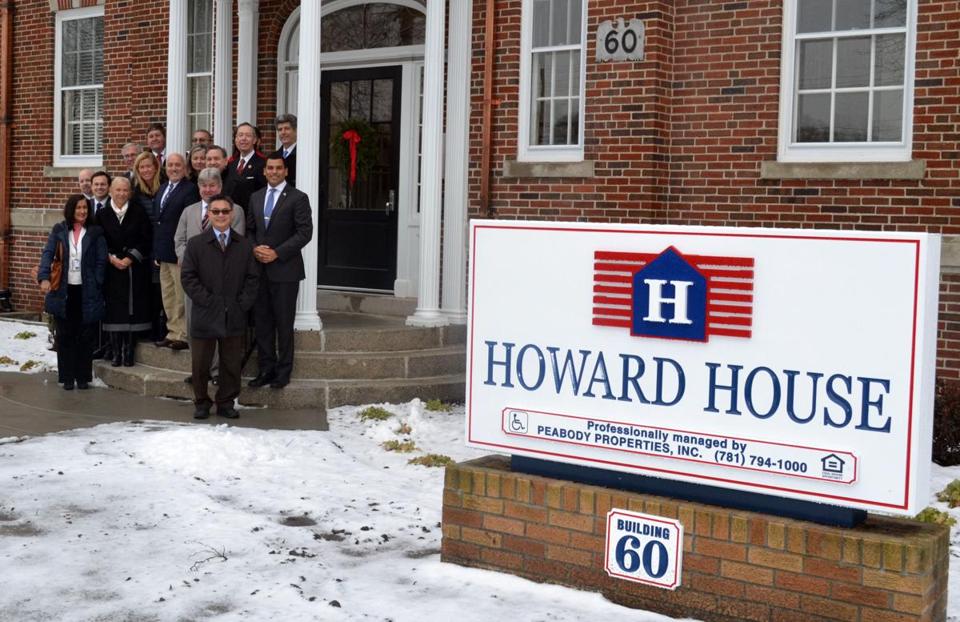
Rent for the 14 single-occupancy apartments at Howard House will be covered by a federal government program. The building has served many functions through the years, including as living quarters for hospital employees, a daycare center, and most recently as storage space. The renovation was the product of a partnership between the City of Brockton, the VA Boston Healthcare System, Peabody Properties, and Windover Construction. A grand opening, including a tour of the building, was held on Dec. 12. Other residents will move in by next month.

The South Shore YMCA will open a fitness and wellness center in a business park in Norwell next month. ZoneWellness will primarily be for the use of those working in Assinippi Park, according to Emily Hubert, who will be the center’s director. It will also be open to members of the South Shore YMCA’s Quincy, Hanover, and Norwell locations. ZoneWellness will offer weekly group exercise classes and employ certified personal trainers and lifestyle coaches. It is being developed in collaboration with Quincy-based FoxRock Properties.

Full Spectrum Benefits, which consults businesses on employee benefits, recently moved its offices from Hanover to Hingham.

https://www.bostonglobe.com/metro/regionals/south/2016/12/16/openings-closings-and-more-south-suburbs/9I1L4fWXc9DmYSbRAQQ2DJ/story.html

SourceThe Boston Globe

88 Hudson revitalizes Chinatown with more affordable homes for working families

Asian Community Development Corporation (ACDC), a 29-year-old nonprofit developer in Boston, is proud to create more affordable homes for working families at 88 Hudson Street in Chinatown. The project will create 51 condos available to families making 60 to100% of the area median income (AMI), with the majority of the condos available to families at or below 80% AMI. The $20 million project has generated 130construction jobs to date and expected to gene

rate an additional 220 jobs during the remainder of the project, including jobs for Chinatown residents. Construction began in May 2016, and ACDC expects completion by late 2017.

88 Hudson is Phase 2 of the Parcel 24 project and when completed, it will represent the culmination of more than a decade of planning, advocacy, and hard work to restore this site to a thriving community in Chinatown once again.

Located on historic Hudson Street in Chinatown, 88 Hudson is one of ACDC’s longtime efforts to revitalize and restore families to a part of Chinatown that was once home to hundreds of immigrants before the highway projects of the 1950s and 60s, which displaced many families living on Hudson Street, including one of ACDC’s founding board members and current board president, Paul W. Lee. “I’m proud to be working with ACDC to create affordable housing for new immigrant families on the site where I have fond memories of growing up in a vibrant, immigrant community over 50 years ago.”

The six-story development will feature 20 one-bedroom units, 22 two-bedroom units, and 9 three-bedroom units, including fully handicap accessible units.  The project team consists of ACDC as the developer, Maloney Properties as the broker and management company, Utile as the architect firm and NEI as the general contractor. The project was financed by the State Department of Housing and Community Development; the City of Boston’s Department of Neighborhood Development, construction financing from Eastern Bank, and predevelopment financing from Community Economic Development Assistance Corporation.

Eligible applicants will be selected through a lottery. Interested parties can sign up for a mailing list that will send alerts about the lottery and when applications will be made available at www.88hudson.com. Questions about the application process should be directed to Maloney Properties.


About Asian Community Development Corporation

The Asian Community Development Corporation (ACDC), a 29-year old community-based organization, serves the Asian American community of Greater Boston, with an emphasis on preserving and revitalizing Boston’s Chinatown. ACDC develops physical community assets, including affordable housing for rental and ownership; promotes economic development; fosters youth leadership development; builds capacity within the community and advocates on behalf of the community. ACDC has developed over $100 million in mixed-use real estate that is home to over 1,200 residents in Boston and Quincy, and provides housing counseling and homebuyer workshops throughout the year. For more information or to sign up for a workshop, visit www.asiancdc.org.


http://sampan.org/2016/12/88-hudson-revitalizes-chinatown-with-more-affordable-homes-for-working-families/

SourceSampan

City celebrates completion of Harborlight House renovation

Harborlight House is complete, and Tuesday afternoon was a time to celebrate.

Officials from Harborlight Community Partners and the city, along with residents, gathered at 1 Monument Square to celebrate the end of the 15-month renovation at the home that provides services and support to elderly residents living on limited incomes.

Along with larger rooms, the home also features a large porch, a treatment room where residents can receive health care, a new elevator, plus an overnight room for staff in case of inclement weather.

The completion of the project last month helps the Harborlight House to continue the mission it’s had for more than 50 years — to provide supportive living for seniors in need.

“I think in every respect, it’s as elegant as we hoped it would be,” said Neil Douglas of First Baptist Church, which founded Harborlight House.

The home now has 30 rooms, 28 of which are occupied, according to Beth Brenner, Harborlight House’s property manager. There used to be 35 rooms, but some of the rooms were “really small,” she said.

“A few of the rooms got larger,” she said, adding that most had twin beds.

Andrew DeFranza, Harborlight Community Partners executive director, said the organization is “very excited” to have the renovation complete, noting the home is its oldest property.

“It’s a wonderful and unique way to provide affordable housing and supportive services in a way that helps elders age in a place and avoid long-term care facilities,” he said.

The home is not considered assisted living, DeFranza said, noting his organization no longer has a certification for that. He added that assisted living has become somewhat of a “lifestyle model” whereas Harborlight is more concerned with providing affordable housing for elders that also meets their needs.

“It’s really an affordable housing setting with a service package built on top of it,” he said.

Harborlight House, a combination of two Victorian homes, has housed seniors with limited incomes since 1963, according to the Harborlight website.

First Baptist Church purchased the home and remodeled it, turning it into a home for seniors that offered not only living quarters, but meals and other services.

It was in the 1990s that Harborlight decided it was time to renovate the home the first time.

Funding for this round of renovations came from multiple sources, including the state as well as the city’s Community Preservation Committee.

http://www.salemnews.com/news/local_news/city-celebrates-completion-of-harborlight-house-renovation/article_36332a94-02f0-5bbc-ade2-197ab319fdb5.html

SourceThe Salem News