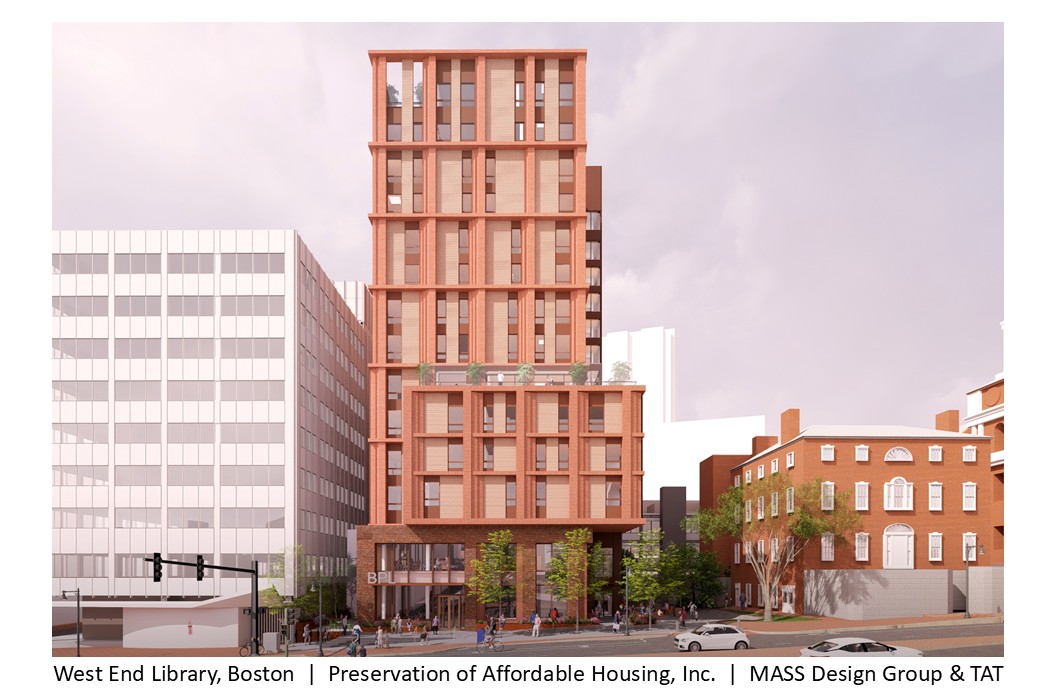
CEDAC Early-Stage Funding in Q4 of FY2025 Will Help Create or Preserve Affordable Housing in Communities Across the Commonwealth




BOSTON (Aug 11, 2022) – The Community Economic Development Assistance Corporation (CEDAC) is proud to announce its work as a financing partner in the production or renovation of 26 affordable housing projects announced during the Baker-Polito Administration’s most recent Winter Rental Round. state funding represents a combination of direct subsidies, state and federal tax credits, and other resources to support the creation and preservation of affordable housing through multiple funding rounds each year. These most recent awards announced on July 26th comprise the biggest funding round of 2022 and include housing for seniors, families, and individuals.
CEDAC’s total commitment of $6.5 million in acquisition and predevelopment financing will facilitate affordable housing development by community development corporations and other non-profit entities. CEDAC provided predevelopment and/or acquisition financing to the following six projects:
Anchor Point Phase 2
Using CEDAC acquisition financing in January of 2018, Harborlight Community Partners, Inc. (HCP) acquired a five-acre site to develop the Anchor Point project. HCP will build 77 new affordable family rental units, all two and three-bedroom units, in two phases. Each phase will consist of a three-story wood frame building with a community room, common laundry and elevator, and the two buildings will be connected by a pedestrian bridge. The first phase of the project has completed construction and celebrated its ribbon-cutting on July 29th. Anchor Point Phase 2 (Phase 2) will include 39 units affordable to low-income households at or below 60% AMI. Sixteen units will be reserved for households at or below 30% AMI, 8 of which will house formerly homeless families. CEDAC provided $948,306 in predevelopment and $1,620,000 in acquisition funds for the project.
150 River Street
Caribbean Integration Community Development (CICD), in partnership with The Planning Office for Urban Affairs (POUA), will construct a 30-unit affordable senior housing development on a vacant, one-acre, City of Boston-owned site on River Street in Mattapan. The project consists of three studio units and 27 one-bedroom units across three floors, as well as 2,800 square feet of common space. Of the 30 units, 11 are designated for 30% AMI households, 15 are designated for 60% AMI households, and four are designated for 70% AMI households. CEDAC provided a predevelopment loan of $750,000 for the project, as well as a $15,000 loan to CICD to support this emerging minority-led community development organization.
Aileron
Neighborhood of Affordable Housing, Inc. (NOAH), is constructing 36 units of affordable rental housing and 2,550 square feet of commercial studio space for artists. The project involves a five-story building with eight units for households at or below 30% AMI, and 28 units for households at or below 60% AMI, plus a common-area work bar and art gallery, shared laundry, and a management office. In response to a neighborhood desire to support local artists, the project will also include 17 artist work-space studios (commercial) of the units, and the building will also include three shared artist studios, a common-area work bar and art gallery, shared laundry, and a management office, a building with 17 artist work-space studios (commercial) available for rent with a preference for Aileron residents. NOAH received City of Boston developer designation with their proposal which will convert the long-neglected property into productive use. At an adjacent property NOAH is developing 7 mixed income ownership units. CEDAC provided $620,000 in predevelopment loan financing.
Carol Avenue Rehab
Carol Avenue Apartments is a 100-year-old property in Brighton, which was purchased by the Allston Brighton CDC in July 2018. The project consists of the preservation of 33 units in three adjacent buildings: 6 Carol Ave. (12 units), 10 Carol Ave. (10 units) and 12 Carol Ave. (11 units). The CDC is proposing an extensive renovation of the property which will include, among other work, new mechanical systems, windows, doors, added insulation, new ventilation, improved accessibility and new fire suppression. CEDAC provided a predevelopment loan of $250,000 for the renovation.
Belcher Apartments
Valley Opportunity Council, Inc. (VOC) will renovate an abandoned historic school building, known as Belcher School, and create 25 units of housing in Chicopee. The Belcher Apartments project will contain 25 units, including 2 one-bedroom units, 17 two-bedroom units, and 6 three-bedroom units. 22 units will serve households whose incomes are at or below 60% AMI, including 7 units reserved for households at or below 30% AMI and, in some cases, transitioning from homelessness. All residents will have access to supportive services and an on-site resident service coordinator will connect residents to various services offered by VOC and other area providers. There will be 3 market rate units and 3 fully accessible units. 43 off-street parking spaces will be created. This project received city support through inclusion in a zoning overlay district designed to assist projects like Belcher Apartments. CEDAC committed a predevelopment loan of $290,000 for the project.
22 Johnston Way
Stow Elderly Housing Corp. (SEHC) is constructing 37 new units and rehabilitating 50 existing units for seniors with supportive services at their Stow Apartments site. Funding sources include state and federal low-income housing tax credits and subsidy funds, plus local Community Preservation Act funds. All 87 units will be restricted for seniors earning less than 60% of AMI, with additional units further restricted for seniors earning less than 30% of AMI. CEDAC provided patient acquisition and predevelopment financing totaling $2,027,500 dating back to 2011, while SEHC sought 40B zoning approvals for the new units. SEHC’s perseverance, and the town’s unwavering support, will help to address the pressing need for high quality affordable homes for seniors in Stow.
About CEDAC
CEDAC is a public-private community development financial institution that provides project financing and technical expertise for community-based and other non-profit organizations engaged in effective community development in Massachusetts. CEDAC’s work supports two key building blocks of community development: affordable housing and early care and education. CEDAC is also active in state and national housing preservation policy research and development and is widely recognized as a leader in the non-profit community development industry. For additional information on CEDAC and its current projects, please visit www.cedac.org.
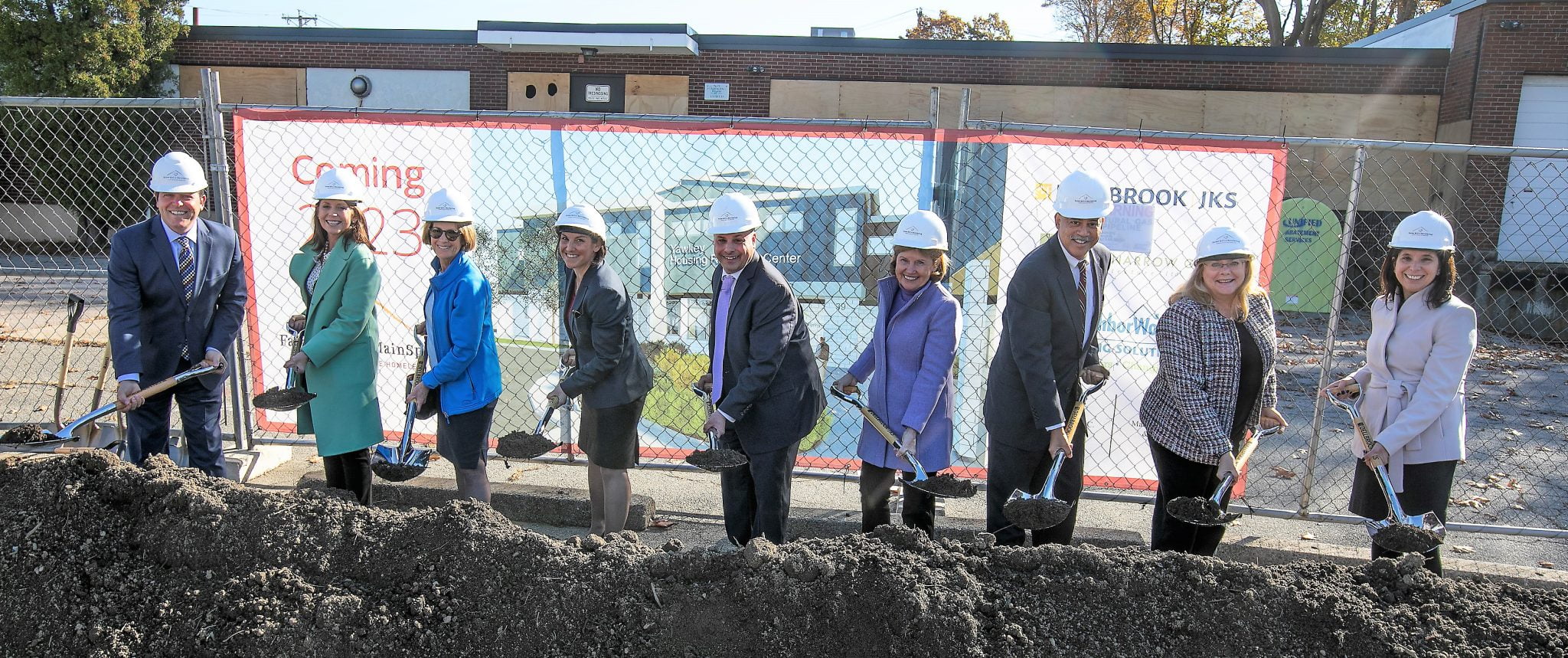
QUINCY, Mass., Tuesday, November 9, 2021] The nonprofit organization Father Bill’s & MainSpring (FBMS) is breaking ground on a new development, the Yawkey Housing Resource Center, which reimagines how a community responds to homelessness. Business and community leaders joined FBMS at the future property site Tuesday, November 9, 2021 to commemorate the start of a project they say could serve as a national model.
The Yawkey Housing Resource Center development, comprised of two new buildings, will be home to a new service-delivery model that adds daytime supports and streamlines services with the goal of ending homelessness on the South Shore and across Southern Massachusetts. The property will include a day center, an emergency shelter, and on-site efficiency apartments.
The new approach would dedicate more staff and resources to homelessness prevention, diversion and rapid re-housing, thus reducing the overall reliance on overnight shelter.
“We are grateful to our generous partners in the private and public sectors who have stepped up to invest in this bold vision,” said John Yazwinski, President & CEO of FBMS. “Our community continues to show us that we are not alone in this fight to end homelessness. One of our mission’s founders, the late Father Bill McCarthy, used to always say to me that our goal is to take down the sign at our shelter and end homelessness, not manage it. Today, our compassionate network of supporters are helping turn Father Bill’s dream into a reality.”
Other speakers at Tuesday’s event included: Arbella Insurance Group President & CEO John Donohue; Maureen H. Bleday, CEO and Trustee of the Yawkey Foundation; Quincy City Councilor Brian Palmucci; Roger Herzog, Executive Director of the Community Economic Development Assistance Corporation (CEDAC); and April Connolly, Chief Operating Officer of FBMS. The Rev. Dr. Adolph H. Wismar, Jr, a co-founder of FBMS and current board member, provided the opening prayer, and the Rev. Rebecca Froom, minister of the United First Parish Church in Quincy, provided a closing blessing.
The administration of Governor Charlie Baker and Lieutenant Governor Karyn Polito, through the Department of Housing and Community Development, has awarded $6 million in capital funding toward construction of the Yawkey Housing Resource Center two-building development.
Last week, FBMS announced the Yawkey Foundation’s gift of $2 million toward the innovative project, which will cost approximately $24 million in total. The property at 39 Broad Street will be called the Yawkey Housing Resource Center, in honor of the Yawkey Foundation’s longtime support of FBMS.
This $2 million commitment from the Yawkey Foundation serves as a lead gift in FBMS’ “A Path Home” campaign to raise $10 million privately toward the project’s capital and programmatic expenses.
The Yawkey Housing Resource Center will be constructed across the street from FBMS’ existing emergency shelter, Father Bill’s Place, which will be knocked down as part of the City of Quincy’s plans to build a new Public Safety Complex. The City of Quincy, in addition to awarding the development $1 million from its Affordable Housing Trust Fund, has signed a 99-year lease with FBMS for use of the site at 39 Broad Street.
The first phase, expected to be completed by the spring of 2023, is a two-story, 16,000 square-foot building will include the following: FBMS program and training spaces; co-located resources including a full, primary-care medical clinic, substance use and mental health services and housing assistance; shelter beds with lockers and showers for guests; a commercial kitchen space and dining area; and administrative offices.
The second phase, expected to break ground in spring of 2022 and be completed by summer of 2023, is a four-story, 20,000-square-foot building comprised of 30 units of permanent supportive housing for formerly homeless individuals. FBMS currently operates more than 600 permanent supportive housing units for formerly homeless individuals, families, and Veterans across Southern Massachusetts.
Supporters of Yawkey Housing Resource Center
Public Funders: Administration of Governor Charlie Baker & Lieutenant Governor Karyn Polito – Department of Housing and Community Development, Executive Office of Health and Human Services; City of Quincy; Quincy Affordable Housing Trust Committee; Quincy Housing Authority; Massachusetts Housing Investment Corporation; Community Economic Development Assistance Corporation (CEDAC); Property Casualty Initiative.
Private Funders: Alvarium Foundation; Arbella Insurance Foundation; Boselli Family; Patricia Conway; John Donohue & Frances Robinson; Eastern Bank; Philip & Deborah Edmundson; The Flatley Foundation; Jack Conway & Co., Inc.; Lisa Lenon & William Stanton; The McKim Family; William Murphy; The Pineau Family; Quincy Mutual Group; Rockland Trust; South Shore Bank; Jack & Kay Spurr; Yawkey Foundation.
Development Team: Property Manager and Service Provider – Father Bill’s & MainSpring; Development Consultant &
Owner’s Project Manager – NeighborWorks Housing Solutions; Architect – The Narrow Gate Architecture; General Contractor – Dellbrook | JKS; Project Attorneys – Hackett Feinberg, P.C.; Matera, Vopat, Matera & Johnson, P.C.
About Father Bill’s & MainSpring
Father Bill’s & MainSpring (FBMS) is the leading provider of services to prevent and end homelessness in Southern Massachusetts. The agency, founded in the early 1980s by a group of interfaith and community leaders, helps more than 5,000 people annually who are experiencing, or at risk of, homelessness, achieve more self-sufficiency through a range of services including homelessness prevention, emergency shelter, employment programs, and more than 600 permanent supportive housing units. FBMS, a proud partner of the United Way of Greater Plymouth County and the United Way of Massachusetts Bay and Merrimack Valley, is a 501(c)(3) non-profit agency with administrative offices in Quincy and Brockton and program offices throughout Southern Massachusetts. For more information, visit www.helpfbms.org.
FOR IMMEDIATE RELEASE
****************************************
Press Release
Contact: Mathieu P. Zahler
617-645-3534
mzahler@mpzdevelopment.com
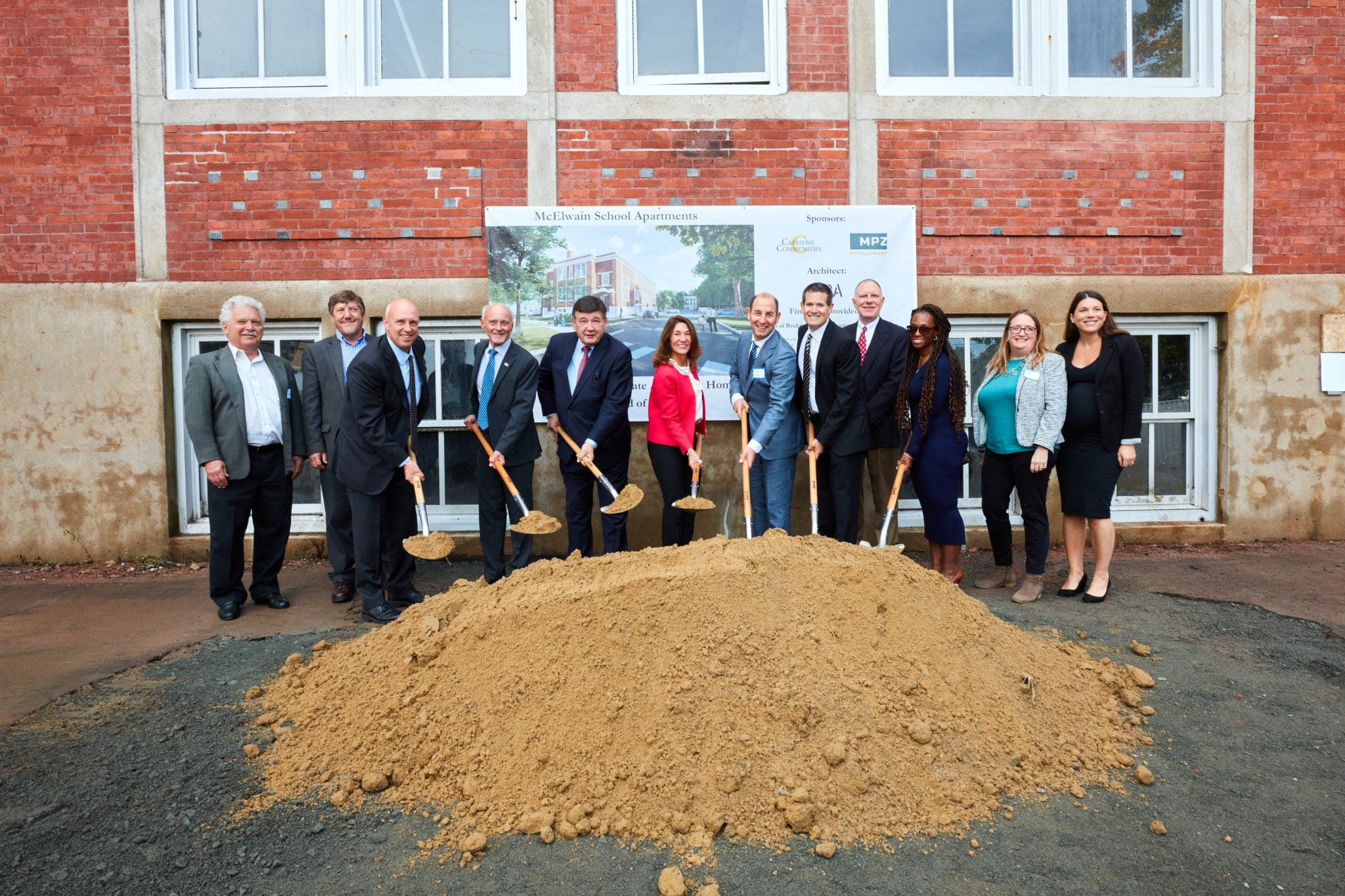
MCELWAIN SCHOOL APARTMENTS GROUNDBREAKING
BRIDGEWATER – Tuesday, October 12, 2021 – Capstone Communities LLC and MPZ Development LLC announce the groundbreaking of McElwain School Apartments, a mixed-income 57-unit apartment community located on Main Street in the Town of Bridgewater. The groundbreaking ceremony was held on Tuesday, October 12th at 10:15am at 250 Main Street, Bridgewater, MA. McElwain School Apartments will serve the hard-working families and individuals who are looking for high quality and mixed-income housing in Bridgewater. This type of mixed-income project is the first of its kind in the Town of Bridgewater offering multiple types of affordable housing options in both new construction and rehabilitated buildings.
McElwain School Apartments provides fifty-seven (57) apartment homes with thirteen (13) one-bedroom units, thirty-six (36) two-bedroom units, and eight (8) three-bedroom units. Six (6) apartments are rented to households at market rates. 42 apartments are rented to households earning no more than 60 percent of area median income ($42,000-$64,740 depending on household size), three (3) apartments are rented to households earning no more than 50 percent of the area median income ($35,000-$53,950), and six (6) apartments are being rented to households earning no more than 30 percent of area median income ($21,000-$32,370).
The $28.9 million development is located along Main Street/Route 28 outside Bridgewater Center. The development is not far from the Bridgewater Town Green and a short walk to several local restaurants including the Juice Mill, Restoration Coffee, and the Greyhound Tavern. The McElwain School Apartments’ name pays homage to William H. McElwain (1867-1908), the founder of the William H. McElwain Shoe Company, a shoe manufacturer who was one of the major employers in Bridgewater at the turn of the 20th century.
The Town of Bridgewater through its Community Preservation Act provided $1.345 million in loans for the project.
“In 2017 Matt Zahler and Jason Korb had an ambitious vision to take an abandoned public school and make its hallways hum with activity again.” said Michael Dutton, Bridgewater Town Manager. “The Baker-Polito administration recognized that vision and together with Capstone Communities LLC and MPZ Development LLC, made it happen. The people of Bridgewater also saw the wisdom of creating quality housing for those who are challenged to find adequate housing in this market and granted over $1 million in Community Preservation Act funds to get this project done. We are thrilled to see life in this old building. And we are thrilled with the team Matt and Jason have put together to get it done.”
Massachusetts Housing Investment Corporation (MHIC), one of the development’s many financing partners, issued a $14.4 million construction bridge loan; the loan was also participated in by The Life Initiative. In addition to the construction loan, MHIC also provided $10.6 million in federal tax credit equity, solar equity, and federal historic tax credit equity for the project. The Cape Cod Five Savings bank purchased the project’s State Low Income Housing Tax Credits, and the New York Life Insurance Company purchased the project’s State Historic Tax Credits. The Community Economic Development Assistance Corporation (CEDAC) will provide $600,000 in financing for the Project. The Department of Housing and Community Development (DHCD) is providing the State and Federal Low Income Housing Tax Credits and $6.4 million in loans for the development. The Massachusetts Housing Partnership (MHP) is providing a $5.3 million permanent loan for the project.
“Our administration is excited for the groundbreaking of yet another project that will result in new, needed, high-quality, affordable housing units that meet the needs of Massachusetts families of a wide range of incomes,” said Lt. Governor Karyn Polito. “Since the start of our administration, we’ve made affordable housing a top priority, and the McElwain School Apartments represent the best of efforts to be creative and reuse a historic property, which will breathe new life into an important part of town, while bringing new and desperately needed affordable housing to the community.”
“Producing more housing of all types has been a key area of focus since the start of the Baker-Polito Administration, and I want to congratulate the development team, the town of Bridgewater, and the project’s financing partners for the collaborative and innovative approach they took to get to this point today,” said Housing and Economic Development Secretary Mike Kennealy. “We used the term ‘Housing Crisis’ long before the COVID-19 pandemic and the public health emergency put on full display the consequences of an inadequate housing supply. But thanks to projects like this, we continue to make progress toward addressing this crisis through new housing opportunities that support the Commonwealth’s families and our economy.”
“The Life Insurance Community Investment Initiative (the Life Initiative) is delighted to have been a partner with Jason Korb and Mathieu (Matt) Zahler in helping bring the redevelopment of the McElwain School to fruition.” said Michael Gondek, Vice President of TLI. “We’d particularly like to congratulate the Town of Bridgewater for its noteworthy financial support for the 57 unit of affordable rental housing to be produced by the adaptive reuse of the former school, and the construction on the site.”
“CEDAC is pleased to join our state and local funding partners to celebrate the groundbreaking of this important new multifamily housing in Bridgewater, said Roger Herzog, CEDAC executive director. “We congratulate developers Jason Korb and Mathieu Zahler and commend them for the inclusive design to provide accessible housing units to support people with mobility impairments to live safe, independent lives in this community setting.”
“MassHousing is pleased to be part of this transformative effort to take an underutilized school property and create 57 new apartment homes for households with a range of incomes who will be able to live affordably in Bridgewater,” said MassHousing Executive Director Chrystal Kornegay. “With strong support from the town of Bridgewater, the development team is going to foster stable housing and economic opportunity for the individuals and families who will live at the McElwain School.”
“We congratulate Capstone Communities and MPZ Development for executing their transformative vision to turn a vacant school, three-family house, and an overgrown lot into a vibrant residential community,” said Kathy McGilvray, MHIC Director of Investment. “The McElwain School Apartments is a great example of pairing adaptive reuse of historic buildings with energy-efficient new construction. The development also represents the first time Bridgewater has used tax credit financing. MHIC is pleased to have been able to provide a comprehensive debt and equity financing package for the project.”
“Congratulations to Jason Korb and Capstone Communities, Matt Zahler of MPZ Development and the Town of Bridgewater for getting started on this exciting development,” said Clark Ziegler, executive director of the Massachusetts Housing Partnership. “As a mission-based lender, we strive to support housing like this, housing with strong local support and developers who work with the community to preserve a local landmark while adding much-needed affordable housing for individuals and families.”
“I am very pleased to have been invited to speak at the groundbreaking for this historic initiative to establish 57 new affordable housing units at the McElwain School in the Town of Bridgewater,” said Dean of the Massachusetts Senate Marc R. Pacheco (D-Taunton). “This new housing initiative will refurbish and renovate the long-vacant property with updates designed to preserve the structure’s architectural style and complement the historic quality of the surrounding area. Many thanks to the developer and to the Town of Bridgewater for utilizing federal and state housing support that will minimize the local resources needed to achieve impressive progress that will benefit the community.”
Jason Korb, Principal of Capstone Communities LLC and Mathieu P. Zahler, Principal of MPZ Development LLC added, “We are excited to officially break ground on McElwain School Apartments, which will provide urgently needed mixed-income housing for the Bridgewater community. Over the past four years, we worked tirelessly on the financing, design and construction of McElwain School Apartments and we are proud to provide such high-quality housing at rent levels that hard-working families can afford. We are especially thankful to the Town of Bridgewater and all the other public and private lenders that made the McElwain School Apartments possible.”
In addition to Jason Korb and Mathieu P. Zahler, speakers at the opening included:
Kimberly Williams, Assistant Town Manager, Town of Bridgewater
Fred Chase, Town Council Vice President, Town of Bridgewater
Honorable Lieutenant Governor, Karyn Polito, Commonwealth of Massachusetts
Honorable Senator Marc Pacheco, Massachusetts State Senate Dean, Massachusetts Senate
Honorable Michael Kennealy, Secretary of Housing and Economic Development, Commonwealth of Massachusetts
Clark Ziegler, Executive Director, Massachusetts Housing Partnership
Mark Teden, Vice President of Multifamily Housing, MassHousing
Kathy McGilvray, Director of Investment, Massachusetts Housing Investment Corporation
Michael Gondek, Vice President, The Life Initiative
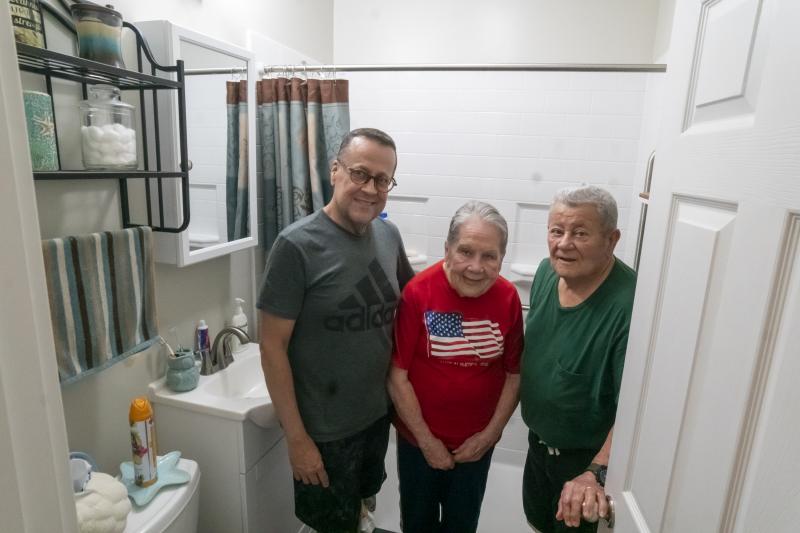
By late September 2017, Roberto Camacho breathed a sigh of relief. Earlier that month, he had successfully helped his elderly parents relocate from their hometown of Yauco, Puerto Rico, to the one-bedroom home he was renting in Springfield, Massachusetts. Roberto had made this same move on his own several years prior, to take a job with the Gándara Center.
Less than two weeks after they arrived, Hurricane Maria devastated the island. Roberto believes the move saved his parents’ lives. Help was especially slow to reach Yauco. And his parents, Tony and Magda, lived alone and have chronic health challenges.
It was a phone call from Tony that spun their relocation into motion. “My father told me he didn’t want to drive anymore,” Roberto recalls. “After grocery shopping with my mother, he had a blackout and didn’t know where he was. They were lost for three hours, driving in his hometown.”
His father, who has type two diabetes and age-related memory loss, had been caring for Magda, who has depression and dementia.
“Something in my heart said, well, I have no choice,” Roberto says, of his decision to become his parents’ caregiver—a choice that meant resigning his job as a care manager for Commonwealth Care Alliance. “My parents left everything, they just came with a couple of bundles. And two dogs.”
The trio moved again in November 2017, when Roberto purchased a larger home in Springfield in what they believed to be a quiet neighborhood. Unfortunately, it wasn’t.
“The fire trucks took our street as a shortcut,” Roberto says. “They passed by three, four, five times a day with sirens very high. My mother got very anxious every time she heard the sirens. So I was forced to sell.”
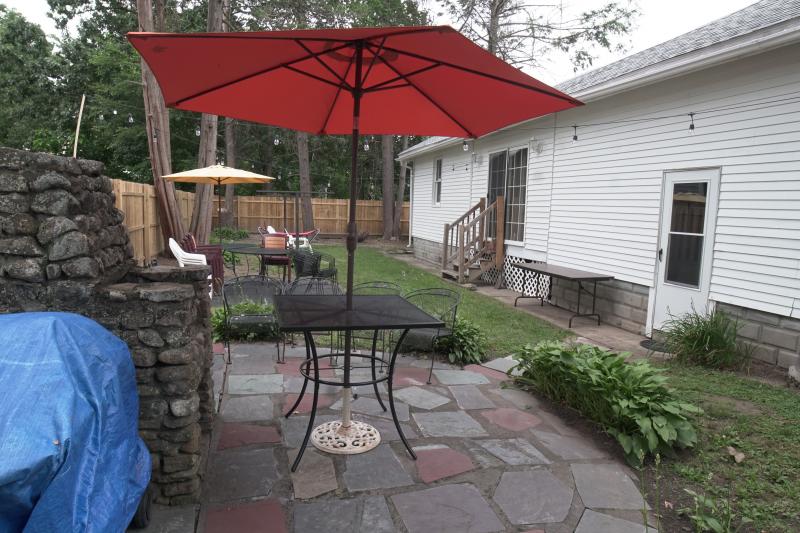 Roberto feels lucky that he was able to buy a home in the summer of 2020, in the middle of the Covid-19 pandemic, in a truly quiet spot. But the 1931 one-floor, one-bathroom home in Springfield had a drawback that soon became a worrisome safety issue: an old antique tub with high sides.
“My parents were having difficulty getting in and out of the tub, my father was close to falling several times,” says Roberto. “I realized I needed to get rid of that tub, but I was broke!”
With his experience as a care manager, Roberto was familiar with local resources in the community. He began looking for a program that would cover the costs—nearly $25,000—to make the bathroom accessible.
“And I couldn’t find those free services! They don’t exist anymore. I was happy to find a different resource opportunity with Way Finders,” Roberto says, of the Home Modification Loan Program (HMLP).
Roberto had connected with Way Finders Homeownership Advisor Amneris Moreno Pagan, who explained how the HMLP works: Funded by the state, the program aims to help seniors and individuals with disabilities to live more independently and comfortably at home. It provides financing—a 0% interest, deferred payment loan up to $50,000—to homeowners or landlords so they can adapt or modify a home for increased safety and accessibility, such as in the kitchen or bathroom.
General home repairs are not eligible; the modification needs to directly relate to a person’s ability to function on a day-to-day basis, as documented by a professional.
Those who receive funding are not required to make monthly payments. Payment of the HMLP loan is required only when the property is sold or the property title is transferred to someone else or to a Trust (or if any condition of the loan agreement is not met).
“I analyzed the situation, and it was perfect for me,” Roberto says. “I said, ‘Well, let’s do it.’”
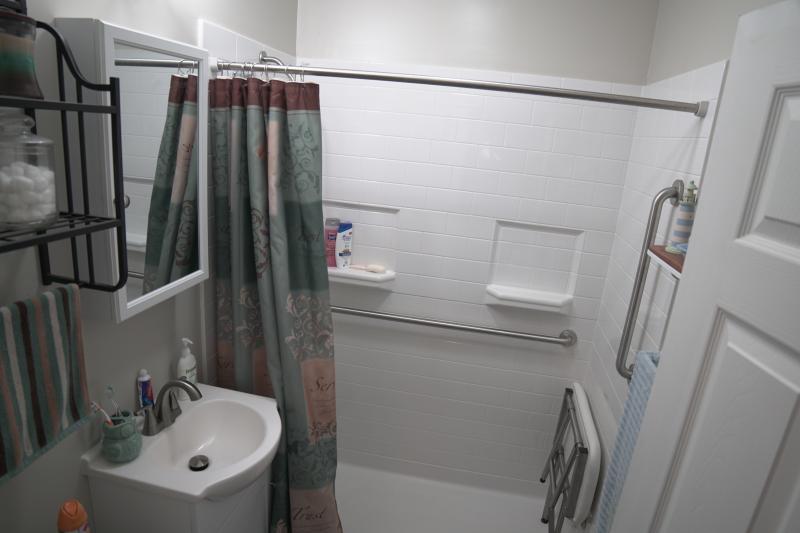 A few months after deciding to go for it, Roberto secured the loan and lined up a contractor. Then within three weeks, the contractors replaced the tub with an open shower and closed off a low window. They also installed grab bars, a higher toilet, and a handheld showerhead. And for greater ease of access, the narrow doorways to the bathroom and his parents’ bedroom were both enlarged.
“Thanks to Way Finders, my parents can enjoy a fully accessible bathroom,” says Roberto. “They feel more secure and confident. The safer environment provides them and me with peace of mind. God bless you!”
“I am happy,” says Tony, of the impact the changes brought to his daily life.
Roberto praises Amneris for her help. “She was very efficient and guided me through the whole process with a high level of professionalism. Every time I needed to speak to her, she answered. She replied to my emails and texts within minutes.”
Roberto is eager to return to the workforce but, until then, is glad to be able to care for his parents in the comfort of his home—with less worries for their safety.
The Baker-Polito Administration, along with the Community Economic Development Assistance Corporation (CEDAC) and its affiliate Children’s Investment Fund (CIF), recently announced $7.5 million in Early Education and Out of School Time Capital Fund (EEOST) capital improvement grants. Lt. Governor Polito joined Massachusetts Department of Early Education and Care (EEC) Commissioner Samantha Aigner-Treworgy at East Boston Social Centers to announce the 36 organizations that received grant awards to fund expenses for key COVID-19-related facility challenges, emergency repairs, and/or accessibility upgrades.
EEC, CIF, and CEDAC manage the EEOST Capital Fund. The program traditionally provides grants of up to $1 million to non-profit childcare centers seeking to renovate or develop new high-quality learning spaces for children living in low-income communities. The FY21 EEOST funding round was modified to award grants between $100,000 and $250,000 to provide early childhood education and out-of-school time programs with the resources they need to make improvements and emergency repairs that address health and safety issues.
“The FY21 EEOST grant awards are funding critical improvements needed during the COVID-19 pandemic while strengthening the Commonwealth’s childcare infrastructure,” said Theresa Jordan, Children’s Investment Fund’s director. “This funding acknowledges that all children, regardless of family income or circumstances, should be educated in high-quality physical environments that support healthy development and learning.”
“Many families rely on essential childcare services to return to work during the public health crisis,” said Roger Herzog, CEDAC’s executive director. “We are grateful to the Baker-Polito Administration for funding health and safety upgrades that are critical to the well-being of children, parents, and staff alike.”
One of the funded projects is the Boys & Girls Clubs of Stoneham & Wakefield (The Clubs), which has operated an out-of-school time program in their Stoneham building for nearly 50 years and has a licensed care program for up to 100 children. The Clubs received $225,000 to convert storage space into two accessible restrooms and install a new Heating, Ventilation and Air Conditioning system. It will also upgrade all bathrooms to have touchless controls.
The Clubs provide educational afterschool and summer programming to over 3,000 members across two locations and a teen center each year. The organization works with youth aged 5 to 18 from various economic, social, and family circumstances.
“The Clubs have been building pillars in the local community and across Greater Boston for nearly 50 years. We are proud to provide an environment of stability, consistency, and physical and emotional safety for our youth members,” said Adam Rodgers, Boys & Girls Clubs of Stoneham & Wakefield’s chief executive officer. “We are grateful for this funding, which will enhance the accessibility and safety of our Stoneham location.”
About CEDAC
CEDAC is a public-private community development finance institution that provides financial resources and technical expertise for community-based and other non-profit organizations engaged in effective community development in Massachusetts. CEDAC’s work supports two key building blocks of community development: affordable housing and early care and education. CEDAC is also active in state and national housing preservation policy research and development and is widely recognized as a leader in the non-profit community development industry. For additional information on CEDAC and its current projects, please visit www.cedac.org.
About Children’s Investment Fund
Children’s Investment Fund’s (CIF) mission is to improve the quality of and expand access to early childhood education and out-of-school-time programs for children from low- and moderate-income families. In order to broaden the impact of its work, CIF also seeks to support affordable housing for low-income families through place-based, two-generation, and other strategies that result in safer, healthier, and more stable environments in which to raise young children. The organization is affiliated with the Community Economic Development Assistance Corporation (CEDAC). For additional information on CIF, please visit www.cedac.org/cif.
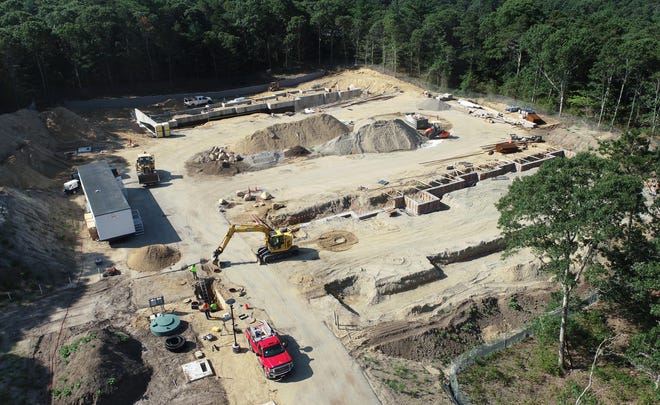
Earlier this month, the Board of Selectmen balked at a property owners’ request to join them in what is known as a “friendly” Chapter 40B affordable housing application to the state, known as a Local Initiative Program.
Under that program, developers and communities indicated they will work cooperatively, with technical assistance from the state, to create affordable housing at a higher density than allowed under municipal zoning. The Chapter 40B statute allows greater density development, as long as 20% to 25% of a project’s units qualify as deed-restricted affordable rentals or homeownership.
The Harwich development proposal, which will likely still be submitted as a traditional Chapter 40B, included 96 apartments — 24 listed as affordable — in two three-story apartment buildings on 9.3 acres. While there were many reasons the selectmen gave for rejecting the request, at least one board member expressed a point of view that rings particularly hollow to affordable housing advocates.

“I don’t want to salve our conscience by creating massive projects and say we’ve warehoused them (those renting at affordable rates) there,” said Selectman Don Howell. He prefers a strategy of creating affordable housing that is scattered across town in smaller developments or single homes.
Affordable housing experts said the combination of a hot real estate market during the pandemic and the rise of short-term rentals, has decimated the year-round rental and affordable housing markets. The Cape is now facing a housing crisis that could radically change communities forever as the working class vanishes like a sandcastle beneath a wave of high housing costs. Larger developments are the only way to stave off that exodus, they say.
“From my perspective, from having worked on this issue and understanding the finance and development aspect, there is no other way on the Lower Cape than building projects that can house 40 to 70 families. Any other proposal is just not economically viable,” said Jay Coburn, president and CEO of the Community Development Partnership, which promotes affordable and community housing and the local economy as ways to retain workers and families on Cape Cod.
Combining high-density housing with sewers and other effective wastewater treatment means lowered development costs, less impact on the Cape’s fragile ecosystem, and more wastewater treatment for less money, Coburn said.
“This is the only path forward,” he said.
Despite qualms about changing the traditional single house-on-a-single lot look of Cape Cod, bigger projects are in the pipeline, including on the Lower and Outer Cape, which has been especially resistant to those proposals.
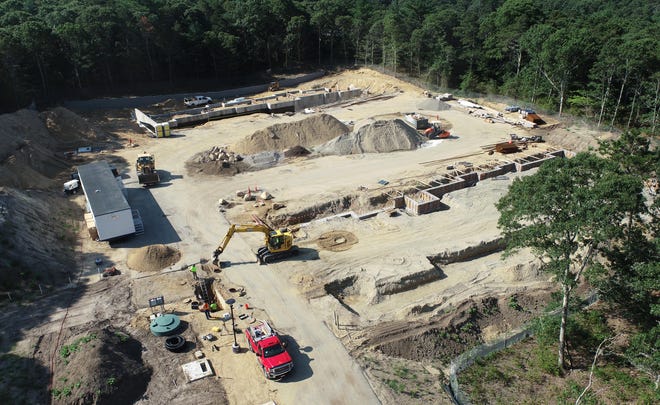
They include 30 apartments now under construction in Brewster with a proposed 90 bedrooms of affordable housing on 16 acres planned, both on town-owned land; Provincetown is evaluating three bids it received to build 60 units on the former VFW property. Wellfleet just issued a request for proposals on 46 units on a 6-acre site.
“I believe that there is a convergence of facts from different points of view, different perspectives, leading towns to understand that bigger isn’t necessarily bad, and that it is absolutely necessary,” said Alisa Magnotta, CEO of the Housing Assistance Corporation.
Paul Ruchinskas, who worked on affordable housing at the Cape Cod Commission for 15 years, said momentum is building to solve the problem, including support for larger developments.
“In the last four or five years, we’ve seen more focus, attention and support around the issue since any time since I started in 2001,” said Ruchinskas, who is now retired. “Unless we do something significant (the Cape) will turn into a place of the rich and second-home owners. It is getting closer and closer to that.”
“Forty units is a small project to get a developer to do and get it funded,” said Provincetown Community Housing Specialist Michelle Jarusiewicz. “Once you get above 40, you’re going to attract attention.”
More large developments across the Cape may help to bring prices down, Jarusiewicz said, as developers begin to realize savings from economies of scale by having multiple projects to work on.
Larger projects struggle against public, especially neighbor, opposition, and what Luther Bates, chairman of Chatham’s Economic Development Committee, called the “ponderous” pace of town government.
A commercial fisherman and business owner, Bates has experienced the implications of the housing crisis firsthand. His committee has focused on ways the town could reduce costs for families and the workforce and help them stay in town despite skyrocketing housing costs.
Six years ago, the committee produced a long list of recommendations that included things such as free or subsidized child care, only to see progress on a handful of those initiatives.
Cape Cod & Islands Association of Realtors data showed a 74.5% increase, to $1.2 million, in the median sales price of a single-family home for the first quarter of 2021 compared with 2020. Provincetown’s median sales price was $1.5 million for that same time period.
Bates said those who once were hanging in, living with family or crowding in with friends hoping to survive long enough to afford a home, are now looking elsewhere.
The business community is seeing the impact with businesses on shortened hours and reduced workweeks to deal with a labor shortage exacerbated by the pandemic, but whose underlying causes are rooted in lack of housing.
Bates compared Chatham’s efforts in the face of the crisis to building a seawall against a rising tide one little brick at a time.
“Forty to 50 bricks at once, that would be effective,” Bates said.
“Larger rental developments take a longer time to grow community and town meeting support,” said Falmouth Affordable Housing Committee Chair Edward Curley in an email.
He pointed to Little Pond Place with over 40 units that started a decade ago with the town purchasing the land and just started renting to tenants this year.
“I think 40-50 units will be the upper level for affordable housing on Cape Cod — (it’s) just the nature of the area and the communities,” Curley wrote.
Eastham’s focus in the past was to buy single-family units and convert them to affordable homeownership with a deed restriction that capped the resale at a price set by the state, Town Planner Paul Lagg said. The town also owned some rental duplexes and helped buy down the market rate on homes to make them more affordable.
Eastham resisted large-scale projects and it took 18 years from the land purchase for it to finally build 65 rental apartments that included 50 for residents earning up to 60% of median income and 15 that were for those earning up to 120% of median income.
Lagg said the town was able to counter the criticism and gain acceptance by spreading the units out among multiple freestanding buildings whose design was modeled on traditional Cape Cod homes.
“Higher density balanced with good layout and design,” Lagg said.
“Forty units in one building is different than 40 in four buildings,” Jarusiewicz said.
Even so, long timelines are typical of many town projects that use state and federal money, housing advocates say.
Brewster is having an affordable and community housing boom right now (for those earning up to 100% of median income) with 30 apartments under construction off Brewster Road, and 90 more bedrooms are in the planning stage now off Millstone Road — both on town-owned land. A private developer is also working with the assistance of the town on Serenity, a renovation of a former long-term care facility on Route 124 into 132 apartments, of which 27 will be set aside as affordable.
It took over 15 years for the 30-apartment Brewster Woods project to reach construction and 16 years for the project off Millstone Road to get to the planning stage.
“I would say that affordable housing and community housing are challenging,” said Brewster Housing Coordinator Jill Scalise. “It takes time to create units that don’t affect community character.”
By comparison, Serenity, which reuses an existing property, has taken about a year to move into construction, Scalise said. A similar development is underway on West Road in Orleans with the proposed renovation of the former Cape Cod 5 office building into 62 affordable housing units.
Scalise said he sees those larger developments in Brewster as evidence of the community’s desire to solve the housing crisis.
“There is a desire to have more housing options and meet housing needs to keep the community character we have,” Scalise said. “If we don’t address housing challenges, we’ll lose the community we have now and I do see more momentum to create housing.”
August 16, 2021 — Nonprofits across Massachusetts, in collaboration with community development corporations and others, recently were awarded $11,578,537 to support affordable housing developments in cities and towns from Boston to Northampton.
“These commitments, which represent a strong second quarter of lending activity, support a variety of affordable housing projects that are tailored to the needs of the community,” said Roger Herzog, executive director the Boston-based Community Economic Development Assistance Corporation, a public-private community development finance institution.
“We are proud to support our non-profit development partners as they create affordable and supportive housing for families, seniors, and veterans. These projects will help ensure that some of our most vulnerable populations have a safe, affordable place to call home.”
Receiving funding were the following:
Revere’s newest affordable housing complex held a ribbon cutting ceremony on July 22 The building, known as 571 Revere, the former site of the Cove Bar on Revere Street, is the latest initiative by The Neighborhood Developers to provide affordable housing to Revere’s residents. At the beginning of the ceremony, Rafael Mares, the executive director for The Neighborhood Developers, underscored the need for the mixed-income development. As he noted, more than 2,000 market-rate rental units have been completed, started, or planned in the Waterfront square development. With the completion of 571 Revere, The Neighborhood Developers integrates 51 affordable rental units and creates a physical connection to the existing neighborhood. The organization hopes that the project’s bright future will inspire more conversations about community well-being.
The Neighborhood Developers designed 571 Revere to respond to a vast variety of needs across the City of Revere. The development includes one, two, and three-bedroom apartments with varying affordable rent levels
571 Revere demonstrates The Neighborhood Developer’s continued commitment to the city of Revere. “571 Revere builds upon our successful community development work in Revere, where, since 2010, we have served more than 1,000 residents through our workforce development programs, preserved and created 137 affordable rental homes, funded and rebuilt public parks and public art, expanded our workforce development programs of CONNECT, and hosted many community events,” said Rafael Mares. The ribbon cutting ceremony shall be an especially auspicious occasion for the City as it begins to pull itself up from the chaos of the Covid-19 pandemic.
“571 Revere stands as testament to what can be accomplished when government, developers, and other community stakeholders work strategically for the benefit of our neighborhoods,” said Mayor Brian M. Arrigo. “Offering a wide array of units restricted to certain income levels and just steps away from the beach, this building replicates the unique configurations that have made Revere a city we all love. A majority of these units have been offered to long-time Revere residents, and I am proud of the work we have done throughout the course of my administration to further our promotion of housing affordability,” said Mayor Brian Arrigo.
List of All Funders:
• Boston Financial Investment Management
• Department of Housing & Community Development (DHCD)
• HOME funding provided by the North Suburban Consortium through the Malden Redevelopment Authority
• Santander Bank
• MassHousing
• Community Economic Development Assistance Corporation (CEDAC)
• Dorfman Capital
• LISC Boston
• The Life Initiative
List of Project Partners:
• Contractor: NEI General Contracting
• Architect: Arrowstreet
• Development Consultant: Peter Munkenbeck (pronounced “Mun-ken-beck”)
• Legal Counsel: Klein Hornig; D’Ambrosio Brown; and Noble, Wickersham and Heart
• Owner’s Rep.: Matt Munkenbeck
• Environmental Engineer: Irwin Engineers
• Civil Engineer: Hancock Associates
• Landscape Architect: Off-Shoots
• Geotechnical Engineer: The Geotechnical Partnership
• Property Manager: Winn Residential
• Accountant: AAF CPAs
• Metro Housing Boston: overseeing the rental assistance that makes homes affordable