Lowell’s House of Hope opens new Shelter (Video)

The House of Hope celebrated a milestone expansion on Tuesday that has nearly doubled the number of homeless families it can serve.

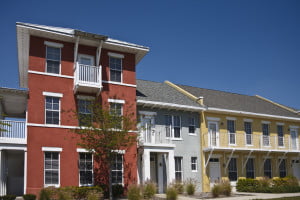
The nonprofit organization has opened a new 31-family property at 520 Fletcher St., which formerly housed a home for elderly women. With the help of $2.8 million in state aid, House of Hope was able to purchase, renovate, and reopen the facility in just over a year, and the expansion will continue with another project underway on Smith Street.

House of Hope’s leaders chalked their success up to vibrant partnerships with the Department of Housing and Community Development and several community organizations.

“It’s the desire of everybody in this community to reach out to the poorest of the poor,” said Deb Chausse, executive director of the House of Hope. “The want a vehicle they can trust to do that and House of Hope can.”

Chrystal Kornegay, undersecretary of the DHCD, attended the ceremony, inside the building’s elegant dining room. She credited the program, and others of its kind, for the sharp reduction in the number of homeless families the state had housed temporarily in hotels.

In 2015, there were approximately 1,500 homeless families lodged in hotels and motels. That number has dropped to just a handful, Kornegay said.

“The 24-hour access to services and support you can do here, and not in a hotel,” she added. “The ability to help people as they encounter different obstacles and struggles as they’re on their path to greatness, you’re very limited to do that in a hotel or motel.

“In addition to shelter, the Fletcher Street facility also provides workforce development training and a room for early childhood education.

Mabel, a resident of the building who spoke at the opening ceremony, said turning to the House of Hope was the best decision she had ever made and that her job at the on-site culinary program was the first one she had enjoyed.

“Each member of the team has played an important role,” she said. “This place has changed my life for the better.”

State Sen. Eileen Donoghue and City Councilor Rita Mercier heaped praise on Chausse and other members of the House of Hope team for their accomplishments in the face of a homelessness problem that is too often viewed as intractable.

“You’re saving lives and I couldn’t be happier or prouder,” Mercier said.

Read more: http://www.lowellsun.com/breakingnews/ci_31150153/lowells-house-hope-opens-new-shelter#ixzz4nOKrfC4O

Read more: http://www.lowellsun.com/breakingnews/ci_31150153/lowells-house-hope-opens-new-shelter#ixzz4nOKnZv6i

SourceLowell Sun

On the right track: New home for Metropolitan Boston Housing Partnership

This fall, the Metropolitan Boston Housing Partnership — a nonprofit and the state’s largest regional provider of rental-housing voucher assistance — will get a new home of its own: a vacant two-acre parcel formerly owned by the MBTA, across from the Roxbury Crossing Orange Line station.

Mission Hill Neighborhood Housing Services is building out a five-story building that will create 40 units of affordable housing an a 27,000-square-foot office for MBHP. The project is partially funded with $2.75 million from Boston Mayor Martin J. Walsh’s $39 million commitment toward affordable housing projects, as well as an expected $2 million from a MBHP capital campaign.

Enlarge

A formerly vacant two-acre parcel owned by the MBTA at Roxbury Crossing will soon be the… more

Courtesy rendering

Chris Norris, MBHP’s executive director, said the organization wanted to be located along the Orange Line for easier access to the 25,000 families it serves annually. “To both be on a transit node closer to the majority of families we work with, as well as closer for our employees, many of whom live in or around the neighborhood, was a key part of our decision to relocate,” Norris said.

The organization’s longtime home has been 125 Lincoln St., on the edge of downtown Boston’s Leather District. But in the past 15 years, MBHP’s rent has doubled, Norris said.

“We wanted to be able to take control of or own destiny, fiscally, and lock into a mortgage and have the opportunity to build equity in something that we owned,” he said.

The housing partnership expects to move in this fall.

“It’s an exciting opportunity for us to be, if you will, on the ground floor of what the city and state have prioritized as a key development corridor,” Norris said. “We’re very excited.”

Margulies Perruzzi Architects is the interior architect for MBHP’s office.

https://www.bizjournals.com/boston/news/2017/07/14/on-the-right-track-new-home-for-metropolitan.html?ana=e_bost_real&s=newsletter&ed=2017-07-14&u=rwmEzJfOBoac14kG99ibvLXYsMp&t=1500045845&j=78549271

SourceBoston Business Journal

Howland mansion coming back from the brink of destruction

The stately 10,000-square-foot red brick mansion at 38 S. Sixth St. in New Bedford is a shell of its former self.

On the outside, scaffolding flanks the Federal-Greek Revival and plywood remains on what were the home’s 64 windows.

The interior is a maze of wooden frameworks and staircases, giving few clues about what it will look like when it is completed in November.

Standing on the ground floor, construction superintendent Phil Pereira points to the charred beams of the John Howland Jr. house.

“They’re like this all the way up all the way into the roof,” he says.

The initial damage caused by a three-alarm January 2005 fire has been compounded over the years by exposure to the elements and neglect, and there is little left of the building’s interior but studs and flooring. F&S Enterprises Inc., a Rhode Island company, bought the home after the fire in 2005 and stripped it of its architectural details, including the mantelpieces.

In fact, so much had been stripped that the house was on the verge of collapse, says Patrick Sullivan, the city’s director of Planning, Housing and Community Development. The city, together with the Attorney General’s office, in 2008 started pressuring the owner to make repairs or sell.

“It was stripped, that’s true,” says Michael Galasso, of nonprofit developer The Resources Inc. (TRI). “When we got involved, everything was gone from the interior — no plumbing, no doors.”

F&S applied for demolition in April 2010, but the city’s Historical Commission voted 5-0 that December that the building was architecturally significant and preferably preserved.

The Waterfront Historic Area League bought the home in 2010 for $237,000. WHALE stabilized the property, including a new roof, putting back the original roofline seen in historic photos.

Over the years, TRI, WHALE and architect Christopher “Kit” Wise have worked on plans and have pieced together the $2.9 million it will take to restore life to the Howland house. D.F. Pray has been hired as general contractor.

ABOUT THE JOHN HOWLAND JR. HOUSE:

  • Built in 1834 for John and Sarah Howland Jr.
  • Exceptional example of transitional Federal/Greek Revival style architecture and the substantial wealth that was
    made in the whaling industry in New Bedford.
  • Contributing building in the County Street National Register Historic District.
  • One of a complex of three remarkable and extremely rare, brick mansions built for the Howland family
    on South Sixth Street.

ABOUT THE HOWLAND FAMILY:

  • The Howland family was among New Bedford’s most prominent and wealthy families. A native of New Bedford, John Howland Jr. partnered with his brother James in “J & J Howland Merchants” on Middle Street and he was one of 15 original trustees of the New Bedford Institution for Savings. The Howland family, unlike many of their Quaker counterparts, chose to build their grand mansions and fine homes along Sixth Street. The County Street Historic District Nomination states that, of the city’s wealthiest men, only members of two branches of the Howland family – George Howland Sr. and Jr. and John Howland Sr. and his sons John Jr. and James II – did not build on County Street. One of Howland’s relatives even “warned his children that building a house on County Street would expose them to ‘pernicious influence’.

http://www.southcoasttoday.com/news/20170708/howland-mansion-coming-back-from-brink-of-destruction

SourceSouth Coast Today

Massachusetts Sets Record In Affordable Housing Preservation

Massachusetts preserved more than 6,000 units of affordable rental housing in 2016, according to a statement released yesterday by the Community Economic Development Assistance Corporation (CEDAC), the public-private, community development finance agency.

It is the largest number of units preserved for affordable housing using state resources in a single calendar year since CEDAC began collecting data. The previous record was nearly 4,400 units, set in 2015.

CEDAC concludes that 7,054 total units in 46 mixed-income project developments across the state were preserved using various types of state financing in 2016. From the total, 6,058 units were affordable and the remainder were market rate. In addition to the units maintained through state financing programs, long-term federal Section 8 contract renewals preserved 2,002 additional affordable apartments. The projects span the state and consist of large- and small-scale developments in urban, suburban and rural communities, including Barnstable, Boston, Brookline, Fall River, Framingham, New Bedford, Springfield and Worcester.

“I am thrilled that Massachusetts has set another record for affordable housing preservation,” Bill Brauner, CEDAC’s director of housing preservation and policy, said in a statement. “Preservation is a critical part of the affordable housing equation and the state has maintained its commitment to preserving these properties for families and individuals. The fact that more than 6,000 units were preserved demonstrates that the innovative tools the state put in place are effective.”

Massachusetts Sets Record In Affordable Housing Preservation

SourceBanker & Tradesman

Housing Bond Bills Aim To Add $1.3B To State Programs

Massachusetts is a national leader in affordable housing by creating a system that provides reliable capital funds to affordable housing developers and because of leadership that consistently supports it. Current legislative proposals aim to recapitalize these programs through the introduction of new housing bond bills that seek over $1.3 billion in additional capital authorization for affordable housing.

The housing bond bill is critically important to ensuring that community development agencies and affordable housing developers have access to public financing options that make their projects feasible. In recognition of the importance of quality housing to the region’s economic competitiveness, the Commonwealth of Massachusetts has bold housing production and preservation goals over the next several years. These goals were expressed in the Baker-Polito administration’s ambitious capital budget plan for fiscal years 2018–22, which increased housing funding by 18 percent over prior levels. The enactment of a new Housing Bond Bill in the current legislative session is essential for the state to meet these goals.

The bills are important because they include resources that promote the production and preservation of affordable housing in general, including an extension of the state’s housing tax credit program. I want to focus on one specific area of community development for which both legislative proposals include significant funding – supportive housing. The commonwealth’s ability to create supportive housing units that provide case management and other services to some of the state’s most vulnerable populations is a quiet but important success story. The commonwealth produced 1,750 supportive housing units through these programs over the past three years.

The Community Economic Development Assistance Corporation (CEDAC) manages three supportive housing loan programs on behalf of the Department of Housing and Community Development (DHCD). The Housing Innovations Fund (HIF), the Facilities Consolidation Fund (FCF) and the Community Based Housing (CBH) programs provide resources to community-based developers. These loans not only offer developers much needed funds for their projects, they also help those organizations meet the housing needs of their most vulnerable community members.

Over the past 29 years, DHCD and CEDAC have through the HIF program allocated over $248 million to produce more than 13,500 units to assist homeless families and individuals, victims of domestic violence and their families, individuals living with HIV/AIDS, disabled veterans and single working adults. Through FCF funding, we have financed another 2,400 units with over $140 million to provide service-enriched housing to clients of the Departments of Mental Health and Developmental Services. And with the newest supportive housing bond program, CBH, CEDAC has allocated over $48 million to produce 342 fully accessible units for disabled persons. Ninety percent of these units serve extremely-low and very low-income residents of Massachusetts.

Continued Success

The success of the state’s investment in supportive housing programs is exemplified by the recent opening of the New Joelyn’s Home in Roxbury. Victory Programs, an experienced provider of housing and services, was forced to create a new residential facility serving those struggling with addiction after their original site on Long Island was abruptly shut down in 2014. As the city and state continue to deal with the opioid crisis and finding ways to treat individuals looking for a way out of addiction, facilities like New Joelyn’s Home become even more important. DHCD and CEDAC committed almost $1 million in HIF funds to Victory Programs, the state’s Department of Public Health provides over $750,000 in annual operating funds, and the nonprofit agency is now serving 24 women with supportive housing.

The bond bill also supports two other programs that CEDAC manages – the Home Modification Loan Program (HMLP), administered with the Massachusetts Rehabilitation Commission, which provides low- and no-interest loans to individuals and families with a disabled loved one to construct accessibility improvements that help them stay in their homes; and the Early Education and Out of School Time (EEOST) Capital Fund, managed in conjunction with the Department of Early Education and Care, which offers loans to community-based child care providers looking to upgrade or renovate their facilities. All of these programs help to strengthen Massachusetts’ cities and towns.

The commonwealth last passed a housing bond bill in 2013. In doing so, it strengthened community development agencies across Massachusetts and effectively created thousands of supportive housing units in cities and towns across the state. The challenges for homeless families or individuals living with addictions or disability have only grown since then. These bond programs work, for individuals and families, for the communities they live in and for the programs that help them. Let’s keep building on that success.

Roger Herzog is the executive director of the Community Economic Development Assistance Corporation (CEDAC).

http://www.bankerandtradesman.com/2017/06/housing-bond-bills-aim-add-1-3b-state-programs/

»

SourceBanker & Tradesman

Codman Square Affordable Housing Facility Gets Grand Opening

Local officials recently celebrated the grand opening of new affordable housing facility Whittier Lyndhurst Washington.

The $20.1 million redevelopment created 44 units of affordable rental housing and 1,000 square feet of commercial space on four sites in Dorchester’s Codman Square. The city of Boston reported in its Housing Boston Two Year Snapshot that it is currently on track to reach 53,000 new units by 2030, with more than 12,000 units of housing now completed and on line.

Located in Codman Square, Whittier Lyndhurst Washington Homes includes the redevelopment of four sites and the renovation of 15 units of public housing at the Whittier School site; the creation of 13 new units of affordable rental housing and a community room adjacent to the School on Southern Avenue and Darlington Street; the renovation of eight units on Lyndhurst Street; and the creation of 1,000 square feet of commercial space with another eight new units at 472 Washington St.

The redevelopment entailed reclaiming a former gas station site at 472 Washington and the historic preservation of the Lyndhurst site, for which CSNDC received federal and state historic tax credits. High-efficiency heating and cooling systems and fixtures, as well as Energy Star rated appliances have been installed through the redevelopment. Whittier Lyndhurst Washington uses environmentally friendly design features throughout and is expected to be certified LEED Silver. The development also aims to meet the U.S. Environmental Protection Agency’s Energy Star standards and Enterprise Green Communities standards.

SourceBanker & Tradesman

Mayor Walsh, Codman Square Neighborhood Development Corporation open Whittier Lyndhurst Washington homes

Solidifying his commitment to creating more affordable housing for residents in Boston, Mayor Martin J. Walsh today joined Codman Square NDC (CSNDC), City officials and neighborhood leaders to celebrate the grand opening of the Whittier Lyndhurst Washington homes. The $20.1 million redevelopment created 44 units of affordable rental housing and 1,000 square feet of commercial space on four sites in Dorchester’s Codman Square. The City of Boston reported in their Housing Boston Two Year Snapshot that the City of Boston is currently on track to reach 53,000 new units by 2030, with more than 12,000 units of housing now completed and on line.
“I’m proud the City of Boston’s investment in this project has helped create 44 new homes for families in Dorchester,” said Mayor Walsh. “This project shows us how effective we can be when we work together to preserve and create affordable housing, maintaining the special character of our neighborhoods. I am committed to making Boston a place for all families, and I want to thank our many partners who are helping us achieve our housing goals and brighter futures for Boston residents.”
Located in the heart of Codman Square, Whittier Lyndhurst Washington Homes includes the redevelopment of four sites and the renovation of 15 units of public housing at the Whittier School site; the creation of 13 new units of affordable rental housing and a community room adjacent to the School on Southern Avenue and Darlington Street; the renovation of eight units on Lyndhurst Street; and the creation of 1,000 square feet of commercial space with another eight new units at 472 Washington Street.
The redevelopment entailed reclaiming a former gas station site at 472 Washington and the historic preservation of the Lyndhurst site, for which CSNDC received federal and state historic tax credits.  The redevelopment utilized high efficiency heating and cooling systems and fixtures, as well as Energy Star rated appliances. Whittier Lyndhurst Washington employs environmentally-friendly design features throughout and will earn the distinction of being certified as LEED Homes Silver by the U.S. Green Building Council. The development will also meet the U.S. Environmental Protection Agency’s Energy Star standards and Enterprise Green Communities standards.
“CSNDC is thrilled to see Whittier Lyndhurst Washington, with 44 sustainable and affordable homes and 1,000 square feet of quality commercial space, come to fruition in Codman Square,” said Gail Latimore, Executive Director of Codman Square Neighborhood Development Corporation. “We remain dedicated to anti-displacement and equity in our neighborhood and appreciate the past and continued support of our many funders.”
Codman Square Neighborhood Development Corporation and the Talbot Norfolk Triangle Neighbors United worked closely with the City of Boston to develop the homes in accordance with the goals and approaches of the Talbot-Norfolk Triangle Eco-Innovation District (TNT EID).  The TNT EID is a grassroots, neighborhood-led effort and is a first of its kind approach to neighborhood-scale planning in the City of Boston in that it uses sustainability as a guide for planning and development. The Talbot Norfolk Triangle was the first EcoDistrict to be established in Boston and in 2014 won a City of Boston Greenovate Award.
The City of Boston and the Boston Planning and Development Agency are working towards the establishment of more EcoDistricts in Boston as a step towards achieving Boston’s ambitious greenhouse gas emissions reduction goals.
Whittier Lyndhurst Washington has been made possible in part by the contribution of more than $1.6 million from the City of Boston, as well as funding from the State’s Department of Housing and Community Development (DHCD), Massachusetts Housing Partnership (MHP), Community Economic Development Assistance Corporation (CEDAC), Local Initiatives Support Corporation (LISC), The Life Initiative, NeighborWorks America,RBC Capital Markets, and Bank of America.
http://sampan.org/2017/05/mayor-walsh-codman-square-neighborhood-development-corporation-open-whittier-lyndhurst-washington-homes/

SourceSampan

Fenway’s Burbank Gardens to Remain Affordable After Purchase By CDC

Much of the commonwealth’s stock of affordable housing, built in the 1960s, 1970s and 1980s, is at risk of losing affordability. Currently, there are more than 104,000 affordable housing units at risk of converting to market rate; while not all of those are at high risk, we still face the possibility of more than 14,000 converting before January 2020.

Until earlier this month, Burbank Gardens accounted for 52 of those units. The purchase of Burbank Gardens by Fenway Community Development Corporation (Fenway CDC) not only demonstrates the state and local government commitment to preserving affordable housing, but also its continued dedication to finding innovative ways to address the expiring use challenge.

As properties financed through subsidized mortgages issued almost 40 years ago reach maturity, the low income use restrictions accompanying these mortgages expire and long-

time residents face the threat of displacement. Project owners must decide whether to utilize new public financing resources to preserve long-term affordability or opt out of public programs and convert this housing to market rate.

The state legislature, which passed Chapter 40T in 2009 to tackle the expiring use housing challenge, provided the Massachusetts Department of Housing and Community Development (DHCD) and CEDAC tools to monitor and address it. Among the law’s most important provisions are purchase rights, which allow DHCD or its designated

agent to acquire and preserve these expiring affordable housing projects if an owner offers to sell a building. Burbank Gardens is an excellent example of the effective use of these 40T purchase rights, and Fenway CDC successfully acquired the property on April 10. CEDAC provided a $313,000 predevelopment loan and, with participation by Eastern Bank, an $8.2 million acquisition loan. Fenway CDC plans to rehabilitate Burbank Gardens and to ensure that 51 of the 52 apartments remain affordable for low- and moderate-income households.

Located next to Symphony Community Park in the Fenway neighborhood of Boston, the property consists of studio, and one- and two-bedroom apartments, as well as community space. It was one of many 13A properties financed by MassHousing whose 40 year mortgage term will reach maturity in March 2018. Because the project faced imminent risk of market conversion, its preservation became a priority for the state. When the previous owner put the property on the market in early 2016, Fenway CDC was designated by DHCD through Chapter 40T to purchase and preserve the 52-unit residence.

State Policy And Investments Make Significant Impact

Since Chapter 40T was enacted, the law has helped to preserve 24,380 units of privately- owned affordable housing across the commonwealth, ensuring that families are able to stay in their homes and neighborhoods. But still, thousands of units remain at risk. Preserving these affordable units requires a combination of resident and community initiative, technical expertise, and private and public investment.

In the case of Burbank Gardens, public investment has played a significant role. Though not all of the project’s long-term financing is committed, it is anticipated that the majority will come from state resources. This includes millions of dollars in resources from DHCD and MassHousing, along with equity raised from federal and state housing tax credits. In addition to state resources, the city of Boston, through the Department of Neighborhood Development, has shown its support for preservation by committing significant resources to this important preservation effort.

Assembling the right combination of resources to help preserve large-scale affordable housing developments can be a complex endeavor. But over the past several years, Massachusetts has learned how to do that well. Last year, the Urban Institute released data ranking the counties across the United States doing the best job of housing extremely low income families – of the top 10 counties, five were in Massachusetts, in part because of the commonwealth’s successful housing preservation efforts. Suffolk County was ranked first in the nation. CEDAC has supported and advised the city of Boston on preservation strategies – and worked with Boston-area nonprofits like Fenway CDC – for many years.

Burbank Gardens is a success story because, in a time of much uncertainty, the Commonwealth of Massachusetts has maintained its commitment to producing and preserving affordable housing.  Beyond the state’s support of housing tax credits, Gov. Charlie Baker and Lt. Gov. Karyn Polito just last week unveiled their housing bond bill, which includes more than $1.3 billion for affordable housing production and preservation over the next five years.  With such support, we expect to see more such successful preservation efforts, like Burbank Gardens, going forward.

Roger Herzog is the executive director of the Community Economic Development Assistance Corporation (CEDAC). Bill Brauner is CEDAC’s director of housing preservation and policy.

http://www.bankerandtradesman.com/2017/04/fenways-burbank-gardens-remain-affordable-purchase-cdc/?utm_campaign=shareaholic&utm_medium=twitter&utm_source=socialnetwork

SourceBanker & Tradesman

Howland Mansion Restoration Project Starts at last in New Bedford

NEW BEDFORD — It’s been years in the making, and the Waterfront Historic Area League has officially launched a restoration project of the John Howland Jr. family home at 38 South Sixth St.

The $2.9 million renovation will convert the house to seven market-rate apartments.

It was already subdivided into apartments when fire struck in 2005. Following that, the rare red brick mansion was exposed to the elements for five years before WHALE and the city stepped in to buy the building and repair the roof to stop further deterioration.

The quest was complicated and time-consuming. It has taken five years to develop the plans and put together the financing maze, but now the project has actually begun, with chain link fence already surrounding the property and the plywood starting to be removed from the window openings.

WHALE Director Teri Bernert said that the project should be completed by November.

The Howland House was built in 1834, one of several homes in the neighborhood built by the Howland family.

The family is one of the best known in New Bedford, having made their fortune in the whaling business.

Howland mansion restoration project starts at last in New Bedford When the fire occurred, there was some question whether the building could be saved. But WHALE has taken on impossible projects for over a half century.

So a team was assembled consisting of WHALE, the nonprofit developer The Resource Inc. (TRI) and architect Christopher “Kit” Wise, and everyone worked on the plans and the financing.

Bernert called the financing “very difficult,” but eventually things fell into place with funds from many sources.

Funds were contributed by the City of New Bedford, The 1772 Foundation, Bristol County Savings Bank, the Community Economic Development Assistance Corp., the Mass. Department of Housing and Community Development, the Mass. Historical Commission, the Mass. Housing Investment Corp., and the National Park Service Historic Tax Credit Division.

Federal and state officials are aware of the house, and the contractor has begun examining and testing the brickwork to match its color as well as repointing the mortar to historic preservation standards.

The building was sold to TRI last week, said Bernert. The general contractor for the project is D.F. Pray.

http://www.southcoasttoday.com/news/20170428/howland-mansion-restoration-project-starts-at-last-in-new-bedford

SourceSouthCoast Today

Jackson Square’s Master Plan Comes To Life

Since the beginning of the new year, the Community Economic Development Assistance Corporation (CEDAC) has invested more than $1.1 million in efforts by the Jamaica Plain Neighborhood Development Corporation (JPNDC) to revitalize Jackson Square and the surrounding community. On March 2, CEDAC approved a $400,000 loan to JPNDC for the development of General Heath Square Apartments, a 47-unit affordable rental property located a quarter mile from Jackson Square. A few weeks earlier, CEDAC approved $750,000 for the nonprofit’s new development at 25 Amory St. The project, which shares a parcel with a proposed mixed-income building by The Community Builders (TCB), is the latest in a series of affordable and market-rate housing developments making up the Jackson Square Redevelopment Master Plan.

Sara Barcan Head Shot

Sara Barcan

The Jackson Square Redevelopment, led by Jackson Square Partners (JSP) – a collaboration among JPNDC, Urban Edge, TCB and Hyde Square Task Force – is one of the largest community-driven developments in the country and will create over 300 new homes, and community and commercial space. JSP received a $3.4 million MassWorks grant in September, which will promote the development of infrastructure and greenspace. This current grant, along with the $4.7 million previously committed by the commonwealth for infrastructure improvements, reinforces the strong support for such revitalization.

The Jackson Square story goes back more than five decades. When the commonwealth proposed building a commuter highway to run through the heart of Roxbury and Jamaica Plain, residents of the adjoining communities organized against it. They succeeded in halting the construction, but not before public agencies had acquired acres of land and demolished homes. In Jackson Square, 12 parcels of land comprising almost 9 acres and a total of 793,000 square feet lay empty for decades.

The then-Boston Redevelopment Authority appointed a Jackson Coordinating Group with representatives from local organizations in 1999. A comprehensive planning process over the next five years culminated in developer designation of JSP. JSP’s vision to redevelop and give new life to Jackson Square has made a tremendous difference in ensuring that the revived neighborhood is meeting the needs of current residents, including improved access to the MBTA, rather than contributing to their displacement.

CEDAC joined a consortium of local lenders to provide the Jackson Square Partners a $1.5 million predevelopment loan for master planning in 2006. Since then, the neighborhood has blossomed with new affordable housing developments focused on helping those who would be most at risk of displacement from gentrification, and CEDAC has made additional predevelopment and permanent loans to advance these projects.

Construction’s Ripples Felt Beyond JP’s Borders

Jackson Square saw the first of the affordable housing sub-projects built in 2010. Although not technically part of the master plan, JPNDC’s 270 Centre St., which provides 30 new units of affordable housing as well as street-level commercial space, now acts as a gateway for the new neighborhood. A second critical affordable housing project, Urban Edge’s Jackson Commons, was completed in 2015. Located on Columbus Avenue, Jackson Commons includes 37 new units of affordable housing, with six set aside for formerly homeless families, and office space in a newly renovated century-old building. That same year, JPNDC broke ground at 75 Amory Ave., which will bring 39 units of affordable housing to the neighborhood.

These projects, along with The Community Builders’ completed mixed-use, mixed-income 225 Centre St. project adjacent to the Jackson Square MBTA station, now form a ring of redevelopment around Jackson Square. They have spurred other community-based construction projects near Jackson Square, like the General Heath Square project and the construction of Nurtury Learning Lab, a state-of-the-art nonprofit child care center that opened in 2014. Urban Edge is at the beginning stages of developing a new affordable housing complex at a parcel on Columbus Avenue that is outside the master plan area, but still a part of the neighborhood, and the CDC continues to work on creating the Jackson Square Recreation Center. Most recently, the Boston Housing Authority announced that it will be soliciting proposals to rebuild a portion of the nearby Mildred C. Hailey public housing complex, formerly known as Bromley-Heath, and has recently approved the JP/ROX rezoning plan, which will encourage mixed-income housing for the neighborhood adjacent to Jackson Square.

The success of Jackson Square in creating new homes for residents across a range of incomes not only shows that local and state governments can work with nonprofit partners to help spur neighborhood and economic development in healthy ways, but that they can also create an ongoing and positive ripple effect beyond neighborhood borders. It’s a model worth following.

Roger Herzog is the executive director of the Community Economic Development Assistance Corporation. Sara Barcan is CEDAC’s director of housing development.

http://www.bankerandtradesman.com/2017/03/jackson-squares-master-plan-comes-life/?utm_campaign=shareaholic&utm_medium=twitter&utm_source=socialnetwork

SourceBanker & Tradesman