Rockport State boosts affordable housing project

Now with state and federal backing, Rockport’s Granite Street Crossing affordable housing project will finally be able to get off the ground after nearly five years of planning.

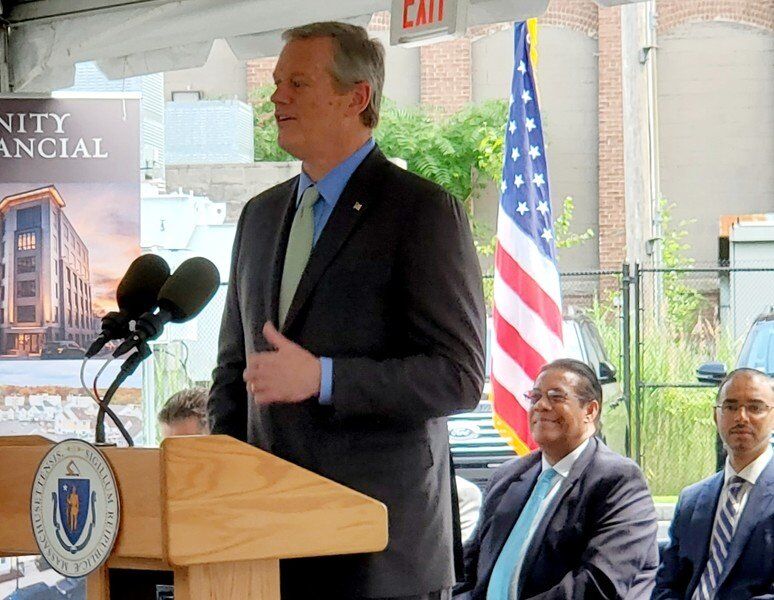
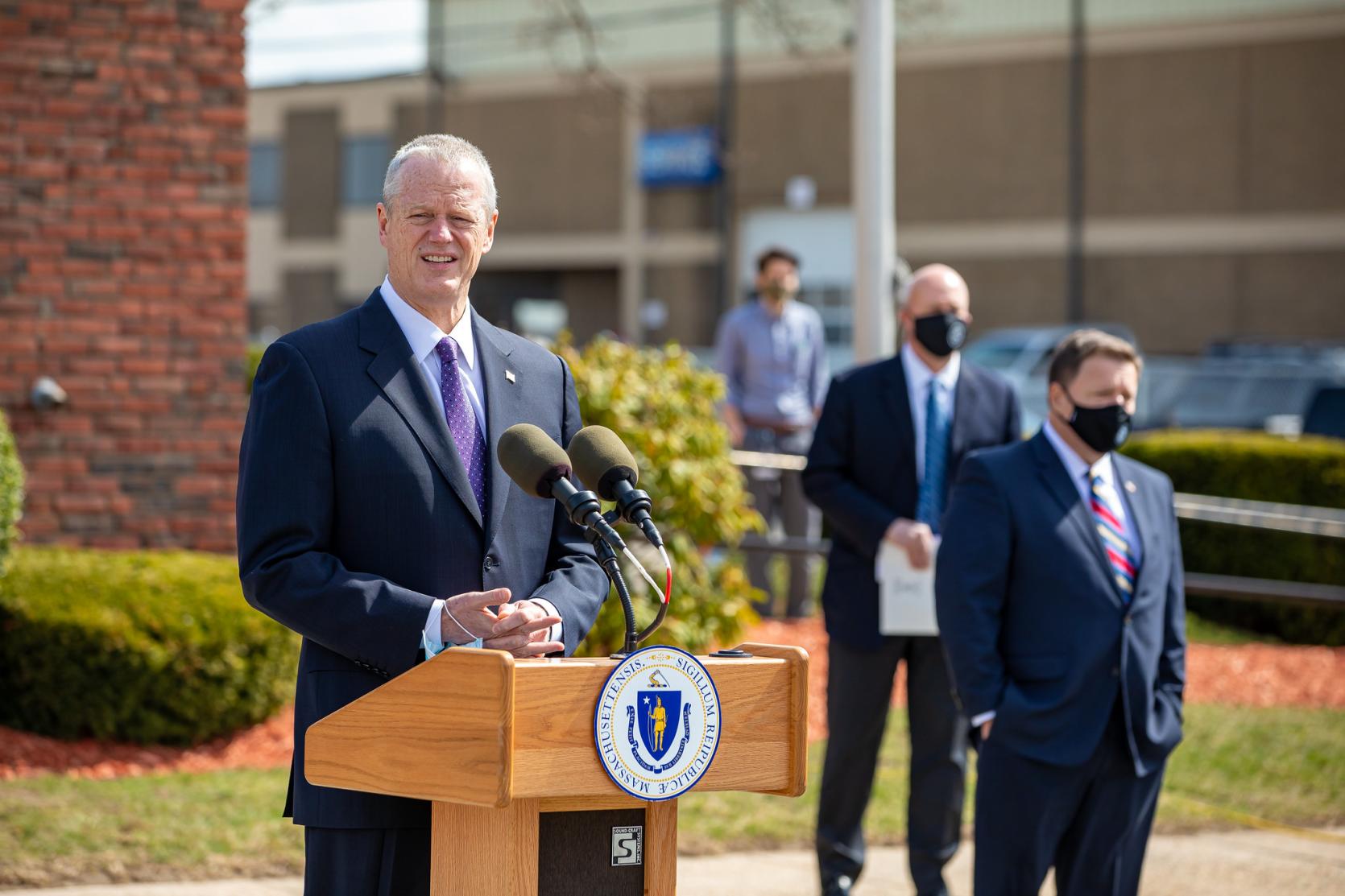
The project is one of 28 affordable housing projects across the Commonwealth that Gov. Charlie Baker on Thursday afternoon announced will receive a total of $139 million in funding and tax credits.

“As Massachusetts continues to recover from the COVID-19 pandemic, it is important that we continue to prioritize new affordable housing development to help our most vulnerable families,” Baker said. “Stable housing is the foundation of healthy, prosperous communities, which is why our administration has proposed an immediate infusion of nearly $1 billion in federal recovery funds to rapidly increase capacity for production in every part of the state.”

With this news, Harborlight Community Partners (HCP) can move forward with the approximately $9.5 million project.

“This is around a $7.5 million state and federal investment,” explained Harborlight Executive Director Andrew DeFranza. “This is a huge deal. We’re thrilled to once again partner with the community of Rockport to create another affordable housing community. This will be intergenerational this time, so we’re really excited about that. Hopefully it will spur more support for more senior housing services, especially in the wake of COVID.”

Construction is expected to begin next spring, DeFranza said. If all goes well, the complex will open for occupancy in summer 2023.

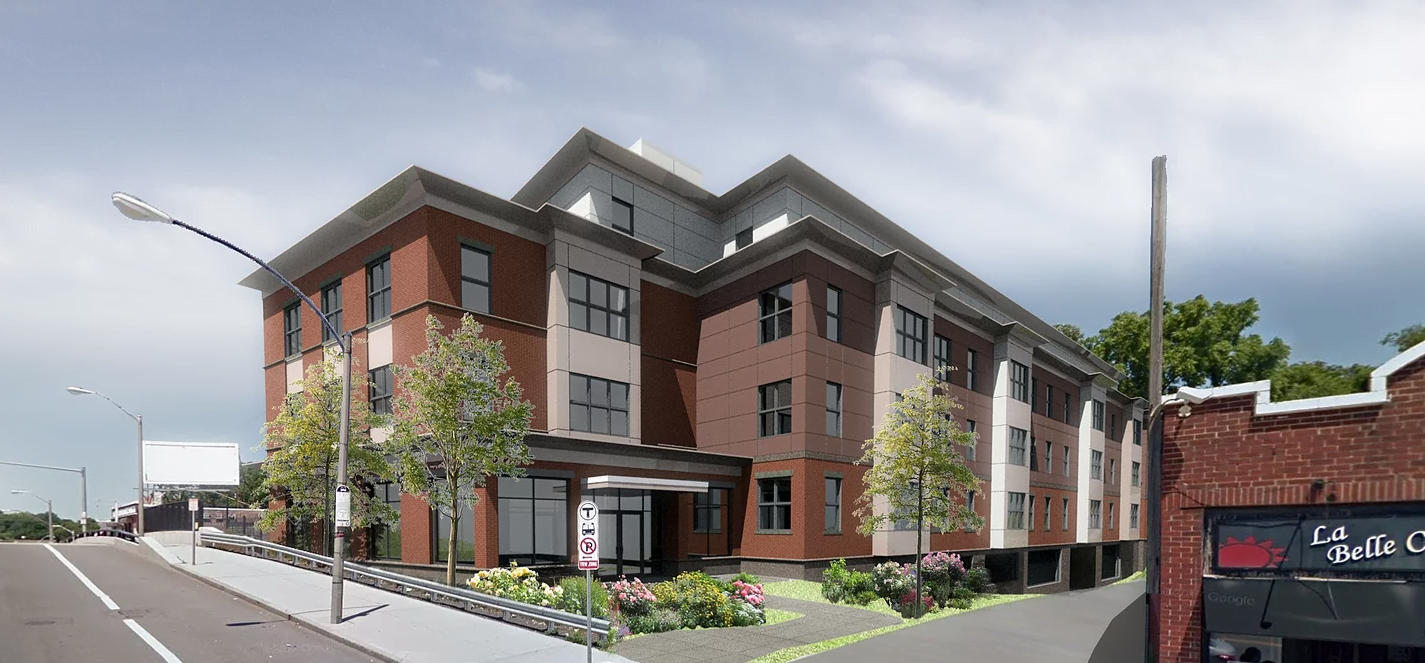
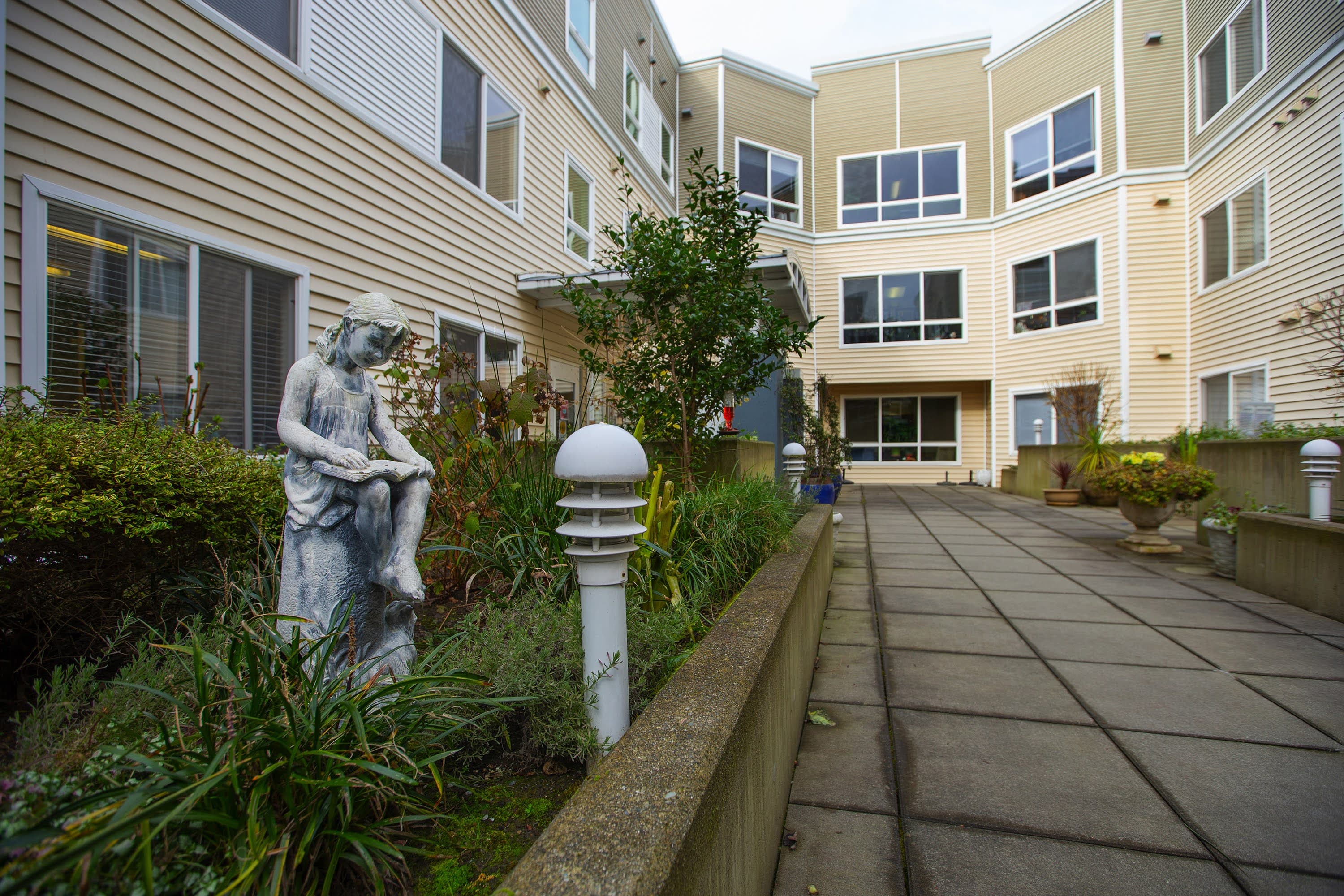
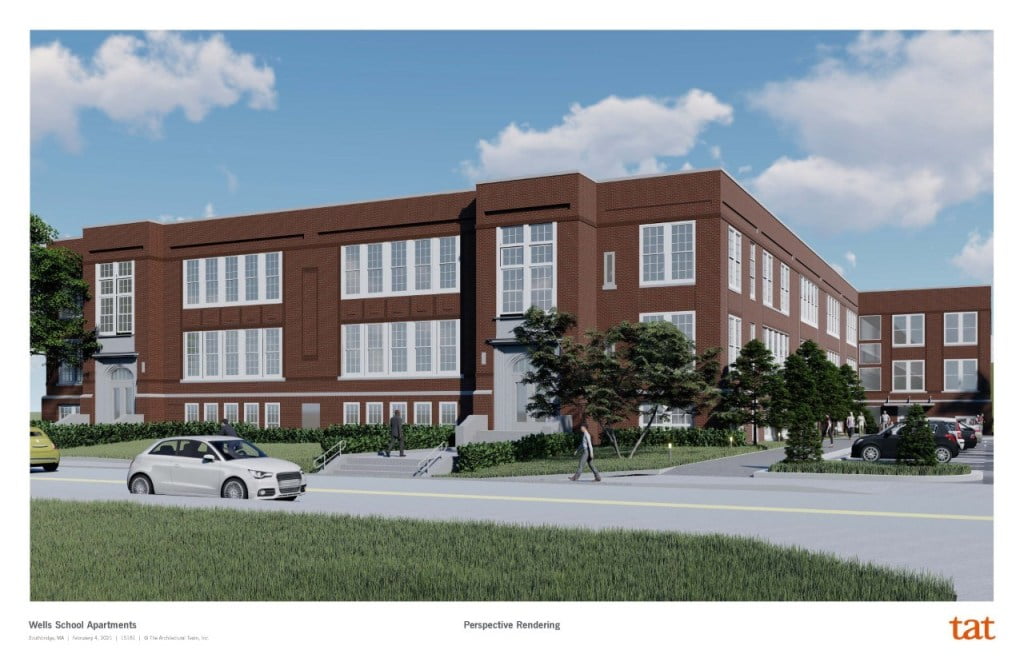
Granite Street Crossing will feature a two-story complex with 17 supportive senior units and six, two-story family townhouses. It will be built at 5 Granite St., a plot of more than an acre previously owned by Silva Brothers Florists.

“I am so pleased Cape Ann will have another beautiful, affordable Harborlight project,” said Robert Gillis, president of Harborlight’s board of directors, in a prepared statement. “More affordable housing is needed in our community and Cape Ann Savings Bank is proud to support HCP and be part of the effort to get this done.”

Granite Street Crossing has been in the works since 2016. Despite the long planning stage, DeFranza said it was “one of the best permitting experiences we’ve ever had.”

“I want to shout out the neighbors of the project,” he said. “They’re the gold standard. We spent a year with them working on the designs, and they gave a lot a feedback. They also were robustly supportive of the project at public meetings.”

The town of Rockport has given around $500,000 to Granite Street Crossing over the years. The project received three Rockport Community Preservation Committee grants between 2017 to 2019 and a portion of the town’s federal HOME Investment Partnerships Program funding.

In addition, Federal Home Loan Bank of Boston awarded the project a $500,000 grant in 2018. Additional funding was also provided by Eastern Bank and the North Shore HOME Consortium.

This is not the first time Harborlight Community Partners requested state funding for Granite Street Crossing. The state rejected a previous application in 2018. The following year, Harborlight Director of Real Estate Development  Kristin Carlson told the Times it was due to the lack of support from local organizations. Now, in addition to Rockport Community Development Corporation and HOME, project partners include include the Community Economic Development Assistance Corp., Local Initiatives Support Corp., and Enterprise Foundation.

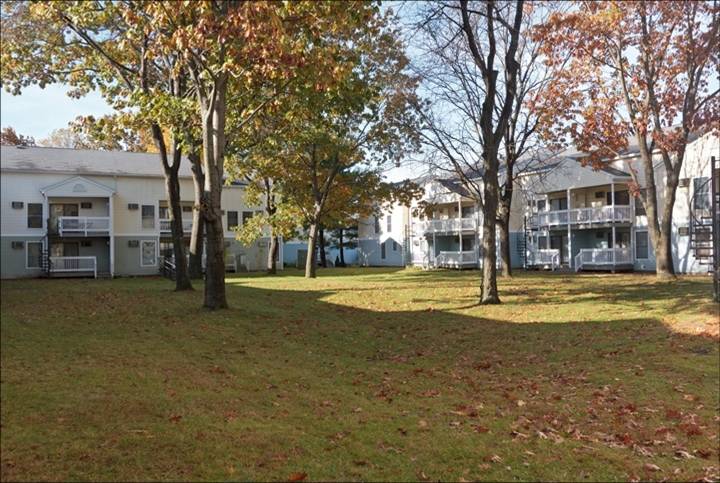
Granite Street Crossing will be Harborlight Community Partners’s third affordable housing development in Rockport. The non-profit owns and manages Rockport High School Apartments and Pigeon Cove Ledges, which account for 40% of the town’s affordable housing stock.

Michael Cronin may be contacted at 978-675-2708, or mcronin@gloucestertimes.com.

SourceGloucester Times

Baker-Polito Administration Announces $139 Million in Funding and Tax Credits to Produce and Preserve 1,346 Units of Affordable Rental Housing

Today, Governor Charlie Baker, Lt. Governor Karyn Polito, Housing and Economic Development Secretary Mike Kennealy and Housing and Community Development Undersecretary Jennifer Maddox joined local legislators and officials to announce affordable housing awards for 28 projects in 21 communities across the Commonwealth. These awards will advance the development of 1,526 new rental units, including 1,346 rental units affordable for low- and extremely low-income households.

Through the Department of Housing and Community Development (DHCD), the Baker-Polito Administration awarded $93.3 million in direct subsidy funding and allocated $45.8 million in federal and state housing tax credits that will generate approximately $310 million in equity in support of these projects. The projects are located in every region of Massachusetts, and include new construction, historic rehabilitation, and the preservation of occupied projects in need of rehabilitation. Additionally, some projects are transit-oriented, and eight of the construction projects will be built to Passive House design standards.

“As Massachusetts continues to recover from the COVID-19 pandemic, it is important that we continue to prioritize new affordable housing development to help our most vulnerable families,” said Governor Baker. “Stable housing is the foundation of healthy, prosperous communities, which is why our administration has proposed an immediate infusion of nearly $1 billion in federal recovery funds to rapidly increase capacity for production in every part of the state.”

“We are proud to support an excellent project here in Lawrence, another step in an amazing transformation of the Arlington Mills National Historic District into a thriving residential neighborhood, zoned for up to 1,000 housing units,” said Lt. Governor Polito. “Since 2015, we’ve invested in revitalization efforts like this across the state, creating new housing, jobs, and new opportunities for cities and towns and have directed more than $1.4 billion to our affordable housing ecosystem. Cities like Lawrence are using state and federal funds to pursue a new vision that puts housing at the center of communities.”

“Here in Massachusetts, we have seen the negative impacts of our housing crisis affect nearly every region. Through our new Housing Choice reforms, new programs, and increased capital investments, the Baker-Polito Administration is helping move great projects forward, more quickly,” said Housing and Economic Development Secretary Kennealy. “Solving our housing crisis helps all of our households, enabling our working families to put down roots in communities, stabilize vulnerable families, and provide opportunities for cities and town to grow. We are excited to deploy federal recovery funding to supercharge the pipeline of affordable housing in Massachusetts.”

“Today’s awards will bring new, affordable housing that meets the diverse needs of our Commonwealth, including new senior housing in Randolph, new permanent supportive housing for unaccompanied adults in Quincy, preservation of currently affordable housing in Holyoke, and new family housing in West Roxbury,” said Housing and Community Development Undersecretary Maddox. “These projects will provide thousands of households with access to safe, quality, affordable housing in every region. Affordable housing development and preservation is an integral part of our strategy to address our housing crisis, and we are fortunate to have a rich ecosystem of stakeholders and developers committed to the future of Massachusetts and our families.”

Today’s announcement was made in Lawrence at the site of a project that will transform a former mill into new housing for residents. The historic adaptive re-use project, sponsored by Trinity Financial, Inc., will create 87 new units of housing at 608 Broadway, with 66 units restricted for households earning less than 60% of the Area Median Income, including 17 units further reserved for households with extremely low-incomes or making the transition from homelessness. DHCD will support the project with federal and state low-income tax credits (LIHTC) and subsidy funds, and the City of Lawrence will provide funding as well. MassHousing is supporting the project with a $22.75 million permanent mortgage, a tax-exempt short-term equity bridge loan, and $2.1 million in workforce housing financing.

“I am proud to be a part of the state’s efforts to expand access to affordable housing and ensure that each of our residents can find a place to call home in an increasingly expensive housing market,” said State Senator Barry Finegold.  “In addition to putting a roof over the heads of the state’s most vulnerable residents, affordable housing boosts economic growth and is a crucial part of post-pandemic recovery.  This is especially important in a city like Lawrence, where the unemployment rate remains double that of the state average. Congratulations to all the grant recipients and thank you for your dedicated work providing stable housing to those who need it most.”

“This funding will provide critical state investments to the City of Lawrence as we continue to make affordable housing in Massachusetts more accessible to those facing financial uncertainty,” said State Representative Frank A. Moran.  “The conversion of 608 Broadway will accomplish this goal by creating 87 new units of housing, while also celebrating Lawrence’s rich industrial history by ensuring that our mill buildings are utilized and brought into the modern age. I would like to thank Governor Baker and the Executive Office of Housing and Economic Development for their continued support of initiatives such as this in Lawrence.”

“Having accessible housing options in Lawrence is a necessity for our community members and their well-being,” said Lawrence Mayor Kendrys Vasquez.  “Lawrence is a community; safe and affordable housing is vital for our residents to thrive. This partnership between the city and the state will provide Lawrencians opportunities to deepen their roots in the city that they love. I am proud of the work we are doing to create housing opportunities and grateful to all the people partnering with us.”

“Trinity Financial is grateful for the Baker-Polito Administration’s leadership on affordable housing and their commitment to the Gateway City of Lawrence,” said Dan Drazen, Vice President, Development at Trinity Financial. “This tax credit award will enable us to leverage both public and private funding and undertake a transformative adaptive reuse project. Building upon the momentum of our adjacent Arlington Point project, which was completed in 2019, the 608 Broadway project will breathe new life into a historic asset, provide mixed-income housing and continue the multi-phase revitalization of the Arlington Mills Historic District.”

Last month, Governor Baker announced a plan to devote $1 billion from the Commonwealth’s direct federal aid to funding homeownership and housing priorities, a significant investment to help increase housing production and reduce barriers to owning a home as part of the ongoing COVID-19 recovery effort. This funding plan calls for $200 million to fund rental housing production and provide increased housing options to workers and residents of disproportionately impacted municipalities, and $300 million to finance the statewide production of senior and veteran housing. These new housing resources build upon over $1.6 billion in separate federal funding that has already been allocated to entities throughout the Commonwealth for housing purposes since the start of the pandemic.

The Baker-Polito Administration has shown a deep commitment to increasing the production of housing across all income levels. Since 2015, the administration has invested more than $1.4 billion in the affordable housing ecosystem, resulting in the production and preservation of more than 22,000 housing units, including over 19,000 affordable units. In 2018, Governor Baker signed the largest housing bond bill in Massachusetts history, committing more than $1.8 billion to the future of affordable housing production and preservation.

This year, Governor Baker signed economic development legislation titled An Act Enabling Partnerships for Growth that includes substantial new funding for affordable and climate-resilient housing, as well as targeted zoning reforms to advance new housing production. In June, the administration and MassHousing made the first commitments through the CommonWealth Builder program, an initiative intended to create homeownership opportunities and build generational wealth in communities of color. The administration has also supported the development of more than 17,000 mixed-income housing units through the successful MassWorks Infrastructure Program, reformed the Housing Development Incentive Program, and worked with communities to implement smart-growth development and planning efforts.

# # #

Affordable Rental Housing Awards

Rosewood Way Townhouses is a new construction project for families to be built in Agawam.  The sponsor is the non-profit Way Finders, Inc.  DHCD is supporting the project with federal and state low-income housing tax credits and subsidy funds.  When completed, Rosewood Way Townhouses will offer 62 total units.  Forty-seven units will be affordable to families earning less than 60% of area median income (AMI), with 20 units reserved for extremely low-income families earning less than 30% of AMI.

Amherst Supportive Studio Housing is a new construction project to be built in Amherst.  The non-profit sponsor is Valley Community Development Corporation.  DHCD will support the project with federal and state low-income housing tax credits and subsidy funds.  The town of Amherst also will provide $700,000 in funds of its own to support the project.  When completed, Amherst Supportive Studio Housing will offer 28 total studio units with supportive services.  Twenty units will be affordable to individuals earning less than 60% of AMI, with 12 units reserved for extremely low-income individuals earning less than 30% of AMI and, in some cases, making the transition from homelessness.  The sponsor intends to build the project to Passive House standards.

Hillcrest Acres is an existing occupied project in Attleboro.  Schochet Companies recently acquired the project and will rehabilitate it as mixed-income rental housing for families. DHCD will support the project with federal and state low-income housing tax credits and subsidy funds. When construction is completed, the project will offer 100 rehabilitated units.  Fifty-two units will be affordable to households earning less than 60% of AMI, with 13 units further restricted for households earning less than 30% of AMI.

Burbank Terrace is a transit-oriented new construction project for families to be built in Boston’s Fenway neighborhood.  The sponsor is the non-profit Fenway Community Development Corporation.  DHCD will support the project with federal and state low-income housing tax credits and subsidy funds.  The city of Boston also will support the project with $2.8 million in its own funds.  Burbank Terrace is the first project to proceed under Boston’s Compact Living Policy Pilot Program.  When completed, the project will offer 27 total units, all of which will be affordable to households earning less than 60% of AMI.  Seven units will be further restricted for extremely low-income households earning less than 30% of AMI and making the transition homelessness.

Eva White Apartments is an occupied public housing project for seniors located in Boston’s South End.  The sponsor is a partnership between the non-profit Castle Square Tenants Association and WinnDevelopment.  The partnership will fully rehabilitate this transit-oriented project with DHCD resources including federal and state low-income housing tax credits and subsidy funds.  When completed, Eva White Apartments will feature 102 total units.  Ninety-seven units will be restricted for seniors earning less than 60% of AMI, with 26 units further restricted for extremely low-income seniors earning less than 30% of AMI.  The sponsor will continue offering extensive on-site supportive services for Eva White residents.

Old Colony Phase Four Bonds is part of the ongoing redevelopment of a massive public housing project located in South Boston.  The sponsor is Beacon Communities Development LLC.  With support from the federal government, the Boston Housing Authority, and DHCD, the sponsor already has completed or is completing work on over 550 units located on the South Boston site.  DHCD will support this new phase with federal and state low-income housing tax credits and subsidy funds.  When completed, this phase of the project will offer 75 total units.  All 75 units will be affordable to households earning less than 60% of AMI, with ten units further restricted for households earning less than 30% of AMI.  The Old Colony site is transit-oriented and also located in close proximity to Boston Harbor, with its beaches and extensive recreational opportunities.  The sponsor intends to build this phase of Old Colony to Passive House standards.

Old Colony Phase Four Taxable also is part of the ongoing redevelopment of a massive public housing project located in South Boston.  The sponsor is Beacon Communities Development LLC.  With support from the federal government, the Boston Housing Authority, and DHCD, the sponsor already has completed or is completing work on over 550 units located on the South Boston site.  DHCD will support this new phase with federal low-income housing tax credits.  When completed, this phase will offer 26 total units.  All 26 units will be affordable to households earning less than 60% of AMI, with four units further restricted for households earning less than 30% of AMI.  The Old Colony site is transit-oriented and also located in close proximity to Boston Harbor, with its beaches and extensive recreational opportunities.  The sponsor intends to build this phase of Old Colony to Passive House standards.

Residences Off Baker is a new construction project for families to be built in Boston’s West Roxbury neighborhood.  The sponsor is the non-profit B’nai B’rith.  DHCD will support the project with federal and state low-income housing tax credits and subsidy funds.  The city of Boston will provide $3.8 million of its own funds to support the project.  When completed, Residences Off Baker will offer 60 total units.  Forty-five units will be affordable to households earning less than 60% of AMI, with 15 units further restricted for households earning less than 30% of AMI, including households transitioning from homelessness.

William Barton Rogers School is a historic adaptive re-use project for seniors located in Boston’s Hyde Park neighborhood.  The sponsor is Pennrose, LLC.  DHCD will support the project with federal and state low-income housing tax credits and subsidy funds.  The city of Boston will support the project with approximately $4 million in its own funds.  When completed, Rogers School will offer 74 total units.  Fifty units will be affordable for seniors earning less than 60% of AMI, with 11 units further restricted for seniors earning less than 30% of AMI, including seniors transitioning from homelessness.  The William Barton Rogers School project is transit-oriented: it is located in close proximity to two commuter rail stops as well as numerous retail and commercial opportunities.  Pennrose will offer extensive on-site services for seniors and the broader community, including the senior LGBTQ community.

Zelma Lacey House is an occupied assisted living project located in Boston’s Charlestown neighborhood.  The sponsor is the non-profit Affordable Housing and Services Collaborative, Inc.  Using federal and state low-income housing tax credits from DHCD, the sponsor will rehabilitate the project into independent living units for seniors.  When completed, Zelma Lacey House will offer 48 units for seniors.  All 48 units will be affordable to seniors earning less than 60% of AMI, with seven units further restricted for seniors earning less than 30% of AMI.  The sponsor will provide extensive on-site services to the residents of Zelma Lacey House.

25 Sixth Street is a new construction project for families to be built in Chelsea.  The Neighborhood Developers is the non-profit sponsor.  DHCD will support the project with federal and state low-income housing tax credits and subsidy funds.  The city of Chelsea also will provide funds in support of the project.  When completed, 25 Sixth Street will offer 56 units of rental housing, with 44 units affordable to households earning less than 60% of AMI.  Eight units will be further restricted for households earning less than 30% of AMI.  The completed project also will offer six for-sale condominium units.  The sponsor intends to build the project to Passive House standards.

Carlson Crossing is an existing family public housing project in Framingham.  The sponsor is the non-profit Framingham Housing Development Corp.  Using low-income housing tax credits from DHCD and Section 8 assistance from the U.S. Dept. of HUD, the sponsor will fully rehabilitate the existing project.  When construction is completed, the project will offer 68 total units.  All 68 units will be affordable to households earning less than 30% of AMI.

Merrimack Place is a new construction project for seniors to be built in Haverhill.  The sponsor is the non-profit Bethany Community Services, Inc. (BCS).  The new project will be built on a site adjacent to an existing senior project owned and operated by BCS.  DHCD will support Merrimack Place with federal and state low-income housing tax credits and subsidy funds.  The city of Haverhill also will provide funds in support of the project.  When completed, Merrimack Place will offer 62 total units.  All 62 units will be affordable to seniors earning less than 60% of AMI, with eight units further restricted for seniors earning less than 30% of AMI.  Extensive on-site services will be available to the new residents of Merrimack Place as well as to residents of the larger senior campus.  The sponsor intends to build the project to Passive House standards.

Voces de Esperanza is an occupied project for individuals and families located in Holyoke.  The sponsor is the non-profit Valley Opportunity Council (VOC).  Using federal and state low-income housing tax credits and subsidy funds from DHCD, VOC will fully rehabilitate the project.  The city of Holyoke also will provide funds in support of Voces de Esperanza.  When work is completed, the project will offer 37 total units.  All units will be affordable to individuals or households earning less than 60% of AMI, with ten units further restricted for individuals or households earning less than 30% of AMI, including those making the transition from homelessness.

608 Broadway is a historic adaptive re-use mill project in Lawrence.  The sponsor is Trinity Financial, Inc.  DHCD will support the project with federal and state low-income housing tax credits and subsidy funds.  The city of Lawrence also will support the project with funds of its own.  608 Broadway is the second mill conversion in Lawrence undertaken by Trinity Financial.  When completed, the project will offer 87 total units.  All 87 units will carry affordable rent restrictions.  Sixty-six units will be restricted for households earning less than 60% of AMI, with 17 units further restricted for households earning less than 30% of AMI, and, in some cases, making the transition from homelessness.

Eagle Mill Phase 1 is a historic adaptive re-use project in Lee.  The sponsor is Rees-Larkin Development LLC.  DHCD will support the project with federal and state low-income housing tax credits and subsidy funds.  The town of Lee also will support the project with funds of its own.  When completed, Eagle Mill Phase 1 will offer 56 total units.  All 56 units will be affordable to households earning less than 60% of AMI, with eight units further restricted for households earning less than 30% of AMI, and, in some cases, making the transition from homelessness.

555 Merrimack Place is a new construction project to be built in Lowell.  The sponsor is the non-profit Coalition for a Better Acre (CBA).  CBA intends to develop the project to provide permanent housing and supportive services for a population in recovery from substance use disorder.  DHCD will support the project with federal and state low-income housing tax credits and subsidy funds.  The city of Lowell also will provide funds to support the project.  When completed, 555 Merrimack Place will offer 27 total units.  All 27 units will be affordable to individuals or households earning less than 60% of AMI, with eight units further restricted for individuals or households earning less than 30% of AMI and, in some cases, transitioning from homelessness.  The sponsor intends to build the project to Passive House standards.

Mill 8 Apartments is a historic adaptive re-use mill project in Ludlow.  The sponsor is WinnDevelopment.  DHCD will support the project with federal and state low-income housing tax credits and subsidy funds.  The town of Ludlow also will support the project with funds of its own.  Mill 8 Apartments is the second mill conversion in Ludlow undertaken by WinnDevelopment.  When completed, the project will offer 95 total units.  Fifty-five units will be affordable to households earning less than 60% of AMI, with 12 units further restricted for households earning less than 30% of AMI, including some households making the transition from homelessness.

Glen Brook Way Phase 2 is a new construction project for seniors to be built in Medway.  The sponsor is the non-profit Metrowest Collaborative Development, Inc.  DHCD previously funded Glen Brook Way Phase 1, which currently is in construction.  DHCD is supporting the second phase of the project with federal and state low-income housing tax credits and subsidy funds.  The town of Medway also is providing $1 million in its own funds to support the project.  When completed, Glen Brook Way Phase 2 will offer 44 units and supportive services for seniors.  All 44 units will be affordable to seniors earning less than 60% of AMI.  At least eight units will be further restricted for extremely low-income (ELI) seniors earning less than 30% of AMI.  The sponsor is working to restrict additional units for ELI seniors.  The sponsor intends to build the project to Passive House standards.

Ticcoma Green Workforce Housing is a new construction project for families to be built on Nantucket.  The sponsor is HallKeen Management, Inc.  DHCD will support the project with federal and state low-income housing tax credits and subsidy funds.  The town of Nantucket will provide substantial funds of its own to support the project.  When completed, Ticcoma Green Workforce Housing will offer 64 total units.  Twenty-three units will be affordable to households earning less than 60% of AMI, with nine units further restricted for households earning less than 30% of AMI, including households transitioning from homelessness.

Broad Street is a new construction project for unaccompanied adults to be built in Quincy.  The sponsor is the non-profit Father Bill’s & MainSpring, a highly-experienced operator of shelters and services for homeless individuals.  Father Bill’s will construct Broad Street on land adjacent to a new shelter and office facility, which is expected to begin construction later in 2021.  When completed, Broad Street will offer 30 single-room occupancy units as well as services for homeless individuals currently living in shelter.  DHCD will support Broad Street with federal and state low-income housing tax credits as well as subsidy funds.  The city of Quincy also is supporting the project with funds of its own.

Simon C. Fireman Expansion is a new construction project for seniors to be built in Randolph.  The sponsor is the non-profit Hebrew Senior Life.  DHCD will support the project with federal and state low-income housing tax credits and subsidy funds.  The town of Randolph will provide its own funds to support the project.  Simon C. Fireman Expansion will be built on land adjacent to an existing Hebrew Senior Life senior project in Randolph.  When completed, the expansion project will offer 45 total new units.  All 45 units will be affordable to seniors earning less than 60% of AMI, with nine units further restricted for seniors earning less than 30% of AMI, including seniors transitioning from homelessness.  Hebrew Senior Life will offer extensive on-site services, including health-related services, to residents of the new project and of the larger campus.

Granite Street Crossing is a new construction project to be built in Rockport.  The sponsor is the non-profit Harborlight Community Partners.  DHCD will support this intergenerational project with federal and state low-income housing tax credits and subsidy funds.  The town of Rockport also will provide its own funds to support the project.  When completed, Granite Street Crossing will offer 23 total new units, with 17 units restricted for seniors.  All 23 units will be affordable to seniors or families earning less than 60% of AMI, with eight units further restricted for seniors or families earning less than 30% of AMI, and, in some cases, transitioning from homelessness.

Plaza Apartments is a new construction project for families to be built in South Hadley.  The sponsor is South Hadley Plaza LLC.  DHCD is supporting the project with federal and state low-income housing tax credits and subsidy funds.  The town of South Hadley also is supporting the project with funds of its own.  When completed, Plaza Apartments will offer 60 total units.  All 60 units will be affordable to families earning less than 60% of area median income (AMI), with 18 units further restricted for extremely low-income families earning less than 30% of AMI, including families transitioning from homelessness.

Knox Residences I is the first phase of a two-phase historic re-use and new construction project in Springfield.  The sponsor, First Resource Development, will use federal and state historic tax credits as well as DHCD resources to adapt manufacturing buildings that have been vacant for over 70 years into residential units.  First Resource Development also will construct new residential units as part of the Knox projects.  At this time, DHCD will support Knox Residences I with federal and state low-income housing tax credits and subsidy funds.  The city of Springfield also will support this phase of Knox Residences with funds of its own.  When Knox Residences I is completed, it will offer 55 total units.  All 55 units will be affordable to households earning less than 60% of AMI, with eight units further restricted for households earning less than 30% of AMI and, in some cases, transitioning from homelessness.

Littleton Drive Senior is a new construction project for seniors to be built in Wareham.  The sponsor is Pennrose, LLC.  DHCD will support the project with federal and state low-income housing tax credits and subsidy funds.  The town of Wareham also will provide funds to support the project.  When completed, Littleton Drive Senior will offer 44 total units.  All 44 units will be affordable to seniors earning less than 60% of AMI, with eight units further restricted for seniors, earning less than 30% of AMI, including seniors transitioning from homelessness.  As required by DHCD, Pennrose will provide supportive services to the new residents of the project.

Woodland Cove II is a new construction project for families to be built in Wareham.  The sponsor is Dakota Partners, Inc.  DHCD is supporting the project with federal and state low-income housing tax credits and subsidy funds.  The town of Wareham also is providing funds of its own to support the project.  Dakota Partners will build Woodland Cove II on land adjacent to Woodland Cove I.  The first phase of the project also was funded by DHCD and will move shortly into construction.  When Woodland Cove II is completed, it will offer 63 total units.  Fifty-six units will be affordable to families earning less than 60% of AMI, with nine units further restricted for families earning less than 30% of AMI, including families making the transition from homelessness.  Dakota Partners intends to build Woodland Cove II to Passive House standards.

Sanctuary Place is an adaptive re-use project to be developed in Wrentham.  The sponsor is the non-profit Planning Office for Urban Affairs (POUA) working in partnership with Health Imperatives.  POUA and Health Imperatives will redevelop a former convent as housing with supportive services for survivors of trafficking and sexual exploitation.  When completed, Sanctuary Place will offer eight bedrooms, an upgraded kitchen, and community gathering areas for the intended population.  DHCD will support Sanctuary Place with subsidy funds.

###
SourceMass.gov

CEDAC Backs Mixed-Income Housing in Mattapan

Roger Herzog, Executive Director of the Community Economic Development Assistance Corporation (CEDAC), and its Project Manager, Will Morgan, discuss the agency’s predevelopment financing for transit-oriented mixed income housing in Mattapan to be known as 872 Morton Street Village. Interview for BNN News. Aired July 13, 2021.

SourceBoston Neighborhood Network

‘A stepping stone:’ Brewster celebrates groundbreaking for 30 new affordable housing units

It took five years, but the evidence of progress is everywhere.

The newly-paved access road flanked by cement footings for street lights. The cleared lots with white septic and water pipes protruding from the dirt.

With the infrastructure in place, construction on 30 one-, two- and three-bedroom affordable rental units, in what is known as Brewster Woods, is imminent. Standing out of the hot sun, under a tent before dozens of local, regional and state officials that helped make it possible, U.S. Rep. William Keating, D-Mass., acknowledged that the ceremonial groundbreaking was indeed an occasion to celebrate.

But it was also a time to recommit to the effort of building and finding housing.

Six shovels await the ceremonial groundbreaking ceremony to begin Tuesday at Brewster Woods, a new 30-unit affordable housing development. The rental units are expected to be completed by next summer.

Solving the housing crisis ‘piece-by-piece’

“This is a stepping stone in addressing the needs we have,” Keating said Tuesday about what he called a national affordable housing crisis that the Cape and Islands has known for decades. But the way it will be solved is piece-by-piece, Keating told the audience, with developments like Brewster Woods.

“Today we’re changing the lives of an estimated 60 people in those 30 units, and you’re saying that number is not big enough, but it sure is if you are one of those people.”

Brewster Woods was developed on town-owned land by the Housing Assistance Corp. and the Preservation of Affordable Housing, and will have eight one-bedroom units, 19 two-bedroom units and three three-bedroom units.

Construction is expected to be completed by next summer and tenants will be selected by lottery.

Are trailers next? Cape Cod leaders seek solutions to housing crisis ‘right now’

Prospective renters can only qualify in two categories: up to 30% of local area median income ($20,300 for one person up to $35,160 for six); or up to 60% of median income ($40,620 for one person up to $67,260 for a family of six). Rents are estimated at $1,087 a month for a two-bedroom apartment for those at 30% of median income, and $1,305 for a two-bedroom for those making up to 60% of median.

It takes heavy lifting, both financially and logistically, by people at all levels of government and finance, to get one of these projects completed, including: a $1.68 million state MassWorks grant paid for the site clearing and infrastructure; a $2.4 million loan from the Massachusetts Housing Partnership; $1 million in Affordable Housing Trust Funds from MassHousing; $450,000 from Community Economic Development Assistance Corporation; $550,000 in Brewster Community Preservation Act money; and $800,000 in local and state HOME funding: $250,000 in Barnstable County HOME funds and $550,000 in Department of Housing and Community Development funds.

Keating urges other towns to act

Keating commended Brewster for actively pursuing the funding it needed to complete the project. He urged other towns that this was the time to act. Money from the American Rescue Plan Act of March 2021 was available to help with housing issues, but Keating said the infusion of money wouldn’t last forever.

“We have to seize the opportunity and be as aggressive as we can,” he said.

State of the Cape:Affordable housing crisis tops agenda at annual meeting

Cape housing costs were already high pre-pandemic, but fueled in part by demand from off-Cape residents wanting to relocate in relatively COVID-19-safe rural areas, Cape housing costs soared by 27% this year with a median sales price of $560,000. Median sales prices on Martha’s Vineyard jumped up to $1.5 million and to $2.18 million on Nantucket. The median sales price in Chatham is $1.78 million.

U.S. Rep. William Keating, D-Mass., talks with Housing Assistance Corp. CEO Alisa Magnotta before the ceremony attended by federal, state and local officials.

Rental and home sales inventory is low and the Cape is in need of more than 4,500 rental units, local housing experts said.

“Our lifeblood is affected by our ability to have housing,” Keating said. “We’re going to lose … businesses; we’re going to lose those jobs, and we’re going to lose them because of a lack of housing.”

“Housing crisis is a term we use a lot,” state Secretary of Housing and Economic Development Mike Kennealy said. He pointed to Gov. Charlie Baker’s recently successful housing legislation that allowed for a simple majority vote, instead of the formidable hurdle of a supermajority, for towns to change zoning to create affordable housing. The legislation also required a $50,000 bond of those wishing to sue to keep towns from building affordable housing in their neighborhood.

SourceCape Cod Times

Investors Mine For Profits In Affordable Housing, Leaving Thousands Of Tenants At Risk

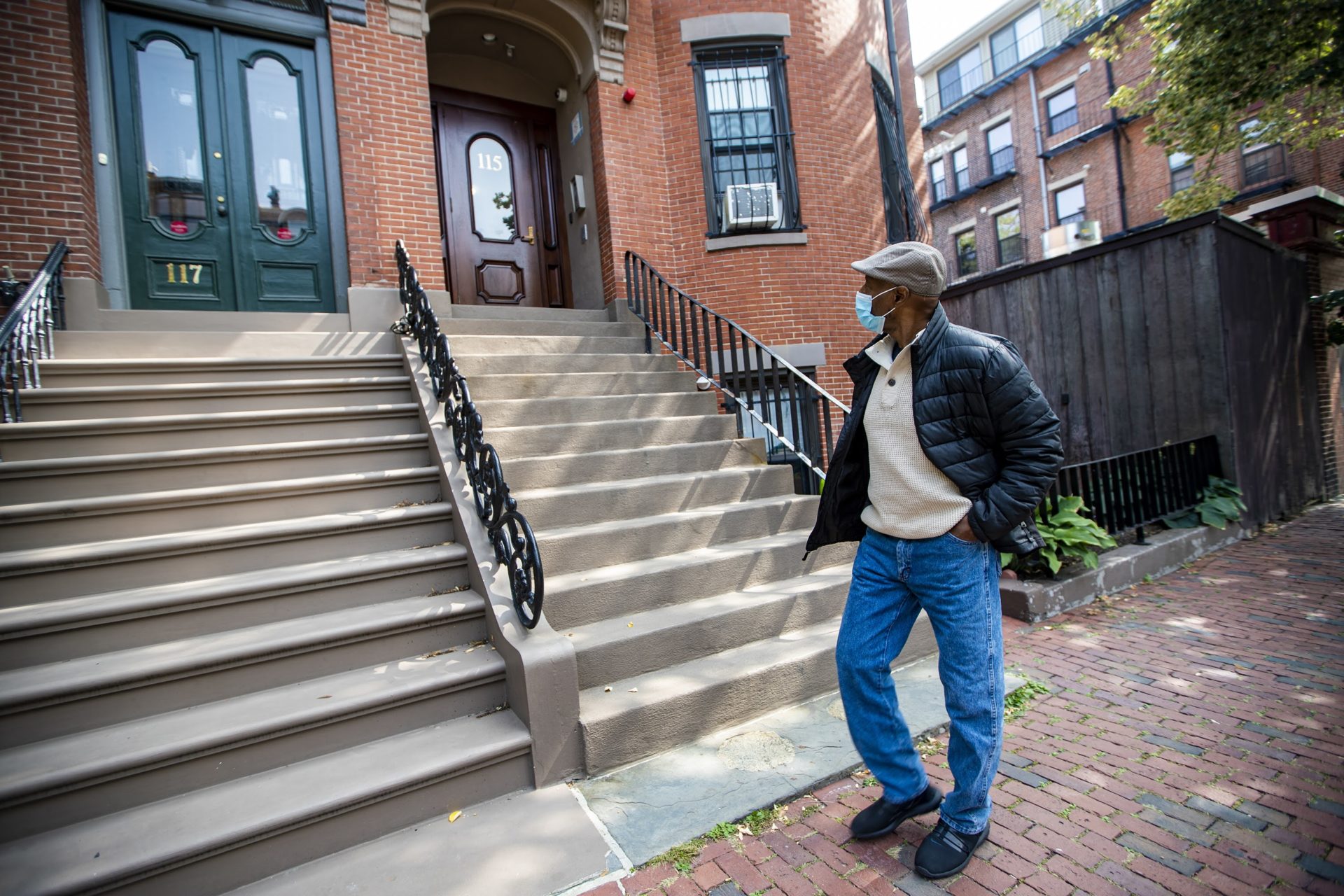
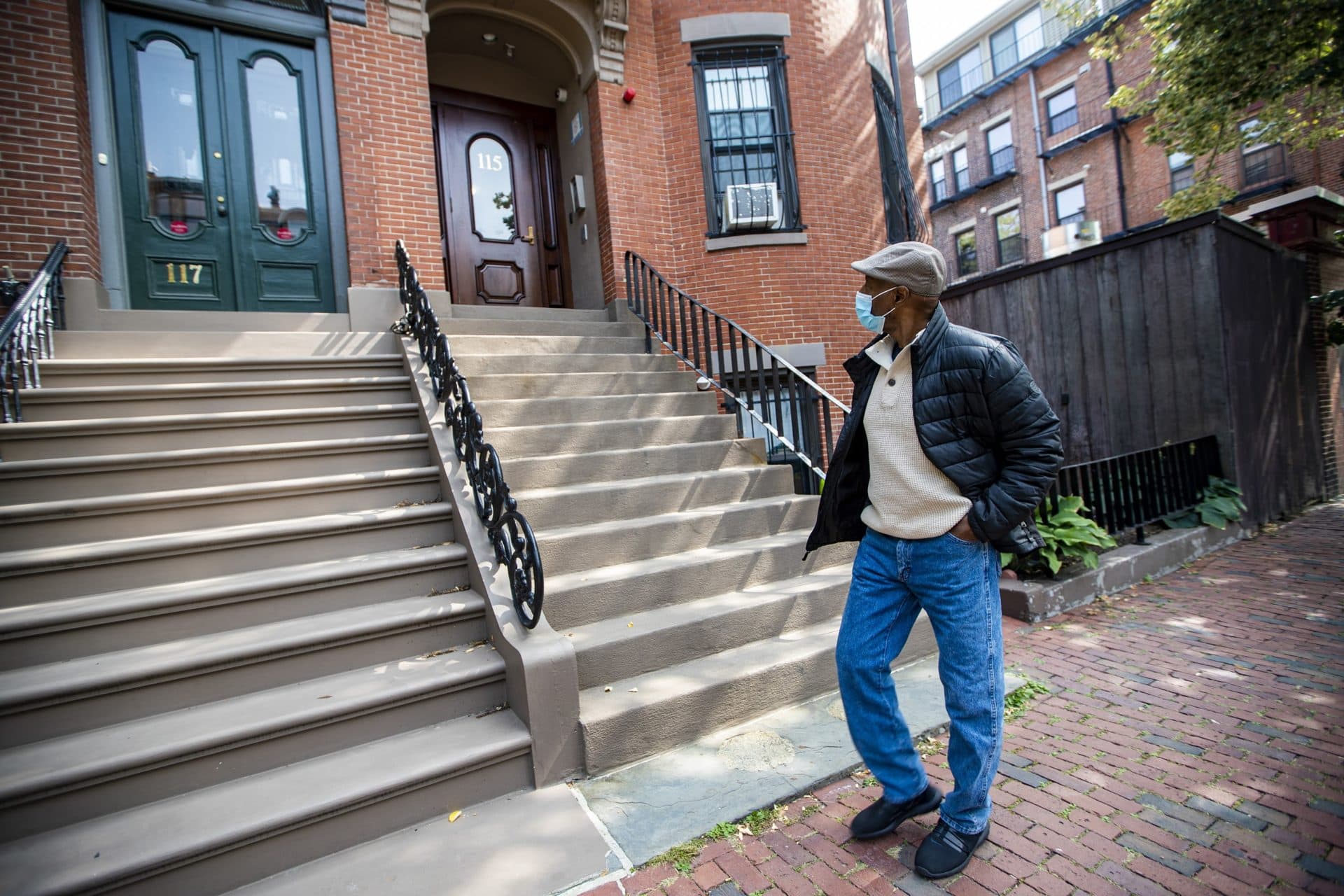
Charles Clark moved to Boston’s South End when he was a young musician, just getting by. Forty years later, he lives in the same historic brownstone, even as rising wealth has pushed many people out of the neighborhood.

He’s stayed thanks to a nonprofit that’s kept a few hundred apartments like his affordable. Tenants’ Development Corp. is one of the oldest groups of its kind in the nation, protecting the rights of renters — many of them families of color and seniors.

But now, TDC and its residents are facing the fight of their lives, as a Denver-based investment firm battles for control of 36 of the nonprofit’s properties. It’s a tactic Alden Torch Financial and firms like it are using to squeeze extra profits out of the federal government’s chief program for backing low-income housing, according to court cases in multiple states and interviews with more than 20 housing and legal specialists.

Charles Clark, of Tenants’ Development Corp., walks past an apartment in the South End, one of the affordable housing properties managed by the nonprofit. (Jesse Costa/WBUR)

“They wanted us to sell the units — put them on the market, so that they could reap a lot more money than what they were entitled to,” Clark said of Alden Torch. “I’m appalled, and I’m upset about how they’re handling it.”

TDC officials never imagined this scenario when they tapped into the federal Low-Income Housing Tax Credit program back in 2003, to renovate their buildings. Under these deals, a nonprofit forms a partnership with an investor (often a large bank) that provides funding in exchange for tax breaks. At the end of 15 years, the nonprofit generally gets to buy out the investor’s stake, taking ownership of the property for well below market value.

Get exclusive reports and special projects from the WBUR investigative team in your inbox. Sign up now.

At least that was Congress’s intent, housing specialists say — keeping properties affordable for the long-term and in community hands. But the game has changed in recent years, as some project funders began selling off their partnership interests to investment firms with more aggressive profit motives. And those firms are demanding bigger payouts to exit the deals.

This shadowy secondary market is unregulated at the federal level and in nearly every state, a WBUR investigation has found, and it’s wreaking havoc in an $8 billion-a-year program funded by taxpayers.

“Honestly, I think it’s a national crisis,” said David Goldstein, a lawyer representing a Brooklyn, N.Y., housing group that’s fending off one such property challenge from a Wall Street giant. “This is a really serious problem and affordable housing is going to be potentially threatened, especially for places like Boston, New York, and Los Angeles.”

This new breed of investors is challenging housing groups in cities where real estate values have soared. The firms are looking to wrest cash and control away from local nonprofits and developers, lawsuits show, or attempting to oust managers from partnerships. And in some cases, they are forcing the sale of low-income housing to maximize their profits — as they have tried to do in Boston.

“They wanted us to sell the units — put them on the market, so that they could reap a lot more money than what they were entitled to.”

CHARLES CLARK

If investors are successful and properties are sold on the open market, the risk is that new owners could eventually abandon the affordable housing mission, charge higher rents or convert apartments to expensive condos. It’s a risk that looms on the horizon for thousands of residents in Massachusetts and across the country.

With a lack of federal or state oversight, these feuds are largely being decided in courts, where conflicting rulings on contract language only add to the confusion. In the past few years:

  • A senior housing group in Seattle was forced to sell 10 properties for about $250 million. The majority of the money went to Alden Torch and other investors.
  • An Opa-locka, Fla., nonprofit has spent $1.5 million fighting to keep a low-income property after Bank of America sold its interest to a new investor that pushed to sell.
  • A nonprofit was blocked from buying a low-income property in Pontiac, Mich., and preserving the housing for seniors, when it was sued by SunAmerica in federal court. The case is under appeal.

SunAmerica, part of American International Group Inc. (AIG), also has won a first legal round in New York. It has collected years of tax credits on affordable apartments in Brooklyn run by the nonprofit Riseboro Community Partnership, but SunAmerica is now blocking the group from acquiring the property. Riseboro is appealing, and New York’s attorney general has filed a brief supporting Riseboro’s right to the property, saying the first judge got it wrong.

AIG declined to comment for this story.

“New York is a bellwether in affordable housing,” Goldstein said. “If New York loses this right, it will be a bad precedent for the rest of the country.”

A Historic Nonprofit Fights Investors

In Boston’s South End, Alden Torch’s fight with Tenants’ Development Corp. has a direct impact on nearly 400 residents in buildings the nonprofit has cared for since the 1970s, when many South End dwellings had become rundown and poorly managed. Its brownstones run along Massachusetts and Columbus Avenues and several quaint side streets.

“A little bit of everybody lives in the South End. That’s what makes it unique,” said Clark, the musician. Now 70 and president of TDC’s resident-run board, he can’t fathom losing all that TDC has fought for — to an investment firm.

“Greed is all around us. But we’re not going to let that greed destroy what we’ve worked so hard to build all these years.”

Charles Clark is president of the TDC tenant board. (Jesse Costa/WBUR)

Under the law, even if ownership changes after the 15-year tax credits end, housing must stay affordable for a total of at least 30 years. But things could shift dramatically after that.

TDC officials estimate they’ll have to spend at least $500,000 in legal fees to resolve their dispute with Alden Torch in state and federal court. The nonprofit’s leaders had hoped to devote those resources to building a new community center for residents. The plan included a gym, space for dance and karate classes, a kitchen for serving lunch to seniors, and room for a peer leadership program for youths.

But the center is now on hold, along with overdue apartment renovations, said Anita Huggins, an executive with TDC.

“It’s early in the litigation, but certainly given the cost, that’s going to impact our ability to move forward,” she said.

As in many of these disputes, TDC’s fight is not with its original investment partner. That was a Pennsylvania firm called Capmark Financial that later went bankrupt, in 2009.

That firm’s tax-credit portfolio, which included 287 properties across the country, was sold at auction in 2011, for $102 million. The buyer was Hunt Cos. of El Paso, Texas. TDC had no say in the matter, and ultimately found itself in partnership with Alden Torch, which later took over the investments.

When TDC informed Alden Torch in 2017 that it planned to buy the South End properties after the tax credits expired, things did not go smoothly.

The sides sparred over the next two years, with Alden Torch seeking appraisals and notifying TDC in a February 2019 letter it should find a buyer for the properties within six months, according to federal court records. The firm then reversed course in December that year, ordering TDC in another letter not to sell. The reason: Alden Torch said it had been “unaware” of TDC’s right to buy the property at a low price once another offer came in.

In early 2020, TDC informed Alden Torch it planned to pay $17 million to end the partnership and acquire the properties, according to TDC’s lawsuit in federal court.

Alden Torch claimed TDC’s purchase plan was “unauthorized” because it did not first receive Alden Torch’s consent. The firm alleged it was being shortchanged, because the properties could fetch as much as $54 million on the market.

A sale at the lower price “would prevent the Partnership and Plaintiffs from benefiting from the substantial appreciation in the value of the Apartment Complex that had occurred over time,” Alden Torch said in the court records.

The firm is seeking at least $34 million in damages from TDC. And to stop TDC in its tracks, Alden Torch’s legal team employed another escalation — filing a notice with the Suffolk County Registry of Deeds to block TDC from buying the property.

David Davenport is a Minneapolis lawyer who represents TDC and other nonprofits in these cases. (Courtesy David Davenport)

“I found it to be super aggressive” for Alden Torch to muddy the property title, said David Davenport, a Minneapolis lawyer who represents TDC and other nonprofits in these cases. “They don’t really seem to care about who they impact or how they impact them. And now they’re going to potentially tie this property up in litigation for several more years.”

TDC sued Alden Torch and its investment entity.

Alden Torch executives declined to be interviewed.

A U.S. District Court judge in Boston ruled in December that the TDC case does not belong in federal court. Alden Torch is appealing. The firm has been disappointed in state court here before: The Supreme Judicial Court in 2018 ruled against the firm’s effort to prevent a Cambridge nonprofit from acquiring low-income apartments on Memorial Drive.

Only Congress Can Clarify The Rules

The majority of these 15-year tax credit deals have ended without incident, housing specialists say. The program has helped build or renovate more than 3 million apartments nationwide since its start in 1986. Only in recent years have these legal challenges emerged, as deep-pocketed investors found ways to poke holes in contracts that locked in tax benefits for investors and counted on their goodwill at the end of the partnership.

The IRS is not regulating the transfers of partnership interests or the exits. It counts on state housing agencies to dole out the federal tax credits and ensure properties stay affordable. But it’s also rare for a state agency to weigh in on 15-year exits. The result: Nationally, no one is in charge.

In Massachusetts alone, tax-credit deals will be expiring on 81 properties over the next four years, affecting nearly 5,000 residents, according to U.S. Department of Housing and Urban Development data.

“Congress can solve this, and that would be the best outcome,” said Bill Brauner, a senior executive at the Community Economic Development Assistance Corp., a Boston group that provides financing for affordable housing.

The Massachusetts Department of Housing and Community Development, which allocates federal tax credits in the commonwealth, declined multiple requests to comment for this report. And it has yet to publicly weigh in on the lawsuit threatening the South End properties.

In a recent funding offer for developers, the agency appears for the first time to be trying to exclude from future projects investors that have been involved in year-15 disputes. It’s unclear how this would be enforced.

One state agency on the other side of the country has been raising warnings since 2019 about firms it says are abusing the tax-credit program. The Washington State Housing Finance Commission in a report called out so-called “aggregator” investment firms — those amassing tax-credit portfolios — saying they “often use burdensome tactics that take advantage of legal ambiguities, resource disparities, and economies of scale to overwhelm their nonprofit counterparties.”

The report cited the Senior Housing Assistance Group (SHAG) case, where a federal judge in Seattle ruled that the nonprofit had failed to get a “bona fide” offer for the properties — which was required before SHAG could exercise its right to buy them at below-market value. Alden Torch won in 2019 and forced the sale of 10 low-income properties in the Seattle area for a quarter of a billion dollars.

The commission said the court got the case wrong and warned: “Other courts should not make the same mistake.”

The properties remain affordable and SHAG still provides support services, but it lost out on millions of dollars in equity dedicated to low-income housing.

Squeezing Nonprofits For Cash

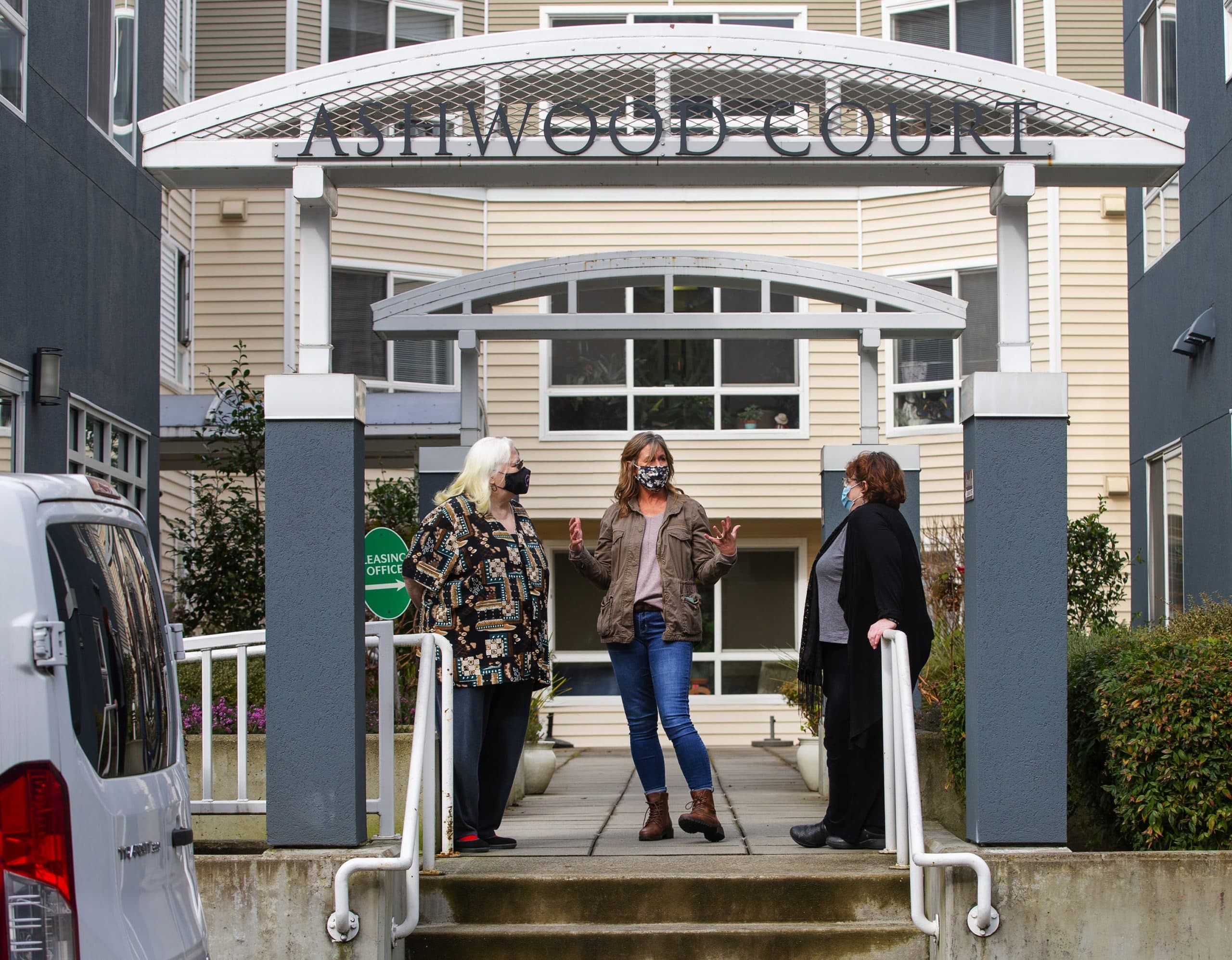
Kim Loveall Price, center, director of a nonprofit that operates Ashwood Court, a low-income housing complex in Bellevue, Wash., talks with residents Susanne Sherman, right, and Joyce Hansbearry. (Mike Seigel for WBUR)

One of the biggest players in the tax credit business, with a $15 billion portfolio, is located here in Boston. Last year alone, Boston Financial Investment Management, part of Tokyo’s ORIX Corp., raised more than $800 million from banks and insurance companies to invest in tax-credit funds.

More than 3,000 miles away, in Bellevue, Wash., the firm got into a protracted battle with a nonprofit that manages several low-income properties. One of those is Ashwood Court, home to seniors who live between skyscrapers and luxury condos in the heart of the downtown area, where property values have climbed.

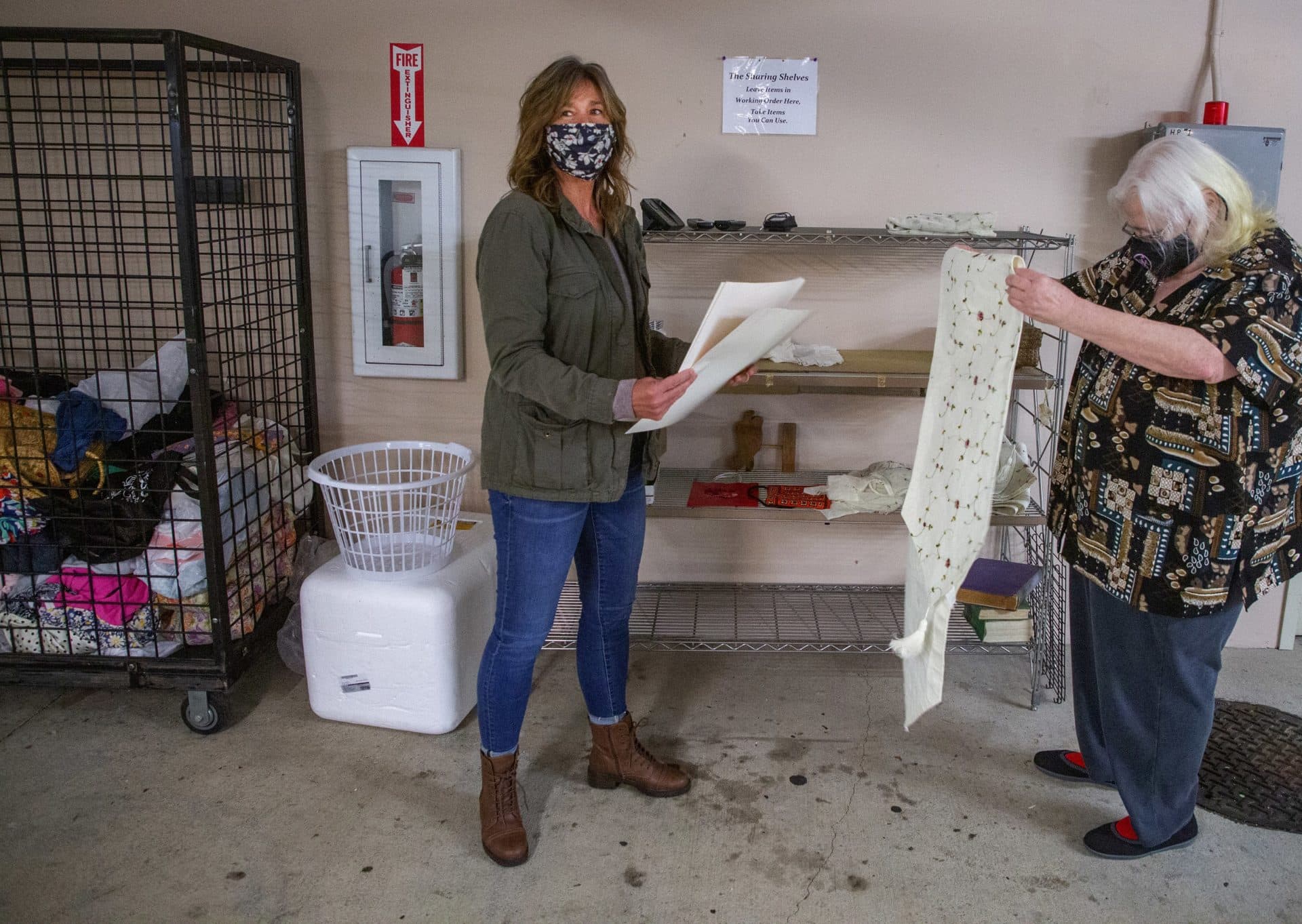
There’s a sense of community at the 51-unit apartment complex, within walking distance of convenience stores, doctors and the library. Residents keep “sharing shelves” in the parking garage, where people can find home goods, clothing and food items for free.

Kim Loveall Price, left, and Joyce Hansbearry, residence manager of the apartments, look through items from the "sharing shelves" at Ashwood Court. (Mike Seigel for WBUR)
Kim Loveall Price, left, and Joyce Hansbearry, residence manager of the apartments, look through items from the “sharing shelves” at Ashwood Court. (Mike Seigel for WBUR)

The nonprofit, Downtown Action to Save Housing (known as DASH), expected at the end of the 15-year tax credit period it would buy out the partnership at no cost and own Ashwood Court. But Boston Financial — which was not the original investor — said it was due far more.

“They just bully you,” DASH executive director Kim Loveall Price said. “They kept threatening that they were going to force the sale … and we kind of panicked.”

DASH took out a loan in 2014 to pay the firm $300,000 and part ways, Loveall Price said. The payment had a special sting, she recalled, when she spotted an opened jar of gravy and some lettuce on the sharing shelves.

“These seniors are so poor that they share half-eaten food,” Loveall Price said. “And I’m giving these [people] $300,000 instead of being able to help with food security.”

Boston Financial chief executive Gregory Voyentzie in an interview disputed Loveall Price’s version of events and said DASH’s contract language did not provide for the low-cost exit the nonprofit was seeking. He said his firm accepted a deep discount to what it believed its clients were owed. But he regrets that the disagreement turned ugly.

“That one is disappointing to me, quite honestly,” he said. In his view, a junior employee at his firm allowed a disagreement over the value of Ashwood Court and the partnership to escalate.

Boston Financial challenged DASH on three other properties, saying it was due about $1 million to exit them. But DASH officials believed they should pay only $69,000, and sued in federal court in Seattle.

An internal Boston Financial email from 2016, included in the lawsuit, sheds light on the firm’s negotiating stance: “Even though they’re a small non-profit, they might be able to just pay us off to get rid of us,” a senior vice president wrote.

As the case dragged on, Loveall Price said, residents waited for badly needed repairs on roofs, decks and windows.

Ashwood Court is a low-income housing complex for seniors in downtown Bellevue, Wash. (Mike Siegel for WBUR)

A judge ruled in DASH’s favor in 2019, determining that Boston Financial had breached the agreement by refusing to allow DASH to buy the properties. In a settlement, DASH took ownership of four properties for zero dollars.

Looking back, Voyentzie said, “I would have said, ‘Forget it. It’s not worth fighting over.’ ”

He said Congress should “correct” the law so nonprofits have a clear option to buy at the end of the tax credit term. “There shouldn’t be any dispute.”

Ousting The General Partner

Seattle-area housing developer Catherine Tamaro will never forget the grilling she took in federal court in June of 2019. During a five-day trial, Alden Torch tried to remove her as partner and manager of two low-income properties she had run for many years.

The firm claimed Tamaro hadn’t raised rents enough on her tenants at the Parkway Apartments. It complained in court records that her 2018 audit was late and alleged she had breached her fiduciary duty to the investment partner by doing “unnecessary” repairs, such as replacing failed roofs and rotting balcony railings and fixing hazardous broken sidewalks — all upkeep that’s required by the federal government.

Tamaro should have conserved that cash for Alden Torch, its attorneys argued. They said she enriched herself and failed “to maximize partnership income by increasing rental rates” at Parkway to the allowable federal limit.

If Alden Torch prevailed in its lawsuit, Tamaro stood to lose daily control of the two Seattle-metro properties, and her ability to purchase them when the tax credits expired.

“I clearly had the right to buy [the apartments] under that partnership agreement, and they were attempting to strip that right from me,” Tamaro said.

Tamaro’s initial tax credit partners did well in the deal, court records show, more than doubling the money they invested. By the time Alden Torch took over the interest in 2011, any major upside was in the real estate, not in the aging tax breaks.

Again, the firm brought a host of allegations, taking a deep dive into financial statements dating back to 2002, before Alden Torch was even involved. Tamaro said the attacks on her were personal and painful.

“I can’t even describe how unpleasant it is to sit in court and know what’s at stake and listen to them talk about how awful I am,” she said.

U.S. District Court Judge Ronald Leighton sided almost entirely with Tamaro, finding Alden Torch had “sought to manufacture a reason to remove” her and that her decisions to make repairs had been sound. He likened some of Alden Torch’s claims to “looking for the belly-navel lint.”

“I clearly had the right to buy [the apartments] under that partnership agreement, and they were attempting to strip that right from me.”

The firm used the same tactic — trying to remove the general partner — in five other cases WBUR examined. It succeeded in one case; two other cases are pending.

The judge did rule that Tamaro had interfered with a property appraisal, and ordered a new one. Both Alden Torch and Tamaro appealed parts of the ruling, but it was upheld in March.

Tamaro said being embroiled in the lawsuit for several years has cost her dearly, from the $2.5 million she had to spend on legal fees to her multiple sclerosis symptoms growing worse from the stress.

Lack Of Oversight

The new investors in tax-credit interests aren’t the only ones evading oversight. The sellers, like banks and insurance companies, also have faced little scrutiny. The IRS is not monitoring these transfers or their ramifications, WBUR found, nor are federal housing or banking regulators.

Large banks invest in these projects primarily to satisfy their Community Reinvestment Act obligations with regulators, infusing money into less affluent neighborhoods. But when banks or other investors sell their stakes, the nonprofits are left dealing with firms whose intentions are unknown.

Take the case of the Aswan Village Apartments, an affordable housing complex with 500 residents in Opa-locka, Fla., a small city just north of Miami. Bank of America in 2003 backed a redevelopment of the property — then sold its interest in 2014.

The bank reaped between $250,000 and $400,000 in the sale, according to Miami-Dade County court records. The buyer, HallKeen Management of Norwood, Mass., would earn fees helping manage a property it said was “distressed.” But it was eyeing a potential gain of millions of dollars if the property was sold.

“We had no intention of selling the property,” said Willie Logan, chief executive of the Opa-locka Community Development Corp., the nonprofit general partner of the apartments. “We always had a long-term strategy to become 100% owners, because that’s the way you develop wealth and sustainability” in the neighborhood.

HallKeen argued that a sale would provide both it and the nonprofit with about $5 million each. But Opa-locka did not want to lose control of the property. It sued HallKeen and won, in what’s been a costly and time-consuming fight. And it’s not over yet; HallKeen is appealing the decision.

Willie Logan, of Opa-locka Community Development Corp. (Courtesy Opa-locka)

Logan, a former mayor and Florida state representative, blames the bank, in part, for selling to HallKeen. He likened the tax-credit exit battle to sharecropping. “You’re promised something at the end, but you’re just chasing your tail, because they found a way to manipulate, steal, cheat and take it from you,” he said.

Bank of America spokesman Bill Halldin said the bank does not make a practice of selling its tax-credit holdings. It did sell its interest in at least one other Florida property to HallKeen in that same period, however. Those apartments were then sold in October 2020 for more than $14 million to another firm, according to the county appraisal office.

“We typically hold our position for the entirety of the tax credit period,” Halldin said.

In a statement, HallKeen chief executive Andrew Burnes defended his firm’s track record. He said it “has never moved, or caused to be moved, a single unit of housing from affordable to market rate.”

“You’re promised something at the end, but you’re just chasing your tail, because they found a way to manipulate, steal, cheat and take it from you.”

WILLIE LOGAN

Transactions like these might receive more scrutiny in the state of Washington, where the housing commission adopted new rules last fall. It started requiring investors to seek its approval when transferring a housing partnership interest to another entity.

In response, Alden Torch sued the agency and its commissioners. The case, filed in federal court, claims the agency acted outside the scope of its authority, “adopting regulations on behalf of local special interests that are both patently unfair and constitutionally defective.”

Across the industry, Alden Torch’s lawsuit against the state regulators is being closely watched. The agency, in its legal response, asserted its “broad authority” to oversee the tax-credit program in Washington and said Alden Torch’s suit lacked merit.

But the agency has ceded some ground. It has backed away from rejecting transfers of partnership interests if a firm was involved in a lawsuit with housing partners. And agency officials are speaking less freely.

The group’s spokeswoman, Margaret Graham, in an email said commissioners had developed “cold feet” about scheduling an interview with WBUR. “Our lawyers advise us that with the ongoing lawsuit, it’s just not a good time for us to be commenting.”


WBUR’s Saurabh Datar contributed to this story.

This segment aired on April 29, 2021.

Beth Healy  Senior Investigative Reporter

SourceWBUR

Baker-Polito Administration Awards Funding, Vouchers to Seven Affordable Housing Projects for Vulnerable Communities

Today, Governor Charlie Baker, Lt. Governor Karyn Polito, and Housing and Economic Development Secretary Mike Kennealy joined House Speaker Ronald Mariano, Quincy Mayor Tom Koch, Senator John Keenan, and advocates to celebrate the production and preservation of 67 units of supportive housing for vulnerable populations, as well as 100 shelter beds, through $13.7 million in capital funding and project-based vouchers. Today’s event was held at the future home of the Father Bill’s & MainSpring Housing Resource Center, which has received both supportive housing funding and a Housing Choice Community Capital Grant for design and engineering work.

Each year, DHCD distributes capital funds as well as project-based vouchers to pay for supportive services through a competitive process administered by the agency’s Supportive Housing for Vulnerable Populations program.  These supportive services serve veterans, older adults, persons with disabilities, individuals and families who have experienced homelessness, as well as unaccompanied youth.  Some state capital subsidies have also funded emergency shelter beds, including in this most recent round.

“In 2018, our administration signed the largest affordable housing legislation in Massachusetts history, and we have worked hard to invest in the production and preservation of thousands of affordable units in every region of the Commonwealth,” said Governor Charlie Baker. “Thanks to our partners in the Legislature and local leaders, we are ensuring that supportive housing remains a key component of our broader strategy to increase production.”

“Permanent supportive housing provides necessary services to our most vulnerable populations, and I am so proud that we have invested in the development of hundreds of units of this type of affordable housing across the Commonwealth available to the families and individuals that have the greatest need,” said Lt. Governor Karyn Polito. “Every project in today’s round will result in housing with tailored services that will create an environment that will allow people to thrive.”

The Department of Housing and Community Development (DHCD), working with the Community Economic Development Assistance Corporation (CEDAC), will make available approximately $2.6 million in National Housing Trust Fund (HTF) funding, dedicated to households at 30% area median income or less; $10.7 million in state bond funds through the Housing Innovations Fund (HIF) and the Housing Stabilization Fund (HSF); and 57 state project-based housing vouchers to qualified and experienced sponsors. CEDAC, which manages HIF, works closely with DHCD to administer these rounds and review applications for funding.

Supportive housing provides residents with social and health services, including job training, case management, healthcare coordination, addiction recovery resources, and more. All 67 units are affordable to low and extremely low-income people. There are an additional 20 units that are being supported through vouchers only but are eligible to seek additional state funding in the future. Since 2015, the Baker-Polito Administration has supported the preservation and production of hundreds of supportive housing units.

“Solving our housing crisis requires housing production of all types, including permanent supportive housing for veterans, older adults, people in recovery, and individuals with disabilities, as well as shelter beds for those experiencing homelessness,” said Housing and Economic Development Secretary Kennealy. “Thanks to this innovative partnership involving DHCD, the city of Quincy, elected officials, and Father Bill’s and MainSpring, the vision of meeting the needs of the most vulnerable among us with a state-of-the-art facility is closer to being a reality.”

“Our team has worked closely with incredible partners like CEDAC to invest in projects that will meaningfully help a diverse set of people who can thrive with support and housing they can afford,” said Housing and Community Development Undersecretary Jennifer Maddox. “Our department has been committed to keeping our investments in housing development on track. Our housing crisis began before our current health crisis, and I am proud we’ve been able to continue funding the development of new affordable housing in every region and pass important zoning reform to make it easier for communities to promote housing at the local level.”

In Quincy, DHCD is awarding $4 million subsidy funds to Father Bill’s & MainSpring (FBMS) for the construction the new Housing Resource Center that will be built across from the organization’s current shelter for homeless individuals. This new multi-use facility will incorporate approximately 100 shelter beds, onsite supportive services, a respite care area, food preparation and dining facilities, administrative offices, and a clinic. DHCD will support this project with $4 million in subsidy funds. The City of Quincy is supporting the project by granting FBMS a 99-year lease at $1 per year and a capital award of $1 million in local housing trust funds, and successfully applied for a Housing Choice Community Capital Grant to cover portions of design and engineering services.

“The COVID-19 pandemic has exacerbated many of the longstanding issues that our cities and towns have faced, such as homelessness,” said Speaker of the House Ronald J. Mariano. “The grants awarded today will support organizations that serve our most vulnerable residents and provide them with a path to safe, stable and dignified housing. The Massachusetts House is proud to support the work of the awardees and provide opportunities for them to expand their services. I am proud to have worked alongside the Quincy delegation to help secure this grant for Father Bill’s, and look forward to seeing the positive impact their future facility will have in our community.”

“The Supportive Housing award, coupled with local funding from the City of Quincy, allows Father Bill’s and MainSpring to move forward with its multi-use facility, which represents a new, more comprehensive approach towards preventing homelessness in southern Massachusetts,” said Senator John Keenan, Senate Chair of the Joint Committee on Housing.

“Father Bill’s & MainSpring are an invaluable resource and advocate for our community. Their innovative work in not only providing stable housing, but also in their efforts in intervention and prevention work are critical to our community members facing homelessness,” said Representative Tackey Chan. “This grant money will make their new facilities a reality and allow their work to be more broad-reaching.”

“The innovative Father Bill’s and Mainspring Housing Resource Center is going to be a life-changer for so many of our most vulnerable community members in the City of Quincy,” said Quincy Mayor Thomas P. Koch. “I’m proud to partner in this endeavor, and deeply grateful to the Baker and Polito Administration for once again seeing the value in a such a vital local project by granting it a National Trust Fund Supportive Housing Award.”

“We want to end homelessness, not manage it — and the Housing Resource Center will move us closer to that goal,” said FBMS President & CEO John Yazwinski. “The HRC is a solutions-based, proactive approach that meets individuals further upstream in their housing crisis. By investing in day services that re-house homeless individuals more quickly and prevent more people from entering shelter, we will lower public costs, reduce reliance on shelter beds and downtown spaces, and provide our neighbors in need with stability and a pathway to self-sufficiency. Thank you to Governor Charlie Baker and his administration, Speaker Ron Mariano and the Quincy state delegation, and Mayor Thomas Koch and the Quincy City Council for supporting this innovative approach. Together, our community is taking a leap forward in our fight to end homelessness.”

“Congratulations to the non-profit organizations receiving these supportive housing funding awards. Their work is so necessary to providing housing and services to truly vulnerable populations across the Commonwealth,” said Roger Herzog, the Executive Director of the Community Economic Development Assistance Corporation (CEDAC). “CEDAC values our effective collaboration with the Baker-Polito Administration and its Department of Housing and Community Development and its strong commitment to the production of supportive housing through the eighth annual funding round dedicated for this purpose.”

The Baker-Polito Administration has shown a deep commitment to increasing the production of housing across all income levels. Since 2015, the administration has invested more than $1.4 billion in affordable housing, resulting in the production and preservation of more than 20,000 housing units, including 18,000 affordable units. In 2018, Governor Baker signed the largest housing bond bill in Massachusetts history, committing more than $1.8 billion to the future of affordable housing production and preservation. This year, Governor Baker signed economic development legislation titled An Act Enabling Partnerships for Growth that includes substantial new funding for affordable and climate-resilient housing, as well as targeted zoning reforms to advance new housing production. The administration has also supported the development of more than 17,000 mixed-income housing units through the successful MassWorks Infrastructure Program, reformed the Housing Development Incentive Program, and worked with communities to implement smart-growth development and planning efforts.

Award Recipients:

37 Wales Street, Boston: The non-profit sponsor, Heading Home, will demolish a structurally compromised building and construct a new, 23-unit building. Located in Dorchester, the project will provide permanent supportive housing to formerly homeless, extremely low-income (ELI) individuals. The project also will be highly energy efficient. DHCD will support this project with subsidy funds and 23 enhanced rental vouchers.

6 Quint Ave, Boston: 6 Quint is an existing, privately owned lodging house in Allston. The non-profit sponsor, Allston-Brighton CDC, will purchase and redevelop this property into 14 supportive housing units targeted toward extremely low-income (ELI) individuals in the advanced stages of addiction recovery. DHCD subsidy funds will support the acquisition and renovation of this project. The Boston Housing Authority also is supporting 6 Quint with project-based rental vouchers.

Ashford Street, Boston: Ashford Street is an existing 12-unit project featuring single-room occupancy (SRO) units as well as studio and one-bedroom units. The sponsor is the non-profit Allston-Brighton CDC. Located in Allston, the project serves extremely low-income (ELI) individuals. DHCD funds will support the rehabilitation and preservation of this project, including improved accessibility, with subsidy funds and four rental vouchers. The Boston Housing Authority also is supporting Ashford Street with 8 rental vouchers.

Father Bill’s Housing Resource Center, Quincy: This project, sponsored by non-profit Father Bill’s and MainSpring (FBMS), consists of a new multi-use facility next to its existing shelter facility. It will incorporate approximately 100 shelter beds, onsite supportive services, a respite care area, food preparation and dining facilities, administrative offices, and a clinic. DHCD will support this project with subsidy funds. The City of Quincy is supporting the project by granting FBMS a 99-year lease at $1 per year and a capital award of $1 million in local housing trust funds.

A Place to Live – 30 Winfield Street, Worcester: The non-profit sponsor, South Middlesex Opportunity Council (SMOC), will construct a new three-story building for chronically homeless single adults. The building will consist of 18 studio apartments for at-risk homeless individuals as well as office space for full time case management and a community room. DHCD will support 30 Winfield Street with subsidies and 10 state MRVPs. The City of Worcester is providing $100,000 in local HOME funds as well as project-based subsidies.

Amherst Supportive Studio, Amherst: Sponsored by the non-profit Valley CDC, this project consists of the creation of 28 enhanced single-room occupancy (SRO) units. The building, which will achieve Passive House certification, will include one office for onsite property management and a separate office for a Resident Services Coordinator. The site currently holds a single-family home that will be demolished. The location is highly walkable, less than 1/2 mile to the Town Center and numerous service providers. DHCD will provide the project with 10 MRVP vouchers to assist in the effort to house ten homeless individuals.

New Point Acquisitions, Salem: North Shore Community Development Coalition (NSCDC) will carry out substantial capital improvements, implement supportive services, and convert 18 unrestricted units into affordable units for homeless individuals. Located in the Point neighborhood close to Salem’s center, this project consists of units divided across three, 3-story brick walk-up buildings. The City of Salem is supporting the project with City Home funds of $25,000, CPA funds of $100,000, CDBG funds of $25,000, and 8 rental vouchers.  DHCD will provide the project with 10 enhanced rental vouchers to assist NSCDC’s efforts to house homeless families.  NSCDC will apply to DHCD for subsidy funds in future competitive funding rounds.

###

SourceExecutive Office of Housing and Economic Development, Housing and Community Development, Office of Governor Charlie Baker and Lt. Governor Karyn Polito

Housing, health care for seniors will rise on site of former Everett church

The site of the former St. Therese church in Everett will soon see new life as a mixed-use development focused on the housing and health care needs of local seniors.

The Neighborhood Developers recently began constructing 77 affordable rental apartments for adults aged 62 and up at Broadway and Gledhill Avenue. The new building will include a ground-floor health care center for the tenants and other seniors that East Boston Neighborhood Health Center will operate through a partnership with TND.

The $33 million project also involves erecting six adjacent three-bedroom townhouses to be sold at affordable prices with no age restrictions, according to Rafael Mares, executive director of Chelsea-based TND.

The project, which has been warmly received by city officials, marks the first undertaken in Everett by the nonprofit, which owns and manages 461 rental apartments in Chelsea and Revere, many of which it developed.

“Everett is a neighboring community to Chelsea and Revere and has similar demographics,” Mares said. “There is a practical need in Everett for affordable housing for seniors so people can age in place in the community. So we felt compelled to offer our help and play whatever role we could in Everett.”

He said TND included a health care center in the project to enhance its goal of creating a place that could fully support people in their older years. Because it serves a similar region, East Boston Neighborhood Health Center was the “perfect partner” in that effort.

“We are excited about this and hope it can be a future model in our region and beyond,” Mares said of combining affordable senior housing and health care on one site.

East Boston Neighborhood Health Center maintains facilities in Boston, Revere, and Winthrop, including four community health centers, and three centers that operate under Program of All-inclusive Care for the Elderly, or PACE, a federal program which provides comprehensive care for older people with complex medical conditions, according to Greg Wilmot, East Boston’s senior vice president and chief operating officer.

The future Everett health center will serve PACE as well as regular primary care patients. But Wilmot said the focus will be employing PACE to provide medical and home health care services to tenants and other seniors that can help them remain independent.

“We know well that when seniors are able to stay in their communities, they are going to have better health outcomes,” he said, “and this partnership is going to give us a great opportunity to do that for the Everett community.”

St. Therese parish closed in 2004. TND purchased most of the site from the Archdiocese of Boston in 2018 after acquiring the remaining portion from another owner in 2017. The project is being financed with the help of federal and state low-income housing tax credits.

The church and other buildings have all been demolished. But Maras said TND is taking care to honor the history of the parish, including naming the development “St. Therese” and installing an interpretive exhibit about the church in a small park that it is renovating.

The rental units must be affordable to people earning up to 60 percent of area median income; with a portion affordable to those earning up to 30 percent of the median. Tenants above the 30 percent median will pay about $1,296 for a one-bedroom, and $1,550 for a two-bedroom. Other rents will be income-based. Townhouse prices will likely range from $235,000-$390,000.

The future apartment building will enjoy such common amenities as a large community room and a fitness center, along with activities that could range from cooking classes to potlucks and holiday celebrations. TND staff will also assist them in accessing services.

The project is set for completion in May 2022.

SourceThe Boston Globe

Arch Communities and WinnDevelopment Begin Construction on the Adaptive Reuse of the 104-year-old Wells School in Southbridge

Arch Communities and WinnDevelopment announced that construction is underway on a $25.7 million adaptive reuse project to transform a 104-year-old school building in Southbridge, MA, into 62 apartments for seniors age 55 and older.

Of the 62 apartments, 56 of the units will provide affordable housing at rents set at 60 percent of Area Median Income (AMI), including eight apartments reserved for residents at or below 30 percent of the AMI. Six apartments will be available at market-rate rents. Six apartments will be customized for handicapped and sensory-impaired households.

“This is such a challenging time, particularly for our seniors who have been impacted significantly over the last year, and we’re thrilled to be providing this much needed safe and affordable housing for the Southbridge community,” said Arch Communities Principal Richard Relich. “We’re extremely fortunate to work with our key partners who continue to support our efforts with critical funding including Gov. Baker and Lt. Gov. Polito, Secretary of State William Galvin and the staff at the Massachusetts Historical Commission, as well as our valuable partners at the Massachusetts Department of Housing and Community Development, MassHousing, CEDAC, BlueHub Capital and The Massachusetts Housing Partnership.

“I would also like to our acknowledge our equity partner, Bank of America, who continues to make critical investments in communities across Massachusetts, including at the Wells School Apartments where Bank of America purchased all of the tax credits available and provided construction financing for the project. Without the support from our partners, redeveloping historic properties such as the Wells School into mixed-income housing wouldn’t be possible,” Relich added.

The support of U.S. Rep. Richard Neal, whose district includes Southbridge, along wih State Sen. Ryan Fattman and State Rep. Michael Durant, also helped pave the way for the project’s financing and approval.

“Adaptive reuse projects like the Wells School hold a special place among all of the development work we do,” said WinnDevelopment Executive Vice President Adam Stein. “We’re proud to have the opportunity to restore this historic landmark and return it to service on behalf of the community.”

The Mary E. Wells school was built in 1916 as the first public high school in Southbridge and operated continuously for nearly a century. As the town’s population increased, fueled by the growth of the American Optical Company headquartered down the road, a new high school was built. In 1960s, the Wells building began being used as the town’s junior high school. The building has been vacant since 2012. The three-story school, 90,000-square-foot building was named for the wife of the co-founder and president of the American Optical. Mary E. Wells became the first woman elected to public office in Southbridge when voters chose her to serve on the town’s Board of Education in the 1890s.

“We are excited to have this project come to Southbridge,” said Southbridge Town Manager Michael F. McCall. “Not only does this project breathe new life into a historic school that has been an important fixture in the community over 100 years, it affords our seniors an opportunity to downsize and remain in the community they call home. Additionally, we see the project as the beginning of a revitalization initiative that will spur further economic development and yield economic benefits to our community. ”

Added Southbridge Town Councilor David Adams: “I am excited to see this historical building within our community, that means so much to so many, redeveloped while bringing with it new economic growth and much needed private senior housing,”

The project is utilizing both federal and state historic credits, along with federal and state low-income housing tax credits (LIHTC). The Department of Housing and Community Development (DHCD) is providing the federal and state LIHTC, while the U.S. National Park Service and Massachusetts Historical Commission are providing the federal and state historic credits. In addition to purchasing all tax credits, the Bank of America is providing a construction loan for the project. Additional funding is being provided by The Massachusetts Housing Partnership (MHP) and the Community Economic Development Assistance Corporation (CEDAC).

“The Wells School project will transform a vacant school building into a thriving community for senior residents in the town of Southbridge,” said Miceal Chamberlain, Massachusetts Market President for Bank of America. “Everyone deserves to have safe and affordable housing. We look forward to the opening of this community in the spring of 2022.”

The adaptive reuse effort is expected to be completed by March 2022 with Keith Construction serving as the general contractor and The Architectural Team serving as the architect. The project has been designed to achieve the Enterprise Green Communities certification – the leading U.S. standard for the design, construction, and operation of healthy, energy efficient and environmentally responsible affordable housing. WinnResidential will provide Property Management services to the property.

“We have a long history of supporting WinnDevelopment and Arch Communities, and many of our loans have supported the hard work of turning historic mills or schools into housing,” said MHP Executive Director Clark Ziegler. “These aren’t easy developments to do, but WinnDevelopment and Arch Communities are experienced at making these types of projects come true and we’re pleased to support their partnership in transforming Southbridge’s Mary E. Wells School into mixed-income senior housing that will serve the community for years to come.”

Once completed, the Wells School Apartments will feature a substantial amenity package, including an in-building laundry, fitness & yoga studio, tenant lounge, activity room, movie room, play space, a game room, library and work pods, a wellness suite, storage, and an internal courtyard. The property will include 66 parking spaces, of which four will be accessible. In partnership with WinnResidential, Tri-Valley Elder Services will provide a support services program available to residents living at Wells School Apartments.

Adaptive reuse techniques will preserve the historic features of the building, which was designed by Peabody and Stearns, one of the premier architectural firms in the eastern United States during the late 19th century and early 20th century. WinnDevelopment has completed more than three dozen historic adaptive reuse projects in five states and the District of Columbia. The company has won more awards for transforming vacant schools, mills and other historic buildings into multifamily housing than any other developer in the United States.

Nominated for the National Historic Register in March 2017, the property is located at 80 Marcy Street in downtown Southbridge, a central Massachusetts town along the Connecticut border. Local transportation, services, shopping and amenities are within walking distance from the property. The site is also within close proximity to Harrington Hospital and the public bus route.

SourceBoston Real Estate Times

The Clarion Opens and Includes New Home for Future Chefs

Mayor Martin J. Walsh, developer The Community Builders (TCB) and non-profit Future Chef’s today announced the opening of The Clarion, a mixed-income, mixed-use housing development in Grove Hall. This residence consists of 39 units of rental housing, including 32 income restricted units at a range of income levels and 7 market-rate units. The building includes 5,750 square feet of commercial space on the first floor which is the new home of Future Chefs, a youth development non-profit that uses a work-based learning model to engage teens in paid work to develop culinary and essential life skills, setting youth up for successful careers in any field they choose. The Clarion also meets rigorous energy-efficient goals and is a Leadership in Energy and Environmental Design (LEED) Gold certified building.

Photo credit:  The Community Builders, Inc. 

“I’m excited that this holiday season we will welcome 39 families to their new home at The Clarion, a state-of-the-art building that includes incredible amenities and space reserved  for Future Chefs, which provides crucial life skills to Boston youth,” said Mayor Walsh. “I want to thank The Community Builders,  the Grove Hall community, Future Chefs and all of our partners for working with us to create new affordable and mixed-income housing, as well as opportunities for youth development here in Grove Hall. Together we will continue to work to improve every neighborhood in Boston by making sure all residents and their families have accessible, safe  and affordable housing options.”

“The Clarion and the partnership with Future Chefs is a great expression of The Community Builders’ mission—providing housing for people at a wide range of income levels, enriching a community, and creating opportunities for advancement. We are proud that today The Clarion is fully occupied and a place that 39 households and a very special organization now call home,” said Andy Waxman, Regional Vice President of Real Estate Development at The Community Builders. “I want to thank our partners for all of their work to make this development possible.”

The Clarion has 27 new affordable apartments for households earning at or below 60% of area median income (AMI) or $76,740 for a family of four. Seven of these units are set-aside for households who earn at or below 30% AMI or $38,350 for a family of four. Of the seven, three units are set-aside for persons with disabilities and four are for formerly homeless households directly referred by HomeStart. The Clarion also includes 7 market-rate units and 5 income restricted units at a range of AMIs financed by the City of Boston Department of Neighborhood Development intended for households earning at or below 100% AMI or $119,000 for a family of four.

“We’re thrilled to be working once again with the City of Boston and The Community Builders on cutting edge affordable housing that will help provide opportunities for the city’s youth through the Future Chefs program,” said Clark Ziegler, executive director of Massachusetts Housing Partnership (MHP). “We’ve now financed eight TCB developments and have financed 194 projects and 7,270 apartments in the City of Boston. This development addresses a lot of our priorities and we’re looking forward to financing more homes like this.”

The Clarion includes 15 one-bedroom units, 21 two-bedroom family units, and 3 three-bedroom family units, and a spacious lobby and property management office suite fronting on Blue Hill Avenue. There is on-site resident parking at the back of the building and a landscaped plaza on the corner of Quincy and Blue Hill Avenue. Nola Shea, a new occupant of The Clarion said, “I am really happy to be a resident of the Clarion living complex. The apartments are new, really nice, and comfy; the location is convenient and city friendly…and the staff and management team are awesome!”

Future Chefs formerly operated out of the old Flower Exchange building, but when the Albany Street property was slated for redevelopment in 2018, Future Chefs connected with TCB to make the Clarion the new Future Chefs home base. The interior build out for the 5,750 square feet of ground-floor commercial space creates a new home for Future Chefs.  Future Chefs was founded by Toni Elka in 2008, based on the belief that as a society we have a collective obligation to prepare young people to find employment and lead productive lives.

“Future Chefs is making a monumental shift at a really important time. Our contribution and response to change is on the side of positivity, growth, progress, and togetherness with a focus on youth development and empowerment. I grew up in Roxbury and Dorchester, the new home of Future Chefs – everything coming together makes me so proud to be a part of this wonderful Future Chefs family since its inception!”, said Aquila Kentish. Kentish earned a bachelor’s degree in Hospitality Management on a Future Chefs scholarship and has rejoined Future Chefs as the Culinary Operations Manager.

“We are excited to bring our values into focus in this beautiful new facility. We believe that every young person should be able to imagine a purposeful, joyful life. This collaboration gives Future Chefs a warm and inviting home to create food-centric, youth development magic with our neighbors for years to come,” said Toni Elka, Founder and Executive Director of Future Chefs.

The mix of housing and youth-development brings new beginnings into this site. “We are excited that where once was an empty lot, now sits a beautiful building that provides housing and brings hope to the community. Future Chefs and Commonwealth Kitchen now anchor our culinary district and provide people a clear career path into the culinary arts, entrepreneurship, and a multitude of other endeavors,” said Ed Gaskin, Executive Director of Greater Grove Hall Main Streets.

The Clarion development was made possible by a contribution of $1.5 million from the Department of Neighborhood Development funding and $750,000 in Neighborhood Housing Trust Funds. The Massachusetts Department of Housing and Community Development (DHCD) contributed $1.25 million via CATNHP and HSF funds, $1 million from Massachusetts Affordable Housing Trust Fund, and Community Economic Development Assistance Corporation (CEDAC) provided $450,000 in Community Based Housing (CBH) funds. TD Bank provided the $10.2 million construction loan and Massachusetts Housing Partnership (MHP) is providing permanent funding via a $2.8 million permanent loan. Boston Capital was the tax credit syndicator for $6.2 million in Federal Low-Income Housing Tax Credit equity and $3 million State Low-Income Housing Tax credits. Additionally, The Community Builders provided a $1.35 million sponsor loan.

 ABOUT THE DEPARTMENT OF NEIGHBORHOOD DEVELOPMENT (DND)

The Department of Neighborhood Development is responsible for housing the homeless, developing affordable housing, and ensuring that renters and homeowners can find, maintain, and stay in their homes. As part of the ongoing coronavirus response, the Office of Housing Stability is also conducting tenant’s rights workshops to educate residents about the eviction moratorium and their rights. The Boston Home Center continues to provide down payment assistance to first-time homebuyers and home repairs for seniors and low-income residents. The Supportive Housing Division works with various partners around the city to rapidly house individuals who are experiencing homelessness. For more information, please visit the DND website.

 ABOUT THE COMMUNITY BUILDERS (TCB)      

The Community Builders (TCB) is one of America’s leading nonprofit housing organizations. Our mission is to build and sustain strong communities where all people can thrive. We realize our mission by developing, financing and operating residential communities, neighborhood amenities and resident opportunity programs. Since 1964, we have constructed or preserved hundreds of affordable and mixed-income housing developments and pioneered the Community Life (CL) model for resident success. Today, anchored by offices in Boston, Chicago, Cincinnati, New York and Washington, D.C. we own or manage 13,000 apartment homes in more than 14 states. For more information, please visit: www.tcbinc.org

ABOUT FUTURE CHEFS

Future Chefs prepares teens for success after high school, and a lifetime of economic security. We intervene in the cycle of intergenerational poverty by supporting Boston’s low-income youth to develop job skills while engaged in authentic, productive work in our kitchen, a medium in which teens are engaged, inspired, and challenged. The three-phased program supports teens to (1) explore culinary and job-readiness skills, (2) earn and learn in paid work-based employment while practicing transferable skills, and (3) work their plan for after high school with coaching and support from the staff.

Our new headquarters at the Clarion brings a state-of-the-art production and teaching kitchen and community resource to Roxbury. This new hub will allow Future Chefs to expand our social enterprise program, employ more students, and provide positive youth space and career support services for both teens and their families.

Visit the Future Chefs website for more information.

SourceCity of Boston Department of Neighborhood Development

Fire-Damaged Westfield Property to Receive $28M Renovation

A 248-unit Westfield multifamily complex that was damaged in a 2018 fire will receive financing from MassHousing, enabling a nonprofit developer to begin a $28-million renovation project.

Braintree-based Affordable Housing and Services Collaborative Inc. will rehabilitate all 12 buildings at the Powdermill Village complex, including one building that was partially destroyed by the fire. The renovations, designed by The Architectural Team of Chelsea and performed by NEI General Contracting, include new roofing, siding, balconies, decks and accessibility upgrades.

MassHousing provided a $14.5 million tax-exempt construction and permanent loan and an $11.9 million tax credit equity bridge loan. The project is also receiving a total of $18.9 million in federal and state low-income housing tax credit equity financing. The LIHTC syndicator is Boston Financial Investment Management. The Massachusetts Department of Housing and Community Development, which allocated the federal and state LIHTCs, is also contributing $3.6 million in direct affordable housing subsidy.

The Affordable Housing Trust Fund, which MassHousing manages on behalf of DHCD, contributed $1.3 million to the project, while the city of Westfield is providing $275,000 in Community Preservation Act and HOME financing.

The transaction also involved approximately $1.7 million in insurance proceeds related to the 2018 fire, a $3.4 million seller loan, and $67,281 in owner financing.

The complex includes 50 units supported by the Massachusetts Rental Voucher Program and reserved for households earning a maximum 50 percent of area median income. The remainder of the complex is restricted to households earning 60 to 80 percent of AMI, along with six market-rate units.

Editor’s note: This article has been updated to correct that MassHousing was a source of the project financing.

SourceBanker & Tradesman