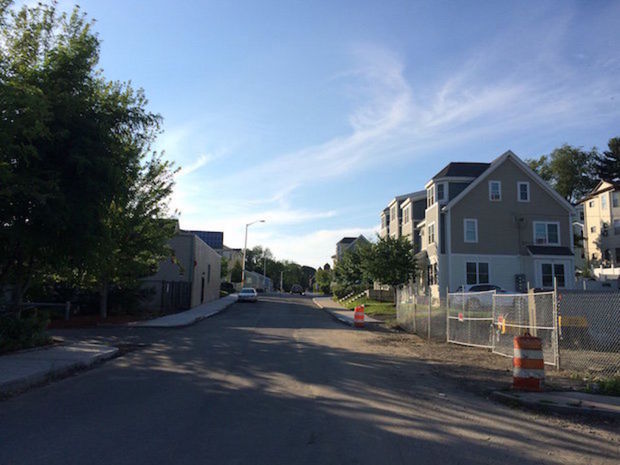
Worcester affordable housing developments to get $115,000 boost

Two affordable housing developments in Main South and in downtown Worcester are set to receive a total of $115,000 in financing from the Community Economic Development Assistance Corporation (CEDAC).

The CEDAC recently approved $50,000 for an affordable housing residence on Kilby Street and $65,000 for the renovation of the Abby Kelley Foster House on High Street.

The money for the Kilby Street residence is going to the Main South CDC, which acquired a 100-year-old building on the street in August 2014 with plans to renovate the four-story home to create nine affordable rental units, including two accessible units reserved for homeless veterans.

“This project will complement the important revitalization taking place with the Kilby-Gardner-Hammond Revitalization project,” said Roger Herzog, CEDAC’s executive director, in a press release. “We are proud to continue to support the strong efforts of Main South CDC in their work in this neighborhood.”

The money going to Abby Kelley Foster House, more commonly known as Abby’s House, will renovate their building at 52 High St., which operates a 54-unit single room occupancy residence for women who are homeless, battered or low-income. The building also includes a thrift shop, program space, service offices, and Abby House’s Women’s Center. Abby’s House plans to replace building systems, add an elevator, and reconfigure the communal kitchen and bath facilities to improve building accessibility.

“Abby’s House has faithfully served at-risk women and children for nearly 40 years,” Herzog said. “The renovations planned for this location will enable the organization to continue to serve some of Worcester’s most vulnerable individuals for many decades to come.”

SourceMass Live

MassDevelopment Provides $9M For Affordable Pittsfield Apartments

Pittsfield April Lane LLC will use $9 million in MassDevelopment funds for the acquisition and renovation of an apartment complex in Pittsfield.

The organization plans renovate and preserve all 100 units as affordable to households earning no more than 60 percent of area median income with the $1.1 million taxable and $7.9 million tax-exempt bonds, purchased by Bank of America.

The 45-year old Dalton Apartments are located at 51 April Lane and consist of 11 buildings containing 28 one-bedroom units, 44 two-bedroom units and 28 three-bedroom units.

The developers plan to replace roofs, windows, furnaces, hot water tanks, kitchens, appliances, floors and lights, while creating five handicapped-accessible units.

In addition to the tax-exempt bond, MassDevelopment assisted the Department of Housing and Community Development with the approval of federal low-income housing tax credits, which provided approximately $3.2 million in equity.

SourceBanker & Tradesman

Massachusetts Housing Investment Corp. Provides $11.5M Financing for Allston Affordable Housing

Massachusetts Housing Investment Corp. (MHIC) and the Allston-Brighton Community Development Corp. (ABCDC) have finalized $11.5 million in financing for 235 units of affordable housing in Boston’s Allston neighborhood.

MHIC is providing an $11.5 million low-income housing tax credit investment to renovate the Commonwealth and Glenville Apartments; the investment is split between a multi-investor fund ($8.8 million) and Rockland Trust Bank ($2.6 million). Financing for the project also includes $25.7 million in construction and permanent loans from Boston Private, financed through tax exempt bonds issued by MassDevelopment.

The Commonwealth and Glenville Apartments are on 17 scattered properties, all on the same city block bounded by Commonwealth and Glenville avenues. Rehabilitation of the buildings will primarily include major masonry repairs, maintenance and structural repairs on all buildings; energy efficiency and safety upgrades; accessibility and common area enhancements; and new doors, kitchen and bathroom fixture replacement, and similar work as needed in individual units. Exterior improvements will include paving alleys and walkways. Work will begin in August and be completed in September 2016. The total development cost is $56 million.

The Commonwealth and Glenville Apartments buildings are more than 100 years old, and have been owned by two separate but related companies whose members include ABCDC and a corporation of elected tenant representatives, the Commonwealth Tenants Council. The properties originally were acquired and developed in 1998 using HUD financing that was prepaid by the owners in 2011 and 2013. As part of this refinancing, the current owners are selling the two projects to a single new LLC, which will undertake a rehabilitation program and ensure the rental apartments’ long-term affordability.

“In a community that has become very transitory, with even a studio apartment going for almost $2,000 in this neighborhood, keeping these units affordable for low- and moderate-income families is of paramount importance,” Carol Ridge-Martinez, executive director of ABCD, said in a statement. “Now that we have this financing in place, we can finally begin the renovations and we will be able to sustain affordability of these apartments for many more decades.”

SourceBanker & Tradesman

Cambridge Apartment Building To Undergo $45M Reno

The 154-unit Briston Arms Apartments in Cambridge will undergo improvements thanks to $45.1 million in MassHousing financing.

Preservation of Affordable Housing (POAH) of Boston has acquired Briston Arms and plans to extend the rental subsidies on 73 of the apartments. An additional 46 apartments will receive new rental assistance subsidies and 35 of the apartments will continue to be rented at market rates.

“Cambridge is one of the hottest real estate markets in the country right now,” MassHousing Executive Director Thomas R. Gleason said in a statement. “Thankfully POAH, which has an excellent track record of preserving quality affordable rental housing, has purchased the property and will keep it affordable for the residents.”

Among the improvements planned for Briston Arms are new windows, storm doors, roofing and siding as well as masonry repairs. The property will also be brought into compliance with current accessibility requirements.

The contractor will be NEI General Contracting and the architect is Davis Square Architects. The property manager will be POAH Communities. Work is expected to begin on the property in August.

SourceBanker & Tradesman

Foundation of recovery for veterans with new housing

Six years ago Will Hatley was homeless, struggling with substance abuse and suffering from post-traumatic stress disorder from his years in the Navy and a childhood marred by a tornado that killed his mother and baby sister.

Hatley overcame those obstacles with the help of the Edith Nourse Rogers Memorial Veterans Hospital, where he now works as a veteran peer specialist.

“When I came to the VA Bedford, I had a lot of baggage,” Hatley said. “I had bad credit, I didn’t have a job, I was suicidal. That’s why as a vocational rehab counselor I strive to take away these obstacles, these barriers, these hurdles, these roadblocks.”

For many veterans, one of those roadblocks is a lack of supportive, affordable housing.

On Monday, Hatley helped celebrate the groundbreaking at the Bedford VA hospital of a new housing complex featuring 70 affordable units for veterans.
The new residences will give priority to veterans age 55 and older, making it the first of its kind in the country.

It is expected to open in spring 2016, on a 4-acre parcel on the campus of the Bedford VA hospital.

Hospital Director Christine Croteau said the new facility would help fill a need in the community.

“This today is a great example of how partners in the community, private and federal and state partners, can come together to truly make sure our veterans want for nothing,” Croteau said.

Affordable veterans housing in Massachusetts has become more of a priority in recent years.

According to Roger Herzog, of the Community Economic Development Assistance Corporation, since 2012 Massachusetts has opened more than 1,500 units of permanent supportive housing serving some of the state’s most vulnerable populations, suffering from medical and mental disabilities and addictions. Of those 1,500 units, more than 425 were targeted toward veterans.

Earlier this month, the Varnum School in Lowell’s Centralville neighborhood was transformed from classroom space into 21 affordable units for veterans.
When Bedford Green opens, senior veterans will have the benefit of not just housing, but the full support of facilities at the hospital, just steps away.
But affordable housing isn’t the only area where the Bedford VA is seen as a leader.

U.S. Rep. Seth Moulton, himself a veteran of the U.S. Marines who served four tours in Iraq, said that Bedford was paving the way on issues like treating pain without an over-reliance on addictive opiates, prescribing just one-third the national average of opiate-based medications.

Housing and health care are examples of how the country should be taking care of the newest generation of veterans, the Salem Democrat said. Investing in the best care for veterans, he said, is “more than just a moral obligation, it’s a smart investment in America’s future.”

By supporting veterans, the VA would be helping to encourage future leaders, like those who were previously hailed as members of the Greatest Generation.

“It had as much to do with what the Greatest Generation did here at home, as what they did overseas,” Moulton said. “I believe the same can be said about the next generation of veterans, the generation coming out of Iraq and Afghanistan and for generations yet to come. But we’ve got to take care of them when they come back.”

Michael Mayo-Smith, network director for the VA New England Healthcare System, said that just as the VA had been a leader on universal health care, it could also pave the way for making sure all people are given access to affordable housing.

“We don’t think anybody who served their country should go without permanent housing, just like they don’t go without health care,” Mayo-Smith said.

SourceLowell Sun

Uxbridge affordable housing finances lined up

The proposed Virginia Blanchard Memorial Housing affordable and veterans’ housing development is on track with key tax credits and loans lined up, Harry Romasco of Uxbridge Housing Associates and president of Virginia Blanchard Memorial Housing told selectmen Monday.

The roughly $10 million project planned by the nonprofit housing organization would convert the historic 1873 Virginia A. Blanchard School, shuttered for several years, to a total of 25 units of one- , two- and three-bedroom apartments.
Mr. Romasco said, “Where we are is exactly where we need to be” to bring the money to the table from state, federal and private investors.

The nonprofit developers will negotiate the sale of the tax credits and any additional loans with investors.

The project received a commitment of more than $900,000 in federal historic tax credits from the National Park Service, which Mr. Romasco said was “the green light for getting it done.”

The Massachusetts Historical Commission awarded $600,000 in state historic tax credits and developers are anticipating an award of an additional $300,000 in July.

The Community Economic Development Assistance Corporation, a public-private partnership, approved an increase in the project’s loan funding to $150,000, from its previously approved $101,300, to be used to complete predevelopment work.

The biggest piece remaining is the nearly $8 million in low-income tax credits through the state Department of Housing and Community Development’s one-stop application. Mr. Romasco said he expected to hear from DHCD in July, but “We’ve been getting some indication that it looks good.”

Uxbridge Housing Associates, which separated the Blanchard project into a separate organization known as Virginia Blanchard Memorial Housing, had been invited to apply for the one-stop program last year but did not receive funding. Mr. Romasco and Jon Juhl, managing partner, said few projects succeed on the first or even second round.

If the state financing is approved in July, bid documents would go out in the fall and construction could start as early as the first quarter of 2016. The project would be completed in 2017 and be ready for occupancy during the first quarter of 2018.

Selectman Peter Baghdasarian, who initially proposed the idea of using the former Blanchard School for senior housing, criticized the $400,000 average cost of each unit.

SourceWorceter Telegram & Gazette

Chapter 40T at 5; Meeting its Intended Purpose and Highlighting Tremendous Need

MassHousing and the Community Economic Development Assistance Corporation released a report entitled Chapter 40T at 5: A Retrospective Assessment of Massachusetts’ Expiring Use Preservation Law, which reviews the first five years of experience under the Massachusetts Affordable Housing Preservation Law, Chapter 40T. The report, prepared by housing consultant Emily Achtenberg, found that the law has basically been fulfilling its intended purpose to track the disposition of affordable housing projects and to give local and state government officials, as well as residents, an opportunity to purchase these projects and assure their preservation as affordable housing.

Among the report’s key findings were the following:

· DHCD Use of Right of First Refusal. Eight properties offered for sale that have triggered of DHCD’s Right of First Offer (ROFO) under 40T have been sold to qualified non-profit and for-profit purchasers, resulting in the long-term preservation of more than 1,0000 affordable units in some of the Commonwealth’s strongest housing markets. DHCD has created a process for affordable housing developers, both non-profit and for-profit, to qualify for this right to purchase project under the ROFR.

· Over 100 Projects Preserved. 10,000 units in more than 100 properties have been or are slated to be preserved by owners and purchasers who have pledged to keep them affordable in exchange for receiving a preliminary exemption from the 40T ROFR process. In the vast majority of these cases, owners and purchasers have promised to retain at least the same number of affordable units that existed prior to 40T.

· Final Reporting Needed. Projects that receive preliminary exemptions are not filing final reports with DHCD documenting that deals have closed in accordance with the owner’s applications. While there are no indications that there are any issues with these transactions, the report points to an area for additional follow-up by DHCD and project owners.

The report was presented at a recent forum held at MassHousing and co-sponsored by CEDAC and the Citizens Housing and Planning Association.

SourceNixon Peabody

Where Should Poor People Live?

When Peter Gagliardi first heard about an owner looking to sell an old farmhouse in this college town, he thought it seemed like an ideal place for an affordable housing complex. The property was across the street from a bus stop, near a bike path, and had access to two different sewer lines. What’s more, the city of Amherst, concerned with rising housing prices, had made a commitment to developing more affordable housing for residents in the town and region.
So Gagliardi’s nonprofit, HAPHousing, hired an architecture firm that would convert the farmhouse into 26 affordable units, a development that would blend into the bucolic landscape of ramshackle barns and rolling hills.
But when the plan for the development, called Butternut Farms, ended up in front of the community, opposition was vociferous.
“People basically said, ‘We’re in favor of affordable housing, but it shouldn’t be in a residential neighborhood,’” Gagliardi told me.
In a zoning meeting about the development, some people said their children had been bullied when they lived in rental developments and didn’t want that to happen again. Others said there would be too much traffic if the development was built. Still others worried that they would no longer be able to go into their backyards in their underwear. A young boy complained that the residents of the affordable-housing complex would run over the turtles that sometimes appeared in the neighborhood. Another resident complained that he used the property—which was private—to pick blueberries or race ATVs, and the development would put an end to all of that.
“Some of the things that were said were on the hateful side,” Gagliardi said. “It happens often, it’s the Not In My Backyard Syndrome.”
For more than a century, municipalities across the country have crafted zoning ordinances that seek to limit multi-family (read: affordable) housing within city limits. Such policies, known as exclusionary zoning, have led to increased racial and social segregation, which a growing body of work indicates limits educational and employment opportunities for low-income households.
But Massachusetts has a work-around: A state statute, called 40B, allows developers to get around exclusionary zoning and build affordable housing in communities where only a small percentage of units are considered affordable. (A few other states have similar policies.) The statute, passed in 1969 and upheld by the state’s Supreme Judicial Court in 1973, has led to the construction of 1,300 developments throughout the state, containing a total of 34,000 units of affordable housing, according to Citizens’ Housing and Planning Association, or CHAPA.
Projects built under 40B are almost always controversial: The statute was enacted in the first place because most communities outside of big cities didn’t permit multi-family housing, said Ann Verrilli, the director of research at CHAPA. Even with the statute, communities often spend millions of dollars in legal fees to try and stop the projects, Verrilli told me.
“There’s real resistance to change, resistance to development of any kind that may have school-aged kids,” she said.
Butternut Farms, in Amherst, took 10 years to build. (Alana Semuels)
The experience of developers trying to build affordable housing in Massachusetts takes on added significance now, as housing advocates wait for a decision on a landmark case in front of the Supreme Court that concerns where low-income housing projects are placed. The case, Texas Department of Housing and Community Affairs v. The Inclusive Communities Project, arose when a nonprofit housing group sued Texas, arguing that the state primarily distributed tax credits for low-income housing projects in minority-dominated areas. Inclusive Communities argued that doing so perpetuated segregation and violated the Fair Housing Act, which was passed in 1968 to prevent landlords, municipalities, banks and other housing providers from discriminating on the basis of race. The Supreme Court case centers on whether this discrimination has to be intentional in order to be illegal, or whether the Fair Housing Act also seeks to prevent policies that may not be intentionally discriminatory, but that have a “disparate impact” on minorities.
Housing advocates say the parts of the Fair Housing Act being challenged in this case are important tools in ensuring the country does not become even more deeply segregated. As things are now, few states have policies in place that try and integrate communities or develop affordable housing in so-called “high opportunity” areas. And the process of bringing discrimination claims to court under the Fair Housing Act is a difficult and expensive one. The Supreme Court may yet make it even more difficult to build housing for poorer families in anywhere besides the poorest places.
“This decision will have a very profound impact on millions of Americans going forward at a time when we need every tool we can use in the arsenal of civil rights actions to make sure we live up to the aspiration of providing equal opportunity and ending discrimination in this country,” said Dennis Parker, the director of the Racial Justice Program at the ACLU, which filed an amicus brief on behalf of Inclusive Communities.
To be sure, there are reasons—besides pure racism—why a wealthy community might resist the placement of affordable housing within city limits. Many municipalities already have trouble funding schools. With more houses and families but not much more of a tax base, their budget problems could get even worse. The small Massachusetts town where I grew up, and where my brother is a public-school teacher, has been enmeshed in debate over a 40B proposal at the same time voters were asked to increase taxes so the town could continue funding schools at adequate levels.
But people who oppose 40B projects and other affordable housing developments often don’t have any complaints after the projects are built, according to research. A study out of Tufts University, “On The Ground: 40B Controversies Before and After” looked at some of the most controversial 40B projects in Massachusetts that were completed before June 2006. It found that the concerns of residents expressed before construction were usually not realized, and that controversy evaporated after construction wrapped up.
“This study provides significant evidence that the fears of new affordable housing development are far more myth than reality,” the study concluded.
Similarly, Princeton professor Douglas Massey studied an affordable housing development in Mount Laurel, New Jersey, that local residents had complained would lower home values, increase crime rates, and cause local taxes to rise.
He found that the development did none of those things. Many surrounding neighbors didn’t even know there was a housing project nearby.
“The market is going to work to de facto disadvantage lower-income residents.”
What’s more, the lives of residents in the housing development improved markedly after they moved to the affluent suburb. An increasing amount of data seems to show that location matters just as much as income in determining a child’s likelihood of escaping poverty. As I’ve written about before, children from low-income families who move to more affluent suburbs are more likely to graduate from high school, attend four-year colleges, and have jobs than their peers who stayed in the city. And cities that have made an effort to keep schools desegregated have enjoyed less race-based strife than peer cities.
Still, affluent cities and towns often resist low-income housing projects: Despite 40B in Massachusetts, many areas of the state are falling back into the same segregation patterns that the Fair Housing Act sought to remedy nearly 50 years ago. Recent research showed, for example, that the Boston metro area has more racially concentrated areas of affluence (census tracts where 90 percent is white and wealthy) than any of America’s 20 biggest cities.
There are few states or municipalities that have laws targeted at exclusionary zoning. Three states—Massachusetts, Rhode Island, New Jersey—have “exemplary interventions” to address exclusionary zoning, according to a paper by Rachel G. Bratt and Abigail Vladeck of Tufts University. Montgomery County Maryland also has a similar intervention. Other states, such as Oregon and Texas, prohibit mandatory inclusionary zoning requirements. In places that don’t strive to promote integration, segregation is likely to be prevalent.
“The market is going to work to de facto disadvantage lower-income residents,” Bratt told me. “The theory is that in order to deal with segregated patterns, you need to have proactive policies to deal with it.”
Many affordable housing units in the suburbs are a direct result of court cases, and even enforcement of those programs are lax. In 2009, Westchester County in New York signed a desegregation agreement and agreed to build and market hundreds of apartments for moderate-income minorities after a court found it had misled HUD by applying for funds that it said it would use to integrate housing, and then did the opposite. Four years later, the county had not complied with the provisions.
New Jersey is one of the few states that bars wealthy towns from excluding affordable housing, largely because of court decisions relating to the Mount Laurel case, but even those have been under attack. Governor Chris Christie attempted to disassemble the state agency overseeing affordable housing and wanted to allow municipalities to decide how much affordable housing to allow. A state appeals court blocked these attempts, but the instance points to the fact that affordable housing programs are being challenged in the few states that have them.
In Massachusetts, a group put an initiative on the ballot in 2010 that sought to repeal 40B. The coalition for repealing the law said that the statute “has destroyed communities in rural, suburban and urban neighborhoods alike, while lining the pockets of out-of-state speculators.”
“Some people just do not want low-income housing in their communities.”
The repeal effort failed, 58 percent to 42 percent, and Marc Draisen, the executive director of the Metropolitan Area Planning Council, a state planning group, says he thinks the law now has widespread support. But that doesn’t mean it has gotten any easier to build affordable housing.
Most developers don’t want to do mixed-income developments, and prefer to build market-rate buildings where they won’t have to face any community resistance or years of legal wrangling. That’s even in a state that’s seen by many as a leader in encouraging the construction of affordable housing in communities that don’t really want it.
“40B is a legal tool but it doesn’t eliminate prejudice,” Draisen told me. “Some people just do not want low-income housing in their communities.”
This prejudice won’t likely change soon, no matter what the Supreme Court decides in Texas v. Inclusive Communities. Housing advocates see some hope in an impending HUD rule, which may make it harder for communities to show this prejudice. HUD wants to stipulate that all areas receiving federal funds for low-income housing show that they are proactively promoting integration, housing experts say.
Still, the government currently lacks the resources to ensure that every community promotes integrated housing. It may be up to developers like Peter Gagliardi to continue to keep fighting to do so. And he can hold up Butternut Farms as an example of how it can work.
The development is located off a two-lane road near Hampshire College, a campus with rolling green hills, barns, and unobtrusive brick buildings. The 26 units blend right in: They are distributed in a few red barn-like structures and one yellow multi-family house, surrounded by trees and set back from the road, located up a sloping driveway.
Butternut Farms, from the road (Alana Semuels)
Gagliardi first set foot on this property in 2000. The homes opened to tenants in 2011. The intervening decade was threaded with court cases, appeals, and $150,000 worth of legal costs for HAP, despite pro bono legal assistance.
The project, which involved the construction of three detached buildings of eight units of housing each and renovating the farmhouse to include two new units, violated parts of Amherst’s zoning bylaws regarding parking and housing density in residential areas. But that’s the point of 40B—it allows developers to get around those laws if the housing they are building is affordable.
The local zoning board approved HAP’s application to build a 26-unit rental development in 2002, but neighbors immediately filed suit to annul the approval. When a Land Court judge upheld the permit, neighbors appealed. When the case went to the state Supreme Judicial Court, justices decided on behalf of HAP, in 2007.
“Our conclusion does not ‘needlessly infringe’ on the ‘settled property rights of abutters,’” the justices wrote. “Rather, our conclusion takes into account that the Legislature ‘has clearly delineated that point where local interests must yield to the general public need for housing.’”
A few weeks before the first tenants moved into the apartments in 2011, a rare tornado blew through nearby Springfield, destroying dozens of affordable housing units there.
“I pointed out the irony it took us 10 years to get 26 units built here, but at the same time, many times that number of units of affordable housing were destroyed in a brief time of a tornado,” Gagliardi said.
It’s a happy ending, but the problems that face Peter Gagliardi now face the nation. The country will have to grapple with how to house low-income residents in areas of opportunity, or bear more racial strife. After all, if Gagliardi had so much trouble in a liberal town in Massachusetts, a state with some of the strongest affordable-housing laws in the country, is there any reason to believe developers will be able to build affordable housing in affluent areas in the rest of the country, especially without the benefit of the Fair Housing Act?

SourceThe Atlantic

Affordable Senior Housing To Open In Roxbury

Officials tomorrow will celebrate the opening of Cooper House in Roxbury.
“We must continue to support affordable housing in our neighborhoods, with great projects like Cooper House in Roxbury,” Boston Mayor Martin Walsh said in a statement. “By investing in affordable housing for seniors, we are helping our residents to remain in and revitalize Boston’s neighborhoods.”
Walsh and Jamie Seagle, president of Rogerson Communities, will attend the ribbon-cutting ceremony for Cooper House, located at Walnut and Columbus Avenues. The building adds 37 new units of affordable elder housing to market and completes the renovation of what was a blighted three-acre parcel into an attractive block of housing that now includes four buildings, with a total of 161 low- income housing units.
The total cost of developing Cooper House was more than $10 million. Private contributions include grants from the Charles H. Farnsworth Charitable Trust, Bank of America N.A., Trustee, The Hyams Foundation and The Boston Foundation. On-going rental subsidy is provided by U.S. Department of Housing and Urban Development (HUD). Other funding for Cooper House included $5.7 million from HUD, $1.5 million in HOME funds from the city of Boston’s Department of Neighborhood Development, $400,000 from a HUD planning grant and $155,000from a CEDAC pre-development loan.
Cooper House is one of three original structures located on the historic site of the Home for Aged Couples overlooking Franklin Park in Egleston Square. Rogerson Communities took on the redevelopment plan for the buildings in 1999. A fourth building, Spencer House, is new construction developed by Rogerson Communities. Spencer House opened in 2007 with 46 units of affordable housing and a state of the art Adult Day Health Center.

SourceBanker & Tradesman

MassDevelopment Supports South Boston Affordable Veterans’ Housing Project

MassDevelopment has issued a $6.2 million tax-exempt bond on behalf of South Boston Veterans Housing LLC, a joint venture between Caritas Communities and the South Boston Neighborhood Development Corp. (South Boston NDC).
The organizations will use proceeds from the bond, purchased by Radius Bank, to build Patriot Homes, 24 new rental apartment units in South Boston for low-income veterans.
“The South Boston community has a long history of military service,” Donna Brown, executive director of the South Boston NDC, said in a statement. “South Boston NDC is thrilled to be starting construction on this important affordable housing for veterans, and we are grateful for the support of the city of Boston and many funders, including MassDevelopment, who have made this project possible.”
Patriot Homes is a two-phase project. During the first phase, South Boston Veterans Housing LLC will acquire the former D Street police station in South Boston and convert the building into 12 studio apartments. Renovations to the station will include office space for the South Boston Neighborhood Development Corp., a community group that seeks to preserve and create affordable housing. The second phase of the project includes construction of a building that will contain 12 apartment units – two one-bedroom units and 10 two-bedroom units. All 24 units of the Patriot Homes will be reserved for households earning no more than 50 percent of area median income.
MassDevelopment assisted the Department of Housing and Community Development with the approval of federal low-income housing tax credits, which provided approximately $3.9 million in equity for the project. MassDevelopment also provided $414,000 from the Brownfields Redevelopment Fund to assess and clean up contamination at the site.
“Patriot Homes will provide essential affordable housing opportunities for South Boston’s veteran community,” MassDevelopment President and CEO Marty Jones said in a statement. “MassDevelopment is proud to support Caritas Communities and the South Boston Neighborhood Development Corp. in their joint effort to supply our veterans with the homes they need and deserve.”

SourceBanker & Tradesman