BPDA votes to acquire 104-108 Walter St. in Roslindale, advancing community conservation priority

At its December 17 meeting, the Boston Planning and Development Agency voted to acquire 104-108 Walter St. in Roslindale, a property that has been a conservation priority for neighbors for decades because it abuts the Roslindale Wetlands Urban Wild and absorbs stormwater runoff from throughout the area. The BPDA action paves the way to take this property off the market for private development and represents a step toward conserving 108 Walter St. as open space – one of Boston’s top five priority land acquisition sites – as well as creating four units of affordable ownership housing at 104 Walter.

Stormwater runoff management has become increasingly important as climate change brings more heavy and intense storms. Climate concerns and development pressures galvanized a group of neighbors and abutters who have worked with city and state officials to advocate for the acquisition of 108 Walter Street, a 37,000 square foot parcel that would be appended to the 9.5-acre Roslindale Wetlands Urban Wild. As part of their efforts, Roslindale Wetlands advocates joined with neighborhood groups from around the city to support the passage of Boston’s local wetlands ordinance in December 2019.

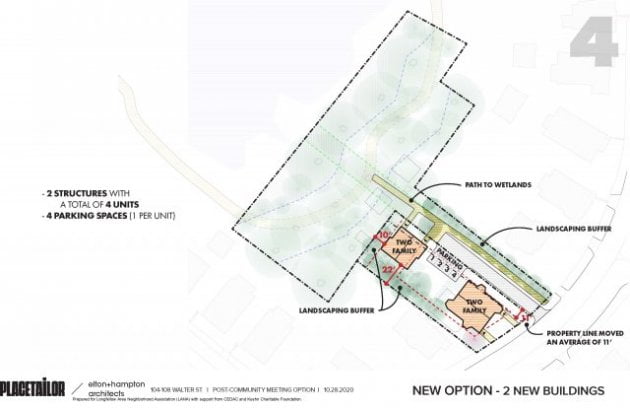
The second part of the community’s vision for the future of these parcels is to create four units of affordable ownership housing at 104 Walter Street. The housing component will advance equity and inclusion in an increasingly expensive neighborhood.

In a parallel project, the city is investing $500,000 in capital improvements elsewhere in the Roslindale Wetlands Urban Wild, such as wetlands crossings, trail upgrades, removing piles of dumped construction debris, and other ecological restoration work. These planned improvements increased the imperative of adding 108 Walter to the conservation area.

In November, the city received a $387,000 grant from the Commonwealth to help pay for the purchase of 104 and 108 Walter, which were offered for sale jointly. The Longfellow Area Neighborhood Association (LANA) received a planning grant and hired architectural firm PlaceTailor Design to work with neighbors during two October workshops. A preferred site plan was developed for affordable home ownership opportunities and open space conservation for climate resiliency. The resulting consensus proposal makes possible the preservation of 108 Walter Street, which is closest to the wetlands boundary and the most ecologically sensitive, and proposes four units of affordable ownership housing at 104 Walter, which has already been developed and now includes a single-family house and a dilapidated barn.

Following the BPDA vote, a closing to effect the purchase is expected before the end of the year, after which the agency will transfer most of the 108 Walter Street parcel to the Boston Conservation Commission for permanent protection and stewardship.

The Roslindale Wetlands Task Force and Longfellow Area Neighborhood Association expressed thanks to the elected officials who supported the project, especially Mayor Marty Walsh, City Councilors Ricardo Arroyo, Andrea Campbell, Annissa Essaibi-George, Matt O’Malley, and Michelle Wu; State Representatives Nika Elugardo and Ed Coppinger; and State Senator Mike Rush. CEDAC (Community Economic Development Assistance Corporation) and the Kuehn Charitable Foundation provided assistance with a planning grant to LANA.

More information about the consensus vision for the property, developed during the two October workshops, is available at www.LongfellowArea.org and www.RoslindaleWetlands.org.
SourceUniversal Hub

YW building in Back Bay to become affordable housing complex

The longtime home of Boston’s YWCA will soon get a new life as affordable housing in one of the city’s swankiest neighborhoods.

Developers Beacon Communities and Mount Vernon Co. are set to file plans with the city Friday to convert the 13-story building at the corner of Clarendon and Stuart streets in the Back Bay into a 210-unit affordable housing development, with nearly half set aside as permanent supportive housing for formerly homeless people. They’ll keep current tenants — including the Snowden International School and the Lyric Stage theater — and will partner with the Pine Street Inn to provide counseling and other services for residents.

And perhaps most crucially, said Beacon CEO Dara Kovel, they’ll maintain the building’s historical use as a community hub while providing affordable housing in a part of the city where it’s in short supply.

“That’s important,” she said. “This will ensure for a long time that there will be diversity in this neighborhood.”

It’s a project that likely wouldn’t have happened if not for the COVID-19 pandemic.

YW Boston, as the YWCA is now known, put the building on the market in the summer of 2019, hoping to capitalize on the hot real estate market to secure its financial future. By early this year, the nonprofit had a deal in place with a different developer, who had hoped to upgrade its 66-room hotel and convert some of its apartments into higher-end units. Then the pandemic hit, and financing dried up for hotel and luxury housing developments. The deal fell apart.

Enter Beacon, a veteran Boston affordable housing developer, and Mount Vernon, a large market-rate landlord that recently converted another YWCA in the South End into the Revolution hotel. They’d partnered on an offer on the project originally, but were outbid. So they came back with a new plan: Make the building entirely affordable, financed with an array of federal and state loans, along with tax credits and city-allocated vouchers.

The new offer was “substantially discounted” from YW’s original price, Kovel said, but — with the support of Mayor Martin J. Walsh — the financing was solid. Last month, YW’s board approved a purchase and sale agreement, with the deal to close next year.

“Covid has created a window for opportunities like this for affordable housing,” said Mount Vernon chairman Bruce Percelay. “It’s a unique situation.”

Neither party would disclose a sale price — though Kovel said she expects the purchase and renovation combined will cost $108 million — but YW CEO Beth Chandler said the proceeds would allow her organization to focus on its mission, which has evolved over the years from providing housing and classes for young women arriving in Boston to leading racial and social justice training that largely happens offsite.

“We’re thrilled. We think this is a great partnership,” Chandler said. “We don’t have to think anymore about managing a building and, given all that’s going on in the world, we can focus on the work we need to do.”

Like the building’s commercial tenants, YW Boston will keep its office space in the building; Kovel said she expected those spaces will be able to stay open while residential units upstairs are renovated. Hotel 140, as the 66-unit hotel is known, will close and be converted to apartments. About 100 units will be set aside as supportive housing for formerly homeless people, with services run by the Pine Street Inn, similar to a project that the nonprofit is codeveloping in Jamaica Plain.

The renovation won’t change the historic exterior of the 13-story brick building across Stuart Street from Boston’s tallest skyscraper — 200 Clarendon — and down the block from a glassy 33-story condo tower now under construction. But Beacon plans to upgrade the roof, elevators and other systems, and will add bathrooms to the many single-room-occupancy units that don’t currently have them. Friday’s filing with the Boston Planning & Development Agency was an initial letter of intent. More detailed plans, likely to come in several weeks, will then kick off community review. Kovel said she hopes work can start in the fall and finish in mid-2023.

She said the project is a rare chance to add high-quality housing for low-income people in the increasingly expensive core of the city. Many other buildings like this one have sold at huge prices in recent years. But the pandemic provided a chance to do something that otherwise might not have been financially feasible.

“The world fell apart, and we took that opportunity,” Kovel said. “If luxury hotels and apartments aren’t working right now, maybe affordable housing will.”

SourceThe Boston Globe

Decade-old law has preserved 20,000 affordable housing units

BOSTON – In its first 10 years in effect, a state law meant to preserve affordable housing in Massachusetts has protected almost 20,000 units but one national advocate said Wednesday that preservation alone will not be enough to meet the demand for affordable housing.

To mark a decade of a state law known as Chapter 40T, the Community Economic Development Assistance Corporation released its latest research on the impact the law has had and brought together a group of advocates to discuss the past and future of affordable housing retention.

“Chapter 40T has been a big success, contributing to the preservation of almost 20,000 units while only losing 204,” Bill Brauner, director of housing preservation and policy at CEDAC, said.

Chapter 40T was enacted late in 2009 and applies to properties that are funded through 16 specific housing programs, like the federal Section 8 program and state rental vouchers. When a property’s affordable housing restriction is set to expire — often through a mortgage maturity, contract expiration or the end of a tax credit use restriction, Brauner said — the law requires notices of the expiration be sent to tenants and local officials, and provides the state Department of Housing and Community Development the right of first offer and the right of first refusal on the property.

Though the non-binding nature of the right of first offer may seem “toothless,” Brauner said that 10 of the 14 properties that have been purchased to date by DHCD designees have been purchased with the right of first offer.

The law also offers tenant protections. For three years after a termination, rents cannot be increased by more than the Consumer Price Index plus 3 percent for low-income residents who do not receive enhanced vouchers, Brauner said.

Priya Jayachandran, president of National Housing Trust, said she considers Chapter 40T “a model law for housing preservation” and that her organization often shares the law with other states that seek its expertise. But she argued that housing advocates should begin to take a broader view of housing and housing preservation.

Many organizations have long focused on preserving subsidized affordable housing units, as Chapter 40T does, but Jayachandran said “the vast majority of affordable housing is, in fact, in unsubsidized units that fall under the radar” and that the scope of preservation should be expanded to also capture those units.

She also made the case for housing advocates to join forces with environmental activists focused on stemming the tide of climate change to promote affordable housing preservation.

“I think the more that we can link housing preservation to infrastructure and climate change, to share that the energy burden from new construction — from all aspects of that, from the materials cost, from the transportation of those new materials, from the construction costs — the whole process is much more energy consumptive than is housing preservation,” Jayachandran said. “So how can we partner with our energy advocates to make that claim? … And how do we forge those partnerships to make preservation an environmental issue as well as a housing issue?”

But she also acknowledged that preservation alone is not enough.

“Notwithstanding what I just said about energy consumption, the reality is that we need to be preserving units and creating units at the same time,” Jayachandran said. “When NHT was created in 1990 to focus on preservation, it was because housing preservation was the most pressing affordable housing issue of our time. It continues to be pressing, but the reality today is that even if we did preserve every one of our units, it’s not enough. We have simply not built up over the past 30 years the way we should have.”

Gov. Charlie Baker has been pushing since 2017 for lawmakers to agree to a zoning reform measure intended to spur housing production, and the governor has pointed to it again as one of the items he would like to see the Legislature pass before the session ends early next month.

The House and Senate each included Baker’s long-sought zoning reforms in the differing versions of the economic development bill that has been under private House-Senate negotiations since July 30.

Housing Committee Co-chair Rep. Kevin Honan spoke during CEDAC’s virtual event Wednesday morning and said that he had been involved with the issue of expiring affordability protections since his very first days in office.

“The first issue I was involved in was expiring use. We got a call from the 10 O’Clock News on Channel 2 who were doing a story on Glenville Ave. in Allston,” Honan said. “That was the first time I was interviewed as a legislator, in early 1987.”

SourceSentinel and Enterprise

Urban Edge Begins Construction on 62-Unit Holtzer Park

Urban Edge is announcing that construction has begun on Holtzer Park, a 62-unit affordable housing development near Jackson Square in Jamaica Plain, MA.

Holtzer Park is part of the Boston Housing Authority’s (BHA) 125 Amory Street redevelopment, a joint venture between The Community Builders (TCB), Jamaica Plain Neighborhood Development Corporation (JPNDC), and Urban Edge.

The project has been made possible with the generous support from a number of public and private financing organizations, including the City of Boston, Massachusetts Department of Housing and Community Development (DHCD), Community Economic Development Assistance Corporation (CEDAC), MassDevelopment, MassHousing, Massachusetts Housing Investment Corporation, Citizens Bank, Massachusetts Housing Partnership, the Federal Home Loan Bank of Boston (FHLBank Boston), Boston Private, The Life Initiative, and the U.S. Department of Housing and Urban Development (HUD).

“We are so grateful to the funders for Holtzer Park,” said Emilio Dorcely, Urban Edge’s Chief Executive Officer. “Through their assistance, we will bring new units of much-needed affordable housing to the Jackson Square neighborhood. Now more than ever, it is clear that quality affordable housing is a necessity in Boston’s Black and Brown communities, and we appreciate the support from both public and private institutions to make this project a reality.”

Named for the Holtzer-Cabot Electric Company, where on the site, electrical devices were manufactured in the 20th century, Holtzer Park will meet the U.S. Green Building Council LEED Homes Gold certifiable standard and utilize a high-efficiency heating system and building envelope. The development team for the project includes Urban Edge, ICON Architecture, and NEI General Contracting.

The project will cost an estimated $32 million in total, and has received more than $2.7 million in funding from the City of Boston Department of Neighborhood Development, $750,000 from the Neighborhood Housing Trust, and more than $15.8 million in State and Federal Low Income Housing Tax Credits and more than $5 million in subsidies from DHCD.

“This project is a fantastic example of how our strong non-profit partners like Urban Edge are able to layer multiple state, federal, and local funding sources to create opportunities for our families,” said Housing and Community Development Undersecretary Jennifer Maddox. “We are excited to see the Baker-Polito Administration’s investments in the neighborhood, through MassWorks Infrastructure funding, MassDevelopment’s Brownfields program, and our own affordable housing awards help advance this great work.”

“The Life Initiative is proud to have supported Urban Edge’s efforts in the development of Holtzer Park,” said Mollye Lockwood, Vice President at The Life Initiative. “The Holtzer Park project represents a wonderful example of Urban Edge’s ability to forge partnerships to make transformative development happen. After over four years of working with community and its development partners of TCB and JPNDC, Urban Edge has made its project in the 125 Amory master plan a reality and will be providing 62 affordable homes to the Jamaica Plain community.”

“Holtzer Park is a transformative initiative that will introduce much-needed affordable rental housing in a rapidly evolving part of Boston,” said Kenneth Willis, Senior Vice President and Director of Housing and Community Investment at FHLBank Boston. “FHLBank Boston is proud to provide financial support for this transit-oriented project through our Affordable Housing Program, and we’re pleased that it is under development.”

“We are grateful to be involved in the creation of new affordable rental housing at Holtzer Park. We want to thank and congratulate our long-time partner, Urban Edge; the Federal Home Loan Bank of Boston; and our other key partners, especially Boston’s Department of Neighborhood Development and the State, in planning and financing this important development,” said Boston Private CEO Anthony DeChellis. “Boston Private was the lead lender for the construction and permanent financing. We are grateful for Urban Edge’s leadership in bringing together a complex initiative during these extraordinary times with the COVID-19 pandemic.”

“It’s exciting to see underutilized BHA land transformed into such an important use for dozens of low-income families,” said BHA Administrator Kate Bennett. “We are forging exciting opportunities in Jackson Square and I am grateful to all of our partners and staff that have made this happen.”

“Holtzer Park is yet more evidence of the innovative and successful effort to redevelop the Jackson Square neighborhood through the work of community-based non-profit developers,” said Roger Herzog, CEDAC’s executive director. “The project will result in 62 new transit-oriented affordable apartments, and will include supportive housing units. This project will set aside units for people who live with disabilities, as well as families who have experienced homelessness, providing stable, affordable homes to some of Boston’s most vulnerable residents. CEDAC could not be more pleased to support Urban Edge and to help them turn the vision of Holtzer Park into a reality.”

“We are pleased to work with our longtime partner Urban Edge to bring 62 much needed affordable housing units to Boston. We are proud to support such an important project and continue to advance the creation of healthy communities,” said Joseph Flatley, President and CEO of the Massachusetts Housing Investment Corporation.

“The Holtzer Park project in Jamaica Plain meets an important need in our community and demonstrates Citizens’ strong commitment to support more affordable housing options for Boston residents,” said Jerry Sargent, President of Citizens Bank, Massachusetts and Head of the Northeast.

“ICON Architecture is thrilled to be part of the Holtzer Park team. Creating equitable and healthy new homes for families is part of ICON’s mission,” Kendra Halliwell, Associate Principal and Practice + Design Team Leader at ICON Architecture.

“With our dedication to building affordable housing, NEI shares Urban Edge’s mission of strengthening communities and families by building affordable housing and vibrant, prosperous neighborhoods,” said Josef Rettman, president of NEI General Contracting.

“MassDevelopment is proud to support the development of Holtzer Park, with both a $27,000 award from the Brownfields Redevelopment Fund last year to assess the site and a $17.2 million tax-exempt bond more recently to aid construction,” said MassDevelopment President and CEO Lauren Liss. “Holtzer Park will add critical affordable housing units for residents of Boston’s Jamaica Plain neighborhood, and we’re pleased to be part of a tremendous team of financing partners helping to make this project a reality.”

SourceBoston Real Estate Times

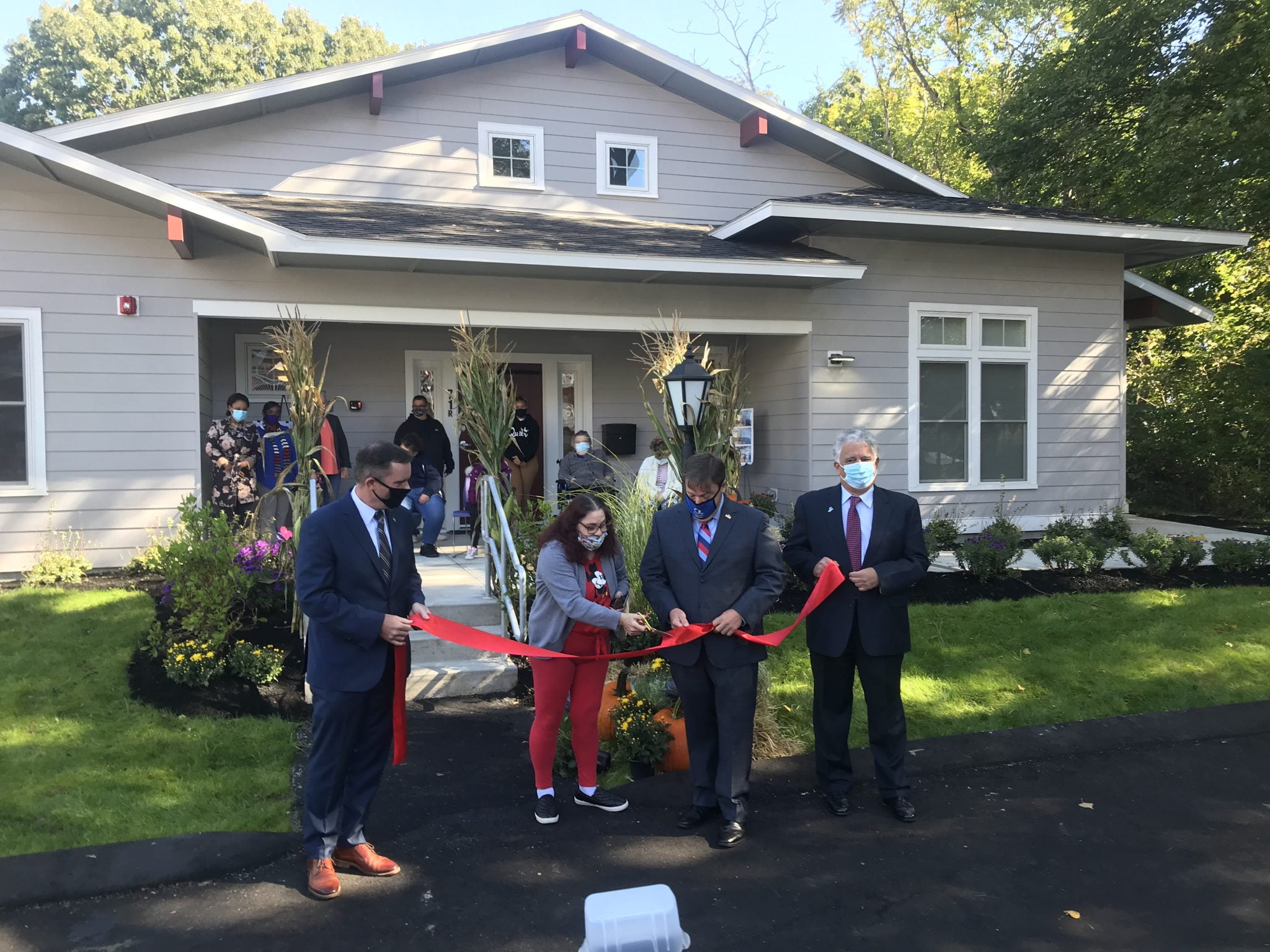
Deaf-friendly home for the disabled opens in Quincy’s Germantown

The group home currently houses five adults with intellectual and developmental disabilities, has staff available 24 hours a day, and includes smart technology for the deaf staff and residents.

QUINCY — The first completely deaf-friendly group home for adults with disabilities in eastern Massachusetts has opened in Quincy’s Germantown neighborhood.

NeighborWorks Housing Solutions, a Quincy-based nonprofit that builds homes for veterans, homeless families, and people with disabilities, collaborated on the Bicknell Road project with WORK Inc., a nonprofit based that operates residential group homes for people with disabilities. The home currently houses five adults with intellectual and developmental disabilities, has staff available 24 hours a day, and includes smart technology for the deaf staff and residents.

“This has been an honor to collaborate with WORK Inc. on this project, which will truly be a home to five individuals who have a unique set of needs,” Robert Corley, chief executive officer of NeighborWorks, said in a statement. “We’re excited to show the community how important this type of housing is for the community. We look forward to partnering with WORK Inc. and other similar agencies to help create more housing like the home in Germantown.”

The group home was designed by Elton Hampton Architects and was funded by the Massachusetts Department of Housing and Community Development, the Massachusetts Department of Developmental Services and the City of Quincy.

NeighborWorks Housing Solutions is responsible for various Quincy developments, including 140 units at The Watson on East Howard Street, 24 units at Winter Gardens on Winter Street, and 1116 Sea St. — a two-family home at the former Houghs Neck American Legion Post that houses two veterans and their families.

The nonprofit also received a $500,000 federal grant in February and was approved by the Quincy Planning Board in January for a project that will demolish four Quincy Point homes to build 18 low-income apartments in their place.

SourceThe Patriot Ledger

CEDAC Approves $8.4 Million in Acquisition Financing to Preserve Long-Term Affordability of 100 Housing Units in Attleboro

The Community Economic Development Assistance Corporation (CEDAC) recently committed more than $8.4 million in acquisition financing for the preservation of affordable housing in Attleboro, MA.

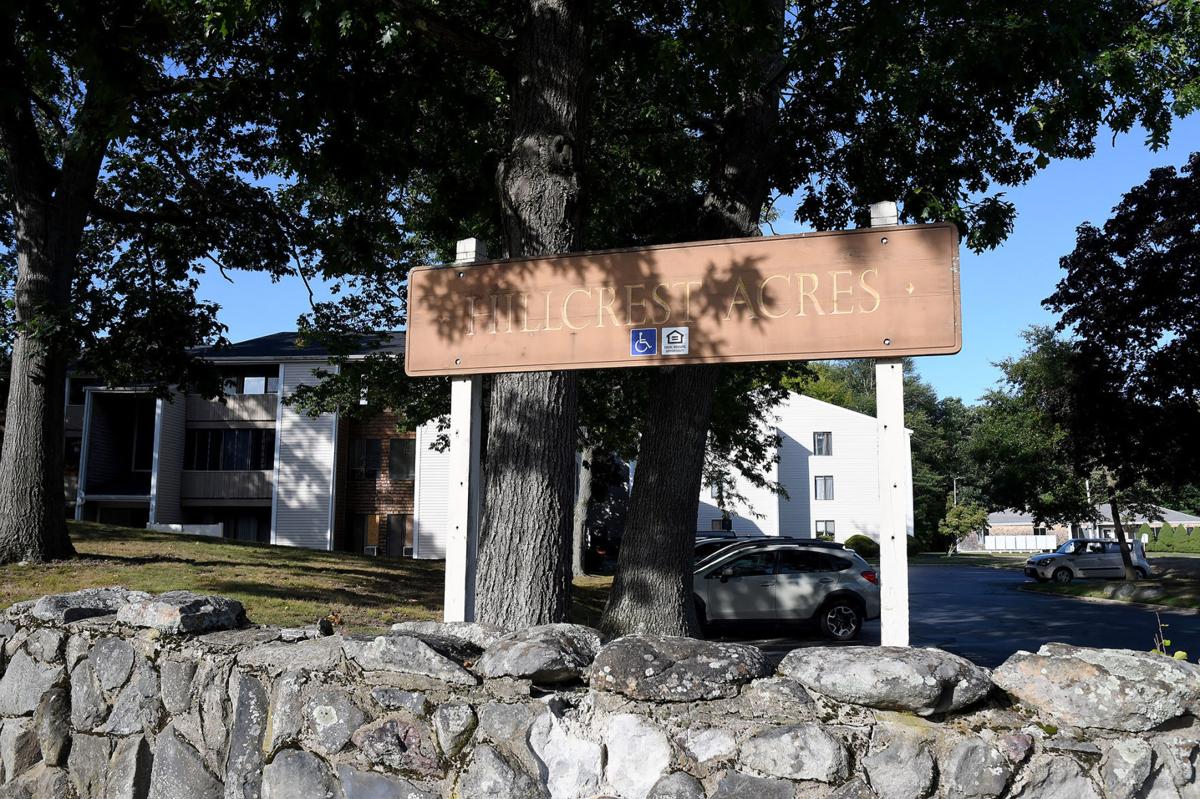
The financing commitment was made to Retirement Housing Foundation (RHF), working in partnership with The Schochet Companies, to acquire Hillcrest Acres in Attleboro. The partners recently finalized the transaction, ensuring that this property will remain affordable going forward.

“Preserving affordable housing is an important part of CEDAC’s mission. Hillcrest Acres was far along the path of conversion from affordable housing to market rate, but thanks to this acquisition, all 100 apartments will have long-term affordability restrictions,” said Roger Herzog, CEDAC’s executive director. “Congratulations to our partners, Retirement Housing Foundation and The Schochet Companies, on this important milestone that will preserve a total of 100 units of affordable housing while preventing existing tenants from displacement.”

The 100-unit property was constructed in 1974 and faced expiring affordability restrictions in 2019. CEDAC participated with Eastern Bank to provide the acquisition financing. Funding sources included program-related investments (PRIs) from both Bank of America and the John D. and Catherine T. MacArthur Foundation.

“I am pleased to welcome Hillcrest Acres to the RHF family of 198 communities,” said Dr. Laverne Joseph, President and CEO of RHF. “There is a large and growing need for affordable housing and we are doing our best to address that need.”

Hillcrest Acres is a garden style multifamily community located on just over nine wooded acres in Attleboro, with a mix of 1-, 2-, and 3-bedroom units. Consisting of 10 residential buildings spread throughout the property, the development offers picnic and barbecue areas, play areas, and a 3,000 square foot community/office building. The property is close to public transportation, including the MBTA commuter rail station with trains to both Providence and Boston.

“We are so appreciative of the efforts of CEDAC and the Massachusetts Department of Housing and Community Development (DHCD) in helping us to acquire and preserve this key asset as affordable for the folks who currently reside there as well as those who will come after them,” said Richard Henken, president of The Schochet Companies. “With their help we were able to get the seller an acceptable price so as to not lose these apartments to the market. We look forward to completing the second leg of this transaction, which will refresh and reinvigorate the property providing significant quality of life benefits for our residents.”

“This closing was made possible by the efficient and collaborative work with our partners,” said Bill Brauner, CEDAC’s Director of Housing Preservation. “We look forward to continuing to work with Retirement Housing Foundation as they seek long-term funding from the Massachusetts Department of Housing and Community Development (DHCD) and from MassHousing, which will ensure that this development remains affordable for many years in the future.”

SourceBoston Real Estate Times

Hillcrest Acres in Attleboro acquired, to be kept as affordable housing

The nonprofit Retirement Housing Foundation and The Schochet Companies have closed on the acquisition of Hillcrest Acres Apartments, preserving 100 units of affordable housing, it was announced Friday.

Hillcrest Acres, located at 1101 Hillside Ave., is an expired Rent Supplement and Section 236 property, with a mixed income, but mostly affordable, resident population, the announcement said.

“With all affordability restrictions having expired, the project was at high risk of being lost to a market rate buyer, potentially leading to community disruption and displacement of many lower income households,” it said.

advertisement

“I am pleased to welcome Hillcrest Acres to the RHF family of 198 communities,” RHF President and CEO Laverne Joseph said. “There is a large and growing need for affordable housing and we are doing our best to address that need.”

According to the announcement, the development team worked with the property owner for over a year to reach agreement on a transaction. To facilitate preservation, the Community Economic Development Assistance Corporation has provided a $8.4 million acquisition loan, allowing for a bridge to a low-income housing tax credit transaction. Coupled with financing and funding from other public sources, it “allows for a major rehabilitation of dwelling units and most major systems.”

“Preserving affordable housing is an important part of CEDAC’s mission,” said Roger Herzog, CEDAC’s executive director. “Hillcrest Acres was far along the path of conversion from affordable housing to market rate, but thanks to this acquisition, all 100 apartments will have long-term affordability restrictions.”

advertisement

The acquisition will preserve 100 units of affordable housing “while preventing existing tenants from displacement,” Herzog said.

Completed in 1974, Hillcrest Acres is a garden-style multi-family community located on just over 9 wooded acres. It consists of 10 residential buildings spread throughout the property and has picnic and barbecue areas, play areas, and a 3,000-square-foot community/office building on site.

Founded in 1961, RHF is a national nonprofit organization with a mission to provide a range of housing options and services for older adults, low-income families, and persons with disabilities.

It is affiliated with the Council for Health and Human Service Ministries of the United Church of Christ and LeadingAge and its state affiliates, and also co-sponsors housing development with other varied denominational and community organizations. RHF sponsors and manages 198 communities in 29 states and Washington, D.C., Puerto Rico and the Virgin Islands. This will be RHF’s 12th community in Massachusetts.

Schochet Associates Inc. is a real estate development and management company founded in 1973. Since that time, the company has developed, owned, and/or managed in excess of 7,000 apartments and over 600,000 square feet of retail and commercial space throughout New England and on the West Coast. Today, it owns and/or manages 5,000 apartments and 100,000 square feet of commercial space throughout New England.

CEDAC is a public-private community development finance institution that provides financial resources and technical expertise for community-based and other nonprofit organizations engaged in community development in Massachusetts.

SourceThe Sun Chronicle

New 6-Unit Building in Hyde Park

Dear Friends and Supporters,

We are very pleased to announce that we have acquired a new supportive housing project, a 6-unit building in Hyde Park. The project was originally developed more than twenty years ago by New Communities Services, a Cambridge-based nonprofit, to provide housing and supportive services to single adults at risk of homelessness. As the new owner, Mainstay will continue to operate the development as a supportive housing project for individuals at risk of homelessness.

This project was undertaken in partnership with the Community Economic Development Assistance Corporation (CEDAC) and the Massachusetts Department of Mental Health. Roger Herzog, executive director of CEDAC, said “I’d like to thank Mainstay for ensuring the stability of this important project and congratulate them on their incredible work serving vulnerable populations, especially during these unprecedented times. The current public health crisis demonstrates how crucial it is for everyone to have access to a safe, affordable place to live and reaffirms our commitment to supporting the non-profit community development sector across the state. We would also like to thank the Massachusetts Department of Mental Health for their longstanding partnership as we continue to work together to produce and preserve permanent supportive housing in the Commonwealth.”

We were thrilled to be asked last year to step in to preserve this Supportive Housing development as its new owner. The City of Boston needs every unit of Supportive Housing it can get in its fight to end homelessness, and safeguarding and preserving these six units helps that cause immensely.

Mainstay is proud to say that we continue to deliver the services and supports, including safe and supportive housing, and person-centered home care, that people need to thrive in their residences and communities.

Thank you for your support.

Larry Oaks and the Mainstay Team

SourceMainstay

MassHousing Closes on $2.8 Million in Financing for New Workforce Housing in Northampton

MassHousing has closed on $2.8 million in affordable workforce housing financing to The Community Builders for the ongoing construction of the 12-unit 35 Village Hill Road in Northampton. Valley Community Development Corporation is the project co-sponsor.

The new housing, which is being developed on the site of the former Northampton State Hospital, will feature 10 workforce housing apartments for moderate-income households and two deeply affordable units for clients of the Massachusetts Department of Mental Health (DMH).

“MassHousing is pleased to support The Community Builders and Valley Community Development in their transformation of a vacant lot into new homes for working households and residents in need,” said MassHousing Executive Director Chrystal Kornegay. “We’re happy that these new homes will serve working and disabled households for many years into the future.”

“The Community Builders is excited to once again be expanding housing opportunities at Village Hill in Northampton. Our organization is committed to building strong communities where all people can thrive. We are grateful to MassHousing and our other state and local partners who help us make this work possible” said TCB Director of Development Rachana Crowley.

“Valley Community Development is proud to be part of increasing the economic diversity of housing options at Village Hill,” said Valley’s Executive Director Joanne Campbell.

The 12 new apartments will be contained in one building, which will also have first-floor commercial space. Ten of the apartments at 35 Village Hill Road will be workforce housing units affordable to moderate-income households. Six of the workforce housing units will be deed-restricted for households earning at or below 120 percent of the Area Media Income (AMI), and four will be workforce units for households earning at or below 80 percent of AMI. Additionally, two units will be deeply affordable for DMH clients and will be supported by federal Section 8 project-based vouchers. The AMI for Northampton is $76,000 for a household of four.

There will be two studio apartments, six one-bedroom apartments and four two-bedroom apartments. Construction is expected to be completed in September.

MassHousing is providing TCB with $1.4 million in permanent financing, and $1.4 million in workforce housing funding from the Agency’s Workforce Housing Initiative.

In addition to the MassHousing financing, the Massachusetts Department of Housing and Community Development (DHCD) is providing the project-based vouchers and $1.5 million in direct support. The project also received $1.3 million in funding through the Community Scale Housing Initiative (CSHI), a joint initiative of DHCD and MassHousing that funds smaller-scale affordable rental developments.

The Community Economic Development Assistance Corporation (CEDAC) is providing $360,000 in financing, the City of Northampton contributed $200,000 in local Community Preservation Act funding and Citizens Bank is providing $2.5 million in construction financing.

35 Village Hill Road advances the Baker-Polito Administration’s goal of creating up to 1,000 new workforce housing units affordable to middle-income households through MassHousing’s Workforce Housing Initiative. Since the inception of the initiative in 2016, MassHousing has committed or closed workforce housing financing totaling $98.2 million, to 45 projects, located in 21 cities and towns. To date, the Workforce Housing Initiative has advanced the development of 4,030 housing units across a range of incomes, including 1,096 workforce housing units.

The general contractor is Western Builders. The architect is Davis Square Architects and the management agent is TCB.

MassHousing has financed five rental housing communities in Northampton totaling 642 units of housing with an overall original loan amount of $33.4 million and the Agency has also provided home mortgage loans to 427 homebuyers and homeowners with an original purchase principal balance of $31.2 million.

SourceBoston Real Estate Times

Construction begins on 51 affordable apartments in Revere

With market-rate apartments sprouting along Revere’s oceanfront, a new development is ensuring that some of them will be offered at affordable rents.

The Neighborhood Developers, a Chelsea-based nonprofit, recently broke ground on a $22 million project to construct 51 units of affordable housing at 571 Revere St., a block from the beach and near the Wonderland MBTA station.

Opening in spring 2021, the six-story building will feature a mix of one-, two-, and three-bedroom apartments, a shared community room, and underground parking, according to Rafael Mares, executive director of The Neighborhood Developers.

Mares said the project will help meet a growing need for affordably priced housing in the city. He said that includes the Revere Beach area, where 1,168 new market-rate apartments are completed, under construction, or planned in the Waterfront Square development area.

“Particularly in a community where rents are continuing to increase and where many local residents cannot afford to pay market-rate rents, we wanted to provide a place where people in Revere could still live in Revere and to be close to the beach and public transportation,” he said.

Thirty-two of the building’s units will be affordable to households earning up to 60 percent of the $113,300 area median income for a family of four, with 11 of those further restricted to households with incomes below that figure. Nineteen units will be “workforce housing” for households earning up to 90 percent of area median income. Preference for 70 percent of the units will go to Revere residents.

As of October 2018, market-rate rents in that neighborhood were an estimated $1,850, $2,175, and $2,650 for one-, two-, and three-bedroom units, respectively, according to Mares.

Rents at 571 Revere St. will be $1,266, $1,520, and $1,755 except for the workforce units, all one-bedrooms, which will rent for $1,778. But most rents will be subsidized based on tenant income.

The Neighborhood Developers owns 461 rental apartments in Chelsea and Revere, some of which it developed. Its Revere properties include two in the Shirley Avenue neighborhood, which is in the vicinity of the beach but is not seeing the rapid development of new market-rate units.

Bob O’Brien, Revere’s director of economic development, said the city has enjoyed a “successful and very positive relationship with The Neighborhood Developers over the years,” and welcomes its latest project.

The future affordable units will complement the market-rate apartments in Waterfront Square, O’Brien said, adding that the new building also was designed to be visually compatible with those in the square.

In addition to its new residential units, Waterfront Square when completed will encompass a 172-room Marriott Hotel and five restaurants, among other public amenities. The development also has been supported by such public investments as construction of a new pedestrian bridge linking Wonderland Station and Revere Beach.

O’Brien said the Revere Street project advances the city’s goal of expanding affordable housing, including near the beach. He noted that low-cost housing in the area is not unprecedented, citing the Jack Satter House, a decades-old 266-unit senior complex that continues to operate on Revere Beach Boulevard.

He also observed that the Waterfront Square apartments, though market-rate, are lower priced than comparable ones in Boston.

The Revere Street property was formerly the site of The Cove, a bar that closed in 2014. The Neighborhood Developers bought the parcel in 2017.

The project is being undertaken with the help of a mix of state and federal funds, including $7.9 million in financing from MassHousing.

A lottery to select future tenants is expected next winter.

John Laidler can be reached at laidler@globe.com.

SourceLISC Boston