Pelham affordable housing project gets some seed funding

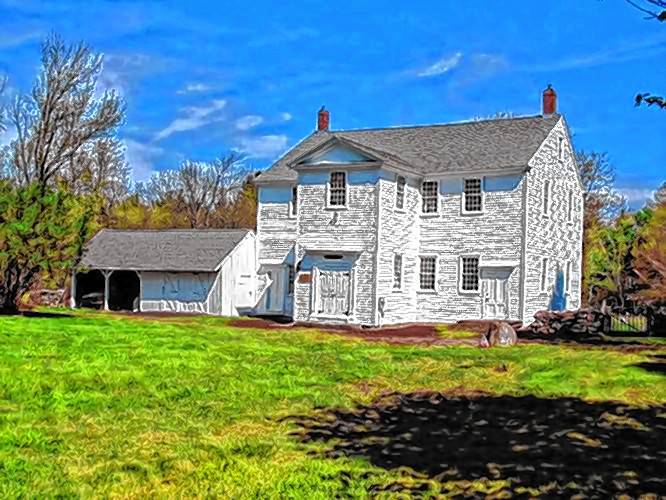
A project to bring 34 affordable housing units to an Amherst Road property that features a former fly rod factory building and farmhouse is moving forward.

The Community Economic Development Assistance Corp. of Boston announced Wednesday that it would commit $200,000 in predevelopment financing, through a loan to Home City Development Inc. of Springfield, for what would be known as Amethyst Brook Apartments.

The $12 million project in West Pelham could be the first in town developed under the state’s Chapter 40B comprehensive zoning law, which allows affordable housing projects to be permitted that otherwise would not be allowed under town zoning.

The 9½-acre site at 18 and 22 Amherst Road includes the farmhouse and several outbuildings, along with the small factory building, occupied by book publisher HRD Press, on the brook where the Bartlett Rod Shop Co. once operated. The adjacent stone dam, which had been part of the waterway since 1820, was decommissioned by the state in 2007 and demolished in 2012.

The farmhouse will be converted into six apartments, while the other buildings will be demolished and replaced with a new 28-unit building. On-site parking will be available for 49 vehicles.

To meet affordability, the units would be rented at 60% of median area income or less, which for a family of four means earning $53,000 or less annually.

The developer will dedicate five acres as conservation land.

Tilman Lukas, chairman of the Pelham Housing Committee, said his committee has been supportive of having an affordable housing project such as this, calling it a unique chance for families, couples and senior citizens.

“In my opinion, this is a project to bring the community a lot of affordable units,” Lukas said.

In fact, the committee conceived the project, which is within walking distance of the Pelham Elementary School and Pelham Library, and close to the Amherst town line.

Plans currently show 24 one-bedroom apartments, seven two-bedroom apartments and three three-bedroom apartments. Lukas said the town and developer could also enact a local preference to ensure people already living in Pelham could live at Amethyst Brook.

Lukas said Home City has sent a project eligibility letter to the Department of Housing and Community Development and anticipates applying for chapter 40B funding later this year. The project would also rely on the low-income housing tax credit financing program.

Town Meeting this spring could be asked to commit Community Preservation Act money, up to $500,000, to the project.

Even if all financing and permitting goes off without a hitch, the project likely wouldn’t break ground until 2022, Lukas said.

Roger Herzog, executive director of Community Economic Development Assistance Corp., said in a statement that rural communities need affordable housing, but have fewer opportunities than larger towns and cities to get such projects completed.

“We are excited to support the efforts of an excellent nonprofit housing developer, in partnership with local residents, to develop much-needed affordable housing in Pelham,” Herzog said.

SourceDaily Gazette Hampshire

Boston-Area Mixed-Income Asset Lands Construction Financing

NeighborWorks Housing Solutions has received $4.7 million in construction financing for Sycamore on Main, a mixed-income community in Brockton, Mass. The property will encompass 48 deed-restricted units which will be affordable for residents who earn a vast array of incomes.

The project received a $2.9 million permanent loan from MassHousing, $1.8 million from the agency’s Workforce Housing Initiative, and $1 million from the Affordable Housing Trust Fund, which it manages on behalf of the Massachusetts Department of Housing and Community Development (DHCD).

Additional funding sources for the development include $6.7 million in federal Low Income Housing Tax Credit (LIHTC) equity, $6 million in state LIHTC equity, another $2.7 million provided by DHCD, $750,000 in supportive housing funds from the Community Economic Development Assistance Corporation (CEDAC), $450,000 in local HOME funding and a $300,000 sponsor loan.

Located at 121 Main St. in downtown Brockton, the transit-oriented property is half a mile from the city’s commuter rail station. Several shopping and dining opportunities are available within walking distance.

AFFORDABLE WORKFORCE HOUSING

The community will reserve 18 units for earners of up to 90 percent of the area’s median income, 22 units for residents earning 60 percent or less, and eight units for households earning at or below 30 percent. Brockton’s area median income is $93,400 for a household of four. The workforce-apartments will include floorplans for one-, two-, and three-bedroom apartments, as well as a street-level retail space.

NeighborWorks partnered with NEI General Contracting to develop the Utile Inc.-designed project. Trinity Management will assume management responsibilities. Construction on Sycamore on Main began last October and is expected to conclude in early 2021.

SourceMulti-Housing News

Construction is Underway at Sycamore on Main in Brockton as MassHousing Closes $4.7 Million in Financing for the New, Mixed-Income Housing Community

SourceMassHousing

10 Boston developments to watch in 2020

So far, Boston’s building boom shows no signs of abating in 2020.

In the last six years, the Boston Planning and Development Agency has permitted about 65 million square feet of new development and the city has seen more than 60 million square feet built in that time, according to the city agency.

Even as some of the city’s most transformative projects of the last decade, like Hub on Causeway, continue to inch higher into the sky in 2020, we asked Jonathan Greeley, director of development review for the BPDA, to name some of the notable developments the public should keep an eye out for in 2020.

“One of the things the city is trying to do is respond to tremendous residential demand,” Greeley said. “In addition to responding to that residential demand by hopefully permitting and building as many units as possible, we’re trying to find a way to maximize the amount of those units being affordable. We put our money where our mouth is.”

The director of development review said that in 2019, guided by goals established with the city’s 2030 plan, 20 percent of all the units the BPDA approved were affordable. Officials, he emphasized, are constantly thinking about how to plan and facilitate “proper growth” in Boston.

“We want to make sure we’re creating a thriving city for all Bostonians,” he said of the efforts.

Below, 10 projects in Boston that will be ongoing or kicking-off in the coming year.

Already under construction


Winthrop Square

Winthrop Square Tower Rendering
Renderings of Winthrop Square Tower. —Handel Architects

Work on the new residential and office tower at 115 Winthrop Square will push on in 2020, Greeley said.

“What’s exciting about this year is you’re going to start to see it come out of the ground,” Greeley said. “They’ve been doing a lot of work below the surface.”

The almost 1.6 million-square-foot project, on the site of the previously city-owned, shuttered Winthrop Square Garage, will feature residential, office, retail, and dining space. The tower, which will stand 691 feet tall, will contain a “Great Hall” at its base to serve as a public space.

Greeley emphasized that the project is a “one-two” punch for the city. Not only will it create new, mixed-use space, but it will contribute to other efforts city-wide. He said notably it will bring “significant investment” to the area around the site, including infrastructure improvements to Winthrop Square and the nearby park. But money from sale of the site to Millennium Partners will generate more than $150 million in funding for the City of Boston, which is slated for efforts  including improvements to the Boston Common and Franklin Park and affordable housing.

“Most importantly it’s going to help to fund an all-affordable building in Chinatown,” Greeley said.

“[Winthrop Square] is a great example of a public/private partnership on public land to deliver a wide variety of results, which will add improvements on the site, but also in and around the neighborhood they sit in,” he added.

The Beat

The Beat Rendering
A rendering of The Beat. —BPDA

Work to redevelop the former headquarters of the Boston Globe got underway in 2019 and will continue in 2020 as the developers search for a wide variety of tenants to fill the building, Greeley said. The new name for the property at 135 Morrissey Blvd.“The Beat,” stands for “The Boston Exchange for Accelerated Technology” and pays homage to the “beat” reporters who used to call the site home.

“What’s exciting there is that they took a look at the site and said, we’re not going to demolish the whole thing, we’re going to re-envision the whole thing,” Greeley said. “So if you drive by it today, either from Morrissey Boulevard or the highway, you’ll see they are gutting and rebuilding the building.”

Development firm Nordblom envisions reconfiguring the 695,000-square-foot building into both tech and traditional office space, while maintaining ground floor use for neighborhood amenities that could serve nearby Savin Hill.

“One of the things that project has done is make sure there are pedestrian connections through Savin Hill,” Greeley said. “So they want to make sure that it’s not just ground floor uses and ground floor retail amenities that serve the building — they want those uses to be enhancements to the neighborhood as well.”

Greeley said the project is one of several exciting development efforts around the Columbia Point peninsula, and the city believes the approach taken for the “The Beat” is a precursor to other projects that could follow in and around the JFK/UMass area.

Fenway Center

A rendering of the Fenway Center project. —The Architectural Team

Both Phase I and Phase II of the enormous development will be underway in 2020, Greeley said. When completed, the $500 million construction project will comprise four buildings and a parking garage that will extend along, and above, the Mass. Pike.

Phase 1, which features the construction of two buildings on Brookline Avenue and the creation of about 312 new residential units, broke ground in 2018 and is expected to be ready for occupancy in 2020.

“Those two new buildings will bring some life to that area, which again, it’s been a series of surface parking lots for a long time,” Greeley said of the project.

In 2020, Greeley said the BPDA is also expected to hear proposed changes to Phase II of the project, which would feature the construction of a 27-story tower above the Mass. Pike. The change would bring more space for office and life science tech to the site, replacing about 150 housing units originally planned for the site.

“We’re currently reviewing that project — those alterations,” he said. “And that project could be considered by our board in the first half of 2020.”

When the second phase over the Mass. Pike moves forward, it will be one of two so-called “air rights” projects, the first in decades, predicted to get underway in 2020.

“That’s something that was the subject of long-term planning efforts in partnership between the city and state, and we’re really thrilled to see that piece of the project go forward, built over the turnpike,” Greeley said.

Bulfinch Crossing / Government Center Garage Redevelopment 

Renderings of the Government Center Garage redevelopment project. —BPDA

By the end of 2020, Greeley said he expects to see the first phase of the downtown project, which will ultimately create six new high-rise and mid-rise buildings, completed.

The project includes 800 new residential units in two towers and more than 1 million square feet of office space, with the new corporate headquarters for State Street anchoring a retail tower at One Congress.

As the project moves forward, Bostonians can expect to see the existing Government Center Garage on Congress Street come down, Greeley said.

“[It’s] a dramatic change to the downtown neighborhood,” Greeley said of the project. “A dramatic change in the daylighting of Congress Street and I think just a really pleasant removal of a barrier between Government Center and North Station.”

Expected to start construction


Back Bay / South End Gateway 

Rendering of the proposed Back Bay Station redevelopment. —Courtesy of Boston Properties / Pelli Clarke Pelli Architects

The 1.26 million-square-foot mixed-use project that will rise above and adjacent to Back Bay Station is one the city hopes will reach into the skyline in 2020.

Some elements of the project — which features a new office building with ground floor retail, two new residential buildings, an expansion of the existing station, and redevelopment of the 165 Dartmouth Street Garage — are already already underway, Greeley said.

Improvements within Back Bay Station, such as redoing the bathrooms, are already underway as part of the project. The MBTA is responsible for platform level investments, but developer Boston Properties is responsible for the station renovations itself.

“That work is starting now,” Greeley said. “We hope and anticipate that Boston Properties will start construction in 2020 on one of those three towers.”

Suffolk Downs

A rendering of the proposed development at Suffolk Downs. —Provided by BPDA

Greeley said the hope is that redevelopment of the East Boston site can get underway in 2020, pending an ongoing community review and approval by the BPDA board.

“The goal is to return what is kind of largely a surface parking lot with [an] infrequently used racing track and take it and use it to create a dynamic mixed-use community that is really anchored by two MBTA stations on the Blue Line, Suffolk Downs and Beachmont,” he said.

The project from HYM Investment Group proposes during Phase I of the project the creation of 520,000 square-feet of corporate and amenity space, three residential buildings, and town homes for the construction of more than 800 housing units. About two-thirds of the 150-acre plot sits in Boston, with a third falling in Revere.

About 40 acres of the development are proposed to remain unbuilt, serving as a mix of parks and open space, Greeley said.

“It’s going to be a really, really dynamic space and will truly be a mixed-use project that we’ll see manifest itself over the next 20 years,” he said. “One of the reasons why it’s taken us so long in the review process is that it’s been something we really want to get right, prioritizing a real mix of use, of affordability, of open space, and also making sure the design is just really dynamic as well.”

Allston Yards 

A rendering of “Building A” at the proposed Allston Yards development. —Stantec via BPDA

The project, proposed at the nexus of Allston, Brighton, and the area surrounding Boston Landing, was approved by the BPDA in December, and Greeley said he anticipates construction of the new neighborhood to get underway in 2020. The 868-unit mixed-use development would transform the existing Stop & Shop plaza at 60 Everett St. into a “transit-oriented” neighborhood featuring open space, a flagship grocery store, office and retail space, and residential units.

Greeley said the project will also create a new roadway network for better connectivity through the neighborhood and has subsidies for local transit in and around Allston/Brighton, including to help fund more frequent MBTA service for rail and bus.

“[It’s] a great mixed-use, dynamic project,” he said. “The project is getting 17 percent affordability on site and will fund another 40-plus units of affordable [housing] offsite throughout the neighborhood. So we’re really excited for the potential of that project.”

Dot Block 

A rendering of the Dot Block project. —Provided by the BPDA

This project, located on almost an entire city block along Dorchester Avenue, first won approvals from the BPDA in 2016 and has gone through several iterations since then. A revised proposal for the project was approved in 2019, and Greeley said the hope is that it could break ground in 2020.

The project at 1205 Dorchester Ave. would include the construction of four new buildings that would contain 488 residential rental units, about 23,000 square feet of commercial space for neighborhood-oriented retail and restaurant space, as well as 1.34 acres of open space.

“That site will take what was essentially a derelict site, not a lot going on, and bring much-needed housing to the neighborhood, as well as breaking up a very large development site with new roadways and public realm,” Greeley said. “And we’re excited because it’s investment in an area that hasn’t seen as much investment traditionally, and so it would also set the tone for the types of development we want to see there long-term.”

Mattapan Station

A rendering of the proposed Mattapan Station project. —Provided by the BPDA

Construction on this $57 million mixed-use project is anticipated to start in the spring of 2020. It will feature the construction of 135 units of mixed-income apartments for rent and 10,000 square feet of commercial and retail space at 500 River Street.

Located beside the Mattapan MBTA station, it is being heralded as a transit-oriented development project that will provide affordable and market-rate housing to the neighborhood.

“We are excited to see investment in Mattapan and in the Mattapan Station area,” Greeley said. “This is a good project.”

3368 Washington Street / Pine Street Inn

A rendering of the proposed Pine Street Inn development for Washington Street in Jamaica Plain. —RODE Architects via Boston Planning and Development Agency

Pine Street Inn formally filed plans with the BPDA last March to construct the 225-unit building at 3368 Washington St., with the aim of serving chronically homeless disabled adults. The proposal won board approval later in the year, and Greeley said he hopes the project will secure its needed financing in 2020 in order to break ground and be under construction by the end of the year.

“One of the things that we’ve been able to do over the course of this year is that 20 percent of all new units throughout the city have some sort of deed restriction making them more affordable to Bostonians,” Greeley said of the project’s importance. “This project has a higher percentage and is an example of a nonprofit working really hard to fulfill their mission. So we’re really excited about the mission-driven outcome of this project in a neighborhood that has been really, really receptive to that type of use.”

Of the 225 affordable residential units in the six-story building, 140 would be reserved for supportive housing for individuals being served by the Pine Street Inn. The remaining 85 units would serve households earning between 60% and 80% of area median income.

SourceRealEstate

MassHousing Commits $7.9 Million in Financing for New, 51-Unit Mixed-Income Rental Housing Community in Revere

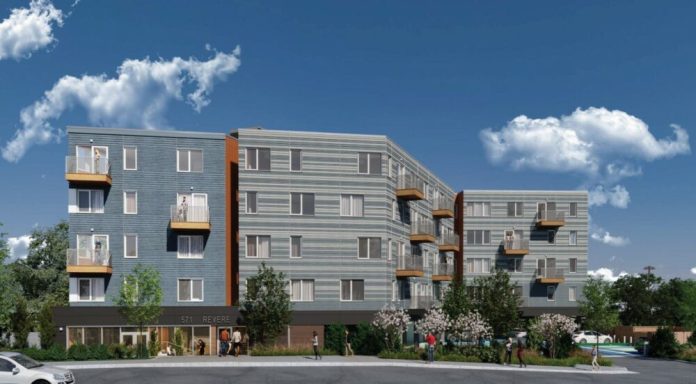
MassHousing has committed $7.9 million in affordable housing financing to the non-profit The Neighborhood Developers (TND) for the construction of the 571 Revere Street in Revere, MA.

The MassHousing financing will allow The Neighborhood Developers to construct 51 units of new affordable housing for households across a broad range of incomes, including 19 new workforce housing units.

“By transforming a vacant parcel into a new, modern community of affordable and workforce housing, The Neighborhood Developers will help ensure that a revitalized Revere Beach remains welcoming and accessible to residents of all means,” said MassHousing Executive Director Chrystal Kornegay. “TND is a strong, mission-based developer, and MassHousing is pleased to be part of the team making this important project a reality.”

“571 Revere Street is a transit-oriented development; the 51 new affordable homes will not only be steps away from the beach, but also within easy walking distance of the Wonderland MBTA Station and the MBTA 116 bus line, said Rafael Mares, TND’s Executive Director. “This project wouldn’t be possible without MassHousing’s commitment of affordable housing financing and its partnership.”

MassHousing is providing TND with a $6 million permanent loan and $1.9 million in workforce housing financing from the Agency’s Workforce Housing Initiative.

In addition to the MassHousing financing, other funding sources include $9.3 million in federal and state Low-Income Housing Tax Credit equity, $1.3 million in direct financing from the Massachusetts Department of Housing and Community Development (DHCD), $1.2 million in HOME financing from the North Suburban Consortium, a $206,511 sponsor energy grant loan, $1.1 million in financing from the Community Economic Development Assistance Corporation (CEDAC) and $1 million from the Affordable Housing Trust Fund, which MassHousing manages on behalf of DHCD. Santander Bank will be providing construction financing.

571 Revere Street advances the Baker-Polito Administration’s goal of creating up to 1,000 new workforce housing units affordable to middle-income households through MassHousing’s $100 million Workforce Housing Initiative. Since the inception of the initiative in 2016, MassHousing has committed or closed workforce housing financing totaling $92.4 million, to 40 projects, located in 19 cities and towns. To date, the Workforce Housing Initiative has advanced the development of 3,727 housing units across a range of incomes, including 1,006 workforce housing units.

The new, energy efficient housing will be constructed in a six-story building on a vacant site two blocks from Revere Beach and within walking distance to the MBTA’s Wonderland subway station. The apartments will be on the top four floors of the building, with garage parking on the first two levels.

Thirty-two apartments will be affordable for households earning at or below 60 percent of the Area Median Income (AMI), with 6 of those units further restricted for vulnerable low-income households earning at or below 30 percent of AMI, and 5 of the affordable units further restricted for households earning at or below 50 percent of AMI. The remaining 19 apartments will be workforce housing units for households earning at or below 90 percent of AMI. The AMI for Revere is $113,300 for a household of four.

Eight of the apartments will be subsidized by a federal Section 8 Project Based Housing Assistance Payment contract and 3 apartments will be subsidized through the Massachusetts Rental Voucher Program. There will be 26 one-bedroom apartments, 21 two-bedroom apartments, and 4 three-bedroom apartments.

The general contractor will be NEI General Contracting, the architect is Arrowstreet and the management agent is WinnCompanies.

MassHousing has financed 4 rental housing communities in Revere involving 290 housing units and $17.4 million in financing. The Agency has additionally provided home mortgage loans to 721 Revere homebuyers and homeowners involving $115.5 million in financing.

SourceBoston Real Estate Times

City approves supportive housing complex for homeless in Jamaica Plain

A major effort to house Boston’s homeless took an important step forward Thursday night.

The Boston Planning & Development Agency board approved plans for a 202-unit apartment building on Washington Street in Jamaica Plain that would include 140 studio spaces for formerly homeless people, along with social services they need.

The complex, being developed by Pine Street Inn and two partners, could break ground within a year, if financing comes together, said Lyndia Downie, Pine Street’s executive director. It would be the largest such “permanent supportive housing” development of its kind in Boston, she said.

“This is the kind of stuff people like us dream about,” Downie said. “We know this works for people who are stuck in homelessness. This is the answer for a lot of people.”

This type of housing, which combines affordable rents with on-site services, has become a big part of Boston Mayor Martin J. Walsh’s bid to end chronic homelessness in Boston, a problem that was exacerbated by the 2015 closure of the Long Island shelter. Walsh has pushed to raise $10 million for Boston’s Way Home Fund, which would fund ongoing services at the planned building, Downie said.

“We are committed to making sure that every individual has a place to call home and build a better life,” Walsh said in a statement. “This project is only possible because of the commitment of Pine Street Inn, The Community Builders [an affordable housing developer], and many partners and stakeholders across the city who have joined our call to bring an end to chronic homelessness.”

To go forward, the building will probably need city and state funding, along with federal low-income housing tax credits, to help finance construction. Developers expect the 144,000-square-foot building to cost about $81 million in all.

Along with 140 units run by Pine Street Inn, The Community Builders would build and run 62 apartments dedicated to low- and middle-income renters. That’s 23 fewer units than were originally proposed, the reduction coming partly in response to neighborhood concerns about the project’s size and the traffic it might generate. It’s also one floor shorter than designers RODE Architects initially envisioned. But over the course of numerous community meetings since this spring, neighbors were generally supportive, said Dana Whiteside, who oversaw review of the project for the BPDA.

“Support for the project was quite good,” he said.

The complex, near Green Street, is one of the first large buildings proposed on a stretch of Washington Street where the BPDA two years ago approved plans for thousands of new apartments and condos. Some 40 percent of those housing units are required to be affordable.

This project will make a dent in that number, BPDA director Brian Golden said, while creating a much-needed place to help homeless Bostonians get back on their feet.

“This is a really good outcome,” he said.

The BPDA on Thursday also approved a six-building, 344-unit condo and apartment complex at the corner of Harvard Avenue and Cambridge Street in Allston Square, a 60-unit affordable housing development in West Roxbury by B’Nai B’rith Housing New England, and tweaks to Millennium Partners’ Winthrop Center tower downtown. The board also gave WS Development permission to convert a planned housing building at its Seaport Square complex into an office building instead.

SourceThe Boston Globe

Springfield’s Educare Facility Is State-Of-The-Art In Every Respect

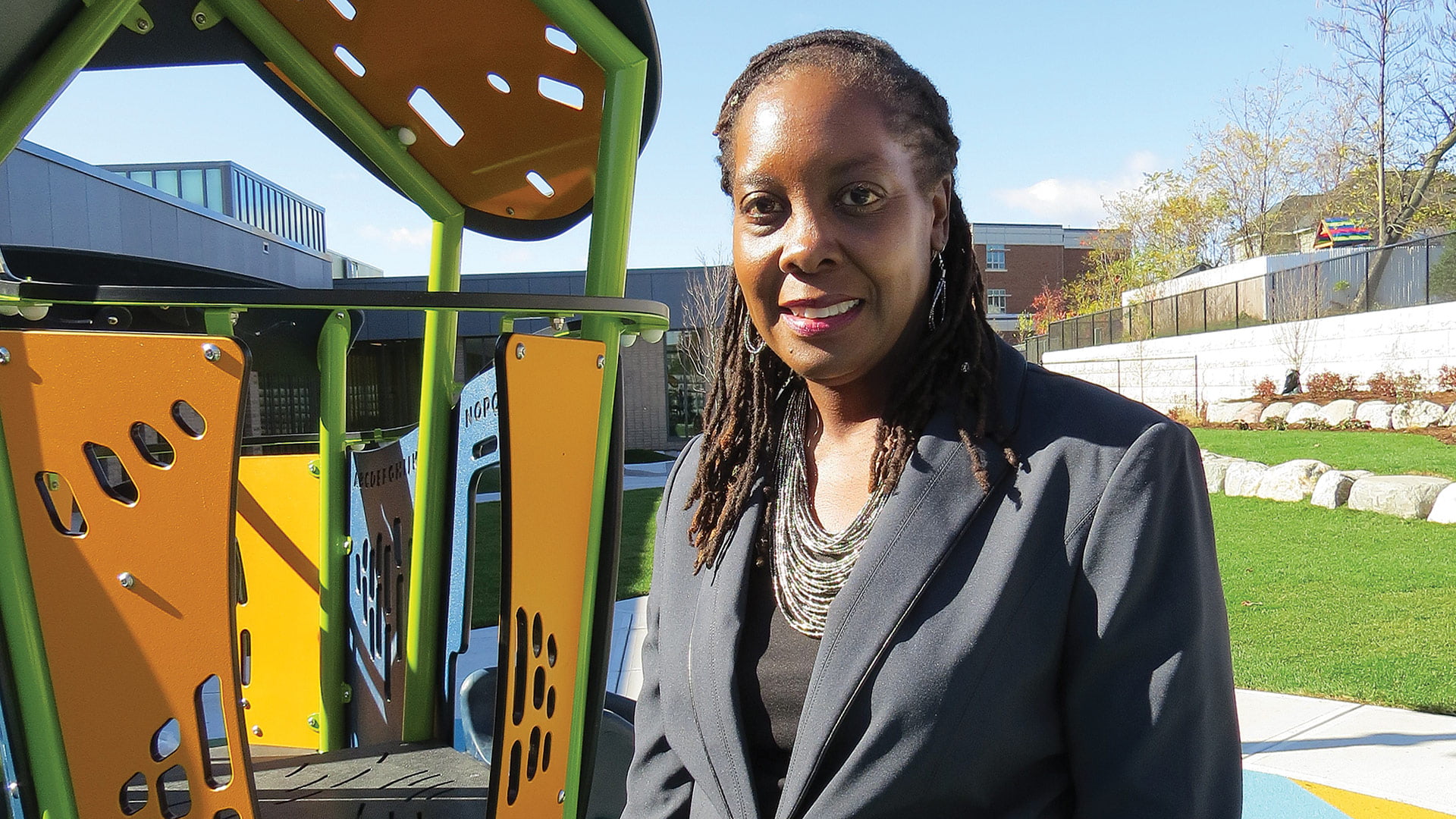
Nikki Burnett says Springfield’s Old Hill neighborhood and those surrounding it certainly need the gleaming new $14 million Educare facility constructed next door to the Elias Brookings Elementary School on Walnut Street.

More to the point, though, she told BusinessWest, they deserve this facility, which can only be described with that phrase state-of-the-art when it comes to everything from its programs to its play areas to its bathrooms.

“Mason Square, Old Hill, McKnight, Bay, all those neighborhoods … they’re so rich in history, so they’re rich in great success stories that have come out of here and are still coming out of here,” said Burnett, the recently named executive director of the 27,000-square-foot facility, who should know; she grew up there herself. “People like Ruth Carter, who just won an Oscar for the costume design in the movie Black Panther — she’s from Springfield.

“We have to celebrate those things, and we have to model those things for our children so they can see that they have greatness in them,” she went on. “One of the very important things about Educare is that it aligns potential with opportunity. I believe all children are born with immense potential, but many do not have the same opportunity to realize that, so Educare will give them that push — it will help readjust their trajectory.”

That’s why this area of the city, traditionally among the poorest neighborhoods in the state, deserves this Educare facility, just the 24th of its kind in the country and the only one in Massachusetts, she continued, adding quickly that this building, and the Educare model itself, were designed to show decision makers and society in general what all young children deserve and what has to be done so that they can all enjoy a similar experience.

Mary Walachy, executive director of the Irene E. and George A. Davis Foundation, which spearheaded efforts to bring the Educare facility to fruition, agreed.

“The message being sent here is that it costs money to do this work well,” she said. “It costs money to fund quality at the level that children in this community and others deserve, and we can’t expect outcomes that we want from children if the investment is not there at the front end.”

Considering those comments, Educare is certainly much more than a building, and those who visit it — and many will in the weeks and months to come — will come to understand that.

Indeed, the facility set to open later this year, supported by the Buffett Early Childhood Fund and to be operated in partnership with Holyoke Chicopee Springfield Head Start, is, for lack of a better term, a standard — or the new standard when it comes to early-childhood education.

And it is, as Burnett and Walachy noted, a model — hopefully to be emulated — that incorporates everything science says young children need to flourish. This includes data utilization, high-quality teaching practices (three teachers to a classroom instead of the traditional two), embedded professional development, and intensive family engagement.

All this and more will come together at the much-anticipated facility, which will provide 141 children up to age 5 (already enrolled at a Head Start facility in that neighborhood) and their families with a full-day, full-year program that Burnett projects will be a place to learn — and not just for the young children enrolled there.
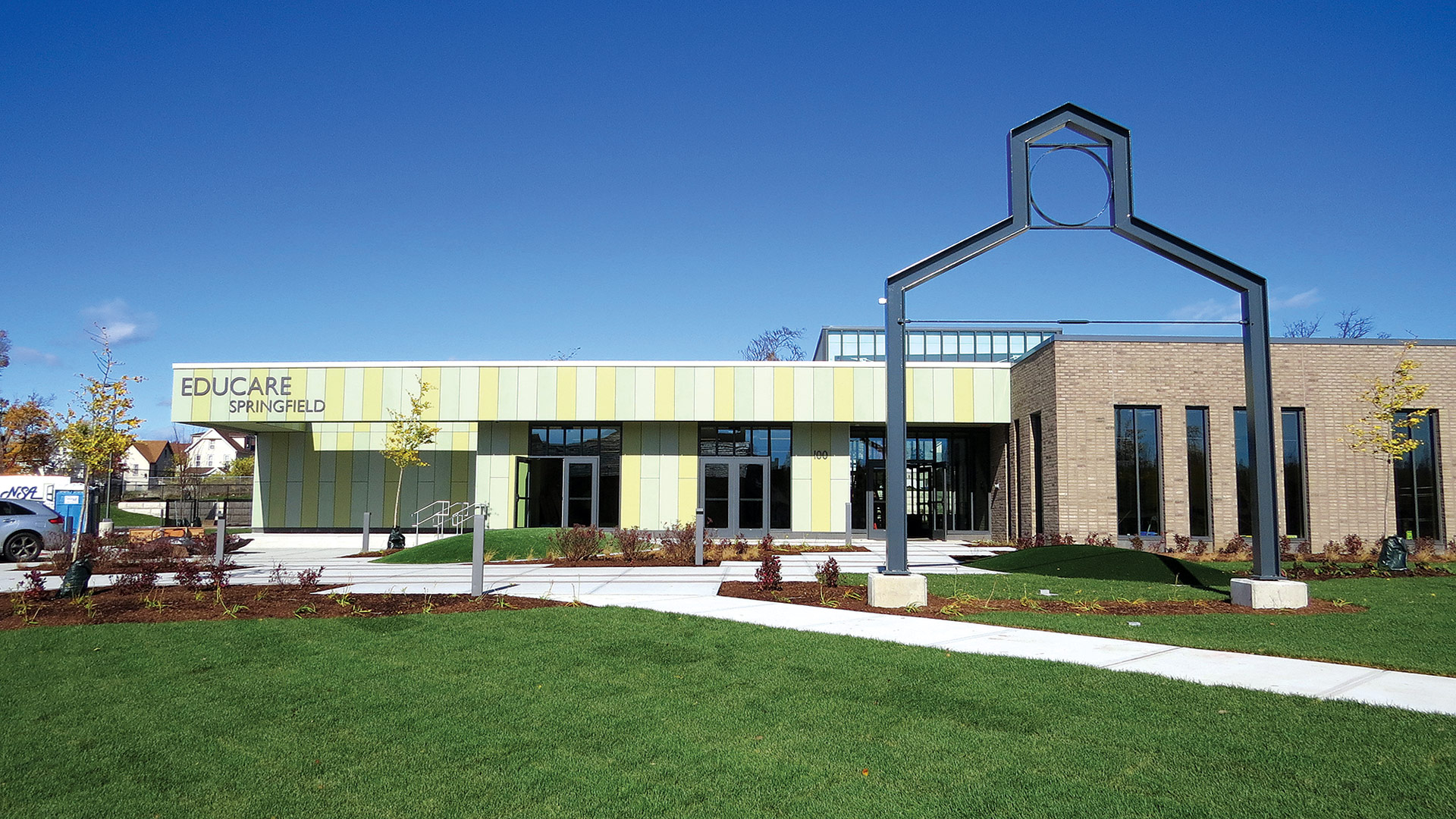
The Educare facility in Springfield is just one of 24 in the country and the only one in Massachusetts.

“Educare is going to be a demonstration site; we’re going to be able to bring in students of education, social work, counseling and therapy, and other areas from across the state and have them observe and learn our model,” she explained. “We understand that 141 children is not every child; however, what we learn here, we’re going to be able to send out — others can do what we’re doing. And on a policy level, it’s my hope that legislators can see the success of this and realize that, when they’re making out the budget, it needs to be funded so everyone can enjoy Educare quality.

“Educare is not going to be on every corner,” she went on. “But that doesn’t mean that the quality of Educare cannot be beneficial to all children.”

For this issue and its focus on education, BusinessWest toured the Educare facility and talked with Burnett and others about what this unique early-education center means for Springfield and especially those young people who walk through its doors.

New School of Thought

Janis Santos, the longtime director of Holyoke Chicopee Springfield Head Start, recalled that, when she toured the Educare facility recently as construction was winding down, she became quite emotional.

“I have to be honest, I started crying,” said Santos, honored roughly a year ago by BusinessWest as one of its Women of Impact for 2018. “One of the construction-crew members said, ‘why are you crying?’ and I said, ‘because I’m so happy.’

“Educare is going to be a demonstration site; we’re going to be able to bring in students of education, social work, counseling and therapy, and other areas from across the state and have them observe and learn our model.”

“This is a dream come true,” she went on, adding that the facility provides dramatic evidence of how far early-childhood education has come during her career — it was considered babysitting when she got her start — and how important it is to the overall development of young people.

Tears of joy have been a common emotional response among those who have toured the site, especially those involved in this initiative from the beginning, but there have been others as well. Indeed, Burnett told BusinessWest, when the staff members assigned to the Educare center visited the well-appointed teachers’ room, many of them started clapping.

These reactions provide ample evidence that the six-year journey to get the facility built and the doors open was certainly time and energy incredibly well-spent.

By now, most are familiar with the story of how an Educare facility — again, one of only 24 in the country — came to be in Springfield. It’s a story laced with serendipity and good fortune at a number of turns.

It begins back in 2014 when an early-childhood center on Katherine Street in Springfield closed down abruptly, leaving more than 100 children without classroom seats, said Walachy, adding that the Davis Foundation began looking at other options for early education in that building.

One of them was Educare, she went on, adding that officials with the Buffett Foundation and other agencies involved, as well as architects, came and looked at the property. They quickly determined that it was not up to the high standards for Educare centers.

“Their model is ‘make it a state-of-the-art, unbelievable building to send a strong message that this is what all kids deserve,’” said Walachy, adding that, after those inspections and being informed that a new facility would have to be built at a cost of more than $12 million, the Educare concept was essentially put on the shelf.

And it stayed there for the better part of two years until an anonymous donor from outside the Bay State who wanted to fund an Educare facility came into the picture.

“This individual pledged to pay for at least half the cost of building an Educare somewhere in the country, and she was willing to do it here in Springfield,” she said, adding that the donor has written checks totaling more than $9 million for both the construction and operation of the facility.

With this commitment, those involved went about raising the balance of the needed funds — the Davis Foundation and another donor committed $2 million each, and state grants as well as New Market Tax Credits were secured, bringing the total raised to more than $20 million — and then clearing what became another significant hurdle, finding a site on which to build.

Indeed, the Educare model is for these facilities to be built adjacent to elementary schools, and in Springfield, that proved a challenging mandate. But the tornado that ravaged the city, and especially the Old Hill area, in 2011, forcing the construction of a new Brookings School, actually provided an answer.

Indeed, land adjacent to the new school owned by Springfield College was heavily damaged by the tornado, making redevelopment a difficult proposition. Thus, the college became an important partner in the project by donating the needed land.

But while it’s been a long, hard fight to get this far, the journey is far from over, said both Burnett and Walachy, noting that another $500,000 must be raised to fund an endowment that will help cover operating expenses at the school.

And raising that money is just one of many responsibilities within Burnett’s lengthy job description, a list that also includes everything from becoming an expert on the Educare model to attending regular meetings of Educare facility directors — there’s one in New Orleans later this year, for example.

At the moment, one of the duties assuming much of her time is acting as a tour guide. She even joked that she hasn’t mastered the art of walking backward while talking with tour participants, but she’s working on it. To date, tours have been given to city officials, funders and potential funders, hired staff members, like those aforementioned teachers, and, yes, members of the media.

BusinessWest took its own tour, one that featured a number of stops, because items pointed out are certainly not typical of those found in traditional early-education centers.

“I literally cannot wait to see the children in there — that will be a special moment.”

Starting with what Burnett and others called the “outside-in” of the building’s design, which, as that phrase indicates, works to bring the outside environment into the school to provide continuity and the sense that the school is part of the larger world. Thus, green, grass-like carpeting was put down in the entranceways, and green carpet prevails pretty much throughout the facility. Meanwhile, the brick façade on the exterior is continued inside the building.

Throughout the building, there are generous amounts of light and state-of-the-art facilities throughout, from the well-equipped play areas inside and out to the two sinks in each of the classrooms — one for food preparation, the other for hand washing — to the restrooms designed especially for small people.

In addition, each classroom is equipped with small viewing areas with one-way mirrors so that so-called ‘master teachers’ and others can see and evaluate what’s happening.

In all, there are 12 classrooms, seven for infants and toddlers and five for preschool. As noted earlier, they will be places of learning, and not just for the students.

Model of Excellence

Returning to that emotional tour of the Educare facility she took a few weeks ago, Santos said that, as joyous and uplifting as it was, she’s looking forward to the next one even more.

“I literally cannot wait to see the children in there — that will be a special moment,” she told BusinessWest, putting almost a half-century of work in early childhood behind those words.

She can’t wait because students will be learning and playing in a facility that really was only a dream a few years ago — a dream that came true.

It’s a facility that those students truly need, but as Burnett and all the others we spoke said, it’s one they deserve — one that all students deserve.

SourceBusiness West

YWCA unveils Under One Roof project

The YWCA cut the ribbon for its “Under One Roof” project on Friday, showing off the extension of its building, containing residential housing and after school programming.

SourceSouth Coast Today

Baker-Polito Administration Announces $1.73 Million to Support Energy Efficient Affordable Housing

The Baker-Polito Administration today announced $1.73 million in awards to support energy efficient new construction for affordable housing developments in six cities and towns built to Passive House standards. The grants, awarded to eight affordable housing developments in Cambridge, Gloucester, Hanson, Northampton, Holbrook and Boston totaling 540 high-efficiency units, provide energy savings and improved indoor air quality for low-income households. The announcement was made by state and local officials at the Old Colony Housing Development in South Boston.

“Massachusetts is proud to lead the nation in energy efficiency, which helps to reduce energy use and cut greenhouse gas emissions which in turn promotes cost savings for residents and businesses,” said Governor Charlie Baker. “Our administration is committed to supporting the development of additional affordable housing, and by embracing innovative design to maximize efficiency we can provide quality housing solutions for residents while reducing carbon emissions.”

“Our Administration is committed to helping Massachusetts’ low-income households reduce energy costs while creating better, more affordable housing options,” said Lieutenant Governor Karyn Polito. “Passive House standards offer one of the best options to promote high efficiency housing solutions for families, and better position the Commonwealth to extend energy efficiency benefits of the homes to families in cities and towns across the state.”

The funding was awarded through the Massachusetts Clean Energy Center’s Passive House Design Challenge program, part of the Baker-Polito Administration’s $15 million Affordable Access for Clean and Efficient Energy (AACEE) initiative. The program seeks to demonstrate that multi-family affordable housing can be built to high efficiency Passive House standards in Massachusetts at a low-to-no cost premium.

Passive House is a green building certification that ensures extremely high levels of energy efficiency and the provision of fresh air for ventilation.  Multi-family buildings built to the Passive House standard generally use 40% less total energy than energy stretch code-compliant buildings.   The annual energy use of 8-12 Passive House multi-family apartments is roughly equivalent to the average existing single-family suburban home in Massachusetts.  The Passive House energy efficiency standard ensures new buildings are built with high levels of insulation and air tightness, generous provision of fresh air with heat recovery for ventilation, and better windows than would normally be required.

Earlier this year, Massachusetts was named the most energy efficient state in the nation by the American Council for an Energy-Efficient Economy for the ninth consecutive year.

“Building to energy-efficient Passive House standards is the first step in ensuring buildings are on a path to becoming net-zero,” said Energy and Environmental Affairs Kathleen Theoharides. “To meet Massachusetts’ 2050 greenhouse gas reduction goals, energy efficiency is new construction must continue to be promoted,  and it is great to see affordable housing leading the way for the Commonwealth.”

“Passive House buildings are more efficient, durable, healthy, and resilient than typical buildings,” said MassCEC CEO Stephen Pike. “Through these projects, the Commonwealth is supporting better housing for low-income families and reducing greenhouse gas emissions in our most vulnerable neighborhoods.”

“The Passive House Design Challenge program is one of the many innovative ideas in the Commonwealth that contributes to moving us forward in achieving our shared clean energy and emission reduction goals,” said Department of Energy Resources Commissioner Judith Judson. “This program coupled with our new Mass Save incentives for Passive House go a long way towards enabling deep energy efficiency.”

“As we work to build more affordable housing throughout the state to meet our current crisis, it is vital we build high-quality, future-proofed housing that takes current and future energy needs into account,” said Housing and Community Development Undersecretary Janelle Chan. “Today’s awards will advance eight affordable housing developments, which will provide more than 500 units for low and middle-income households. We are thrilled to be supporting housing development that is safe and affordable for families, and is built to Passive House standards, reducing carbon emissions and lowering households’ energy costs.”

The eight developments, four of which have secured low income tax credit financing and three which are applying to the Department of Housing and Community Development (DHCD) for affordable housing tax credits, are:

  • Homeowner’s Rehab Finch Cambridge – Cambridge ($147,000) – A new 98-unit affordable housing project designed for resiliency to allow for potential flooding and low energy consumption using efficient heat pump heating and cooling technology.  Shading features are included to lower cooling demands.  The building will also include a 100 KW Solar Photovoltaic array to generate electricity for heating and cooling.
  • Preservation for Affordable Housing Mattapan Station – Mattapan ($540,000) – An urban-centric housing complex with 135 apartments designed to promote the Neponset River Greenway and bike paths, while reducing energy consumption.  The building will use efficient electric heat pump technology for heating and cooling and is exploring innovative heat pump technology to heat hot water.
  • Beacon Communities Old Colony Phase Three C – South Boston ($120,000) – As part of the third phase of the redevelopment of Old Colony, the project provides affordable housing for vulnerable seniors at extremely low energy use and 55 new apartments.  The building will feature much less drafty apartments with at least four times lower air infiltration rates than would be required by code, high levels of ventilation with heat recovery equipment, and attention to creating thermal breaks in the walls and roof to improve energy performance.
  • NorthShore Community Development Corporation’s Harbor Village – Gloucester ($120,000) – A 30-unit affordable housing construction will include retail spaces, bike storage, and gallery space as well as being in the heart of downtown Gloucester and will feature efficient heat pumps for heating and cooling.
  • Dakota Partners – Hanson ($192,000) – A new construction housing project for families. When completed, Depot Village, located near an MBTA commuter rail stop, will create 48 new rental units.  The building will utilize balanced ventilation with heat recovery, heat pumps for heating and cooling, and reduced heat loss. The project is creating a template for Dakota Partners to use on future developments that will be designed for Passive House construction and certification.
  • Community Builders North Commons – Northampton ($212,000) – The project will increase insulation levels, air sealing, and ventilation levels to meet Passive House Standards for 53 apartments. It will provide mixed‐income, new construction family rental housing development on the Village Hill campus in Northampton, Massachusetts and will include both affordable and workforce housing units, serving households with a broad range of incomes.
  • Preservation of Affordable Housing Bartlett Station Lot D – Roxbury ($168,000) – Bartlett Station Lot D includes the construction of 52 senior housing units. Lot D is a part of the master planned Bartlett Station, an 8.6-acre former MBTA bus yard.  The building will include shading features, higher levels of air sealing, balanced ventilation with heat recovery, and a central efficient heat pump systems for heating and cooling.
  • NeighborWorks Southern Mass’s Holbrook Center Senior Housing – Holbrook ($131,200) – A 100% affordable rental housing will cater to seniors aged 65 and over with one-bedroom apartments and common amenities such as a library and fitness center, this housing development will provide support services that aim to accommodate residents’ changing needs as they age. The design will offer seniors more comfort, make for quieter apartments, and less noise from the street and adjacent apartments.

The Passive House Design Challenge awards are complemented by the recent addition of MassSave Passive House incentives for multi-family buildings.  Multi-family new construction buildings above four stories, both market rate and affordable, may be eligible for Passive House energy modeling funding and up to $3,000 per unit if they certify to the high-efficiency Passive House standard.

“I applaud the Baker-Polito Administration for their continued work in addressing barriers for low- and moderate-income residents in Massachusetts to access cost-saving, clean energy technologies, including awarding grants for MassCEC’s Passive House Design Challenge program,” said State Representative Thomas A. Golden, Jr. (D-Lowell), Chairman of the Joint Committee on Telecommunications, Utilities, and Energy.  “This program has the exciting goal of seeking to demonstrate that Passive House construction can not only provide significant bill savings, air quality improvements, and energy efficiency gains for affordable housing projects, but also that it can be built at a low-to-no-cost premium.”

“We are very encouraged by the grants being awarded by the Massachusetts Clean Energy Center today,” said State Representative Kevin Honan (D-Boston), Chairman of the Joint Committee on Housing. “Massachusetts has been, and will continue to be, a national leader in energy efficiency policies, and these eight new developments built to Passive House standards are an excellent addition to our affordable housing stock. As we continue to focus on housing production issues at the state level, these are the kind of projects and investments we hope to see more of.”

“These state grants will support energy efficient construction projects at affordable housing developments across the Commonwealth, helping low-income households save on energy costs while improving air quality in their homes,” said State Representative David Biele (D-Boston).  “I’m proud that the Anne Lynch Homes at Old Colony received a grant to build high-efficiency units, and I thank the Baker-Polito Administration and MassCEC for making these important energy efficiency investments in affordable housing.”

The Baker-Polito Administration has shown a deep commitment to increasing the production of housing across income levels. Since 2015, the administration has invested more than $1 billion in affordable housing, resulting in the production and preservation of more than 17,000 housing units, including 15,000 affordable units. In 2018, Governor Baker signed the largest housing bond bill in Massachusetts history, committing more than $1.8 billion to the future of affordable housing production and preservation. Legislation filed by Governor Baker in FebruaryAn Act to Promote Housing Choices, calls for targeted zoning reform to advance new housing production in Massachusetts and support the Administration’s goal to produce 135,000 new housing units by 2025. The Baker-Polito Administration has also advanced the development of more than 11,000 mixed-income housing units through the successful MassWorks Infrastructure Program, reformed the Housing Development Incentive Program, and worked with communities to implement smart-growth development and planning efforts.

SourceMassachusetts Clean Energy Center

WinnCompanies joins with state and city officials to announce plans for $38.3 million mixed-income development in Lowell

WinnCompanies, an award-winning multifamily development and management company, today joined with Massachusetts Lt. Gov. Karyn Polito, state and Lowell city officials to unveil plans for a $38.3 million residential construction project in the Hamilton Canal Innovation District, a collection of 17 parcels master-planned to transform the primary gateway of downtown Lowell.

Building on vacant, side-by-side parcels separated by Canal Street, WinnDevelopment will create two five-story buildings with 125 apartments and 5,000 square feet of commercial space. It will be a true mixed income project—54 workforce apartments will rent at 100 percent of Area Median Income (AMI); 39 units will be affordable up to 60 percent of AMI; and, 32 apartments will rent at market rates.

“We’re pleased to be moving ahead with a development featuring a sizable component of workforce housing, which seems appropriate for the city seen as the cradle of the Industrial Revolution in America,” said WinnDevelopment President Larry Curtis. “This project will add a new twist to our long track record of delivering innovative mixed-income, mixed-use communities that contribute to the vitality and the economy of Lowell.”

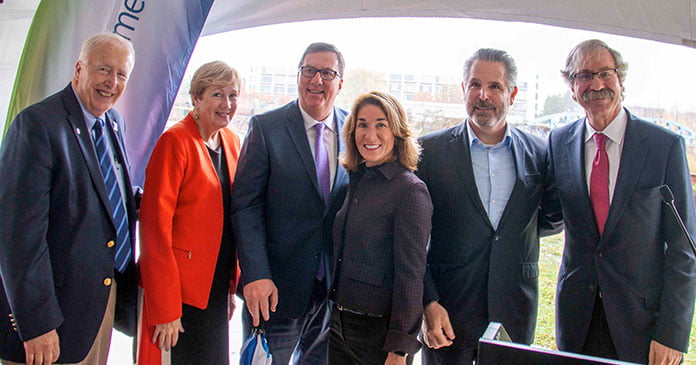
(left to right): Lowell Mayor William Samaras, Lowell City Manager Eileen Donoghue, Massachusetts State Rep. David M. Nangle, Massachusetts Lt. Gov. Karyn Polito, WinnCompanies Executive Vice President Michael O’Brien and WinnDevelopment President Larry Curtis.

The Lowell City Council cleared the way for the project on Tuesday night, unanimously voting to approve Urban Center Housing Tax Increment Financing (UCH-TIF) under a new state program designed to promote multifamily housing in urban centers. Construction is expected to begin in late December 2019 and be completed in December 2021.

“These are fun places to live. There’s a lot going on. There’s a vibe in the downtowns of these old industrial cities because of this collaboration and the willingness of all of you to take the chance, to take the risk, and move forward,” said Lt. Gov. Karyn Polito. “This is a best-of-everything project because you a mixed use project combining commercial and housing together, but it’s also mixed income. To have workforce housing, affordable housing and market rate housing all together is a really great accomplishment. It’s something to the core that WinnCompanies fully embraces.”

Construction will be financed with equity generated by Bank of America’s purchase of federal and state Low-Income Housing Tax Credits; a construction loan from Bank of America; a first mortgage and Workforce Housing funds from MassHousing; financing from the Massachusetts Department of Housing & Community Development under the state’s Affordable Housing Trust Fund, Housing Stabilization Fund and HOME program; financing from the Community Economic Development Assistance Corporation in the form of the Facilities Consolidation Fund and the Community-Based Housing program; Opportunity Zone investment and developer equity from WinnCompanies; and, funds from the Massachusetts Clean Energy Center and MassSave, both dedicated to advancing energy efficiency and clean technology.

The City of Lowell is supporting the project with HOME program funds, the UCH-TIF plan, and infrastructure investments in and around the 51,000-square-foot site.

“The City has made significant investments to put in place the infrastructure needed to support private development in the Hamilton Canal Innovation District. We are pleased that WinnCompanies has put forward a project that will capitalize on these investments and that will help meet the demand for more safe and energy-efficient housing in Lowell in a way that will also stimulate commercial growth in this key area,” said City Manager Eileen Donoghue. “This announcement marks the continuation of a positive partnership between WinnCompanies and the City that has been successful in developing high quality projects that advance our economic development goals.”

WinnDevelopment Project Director Matthew Curtin will lead the development team, which features Keith Construction; ICON Architecture; landscape architect Copley Wolff Design Group; interior designer Wolf in Sheep Design; civil engineer Vanasse Hangen Brustlin, Inc. (VHB); and, structural engineer Odeh Engineers. Deirdre Robinson, a partner at Sullivan & Worcester, serves as legal counsel for the project.

“I am thrilled to see additional private investment in the Hamilton Canal Innovation District. Bringing mixed-use developments to this area is important to ensure that our downtown continues to grow and thrive into the future,” said Lowell Mayor William Samaras.

The development will offer 15 studio apartments, 63 one-bedroom apartments and 47 two-bedroom apartments. The two residential buildings will be linked to each other by an enclosed sky bridge spanning Canal Street, a nod to Lowell’s history when similar connectors joined industrial mill buildings. The sky bridge will also compliment the new signature bridge the city recently built over the lower Pawtucket Canal.

Ambitious Energy Performance Goals

The complex will be designed, built and operated to achieve stringent energy performance goals, including certification through both Energy Star Homes and Enterprise Green Communities.

The environmentally responsible design and construction will feature high-efficiency air source heat pumps for heating and cooling, high performance building envelope details, including robust exterior wall and roof insulation, ENERGY STAR windows, LED lighting, ENERGY STAR appliances, and balanced ventilation with energy recovery for healthy indoor air quality and maximum efficiency.

Final Enterprise Green Communities certification will be achieved post-construction, following rigorous inspections, performance testing and verification provided by Boston based non-profit New Ecology Inc.

Critical incentive funding made available through the Massachusetts Clean Energy Center and MassSave Residential New Construction Program will support added construction costs associated with the project’s HVAC systems and building envelope design, which were designed and selected to reduce the project’s carbon emissions and long-term energy efficiency goals.

Located a half mile from the Lowell Connector with direct access to Route 495 and Route 3, the apartment community will be adjacent to a new 900-space parking garage that is under construction to serve downtown businesses and the new Lowell Justice Center regional court facility scheduled for completion in fall 2020. Residents also will be within walking distance of downtown retail business, a commuter rail line and bus routes served by the Gallagher Intermodal Terminal, as well as downtown retail businesses.

Lowell hosts the single largest concentration of properties owned by WinnCompanies in the United States. In addition, more than 100 company executives and accounting team members work at its regional headquarters in Boott Mills.

A member of the Lowell business community for nearly 25 years, WinnCompanies currently owns and manages seven award-winning residential properties featuring 572 apartments and condominiums, as well as 88,000 square feet of commercial space. The company’s property management arm, WinnResidential, manages an additional 250 apartments in the city.


About WinnCompanies

WinnCompanies is an award-winning national developer and manager of high-impact affordable, middle income and market rate housing communities. Supported by 3,500 team members, the company acquires, develops and manages affordable, senior, mixed-income, market rate, military and mixed use properties. Founded in 1971 and operating in 22 states and the District of Columbia, WinnCompanies is one of the nation’s leading multifamily housing managers with 100,000 units under management. It is the country’s largest manager of affordable housing and the second largest manager of privatized U.S. military housing.

SourceYield PRO Magazine