Small town Goshen thinks big, shows what will and local money can do

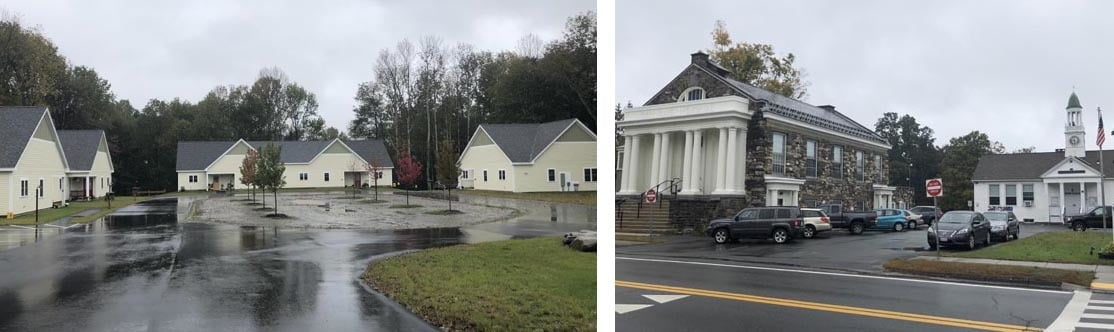
In celebrating the grand opening of 10 affordable apartments for seniors, the Town of Goshen demonstrated what can be done when residents have initiative and local money they can use for housing.

That’s the point local resident Don Boisvert made when he stepped up to the microphone at opening ceremonies on Sept. 28. A member of the town’s Community Preservation and Senior Housing committees, Boisvert traced the genesis of Goshen Senior Housing back to 2008 when voters passed the Community Preservation Act, which allows communities to impose a surcharge on residents and then use the funds for open space, historic preservation or affordable housing.

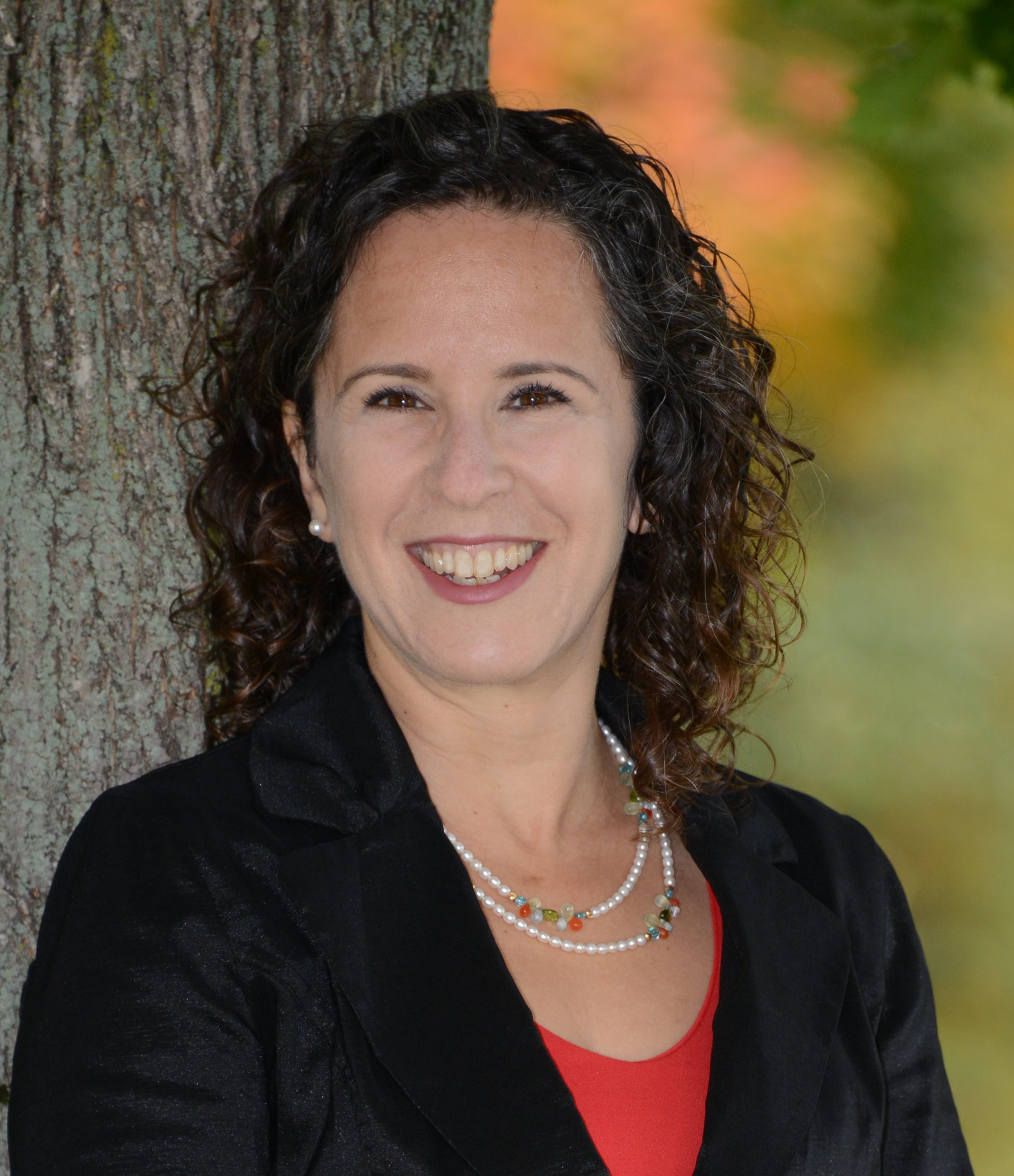
Boisvert (pictured) told the audience of about 50 residents gathered at Town Hall that a short time after the town adopted CPA, the sentiment among the locals was “let’s get something going around senior housing.” He went onto explain that having CPA was key because you need money and “you can’t just have a notion.” Soon after, Town Meeting approved the use of CPA funds for housing. By 2010, the senior housing committee began looking for a site.

Eight years later, their desire to do something for their community became a reality. Ten senior households now have a safe, affordable place they can afford. “The Town of Goshen has set an example for rural America about how small communities can come together and do something to protect their way of life,” said Dave Christopolis, executive director of the Hilltown Community Development Corp., the regional nonprofit that developed the $2.5 million project. “There has been disinvestment in rural areas but coming together to work on projects like this is what can help put rural towns back on the map.”

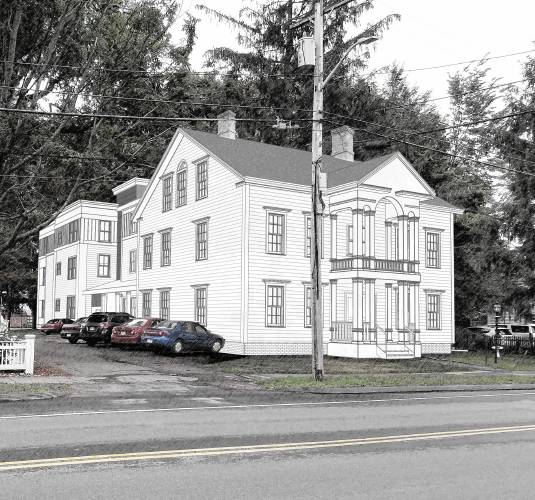
Located about 10 miles northwest of Northampton as the crow flies, Goshen has a population of just over 1,000. The new housing was built on a site acquired by the Hilltown CDC from the Goshen Congregational Church thanks to an acquisition loan from the state’s Community Economic Development Assistance Corporation (CEDAC).  There are two four-family buildings on the property and one two-family home. They are located next to the Congregational Church and across the street from the Town Hall and senior center.

The Massachusetts Housing Partnership (MHP) supported the effort by first providing Hilltown CDC with a Project Eligibility Letter, which a developer needs to apply to the town for a Ch. 40B comprehensive land use permit. Ch. 40B was needed in this case because the site was not zoned for multi-family. MHP also provided the project $500,000 in permanent financing from its $1.2 billion bank-funded loan pool, which has financed over 22,000 rental units across Massachusetts.

“This is a development that addresses the community’s need for senior affordable housing,” said David Hanifin, an MHP senior loan officer. “This was done thoughtfully because it had true community support.”

Granting Hilltown CDC the zoning to do the development wasn’t the only thing the Town of Goshen provided. The town also contributed $130,000 in CPA funds. Additional funding was provided by the state Department of Community Development (DHCD), and the state’s Affordable Housing Trust Fund, which is administered by MassHousing. People’s United Bank provided the construction loan and provided support for a subsidized advance award from the Federal Home Loan Bank. “All the lenders and state agencies went out of their way to understand our community and what we needed,” said Christopolis.

The result was housing that the town needs. At a luncheon and a tour of the housing after the speeches were done, all the residents we met told the same story: they were previously living in homes that were too big and/or in disrepair and they were happy to be living in an apartment that was safe, more affordable and on one level with no stairs.

Frank and Nancy Kosior are one example. Married for 58 years, they raised four children in their home in Williamsburg and lived there for 52 years. But as time wore on, Nancy started to have trouble walking and pretty soon Frank had to carry her up the stairs. They loved their home and didn’t want to leave, but now they know it was the right thing to do.

“It’s the smartest move I made,” said Frank, a local carpenter who gave his tools to his grandson when he moved up Route 9 from Williamsburg to Goshen. “This place is easier on Nancy and easier on me.”

They did mention rather matter-of-factly seeing a bear wander through their new backyard during the summer. When someone from the Boston area looked slightly alarmed, he was told that’s why residents are advised not to put bird seed out, especially in the summer.

For more information about this development and MHP’s financing options for multi-family rental properties big and small, visit MHP’s rental financing home page  or email MHP’s David Rockwell at drockwell@mhp.net or Nancy McCafferty at nmccafferty@mhp.net

SourceMHP News

One Gurney Street Holds Grand Opening

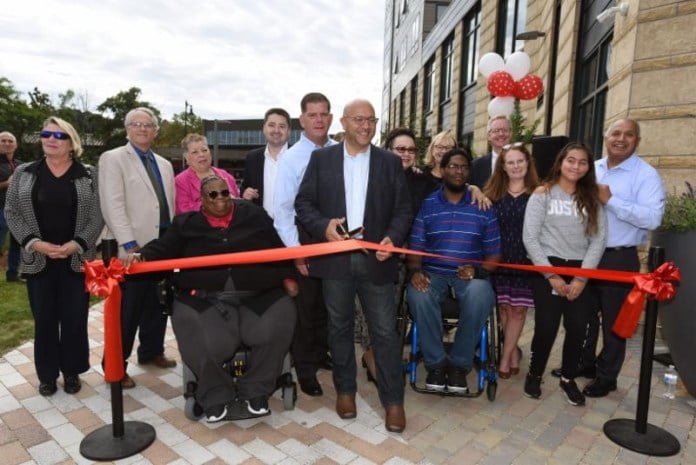
Boston Mayor Martin J. Wash on Saturday joined Mission Hill Neighborhood Housing Services (MHNHS), elected officials and residents to celebrate the grand opening of One Gurney Street.

This once vacant property is now a transit-oriented, mixed-use development that offers 40 units of affordable family housing, a new office headquarters for Metro Housing Boston, and four community-oriented retail storefronts including a new Eastern Bank branch. This is the first phase of the redevelopment of Parcel 25, the Mission Hill community’s plan to revitalize Roxbury Crossing.

“Today we celebrate a significant milestone reached as we break ground on this project at Parcel 25 that will bring affordable housing and public benefits to Mission Hill community members,” said Mayor Walsh. “I’m proud of the work that all partners have done to create dozens of affordable homes for workforce families, formerly homeless individuals, and persons with disabilities. This mixed-use development will continue keep this neighborhood a strong and vibrant place for generations to come.”

Phase 1A of the Parcel 25 redevelopment represents the culmination of more than a decade of planning and hard work by MHNHS and the Mission Hill community to restore the land formerly owned by the MBTA. The Maria Sanchez House, located just across Gurney Street from Parcel 25, was the first building to be developed as part of the community’s vision to revitalize the area. The Maria Sanchez House, completed in 2015, offers 40 units of affordable housing for seniors.

“We like to say it takes a village to develop affordable, neighborhood-stabilizing housing. Never has this been more evident than our efforts to redevelop Parcel 25,” said Mission Hill NHS Executive Director Patricia Flaherty. “Not only were hundreds of our neighbors involved in the dreaming, the planning, and the advocacy, but almost as many funders were committed to making the community’s plan a reality, led by the City’s Department of Neighborhood Development and the MA Department of Housing and Community Development. Today we are grateful for all those involved in the Parcel 25 Phase 1A/One Gurney Street project and officially welcome Metro Housing Boston staff and clients, Eastern Bank, and 40 new families to the neighborhood!”

One Gurney Street features nine one-bedroom units, 22 two-bedroom units, and nine three-bedroom units. All of the new rental units are affordable to workforce individuals and families at or below 60 percent of Area Median Income (AMI), 11 of the units are further subsidized to make them affordable to families with incomes at or below 30 percent of AMI. The 11 units include five units that are now home to formerly homeless households, and six fully wheelchair accessible units serving the needs of households with persons with disabilities. Three of the handicapped units are equipped with additional enhancements for persons with significant mobility and other disabilities under the Community Based Housing (CBH) program. Four of the units are specially equipped for persons with hearing impairment and visual disabilities.

“I want to thank everyone here today.This building has opened up the world for me again,” said Allande Pierre, one of the building’s new residents. “After becoming wheelchair-bound, I had to live in an institutional rehab center for more than a year without being able to move around without asking for permission. With my new apartment and the special accessibility adaptations, I have my freedom again. I can come and go as I please, move around the neighborhood, and I can even invite family and friends over to my home. It’s like night and day!”

The first floor of the new building has four retail storefronts located along Tremont Street and immediately across from the Roxbury Crossing T Station, and now extend and support the Mission Hill Main Streets district. In a strong show of their long-term commitment to the project and to the neighborhood, Eastern Bank and Metro Housing Boston now occupy retail and commercial space in thenew development. Eastern Bank, one of the project’s construction/bridge lenders, recently opened the area’s first bank branch in decades in one of the retail spaces. Metro Housing Boston purchased the office condo and relocated their headquarters and more than 155 employees to better service its clients at this location. Metro Housing Boston is the state’s largest servicer of housing subsidies and a provider of housing support services.

“The staff and Board of Metro Housing are thrilled to participate in the development of Parcel 25 to help reconnect Mission Hill with Roxbury,” said Chris Norris, Metro Housing Boston Executive Director. “Not only have we provided our participants with a modern and accessible location for them to receive our services and get connected to affordable homes, but we have also helped knit together a community.”

The project is LEED Silver Certified and has many green features for long-term operations, sustainability, and provides several new improvements such as new sidewalks, handicap accessible ramps, benches, lighting, bike racks, and a new pedestrian plaza and walkway that allows residents and visitors to move through the site and to their points of destination. The building was designed by Goody Clancy architects, constructed by NEI General Contracting, and is managed by Maloney Properties.

The new development has been made possible in part by a City of Boston contribution of more than $4 million, including funds from the Community Development Block Grant and the Neighborhood Housing Trust tied to a linkage contribution from Children’s Hospital. This contribution enabled the development team to take advantage of more than $3 million from the Commonwealth’s Department of Housing and Community Development.The State also provided an allocation of almost $1 million in federal Low-Income Housing Tax Credits (LIHTC) that helped raise over $9.4 million in equity from Regions and First Sterling, the equity investor in the project.

A consortium of Boston Private and Eastern Bank provided over $10 million in construction/bridge financing for the development. The Massachusetts Housing Partnership (MHP) provided $2.9 million in long term financing and is the permanent lender for the project. Boston Community Loan Fund/Life Initiative and Community Economic Development Assistance Corporation provided important pre-development financing for the project, with BCLF/Life Initiative also providing critical acquisition financing for the land purchase.

SourceBoston Real Estate Times

Affordable Housing Next Frontier in Health Care

Affordable Housing Next Frontier in Health Care

New Programs, Partnerships and Funding Prioritize Health Improvements

By Roger Herzog and Sara Barcan

Special to Banker & Tradesman

Affordable housing is the next big frontier in health care, and community development practitioners are catalyzing the growing discussion on social determinants of health, defined by the Centers for Disease Control and Prevention (CDC) as “conditions in the places where people live, learn, work and play that affect a wide range of health risks and outcomes.”

In Massachusetts, we are at a critical juncture: health care policymakers seek to rein in high costs while their housing counterparts are increasing efforts to reduce chronic homelessness and address affordable housing shortages. These challenges are intertwined, especially when reviewing the growing body of research that demonstrates the negative health outcomes and high health costs for homeless and rent-burdened families.

On the housing side, the Department of Housing and Community Development (DHCD) and CEDAC have funded over 3,000 supportive housing units since 2013. We’ve achieved this through a twofold effort that includes improved coordination between housing and health/human services agencies, and increases to the state’s capital budget for housing, especially supportive housing for people experiencing homelessness, elders, persons with disabilities, veterans and unaccompanied youth.

The state makes innovative use of health care and human services resources, including Medicaid, to pay for clinical supports and services that stabilize tenancies and allow residents to succeed in community-based housing. This year was a very important year, as the Legislature and the Baker administration enacted a $1.8 billion housing bond bill, which authorized the capital funds that the state uses to construct supportive housing.

For decades, CEDAC has managed supportive housing capital programs on DHCD’s behalf. Several of these programs, including the Facilities Consolidation Fund and the Community Based Housing program, help to ensure that people with chronic disabilities may live in the community rather than the institutions that housed them previously. Residents of this housing access care and supportive services in their own homes. Medicaid waivers pay for many of these services; we know that they help to keep people out of institutions and can save health care dollars. So it’s nothing new for Massachusetts to capitalize on the intersection of housing and services: for decades, we’ve provided capital and operating subsidies for buildings while Medicaid has covered the supports.

Social Determinants Become Larger Consideration

In recent years, the health care sector has begun to connect its growing understanding about the impacts of these social determinants into their planning and investment decisions. The federal Patient Protection and Affordable Care Act established new opportunities to foster increased collaboration between housing and health care providers. Attorney General Maura Healey and the Department of Public Health have issued updated guidance for community benefits from hospitals and determination of need rules, both of which serve as the oversight framework for hospital performance and accountability. The health sector is responding, with innovative approaches in the community health needs assessment process and plans to utilize financial and real estate assets to align with their mission.

For instance, Boston Medical Center (BMC) recently announced it would invest $6.5 million and work with community partners to support new affordable housing to reduce medical costs. As BMC’s Dr. Megan Sandel has said, “housing is a critical vaccine that can pave the way to long-term health and wellbeing.”

BMC’s initiative was significant not only because of the $6.5 million but also because, as stated in its press release, it “represents the first time that a Massachusetts hospital has put all its required community health investment into one social determinant of health – in this case, housing – to satisfy the requirements of the Massachusetts Department of Public Health for a determination of need.”

BMC’s efforts are not restricted to the housing stabilization initiative it is creating with two nonprofits, Pine Street Inn and Boston Health Care for the Homeless Program. The hospital’s Elders Living at Home Program is working with the nonprofit Roxbury-based Madison Park Development Corporation and Winn Management to create a pilot project, a community based Complex Care Management program, at Madison Park Village. A community health advocate and a community wellness nurse work on-site to provide services with the goal of improving health outcomes, independence and housing stability for residents.

These activities bode well for future collaboration between the health care and affordable housing sectors.

A vibrant community development sector in Massachusetts with a proven track record in real estate development is working to strengthen the relationship with health care institutions. And as our experience with supportive housing shows, CEDAC stands ready to help with policy development, early stage financing and technical assistance.

Roger Herzog is the executive director of the Community Economic Development Assistance Corporation. Sara Barcan is CEDAC’s director of housing development.

https://cedac.org/wp-content/uploads/2018/09/BT_Reprint_HerzogBarcan_092418.pdf

»

SourceBanker & Tradesman

Back in session: Carter School turning into apartments

It’s been more than 30 years since the sounds of learning have been heard inside the three-story brick building at 261 West St.

Soon, adults and children will be walking the halls again — and this time, they will call it home.

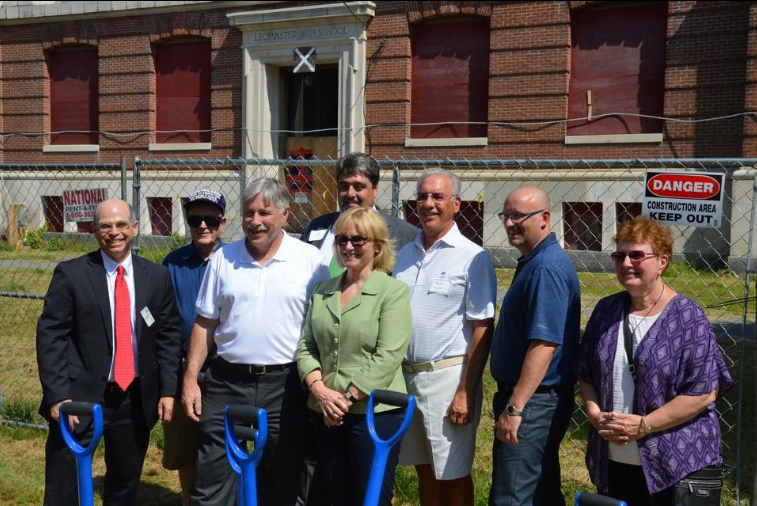
A ceremonial groundbreaking ceremony Wednesday, Aug. 29 marked the start of the conversion of the former Carter Junior High School into 39 units of affordable housing.

The building will have 14 one-bedroom apartments, 21 two-bedroom units and four three-bedroom units when work is complete, which is expected to take about a year and cost about $17 million.

There will also be storage for tenants, an exercise room, community space and parking. The building’s exterior and its boiler will be historically restored.

Each unit would be classified as affordable, according to documents from the Commonwealth of Massachusetts, including 16 units that would be affordable to households earning less than 30 percent of the region’s median income.

The hope, according to a press release from building owner NewVue Communities, is for the building to be certified by Enterprise Green Communities and placed on the National Register of Historic Places.

Built in 1904, the former Carter School was named after James Gordon Carter, a Leominster native, teacher and member of the first Massachusetts Board of Education. It served as the city’s high school until 1963; in fact, the building still bears the Leominster High School inscription above the front entrance. Then, from 1964-84, the Carter School was a junior high school.

The City of Leominster sold the Carter School to a private developer in 2000, but attempts to redevelop the building were not successful. NewVue Communities, based in Fitchburg, bought the building in 2016.

“It was such a significant part of Leominster’s rich history, and it broke my heart to see it in such terrible condition,” said NewVue Vice President Bill Brassard, Carter Junior High School Class of 1981. “I am proud to be part of a team that will revitalize this building and create a new use for it.”

NewVue Communities teamed up with city officials, Davis Square Architects, Hutter Construction and Wingate Companies to bring the Carter School project to the phase celebrated last week. Wingate, which will manage the building for NewVue, will start accepting apartment applications in the summer of 2019.

“We are excited to be here today,” Leominster Mayor Dean Mazzarella said. “This building was in such tough shape that we did not know how to redevelop the building. Given NewVue’s track record of taking on the most challenging projects with great success, I was thrilled when they asked us to partner with them to create affordable housing that is such an important part of Leominster’s history.”

The Carter School is NewVue’s second affordable housing project in Leominster. The first was Water Mill Apartments on Water Street.

Project partners and funders for the Carter School renovation include the City of Leominster, the Fitchburg-Leominster HOME Consortium, the state Department of Housing and Community Development, the Massachusetts Housing Investment Corporation, Avidia Bank, the Massachusetts Historical Commission, the Massachusetts Affordable Housing Trust Fund, the National Park Service, NeighborWorks America, the Community Economic Development Assistance Corporation, the Massachusetts Housing Partnership and the TD Charitable Foundation.

SourceLeominster Champion

Soldier On receives funding for housing project

Soldier On has received $125,000 in predevelopment financing from the Community Economic Development Assistance Corporation to develop affordable housing in Pittsfield.The organization is proposing to develop 14 units of permanent supportive housing serving veterans as part of its Gordon H. Mansfield Veterans Village — Phase II project. CEDAC previously committed $125,000 in predevelopment loans to Soldier On, which provides both affordable housing and supportive services to help end veteran homelessness.CEDAC has also approved a $65,000 commitment for technical services to help Worcester Common Gound Inc. developed 31 units of affordable housing in that city.CEDAC is a public-private community development finance institution that provides financial resources and technical expertise for community-based and other non-profit organizations engaged in effective community development in Massachusetts.

SourceThe Berkshire Edge

Former Leominster school being converted to affordable housing

NewVue Communities is helping to breathe new life into the former Carter Junior High School, which has been vacant more than 30 years.

Wednesday, state and local officials and community leaders, some of whom attended Carter Junior High at 261 West St., across from the West End Diner, gathered under a tent for a groundbreaking ceremony outside the three-story brick school building to kick off its redevelopment into 39 affordable housing units.

Leominster Mayor Dean J. Mazzarella said that in 1985, former Mayor Richard J. Girouard Sr. asked Mr. Mazzarella and his business partner, who were in construction at the time, to tour the deteriorating building and consider redeveloping it. The school – built in 1904 and named after Leominster native and teacher James Gordon Carter, who was a member of the first Massachusetts Board of Education – served as the city’s high school until 1963, then a middle school from 1964 until 1984, when it was left vacant.

“I walked through the building with my partner and said, ‘If you give us the building and $100,000, we’ll do it over,’ ” Mr. Mazzarella said, adding that the cost of the project outweighed the benefits at the time.

After showing it himself to potential buyers “a million times,” the mayor said, he is excited about NewVue’s team effort and passion to see the project through. NewVue is a regional nonprofit that specializes in redeveloping properties into housing.

“Given NewVue’s track record of taking on the most challenging projects with great success, I was thrilled when they asked us to partner with them to create affordable housing (in a property) that is such an important part of Leominster’s history,” Mr. Mazzarella said.

In 2000, the city sold the school to a private developer, but after multiple unsuccessful attempts to redevelop it, NewVue Communities stepped in, officials said, and acquired the building in 2016.

NewVue Communities Vice President Bill J. Brassard, who attended Carter from 1979 to 1981, said he was happy to see the school restored.

When renovations are completed in 2019, the building will have 14 one-bedroom apartments, and 21 two-bedroom and four three-bedroom units. It will also have tenant storage, an exercise room, community space and parking. The exterior of the building and the existing boiler will be historically restored, officials said. The goal is for the building to be certified by Enterprise Green Communities and placed on the National Register of Historic Places.

Janelle Chan, undersecretary for housing and community development for the state’s Executive Office of Housing and Economic Development, said her office was glad the building will benefit future generations and become an asset for Leominster.

Ms. Chan said it is “pretty cool” that people who attended the school want to come back to live there and that children will be back in the hallways. Her office, she said, is proud to support the project.

The $17.4 million project is using historic and low-income housing tax credits, she said, along with state and local subsidies and private loans to rehabilitate the building that is in significant disrepair. Four units will be reserved for formerly homeless households, she said, who will have supportive services provided by the Massachusetts Opportunity Council. All units will be available to tenants at or below 60 percent of the average median income, and 16 units are reserved for tenants at or below 30 percent.

Marc Dohan, executive director of NewVue Communities, said the development team also includes city officials, Davis Square Architects, Hutter Construction and Wingate Companies, who have been working on bringing the project to fruition over the past five years.

Project partners and funders include the city of Leominster, Mr. Mazzarella, the Fitchburg-Leominster HOME Consortium, the Department of Housing and Community Development, Massachusetts Housing Investment Corporation, Avidia Bank, the Massachusetts Historical Commission, the Massachusetts Affordable Housing Trust Fund, the National Park Service, NeighborWorks America, the Community Economic Development Assistance Corporation, the Massachusetts Housing Partnership and the TD Charitable Foundation.

SourceTelegram

Worcester Common Ground to get $65K toward Chandler St. apartment project

The state Community Economic Development Assistance Corporation recently committed $190,000 in pre-development financing to two nonprofit organizations in Worcester and Pittsfield to develop affordable housing.

Worcester Common Ground Inc. plans to develop 31 units of affordable rental housing on two sites along Chandler Street in Worcester. CEDAC approved a $65,000 commitment for technical services for the project. The project will convert a medical-supply warehouse and an adjacent building into one-, two- and three-bedroom family-friendly apartments.

In Pittsfield, Soldier On proposes to develop 14 units of permanent supportive housing serving veterans as part of its Gordon H. Mansfield Veterans Village project. CEDAC previously committed $125,000 in pre-development loans to the nonprofit organization.

“Worcester Common Ground and Soldier On are developing the kind of affordable housing projects that reflect the needs of their communities and that will strengthen Worcester and Pittsfield,” CEDAC Executive Director Roger Herzog said. “CEDAC is pleased to be supporting both of these projects, which will help vulnerable populations in those cities.”

SourceTelegram

Baker-Polito Administration Awards $4 Million for Early Education Programs

The Baker-Polito Administration and the Community Economic Development Assistance Corporation (CEDAC) today announced $4 million in grant awards for facility improvements at early education and care programs that serve low income children.  Four agencies were selected to receive an Early Education and Care and Out of School Time (EEOST) capital improvement grant, which will help increase the quality of their early education programs through critical facility repairs and renovations.

Governor Charlie Baker made the announcement today at the Crispus Attucks Children’s Center in Dorchester, the site of one of the facilities funded by the 2018 grant awards.

“With these grants, we will improve the learning environments of our youngest children, boost the capacity of programs to serve more children and create new jobs,” Governor Charlie Baker said.  “Renovating and repairing facilities helps achieve our goal of improving the quality of early education and care.”

“These capital improvement grants support facility construction and renovations that modernize early education spaces and provide more enriching environments for children,” Lt. Governor Karyn Polito said. “High-quality programs help young children develop healthy learning habits, which is good for the community and for our Commonwealth as a whole.”

“We know that building deficiencies impact the quality of teaching and learning in early childhood and out-of-school time facilities,” Education Secretary James Peyser said. “These grants were created to help non-profit providers serving children living in low-income communities improve their facilities.”

The Early Education and Care and Out of School Time capital improvement grants are financed through the state’s capital budget and provide matching funds that leverage private investment.  The Baker-Polito Administration’s FY18 Capital Budget Plan included $4 million for the Early Education and Out of School Time grant program.  In May, Governor Baker signed An Act Financing the Production and Preservation of Housing for Low and Moderate Income Residents (H.4536), which authorized $45 million for the EEOST Capital Fund.

“The EEOST capital improvement grants provide critical funding for non-profit early education programs to upgrade their facility spaces and provide better physical environments for the children they serve,” Early Education and Care Commissioner Tom Weber said.  “We are pleased to make these awards as this public investment in building construction and renovation of early education programs will benefit children, local communities, and the state for years to come.”

“The EEOST Capital Fund is helping providers create well-designed facilities that support children’s healthy development and learning, and the commitment and effectiveness of educators,” said Theresa Jordan, Director of Children’s Facilities Finance of Children’s Investment Fund. “Over time, this innovative capital resource has the potential to transform the early care and education and out-of-school time landscape for the neediest and most vulnerable children in the Commonwealth.”

The following organizations received grants:

Lead Agency Service Area Award
Citizens for Citizens Fall River $1,000,000
Crispus Attucks Children’s Center Dorchester $1,000,000
Elizabeth Stone House Roxbury $1,000,000
Holyoke-Chicopee-Springfield Head Start Springfield $1,000,000

“All of us at Crispus Attucks Children’s Center are grateful, excited and humbled to be receiving generous and much-needed funding from the Department of Early Education and Care,” said Maritza Juliao, Executive Director of Crispus Attucks Children’s Center.  “For nearly fifty years, Crispus Attucks has been providing quality early childhood education at an affordable price to some of Boston’s most vulnerable children and families.  Our facilities are in critical need of upgrades and improvements so that we may sustain our mission, and this grant will enable us to give our buildings the attention they need so that we as educators can focus our attention on our dearest assets: the children and families we serve.”

All of the programs selected to receive a grant award serve publicly subsidized families, have demonstrated financial need, and have secured additional funding to pay for a portion of their project costs.  The Department of Early Education and Care partnered with CEDAC’s affiliate, the Children’s Investment Fund, to administer the grant awards.  All of the grantees are non-profit corporations or organizations in which a non-profit corporation has a controlling interest.

###

SourceGovernor's Office

Sergeant House receives $7.2M tax credit

A $7.2 million tax credit will fund the renovation and expansion of the Sergeant House affordable housing complex on Bridge Street starting next year.

The state Department of Housing and Community Development awarded the low-income tax credit on Wednesday to the Valley Community Development Corp. to expand its housing options for low-wage earners, the homeless, retirees and disabled people.

“I’m most excited because people will get better housing and there will be more folks who can afford to live in Northampton,” said Joanne Campbell, executive director of Valley CDC.

The $8.2 million project will double the size of the Sergeant House, 82 Bridge St., to 31 units, each equipped with its own bathroom and kitchen. Currently, 15 tenants share one kitchen and multiple bathrooms. Renovations will include a new elevator, a handicapped-accessible entryway, on-site property management and social service offices.

Temporary housing will be provided for tenants during construction, which Campbell says should begin next April and last about nine months. Valley CDC has hired a relocation specialist to help residents find temporary housing, and will cover any difference in rent.

“They are very excited,” Campbell said of the tenants.

The city of Northampton will provide $500,000 in additional funds through the Community Preservation Act and the federal Community Development Block Grant. The Northampton-based Community Economic Development Assistance Corporation provided funds for the preliminary architectural plans, site drawings and permits. The Federal Home Loan Bank of Boston also provided a $500,000 grant.

Campbell said Northampton’s city government is committed to building affordable housing, with new projects like Live 155, the Lumber Yard and upcoming Village Hill developments all setting aside low-income units.

“There’s a lot of good development that’s going on that’s serving lower income renters,” Campbell said. “Is there enough? Of course not.”

Sergeant House offers housing units to people earning less than 60 percent of the average median income for the Springfield metropolitan area, which is $33,900 for an individual, and $48,420 for four people. The complex has been owned and operated by Valley CDC since 1990.

About 25 percent of the Sergeant House’s new units will be set aside for people coming out of homelessness, and another 25 percent will be reserved for people earning less than 30 percent of the average median income.

Valley CDC manages about 53 housing units in Northampton, Florence and Easthampton, according to Campbell, and about 80 people are on a waitlist for existing housing units.

When Sergeant House reopens, everyone on the waitlist will be notified of the new units and can apply to live there through a lottery.

Sarah Robertson can be reached at srobertson@gazettenet.com.

SourceDaily Hampshire Gazette

Baker-Polito Administration Announces $57 Million to Support Affordable Housing Development Across Commonwealth

Administration also allocated $33 million in tax credits to support creation and preservation of nearly 1,500 housing units

DORCHESTER — Today, Governor Charlie Baker announced this year’s affordable rental housing awards, which will provide $57 million in direct subsidies for 19 projects to fund the development, renovation and preservation of housing opportunities throughout the state. Since 2015, affordable housing awards have led to the creation and preservation of more than 6,300 housing units alone, furthering the Baker-Polito Administration’s commitment to increasing access to affordable and middle-income housing in every region of the Commonwealth.

“These rental housing awards support our Administration’s commitment to create more housing opportunities in neighborhoods across Massachusetts,” said Governor Charlie Baker. “We have also drafted legislation to develop 135,000 units of new housing by 2025 that has been endorsed by several businesses, local officials, trade organizations and community groups, and encourage the Legislature to pass this bill to build more affordable housing and support economic development in every zip code.”

The $57 million in state funding will support affordable, multifamily rental projects. Funding sources include federal HOME funds and state bond funds from six capital bond accounts. Additionally, the Department of Housing and Community Development (DHCD) is awarding $33.5 million in federal and state housing tax credits which will generate more than $240 million in equity to support the construction and preservation of 1,463 units, including 1,312 affordable units with 227 units reserved for very low-income households. Funded projects include six developments for seniors, three projects that will support substantial renovations of public housing developments, and four transit-oriented developments. Many include housing units reserved for formerly homeless families and individuals.

“The diverse array of awards represents the varied needs of our Commonwealth, and we are thrilled to support 19 high-impact projects that will provide much-need new housing, and maintain our current stock of affordable housing,” said Lt. Governor Karyn Polito. “We are proud to partner with many cities and towns, including the 69 Housing Choice Communities we designated in May, that have a keen understanding of their specific housing needs, and we are pleased to support locally driven projects to meet the needs of Massachusetts residents.”

Governor Baker joined Housing and Community Development Undersecretary Janelle Chan, City of Boston’s Chief of Housing and Director of Neighborhood Development Sheila Dillon, Representative Russell Holmes, Hearth President & CEO Mark Hinderlie, and local officials at the future site of Hearth at Four Corners, a 54-unit, new construction project for seniors. The development, in Boston’s Dorchester neighborhood, will be entirely affordable, with 19 units reserved for extremely low-income seniors, and provide extensive supportive services for tenants. The project received state and federal tax credits and direct subsidies from the state, along with funding from the City of Boston.

“More people are currently employed in Massachusetts than at any point in our history, and we need a housing market that can support working families at all income levels so that they can fully participate in this economy,” said Housing and Economic Development Secretary Jay Ash. “Today’s awards help increase options for families to access safe, affordable, and stable housing, a critical foundation for success and prosperity, both for themselves and for our communities.”

“Across our Commonwealth, more and more young families are finding they are not able to put down roots, seniors are not able to age in their communities, and hard-working residents are spending more of their paychecks and precious time traveling further to get to their jobs,” said Housing and Community Development Undersecretary Janelle Chan.  “Today’s awards will enable communities to grow with their residents, and be a part of a state-wide and regional response to the affordable housing crisis.”

“Our state like most states in the nation is in the midst of a housing shortage,” said Senator Nick Collins. “Now, more than ever, government and its partners need to continue their commitment to supplying the demand for housing that is affordable. Today’s announcement is one example of that commitment and I look forward to continuing to help provide individuals and families with supportive services as well as housing opportunities that they can afford,” concluded Senator Collins.

“Thank you to the Baker-Polito Administration for making housing a priority, and funding this important project in Dorchester,” said Representative Russell Holmes.“This project will create vital senior housing, and transform a vacant lot into a necessary resource for this neighborhood.”

This year’s affordable rental housing awards continue to advance the Baker-Polito Administration’s commitment to substantially increasing housing production throughout the Commonwealth, with an emphasis on housing affordable to low- and middle-income households. Since 2015, the administration has spent or committed more than $880 million for the production and preservation of affordable housing. In May, Governor Baker signed a $1.8 billion affordable housing bill to ensure long-term support for the Baker-Polito Administration’s comprehensive efforts to increase the production of affordable housing, diversify the state’s housing portfolio, modernize public housing, preserve the affordability of existing housing and invest in new, innovative solutions to address Massachusetts’ rising demand for housing.

In December 2017, Governor Baker announced the Housing Choice Initiative, a comprehensive proposal to create 135,000 new housing units by 2025 with new set of incentives and rewards for municipalities committed to sustainable housing growth in their communities. The Housing Choice Initiative is a multi-pronged effort that includes a program to designate Housing Choice municipalities and new technical assistance opportunities through MassHousing, in addition to proposed legislative changes that will help deliver smart, effective zoning at the local level. The legislation,An Act to Promote Housing Choice is currently pending before the legislature.

Additionally, the highly effective MassWorks Infrastructure Program continues to be a key catalyst for housing production, supporting the creation of more than 3,000 housing units. The Open for Business Initiative will drive the production of more than 2,200 units of housing on state land. MassHousing’s $100 million Workforce Housing Initiative has advanced the development of 2,374 housing units across a range of incomes, including 631 workforce housing units. And, the Baker-Polito Administration reformed the Housing Development Incentive Program, which is on track to facilitate more than 900 new units in Gateway Cities.

Awardees:

Robert Hill Way (Ashland) is a 64-unit new construction senior housing project. The sponsor is E.A. Fish. All 64 units will be affordable to low-income seniors, with 7 units reserved for extremely low-income seniors with incomes below 30% of Area Median Income (AMI), and supportive services will be offered at the completed project. DHCD will support the project with Low Income Housing Tax Credits and subsidy funds.

25 Amory Street (Boston) is a 44-unit new construction project to be located near the Jackson Square MBTA station in Jamaica Plain, Boston. The sponsor is the non-profit Jamaica Plain NDC. All 44 units will be affordable to households earning less than 60% of AMI, with 14 units further restricted for households earning less than 30% of AMI and making the transition from homelessness. DHCD will support this transit-oriented project with Low Income Housing Tax Credits and subsidy funds; the City of Boston also will provide additional financial support to the project.

Four Corners (Boston) is a 31-unit new construction project to be built in Dorchester, Boston. The sponsor is the non-profit Codman Square Development Corporation. All 31 units will be affordable to households earning less than 60% of AMI, with 8 units further restricted for households earning less than 30% of AMI and making the transition from homelessness.  DHCD will support this transit-oriented project with Low Income Housing Tax Credits and subsidy funds; the City of Boston also will support the project with subsidy funds.

Hearth at Four Corners (Boston) is a 54-unit new construction project for seniors to be built in Dorchester, Boston, sponsored by the non-profit Hearth. All 54 units will be affordable to low-income seniors, with 19 units reserved for extremely low-income seniors with incomes below 30% of AMI. Hearth will provide extensive services at the completed project to support tenants. DHCD will support Hearth at Four Corners with Low Income Housing Tax Credits and subsidy funds; the City of Boston also will provide the project with additional subsidy funds.

Old Colony Phase 3A – Award 1 (Boston) is one of the next phases in the decade-long redevelopment of public housing located in South Boston. The sponsor is Beacon Communities. This phase contains 108 units reserved for households earning less than 60% of AMI, with 11 units further reserved for households earning less than 30% of AMI. DHCD will support this phase with Low Income Housing Tax Credits and subsidy funds. The City of Boston will also provide support for this phase.

Old Colony Phase 3A – Award 2 (Boston) is another phase in the ongoing redevelopment public housing project located in South Boston. The sponsor is Beacon Communities. This phase contains 27 units reserved for households earning less than 60% of AMI, with three units reserved for households earning less than 30% of AMI. DHCD will support this phase with Low Income Housing Tax Credits. The City of Boston is providing additional support for this phase of the project.

Downtown Brockton TOD (Brockton) is a 48-unit new construction project for families to be built in Brockton. The sponsor is the non-profit NeighborWorks of Southern Massachusetts. The completed project will create 30 units reserved for households earning less than 60% of AMI as well as 18 units restricted for households earning less than 110% of AMI. DHCD will support this transit-oriented project with Low Income Housing Tax Credits and subsidy funds. The City of Brockton is supporting the project with additional funding.

370 Harvard Street (Brookline) is a 62-unit new construction senior project to be built in the Coolidge Corner neighborhood of Brookline. The sponsor is Jewish Community Housing for the Elderly (JCHE).   The completed project will include 57 units reserved for seniors earning less than 60% of AMI, with 16 units reserved for extremely low-income seniors with incomes below 30% AMI. JCHE also will make extensive services available to the tenants of Harvard Street. DHCD will support the project with Low Income Housing Tax Credits; the Town of Brookline will support Harvard Street with local funds.

Frost Terrace (Cambridge) is a transit-oriented new construction project for families. The sponsor is Capstone Communities. This 40-unit project will be built one block away from the Porter Square MBTA/commuter rail station with retail and service opportunities available in the immediate neighborhood. All 40 units will be affordable to households earning less than 60% of AMI, with four units reserved for households earning less than 30% of AMI. DHCD will support the project with Low Income Housing Tax Credits and subsidy funds.  The City of Cambridge will provide additional funding through city trust funds.

Squirrelwood (Cambridge) is an 88-unit family project featuring the preservation of existing affordable units as well as the construction of new units. The sponsor is the non-profit Just-A-Start. The completed project will offer 78 affordable units, including eight units restricted for households earning less than 30% of AMI. Squirrelwood originally was financed by MassHousing through the Chapter 13A program.  DHCD will support the project with Low Income Housing Tax Credits.  The City of Cambridge will support the project with additional funding.

Little Pond Place (Falmouth) is a 40-unit new construction project for families in Falmouth. The sponsor is Affirmative Investments. All 40 units will be restricted for households earning less than 60% of AMI, with four units restricted for households earning less than 30% of AMI. DHCD will support Little Pond Place with Low Income Housing Tax Credits and subsidy funds.  The Town of Falmouth also will support the project with $750,000 in Community Preservation Act funds.

Shirley Commons (Fort Devens) is a 58-unit new construction project for seniors to be built on the Fort Devens site.  The sponsor is the non-profit Women’s Institute for Housing and Economic Development. All 58 units will be restricted for seniors earning less than 60% of AMI, with 15 units restricted for seniors earning less than 30% of AMI. DHCD will support Shirley Commons with Low Income Housing Tax Credits and subsidy funds. The sponsor will offer support services for the tenants.

Bentley Apartments (Great Barrington) is a 45-unit new construction project for families in Great Barrington. The sponsor is the non-profit Community Development Corporation of South Berkshire. All 45 units in the completed project will be reserved for households earning less than 60% of AMI, with 21 units reserved for households earning less than 30% of AMI. DHCD will support Bentley Apartments with Low Income Housing Tax Credits and subsidy funds. The Town of Great Barrington will provide additional Community Preservation Act funds to the project.

Lyman Terrace Phase II (Holyoke) is the second phase of the comprehensive redevelopment of the Lyman Terrace public housing development in Holyoke. The sponsor is the non-profit The Community Builders (TCB). The completed project will offer 79 units of family housing reserved for households earning less than 60% of AMI, with 16 units reserved for households earning less than 30% of AMI. DHCD will support this phase of Lyman Terrace with Low Income Housing Tax Credits and subsidy funds. The Baker-Polito Administration has previously supporting the redevelopment through affordable housing awards and the MassWorks Infrastructure Program. The City of Holyoke will provide additional subsidy to the project.

Sargent House Expansion (Northhampton) is a blended preservation and production project located on the edge of Northampton’s vibrant downtown business district. The sponsor is the non-profit Valley Community Development Corporation. The completed project will feature 31 total units. All units will be affordable to individuals earning less than 60% of AMI, with 10 units reserved for individuals earning less than 30% of AMI. Many tenants at Sargent House previously were homeless; Valley CDC will provide supportive services appropriate for the existing and new tenants. DHCD will support the project with Low Income Housing Tax Credits and subsidy funds. The City of Northampton also will support the project with some of its own funds.

24 Gould Street (Reading) is a 55-unit new construction mixed income project to be built in in Reading’s Chapter 40R district. The project sponsor is the Traggorth Companies. The project will be built at a major intersection in Reading’s central business district. When completed, 24 Gould Street will offer 14 affordable units as well as 41 market rate units. DHCD will support 24 Gould Street with subsidy funds. The Town of Reading also will provide financial support for the project.

Lydia Square Apartments (Rockland) is a 44-unit new construction project for seniors in Rockland. The sponsor is NewGate Housing. All 44 units will be restricted for seniors earning less than 60% of AMI, with 9 units reserved for seniors with incomes below 30% AMI. The sponsor will provide support services at the project as well as transportation to a nearby senior center. DHCD will support Lydia Square with Low Income Housing Tax Credits and subsidy funds.

Chestnut Park (Springfield) is a 489-unit preservation project in Springfield sponsored by Related Beal. The existing project, home to over 1,500 people, will be preserved and rehabilitated. When completed, 412 units will be affordable to households earning less than 60% of AMI, with 42 units further restricted for households earning less than 30% of AMI. DHCD will support Chestnut Park with Low Income Housing Tax Credits and subsidy funds. The City of Springfield also will provide support for Chestnut Park.

Coolidge at Sudbury (Sudbury) is a 56-unit new construction project for seniors. The project will be built on a site adjacent to the successful first phase of this development. The sponsor is the non-profit B’nai B’rith. All 56 units will be affordable to low-income seniors, with 12 units reserved for extremely low-income seniors with incomes below 30% AMI.  DHCD will support the project with Low Income Housing Tax Credits and subsidy funds. The Town of Sudbury also will provide funds to support the project.  B’nai B’rith will provide services appropriate for the new tenants of Coolidge at Sudbury Phase Two.

###
SourceGovernor's Office