Baker-Polito Administration Announces $63 Million for Affordable Housing Production

15 projects in 14 communities will create or preserve more than 700 units of rental housing

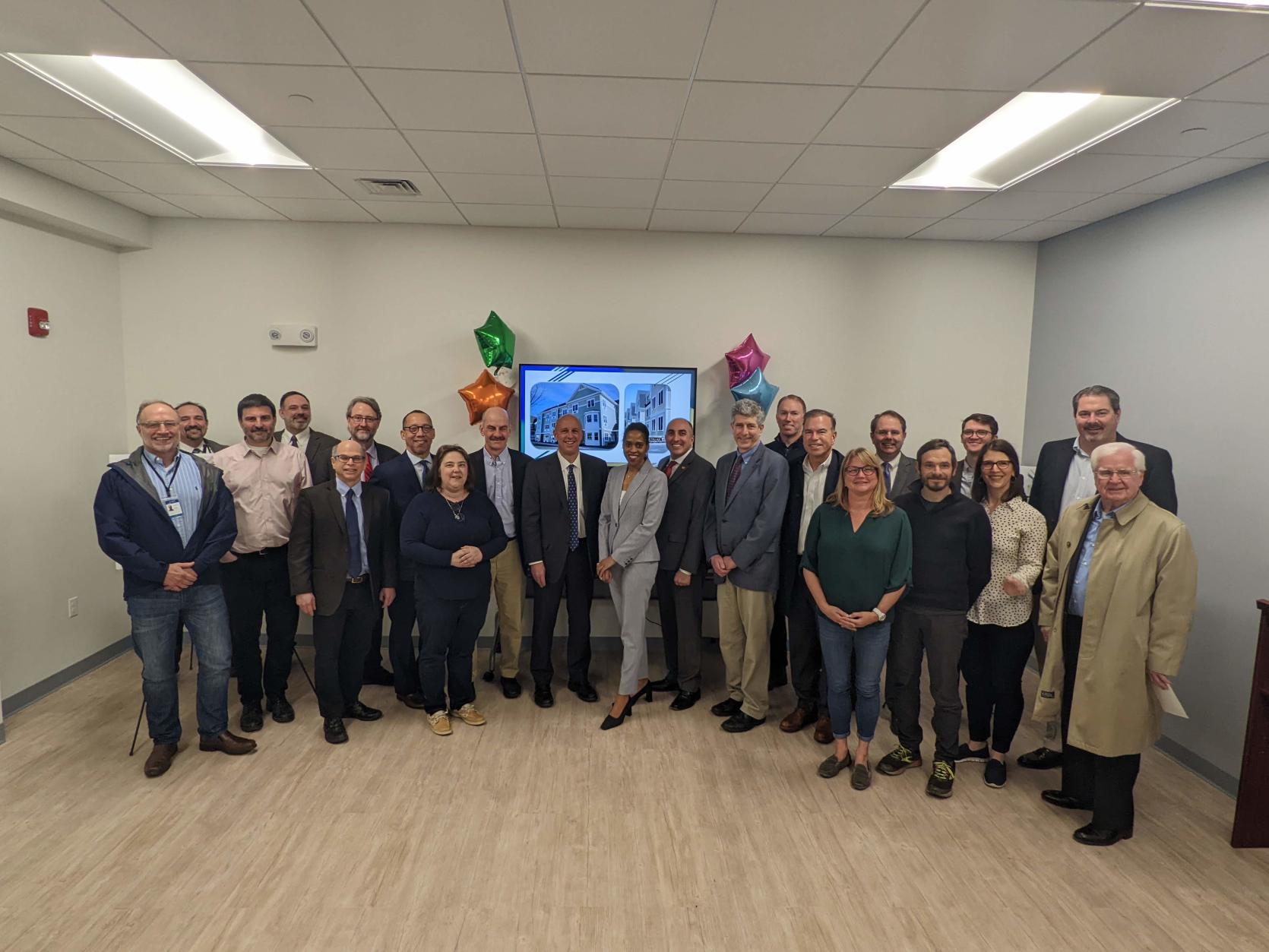
BOSTON, 29, April 2022 – Community Economic Development Assistance Corporation (CEDAC) was delighted to join Housing and Economic Development Secretary Mike Kennealy in Gloucester on April 15th for the announcement of $63 million in new funding awards for 14 affordable housing projects across the Commonwealth. The Secretary was joined by Housing and Community Development Undersecretary (and CEDAC Board Chair) Jennifer Maddox, and CEDAC Executive Director, Roger Herzog, along with several state and local officials, and many representatives of the project sponsors receiving funding awards.   The YMCA of the North Shore hosted this event in their beautiful new Gloucester facility, which also features an early education program supported by CEDAC’s affiliate, Children’s Investment Fund.

Led by the Mass Department of Housing and Community Development (DHCD), the awards will assist with the construction of 479  new units of affordable housing targeted to  low-income households, with another 150 units designated for extremely low-income families or individuals  often transitioning from homelessness. DHCD also awarded federal and state low-income housing tax credits, which are expected to generate over $200 million in equity to support both new construction and the rehabilitation of existing housing.

“With this round of affordable housing awards, we continue to expand the Commonwealth’s portfolio of new housing units to meet the needs of households of all income levels,” said Governor Charlie Baker in a press release.  “As we continue to tackle the state’s housing crisis, these projects will result in meaningful progress toward our goal of enhancing access to safe, quality, and affordable housing across Massachusetts.”

“These projects are the result of key partners working together to produce needed new housing in Massachusetts and I’m excited we can provide important financial support to make these new units reality,” said Housing and Economic Development Secretary Mike Kennealy.  “Affordable housing development is truly a team sport, and the cooperation and dedication to make these projects happen are incredible testaments to the strong affordable housing ecosystem in Massachusetts.”

“Today’s projects include a mix of new construction, historic rehabilitation, and transformative investments in our public housing stock. In Fitchburg and Springfield, we will see innovative, adaptive reuses of historic properties, and new construction will add vibrancy near the new Polar Park in Worcester,” said Housing and Community Development Undersecretary Jennifer Maddox. “We are incredibly proud to invest in projects that will invite new residents to communities, enhance neighborhoods, and ensure current residents can access stable, affordable housing. Here in Massachusetts, we have a strong network of affordable housing developers, funders, and advocates who have helped us bring thousands of new affordable units to the market over the last five years, and we look forward to continuing this work.”

“The projects announced in DHCD’s latest funding round represent the continued successes we are able to achieve through work with our non-profit partners and the Commonwealth,” said CEDAC Executive Director, Roger Herzog. “We remain committed to doing everything in our power to facilitate the creation of new affordable housing at a time of particularly acute need and look forward to working with Governor Baker and future administrations in service of that goal.”

CEDAC is proud to have committed a total of over $5.5 million in early stage predevelopment and acquisition financing  to 7  of the 15 total projects announced, including these projects that secured DHCD funding awards:

    • Chester Commons is an occupied 15-unit historic rehabilitation project located in Chester’s town center, a western Massachusetts community. CEDAC provided $400,000 in predevelopment financing and $655,000 in an acquisition loan for the project. The sponsor is the non-profit Hilltown Community Development Corporation, and DHCD will provide subsidy funds to support this project for older adults (55 and over) with an emphasis on accessibility.
    • Fitchburg Arts Community is a historic adaptive re-use project located in Fitchburg. CEDAC provided $245,000 in predevelopment financing for the project. The non-profit sponsor is NewVue Communities. DHCD is supporting the project, located across the street from the Fitchburg Art Museum, with federal and state housing tax credits and subsidy funds. The city of Fitchburg will provide its own funds in support of Fitchburg Arts Community, a key project in its local economic development strategy.  When complete, the project will offer 68 units of mixed income housing with a preference for artists. Forty-seven units will be available for artists or other households earning less than 60 percent of area median income (AMI), and 14 units further restricted for artists or other households earning less than 30 percent of AMI.
    • The John J. Meany Affordable Housing development located in Gloucester is a new construction project specifically targeted for senior residents. CEDAC provided $586,666 in predevelopment financing for the project. The sponsor is the YMCA of the North Shore, who hosted the event.  DHCD is supporting the project with federal and state low-income housing tax credits and subsidy funds.  The city of Gloucester will provide funds of its own in support of the project which will offer 44 total units.
    • Library Commons 2 is a 41-unit scattered site project located near downtown Holyoke. CEDAC provided $400,000 in predevelopment financing and $101,500 in an acquisition loan for the project. The sponsor is the non-profit Way Finders, Inc., and DHCD will support the project with federal and state low-income housing tax credits and subsidy funds. The city of Holyoke will also provide funds in support of Library Commons 2 and when complete, the project will offer 41 total units. Library Commons Phase I created and preserved 38 units of housing and was completed and leased up in August 2021.
    • Island Parkside Phase 2 is a new construction project located in Lawrence. CEDAC provided $528,065 in predevelopment financing and $1,610,104 in acquisition loans for the project. The sponsor is the non-profit Lawrence Community Works, which will develop and own 40 affordable rental units built to PASSIVE House Standards. The first floor will include a youth and community center developed by Squash Busters Lawrence DHCD is supporting the 40 rental units with federal and state low-income housing tax credits and subsidy funds. The city of Lawrence will support Island Parkside Phase 2 with a commitment of HOME funds. Island Parkside Phase 1, also involving the new construction of 40 affordable rental units, is expected to be ready for occupancy in early 2023.
    • 950 Falmouth Road is a new construction project located in Mashpee. CEDAC provided $550,000 in predevelopment financing. The sponsor is the nonprofit Preservation of Affordable Housing, and DHCD will support the project with subsidy funds. The town of Mashpee will support the project with funds of its own and when completed it will offer 39 total units.
    • Maple Woods is a new construction project for seniors located in Wenham. CEDAC provided $447,500 in predevelopment financing. The sponsor is the non-profit Harborlight Community Partners, and DHCD will support the project with federal and state low-income housing tax credits and subsidy funds. When completed, Maple Woods — zoned through a lengthy Chapter 40B process– will offer 45 total units with services for seniors.

About CEDAC

CEDAC is a public-private community development financial institution that provides project financing and technical expertise for community-based and other non-profit organizations engaged in effective community development in Massachusetts. CEDAC’s work supports two key building blocks of community development: affordable housing and early care and education. CEDAC is also active in state and national housing preservation policy research and development and is widely recognized as a leader in the non-profit community development industry. For additional information on CEDAC and its current projects, please visit www.cedac.org.

Baker-Polito Administration Awards $6 Million for Early Education Programs

The Baker-Polito Administration and the Community Economic Development Assistance Corporation (CEDAC) today announced $6 million in grant awards for facility improvements at early education and care programs that serve low-income children.  Six agencies were selected to receive an Early Education and Out of School Time (EEOST) capital improvement grant, which will help increase the quality of their early education programs through critical facility repairs and renovations.

Early Education and Care Commissioner Samantha Aigner-Treworgy made the announcement at YMCA Cape Cod in Hyannis, the site of one of the facilities funded by the 2019 grant awards.

“Our administration is pleased to support facility improvements at early education and care programs throughout the Commonwealth to provide families with the resources necessary for success in and out of the classroom,” said Governor Charlie Baker.  “Renovating and repairing child care facilities helps achieve the administration’s goal of providing quality early education and care in all Massachusetts communities.”

“Since taking office, we have provided over $25 million in funding to 31 non-profit agencies operating licensed child care programs,” said Lt. Governor Karyn Polito.  “These critical investments provide safer environments for children to learn in, while providing educators with modernized facilities.”

“These grants were created to help non-profit providers serving children in low-income communities improve their facilities because we know that building deficiencies impact the quality of teaching and learning in early childhood,” said Education Secretary James Peyser.

The Early Education and Out of School Time capital improvement grants are financed through the state’s capital budget and provide matching funds that leverage private investment.  The Baker-Polito Administration’s FY19 Capital Budget Plan included funding for the Early Education and Out of School Time capital improvement grant program.

“Well-designed buildings, classrooms and play spaces help provide high-quality learning environments in which children grow and thrive,” said Early Education and Care Commissioner Samantha Aigner-Treworgy.  “The $6 million in grant awards this year — the highest amount since the EEOST Capital Fund inception — will support better program settings for over 700 children across the state.”

“All children deserve to learn in enriching environments and their teachers deserve well-equipped facilities,” said Theresa Jordan, Director of Children’s Facilities Finance, CEDAC Children’s Investment Fund.  “The EEOST Capital Fund is creating those environments across the Commonwealth and leveraging additional resources in support of high-quality early childhood education and out-of-school time.”

The following organizations received grants:

Lead Agency Service Area Award
Cape Ann YMCA/YMCA of North Shore, Inc. Gloucester $1,000,000
Greater Lawrence Community Action Council Lawrence $1,000,000
Greater Lowell Family YMCA, Inc. Lowell $1,000,000
Horizons for Homeless Children, Inc. Boston $1,000,000
YMCA of Cape Cod, Inc. Cape and Islands $1,000,000
YWCA of Central Massachusetts Greater Worcester $1,000,000

“We are so honored to be selected for this transformational funding since Hyannis demonstrates an incredible need for high quality and affordable child care options,” said YMCA Cape Cod President and CEO, Stacie Peugh.  “This new early education center located in the heart of downtown Hyannis will offer a state-of-the-art environment with optimal learning opportunities for children led by loving early childhood professionals.  The YMCA Cape Cod is thankful for the investment in our children’s future.”

All of the programs selected to receive a grant award serve publicly-subsidized families, have demonstrated financial need and have secured additional funding to pay for a portion of their project costs. The Department of Early Education and Care partnered with CEDAC’s affiliate, the Children’s Investment Fund, to administer the grants. All of the grantees are non-profit corporations or organizations in which a non-profit corporation has a controlling interest.

###

SourceDepartment of Early Education and Care, Executive Office of Education

MassHousing Commits $7.9 Million in Financing for New, 51-Unit Mixed-Income Rental Housing Community in Revere

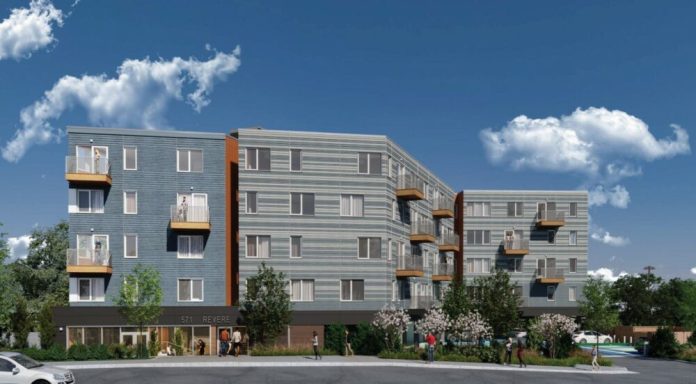
MassHousing has committed $7.9 million in affordable housing financing to the non-profit The Neighborhood Developers (TND) for the construction of the 571 Revere Street in Revere, MA.

The MassHousing financing will allow The Neighborhood Developers to construct 51 units of new affordable housing for households across a broad range of incomes, including 19 new workforce housing units.

“By transforming a vacant parcel into a new, modern community of affordable and workforce housing, The Neighborhood Developers will help ensure that a revitalized Revere Beach remains welcoming and accessible to residents of all means,” said MassHousing Executive Director Chrystal Kornegay. “TND is a strong, mission-based developer, and MassHousing is pleased to be part of the team making this important project a reality.”

“571 Revere Street is a transit-oriented development; the 51 new affordable homes will not only be steps away from the beach, but also within easy walking distance of the Wonderland MBTA Station and the MBTA 116 bus line, said Rafael Mares, TND’s Executive Director. “This project wouldn’t be possible without MassHousing’s commitment of affordable housing financing and its partnership.”

MassHousing is providing TND with a $6 million permanent loan and $1.9 million in workforce housing financing from the Agency’s Workforce Housing Initiative.

In addition to the MassHousing financing, other funding sources include $9.3 million in federal and state Low-Income Housing Tax Credit equity, $1.3 million in direct financing from the Massachusetts Department of Housing and Community Development (DHCD), $1.2 million in HOME financing from the North Suburban Consortium, a $206,511 sponsor energy grant loan, $1.1 million in financing from the Community Economic Development Assistance Corporation (CEDAC) and $1 million from the Affordable Housing Trust Fund, which MassHousing manages on behalf of DHCD. Santander Bank will be providing construction financing.

571 Revere Street advances the Baker-Polito Administration’s goal of creating up to 1,000 new workforce housing units affordable to middle-income households through MassHousing’s $100 million Workforce Housing Initiative. Since the inception of the initiative in 2016, MassHousing has committed or closed workforce housing financing totaling $92.4 million, to 40 projects, located in 19 cities and towns. To date, the Workforce Housing Initiative has advanced the development of 3,727 housing units across a range of incomes, including 1,006 workforce housing units.

The new, energy efficient housing will be constructed in a six-story building on a vacant site two blocks from Revere Beach and within walking distance to the MBTA’s Wonderland subway station. The apartments will be on the top four floors of the building, with garage parking on the first two levels.

Thirty-two apartments will be affordable for households earning at or below 60 percent of the Area Median Income (AMI), with 6 of those units further restricted for vulnerable low-income households earning at or below 30 percent of AMI, and 5 of the affordable units further restricted for households earning at or below 50 percent of AMI. The remaining 19 apartments will be workforce housing units for households earning at or below 90 percent of AMI. The AMI for Revere is $113,300 for a household of four.

Eight of the apartments will be subsidized by a federal Section 8 Project Based Housing Assistance Payment contract and 3 apartments will be subsidized through the Massachusetts Rental Voucher Program. There will be 26 one-bedroom apartments, 21 two-bedroom apartments, and 4 three-bedroom apartments.

The general contractor will be NEI General Contracting, the architect is Arrowstreet and the management agent is WinnCompanies.

MassHousing has financed 4 rental housing communities in Revere involving 290 housing units and $17.4 million in financing. The Agency has additionally provided home mortgage loans to 721 Revere homebuyers and homeowners involving $115.5 million in financing.

SourceBoston Real Estate Times

Baker-Polito Administration Announces $1.73 Million to Support Energy Efficient Affordable Housing

The Baker-Polito Administration today announced $1.73 million in awards to support energy efficient new construction for affordable housing developments in six cities and towns built to Passive House standards. The grants, awarded to eight affordable housing developments in Cambridge, Gloucester, Hanson, Northampton, Holbrook and Boston totaling 540 high-efficiency units, provide energy savings and improved indoor air quality for low-income households. The announcement was made by state and local officials at the Old Colony Housing Development in South Boston.

“Massachusetts is proud to lead the nation in energy efficiency, which helps to reduce energy use and cut greenhouse gas emissions which in turn promotes cost savings for residents and businesses,” said Governor Charlie Baker. “Our administration is committed to supporting the development of additional affordable housing, and by embracing innovative design to maximize efficiency we can provide quality housing solutions for residents while reducing carbon emissions.”

“Our Administration is committed to helping Massachusetts’ low-income households reduce energy costs while creating better, more affordable housing options,” said Lieutenant Governor Karyn Polito. “Passive House standards offer one of the best options to promote high efficiency housing solutions for families, and better position the Commonwealth to extend energy efficiency benefits of the homes to families in cities and towns across the state.”

The funding was awarded through the Massachusetts Clean Energy Center’s Passive House Design Challenge program, part of the Baker-Polito Administration’s $15 million Affordable Access for Clean and Efficient Energy (AACEE) initiative. The program seeks to demonstrate that multi-family affordable housing can be built to high efficiency Passive House standards in Massachusetts at a low-to-no cost premium.

Passive House is a green building certification that ensures extremely high levels of energy efficiency and the provision of fresh air for ventilation.  Multi-family buildings built to the Passive House standard generally use 40% less total energy than energy stretch code-compliant buildings.   The annual energy use of 8-12 Passive House multi-family apartments is roughly equivalent to the average existing single-family suburban home in Massachusetts.  The Passive House energy efficiency standard ensures new buildings are built with high levels of insulation and air tightness, generous provision of fresh air with heat recovery for ventilation, and better windows than would normally be required.

Earlier this year, Massachusetts was named the most energy efficient state in the nation by the American Council for an Energy-Efficient Economy for the ninth consecutive year.

“Building to energy-efficient Passive House standards is the first step in ensuring buildings are on a path to becoming net-zero,” said Energy and Environmental Affairs Kathleen Theoharides. “To meet Massachusetts’ 2050 greenhouse gas reduction goals, energy efficiency is new construction must continue to be promoted,  and it is great to see affordable housing leading the way for the Commonwealth.”

“Passive House buildings are more efficient, durable, healthy, and resilient than typical buildings,” said MassCEC CEO Stephen Pike. “Through these projects, the Commonwealth is supporting better housing for low-income families and reducing greenhouse gas emissions in our most vulnerable neighborhoods.”

“The Passive House Design Challenge program is one of the many innovative ideas in the Commonwealth that contributes to moving us forward in achieving our shared clean energy and emission reduction goals,” said Department of Energy Resources Commissioner Judith Judson. “This program coupled with our new Mass Save incentives for Passive House go a long way towards enabling deep energy efficiency.”

“As we work to build more affordable housing throughout the state to meet our current crisis, it is vital we build high-quality, future-proofed housing that takes current and future energy needs into account,” said Housing and Community Development Undersecretary Janelle Chan. “Today’s awards will advance eight affordable housing developments, which will provide more than 500 units for low and middle-income households. We are thrilled to be supporting housing development that is safe and affordable for families, and is built to Passive House standards, reducing carbon emissions and lowering households’ energy costs.”

The eight developments, four of which have secured low income tax credit financing and three which are applying to the Department of Housing and Community Development (DHCD) for affordable housing tax credits, are:

  • Homeowner’s Rehab Finch Cambridge – Cambridge ($147,000) – A new 98-unit affordable housing project designed for resiliency to allow for potential flooding and low energy consumption using efficient heat pump heating and cooling technology.  Shading features are included to lower cooling demands.  The building will also include a 100 KW Solar Photovoltaic array to generate electricity for heating and cooling.
  • Preservation for Affordable Housing Mattapan Station – Mattapan ($540,000) – An urban-centric housing complex with 135 apartments designed to promote the Neponset River Greenway and bike paths, while reducing energy consumption.  The building will use efficient electric heat pump technology for heating and cooling and is exploring innovative heat pump technology to heat hot water.
  • Beacon Communities Old Colony Phase Three C – South Boston ($120,000) – As part of the third phase of the redevelopment of Old Colony, the project provides affordable housing for vulnerable seniors at extremely low energy use and 55 new apartments.  The building will feature much less drafty apartments with at least four times lower air infiltration rates than would be required by code, high levels of ventilation with heat recovery equipment, and attention to creating thermal breaks in the walls and roof to improve energy performance.
  • NorthShore Community Development Corporation’s Harbor Village – Gloucester ($120,000) – A 30-unit affordable housing construction will include retail spaces, bike storage, and gallery space as well as being in the heart of downtown Gloucester and will feature efficient heat pumps for heating and cooling.
  • Dakota Partners – Hanson ($192,000) – A new construction housing project for families. When completed, Depot Village, located near an MBTA commuter rail stop, will create 48 new rental units.  The building will utilize balanced ventilation with heat recovery, heat pumps for heating and cooling, and reduced heat loss. The project is creating a template for Dakota Partners to use on future developments that will be designed for Passive House construction and certification.
  • Community Builders North Commons – Northampton ($212,000) – The project will increase insulation levels, air sealing, and ventilation levels to meet Passive House Standards for 53 apartments. It will provide mixed‐income, new construction family rental housing development on the Village Hill campus in Northampton, Massachusetts and will include both affordable and workforce housing units, serving households with a broad range of incomes.
  • Preservation of Affordable Housing Bartlett Station Lot D – Roxbury ($168,000) – Bartlett Station Lot D includes the construction of 52 senior housing units. Lot D is a part of the master planned Bartlett Station, an 8.6-acre former MBTA bus yard.  The building will include shading features, higher levels of air sealing, balanced ventilation with heat recovery, and a central efficient heat pump systems for heating and cooling.
  • NeighborWorks Southern Mass’s Holbrook Center Senior Housing – Holbrook ($131,200) – A 100% affordable rental housing will cater to seniors aged 65 and over with one-bedroom apartments and common amenities such as a library and fitness center, this housing development will provide support services that aim to accommodate residents’ changing needs as they age. The design will offer seniors more comfort, make for quieter apartments, and less noise from the street and adjacent apartments.

The Passive House Design Challenge awards are complemented by the recent addition of MassSave Passive House incentives for multi-family buildings.  Multi-family new construction buildings above four stories, both market rate and affordable, may be eligible for Passive House energy modeling funding and up to $3,000 per unit if they certify to the high-efficiency Passive House standard.

“I applaud the Baker-Polito Administration for their continued work in addressing barriers for low- and moderate-income residents in Massachusetts to access cost-saving, clean energy technologies, including awarding grants for MassCEC’s Passive House Design Challenge program,” said State Representative Thomas A. Golden, Jr. (D-Lowell), Chairman of the Joint Committee on Telecommunications, Utilities, and Energy.  “This program has the exciting goal of seeking to demonstrate that Passive House construction can not only provide significant bill savings, air quality improvements, and energy efficiency gains for affordable housing projects, but also that it can be built at a low-to-no-cost premium.”

“We are very encouraged by the grants being awarded by the Massachusetts Clean Energy Center today,” said State Representative Kevin Honan (D-Boston), Chairman of the Joint Committee on Housing. “Massachusetts has been, and will continue to be, a national leader in energy efficiency policies, and these eight new developments built to Passive House standards are an excellent addition to our affordable housing stock. As we continue to focus on housing production issues at the state level, these are the kind of projects and investments we hope to see more of.”

“These state grants will support energy efficient construction projects at affordable housing developments across the Commonwealth, helping low-income households save on energy costs while improving air quality in their homes,” said State Representative David Biele (D-Boston).  “I’m proud that the Anne Lynch Homes at Old Colony received a grant to build high-efficiency units, and I thank the Baker-Polito Administration and MassCEC for making these important energy efficiency investments in affordable housing.”

The Baker-Polito Administration has shown a deep commitment to increasing the production of housing across income levels. Since 2015, the administration has invested more than $1 billion in affordable housing, resulting in the production and preservation of more than 17,000 housing units, including 15,000 affordable units. In 2018, Governor Baker signed the largest housing bond bill in Massachusetts history, committing more than $1.8 billion to the future of affordable housing production and preservation. Legislation filed by Governor Baker in FebruaryAn Act to Promote Housing Choices, calls for targeted zoning reform to advance new housing production in Massachusetts and support the Administration’s goal to produce 135,000 new housing units by 2025. The Baker-Polito Administration has also advanced the development of more than 11,000 mixed-income housing units through the successful MassWorks Infrastructure Program, reformed the Housing Development Incentive Program, and worked with communities to implement smart-growth development and planning efforts.

SourceMassachusetts Clean Energy Center

Baker-Polito Administration Advances Production and Preservation of 1,500 Housing Units Across Commonwealth

Today, Governor Charlie Baker announced the 2019 Affordable Rental Housing Awards. Today’s awards will support the preservation and production of 1,581 rental units, including 1,349 affordable units. This includes 273 units that will be reserved for extremely low-income households.

Today’s awards will advance three transit-oriented projects, five projects for seniors, and two projects that will significantly rehabilitate public housing. Affordable rental housing awards have led to the production, renovation and preservation of more than 7,800 housing units, representing nearly half of all the housing units supported by the Baker-Polito Administration since 2015 though funding mechanisms like the MassWorks Infrastructure Awards Program, the Housing Development Incentive Program and more.

“We are pleased to announce these Affordable Rental Housing Awards to advance the production and preservation of more than 1,500 rental housing units throughout the state,” said Governor Charlie Baker. “Our administration has already invested more than $1 billion in affordable housing and we look forward to working with our colleagues in the Legislature to pass our Housing Choice bill to facilitate the production of more new housing units in communities across Massachusetts.”

“Each housing unit advanced today will benefit entire communities, by bringing more people to downtowns, transforming long-vacant properties, and providing new customers for local businesses,” said Lt. Governor Karyn Polito. “Housing is both a valuable tool and critical precursor for economic development, and these projects will provide stability to many households in need. Congratulations to all of today’s awardees.”

The Department of Housing and Community Development is awarding nearly $80 million in direct subsidies from seven state bond accounts and federal HOME funds, and allocating $38 million in state and federal Low Income Housing Tax Credits (LIHTC) to 28 projects. The tax credit allocations will generate more than $260 million in equity to support these projects. Massachusetts is one of just 17 states to offer a state tax-credit program to complement the federal LIHTC program to support the development and rehabilitation of affordable housing.

“The housing crisis in Massachusetts has far reaching effects on our Commonwealth, and is a major obstacle to long-term growth,” said Housing and Economic Development Secretary Mike Kennealy. “Our workforce and low-income households need more housing options that connect them to employment opportunities, transportation and amenities. Our administration is proud to support today’s projects, which will further diversify our housing portfolio and help more families access stable housing.”

“Housing that meets the needs of residents is the foundation for thriving communities, supporting strong neighborhoods and vibrant downtowns,” Housing and Community Development Undersecretary Janelle Chan. “Today’s awards enable the creation of housing for low-income families, seniors, and individuals, including those transitioning out of homelessness. These high-impact projects will bring new residents to Fitchburg, Gloucester, and Methuen’s downtown districts, redevelop vacant school properties in Southbridge, Swampscott and Taunton, and leverage town-owned land in Williamstown. This is just a sample of the amazing developments we are supporting, all of which will benefit thousands of residents upon their completion.”

Governor Baker joined Housing and Economic Development Secretary Mike Kennealy, Housing and Community Development Undersecretary Janelle Chan and local leaders to announce the awards in Swampscott, near the site of the future Senior Residence at the Machon, which received funding today. The project will redevelop a vacant elementary school into 38 affordable rental units for seniors, with eight units reserved for extremely low-income seniors. The developer, B’Nai B’rith, will also provide long-term services at the site to support residents. DHCD is supporting the project with a federal LIHTC allocation and direct subsidy funding.

“A few years back the Town of Swampscott took an important step in making the former Machon Elementary School available for affordable housing. Together with a strong partner in B’nai B’rith Housing and the required financial support from the Baker Administration, 38 units of very affordable senior housing are becoming a reality in Swampscott,” said Peter Spellios, Chair of the Swampscott Select Board. “The need for affordable housing in every community is real. By supporting the Senior Residences at Machon in his hometown of Swampscott, Governor Baker is setting an important example for all communities. We are grateful for his leadership and support.”

“We are so grateful for the State’s support and for our partnership with the Town of Swampscott to bring much-needed affordable housing to seniors and older adults in Swampscott,” said Susan Gittelman, Executive Director B’nai B’rith Housing. “Seniors and older adults are a fast growing demographic, and we believe this community development will help fill the need for affordable housing in Massachusetts.”

“With the current high demand for housing, unlocking the potential of developments like this is of paramount importance,” said Senator Brendan Crighton. “This project perfectly combines the need for senior housing with an unutilized building ripe for redevelopment and reuse.”

“This project is an excellent use of the Old Machon School building, supporting seniors who increasingly cannot afford Massachusetts’ skyrocketing housing costs,” said Representative Lori Ehrlich. “I am grateful to the administration for including this project in its award round, and I look forward to continuing to work with my colleagues and the administration to reduce housing costs on the North Shore and increase the supply of housing options.”

Today’s awards further the Baker-Polito Administration’s efforts to increase significant housing production across the Commonwealth, including affordable and market-rate housing. Since 2015, the administration has injected more than $1 billion in affordable housing, resulting the production and preservation of more than 17,000 housing units, including 15,000 affordable units. In 2018, Governor Baker signed the largest housing bond bill in Massachusetts history, committing more than $1.8 billion to the future of affordable housing production and preservation. The Baker-Polito Administration has also advanced the development of more than 11,000 mixed-income housing units through the successful MassWorks Infrastructure Program, reformed the Housing Development Incentive Program, and worked with communities to implement smart-growth development and planning efforts.

In February 2019, Governor Baker refiled the Housing Choice legislation to deliver necessary, targeted zoning reform to benefit communities pursuing new housing production and support the administration’s goal of producing 135,000 new housing units by 2025. In May, Governor Baker, Lt. Governor Polito, and Housing and Economic Development Secretary Mike Kennealy testified in support of the legislation in front of the Joint Committee on Housing.

###

Cabot Street (Beverly) is an existing single-room occupancy (SRO) project located in the city’s central business district. The sponsor is the non-profit YMCA of the North Shore. The project will rehabilitate 45 existing SRO units and construct 24 new SRO units. DHCD will support the project with federal and state low-income housing tax credits (LIHTC) as well as subsidy funds. The City of Beverly will also support the project with local funding. When construction is completed, Cabot Street will offer 69 total SRO units. All units will be restricted for individuals earning less than 60% of area median income (AMI), with 20 units further restricted for individuals earning less than 30% of AMI.

Bartlett Station Building A (Boston) is part of a multi-phase redevelopment of a former MBTA lot in Roxbury. The sponsor is the non-profit Nuestra Comunidad Development Corporation. DHCD will support the project with LIHTC and subsidy funds, and the City of Boston also will support the project with local funding. When completed, this phase of Bartlett Station will offer 42 new rental units. Thirty units will be affordable to households earning less than 60% of AMI. Twelve units will be further restricted for extremely low-income households earning less than 30% of AMI. When fully redeveloped, Bartlett Station will transform an underutilized urban site into a mixed-use, mixed-income, mixed-tenure community, with over 300 new homes – affordable, workforce and market rate – and space for community activities and commercial and retail businesses.

Dudley Terrace Apartments (Boston) is an existing scattered-site occupied project located in the Dorchester neighborhood. The sponsor is the non-profit Dorchester Bay Economic Development Corporation. The project will fully renovate 56 rental units. DHCD will support the project with LIHTC and subsidy funds, and the City of Boston will support the project with additional local funding. When completed, Dudley Terrace Apartments will offer 56 units of affordable rental housing to households earning less than 60% of AMI. Twenty units will be further restricted for extremely low-income households earning less than 30% of AMI, including formerly homeless households.

Holtzer Park (Boston) is a new construction transit-oriented housing project for families located in the Jamaica Plain neighborhood. The sponsor is the non-profit Urban Edge. DHCD will support the project with federal and state LIHTC and subsidy funds. The City of Boston will support the project with additional local funding. When completed, Holtzer Park will offer 62 new rental units. Fifty-four units will be reserved for households earning less than 60% of AMI, including thirteen units further restricted for households earning less than 30% of AMI, including formerly homeless households.

Old Colony Phase Three B4 (Boston) is part of the ongoing redevelopment of an 840+ unit public housing project in the South Boston neighborhood. The sponsor, Beacon Communities, is working with the Boston Housing Authority (BHA). DHCD will support this phase of Old Colony with federal and state LIHTC and subsidy funds with additional support from the City of Boston with local funding. The project is transit-oriented and located in proximity to extensive park and recreation areas and Boston Harbor beaches. When completed, this phase of Old Colony will offer 88 total units. All units will be affordable to households earning less than 60% of AMI. Nine units will be further restricted for extremely low-income households earning less than 30% of AMI, including formerly homeless families.

Old Colony Phase Three B9 (Boston) is also part of the ongoing redevelopment of an 840+ unit public housing project located in South Boston. The sponsor is Beacon Communities, working with the Boston Housing Authority (BHA). DHCD will support this phase of Old Colony with federal low-income housing tax credits and subsidy funds. The city of Boston also will support this phase with funds. The project is transit-oriented and located in close proximity to extensive park and recreation areas and Boston Harbor beaches. When completed, this phase of Old Colony will offer 27 total units affordable to households earning less than 60% of AMI. Three units will be further restricted for extremely low-income households earning less than 30% of AMI, including formerly homeless families.

Olmsted Green Rental Phase IV (Boston) is a new construction project and one of the final phases of the redevelopment of the former Boston State Hospital site located in the Mattapan neighborhood. Sponsored by the New Boston Fund, this phase of the project will offer 47 total units. Forty units will be restricted to households earning less than 60% of AMI with eight units further restricted to households earning less than 30% of AMI, including formerly homeless households. DHCD will support the project with LIHTC and subsidy funds, and the City of Boston also will provide additional funding.

Parcel 25 Phase 2 (Boston) is a new construction transit-oriented housing project for families located in the Mission Hill neighborhood. The project will be located one block from an MBTA subway stop and several major bus routes. The sponsor is the non-profit Mission Hill Neighborhood Housing Services. DHCD will support the project with federal and state LIHTC and subsidy funds. The City of Boston will also support the project with local funding. When completed, Parcel 25 Phase 2 will offer 46 total units. Forty-three units will be affordable to households earning less than 60% of AMI, including eight units further restricted for extremely low-income families earning less than 30% of AMI, including formerly homeless families.

Whittier Choice Neighborhood Phase 2 (Boston) is part of the ongoing major redevelopment of a significant public housing project in need of significant rehabilitation. The sponsor is the non-profit Preservation of Affordable Housing. This new construction phase of the project will be located on a site near Melnea Cass Boulevard and Tremont Street. DHCD will support this phase of Whittier with federal and state LIHTC and subsidy funds. The City of Boston also will support the project with local funding. When completed, this phase of Whittier will offer 52 new rental units. Thirty-one units will be restricted for households earning less than 60% of AMI. Six units will be further restricted for households earning less than 30% of AMI, including formerly homeless families.

St. Therese Condo I (Everett) is part of a two-phase new construction project. The non-profit sponsor is The Neighborhood Developers (TND). The two-phase project consists of the redevelopment of a site as low-income housing with services for seniors. DHCD will support the project with low-income housing tax credits and subsidy funds. The city of Everett also will support the project with funds. When completed, St. Therese Condo I will feature 44 units, all of which will be affordable to seniors earning less than 60% of AMI. Eight units will be further restricted for extremely low-income seniors earning less than 30% of AMI, including formerly homeless seniors.

St. Therese Condo II also is part of a two-phase new construction project in Everett. The non-profit sponsor is The Neighborhood Developers (TND). The two-phase project consists of the redevelopment of a site as low-income housing with services for seniors. DHCD will support the project with low-income housing tax credits and subsidy funds. The city of Everett also will provide support for the project with funds. When completed, St. Therese Condo II will feature 33 units, all of which will be affordable to seniors earning less than 60% of AMI. Six units will be further restricted for extremely low-income seniors earning less than 30% of AMI.

Megansett Crossing (Falmouth) is a new construction housing project for families. The sponsor is Michael Galasso (Megansett Crossing LLC). DHCD will support the project with subsidy funds. The town of Falmouth also will support the project with Community Preservation Act funds. When completed, Megansett Crossing will offer 10 total units, three of which will be affordable for families earning less than 80% of AMI.

Moran Square Redevelopment (Fitchburg) is a housing project involving the adaptive re-use of two historic buildings and the construction of a new five-story building. The project will create new mixed-income units and commercial/retail space in downtown Fitchburg. The project sponsor is Jon Rudzinski (Rees-Larkin Development LLC). DHCD will support the project with federal and state LIHTC and subsidy funds, and the City of Fitchburg will support the project with local HOME funds. When completed, the project will offer 44 new rental units. Twenty units will be affordable to households earning less than 60% of AMI, with five units further restricted for extremely low-income households earning less than 30% of AMI.

Harbor Village (Gloucester) is a mixed-use project consisting of affordable rental units and ground-floor commercial/retail space in the city’s downtown district. The sponsor is the non-profit North Shore Community Development Coalition. The Department will support the project with federal LIHTC and subsidy funds, and the City of Gloucester also will support the project with local funds, including Community Preservation Act funds. When completed, the project will offer 30 new units. All 30 units will be affordable to households earning less than 60% of AMI, with eight units further restricted for extremely low-income households earning less than 30% of AMI.

Depot Village (Hanson) is a new construction housing project for families. The sponsor is Dakota Properties. DHCD will support the project with federal and state LIHTC and subsidy funds. When completed, Depot Village, located near an MBTA commuter rail stop, will create 48 new rental units. All 48 units will be affordable to households earning less than 60% of AMI, including five units further restricted for extremely low-income households earning less than 30% of AMI.

PAC 10 Lofts Phase II (Lawrence) is the continuation of the adaptive re-use of a historic mill project.  The sponsor is Reed Community Partners, LLC. DHCD will support the project with federal and state LIHTC and subsidy funds. The City of Lawrence will support the project with local funding. The completed project will offer 96 new rental units. Sixty-three units will be affordable to households earning less than 60% of AMI, with ten units further restricted for extremely low-income households earning less than 30% of AMI.

Sirk and Chestnut Square Redevelopment (Lowell) is a preservation project with two existing occupied projects in need of rehabilitation. The non-profit sponsor is The Caleb Foundation. DHCD will support the rehabilitation of the properties with LIHTC and project-based rental assistance. When the rehabilitation work is completed, Sirk and Chestnut Square will offer 87 total units. Seventy-one units will be restricted for individuals or families earning less than 60% of AMI, with eight units further restricted for extremely low-income households earning less than 30% of AMI.

Lunenburg Senior Living (Lunenberg) is a new construction housing project located on the site of a former amusement park. The sponsor is Great Bridge Properties. The sponsor already has completed two successful phases of affordable rental housing on the Lunenburg site. DHCD will support the project with LIHTC and subsidy funds. When completed, Lunenburg Senior Living will offer 70 new rental units for seniors. Fifty-six units will be restricted for seniors earning less than 60% of AMI, with eight units further restricted for extremely low-income seniors earning less than 30% of AMI. Support services will be available at Lunenburg Senior Living.

Broadway Building (Methuen) is a new construction housing project for families to be built in downtown Methuen. The sponsor is DS Development LLC. DHCD will support the project with federal and state LIHTC and subsidy funds, and the City of Methuen will support the project with local HOME funds. When completed, Broadway Building will offer 40 new rental units, all of which will be affordable to households earning less than 60% of AMI. Four units will further be restricted for extremely low-income households earning less than 30% of AMI.

The Tannery (Peabody) is an existing occupied housing project. Winn Development will purchase and rehabilitate the project as DHCD’s designee under provisions of the state’s preservation law, Chapter 40T. DHCD will support the project with federal and state LIHTC and subsidy funds. MassHousing will also support the project, which was originally financed through Chapter 13A, with subsidy funds. In addition, the City of Peabody will also provide local funding. When rehabilitation is complete, the Tannery will offer 284 total units, with 200 units reserved for households earning less than 60% of AMI. Thirty-five units will be further restricted for households earning less than 30% of AMI.

Terrapin Ridge (Sandwich) is a new construction housing project for families. The Women’s Institute is the non-profit sponsor. DHCD will support the project with LIHTC and subsidy funds. The Town of Sandwich will support the project with $1.4 million in Community Preservation Act funds. When completed, Terrapin Ridge will offer 30 new rental units. All units will be restricted for households earning less than 60% of AMI, with 14 units further restricted for extremely low-income households earning less than 30% of AMI.

Lawson Green (Scituate) is a new construction housing project for seniors located next to the newly renovated and expanded public library. The sponsor is The Grantham Group, LLC. DHCD will support the project with federal LIHTC and subsidy funds, and the Town of Scituate will support the project with $2.5 million in Community Preservation Act funds. When completed, Lawson Green will offer 30 new rental units, all of which will be affordable to senior households earning less than 60% of AMI. Eight units will be further restricted for extremely low-income senior households earning less than 30% of AMI. Support services for seniors will be available at Lawson Green.

Wells School Apartments (Southbridge) is the adaptive reuse of a former Southbridge school into affordable housing for residents age 55 and over. The sponsor is Arch Communities LLC. DHCD will support the project with federal and state LIHTC and subsidy funds. When completed, the project will offer 56 new rental units, all of which will be affordable to households earning less than 60% of AMI. Six units will be further restricted for extremely low-income households earning less than 30% of AMI.

Senior Residences at The Machon (Swampscott) is a redevelopment project of a vacant elementary school located across from a park and near the senior center and high school. The sponsor is the non-profit B’nai B’rith Housing New England, Inc. DHCD will support the project with federal LIHTC and subsidy funds. When completed, the project will offer 38 new rental units, all of which will be affordable to senior households earning less than 60% of AMI. Eight units will be further restricted for extremely low-income senior households earning less than 30% of AMI.  B’nai B’rith will offer support services at the Machon for residents.

Walker School Apartments (Taunton) is a historic rehabilitation project for seniors. The sponsor is the non-profit Affordable Housing and Collaborative Services, Inc. DHCD will support the project with federal and state LIHTC and subsidy funds. The City of Taunton will also provide local funding to support the project. When completed, Walker School Apartments will offer 40 units, all of which will be affordable to seniors earning less than 60% of AMI. Sixteen units will be further restricted for extremely low-income seniors earning less than 30% of AMI. The new residents of the project also will be able to access support services tailored to seniors’ needs.

Cole Avenue (Williamstown) is a new construction housing project on a town-owned, former industrial site located near the Hoosic River. The sponsor is the non-profit Berkshire Housing Development Corp. DHCD will support the project with federal LIHTC and subsidy funds, and the Town of Williamstown will provide additional funds through the Community Preservation Act. When completed, Cole Avenue will offer 41 new rental units. Thirty-eight will be affordable to households earning less than 60% of AMI, with eight units will be further restricted for extremely low-income households earning less than 30% of AMI.

126 Chandler (Worcester) is a new construction and adaptive re-use housing project. The project will revitalize a long-vacant mill building and construct new units in the Piedmont neighborhood of Worcester. The sponsor is the non-profit Worcester Common Ground. DHCD will support the project with federal and state LIHTC and subsidy funds, and the City of Worcester will support the project with local HOME funds. When completed, the project will offer 31 total units, all of which will be affordable to households earning less than 60% of AMI. Nine units will be further restricted for extremely low-income households earning less than 30% of AMI.

Residences at Yarmouth Gardens (Yarmouth) is a new construction project for families. The sponsor is Commonwealth Community Developers, LLC. DHCD will support the project with federal and state LIHTC and subsidy funds, and the Town of Yarmouth will provide $1.2 million in Community Preservation Act funds. When completed, the Residences at Yarmouth Gardens will offer 40 new rental units. All units will be affordable to households earning less than 60% of AMI, with eight units further restricted for households earning less than 30% of AMI.

###
SourceOffice of Governor Charlie Baker and Lt. Governor Karyn Polito

New Affordable Housing Development Opened in Downtown Boston, MA

The building, called the Union, includes forty six new units of housing for people who are currently experiencing homelessness

BOSTON, MA (STL.News) – Building on his commitment to build more affordable housing and end chronic homeslessness in the City of Boston, Mayor Martin J. Walsh Wednesday, May 29, 2019, joined Cardinal Seán Patrick O’Malley, Governor Charlie Baker, President of the Planning Office for Urban Affairs of the Archdiocese Lisa Alberghini, President and CEO of St. Francis House Karen LaFrazia, and residents to celebrate the ribbon cutting for The Union, a historic redevelopment in downtown Boston that creates 46 units of affordable supportive housing.

“The Union represents our belief that every single person in our City deserves compassion, support, and a safe place to call home,” said Mayor Martin J. Walsh.  “This project couldn’t have been possible without the compassionate leadership of The St. Francis House and The Planning Office for Urban Affairs of the Archdiocese, as well as the City and State.”

“The Archdiocese of Boston, through the Planning Office for Urban Affairs, is pleased to have collaborated with St. Francis House as together we received support and assistance from Governor Baker and Mayor Walsh in developing this greatly needed affordable housing,” said Cardinal Seán O’Malley.  “The Union’s new residents, those of limited income and those formerly homeless, now have a home from where they can fully participate in civic and community life.  It is a blessing for the Archdiocese to be able to work with the Commonwealth and the City of Boston to provide sustainable, dependable and affordable housing for people in need.  As we celebrate the successful completion of this project we look forward to further opportunities for continuing the mission of lifting people from the instability and anxiety of not knowing where they will spend the coming day or night to the dignity, respect and confidence of having a home.”

“Our administration remains committed to addressing the Commonwealth’s housing crisis by supporting development at all levels, including boosting affordable housing stock,” said Governor Charlie Baker.  “The Union is a key step toward that goal, and the project’s focus on supporting people struggling with homelessness is crucially important.  We look forward to working with all stakeholders to encourage future development modeled on the successful partnership that made The Union possible.”

This development creates permanent affordable homes for people experiencing homelessness or with low incomes. The Union has 26 units set aside units for people who are currently homeless or have experienced homelessness in the past, and 20 units set aside for residents with incomes at or below 50-60 percent of area median income (households making up to $51,780 a year).  In addition to this new housing, St. Francis House, located across the street, has relocated their administrative offices into the development, will provide the wrap around support services needed to ensure the residents are stable and able to thrive in their new homes.

The new homes at The Union were created by renovating the historic Boston Young Men’s Christian Union, completed in 1875 and designated a Boston Landmark in 1977.  This adaptive reuse of the 48 Boylston Street property was completed to the standards for historic preservation and utilized both Federal Historic Tax Credits and Massachusetts Historic Tax Credits provided by the Massachusetts Historical Commission. Financing was made possible by funding from the City of Boston Neighborhood Housing Trust; the City of Boston Department of Neighborhood Development; the Massachusetts Department of Housing and Community Development; MassHousing; Bank of America Merrill Lynch; the Community Economic Development Assistance Corporation; and the Federal Home Loan Bank of Boston. Additionally, Eastern Bank is participating in the Bank of America financing.

The Union was developed through a unique partnership between the Planning Office for Urban Affairs (POUA) and St. Francis House, two non-profits rooted in a commitment to social justice and serving others.  With the completion of The Union, POUA has developed nearly 3,000 units of affordable and mixed-income housing, over 1,200 of which are in Boston.

“We are so grateful for our partnership with the Planning Office for Urban Affairs and the extraordinary commitment of the City and Commonwealth for the development of this housing.  Together we are creating an inclusive community where men and women once homeless will live a new life contributing to and enjoying the vitality and prosperity of the neighborhood.” said Karen LaFrazia, President and CEO of St. Francis House.

“Providing housing options for a diverse group of people is key to a vibrant community and illustrates what can happen when we work together for the common good,” said Lisa Alberghini, President of the Planning Office for Urban Affairs.  “We’re grateful to the Commonwealth, the City, our funders and supporters who made this possible, and especially to our partner St. Francis House.”

St. Francis House, which partners with homeless individuals to help them move from the streets and shelters to permanent homes, operates more than 102 units of permanent and supportive housing in downtown Boston.  The Union will help St. Francis House meet the growing need for safe, secure and affordable long-term housing solutions.

Creating new permanent supportive housing like these new units at The Union, are an important component of Boston’s Way Home, the Mayor’s action plan to end veteran and chronic homelessness in Boston.  Permanent supportive housing provides individuals with subsidized rents and individualized support services so that they receive the assistance needed to stay housed.  The housing is designed to build independent living skills and connect people with services such as community-based medical and mental health care, job training and employment services.

“As with many people who end up at the front door of SFH, it has been a long and winding road, filled with pain and shame but ultimately triumph.  I can’t emphasize enough the importance of stable housing for people like me.  The safety and dignity of a home and the support of people that care about you makes all things possible,” said Andrew Moskevich, a resident at The Union.

Over the past five years, the City has transformed its system so that every homeless veteran in Boston has access to shelter and a path to permanent housing. As a result, Boston has the lowest rate of unsheltered homelessness of any major U.S. city, as well as one of the lowest rates of unsheltered veteran homelessness nationally.  Mayor Walsh recently announced that since the inception of the Boston’s Way Home plan to end chronic and veteran homelessness, the City of Boston has housed more than 1,000 homeless veterans.

Since 2016, there has been a 36 percent reduction in veteran homelessness. During that time there has been a 20 percent reduction in the chronically homelessness population and more than 770 chronically homeless individuals have been housed.

SourceSTL.News

Baker-Polito Administration Awards Funding for Seven Affordable Housing Projects for Vulnerable Communities

Today, Lt. Governor Karyn Polito joined Worcester City Manager Edward M. Augustus, Senator Harriette L. Chandler, YWCA of Central Massachusetts Executive Director Linda Cavaioli, and local officials to celebrate the production and preservation of 147 units of supportive housing for vulnerable populations, including homeless families and individuals, veterans, survivors of domestic violence, and individuals with disabilities.

Supportive housing provides residents with social and health services, including childcare, job training, case management, healthcare coordination and more. All 147 units are affordable to low and extremely low-income people. Since 2015, the Baker-Polito Administration has supported the preservation and production of hundreds of supportive housing units.

“Our administration firmly believes that affordable housing is fundamental to our success as a Commonwealth and have been pleased to invest over $1 billion in the affordable housing ecosystem over the last four and a half years and propose Housing Choice legislation that would significantly increase housing production throughout the state,” said Governor Charlie Baker. “We are committed to working with our partners in the legislature to give our communities the tools they need to increase housing production to meet the needs of current and future Massachusetts residents, especially the most vulnerable.”

Today’s awards will fund seven projects, supporting the preservation or production of 147 units of housing with $6 million in grant funding, $2.5 million in federal funding and state project-based housing vouchers. Housing will also provide a myriad of social services tailored to the population, including mental health support, childcare, and accessibility.

“Families and individuals deserve access to the stability that permanent housing offers, and we are pleased that this funding will also give our most vulnerable residents, including veterans and survivors of domestic violence, the supportive services they need to thrive in the face of challenges,” said Lt. Governor Karyn Polito. “I’m proud of these efforts to increase the amount of affordable housing for people with the greatest need, and today’s awards are part of a commitment to ensuring Massachusetts is a place where all residents can succeed.”

“We understand the great need for more housing for extremely low-income populations. While there is no one strategy to close the gap, our funding for supportive, permanent housing, is part of the solution, and we are thrilled to support projects across Massachusetts,” said Housing and Economic Development Secretary Mike Kennealy. “We are committed to working with communities and private-sector partners to create pathways to stability for vulnerable populations, through housing, emergency assistance, job training, and social services.”

“Today’s awards will reach families, veterans, survivors of domestic abuse, seniors, and individuals with disabilities in need of reliable, quality housing they can afford,” said Acting Undersecretary of Housing and Community Development Jennifer Maddox. “Our people are our greatest asset, and we will continue to advocate for programming and resources to help residents reach their potential, ensure children have access to permanent housing, and support municipal efforts to create healthy communities.”

“Massachusetts is fortunate in that we have a strong network of non-profit organizations providing quality supportive housing to vulnerable populations throughout the Commonwealth and the kind of public/private infrastructure that helps develop these important projects,” said Roger Herzog, Executive Director of the Community Economic Development Assistance Corporation. “The developments funded today will provide much-needed housing and services to veterans, seniors, survivors of domestic violence, formerly homeless individuals, and more.  CEDAC is honored to work with the Baker-Polito administration, the Department of Housing and Community Development, and our non-profit partners to provide the state bond funds and early stage financing that turns supportive housing projects from an idea into a reality.”

“This incredibly generous award will afford the YWCA Central Massachusetts the opportunity to increase our capacity to serve more women in more effective and efficient space that ultimately helps them achieve independence and economic self-sufficiency,” said Linda Cavaioli, Executive Director of the YWCA of Central Massachusetts.

“I want to thank Governor Baker and Lieutenant Governor Polito for their continued support for Worcester organizations like the YWCA that does invaluable work,” said Worcester Mayor Joseph M. Petty. “Congratulations to Linda Cavaioli and the entire YWCA family on this announcement.  These funds will allow the YWCA to continue and expand the vital work it does every day here in the City of Worcester.”

“Providing supportive housing options to vulnerable populations in our community is a constant priority,” said Worcester City Manager Edward M. Augustus Jr. “We’re excited about the YWCA’s renovation project taking place in the heart of our City and we thank the Baker Polito Administration for their continued investment in producing more supportive housing units across the Commonwealth.”

“The awards that were announced today help communities who need stable housing the most. Stable housing allows people to ground themselves, to build a life, and to grow within their communities,” said Senator Harriette L. Chandler. “I want to thank my housing policy partners in the administration, in the legislature, in local government, and to thank all of the advocates and activists who fight for affordable housing every day.”

“The YWCA of Central Massachusetts continues to empower women and girls to achieve their best,” said Senator Michael O. Moore.  “The renovations made possible through this investment will increase access to many critical programs and services.  Congratulations to the entire team at the YWCA for their ongoing efforts to better the surrounding community, and to provide meaningful opportunities for our neighbors.”

“The YWCA of Central Massachusetts provides our community with valuable housing, education, and health programming,” said Representative Jim O’Day. “Worcester prides itself on investing in programs that support families and foster community, and so I am thrilled to hear of the building renovations, as they expand access to essential services for women and children.”

The Baker-Polito Administration has shown a deep commitment to increasing the production of housing across income levels. Since 2015, the administration has invested more than $1 billion in affordable housing, resulting in the production and preservation of more than 17,000 housing units, including 15,000 affordable units. In 2018, Governor Baker signed the largest housing bond bill in Massachusetts history, committing more than $1.8 billion to the future of affordable housing production and preservation. The Baker-Polito Administration has also advanced the development of more than 11,000 mixed-income housing units through the successful MassWorks Infrastructure Program, reformed the Housing Development Incentive Program, and worked with communities to implement smart-growth development and planning efforts.

###

Award Recipients:

123 Crawford St., Boston

This existing 24-unit Single Room Occupancy (SRO) project for formerly homeless individuals is located in the Trotter Garrison neighborhood of Roxbury. DHCD is awarding funds to the Commonwealth Land Trust to repair and upgrade the building’s envelope and major systems. Two live-in staff and case managers will provide intensive supportive services to a high need target population including individuals with major medical and/or mental health challenges.    

112-116 Emerson St., Haverhill

This existing 21-unit project provides permanent, supportive sober housing for homeless elders and individuals with disabilities at three properties and is owned and operated by Emmaus, Inc. DHCD is supporting the project with MRVP vouchers with supportive service funding. These enhanced vouchers will assist Emmaus in providing robust housing supports to both CSPECH and non-CSPECH eligible residents.     

Opening Doors, Lowell

Alternative House provides emergency shelter, transitional and permanent housing to survivors of DV. DHCD’s capital funds will finance the construction of a new eight-unit DV shelter that will accommodate eight women and up to 14 children. Their existing shelter, an aging single-family home, will be sold and the sales proceeds will help defray the cost of the new building.

420, 423, and 445 Broadway, Lowell

This existing 29-unit project consists of three multi-family properties on Broadway in Lowell. DHCD’s funding will allow Common Ground Development Corporation, an affiliate of Community Teamwork, Inc., to undertake exterior improvements to all three buildings, and convert two standard units into accessible units for residents with mobility impairments.  

2033 Ocean St., Marshfield

Marshfield Veterans House will provide supportive housing for eight homeless veterans. With DHCD’s financial support, Neighborworks Southern Massachusetts will convert a town-owned historic property into eight studios and a small archive room for the local historical society. Father Bill’s & MainSpring will provide comprehensive supportive services to the residents.   

26 Moulton St., Randolph

Father Bill’s & MainSpring developed a partnership with Envision Bank to construct 10 studio apartments for homeless veterans on a vacant parcel behind the bank. DHCD will provide state and federal funds to finance the construction. In addition to the land, the bank is providing grant funding. 

One Salem Square, Worcester

The YWCA of Central Massachusetts is renovating its main building in downtown Worcester including an existing SRO program for women, 12 child care classrooms, and its health and fitness program areas. DHCD funds will allow the YWCA to renovate 41 existing SROs and add six more rooms, for a total of 47 units. The organization has undertaken a capital campaign to renovate the non-residential portions of the building.

###

SourceOffice of Governor Charlie Baker and Lt. Governor Karyn Polito

EduCare Springfield prepares to open state-of-the-art early childhood center

The biggest development in education in Western Massachusetts this year is aimed at the tiniest learners – children from birth to 5 years old.

Educare Springfield – a $14 million, nationally recognized early childhood center under construction in the Old Hill neighborhood, one of the poorest in the city – will open this fall, serving 141 children and their families who will be selected from the region’s Head Start program.

The Davis Foundation, an early childhood education advocate, is the lead partner in pushing for the new center, which will be one of 25 Educare centers operating in 15 states – plus one in Washington, D.C. and another in the Winnebago nation – supported by the Buffett Early Childhood Fund.

EduCare Springfield – rising on Hickory Street adjacent to the Elias Brookings School on land donated by Springfield College – was financed with a $9 million contribution from an anonymous out-of-state donor. Holyoke, Chicopee, Springfield HeadStart, a federally funded program, will operate the new center.

The anonymous donation – which John Davis says made him believe in miracles – paved the way for Springfield to land the program that has been a model for best practices in early childhood development. The Davis Foundation has made advocacy for quality early childhood education its mission in its quest to help insure that city children are ready to read by 4th grade.

Currently, only 33 percent of city children read at grade level by 4th grade, compared to peers in suburban schools, Davis said at a recent educational summit in Springfield sponsored by the Urban League.

“Urban kids can perform at high levels, but we need to do a lot for work to get them there. And, we can do it,” Davis said.

Janis Santos, executive director of the HeadStart, says the new center is a “dream come true.”

Santos, who has spent her 45-year career in early childhood education, says the EduCare model recognizes that the ages from birth to 5 years old are the most critical to a child’s development and that early educators need to be well-trained and well-compensated.

The new center also recognizes that parent involvement is “the backbone for success,” Santos adds.

When Susie Buffett, daughter of billionaire philanthropist Warren Buffett, created the first EduCare center in 2000, there was no vision for a national network to provide a higher- level education for infants, toddlers and preschoolers, according to Michael Burke, the Chicago-based vice president of the Buffett Early Childhood Foundation.

“What science was telling us is that there is a critical need for high-quality early childhood education,” Burke said during a telephone interview. “It takes more than a loving teacher to change the trajectory of a disadvantaged child.”

The 27,000-square-foot, state-of-the-art EduCare Springfield facility is being designed – like others in the network – to be a model for the high-impact educational practices aimed at preparing children for long-term academic success.

The goals of those practices are to improve kindergarten readiness; promote higher vocabulary skills; enrich social emotional skills; improve behavior’ reduce high school drop-out rates and promote long- term career and college success.

EduCare will be a lab school, of sorts, sharing its resources with other early childhood educators about the best methods to help children become successful learners.

There are four components to the continuous-improvement EduCare model, Burke explained: the use of data to inform instruction; ongoing coaching of teachers, support for families whose children attend EduCare and a series of professional development training sessions for teachers and staff.

“We can’t build an EduCare on every corner,” Burke said. “But the ones that we have can become real showrooms, a place where children, families and the staff walk in and say, ‘Wow, this is important.'”

When visiting Springfield, Burke said he was impressed with the local collaboration and commitment to early childhood education. “We’re glad to be operating in Springfield, rather than Boston,” he said.

In the next few weeks and months, EduCare will be building a website and writing a job descriptions for an executive director with a master’s degree, who will be an EduCare employee, and a school director with a master’s degree, who will be a HeadStart employee.

In addition to the benefits EduCare will bring to children and families in need, it will also have a huge positive economic impact on the region and the neighborhood where it is located.

The EduCare site is located in the Old Hill neighborhood that was severely impacted by the June 1, 2011 tornado. Investments in the neighborhood after the tornado included the construction of a $28 million dollar Brookings School, nearby parks and street improvements.

SourceMassLive

Educare Springfield: Early education takes a giant step forward

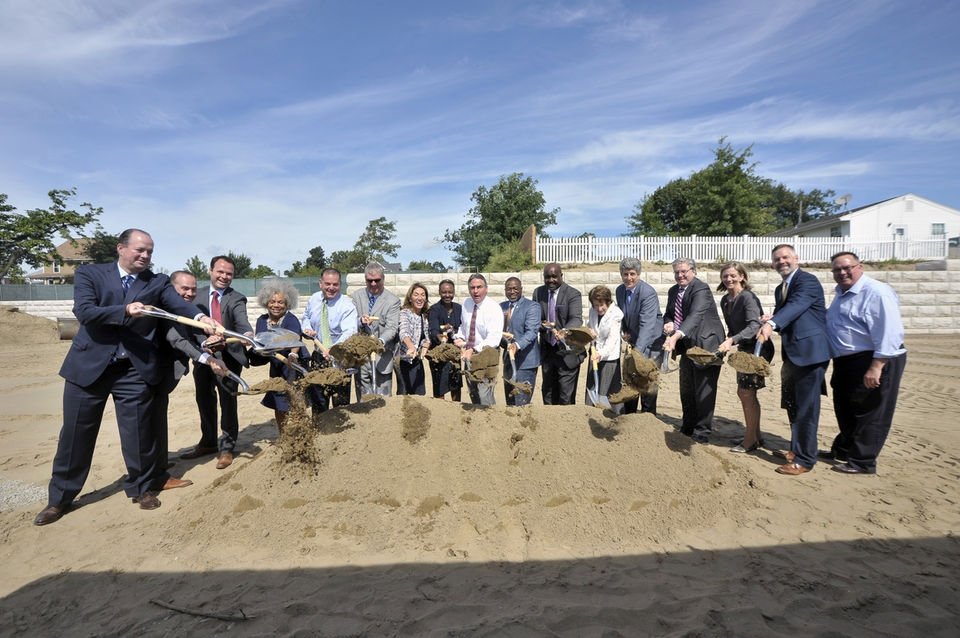
On Monday, civic partners gathered in the city of Springfield and broke ground on what will be a $14 million Educare Center, a school that will open next year and provide “a full-day and full-year program for up to 141 children from birth to age five each year,” MassLive.com reports.

As we’ve blogged, Springfield’s educators and philanthropists have called this Educare project a “dream come true,” one that promises to provide the city’s children with increased access to a high-quality early education program.

Educare “began in Chicago in 2000,” public radio station WAMC reports. It’s a research-based model that has four core features: “data utilization, embedded professional development, high-quality teaching practices, and intensive family engagement,” according to Educare’s website.

“Among the innovations at Educare,” WAMC adds, “is the placement of teachers with the same children from the time they enroll as infants up to age 3. Parents are required to participate in school activities, home visitations, and regular parent-teacher conferences.”

Several years of rigorous evaluation shows that when children leave Educare for elementary school, the majority are academically, socially and emotionally prepared for kindergarten.”

There are “23 Educare schools in 15 states,” including California, Florida, Maine, Michigan, Washington, D.C., and Wisconsin. “Educare Springfield will be the first in Massachusetts.”

Springfield is putting the Educare Center in its Old Hill neighborhood, the home of many children who live in poverty. The neighborhood suffered considerable damage from the 2011 tornado that struck the Springfield area.

At the ground-breaking ceremony, Lieutenant Governor Karyn Polito pointed to the economic significance of the Educare Center, praising Springfield for “rebuilding this neighborhood” and noting that the school will serve children who are born in Springfield and grow up to become part of the city’s workforce, MassLive reports.

Springfield Mayor Domenic Sarno added, “Educare is a significant investment here in the city of Springfield and it’s another public and private partnership, with everybody working together for the same goal for our children.”

There are many members of this public/private partnership including: the Davis Foundation, which provided fundraising support and overall leadership for the project; Springfield College, which donated land; and the state of Massachusetts, which provided both a $1 million facilities grant to help finance construction as well as infrastructure funding from the MassWorks program at the Massachusetts Executive Office of Housing and Economic Development. Among the other partners are the Children’s Development Fund, the Mass Mutual Fund, Capital One Commercial Banking; and a number of anonymous donors. (The full list is on the City of Springfield’s website.)

Educare Springfield will be operated in partnership with Holyoke Chicopee Springfield Head Start. All Educare sites build upon strong partnerships with Head Start, and this one is no different. HCS Head Start Executive director Janis Santos spoke at Monday’s groundbreaking and shared her extensive conversations with other Head Start colleagues nationally who have partnered with Educare.

“They all told me, ‘It’s a lot of work, but it’s worth it,’” she said.

The center will also serve as a learning laboratory “for best practices” as well as “an essential resource for Springfield College, Springfield Technical Community College, Springfield Public Schools, and the early education community across the state for training and providing professional development for future teachers, social workers, evaluation and research.”

It’s an ambitious project with a great deal of promise that could transform children’s lives. As Tom Weber, the commissioner of the Department of Early Education and Care, explained to WAMC, “despite the success the state has seen with rising test scores and graduation rates in the last 25 years, it still has one of the largest achievement gaps in the country.”

“We have to take risks,” Weber added. “It is worth taking risks. If the solutions were obvious to us, we would have solved these problems already, so we have to be daring.”

Stay tuned. We hope to share more about Educare Springfield as the project develops. The center is scheduled to open in late 2019.

SourceEye on Early Education

Space matters: Massachusetts invests in improving early education buildings and facilities

This summer, Massachusetts awarded $4 million in grants to help early education and after-school programs improve their physical spaces. The money comes from the Early Education and Care and Out of School Time (EEOST) Capital Fund, which was created by the state Legislature.

As we’ve blogged before, engaging classrooms, lively safe playgrounds, and well-designed bathrooms are some of the key features that create nurturing environments for young children.

But programs often can’t afford the costs of badly needed construction and renovations. That’s why these capital improvement funds are so important.

In a statement, Governor Charlie Baker said, “Renovating and repairing facilities helps achieve our goal of improving the quality of early education and care.”

Massachusetts’ Secretary of Education James Peyser said. “We know that building deficiencies impact the quality of teaching and learning in early childhood and out-of-school time facilities. These grants were created to help non-profit providers serving children living in low-income communities improve their facilities.”

Administered by the Children’s Investment Fund, an affiliate of CEDAC (the Community Economic Development Assistance Corporation), the grant funds were given to four organizations:

Citizens for Citizens, Fall River, $1 million

The funds will pay for “playground improvements, window replacements, and critical safety and security upgrades to an existing Head Start program in a 118-year-old building,” according to the Children’s Investment Fund.

Crispus Attucks Children’s Center, Dorchester, $1 million

The center “will replace the HVAC system and make building envelope upgrades. It also plans to improve the design of its infant area and reconfigure toddler classrooms.

Elizabeth Stone House, Roxbury, $1 million

The funds will be used to build “a 5-story multi-service building which will include 32 units of affordable housing and a licensed early childhood education (ECE) program serving 51 children.”

Holyoke-Chicopee-Springfield Head Start, Springfield, $1 million

Head Start officials plan to build “an Educare model facility for 141 ECE children.”

All four organizations “serve publicly subsidized families, have demonstrated financial need, and have secured additional funding to pay for a portion of their project costs,” the statement from Governor Baker’s office explains.

The benefits of these efforts will be substantial. As Lieutenant Governor Karyn Polito explained, “High-quality programs help young children develop healthy learning habits, which is good for the community and for our Commonwealth as a whole.”

And as Tom Weber, commissioner of the Department of Early Education and Care, adds, “We are pleased to make these awards as this public investment in building construction and renovation of early education programs will benefit children, local communities, and the state for years to come.”

SourceEye on Early Education