Honoring Mel King

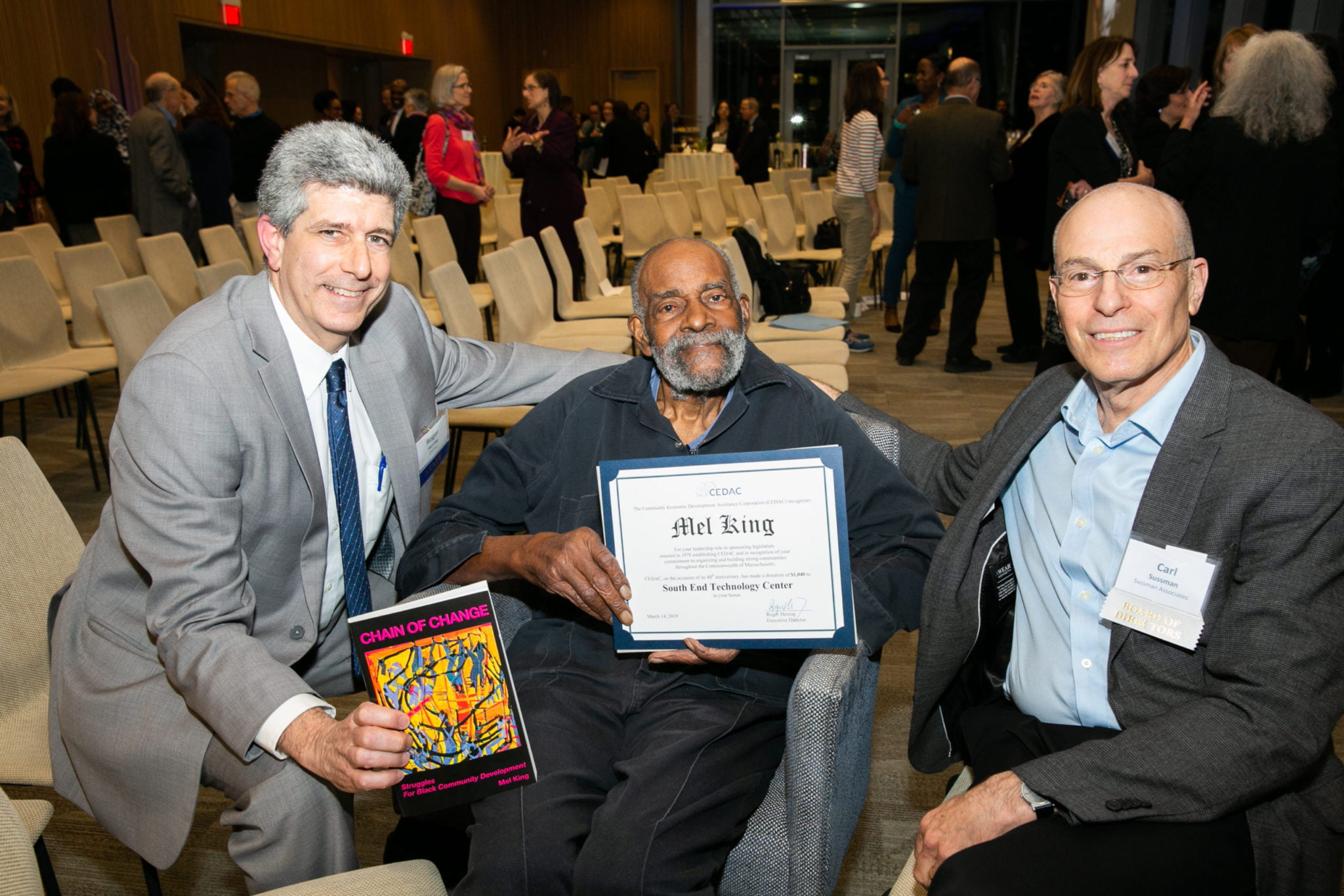
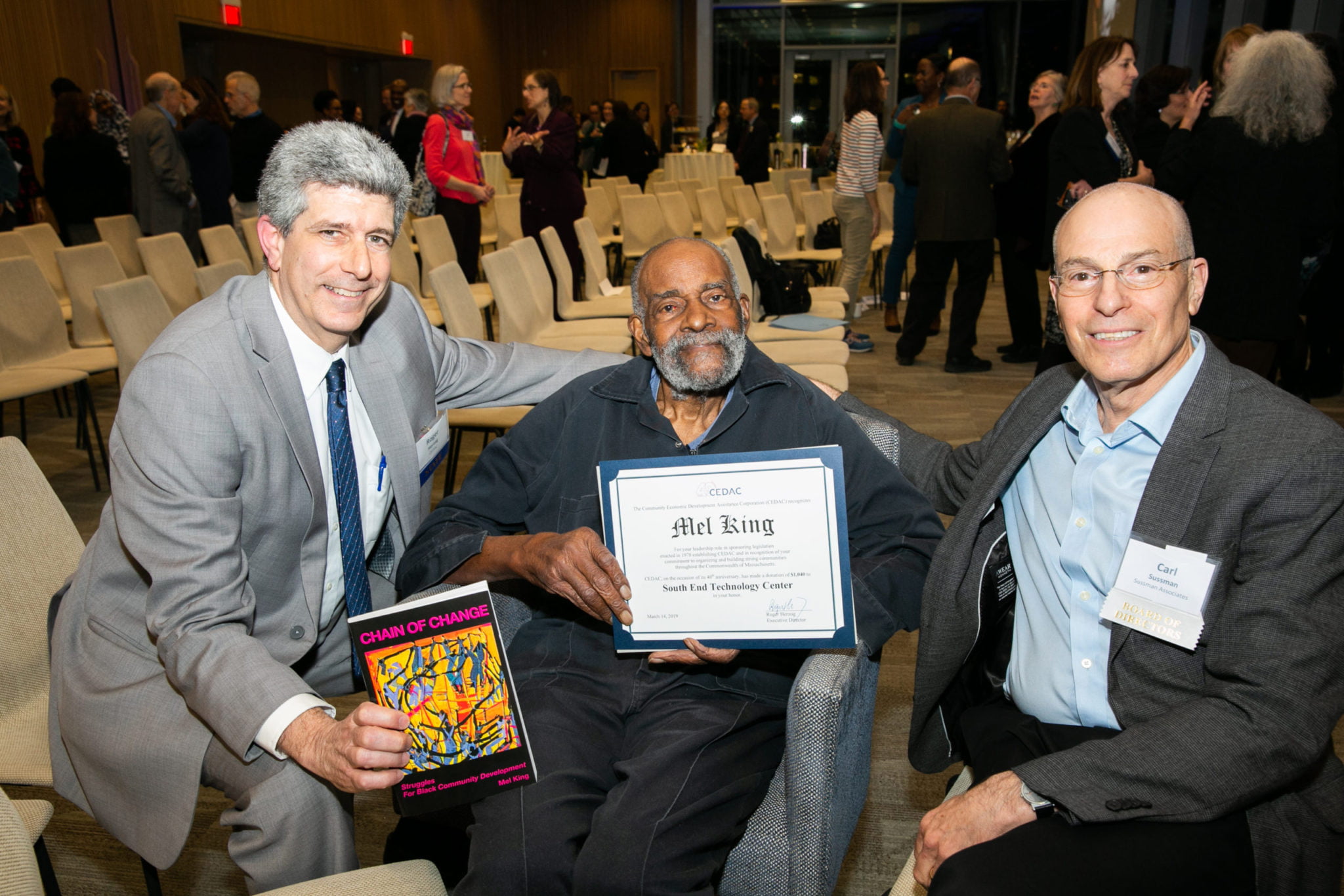
On March 14th 2019, the Community Economic Development Assistance Corporation (CEDAC) honored Mel King at its 40th anniversary celebration at the MIT Samberg Conference Center. King — a community organizer, former State Representative, and Adjunct Professor at the Department of Urban Studies and Planning — crafted the state legislation that created CEDAC in 1978. CEDAC is a community development financial institution providing financing and technical assistance to community-based and other non-profit community development organizations in Massachusetts. In addition to Mel King, CEDAC was joined by DUSP Professors Emeriti, Langley Keyes and Tunney Lee, both of whom promoted and led state and local community development activities, including the visioning and creation of CEDAC.

The event’s main program was modeled on DUSP’s ‘lightning talks,’ three-minute presentations that communicate research and work in layperson language to promote sharing and collaboration across groups. The presentations focused on affordable housing preservation; supportive housing; and early education facility development. Speaker teams, composed of current and former CEDAC staff members as well as community partners, addressed the 40 years of engagement and evolution with these fields, future challenges, and the synergistic relationship for non-profits and the communities they represented. Many CEDAC staff members and leadership are DUSP alumni/ae, including Sara Barcan (MCP ’94), Janelle Chan (MCP ’07), and Roger Herzog (MCP ’87).

“Mel King provided the inspiration and vision for the community development movement, with his experiences 40 years ago fighting for community control of development. Mel’s role as an elected official in helping to create a state infrastructure to support community development, including CEDAC, was instrumental,” said Herzog, Executive Director of CEDAC. “The Massachusetts system serves as a national model of community development, and we are honored to have the opportunity to celebrate his contributions as we mark our 40th anniversary.”

The venue for the 40th anniversary event at MIT speaks to the Institute’s role as the space where the idea for a public/private agency that provides technical expertise to non-profit community development organizations was first discussed during the weekly sessions that King hosted for 25 years while teaching at DUSP and leading the MIT Community Fellows Program. These weekly sessions were called the Wednesday Morning Breakfast Group where King cooked breakfast and led discussions between community activists, planners, and students. A regular participant of the sessions, MIT doctoral student, Carl Sussman, became the founding Executive Director of CEDAC and later played a pivotal role launching and leading its affiliated organization, the Children’s Investment Fund, one of the few community development finance institutions across the nation focused exclusively on meeting the physical capital needs of early care and education programs.

The MIT Community Innovators Lab (CoLab), founded in 2007, is the direct MIT descendant of the Community Fellows Program. CoLab facilitates the interchange of knowledge/resources between MIT students and faculty with community organizations, to build practicable models of economic democracy and self-determination. CoLab’s Mel King Community Fellows Program (MKCF), provides participants with an opportunity to examine innovative approaches to development using markets as an arena for pursuing social justice.

“The CoLab’s Mel King Community Fellows Program embodies Mel King’s approach to planning and community development through his championing of cities and the communities that comprise those cities,” said Dayna Cunningham, Executive Director of CoLab and MIT Sloan Alumna (MBA ’04). “The MKCF honors Mel’s legacy by gathering current and future leaders of community-based work and providing them with the space to collaborate, learn, and refine their efforts for a range of social justice pursuits.”

In the 40 years since CEDAC was created, the organization has committed over $402 million in early stage project financing, and has helped to fund the creation or preservation of nearly 50,000 affordable housing units across the Commonwealth. Additionally, CEDAC manages a number of supportive housing bond programs on behalf of the state’s Department of Housing and Community Development (DHCD), with commitments of more than $490 million over the past thirty years. These bond programs include the Housing Innovations Fund (HIF), the Facilities Consolidation Fund (FCF), and the Community Based Housing (CBH) program.

To learn more about CEDAC’s mission and current projects, click here.
»

SourceMIT Urban Planning News

CEDAC Honors Community Leader Mel King

The Community Economic Development Assistance Corporation (CEDAC) honored former State Representative Mel King at its 40th anniversary celebration, held on March 14 at the Massachusetts Institute of Technology’s (MIT) Samberg Conference Center. King, a legendary community organizer, crafted the state legislation that created CEDAC in 1978. CEDAC is a community development financial institution that provides early stage financing and technical assistance to community-based and other non-profit organizations engaged in effective community development in Massachusetts.

“Mel King provided the inspiration and vision for the community development movement, with his experiences 40 years ago fighting for community control of development. Mel’s role as an elected official in helping to create a state infrastructure to support community development, including CEDAC, was instrumental. This Massachusetts system serves as a national model of community development, and we are honored to have the opportunity to celebrate his contributions as we mark our 40th anniversary,” said Roger Herzog, CEDAC’s executive director.

At the event, representatives from the state’s community development sector provided lightning talks on CEDAC’s three key program areas: affordable housing preservation; supportive housing; and the Children’s Investment Fund. Participants in the program included former CEDAC and Children’s Investment Fund staff members Vince O’Donnell, Charleen Regan, and Mav Pardee; current CEDAC staff members Bill Brauner, Sara Barcan, and Theresa Jordan; and non-profit community partners Leslie Reid of Madison Park Development Corporation, Lisette Le of Vietnamese American Initiative for Development (VietAID), and Gail Fortes of YWCA Southeastern Massachusetts. Governor Charlie Baker offered congratulatory remarks by video.

As a state representative, King sponsored the legislation that was signed by Governor Michael Dukakis and led to CEDAC’s creation in 1978. The venue for the 40th anniversary event at MIT was fitting, since the idea for a public/private agency that provides technical expertise to non-profit community development organizations was first discussed in weekly sessions that King hosted while teaching at MIT’s Department of Urban Planning and Studies and leading the Community Fellows Program there.

In the 40 years since CEDAC was created, the organization has committed over $402 million in early stage project financing, and has helped to fund the creation or preservation of nearly 50,000 affordable housing units across the Commonwealth. Additionally, CEDAC manages a number of supportive housing bond programs on behalf of the state’s Department of Housing and Community Development (DHCD), with commitments of more than $490 million over the past thirty years. These bond programs include the Housing Innovations Fund (HIF), the Facilities Consolidation Fund (FCF), and the Community Based Housing (CBH) program.

At the same event, the Children’s Investment Fund, an affiliate of CEDAC, presented Judy Cody, executive director of the Beverly Children’s Learning Center (BCLC), with the Mav Pardee Award for Building Quality. The award, which recognizes organizations or individuals working to address the need for physical environments that support high-quality early education, is named after Pardee, who was the Fund’s former program manager. Cody oversaw BCLC’s expansion to a new 16,000 square foot facility that provides safe and affordable early education and care for nearly 160 children in the North Shore region.

“BCLC was one of the first child care facilities to open that utilized grant funding from the Early Education and Out of School Time (EEOST) Capital Fund, and that is because of the tenacity and dedication that Judy Cody demonstrates as executive director,” said Theresa Jordan, Director of Children’s Facilities Finance. “Children’s Investment Fund is proud to honor Judy with the Mav Pardee Award for creating a high-quality early learning environment for low-income children.”

Since it was established in 1990, Children’s Investment Fund has committed $55 million in project financing and state bond resources, and supported the creation or improvement of more than 30,000 child care slots. EEOST is administered by the Massachusetts Department of Early Education and Care in partnership with CEDAC and the Children’s Investment Fund, and it offers child care providers capital resources to develop high-quality early learning facilities.

CEDAC is a Massachusetts community development financial institution that provides predevelopment and acquisition lending along with technical expertise for community-based and other non-profit organizations engaged in effective community development in Massachusetts. CEDAC’s work supports two key building blocks of community development: affordable housing and early education and care. CEDAC is also active in state and national housing preservation policy research and development and is widely recognized as a leader in the non-profit community development industry. For additional information on CEDAC and its current projects, please visit www.cedac.org.

»

SourceSouth End News

Roger Herzog Discusses CEDAC’s 40th Anniversary in OA On Air Podcast

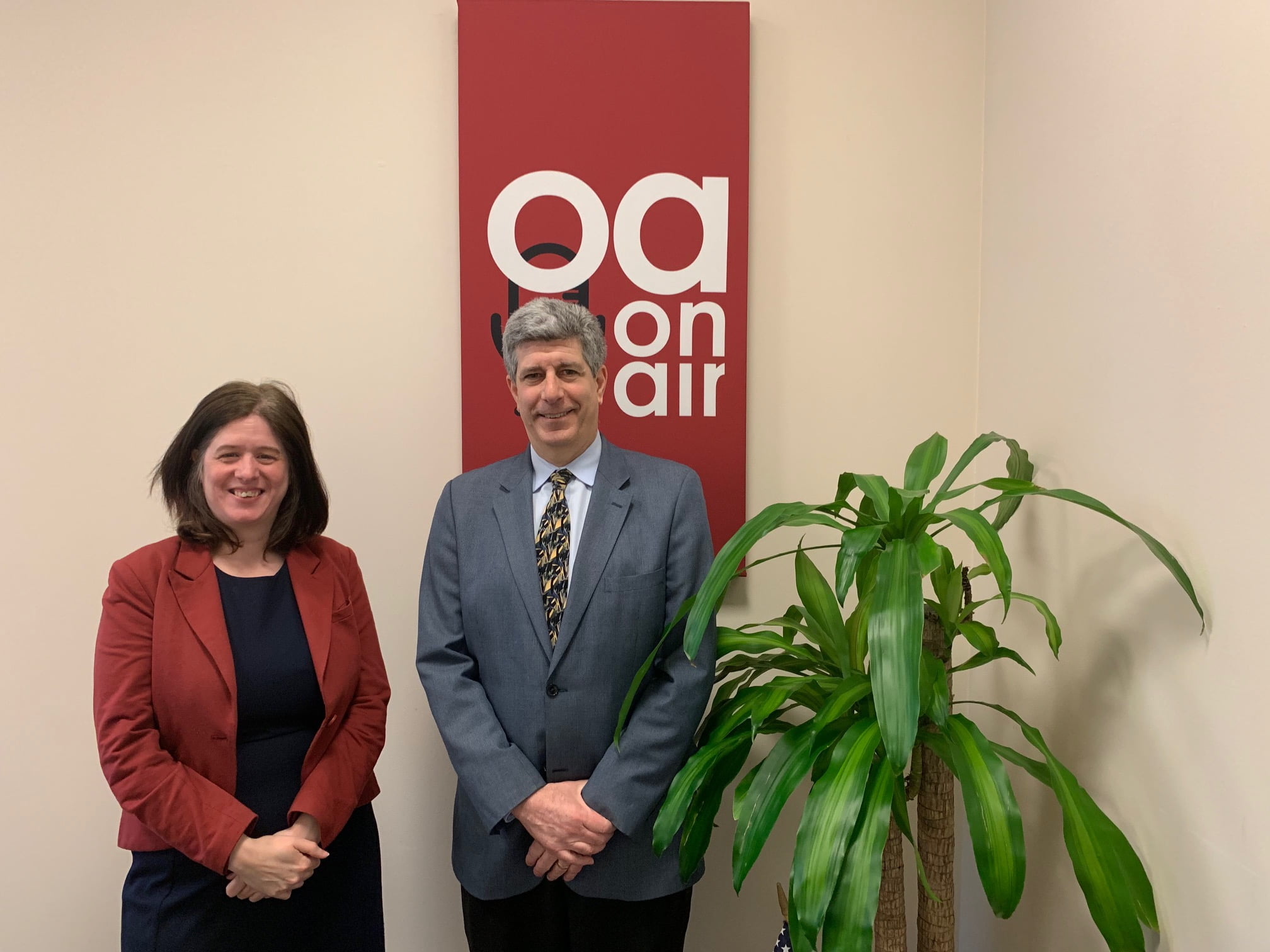
This week, Suzanne sits down with Roger Herzog, the executive director of the Community Economic Development Assistance Corporation (CEDAC), about the organization’s 40th anniversary and why they are honoring former State Representative Mel King.

»

SourceOA On Air

For 40 Years, CEDAC Has Catalyzed Positive Change

For 40 Years, CEDAC Has Catalyzed Positive Change

Early-Stage Assistance Has Helped Build Housing, Transform Communities

By Roger Herzog

Special to Banker & Tradesman

In 1978, then- state representative Mel King introduced legislation that created the Community Economic Development Assistance Corporation (CEDAC), the nation’s first state agency designed to provide technical assistance to the burgeoning non-profit community development movement.  The idea of such an agency grew out of the Wednesday Morning Breakfast Group meetings convened by Mel at MIT with community activists and planners.  In Boston, the Group’s primary focus was the desire to establish community control over the redevelopment of acres of land in the heart of neighborhoods in the southwest area of the city that the state had taken by eminent domain for an inner belt highway.  The highway was stopped through community activism and by 1978, it had become clear that there was a need for an agency like CEDAC.

In the 40 years since we were established by an act of the legislature, Massachusetts and the community development sector have changed tremendously. And so has CEDAC.  We started as an economic development organization that provided technical assistance to community-based non-profits focused on small business development and job creation. But as the Commonwealth’s economy changed, we’ve evolved into a community development financial institution that provides early stage financing and technical assistance to non-profits seeking to produce and preserve affordable housing and non-profit early education facilities, through our affiliate, Children’s Investment Fund.

While it’s not easy to sum up 40 years of community development work, with its complications and challenges, the best way to share our accomplishments is to look at a sample of some of the non-profit development projects we’ve assisted:

Preserving affordable housing – the Chapman Arms story: since the early 1980s, CEDAC has fought to preserve the long-term affordability of subsidized multifamily housing, which is threatened by the time-limited use restrictions used as part of federal and state financing programs in the 1960s and 1970s.  In 2009, the state passed an affordable housing preservation law, Chapter 40T, which provided the Commonwealth with new tools to monitor and address this expiring use challenge. One of the key tools is purchase rights that allow the Commonwealth’s Department of Housing and Community Development (DHCD) or its designee to acquire and preserve expiring affordable housing projects if an owner proposes to sell a building.  In 2011, Chapman Arms, in Cambridge’s Harvard Square, became the first major project whose affordability was preserved through the use of Chapter 40T’s purchase rights. CEDAC delivered technical assistance to DHCD and its non-profit designee, Homeowner’s Rehab Inc., as well as a rapid commitment and closing on acquisition financing to preserve this mixed income 50-unit property.

Revitalizing neighborhoods – Northampton’s Live 155: Last year, Way Finders, a community development corporation (CDC) focused on Western Massachusetts, opened Live 155 in Northampton.  The mixed-use, mixed-income, new construction development of 70 apartments has helped to transform an important neighborhood in that city, a gateway into the downtown district.  CEDAC provided $2.6 million in early stage acquisition and predevelopment funding for that project, and similarly provided financing for Lumber Yard Apartments, a project by the Valley CDC across the street. These two projects have spurred significant public investment from the city, the state, and private partners.  This is only one recent example of the effective role of CEDAC’s early stage assistance that supports community non-profits’ transformative efforts.  Boston’s Jackson Square (where the original neighborhood battle against highway construction was waged) and Worcester’s Kilby-Gardner-Hammond are also examples where we’ve worked with community partners to reinvigorate those neighborhoods.

Supporting equitable transit-oriented development – the Residences at Fairmount Station: Late last year, Southwest Boston CDC and their development partner Traggorth Companies opened the Residences at Fairmount Station in Hyde Park, a 27-unit affordable housing development.  The Residences represent equitable transit-oriented development – affordable housing built near the MBTA’s new Fairmount Corridor commuter rail line.  Locations near transit offer opportunities for increased development density, and CEDAC and its financing partners provided $1.2 million in acquisition and predevelopment financing to ensure that low and moderate income residents can access these desirable locations.

CEDAC is celebrating our 40th anniversary at an event this March and we will honor Mel King for both his vision and his belief in the power of people to strengthen their communities.  In the four decades since he introduced that legislation, Massachusetts has evolved into a national model of community development, in large part because of the institutional framework he helped to create.  It’s gratifying for us to look at the innovative projects above and recognize we are carrying on an important legacy.

Roger Herzog is the executive director of the Community Economic Development Assistance Corporation.

BT_Reprint_Herzog_031119

»

SourceBanker & Tradesman

Affordable Housing Next Frontier in Health Care

Affordable Housing Next Frontier in Health Care

New Programs, Partnerships and Funding Prioritize Health Improvements

By Roger Herzog and Sara Barcan

Special to Banker & Tradesman

Affordable housing is the next big frontier in health care, and community development practitioners are catalyzing the growing discussion on social determinants of health, defined by the Centers for Disease Control and Prevention (CDC) as “conditions in the places where people live, learn, work and play that affect a wide range of health risks and outcomes.”

In Massachusetts, we are at a critical juncture: health care policymakers seek to rein in high costs while their housing counterparts are increasing efforts to reduce chronic homelessness and address affordable housing shortages. These challenges are intertwined, especially when reviewing the growing body of research that demonstrates the negative health outcomes and high health costs for homeless and rent-burdened families.

On the housing side, the Department of Housing and Community Development (DHCD) and CEDAC have funded over 3,000 supportive housing units since 2013. We’ve achieved this through a twofold effort that includes improved coordination between housing and health/human services agencies, and increases to the state’s capital budget for housing, especially supportive housing for people experiencing homelessness, elders, persons with disabilities, veterans and unaccompanied youth.

The state makes innovative use of health care and human services resources, including Medicaid, to pay for clinical supports and services that stabilize tenancies and allow residents to succeed in community-based housing. This year was a very important year, as the Legislature and the Baker administration enacted a $1.8 billion housing bond bill, which authorized the capital funds that the state uses to construct supportive housing.

For decades, CEDAC has managed supportive housing capital programs on DHCD’s behalf. Several of these programs, including the Facilities Consolidation Fund and the Community Based Housing program, help to ensure that people with chronic disabilities may live in the community rather than the institutions that housed them previously. Residents of this housing access care and supportive services in their own homes. Medicaid waivers pay for many of these services; we know that they help to keep people out of institutions and can save health care dollars. So it’s nothing new for Massachusetts to capitalize on the intersection of housing and services: for decades, we’ve provided capital and operating subsidies for buildings while Medicaid has covered the supports.

Social Determinants Become Larger Consideration

In recent years, the health care sector has begun to connect its growing understanding about the impacts of these social determinants into their planning and investment decisions. The federal Patient Protection and Affordable Care Act established new opportunities to foster increased collaboration between housing and health care providers. Attorney General Maura Healey and the Department of Public Health have issued updated guidance for community benefits from hospitals and determination of need rules, both of which serve as the oversight framework for hospital performance and accountability. The health sector is responding, with innovative approaches in the community health needs assessment process and plans to utilize financial and real estate assets to align with their mission.

For instance, Boston Medical Center (BMC) recently announced it would invest $6.5 million and work with community partners to support new affordable housing to reduce medical costs. As BMC’s Dr. Megan Sandel has said, “housing is a critical vaccine that can pave the way to long-term health and wellbeing.”

BMC’s initiative was significant not only because of the $6.5 million but also because, as stated in its press release, it “represents the first time that a Massachusetts hospital has put all its required community health investment into one social determinant of health – in this case, housing – to satisfy the requirements of the Massachusetts Department of Public Health for a determination of need.”

BMC’s efforts are not restricted to the housing stabilization initiative it is creating with two nonprofits, Pine Street Inn and Boston Health Care for the Homeless Program. The hospital’s Elders Living at Home Program is working with the nonprofit Roxbury-based Madison Park Development Corporation and Winn Management to create a pilot project, a community based Complex Care Management program, at Madison Park Village. A community health advocate and a community wellness nurse work on-site to provide services with the goal of improving health outcomes, independence and housing stability for residents.

These activities bode well for future collaboration between the health care and affordable housing sectors.

A vibrant community development sector in Massachusetts with a proven track record in real estate development is working to strengthen the relationship with health care institutions. And as our experience with supportive housing shows, CEDAC stands ready to help with policy development, early stage financing and technical assistance.

Roger Herzog is the executive director of the Community Economic Development Assistance Corporation. Sara Barcan is CEDAC’s director of housing development.

https://cedac.org/wp-content/uploads/2018/09/BT_Reprint_HerzogBarcan_092418.pdf

»

SourceBanker & Tradesman

CDC Completes Rehabilitation Of Tremont Village Apartments

Asian Community Development Corp. (ACDC) recently completed the rehabilitation of Tremont Village, a 20-unit low-income apartment building at the border of Boston’s Chinatown and Bay Village.
An open house was held at the property on 339-351 Tremont St. on Tuesday.
“This rehabilitation project preserves an important affordable housing asset and allows low-income families to remain in Chinatown and access the amenities, services and opportunities this community offers,” Janelle Chan, executive director of ACDC, said in a statement.
ACDC worked to improve safety issues, as well as improve the energy efficiency of the property. The building includes four two-bedrooms and 16 three-bedrooms.
http://www.bankerandtradesman.com/news165139.html#sthash.H6JuZ7ZR.dpuf

SourceBanker & Tradesman