Decade-old law has preserved 20,000 affordable housing units

BOSTON – In its first 10 years in effect, a state law meant to preserve affordable housing in Massachusetts has protected almost 20,000 units but one national advocate said Wednesday that preservation alone will not be enough to meet the demand for affordable housing.

To mark a decade of a state law known as Chapter 40T, the Community Economic Development Assistance Corporation released its latest research on the impact the law has had and brought together a group of advocates to discuss the past and future of affordable housing retention.

“Chapter 40T has been a big success, contributing to the preservation of almost 20,000 units while only losing 204,” Bill Brauner, director of housing preservation and policy at CEDAC, said.

Chapter 40T was enacted late in 2009 and applies to properties that are funded through 16 specific housing programs, like the federal Section 8 program and state rental vouchers. When a property’s affordable housing restriction is set to expire — often through a mortgage maturity, contract expiration or the end of a tax credit use restriction, Brauner said — the law requires notices of the expiration be sent to tenants and local officials, and provides the state Department of Housing and Community Development the right of first offer and the right of first refusal on the property.

Though the non-binding nature of the right of first offer may seem “toothless,” Brauner said that 10 of the 14 properties that have been purchased to date by DHCD designees have been purchased with the right of first offer.

The law also offers tenant protections. For three years after a termination, rents cannot be increased by more than the Consumer Price Index plus 3 percent for low-income residents who do not receive enhanced vouchers, Brauner said.

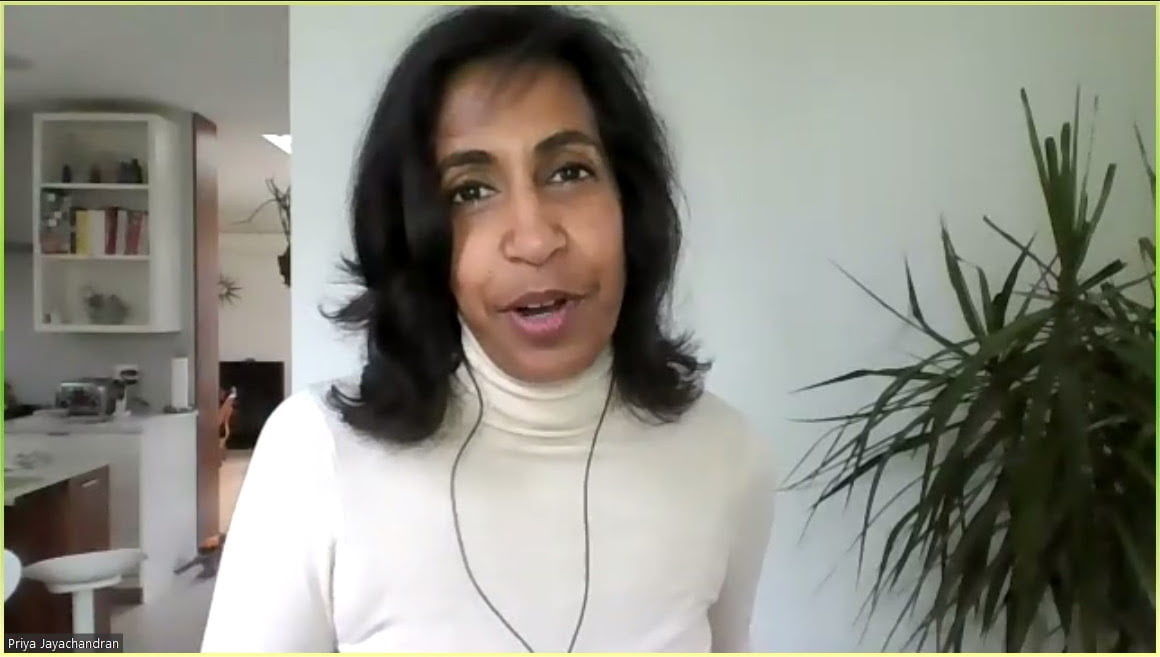
Priya Jayachandran, president of National Housing Trust, said she considers Chapter 40T “a model law for housing preservation” and that her organization often shares the law with other states that seek its expertise. But she argued that housing advocates should begin to take a broader view of housing and housing preservation.

Many organizations have long focused on preserving subsidized affordable housing units, as Chapter 40T does, but Jayachandran said “the vast majority of affordable housing is, in fact, in unsubsidized units that fall under the radar” and that the scope of preservation should be expanded to also capture those units.

She also made the case for housing advocates to join forces with environmental activists focused on stemming the tide of climate change to promote affordable housing preservation.

“I think the more that we can link housing preservation to infrastructure and climate change, to share that the energy burden from new construction — from all aspects of that, from the materials cost, from the transportation of those new materials, from the construction costs — the whole process is much more energy consumptive than is housing preservation,” Jayachandran said. “So how can we partner with our energy advocates to make that claim? … And how do we forge those partnerships to make preservation an environmental issue as well as a housing issue?”

But she also acknowledged that preservation alone is not enough.

“Notwithstanding what I just said about energy consumption, the reality is that we need to be preserving units and creating units at the same time,” Jayachandran said. “When NHT was created in 1990 to focus on preservation, it was because housing preservation was the most pressing affordable housing issue of our time. It continues to be pressing, but the reality today is that even if we did preserve every one of our units, it’s not enough. We have simply not built up over the past 30 years the way we should have.”

Gov. Charlie Baker has been pushing since 2017 for lawmakers to agree to a zoning reform measure intended to spur housing production, and the governor has pointed to it again as one of the items he would like to see the Legislature pass before the session ends early next month.

The House and Senate each included Baker’s long-sought zoning reforms in the differing versions of the economic development bill that has been under private House-Senate negotiations since July 30.

Housing Committee Co-chair Rep. Kevin Honan spoke during CEDAC’s virtual event Wednesday morning and said that he had been involved with the issue of expiring affordability protections since his very first days in office.

“The first issue I was involved in was expiring use. We got a call from the 10 O’Clock News on Channel 2 who were doing a story on Glenville Ave. in Allston,” Honan said. “That was the first time I was interviewed as a legislator, in early 1987.”

SourceSentinel and Enterprise

Register today for a free virtual training on the Massachusetts Housing Preservation Law, Chapter 40T

In its first 10 years, Chapter 40T has played a crucial role in the preservation of over 9,500 affordable units in almost 100 properties across the state. This forum will describe the statute, and look at the key factors that have led to its success.

Keynote Speaker: Priya Jayachandran, Chief Executive Officer, National Housing Trust
Topic: Reimagining Preservation

Speakers and Panelists:
– Bill Brauner, Director of Housing Preservation and Policy, CEDAC
– Roberta L. Rubin, Chief Counsel, Massachusetts Department of Housing and Community Development
– Rachel Heller, Chief Executive Officer, Citizens’ Housing and Planning Association
– Suneeth P. John, Director of Real Estate, Fenway Community Development Corporation

Registration is now open. Event is free of charge.

Click here to register.

Quincy Affordable Housing Community Purchased

The Asian Community Development Corp. (ACDC) of Greater Boston has purchased Martensen Village, a 12-unit affordable housing community in Quincy. The Massachusetts Department of Housing and Community Development (DHCD) and MassHousing assisted the company in financing and preserving the affordability of all the units for at least 40 years.

DHCD provided $1.7 million in 13A preservation financing, HOME funds from the city of Quincy, a $561,941 redevelopment loan from the Community Economic Development Assistance Corp. and a $15,970 capitalized 13A payment grant from MassHousing make up the financing for the community.

The funds will be used to make immediate repairs of the community, with a permanent financing transaction also helping future rehabilitation of the property, as well as preserving affordability of the units.

“ACDC is excited about this opportunity to preserve an important affordable housing asset, and this project complements our existing housing and civic engagement work in Quincy. We are grateful for the partnership with DHCD and MassHousing, and we look forward to working with the city of Quincy and CEDAC to complete essential renovations at Martensen Village to ensure the property’s long-term viability,” ACDC Executive Director Angie Liou said in a statement.

SourceBanker & Tradesman

Quincy Housing Community with Expiring Section 13A Mortgage Has Been Acquired to Ensure Continued Affordability for the Residents

The Massachusetts Department of Housing and Community Development (DHCD) and MassHousing have assisted the Asian Community Development Corporation (ACDC) in purchasing and preserving the affordability of Martensen Village, a 12-unit affordable housing community in Quincy. The ACDC purchased Martensen Village through Chapter 40T, a state law that helps prevent housing with expiring affordability restrictions from being sold and converted to market-rate rents. The Section 13A mortgage at Martensen Village was due to mature in March 2019, and the apartments would have been in danger of converting to market rates. This transaction will preserve the affordability of all 12 apartments at Martensen Village for at least 40 years.

“The ACDC acted quickly to acquire Martensen Village, protecting at-risk residents and preserving their tenancy for the long term,” said MassHousing Executive Director Chrystal Kornegay. “MassHousing is committed to meeting the challenges of the state’s expiring Section 13A portfolio, working creatively with our state and local partners to protect elderly and low-income households from unaffordable rent increases.”

“We are proud to partner with MassHousing to support Asian Community Development Corporation’s work to maintain Martensen Village as an affordable housing resource for families in Quincy,” said Housing and Community Development Undersecretary Janelle Chan. “Our hard-working families and residents across the Commonwealth depend on access to housing they can afford and ensuring we maintain the affordability of our current housing stock is a top priority for our agency and the BakerPolito Administration.”

“ACDC is excited about this opportunity to preserve an important affordable housing asset, and this project complements our existing housing and civic engagement work in Quincy. We are grateful for the partnership with DHCD and MassHousing, and we look forward to working with the City of Quincy and CEDAC to complete essential renovations at Martensen Village to ensure the property’s long-term viability,” said ACDC Executive Director Angie Liou.

The Martensen Village transaction involved $1.7 million in 13A preservation financing from DHCD, HOME funds from the City of Quincy, a $561,941 redevelopment loan from the Community Economic Development Assistance Corporation (CEDAC), and a $15,970 capitalized 13A payment grant from MassHousing.

The financing package funds the ACDC’s acquisition and immediate repairs of Martensen Village. A permanent financing transaction, which will allow for the substantial rehabilitation of the property, will follow.

The Commonwealth’s Section 13A program was created by the Massachusetts Legislature in the 1970s to provide low-interest mortgage financing to affordable housing communities. Today, 13A communities serve some of the lowest-income and most vulnerable populations in Massachusetts, including many elderly residents. The mortgages on these 13A housing communities are nearing maturity, and no federal resources are available for their preservation. In response, MassHousing and DHCD have committed a total of $100 million in capital to help protect vulnerable residents and preserve affordable 13A units that otherwise could convert to market rates.

All 12 units at Martensen Village will remain affordable to households earning at or below 80% of the Area Median Income (AMI). The AMI for Quincy is $107,800 for a family of four.

Martensen Village contains 9 three-bedroom and 3 four-bedroom townhouse-style units spread across three low-rise buildings.

MassHousing has financed or administers federal subsidies at 11 rental housing communities in Quincy involving 1,779 units and $58.2 million in financing. The Agency has financed 1,362 home mortgage loans in Quincy, totaling $211.1 million in financing.

About Asian Community Development Corporation

The Asian Community Development Corporation works in underserved and immigrant Asian American communities in the Greater Boston region to create and preserve affordable, sustainable, and healthy neighborhoods. They achieve this by building affordable homes and vibrant spaces, empowering families with asset-building tools, and strengthening communities through resident and youth leadership. For more information, visit www.asiancdc.org.

About DHCD

The Department of Housing and Community Development’s mission is to strengthen cities, towns and neighborhoods to enhance the quality of life of Massachusetts residents. The Department provides leadership, professional assistance and financial resources to promote safe, decent affordable housing opportunities, economic vitality of communities and sound municipal management. For more information about DHCD please visit www.mass.gov/hed/economic/eohed/dhcd/

About MassHousing

MassHousing (The Massachusetts Housing Finance Agency) is an independent, quasi-public agency created in 1966 and charged with providing financing for affordable housing in Massachusetts. The Agency raises capital by selling bonds and lends the proceeds to low- and moderate-income homebuyers and homeowners, and to developers who build or preserve affordable and/or mixedincome rental housing. MassHousing does not use taxpayer dollars to sustain its operations, although it administers some publicly funded programs on behalf of the Commonwealth. Since its inception, MassHousing has provided more than $22.8 billion for affordable housing. For more information, visit the MassHousing website at www.masshousing.com, follow us on Twitter @MassHousing, subscribe to our blog and Like us on Facebook.

###

SourceMassHousing

Chapter 40T at 5; Meeting its Intended Purpose and Highlighting Tremendous Need

MassHousing and the Community Economic Development Assistance Corporation released a report entitled Chapter 40T at 5: A Retrospective Assessment of Massachusetts’ Expiring Use Preservation Law, which reviews the first five years of experience under the Massachusetts Affordable Housing Preservation Law, Chapter 40T. The report, prepared by housing consultant Emily Achtenberg, found that the law has basically been fulfilling its intended purpose to track the disposition of affordable housing projects and to give local and state government officials, as well as residents, an opportunity to purchase these projects and assure their preservation as affordable housing.

Among the report’s key findings were the following:

· DHCD Use of Right of First Refusal. Eight properties offered for sale that have triggered of DHCD’s Right of First Offer (ROFO) under 40T have been sold to qualified non-profit and for-profit purchasers, resulting in the long-term preservation of more than 1,0000 affordable units in some of the Commonwealth’s strongest housing markets. DHCD has created a process for affordable housing developers, both non-profit and for-profit, to qualify for this right to purchase project under the ROFR.

· Over 100 Projects Preserved. 10,000 units in more than 100 properties have been or are slated to be preserved by owners and purchasers who have pledged to keep them affordable in exchange for receiving a preliminary exemption from the 40T ROFR process. In the vast majority of these cases, owners and purchasers have promised to retain at least the same number of affordable units that existed prior to 40T.

· Final Reporting Needed. Projects that receive preliminary exemptions are not filing final reports with DHCD documenting that deals have closed in accordance with the owner’s applications. While there are no indications that there are any issues with these transactions, the report points to an area for additional follow-up by DHCD and project owners.

The report was presented at a recent forum held at MassHousing and co-sponsored by CEDAC and the Citizens Housing and Planning Association.

SourceNixon Peabody

Cambridge Is A Model For Affordable Housing Initiatives

Sunday, October 6, 2013, 3:00am
Taking Stock
Cambridge Is A Model For Affordable Housing Initiatives
Putnam Square Apartment Plan Latest In Preserving Affordability
By Roger Herzog and Bill Brauner
Special To Banker & Tradesman
The city of Cambridge is setting the standard in Massachusetts in utilizing innovative resources to help preserve affordable housing units. Four years after the passage of Chapter 40T (An Act to Preserve Publicly Assisted Affordable Housing), Massachusetts is seeing tangible success in maintaining affordable homes. And Cambridge has become a model in how city, state, and nonprofit actors can work together to ensure that these units remain available to low income families and individuals.
Chapter 40T put in place some important tools, safeguards, and an early warning system that have been instrumental in helping to preserve affordable housing across the commonwealth. Since its passage, no project has lost affordability as a result of a sale, though some units have been lost when their owners converted their buildings into market-rate developments. Additionally, the state has preserved affordability on more than 8,600 units since Chapter 40T became law in 2009. Not all of those can be directly attributed directly to the law – Massachusetts has multiple ways to help owners maintain their affordability – but Chapter 40T has become a critically important piece of maintaining units from Boston to Brewster.
Chapter 40T was passed because Massachusetts took advantage of federal housing programs and built hundreds of large scale affordable housing projects in the 1960s and 1970s. Many of these projects were created by for-profit developers through federally backed mortgages, many of which are coming to maturity in the next decade. Once those mortgages expire, developers are free to convert those buildings into market-rate units, sell them to another developer, or maintain them as affordable housing developments. Among the tools provided by Chapter 40T to address the possibility that Massachusetts could shed affordable units is an innovative policy that gives that state’s Department of Housing and Community Development (DHCD) the “right of first refusal” if the owner decides to sell it. DHCD is then able to designate a new nonprofit or for-profit housing developer to acts as its purchasing agent to facilitate preservation.

Continuing Preservation
No city has taken better advantage of 40T, along with funding from the Massachusetts Preservation Loan Fund, than Cambridge. Recently, Cambridge witnessed the preservation of Putnam Square Apartments through the cooperation of DHCD; Harvard University; the city of Cambridge; the nonprofit developer Homeowner’s Rehab Inc. (HRI); and the building’s tenants. Putnam Square consists of 94 apartments that will now remain affordable for area seniors. Built in 1974, the building was owned by Harvard University, which agreed to sell the property to HRI, a well-respected nonprofit acting on DHCD’s behalf. HRI will continue to maintain the building, and indeed, plans to upgrade and renovate the property. The Community Economic Development Assistance Corp. (CEDAC), the Massachusetts Housing Investment Corporation (MHIC) and the Cambridge Affordable Housing Trust all made significant loans to ensure that these units remain affordable. CEDAC and MHIC manage the Massachusetts Preservation Loan Fund, which was created to provide loans to preservation buyers with support from the MacArthur Foundation.
This marks the second major development that Cambridge has preserved through the Chapter 40T process. In December 2011, most of the same actors – DHCD, Harvard University, HRI, and agencies who focus on the financing of affordable housing – were involved in the preservation of 25 affordable housing units in the Chapman Arms building. Also in Harvard Square, Chapman Arms was the first development to be preserved through Chapter 40T. Both cases demonstrate that Chapter 40T allows the state and nonprofit actors to move swiftly to preserve buildings with substantial affordability.
In addition to Putnam Square and Chapman Arms, Cambridge has also managed to successfully preserve two other affordable housing developments that were close to maturity. In 2012, Just-A-Start Corp. (JAS), a nonprofit community development corporation in Cambridge, purchased Bishop Allen Apartments, which helped to maintain 32 affordable housing units in Central Square. Additionally, HRI purchased the 116-unit Inman Square Apartments in 2011. It should be noted that some owners are negotiating their own preservation transactions with a new buyer – if DHCD determines that the proposed sale achieves the preservation goals of 40T, then DHCD need not exercise its right of first refusal. This is the case with both of these purchases and another mark of the law’s success.
It isn’t only Cambridge that has utilized Chapter 40T. Housing developers throughout the state are also utilizing the right of first refusal to make sure that large scale developments stay affordable. But the city of Cambridge has demonstrated that public agencies, nonprofit institutions and a municipality working together can act in the best interests of low-income residents. We expect we’ll see cities and towns following Cambridge’s lead at ever larger numbers.
Roger Herzog is executive director of the Community Economic Development Assistance Corp. (CEDAC). Bill Brauner is CEDAC’s housing preservation program manager.
Http://www.bankerandtradesman.com/news156836.html

SourceBanker & Tradesman