

Tag: child care
Here’s how the YMCA plans to use a $1 million grant to improve child care in Brockton

BROCKTON — The Old Colony YMCA plans to use a $1 million state grant to renovate child care space in the city to better serve the community and invest in the downtown.
“It’s a win-win all the way around,” said CEO and President Vinnie Marturano.
The renovation project will be at the youth division building at 465 Main St., which is down the street from the city’s central branch.
Improvements will be made in the lower portion of the building to create more space and repurpose underused areas.
Kim Moran, senior vice president of child development and protection for Old Colony YMCA, said the project will add another classroom, create an open indoor place space, update bathroom facilities and add more office space.
Accessibility improvements and electric and ventilation system upgrades will be done during the renovation, Marturano said.

The youth division building is used for before- and after-school programs for school-aged children. Now it is used for full-day remote learning, Moran said.
In Brockton, the YMCA has another space at Centre Street for students to participate in remote learning. There is also programming for students learning in a hybrid model in districts in the other communities the organization serves.
“We’re trying to fill the need for parents,” she said. “It’s about where they need us the most.”
The grant helps nonprofit organizations serving primarily low-income families and communities renovate or build new child care facilities.
Marturano said the YMCA applied to the competitive grant previously, and this year it was successful. The organization was one of seven organizations from around the state selected.
The entire project will cost about $2.4 million, so the YMCA will need to raise money to make up the rest of the costs, he said.

Pre-pandemic, child care represented 25 percent of Old Colony YMCA’s operating revenue, Marturano said. It had the licensed capacity to care for 2,800 kids at 48 different sites around the South Shore.
The number of children the organization can care for has been reduced to meet state requirements aimed to minimize the spread of COVID-19.
This year, people have realized how important and critical child care is to families and the economic system, he said.
“We continue to follow the crisis in child care that has been significantly heightened during the pandemic situation we all find ourselves in,” Marturano said.
The grant also helps the YMCA show its commitment to Brockton and development in downtown, he said.

Marturano said the city and state have shown a similar commitment to bringing more proactive development to Main Street near the Brockton central branch.
Upgrading the child division building is a way to invest in downtown and provide infrastructure to serve the community, he said.
Marturano is hopeful that this will lead to other investment in the area.
Early education funds to expand facilities, increase child care capacity essential in public health crisis (Editorial)
In 2018, the reauthorization of the Early Education and Out-of-School Time Capital Fund (EEOST) in the state’s housing bond bill was important news. There was a need for sustained targeted improvements in Massachusetts early education programs. Since its original passage in 2013, the Department of Early Education and Care and the Children’s Investment Fund at the Community Economic Development Assistance Corporation have awarded four rounds of EEOST Capital Funds grants that provided $19 million to 25 agencies across the state. Beneficiaries included, $1 million in 2018 to Holyoke-Chicopee-Springfield Head Start, and $1 million in 2015 to the Valley Opportunity Council in Chicopee.
The recent Baker-Polito administration announcement of an additional $6.5 million in EEOST grant funding to seven organizations will allow renovations and expansions of childcare facilities that serve mostly low-income children. This is welcome news in an environment where facilities must meet new standards due to COVID, and parents experience waiting lists for childcare.
“As a result of the COVID-19 pandemic, so many early childhood education providers are struggling to meet the needs of vulnerable families and communities. It is gratifying to be able to announce that these seven programs will receive the necessary funding to create high-quality, safe and healthy learning environments,” said Theresa Jordan, director of the Children’s Investment Fund, an affiliate of CEDAC.
One of the recent recipients was a $1 million grant to the Boys and Girls Club of greater Westfield. The facility plans to build an addition to expand its out-of-time program and build a new preschool classroom.
According to data from 2018, around 74% of children under the age of 6 have both parents in the workforce. And during COVID, providing children with a safe out-of-school time place has become increasingly challenging. While Massachusetts childcare system is primarily a private funding system, this funding fills a gap that allows facilities such as the Westfield Boys and Girls club to begin expanding immediately and offer more opportunities to those families in dire need.
Boys & Girls Club of Greater Westfield gets $1 million grant to expand facility
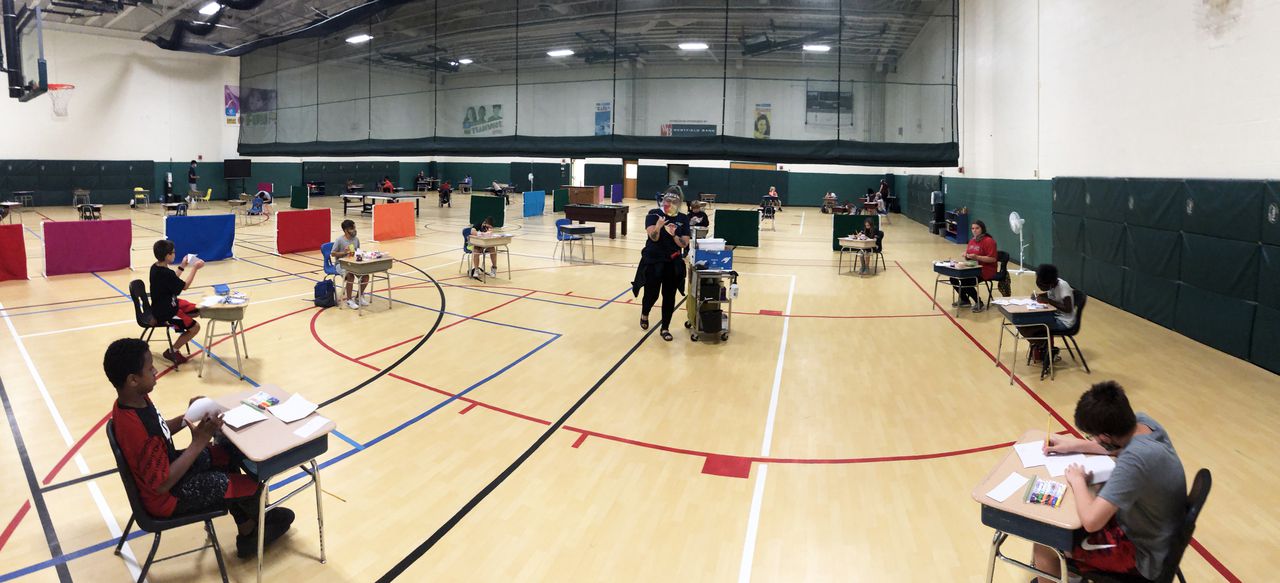
In 2018, the reauthorization of the Early Education and Out-of-School Time Capital Fund (EEOST) in the state’s housing bond bill was important news. There was a need for sustained targeted improvements in Massachusetts early education programs. Since its original passage in 2013, the Department of Early Education and Care and the Children’s Investment Fund at the Community Economic Development Assistance Corporation have awarded four rounds of EEOST Capital Funds grants that provided $19 million to 25 agencies across the state. Beneficiaries included, $1 million in 2018 to Holyoke-Chicopee-Springfield Head Start, and $1 million in 2015 to the Valley Opportunity Council in Chicopee.
The recent Baker-Polito administration announcement of an additional $6.5 million in EEOST grant funding to seven organizations will allow renovations and expansions of childcare facilities that serve mostly low-income children. This is welcome news in an environment where facilities must meet new standards due to COVID, and parents experience waiting lists for childcare.
“As a result of the COVID-19 pandemic, so many early childhood education providers are struggling to meet the needs of vulnerable families and communities. It is gratifying to be able to announce that these seven programs will receive the necessary funding to create high-quality, safe and healthy learning environments,” said Theresa Jordan, director of the Children’s Investment Fund, an affiliate of CEDAC.
One of the recent recipients was a $1 million grant to the Boys and Girls Club of greater Westfield. The facility plans to build an addition to expand its out-of-time program and build a new preschool classroom.
According to data from 2018, around 74% of children under the age of 6 have both parents in the workforce. And during COVID, providing children with a safe out-of-school time place has become increasingly challenging. While Massachusetts childcare system is primarily a private funding system, this funding fills a gap that allows facilities such as the Westfield Boys and Girls club to begin expanding immediately and offer more opportunities to those families in dire need.
Guild of St. Agnes child care center, to be built at old Worcester Boys & Girls Club, gets $1M grant
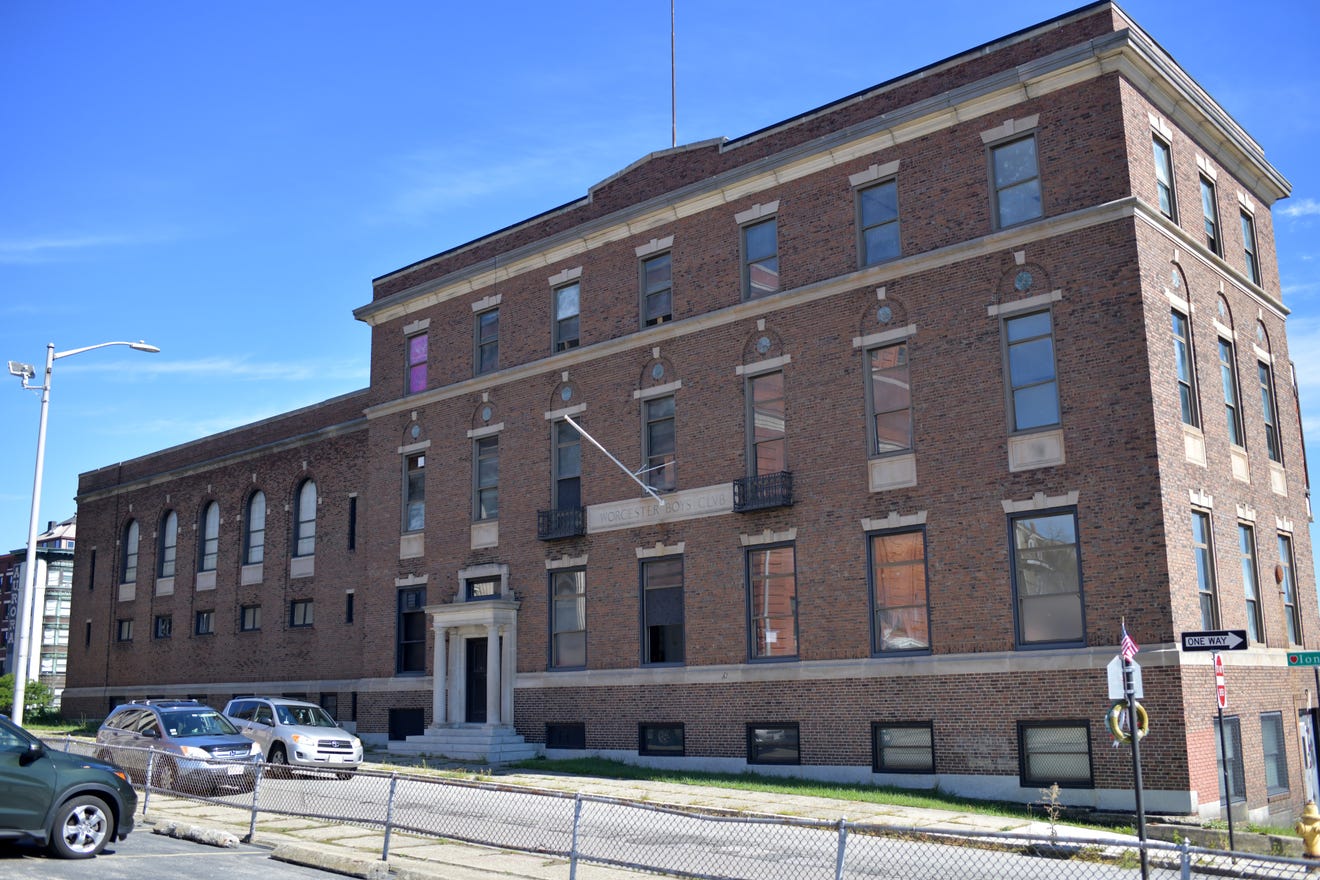
WORCESTER – A day care center for low-income children to be built in the former Boys & Girls Club on Ionic Avenue and run by the Guild of St. Agnes received a $1 million state grant Thursday.
“This is terrific,” said Edward P. Madaus, the Guild’s executive director, expressing gratitude to Lt. Gov. Karyn Polito and Gov. Charlie Baker for “seeing the need.”
The new center will be in the long-vacant 30,000-square-foot Boys & Girls Club building, to be reshaped into a $14.4 million creative arts complex, Creative Hub Worcester Arts Center. The project is expected to be completed in 2022
The Baker-Polito administration and the Community Economic Development Assistance Corp. announced a series of early education grants on Thursday.
The Guild of St. Agnes project will expand its child care capacity, with 88 additional toddler and preschool slots.
“There aren’t a lot of child care facilities in Main South. We thought we would be servicing a clientele that needs more child care down there,” Madaus said.
The Guild received a similar grant for $700,000 three years ago to purchase a building at 58 Bigelow St. in Webster to operate a child care center.
The Guild of St. Agnes, started in 1913 by a group of parishioners at Ascension Church on Vernon Street, operates 11 child care centers in Worcester County (six in the city), and an additional six in the Worcester Public Schools. Before the pandemic, the centers served about 1,700 children, ages 6 weeks to 12 years old. The number is now about 1,300. The centers in the schools are currently closed.
The $1 million state grant announced Thursday is part of $6.5 million in Early Education and Out-of-School Time funding awarded to seven organizations. The capital improvement grants help nonprofit center-based child care programs renovate or build high-quality child care facilities that serve mostly low-income families. The grants are managed by the Children’s Investment Fund and the Massachusetts Department of Early Education and Care.
“We are grateful to the educators and child care providers statewide who have worked tirelessly to adapt over the last several months as we continue to combat the COVID-19 public health crisis,” Baker said in the announcement. “Through these grants, we are able to make improvements to child care programs that boost the quality of early education and care and provide families in communities throughout the commonwealth with the resources necessary for success in the classroom and beyond.”
Westfield Boys and Girls Club receives $1M early education grant
WESTFIELD, MA (WGGB/WSHM) — The Westfield Boys and Girls Club will expand its out-of-school time program.
This comes after Governor Charlie Baker announced a $6.5 million grant in early education and out-of-school time.
The money was awarded to seven organizations to help them renovate childcare facilities that serve low-income children.
The state awarded $1 million went to Westfield’s Boys and Girls Club.
The organization said one of the projects it will put the money towards is building a new pre-school classroom that will be able to fit 20 preschoolers.
Baker-Polito Administration Awards $6.5 Million for Early Education Programs; SMOC Receives $475,000 For Framingham Suburban Child Care

BOSTON – The Baker-Polito Administration and the Community Economic Development Assistance Corporation (CEDAC) today announced $6.5 million in Early Education and Out-of-School Time (EEOST) grant funding awarded to seven organizations to help them renovate childcare facilities that serve low-income children.
Managed by the Children’s Investment Fund, CEDAC, and the Massachusetts Department of Early Education and Care, EEOST capital improvement grants help non-profit center-based childcare programs renovate or build high-quality childcare facilities which serve mostly low-income families.
“We are grateful to the educators and childcare providers statewide who have worked tirelessly to adapt over the last several months as we continue to combat the COVID-19 public health crisis,” said Governor Charlie Baker. “Through these grants, we are able to make improvements to child care programs that boost the quality of early education and care and provide families in communities throughout the Commonwealth with the resources necessary for success in the classroom and beyond.”
SMOC plans to improve the existing Framingham Suburban Childcare program by installing a new HVAC system, as part of a larger renovation project at the facility.
The program has capacity for 140 infants, toddlers, and preschoolers, and 156 school-age children, the majority of whom are from low-income families.
“Now more than ever, quality childcare and resources are critical to families and children across the state,” said Lt. Governor Karyn Polito. “Our Administration is pleased to support these critical investments that provide safer environments for children to learn in, while providing educators with modernized facilities.”
During the FY20 grant funding round, early childhood education programs could receive awards up to $1 million for major capital projects.
“Child care providers across the Commonwealth are working every day to make sure that families are able to go to work and our youngest children receive the education, support and care that they need,” said Education Secretary James Peyser. “In the upcoming round of grants that will be made available, group and school-age providers will be able to take care of critical repairs and improvements to meet new standards due to COVID.”
“The current public health crisis underscores the need for safe learning environments that support the healthy growth and development of all children,” said Samantha Aigner-Treworgy, Commissioner of the Massachusetts Department of Early Education and Care. “We are thrilled to be able to support these seven programs across the Commonwealth as they turn their projects into reality.”
The EEOST grants are financed through the state’s capital budget and provide matching funds that leverage private investment. The $6.5 million awarded by the Baker-Polito Administration for the FY20 EEOST grants will leverage more than $36 million in additional financing to improve learning environments for nearly 900 children.
“As a result of the COVID-19 pandemic, so many early childhood education providers are struggling to meet the needs of vulnerable families and communities. It is gratifying to be able to announce that these seven programs will receive the necessary funding to create high-quality, safe and healthy learning environments,” said Theresa Jordan, director of the Children’s Investment Fund, an affiliate of CEDAC.
“We are happy to be working with providers across the Commonwealth to ensure that young children from vulnerable communities have access to high-quality early education, and we thank Governor Baker and Lt. Governor Polito for their ongoing support of the EEOST Capital Fund,” said Roger Herzog, CEDAC’s executive director. “Grants from the EEOST Capital Fund are vital to the early education sector, which in turn supports families and strengthens communities.”
- Berkshire Family YMCA (Pittsfield) will modernize its current early education and out-of-school time program space as a part of a larger renovation at the Pittsfield YMCA building. The project will increase slots available for infants, toddlers, and preschool-aged children. Once complete, the program will have the capacity to serve 95 infants, toddlers, and preschoolers, and 39 children in out-of-school time programs.
- Boys and Girls Club of Greater Westfield (Westfield) will build an addition to expand its existing out-of-school time program, including a new preschool classroom. Once complete, the program will have the capacity for 20 preschoolers and 280 children in out-of-school time programs. Grant award: $1,000,000
- Community Action Incorporated (Haverhill) plans to upgrade the facility at the existing Fox Center Head Start program by installing a new HVAC system and roof. The program serves 106 toddlers and preschoolers, all of whom come from low-income families. Grant award: $1,000,000
- East Boston Social Centers (East Boston) plans to create a new early learning program within the former Barnes School. The new center will encompass the ground floor of a multi-use building that contains affordable senior housing on the upper floors. Once complete, the center will have the capacity for 41 new infants and toddler-age children, a majority of whom come from low-income families. Grant award: $1,000,000
- Guild of St Agnes (Worcester) will create a new early learning program within the vacant former Boys and Girls Club building. Once construction is complete, the Guild will operate the center, which is located within a new $14.4M arts and creative complex being developed in partnership between two non-profit organizations. The project will expand child care capacity with 88 additional toddler and preschool slots. Grant award: $1,000,000
- Old Colony YMCA (Brockton) will renovate the existing out-of- school time program spaces within the Brockton YMCA building, adding 26 new slots for out-of-school time children and improving the facility which cares for nearly 200 children.
All the programs receiving a grant award serve publicly subsidized families, have demonstrated financial need and have secured additional funding to pay for a portion of their project costs. The Department of Early Education and Care partnered with CEDAC’s affiliate, the Children’s Investment Fund, to administer the grants.
***
Applications for FY21 grants are being accepted now. The new round of grants will allow for smaller amounts of funding, between $100,000 and $250,000, to offset capital improvement expenses related to the COVID-19 public health emergency. This special round of grant funding is intended to give early education and care centers funding resources to make improvements and emergency repairs to address health and safety.