MassHousing Commits $7.9 Million in Financing for New, 51-Unit Mixed-Income Rental Housing Community in Revere

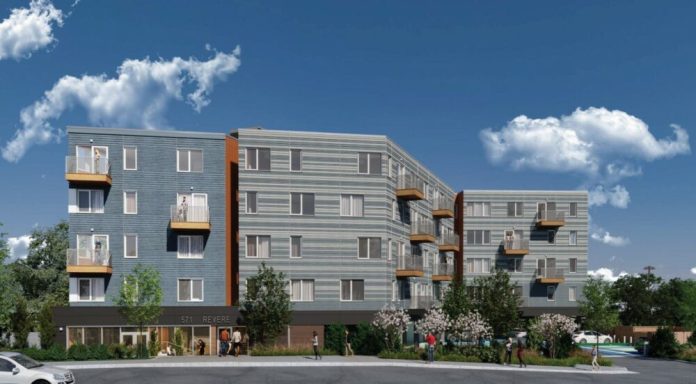
MassHousing has committed $7.9 million in affordable housing financing to the non-profit The Neighborhood Developers (TND) for the construction of the 571 Revere Street in Revere, MA.

The MassHousing financing will allow The Neighborhood Developers to construct 51 units of new affordable housing for households across a broad range of incomes, including 19 new workforce housing units.

“By transforming a vacant parcel into a new, modern community of affordable and workforce housing, The Neighborhood Developers will help ensure that a revitalized Revere Beach remains welcoming and accessible to residents of all means,” said MassHousing Executive Director Chrystal Kornegay. “TND is a strong, mission-based developer, and MassHousing is pleased to be part of the team making this important project a reality.”

“571 Revere Street is a transit-oriented development; the 51 new affordable homes will not only be steps away from the beach, but also within easy walking distance of the Wonderland MBTA Station and the MBTA 116 bus line, said Rafael Mares, TND’s Executive Director. “This project wouldn’t be possible without MassHousing’s commitment of affordable housing financing and its partnership.”

MassHousing is providing TND with a $6 million permanent loan and $1.9 million in workforce housing financing from the Agency’s Workforce Housing Initiative.

In addition to the MassHousing financing, other funding sources include $9.3 million in federal and state Low-Income Housing Tax Credit equity, $1.3 million in direct financing from the Massachusetts Department of Housing and Community Development (DHCD), $1.2 million in HOME financing from the North Suburban Consortium, a $206,511 sponsor energy grant loan, $1.1 million in financing from the Community Economic Development Assistance Corporation (CEDAC) and $1 million from the Affordable Housing Trust Fund, which MassHousing manages on behalf of DHCD. Santander Bank will be providing construction financing.

571 Revere Street advances the Baker-Polito Administration’s goal of creating up to 1,000 new workforce housing units affordable to middle-income households through MassHousing’s $100 million Workforce Housing Initiative. Since the inception of the initiative in 2016, MassHousing has committed or closed workforce housing financing totaling $92.4 million, to 40 projects, located in 19 cities and towns. To date, the Workforce Housing Initiative has advanced the development of 3,727 housing units across a range of incomes, including 1,006 workforce housing units.

The new, energy efficient housing will be constructed in a six-story building on a vacant site two blocks from Revere Beach and within walking distance to the MBTA’s Wonderland subway station. The apartments will be on the top four floors of the building, with garage parking on the first two levels.

Thirty-two apartments will be affordable for households earning at or below 60 percent of the Area Median Income (AMI), with 6 of those units further restricted for vulnerable low-income households earning at or below 30 percent of AMI, and 5 of the affordable units further restricted for households earning at or below 50 percent of AMI. The remaining 19 apartments will be workforce housing units for households earning at or below 90 percent of AMI. The AMI for Revere is $113,300 for a household of four.

Eight of the apartments will be subsidized by a federal Section 8 Project Based Housing Assistance Payment contract and 3 apartments will be subsidized through the Massachusetts Rental Voucher Program. There will be 26 one-bedroom apartments, 21 two-bedroom apartments, and 4 three-bedroom apartments.

The general contractor will be NEI General Contracting, the architect is Arrowstreet and the management agent is WinnCompanies.

MassHousing has financed 4 rental housing communities in Revere involving 290 housing units and $17.4 million in financing. The Agency has additionally provided home mortgage loans to 721 Revere homebuyers and homeowners involving $115.5 million in financing.

SourceBoston Real Estate Times

Quincy Affordable Housing Community Purchased

The Asian Community Development Corp. (ACDC) of Greater Boston has purchased Martensen Village, a 12-unit affordable housing community in Quincy. The Massachusetts Department of Housing and Community Development (DHCD) and MassHousing assisted the company in financing and preserving the affordability of all the units for at least 40 years.

DHCD provided $1.7 million in 13A preservation financing, HOME funds from the city of Quincy, a $561,941 redevelopment loan from the Community Economic Development Assistance Corp. and a $15,970 capitalized 13A payment grant from MassHousing make up the financing for the community.

The funds will be used to make immediate repairs of the community, with a permanent financing transaction also helping future rehabilitation of the property, as well as preserving affordability of the units.

“ACDC is excited about this opportunity to preserve an important affordable housing asset, and this project complements our existing housing and civic engagement work in Quincy. We are grateful for the partnership with DHCD and MassHousing, and we look forward to working with the city of Quincy and CEDAC to complete essential renovations at Martensen Village to ensure the property’s long-term viability,” ACDC Executive Director Angie Liou said in a statement.

SourceBanker & Tradesman

Quincy Housing Community with Expiring Section 13A Mortgage Has Been Acquired to Ensure Continued Affordability for the Residents

The Massachusetts Department of Housing and Community Development (DHCD) and MassHousing have assisted the Asian Community Development Corporation (ACDC) in purchasing and preserving the affordability of Martensen Village, a 12-unit affordable housing community in Quincy. The ACDC purchased Martensen Village through Chapter 40T, a state law that helps prevent housing with expiring affordability restrictions from being sold and converted to market-rate rents. The Section 13A mortgage at Martensen Village was due to mature in March 2019, and the apartments would have been in danger of converting to market rates. This transaction will preserve the affordability of all 12 apartments at Martensen Village for at least 40 years.

“The ACDC acted quickly to acquire Martensen Village, protecting at-risk residents and preserving their tenancy for the long term,” said MassHousing Executive Director Chrystal Kornegay. “MassHousing is committed to meeting the challenges of the state’s expiring Section 13A portfolio, working creatively with our state and local partners to protect elderly and low-income households from unaffordable rent increases.”

“We are proud to partner with MassHousing to support Asian Community Development Corporation’s work to maintain Martensen Village as an affordable housing resource for families in Quincy,” said Housing and Community Development Undersecretary Janelle Chan. “Our hard-working families and residents across the Commonwealth depend on access to housing they can afford and ensuring we maintain the affordability of our current housing stock is a top priority for our agency and the BakerPolito Administration.”

“ACDC is excited about this opportunity to preserve an important affordable housing asset, and this project complements our existing housing and civic engagement work in Quincy. We are grateful for the partnership with DHCD and MassHousing, and we look forward to working with the City of Quincy and CEDAC to complete essential renovations at Martensen Village to ensure the property’s long-term viability,” said ACDC Executive Director Angie Liou.

The Martensen Village transaction involved $1.7 million in 13A preservation financing from DHCD, HOME funds from the City of Quincy, a $561,941 redevelopment loan from the Community Economic Development Assistance Corporation (CEDAC), and a $15,970 capitalized 13A payment grant from MassHousing.

The financing package funds the ACDC’s acquisition and immediate repairs of Martensen Village. A permanent financing transaction, which will allow for the substantial rehabilitation of the property, will follow.

The Commonwealth’s Section 13A program was created by the Massachusetts Legislature in the 1970s to provide low-interest mortgage financing to affordable housing communities. Today, 13A communities serve some of the lowest-income and most vulnerable populations in Massachusetts, including many elderly residents. The mortgages on these 13A housing communities are nearing maturity, and no federal resources are available for their preservation. In response, MassHousing and DHCD have committed a total of $100 million in capital to help protect vulnerable residents and preserve affordable 13A units that otherwise could convert to market rates.

All 12 units at Martensen Village will remain affordable to households earning at or below 80% of the Area Median Income (AMI). The AMI for Quincy is $107,800 for a family of four.

Martensen Village contains 9 three-bedroom and 3 four-bedroom townhouse-style units spread across three low-rise buildings.

MassHousing has financed or administers federal subsidies at 11 rental housing communities in Quincy involving 1,779 units and $58.2 million in financing. The Agency has financed 1,362 home mortgage loans in Quincy, totaling $211.1 million in financing.

About Asian Community Development Corporation

The Asian Community Development Corporation works in underserved and immigrant Asian American communities in the Greater Boston region to create and preserve affordable, sustainable, and healthy neighborhoods. They achieve this by building affordable homes and vibrant spaces, empowering families with asset-building tools, and strengthening communities through resident and youth leadership. For more information, visit www.asiancdc.org.

About DHCD

The Department of Housing and Community Development’s mission is to strengthen cities, towns and neighborhoods to enhance the quality of life of Massachusetts residents. The Department provides leadership, professional assistance and financial resources to promote safe, decent affordable housing opportunities, economic vitality of communities and sound municipal management. For more information about DHCD please visit www.mass.gov/hed/economic/eohed/dhcd/

About MassHousing

MassHousing (The Massachusetts Housing Finance Agency) is an independent, quasi-public agency created in 1966 and charged with providing financing for affordable housing in Massachusetts. The Agency raises capital by selling bonds and lends the proceeds to low- and moderate-income homebuyers and homeowners, and to developers who build or preserve affordable and/or mixedincome rental housing. MassHousing does not use taxpayer dollars to sustain its operations, although it administers some publicly funded programs on behalf of the Commonwealth. Since its inception, MassHousing has provided more than $22.8 billion for affordable housing. For more information, visit the MassHousing website at www.masshousing.com, follow us on Twitter @MassHousing, subscribe to our blog and Like us on Facebook.

###

SourceMassHousing

Governor Baker Signs $1.8 Billion Affordable Housing Bill to Increase Housing Production, Preserve Housing Affordability

BOSTON — Today, Governor Charlie Baker signed An Act Financing the Production and Preservation of Housing for Low and Moderate Income Residents (H.4536), to ensure long-term support for the Baker-Polito Administration’s comprehensive efforts to increase the production of affordable housing, diversify the state’s housing portfolio, modernize public housing, preserve the affordability of existing housing and invest in new, innovative solutions to address Massachusetts’ rising demand for housing.

“This bill will help expand our administration’s commitment to ensuring residents across the Commonwealth have more access to quality, safe and affordable housing and economic development opportunities,” said Governor Charlie Baker.“Municipalities, developers, and local housing authorities will be supported by a toolbox of flexible resources to create more affordable options and explore new avenues to meet a growing demand. We thank our partners in the Legislature for working with us to pass this legislation and look forward to our continued collaboration on the administration’s Housing Choice Bill to create even more affordable housing options.”

Today’s legislation authorizes $1.8 billion in new capital spending for the production and preservation of affordable housing for low- to moderate-income households, supportive housing and housing serving vulnerable populations. Additionally, the legislation authorizes $650 million for public housing modernization and redevelopment, as well as $45 million for capital improvements at Early Education and Care facilities.

“Our administration continues to seek collaborative partnerships with communities to increase affordable and market-rate housing production across the Commonwealth, through this bill, our pending Housing Choice Initiative, affordable housing awards, the Workforce Housing Initiative and the Housing Development Incentive Program,” said Lt. Governor Karyn Polito. “The housing bond bill builds on these efforts, and we are proud to have worked collaboratively with our dedicated partners in the Legislature to ensure continued funding for critical housing programs.”

The administration’s first three capital budgets supported the creation or preservation of approximately 7,500 affordable housing units, provided $17.8 million to four public housing developments for comprehensive modernization of housing for seniors and individuals with disabilities and allowed the Department of Housing and Community Development (DHCH) to award $150 million for deferred maintenance projects to more than 45,000 units of extremely low-income state public housing across 234 communities.

“Massachusetts’ growing economy has increased pressure on our housing market, creating challenges for families, communities, and employers’ ability to attract and retain talent,” said Housing and Economic Development Secretary Jay Ash. “This housing bond bill provides tools to increase housing production, including extending the State Low-Income Housing Tax Credit and the Housing Development Incentive Program. These programs support the diverse needs for housing development, which together will help us achieve our goal of stronger, more inclusive Massachusetts economy.”

The bill signing took place in Boston’s Brighton neighborhood at the Harry and Jeanette Weinberg House, operated by Jewish Community Housing for the Elderly.

“Our goal is to ensure Massachusetts families and residents, despite their income, have access to safe, quality housing they can afford,” said Housing and Community Development Undersecretary Janelle Chan. “Housing, in particular housing affordable to the spectrum of households, drives economic development, supports vibrant and walkable downtowns, promotes neighborhood stability, and enables families and residents to thrive.”

“The Housing Bond Bill will continue to give the Commonwealth the tools it needs to continue confronting its housing challenges and produce and preserve the housing we need in a growing economy,” said MassHousing Executive Director Chrystal Kornegay. “The legislation will also allow MassHousing to increase the number of the Commonwealth’s residents who can have access to stable, quality housing. We thank the Legislature for their important leadership on this issue.”

“Preserving and producing affordable housing is central to sustaining the Commonwealth’s economic prosperity,” said Senator Boncore, Senate Chair Joint Committee on Housing. “This bond bill makes thoughtful and innovative investments that will serve as tools for municipalities and developers in the modernization and production of our state’s housing stock.”

“We are all well aware of the housing crisis in Massachusetts” said Representative Kevin G. Honan, chairman of the Joint Committee on Housing. “This Housing Bond Bill is a tangible commitment to affordable housing. The provisions of this bill are the tried and true affordable housing tools that are at our disposal. Through this bill, we will recommit ourselves to housing the elderly, disabled and homeless.”

“Today is a great day for the Commonwealth.  This bond bill will allow us to continue to make important investments in housing for years to come,” said Assistant Minority Leader Bradley Hill. “I am proud to have been a part of passing this legislation and am thankful to the Governor and Lt. Governor for their leadership.”

“The housing bond bill expands opportunities for children, seniors, people with disabilities, and families at risk of homelessness to find safe, healthy, and affordable homes,” said Rachel Heller, chief executive officer of Citizens’ Housing and Planning Association. “This legislation is the result of strong partnerships among advocates, the Legislature, and the Administration who worked together to pass the bill. As one of the first bond bills filed and passed this session, the Housing Bond Bill demonstrates that creating and preserving more affordable housing is a top priority in the Commonwealth.”

“Today’s signing of the $1.8 billion Housing Bond Bill reflects the collective determination of the Baker-Polito Administration, the Legislature and housing advocates to address the need for affordable housing in Massachusetts,” said Clark Ziegler, executive director of the Massachusetts Housing Partnership. “The combination of a strong state economy, high housing demand and low production has created one of the largest affordability gaps in the U.S.  More than 240,000 low-income individuals and families in Massachusetts now pay more than half of their income on rent.  Private housing production alone will not solve that problem. The programs authorized in this bill are one of the few ways we can close this gap. Congratulations to all those who worked so hard to address the Commonwealth’s housing needs.”

“It is an incredible honor for JCHE to host this historic bill signing,” said Amy Schectman, president and chief executive officer of Jewish Community Housing for the Elderly. “Prior bond bill funds have allowed us to build our award-winning supportive, affordable housing and these new funds will be vital to creating additional opportunities for older adults to age in community.  Kudos to Governor Baker and Chairmen Honan and Boncore for their brilliant leadership on this life-or-death issue.”

The housing bond bill includes:

  • State Low-Income Housing Tax Credit: Extends the state’s ability to commit $20 million per year in tax credits to affordable housing projects until 2025 and authorizes an additional $5 million per year in tax credits specifically to support preservation of existing affordable housing. Current law would cut the size of this tax credit to $10 million on January 1, 2020.
  • Housing Development Incentive Program: Extends the state’s ability to commit $10 million per year in tax credits to market-rate housing projects in Gateway Cities until 2024. Current law would cut the size of this tax credit in half, to $5 million, on January 1, 2019.
  • Accessory Dwelling Unit Construction and Landlord Modifications: Authorizes the use of home modification funding to construct accessory dwelling units for elders and individuals with disabilities and also authorizes up to 10% of the funds to be used to support landlord expenditures to modify units for tenants with disabilities, implementing recommendations of the administration’s Interagency Council on Housing and Homelessness.
  • MassHousing Services: Expands MassHousing’s authorizing language, to allow the quasi-public agency to provide contract administration, loan servicing, and other services to other states’ housing finance agencies.
  • Early Education and Out-of-School Time (EEOST) Capital Fund Facilities Improvement Grant Program: Provides funding to non-profit child care programs licensed by the Department of Early Education and Care to renovate, acquire, or construct high-quality child care program facilities that serve low-income families and communities, fostering high quality child care environments that support positive outcomes for children.

The Baker-Polito Administration is committed to meeting Massachusetts’ housing challenge through key investments, new initiatives and program reforms. With the addition of the FY19 capital plan, the Administration will have dedicated $884 million to housing from FY16 to FY19, an increase of $100 million over the previous four years’ capital plans.

In December 2017, the administration announced the Housing Choice Initiative, a comprehensive proposal to create 135,000 new housing units by 2025. The initiative, which is currently pending before the Legislature, includes a new set of incentives and rewards for municipalities committed to sustainable housing growth in their communities. The Housing Choice Initiative is a multi-pronged effort that includes a program to designate Housing Choice municipalities and new technical assistance opportunities through MassHousing, in addition to proposed legislative changes that will help deliver smart, effective zoning at the local level.

Additionally, the highly effective MassWorks Infrastructure Program continues to be a key catalyst for housing production, supporting the creation of more than 3,000 housing units. The Open for Business Initiative will drive the production of more than 2,200 units of housing on state land. MassHousing’s $100 million Workforce Housing Initiative has advanced the development of 2,309 housing units across a range of incomes, including 616 workforce housing units. And, the administration reformed the Housing Development Incentive Program, which is on track to facilitate more than 900 new units in Gateway Cities.

###
SourceOffice of the Governor