YMCA Cape Cod gets $1M grant for child care center

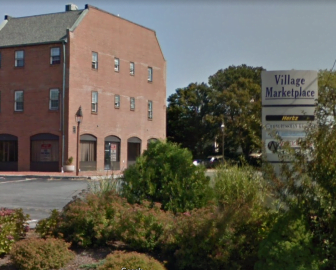
The Hyannis Village Marketplace will be home to a new early education center this fall with help from a $1 million capital grant the YMCA Cape Cod received from the Baker-Polito administration.

“It’s exactly what the Cape Cod community needs,” YMCA Cape Cod President and CEO Stacie Peugh said during a press conference Thursday at 261 Stevens St.

“There needs to be affordable child care across the state, and Cape Cod is certainly no different,” Samantha Aigner-Treworgy, commissioner of the state Department of Early Education and Care, said during the event.

YMCA Cape Cod was one of six agencies in Massachusetts receiving a total of $6 million in Early Education and Out of School Time capital improvement awards to repair and renovate facilities serving low-income children.

The YMCA will use the money to renovate a space at the Village Marketplace and convert it to five classrooms for 65 infants, toddlers and preschoolers, YMCA officials said.

The goal is to open by September 2020, Peugh said.

This is the third time YMCA Cape Cod has applied for the grant, Peugh said.

An estimated 60% of families using the facility are expected to benefit from vouchers from the state and nonprofit organizations, including YMCA scholarships, Peugh said.

The YMCA also has a mix of payers — including subsidized and private — at six early learning centers in West Barnstable, Falmouth, Brewster and Harwich, Peugh said.

There is a possibility the new facility will be a Head Start center, since YMCA Cape Cod is applying for the Cape’s Head Start license, Peugh said.

Head Start serves children from low-income families.

For decades, an organization called Cape Cod Child Development held the Cape Cod license.

But the license was transferred to the Community Development Institute this past summer in the wake of a scathing report on Cape Cod Child Development by federal officials.

State Rep. William Crocker, R-Centerville, addressed the issue during the press conference, saying, “recently we’ve seen a bit of a shakeup in early education on Cape Cod.”

The new facility will help ease parents’ fears over lack of affordable child care, Crocker said.

It’s a “much-needed educational facility in what can really be considered the center of Hyannis,” he said.

“When completed, the (Department of Early Education and Care) will have the needed elements to keep children on a healthy and happy course,” Crocker said. “I look forward to seeing it open for business, and by business I mean the business of caring for children.”

State Sen. Julian Cyr, D-Truro, called the endeavor “tremendously wonderful in a partisan world, which is refreshing.”

But he said more needed to be done.

“We need to get to universal pre-kindergarten in the state,” he said.

“I’d really like to see all of our towns stepping up to provide universal pre-K options. I challenge us to double down on that,” he said.

The presence of the Kennedy and Koch families in the town of Barnstable makes it appear as though there is an endless pool of wealth on Cape Cod, state Rep. David Vieira, R-Falmouth, said.

But many families are living “paycheck to paycheck and stipend to stipend,” he said.

The grant will allow early education teachers to expand their clientele and parents to work and “raise their children in a loving, caring environment,” said Vieira, whose daughter attends an after-school program run by YMCA Cape Cod at Mullen-Hall School in Falmouth.

State Rep. Timothy R. Whelan, R-Brewster, said his wife worked as director of a group day care center when his daughters were young, and the girls benefited from the program.

The girls learned to be kind, participate in groups and make friends, Whelan said.

“It allowed my wife, Lisa, to work and help support our family,” he said.

Cyr said young families on the Cape are of necessity working families and need affordable child care and housing.

The courtyard outside the new early childhood center at the marketplace will be converted into a playground that will be open to Hyannis Village residents during off-hours, Peugh said.

According to YMCA Cape Cod officials, 100 families with children live in rental apartments above the marketplace.

The other agencies receiving state capital grants of $1 million each were the Cape Ann YMCA/YMCA of North Shore in Gloucester; Greater Lawrence Community Action Council; Greater Lowell Family YMCA; Horizons for Homeless Children in Boston; and YWCA of Central Massachusetts.

SourceCape Cod Times
YMCA Cape Cod To Receive $1 Million Grant for New Child Care Program

On Thursday December 19th, Early Education and Care Commissioner Samantha Aigner-Treworgy; Senator Julian Cyr, and Representatives Will Crocker, David Vieira and Tim Whelan; and YMCA Cape Cod President and CEO Stacie Peugh will announce a $1 million grant award from the state to the YMCA Cape Cod that will fund the opening of a new child care program in Hyannis.

The YMCA Cape Cod is one of six (6) organizations across the state that will receive a $1 million award in 2019 from the Early Education and Care and Out-of-School Time (EEOST) Capital Fund – Facilities Improvement Grant program, which is jointly administered by the Department of Early Education and Care and the Children’s Investment Fund, an affiliate of the Community Economic Development Assistance Corporation (CEDAC).

These grant awards will help support positive outcomes for the enrolled children by providing high quality child care environments and settings that support their learning and development.

The YMCA child care center will be located at the Village Marketplace in Hyannis.

For more information on this grant program visit:   https://www.mass.gov/service-details/early-education-and-out-of-school-time-eeost-capital-fund

SourceCapeCodToday.com

Meeting the new commissioner of early education and care

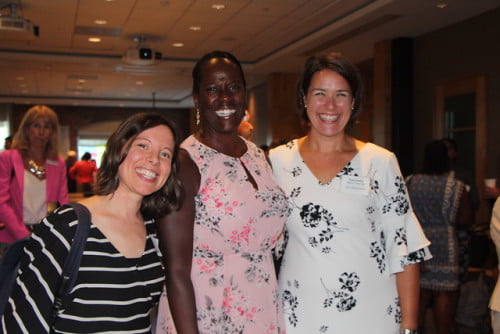
On Tuesday, early educators from across the state attended a meet-and-greet with the new commissioner of the Department of Early Education and Care (EEC), Samantha Aigner-Treworgy – although, as she explained to one attendee, she goes by Sam.

Joel Cox, Partners for Community, and Aigner-Treworgy

“Thank you all for being here and for the very, very warm welcome home,” Aigner-Treworgy, a Massachusetts native, said at the event, which was held at the downtown Boston law firm Goulston & Storrs.

Representative Alice Peisch (D-Wellesley) and Aigner-Treworgy

As we’ve blogged, Aigner-Treworgy comes to Massachusetts from Chicago where she was the chief of early learning.

Alyssa Corrigan, Somerville Public Schools, and Anne Douglass, UMass Boston

Sworn in as commissioner last month, Aigner-Treworgy will attend her first meeting of the Board of the Department of Early Education and Care at 1 p.m. on Tuesday, September 10, 2019. For more information about the EEC board meeting, click here.

Aigner-Treworgy, Amy O’Leary, Strategies for Children, and Carole Charnow, CEO of The Boston Children’s Museum

For now, however, Aigner-Treworgy is happily getting to know her team, the state’s email system, and early education’s many teachers, leaders, and activists.

Kira Taj and Theresa Jordan, both of the Children’s investment Fund, and Aigner-Treworgy

She is looking forward to learning from Massachusetts’ history of early education leadership, and she’s excited about working with the field to discover what lies ahead.

Representative Paul Tucker (D- Salem) and Aigner-Treworgy

Be sure to reach out to her with your thoughts and ideas, because, as she explained on Tuesday, she’s already looking forward to hearing them:

Brigid Boyd, Khushbu Webber, and Sarah Link, from the United Way of Massachusetts Bay and Merrimack Valley, with Aigner-Treworgy

“Thank you for all the support, and thank you for all the support, in advance, that you are going to give me.”

SourceEye on Early Education

From the Ground Up: Improving Child Care and Early Learning Facilities

Increasingly, discoveries in neuroscience show that a child’s earliest years
are crucial to their social, emotional, physical, and cognitive development,
and that the settings in which they learn, play, and grow have an enormous
impact on their future development. High-quality and developmentally
appropriate environments promote healthy behaviors, independence, and
social-emotional skills in young children. Yet, too often, the conversation
about child care quality focuses on workforce and curriculum, and rarely
does it include the physical environment in which children are cared for.


Nearly 15 million children under age 6 live in households in which all parents
work, leaving these children in need of high-quality child care.1 The physical
infrastructure of these spaces has been long neglected, and parents
are forced to place their children in substandard settings. It is critical to
recognize that high-quality environments lead to better outcomes for young
children and that the nation’s children cannot wait for greater investments in
early learning infrastructure that supports their development.


To support city- and local-level officials in addressing their child care facility-related challenges, this catalog provides examples of federal-, state-, and
local-level models across government, philanthropy, and public-private
partnerships.

SourceBipartisan Policy Center

Honoring Mel King

On March 14th 2019, the Community Economic Development Assistance Corporation (CEDAC) honored Mel King at its 40th anniversary celebration at the MIT Samberg Conference Center. King — a community organizer, former State Representative, and Adjunct Professor at the Department of Urban Studies and Planning — crafted the state legislation that created CEDAC in 1978. CEDAC is a community development financial institution providing financing and technical assistance to community-based and other non-profit community development organizations in Massachusetts. In addition to Mel King, CEDAC was joined by DUSP Professors Emeriti, Langley Keyes and Tunney Lee, both of whom promoted and led state and local community development activities, including the visioning and creation of CEDAC.

The event’s main program was modeled on DUSP’s ‘lightning talks,’ three-minute presentations that communicate research and work in layperson language to promote sharing and collaboration across groups. The presentations focused on affordable housing preservation; supportive housing; and early education facility development. Speaker teams, composed of current and former CEDAC staff members as well as community partners, addressed the 40 years of engagement and evolution with these fields, future challenges, and the synergistic relationship for non-profits and the communities they represented. Many CEDAC staff members and leadership are DUSP alumni/ae, including Sara Barcan (MCP ’94), Janelle Chan (MCP ’07), and Roger Herzog (MCP ’87).

“Mel King provided the inspiration and vision for the community development movement, with his experiences 40 years ago fighting for community control of development. Mel’s role as an elected official in helping to create a state infrastructure to support community development, including CEDAC, was instrumental,” said Herzog, Executive Director of CEDAC. “The Massachusetts system serves as a national model of community development, and we are honored to have the opportunity to celebrate his contributions as we mark our 40th anniversary.”

The venue for the 40th anniversary event at MIT speaks to the Institute’s role as the space where the idea for a public/private agency that provides technical expertise to non-profit community development organizations was first discussed during the weekly sessions that King hosted for 25 years while teaching at DUSP and leading the MIT Community Fellows Program. These weekly sessions were called the Wednesday Morning Breakfast Group where King cooked breakfast and led discussions between community activists, planners, and students. A regular participant of the sessions, MIT doctoral student, Carl Sussman, became the founding Executive Director of CEDAC and later played a pivotal role launching and leading its affiliated organization, the Children’s Investment Fund, one of the few community development finance institutions across the nation focused exclusively on meeting the physical capital needs of early care and education programs.

The MIT Community Innovators Lab (CoLab), founded in 2007, is the direct MIT descendant of the Community Fellows Program. CoLab facilitates the interchange of knowledge/resources between MIT students and faculty with community organizations, to build practicable models of economic democracy and self-determination. CoLab’s Mel King Community Fellows Program (MKCF), provides participants with an opportunity to examine innovative approaches to development using markets as an arena for pursuing social justice.

“The CoLab’s Mel King Community Fellows Program embodies Mel King’s approach to planning and community development through his championing of cities and the communities that comprise those cities,” said Dayna Cunningham, Executive Director of CoLab and MIT Sloan Alumna (MBA ’04). “The MKCF honors Mel’s legacy by gathering current and future leaders of community-based work and providing them with the space to collaborate, learn, and refine their efforts for a range of social justice pursuits.”

In the 40 years since CEDAC was created, the organization has committed over $402 million in early stage project financing, and has helped to fund the creation or preservation of nearly 50,000 affordable housing units across the Commonwealth. Additionally, CEDAC manages a number of supportive housing bond programs on behalf of the state’s Department of Housing and Community Development (DHCD), with commitments of more than $490 million over the past thirty years. These bond programs include the Housing Innovations Fund (HIF), the Facilities Consolidation Fund (FCF), and the Community Based Housing (CBH) program.

To learn more about CEDAC’s mission and current projects, click here.

»

SourceMIT Urban Planning News

Beverly Children’s Learning Center executive director honored

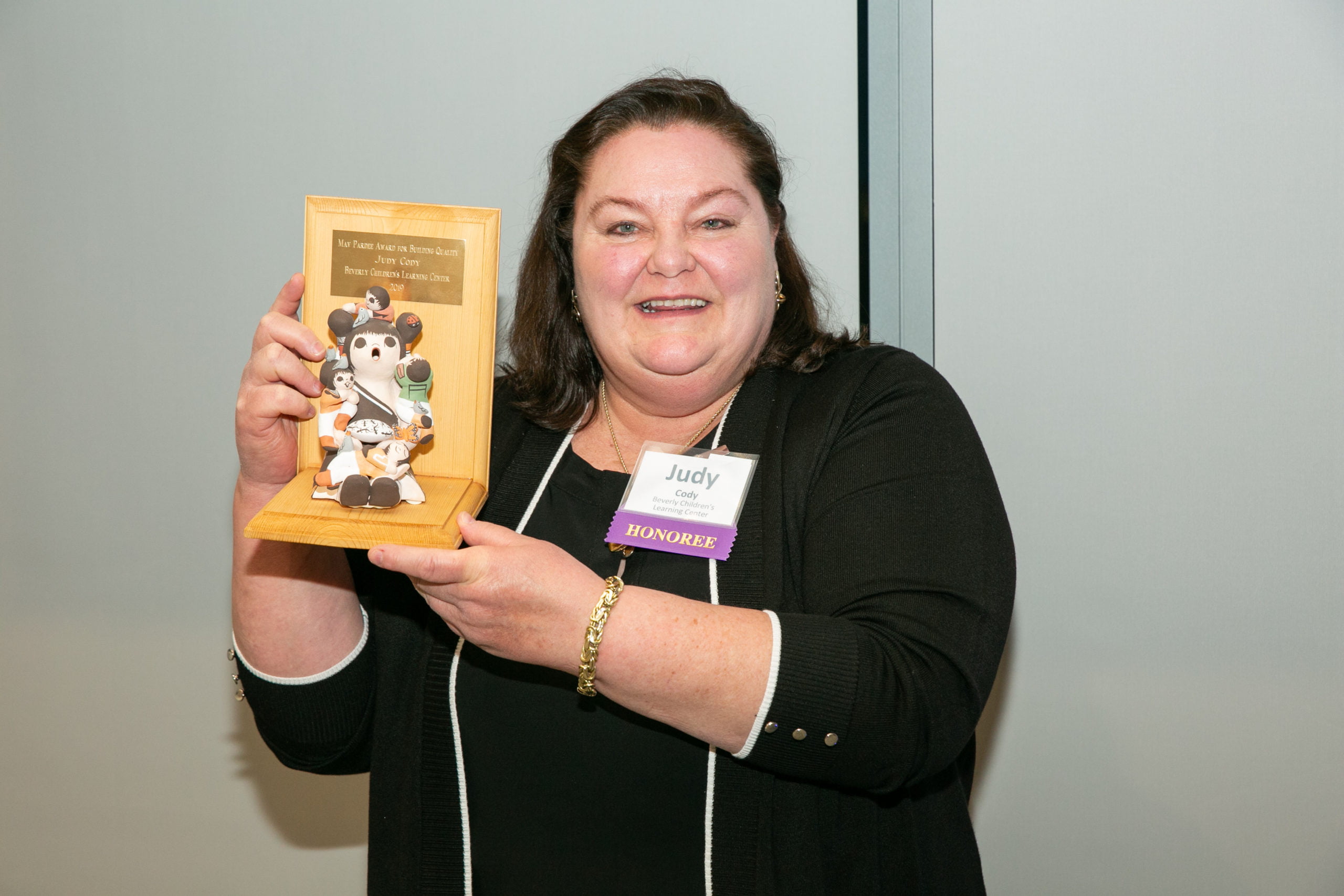
The Children’s Investment Fund, an affiliate of the Community Economic Development Assistance Corporation (CEDAC), presented Judy Cody, executive director of Beverly Children’s Learning Center (BCLC), with the Mav Pardee Award for Building Quality at CEDAC’s 40th anniversary celebration held on March 14 at the Massachusetts Institute of Technology (MIT).

The award recognizes organizations or individuals working to address the need for physical environments that support high-quality early education. Cody oversaw BCLC’s expansion to a new 16,000-square-foot facility that provides safe and affordable early education and care for nearly 250 children each year on the North Shore. At the same event, former State Rep. Mel King was honored.

King, a legendary community organizer, crafted the state legislation that created CEDAC in 1978. CEDAC is a community development financial institution that provides early stage financing and technical assistance to community-based and other non-profit organizations engaged in effective community development in Massachusetts.

In 2015, Cody led the first-ever capital campaign for Beverly Children’s Learning Center, raising over $2 million for a new state-of-the-art early education and childcare center in Beverly.

The campaign included $1 million grant funding from the Early Education and Out of School Time (EEOST) Capital Fund. EEOST is administered by the Department of Early Education and Care in coordination with CEDAC and the Children’s Investment Fund.

“BCLC was one of the first child care facilities to open that utilized grant funding from the Early Education and Out of School Time (EEOST) Capital Fund, and that is because of the tenacity and dedication that Judy Cody demonstrates as executive director,” said Theresa Jordan, Director of Children’s Facilities Finance at Children’s Investment Fund. “Children’s Investment Fund is proud to honor Judy with the Mav Pardee Award for creating a high-quality early learning environment.”

Founded in 1973, BCLC has served over 10,000 children and families in the Beverly area. Their new space has allowed them to dramatically improve their programs and services, providing individual environments conducive to high quality care, learning and security while allowing opportunities for intentional interaction among the different age groups they serve (newborn through early teen).

To maximize the impact of their new space, BCLC, under Cody’s leadership, will complete this spring the second phase of improvements with a new 25,000-square-foot natural outdoor learning play scape. The play scape includes a large array of natural interactive features designed to encourage more physical activity and creative play, including sensory gardens, mud kitchens, climbing hills and water stations.

BCLC will host a ribbon cutting for the play scape from 9:30 to 10:30 a.m. on Thursday, May 16. For more information, visit www.bclckids.org or email info@bclckids.org.

»

SourceWicked Local

Child care is infrastructure. We should treat it that way

OPINION — Millions of American parents dropped their children off at a child care facility this morning. Chances are many of those facilities don’t meet basic health and safety standards. Though we know the quality of a facility, whether a formal center or a family home care site, is directly linked to a child’s development and well-being, we also know most places are far from optimal.

This is yet another way America’s child care system is failing families today.

Recent findings have been dire. A series of surveys conducted in 2013 and 2014 by the Department of Health and Human Services’ inspector general found that 96 percent of child care programs inspected across 10 states had at least one potentially hazardous condition, such as broken or unlocked gates, water damage, or chemicals within reach of children.

In Massachusetts, a statewide study commissioned by the Children’s Investment Fund found excessive levels of carbon dioxide in child care facilities as well as insufficient ventilation systems and furnishings containing formaldehyde. Moreover, 80 percent of programs lacked classroom sinks, which can negatively affect children’s hygienic practices and infection control. Exposure to lead and other toxins has detrimental impacts on young children, yet only eight states and New York City require child care facilities to test their drinking water for lead.

Working parents, already faced with the challenges of finding and paying for high-quality child care, are frequently forced to accept a poor-quality facility because it’s the only option they have. One parent told us during a recent meeting that dropping her children off at a child care center is like “bungee jumping.” She’s right: for many, it is a leap of faith.

The country is finally having a serious conversation about how best to care for children during their first five years before they enter school. What is missing from that conversation, however, is an acknowledgement of the abysmal conditions of many of our child care facilities and a commitment to fixing the problem. Parents should be able to leave their children in child care with the understanding that they are in safe and healthy learning environments that support their development — and this is just not happening.

Luckily for these families, some states are starting to recognize the link between quality of facilities and quality of care. The Preschool Development Birth Through Five grant competition is one new opportunity for states to consider the needs of early learning programs — including facilities — to improve overall quality in their state. Over half of states address early learning facilities in their grant applications, and eight — Alaska, Connecticut, Delaware, Hawaii, Montana, New Hampshire, New York and Oregon — indicate that they will specifically assess facility-related needs through the 2019 grant funding.

As these states begin to identify problems with child care infrastructure, the time to raise federal awareness of the need for increased investments in child care facilities is now. The issue is especially relevant as discussions of the need to strengthen the nation’s aging infrastructure take place. Child care is an essential part of communities, allowing parents to participate in the labor force and supporting economic growth. In fact, the Committee for Economic Development found that in 2016 the child care industry in the United States produced revenue totaling $47.2 billion, with additional spillover revenue of $52.1 billion in other industries.

The Bipartisan Policy Center, working with more than 40 stakeholders across multiple sectors, developed the Early Learning Facilities Policy Framework. This framework identifies several principles that should guide policy and investments in child care facilities, including the critical importance of child care facilities to communities themselves and the national economy.

Congress must recognize that investments in child care facilities are investments in the nation’s infrastructure. To support children’s development, child care facilities need to move beyond the bare minimum — beyond “good enough” — and focus on components that can help children thrive.

The evidence is clear: child care programs across the country are facing a problem. Providers, especially those who run small center-based programs or family child care, do not have the financial resources to update, rehabilitate or expand their facilities. Furthermore, the profit margin for most child care programs is minimal at best, leaving very little room for providers to take on debt.

To move beyond the culture of low expectations, child care providers need more support. As Congress considers the entirety of the educational system from birth to post-college training, it should consider the physical assets that underlie that system. Just as our bridges and roads are crumbling, so too are our child care options. Child care facilities are a vital part of America’s communities. Let’s stop ignoring them.

Linda K. Smith is director of BPC’s Early Childhood Initiative and was a key architect of the military child care system.

Sarah Tracey is a senior policy analyst at BPC.

The Bipartisan Policy Center is a Washington, D.C.-based think tank that actively promotes bipartisanship. BPC works to address the key challenges facing the nation through policy solutions that are the product of informed deliberations by former elected and appointed officials, business and labor leaders, and academics and advocates from both ends of the political spectrum. BPC is currently focused on health, energy, national security, the economy, financial regulatory reform, housing, immigration, infrastructure, and governance. Website | Twitter | Facebook

SourceRoll Call

EduCare Springfield prepares to open state-of-the-art early childhood center

The biggest development in education in Western Massachusetts this year is aimed at the tiniest learners – children from birth to 5 years old.

Educare Springfield – a $14 million, nationally recognized early childhood center under construction in the Old Hill neighborhood, one of the poorest in the city – will open this fall, serving 141 children and their families who will be selected from the region’s Head Start program.

The Davis Foundation, an early childhood education advocate, is the lead partner in pushing for the new center, which will be one of 25 Educare centers operating in 15 states – plus one in Washington, D.C. and another in the Winnebago nation – supported by the Buffett Early Childhood Fund.

EduCare Springfield – rising on Hickory Street adjacent to the Elias Brookings School on land donated by Springfield College – was financed with a $9 million contribution from an anonymous out-of-state donor. Holyoke, Chicopee, Springfield HeadStart, a federally funded program, will operate the new center.

The anonymous donation – which John Davis says made him believe in miracles – paved the way for Springfield to land the program that has been a model for best practices in early childhood development. The Davis Foundation has made advocacy for quality early childhood education its mission in its quest to help insure that city children are ready to read by 4th grade.

Currently, only 33 percent of city children read at grade level by 4th grade, compared to peers in suburban schools, Davis said at a recent educational summit in Springfield sponsored by the Urban League.

“Urban kids can perform at high levels, but we need to do a lot for work to get them there. And, we can do it,” Davis said.

Janis Santos, executive director of the HeadStart, says the new center is a “dream come true.”

Santos, who has spent her 45-year career in early childhood education, says the EduCare model recognizes that the ages from birth to 5 years old are the most critical to a child’s development and that early educators need to be well-trained and well-compensated.

The new center also recognizes that parent involvement is “the backbone for success,” Santos adds.

When Susie Buffett, daughter of billionaire philanthropist Warren Buffett, created the first EduCare center in 2000, there was no vision for a national network to provide a higher- level education for infants, toddlers and preschoolers, according to Michael Burke, the Chicago-based vice president of the Buffett Early Childhood Foundation.

“What science was telling us is that there is a critical need for high-quality early childhood education,” Burke said during a telephone interview. “It takes more than a loving teacher to change the trajectory of a disadvantaged child.”

The 27,000-square-foot, state-of-the-art EduCare Springfield facility is being designed – like others in the network – to be a model for the high-impact educational practices aimed at preparing children for long-term academic success.

The goals of those practices are to improve kindergarten readiness; promote higher vocabulary skills; enrich social emotional skills; improve behavior’ reduce high school drop-out rates and promote long- term career and college success.

EduCare will be a lab school, of sorts, sharing its resources with other early childhood educators about the best methods to help children become successful learners.

There are four components to the continuous-improvement EduCare model, Burke explained: the use of data to inform instruction; ongoing coaching of teachers, support for families whose children attend EduCare and a series of professional development training sessions for teachers and staff.

“We can’t build an EduCare on every corner,” Burke said. “But the ones that we have can become real showrooms, a place where children, families and the staff walk in and say, ‘Wow, this is important.'”

When visiting Springfield, Burke said he was impressed with the local collaboration and commitment to early childhood education. “We’re glad to be operating in Springfield, rather than Boston,” he said.

In the next few weeks and months, EduCare will be building a website and writing a job descriptions for an executive director with a master’s degree, who will be an EduCare employee, and a school director with a master’s degree, who will be a HeadStart employee.

In addition to the benefits EduCare will bring to children and families in need, it will also have a huge positive economic impact on the region and the neighborhood where it is located.

The EduCare site is located in the Old Hill neighborhood that was severely impacted by the June 1, 2011 tornado. Investments in the neighborhood after the tornado included the construction of a $28 million dollar Brookings School, nearby parks and street improvements.

SourceMassLive

BPC Releases Policy Framework on Early Childhood Facilities

The Bipartisan Policy Center today released the Early Learning Facilities Policy Framework, which calls attention to the need for increased investment in early childhood facilities. The policy framework recognizes that the quality of the physical buildings and spaces where children learn, play, and grow are a fundamental part of their development and learning.

There are over 129,000 center-based early care and education programs serving nearly 7 million children nationwide and another 1 million in-home providers who care for 2.7 million children. Although research on facility quality is scant, one investigation across 10 states conducted by the federal Department of Health and Human Service’s Office of the Inspector General found that 96 percent of child care facilities had at least one health or safety violation. Similarly, both Massachusetts and Rhode Island have conducted statewide assessments which have found issues around air quality, cleanliness, and outdoor safety. The Environmental Protection Agency found that approximately 500,000 child care facilities are not even regulated for lead in drinking water.

This new policy framework, a joint effort of BPC and 20 other organizations, articulates the major principles critical to policy development for early learning facility investments. “Investments in early learning facilities—both center-based and home-based care—are an investment in communities themselves, and support children, parents, and businesses alike,” said Linda Smith, Director of BPC’s Early Childhood Initiative.

“The physical infrastructure of early learning environments has been neglected, and each sector—federal, local, and state government along with the faith, business, and philanthropic communities—can play a distinct role in supporting quality improvement efforts,” said Nicole Barcliff, Policy Director at Local Initiatives Support Corporation.

As part of moving this work forward, BPC is exploring how Opportunity Zones, a new economic development incentive created as part of the 2017 tax law, can be used as a vehicle for investing in early learning facilities, especially in these designated under-resourced areas. The goal is to ensure that the nation’s children are being cared for in early learning facilities that exceed basic standards and are effectively promoting their health, safety, and development.

Learn more about BPC’s work on Early Learning Facilities

»

SourceBipartisan Policy Center

Commonwealth Committed to Early Childhood Education

FUNDING FOR YOUNG CHILDREN
Early Childhood Education an Important Component of Community Development

Reprinted from November 5, 2018

High-quality child care facilities benefit children, their families and society. Facilities with lots of natural light, access to play indoors and outdoors, and space that supports teacher planning and encourages parental involvement are essential to fostering children’s health and well-being, especially for children living in low-income neighborhoods. Over time, policy makers, philanthropists and other public/private financing agencies are increasingly recognizing the importance of early childhood education (ECE) and out-of-school time (OST) facilities to community development.

The most recent – and perhaps most significant – acknowledgement of the role high-quality child care plays in strengthening communities comes from the federal government. In June, the U.S. Department of Treasury’s Community Development Financial Institutions (CDFI) Fund certified the Children’s Investment Fund (CIF), an affiliate of the Community Economic Development Assistance Corporation (CEDAC), as a CDFI. This is important because CDFIs invest in neighborhoods that other financial institutions are unwilling to and expand economic opportunities in those communities by providing organizations with access to financing and technical assistance.

The certification allows CIF to apply for federal funding to offer low-cost lending capital for ECE and OST facility improvements throughout the commonwealth. We were excited to learn in September that the CDFI Fund awarded us a $300,000 financial assistance grant, one of 302 community development financial institutions to receive a total of $202.2 million in awards this year. Those resources will help expand both financial and technical assistance to child care providers from Boston to Pittsfield.

CIF has invested $56 million in support of 565 capital projects that improved learning environments for 30,500 children.

The Children’s Investment Fund is one of a very few organizations across the country with a primary focus on developing child care facilities that has received this certification. We have also become a national leader in integrating child care within community development, in large part because Massachusetts has shown a tremendous amount of vision in this area.

This past spring, Gov. Charlie Baker and state legislators signed the Housing Bond Bill, which reauthorized the Early Education and Out of School Time (EEOST) Capital Fund, a bond program created in 2013 that provides capital funds for child care providers planning to renovate or build new child care facilities. CIF co-manages EEOST with CEDAC and the Massachusetts Department of Early Education and Care (EEC). Baker in August announced the most recent awards through the fund – four providers each received $1 million.

Among the recipients were Holyoke Chicopee Springfield Head Start Inc., which is constructing a high-quality early learning center based on the nationally recognized Educare model to serve 141 infants, toddlers and preschoolers from low-income families within Springfield. The Educare model helps children from birth to age 5 grow up safe, healthy and eager to learn. With more than 20 completed projects across the country, Educare prepares children for success and also helps parents develop skills to champion their child’s education.

Educare Springfield, the first in Massachusetts, is the result of collaboration between city and state partners, the region’s philanthropic community, and Holyoke Chicopee Springfield Head Start, which worked tirelessly to bring Educare to Western Massachusetts.

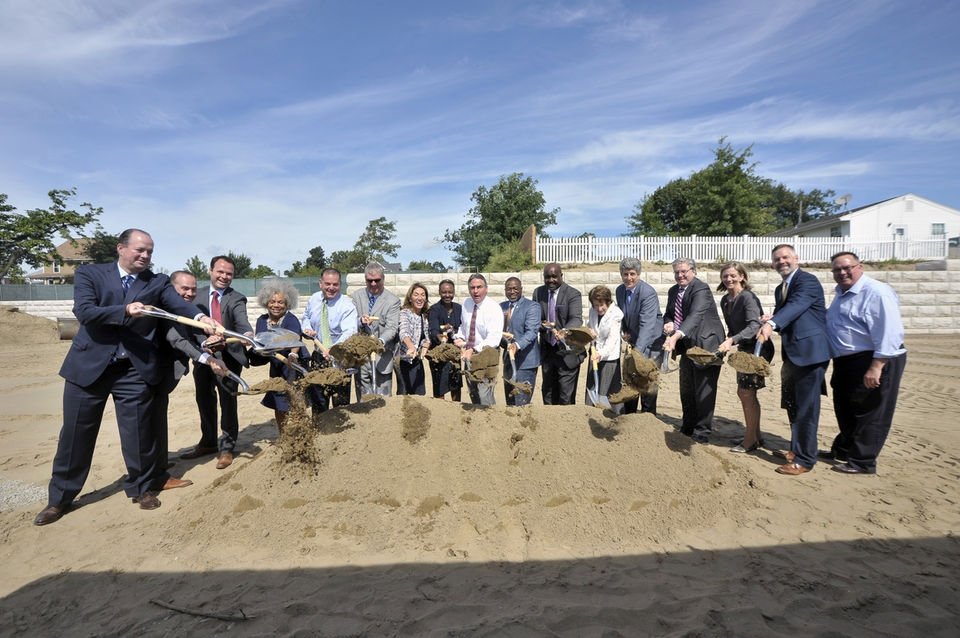
At a recent groundbreaking ceremony, Lt. Gov. Karyn Polito noted the strong connection between the impact of this new facility and the city’s overall efforts to revitalize this distressed urban neighborhood through public and private investments. It underscored how early education – like housing – is an important component of community development. The 2019 EEOST Capital Fund funding round is now underway.

Since it was established in 1991, CIF has invested $56 million in support of 565 capital projects that improved learning environments for 30,500 children. Our comprehensive technical assistance, training and financing model has strengthened nonprofit community-based child care providers in urban neighborhoods like Dorchester, suburban areas like Beverly and rural towns like Granby. In 2017 alone, more than 3,300 children throughout the commonwealth were served in facilities assisted by CIF. Almost all of these children (93 percent) were from low-income households; 80 percent were children of color; 45 percent were English Language Learners; and 13 percent were children with special needs.

As important as CIF’s role is in supporting child care providers, it has been elevated by certification and funding from the federal government. Funding from the CDFI Fund, EEOST and the philanthropic community give us more opportunities to increase lending to the provider community. As our understanding grows of how early education and care strengthens local communities, it’s good to know that public and private resources are available for smart and impactful investments.

Roger Herzog is the executive director of the Community Economic Development Assistance Corporation. Theresa Jordan is director of Children’s Facilities Finance for the Children’s Investment Fund.

Commonwealth Committed to Early Childhood Education

»

SourceBanker & Tradesman