Multifamily Developer Breaks Ground On ‘Lean’ Pilot Project

Egleston Square

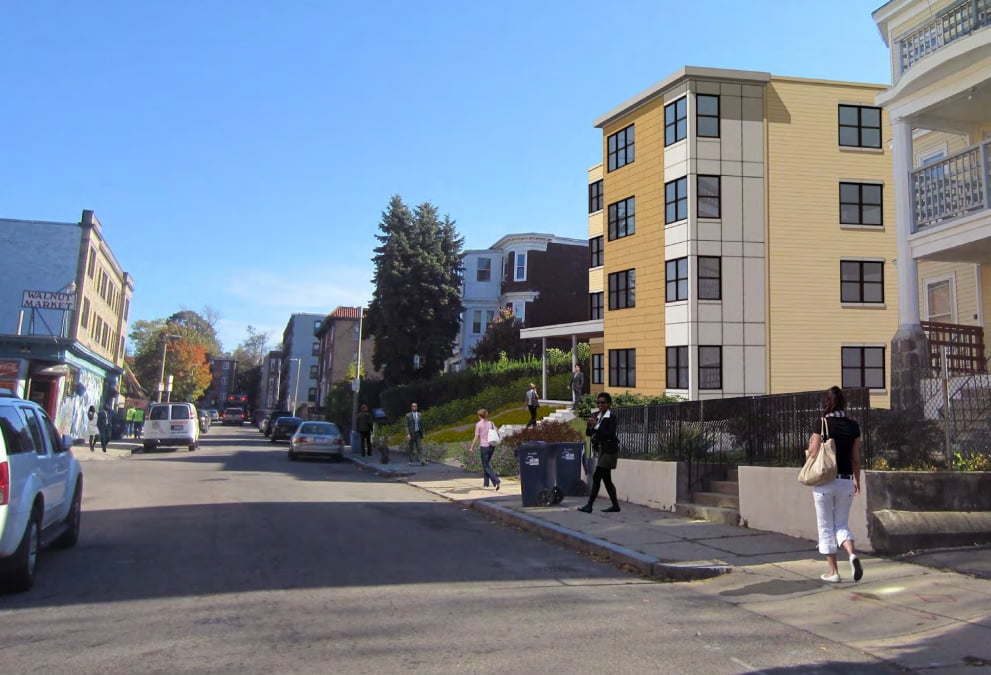
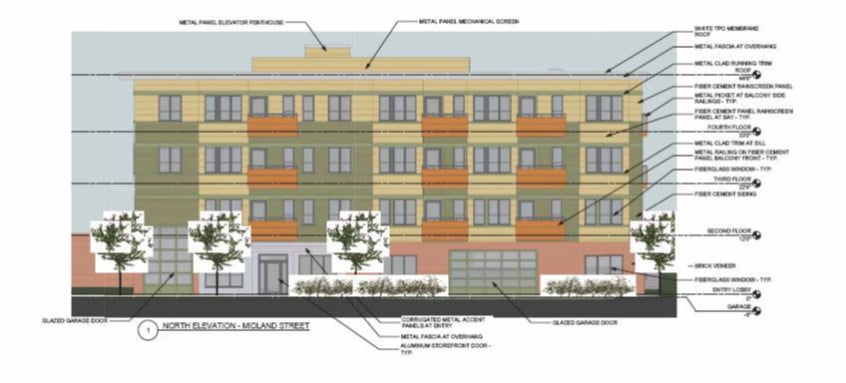
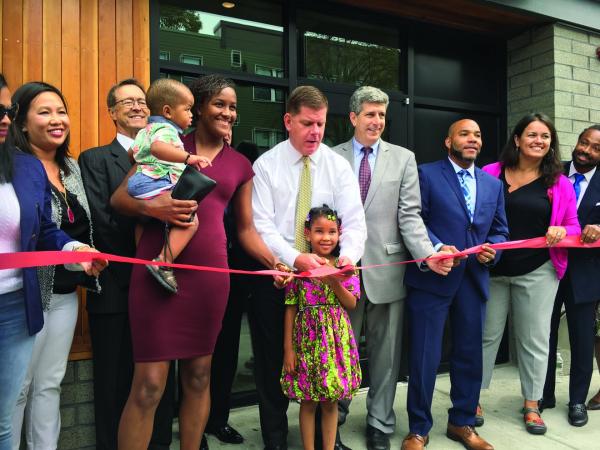
Boston-based developer Urban Edge Housing Corp. broke ground Friday on the Walker Park apartments, a 49-unit, $17.5 million affordable rental housing complex in Roxbury’s Egleston Square.

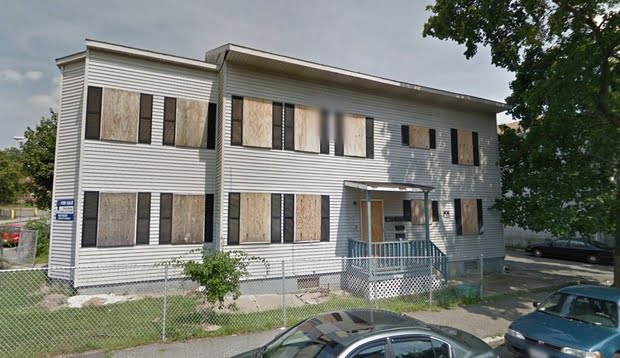
Urban Edge is redeveloping three vacant parcels next to the Egleston Square Library into apartments restricted to households earning a maximum of 60 percent of the area median income (AMI), including eight units reserved for families earning no more than 30 percent of AMI.

The development is being built under the city’s Lean Pilot Project, which is designed to cut construction costs through coordination between the developer, architect and city officials from the early stages of the design process. Nearly 50 percent of the project’s subcontractors are minority-owned businesses and more than 22 percent are women-owned enterprises.

Financing for the project included $2.6 million from the city’s Department of Neighborhood Development and $3.46 million in state and federal Low Income Housing Tax Credits from the Massachusetts Department of Housing and Community Development.

Financing team members also include Bank of America Merrill Lynch, Brookline Bank, the Community Economic Development Assistance Corp., MassDevelopment, MassHousing, Massachusetts Housing Investment Corp., Massachusetts Housing Partnership, US Bank Corp., and the U.S. Department of Housing and Urban Development.

The development is named for the late community activist Delphine Walker, whose home previously occupied one of the parcels. Walker Park Apartments will include 13 one-bedroom, 28 two-bedroom and eight three-bedroom family apartments, an elevator for accessibility, on-site laundry facilities, on-site parking and a pocket park along Columbus Avenue.

Along with Urban Edge, the development team includes Prellwitz Chilinski Assoc. as architect and NEI General Contracting, Inc. as the general contractor.


Multifamily Developer Breaks Ground On ‘Lean’ Pilot Project

SourceBanker & Tradesman

City, nonprofits turn focus on affordable housing

It’s no secret to agents, buyers and sellers in Boston that the city’s housing market is hot — sometimes a little too hot. With scarce inventory and increasing prices, many people find themselves sitting on the sidelines, unable to afford homes of their own.

To level the playing field, Mayor Martin J. Walsh recently announced the Vacant Site Acquisition Fund, which will help nonprofit developers acquire plots of underutilized land and buildings around the city.

Under the plan, affordable housing developers will be able to apply for loans to acquire such properties. The $8.5 million includes $2.5 million from the city and $6 million from the Community Economic Development Assistance Corporation and the Local Initiatives Support Corporation.

“Addressing rising housing costs is necessary for preserving the diversity and character that makes Boston a place where all residents can thrive; so we need to continue to think innovatively about ways to give Boston residents more affordable housing options,” Walsh said in a statement. “As our neighborhoods develop and change, it is vital that our nonprofit partners are able to compete in today’s real estate market to acquire developable sites.”
Besides acquisition of land with longer terms, the VSAF also has two other functions — it will offer short-term bridge loans to help developers put down deposits on land and loans of up to $300,000 at no interest to help developers hold properties for three to five years.
Property owners who take advantage of the program are required to maintain the tenancy of residents in good standing and to maintain affordable prices for at least 50 years.
https://bostonagentmagazine.com/2017/10/03/city-nonprofits-turn-focus-affordable-housing/

SourceBoston Agent Magazine

Four-unit housing developments breaks ground Thursday

Community development group Worcester Common Ground will break ground on a new affordable housing complex in a vacant former four-unit condominium building on Jaques Avenue.

The property will be rehabilitated for use as four affordable rental apartments, said Worcester Common Ground in a press release Monday. The property has sat vacant since the 2008 foreclosure crisis.

The community development group representing the Piedmont and Elm Park area are hosting a groundbreaking ceremony at the site at 2 p.m. Thursday. Three units will be affordable to extremely low-income households with incomes up to 30 percent of the area median income. Another unit will be affordable for a family with an income up to 50 percent on the area median income.

Two of the units will provide housing for Massachusetts Department of Mental Health clients, the organization announced.

Worcester Common Ground was awarded $826,000 in March for the project from the Housing Trust Fund, Home Innovation Fund, Facilities Consolidation Fund and the City of Worcester.

The groundbreaking comes after the completion of the city’s first bioshelter, down the street at 7 Jaques Ave. The green space was created through a partnership with Worcester Polytechnic Institute students. Construction began in the summer.

http://www.wbjournal.com/article/20171002/NEWS01/171009996/four-unit-housing-developments-breaks-ground-thursday

SourceWorcester Business Journal

Housing Bond Bill Advances Reauthorizations of Community Investment Tax Credit and Early Education and Out-of-School-Time Capital Fund

United Way praised the Joint Committee on Housing for including two key provisions in the Housing Bond Bill that advanced today on Beacon Hill that would strengthen neighborhoods and early education programs.  The Housing Bond Bill, a comprehensive package aimed at helping more individuals and families secure safe, affordable housing, included reauthorizations of two successful programs: the Community Investment Tax Credit and the Early Education and Out of School Time Capital Fund.

“The legislation reported out favorably today by the Joint Committee on Housing recognizes the comprehensive approach needed to ensure neighborhoods and communities thrive,” said Michael K. Durkin, President and CEO at United Way of Massachusetts Bay and Merrimack Valley. “More affordable housing is critical, but communities also need high-quality affordable child care and healthy economies. Reauthorization of the Community Investment Tax Credit and the EEOST Capital Fund are positive steps toward advancing economic and neighborhood development in low-income communities.”

The Early Education and Out of School Time Capital Fund (EEOST) program is a unique source of funding for early education and care and afterschool programs throughout the Commonwealth. It supports major renovation and construction projects for facilities serving low-income children. Since the passage of the Housing Bond Bill in 2013, legislation that included a $45 million bond authorization to create the fund to improve the quality of center-based facilities, the EEOST Capital Fund has distributed over $15 million to help organizations modernize their space and improve the quality of the learning environments for children.

“The Commonwealth needs an improved and expanded supply of facilities to meet the demands of families across the state who are looking for convenient, high quality centers for their children,” said Durkin. “High quality, professional facilities, projects that better utilize existing facilities, and those that add additional space for planning and professional development, will allow the Commonwealth to best compete and retain top tier educators.”

The Housing Bond Bill reported out today also includes reauthorization of the Community Investment Tax Credit, which provides a 50% state tax credit for private donations to support the work of community development corporations across Massachusetts.  Since the program’s inception in 2014, United Way has raised over $4 million from donors to support CDCs across the state through the Community Investment Tax Credit (CITC). Nearly $24 million has been raised to support CDCs statewide.

“Every day, in neighborhoods and cities across the Commonwealth, Community Development Corporations (CDCs) are working hard to spur affordable housing and job creation, incubate small businesses and revitalize neighborhoods,” Durkin said. “CDC’s are an important source of innovation. The CITC Program is helping to greatly accelerate and deepen their work, as well as provide new and sustainable sources of funding.”

The Housing Bond bill will now advance to the House Committee on Bonding.

https://unitedwaymassbay.org/news/housing-bond-bill-advances-reauthorizations-of-community-investment-tax-credit-and-early-education-and-out-of-school-time-capital-fund/

SourceUnited Way of Massachusetts Bay and Merrimack Valley

Dedication ceremony for Agawam ‘Soldier On’ facility brings hope and homes to vets (photos)

Soldier On, the Pittsfield-based nonprofit dedicated to ending veteran homelessness by providing permanent, supportive, sustainable housing, held a dedication ceremony Monday afternoon at the Gordon H. Mansfield Veterans Community facility, 702 South Westfield St., in the Feeding Hills section of Agawam.

The former Western Massachusetts Regional Police Academy has been transformed into affordable housing for 51 veterans, including 49 partially furnished units in the renovated academy and two units in a new annex to the building.

U.S. Rep. Richard E. Neal, D-Springfield, Agawam City Council President James P. Cichetti, and state Secretary of Housing and Economic Development Jay Ash were among those who spoke at the dedication ceremony.

In the absence of Agawam Mayor Richard A. Cohen, who was traveling back from Boston at the time of the event, Cichetti welcomed the large crowd of dignitaries to Agawam for the ceremony, including veterans and local and state officials.

“On behalf of the City of Agawam, welcome home,” Cichetti, who’s running for mayor, said to the veterans. The candidate praised former state Rep. Rosemary Sandlin for getting the legislative process rolling.

Ash credited Congressman Neal for his ability to get things done for his constituents in Western Massachusetts. “Richie Neal is legendary for delivering things back home to his district,” Ash said.

Ash spoke on behalf of Gov. Charlie Baker, saying nobody who ever wore a U.S. military uniform “should ever struggle to find a place to live.”

State Sen. Donald F. Humason Jr., R-Westfield, state Rep. Nicholas A. Boldyga, R-Southwick, and state Secretary of Veterans’ Services Francisco A. Urena were among the many officials in attendance.

When it was Neal’s turn to speak, he said the dedication of the new facility marked a “great day for Agawam and a great day for Soldier On.” Neal, dean of the state’s congressional delegation in Washington, praised Agawam officials for making the necessary zoning changes to accommodate and support the project.

Linda Mansfield, a member of the Soldier On Board of Directors and wife of the late Gordon H. Mansfield, whom the building is named for, was also on hand.

Gordon Mansfield, a former deputy secretary of Veterans Affairs, was a Pittsfield native and highly decorated Army veteran who survived two tours of duty in Vietnam. As company commander of the 101st Airborne Division, Mansfield sustained a spinal cord injury during the 1968 Tet Offensive, for which he received the Distinguished Service Cross — the second-highest personal decoration for valor in combat.

In July 2010, the former police academy building was transferred to Soldier On through state legislation, allowing for the development of permanent affordable housing for veterans at the Agawam site.

The Agawam project was approved in 2015, with construction beginning in March 2016. The roughly $14 million project was financed through state and federal historic tax credits, in partnership with companies such as Citizens Bank and the Stratford Capital Group.

Soldier On staff will be on site to provide daily support to veterans. The organization also has facilities in Pittsfield, Northampton and Chicopee.

http://www.masslive.com/news/index.ssf/2017/09/dedication_ceremony_for_soldie.html

SourceMassLive.com

MassHousing Finances New Hyde Park Affordable Housing

MassHousing has closed on $2.1 million in financing to the Traggorth Cos. and the Southwest Boston Community Development Corporation (SWBCDC) for the construction of the 27-unit Residences at Fairmount Station in Hyde Park.

All 27 apartments will be affordable to low- and moderate-income households. MassHousing is providing a $1.8 million permanent loan and $300,000 through the agency’s $100 million Workforce Housing Initiative.

“This transaction typifies many of the housing challenges MassHousing is addressing for Massachusetts residents with a range of incomes,” MassHousing Executive Director Tim Sullivan said in a statement. “The Residences at Fairmount will provide brand new, affordable apartments for lower- and moderate-income households as well as working families while also transforming an underdeveloped parcel into an attractive housing resource for Hyde Park residents. We were very pleased to collaborate with the Traggorth Cos., the Southwest Boston Community Development Corp., the city of Boston and the Baker-Polito Administration to help develop this important new housing.”

Of the 27 units, six will be for low-income households earning at or below 30 percent of the area median income ($31,020 for a family of four) supported a federal Section 8 Housing Assistance Payment Contract; five will be for households with incomes at or below 50 percent of AMI ($51,700 for a family of four); 13 will be for households with incomes at or low 60 percent AMI ($62,040 for a family of four) and three will be workforce housing units for households earning at or below 80 percent AMI ($78,150 for a family of four).

“Southwest Boston CDC is grateful to MassHousing and all of our partners for helping us to create urgently needed affordable housing for Hyde Park families, and to transform this formerly disconnected and underused site into a vital part of the residential neighborhood and commercial district,” SWBCDC Executive Director Erica Schwarz said in a statement.

In addition to the MassHousing financing the project is also receiving financing from the city of Boston, the Massachusetts Department of Housing and Community Development and financing from the allocation of Low-Income Housing Tax Credits.

The Residences at Fairmount will include one studio unit, three one-bedroom units, 18 two-bedroom units and five three-bedroom units, as well as a community room, green space and outdoor play area. The new housing will be transit-oriented and located across from a Commuter Rail stop.

http://www.bankerandtradesman.com/2017/09/masshousing-finances-new-hyde-park-affordable-housing/?utm_campaign=Daily&utm_source=hs_email&utm_medium=email&utm_content=56377046&_hsenc=p2ANqtz-8MHPgZedlFRJIWUSKsEW_s6_xyj1_7udfRQwraqvEv-Xzp0rXM_NEp_lYoQehao-vpxcuQ5RDj6xHGpXpewCkU-F86xg&_hsmi=56377046

SourceBanker & Tradesman

New Facilities Funding for Early Education Programs in Massachusetts

Massachusetts has just announced the release of $4.1 million in facilities grants. Typically, these funds help early education and after school programs repair, renovate, and expand their buildings. This round of funding will focus on early education and care facilities that serve low-income children.

“Lieutenant Governor Karyn Polito made the announcement at the Worcester Community Action Council’s (WCAC) early education program in Webster, the site of one of the facilities funded by the 2017 grant awards,” according to a press release from the state’s Executive Office of Education.

“Facility improvements like these, coupled with an already announced 6 percent rate increase for early education providers, ensure that more children have access to high-quality environments and staff that will improve their learning experience,” Governor Charlie Baker added.

The five grant recipients are Child Care of the Berkshires, Belchertown Day School, Inc., Action for Boston Community Development, the YWCA of Southeastern Massachusetts, and the previously mentioned Worcester Community Action Council. An estimated 301 children will benefit from this investment.

Worcester’s project is a building conversion. The Telegram and Gazette reports:

“Ever since the roof of a Head Start program in Oxford collapsed under extreme winter conditions in 2015, dozens of Webster children have had to use a Head Start program in Southbridge.” So, the Worcester Community Action Council is using its grant to turn a former senior center into a Head Start facility that’s slated to open in the fall of 2018.

The need for this investment was documented in a 2011 report from the Children’s Investment Fund, part of CEDAC, the Community Economic Development Assistance Corporation. CEDAC also administers the state’s facilities funding grants.

For children, the impact is substantial. As Tom Weber, commissioner of the Department of Early Education and Care, says in the press release, “Thoughtfully designed and developmentally-appropriate environments help children learn and grow successfully.”

“This strategic investment of public resources helps early education and out-of-school time programs leverage private funding to create high-quality learning spaces for children that otherwise might be out of reach.”

https://eyeonearlyeducation.com/2017/09/13/new-facilities-funding-for-early-education-programs-in-massachusetts/

SourceEye on Early Education

Worcester early education center serving at-risk students unveils new playspaces

Rotting wood and rusted bolts at the Rainbow Child Development Center’s old play area have been replaced by brand-new playsets, thanks to the generosity of donors and a six-figure government grant.

Just as important, said officials at the Edward Street-based early education and after-school center, which serves disadvantaged children in the area, the gleaming playground introduced at a ceremony on Friday will enable safer, better playtime for those kids and, in the process, hopefully help close an achievement gap separating them and their more well-off peers.

“We know you have to have healthy, happy children for them to thrive academically,” said the center’s executive director, Joyce Rowell, who explained the Rainbow Center has adopted a range of new programs and activities aimed at instilling healthy living habits in its students and their families. “It’s a whole mindset we’re trying to work on together.”

Unlike many private preschool centers, however, the Rainbow Center cannot rely on its clients to pay for those initiatives. It primarily serves low-income and single-parent families living in some of the area’s poorest neighborhoods, as well as students under the care of the Massachusetts Department of Children and Families, and derives around 85 percent of its funding from the state.

The problem is not unique to the Rainbow Center, according to state officials; a recent study undertaken by the Community Economic Development Assistance Corporation’s Children’s Investment Fund identified “shortcomings at many of the centers” around the state serving similar populations, said Bree Horowitz, senior project manager at the fund.

In response, the state established the Early Education and Out of School Time Capital Fund Program, which has provided millions of dollars over the past three years for infrastructure improvement projects at childcare centers across Massachusetts. The Rainbow Center was among them, applying for and receiving a $200,000 grant last year.

The center put that funding toward its play area project this year, which was still largely paid for through a capital campaign. The total work, costing around $750,000, required a major overhaul of the center’s rear property, including the removal of three utility poles, as well as the replacement of the old playset, which had recently been deemed unsafe for children to use.

On Friday, the center unveiled the new playground, which includes a playset and other activity stations for its younger students, as well as an obstacle course for the older students who enroll in the outside-school-hours program.

“It’s not an ordinary place to play, it’s not an ordinary playground,” primarily because it’s not for ordinary students, said Dr. Marianne Felice, a pediatrician and co-chairwoman of the Rainbow Center’s capital campaign for the project. “It’s not like going out in your backyard (to play) – these children need special kinds of space and special activities to stimulate them.”

That philosophy extends to other areas of the center’s educational model, pointed out Nancy Thibault, its strategic communication and development manager, who said many of the students there “are victims of adverse experiences every day.” Providing them a routine, avoiding the triggers that make them upset – there’s no yelling, Ms. Thibault said – and making them feel safe are all part of the Rainbow Center’s approach.

While it currently serves 250 students in total, 54 of whom are in the preschool program, “we could serve more children if we could fill additional staff (positions),” said Ms. Rowell. But like many early childhood centers, especially those dependent on government funding, the Rainbow Center struggles to attract staff, who only earn $12 to $16 an hour for a job that requires a college degree.

“We put a lot of demands on our early educators – as soon as they reach the benchmarks (necessary for the job), they’re leaving to go into the public (school) systems, where the support and benefits are much higher,” said state Sen. Michael O. Moore, who spoke at Friday’s playground ceremony. “It’s a vicious cycle,” he added, one that ultimately harms students, who are most closely affected by the industry’s high staff turnover rate.

Ms. Thibault said it’s taken a “team effort” from the Rainbow Center and its network of donors to build a robust financial support system for the center’s many initiatives. But when it comes to the central task of running an early childhood center, “the state does need to step up” its support as well, Ms. Rowell said.

According to Thomas Weber, commissioner of the state’s Early Education and Care Department, it has; the state increased its subsidy rate to centers serving at-risk students over the past few years, and is bumping it up 6 percent this year alone, he said. But he acknowledged alleviating the industry’s workforce issues remains “priority 1A for us.”

“We’ve been really working to try to enhance what we’re able to provide through subsidy support,” in addition to the “unprecedented” step of finally providing a capital fund program for the state’s early childhood centers, he said. “We’re making progress.”

http://www.telegram.com/news/20170908/worcester-early-education-center-serving-at-risk-students-unveils-new-playspaces
SourceWorcester Telegram

Baker-Polito Administration Awards $4.1 Million for Early Education Programs

The Baker-Polito Administration and the Community Economic Development Assistance Corporation (CEDAC) today announced $4.1 million in grant awards for facility improvements at early education and care programs that serve low income children.  Five agencies were selected to receive an Early Education and Care and Out of School Time (EEOST) capital improvement grant, which will help increase the quality of their early education programs through critical facility repairs and renovations.

Lieutenant Governor Karyn Polito made the announcement at the Worcester Community Action Council (WCAC), early education program in Webster, the site of one of the facilities funded by the 2017 grant awards.

“These grants will support the renovation and construction of early education and care programs for our youngest children,” said Governor Charlie Baker. “Facility improvements like these, coupled with an already announced 6% rate increase for early education providers, ensure that more children have access to high-quality environments and staff that will improve their learning experience.”

“The facility improvements funded through the EEOST capital improvements grants are modernizing spaces and providing a better environment for the children to grow and learn,” Lt. Governor Karyn Polito said. “We are proud today’s grants will improve the early education experience for families in North Adams, New Bedford, Belchertown, Roxbury, and Webster.”

The $4.1 million in FY17 grant awards will improve the quality of existing settings for approximately 301 children in programs licensed by the Department of Early Education and Care; increase the capacity of these programs to serve an additional 75 children in higher quality settings; and will support the creation of an estimated 13 educator positions and 72 construction jobs during the grant period.

Since taking office in Jan 2015, the Baker-Polito Administration has awarded more than $15.1 million to 21 grantees.

“In 2011, a study on the condition of early childhood and out-of-school time facilities in Massachusetts found that deficiencies in the buildings impacted the quality of teaching and learning, and recommended the development of a sustainable source of public capital to help non-profit providers serving children living in low income communities improve their facilities,” Education Secretary James Peyser said. “We have made a commitment to invest in these facilities, and know that it will positively impact the learning environments of our youngest students.”

The Early Education and Care and Out of School Time capital improvement grants are financed through the state’s capital budget and provide matching funds that leverage private investment.  The Baker-Polito Administration’s FY18 Capital Budget Plan included $4 million for the Early Education and Out of School Time grant program.

“Thoughtfully designed and developmentally-appropriate environments help children learn and grow successfully,” said Early Education and Care Commissioner Tom Weber.  “This strategic investment of public resources helps early education and out-of-school time programs leverage private funding to create high-quality learning spaces for children that otherwise might be out of reach.”

All of the programs selected to receive a grant award serve publicly subsidized families, have demonstrated financial need, and have secured additional funding to pay for a portion of their project costs.  The Department of Early Education and Care partnered with CEDAC’s affiliate, the Children’s Investment Fund, to administer the grant awards.  All of the grantees are tax-exempt non-profit corporations or organizations in which a non-profit corporation has a controlling interest.

“The EEOST Capital Fund is a critical resource for helping non-profit child care providers improve the spaces where so many low income children attend child care,” said Theresa Jordan, Program Manager of Children’s Investment Fund. “It has helped fund renovations and construction of centers, creating wonderful learning environments across the Commonwealth.  The child care community is grateful that policymakers had both the vision and commitment to quality that led to establishment of the Capital Fund.  This Fund has made Massachusetts a national leader in developing facilities that support children’s education and wellbeing.”

Ten organizations submitted requests for funding that totaled nearly $9 million combined.  The applicants selected for a grant award demonstrated sound feasibility of project, readiness for implementation, and likely potential for long-term sustainability and success.  The grantees and their award amounts are listed below:

Lead Agency Service Area Award
Child Care of the Berkshires North Adams $1,000,000
Belchertown Day School, Inc. Belchertown $1,000,000
Action for Boston Community Development Roxbury $743,740
YWCA of Southeastern Massachusetts New Bedford $800,000
Worcester Community Action Council Webster $600,000

“We are thrilled to be receiving this important state grant which will allow us to bring these critical Head Start services back to a community where they are needed,” said WCAC Executive Director Jill Dagilis. “Today represents the culmination of several years of hard work to identify a good site which addresses the needs of Webster’s working families and their children. WCAC is indebted to the many generous funders, public officials and other partners for helping to make this project possible.”

The grants were financed through the Early Education and Care and Out of School Time Capital Fund, which was established in 2013 through An Act Financing the Production and Preservation of Housing for Low and Moderate Income Residents.  The legislation that established the capital fund provided $45 million in general obligation bond funding over five years.

http://www.mass.gov/edu/government/departments-and-boards/department-of-early-education-and-care/press-releases/baker-polito-administration-awards-4-1m-in-facilities.html

SourceExecutive Office of Education

Four Corners toasts new apartments on Washington Street

Officials and Four Corners residents celebrated the new Upper Washington buildings, which includes 35 income-restricted apartments and two commercial spaces on Washington Street, at a ribbon-cutting ceremony on Tuesday.

The Vietnamese American Initiative for Development (VietAID) helmed the $15.3 million project. Its management team was joined at the ceremony by Mayor Martin Walsh, Trinity Management, the Massachusetts Department of Housing and Community Development, and other local and state officials.

Since its inception, VietAID has created 88 affordable housing units in four Fields Corner projects, and “we’ve had a successful track record in transforming and improving neighborhoods,” said Kim Thai, president of the organization’s board of directors. “The time, effort and struggles from conception to construction,” he added, “are all well worth the joy and happiness that we witness when new tenants move in.”

Dione Teixeira, 26, drove by the Upper Washington apartments every day while they were under construction, going to and from a small basement she shared with her husband. “I used to say, ‘God, this is my home. It’s not ready yet, but this is my home,’” she said.

She choked back tears on Tuesday next to her new home on Washington Street, where they live with their one-year-old son. “Every day I used to say, ‘God, how am I going to raise my son in this little room?’ And I had my husband also,” she said. “And we used to live there but we never gave up.”

Teixeira and her mother came to Boston from Cape Verde 11 years ago. Her mother dreamed of a new house and Teixeira hoped to build a life for herself. After applications and waiting out the housing lottery, she got the call she had been waiting for – she made it, and so did her mother.

“I don’t know how to explain how happy I am,” she said, welling up. “I don’t know how to say how happy it is to see my mom smile, with her own home. Now she calls it home, and I call it home, too.”

Four Corners Main Streets and the new Four Corners Yoga & Wellness will be the commercial tenants in the complex. The artist Iris DuPont presented artwork inspired by the elements to hang inside the community space.

The project — income restricted for those making under 60 percent area median income — includes 5 one-bedroom, 21 two-bedroom, and 9 three-bedroom units.

“Mixed-use development is an important strategy for establishing and maintaining vitality in today’s neighborhoods,” Thai said, noting that VietAID has had “great success” with 1392 and 1460 Dorchester Ave. and that the organization hopes to replicate that experience with the Upper Washington apartments.

Nine of the units are set aside for formerly homeless families. “That’s something that’s really important for us as a city,” the mayor said. “We’ve housed over 1,100 chronically homeless people in the city of Boston over the last three years. We’ve been able to do it because of projects like this, because projects set aside some apartments and then wrap-around services.”

Upper Washington’s Four Corners location benefits from a nearby health center and a supermarket next door, Walsh noted, along with other resources.

“For three decades, a lot of the lots that we see on Washington Street have been sitting vacant,” he said. “Now we see a lot of mixed-use development happening and bringing these lots to life.”

Upper Washington was funded by the City of Boston and the Massachusetts Department of Housing and Community Development (DHCD), and by tax credit equity provided by RBC Capital Markets. The project architect was Utile and the general contractor was Nauset Construction.

Susan Terry, assistant undersecretary at DHCD, said Gov. Charlie Baker’s $1.287 billion affordable housing bond bill will bolster just this type of project if approved by the legislature.

“We believe we’re most effective when we’re partnering with communities and supporting development that’s bubbling up on the local level,” she said. “This project is a prime example of that kind of community-driven development. And as someone who’s originally from Dorchester, I’m not surprised that the Dorchester community was able to come together and create a project like this that brings work, that brings housing, and that creates a strong community. A place that can keep the tradition of Dorchester alive.”

http://www.dotnews.com/2017/four-corners-toasts-new-apartments-washington-street

SourceDorchester Reporter