Amherst to consider single-room occupancy units along Route 9

The Town Council will convene a special “Open Meeting of the Residents” Monday, June 24, to consider 28 single-room occupancy units along Route 9.

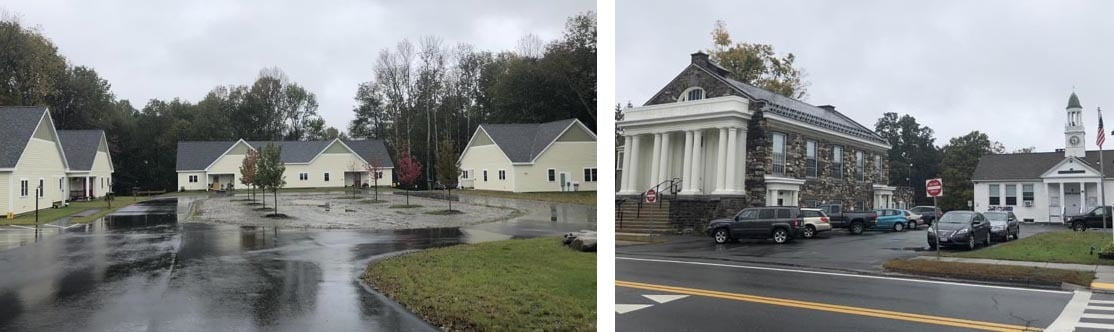
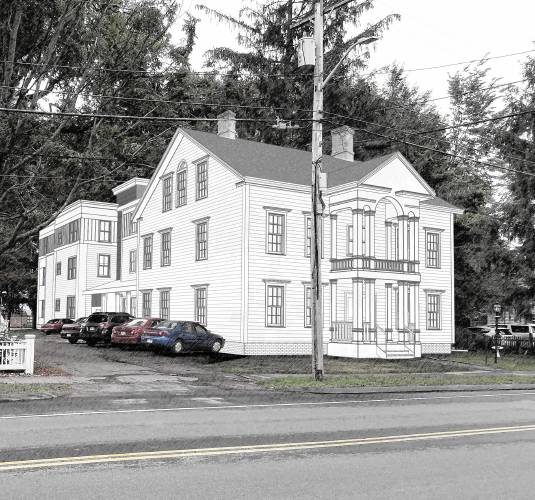
The nonprofit Valley Community Development Corporation of Northampton is requesting $500,000 of the municipality’s Community Preservation Act funds that, if approved, would go towards constructing the units at 132 Northampton Road.

The meeting will be held at Bangs Community Center, located at 70 Boltwood Walk, located off of Main and North Pleasant streets in downtown Amherst, beginning at 6:30 p.m.

Valley Community Development Corporation will make a presentation that night, as will Amherst Community Preservation Act Committee, and the Amherst Affordable Housing Trust.

Abutters to the proposed project and residents have also been invited to make presentations to the Town Council.

“There will be ample time for residents and others to comment. Comments will be limited to 3 minutes. If questions arise that are able to be answered during the meeting, the Town Council President will recognize the person(s) who will respond. All questions will be recorded and, to the extent possible, answers will be provided on the Town’s website within a week,” a meeting notice for the public forum says.

The $500,000 Community Preservation Act fund request by Valley is contingent on Town Council approval.

The Council’s Finance Committee is expected make a recommendation on the CPA funding request the next day, during a June 25 meeting scheduled to begin at 9:30 a.m. The full Council is slated to decide whether to approve it on July 1, according to the town’s website.

Valley Community Development Corporation purchased the Northampton Road property in January for $407,500, having secured a mortgage in that amount from Community Economic Development Assistance Corporation.

The CEDAC is a quasi-state agency that describe themselves as “a public-private community development finance institution that provides financial resources and technical expertise for community-based and other non-profit organizations engaged in effective community development in Massachusetts.”

The lending agency’s board chairwoman is Janelle Chan, Undersecretary for Housing and Community Development in the state’s Executive Office of Housing and Economic Development.

CEDAC’s 10-person governing board also includes Beth Rubenstein, Deputy Commissioner, Office of Real Estate, at the state’s Division of Capital Asset Management and Maintenance.

According to a document prepared by Valley Community Development Corporation on the town’s website, the organization aims to: “Renovate the existing vacant single family house on the site plus construct an addition to accommodate 28 small studio units (approximately 240 sf each) plus common areas and provider office.”

The Valley document states: “The Town of Amherst has conducted extensive community process regarding the issue of homelessness. A Forum on Homelessness (July 2016) attracted several hundred residents. One of the primary strategies identified to address homelessness was the creation of subsidized, small studio apartments with supportive services for low income single adults. There are currently no units of this type in Town.”

An additional “$200,000 to fund architectural fees and energy consulting for SRO project” has been requested via Amherst’s Community Development Block Grant program, the town’s website says.
SourceMassLive

New housing opens in Hyde Park, Affordable development is first in 20 yrs

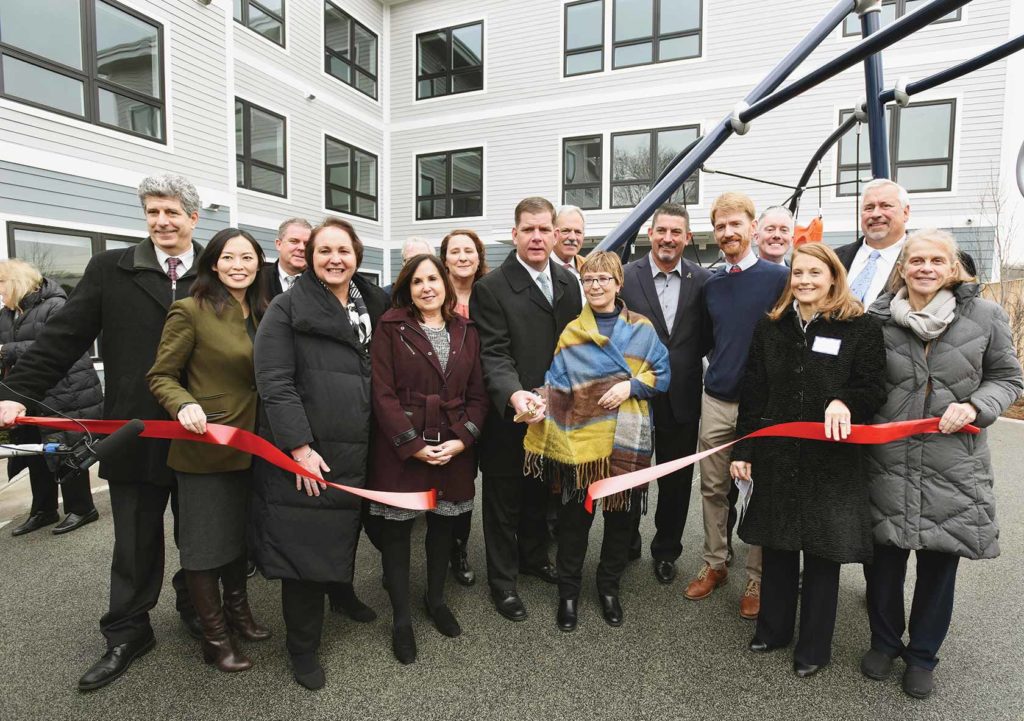
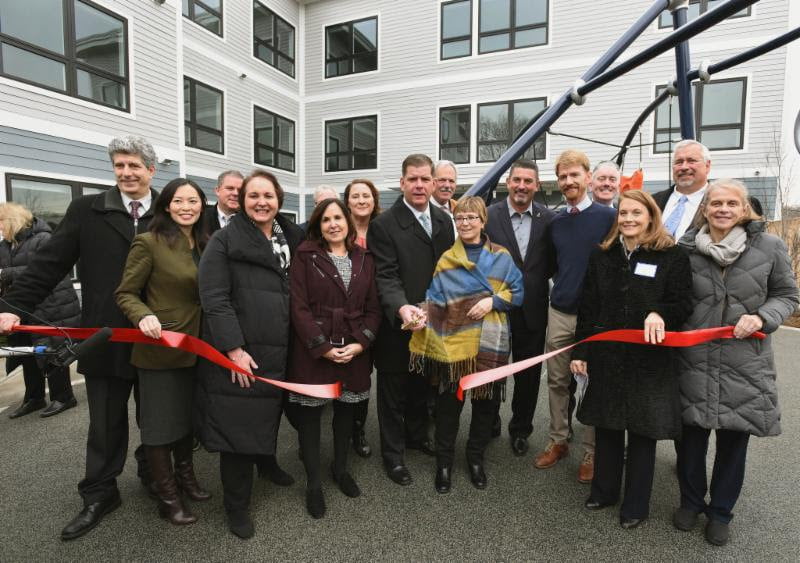
It took the Southwest Boston Community Development Corporation more than 20 years to see its 27-unit all-affordable housing building through to completion, so when Mayor Martin Walsh and leadership from the organization cut the ribbon on the development last Thursday, it was a big deal.

The Residences at Fairmount Station is a $12 million four-story building nestled between the Fairmount Station commuter rail stop and Fairmount Avenue, with 24 of its units affordable to families earning 60 percent of the area median income or below. The building contains a mixture of studios, one-, two- and three-bedroom units.

The development faced fierce pushback from Hyde Park residents when it was first proposed during the late 1990s, said SBCDC board member Diana Kelley.

“The community voted it down,” she said.

Then-Mayor Thomas Menino’s administration did not push for the development, which the CDC had originally proposed for another site, but instead steered the project to the Fairmount site, at that time a collection of dilapidated industrial buildings. That move kicked off a nearly-10-year process during which the CDC pieced together the parcel of land from private owners and the MBTA, while at the same time negotiating with neighbors over issues including the size of the building and the amount of parking.

“I don’t know that you can build affordable housing in any neighborhood and not encounter some opposition,” Kelley said. “What’s important is that we were able to get some compromises.”

Among the compromises, plans were altered to include three units available for families earning up to 70 percent of the area median income, up from 60 percent. A playground that abutters felt was too close to the MBTA tracks was moved to the opposite side of the building.

The end result is a building affordable to households earning $21,000 to $58,000, said SBCDC Board President Mimi Turchinetz, addressing elected officials and neighborhood residents gathered for the ribbon cutting Thursday.

“The units are affordable to the majority of residents of Hyde Park,” she noted.

Demand for the units is substantial, with more than 2,700 applications submitted for the 27 available units.

“The need for affordable housing that’s kid-friendly is enormous,” Turchinetz said.

Mayor Martin Walsh said the building fits into the city’s goals to increase the amount of affordable housing available as rents increase in neighborhoods along the Fairmount Line Corridor — the commuter rail line that cuts through Hyde Park, Mattapan, Dorchester and Roxbury, with new stops in many of those neighborhoods.

Walsh administration officials hope the transit line will spur new economic development in the southwestern part of the city.

“We want inclusive development,” Walsh said. “We want transit-oriented development. We want development without displacement.”

Walsh said the new building would also support businesses in the Cleary Square commercial district in Hyde Park.

“You can’t have a thriving business district if you don’t have people there,” he said.

The affordable development was made possible in part by a City of Boston contribution of more than $1.7 million. This contribution enabled the development team to take advantage of more than $2.5 million from the state’s Department of Housing and Community Development. The state also provided an allocation of almost $1.5 million in federal Low-Income Housing Tax Credits that helped raise over $4.7 million in equity from National Equity Fund, the equity investor in the project. Webster Bank provided a construction loan, with MassHousing providing long-term permanent financing. The Community Economic Development Assistance Corporation and the Equitable Transit-Oriented Development Accelerator Fund at LISC Boston provided critical pre-development and acquisition funding to secure the site.

SourceBay State Banner

Mayor Walsh, Southwest Boston Community Development Corporation, Traggorth Companies and residents celebrate opening of the Residences at Fairmount Station

Mayor Martin J. Wash today joined Southwest Boston Community Development Corporation, Traggorth Companies, elected officials and residents to celebrate the grand opening of The Residences at Fairmount Station. This once vacant property is now a transit-oriented residential development that offers 27 rental units, including 24 affordable units. The project is part of a larger City effort to prioritize affordable development along the Fairmont Corridor, one of the action areas outlined in Imagine Boston 2030 with the goal of expanding opportunities and reducing disparities for residents in the area.

“Today we celebrate a milestone in our efforts to create more affordable housing by officially opening The Residences at Fairmount Station, which sets the standard for all transit-oriented development in the city,” said Mayor Walsh. “I’m proud that with our partners we were able to create 27 rental homes for Boston’s working families. This new development will continue to keep Hyde Park a strong and vibrant neighborhood for generations to come.”  

The $12 million four-story building features a combination of studio, one-bedroom, two-bedroom, and three-bedroom units. Out of the 27 rental units, 24 are affordable to households at or below 60 percent of Area Median Income (AMI), which is around $51,000 for a two-income household. The remaining three units are designated for households at or below 70 percent AMI, or around $60,000 for a two-income household. The development also offers 6,000 square feet of green space and play space, a public community room, and parking spaces and bike spaces.

“This lot used to be overgrown with weeds and falling down buildings,” said Hyde Park resident Nicole Wiggins. “It is wonderful to see investment in our community that creates affordable housing, playgrounds, and community spaces that will benefit current Hyde Park residents.”

The project is LEED Silver Certified and has many green features for long-term operations, sustainability, and includes several improvements such as new sidewalks, handicap accessible ramps, benches, lighting, bike racks, and a playground. The building was designed by DMS Design, constructed by Delphi Construction, and will be managed by Maloney Properties. Southwest Boston CDC will provide ongoing services to residents.

“We have long advocated for equitable investment along the Fairmount Corridor, and we could not be more thrilled that through community persistence and support from Mayor Walsh, we have succeeded,” said Mimi Turchinetz, board chair of Southwest Boston Community Development Corporation, one of the joint venture partners on the project. “By providing residents with high-quality affordable housing, safe and beautiful play spaces, and access to transit, we make Hyde Park more beautiful while also providing Hyde Park families with much needed stability.”

“It’s been a pleasure working with Southwest Boston CDC to bring a shared vision for equitable transit oriented development to life,” said Dave Traggorth, Principal of Traggorth Companies, the second partner in the joint venture to build the project. “Their tireless advocacy, along with the critical resources from the City of Boston and the Commonwealth, has created beautiful, affordable homes for Hyde Park families. We hope this project sets the standard for the neighborhood, and is just the beginning of an exciting chapter.”

The new development has been made possible in part by a City of Boston contribution of more than $1.7 million. This contribution enabled the development team to take advantage of more than $2.5 million from the Commonwealth’s Department of Housing and Community Development. The State also provided an allocation of almost $1.5 million in federal Low-Income Housing Tax Credits (LIHTC) that helped raise over $4.7 million in equity from National Equity Fund, the equity investor in the project. Webster Bank provided a construction loan with MassHousing providing long-term permanent financing. The Community Economic Development Assistance Corporation (CEDAC) and the Equitable Transit-Oriented Development Accelerator Fund (ETODAF) at LISC Boston provided critical predevelopment and acquisition funding to secure the site.

The Residences at Fairmont Station consist of affordable units to low- and middle-class families and strongly aligns with the City’s housing goals outlined in Housing a Changing City: Boston 2030. Mayor Walsh recently increased the City’s overall housing targets from 53,000 to 69,000 new units by 2030 to meet Boston’s population growth. These updated housing goals build on Mayor Walsh’s commitment to increasing access to home ownership, preventing displacement and promoting fair and equitable housing access.

Since the release of the original Housing a Changing City: Boston 2030 plan in 2014, income-restricted housing stock, designed to increase affordable housing, has grown along with overall new production: nearly 20 percent of housing units are income restricted, and 25 percent of rental units are income restricted. In total, after creating an additional 15,820 units of income-restricted housing, Boston will have nearly 70,000 units of income-restricted housing by 2030.

These income-restricted units will include purchasing 1,000 rental housing units from the speculative market and income-restricting them through an expanded Acquisition Opportunity Program. In addition, the City will soon announce awardees of an affordable housing funding round that includes more than $16 million in city affordable housing funds, and the first large scale awards of Community Preservation Act (CPA) funding for affordable housing development projects.

For more information on the City’s work to create more housing, please visit: Housing A Changing City: Boston 2030.

SourceSampan

Residences at Fairmount Station Opens With Celebration in Hyde Park

Mayor Martin J. Wash today joined Southwest Boston Community Development Corporation, Traggorth Companies, elected officials and residents to celebrate the grand opening of The Residences at Fairmount Station. This once-vacant property is now a transit-oriented residential development that offers 27 rental units, including 24 affordable units. The project is part of a larger City effort to prioritize affordable development along the Fairmont Corridor, one of the action areas outlined in Imagine Boston 2030 with the goal of expanding opportunities and reducing disparities for residents in the area.

The Residences at Fairmount Station opened

“Today we celebrate a milestone in our efforts to create more affordable housing by officially opening The Residences at Fairmount Station, which sets the standard for all transit-oriented development in the city,” said Mayor Walsh. “I’m proud that with our partners we were able to create 27 rental homes for Boston’s working families. This new development will continue to keep Hyde Park a strong and vibrant neighborhood for generations to come.”

The $12 million four-story building features a combination of studio, one-bedroom, two-bedroom, and three-bedroom units. Out of the 27 rental units, 24 are affordable to households at or below 60 percent of Area Median Income (AMI), which is around $51,000 for a two-income household. The remaining three units are designated for households at or below 70 percent AMI, or around $60,000 for a two-income household. The development also offers 6,000 square feet of green space and play space, a public community room, and parking spaces and bike spaces.

“This lot used to be overgrown with weeds and falling down buildings,” said Hyde Park resident Nicole Wiggins. “It is wonderful to see investment in our community that creates affordable housing, playgrounds, and community spaces that will benefit current Hyde Park residents.”

The project is LEED Silver Certified and has many green features for long-term operations, sustainability, and includes several improvements such as new sidewalks, handicap accessible ramps, benches, lighting, bike racks, and a playground. The building was designed by DMS Design, constructed by Delphi Construction, and will be managed by Maloney Properties. Southwest Boston CDC will provide ongoing services to residents.

“We have long advocated for equitable investment along the Fairmount Corridor, and we could not be more thrilled that through community persistence and support from Mayor Walsh, we have succeeded,” said Mimi Turchinetz, board chair of Southwest Boston Community Development Corporation, one of the joint venture partners on the project. “By providing residents with high-quality affordable housing, safe and beautiful play spaces, and access to transit, we make Hyde Park more beautiful while also providing Hyde Park families with much needed stability.”

“It’s been a pleasure working with Southwest Boston CDC to bring a shared vision for equitable transit oriented development to life,” said Dave Traggorth, Principal of Traggorth Companies, the second partner in the joint venture to build the project. “Their tireless advocacy, along with the critical resources from the City of Boston and the Commonwealth, has created beautiful, affordable homes for Hyde Park families. We hope this project sets the standard for the neighborhood, and is just the beginning of an exciting chapter.”

The new development has been made possible in part by a City of Boston contribution of more than $1.7 million. This contribution enabled the development team to take advantage of more than $2.5 million from the Commonwealth’s Department of Housing and Community Development. The State also provided an allocation of almost $1.5 million in federal Low-Income Housing Tax Credits (LIHTC) that helped raise over $4.7 million in equity from National Equity Fund, the equity investor in the project. Webster Bank provided a construction loan with MassHousing providing long-term permanent financing. The Community Economic Development Assistance Corporation (CEDAC) and the Equitable Transit-Oriented Development Accelerator Fund (ETODAF) at LISC Boston provided critical predevelopment and acquisition funding to secure the site.

The Residences at Fairmont Station consist of affordable units to low- and middle-class families and strongly aligns with the City’s housing goals outlined in Housing a Changing City: Boston 2030. Mayor Walsh recently increased the City’s overall housing targets from 53,000 to 69,000 new units by 2030 to meet Boston’s population growth. These updated housing goals build on Mayor Walsh’s commitment to increasing access to home ownership, preventing displacement and promoting fair and equitable housing access.

Since the release of the original Housing a Changing City: Boston 2030 plan in 2014, income-restricted housing stock, designed to increase affordable housing, has grown along with overall new production: nearly 20 percent of housing units are income restricted, and 25 percent of rental units are income restricted. In total, after creating an additional 15,820 units of income-restricted housing, Boston will have nearly 70,000 units of income-restricted housing by 2030.

These income-restricted units will include purchasing 1,000 rental housing units from the speculative market and income-restricting them through an expanded Acquisition Opportunity Program. In addition, the City will soon announce awardees of an affordable housing funding round that includes more than $16 million in city affordable housing funds, and the first large scale awards of Community Preservation Act (CPA) funding for affordable housing development projects.

For more information on the City’s work to create more housing, please visit: Housing A Changing City: Boston 2030.

ABOUT SOUTHWEST BOSTON COMMUNITY DEVELOPMENT CORPORATION

The Southwest Boston Community Development Corporation (SWBCDC) works to build and sustain a thriving, racially and economically equitable community in Hyde Park and Roslindale. We work to prevent displacement, create and preserve affordable housing, strengthen the commercial base of the neighborhoods, ensure access to good transit and green spaces, and develop local leaders whose voices are not otherwise heard. For more information, please visit swbcdc.org

ABOUT TRAGGORTH COMPANIES

Based in Boston, Traggorth Companies works to execute mid-sized smart growth, urban infill multifamily projects working collaboratively with communities to balance affordability, tenure, historic preservation, and economic development. For more information, please visit traggorthcompanies.com

SourceCity of Boston Neighborhood Development

Small town Goshen thinks big, shows what will and local money can do

In celebrating the grand opening of 10 affordable apartments for seniors, the Town of Goshen demonstrated what can be done when residents have initiative and local money they can use for housing.

That’s the point local resident Don Boisvert made when he stepped up to the microphone at opening ceremonies on Sept. 28. A member of the town’s Community Preservation and Senior Housing committees, Boisvert traced the genesis of Goshen Senior Housing back to 2008 when voters passed the Community Preservation Act, which allows communities to impose a surcharge on residents and then use the funds for open space, historic preservation or affordable housing.

Boisvert (pictured) told the audience of about 50 residents gathered at Town Hall that a short time after the town adopted CPA, the sentiment among the locals was “let’s get something going around senior housing.” He went onto explain that having CPA was key because you need money and “you can’t just have a notion.” Soon after, Town Meeting approved the use of CPA funds for housing. By 2010, the senior housing committee began looking for a site.

Eight years later, their desire to do something for their community became a reality. Ten senior households now have a safe, affordable place they can afford. “The Town of Goshen has set an example for rural America about how small communities can come together and do something to protect their way of life,” said Dave Christopolis, executive director of the Hilltown Community Development Corp., the regional nonprofit that developed the $2.5 million project. “There has been disinvestment in rural areas but coming together to work on projects like this is what can help put rural towns back on the map.”

Located about 10 miles northwest of Northampton as the crow flies, Goshen has a population of just over 1,000. The new housing was built on a site acquired by the Hilltown CDC from the Goshen Congregational Church thanks to an acquisition loan from the state’s Community Economic Development Assistance Corporation (CEDAC).  There are two four-family buildings on the property and one two-family home. They are located next to the Congregational Church and across the street from the Town Hall and senior center.

The Massachusetts Housing Partnership (MHP) supported the effort by first providing Hilltown CDC with a Project Eligibility Letter, which a developer needs to apply to the town for a Ch. 40B comprehensive land use permit. Ch. 40B was needed in this case because the site was not zoned for multi-family. MHP also provided the project $500,000 in permanent financing from its $1.2 billion bank-funded loan pool, which has financed over 22,000 rental units across Massachusetts.

“This is a development that addresses the community’s need for senior affordable housing,” said David Hanifin, an MHP senior loan officer. “This was done thoughtfully because it had true community support.”

Granting Hilltown CDC the zoning to do the development wasn’t the only thing the Town of Goshen provided. The town also contributed $130,000 in CPA funds. Additional funding was provided by the state Department of Community Development (DHCD), and the state’s Affordable Housing Trust Fund, which is administered by MassHousing. People’s United Bank provided the construction loan and provided support for a subsidized advance award from the Federal Home Loan Bank. “All the lenders and state agencies went out of their way to understand our community and what we needed,” said Christopolis.

The result was housing that the town needs. At a luncheon and a tour of the housing after the speeches were done, all the residents we met told the same story: they were previously living in homes that were too big and/or in disrepair and they were happy to be living in an apartment that was safe, more affordable and on one level with no stairs.

Frank and Nancy Kosior are one example. Married for 58 years, they raised four children in their home in Williamsburg and lived there for 52 years. But as time wore on, Nancy started to have trouble walking and pretty soon Frank had to carry her up the stairs. They loved their home and didn’t want to leave, but now they know it was the right thing to do.

“It’s the smartest move I made,” said Frank, a local carpenter who gave his tools to his grandson when he moved up Route 9 from Williamsburg to Goshen. “This place is easier on Nancy and easier on me.”

They did mention rather matter-of-factly seeing a bear wander through their new backyard during the summer. When someone from the Boston area looked slightly alarmed, he was told that’s why residents are advised not to put bird seed out, especially in the summer.

For more information about this development and MHP’s financing options for multi-family rental properties big and small, visit MHP’s rental financing home page  or email MHP’s David Rockwell at drockwell@mhp.net or Nancy McCafferty at nmccafferty@mhp.net

SourceMHP News

Sergeant House receives $7.2M tax credit

A $7.2 million tax credit will fund the renovation and expansion of the Sergeant House affordable housing complex on Bridge Street starting next year.

The state Department of Housing and Community Development awarded the low-income tax credit on Wednesday to the Valley Community Development Corp. to expand its housing options for low-wage earners, the homeless, retirees and disabled people.

“I’m most excited because people will get better housing and there will be more folks who can afford to live in Northampton,” said Joanne Campbell, executive director of Valley CDC.

The $8.2 million project will double the size of the Sergeant House, 82 Bridge St., to 31 units, each equipped with its own bathroom and kitchen. Currently, 15 tenants share one kitchen and multiple bathrooms. Renovations will include a new elevator, a handicapped-accessible entryway, on-site property management and social service offices.

Temporary housing will be provided for tenants during construction, which Campbell says should begin next April and last about nine months. Valley CDC has hired a relocation specialist to help residents find temporary housing, and will cover any difference in rent.

“They are very excited,” Campbell said of the tenants.

The city of Northampton will provide $500,000 in additional funds through the Community Preservation Act and the federal Community Development Block Grant. The Northampton-based Community Economic Development Assistance Corporation provided funds for the preliminary architectural plans, site drawings and permits. The Federal Home Loan Bank of Boston also provided a $500,000 grant.

Campbell said Northampton’s city government is committed to building affordable housing, with new projects like Live 155, the Lumber Yard and upcoming Village Hill developments all setting aside low-income units.

“There’s a lot of good development that’s going on that’s serving lower income renters,” Campbell said. “Is there enough? Of course not.”

Sergeant House offers housing units to people earning less than 60 percent of the average median income for the Springfield metropolitan area, which is $33,900 for an individual, and $48,420 for four people. The complex has been owned and operated by Valley CDC since 1990.

About 25 percent of the Sergeant House’s new units will be set aside for people coming out of homelessness, and another 25 percent will be reserved for people earning less than 30 percent of the average median income.

Valley CDC manages about 53 housing units in Northampton, Florence and Easthampton, according to Campbell, and about 80 people are on a waitlist for existing housing units.

When Sergeant House reopens, everyone on the waitlist will be notified of the new units and can apply to live there through a lottery.

Sarah Robertson can be reached at srobertson@gazettenet.com.

SourceDaily Hampshire Gazette

Sisters of Providence break ground on $10M affordable housing with elder care services in West Springfield

WEST SPRINGFIELD — The Sisters of Providence have broken ground on Hillside Residence, a $10 million project to build 36 units of affordable, elder care housing on the 27-acre Providence campus at 2112 Riverdale St.

The project calls for integrating housing for residents age 62 or older with the health services they will need as they grow older, according to Sister Kathleen Popko, president of the Sisters of Providence.

“At times, the dream seemed futile,” Popko told the crowd gathered Friday at the site where the housing will soon rise, recalling the ups and downs of trying to secure project funding over the years.

The goal, the Catholic nun said, is to build safe, affordable housing for “frail elders” who will also require health services as they age. That is where Mercy LIFE’s PACE program — “Program for All-inclusive Care of the Elderly” — enters the picture.

PACE, a Medicare and Medicaid program, will help low-income seniors at risk of being institutionalized who also need the level of care provided in nursing facilities. Because the project has secured a commitment from the state to help with rental subsidies, the housing cost for residents of Hillside will be capped at 30 percent of their income, according to Popko.

In addition to helping at-risk seniors secure a home, Joseph Larkin, executive director of Mercy LIFE, says Hillside will provide older residents with the human connection they need, including opportunities to share meals and other forms of socialization.

“Loneliness is a significant risk factor,” Larkin said.

Popko praised West Springfield Mayor William C. Reichelt for his ongoing support of the project. “He has facilitated our efforts,” she said of the mayor, calling him “a friend and supporter.”

Sen. James T. Welch and Rep. Michael J. Finn, West Side’s Statehouse delegation on Beacon Hill, were also on hand for the event, which drew about 100 people including local and state dignitaries. Popko says Welch and Finn have been strong supporters of the project by the Sisters of Providence.

“This really is the next cutting-edge of health care in Massachusetts. These are the types of projects we’re always continuously looking for,” Welch, Senate chairman of the Joint Committee on Health Care Financing, said of Hillside Residence.

“Congratulations and thank you for your tenacity and stick-to-itiveness,” he said, directing his remarks to the Sisters of Providence and Mercy LIFE officials in attendance.

“We’re all here today because we’re invested in Hillside Residence,” said Janelle Chan, newly appointed undersecretary for Housing and Community Development, which oversees the state’s affordable housing programs, community service, and assistance for homeless people.

State Elder Affairs Secretary Alice Bonner noted that Popko and Sister Mary Caritas Geary, vice president of Sisters of Providence, have been “powerful and tenacious” advocates for the Hillside Residence project, never giving up “despite rejection after rejection.”

“It’s about creating campuses where people can age together with the services they need,” said Bonner, adding that Hillside Residence will serve as a model for how to live and age well in Massachusetts. To create a truly integrated support system for older residents, “it has to be about housing plus services,” she said.

The project will cater to people age 62 or older with incomes at 50 percent of the area median income or lower, and those whose healthcare needs and “housing instability” can be helped by the integrated program.

The project is being financed by public and private sources, including state and federal assistance, $750,000 in Community Preservation Act funds from the Town of West Springfield, and grants from the Harry and Jeanette Weinberg Foundation.

Also speaking at the event were Roger Herzog, executive director of the Community Economic Development Assistance Corporation, and Paul Boudo, chairman of the West Springfield Community Preservation Committee.

Boudo and Popko pitched the project to the West Springfield Town Council in January. The following month, the council unanimously authorized using $750,000 in CPA funds for the project.

Boudo says Hillside Residence will help West Side reach its state-mandated 10 percent affordable housing goal. Only around 3.5 percent of the town’s housing is considered affordable.

The project’s “development team” includes Kathleen Lingenberg of Community Outcomes LLC; John Wesolowski, chief financial officer of Sisters of Providence Inc.; architects Greg Zorzi and Chris Novelli of Studio One Inc.; Randall Locklin of Locklin Construction Co., and Christopher Boino and his team at Western Builders Inc.

Bishop Mitchell T. Rozanski, leader of the Roman Catholic Diocese of Springfield, gave the closing blessing at Friday’s ceremony.

SourceMassLive

Boston to Help Affordable Housing Developers Rethink Vacant Lots

In a market where buildable land goes quickly to private developers paying cash — or investors who sit on the property and wait for its value to rise — nonprofit builders are at a definite disadvantage. Boston Mayor Marty Walsh wants to level that building field, and his administration has announced an $8.5 million program designed to help nonprofits acquire parcels for affordable housing.

The city plans to contribute $2.5 million to the loan fund, with $6 million coming from the Community Economic Development Assistance Corporation and the Local Initiatives Support Corporation, the Boston Globe reports. The program is aimed at underutilized chunks of neighborhood around Boston close to public transportation.

“If you can buy an unused parking lot in, say, Egleston Square for $1 million and put a 40- or 50-unit building on it, that’s kind of the sweet spot,” Sheila Dillon, chief of housing for Mayor Walsh, told the Globe. “We need to take things out of the speculative market.”

The program is similar to another one that the city announced last year to help nonprofits buy apartment buildings. According to the Globe, results of that program have been mixed with some success in East Boston and Roslindale. But in other neighborhoods, the money offered hasn’t gone far enough.

Like other cities struggling with the many flip sides of a hot housing market — skyrocketing rents, displacement, homelessness — Boston has gotten creative in the last few years. In 2016, voters chose to adopt the Massachusetts state Community Preservation Act (CPA), which allows municipalities to add a small surcharge to their property taxes to fund affordable housing, open space acquisition and historic preservation. As Next City has reported, the city had previously opted out of the agreement, under which the state can match local dollars by up to 30 percent.

Walsh has also made housing a legislative priority, promising to address the city’s housing shortage by building 53,000 new homes by 2030, although questions remain about how he plans to go about doing that without causing displacement — a worry that’s especially prevalent in black communities like Dudley Square.

https://nextcity.org/daily/entry/news-boston-affordable-housing-developers-rethink-vacant-lots

SourceNext City