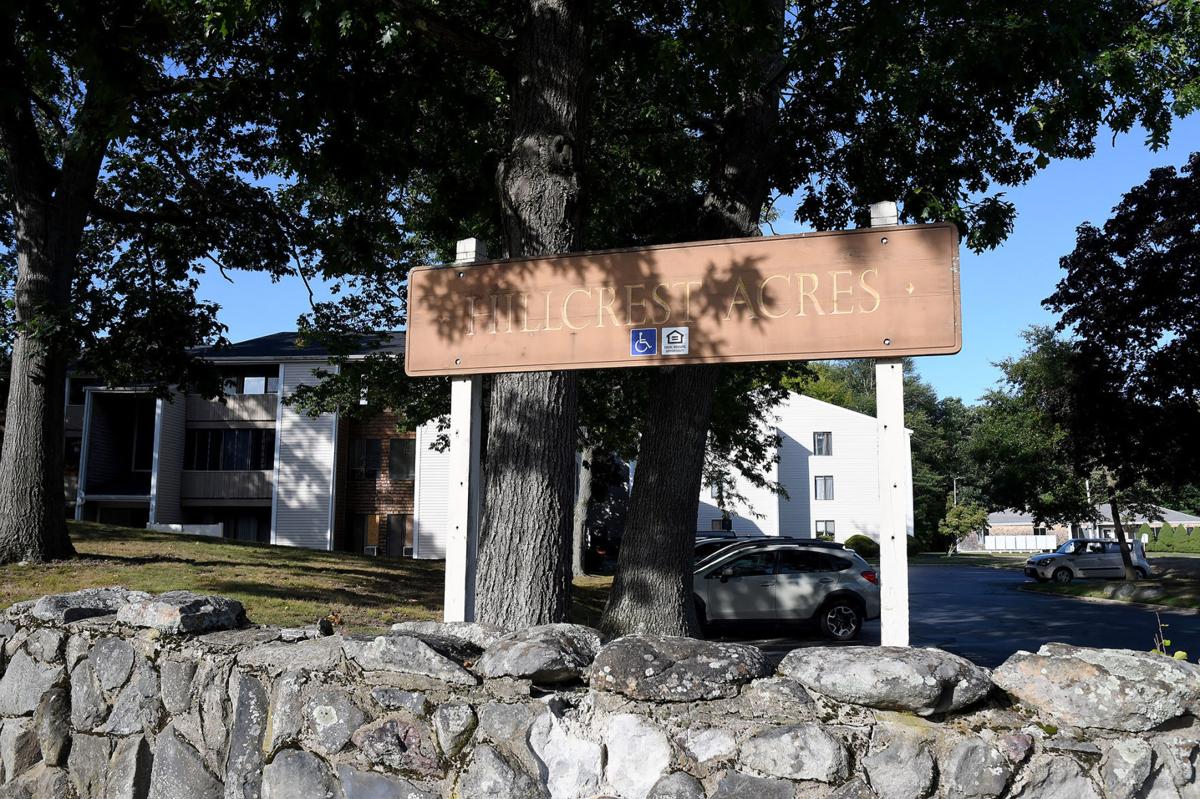
Hillcrest Acres in Attleboro acquired, to be kept as affordable housing

The nonprofit Retirement Housing Foundation and The Schochet Companies have closed on the acquisition of Hillcrest Acres Apartments, preserving 100 units of affordable housing, it was announced Friday.

Hillcrest Acres, located at 1101 Hillside Ave., is an expired Rent Supplement and Section 236 property, with a mixed income, but mostly affordable, resident population, the announcement said.

“With all affordability restrictions having expired, the project was at high risk of being lost to a market rate buyer, potentially leading to community disruption and displacement of many lower income households,” it said.

advertisement

“I am pleased to welcome Hillcrest Acres to the RHF family of 198 communities,” RHF President and CEO Laverne Joseph said. “There is a large and growing need for affordable housing and we are doing our best to address that need.”

According to the announcement, the development team worked with the property owner for over a year to reach agreement on a transaction. To facilitate preservation, the Community Economic Development Assistance Corporation has provided a $8.4 million acquisition loan, allowing for a bridge to a low-income housing tax credit transaction. Coupled with financing and funding from other public sources, it “allows for a major rehabilitation of dwelling units and most major systems.”

“Preserving affordable housing is an important part of CEDAC’s mission,” said Roger Herzog, CEDAC’s executive director. “Hillcrest Acres was far along the path of conversion from affordable housing to market rate, but thanks to this acquisition, all 100 apartments will have long-term affordability restrictions.”

advertisement

The acquisition will preserve 100 units of affordable housing “while preventing existing tenants from displacement,” Herzog said.

Completed in 1974, Hillcrest Acres is a garden-style multi-family community located on just over 9 wooded acres. It consists of 10 residential buildings spread throughout the property and has picnic and barbecue areas, play areas, and a 3,000-square-foot community/office building on site.

Founded in 1961, RHF is a national nonprofit organization with a mission to provide a range of housing options and services for older adults, low-income families, and persons with disabilities.

It is affiliated with the Council for Health and Human Service Ministries of the United Church of Christ and LeadingAge and its state affiliates, and also co-sponsors housing development with other varied denominational and community organizations. RHF sponsors and manages 198 communities in 29 states and Washington, D.C., Puerto Rico and the Virgin Islands. This will be RHF’s 12th community in Massachusetts.

Schochet Associates Inc. is a real estate development and management company founded in 1973. Since that time, the company has developed, owned, and/or managed in excess of 7,000 apartments and over 600,000 square feet of retail and commercial space throughout New England and on the West Coast. Today, it owns and/or manages 5,000 apartments and 100,000 square feet of commercial space throughout New England.

CEDAC is a public-private community development finance institution that provides financial resources and technical expertise for community-based and other nonprofit organizations engaged in community development in Massachusetts.

SourceThe Sun Chronicle

Under The Radar: Affordable Senior Housing Communities Need Support To Fight COVID-19

MassHousing has closed on $2.8 million in affordable workforce housing financing to The Community Builders for the ongoing construction of the 12-unit 35 Village Hill Road in Northampton. Valley Community Development Corporation is the project co-sponsor.

The new housing, which is being developed on the site of the former Northampton State Hospital, will feature 10 workforce housing apartments for moderate-income households and two deeply affordable units for clients of the Massachusetts Department of Mental Health (DMH).

“MassHousing is pleased to support The Community Builders and Valley Community Development in their transformation of a vacant lot into new homes for working households and residents in need,” said MassHousing Executive Director Chrystal Kornegay. “We’re happy that these new homes will serve working and disabled households for many years into the future.”

“The Community Builders is excited to once again be expanding housing opportunities at Village Hill in Northampton. Our organization is committed to building strong communities where all people can thrive. We are grateful to MassHousing and our other state and local partners who help us make this work possible” said TCB Director of Development Rachana Crowley.

“Valley Community Development is proud to be part of increasing the economic diversity of housing options at Village Hill,” said Valley’s Executive Director Joanne Campbell.

The 12 new apartments will be contained in one building, which will also have first-floor commercial space. Ten of the apartments at 35 Village Hill Road will be workforce housing units affordable to moderate-income households. Six of the workforce housing units will be deed-restricted for households earning at or below 120 percent of the Area Media Income (AMI), and four will be workforce units for households earning at or below 80 percent of AMI. Additionally, two units will be deeply affordable for DMH clients and will be supported by federal Section 8 project-based vouchers. The AMI for Northampton is $76,000 for a household of four.

There will be two studio apartments, six one-bedroom apartments and four two-bedroom apartments. Construction is expected to be completed in September.

MassHousing is providing TCB with $1.4 million in permanent financing, and $1.4 million in workforce housing funding from the Agency’s Workforce Housing Initiative.

In addition to the MassHousing financing, the Massachusetts Department of Housing and Community Development (DHCD) is providing the project-based vouchers and $1.5 million in direct support. The project also received $1.3 million in funding through the Community Scale Housing Initiative (CSHI), a joint initiative of DHCD and MassHousing that funds smaller-scale affordable rental developments.

The Community Economic Development Assistance Corporation (CEDAC) is providing $360,000 in financing, the City of Northampton contributed $200,000 in local Community Preservation Act funding and Citizens Bank is providing $2.5 million in construction financing.

35 Village Hill Road advances the Baker-Polito Administration’s goal of creating up to 1,000 new workforce housing units affordable to middle-income households through MassHousing’s Workforce Housing Initiative. Since the inception of the initiative in 2016, MassHousing has committed or closed workforce housing financing totaling $98.2 million, to 45 projects, located in 21 cities and towns. To date, the Workforce Housing Initiative has advanced the development of 4,030 housing units across a range of incomes, including 1,096 workforce housing units.

The general contractor is Western Builders. The architect is Davis Square Architects and the management agent is TCB.

MassHousing has financed five rental housing communities in Northampton totaling 642 units of housing with an overall original loan amount of $33.4 million and the Agency has also provided home mortgage loans to 427 homebuyers and homeowners with an original purchase principal balance of $31.2 million.

SourceHealth Affairs

MassHousing Commits $7.9 Million in Financing for New, 51-Unit Mixed-Income Rental Housing Community in Revere

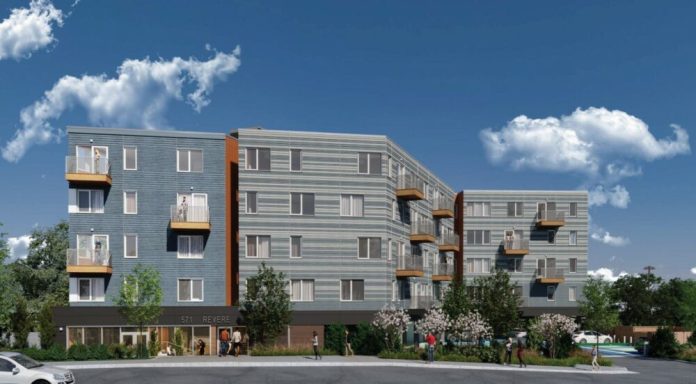
MassHousing has committed $7.9 million in affordable housing financing to the non-profit The Neighborhood Developers (TND) for the construction of the 571 Revere Street in Revere, MA.

The MassHousing financing will allow The Neighborhood Developers to construct 51 units of new affordable housing for households across a broad range of incomes, including 19 new workforce housing units.

“By transforming a vacant parcel into a new, modern community of affordable and workforce housing, The Neighborhood Developers will help ensure that a revitalized Revere Beach remains welcoming and accessible to residents of all means,” said MassHousing Executive Director Chrystal Kornegay. “TND is a strong, mission-based developer, and MassHousing is pleased to be part of the team making this important project a reality.”

“571 Revere Street is a transit-oriented development; the 51 new affordable homes will not only be steps away from the beach, but also within easy walking distance of the Wonderland MBTA Station and the MBTA 116 bus line, said Rafael Mares, TND’s Executive Director. “This project wouldn’t be possible without MassHousing’s commitment of affordable housing financing and its partnership.”

MassHousing is providing TND with a $6 million permanent loan and $1.9 million in workforce housing financing from the Agency’s Workforce Housing Initiative.

In addition to the MassHousing financing, other funding sources include $9.3 million in federal and state Low-Income Housing Tax Credit equity, $1.3 million in direct financing from the Massachusetts Department of Housing and Community Development (DHCD), $1.2 million in HOME financing from the North Suburban Consortium, a $206,511 sponsor energy grant loan, $1.1 million in financing from the Community Economic Development Assistance Corporation (CEDAC) and $1 million from the Affordable Housing Trust Fund, which MassHousing manages on behalf of DHCD. Santander Bank will be providing construction financing.

571 Revere Street advances the Baker-Polito Administration’s goal of creating up to 1,000 new workforce housing units affordable to middle-income households through MassHousing’s $100 million Workforce Housing Initiative. Since the inception of the initiative in 2016, MassHousing has committed or closed workforce housing financing totaling $92.4 million, to 40 projects, located in 19 cities and towns. To date, the Workforce Housing Initiative has advanced the development of 3,727 housing units across a range of incomes, including 1,006 workforce housing units.

The new, energy efficient housing will be constructed in a six-story building on a vacant site two blocks from Revere Beach and within walking distance to the MBTA’s Wonderland subway station. The apartments will be on the top four floors of the building, with garage parking on the first two levels.

Thirty-two apartments will be affordable for households earning at or below 60 percent of the Area Median Income (AMI), with 6 of those units further restricted for vulnerable low-income households earning at or below 30 percent of AMI, and 5 of the affordable units further restricted for households earning at or below 50 percent of AMI. The remaining 19 apartments will be workforce housing units for households earning at or below 90 percent of AMI. The AMI for Revere is $113,300 for a household of four.

Eight of the apartments will be subsidized by a federal Section 8 Project Based Housing Assistance Payment contract and 3 apartments will be subsidized through the Massachusetts Rental Voucher Program. There will be 26 one-bedroom apartments, 21 two-bedroom apartments, and 4 three-bedroom apartments.

The general contractor will be NEI General Contracting, the architect is Arrowstreet and the management agent is WinnCompanies.

MassHousing has financed 4 rental housing communities in Revere involving 290 housing units and $17.4 million in financing. The Agency has additionally provided home mortgage loans to 721 Revere homebuyers and homeowners involving $115.5 million in financing.

SourceBoston Real Estate Times

Baker-Polito Administration Announces $1.73 Million to Support Energy Efficient Affordable Housing

The Baker-Polito Administration today announced $1.73 million in awards to support energy efficient new construction for affordable housing developments in six cities and towns built to Passive House standards. The grants, awarded to eight affordable housing developments in Cambridge, Gloucester, Hanson, Northampton, Holbrook and Boston totaling 540 high-efficiency units, provide energy savings and improved indoor air quality for low-income households. The announcement was made by state and local officials at the Old Colony Housing Development in South Boston.

“Massachusetts is proud to lead the nation in energy efficiency, which helps to reduce energy use and cut greenhouse gas emissions which in turn promotes cost savings for residents and businesses,” said Governor Charlie Baker. “Our administration is committed to supporting the development of additional affordable housing, and by embracing innovative design to maximize efficiency we can provide quality housing solutions for residents while reducing carbon emissions.”

“Our Administration is committed to helping Massachusetts’ low-income households reduce energy costs while creating better, more affordable housing options,” said Lieutenant Governor Karyn Polito. “Passive House standards offer one of the best options to promote high efficiency housing solutions for families, and better position the Commonwealth to extend energy efficiency benefits of the homes to families in cities and towns across the state.”

The funding was awarded through the Massachusetts Clean Energy Center’s Passive House Design Challenge program, part of the Baker-Polito Administration’s $15 million Affordable Access for Clean and Efficient Energy (AACEE) initiative. The program seeks to demonstrate that multi-family affordable housing can be built to high efficiency Passive House standards in Massachusetts at a low-to-no cost premium.

Passive House is a green building certification that ensures extremely high levels of energy efficiency and the provision of fresh air for ventilation.  Multi-family buildings built to the Passive House standard generally use 40% less total energy than energy stretch code-compliant buildings.   The annual energy use of 8-12 Passive House multi-family apartments is roughly equivalent to the average existing single-family suburban home in Massachusetts.  The Passive House energy efficiency standard ensures new buildings are built with high levels of insulation and air tightness, generous provision of fresh air with heat recovery for ventilation, and better windows than would normally be required.

Earlier this year, Massachusetts was named the most energy efficient state in the nation by the American Council for an Energy-Efficient Economy for the ninth consecutive year.

“Building to energy-efficient Passive House standards is the first step in ensuring buildings are on a path to becoming net-zero,” said Energy and Environmental Affairs Kathleen Theoharides. “To meet Massachusetts’ 2050 greenhouse gas reduction goals, energy efficiency is new construction must continue to be promoted,  and it is great to see affordable housing leading the way for the Commonwealth.”

“Passive House buildings are more efficient, durable, healthy, and resilient than typical buildings,” said MassCEC CEO Stephen Pike. “Through these projects, the Commonwealth is supporting better housing for low-income families and reducing greenhouse gas emissions in our most vulnerable neighborhoods.”

“The Passive House Design Challenge program is one of the many innovative ideas in the Commonwealth that contributes to moving us forward in achieving our shared clean energy and emission reduction goals,” said Department of Energy Resources Commissioner Judith Judson. “This program coupled with our new Mass Save incentives for Passive House go a long way towards enabling deep energy efficiency.”

“As we work to build more affordable housing throughout the state to meet our current crisis, it is vital we build high-quality, future-proofed housing that takes current and future energy needs into account,” said Housing and Community Development Undersecretary Janelle Chan. “Today’s awards will advance eight affordable housing developments, which will provide more than 500 units for low and middle-income households. We are thrilled to be supporting housing development that is safe and affordable for families, and is built to Passive House standards, reducing carbon emissions and lowering households’ energy costs.”

The eight developments, four of which have secured low income tax credit financing and three which are applying to the Department of Housing and Community Development (DHCD) for affordable housing tax credits, are:

  • Homeowner’s Rehab Finch Cambridge – Cambridge ($147,000) – A new 98-unit affordable housing project designed for resiliency to allow for potential flooding and low energy consumption using efficient heat pump heating and cooling technology.  Shading features are included to lower cooling demands.  The building will also include a 100 KW Solar Photovoltaic array to generate electricity for heating and cooling.
  • Preservation for Affordable Housing Mattapan Station – Mattapan ($540,000) – An urban-centric housing complex with 135 apartments designed to promote the Neponset River Greenway and bike paths, while reducing energy consumption.  The building will use efficient electric heat pump technology for heating and cooling and is exploring innovative heat pump technology to heat hot water.
  • Beacon Communities Old Colony Phase Three C – South Boston ($120,000) – As part of the third phase of the redevelopment of Old Colony, the project provides affordable housing for vulnerable seniors at extremely low energy use and 55 new apartments.  The building will feature much less drafty apartments with at least four times lower air infiltration rates than would be required by code, high levels of ventilation with heat recovery equipment, and attention to creating thermal breaks in the walls and roof to improve energy performance.
  • NorthShore Community Development Corporation’s Harbor Village – Gloucester ($120,000) – A 30-unit affordable housing construction will include retail spaces, bike storage, and gallery space as well as being in the heart of downtown Gloucester and will feature efficient heat pumps for heating and cooling.
  • Dakota Partners – Hanson ($192,000) – A new construction housing project for families. When completed, Depot Village, located near an MBTA commuter rail stop, will create 48 new rental units.  The building will utilize balanced ventilation with heat recovery, heat pumps for heating and cooling, and reduced heat loss. The project is creating a template for Dakota Partners to use on future developments that will be designed for Passive House construction and certification.
  • Community Builders North Commons – Northampton ($212,000) – The project will increase insulation levels, air sealing, and ventilation levels to meet Passive House Standards for 53 apartments. It will provide mixed‐income, new construction family rental housing development on the Village Hill campus in Northampton, Massachusetts and will include both affordable and workforce housing units, serving households with a broad range of incomes.
  • Preservation of Affordable Housing Bartlett Station Lot D – Roxbury ($168,000) – Bartlett Station Lot D includes the construction of 52 senior housing units. Lot D is a part of the master planned Bartlett Station, an 8.6-acre former MBTA bus yard.  The building will include shading features, higher levels of air sealing, balanced ventilation with heat recovery, and a central efficient heat pump systems for heating and cooling.
  • NeighborWorks Southern Mass’s Holbrook Center Senior Housing – Holbrook ($131,200) – A 100% affordable rental housing will cater to seniors aged 65 and over with one-bedroom apartments and common amenities such as a library and fitness center, this housing development will provide support services that aim to accommodate residents’ changing needs as they age. The design will offer seniors more comfort, make for quieter apartments, and less noise from the street and adjacent apartments.

The Passive House Design Challenge awards are complemented by the recent addition of MassSave Passive House incentives for multi-family buildings.  Multi-family new construction buildings above four stories, both market rate and affordable, may be eligible for Passive House energy modeling funding and up to $3,000 per unit if they certify to the high-efficiency Passive House standard.

“I applaud the Baker-Polito Administration for their continued work in addressing barriers for low- and moderate-income residents in Massachusetts to access cost-saving, clean energy technologies, including awarding grants for MassCEC’s Passive House Design Challenge program,” said State Representative Thomas A. Golden, Jr. (D-Lowell), Chairman of the Joint Committee on Telecommunications, Utilities, and Energy.  “This program has the exciting goal of seeking to demonstrate that Passive House construction can not only provide significant bill savings, air quality improvements, and energy efficiency gains for affordable housing projects, but also that it can be built at a low-to-no-cost premium.”

“We are very encouraged by the grants being awarded by the Massachusetts Clean Energy Center today,” said State Representative Kevin Honan (D-Boston), Chairman of the Joint Committee on Housing. “Massachusetts has been, and will continue to be, a national leader in energy efficiency policies, and these eight new developments built to Passive House standards are an excellent addition to our affordable housing stock. As we continue to focus on housing production issues at the state level, these are the kind of projects and investments we hope to see more of.”

“These state grants will support energy efficient construction projects at affordable housing developments across the Commonwealth, helping low-income households save on energy costs while improving air quality in their homes,” said State Representative David Biele (D-Boston).  “I’m proud that the Anne Lynch Homes at Old Colony received a grant to build high-efficiency units, and I thank the Baker-Polito Administration and MassCEC for making these important energy efficiency investments in affordable housing.”

The Baker-Polito Administration has shown a deep commitment to increasing the production of housing across income levels. Since 2015, the administration has invested more than $1 billion in affordable housing, resulting in the production and preservation of more than 17,000 housing units, including 15,000 affordable units. In 2018, Governor Baker signed the largest housing bond bill in Massachusetts history, committing more than $1.8 billion to the future of affordable housing production and preservation. Legislation filed by Governor Baker in FebruaryAn Act to Promote Housing Choices, calls for targeted zoning reform to advance new housing production in Massachusetts and support the Administration’s goal to produce 135,000 new housing units by 2025. The Baker-Polito Administration has also advanced the development of more than 11,000 mixed-income housing units through the successful MassWorks Infrastructure Program, reformed the Housing Development Incentive Program, and worked with communities to implement smart-growth development and planning efforts.

SourceMassachusetts Clean Energy Center

Merrivista to add senior housing

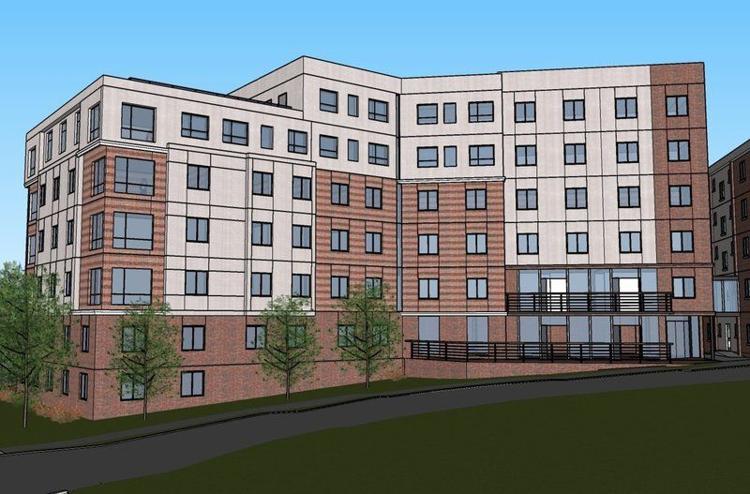
Bethany Community Services plans to expand its Merrivista senior housing complex on Water Street with the addition of 62 affordable, age-restricted apartments, with 16 units designated for extremely low-income households.

The project recently received a $200,000 predevelopment loan from the Community Economic Development Assistance Corporation or CEDAC.

Bethany operates Merrivista senior housing at 100 Water St., Phoenix Row apartments at 22 Phoenix Row in Washington Square and Mission Towers at 180 Water St.

Jered Stewart, president and CEO of the nonprofit Bethany Community Services, said all three properties currently have long waiting lists of seniors looking for affordable apartments and that the expansion of Merrivista will help meet a significant need for senior housing.

“CEDAC is providing us with resources that we can’t obtain from traditional lenders,” Stewart said.

He said the proposed 62-unit project will be connected to the existing Merrivista building — a 150-unit affordable senior housing complex — through a sky bridge that will provide residents with access to a library, hair salon, dining room, and additional support services.

The project will also feature a 5,000 square foot health and wellness center operated by Bethany.

Stewart said the health and wellness center will be available to all Merrivista residents.

“This is a great thing for the city,” Mayor James Fiorentini said, noting that almost daily, he hears from senior citizens who ask for his help in finding an affordable place to live. “This is just what we need and whatever the city can do to assist, we’re all for it.”

The Merrivista expansion is estimated to cost between $17 and $20 million. Construction could begin in 2022 or 2023, depending on financing approval, Stewart said.

CEDAC has also committed $200,000 to the North Shore Community Development Corporation (NSCDC), which plans to redevelop two former Catholic schools on either side of downtown Salem, Mass, into mixed-income rental housing, including units for affordable to low- and moderate-income residents.

“CEDAC is proud to support both of these projects, which will provide much-needed affordable housing opportunities to Haverhill and Salem,” said CEDAC’s executive director Roger Herzog. “We are glad to see a variety of housing options that will benefit local residents, including supportive housing for seniors.”

Bethany held a gala fundraising event Oct. 10 at the Bradford Country Club that kicked off its capital campaign for the Merrivista expansion.

More than 160 people attended the event, which featured a silent auction, a meal and live music.

To donate to the Merrivista expansion, visit online at bethanycommunities.org/ways-to-give.

CEDAC is a public-private community development finance institution that provides financial resources and technical expertise for community-based and other non-profit organizations engaged in effective community development in Massachusetts.

CEDAC’s work supports two key building blocks of community development: affordable housing and early care and education. CEDAC is also active in state and national housing preservation policy research and development and is widely recognized as a leader in the non-profit community development industry. For additional information on CEDAC and its current projects, visit cedac.org.

SourceThe Eagle-Tribune

Way Finders secures $23M in final funding for Library Commons in Holyoke; groundbreaking Oct. 24

Way Finders will break ground Oct. 24 on Library Commons — 38 affordable, multifamily housing units in the Chestnut Street neighborhood.

Way Finders, a nonprofit developer formerly known as HAP Housing, secured $23 million from the Massachusetts Housing Investment Corporation (MHIC), the final funding needed for the project.

“We are pleased to work with our long-time partner Way Finders to build on the progress made with revitalization the Holyoke Public Library,” stated Joe Flatley, MHIC’s president. “We are confident that new housing opportunities with access to jobs, education and entertainment, will further stabilize the neighborhood and improve the lives of its residents.”

Way Finders plans to rehab two vacant historic buildings near the Holyoke Public Library and demolish a crumbling structure and replace it with a new complex.

“After much planning and investment from our staff, partners, and the community, Way Finders is thrilled to be bringing these beautiful buildings back to life and to be contributing to the continued revitalization of downtown Holyoke,” Peter Gagliardi, Way Finders president and CEO, said in statement.

Besides the $23 million from MHIC, Way Finders garnered $10.4 million in low-incoming housing tax credits, a $12.6 million construction loan, $550,000 from the Massachusetts Housing Partnership and $4.8 million from the Massachusetts Department of Housing and Community Development.

The City of Holyoke contributed $400,000 and the Community Economic Development Assistance Corporation $1 million in predevelopment and acquisition costs.

According to the statement, plans also include 940 square-feet of retail space, a property management office, laundry room, playscape, community rooms, and art gallery. Way Finders will partner with The Care Center’s Roque House for support services and set aside up to ten apartments.

The groundbreaking ceremony is scheduled for Oct. 24, 1 to 3 p.m., at the Holyoke Public Library.

Way Finders will conduct a tour of the parcels following the ceremony.

SourceMassLive

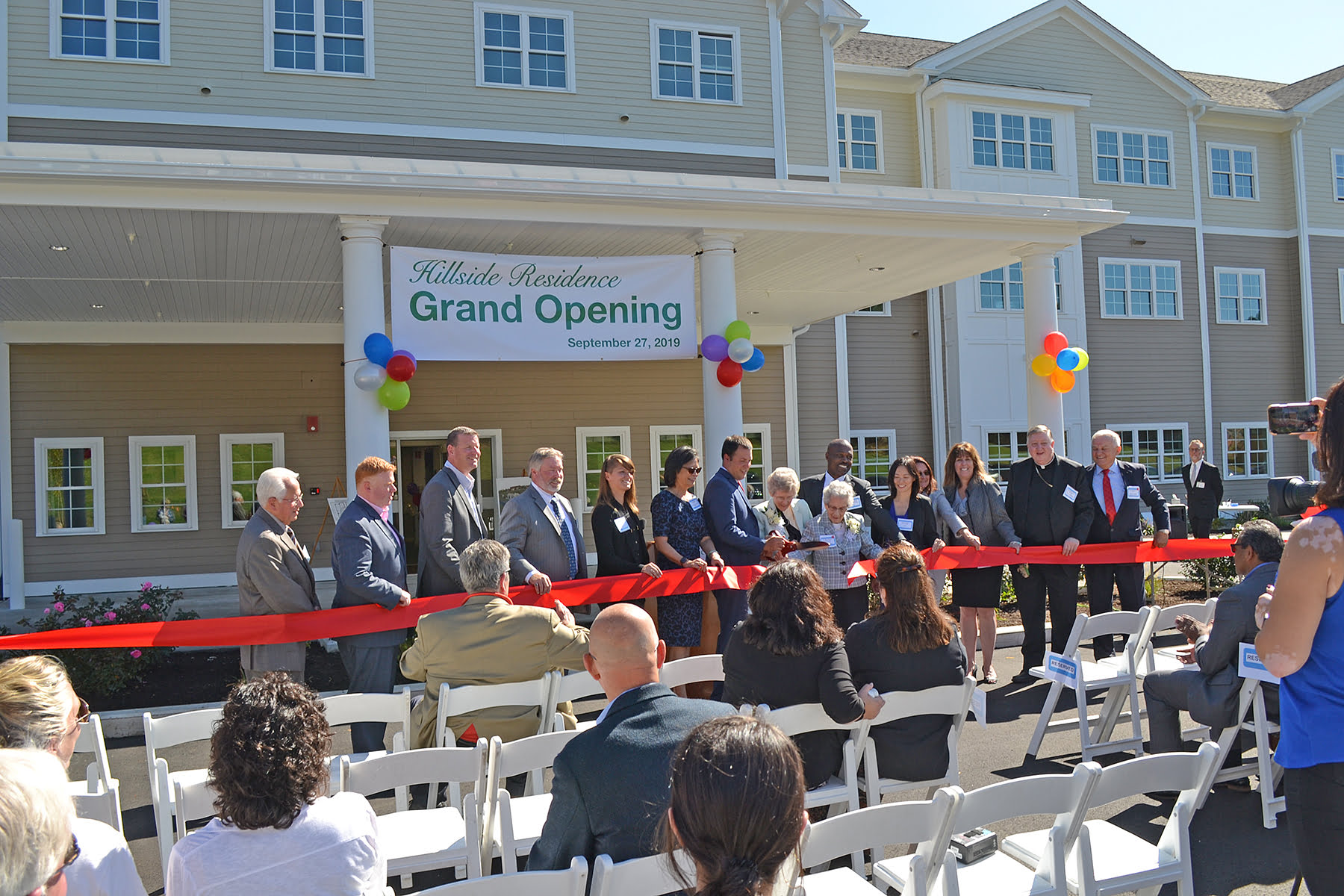
Sisters of Providence celebrate grand opening of Hillside Residence

The grand opening of Hillside Residence in West Springfield took place on Friday, Sept. 27 at 10:30 a.m. at the former location of Brightside.

This innovative, health care-integrated housing model offers 36 rental units for low income elders. It was a development completed by the Sisters of Providence. Sister Kathleen Popko, president of the Sisters of Providence, said the project began more than 10 years ago with the closing of Brightside for Families and Children. She said the Sisters of Providence were looking to the future and how they could use the 27-acre campus most effectively to serve the community.

“So it is an exciting day for us and it has been a tremendous amount of work. Here is a way to demonstrate that collaboration and working together can lead to wonderful results that benefit the common good of the community,” said Sister Popko.

The Sisters of Providence had the 77,000-square-foot De Paul Center, which was the administration building for Brightside and now contains several health-related groups including Mercy Life. Mercy Life, a Medicare/Medicaid program will be providing the health services for occupants of Hillside Residence. Sister Popko said she was pleased to celebrate the grand opening of Hillside Residence on the feast of St. Vincent De Paul, the patron saint of the Sisters of Providence.

“St. Vincent (de Paul) was noted for his care of the poor, the orphan, the neglected, the people who are on the streets, and we live out that charism. I feel that this project reflects that commitment to those who are most in need,” said Sister Popko.

Hillside Residence received funding and support from both public and private entities and was awarded state and federal funds from the Housing Stabilization Fund, the National Housing Trust Fund, Housing Innovation Fund Program and Massachusetts Rental Voucher Program project-based subsidies. In addition, grants from the Harry and Jeanette Weinberg Foundation and West Springfield’s Community Preservation Committee contributed to the funding for the $9.2 million project.

West Springfield Mayor William Reichelt joined other local and state leaders at the grand opening. Mayor Reichelt first became involved with the project in 2012 when he was a member of the Community Preservation Committee. He said the Sisters of Providence, especially Sister Popko, have been tenacious in tracking down funds to make the development happen.

“West Springfield is becoming an age-friendly community. That is our goal, to keep our residents here. If they do need services and are not able to stay in their home this is a great option for them. The sisters run a great program anyway, but to incorporate this as well is a huge asset for West Springfield,” Mayor Reichelt said.

“Affordable care, especially in 2019, it is tough, housing is tough. So, to have that care and housing all in one piece and be in West Springfield, it’s a huge bonus. We are very excited,” he said.

Mercy Life is a PACE program (Program for All-inclusive Care for the Elderly). Hillside Residence will over time add to research on the effectiveness of the health care offered to occupants of this community. This data will assist housing developers and healthcare providers to understand the benefits of the PACE integrated housing model.

Major donors and individuals involved with Hillside Residence were in attendance at the grand opening. Also, many elected officials and dignitaries from the Department of Housing and Community Development, the Massachusetts Office of Elder Affairs and the Community Economic Development Assistance Corporation offered comments during the event.

“That is a true, true, true gift to somebody aging with chronic illness. Hillside Residence also creates an environment that will provide the essential elements of home, familiarity, comfort, and a sense of belonging, where independence is valued and changing needs are met. Bravo for the respite units that you have here,” said Elizabeth Chen, the state secretary of the Executive Office of Elder Affairs.

At the conclusion of the ceremony, Sister Popko asked all of the Sisters of Providence present to stand for recognition. Springfield Bishop Mitchell T. Rozanski blessed the Hillside Residence building with holy water and offered a prayer. Everyone was then asked to go inside as Sister Popko was surprised with the unveiling of her portrait and a plaque dedicating the building in her honor. A reception later took place while tours were offered of the units and community rooms.

A video version of this story will be featured on an upcoming edition of “Real to Reel” which airs Saturday evenings at 7 p.m. on WWLP-22 NEWS and in the Berkshires Sunday mornings at 5:30 on Albany’s Fox 23, WXXA.

SourceiObserve Catholic Communications News

Affordable Housing Finance Magazine 2019 Readers’ Choice Award: Historic Rehab Category – The Union at 48 Boylston

We are excited to announce that The Union at 48 Boylston was chosen as the historic rehab winner in Affordable Housing Finance magazines 2019 Readers’ Choice Awards!

The Union at 48 Boylston was the result of a partnership between St. Francis House, the largest multi-service center for adults experiencing homelessness in the City of Boston, and the Planning Office for Urban Affairs (POUA).

Purchased in 2016, 48 Boylston has since been completely redeveloped by St. Francis House and POUA to provide much needed affordable housing in the community, creating 46 units of affordable housing. The completed development includes units to serve people who have experienced homelessness and others with very modest incomes. Twenty-six of the units are reserved for individuals earning less than 30% of the area median income.

Man stands in his kitchen in The Union at 48 looking happy and comfortable
Stephen has been a happy resident of The Union since May 2019. “Feeling at home… there’s just nothing like it. I have my own couch, I have my own bed. I get to put art on my walls. It doesn’t get any better than this.”

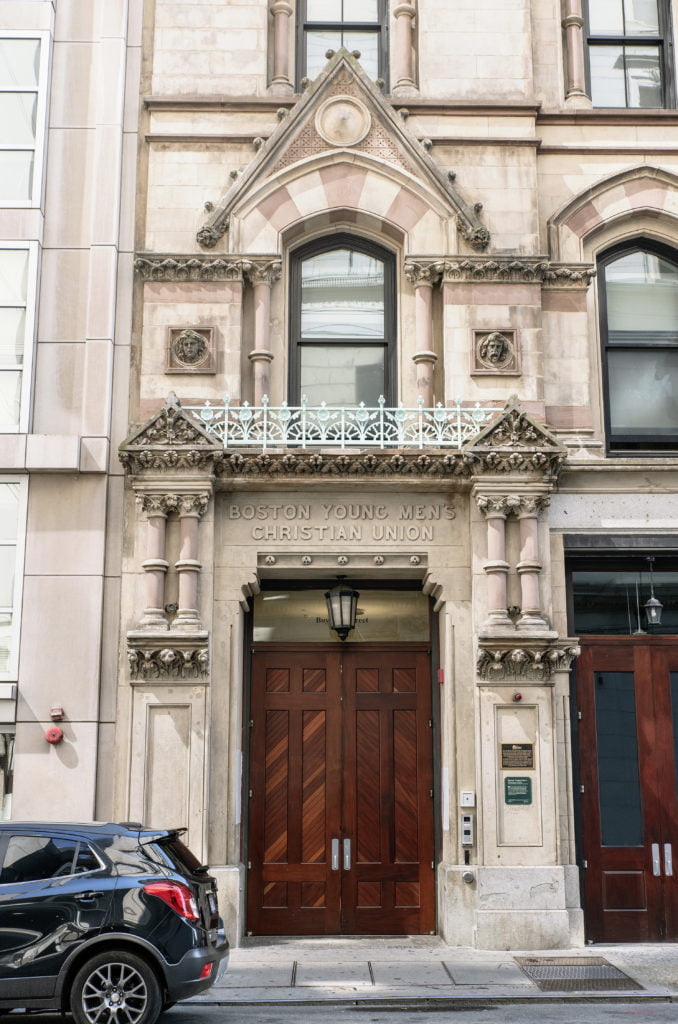
A designated Boston Landmark listed on the National Register of Historic Places, the building was constructed in 1875 and was originally operated by the Boston Young Men’s Christian Union (BYMCU) for more than 150 years to provide a variety of social, recreational and service programs. In keeping with the building’s history, the 48 Boylston development will also provide benefits beyond housing including new employment training opportunities through a partnership with The Urban Hound, a dog day care facility, and the ability to establish a brand-new recovery support center at St. Francis House.

Taken together, this building project has not only created critical affordable housing, but has opened the doors for St. Francis House to explore and implement new employment training and expand our social services for the vulnerable populations of Boston.

Read more about the AHF 2019 Readers Choice Awards: https://www.housingfinance.com/developments/ahf-announces-2019-readers-choice-award-winners_o

St. Francis House is excited to attend the AHF Live: 2019 Affordable Housing Developers Summit and award ceremony November 18 – 20 at the Hyatt Regency in Chicago.

Developers: Planning Office for Urban Affairs and St. Francis House

Architect: The Architectural Team

General Contractor: Gilbane Construction

Major Funders: Bank of America Merrill Lynch; commonwealth of Massachusetts (Department of Housing and Community Development, Community Economic Development Assistance Corp., and MassHousing); city of Boston (Department of Neighborhood Development and Neighborhood Housing Trust); Massachusetts Historical Commission; National Park Service; Federal Home Loan Bank of Boston; Eastern Bank

SourceSt. Francis House

Walker Park Apartments and Delphine’s Courtyard Opened

Mayor Martin J. Walsh today joined the community development agency Urban Edge, elected officials, community leaders and neighbors to celebrate the opening of the Walker Park Apartments and Delphine’s Courtyard, consisting of 49 units of affordable family housing and a pocket park in Egleston Square. The City of Boston’s Department of Neighborhood Development and the Community Preservation Fund provided more than $2.8 million in total for the new homes and courtyard.

“Today we celebrate the creation of 49 new affordable homes, a crucial step forward in our goal of preserving our neighborhoods,” said Mayor Walsh. “Along with our partners, the City of Boston is making big investments in Egleston Square, increasing opportunity for families and helping us keep housing affordable and accessible. I want to thank Urban Edge and everyone involved in this project for their work in making these new affordable homes possible.”

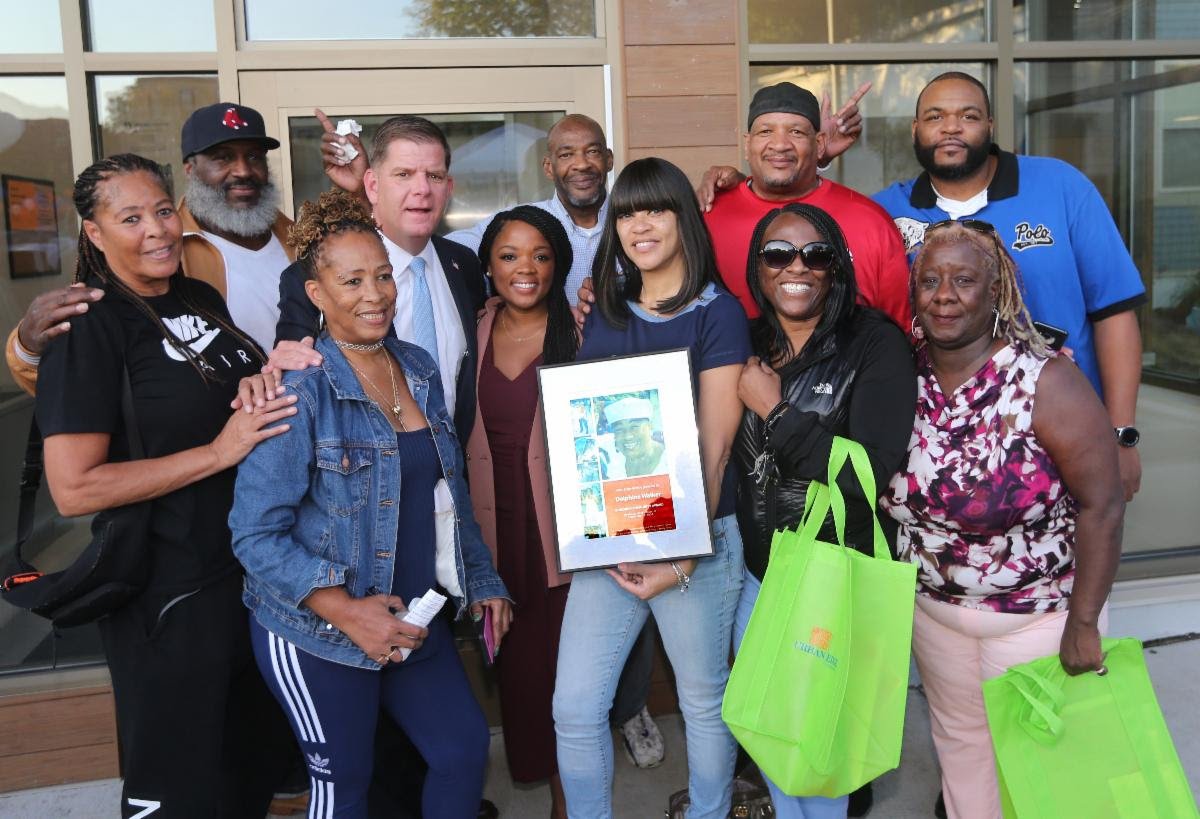
Mayor Walsh with members of the Walker family.

Mayor Walsh with members of the Walker family.

The Walker Park Apartments redeveloped three formerly vacant or underutilized parcels adjacent to the Egleston Square Branch of the Boston Public Library and in the Egleston Square Main Street District. The development is named for longtime community activist Delphine Walker, whose home stood on one of the development sites. All of the 49 new apartments have been rented to households who earn at or below 60 percent of the Area Median Income (AMI), including eight apartments reserved for families earning 30 percent of AMI or below.

“Urban Edge is proud that we have led investment in Egleston Square and is doing so in a way that honors the neighborhood’s past while providing more opportunities for quality housing for members of the community,” said Natacha Dunker, president of Urban Edge’s Board of Directors. “We are so grateful to Mayor Walsh, the Department of Neighborhood Development, and all of our funders for their support of this important project.”

“Today, we celebrate another victory for our city and community: new construction of 49 income-restricted units and 34 off-street parking spots,” said State Representative Liz Malia (D-11th Suffolk). “This is exactly the type of housing we need to build in Boston and specifically in the Egleston Square Neighborhood. The face of our community depends on it, and I’m  grateful to Urban Edge and the City for having the long-term vision to realize this project and others like it.”

The Walker Park Apartments now boast 13 one-bedroom, 28 two-bedroom, and eight three-bedroom family apartments, an elevator for accessibility, on-site laundry facilities, on-site parking, and Delphine’s Courtyard funded by the Community Preservation Fund. In accordance with state guidelines, funds generated from the Community Preservation Act fund for affordable housing, historic preservation, and parks and open space projects.

“My mother bought her home in Roxbury at a time when many people were not making investments in this community, and she worked with others to strengthen Egleston Square as a neighborhood,” said Pamela Walker, daughter of Delphine Walker. “We are so grateful that Urban Edge has honored her by naming both the apartment complex and the courtyard after her.”

“Since I moved to Walker Park, my life feels different. I can see how my children always have a smile on their faces,” said Cassandra Amazan, a resident of Walker Park Apartments. “It was a great feeling seeing them choosing their own room and making plans of how they would decorate them. It is not only about having or walking in to my own apartment now, it’s about feeling accomplished in many ways and that this is opening new doors for me and my family.”

In accordance with the City of Boston’s Green Affordable Housing Program, Walker Park Apartments will utilize a high-efficiency heating system as well as Energy Star rated appliances. The development employs environmentally friendly design features that meets the U.S. Green Building Council LEED Homes Silver certifiable standard. The development also met the U.S. Environmental Protection Agency’s Energy Star standards. The development team is made up of Urban Edge, Prellwitz Chilinski Associates, and NEI General Contracting, Inc.

The Walker Park Apartments have been made possible by funding from the City of Boston, and State and Federal Low Income Housing Tax Credits from the Commonwealth’s Department of Housing and Community Development (DHCD). Financing team members also included Bank of America Merrill Lynch, Brookline Bank, the Community Economic Development Assistance Corporation, MassDevelopment, MassHousing, Massachusetts Housing Investment Corporation, Massachusetts Housing Partnership, US Bank Corporation, and the US Department of Housing and Urban Development.

Walker Park Apartments strongly aligns with the City’s housing goals outlined in Housing a Changing City: Boston 2030. Mayor Walsh recently increased the City’s overall housing targets from 53,000 to 69,000 new units by 2030 to meet Boston’s population growth. These updated housing goals build on Mayor Walsh’s commitment to increasing access to home ownership, preventing displacement and promoting fair and equitable housing access.

Since the release of the original Housing a Changing City: Boston 2030 plan in 2014, income-restricted housing stock, designed to increase affordable housing, has grown along with overall new production: nearly 20 percent of housing units are income restricted, and 25 percent of rental units are income restricted. In total, after creating an additional 15,820 units of income-restricted housing, Boston will have nearly 70,000 units of income-restricted housing by 2030.

Mayor Walsh’s 2019 housing security legislative package focuses on expanding upon the work that Boston has done to address the region’s affordable housing crisis and displacement risks for tenants by proposing new and strengthening current tools to leverage Boston’s prosperity and create sustainable wealth opportunities that make Boston a more inclusive and equitable city. The housing security bills proposed seek to help existing tenants, particularly the elderly, remain in their homes, and creates additional funding for affordable housing.

For more information on the City’s work to create more housing, please visit: Housing A Changing City: Boston 2030.

###Delp

SourceMayor's Office

Mayor Walsh and residents celebrate preservation of affordable housing in Lower Roxbury

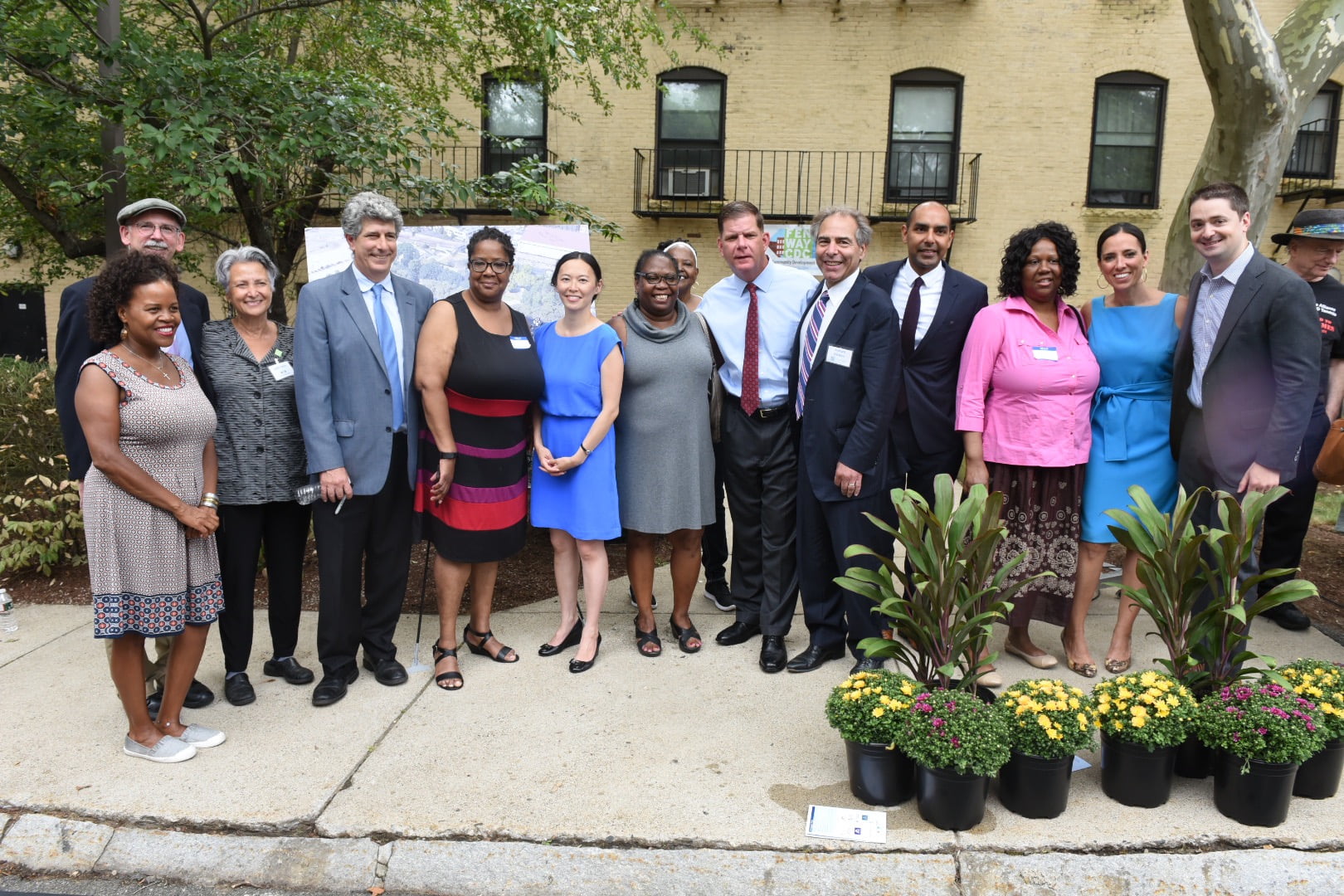
Building on his commitment to preserve affordable housing in Boston, Mayor Martin J. Walsh today joined the Fenway Community Development Corporation, their development partner Schochet Companies and Lower Roxbury residents to celebrate the acquisition and preservation of 97 affordable housing units at the Newcastle/Saranac Apartments.

“Preserving Boston’s affordability is key to ensuring everyone who wants to live here can afford to do so, and I’m particularly pleased our commitment to the Newcastle/Saranac Apartments will both preserve and renovate 97 units of our existing affordable housing stock,” said Mayor Walsh. “I want to thank the Fenway CDC and our partners for working with us to make sure families can stay in their homes. Together, we’re protecting long-time residents from displacement, and we’re helping maintain the character of this community.”

The preservation of the units is made possible through Inclusionary Development Policy (IDP) off-site unit contributions by three housing development projects: 60 Kilmarnock Street, 1000 Boylston Street, and 212 Stuart Street, negotiated by the Boston Planning & Development Agency (BPDA). IDP requires that market-rate housing developments with 10 or more units and need zoning relief contribute to income-restricted housing.

“Newcastle/Saranac has been my home for years, I raised my family here and I love this neighborhood,” said Patricia Rogers, a 30-year resident of Newcastle/Saranac Apartments. “This building is in a convenient location, but the best part of living here is my neighbors. We look out for each other. I want to thank the Mayor, Fenway CDC and all of the people here today for helping us stay in our homes.”

The City’s Department of Neighborhood Development (DND) worked with the Fenway CDC to acquire the building and assist in the plan for the renovation of its 97 apartments, located on Columbus Avenue and Northampton Street in Lower Roxbury. Newcastle Saranac’s long-term affordability restrictions were set to expire as the former owners paid off the mortgage they’d received using the MassHousing 13A program. If the building converted to market-rate, all of the tenants were likely to be displaced from homes they had lived in for decades. With help from City of Boston, Fenway CDC was able to purchase the building from its owners, protecting existing tenants from displacement, and preserving the long-term affordability of this mixed-income development.

“You know the old saying ‘It takes a village?’ Well, in order to save 97 units of affordable housing at Newcastle/Saranac, it took the City of Boston, the Commonwealth, and numerous quasi-public entities, banks and investors to rescue these apartments,” said Leah Camhi, executive director of the Fenway CDC. “The families at Newcastle/Saranac are now guaranteed affordable homes for years to come due to all their herculean efforts.”

The Newcastle/Saranac acquisition and preservation was made possible with the significant support from the City’s Department of Neighborhood Development, the Boston Planning & Development Agency, the State’s Department of Housing and Community Development, MassDevelopment, MassHousing, Massachusetts Housing Investment Corp and the Community Economic Development Assistance Corporation.

Today’s celebration builds on the release of Housing a Changing City: Boston 2030, Boston’s latest quarterly housing report, and the City’s overall housing goal of 69,000 new units by 2030, to meet Boston’s faster than expected population growth. These 69,000 new units include 15,820 new income-restricted units, which would elevate Boston’s income-restricted inventory total to 70,000, or one in five of all housing units. In addition, the plan set a goal to preserve 85 percent of Boston’s most at-risk privately-owned affordable units, and to purchase 1,000 units of rental housing stock from the speculative market and income-restrict them for perpetuity.

Mayor Walsh’s 2019 housing security legislative package focuses on expanding upon the work that Boston has done to address the region’s affordable housing crisis and displacement risks for tenants. The housing security bills proposed seek to help existing tenants, particularly older adults, remain in their homes, and creates additional funding for affordable housing.

SourceSampan