Merrivista to add senior housing

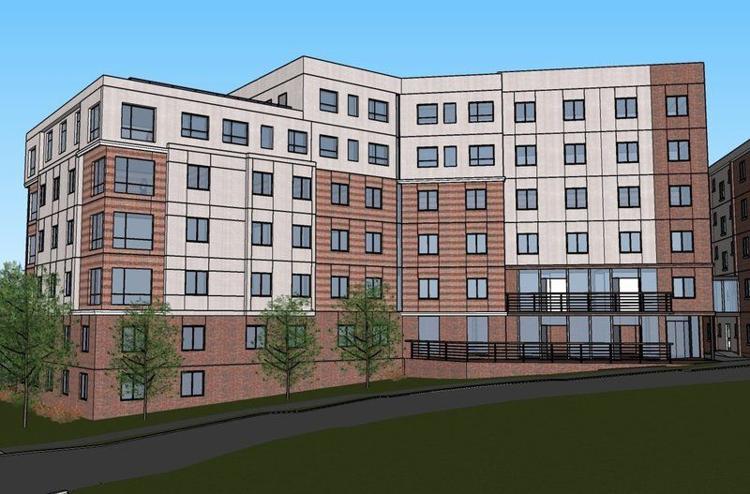
Bethany Community Services plans to expand its Merrivista senior housing complex on Water Street with the addition of 62 affordable, age-restricted apartments, with 16 units designated for extremely low-income households.

The project recently received a $200,000 predevelopment loan from the Community Economic Development Assistance Corporation or CEDAC.

Bethany operates Merrivista senior housing at 100 Water St., Phoenix Row apartments at 22 Phoenix Row in Washington Square and Mission Towers at 180 Water St.

Jered Stewart, president and CEO of the nonprofit Bethany Community Services, said all three properties currently have long waiting lists of seniors looking for affordable apartments and that the expansion of Merrivista will help meet a significant need for senior housing.

“CEDAC is providing us with resources that we can’t obtain from traditional lenders,” Stewart said.

He said the proposed 62-unit project will be connected to the existing Merrivista building — a 150-unit affordable senior housing complex — through a sky bridge that will provide residents with access to a library, hair salon, dining room, and additional support services.

The project will also feature a 5,000 square foot health and wellness center operated by Bethany.

Stewart said the health and wellness center will be available to all Merrivista residents.

“This is a great thing for the city,” Mayor James Fiorentini said, noting that almost daily, he hears from senior citizens who ask for his help in finding an affordable place to live. “This is just what we need and whatever the city can do to assist, we’re all for it.”

The Merrivista expansion is estimated to cost between $17 and $20 million. Construction could begin in 2022 or 2023, depending on financing approval, Stewart said.

CEDAC has also committed $200,000 to the North Shore Community Development Corporation (NSCDC), which plans to redevelop two former Catholic schools on either side of downtown Salem, Mass, into mixed-income rental housing, including units for affordable to low- and moderate-income residents.

“CEDAC is proud to support both of these projects, which will provide much-needed affordable housing opportunities to Haverhill and Salem,” said CEDAC’s executive director Roger Herzog. “We are glad to see a variety of housing options that will benefit local residents, including supportive housing for seniors.”

Bethany held a gala fundraising event Oct. 10 at the Bradford Country Club that kicked off its capital campaign for the Merrivista expansion.

More than 160 people attended the event, which featured a silent auction, a meal and live music.

To donate to the Merrivista expansion, visit online at bethanycommunities.org/ways-to-give.

CEDAC is a public-private community development finance institution that provides financial resources and technical expertise for community-based and other non-profit organizations engaged in effective community development in Massachusetts.

CEDAC’s work supports two key building blocks of community development: affordable housing and early care and education. CEDAC is also active in state and national housing preservation policy research and development and is widely recognized as a leader in the non-profit community development industry. For additional information on CEDAC and its current projects, visit cedac.org.

SourceThe Eagle-Tribune
Affordable Housing Finance Magazine 2019 Readers’ Choice Award: Historic Rehab Category – The Union at 48 Boylston

We are excited to announce that The Union at 48 Boylston was chosen as the historic rehab winner in Affordable Housing Finance magazines 2019 Readers’ Choice Awards!

The Union at 48 Boylston was the result of a partnership between St. Francis House, the largest multi-service center for adults experiencing homelessness in the City of Boston, and the Planning Office for Urban Affairs (POUA).

Purchased in 2016, 48 Boylston has since been completely redeveloped by St. Francis House and POUA to provide much needed affordable housing in the community, creating 46 units of affordable housing. The completed development includes units to serve people who have experienced homelessness and others with very modest incomes. Twenty-six of the units are reserved for individuals earning less than 30% of the area median income.

Man stands in his kitchen in The Union at 48 looking happy and comfortable
Stephen has been a happy resident of The Union since May 2019. “Feeling at home… there’s just nothing like it. I have my own couch, I have my own bed. I get to put art on my walls. It doesn’t get any better than this.”

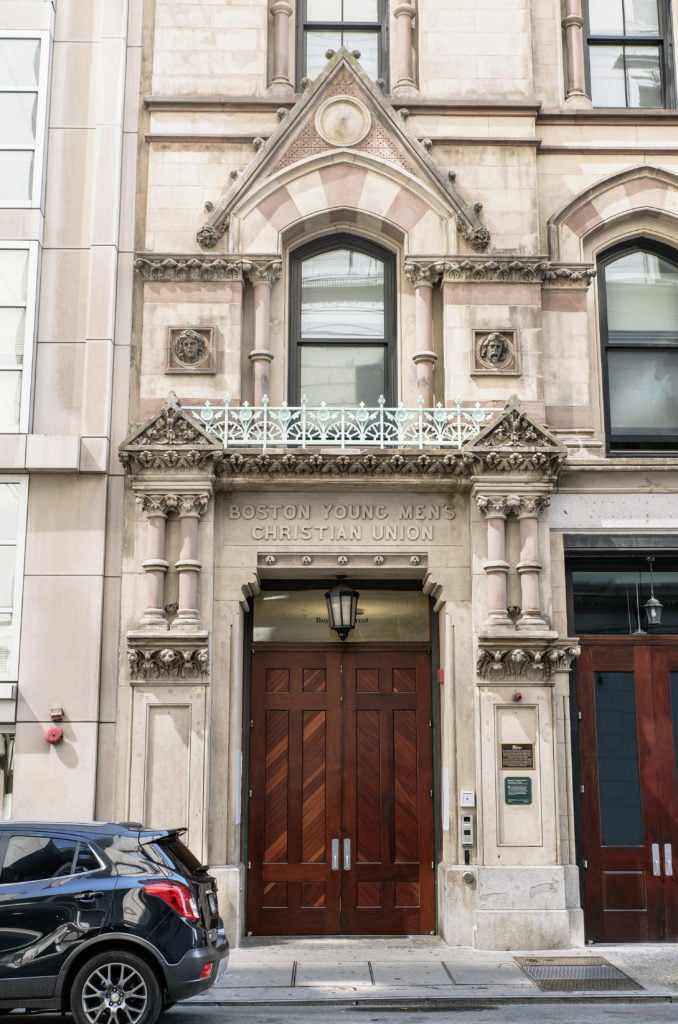
A designated Boston Landmark listed on the National Register of Historic Places, the building was constructed in 1875 and was originally operated by the Boston Young Men’s Christian Union (BYMCU) for more than 150 years to provide a variety of social, recreational and service programs. In keeping with the building’s history, the 48 Boylston development will also provide benefits beyond housing including new employment training opportunities through a partnership with The Urban Hound, a dog day care facility, and the ability to establish a brand-new recovery support center at St. Francis House.

Taken together, this building project has not only created critical affordable housing, but has opened the doors for St. Francis House to explore and implement new employment training and expand our social services for the vulnerable populations of Boston.

Read more about the AHF 2019 Readers Choice Awards: https://www.housingfinance.com/developments/ahf-announces-2019-readers-choice-award-winners_o

St. Francis House is excited to attend the AHF Live: 2019 Affordable Housing Developers Summit and award ceremony November 18 – 20 at the Hyatt Regency in Chicago.

…

Developers: Planning Office for Urban Affairs and St. Francis House

Architect: The Architectural Team

General Contractor: Gilbane Construction

Major Funders: Bank of America Merrill Lynch; commonwealth of Massachusetts (Department of Housing and Community Development, Community Economic Development Assistance Corp., and MassHousing); city of Boston (Department of Neighborhood Development and Neighborhood Housing Trust); Massachusetts Historical Commission; National Park Service; Federal Home Loan Bank of Boston; Eastern Bank

SourceSt. Francis House

Walker Park Apartments and Delphine’s Courtyard Opened

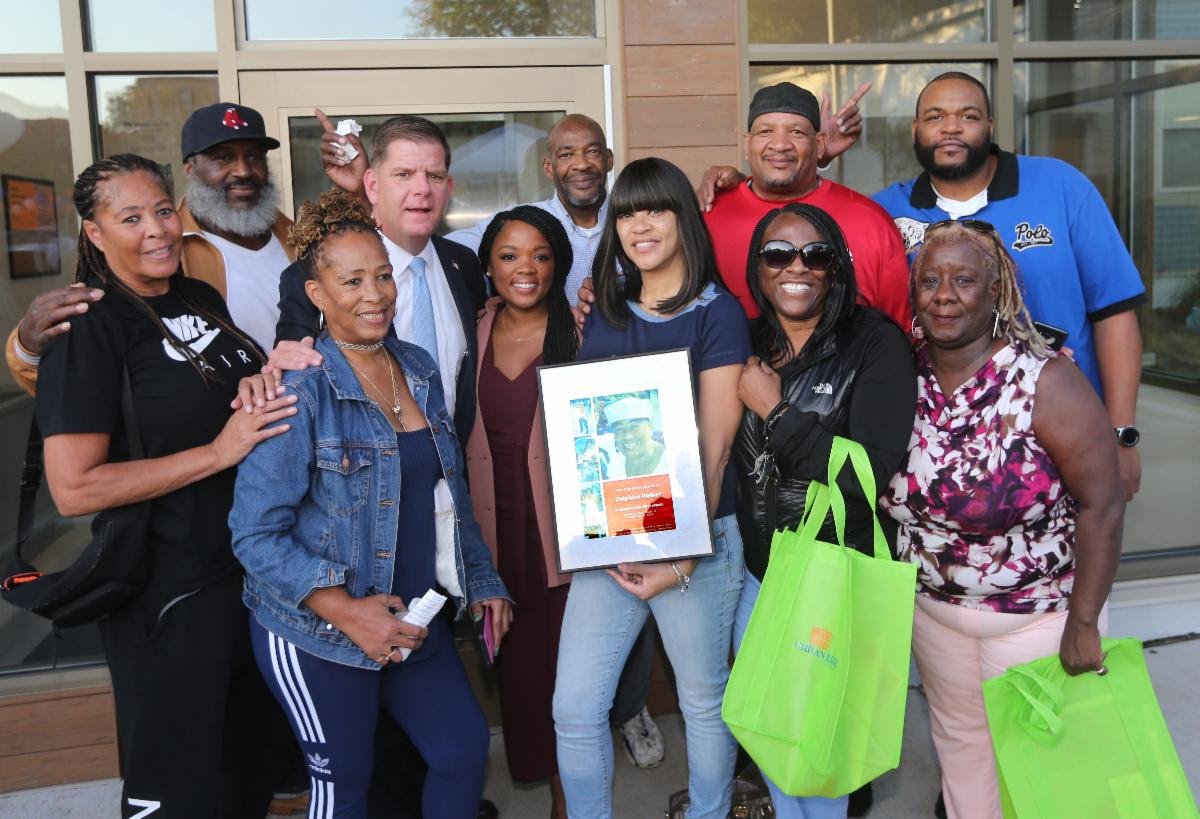
Mayor Martin J. Walsh today joined the community development agency Urban Edge, elected officials, community leaders and neighbors to celebrate the opening of the Walker Park Apartments and Delphine’s Courtyard, consisting of 49 units of affordable family housing and a pocket park in Egleston Square. The City of Boston’s Department of Neighborhood Development and the Community Preservation Fund provided more than $2.8 million in total for the new homes and courtyard.

“Today we celebrate the creation of 49 new affordable homes, a crucial step forward in our goal of preserving our neighborhoods,” said Mayor Walsh. “Along with our partners, the City of Boston is making big investments in Egleston Square, increasing opportunity for families and helping us keep housing affordable and accessible. I want to thank Urban Edge and everyone involved in this project for their work in making these new affordable homes possible.”

Mayor Walsh with members of the Walker family.

Mayor Walsh with members of the Walker family.

The Walker Park Apartments redeveloped three formerly vacant or underutilized parcels adjacent to the Egleston Square Branch of the Boston Public Library and in the Egleston Square Main Street District. The development is named for longtime community activist Delphine Walker, whose home stood on one of the development sites. All of the 49 new apartments have been rented to households who earn at or below 60 percent of the Area Median Income (AMI), including eight apartments reserved for families earning 30 percent of AMI or below.

“Urban Edge is proud that we have led investment in Egleston Square and is doing so in a way that honors the neighborhood’s past while providing more opportunities for quality housing for members of the community,” said Natacha Dunker, president of Urban Edge’s Board of Directors. “We are so grateful to Mayor Walsh, the Department of Neighborhood Development, and all of our funders for their support of this important project.”

“Today, we celebrate another victory for our city and community: new construction of 49 income-restricted units and 34 off-street parking spots,” said State Representative Liz Malia (D-11th Suffolk). “This is exactly the type of housing we need to build in Boston and specifically in the Egleston Square Neighborhood. The face of our community depends on it, and I’m  grateful to Urban Edge and the City for having the long-term vision to realize this project and others like it.”

The Walker Park Apartments now boast 13 one-bedroom, 28 two-bedroom, and eight three-bedroom family apartments, an elevator for accessibility, on-site laundry facilities, on-site parking, and Delphine’s Courtyard funded by the Community Preservation Fund. In accordance with state guidelines, funds generated from the Community Preservation Act fund for affordable housing, historic preservation, and parks and open space projects.

“My mother bought her home in Roxbury at a time when many people were not making investments in this community, and she worked with others to strengthen Egleston Square as a neighborhood,” said Pamela Walker, daughter of Delphine Walker. “We are so grateful that Urban Edge has honored her by naming both the apartment complex and the courtyard after her.”

“Since I moved to Walker Park, my life feels different. I can see how my children always have a smile on their faces,” said Cassandra Amazan, a resident of Walker Park Apartments. “It was a great feeling seeing them choosing their own room and making plans of how they would decorate them. It is not only about having or walking in to my own apartment now, it’s about feeling accomplished in many ways and that this is opening new doors for me and my family.”

In accordance with the City of Boston’s Green Affordable Housing Program, Walker Park Apartments will utilize a high-efficiency heating system as well as Energy Star rated appliances. The development employs environmentally friendly design features that meets the U.S. Green Building Council LEED Homes Silver certifiable standard. The development also met the U.S. Environmental Protection Agency’s Energy Star standards. The development team is made up of Urban Edge, Prellwitz Chilinski Associates, and NEI General Contracting, Inc.

The Walker Park Apartments have been made possible by funding from the City of Boston, and State and Federal Low Income Housing Tax Credits from the Commonwealth’s Department of Housing and Community Development (DHCD). Financing team members also included Bank of America Merrill Lynch, Brookline Bank, the Community Economic Development Assistance Corporation, MassDevelopment, MassHousing, Massachusetts Housing Investment Corporation, Massachusetts Housing Partnership, US Bank Corporation, and the US Department of Housing and Urban Development.

Walker Park Apartments strongly aligns with the City’s housing goals outlined in Housing a Changing City: Boston 2030. Mayor Walsh recently increased the City’s overall housing targets from 53,000 to 69,000 new units by 2030 to meet Boston’s population growth. These updated housing goals build on Mayor Walsh’s commitment to increasing access to home ownership, preventing displacement and promoting fair and equitable housing access.

Since the release of the original Housing a Changing City: Boston 2030 plan in 2014, income-restricted housing stock, designed to increase affordable housing, has grown along with overall new production: nearly 20 percent of housing units are income restricted, and 25 percent of rental units are income restricted. In total, after creating an additional 15,820 units of income-restricted housing, Boston will have nearly 70,000 units of income-restricted housing by 2030.

Mayor Walsh’s 2019 housing security legislative package focuses on expanding upon the work that Boston has done to address the region’s affordable housing crisis and displacement risks for tenants by proposing new and strengthening current tools to leverage Boston’s prosperity and create sustainable wealth opportunities that make Boston a more inclusive and equitable city. The housing security bills proposed seek to help existing tenants, particularly the elderly, remain in their homes, and creates additional funding for affordable housing.

For more information on the City’s work to create more housing, please visit: Housing A Changing City: Boston 2030.

###Delp

SourceMayor's Office