Struggling Hotel Becomes Housing for People Experiencing Homelessness

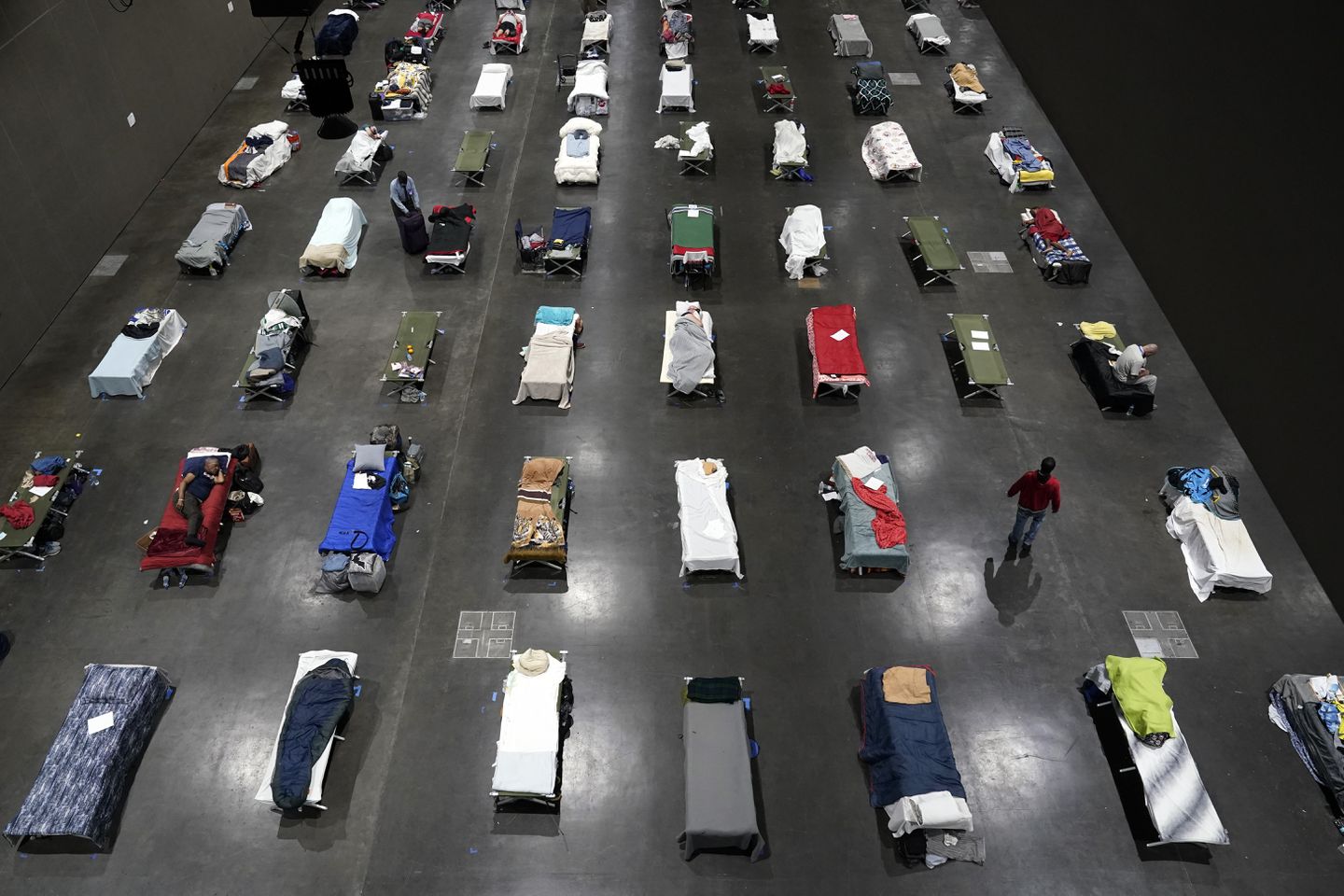
When the COVID-19 pandemic began, people living in congregate facilities — spaces with shared living areas like bedrooms and bathrooms — were especially vulnerable to infection.

At MainSpring House, an emergency shelter for people experiencing homelessness in Brockton, Massachusetts, the COVID infection rate among the 140 adult shelter guests rose to more than 30 percent in the first two months of the pandemic.

Today, those stats look very different. Some shelter guests will be moving into units of their own at the Roadway Apartments in the first quarter of 2022. What began as an emergency measure to protect MainSpring House guests’ health is now an adaptive reuse success story: An underused hotel has been transformed into 69 units of permanent supportive housing, with renovations expected to be complete this spring.

More than a stopgap

In April 2020, Father Bill’s & MainSpring (FBMS), the shelter’s operator and service provider, depopulated the facility in an effort to allow for safe social distancing and prevent further outbreaks. FBMS quickly erected outdoor tents in an adjacent parking lot and moved some guests there, but the tents were only a stopgap measure.

“We needed a viable, long-term solution to permanently reduce the shelter population, especially since many of our guests are at high risk of infection,” says John Yazwinski, FBMS’s president and CEO.

Less than three miles away from MainSpring House, the Rodeway Inn sat empty due to the surging pandemic. Seeing an opportunity, FBMS leased the entire hotel in June 2020 and swiftly relocated more than 60 shelter guests.

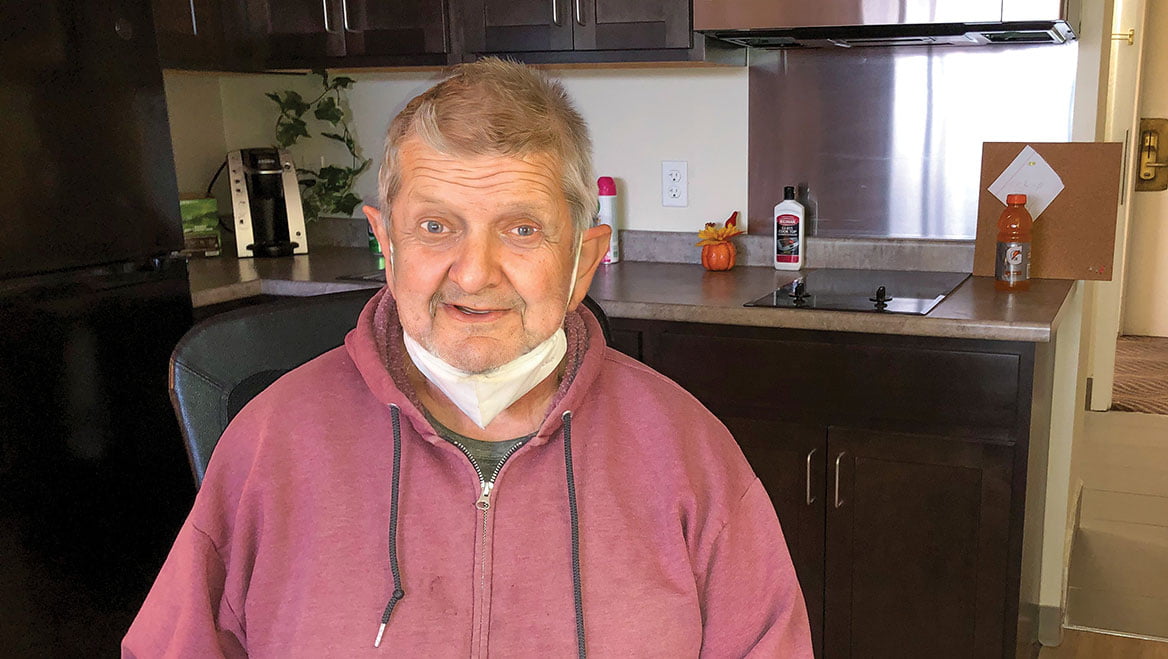
The move paid off. The COVID infection rate at MainSpring House plummeted to less than one percent. For guests like Charles, 70, who has serious health issues and has experienced homelessness for four years, the change was a lifesaver.

“It’s better because I have my own room. I have my own privacy,” he says. (Charles, like other FBMS clients quoted in this story, is using his first name only for privacy.)

Reimbursements from FEMA helped FBMS run the hotel temporarily as an emergency non-congregate shelter, but FBMS knew the subsidies wouldn’t last. FBMS approached the hotel’s owner and negotiated a purchase for $4.2 million.

Zoning tools and funding

As the project’s potential came into view, the state’s Department of Housing and Community Development (DHCD) announced in August 2020 that it would make up to $10 million available in capital resources for creating permanent supportive housing.

“As COVID-19 revealed, the lack of affordable housing in the Commonwealth is a public health crisis, particularly for those most vulnerable among us,” says Massachusetts Housing and Economic Development Secretary Mike Kennealy. The project received more than $7 million in subordinate debt and 69 operating subsidies from DHCD for renovation of hotel rooms into enhanced single room occupancy (SRO) units with kitchenettes. (See the table below for a fuller picture of the project’s funding.)

FBMS also needed the support of its partners at the local level, since the change in use from hotel to housing required city approval. But there was no time for a potentially lengthy public permitting process, given the still-surging pandemic.

FBMS used a zoning tool available in Massachusetts known as the Dover Amendment, which exempts nonprofit organizations providing educational services from land use and dimensional requirements. This tool allowed the homeless service provider to quickly secure its building permit without the need for a public process.

“We were happy to support FBMS in bringing new housing and much-needed services into our community,” says Brockton Mayor Robert Sullivan, whose administration helped confirm the applicability of the Dover Amendment.

To afford the acquisition price, FBMS needed a mission-driven lender that understood the project’s complex layering of public and private financing. FBMS turned to the Community Economic Development Assistance Corporation (CEDAC), a quasi-public community development financial institution that provides early-stage financing to nonprofits that develop affordable housing across Massachusetts.

“CEDAC was established in 1978 by then-state representative Mel King to support projects just like this one with financial and technical assistance,” explains CEDAC’s Executive Director, Roger Herzog.

In January 2021, CEDAC approved the $4.2 million acquisition loan to FBMS, which closed on its purchase of the property in March, ensuring that the 69 people living at the hotel temporarily would be able to stay permanently.

Renovated rooms include a bed, bath, dining area, and a kitchen with built-in storage. Photo courtesy of Father Bill’s and MainSpring.

Renovated rooms include a bed, bath, dining area, and a kitchen with built-in storage. Photo courtesy of Father Bill’s and MainSpring.

Overnight, the congregate shelter population in Brockton was cut in half. The timing couldn’t have been better for Russell, who began experiencing homelessness at the height of the pandemic after struggling with substance use disorder.

“Without them, I would have nothing. I would be on the streets,” says Russell, citing FBMS’s efforts.

A replicable model

Brockton, with a population of 105,000, sits 25 miles south of Boston. The Roadway Apartments building is ideally located across the street from the Brockton VA Medical Center, and two nearby bus lines serve the downtown Brockton commuter rail station. A large shopping center is just a mile away and FBMS’s administrative offices lie just beyond that.

Residents also have access to a comprehensive set of wrap-around supportive services provided by FBMS’s on-site staff, which has already made a huge difference for Russell, who is celebrating one year of sobriety. “I’ve never really lived on my own, so it will be pretty cool to have my own space,” he says.

Since FBMS first proposed its hotel conversion, CEDAC has been providing technical assistance to several other organizations around the state interested in replicating this Housing First model. The success of future efforts “will require continued state capital and operating funds and dedicated service funding,” says CEDAC’s Herzog, particularly with more than 1,200 people still living completely unsheltered in Massachusetts.

FBMS began renovations in September 2021 and the first batch of units were finished soon after, in November. Charles will be one of the first residents to move into a completed unit, which will allow him to conveniently get to his doctor’s appointments. “This is the best thing that will ever happen,” he says.
Will Morgan is an affordable housing project manager at CEDAC.

»

SourcePlanning Magazine

State to give new Father Bill’s project in Quincy $4 million

The state has vowed to chip in $4.2 million toward the planned new Father Bill’s & MainSpring facility for the homeless in Quincy.

Gov. Charlie Baker announced the funding Wednesday after touring Father Bill’s and meeting with guests there.

Baker said the money for Father Bill’s is part of $20 million that would go toward housing initiatives throughout the state.

He said the state needs more housing projects of all kinds to contend with a housing shortage in Massachusetts.

“Housing is expensive because we don’t make enough of it,” Baker said.

The current Father Bill’s building at 38 Broad St. is scheduled to be torn down to make way for a new public safety building that will hold Quincy’s police department.

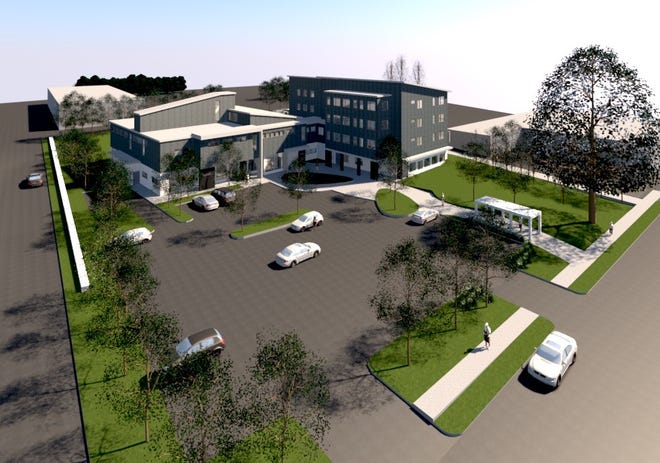
The nonprofit is planning to move across the street into two new buildings.

One building, which will be built first, will consist of a day center with space for programs and training, an emergency shelter and a health care clinic, among other amenities.

The other building, which will be built in a second phase, will hold 30 small apartments for permanent housing.

The project overall will cost about $24 million, said John Yazwinski, president and CEO of Father Bill’s & MainSpring.

Yazwinski said the state money will go toward the first building.

He said the nonprofit needs to find $7 million in private funding for the new facilities, but before even starting a fundraising campaign it has already received $3.2 million in donations.

Construction on the first phase of what is being dubbed the Housing Resource Center is set to begin later this year.

Quincy Mayor Thomas Koch called the project a “new beginning.”

Lt. Gov. Karyn Polito, who was also in Quincy, said the new Father Bill’s facility exemplifies a state push toward “supportive housing” for those experiencing homelessness, combining programming and resources with places to live.

“Hopefully, some of the guests can move into affordable housing and free up room at shelters,” Polito said. “This model (lets people) access the support they need.”

The Father Bill’s project was awarded $4 million through the Department of Housing and Community Development’s supportive housing funding  for construction costs and an additional $250,000 through the state’s Housing Choice Community Capital Grant Program for design and engineering services

The new emergency shelter will have 75 beds, about 60 fewer than the current shelter, but the facility will be configured to be able to expand if necessary.

“We want to end homelessness, not manage it, and the Housing Resource Center will move us closer to that goal,” Yazwinski said. “The (center) is a solutions-based, proactive approach that meets individuals further upstream in their housing crisis. By investing in day services that re-house homeless individuals more quickly and prevent more people from entering shelter, we will lower public costs, reduce reliance on shelter beds and downtown spaces, and provide our neighbors in need with stability and a pathway to self-sufficiency.”

In September 2020, Father Bill’s signed a 99-year-lease with Quincy for the new site at 39 Broad St.

Speaker of the House Ron Mariano, D-Quincy, attended Baker’s announcement Wednesday along with the rest of Quincy’s delegation to the Legislature. Mariano called Father Bill’s a “truly great mark on Quincy.”

Yazwinski said, “Father Bill is looking down from heaven and he’s very happy today.”

An architectural rendering shows a new housing resource center planned by Father Bill's and Mainspring on Quincy's Broad Street.

Thanks to our subscribers, who help make this coverage possible. If you are not a subscriber, please consider supporting quality local journalism with a Patriot Ledger subscription. 

Joe Difazio can be reached at jdifazio@patriotledger.com. Follow him on Twitter @jldifazio.

SourceThe Patriot Ledger

Underutilized hotels can help curtail homelessness

COVID-19 has exposed the flaws in our society’s response to homelessness. When the highly contagious novel coronavirus was spreading across the country early last year, emergency shelters were packed to capacity with dormitory-style beds, many with overflow mattresses spread across floors. Individuals slept within three feet of one another at a time when personal space literally meant the difference between life and death. Communities across Massachusetts reported increases in people sleeping outside, given the need to reduce shelter capacity for social distancing and some individuals’ hesitancy about sleeping in a congregate shelter during the crisis.

As a matter of public health and moral principle, we must do better.

This is an opportunity to reenvision how we approach homelessness and protect our most vulnerable neighbors in a public health crisis. One potential solution is to acquire unused or underutilized properties such as hotels and convert them into permanent supportive housing for people experiencing homelessness.

Our organization, Father Bill’s & MainSpring, is in the process of partnering with the state and City of Brockton to purchase a hotel in Brockton to convert 69 rooms into efficiency-style apartments. This would reduce the city’s individual shelter population by 50 percent.

This is a relatively quick solution, and one that could be put to scale across Massachusetts. State and local governments must transition from the current system of overreliance on emergency shelters and grouping hundreds of people into single overcrowded buildings.

The conversion of hotels into efficiency apartments is being done on a larger scale in California, Oregon, and Washington. Hotel owners, seeing a sharp decline in travel due to the pandemic, are exploring opportunities to sell their properties at a time when there is a population in desperate need of housing.

For the past nine months, the hotel we are purchasing in Brockton has served as a satellite shelter, providing refuge to more than 60 individuals per night who are experiencing homelessness. Repurposing the hotel, which otherwise would have sat empty during the pandemic, allowed our organization to depopulate our main shelter in downtown Brockton, creating space for social distancing.

Many guests are elderly, immunocompromised, or at high risk with other medical conditions. The positive COVID-19 rate among our Brockton guests plummeted from an initial high of 30 percent to less than 1 percent after they moved into the hotel.

In Quincy, we are also partnering with city officials and utilizing a local hotel to depopulate our main shelter.

Once we purchase the Brockton hotel, we will install kitchenettes in each room to turn them into efficiency apartments. Case managers will provide individualized support to tenants, helping them remain housed and become more self-sufficient. This can include assistance securing employment or accessing health care and other community resources.

The national “Housing First approach works. It prioritizes permanent housing to help individuals and families address the issues that had contributed to their homelessness. At Father Bill’s & MainSpring, we operate more than 550 permanent supportive housing units; 99 percent of our tenants stay housed for at least one year, while 93 percent stay housed for at least three years.

Converting existing properties is much easier than developing a new apartment building in an overheated real estate market. For example, it can take three years or more to site, finance, and construct a 25-unit building for homeless individuals. During that same time, dozens, if not hundreds, more individuals in that same community will become homeless and enter an already crowded and costly shelter system.

These conversions just got easier thanks to housing legislation enacted by Governor Charlie Baker and the Legislature. The law, which lowers the threshold to change zoning rules for new housing, will play an important role as communities strategize for a post-pandemic environment where empty commercial properties could be quickly repurposed for residential space.

The efficiency of converting underutilized properties into housing is a game-changer, as well as a proactive and cost-effective approach to health care. A recent study by the Blue Cross Blue Shield of Massachusetts Foundation found that expenditures by MassHealth, the Medicaid program administered by the state, were lower for formerly homeless individuals in supportive housing than they were for individuals living in shelters and on the streets.

Turning hotels into housing works because it’s cost-effective, it can happen quickly, and it leads to better health care outcomes. But for the state to achieve this on a larger scale, to help our most vulnerable neighbors, it needs political good will and backing from local communities as well as funding and support from the private and public sectors.

In times of crisis, it’s always those who have the least who suffer the most. COVID-19 is no different. But we’re hopeful that this crisis can be a turning point in our fight to end homelessness.

SourceThe Boston Globe

Brockton nonprofit builds another building for homeless veterans

The head of Father Bill’s & MainSpring said that the new Montello Welcome Home II project is another step toward adequately addressing the homelessness problem in the city with a “housing first” approach. The three-story building features 23 new housing units for homeless veterans and individuals. The $5 million project, with a combination of public and private funding, replicates the building across the street from it called Jack’s Place that opened two years ago.

BROCKTON – Some Brockton residents complain about the presence of the MainSpring House in the downtown area, and the large crowds of homeless people who hang around Perkins Park.

But the best way to get people out of the downtown emergency shelter and off the streets is by supporting housing like the three-story building that’s now being completed on the north side of the city, according to the Brockton nonprofit behind the project.

“Our whole model is housing first,” said John Yazwinski, longtime president and CEO of Father Bill’s & MainSpring, explaining how homelessness is typically the end result of addiction and mental health problems. “Get somebody into housing, out of Perkins Park, off the streets, and out of Mainspring. And when we get them into a building like this, we can provide better case management services here, and better help them with what’s causing their homelessness, than when people are sleeping outside or staying at MainSpring. … We hope we would be able to continue to develop this type of housing response, instead of having a large MainSpring house.”

Father Bill’s & MainSpring is reaching the final stretch of its $5 million construction project for a 10,000-square-foot-building with 23 efficiency apartments for homeless individuals, including 12 units with a priority for U.S. military veterans. The building is being called “Montello Welcome Home II.”

The project included the demolition of the old Phaneuf Hospital (and former Catholic Charities site) at 682 N. Main St. last year, before construction of the new building began in its place in October. The new building replicates the design and concept of Jack’s Place, a 20-unit supportive housing that was completed two years ago, which also has a priority for homeless veterans. In addition to Jack’s Place, there’s Jeff’s Place, the nonprofit’s original supportive housing project in Brockton, which opened on Spring Street in 2010 with 32 units.

Yazwinksi said that Father Bill’s & MainSpring has a 95 percent success rate in its supportive housing when it comes to retaining formerly homeless tenants, who must contribute 30 percent of any income toward rent and abide by rules, such as no drug use or staying out at night.

“We know that the answer to ending homelessness is supportive housing like this,” Yazwinski said. “What it’s showing is a successful model.”

Yazwinski said public entities and private investors are buying into the project and the overall strategy of housing first. Yazwinski said they see the success rate and how the buildings improve the neighborhood.

For this project, according to Father Bill’s & MainSpring, $3.1 million came from the Massachusetts Department of Housing and Community Development; $50,000 came from the city of Brockton’s federal HOME funds; and $100,000 came from the Home Depot Foundation; $75,000 came from MassHousing’s Center for Community Recovery Innovations; $50,000 came from the Amelia Peabody Charitable Foundation; and the rest was financing from the banks.

There are also project-based subsidies, both Section 8 and Massachusetts rental vouchers, that go into each unit to keep them affordable, Yazwinski said.

Medicaid is contributing some to case management, amounting to about $5,000 per person each year, Yazwinski said.

“People are seeing it as cost-effective,” Yazwinski said. “What we’re targeting here is people who have struggled a long time with homelessness and have been very expensive to the taxpayer. We’re talking about the people who utilize the emergency rooms at Signature (Healthcare Brockton Hospital) a lot and detoxes and that have high costs. Medicaid is actually helping us because they are seeing … all those costs decrease drastically.”

SourceThe Enterprise