MassHousing Closes on $2.8 Million in Financing for New Workforce Housing in Northampton

MassHousing has closed on $2.8 million in affordable workforce housing financing to The Community Builders for the ongoing construction of the 12-unit 35 Village Hill Road in Northampton. Valley Community Development Corporation is the project co-sponsor.

The new housing, which is being developed on the site of the former Northampton State Hospital, will feature 10 workforce housing apartments for moderate-income households and two deeply affordable units for clients of the Massachusetts Department of Mental Health (DMH).

“MassHousing is pleased to support The Community Builders and Valley Community Development in their transformation of a vacant lot into new homes for working households and residents in need,” said MassHousing Executive Director Chrystal Kornegay. “We’re happy that these new homes will serve working and disabled households for many years into the future.”

“The Community Builders is excited to once again be expanding housing opportunities at Village Hill in Northampton. Our organization is committed to building strong communities where all people can thrive. We are grateful to MassHousing and our other state and local partners who help us make this work possible” said TCB Director of Development Rachana Crowley.

“Valley Community Development is proud to be part of increasing the economic diversity of housing options at Village Hill,” said Valley’s Executive Director Joanne Campbell.

The 12 new apartments will be contained in one building, which will also have first-floor commercial space. Ten of the apartments at 35 Village Hill Road will be workforce housing units affordable to moderate-income households. Six of the workforce housing units will be deed-restricted for households earning at or below 120 percent of the Area Media Income (AMI), and four will be workforce units for households earning at or below 80 percent of AMI. Additionally, two units will be deeply affordable for DMH clients and will be supported by federal Section 8 project-based vouchers. The AMI for Northampton is $76,000 for a household of four.

There will be two studio apartments, six one-bedroom apartments and four two-bedroom apartments. Construction is expected to be completed in September.

MassHousing is providing TCB with $1.4 million in permanent financing, and $1.4 million in workforce housing funding from the Agency’s Workforce Housing Initiative.

In addition to the MassHousing financing, the Massachusetts Department of Housing and Community Development (DHCD) is providing the project-based vouchers and $1.5 million in direct support. The project also received $1.3 million in funding through the Community Scale Housing Initiative (CSHI), a joint initiative of DHCD and MassHousing that funds smaller-scale affordable rental developments.

The Community Economic Development Assistance Corporation (CEDAC) is providing $360,000 in financing, the City of Northampton contributed $200,000 in local Community Preservation Act funding and Citizens Bank is providing $2.5 million in construction financing.

35 Village Hill Road advances the Baker-Polito Administration’s goal of creating up to 1,000 new workforce housing units affordable to middle-income households through MassHousing’s Workforce Housing Initiative. Since the inception of the initiative in 2016, MassHousing has committed or closed workforce housing financing totaling $98.2 million, to 45 projects, located in 21 cities and towns. To date, the Workforce Housing Initiative has advanced the development of 4,030 housing units across a range of incomes, including 1,096 workforce housing units.

The general contractor is Western Builders. The architect is Davis Square Architects and the management agent is TCB.

MassHousing has financed five rental housing communities in Northampton totaling 642 units of housing with an overall original loan amount of $33.4 million and the Agency has also provided home mortgage loans to 427 homebuyers and homeowners with an original purchase principal balance of $31.2 million.

SourceBoston Real Estate Times
WinnCompanies joins with state and city officials to announce plans for $38.3 million mixed-income development in Lowell

WinnCompanies, an award-winning multifamily development and management company, today joined with Massachusetts Lt. Gov. Karyn Polito, state and Lowell city officials to unveil plans for a $38.3 million residential construction project in the Hamilton Canal Innovation District, a collection of 17 parcels master-planned to transform the primary gateway of downtown Lowell.

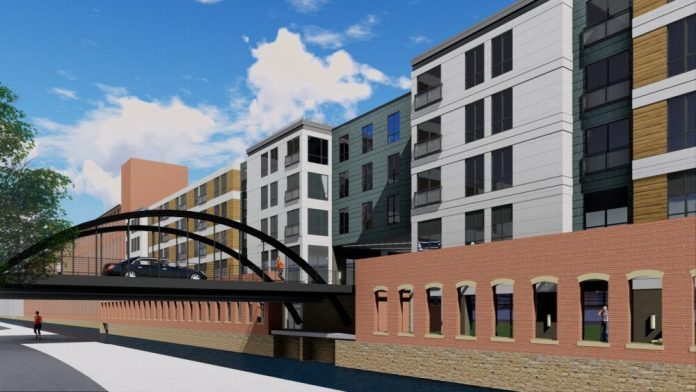
Building on vacant, side-by-side parcels separated by Canal Street, WinnDevelopment will create two five-story buildings with 125 apartments and 5,000 square feet of commercial space. It will be a true mixed income project—54 workforce apartments will rent at 100 percent of Area Median Income (AMI); 39 units will be affordable up to 60 percent of AMI; and, 32 apartments will rent at market rates.

“We’re pleased to be moving ahead with a development featuring a sizable component of workforce housing, which seems appropriate for the city seen as the cradle of the Industrial Revolution in America,” said WinnDevelopment President Larry Curtis. “This project will add a new twist to our long track record of delivering innovative mixed-income, mixed-use communities that contribute to the vitality and the economy of Lowell.”

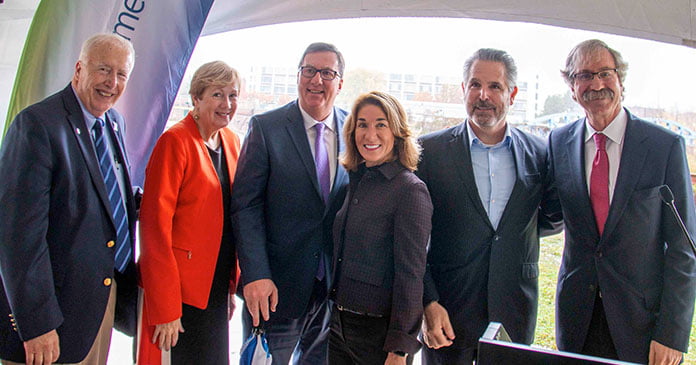
(left to right): Lowell Mayor William Samaras, Lowell City Manager Eileen Donoghue, Massachusetts State Rep. David M. Nangle, Massachusetts Lt. Gov. Karyn Polito, WinnCompanies Executive Vice President Michael O’Brien and WinnDevelopment President Larry Curtis.

The Lowell City Council cleared the way for the project on Tuesday night, unanimously voting to approve Urban Center Housing Tax Increment Financing (UCH-TIF) under a new state program designed to promote multifamily housing in urban centers. Construction is expected to begin in late December 2019 and be completed in December 2021.

“These are fun places to live. There’s a lot going on. There’s a vibe in the downtowns of these old industrial cities because of this collaboration and the willingness of all of you to take the chance, to take the risk, and move forward,” said Lt. Gov. Karyn Polito. “This is a best-of-everything project because you a mixed use project combining commercial and housing together, but it’s also mixed income. To have workforce housing, affordable housing and market rate housing all together is a really great accomplishment. It’s something to the core that WinnCompanies fully embraces.”

Construction will be financed with equity generated by Bank of America’s purchase of federal and state Low-Income Housing Tax Credits; a construction loan from Bank of America; a first mortgage and Workforce Housing funds from MassHousing; financing from the Massachusetts Department of Housing & Community Development under the state’s Affordable Housing Trust Fund, Housing Stabilization Fund and HOME program; financing from the Community Economic Development Assistance Corporation in the form of the Facilities Consolidation Fund and the Community-Based Housing program; Opportunity Zone investment and developer equity from WinnCompanies; and, funds from the Massachusetts Clean Energy Center and MassSave, both dedicated to advancing energy efficiency and clean technology.

The City of Lowell is supporting the project with HOME program funds, the UCH-TIF plan, and infrastructure investments in and around the 51,000-square-foot site.

“The City has made significant investments to put in place the infrastructure needed to support private development in the Hamilton Canal Innovation District. We are pleased that WinnCompanies has put forward a project that will capitalize on these investments and that will help meet the demand for more safe and energy-efficient housing in Lowell in a way that will also stimulate commercial growth in this key area,” said City Manager Eileen Donoghue. “This announcement marks the continuation of a positive partnership between WinnCompanies and the City that has been successful in developing high quality projects that advance our economic development goals.”

WinnDevelopment Project Director Matthew Curtin will lead the development team, which features Keith Construction; ICON Architecture; landscape architect Copley Wolff Design Group; interior designer Wolf in Sheep Design; civil engineer Vanasse Hangen Brustlin, Inc. (VHB); and, structural engineer Odeh Engineers. Deirdre Robinson, a partner at Sullivan & Worcester, serves as legal counsel for the project.

“I am thrilled to see additional private investment in the Hamilton Canal Innovation District. Bringing mixed-use developments to this area is important to ensure that our downtown continues to grow and thrive into the future,” said Lowell Mayor William Samaras.

The development will offer 15 studio apartments, 63 one-bedroom apartments and 47 two-bedroom apartments. The two residential buildings will be linked to each other by an enclosed sky bridge spanning Canal Street, a nod to Lowell’s history when similar connectors joined industrial mill buildings. The sky bridge will also compliment the new signature bridge the city recently built over the lower Pawtucket Canal.

Ambitious Energy Performance Goals

The complex will be designed, built and operated to achieve stringent energy performance goals, including certification through both Energy Star Homes and Enterprise Green Communities.

The environmentally responsible design and construction will feature high-efficiency air source heat pumps for heating and cooling, high performance building envelope details, including robust exterior wall and roof insulation, ENERGY STAR windows, LED lighting, ENERGY STAR appliances, and balanced ventilation with energy recovery for healthy indoor air quality and maximum efficiency.

Final Enterprise Green Communities certification will be achieved post-construction, following rigorous inspections, performance testing and verification provided by Boston based non-profit New Ecology Inc.

Critical incentive funding made available through the Massachusetts Clean Energy Center and MassSave Residential New Construction Program will support added construction costs associated with the project’s HVAC systems and building envelope design, which were designed and selected to reduce the project’s carbon emissions and long-term energy efficiency goals.

Located a half mile from the Lowell Connector with direct access to Route 495 and Route 3, the apartment community will be adjacent to a new 900-space parking garage that is under construction to serve downtown businesses and the new Lowell Justice Center regional court facility scheduled for completion in fall 2020. Residents also will be within walking distance of downtown retail business, a commuter rail line and bus routes served by the Gallagher Intermodal Terminal, as well as downtown retail businesses.

Lowell hosts the single largest concentration of properties owned by WinnCompanies in the United States. In addition, more than 100 company executives and accounting team members work at its regional headquarters in Boott Mills.

A member of the Lowell business community for nearly 25 years, WinnCompanies currently owns and manages seven award-winning residential properties featuring 572 apartments and condominiums, as well as 88,000 square feet of commercial space. The company’s property management arm, WinnResidential, manages an additional 250 apartments in the city.


About WinnCompanies

WinnCompanies is an award-winning national developer and manager of high-impact affordable, middle income and market rate housing communities. Supported by 3,500 team members, the company acquires, develops and manages affordable, senior, mixed-income, market rate, military and mixed use properties. Founded in 1971 and operating in 22 states and the District of Columbia, WinnCompanies is one of the nation’s leading multifamily housing managers with 100,000 units under management. It is the country’s largest manager of affordable housing and the second largest manager of privatized U.S. military housing.

SourceYield PRO Magazine

WinnCo Unveils $38.3 Million Workforce Housing Project in Lowell

WinnCompanies, a multifamily development and management company, joined with Massachusetts Lt. Gov. Karyn Polito, state and Lowell city officials to unveil plans for a $38.3 million residential construction project in the Hamilton Canal Innovation District, a collection of 17 parcels master-planned to transform the primary gateway of downtown Lowell.

Building on vacant, side-by-side parcels separated by Canal Street, WinnDevelopment will create two five-story buildings with 125 apartments and 5,000 square feet of commercial space. It will be a true mixed income project – 54 workforce apartments will rent at 100% of Area Median Income (AMI); 39 units will be affordable up to 60% of AMI; and, 32 apartments will rent at market rates.

“We’re pleased to be moving ahead with a development featuring a sizable component of workforce housing, which seems appropriate for the city seen as the cradle of the Industrial Revolution in America,” said WinnDevelopment President Larry Curtis. “This project will add a new twist to our long track record of delivering innovative mixed-income, mixed-use communities that contribute to the vitality and the economy of Lowell.”

The Lowell City Council cleared the way for the project on Tuesday night, unanimously voting to approve Urban Center Housing Tax Increment Financing (UCH-TIF) under a new state program designed to promote multi-family housing in urban centers. Construction is expected to begin in late December 2019 and be completed in December 2021.

“These are fun places to live. There’s a lot going on. There’s a vibe in the downtowns of these old industrial cities because of this collaboration and the willingness of all of you to take the chance, to take the risk, and move forward,” said Lt. Gov. Karyn Polito. “This is a best-of-everything project because you a mixed use project combining commercial and housing together, but it’s also mixed income. To have workforce housing, affordable housing and market rate housing all together is a really great accomplishment. It’s something to the core that WinnCompanies fully embraces.”

Construction will be financed with equity generated by Bank of America’s purchase of federal and state Low-Income Housing Tax Credits; a construction loan from Bank of America; a first mortgage and Workforce Housing funds from MassHousing; financing from the Massachusetts Department of Housing & Community Development under the state’s Affordable Housing Trust Fund, Housing Stabilization Fund and HOME program; financing from the Community Economic Development Assistance Corporation in the form of the Facilities Consolidation Fund and the Community-Based Housing program; Opportunity Zone investment and developer equity from WinnCompanies; and, funds from the Massachusetts Clean Energy Center and MassSave, both dedicated to advancing energy efficiency and clean technology.

The City of Lowell is supporting the project with HOME program funds, the UCH-TIF plan, and infrastructure investments in and around the 51,000-square-foot site.

“The City has made significant investments to put in place the infrastructure needed to support private development in the Hamilton Canal Innovation District. We are pleased that WinnCompanies has put forward a project that will capitalize on these investments and that will help meet the demand for more safe and energy-efficient housing in Lowell in a way that will also stimulate commercial growth in this key area,” said City Manager Eileen Donoghue. “This announcement marks the continuation of a positive partnership between WinnCompanies and the City that has been successful in developing high quality projects that advance our economic development goals.”

WinnDevelopment Project Director Matthew Curtin will lead the development team, which features Keith Construction; ICON Architecture; landscape architect Copley Wolff Design Group; interior designer Wolf in Sheep Design; civil engineer Vanasse Hangen Brustlin, Inc. (VHB); and, structural engineer Odeh Engineers. Deirdre Robinson, a partner at Sullivan & Worcester, serves as legal counsel for the project.

“I am thrilled to see additional private investment in the Hamilton Canal Innovation District. Bringing mixed-use developments to this area is important to ensure that our downtown continues to grow and thrive into the future,” said Lowell Mayor William Samaras.

The development will offer 15 studio apartments, 63 one-bedroom apartments and 47 two-bedroom apartments. The two residential buildings will be linked to each other by an enclosed sky bridge spanning Canal Street, a nod to Lowell’s history when similar connectors joined industrial mill buildings. The sky bridge will also compliment the new signature bridge the city recently built over the lower Pawtucket Canal.

SourceBoston Real Estate Times

Affordable Housing Next Frontier in Health Care

Affordable Housing Next Frontier in Health Care

New Programs, Partnerships and Funding Prioritize Health Improvements

By Roger Herzog and Sara Barcan

Special to Banker & Tradesman

Affordable housing is the next big frontier in health care, and community development practitioners are catalyzing the growing discussion on social determinants of health, defined by the Centers for Disease Control and Prevention (CDC) as “conditions in the places where people live, learn, work and play that affect a wide range of health risks and outcomes.”

In Massachusetts, we are at a critical juncture: health care policymakers seek to rein in high costs while their housing counterparts are increasing efforts to reduce chronic homelessness and address affordable housing shortages. These challenges are intertwined, especially when reviewing the growing body of research that demonstrates the negative health outcomes and high health costs for homeless and rent-burdened families.

On the housing side, the Department of Housing and Community Development (DHCD) and CEDAC have funded over 3,000 supportive housing units since 2013. We’ve achieved this through a twofold effort that includes improved coordination between housing and health/human services agencies, and increases to the state’s capital budget for housing, especially supportive housing for people experiencing homelessness, elders, persons with disabilities, veterans and unaccompanied youth.

The state makes innovative use of health care and human services resources, including Medicaid, to pay for clinical supports and services that stabilize tenancies and allow residents to succeed in community-based housing. This year was a very important year, as the Legislature and the Baker administration enacted a $1.8 billion housing bond bill, which authorized the capital funds that the state uses to construct supportive housing.

For decades, CEDAC has managed supportive housing capital programs on DHCD’s behalf. Several of these programs, including the Facilities Consolidation Fund and the Community Based Housing program, help to ensure that people with chronic disabilities may live in the community rather than the institutions that housed them previously. Residents of this housing access care and supportive services in their own homes. Medicaid waivers pay for many of these services; we know that they help to keep people out of institutions and can save health care dollars. So it’s nothing new for Massachusetts to capitalize on the intersection of housing and services: for decades, we’ve provided capital and operating subsidies for buildings while Medicaid has covered the supports.

Social Determinants Become Larger Consideration

In recent years, the health care sector has begun to connect its growing understanding about the impacts of these social determinants into their planning and investment decisions. The federal Patient Protection and Affordable Care Act established new opportunities to foster increased collaboration between housing and health care providers. Attorney General Maura Healey and the Department of Public Health have issued updated guidance for community benefits from hospitals and determination of need rules, both of which serve as the oversight framework for hospital performance and accountability. The health sector is responding, with innovative approaches in the community health needs assessment process and plans to utilize financial and real estate assets to align with their mission.

For instance, Boston Medical Center (BMC) recently announced it would invest $6.5 million and work with community partners to support new affordable housing to reduce medical costs. As BMC’s Dr. Megan Sandel has said, “housing is a critical vaccine that can pave the way to long-term health and wellbeing.”

BMC’s initiative was significant not only because of the $6.5 million but also because, as stated in its press release, it “represents the first time that a Massachusetts hospital has put all its required community health investment into one social determinant of health – in this case, housing – to satisfy the requirements of the Massachusetts Department of Public Health for a determination of need.”

BMC’s efforts are not restricted to the housing stabilization initiative it is creating with two nonprofits, Pine Street Inn and Boston Health Care for the Homeless Program. The hospital’s Elders Living at Home Program is working with the nonprofit Roxbury-based Madison Park Development Corporation and Winn Management to create a pilot project, a community based Complex Care Management program, at Madison Park Village. A community health advocate and a community wellness nurse work on-site to provide services with the goal of improving health outcomes, independence and housing stability for residents.

These activities bode well for future collaboration between the health care and affordable housing sectors.

A vibrant community development sector in Massachusetts with a proven track record in real estate development is working to strengthen the relationship with health care institutions. And as our experience with supportive housing shows, CEDAC stands ready to help with policy development, early stage financing and technical assistance.

Roger Herzog is the executive director of the Community Economic Development Assistance Corporation. Sara Barcan is CEDAC’s director of housing development.

https://cedac.org/wp-content/uploads/2018/09/BT_Reprint_HerzogBarcan_092418.pdf

»

SourceBanker & Tradesman

Four-unit housing developments breaks ground Thursday

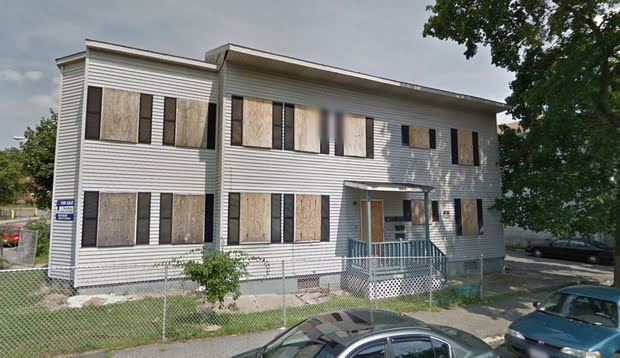
Community development group Worcester Common Ground will break ground on a new affordable housing complex in a vacant former four-unit condominium building on Jaques Avenue.

The property will be rehabilitated for use as four affordable rental apartments, said Worcester Common Ground in a press release Monday. The property has sat vacant since the 2008 foreclosure crisis.

The community development group representing the Piedmont and Elm Park area are hosting a groundbreaking ceremony at the site at 2 p.m. Thursday. Three units will be affordable to extremely low-income households with incomes up to 30 percent of the area median income. Another unit will be affordable for a family with an income up to 50 percent on the area median income.

Two of the units will provide housing for Massachusetts Department of Mental Health clients, the organization announced.

Worcester Common Ground was awarded $826,000 in March for the project from the Housing Trust Fund, Home Innovation Fund, Facilities Consolidation Fund and the City of Worcester.

The groundbreaking comes after the completion of the city’s first bioshelter, down the street at 7 Jaques Ave. The green space was created through a partnership with Worcester Polytechnic Institute students. Construction began in the summer.

http://www.wbjournal.com/article/20171002/NEWS01/171009996/four-unit-housing-developments-breaks-ground-thursday

SourceWorcester Business Journal