Springfield’s Educare Facility Is State-Of-The-Art In Every Respect

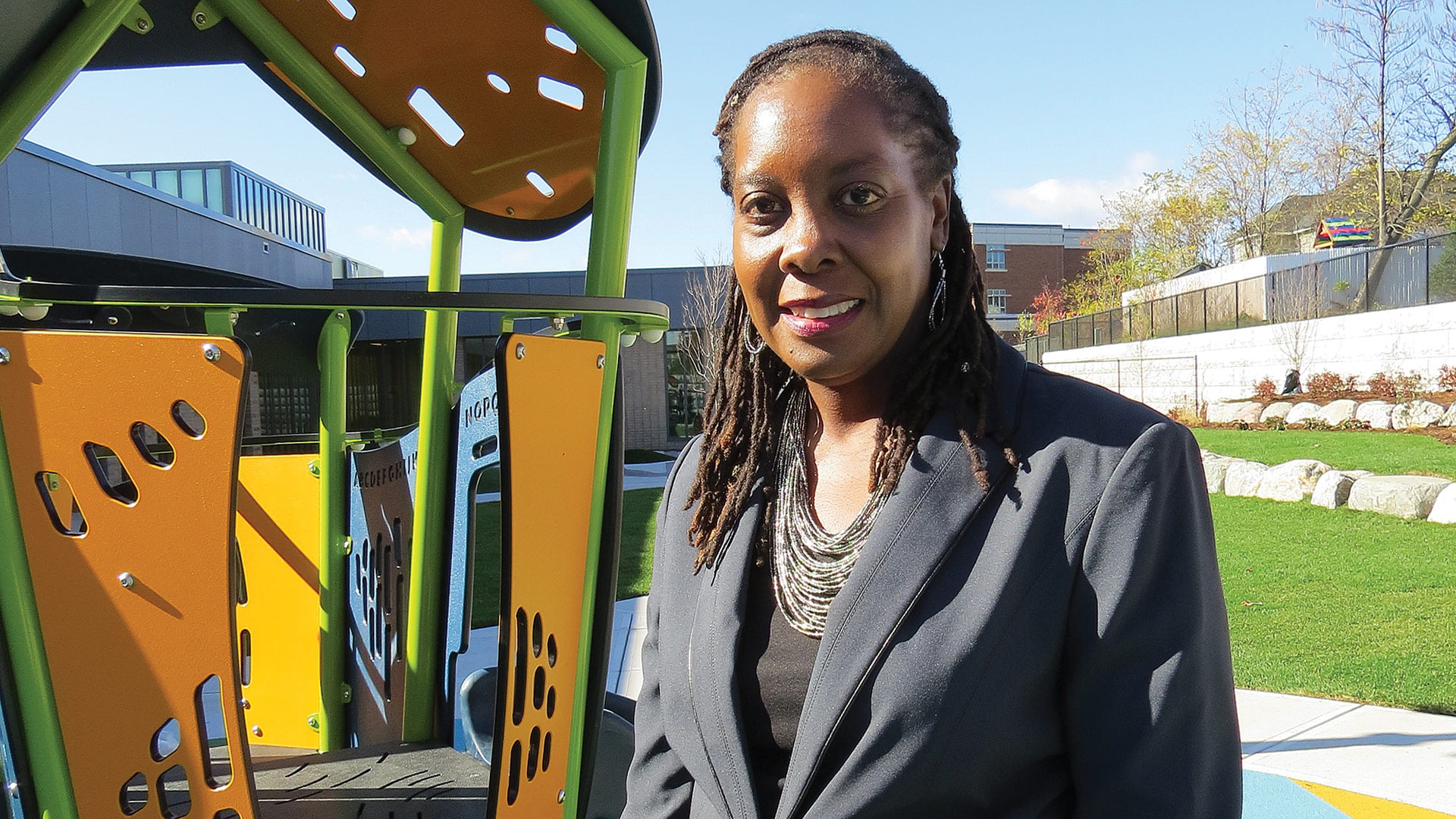
Nikki Burnett says Springfield’s Old Hill neighborhood and those surrounding it certainly need the gleaming new $14 million Educare facility constructed next door to the Elias Brookings Elementary School on Walnut Street.

More to the point, though, she told BusinessWest, they deserve this facility, which can only be described with that phrase state-of-the-art when it comes to everything from its programs to its play areas to its bathrooms.

“Mason Square, Old Hill, McKnight, Bay, all those neighborhoods … they’re so rich in history, so they’re rich in great success stories that have come out of here and are still coming out of here,” said Burnett, the recently named executive director of the 27,000-square-foot facility, who should know; she grew up there herself. “People like Ruth Carter, who just won an Oscar for the costume design in the movie Black Panther — she’s from Springfield.

“We have to celebrate those things, and we have to model those things for our children so they can see that they have greatness in them,” she went on. “One of the very important things about Educare is that it aligns potential with opportunity. I believe all children are born with immense potential, but many do not have the same opportunity to realize that, so Educare will give them that push — it will help readjust their trajectory.”

That’s why this area of the city, traditionally among the poorest neighborhoods in the state, deserves this Educare facility, just the 24th of its kind in the country and the only one in Massachusetts, she continued, adding quickly that this building, and the Educare model itself, were designed to show decision makers and society in general what all young children deserve and what has to be done so that they can all enjoy a similar experience.

Mary Walachy, executive director of the Irene E. and George A. Davis Foundation, which spearheaded efforts to bring the Educare facility to fruition, agreed.

“The message being sent here is that it costs money to do this work well,” she said. “It costs money to fund quality at the level that children in this community and others deserve, and we can’t expect outcomes that we want from children if the investment is not there at the front end.”

Considering those comments, Educare is certainly much more than a building, and those who visit it — and many will in the weeks and months to come — will come to understand that.

Indeed, the facility set to open later this year, supported by the Buffett Early Childhood Fund and to be operated in partnership with Holyoke Chicopee Springfield Head Start, is, for lack of a better term, a standard — or the new standard when it comes to early-childhood education.

And it is, as Burnett and Walachy noted, a model — hopefully to be emulated — that incorporates everything science says young children need to flourish. This includes data utilization, high-quality teaching practices (three teachers to a classroom instead of the traditional two), embedded professional development, and intensive family engagement.

All this and more will come together at the much-anticipated facility, which will provide 141 children up to age 5 (already enrolled at a Head Start facility in that neighborhood) and their families with a full-day, full-year program that Burnett projects will be a place to learn — and not just for the young children enrolled there.
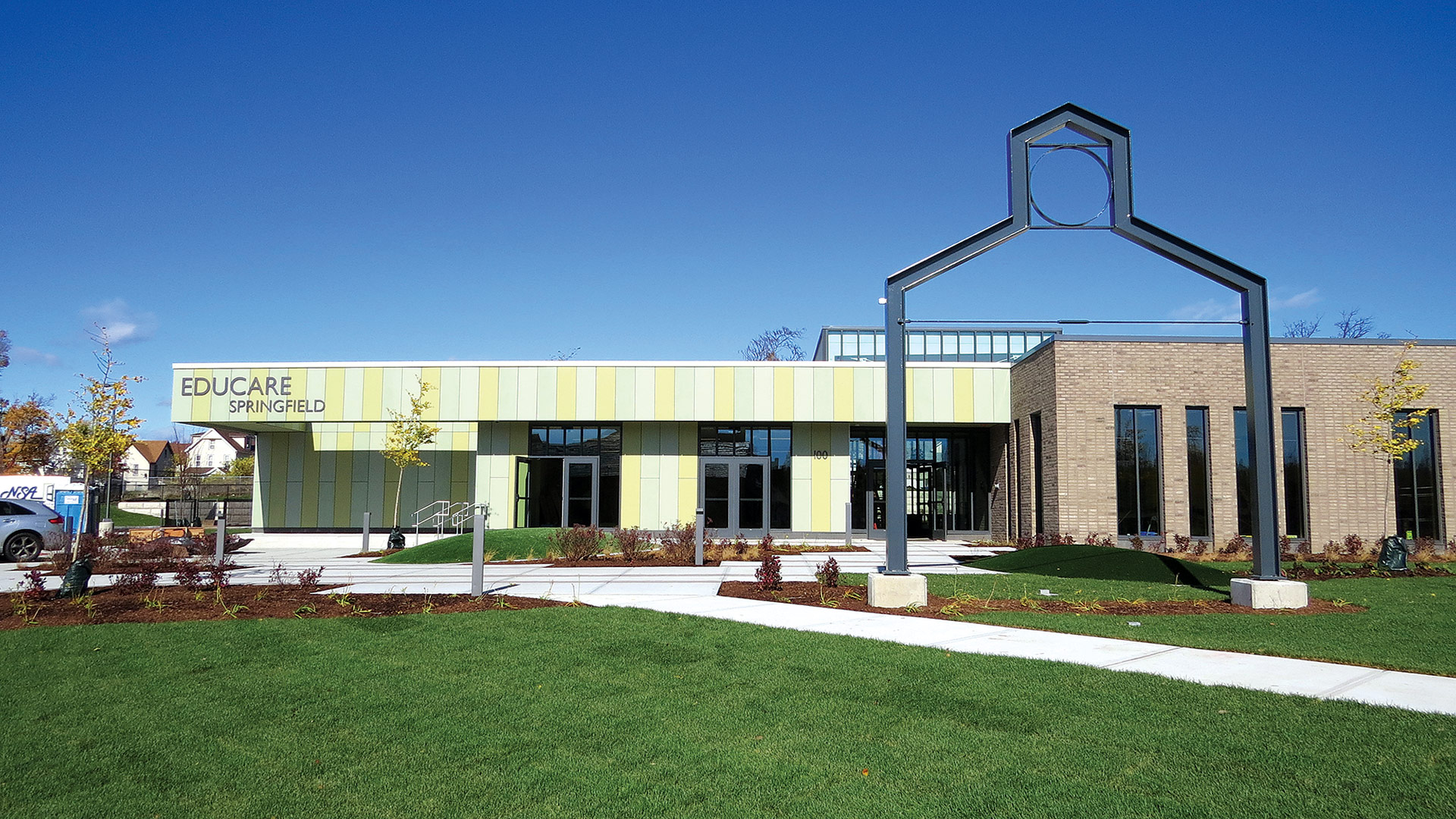
The Educare facility in Springfield is just one of 24 in the country and the only one in Massachusetts.

“Educare is going to be a demonstration site; we’re going to be able to bring in students of education, social work, counseling and therapy, and other areas from across the state and have them observe and learn our model,” she explained. “We understand that 141 children is not every child; however, what we learn here, we’re going to be able to send out — others can do what we’re doing. And on a policy level, it’s my hope that legislators can see the success of this and realize that, when they’re making out the budget, it needs to be funded so everyone can enjoy Educare quality.

“Educare is not going to be on every corner,” she went on. “But that doesn’t mean that the quality of Educare cannot be beneficial to all children.”

For this issue and its focus on education, BusinessWest toured the Educare facility and talked with Burnett and others about what this unique early-education center means for Springfield and especially those young people who walk through its doors.

New School of Thought

Janis Santos, the longtime director of Holyoke Chicopee Springfield Head Start, recalled that, when she toured the Educare facility recently as construction was winding down, she became quite emotional.

“I have to be honest, I started crying,” said Santos, honored roughly a year ago by BusinessWest as one of its Women of Impact for 2018. “One of the construction-crew members said, ‘why are you crying?’ and I said, ‘because I’m so happy.’

“Educare is going to be a demonstration site; we’re going to be able to bring in students of education, social work, counseling and therapy, and other areas from across the state and have them observe and learn our model.”

“This is a dream come true,” she went on, adding that the facility provides dramatic evidence of how far early-childhood education has come during her career — it was considered babysitting when she got her start — and how important it is to the overall development of young people.

Tears of joy have been a common emotional response among those who have toured the site, especially those involved in this initiative from the beginning, but there have been others as well. Indeed, Burnett told BusinessWest, when the staff members assigned to the Educare center visited the well-appointed teachers’ room, many of them started clapping.

These reactions provide ample evidence that the six-year journey to get the facility built and the doors open was certainly time and energy incredibly well-spent.

By now, most are familiar with the story of how an Educare facility — again, one of only 24 in the country — came to be in Springfield. It’s a story laced with serendipity and good fortune at a number of turns.

It begins back in 2014 when an early-childhood center on Katherine Street in Springfield closed down abruptly, leaving more than 100 children without classroom seats, said Walachy, adding that the Davis Foundation began looking at other options for early education in that building.

One of them was Educare, she went on, adding that officials with the Buffett Foundation and other agencies involved, as well as architects, came and looked at the property. They quickly determined that it was not up to the high standards for Educare centers.

“Their model is ‘make it a state-of-the-art, unbelievable building to send a strong message that this is what all kids deserve,’” said Walachy, adding that, after those inspections and being informed that a new facility would have to be built at a cost of more than $12 million, the Educare concept was essentially put on the shelf.

And it stayed there for the better part of two years until an anonymous donor from outside the Bay State who wanted to fund an Educare facility came into the picture.

“This individual pledged to pay for at least half the cost of building an Educare somewhere in the country, and she was willing to do it here in Springfield,” she said, adding that the donor has written checks totaling more than $9 million for both the construction and operation of the facility.

With this commitment, those involved went about raising the balance of the needed funds — the Davis Foundation and another donor committed $2 million each, and state grants as well as New Market Tax Credits were secured, bringing the total raised to more than $20 million — and then clearing what became another significant hurdle, finding a site on which to build.

Indeed, the Educare model is for these facilities to be built adjacent to elementary schools, and in Springfield, that proved a challenging mandate. But the tornado that ravaged the city, and especially the Old Hill area, in 2011, forcing the construction of a new Brookings School, actually provided an answer.

Indeed, land adjacent to the new school owned by Springfield College was heavily damaged by the tornado, making redevelopment a difficult proposition. Thus, the college became an important partner in the project by donating the needed land.

But while it’s been a long, hard fight to get this far, the journey is far from over, said both Burnett and Walachy, noting that another $500,000 must be raised to fund an endowment that will help cover operating expenses at the school.

And raising that money is just one of many responsibilities within Burnett’s lengthy job description, a list that also includes everything from becoming an expert on the Educare model to attending regular meetings of Educare facility directors — there’s one in New Orleans later this year, for example.

At the moment, one of the duties assuming much of her time is acting as a tour guide. She even joked that she hasn’t mastered the art of walking backward while talking with tour participants, but she’s working on it. To date, tours have been given to city officials, funders and potential funders, hired staff members, like those aforementioned teachers, and, yes, members of the media.

BusinessWest took its own tour, one that featured a number of stops, because items pointed out are certainly not typical of those found in traditional early-education centers.

“I literally cannot wait to see the children in there — that will be a special moment.”

Starting with what Burnett and others called the “outside-in” of the building’s design, which, as that phrase indicates, works to bring the outside environment into the school to provide continuity and the sense that the school is part of the larger world. Thus, green, grass-like carpeting was put down in the entranceways, and green carpet prevails pretty much throughout the facility. Meanwhile, the brick façade on the exterior is continued inside the building.

Throughout the building, there are generous amounts of light and state-of-the-art facilities throughout, from the well-equipped play areas inside and out to the two sinks in each of the classrooms — one for food preparation, the other for hand washing — to the restrooms designed especially for small people.

In addition, each classroom is equipped with small viewing areas with one-way mirrors so that so-called ‘master teachers’ and others can see and evaluate what’s happening.

In all, there are 12 classrooms, seven for infants and toddlers and five for preschool. As noted earlier, they will be places of learning, and not just for the students.

Model of Excellence

Returning to that emotional tour of the Educare facility she took a few weeks ago, Santos said that, as joyous and uplifting as it was, she’s looking forward to the next one even more.

“I literally cannot wait to see the children in there — that will be a special moment,” she told BusinessWest, putting almost a half-century of work in early childhood behind those words.

She can’t wait because students will be learning and playing in a facility that really was only a dream a few years ago — a dream that came true.

It’s a facility that those students truly need, but as Burnett and all the others we spoke said, it’s one they deserve — one that all students deserve.
SourceBusiness West

EduCare Springfield prepares to open state-of-the-art early childhood center

The biggest development in education in Western Massachusetts this year is aimed at the tiniest learners – children from birth to 5 years old.

Educare Springfield – a $14 million, nationally recognized early childhood center under construction in the Old Hill neighborhood, one of the poorest in the city – will open this fall, serving 141 children and their families who will be selected from the region’s Head Start program.

The Davis Foundation, an early childhood education advocate, is the lead partner in pushing for the new center, which will be one of 25 Educare centers operating in 15 states – plus one in Washington, D.C. and another in the Winnebago nation – supported by the Buffett Early Childhood Fund.

EduCare Springfield – rising on Hickory Street adjacent to the Elias Brookings School on land donated by Springfield College – was financed with a $9 million contribution from an anonymous out-of-state donor. Holyoke, Chicopee, Springfield HeadStart, a federally funded program, will operate the new center.

The anonymous donation – which John Davis says made him believe in miracles – paved the way for Springfield to land the program that has been a model for best practices in early childhood development. The Davis Foundation has made advocacy for quality early childhood education its mission in its quest to help insure that city children are ready to read by 4th grade.

Currently, only 33 percent of city children read at grade level by 4th grade, compared to peers in suburban schools, Davis said at a recent educational summit in Springfield sponsored by the Urban League.

“Urban kids can perform at high levels, but we need to do a lot for work to get them there. And, we can do it,” Davis said.

Janis Santos, executive director of the HeadStart, says the new center is a “dream come true.”

Santos, who has spent her 45-year career in early childhood education, says the EduCare model recognizes that the ages from birth to 5 years old are the most critical to a child’s development and that early educators need to be well-trained and well-compensated.

The new center also recognizes that parent involvement is “the backbone for success,” Santos adds.

When Susie Buffett, daughter of billionaire philanthropist Warren Buffett, created the first EduCare center in 2000, there was no vision for a national network to provide a higher- level education for infants, toddlers and preschoolers, according to Michael Burke, the Chicago-based vice president of the Buffett Early Childhood Foundation.

“What science was telling us is that there is a critical need for high-quality early childhood education,” Burke said during a telephone interview. “It takes more than a loving teacher to change the trajectory of a disadvantaged child.”

The 27,000-square-foot, state-of-the-art EduCare Springfield facility is being designed – like others in the network – to be a model for the high-impact educational practices aimed at preparing children for long-term academic success.

The goals of those practices are to improve kindergarten readiness; promote higher vocabulary skills; enrich social emotional skills; improve behavior’ reduce high school drop-out rates and promote long- term career and college success.

EduCare will be a lab school, of sorts, sharing its resources with other early childhood educators about the best methods to help children become successful learners.

There are four components to the continuous-improvement EduCare model, Burke explained: the use of data to inform instruction; ongoing coaching of teachers, support for families whose children attend EduCare and a series of professional development training sessions for teachers and staff.

“We can’t build an EduCare on every corner,” Burke said. “But the ones that we have can become real showrooms, a place where children, families and the staff walk in and say, ‘Wow, this is important.'”

When visiting Springfield, Burke said he was impressed with the local collaboration and commitment to early childhood education. “We’re glad to be operating in Springfield, rather than Boston,” he said.

In the next few weeks and months, EduCare will be building a website and writing a job descriptions for an executive director with a master’s degree, who will be an EduCare employee, and a school director with a master’s degree, who will be a HeadStart employee.

In addition to the benefits EduCare will bring to children and families in need, it will also have a huge positive economic impact on the region and the neighborhood where it is located.

The EduCare site is located in the Old Hill neighborhood that was severely impacted by the June 1, 2011 tornado. Investments in the neighborhood after the tornado included the construction of a $28 million dollar Brookings School, nearby parks and street improvements.

SourceMassLive

Educare Springfield: Early education takes a giant step forward

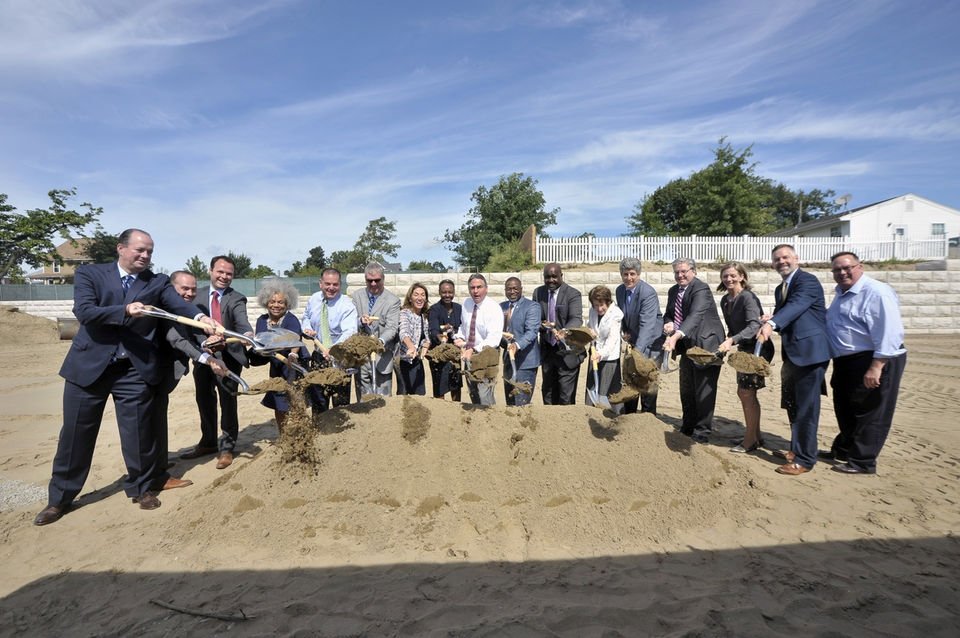
On Monday, civic partners gathered in the city of Springfield and broke ground on what will be a $14 million Educare Center, a school that will open next year and provide “a full-day and full-year program for up to 141 children from birth to age five each year,” MassLive.com reports.

As we’ve blogged, Springfield’s educators and philanthropists have called this Educare project a “dream come true,” one that promises to provide the city’s children with increased access to a high-quality early education program.

Educare “began in Chicago in 2000,” public radio station WAMC reports. It’s a research-based model that has four core features: “data utilization, embedded professional development, high-quality teaching practices, and intensive family engagement,” according to Educare’s website.

“Among the innovations at Educare,” WAMC adds, “is the placement of teachers with the same children from the time they enroll as infants up to age 3. Parents are required to participate in school activities, home visitations, and regular parent-teacher conferences.”

“Several years of rigorous evaluation shows that when children leave Educare for elementary school, the majority are academically, socially and emotionally prepared for kindergarten.”

There are “23 Educare schools in 15 states,” including California, Florida, Maine, Michigan, Washington, D.C., and Wisconsin. “Educare Springfield will be the first in Massachusetts.”

Springfield is putting the Educare Center in its Old Hill neighborhood, the home of many children who live in poverty. The neighborhood suffered considerable damage from the 2011 tornado that struck the Springfield area.

At the ground-breaking ceremony, Lieutenant Governor Karyn Polito pointed to the economic significance of the Educare Center, praising Springfield for “rebuilding this neighborhood” and noting that the school will serve children who are born in Springfield and grow up to become part of the city’s workforce, MassLive reports.

Springfield Mayor Domenic Sarno added, “Educare is a significant investment here in the city of Springfield and it’s another public and private partnership, with everybody working together for the same goal for our children.”

There are many members of this public/private partnership including: the Davis Foundation, which provided fundraising support and overall leadership for the project; Springfield College, which donated land; and the state of Massachusetts, which provided both a $1 million facilities grant to help finance construction as well as infrastructure funding from the MassWorks program at the Massachusetts Executive Office of Housing and Economic Development. Among the other partners are the Children’s Development Fund, the Mass Mutual Fund, Capital One Commercial Banking; and a number of anonymous donors. (The full list is on the City of Springfield’s website.)

Educare Springfield will be operated in partnership with Holyoke Chicopee Springfield Head Start. All Educare sites build upon strong partnerships with Head Start, and this one is no different. HCS Head Start Executive director Janis Santos spoke at Monday’s groundbreaking and shared her extensive conversations with other Head Start colleagues nationally who have partnered with Educare.

“They all told me, ‘It’s a lot of work, but it’s worth it,’” she said.

The center will also serve as a learning laboratory “for best practices” as well as “an essential resource for Springfield College, Springfield Technical Community College, Springfield Public Schools, and the early education community across the state for training and providing professional development for future teachers, social workers, evaluation and research.”

It’s an ambitious project with a great deal of promise that could transform children’s lives. As Tom Weber, the commissioner of the Department of Early Education and Care, explained to WAMC, “despite the success the state has seen with rising test scores and graduation rates in the last 25 years, it still has one of the largest achievement gaps in the country.”

“We have to take risks,” Weber added. “It is worth taking risks. If the solutions were obvious to us, we would have solved these problems already, so we have to be daring.”

Stay tuned. We hope to share more about Educare Springfield as the project develops. The center is scheduled to open in late 2019.

SourceEye on Early Education

Space matters: Massachusetts invests in improving early education buildings and facilities

This summer, Massachusetts awarded $4 million in grants to help early education and after-school programs improve their physical spaces. The money comes from the Early Education and Care and Out of School Time (EEOST) Capital Fund, which was created by the state Legislature.

As we’ve blogged before, engaging classrooms, lively safe playgrounds, and well-designed bathrooms are some of the key features that create nurturing environments for young children.

But programs often can’t afford the costs of badly needed construction and renovations. That’s why these capital improvement funds are so important.

In a statement, Governor Charlie Baker said, “Renovating and repairing facilities helps achieve our goal of improving the quality of early education and care.”

Massachusetts’ Secretary of Education James Peyser said. “We know that building deficiencies impact the quality of teaching and learning in early childhood and out-of-school time facilities. These grants were created to help non-profit providers serving children living in low-income communities improve their facilities.”

Administered by the Children’s Investment Fund, an affiliate of CEDAC (the Community Economic Development Assistance Corporation), the grant funds were given to four organizations:

Citizens for Citizens, Fall River, $1 million

The funds will pay for “playground improvements, window replacements, and critical safety and security upgrades to an existing Head Start program in a 118-year-old building,” according to the Children’s Investment Fund.

Crispus Attucks Children’s Center, Dorchester, $1 million

The center “will replace the HVAC system and make building envelope upgrades. It also plans to improve the design of its infant area and reconfigure toddler classrooms.

Elizabeth Stone House, Roxbury, $1 million

The funds will be used to build “a 5-story multi-service building which will include 32 units of affordable housing and a licensed early childhood education (ECE) program serving 51 children.”

Holyoke-Chicopee-Springfield Head Start, Springfield, $1 million

Head Start officials plan to build “an Educare model facility for 141 ECE children.”

All four organizations “serve publicly subsidized families, have demonstrated financial need, and have secured additional funding to pay for a portion of their project costs,” the statement from Governor Baker’s office explains.

The benefits of these efforts will be substantial. As Lieutenant Governor Karyn Polito explained, “High-quality programs help young children develop healthy learning habits, which is good for the community and for our Commonwealth as a whole.”

And as Tom Weber, commissioner of the Department of Early Education and Care, adds, “We are pleased to make these awards as this public investment in building construction and renovation of early education programs will benefit children, local communities, and the state for years to come.”

SourceEye on Early Education

Baker-Polito Administration Awards $4 Million for Early Education Programs

The Baker-Polito Administration and the Community Economic Development Assistance Corporation (CEDAC) today announced $4 million in grant awards for facility improvements at early education and care programs that serve low income children.  Four agencies were selected to receive an Early Education and Care and Out of School Time (EEOST) capital improvement grant, which will help increase the quality of their early education programs through critical facility repairs and renovations.

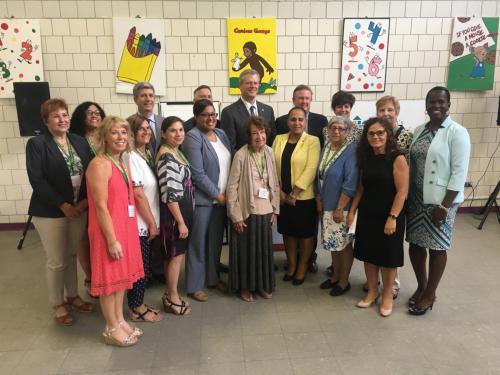
Governor Charlie Baker made the announcement today at the Crispus Attucks Children’s Center in Dorchester, the site of one of the facilities funded by the 2018 grant awards.

“With these grants, we will improve the learning environments of our youngest children, boost the capacity of programs to serve more children and create new jobs,” Governor Charlie Baker said.  “Renovating and repairing facilities helps achieve our goal of improving the quality of early education and care.”

“These capital improvement grants support facility construction and renovations that modernize early education spaces and provide more enriching environments for children,” Lt. Governor Karyn Polito said. “High-quality programs help young children develop healthy learning habits, which is good for the community and for our Commonwealth as a whole.”

“We know that building deficiencies impact the quality of teaching and learning in early childhood and out-of-school time facilities,” Education Secretary James Peyser said. “These grants were created to help non-profit providers serving children living in low-income communities improve their facilities.”

The Early Education and Care and Out of School Time capital improvement grants are financed through the state’s capital budget and provide matching funds that leverage private investment.  The Baker-Polito Administration’s FY18 Capital Budget Plan included $4 million for the Early Education and Out of School Time grant program.  In May, Governor Baker signed An Act Financing the Production and Preservation of Housing for Low and Moderate Income Residents (H.4536), which authorized $45 million for the EEOST Capital Fund.

“The EEOST capital improvement grants provide critical funding for non-profit early education programs to upgrade their facility spaces and provide better physical environments for the children they serve,” Early Education and Care Commissioner Tom Weber said.  “We are pleased to make these awards as this public investment in building construction and renovation of early education programs will benefit children, local communities, and the state for years to come.”

“The EEOST Capital Fund is helping providers create well-designed facilities that support children’s healthy development and learning, and the commitment and effectiveness of educators,” said Theresa Jordan, Director of Children’s Facilities Finance of Children’s Investment Fund. “Over time, this innovative capital resource has the potential to transform the early care and education and out-of-school time landscape for the neediest and most vulnerable children in the Commonwealth.”

The following organizations received grants:

Lead Agency Service Area Award
Citizens for Citizens Fall River $1,000,000
Crispus Attucks Children’s Center Dorchester $1,000,000
Elizabeth Stone House Roxbury $1,000,000
Holyoke-Chicopee-Springfield Head Start Springfield $1,000,000

“All of us at Crispus Attucks Children’s Center are grateful, excited and humbled to be receiving generous and much-needed funding from the Department of Early Education and Care,” said Maritza Juliao, Executive Director of Crispus Attucks Children’s Center.  “For nearly fifty years, Crispus Attucks has been providing quality early childhood education at an affordable price to some of Boston’s most vulnerable children and families.  Our facilities are in critical need of upgrades and improvements so that we may sustain our mission, and this grant will enable us to give our buildings the attention they need so that we as educators can focus our attention on our dearest assets: the children and families we serve.”

All of the programs selected to receive a grant award serve publicly subsidized families, have demonstrated financial need, and have secured additional funding to pay for a portion of their project costs.  The Department of Early Education and Care partnered with CEDAC’s affiliate, the Children’s Investment Fund, to administer the grant awards.  All of the grantees are non-profit corporations or organizations in which a non-profit corporation has a controlling interest.

###

SourceGovernor's Office