CEDAC Backs Mixed-Income Housing in Mattapan

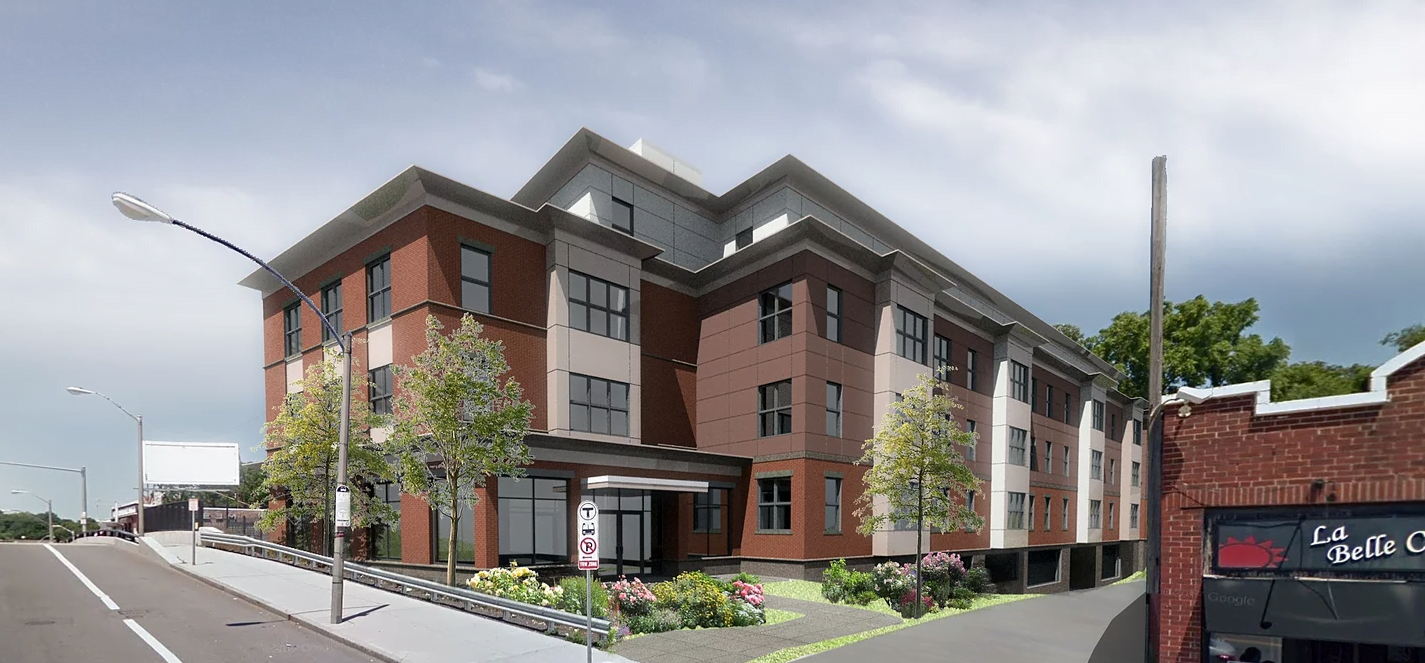
Roger Herzog, Executive Director of the Community Economic Development Assistance Corporation (CEDAC), and its Project Manager, Will Morgan, discuss the agency’s predevelopment financing for transit-oriented mixed income housing in Mattapan to be known as 872 Morton Street Village. Interview for BNN News. Aired July 13, 2021.

SourceBoston Neighborhood Network

MHP, CEDAC kick off 2nd Worcester CDC series

A second series of workshops aimed at helping Worcester’s community development organizations (CDCs) build capacity began this week with a session on fundraising.

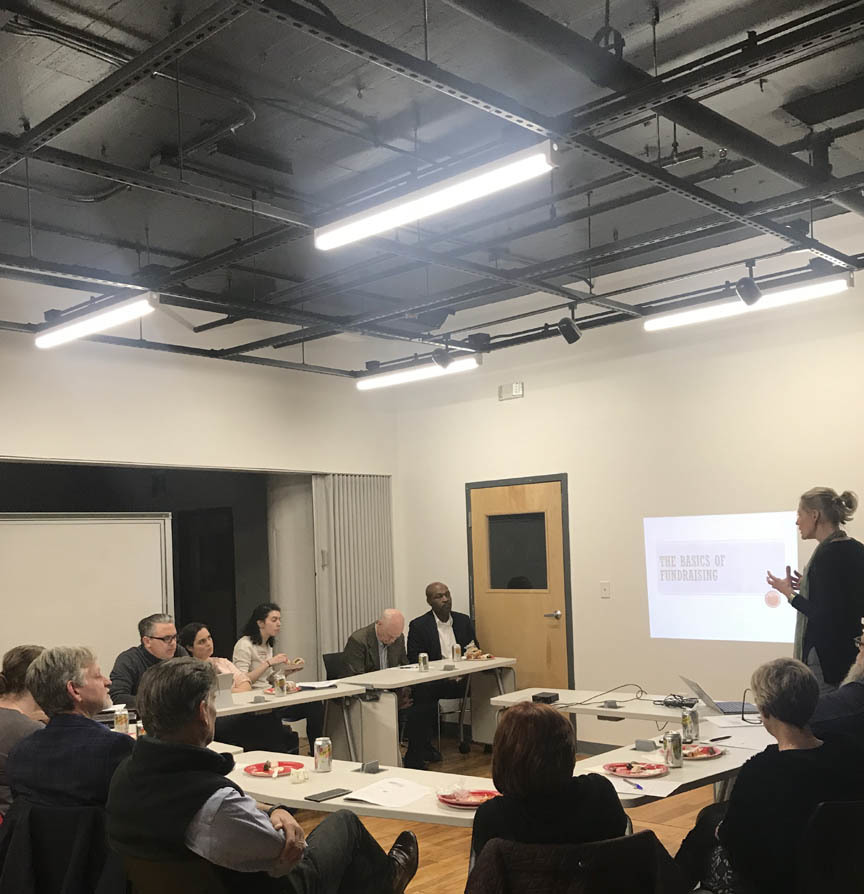
Held on January 9 at the Worcester Clean Tech Incubator, the event featured presentations by fundraising consultant Sarah Tanner and John Fitterer of the Massachusetts Association of Community Development Corporations. Fitterer talked about how CDCs have raised funds through the state’s Community Investment Tax Credit Program.

The event was attended by board and/or staff members from the Oak Hill CDC, the East Side CDC, Main South CDC, Worcester Common Ground and Centro Inc.

Sponsored by the Massachusetts Housing Partnership, the Community Economic Development Assistance Corporation (CEDAC) and Clark University, the 2019 training series is planning future sessions on public health and housing, board development and training, collaboration and partnership models and taxes.

In 2018, CEDAC, MHP and Clark hosted two-hour workshops on financial reporting, board development, asset management and collaboration.

The January 9 session on fundraising was preceded by a dinner and networking event hosted by Lionel Romaine of CEDAC, Kate Bosse of MHP and Kathyrn Madden, an urban planner and visiting lecturer at Clark University who has over 25 years of experience helping cities and institutions shape their future development.

The CDC workshop series builds upon CEDAC and MHP’s longstanding support of Worcester CDCs and neighborhoods. MHP efforts include supporting rental development and homeownership efforts of Worcester Common Ground, the Main South CDC and in the Bell Hill-East Side neighborhood in collaboration with the East Side CDC and UMass Memorial Hospital.

In all cases, MHP used its ability to bring in private financing to support community reinvestment through its bank-funded loan pool and its ONE Mortgage Program for low- and moderate-income first-time buyers. MHP has used its bank-funded loan pool to provide $16.9 million in loans and commitments for the financing of 32 rental projects and 521 apartments, 367 of them affordable. MHP’s ONE Mortgage Program has helped 816 low- and-moderate-income households in Worcester purchase their first home, generating $125.6 million in private mortgage financing from participating banks. About 69 percent of those buyers had incomes below 80 percent of area median income.

For more information about this program and MHP’s community assistance work with CDCs, contact Katie Bosse at kbosse@mhp.net or 617-330-9944 x128.

SourceMHP News

New Tool in the Fight for Boston’s Affordability

Public-Private Partnership Creates Fund to Support Nonprofit Development

By Roger Herzog and Sara Barcan

Special to Banker & Tradesman

As observers of the Boston real estate market know, our historic city is heavily “built out,” with relatively few opportunities to develop vacant parcels. While the charm of our densely built city means there is great demand to live here, the relative scarcity and high cost of available development sites present a challenge to policymakers and the community development sector who seek to increase the stock of Boston’s affordable housing. Nonprofit developers tell us that when they identify vacant or underutilized parcels with potential for affordable housing development, they frequently have difficulty competing for acquisition against private developers, and when they can acquire, may need to hold sites for several years before they can assemble project financing and move into construction.

Last year, our colleagues at the city of Boston’s Department of Neighborhood Development (DND) approached CEDAC and the Local Initiatives Support Corporation (LISC Boston) with an idea for an acquisition fund that could help level the playing field for nonprofits: the Vacant Site Acquisition Fund. This fund targets sites that are often sources of neighborhood blight. CEDAC has long helped nonprofit developers acquire sites that are both eyesores and in need of cleanup and our participation in the Vacant Site Acquisition Fund is an extension of that work.


Boston Mayor Marty Walsh, along with CEDAC and LISC Boston, announced the creation of the fund last fall. Its program design resulted directly from conversations that DND, CEDAC and LISC conducted with nonprofit housing developers and reflects their priorities: a predictable, competitive interest rate; a longer loan term than typical acquisition loans; a streamlined approval process; and assistance with site control and holding costs.

The Vacant Site Acquisition Fund established a pilot funding source of more than $8 million to help nonprofit developers purchase vacant or underutilized land appropriate for the development of multifamily housing. The city has committed $2.5 million, while CEDAC and LISC Boston have provided a combined $6 million. CEDAC manages the day-to-day operations of the fund, which has an efficient “one-stop” approval process enabling nonprofit developers to better compete in the private market.

The fund has three components:

· Site deposit assistance: DND has set aside $200,000 for short-term, zero interest bridge loans, available to nonprofit developers who need to make cash deposits to secure site control of potential acquisition sites.

· Acquisition fund: A combined $8 million contributed by the city, CEDAC, and LISC Boston funds low interest rate acquisition financing with longer terms to acquire sites and plan for future affordable housing development. CEDAC’s streamlined approval process allows developers to respond quickly when opportunities arise, and create additional opportunities for properties not currently on the market.

· Holding cost assistance: DND has also allocated $300,000 for zero interest loans to cover interest, insurance, real estate taxes and other holding costs while nonprofits conduct community process, secure regulatory approvals and assemble complex packages of public and private financing.

Combatting Displacement in Jackson Square

Since the fund was established, one project has closed using its resources, with a second loan approved. Urban Edge Inc., a community development corporation that serves Roxbury and Jamaica Plain, in January acquired two lots on Columbus Avenue, adjacent to a third parcel that the CDC purchased through a prior CEDAC acquisition loan. Located just outside of Jackson Square, those underutilized parcels include a commercial building in need of repair and a parking lot. These sites are within an area that the Boston Planning and Development Agency (BPDA) deemed PLAN: JP/ROX, about which the city of Boston has made recommendations regarding affordable housing, transportation and open space improvements. Urban Edge’s project will both combat displacement, which remains a problem in the surrounding neighborhood, and contribute to Jackson Square’s revitalization.

“The Vacant Site Acquisition Fund is an important new resource for nonprofit organizations in Boston who otherwise might find it challenging to compete in the real estate market,” said Frank Shea, CEO of Urban Edge. “Along with providing resources, working with the city, CEDAC and LISC Boston made this a much easier process.”

CEDAC, DND and LISC have heard about many exciting opportunities as we speak with our nonprofit partners, all of whom are working hard to compete in a difficult real estate market, to ensure that long-term residents and newcomers alike can afford to live here. The Vacant Site Acquisition Fund demonstrates the kind of innovative public-private partnership that shows why Boston is a national leader in community development – and ways we can be effective in creating a diverse and equitable community.

Roger Herzog is the executive director of the Community Economic Development Assistance Corporation (CEDAC). Sara Barcan is CEDAC’s director of housing development.

https://cedac.org/wp-content/uploads/2018/05/BT_May072018_Reprint_BostonsAffordability.pdf

»
SourceBanker & Tradesman

Baker-Polito Administration Successfully Preserves Affordable Housing

Challenges Ahead as Thousands of Units Approach Affordability Expiration

Preserving affordable housing is an important priority in Massachusetts, and has become a special focus of policymakers and advocates as the region’s hot real estate market has constrained the ability of nonprofit developers and others to produce new affordable units. But while some of the challenges we face in maintaining affordability are new, many of the most intractable issues are legacy challenges from decades ago. The commonwealth has spent years – decades, even – finding innovative solutions to address these old problems. Even with all of the hard work, threats remain.

Roger Herzog
Roger Herzog

March 1 marked an important date in affordable housing preservation – it was the day in which a large number of affordable housing projects built in the 1970s hit their mortgage expiration date. This “expiring use” problem stems from how many large-scale affordable developments were financed during that era – these apartments were built by private owners utilizing state and federally funded mortgage programs with 40-year terms. In return for the below market rate loans, owners are required to comply with affordable housing use restrictions. Many of those mortgages have reached or are reaching maturity in the next few years, at which point the use restrictions terminate and the owners may convert the affordable housing to market rate. And in a real estate market that is as super-charged as Greater Boston, it’s easy to imagine why an owner would be tempted to convert their development.

Affordability Preserved

First, the good news – over the past three years, the state’s Department of Housing and Community Development (DHCD) and its state agency partners have preserved the long-term affordability of over 15,000 housing units across the commonwealth. Due to significant capital investments in affordable housing by the Baker-Polito Administration more than 4,400 units maintained their affordability in 2017 alone.

Bill Brauner

It is also due to the state’s affordable housing preservation law, Chapter 40T, which was passed nine years ago to address the expiring use challenge. Chapter 40T established public notification provisions for tenants and state and local officials, purchase rights through a right of offer and right of first refusal for DHCD or its designee to acquire this housing if the owner decides to sell, and modest tenant protections for projects with affordability restrictions that terminate. The state has helped to preserve almost 30,000 units of affordable rental housing since the law was enacted. Through the investment of federal, state and local resources and Chapter 40T, the state’s affordable housing programs have ensured that families are able to stay in their homes and neighborhoods.

CEDAC offers its technical assistance and early stage financing to nonprofit developers seeking to preserve affordable multifamily housing facing expiring use restrictions. In 2017, two preserved projects exemplify our preservation success. In the high-cost market of Lexington, CEDAC supported efforts by MassHousing, the town of Lexington and its housing authority, and project residents to preserve 16 units of low- and moderate-income cooperative housing. Worcester’s Fruit Sever Apartments is another good example of the kind of affordable housing being preserved. In January 2016, CEDAC approved a $9 million acquisition loan to The Community Builders Inc. to help the nonprofit developer preserve the 132 affordable apartments there. The building was preserved through the Chapter 40T purchase process and state financing

Housing at Risk

In spite of these efforts, a significant portion of the state’s portfolio of federal and state-assisted affordable housing remains at risk. Thousands of additional affordable units continue to face the potential of  market-rate conversion. In one state mortgage program, 3,200 units are at high risk due to expiring mortgages. A decision by property owners to convert these into market-rate apartments could leave the residents, including many elders, facing much higher rents. And unlike most federally financed projects, tenants in these projects are not able to receive federal rent vouchers that allow them to remain in the housing post-conversion. State housing officials have responded to this challenge by creating a $100 million fund, combined with federal housing tax credits and bond financing, to offer new financial incentives to the private owners to preserve this housing.

The truth is that the March 1 milestone is a reminder that we will be facing crunch time over the next few years when it comes to preserving affordable housing. Thousands of vulnerable Massachusetts families and individuals are counting on us to effectively solve these old problems – and as we look at the actions of policymakers on both the state and federal levels, we must continue to find and implement innovative solutions, just as we’ve done in the past.

Roger Herzog is the executive director of the Community Economic Development Assistance Corporation (CEDAC). Bill Brauner is CEDAC’s director of housing preservation and policy.

Baker-Polito Administration Successfully Preserves Affordable Housing

SourceBanker & Tradesman

Chinatown Development Includes 51 Affordable Condos

A 51-unit development will provide homeownership units selling for under $200,000 in Boston’s Chinatown, a neighborhood under pressure from gentrification and conversion of apartments into short-term rentals.

Asian Community Development Corp. led the 88 Hudson St. project on parcel 24, which became available from the Massachusetts Department of Transportation following the completion of the Central Artery Tunnel project. The latest phase includes a mix of one- through three-bedroom condos restricted to households earning from 60 to 100 percent or less of the area median income, with sales pricing ranging from under $200,000 to $235,000.

The financing package included a contribution from the city of Boston totaling more than $6 million including $5.9 million from inclusionary development funds and $750,000 from the City of Boston’s Neighborhood Housing Trust, $2.1 million from the Massachusetts Department of Housing and Community Development and Housing Stabilization Funding and $1.9 million in Affordable Housing Trust Funds. Eastern Bank provided an $8.9 million construction loan  and CEDAC provided predevelopment financing for the project.

The first phase of parcel 24, the One Greenway project, was completed in 2015. That phase included 312 apartments, including 95 affordable units and 3,300 square feet of retail space.

Chinatown Development Includes 51 Affordable Condos

SourceBanker & Tradesman