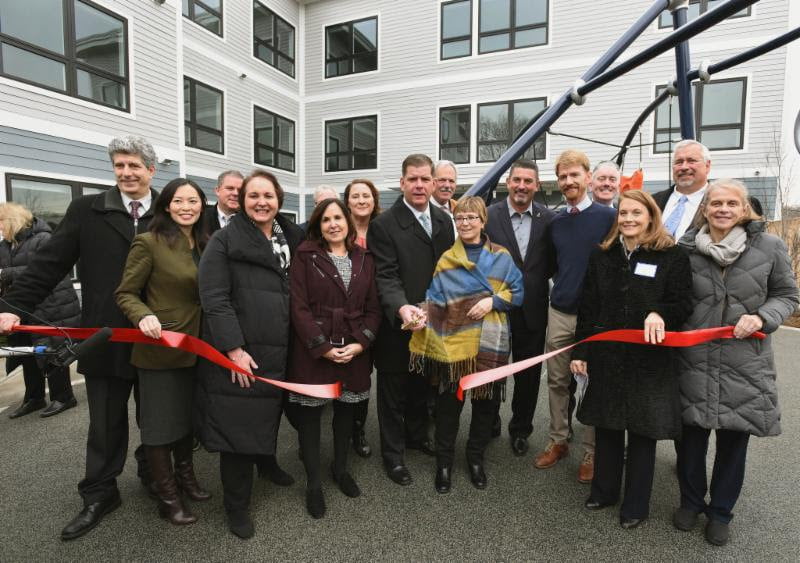
‘A stepping stone:’ Brewster celebrates groundbreaking for 30 new affordable housing units
It took five years, but the evidence of progress is everywhere.
The newly-paved access road flanked by cement footings for street lights. The cleared lots with white septic and water pipes protruding from the dirt.
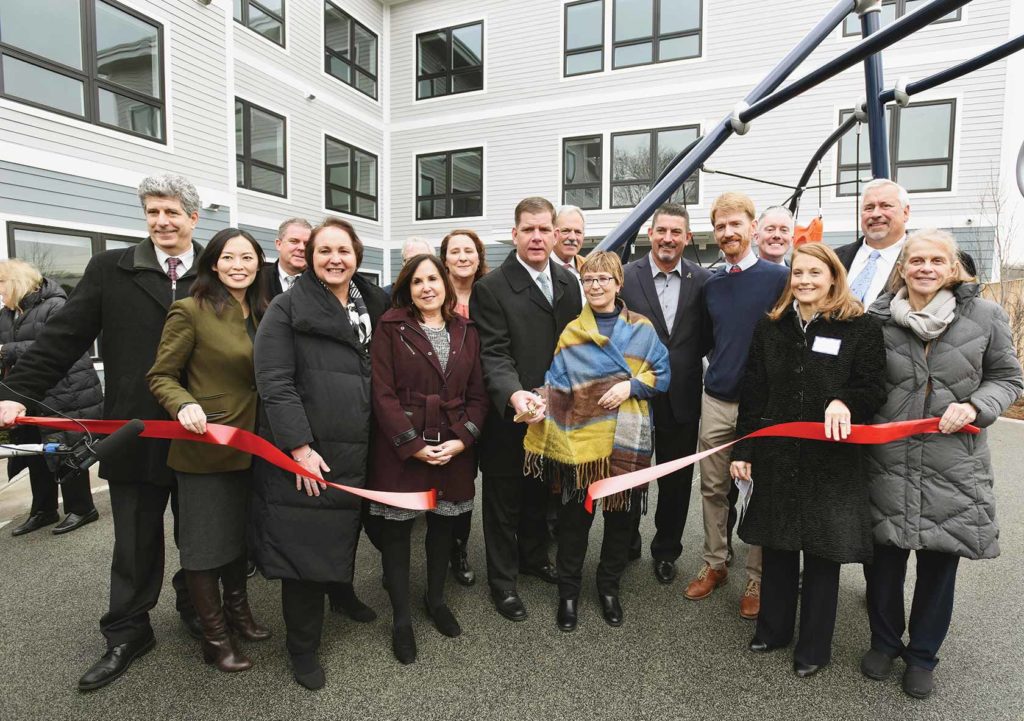
With the infrastructure in place, construction on 30 one-, two- and three-bedroom affordable rental units, in what is known as Brewster Woods, is imminent. Standing out of the hot sun, under a tent before dozens of local, regional and state officials that helped make it possible, U.S. Rep. William Keating, D-Mass., acknowledged that the ceremonial groundbreaking was indeed an occasion to celebrate.
But it was also a time to recommit to the effort of building and finding housing.
Solving the housing crisis ‘piece-by-piece’
“This is a stepping stone in addressing the needs we have,” Keating said Tuesday about what he called a national affordable housing crisis that the Cape and Islands has known for decades. But the way it will be solved is piece-by-piece, Keating told the audience, with developments like Brewster Woods.
“Today we’re changing the lives of an estimated 60 people in those 30 units, and you’re saying that number is not big enough, but it sure is if you are one of those people.”
Brewster Woods was developed on town-owned land by the Housing Assistance Corp. and the Preservation of Affordable Housing, and will have eight one-bedroom units, 19 two-bedroom units and three three-bedroom units.
Construction is expected to be completed by next summer and tenants will be selected by lottery.
Prospective renters can only qualify in two categories: up to 30% of local area median income ($20,300 for one person up to $35,160 for six); or up to 60% of median income ($40,620 for one person up to $67,260 for a family of six). Rents are estimated at $1,087 a month for a two-bedroom apartment for those at 30% of median income, and $1,305 for a two-bedroom for those making up to 60% of median.
It takes heavy lifting, both financially and logistically, by people at all levels of government and finance, to get one of these projects completed, including: a $1.68 million state MassWorks grant paid for the site clearing and infrastructure; a $2.4 million loan from the Massachusetts Housing Partnership; $1 million in Affordable Housing Trust Funds from MassHousing; $450,000 from Community Economic Development Assistance Corporation; $550,000 in Brewster Community Preservation Act money; and $800,000 in local and state HOME funding: $250,000 in Barnstable County HOME funds and $550,000 in Department of Housing and Community Development funds.
Keating urges other towns to act
Keating commended Brewster for actively pursuing the funding it needed to complete the project. He urged other towns that this was the time to act. Money from the American Rescue Plan Act of March 2021 was available to help with housing issues, but Keating said the infusion of money wouldn’t last forever.
“We have to seize the opportunity and be as aggressive as we can,” he said.
Cape housing costs were already high pre-pandemic, but fueled in part by demand from off-Cape residents wanting to relocate in relatively COVID-19-safe rural areas, Cape housing costs soared by 27% this year with a median sales price of $560,000. Median sales prices on Martha’s Vineyard jumped up to $1.5 million and to $2.18 million on Nantucket. The median sales price in Chatham is $1.78 million.
Rental and home sales inventory is low and the Cape is in need of more than 4,500 rental units, local housing experts said.
“Our lifeblood is affected by our ability to have housing,” Keating said. “We’re going to lose … businesses; we’re going to lose those jobs, and we’re going to lose them because of a lack of housing.”
“Housing crisis is a term we use a lot,” state Secretary of Housing and Economic Development Mike Kennealy said. He pointed to Gov. Charlie Baker’s recently successful housing legislation that allowed for a simple majority vote, instead of the formidable hurdle of a supermajority, for towns to change zoning to create affordable housing. The legislation also required a $50,000 bond of those wishing to sue to keep towns from building affordable housing in their neighborhood.
SourceCape Cod Times
Investors Mine For Profits In Affordable Housing, Leaving Thousands Of Tenants At Risk
Charles Clark moved to Boston’s South End when he was a young musician, just getting by. Forty years later, he lives in the same historic brownstone, even as rising wealth has pushed many people out of the neighborhood.
He’s stayed thanks to a nonprofit that’s kept a few hundred apartments like his affordable. Tenants’ Development Corp. is one of the oldest groups of its kind in the nation, protecting the rights of renters — many of them families of color and seniors.
But now, TDC and its residents are facing the fight of their lives, as a Denver-based investment firm battles for control of 36 of the nonprofit’s properties. It’s a tactic Alden Torch Financial and firms like it are using to squeeze extra profits out of the federal government’s chief program for backing low-income housing, according to court cases in multiple states and interviews with more than 20 housing and legal specialists.
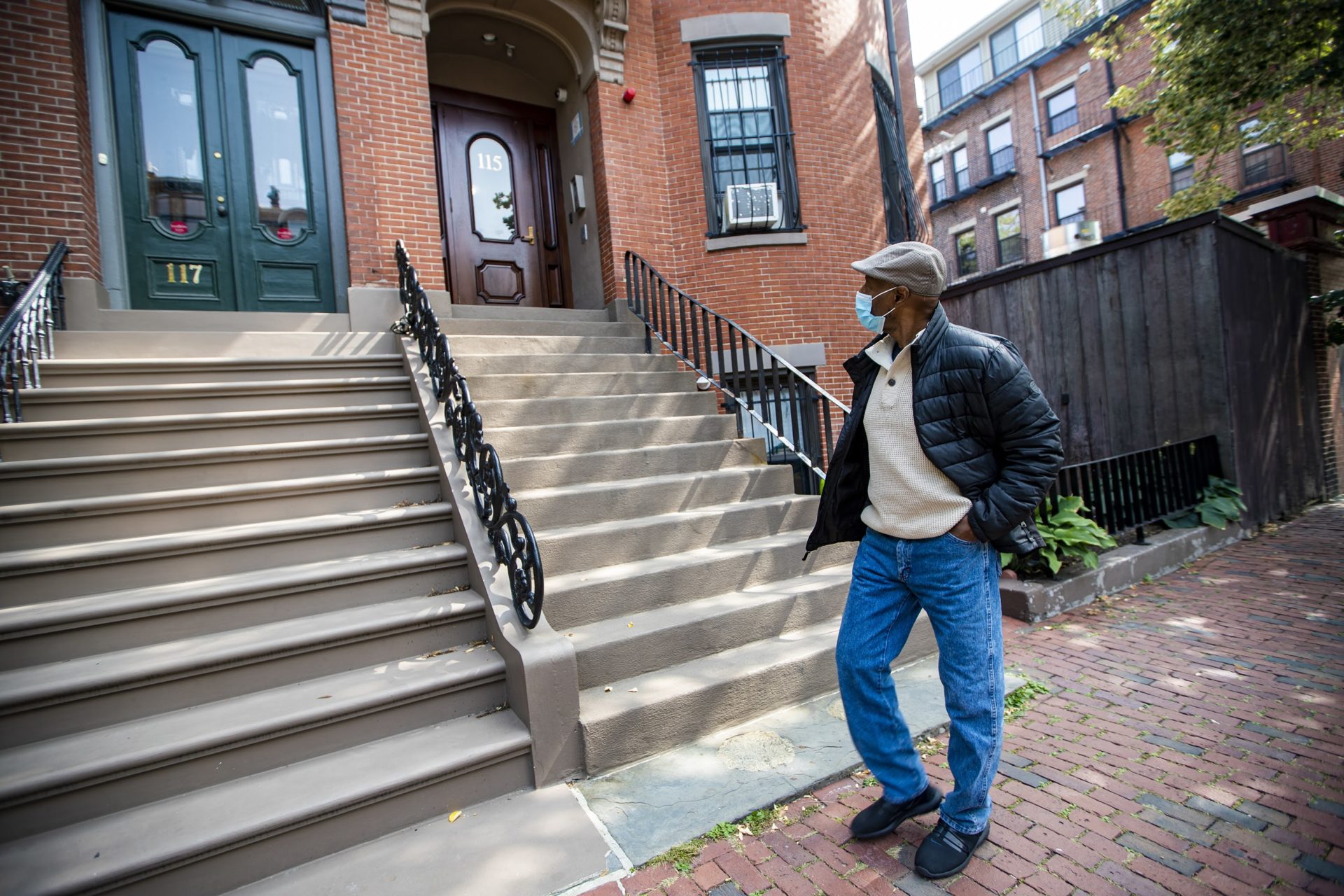
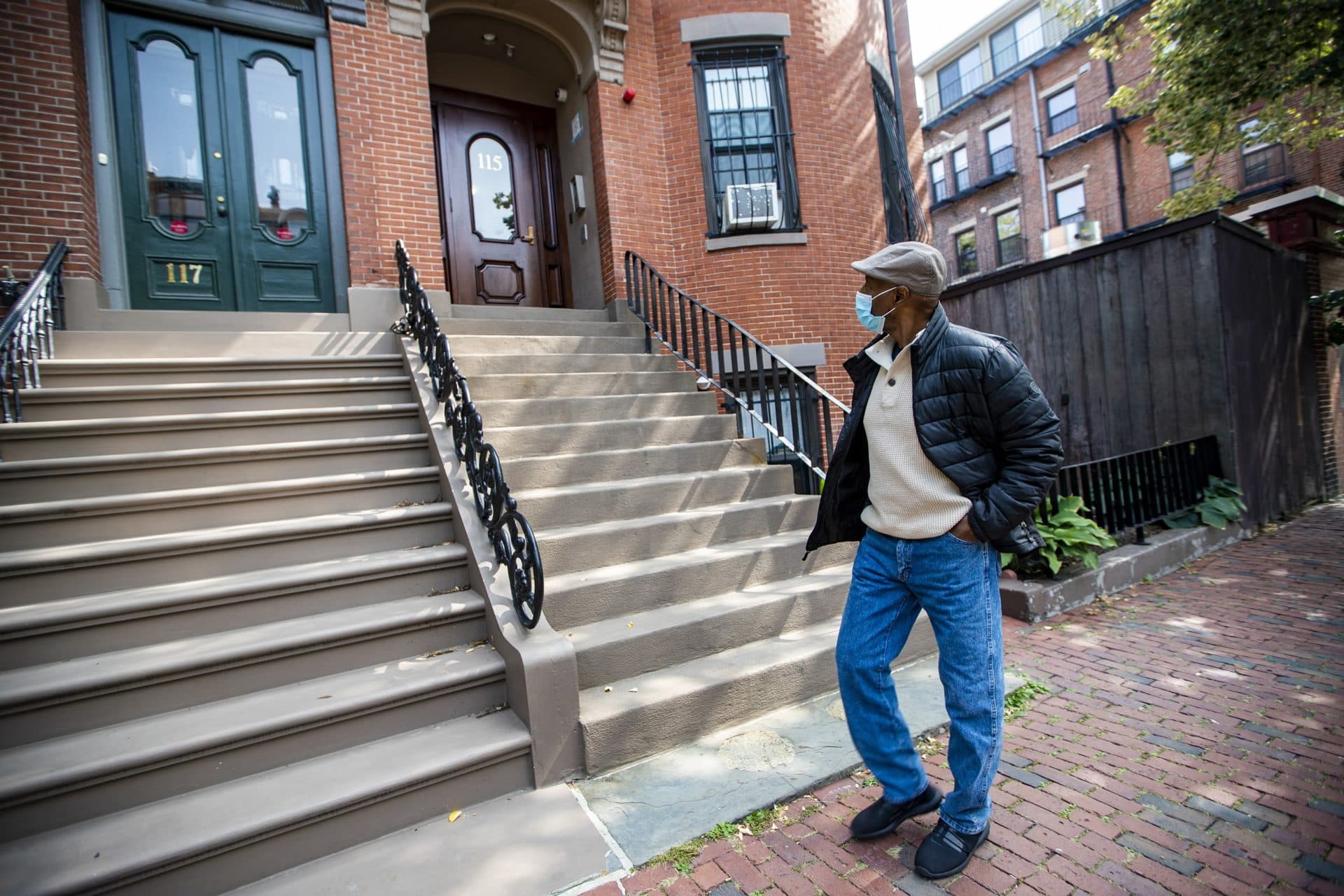
Charles Clark, of Tenants’ Development Corp., walks past an apartment in the South End, one of the affordable housing properties managed by the nonprofit. (Jesse Costa/WBUR)
“They wanted us to sell the units — put them on the market, so that they could reap a lot more money than what they were entitled to,” Clark said of Alden Torch. “I’m appalled, and I’m upset about how they’re handling it.”
TDC officials never imagined this scenario when they tapped into the federal Low-Income Housing Tax Credit program back in 2003, to renovate their buildings. Under these deals, a nonprofit forms a partnership with an investor (often a large bank) that provides funding in exchange for tax breaks. At the end of 15 years, the nonprofit generally gets to buy out the investor’s stake, taking ownership of the property for well below market value.
Get exclusive reports and special projects from the WBUR investigative team in your inbox. Sign up now.
At least that was Congress’s intent, housing specialists say — keeping properties affordable for the long-term and in community hands. But the game has changed in recent years, as some project funders began selling off their partnership interests to investment firms with more aggressive profit motives. And those firms are demanding bigger payouts to exit the deals.
This shadowy secondary market is unregulated at the federal level and in nearly every state, a WBUR investigation has found, and it’s wreaking havoc in an $8 billion-a-year program funded by taxpayers.
“Honestly, I think it’s a national crisis,” said David Goldstein, a lawyer representing a Brooklyn, N.Y., housing group that’s fending off one such property challenge from a Wall Street giant. “This is a really serious problem and affordable housing is going to be potentially threatened, especially for places like Boston, New York, and Los Angeles.”
This new breed of investors is challenging housing groups in cities where real estate values have soared. The firms are looking to wrest cash and control away from local nonprofits and developers, lawsuits show, or attempting to oust managers from partnerships. And in some cases, they are forcing the sale of low-income housing to maximize their profits — as they have tried to do in Boston.
“They wanted us to sell the units — put them on the market, so that they could reap a lot more money than what they were entitled to.”
CHARLES CLARK
If investors are successful and properties are sold on the open market, the risk is that new owners could eventually abandon the affordable housing mission, charge higher rents or convert apartments to expensive condos. It’s a risk that looms on the horizon for thousands of residents in Massachusetts and across the country.
With a lack of federal or state oversight, these feuds are largely being decided in courts, where conflicting rulings on contract language only add to the confusion. In the past few years:
A senior housing group in Seattle was forced to sell 10 properties for about $250 million. The majority of the money went to Alden Torch and other investors.
An Opa-locka, Fla., nonprofit has spent $1.5 million fighting to keep a low-income property after Bank of America sold its interest to a new investor that pushed to sell.
A nonprofit was blocked from buying a low-income property in Pontiac, Mich., and preserving the housing for seniors, when it was sued by SunAmerica in federal court. The case is under appeal.
“New York is a bellwether in affordable housing,” Goldstein said. “If New York loses this right, it will be a bad precedent for the rest of the country.”
A Historic Nonprofit Fights Investors
In Boston’s South End, Alden Torch’s fight with Tenants’ Development Corp. has a direct impact on nearly 400 residents in buildings the nonprofit has cared for since the 1970s, when many South End dwellings had become rundown and poorly managed. Its brownstones run along Massachusetts and Columbus Avenues and several quaint side streets.
“A little bit of everybody lives in the South End. That’s what makes it unique,” said Clark, the musician. Now 70 and president of TDC’s resident-run board, he can’t fathom losing all that TDC has fought for — to an investment firm.
“Greed is all around us. But we’re not going to let that greed destroy what we’ve worked so hard to build all these years.”
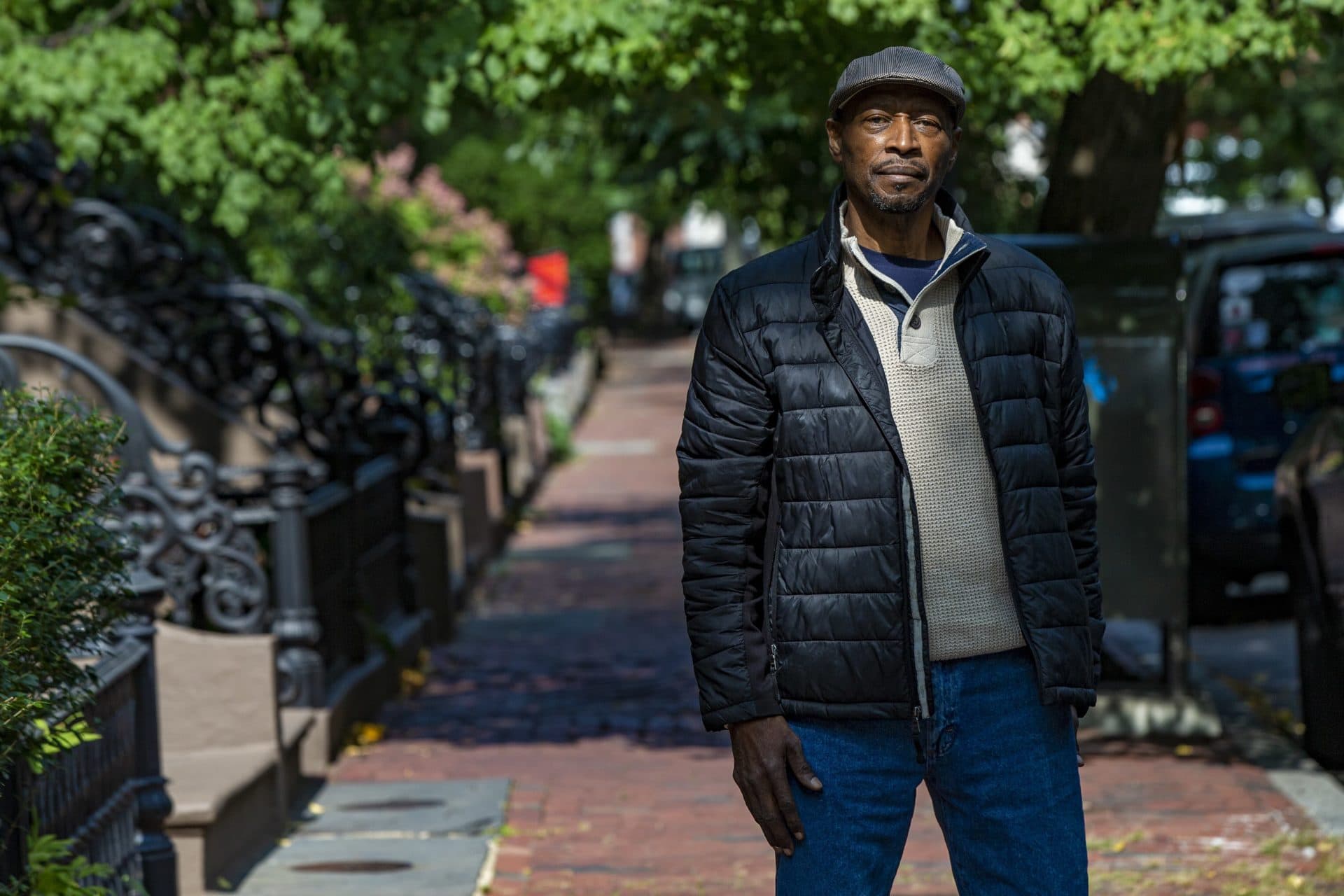
Charles Clark is president of the TDC tenant board. (Jesse Costa/WBUR)
Under the law, even if ownership changes after the 15-year tax credits end, housing must stay affordable for a total of at least 30 years. But things could shift dramatically after that.
TDC officials estimate they’ll have to spend at least $500,000 in legal fees to resolve their dispute with Alden Torch in state and federal court. The nonprofit’s leaders had hoped to devote those resources to building a new community center for residents. The plan included a gym, space for dance and karate classes, a kitchen for serving lunch to seniors, and room for a peer leadership program for youths.
But the center is now on hold, along with overdue apartment renovations, said Anita Huggins, an executive with TDC.
“It’s early in the litigation, but certainly given the cost, that’s going to impact our ability to move forward,” she said.
As in many of these disputes, TDC’s fight is not with its original investment partner. That was a Pennsylvania firm called Capmark Financial that later went bankrupt, in 2009.
That firm’s tax-credit portfolio, which included 287 properties across the country, was sold at auction in 2011, for $102 million. The buyer was Hunt Cos. of El Paso, Texas. TDC had no say in the matter, and ultimately found itself in partnership with Alden Torch, which later took over the investments.
When TDC informed Alden Torch in 2017 that it planned to buy the South End properties after the tax credits expired, things did not go smoothly.
The sides sparred over the next two years, with Alden Torch seeking appraisals and notifying TDC in a February 2019 letter it should find a buyer for the properties within six months, according to federal court records. The firm then reversed course in December that year, ordering TDC in another letter not to sell. The reason: Alden Torch said it had been “unaware” of TDC’s right to buy the property at a low price once another offer came in.
In early 2020, TDC informed Alden Torch it planned to pay $17 million to end the partnership and acquire the properties, according to TDC’s lawsuit in federal court.
Alden Torch claimed TDC’s purchase plan was “unauthorized” because it did not first receive Alden Torch’s consent. The firm alleged it was being shortchanged, because the properties could fetch as much as $54 million on the market.
A sale at the lower price “would prevent the Partnership and Plaintiffs from benefiting from the substantial appreciation in the value of the Apartment Complex that had occurred over time,” Alden Torch said in the court records.
The firm is seeking at least $34 million in damages from TDC. And to stop TDC in its tracks, Alden Torch’s legal team employed another escalation — filing a notice with the Suffolk County Registry of Deeds to block TDC from buying the property.
David Davenport is a Minneapolis lawyer who represents TDC and other nonprofits in these cases. (Courtesy David Davenport)
“I found it to be super aggressive” for Alden Torch to muddy the property title, said David Davenport, a Minneapolis lawyer who represents TDC and other nonprofits in these cases. “They don’t really seem to care about who they impact or how they impact them. And now they’re going to potentially tie this property up in litigation for several more years.”
Alden Torch executives declined to be interviewed.
A U.S. District Court judge in Boston ruled in December that the TDC case does not belong in federal court. Alden Torch is appealing. The firm has been disappointed in state court here before: The Supreme Judicial Court in 2018 ruled against the firm’s effort to prevent a Cambridge nonprofit from acquiring low-income apartments on Memorial Drive.
Only Congress Can Clarify The Rules
The majority of these 15-year tax credit deals have ended without incident, housing specialists say. The program has helped build or renovate more than 3 million apartments nationwide since its start in 1986. Only in recent years have these legal challenges emerged, as deep-pocketed investors found ways to poke holes in contracts that locked in tax benefits for investors and counted on their goodwill at the end of the partnership.
The IRS is not regulating the transfers of partnership interests or the exits. It counts on state housing agencies to dole out the federal tax credits and ensure properties stay affordable. But it’s also rare for a state agency to weigh in on 15-year exits. The result: Nationally, no one is in charge.
In Massachusetts alone, tax-credit deals will be expiring on 81 properties over the next four years, affecting nearly 5,000 residents, according to U.S. Department of Housing and Urban Development data.
“Congress can solve this, and that would be the best outcome,” said Bill Brauner, a senior executive at the Community Economic Development Assistance Corp., a Boston group that provides financing for affordable housing.
The Massachusetts Department of Housing and Community Development, which allocates federal tax credits in the commonwealth, declined multiple requests to comment for this report. And it has yet to publicly weigh in on the lawsuit threatening the South End properties.
In a recent funding offer for developers, the agency appears for the first time to be trying to exclude from future projects investors that have been involved in year-15 disputes. It’s unclear how this would be enforced.
One state agency on the other side of the country has been raising warnings since 2019 about firms it says are abusing the tax-credit program. The Washington State Housing Finance Commission in a report called out so-called “aggregator” investment firms — those amassing tax-credit portfolios — saying they “often use burdensome tactics that take advantage of legal ambiguities, resource disparities, and economies of scale to overwhelm their nonprofit counterparties.”
The report cited the Senior Housing Assistance Group (SHAG) case, where a federal judge in Seattle ruled that the nonprofit had failed to get a “bona fide” offer for the properties — which was required before SHAG could exercise its right to buy them at below-market value. Alden Torch won in 2019 and forced the sale of 10 low-income properties in the Seattle area for a quarter of a billion dollars.
The commission said the court got the case wrong and warned: “Other courts should not make the same mistake.”
The properties remain affordable and SHAG still provides support services, but it lost out on millions of dollars in equity dedicated to low-income housing.
Squeezing Nonprofits For Cash
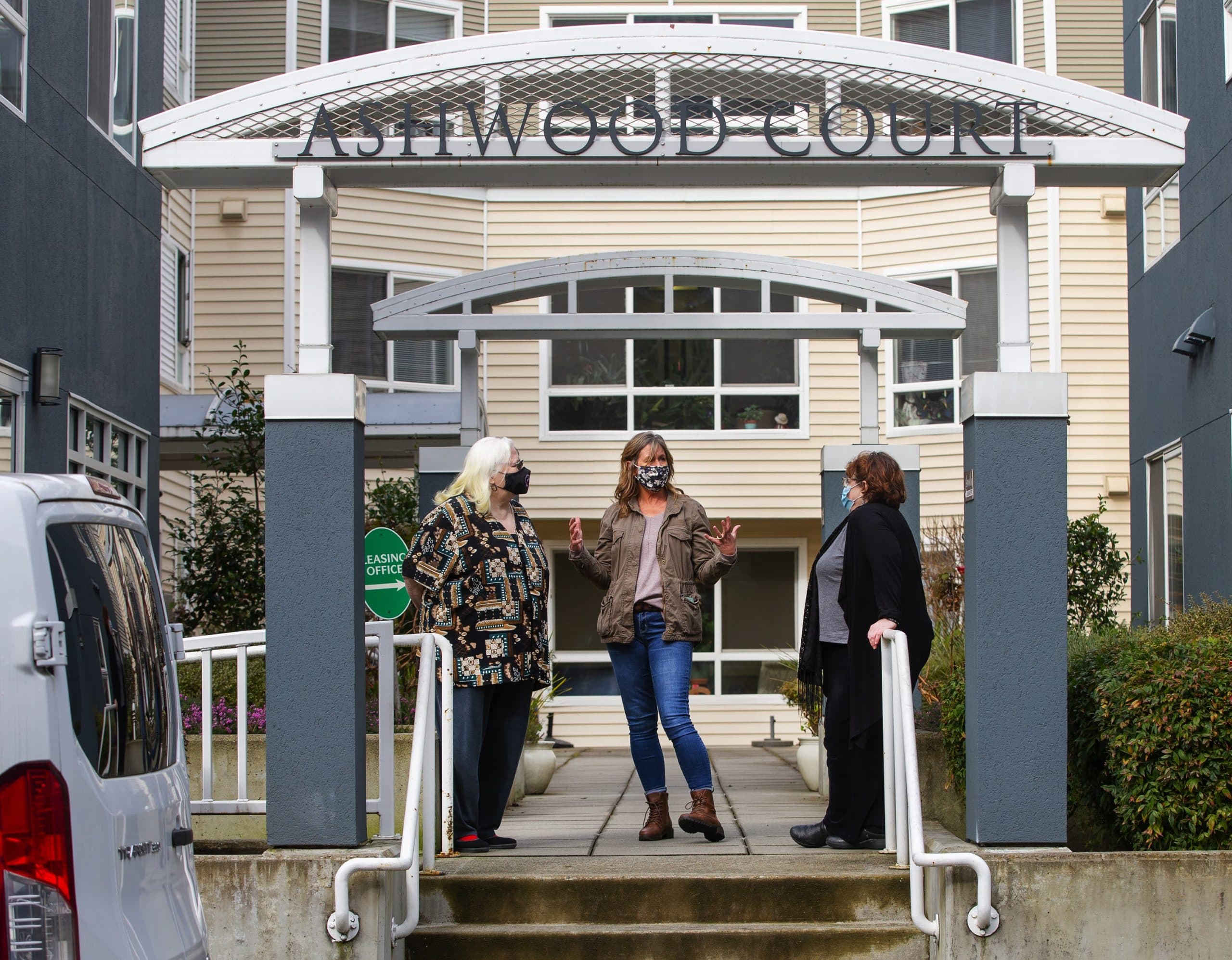
Kim Loveall Price, center, director of a nonprofit that operates Ashwood Court, a low-income housing complex in Bellevue, Wash., talks with residents Susanne Sherman, right, and Joyce Hansbearry. (Mike Seigel for WBUR)
One of the biggest players in the tax credit business, with a $15 billion portfolio, is located here in Boston. Last year alone, Boston Financial Investment Management, part of Tokyo’s ORIX Corp., raised more than $800 million from banks and insurance companies to invest in tax-credit funds.
More than 3,000 miles away, in Bellevue, Wash., the firm got into a protracted battle with a nonprofit that manages several low-income properties. One of those is Ashwood Court, home to seniors who live between skyscrapers and luxury condos in the heart of the downtown area, where property values have climbed.
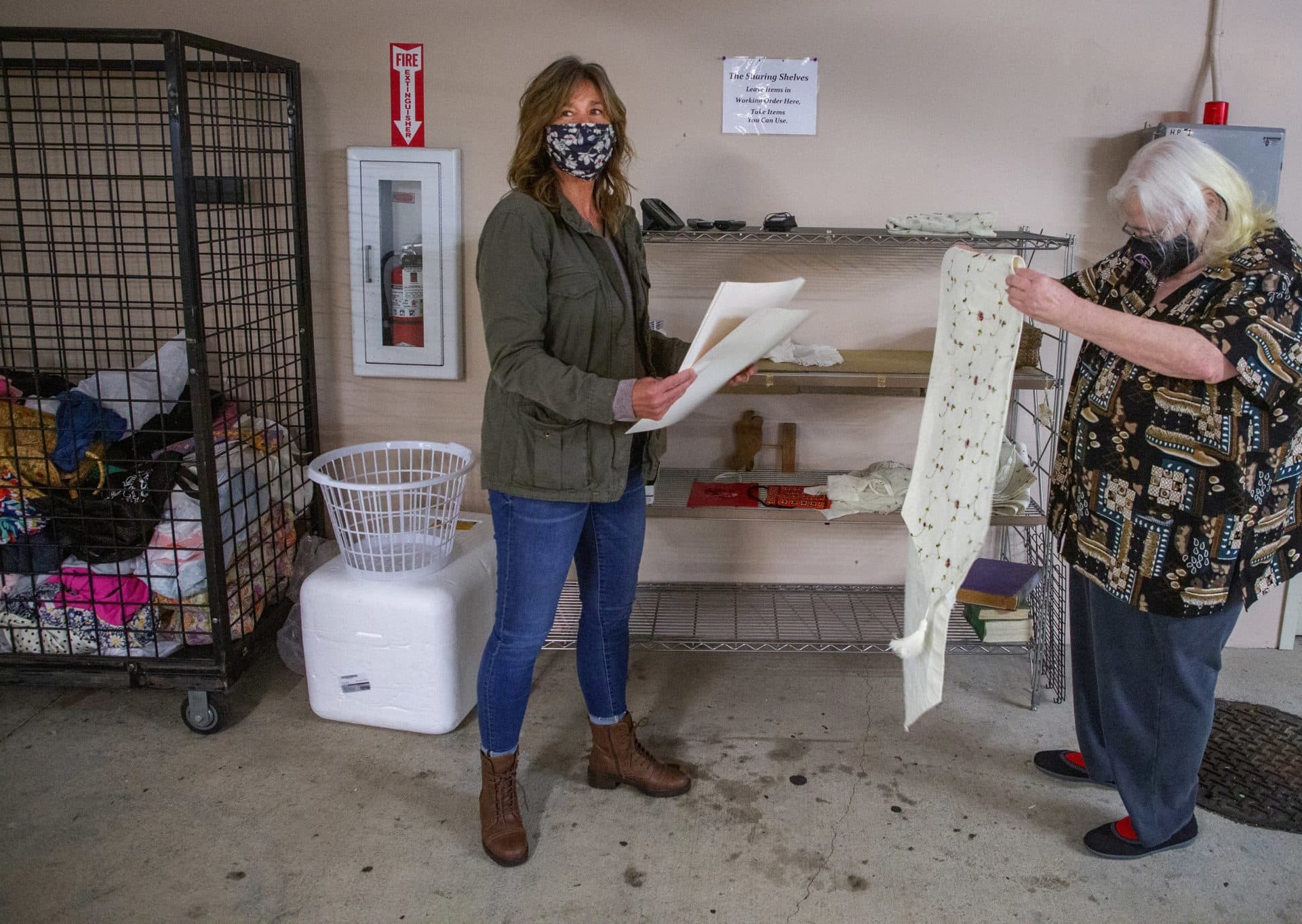
There’s a sense of community at the 51-unit apartment complex, within walking distance of convenience stores, doctors and the library. Residents keep “sharing shelves” in the parking garage, where people can find home goods, clothing and food items for free.
Kim Loveall Price, left, and Joyce Hansbearry, residence manager of the apartments, look through items from the “sharing shelves” at Ashwood Court. (Mike Seigel for WBUR)
The nonprofit, Downtown Action to Save Housing (known as DASH), expected at the end of the 15-year tax credit period it would buy out the partnership at no cost and own Ashwood Court. But Boston Financial — which was not the original investor — said it was due far more.
“They just bully you,” DASH executive director Kim Loveall Price said. “They kept threatening that they were going to force the sale … and we kind of panicked.”
DASH took out a loan in 2014 to pay the firm $300,000 and part ways, Loveall Price said. The payment had a special sting, she recalled, when she spotted an opened jar of gravy and some lettuce on the sharing shelves.
“These seniors are so poor that they share half-eaten food,” Loveall Price said. “And I’m giving these [people] $300,000 instead of being able to help with food security.”
Boston Financial chief executive Gregory Voyentzie in an interview disputed Loveall Price’s version of events and said DASH’s contract language did not provide for the low-cost exit the nonprofit was seeking. He said his firm accepted a deep discount to what it believed its clients were owed. But he regrets that the disagreement turned ugly.
“That one is disappointing to me, quite honestly,” he said. In his view, a junior employee at his firm allowed a disagreement over the value of Ashwood Court and the partnership to escalate.
Boston Financial challenged DASH on three other properties, saying it was due about $1 million to exit them. But DASH officials believed they should pay only $69,000, and sued in federal court in Seattle.
An internal Boston Financial email from 2016, included in the lawsuit, sheds light on the firm’s negotiating stance: “Even though they’re a small non-profit, they might be able to just pay us off to get rid of us,” a senior vice president wrote.
As the case dragged on, Loveall Price said, residents waited for badly needed repairs on roofs, decks and windows.
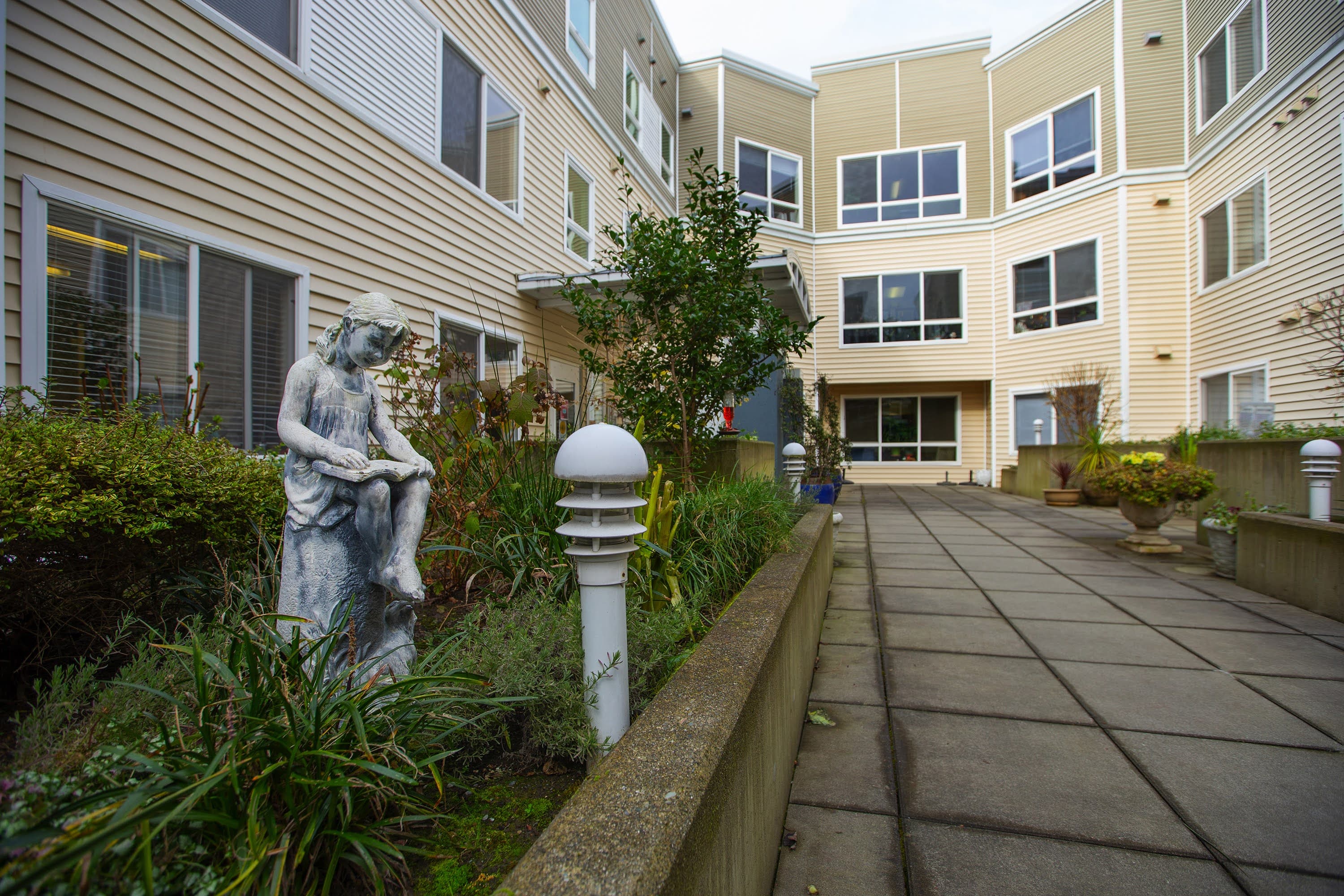
Ashwood Court is a low-income housing complex for seniors in downtown Bellevue, Wash. (Mike Siegel for WBUR)
A judge ruled in DASH’s favor in 2019, determining that Boston Financial had breached the agreement by refusing to allow DASH to buy the properties. In a settlement, DASH took ownership of four properties for zero dollars.
Looking back, Voyentzie said, “I would have said, ‘Forget it. It’s not worth fighting over.’ ”
He said Congress should “correct” the law so nonprofits have a clear option to buy at the end of the tax credit term. “There shouldn’t be any dispute.”
Ousting The General Partner
Seattle-area housing developer Catherine Tamaro will never forget the grilling she took in federal court in June of 2019. During a five-day trial, Alden Torch tried to remove her as partner and manager of two low-income properties she had run for many years.
The firm claimed Tamaro hadn’t raised rents enough on her tenants at the Parkway Apartments. It complained in court records that her 2018 audit was late and alleged she had breached her fiduciary duty to the investment partner by doing “unnecessary” repairs, such as replacing failed roofs and rotting balcony railings and fixing hazardous broken sidewalks — all upkeep that’s required by the federal government.
Tamaro should have conserved that cash for Alden Torch, its attorneys argued. They said she enriched herself and failed “to maximize partnership income by increasing rental rates” at Parkway to the allowable federal limit.
If Alden Torch prevailed in its lawsuit, Tamaro stood to lose daily control of the two Seattle-metro properties, and her ability to purchase them when the tax credits expired.
“I clearly had the right to buy [the apartments] under that partnership agreement, and they were attempting to strip that right from me,” Tamaro said.
Tamaro’s initial tax credit partners did well in the deal, court records show, more than doubling the money they invested. By the time Alden Torch took over the interest in 2011, any major upside was in the real estate, not in the aging tax breaks.
Again, the firm brought a host of allegations, taking a deep dive into financial statements dating back to 2002, before Alden Torch was even involved. Tamaro said the attacks on her were personal and painful.
“I can’t even describe how unpleasant it is to sit in court and know what’s at stake and listen to them talk about how awful I am,” she said.
“I clearly had the right to buy [the apartments] under that partnership agreement, and they were attempting to strip that right from me.”
The firm used the same tactic — trying to remove the general partner — in five other cases WBUR examined. It succeeded in one case; two other cases are pending.
The judge did rule that Tamaro had interfered with a property appraisal, and ordered a new one. Both Alden Torch and Tamaro appealed parts of the ruling, but it was upheld in March.
Tamaro said being embroiled in the lawsuit for several years has cost her dearly, from the $2.5 million she had to spend on legal fees to her multiple sclerosis symptoms growing worse from the stress.
Lack Of Oversight
The new investors in tax-credit interests aren’t the only ones evading oversight. The sellers, like banks and insurance companies, also have faced little scrutiny. The IRS is not monitoring these transfers or their ramifications, WBUR found, nor are federal housing or banking regulators.
Large banks invest in these projects primarily to satisfy their Community Reinvestment Act obligations with regulators, infusing money into less affluent neighborhoods. But when banks or other investors sell their stakes, the nonprofits are left dealing with firms whose intentions are unknown.
Take the case of the Aswan Village Apartments, an affordable housing complex with 500 residents in Opa-locka, Fla., a small city just north of Miami. Bank of America in 2003 backed a redevelopment of the property — then sold its interest in 2014.
The bank reaped between $250,000 and $400,000 in the sale, according to Miami-Dade County court records. The buyer, HallKeen Management of Norwood, Mass., would earn fees helping manage a property it said was “distressed.” But it was eyeing a potential gain of millions of dollars if the property was sold.
“We had no intention of selling the property,” said Willie Logan, chief executive of the Opa-locka Community Development Corp., the nonprofit general partner of the apartments. “We always had a long-term strategy to become 100% owners, because that’s the way you develop wealth and sustainability” in the neighborhood.
HallKeen argued that a sale would provide both it and the nonprofit with about $5 million each. But Opa-locka did not want to lose control of the property. It sued HallKeen and won, in what’s been a costly and time-consuming fight. And it’s not over yet; HallKeen is appealing the decision.
Willie Logan, of Opa-locka Community Development Corp. (Courtesy Opa-locka)
Logan, a former mayor and Florida state representative, blames the bank, in part, for selling to HallKeen. He likened the tax-credit exit battle to sharecropping. “You’re promised something at the end, but you’re just chasing your tail, because they found a way to manipulate, steal, cheat and take it from you,” he said.
Bank of America spokesman Bill Halldin said the bank does not make a practice of selling its tax-credit holdings. It did sell its interest in at least one other Florida property to HallKeen in that same period, however. Those apartments were then sold in October 2020 for more than $14 million to another firm, according to the county appraisal office.
“We typically hold our position for the entirety of the tax credit period,” Halldin said.
In a statement, HallKeen chief executive Andrew Burnes defended his firm’s track record. He said it “has never moved, or caused to be moved, a single unit of housing from affordable to market rate.”
“You’re promised something at the end, but you’re just chasing your tail, because they found a way to manipulate, steal, cheat and take it from you.”
WILLIE LOGAN
Transactions like these might receive more scrutiny in the state of Washington, where the housing commission adopted new rules last fall. It started requiring investors to seek its approval when transferring a housing partnership interest to another entity.
In response, Alden Torch sued the agency and its commissioners. The case, filed in federal court, claims the agency acted outside the scope of its authority, “adopting regulations on behalf of local special interests that are both patently unfair and constitutionally defective.”
Across the industry, Alden Torch’s lawsuit against the state regulators is being closely watched. The agency, in its legal response, asserted its “broad authority” to oversee the tax-credit program in Washington and said Alden Torch’s suit lacked merit.
But the agency has ceded some ground. It has backed away from rejecting transfers of partnership interests if a firm was involved in a lawsuit with housing partners. And agency officials are speaking less freely.
The group’s spokeswoman, Margaret Graham, in an email said commissioners had developed “cold feet” about scheduling an interview with WBUR. “Our lawyers advise us that with the ongoing lawsuit, it’s just not a good time for us to be commenting.”
So far, Boston’s building boom shows no signs of abating in 2020.
In the last six years, the Boston Planning and Development Agency has permitted about 65 million square feet of new development and the city has seen more than 60 million square feet built in that time, according to the city agency.
Even as some of the city’s most transformative projects of the last decade, like Hub on Causeway, continue to inch higher into the sky in 2020, we asked Jonathan Greeley, director of development review for the BPDA, to name some of the notable developments the public should keep an eye out for in 2020.
“One of the things the city is trying to do is respond to tremendous residential demand,” Greeley said. “In addition to responding to that residential demand by hopefully permitting and building as many units as possible, we’re trying to find a way to maximize the amount of those units being affordable. We put our money where our mouth is.”
The director of development review said that in 2019, guided by goals established with the city’s 2030 plan, 20 percent of all the units the BPDA approved were affordable. Officials, he emphasized, are constantly thinking about how to plan and facilitate “proper growth” in Boston.
“We want to make sure we’re creating a thriving city for all Bostonians,” he said of the efforts.
Below, 10 projects in Boston that will be ongoing or kicking-off in the coming year.
Renderings of Winthrop Square Tower. —Handel Architects
Work on the new residential and office tower at 115 Winthrop Square will push on in 2020, Greeley said.
“What’s exciting about this year is you’re going to start to see it come out of the ground,” Greeley said. “They’ve been doing a lot of work below the surface.”
The almost 1.6 million-square-foot project, on the site of the previously city-owned, shuttered Winthrop Square Garage, will feature residential, office, retail, and dining space. The tower, which will stand 691 feet tall, will contain a “Great Hall” at its base to serve as a public space.
Greeley emphasized that the project is a “one-two” punch for the city. Not only will it create new, mixed-use space, but it will contribute to other efforts city-wide. He said notably it will bring “significant investment” to the area around the site, including infrastructure improvements to Winthrop Square and the nearby park. But money from sale of the site to Millennium Partners will generate more than $150 million in funding for the City of Boston, which is slated for efforts including improvements to the Boston Common and Franklin Park and affordable housing.
“Most importantly it’s going to help to fund an all-affordable building in Chinatown,” Greeley said.
“[Winthrop Square] is a great example of a public/private partnership on public land to deliver a wide variety of results, which will add improvements on the site, but also in and around the neighborhood they sit in,” he added.
Work to redevelop the former headquarters of the Boston Globe got underway in 2019 and will continue in 2020 as the developers search for a wide variety of tenants to fill the building, Greeley said. The new name for the property at 135 Morrissey Blvd., “The Beat,” stands for “The Boston Exchange for Accelerated Technology” and pays homage to the “beat” reporters who used to call the site home.
“What’s exciting there is that they took a look at the site and said, we’re not going to demolish the whole thing, we’re going to re-envision the whole thing,” Greeley said. “So if you drive by it today, either from Morrissey Boulevard or the highway, you’ll see they are gutting and rebuilding the building.”
Development firm Nordblom envisions reconfiguring the 695,000-square-foot building into both tech and traditional office space, while maintaining ground floor use for neighborhood amenities that could serve nearby Savin Hill.
“One of the things that project has done is make sure there are pedestrian connections through Savin Hill,” Greeley said. “So they want to make sure that it’s not just ground floor uses and ground floor retail amenities that serve the building — they want those uses to be enhancements to the neighborhood as well.”
Greeley said the project is one of several exciting development efforts around the Columbia Point peninsula, and the city believes the approach taken for the “The Beat” is a precursor to other projects that could follow in and around the JFK/UMass area.
A rendering of the Fenway Center project. —The Architectural Team
Both Phase I and Phase II of the enormous development will be underway in 2020, Greeley said. When completed, the $500 million construction project will comprise four buildings and a parking garage that will extend along, and above, the Mass. Pike.
Phase 1, which features the construction of two buildings on Brookline Avenue and the creation of about 312 new residential units, broke ground in 2018 and is expected to be ready for occupancy in 2020.
“Those two new buildings will bring some life to that area, which again, it’s been a series of surface parking lots for a long time,” Greeley said of the project.
In 2020, Greeley said the BPDA is also expected to hear proposed changes to Phase II of the project, which would feature the construction of a 27-story tower above the Mass. Pike. The change would bring more space for office and life science tech to the site, replacing about 150 housing units originally planned for the site.
“We’re currently reviewing that project — those alterations,” he said. “And that project could be considered by our board in the first half of 2020.”
When the second phase over the Mass. Pike moves forward, it will be one of two so-called “air rights” projects, the first in decades, predicted to get underway in 2020.
“That’s something that was the subject of long-term planning efforts in partnership between the city and state, and we’re really thrilled to see that piece of the project go forward, built over the turnpike,” Greeley said.
Renderings of the Government Center Garage redevelopment project. —BPDA
By the end of 2020, Greeley said he expects to see the first phase of the downtown project, which will ultimately create six new high-rise and mid-rise buildings, completed.
The project includes 800 new residential units in two towers and more than 1 million square feet of office space, with the new corporate headquarters for State Street anchoring a retail tower at One Congress.
As the project moves forward, Bostonians can expect to see the existing Government Center Garage on Congress Street come down, Greeley said.
“[It’s] a dramatic change to the downtown neighborhood,” Greeley said of the project. “A dramatic change in the daylighting of Congress Street and I think just a really pleasant removal of a barrier between Government Center and North Station.”
Rendering of the proposed Back Bay Station redevelopment. —Courtesy of Boston Properties / Pelli Clarke Pelli Architects
The 1.26 million-square-foot mixed-use project that will rise above and adjacent to Back Bay Station is one the city hopes will reach into the skyline in 2020.
Some elements of the project — which features a new office building with ground floor retail, two new residential buildings, an expansion of the existing station, and redevelopment of the 165 Dartmouth Street Garage — are already already underway, Greeley said.
Improvements within Back Bay Station, such as redoing the bathrooms, are already underway as part of the project. The MBTA is responsible for platform level investments, but developer Boston Properties is responsible for the station renovations itself.
“That work is starting now,” Greeley said. “We hope and anticipate that Boston Properties will start construction in 2020 on one of those three towers.”
A rendering of the proposed development at Suffolk Downs. —Provided by BPDA
Greeley said the hope is that redevelopment of the East Boston site can get underway in 2020, pending an ongoing community review and approval by the BPDA board.
“The goal is to return what is kind of largely a surface parking lot with [an] infrequently used racing track and take it and use it to create a dynamic mixed-use community that is really anchored by two MBTA stations on the Blue Line, Suffolk Downs and Beachmont,” he said.
The project from HYM Investment Group proposes during Phase I of the project the creation of 520,000 square-feet of corporate and amenity space, three residential buildings, and town homes for the construction of more than 800 housing units. About two-thirds of the 150-acre plot sits in Boston, with a third falling in Revere.
About 40 acres of the development are proposed to remain unbuilt, serving as a mix of parks and open space, Greeley said.
“It’s going to be a really, really dynamic space and will truly be a mixed-use project that we’ll see manifest itself over the next 20 years,” he said. “One of the reasons why it’s taken us so long in the review process is that it’s been something we really want to get right, prioritizing a real mix of use, of affordability, of open space, and also making sure the design is just really dynamic as well.”
A rendering of “Building A” at the proposed Allston Yards development. —Stantec via BPDA
The project, proposed at the nexus of Allston, Brighton, and the area surrounding Boston Landing, was approved by the BPDA in December, and Greeley said he anticipates construction of the new neighborhood to get underway in 2020. The 868-unit mixed-use development would transform the existing Stop & Shop plaza at 60 Everett St. into a “transit-oriented” neighborhood featuring open space, a flagship grocery store, office and retail space, and residential units.
Greeley said the project will also create a new roadway network for better connectivity through the neighborhood and has subsidies for local transit in and around Allston/Brighton, including to help fund more frequent MBTA service for rail and bus.
“[It’s] a great mixed-use, dynamic project,” he said. “The project is getting 17 percent affordability on site and will fund another 40-plus units of affordable [housing] offsite throughout the neighborhood. So we’re really excited for the potential of that project.”
A rendering of the Dot Block project. —Provided by the BPDA
This project, located on almost an entire city block along Dorchester Avenue, first won approvals from the BPDA in 2016 and has gone through several iterations since then. A revised proposal for the project was approved in 2019, and Greeley said the hope is that it could break ground in 2020.
The project at 1205 Dorchester Ave. would include the construction of four new buildings that would contain 488 residential rental units, about 23,000 square feet of commercial space for neighborhood-oriented retail and restaurant space, as well as 1.34 acres of open space.
“That site will take what was essentially a derelict site, not a lot going on, and bring much-needed housing to the neighborhood, as well as breaking up a very large development site with new roadways and public realm,” Greeley said. “And we’re excited because it’s investment in an area that hasn’t seen as much investment traditionally, and so it would also set the tone for the types of development we want to see there long-term.”
A rendering of the proposed Mattapan Station project. —Provided by the BPDA
Construction on this $57 million mixed-use project is anticipated to start in the spring of 2020. It will feature the construction of 135 units of mixed-income apartments for rent and 10,000 square feet of commercial and retail space at 500 River Street.
Located beside the Mattapan MBTA station, it is being heralded as a transit-oriented development project that will provide affordable and market-rate housing to the neighborhood.
“We are excited to see investment in Mattapan and in the Mattapan Station area,” Greeley said. “This is a good project.”
A rendering of the proposed Pine Street Inn development for Washington Street in Jamaica Plain. —RODE Architects via Boston Planning and Development Agency
Pine Street Inn formally filed plans with the BPDA last March to construct the 225-unit building at 3368 Washington St., with the aim of serving chronically homeless disabled adults. The proposal won board approval later in the year, and Greeley said he hopes the project will secure its needed financing in 2020 in order to break ground and be under construction by the end of the year.
“One of the things that we’ve been able to do over the course of this year is that 20 percent of all new units throughout the city have some sort of deed restriction making them more affordable to Bostonians,” Greeley said of the project’s importance. “This project has a higher percentage and is an example of a nonprofit working really hard to fulfill their mission. So we’re really excited about the mission-driven outcome of this project in a neighborhood that has been really, really receptive to that type of use.”
Of the 225 affordable residential units in the six-story building, 140 would be reserved for supportive housing for individuals being served by the Pine Street Inn. The remaining 85 units would serve households earning between 60% and 80% of area median income.
SourceRealEstate
City approves supportive housing complex for homeless in Jamaica Plain
A major effort to house Boston’s homeless took an important step forward Thursday night.
The Boston Planning & Development Agency board approved plans for a 202-unit apartment building on Washington Street in Jamaica Plain that would include 140 studio spaces for formerly homeless people, along with social services they need.
The complex, being developed by Pine Street Inn and two partners, could break ground within a year, if financing comes together, said Lyndia Downie, Pine Street’s executive director. It would be the largest such “permanent supportive housing” development of its kind in Boston, she said.
“This is the kind of stuff people like us dream about,” Downie said. “We know this works for people who are stuck in homelessness. This is the answer for a lot of people.”
This type of housing, which combines affordable rents with on-site services, has become a big part of Boston Mayor Martin J. Walsh’s bid to end chronic homelessness in Boston, a problem that was exacerbated by the 2015 closure of the Long Island shelter. Walsh has pushed to raise $10 million for Boston’s Way Home Fund, which would fund ongoing services at the planned building, Downie said.
“We are committed to making sure that every individual has a place to call home and build a better life,” Walsh said in a statement. “This project is only possible because of the commitment of Pine Street Inn, The Community Builders [an affordable housing developer], and many partners and stakeholders across the city who have joined our call to bring an end to chronic homelessness.”
To go forward, the building will probably need city and state funding, along with federal low-income housing tax credits, to help finance construction. Developers expect the 144,000-square-foot building to cost about $81 million in all.
Along with 140 units run by Pine Street Inn, The Community Builders would build and run 62 apartments dedicated to low- and middle-income renters. That’s 23 fewer units than were originally proposed, the reduction coming partly in response to neighborhood concerns about the project’s size and the traffic it might generate. It’s also one floor shorter than designers RODE Architects initially envisioned. But over the course of numerous community meetings since this spring, neighbors were generally supportive, said Dana Whiteside, who oversaw review of the project for the BPDA.
“Support for the project was quite good,” he said.
The complex, near Green Street, is one of the first large buildings proposed on a stretch of Washington Street where the BPDA two years ago approved plans for thousands of new apartments and condos. Some 40 percent of those housing units are required to be affordable.
This project will make a dent in that number, BPDA director Brian Golden said, while creating a much-needed place to help homeless Bostonians get back on their feet.
“This is a really good outcome,” he said.
The BPDA on Thursday also approved a six-building, 344-unit condo and apartment complex at the corner of Harvard Avenue and Cambridge Street in Allston Square, a 60-unit affordable housing development in West Roxbury by B’Nai B’rith Housing New England, and tweaks to Millennium Partners’ Winthrop Center tower downtown. The board also gave WS Development permission to convert a planned housing building at its Seaport Square complex into an office building instead.
SourceThe Boston Globe
SJC Homeowner’s Rehab Case has Significant Implications for Tax Credit Developers and Syndicators
Mayor Martin J. Walsh together with LIHC Investment Group, one the nation’s largest investors in affordable housing, the Boston Housing Authority, Mass Alliance of HUD Tenants (MAHT), and Greater Boston Legal Services (GBLS), today announced HUD approval of a creative plan to keep Concord Houses in the South End affordable for at least the next 40 years, with the support of the building’s tenants.
“As we build more affordable housing, it is critical that we do not lose sight of the need to preserve Boston’s inventory of income-restricted housing,” said Mayor Martin J. Walsh. “This agreement marks a positive resolution reached to keep these residents in their homes for decades to come. I thank all the residents for their advocacy, and all partners involved who helped ensure the long-term affordability and viability of the Concord Houses.”
“This agreement is the culmination of a multi-year effort to establish a new HUD program that will protect current and future residents of Concord Houses while providing funds for repairs and upgrades throughout the property,” said Charlie Gendron, Principal, LIHC Investment Group. “We appreciate the support we received from the tenants; Congress, especially the efforts of Sen. Susan Collins; HUD; the City of Boston; BHA; MAHT; and GBLS in our drive to preserve this property for future generations.”
Spanning two buildings located at 705-715 Tremont Street in the heart of the South End, Concord Houses has served as an important source of income-restricted housing in the South End for decades. In 2017, the HUD subsidy provisions governing the property expired, putting it at risk of losing its long-term affordability.
Of the 181 households at Concord Houses, 171-or 95 percent of households-chose to sign a waiver to convert their Enhanced Vouchers (EVs) to a new project-based rental assistance (PBRA) contract to make the plan work. The new HUD contract ensures homes at Concord Houses will be reserved for individuals earning no more than 80 percent area median income (AMI) and is renewable for a total of 40 years.
The agreement also guarantees that current and future tenants pay no more than 30 percent of their income toward rent, which will actually reduce the rent burden for 30 existing households at the property. The remaining ten households will receive rent protections in the form of EVs administered by BHA.
“Preserving units of affordable housing like those at Concord House is a key element of Boston’s housing strategy,” said Roger Herzog, Executive Director of the Community Economic Development Assistance Corporation (CEDAC), which works closely with DND on preservation issues and provided technical assistance in this case. “Congratulations to the City of Boston, the project residents, and LIHC Investment Group, and their partners, for thinking creatively to find a way to keep Concord House affordable for individuals and families in the South End.”
“It’s a dream to secure permanently affordable housing here — not just for ourselves, but other people who will be here long after we’re gone,” said Pauline Durant, 85, a 20-year resident of Concord Houses and member of the Concord Houses Tenants Association. “It’s been a long journey. When tenants stay together and fight, we win!”
“We’re very elated by this victory,” added Adella Quinn, 76, a retiree from Fidelity Investments and 24-year resident of Concord Houses. “We’re losing too many people in the South End who are assets to the neighborhood due to rising rents. We need to come up with more ways like this to keep our community affordable.”
“This is an historic victory,” commented Michael Kane, Director of MAHT, which helped the tenants organize. Since 1983, MAHT has saved more than 12,450 homes like Concord Houses as affordable housing, one building at a time, through tenant organizing. “Saving affordable housing in the heart of the South End will help maintain the neighborhood’s racial and economic diversity well into the future. The 171 tenants who signed up to preserve their apartments are to be commended for making this possible.” Kane also lauded LIHC and the City of Boston for supporting the tenants’ preservation plan and working creatively with Congress and HUD to make it work.
Attorneys for GBLS, Susan Hegel and Ann Jochnick, said they are pleased with the creative and collaborative process, which resulted in preserving much-needed affordable housing in the South End. “It’s a win for current and future tenants, a win for the city and a win for the owner. We hope that this may serve as a model for future preservation efforts.”
LIHC Investment Group is undertaking a $7 million repair and capital improvement campaign at the property, which includes a new entry system and security cameras; flooring and ceiling replacement; lighting upgrades in the building’s common areas; and exterior work ranging from masonry repair to new fencing and landscaping. Under LIHC’s ownership, apartments in the building have already received new kitchen cabinets, granite countertops and appliances; upgraded bathroom fixtures, tubs, and tiles; and vinyl plank flooring.
About the City of Boston’s Housing Agenda
In 2018, Mayor Martin J. Walsh updated his comprehensive housing strategy, Housing A Changing City: Boston 2030 to increase the City’s overall housing goal from 53,000 to 69,000 new units by 2030, including 15,820 new income-restricted units, to meet Boston’s population growth. In addition, the updated plan also set a goal to preserve 85 percent of Boston’s most at-risk privately-owned affordable units, like those at Concord House. Mayor Walsh’s recently announced housing security legislative package focuses on expanding upon the work that Boston has done to address the region’s affordable housing crisis by proposing new and strengthening current tools to create more ways to leverage Boston’s prosperity and create sustainable wealth opportunities that make Boston a more inclusive and equitable city. The housing security bills proposed for the 2019 Legislature seek to help existing tenants like those at Concord House, particularly the elderly, remain in their homes, and creates additional funding for affordable housing.
About LIHC Investment Group
Based in Portland, Maine, LIHC Investment Group has been active in the Greater Boston housing market for over two decades. In July 2017, the company donated its ownership stake in the Close Building, a 61-unit affordable housing community in Cambridge, to the nonprofit Just-A-Start Corporation, which develops, own and maintains affordable housing; provides housing resources and services; and offers education and workforce training for youth and adults in Boston. In August 2017, LIHC and Weston Associates forged an agreement to keep 380 homes at Shore Plaza Apartments in East Boston affordable and have since completed a major capital repair campaign for the property.
SourcePreservation of Affordable Housing
New housing opens in Hyde Park, Affordable development is first in 20 yrs
It took the Southwest Boston Community Development Corporation more than 20 years to see its 27-unit all-affordable housing building through to completion, so when Mayor Martin Walsh and leadership from the organization cut the ribbon on the development last Thursday, it was a big deal.
The Residences at Fairmount Station is a $12 million four-story building nestled between the Fairmount Station commuter rail stop and Fairmount Avenue, with 24 of its units affordable to families earning 60 percent of the area median income or below. The building contains a mixture of studios, one-, two- and three-bedroom units.
The development faced fierce pushback from Hyde Park residents when it was first proposed during the late 1990s, said SBCDC board member Diana Kelley.
“The community voted it down,” she said.
Then-Mayor Thomas Menino’s administration did not push for the development, which the CDC had originally proposed for another site, but instead steered the project to the Fairmount site, at that time a collection of dilapidated industrial buildings. That move kicked off a nearly-10-year process during which the CDC pieced together the parcel of land from private owners and the MBTA, while at the same time negotiating with neighbors over issues including the size of the building and the amount of parking.
“I don’t know that you can build affordable housing in any neighborhood and not encounter some opposition,” Kelley said. “What’s important is that we were able to get some compromises.”
Among the compromises, plans were altered to include three units available for families earning up to 70 percent of the area median income, up from 60 percent. A playground that abutters felt was too close to the MBTA tracks was moved to the opposite side of the building.
The end result is a building affordable to households earning $21,000 to $58,000, said SBCDC Board President Mimi Turchinetz, addressing elected officials and neighborhood residents gathered for the ribbon cutting Thursday.
“The units are affordable to the majority of residents of Hyde Park,” she noted.
Demand for the units is substantial, with more than 2,700 applications submitted for the 27 available units.
“The need for affordable housing that’s kid-friendly is enormous,” Turchinetz said.
Mayor Martin Walsh said the building fits into the city’s goals to increase the amount of affordable housing available as rents increase in neighborhoods along the Fairmount Line Corridor — the commuter rail line that cuts through Hyde Park, Mattapan, Dorchester and Roxbury, with new stops in many of those neighborhoods.
Walsh administration officials hope the transit line will spur new economic development in the southwestern part of the city.
“We want inclusive development,” Walsh said. “We want transit-oriented development. We want development without displacement.”
Walsh said the new building would also support businesses in the Cleary Square commercial district in Hyde Park.
“You can’t have a thriving business district if you don’t have people there,” he said.
The affordable development was made possible in part by a City of Boston contribution of more than $1.7 million. This contribution enabled the development team to take advantage of more than $2.5 million from the state’s Department of Housing and Community Development. The state also provided an allocation of almost $1.5 million in federal Low-Income Housing Tax Credits that helped raise over $4.7 million in equity from National Equity Fund, the equity investor in the project. Webster Bank provided a construction loan, with MassHousing providing long-term permanent financing. The Community Economic Development Assistance Corporation and the Equitable Transit-Oriented Development Accelerator Fund at LISC Boston provided critical pre-development and acquisition funding to secure the site.
SourceBay State Banner
Mayor Walsh, Southwest Boston Community Development Corporation, Traggorth Companies and residents celebrate opening of the Residences at Fairmount Station
Mayor Martin J. Wash today joined Southwest Boston Community Development Corporation, Traggorth Companies, elected officials and residents to celebrate the grand opening of The Residences at Fairmount Station. This once vacant property is now a transit-oriented residential development that offers 27 rental units, including 24 affordable units. The project is part of a larger City effort to prioritize affordable development along the Fairmont Corridor, one of the action areas outlined in Imagine Boston 2030 with the goal of expanding opportunities and reducing disparities for residents in the area.
“Today we celebrate a milestone in our efforts to create more affordable housing by officially opening The Residences at Fairmount Station, which sets the standard for all transit-oriented development in the city,” said Mayor Walsh. “I’m proud that with our partners we were able to create 27 rental homes for Boston’s working families. This new development will continue to keep Hyde Park a strong and vibrant neighborhood for generations to come.”
The $12 million four-story building features a combination of studio, one-bedroom, two-bedroom, and three-bedroom units. Out of the 27 rental units, 24 are affordable to households at or below 60 percent of Area Median Income (AMI), which is around $51,000 for a two-income household. The remaining three units are designated for households at or below 70 percent AMI, or around $60,000 for a two-income household. The development also offers 6,000 square feet of green space and play space, a public community room, and parking spaces and bike spaces.
“This lot used to be overgrown with weeds and falling down buildings,” said Hyde Park resident Nicole Wiggins. “It is wonderful to see investment in our community that creates affordable housing, playgrounds, and community spaces that will benefit current Hyde Park residents.”
The project is LEED Silver Certified and has many green features for long-term operations, sustainability, and includes several improvements such as new sidewalks, handicap accessible ramps, benches, lighting, bike racks, and a playground. The building was designed by DMS Design, constructed by Delphi Construction, and will be managed by Maloney Properties. Southwest Boston CDC will provide ongoing services to residents.
“We have long advocated for equitable investment along the Fairmount Corridor, and we could not be more thrilled that through community persistence and support from Mayor Walsh, we have succeeded,” said Mimi Turchinetz, board chair of Southwest Boston Community Development Corporation, one of the joint venture partners on the project. “By providing residents with high-quality affordable housing, safe and beautiful play spaces, and access to transit, we make Hyde Park more beautiful while also providing Hyde Park families with much needed stability.”
“It’s been a pleasure working with Southwest Boston CDC to bring a shared vision for equitable transit oriented development to life,” said Dave Traggorth, Principal of Traggorth Companies, the second partner in the joint venture to build the project. “Their tireless advocacy, along with the critical resources from the City of Boston and the Commonwealth, has created beautiful, affordable homes for Hyde Park families. We hope this project sets the standard for the neighborhood, and is just the beginning of an exciting chapter.”
The new development has been made possible in part by a City of Boston contribution of more than $1.7 million. This contribution enabled the development team to take advantage of more than $2.5 million from the Commonwealth’s Department of Housing and Community Development. The State also provided an allocation of almost $1.5 million in federal Low-Income Housing Tax Credits (LIHTC) that helped raise over $4.7 million in equity from National Equity Fund, the equity investor in the project. Webster Bank provided a construction loan with MassHousing providing long-term permanent financing. The Community Economic Development Assistance Corporation (CEDAC) and the Equitable Transit-Oriented Development Accelerator Fund (ETODAF) at LISC Boston provided critical predevelopment and acquisition funding to secure the site.
The Residences at Fairmont Station consist of affordable units to low- and middle-class families and strongly aligns with the City’s housing goals outlined in Housing a Changing City: Boston 2030. Mayor Walsh recently increased the City’s overall housing targets from 53,000 to 69,000 new units by 2030 to meet Boston’s population growth. These updated housing goals build on Mayor Walsh’s commitment to increasing access to home ownership, preventing displacement and promoting fair and equitable housing access.
Since the release of the original Housing a Changing City: Boston 2030 plan in 2014, income-restricted housing stock, designed to increase affordable housing, has grown along with overall new production: nearly 20 percent of housing units are income restricted, and 25 percent of rental units are income restricted. In total, after creating an additional 15,820 units of income-restricted housing, Boston will have nearly 70,000 units of income-restricted housing by 2030.
These income-restricted units will include purchasing 1,000 rental housing units from the speculative market and income-restricting them through an expanded Acquisition Opportunity Program. In addition, the City will soon announce awardees of an affordable housing funding round that includes more than $16 million in city affordable housing funds, and the first large scale awards of Community Preservation Act (CPA) funding for affordable housing development projects.
Residences at Fairmount Station Opens With Celebration in Hyde Park
Mayor Martin J. Wash today joined Southwest Boston Community Development Corporation, Traggorth Companies, elected officials and residents to celebrate the grand opening of The Residences at Fairmount Station. This once-vacant property is now a transit-oriented residential development that offers 27 rental units, including 24 affordable units. The project is part of a larger City effort to prioritize affordable development along the Fairmont Corridor, one of the action areas outlined in Imagine Boston 2030 with the goal of expanding opportunities and reducing disparities for residents in the area.
“Today we celebrate a milestone in our efforts to create more affordable housing by officially opening The Residences at Fairmount Station, which sets the standard for all transit-oriented development in the city,” said Mayor Walsh. “I’m proud that with our partners we were able to create 27 rental homes for Boston’s working families. This new development will continue to keep Hyde Park a strong and vibrant neighborhood for generations to come.”
The $12 million four-story building features a combination of studio, one-bedroom, two-bedroom, and three-bedroom units. Out of the 27 rental units, 24 are affordable to households at or below 60 percent of Area Median Income (AMI), which is around $51,000 for a two-income household. The remaining three units are designated for households at or below 70 percent AMI, or around $60,000 for a two-income household. The development also offers 6,000 square feet of green space and play space, a public community room, and parking spaces and bike spaces.
“This lot used to be overgrown with weeds and falling down buildings,” said Hyde Park resident Nicole Wiggins. “It is wonderful to see investment in our community that creates affordable housing, playgrounds, and community spaces that will benefit current Hyde Park residents.”
The project is LEED Silver Certified and has many green features for long-term operations, sustainability, and includes several improvements such as new sidewalks, handicap accessible ramps, benches, lighting, bike racks, and a playground. The building was designed by DMS Design, constructed by Delphi Construction, and will be managed by Maloney Properties. Southwest Boston CDC will provide ongoing services to residents.
“We have long advocated for equitable investment along the Fairmount Corridor, and we could not be more thrilled that through community persistence and support from Mayor Walsh, we have succeeded,” said Mimi Turchinetz, board chair of Southwest Boston Community Development Corporation, one of the joint venture partners on the project. “By providing residents with high-quality affordable housing, safe and beautiful play spaces, and access to transit, we make Hyde Park more beautiful while also providing Hyde Park families with much needed stability.”
“It’s been a pleasure working with Southwest Boston CDC to bring a shared vision for equitable transit oriented development to life,” said Dave Traggorth, Principal of Traggorth Companies, the second partner in the joint venture to build the project. “Their tireless advocacy, along with the critical resources from the City of Boston and the Commonwealth, has created beautiful, affordable homes for Hyde Park families. We hope this project sets the standard for the neighborhood, and is just the beginning of an exciting chapter.”
The new development has been made possible in part by a City of Boston contribution of more than $1.7 million. This contribution enabled the development team to take advantage of more than $2.5 million from the Commonwealth’s Department of Housing and Community Development. The State also provided an allocation of almost $1.5 million in federal Low-Income Housing Tax Credits (LIHTC) that helped raise over $4.7 million in equity from National Equity Fund, the equity investor in the project. Webster Bank provided a construction loan with MassHousing providing long-term permanent financing. The Community Economic Development Assistance Corporation (CEDAC) and the Equitable Transit-Oriented Development Accelerator Fund (ETODAF) at LISC Boston provided critical predevelopment and acquisition funding to secure the site.
The Residences at Fairmont Station consist of affordable units to low- and middle-class families and strongly aligns with the City’s housing goals outlined in Housing a Changing City: Boston 2030. Mayor Walsh recently increased the City’s overall housing targets from 53,000 to 69,000 new units by 2030 to meet Boston’s population growth. These updated housing goals build on Mayor Walsh’s commitment to increasing access to home ownership, preventing displacement and promoting fair and equitable housing access.
Since the release of the original Housing a Changing City: Boston 2030 plan in 2014, income-restricted housing stock, designed to increase affordable housing, has grown along with overall new production: nearly 20 percent of housing units are income restricted, and 25 percent of rental units are income restricted. In total, after creating an additional 15,820 units of income-restricted housing, Boston will have nearly 70,000 units of income-restricted housing by 2030.
These income-restricted units will include purchasing 1,000 rental housing units from the speculative market and income-restricting them through an expanded Acquisition Opportunity Program. In addition, the City will soon announce awardees of an affordable housing funding round that includes more than $16 million in city affordable housing funds, and the first large scale awards of Community Preservation Act (CPA) funding for affordable housing development projects.
ABOUT SOUTHWEST BOSTON COMMUNITY DEVELOPMENT CORPORATION
The Southwest Boston Community Development Corporation (SWBCDC) works to build and sustain a thriving, racially and economically equitable community in Hyde Park and Roslindale. We work to prevent displacement, create and preserve affordable housing, strengthen the commercial base of the neighborhoods, ensure access to good transit and green spaces, and develop local leaders whose voices are not otherwise heard. For more information, please visit swbcdc.org
ABOUT TRAGGORTH COMPANIES
Based in Boston, Traggorth Companies works to execute mid-sized smart growth, urban infill multifamily projects working collaboratively with communities to balance affordability, tenure, historic preservation, and economic development. For more information, please visit traggorthcompanies.com
SourceCity of Boston Neighborhood Development
Back in session: Carter School turning into apartments
It’s been more than 30 years since the sounds of learning have been heard inside the three-story brick building at 261 West St.
Soon, adults and children will be walking the halls again — and this time, they will call it home.
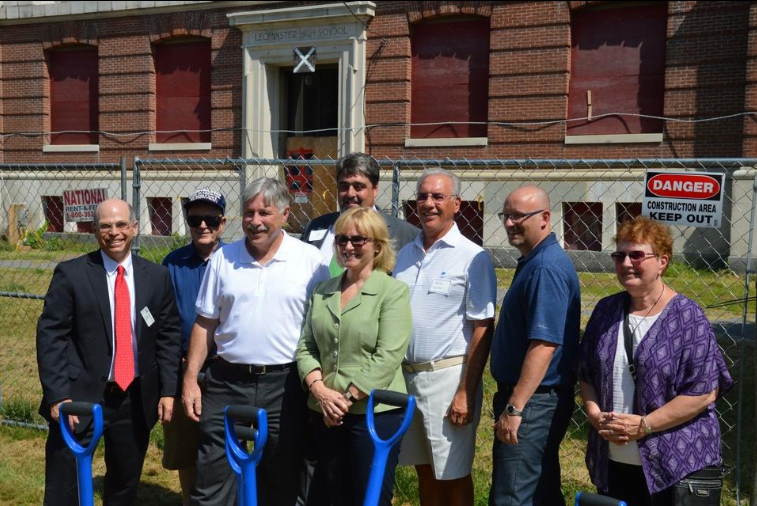
A ceremonial groundbreaking ceremony Wednesday, Aug. 29 marked the start of the conversion of the former Carter Junior High School into 39 units of affordable housing.
The building will have 14 one-bedroom apartments, 21 two-bedroom units and four three-bedroom units when work is complete, which is expected to take about a year and cost about $17 million.
There will also be storage for tenants, an exercise room, community space and parking. The building’s exterior and its boiler will be historically restored.
Each unit would be classified as affordable, according to documents from the Commonwealth of Massachusetts, including 16 units that would be affordable to households earning less than 30 percent of the region’s median income.
The hope, according to a press release from building owner NewVue Communities, is for the building to be certified by Enterprise Green Communities and placed on the National Register of Historic Places.
Built in 1904, the former Carter School was named after James Gordon Carter, a Leominster native, teacher and member of the first Massachusetts Board of Education. It served as the city’s high school until 1963; in fact, the building still bears the Leominster High School inscription above the front entrance. Then, from 1964-84, the Carter School was a junior high school.
The City of Leominster sold the Carter School to a private developer in 2000, but attempts to redevelop the building were not successful. NewVue Communities, based in Fitchburg, bought the building in 2016.
“It was such a significant part of Leominster’s rich history, and it broke my heart to see it in such terrible condition,” said NewVue Vice President Bill Brassard, Carter Junior High School Class of 1981. “I am proud to be part of a team that will revitalize this building and create a new use for it.”
NewVue Communities teamed up with city officials, Davis Square Architects, Hutter Construction and Wingate Companies to bring the Carter School project to the phase celebrated last week. Wingate, which will manage the building for NewVue, will start accepting apartment applications in the summer of 2019.
“We are excited to be here today,” Leominster Mayor Dean Mazzarella said. “This building was in such tough shape that we did not know how to redevelop the building. Given NewVue’s track record of taking on the most challenging projects with great success, I was thrilled when they asked us to partner with them to create affordable housing that is such an important part of Leominster’s history.”
The Carter School is NewVue’s second affordable housing project in Leominster. The first was Water Mill Apartments on Water Street.
Project partners and funders for the Carter School renovation include the City of Leominster, the Fitchburg-Leominster HOME Consortium, the state Department of Housing and Community Development, the Massachusetts Housing Investment Corporation, Avidia Bank, the Massachusetts Historical Commission, the Massachusetts Affordable Housing Trust Fund, the National Park Service, NeighborWorks America, the Community Economic Development Assistance Corporation, the Massachusetts Housing Partnership and the TD Charitable Foundation.
SourceLeominster Champion
Former Leominster school being converted to affordable housing
NewVue Communities is helping to breathe new life into the former Carter Junior High School, which has been vacant more than 30 years.
Wednesday, state and local officials and community leaders, some of whom attended Carter Junior High at 261 West St., across from the West End Diner, gathered under a tent for a groundbreaking ceremony outside the three-story brick school building to kick off its redevelopment into 39 affordable housing units.
Leominster Mayor Dean J. Mazzarella said that in 1985, former Mayor Richard J. Girouard Sr. asked Mr. Mazzarella and his business partner, who were in construction at the time, to tour the deteriorating building and consider redeveloping it. The school – built in 1904 and named after Leominster native and teacher James Gordon Carter, who was a member of the first Massachusetts Board of Education – served as the city’s high school until 1963, then a middle school from 1964 until 1984, when it was left vacant.
“I walked through the building with my partner and said, ‘If you give us the building and $100,000, we’ll do it over,’ ” Mr. Mazzarella said, adding that the cost of the project outweighed the benefits at the time.
After showing it himself to potential buyers “a million times,” the mayor said, he is excited about NewVue’s team effort and passion to see the project through. NewVue is a regional nonprofit that specializes in redeveloping properties into housing.
“Given NewVue’s track record of taking on the most challenging projects with great success, I was thrilled when they asked us to partner with them to create affordable housing (in a property) that is such an important part of Leominster’s history,” Mr. Mazzarella said.
In 2000, the city sold the school to a private developer, but after multiple unsuccessful attempts to redevelop it, NewVue Communities stepped in, officials said, and acquired the building in 2016.
NewVue Communities Vice President Bill J. Brassard, who attended Carter from 1979 to 1981, said he was happy to see the school restored.
“It was such a significant part of Leominster’s rich history and it broke my heart to see it in such terrible condition,” Mr. Brassard said. “I am proud to be part of a team that will revitalize this building and create a new use for it.”
When renovations are completed in 2019, the building will have 14 one-bedroom apartments, and 21 two-bedroom and four three-bedroom units. It will also have tenant storage, an exercise room, community space and parking. The exterior of the building and the existing boiler will be historically restored, officials said. The goal is for the building to be certified by Enterprise Green Communities and placed on the National Register of Historic Places.
Janelle Chan, undersecretary for housing and community development for the state’s Executive Office of Housing and Economic Development, said her office was glad the building will benefit future generations and become an asset for Leominster.
Ms. Chan said it is “pretty cool” that people who attended the school want to come back to live there and that children will be back in the hallways. Her office, she said, is proud to support the project.
The $17.4 million project is using historic and low-income housing tax credits, she said, along with state and local subsidies and private loans to rehabilitate the building that is in significant disrepair. Four units will be reserved for formerly homeless households, she said, who will have supportive services provided by the Massachusetts Opportunity Council. All units will be available to tenants at or below 60 percent of the average median income, and 16 units are reserved for tenants at or below 30 percent.
Marc Dohan, executive director of NewVue Communities, said the development team also includes city officials, Davis Square Architects, Hutter Construction and Wingate Companies, who have been working on bringing the project to fruition over the past five years.
Project partners and funders include the city of Leominster, Mr. Mazzarella, the Fitchburg-Leominster HOME Consortium, the Department of Housing and Community Development, Massachusetts Housing Investment Corporation, Avidia Bank, the Massachusetts Historical Commission, the Massachusetts Affordable Housing Trust Fund, the National Park Service, NeighborWorks America, the Community Economic Development Assistance Corporation, the Massachusetts Housing Partnership and the TD Charitable Foundation.
SourceTelegram
X
The Work That Happens Early: Reflections from CEDAC’s FY25 Annual Report
We use cookies to enhance your experience, enable YouTube video playback, and understand how visitors use our website through analytics. We do not use cookies for advertising or cross-site tracking.
Functional
Always active
The technical storage or access is strictly necessary for the legitimate purpose of enabling the use of a specific service explicitly requested by the subscriber or user, or for the sole purpose of carrying out the transmission of a communication over an electronic communications network.
Preferences
The technical storage or access is necessary for the legitimate purpose of storing preferences that are not requested by the subscriber or user.
Statistics
The technical storage or access that is used exclusively for statistical purposes.The technical storage or access that is used exclusively for anonymous statistical purposes. Without a subpoena, voluntary compliance on the part of your Internet Service Provider, or additional records from a third party, information stored or retrieved for this purpose alone cannot usually be used to identify you.
Marketing
The technical storage or access is required to create user profiles to send advertising, or to track the user on a website or across several websites for similar marketing purposes.