Mass. Nonprofits Share $11.5M to Bolster Affordable Housing

August 16, 2021 — Nonprofits across Massachusetts, in collaboration with community development corporations and others, recently were awarded $11,578,537 to support affordable housing developments in cities and towns from Boston to Northampton.

“These commitments, which represent a strong second quarter of lending activity, support a variety of affordable housing projects that are tailored to the needs of the community,” said Roger Herzog, executive director the Boston-based Community Economic Development Assistance Corporation, a public-private community development finance institution.

“We are proud to support our non-profit development partners as they create affordable and supportive housing for families, seniors, and veterans. These projects will help ensure that some of our most vulnerable populations have a safe, affordable place to call home.”

Receiving funding were the following:

  • Caribbean Integration Community Development, Mattapan: $750,000 to create 30 units of affordable, supportive housing for seniors, with 11 units designated for households at or below 30% of area median income (AMI). 
  • The Community Builders, Boston: $1 million predevelopment for the first phase of a major public housing redevelopment in Jackson Square. 
  • The Community Builders, Worcester: $400,000 in predevelopment financing to subdivide a 36,595-square-foot acre lot from the existing Fruit Sever Apartments site and construct 49 new affordable apartments. 
  • The Neighborhood Developers, Chelsea: $500,000 in predevelopment financing to acquire a vacant site one block from the MBTA Silver Line Station and create 66 affordable family units. 
  • North Star Family Services, Leominster: $100,000 in predevelopment financing to purchase an undeveloped site to will create 14 units of permanent supportive housing for formerly homeless families. 
  • Soldier On, Tewksbury: $225,000 in predevelopment financing to purchase an undeveloped parcel, to construct 21 units of permanent supportive housing for veterans who are homeless or at risk of homelessness. 
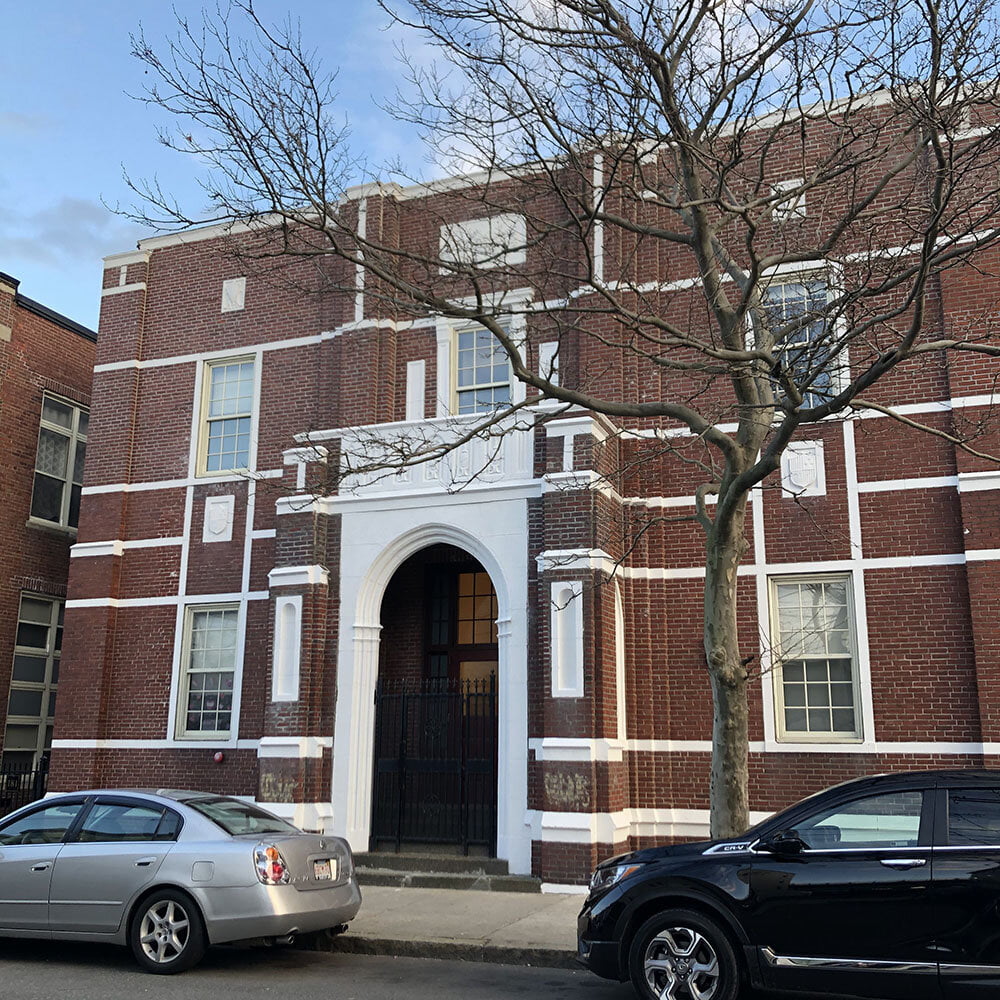
  • Valley Opportunity Council, Chicopee: $290,000 in predevelopment financing to renovate a vacant historic school building to develop into 25 rental units along with 43 parking spaces. 
  • Valley Community Development Corporation, Northampton: $225,000 in predevelopment financing to combine the preservation of an existing 8-unit project on School Street with the creation of 24 new affordable townhouses on Laurel Street. 
  • VietAID, Boston: $926,000 in acquisition and $250,000 in predevelopment financing Vietnamese American Initiative for Development intends to purchase three lots in Dorchester’s Bowdoin-Geneva neighborhood, where they plan to construct 38 units of permanent supportive housing for older adults.

SourceMassnonprofit News

Rockport State boosts affordable housing project

Now with state and federal backing, Rockport’s Granite Street Crossing affordable housing project will finally be able to get off the ground after nearly five years of planning.

The project is one of 28 affordable housing projects across the Commonwealth that Gov. Charlie Baker on Thursday afternoon announced will receive a total of $139 million in funding and tax credits.

“As Massachusetts continues to recover from the COVID-19 pandemic, it is important that we continue to prioritize new affordable housing development to help our most vulnerable families,” Baker said. “Stable housing is the foundation of healthy, prosperous communities, which is why our administration has proposed an immediate infusion of nearly $1 billion in federal recovery funds to rapidly increase capacity for production in every part of the state.”

With this news, Harborlight Community Partners (HCP) can move forward with the approximately $9.5 million project.

“This is around a $7.5 million state and federal investment,” explained Harborlight Executive Director Andrew DeFranza. “This is a huge deal. We’re thrilled to once again partner with the community of Rockport to create another affordable housing community. This will be intergenerational this time, so we’re really excited about that. Hopefully it will spur more support for more senior housing services, especially in the wake of COVID.”

Construction is expected to begin next spring, DeFranza said. If all goes well, the complex will open for occupancy in summer 2023.

Granite Street Crossing will feature a two-story complex with 17 supportive senior units and six, two-story family townhouses. It will be built at 5 Granite St., a plot of more than an acre previously owned by Silva Brothers Florists.

“I am so pleased Cape Ann will have another beautiful, affordable Harborlight project,” said Robert Gillis, president of Harborlight’s board of directors, in a prepared statement. “More affordable housing is needed in our community and Cape Ann Savings Bank is proud to support HCP and be part of the effort to get this done.”

Granite Street Crossing has been in the works since 2016. Despite the long planning stage, DeFranza said it was “one of the best permitting experiences we’ve ever had.”

“I want to shout out the neighbors of the project,” he said. “They’re the gold standard. We spent a year with them working on the designs, and they gave a lot a feedback. They also were robustly supportive of the project at public meetings.”

The town of Rockport has given around $500,000 to Granite Street Crossing over the years. The project received three Rockport Community Preservation Committee grants between 2017 to 2019 and a portion of the town’s federal HOME Investment Partnerships Program funding.

In addition, Federal Home Loan Bank of Boston awarded the project a $500,000 grant in 2018. Additional funding was also provided by Eastern Bank and the North Shore HOME Consortium.

This is not the first time Harborlight Community Partners requested state funding for Granite Street Crossing. The state rejected a previous application in 2018. The following year, Harborlight Director of Real Estate Development  Kristin Carlson told the Times it was due to the lack of support from local organizations. Now, in addition to Rockport Community Development Corporation and HOME, project partners include include the Community Economic Development Assistance Corp., Local Initiatives Support Corp., and Enterprise Foundation.

Granite Street Crossing will be Harborlight Community Partners’s third affordable housing development in Rockport. The non-profit owns and manages Rockport High School Apartments and Pigeon Cove Ledges, which account for 40% of the town’s affordable housing stock.

Michael Cronin may be contacted at 978-675-2708, or mcronin@gloucestertimes.com.

SourceGloucester Times

Baker-Polito Administration Announces $139 Million in Funding and Tax Credits to Produce and Preserve 1,346 Units of Affordable Rental Housing

Today, Governor Charlie Baker, Lt. Governor Karyn Polito, Housing and Economic Development Secretary Mike Kennealy and Housing and Community Development Undersecretary Jennifer Maddox joined local legislators and officials to announce affordable housing awards for 28 projects in 21 communities across the Commonwealth. These awards will advance the development of 1,526 new rental units, including 1,346 rental units affordable for low- and extremely low-income households.

Through the Department of Housing and Community Development (DHCD), the Baker-Polito Administration awarded $93.3 million in direct subsidy funding and allocated $45.8 million in federal and state housing tax credits that will generate approximately $310 million in equity in support of these projects. The projects are located in every region of Massachusetts, and include new construction, historic rehabilitation, and the preservation of occupied projects in need of rehabilitation. Additionally, some projects are transit-oriented, and eight of the construction projects will be built to Passive House design standards.

“As Massachusetts continues to recover from the COVID-19 pandemic, it is important that we continue to prioritize new affordable housing development to help our most vulnerable families,” said Governor Baker. “Stable housing is the foundation of healthy, prosperous communities, which is why our administration has proposed an immediate infusion of nearly $1 billion in federal recovery funds to rapidly increase capacity for production in every part of the state.”

“We are proud to support an excellent project here in Lawrence, another step in an amazing transformation of the Arlington Mills National Historic District into a thriving residential neighborhood, zoned for up to 1,000 housing units,” said Lt. Governor Polito. “Since 2015, we’ve invested in revitalization efforts like this across the state, creating new housing, jobs, and new opportunities for cities and towns and have directed more than $1.4 billion to our affordable housing ecosystem. Cities like Lawrence are using state and federal funds to pursue a new vision that puts housing at the center of communities.”

“Here in Massachusetts, we have seen the negative impacts of our housing crisis affect nearly every region. Through our new Housing Choice reforms, new programs, and increased capital investments, the Baker-Polito Administration is helping move great projects forward, more quickly,” said Housing and Economic Development Secretary Kennealy. “Solving our housing crisis helps all of our households, enabling our working families to put down roots in communities, stabilize vulnerable families, and provide opportunities for cities and town to grow. We are excited to deploy federal recovery funding to supercharge the pipeline of affordable housing in Massachusetts.”

“Today’s awards will bring new, affordable housing that meets the diverse needs of our Commonwealth, including new senior housing in Randolph, new permanent supportive housing for unaccompanied adults in Quincy, preservation of currently affordable housing in Holyoke, and new family housing in West Roxbury,” said Housing and Community Development Undersecretary Maddox. “These projects will provide thousands of households with access to safe, quality, affordable housing in every region. Affordable housing development and preservation is an integral part of our strategy to address our housing crisis, and we are fortunate to have a rich ecosystem of stakeholders and developers committed to the future of Massachusetts and our families.”

Today’s announcement was made in Lawrence at the site of a project that will transform a former mill into new housing for residents. The historic adaptive re-use project, sponsored by Trinity Financial, Inc., will create 87 new units of housing at 608 Broadway, with 66 units restricted for households earning less than 60% of the Area Median Income, including 17 units further reserved for households with extremely low-incomes or making the transition from homelessness. DHCD will support the project with federal and state low-income tax credits (LIHTC) and subsidy funds, and the City of Lawrence will provide funding as well. MassHousing is supporting the project with a $22.75 million permanent mortgage, a tax-exempt short-term equity bridge loan, and $2.1 million in workforce housing financing.

“I am proud to be a part of the state’s efforts to expand access to affordable housing and ensure that each of our residents can find a place to call home in an increasingly expensive housing market,” said State Senator Barry Finegold.  “In addition to putting a roof over the heads of the state’s most vulnerable residents, affordable housing boosts economic growth and is a crucial part of post-pandemic recovery.  This is especially important in a city like Lawrence, where the unemployment rate remains double that of the state average. Congratulations to all the grant recipients and thank you for your dedicated work providing stable housing to those who need it most.”

“This funding will provide critical state investments to the City of Lawrence as we continue to make affordable housing in Massachusetts more accessible to those facing financial uncertainty,” said State Representative Frank A. Moran.  “The conversion of 608 Broadway will accomplish this goal by creating 87 new units of housing, while also celebrating Lawrence’s rich industrial history by ensuring that our mill buildings are utilized and brought into the modern age. I would like to thank Governor Baker and the Executive Office of Housing and Economic Development for their continued support of initiatives such as this in Lawrence.”

“Having accessible housing options in Lawrence is a necessity for our community members and their well-being,” said Lawrence Mayor Kendrys Vasquez.  “Lawrence is a community; safe and affordable housing is vital for our residents to thrive. This partnership between the city and the state will provide Lawrencians opportunities to deepen their roots in the city that they love. I am proud of the work we are doing to create housing opportunities and grateful to all the people partnering with us.”

“Trinity Financial is grateful for the Baker-Polito Administration’s leadership on affordable housing and their commitment to the Gateway City of Lawrence,” said Dan Drazen, Vice President, Development at Trinity Financial. “This tax credit award will enable us to leverage both public and private funding and undertake a transformative adaptive reuse project. Building upon the momentum of our adjacent Arlington Point project, which was completed in 2019, the 608 Broadway project will breathe new life into a historic asset, provide mixed-income housing and continue the multi-phase revitalization of the Arlington Mills Historic District.”

Last month, Governor Baker announced a plan to devote $1 billion from the Commonwealth’s direct federal aid to funding homeownership and housing priorities, a significant investment to help increase housing production and reduce barriers to owning a home as part of the ongoing COVID-19 recovery effort. This funding plan calls for $200 million to fund rental housing production and provide increased housing options to workers and residents of disproportionately impacted municipalities, and $300 million to finance the statewide production of senior and veteran housing. These new housing resources build upon over $1.6 billion in separate federal funding that has already been allocated to entities throughout the Commonwealth for housing purposes since the start of the pandemic.

The Baker-Polito Administration has shown a deep commitment to increasing the production of housing across all income levels. Since 2015, the administration has invested more than $1.4 billion in the affordable housing ecosystem, resulting in the production and preservation of more than 22,000 housing units, including over 19,000 affordable units. In 2018, Governor Baker signed the largest housing bond bill in Massachusetts history, committing more than $1.8 billion to the future of affordable housing production and preservation.

This year, Governor Baker signed economic development legislation titled An Act Enabling Partnerships for Growth that includes substantial new funding for affordable and climate-resilient housing, as well as targeted zoning reforms to advance new housing production. In June, the administration and MassHousing made the first commitments through the CommonWealth Builder program, an initiative intended to create homeownership opportunities and build generational wealth in communities of color. The administration has also supported the development of more than 17,000 mixed-income housing units through the successful MassWorks Infrastructure Program, reformed the Housing Development Incentive Program, and worked with communities to implement smart-growth development and planning efforts.

# # #

Affordable Rental Housing Awards

Rosewood Way Townhouses is a new construction project for families to be built in Agawam.  The sponsor is the non-profit Way Finders, Inc.  DHCD is supporting the project with federal and state low-income housing tax credits and subsidy funds.  When completed, Rosewood Way Townhouses will offer 62 total units.  Forty-seven units will be affordable to families earning less than 60% of area median income (AMI), with 20 units reserved for extremely low-income families earning less than 30% of AMI.

Amherst Supportive Studio Housing is a new construction project to be built in Amherst.  The non-profit sponsor is Valley Community Development Corporation.  DHCD will support the project with federal and state low-income housing tax credits and subsidy funds.  The town of Amherst also will provide $700,000 in funds of its own to support the project.  When completed, Amherst Supportive Studio Housing will offer 28 total studio units with supportive services.  Twenty units will be affordable to individuals earning less than 60% of AMI, with 12 units reserved for extremely low-income individuals earning less than 30% of AMI and, in some cases, making the transition from homelessness.  The sponsor intends to build the project to Passive House standards.

Hillcrest Acres is an existing occupied project in Attleboro.  Schochet Companies recently acquired the project and will rehabilitate it as mixed-income rental housing for families. DHCD will support the project with federal and state low-income housing tax credits and subsidy funds. When construction is completed, the project will offer 100 rehabilitated units.  Fifty-two units will be affordable to households earning less than 60% of AMI, with 13 units further restricted for households earning less than 30% of AMI.

Burbank Terrace is a transit-oriented new construction project for families to be built in Boston’s Fenway neighborhood.  The sponsor is the non-profit Fenway Community Development Corporation.  DHCD will support the project with federal and state low-income housing tax credits and subsidy funds.  The city of Boston also will support the project with $2.8 million in its own funds.  Burbank Terrace is the first project to proceed under Boston’s Compact Living Policy Pilot Program.  When completed, the project will offer 27 total units, all of which will be affordable to households earning less than 60% of AMI.  Seven units will be further restricted for extremely low-income households earning less than 30% of AMI and making the transition homelessness.

Eva White Apartments is an occupied public housing project for seniors located in Boston’s South End.  The sponsor is a partnership between the non-profit Castle Square Tenants Association and WinnDevelopment.  The partnership will fully rehabilitate this transit-oriented project with DHCD resources including federal and state low-income housing tax credits and subsidy funds.  When completed, Eva White Apartments will feature 102 total units.  Ninety-seven units will be restricted for seniors earning less than 60% of AMI, with 26 units further restricted for extremely low-income seniors earning less than 30% of AMI.  The sponsor will continue offering extensive on-site supportive services for Eva White residents.

Old Colony Phase Four Bonds is part of the ongoing redevelopment of a massive public housing project located in South Boston.  The sponsor is Beacon Communities Development LLC.  With support from the federal government, the Boston Housing Authority, and DHCD, the sponsor already has completed or is completing work on over 550 units located on the South Boston site.  DHCD will support this new phase with federal and state low-income housing tax credits and subsidy funds.  When completed, this phase of the project will offer 75 total units.  All 75 units will be affordable to households earning less than 60% of AMI, with ten units further restricted for households earning less than 30% of AMI.  The Old Colony site is transit-oriented and also located in close proximity to Boston Harbor, with its beaches and extensive recreational opportunities.  The sponsor intends to build this phase of Old Colony to Passive House standards.

Old Colony Phase Four Taxable also is part of the ongoing redevelopment of a massive public housing project located in South Boston.  The sponsor is Beacon Communities Development LLC.  With support from the federal government, the Boston Housing Authority, and DHCD, the sponsor already has completed or is completing work on over 550 units located on the South Boston site.  DHCD will support this new phase with federal low-income housing tax credits.  When completed, this phase will offer 26 total units.  All 26 units will be affordable to households earning less than 60% of AMI, with four units further restricted for households earning less than 30% of AMI.  The Old Colony site is transit-oriented and also located in close proximity to Boston Harbor, with its beaches and extensive recreational opportunities.  The sponsor intends to build this phase of Old Colony to Passive House standards.

Residences Off Baker is a new construction project for families to be built in Boston’s West Roxbury neighborhood.  The sponsor is the non-profit B’nai B’rith.  DHCD will support the project with federal and state low-income housing tax credits and subsidy funds.  The city of Boston will provide $3.8 million of its own funds to support the project.  When completed, Residences Off Baker will offer 60 total units.  Forty-five units will be affordable to households earning less than 60% of AMI, with 15 units further restricted for households earning less than 30% of AMI, including households transitioning from homelessness.

William Barton Rogers School is a historic adaptive re-use project for seniors located in Boston’s Hyde Park neighborhood.  The sponsor is Pennrose, LLC.  DHCD will support the project with federal and state low-income housing tax credits and subsidy funds.  The city of Boston will support the project with approximately $4 million in its own funds.  When completed, Rogers School will offer 74 total units.  Fifty units will be affordable for seniors earning less than 60% of AMI, with 11 units further restricted for seniors earning less than 30% of AMI, including seniors transitioning from homelessness.  The William Barton Rogers School project is transit-oriented: it is located in close proximity to two commuter rail stops as well as numerous retail and commercial opportunities.  Pennrose will offer extensive on-site services for seniors and the broader community, including the senior LGBTQ community.

Zelma Lacey House is an occupied assisted living project located in Boston’s Charlestown neighborhood.  The sponsor is the non-profit Affordable Housing and Services Collaborative, Inc.  Using federal and state low-income housing tax credits from DHCD, the sponsor will rehabilitate the project into independent living units for seniors.  When completed, Zelma Lacey House will offer 48 units for seniors.  All 48 units will be affordable to seniors earning less than 60% of AMI, with seven units further restricted for seniors earning less than 30% of AMI.  The sponsor will provide extensive on-site services to the residents of Zelma Lacey House.

25 Sixth Street is a new construction project for families to be built in Chelsea.  The Neighborhood Developers is the non-profit sponsor.  DHCD will support the project with federal and state low-income housing tax credits and subsidy funds.  The city of Chelsea also will provide funds in support of the project.  When completed, 25 Sixth Street will offer 56 units of rental housing, with 44 units affordable to households earning less than 60% of AMI.  Eight units will be further restricted for households earning less than 30% of AMI.  The completed project also will offer six for-sale condominium units.  The sponsor intends to build the project to Passive House standards.

Carlson Crossing is an existing family public housing project in Framingham.  The sponsor is the non-profit Framingham Housing Development Corp.  Using low-income housing tax credits from DHCD and Section 8 assistance from the U.S. Dept. of HUD, the sponsor will fully rehabilitate the existing project.  When construction is completed, the project will offer 68 total units.  All 68 units will be affordable to households earning less than 30% of AMI.

Merrimack Place is a new construction project for seniors to be built in Haverhill.  The sponsor is the non-profit Bethany Community Services, Inc. (BCS).  The new project will be built on a site adjacent to an existing senior project owned and operated by BCS.  DHCD will support Merrimack Place with federal and state low-income housing tax credits and subsidy funds.  The city of Haverhill also will provide funds in support of the project.  When completed, Merrimack Place will offer 62 total units.  All 62 units will be affordable to seniors earning less than 60% of AMI, with eight units further restricted for seniors earning less than 30% of AMI.  Extensive on-site services will be available to the new residents of Merrimack Place as well as to residents of the larger senior campus.  The sponsor intends to build the project to Passive House standards.

Voces de Esperanza is an occupied project for individuals and families located in Holyoke.  The sponsor is the non-profit Valley Opportunity Council (VOC).  Using federal and state low-income housing tax credits and subsidy funds from DHCD, VOC will fully rehabilitate the project.  The city of Holyoke also will provide funds in support of Voces de Esperanza.  When work is completed, the project will offer 37 total units.  All units will be affordable to individuals or households earning less than 60% of AMI, with ten units further restricted for individuals or households earning less than 30% of AMI, including those making the transition from homelessness.

608 Broadway is a historic adaptive re-use mill project in Lawrence.  The sponsor is Trinity Financial, Inc.  DHCD will support the project with federal and state low-income housing tax credits and subsidy funds.  The city of Lawrence also will support the project with funds of its own.  608 Broadway is the second mill conversion in Lawrence undertaken by Trinity Financial.  When completed, the project will offer 87 total units.  All 87 units will carry affordable rent restrictions.  Sixty-six units will be restricted for households earning less than 60% of AMI, with 17 units further restricted for households earning less than 30% of AMI, and, in some cases, making the transition from homelessness.

Eagle Mill Phase 1 is a historic adaptive re-use project in Lee.  The sponsor is Rees-Larkin Development LLC.  DHCD will support the project with federal and state low-income housing tax credits and subsidy funds.  The town of Lee also will support the project with funds of its own.  When completed, Eagle Mill Phase 1 will offer 56 total units.  All 56 units will be affordable to households earning less than 60% of AMI, with eight units further restricted for households earning less than 30% of AMI, and, in some cases, making the transition from homelessness.

555 Merrimack Place is a new construction project to be built in Lowell.  The sponsor is the non-profit Coalition for a Better Acre (CBA).  CBA intends to develop the project to provide permanent housing and supportive services for a population in recovery from substance use disorder.  DHCD will support the project with federal and state low-income housing tax credits and subsidy funds.  The city of Lowell also will provide funds to support the project.  When completed, 555 Merrimack Place will offer 27 total units.  All 27 units will be affordable to individuals or households earning less than 60% of AMI, with eight units further restricted for individuals or households earning less than 30% of AMI and, in some cases, transitioning from homelessness.  The sponsor intends to build the project to Passive House standards.

Mill 8 Apartments is a historic adaptive re-use mill project in Ludlow.  The sponsor is WinnDevelopment.  DHCD will support the project with federal and state low-income housing tax credits and subsidy funds.  The town of Ludlow also will support the project with funds of its own.  Mill 8 Apartments is the second mill conversion in Ludlow undertaken by WinnDevelopment.  When completed, the project will offer 95 total units.  Fifty-five units will be affordable to households earning less than 60% of AMI, with 12 units further restricted for households earning less than 30% of AMI, including some households making the transition from homelessness.

Glen Brook Way Phase 2 is a new construction project for seniors to be built in Medway.  The sponsor is the non-profit Metrowest Collaborative Development, Inc.  DHCD previously funded Glen Brook Way Phase 1, which currently is in construction.  DHCD is supporting the second phase of the project with federal and state low-income housing tax credits and subsidy funds.  The town of Medway also is providing $1 million in its own funds to support the project.  When completed, Glen Brook Way Phase 2 will offer 44 units and supportive services for seniors.  All 44 units will be affordable to seniors earning less than 60% of AMI.  At least eight units will be further restricted for extremely low-income (ELI) seniors earning less than 30% of AMI.  The sponsor is working to restrict additional units for ELI seniors.  The sponsor intends to build the project to Passive House standards.

Ticcoma Green Workforce Housing is a new construction project for families to be built on Nantucket.  The sponsor is HallKeen Management, Inc.  DHCD will support the project with federal and state low-income housing tax credits and subsidy funds.  The town of Nantucket will provide substantial funds of its own to support the project.  When completed, Ticcoma Green Workforce Housing will offer 64 total units.  Twenty-three units will be affordable to households earning less than 60% of AMI, with nine units further restricted for households earning less than 30% of AMI, including households transitioning from homelessness.

Broad Street is a new construction project for unaccompanied adults to be built in Quincy.  The sponsor is the non-profit Father Bill’s & MainSpring, a highly-experienced operator of shelters and services for homeless individuals.  Father Bill’s will construct Broad Street on land adjacent to a new shelter and office facility, which is expected to begin construction later in 2021.  When completed, Broad Street will offer 30 single-room occupancy units as well as services for homeless individuals currently living in shelter.  DHCD will support Broad Street with federal and state low-income housing tax credits as well as subsidy funds.  The city of Quincy also is supporting the project with funds of its own.

Simon C. Fireman Expansion is a new construction project for seniors to be built in Randolph.  The sponsor is the non-profit Hebrew Senior Life.  DHCD will support the project with federal and state low-income housing tax credits and subsidy funds.  The town of Randolph will provide its own funds to support the project.  Simon C. Fireman Expansion will be built on land adjacent to an existing Hebrew Senior Life senior project in Randolph.  When completed, the expansion project will offer 45 total new units.  All 45 units will be affordable to seniors earning less than 60% of AMI, with nine units further restricted for seniors earning less than 30% of AMI, including seniors transitioning from homelessness.  Hebrew Senior Life will offer extensive on-site services, including health-related services, to residents of the new project and of the larger campus.

Granite Street Crossing is a new construction project to be built in Rockport.  The sponsor is the non-profit Harborlight Community Partners.  DHCD will support this intergenerational project with federal and state low-income housing tax credits and subsidy funds.  The town of Rockport also will provide its own funds to support the project.  When completed, Granite Street Crossing will offer 23 total new units, with 17 units restricted for seniors.  All 23 units will be affordable to seniors or families earning less than 60% of AMI, with eight units further restricted for seniors or families earning less than 30% of AMI, and, in some cases, transitioning from homelessness.

Plaza Apartments is a new construction project for families to be built in South Hadley.  The sponsor is South Hadley Plaza LLC.  DHCD is supporting the project with federal and state low-income housing tax credits and subsidy funds.  The town of South Hadley also is supporting the project with funds of its own.  When completed, Plaza Apartments will offer 60 total units.  All 60 units will be affordable to families earning less than 60% of area median income (AMI), with 18 units further restricted for extremely low-income families earning less than 30% of AMI, including families transitioning from homelessness.

Knox Residences I is the first phase of a two-phase historic re-use and new construction project in Springfield.  The sponsor, First Resource Development, will use federal and state historic tax credits as well as DHCD resources to adapt manufacturing buildings that have been vacant for over 70 years into residential units.  First Resource Development also will construct new residential units as part of the Knox projects.  At this time, DHCD will support Knox Residences I with federal and state low-income housing tax credits and subsidy funds.  The city of Springfield also will support this phase of Knox Residences with funds of its own.  When Knox Residences I is completed, it will offer 55 total units.  All 55 units will be affordable to households earning less than 60% of AMI, with eight units further restricted for households earning less than 30% of AMI and, in some cases, transitioning from homelessness.

Littleton Drive Senior is a new construction project for seniors to be built in Wareham.  The sponsor is Pennrose, LLC.  DHCD will support the project with federal and state low-income housing tax credits and subsidy funds.  The town of Wareham also will provide funds to support the project.  When completed, Littleton Drive Senior will offer 44 total units.  All 44 units will be affordable to seniors earning less than 60% of AMI, with eight units further restricted for seniors, earning less than 30% of AMI, including seniors transitioning from homelessness.  As required by DHCD, Pennrose will provide supportive services to the new residents of the project.

Woodland Cove II is a new construction project for families to be built in Wareham.  The sponsor is Dakota Partners, Inc.  DHCD is supporting the project with federal and state low-income housing tax credits and subsidy funds.  The town of Wareham also is providing funds of its own to support the project.  Dakota Partners will build Woodland Cove II on land adjacent to Woodland Cove I.  The first phase of the project also was funded by DHCD and will move shortly into construction.  When Woodland Cove II is completed, it will offer 63 total units.  Fifty-six units will be affordable to families earning less than 60% of AMI, with nine units further restricted for families earning less than 30% of AMI, including families making the transition from homelessness.  Dakota Partners intends to build Woodland Cove II to Passive House standards.

Sanctuary Place is an adaptive re-use project to be developed in Wrentham.  The sponsor is the non-profit Planning Office for Urban Affairs (POUA) working in partnership with Health Imperatives.  POUA and Health Imperatives will redevelop a former convent as housing with supportive services for survivors of trafficking and sexual exploitation.  When completed, Sanctuary Place will offer eight bedrooms, an upgraded kitchen, and community gathering areas for the intended population.  DHCD will support Sanctuary Place with subsidy funds.

###
SourceMass.gov

‘A stepping stone:’ Brewster celebrates groundbreaking for 30 new affordable housing units

It took five years, but the evidence of progress is everywhere.

The newly-paved access road flanked by cement footings for street lights. The cleared lots with white septic and water pipes protruding from the dirt.

With the infrastructure in place, construction on 30 one-, two- and three-bedroom affordable rental units, in what is known as Brewster Woods, is imminent. Standing out of the hot sun, under a tent before dozens of local, regional and state officials that helped make it possible, U.S. Rep. William Keating, D-Mass., acknowledged that the ceremonial groundbreaking was indeed an occasion to celebrate.

But it was also a time to recommit to the effort of building and finding housing.

Six shovels await the ceremonial groundbreaking ceremony to begin Tuesday at Brewster Woods, a new 30-unit affordable housing development. The rental units are expected to be completed by next summer.

Solving the housing crisis ‘piece-by-piece’

“This is a stepping stone in addressing the needs we have,” Keating said Tuesday about what he called a national affordable housing crisis that the Cape and Islands has known for decades. But the way it will be solved is piece-by-piece, Keating told the audience, with developments like Brewster Woods.

“Today we’re changing the lives of an estimated 60 people in those 30 units, and you’re saying that number is not big enough, but it sure is if you are one of those people.”

Brewster Woods was developed on town-owned land by the Housing Assistance Corp. and the Preservation of Affordable Housing, and will have eight one-bedroom units, 19 two-bedroom units and three three-bedroom units.

Construction is expected to be completed by next summer and tenants will be selected by lottery.

Are trailers next? Cape Cod leaders seek solutions to housing crisis ‘right now’

Prospective renters can only qualify in two categories: up to 30% of local area median income ($20,300 for one person up to $35,160 for six); or up to 60% of median income ($40,620 for one person up to $67,260 for a family of six). Rents are estimated at $1,087 a month for a two-bedroom apartment for those at 30% of median income, and $1,305 for a two-bedroom for those making up to 60% of median.

It takes heavy lifting, both financially and logistically, by people at all levels of government and finance, to get one of these projects completed, including: a $1.68 million state MassWorks grant paid for the site clearing and infrastructure; a $2.4 million loan from the Massachusetts Housing Partnership; $1 million in Affordable Housing Trust Funds from MassHousing; $450,000 from Community Economic Development Assistance Corporation; $550,000 in Brewster Community Preservation Act money; and $800,000 in local and state HOME funding: $250,000 in Barnstable County HOME funds and $550,000 in Department of Housing and Community Development funds.

Keating urges other towns to act

Keating commended Brewster for actively pursuing the funding it needed to complete the project. He urged other towns that this was the time to act. Money from the American Rescue Plan Act of March 2021 was available to help with housing issues, but Keating said the infusion of money wouldn’t last forever.

“We have to seize the opportunity and be as aggressive as we can,” he said.

State of the Cape:Affordable housing crisis tops agenda at annual meeting

Cape housing costs were already high pre-pandemic, but fueled in part by demand from off-Cape residents wanting to relocate in relatively COVID-19-safe rural areas, Cape housing costs soared by 27% this year with a median sales price of $560,000. Median sales prices on Martha’s Vineyard jumped up to $1.5 million and to $2.18 million on Nantucket. The median sales price in Chatham is $1.78 million.

U.S. Rep. William Keating, D-Mass., talks with Housing Assistance Corp. CEO Alisa Magnotta before the ceremony attended by federal, state and local officials.

Rental and home sales inventory is low and the Cape is in need of more than 4,500 rental units, local housing experts said.

“Our lifeblood is affected by our ability to have housing,” Keating said. “We’re going to lose … businesses; we’re going to lose those jobs, and we’re going to lose them because of a lack of housing.”

“Housing crisis is a term we use a lot,” state Secretary of Housing and Economic Development Mike Kennealy said. He pointed to Gov. Charlie Baker’s recently successful housing legislation that allowed for a simple majority vote, instead of the formidable hurdle of a supermajority, for towns to change zoning to create affordable housing. The legislation also required a $50,000 bond of those wishing to sue to keep towns from building affordable housing in their neighborhood.

SourceCape Cod Times

Investors Mine For Profits In Affordable Housing, Leaving Thousands Of Tenants At Risk

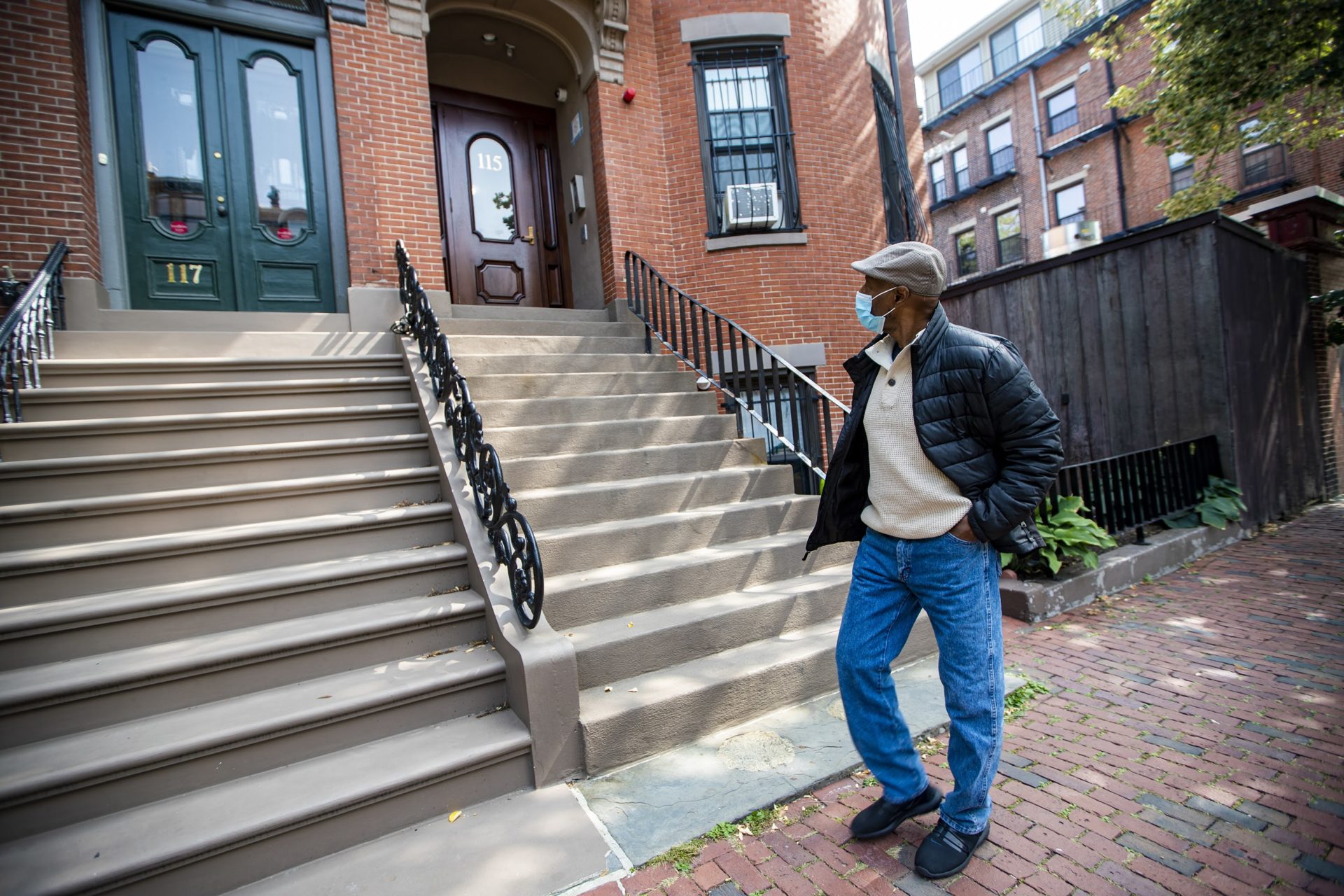
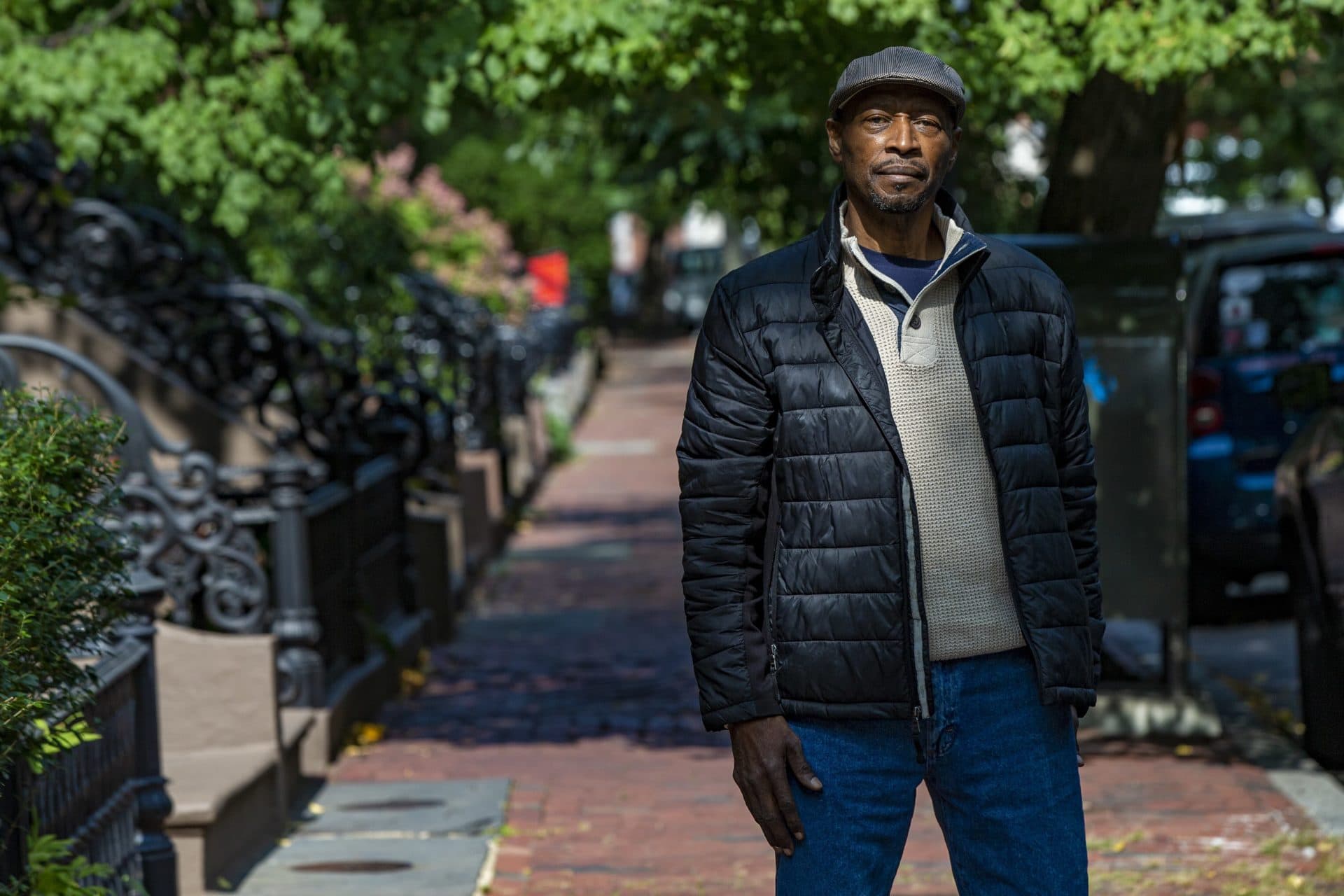
Charles Clark moved to Boston’s South End when he was a young musician, just getting by. Forty years later, he lives in the same historic brownstone, even as rising wealth has pushed many people out of the neighborhood.

He’s stayed thanks to a nonprofit that’s kept a few hundred apartments like his affordable. Tenants’ Development Corp. is one of the oldest groups of its kind in the nation, protecting the rights of renters — many of them families of color and seniors.

But now, TDC and its residents are facing the fight of their lives, as a Denver-based investment firm battles for control of 36 of the nonprofit’s properties. It’s a tactic Alden Torch Financial and firms like it are using to squeeze extra profits out of the federal government’s chief program for backing low-income housing, according to court cases in multiple states and interviews with more than 20 housing and legal specialists.

Charles Clark, of Tenants’ Development Corp., walks past an apartment in the South End, one of the affordable housing properties managed by the nonprofit. (Jesse Costa/WBUR)

“They wanted us to sell the units — put them on the market, so that they could reap a lot more money than what they were entitled to,” Clark said of Alden Torch. “I’m appalled, and I’m upset about how they’re handling it.”

TDC officials never imagined this scenario when they tapped into the federal Low-Income Housing Tax Credit program back in 2003, to renovate their buildings. Under these deals, a nonprofit forms a partnership with an investor (often a large bank) that provides funding in exchange for tax breaks. At the end of 15 years, the nonprofit generally gets to buy out the investor’s stake, taking ownership of the property for well below market value.

Get exclusive reports and special projects from the WBUR investigative team in your inbox. Sign up now.

At least that was Congress’s intent, housing specialists say — keeping properties affordable for the long-term and in community hands. But the game has changed in recent years, as some project funders began selling off their partnership interests to investment firms with more aggressive profit motives. And those firms are demanding bigger payouts to exit the deals.

This shadowy secondary market is unregulated at the federal level and in nearly every state, a WBUR investigation has found, and it’s wreaking havoc in an $8 billion-a-year program funded by taxpayers.

“Honestly, I think it’s a national crisis,” said David Goldstein, a lawyer representing a Brooklyn, N.Y., housing group that’s fending off one such property challenge from a Wall Street giant. “This is a really serious problem and affordable housing is going to be potentially threatened, especially for places like Boston, New York, and Los Angeles.”

This new breed of investors is challenging housing groups in cities where real estate values have soared. The firms are looking to wrest cash and control away from local nonprofits and developers, lawsuits show, or attempting to oust managers from partnerships. And in some cases, they are forcing the sale of low-income housing to maximize their profits — as they have tried to do in Boston.

“They wanted us to sell the units — put them on the market, so that they could reap a lot more money than what they were entitled to.”

CHARLES CLARK

If investors are successful and properties are sold on the open market, the risk is that new owners could eventually abandon the affordable housing mission, charge higher rents or convert apartments to expensive condos. It’s a risk that looms on the horizon for thousands of residents in Massachusetts and across the country.

With a lack of federal or state oversight, these feuds are largely being decided in courts, where conflicting rulings on contract language only add to the confusion. In the past few years:

  • A senior housing group in Seattle was forced to sell 10 properties for about $250 million. The majority of the money went to Alden Torch and other investors.
  • An Opa-locka, Fla., nonprofit has spent $1.5 million fighting to keep a low-income property after Bank of America sold its interest to a new investor that pushed to sell.
  • A nonprofit was blocked from buying a low-income property in Pontiac, Mich., and preserving the housing for seniors, when it was sued by SunAmerica in federal court. The case is under appeal.

SunAmerica, part of American International Group Inc. (AIG), also has won a first legal round in New York. It has collected years of tax credits on affordable apartments in Brooklyn run by the nonprofit Riseboro Community Partnership, but SunAmerica is now blocking the group from acquiring the property. Riseboro is appealing, and New York’s attorney general has filed a brief supporting Riseboro’s right to the property, saying the first judge got it wrong.

AIG declined to comment for this story.

“New York is a bellwether in affordable housing,” Goldstein said. “If New York loses this right, it will be a bad precedent for the rest of the country.”

A Historic Nonprofit Fights Investors

In Boston’s South End, Alden Torch’s fight with Tenants’ Development Corp. has a direct impact on nearly 400 residents in buildings the nonprofit has cared for since the 1970s, when many South End dwellings had become rundown and poorly managed. Its brownstones run along Massachusetts and Columbus Avenues and several quaint side streets.

“A little bit of everybody lives in the South End. That’s what makes it unique,” said Clark, the musician. Now 70 and president of TDC’s resident-run board, he can’t fathom losing all that TDC has fought for — to an investment firm.

“Greed is all around us. But we’re not going to let that greed destroy what we’ve worked so hard to build all these years.”

Charles Clark is president of the TDC tenant board. (Jesse Costa/WBUR)

Under the law, even if ownership changes after the 15-year tax credits end, housing must stay affordable for a total of at least 30 years. But things could shift dramatically after that.

TDC officials estimate they’ll have to spend at least $500,000 in legal fees to resolve their dispute with Alden Torch in state and federal court. The nonprofit’s leaders had hoped to devote those resources to building a new community center for residents. The plan included a gym, space for dance and karate classes, a kitchen for serving lunch to seniors, and room for a peer leadership program for youths.

But the center is now on hold, along with overdue apartment renovations, said Anita Huggins, an executive with TDC.

“It’s early in the litigation, but certainly given the cost, that’s going to impact our ability to move forward,” she said.

As in many of these disputes, TDC’s fight is not with its original investment partner. That was a Pennsylvania firm called Capmark Financial that later went bankrupt, in 2009.

That firm’s tax-credit portfolio, which included 287 properties across the country, was sold at auction in 2011, for $102 million. The buyer was Hunt Cos. of El Paso, Texas. TDC had no say in the matter, and ultimately found itself in partnership with Alden Torch, which later took over the investments.

When TDC informed Alden Torch in 2017 that it planned to buy the South End properties after the tax credits expired, things did not go smoothly.

The sides sparred over the next two years, with Alden Torch seeking appraisals and notifying TDC in a February 2019 letter it should find a buyer for the properties within six months, according to federal court records. The firm then reversed course in December that year, ordering TDC in another letter not to sell. The reason: Alden Torch said it had been “unaware” of TDC’s right to buy the property at a low price once another offer came in.

In early 2020, TDC informed Alden Torch it planned to pay $17 million to end the partnership and acquire the properties, according to TDC’s lawsuit in federal court.

Alden Torch claimed TDC’s purchase plan was “unauthorized” because it did not first receive Alden Torch’s consent. The firm alleged it was being shortchanged, because the properties could fetch as much as $54 million on the market.

A sale at the lower price “would prevent the Partnership and Plaintiffs from benefiting from the substantial appreciation in the value of the Apartment Complex that had occurred over time,” Alden Torch said in the court records.

The firm is seeking at least $34 million in damages from TDC. And to stop TDC in its tracks, Alden Torch’s legal team employed another escalation — filing a notice with the Suffolk County Registry of Deeds to block TDC from buying the property.

David Davenport is a Minneapolis lawyer who represents TDC and other nonprofits in these cases. (Courtesy David Davenport)

“I found it to be super aggressive” for Alden Torch to muddy the property title, said David Davenport, a Minneapolis lawyer who represents TDC and other nonprofits in these cases. “They don’t really seem to care about who they impact or how they impact them. And now they’re going to potentially tie this property up in litigation for several more years.”

TDC sued Alden Torch and its investment entity.

Alden Torch executives declined to be interviewed.

A U.S. District Court judge in Boston ruled in December that the TDC case does not belong in federal court. Alden Torch is appealing. The firm has been disappointed in state court here before: The Supreme Judicial Court in 2018 ruled against the firm’s effort to prevent a Cambridge nonprofit from acquiring low-income apartments on Memorial Drive.

Only Congress Can Clarify The Rules

The majority of these 15-year tax credit deals have ended without incident, housing specialists say. The program has helped build or renovate more than 3 million apartments nationwide since its start in 1986. Only in recent years have these legal challenges emerged, as deep-pocketed investors found ways to poke holes in contracts that locked in tax benefits for investors and counted on their goodwill at the end of the partnership.

The IRS is not regulating the transfers of partnership interests or the exits. It counts on state housing agencies to dole out the federal tax credits and ensure properties stay affordable. But it’s also rare for a state agency to weigh in on 15-year exits. The result: Nationally, no one is in charge.

In Massachusetts alone, tax-credit deals will be expiring on 81 properties over the next four years, affecting nearly 5,000 residents, according to U.S. Department of Housing and Urban Development data.

“Congress can solve this, and that would be the best outcome,” said Bill Brauner, a senior executive at the Community Economic Development Assistance Corp., a Boston group that provides financing for affordable housing.

The Massachusetts Department of Housing and Community Development, which allocates federal tax credits in the commonwealth, declined multiple requests to comment for this report. And it has yet to publicly weigh in on the lawsuit threatening the South End properties.

In a recent funding offer for developers, the agency appears for the first time to be trying to exclude from future projects investors that have been involved in year-15 disputes. It’s unclear how this would be enforced.

One state agency on the other side of the country has been raising warnings since 2019 about firms it says are abusing the tax-credit program. The Washington State Housing Finance Commission in a report called out so-called “aggregator” investment firms — those amassing tax-credit portfolios — saying they “often use burdensome tactics that take advantage of legal ambiguities, resource disparities, and economies of scale to overwhelm their nonprofit counterparties.”

The report cited the Senior Housing Assistance Group (SHAG) case, where a federal judge in Seattle ruled that the nonprofit had failed to get a “bona fide” offer for the properties — which was required before SHAG could exercise its right to buy them at below-market value. Alden Torch won in 2019 and forced the sale of 10 low-income properties in the Seattle area for a quarter of a billion dollars.

The commission said the court got the case wrong and warned: “Other courts should not make the same mistake.”

The properties remain affordable and SHAG still provides support services, but it lost out on millions of dollars in equity dedicated to low-income housing.

Squeezing Nonprofits For Cash

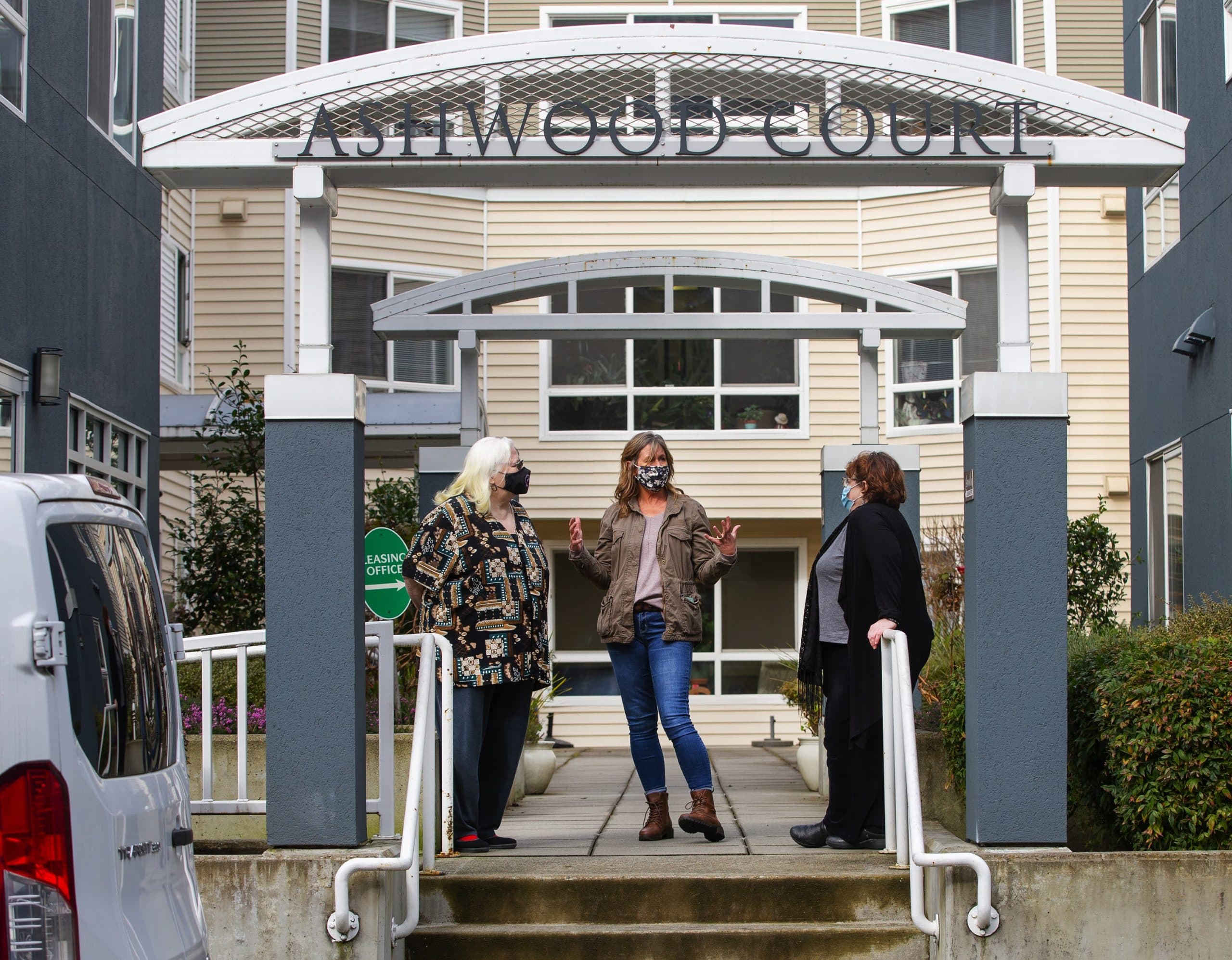
Kim Loveall Price, center, director of a nonprofit that operates Ashwood Court, a low-income housing complex in Bellevue, Wash., talks with residents Susanne Sherman, right, and Joyce Hansbearry. (Mike Seigel for WBUR)

One of the biggest players in the tax credit business, with a $15 billion portfolio, is located here in Boston. Last year alone, Boston Financial Investment Management, part of Tokyo’s ORIX Corp., raised more than $800 million from banks and insurance companies to invest in tax-credit funds.

More than 3,000 miles away, in Bellevue, Wash., the firm got into a protracted battle with a nonprofit that manages several low-income properties. One of those is Ashwood Court, home to seniors who live between skyscrapers and luxury condos in the heart of the downtown area, where property values have climbed.

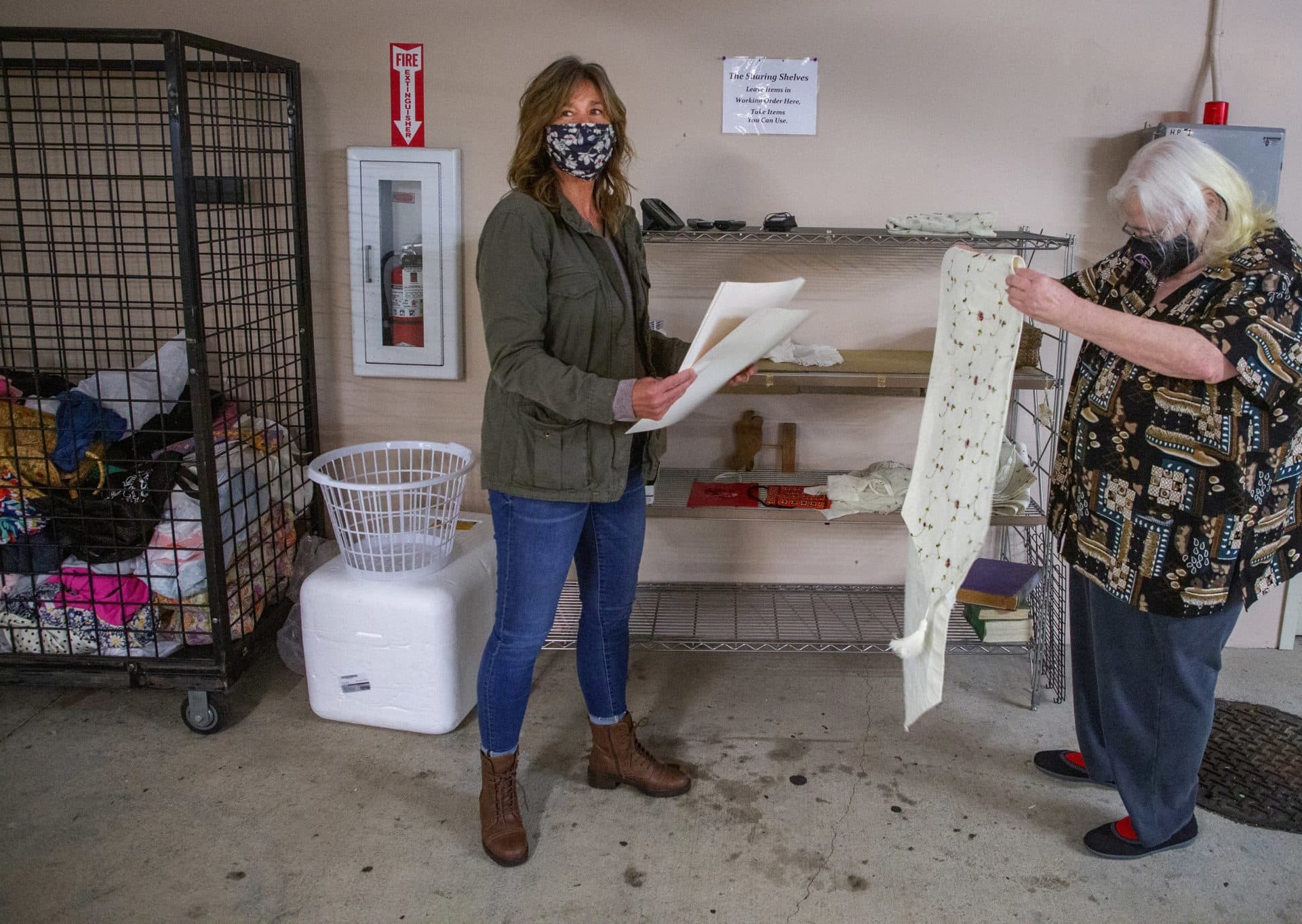
There’s a sense of community at the 51-unit apartment complex, within walking distance of convenience stores, doctors and the library. Residents keep “sharing shelves” in the parking garage, where people can find home goods, clothing and food items for free.

Kim Loveall Price, left, and Joyce Hansbearry, residence manager of the apartments, look through items from the "sharing shelves" at Ashwood Court. (Mike Seigel for WBUR)
Kim Loveall Price, left, and Joyce Hansbearry, residence manager of the apartments, look through items from the “sharing shelves” at Ashwood Court. (Mike Seigel for WBUR)

The nonprofit, Downtown Action to Save Housing (known as DASH), expected at the end of the 15-year tax credit period it would buy out the partnership at no cost and own Ashwood Court. But Boston Financial — which was not the original investor — said it was due far more.

“They just bully you,” DASH executive director Kim Loveall Price said. “They kept threatening that they were going to force the sale … and we kind of panicked.”

DASH took out a loan in 2014 to pay the firm $300,000 and part ways, Loveall Price said. The payment had a special sting, she recalled, when she spotted an opened jar of gravy and some lettuce on the sharing shelves.

“These seniors are so poor that they share half-eaten food,” Loveall Price said. “And I’m giving these [people] $300,000 instead of being able to help with food security.”

Boston Financial chief executive Gregory Voyentzie in an interview disputed Loveall Price’s version of events and said DASH’s contract language did not provide for the low-cost exit the nonprofit was seeking. He said his firm accepted a deep discount to what it believed its clients were owed. But he regrets that the disagreement turned ugly.

“That one is disappointing to me, quite honestly,” he said. In his view, a junior employee at his firm allowed a disagreement over the value of Ashwood Court and the partnership to escalate.

Boston Financial challenged DASH on three other properties, saying it was due about $1 million to exit them. But DASH officials believed they should pay only $69,000, and sued in federal court in Seattle.

An internal Boston Financial email from 2016, included in the lawsuit, sheds light on the firm’s negotiating stance: “Even though they’re a small non-profit, they might be able to just pay us off to get rid of us,” a senior vice president wrote.

As the case dragged on, Loveall Price said, residents waited for badly needed repairs on roofs, decks and windows.

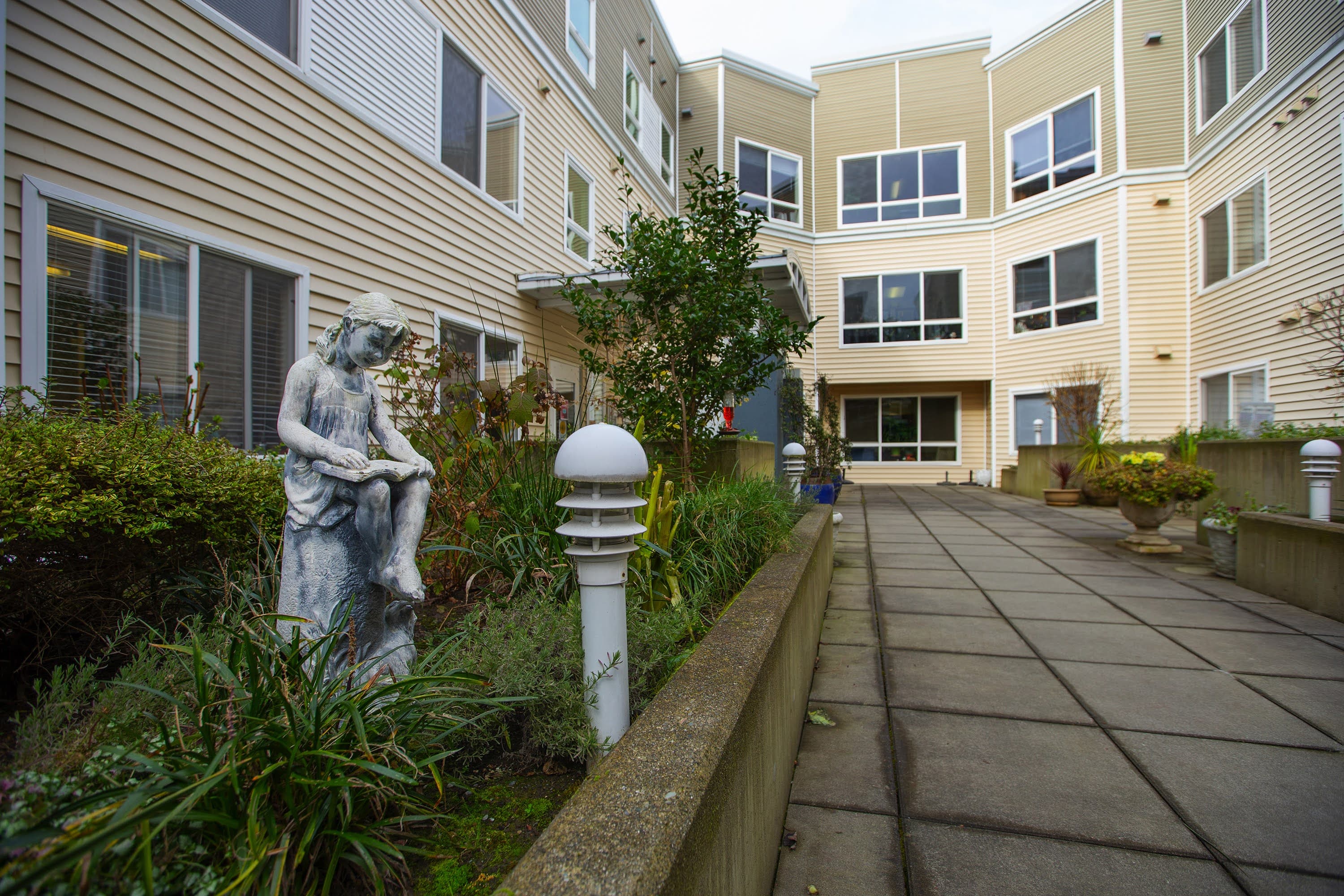
Ashwood Court is a low-income housing complex for seniors in downtown Bellevue, Wash. (Mike Siegel for WBUR)

A judge ruled in DASH’s favor in 2019, determining that Boston Financial had breached the agreement by refusing to allow DASH to buy the properties. In a settlement, DASH took ownership of four properties for zero dollars.

Looking back, Voyentzie said, “I would have said, ‘Forget it. It’s not worth fighting over.’ ”

He said Congress should “correct” the law so nonprofits have a clear option to buy at the end of the tax credit term. “There shouldn’t be any dispute.”

Ousting The General Partner

Seattle-area housing developer Catherine Tamaro will never forget the grilling she took in federal court in June of 2019. During a five-day trial, Alden Torch tried to remove her as partner and manager of two low-income properties she had run for many years.

The firm claimed Tamaro hadn’t raised rents enough on her tenants at the Parkway Apartments. It complained in court records that her 2018 audit was late and alleged she had breached her fiduciary duty to the investment partner by doing “unnecessary” repairs, such as replacing failed roofs and rotting balcony railings and fixing hazardous broken sidewalks — all upkeep that’s required by the federal government.

Tamaro should have conserved that cash for Alden Torch, its attorneys argued. They said she enriched herself and failed “to maximize partnership income by increasing rental rates” at Parkway to the allowable federal limit.

If Alden Torch prevailed in its lawsuit, Tamaro stood to lose daily control of the two Seattle-metro properties, and her ability to purchase them when the tax credits expired.

“I clearly had the right to buy [the apartments] under that partnership agreement, and they were attempting to strip that right from me,” Tamaro said.

Tamaro’s initial tax credit partners did well in the deal, court records show, more than doubling the money they invested. By the time Alden Torch took over the interest in 2011, any major upside was in the real estate, not in the aging tax breaks.

Again, the firm brought a host of allegations, taking a deep dive into financial statements dating back to 2002, before Alden Torch was even involved. Tamaro said the attacks on her were personal and painful.

“I can’t even describe how unpleasant it is to sit in court and know what’s at stake and listen to them talk about how awful I am,” she said.

U.S. District Court Judge Ronald Leighton sided almost entirely with Tamaro, finding Alden Torch had “sought to manufacture a reason to remove” her and that her decisions to make repairs had been sound. He likened some of Alden Torch’s claims to “looking for the belly-navel lint.”

“I clearly had the right to buy [the apartments] under that partnership agreement, and they were attempting to strip that right from me.”

The firm used the same tactic — trying to remove the general partner — in five other cases WBUR examined. It succeeded in one case; two other cases are pending.

The judge did rule that Tamaro had interfered with a property appraisal, and ordered a new one. Both Alden Torch and Tamaro appealed parts of the ruling, but it was upheld in March.

Tamaro said being embroiled in the lawsuit for several years has cost her dearly, from the $2.5 million she had to spend on legal fees to her multiple sclerosis symptoms growing worse from the stress.

Lack Of Oversight

The new investors in tax-credit interests aren’t the only ones evading oversight. The sellers, like banks and insurance companies, also have faced little scrutiny. The IRS is not monitoring these transfers or their ramifications, WBUR found, nor are federal housing or banking regulators.

Large banks invest in these projects primarily to satisfy their Community Reinvestment Act obligations with regulators, infusing money into less affluent neighborhoods. But when banks or other investors sell their stakes, the nonprofits are left dealing with firms whose intentions are unknown.

Take the case of the Aswan Village Apartments, an affordable housing complex with 500 residents in Opa-locka, Fla., a small city just north of Miami. Bank of America in 2003 backed a redevelopment of the property — then sold its interest in 2014.

The bank reaped between $250,000 and $400,000 in the sale, according to Miami-Dade County court records. The buyer, HallKeen Management of Norwood, Mass., would earn fees helping manage a property it said was “distressed.” But it was eyeing a potential gain of millions of dollars if the property was sold.

“We had no intention of selling the property,” said Willie Logan, chief executive of the Opa-locka Community Development Corp., the nonprofit general partner of the apartments. “We always had a long-term strategy to become 100% owners, because that’s the way you develop wealth and sustainability” in the neighborhood.

HallKeen argued that a sale would provide both it and the nonprofit with about $5 million each. But Opa-locka did not want to lose control of the property. It sued HallKeen and won, in what’s been a costly and time-consuming fight. And it’s not over yet; HallKeen is appealing the decision.

Willie Logan, of Opa-locka Community Development Corp. (Courtesy Opa-locka)

Logan, a former mayor and Florida state representative, blames the bank, in part, for selling to HallKeen. He likened the tax-credit exit battle to sharecropping. “You’re promised something at the end, but you’re just chasing your tail, because they found a way to manipulate, steal, cheat and take it from you,” he said.

Bank of America spokesman Bill Halldin said the bank does not make a practice of selling its tax-credit holdings. It did sell its interest in at least one other Florida property to HallKeen in that same period, however. Those apartments were then sold in October 2020 for more than $14 million to another firm, according to the county appraisal office.

“We typically hold our position for the entirety of the tax credit period,” Halldin said.

In a statement, HallKeen chief executive Andrew Burnes defended his firm’s track record. He said it “has never moved, or caused to be moved, a single unit of housing from affordable to market rate.”

“You’re promised something at the end, but you’re just chasing your tail, because they found a way to manipulate, steal, cheat and take it from you.”

WILLIE LOGAN

Transactions like these might receive more scrutiny in the state of Washington, where the housing commission adopted new rules last fall. It started requiring investors to seek its approval when transferring a housing partnership interest to another entity.

In response, Alden Torch sued the agency and its commissioners. The case, filed in federal court, claims the agency acted outside the scope of its authority, “adopting regulations on behalf of local special interests that are both patently unfair and constitutionally defective.”

Across the industry, Alden Torch’s lawsuit against the state regulators is being closely watched. The agency, in its legal response, asserted its “broad authority” to oversee the tax-credit program in Washington and said Alden Torch’s suit lacked merit.

But the agency has ceded some ground. It has backed away from rejecting transfers of partnership interests if a firm was involved in a lawsuit with housing partners. And agency officials are speaking less freely.

The group’s spokeswoman, Margaret Graham, in an email said commissioners had developed “cold feet” about scheduling an interview with WBUR. “Our lawyers advise us that with the ongoing lawsuit, it’s just not a good time for us to be commenting.”


WBUR’s Saurabh Datar contributed to this story.

This segment aired on April 29, 2021.

Beth Healy  Senior Investigative Reporter

SourceWBUR

MassHousing Closes on $5.5 Million in Financing for 181 Chestnut Street in Chelsea

BOSTON– MassHousing has closed on a total of $5.5 million in affordable and workforce housing financing to the non-profit The Neighborhood Developers, Inc. (TND), to transform a formerly market-rate rental property at 181 Chestnut Street in Chelsea into a mixed-income housing community.

The MassHousing financing will allow TND to extend long-term affordability to households across a wide range of incomes, from very-low-income households to middle-income households.

“By converting existing market-rate apartments to affordable homes with long-lasting affordability protections, this transaction will help ensure that Chelsea residents facing rising rents will be able to continue living and working in this vibrant city,” said MassHousing Executive Director Chrystal Kornegay. “TND is a mission-oriented housing developer, and MassHousing is pleased to partner with them on this exciting project.”

“Preserving a historic building as permanent affordable housing in Chelsea’s downtown will help advance long-term community goals and will keep families in stable and healthy housing through and beyond the COVID-19 pandemic,” said The Neighborhood Developer’s Executive Director Rafael Mares. “We believe this project will also serve as a model for how community development corporations in Massachusetts can convert naturally occurring affordable housing into deed-restricted homes for low-income families.”

TND acquired the three-story brick and masonry building at 181 Chestnut Street in 2019. The MassHousing financing will allow TND to rent 30 of the previously unrestricted market-rate units to income-eligible households across a range of incomes, while two of the apartments will be rented at market rates.

Eight apartments will be subsidized with federal housing vouchers and restricted to households earning up to 30 percent of the Area Median Income (AMI), and nine apartments will be restricted to households earning up to 60 percent of AMI. There will be 13 workforce housing units, of which six will be restricted to households earning up to 80 percent of AMI and seven for households earning up to 120 percent of AMI. The AMI for Chelsea is $119,000 for a family of four. None of the existing tenants will be displaced.

MassHousing is providing TND with a $4.9 million permanent loan and $650,000 in financing from the Agency’s Workforce Housing Initiative.

The transaction also involved $1 million in financing from the Massachusetts Department of Housing and Community Development (DHCD), $1.1 million from the Affordable Housing Trust Fund, which MassHousing manages on behalf of DHCD, approximately $1.5 million in state HOME funds, $700,000 in local HOME funds provided by the North Suburban Consortium through the Malden Redevelopment Authority, $640,000 in financing from the Community Economic Development Assistance Corporation (CEDAC), and $238,052 from a TND loan fund. CEDAC also provided $8.5 million in acquisition financing in partnership with LISC Boston’s Equitable Transit-Oriented Development Accelerator Fund and supported by Partners HealthCare and other fund investors.

181 Chestnut Street advances the Baker-Polito Administration’s goal of creating at least 1,000 new workforce housing units affordable to middle-income households through MassHousing’s Workforce Housing Initiative. Since the inception of the initiative in 2016, MassHousing has committed or closed workforce housing financing totaling $116.5 million, to 54 projects, located in 22 cities and towns. To date, the Workforce Housing Initiative has advanced the development of 4,669 housing units across a range of incomes, including 1,308 middle-income workforce units.

181 Chestnut Street was originally built as a school and convent and was converted to housing in 2015. It is within walking distance to retail shops, restaurants and the city’s commuter rail station and serviced by multiple MBTA bus routes.

The property is managed by WinnCompanies.

MassHousing has financed seven rental housing communities in Chelsea totaling 640 units of housing with an overall original loan amount of $75.6 million. The Agency has also provided home mortgage loans to 754 homebuyers and homeowners in Chelsea with an original purchase principal balance of $90.5 million.

SourceBoston Real Estate Times

Under The Radar: Affordable Senior Housing Communities Need Support To Fight COVID-19

MassHousing has closed on $2.8 million in affordable workforce housing financing to The Community Builders for the ongoing construction of the 12-unit 35 Village Hill Road in Northampton. Valley Community Development Corporation is the project co-sponsor.

The new housing, which is being developed on the site of the former Northampton State Hospital, will feature 10 workforce housing apartments for moderate-income households and two deeply affordable units for clients of the Massachusetts Department of Mental Health (DMH).

“MassHousing is pleased to support The Community Builders and Valley Community Development in their transformation of a vacant lot into new homes for working households and residents in need,” said MassHousing Executive Director Chrystal Kornegay. “We’re happy that these new homes will serve working and disabled households for many years into the future.”

“The Community Builders is excited to once again be expanding housing opportunities at Village Hill in Northampton. Our organization is committed to building strong communities where all people can thrive. We are grateful to MassHousing and our other state and local partners who help us make this work possible” said TCB Director of Development Rachana Crowley.

“Valley Community Development is proud to be part of increasing the economic diversity of housing options at Village Hill,” said Valley’s Executive Director Joanne Campbell.

The 12 new apartments will be contained in one building, which will also have first-floor commercial space. Ten of the apartments at 35 Village Hill Road will be workforce housing units affordable to moderate-income households. Six of the workforce housing units will be deed-restricted for households earning at or below 120 percent of the Area Media Income (AMI), and four will be workforce units for households earning at or below 80 percent of AMI. Additionally, two units will be deeply affordable for DMH clients and will be supported by federal Section 8 project-based vouchers. The AMI for Northampton is $76,000 for a household of four.

There will be two studio apartments, six one-bedroom apartments and four two-bedroom apartments. Construction is expected to be completed in September.

MassHousing is providing TCB with $1.4 million in permanent financing, and $1.4 million in workforce housing funding from the Agency’s Workforce Housing Initiative.

In addition to the MassHousing financing, the Massachusetts Department of Housing and Community Development (DHCD) is providing the project-based vouchers and $1.5 million in direct support. The project also received $1.3 million in funding through the Community Scale Housing Initiative (CSHI), a joint initiative of DHCD and MassHousing that funds smaller-scale affordable rental developments.

The Community Economic Development Assistance Corporation (CEDAC) is providing $360,000 in financing, the City of Northampton contributed $200,000 in local Community Preservation Act funding and Citizens Bank is providing $2.5 million in construction financing.

35 Village Hill Road advances the Baker-Polito Administration’s goal of creating up to 1,000 new workforce housing units affordable to middle-income households through MassHousing’s Workforce Housing Initiative. Since the inception of the initiative in 2016, MassHousing has committed or closed workforce housing financing totaling $98.2 million, to 45 projects, located in 21 cities and towns. To date, the Workforce Housing Initiative has advanced the development of 4,030 housing units across a range of incomes, including 1,096 workforce housing units.

The general contractor is Western Builders. The architect is Davis Square Architects and the management agent is TCB.

MassHousing has financed five rental housing communities in Northampton totaling 642 units of housing with an overall original loan amount of $33.4 million and the Agency has also provided home mortgage loans to 427 homebuyers and homeowners with an original purchase principal balance of $31.2 million.

SourceHealth Affairs

LISC Expands Funding for Affordable Housing Near Transit

FOR IMMEDIATE RELEASE
Contact:
Karen Kelleher, LISC Boston
617.410.4343 | kkelleher@lisc.org

Tia M. Vice, LISC Boston
617.410.4343 | tvice@lisc.org

LISC EXPANDS FUNDING FOR AFFORDABLE HOUSING NEAR TRANSIT
LISC is pleased to announce a new investment in the Equitable Transit-Oriented Development Accelerator Fund

BOSTON (February 11, 2020) – Local Initiatives Support Corporation (LISC) is pleased to announce an increase in the Equitable Transit-Oriented Development Accelerator Fund (ETODAF or the Fund).  The Fund is a revolving loan fund that has seeded the preservation or development of more than 1,500 apartments located near transit throughout Boston and Massachusetts since 2014, 72% of them affordable to low-income households.  The new investment will help the Fund support the development of more affordable housing with access to transit by providing critical early-stage financing.

Fund Background.  The Fund was created by LISCBoston, The Boston Foundation, and the Hyams Foundation in 2014 to provide developers of affordable housing with streamlined access to acquisition and predevelopment capital to acquire and advance key properties along transit corridors.  The foundations each invested $1.5 million for 10 years at a very low interest rate.  LISC paired that with a $1 million MassWorks grant from the Executive Office of Housing and Economic Development, through MassDevelopment for a total revolving fund of $4 million.  LISC has leveraged that capital with $7 million of its own funds and a similar amount from other community development financial institutions.  The resulting $18 million of investment has seeded the acquisition and development of more than 1,500 apartments within walking distance of transit, 1,100 of them affordable to low-income tenants, and will attract over $400 million of additional investment.

Why Transit-Oriented Development?   ETODAF-funded projects must be located within a quarter to a half-mile of a subway, train or major bus line, to ensure that residents have equitable access to affordable transit, which usually translates to access to jobs, education, health care, shopping, services, and other critical resources and amenities.  Where done successfully by a community-focused developer, transit-oriented development also attracts businesses and jobs, maximizes existing infrastructure, and capitalizes on new investments to make neighborhoods more vibrant.   The Fund can be used throughout the Commonwealth, and has invested in thirteen different neighborhoods, empowering developers revitalizing their communities in some cases, and those staving off displacement in others.

The Fund’s Impact.   The Fund has seeded the development of 22 affordable or mixed-income apartment properties near transit, all of them by nonprofit developers and most by local community development corporations.  These developments will result in more than 1,500 housing units, with 72% of those units restricted as affordable for at least 30 years.  Construction and operation of the affordable units requires additional construction and permanent financing and subsidy, but ETODAF provides critical early-stage financing that enables fast action to acquire parcels and replaces the cash equity developers otherwise need to buy properties in a hot market and to finance the early, high-risk predevelopment costs that other lenders will not finance.  The Fund has invested in both rental and homeownership units, in new construction and preservation, and in diverse communities including Gateway Cities, suburban communities, and Boston neighborhoods.

Catalyzing Community-Based Development by Sharing Risk.  While most lenders will only lend a buyer 70 or 80 percent of the property’s value, ETODAF lends more than the property value to empower affordable developers to secure these critical parcels.  This means the Fund takes on some of the risk that a developer typically bears. This makes the Fund particularly useful for community-based nonprofit developers who lack cash reserves needed to put their own equity into an acquisition.  All of ETODAF’s borrowers to-date have been nonprofit organizations.  For-profit affordable housing developers are eligible to borrow from the Fund for eligible projects, but they would pay a higher interest rate.

New Investment in the Fund.  Partners HealthCare recently became the newest investor in the Fund, joining the two foundations as a low-cost investor, with a $1.5 million investment that matches the foundations’ initial investments, making it an equal investment partner. Partners HealthCare answered LISC’s call for an investor at this level to increase the fund’s impact quickly. The Fund has been fully deployed for some time, making new loans only when prior loans are repaid.  Partners stepped in because it understands how fundamental affordable, stable housing is to health. Its investment enables LISC to achieve even greater leverage with this small but impactful fund.

A Growing Partnership Between Health Care and Community Development. With this investment, Partners HealthCare joins a growing list of healthcare institutions nationally that are partnering with community development organizations like LISC to support healthy, economically strong families and communities. Partners HealthCare, like many health institutions, understands that as much as 80% of health outcomes are determined by social factors such as whether one has safe, affordable housing, economic stability, access to healthy food and opportunities for recreation.  These so-called social determinants of health are at the heart of comprehensive community development, the focus of LISC’s work for 40 years.  Partners joins ProMedica, Sentara Healthcare, Kaiser Permanente, Dignity Health, Atrium Health and other health systems around the country working with LISC to coinvest in healthy communities.

Housing and Health Partnerships in Communities.   Most recently, the Fund invested, together with LISC and Community Economic Development Assistance Corporation (CEDAC), in an acquisition loan to The Neighborhood Developers, Inc. (TND), a nonprofit community development corporation that works in Chelsea, Revere and Everett.  TND used the financing to purchase 181 Chestnut Street, a 32-unit market-rate multifamily building in Chelsea near Bellingham Square, on the MBTA’s Silver Line.  Given the pace of development in the neighborhood, the building would otherwise have sold to a profit-motivated purchaser who would likely have raised the existing below-market rents, resulting in displacement or financial instability for the existing tenants.

Instead, TND will make modest repairs and commit to keeping most of the units affordable long-term to tenants of low- and moderate-income levels.  The Fund and LISC provided flexible, low-cost capital via a participation in a loan originated by CEDAC, a public-private community development finance institution.  The Fund’s investment would not have been possible without the recent infusion of capital from Partners.  Partners was particularly excited for the Fund to support stable, affordable housing in Chelsea where it is deeply invested at a property that is walking distance from the Mass General Hospital’s Chelsea HealthCare Center.

According to LISC Executive Director Karen Kelleher, there is great demand for additional flexible, low-cost financing for properties like this one, particularly where the city or town is willing to invest public dollars to support long-term affordability.  “The Commonwealth, particularly Greater Boston, is facing both a housing affordability crisis and a transit crisis.  We are eager to work with more civic leaders like Partners to step up and invest in solutions that prioritize community health and equity and link housing and transit.”

“Developing and protecting affordable housing within reach of transit is a game-changer for thousands of people in Greater Boston,” said Paul S. Grogan, President and CEO of the Boston Foundation. “These developments not only provide and sustain affordable housing that is so critical for individuals, workers and families, they also provide easier access to jobs and services that have a powerful impact on quality of life. We welcome Partners’ addition to the Fund.”

###

About LISC

Local Initiatives Support Corporation (LISC) provides grants, financing, and technical assistance to community development corporations (CDCs), nonprofit developers, grassroots organizations, as well as policy and advocacy organizations throughout Massachusetts. Working with local leaders, we invest in affordable housing, health, education, public safety and employment. As part of a national organization with deep local roots, LISC Boston is uniquely positioned to share resources, develop best practices, and craft innovations with the communities we serve. To learn more, visit http://www.lisc.org/boston .

About The Boston Foundation

The Boston Foundation, Greater Boston’s community foundation, seeks to bring the collective power of our region’s people and resources together to drive real change. Established in 1915, it is one of the largest community foundations in the nation—with net assets of $1.3 billion. In 2019, the Foundation received $151 million in contributions and the Foundation and its donors paid $153 million in grants to nonprofit organizations. The Foundation has many partners, including its donors, who have established more than 1,000 separate charitable funds for the general benefit of the community or for special purposes. With support from the Annual Campaign for Civic Leadership, the Foundation also facilitates public discourse and action, commissions research into the most critical issues of our time and advocates for public policy that advances opportunity for everyone.

About The Hyams Foundation

The Hyams Foundation is a private, independent foundation with a mission of increasing economic, racial and social justice and power within low-income communities in Boston and Chelsea, Massachusetts. Our vision for the future is a society in which systems and structures are transformed to create the conditions for increased collective well-being and produce equitable power, access, opportunities and outcomes, regardless of race.  For more about Hyams, visit www.hyamsfoundation.org .

About Partners HealthCare

Partners HealthCare is an integrated health care system, founded by Brigham and Women’s Hospital and Massachusetts General Hospital, that offers patients a continuum of coordinated and high-quality care. In addition to its two academic medical centers, the system includes community and specialty hospitals, a health insurance plan, a physician network, community health centers, home health and long-term care services, and other health care entities. Partners is a non-profit organization that is committed to patient care, research, teaching, and service to the community. In addition, Partners is one of the nation’s leading biomedical research organizations and is a principal teaching affiliate of Harvard Medical School.

About The Neighborhood Developers

The Neighborhood Developers (TND) promotes economic diversity, opportunity and quality of life in struggling communities. TND’s mission is to bring its core strengths—building homes, engaging neighbors, and fostering economic mobility—to community partnerships that create great neighborhoods where all people can thrive. Our work deepens the impact and scale our strengths through strategic growth, community leadership, strong partnerships, and refined programming. For additional information on TND, please visit https://theneighborhooddevelopers.org/ .

About CEDAC

CEDAC is a public-private community development finance institution that provides financial resources and technical expertise for community-based and other non-profit organizations engaged in effective community development in Massachusetts. CEDAC’s work supports two key building blocks of community development: affordable housing and early care and education.  CEDAC is also active in state and national housing preservation policy research and development and is widely recognized as a leader in the non-profit community development industry. For additional information on CEDAC and its current projects, please visit www.cedac.org .

SourceLISC Boston

Local Initiatives Support Corporation Expands Funding for Affordable Housing Near Transit

Local Initiatives Support Corporation (LISC) announced an increase in the Equitable Transit-Oriented Development Accelerator Fund (ETODAF or the Fund).

The Fund is a revolving loan fund that has seeded the preservation or development of more than 1,500 apartments located near transit throughout Boston and Massachusetts since 2014, 72% of them affordable to low-income households.  The new investment will help the Fund support the development of more affordable housing with access to transit by providing critical early-stage financing.

Fund Background

The Fund was created by LISCBoston, The Boston Foundation, and the Hyams Foundation in 2014 to provide developers of affordable housing with streamlined access to acquisition and predevelopment capital to acquire and advance key properties along transit corridors.  The foundations each invested $1.5 million for 10 years at a very low interest rate.  LISC paired that with a $1 million MassWorks grant from the Executive Office of Housing and Economic Development, through MassDevelopment for a total revolving fund of $4 million.

LISC has leveraged that capital with $7 million of its own funds and a similar amount from other community development financial institutions.  The resulting $18 million of investment has seeded the acquisition and development of more than 1,500 apartments within walking distance of transit, 1,100 of them affordable to low-income tenants, and will attract over $400 million of additional investment.

Why Transit-Oriented Development?

ETODAF-funded projects must be located within a quarter to a half-mile of a subway, train or major bus line, to ensure that residents have equitable access to affordable transit, which usually translates to access to jobs, education, health care, shopping, services, and other critical resources and amenities.  Where done successfully by a community-focused developer, transit-oriented development also attracts businesses and jobs, maximizes existing infrastructure, and capitalizes on new investments to make neighborhoods more vibrant.

The Fund can be used throughout the Commonwealth, and has invested in thirteen different neighborhoods, empowering developers revitalizing their communities in some cases, and those staving off displacement in others.

The Fund’s Impact

The Fund has seeded the development of 22 affordable or mixed-income apartment properties near transit, all of them by nonprofit developers and most by local community development corporations.  These developments will result in more than 1,500 housing units, with 72% of those units restricted as affordable for at least 30 years.  Construction and operation of the affordable units requires additional construction and permanent financing and subsidy, but ETODAF provides critical early-stage financing that enables fast action to acquire parcels and replaces the cash equity developers otherwise need to buy properties in a hot market and to finance the early, high-risk predevelopment costs that other lenders will not finance.

The Fund has invested in both rental and homeownership units, in new construction and preservation, and in diverse communities including Gateway Cities, suburban communities, and Boston neighborhoods.

Catalyzing Community-Based Development by Sharing Risk

While most lenders will only lend a buyer 70 or 80 percent of the property’s value, ETODAF lends more than the property value to empower affordable developers to secure these critical parcels.  This means the Fund takes on some of the risk that a developer typically bears. This makes the Fund particularly useful for community-based nonprofit developers who lack cash reserves needed to put their own equity into an acquisition.  All of ETODAF’s borrowers to-date have been nonprofit organizations.  For-profit affordable housing developers are eligible to borrow from the Fund for eligible projects, but they would pay a higher interest rate.

New Investment in the Fund

Partners HealthCare recently became the newest investor in the Fund, joining the two foundations as a low-cost investor, with a $1.5 million investment that matches the foundations’ initial investments, making it an equal investment partner. Partners HealthCare answered LISC’s call for an investor at this level to increase the fund’s impact quickly. The Fund has been fully deployed for some time, making new loans only when prior loans are repaid.  Partners stepped in because it understands how fundamental affordable, stable housing is to health. Its investment enables LISC to achieve even greater leverage with this small but impactful fund.

A Growing Partnership Between Health Care and Community Development

With this investment, Partners HealthCare joins a growing list of healthcare institutions nationally that are partnering with community development organizations like LISC to support healthy, economically strong families and communities. Partners HealthCare, like many health institutions, understands that as much as 80% of health outcomes are determined by social factors such as whether one has safe, affordable housing, economic stability, access to healthy food and opportunities for recreation.  These so-called social determinants of health are at the heart of comprehensive community development, the focus of LISC’s work for 40 years.  Partners joins ProMedica, Sentara Healthcare, Kaiser Permanente, Dignity Health, Atrium Health and other health systems around the country working with LISC to coinvest in healthy communities.

Housing and Health Partnerships in Communities

Most recently, the Fund invested, together with LISC and Community Economic Development Assistance Corporation (CEDAC), in an acquisition loan to The Neighborhood Developers, Inc. (TND), a nonprofit community development corporation that works in Chelsea, Revere and Everett.  TND used the financing to purchase 181 Chestnut Street, a 32-unit market-rate multifamily building in Chelsea near Bellingham Square, on the MBTA’s Silver Line.  Given the pace of development in the neighborhood, the building would otherwise have sold to a profit-motivated purchaser who would likely have raised the existing below-market rents, resulting in displacement or financial instability for the existing tenants.

Instead, TND will make modest repairs and commit to keeping most of the units affordable long-term to tenants of low- and moderate-income levels.  The Fund and LISC provided flexible, low-cost capital via a participation in a loan originated by CEDAC, a public-private community development finance institution.  The Fund’s investment would not have been possible without the recent infusion of capital from Partners.  Partners was particularly excited for the Fund to support stable, affordable housing in Chelsea where it is deeply invested at a property that is walking distance from the Mass General Hospital’s Chelsea HealthCare Center.

According to LISC Executive Director Karen Kelleher, there is great demand for additional flexible, low-cost financing for properties like this one, particularly where the city or town is willing to invest public dollars to support long-term affordability.  “The Commonwealth, particularly Greater Boston, is facing both a housing affordability crisis and a transit crisis.  We are eager to work with more civic leaders like Partners to step up and invest in solutions that prioritize community health and equity and link housing and transit.”

“Developing and protecting affordable housing within reach of transit is a game-changer for thousands of people in Greater Boston,” said Paul S. Grogan, President and CEO of the Boston Foundation. “These developments not only provide and sustain affordable housing that is so critical for individuals, workers and families, they also provide easier access to jobs and services that have a powerful impact on quality of life. We welcome Partners’ addition to the Fund.”

SourceBoston Real Estate Times

Pelham affordable housing project gets some seed funding

A project to bring 34 affordable housing units to an Amherst Road property that features a former fly rod factory building and farmhouse is moving forward.

The Community Economic Development Assistance Corp. of Boston announced Wednesday that it would commit $200,000 in predevelopment financing, through a loan to Home City Development Inc. of Springfield, for what would be known as Amethyst Brook Apartments.

The $12 million project in West Pelham could be the first in town developed under the state’s Chapter 40B comprehensive zoning law, which allows affordable housing projects to be permitted that otherwise would not be allowed under town zoning.

The 9½-acre site at 18 and 22 Amherst Road includes the farmhouse and several outbuildings, along with the small factory building, occupied by book publisher HRD Press, on the brook where the Bartlett Rod Shop Co. once operated. The adjacent stone dam, which had been part of the waterway since 1820, was decommissioned by the state in 2007 and demolished in 2012.

The farmhouse will be converted into six apartments, while the other buildings will be demolished and replaced with a new 28-unit building. On-site parking will be available for 49 vehicles.

To meet affordability, the units would be rented at 60% of median area income or less, which for a family of four means earning $53,000 or less annually.

The developer will dedicate five acres as conservation land.

Tilman Lukas, chairman of the Pelham Housing Committee, said his committee has been supportive of having an affordable housing project such as this, calling it a unique chance for families, couples and senior citizens.

“In my opinion, this is a project to bring the community a lot of affordable units,” Lukas said.

In fact, the committee conceived the project, which is within walking distance of the Pelham Elementary School and Pelham Library, and close to the Amherst town line.

Plans currently show 24 one-bedroom apartments, seven two-bedroom apartments and three three-bedroom apartments. Lukas said the town and developer could also enact a local preference to ensure people already living in Pelham could live at Amethyst Brook.

Lukas said Home City has sent a project eligibility letter to the Department of Housing and Community Development and anticipates applying for chapter 40B funding later this year. The project would also rely on the low-income housing tax credit financing program.

Town Meeting this spring could be asked to commit Community Preservation Act money, up to $500,000, to the project.

Even if all financing and permitting goes off without a hitch, the project likely wouldn’t break ground until 2022, Lukas said.

Roger Herzog, executive director of Community Economic Development Assistance Corp., said in a statement that rural communities need affordable housing, but have fewer opportunities than larger towns and cities to get such projects completed.

“We are excited to support the efforts of an excellent nonprofit housing developer, in partnership with local residents, to develop much-needed affordable housing in Pelham,” Herzog said.

SourceDaily Gazette Hampshire