MassHousing Closes on $5.5 Million in Financing for 181 Chestnut Street in Chelsea

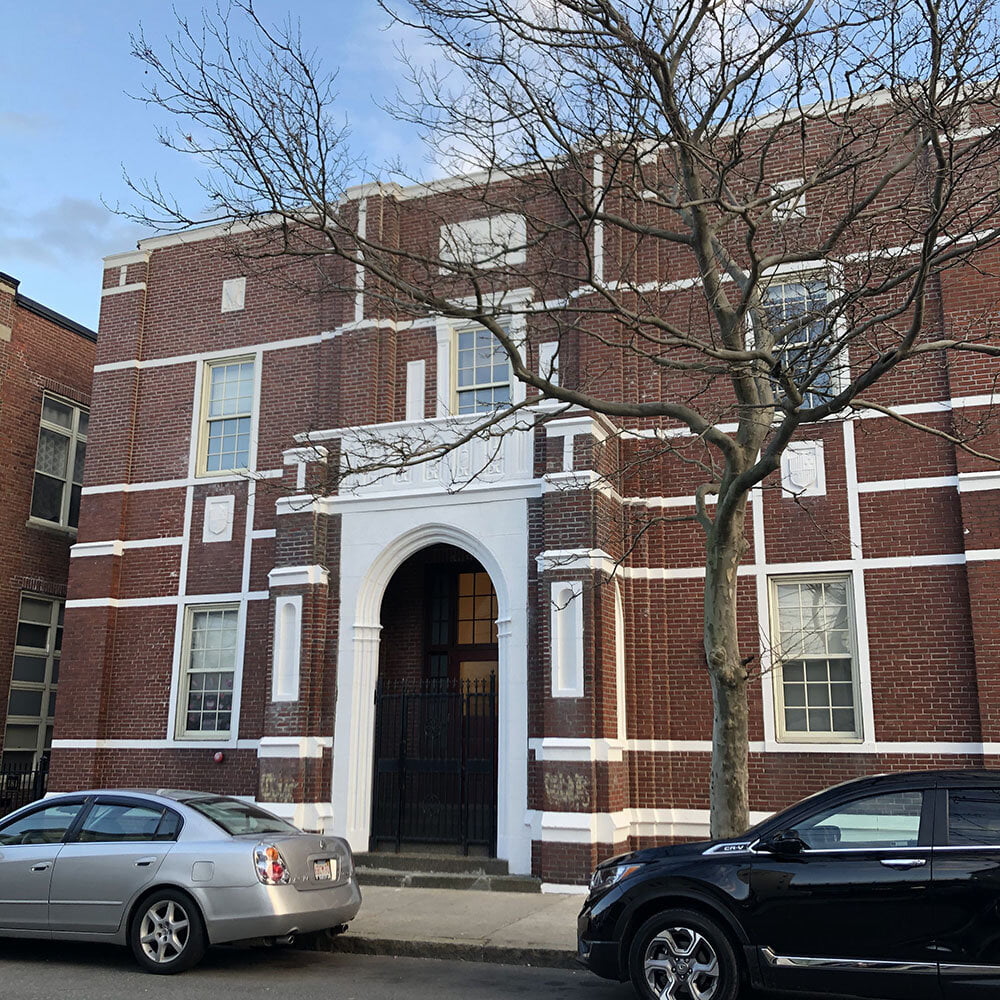
BOSTON– MassHousing has closed on a total of $5.5 million in affordable and workforce housing financing to the non-profit The Neighborhood Developers, Inc. (TND), to transform a formerly market-rate rental property at 181 Chestnut Street in Chelsea into a mixed-income housing community.

The MassHousing financing will allow TND to extend long-term affordability to households across a wide range of incomes, from very-low-income households to middle-income households.

“By converting existing market-rate apartments to affordable homes with long-lasting affordability protections, this transaction will help ensure that Chelsea residents facing rising rents will be able to continue living and working in this vibrant city,” said MassHousing Executive Director Chrystal Kornegay. “TND is a mission-oriented housing developer, and MassHousing is pleased to partner with them on this exciting project.”

“Preserving a historic building as permanent affordable housing in Chelsea’s downtown will help advance long-term community goals and will keep families in stable and healthy housing through and beyond the COVID-19 pandemic,” said The Neighborhood Developer’s Executive Director Rafael Mares. “We believe this project will also serve as a model for how community development corporations in Massachusetts can convert naturally occurring affordable housing into deed-restricted homes for low-income families.”

TND acquired the three-story brick and masonry building at 181 Chestnut Street in 2019. The MassHousing financing will allow TND to rent 30 of the previously unrestricted market-rate units to income-eligible households across a range of incomes, while two of the apartments will be rented at market rates.

Eight apartments will be subsidized with federal housing vouchers and restricted to households earning up to 30 percent of the Area Median Income (AMI), and nine apartments will be restricted to households earning up to 60 percent of AMI. There will be 13 workforce housing units, of which six will be restricted to households earning up to 80 percent of AMI and seven for households earning up to 120 percent of AMI. The AMI for Chelsea is $119,000 for a family of four. None of the existing tenants will be displaced.

MassHousing is providing TND with a $4.9 million permanent loan and $650,000 in financing from the Agency’s Workforce Housing Initiative.

The transaction also involved $1 million in financing from the Massachusetts Department of Housing and Community Development (DHCD), $1.1 million from the Affordable Housing Trust Fund, which MassHousing manages on behalf of DHCD, approximately $1.5 million in state HOME funds, $700,000 in local HOME funds provided by the North Suburban Consortium through the Malden Redevelopment Authority, $640,000 in financing from the Community Economic Development Assistance Corporation (CEDAC), and $238,052 from a TND loan fund. CEDAC also provided $8.5 million in acquisition financing in partnership with LISC Boston’s Equitable Transit-Oriented Development Accelerator Fund and supported by Partners HealthCare and other fund investors.

181 Chestnut Street advances the Baker-Polito Administration’s goal of creating at least 1,000 new workforce housing units affordable to middle-income households through MassHousing’s Workforce Housing Initiative. Since the inception of the initiative in 2016, MassHousing has committed or closed workforce housing financing totaling $116.5 million, to 54 projects, located in 22 cities and towns. To date, the Workforce Housing Initiative has advanced the development of 4,669 housing units across a range of incomes, including 1,308 middle-income workforce units.

181 Chestnut Street was originally built as a school and convent and was converted to housing in 2015. It is within walking distance to retail shops, restaurants and the city’s commuter rail station and serviced by multiple MBTA bus routes.

The property is managed by WinnCompanies.

MassHousing has financed seven rental housing communities in Chelsea totaling 640 units of housing with an overall original loan amount of $75.6 million. The Agency has also provided home mortgage loans to 754 homebuyers and homeowners in Chelsea with an original purchase principal balance of $90.5 million.

SourceBoston Real Estate Times

LISC Expands Funding for Affordable Housing Near Transit

FOR IMMEDIATE RELEASE
Contact:
Karen Kelleher, LISC Boston
617.410.4343 | kkelleher@lisc.org

Tia M. Vice, LISC Boston
617.410.4343 | tvice@lisc.org

LISC EXPANDS FUNDING FOR AFFORDABLE HOUSING NEAR TRANSIT
LISC is pleased to announce a new investment in the Equitable Transit-Oriented Development Accelerator Fund

BOSTON (February 11, 2020) – Local Initiatives Support Corporation (LISC) is pleased to announce an increase in the Equitable Transit-Oriented Development Accelerator Fund (ETODAF or the Fund).  The Fund is a revolving loan fund that has seeded the preservation or development of more than 1,500 apartments located near transit throughout Boston and Massachusetts since 2014, 72% of them affordable to low-income households.  The new investment will help the Fund support the development of more affordable housing with access to transit by providing critical early-stage financing.

Fund Background.  The Fund was created by LISCBoston, The Boston Foundation, and the Hyams Foundation in 2014 to provide developers of affordable housing with streamlined access to acquisition and predevelopment capital to acquire and advance key properties along transit corridors.  The foundations each invested $1.5 million for 10 years at a very low interest rate.  LISC paired that with a $1 million MassWorks grant from the Executive Office of Housing and Economic Development, through MassDevelopment for a total revolving fund of $4 million.  LISC has leveraged that capital with $7 million of its own funds and a similar amount from other community development financial institutions.  The resulting $18 million of investment has seeded the acquisition and development of more than 1,500 apartments within walking distance of transit, 1,100 of them affordable to low-income tenants, and will attract over $400 million of additional investment.

Why Transit-Oriented Development?   ETODAF-funded projects must be located within a quarter to a half-mile of a subway, train or major bus line, to ensure that residents have equitable access to affordable transit, which usually translates to access to jobs, education, health care, shopping, services, and other critical resources and amenities.  Where done successfully by a community-focused developer, transit-oriented development also attracts businesses and jobs, maximizes existing infrastructure, and capitalizes on new investments to make neighborhoods more vibrant.   The Fund can be used throughout the Commonwealth, and has invested in thirteen different neighborhoods, empowering developers revitalizing their communities in some cases, and those staving off displacement in others.

The Fund’s Impact.   The Fund has seeded the development of 22 affordable or mixed-income apartment properties near transit, all of them by nonprofit developers and most by local community development corporations.  These developments will result in more than 1,500 housing units, with 72% of those units restricted as affordable for at least 30 years.  Construction and operation of the affordable units requires additional construction and permanent financing and subsidy, but ETODAF provides critical early-stage financing that enables fast action to acquire parcels and replaces the cash equity developers otherwise need to buy properties in a hot market and to finance the early, high-risk predevelopment costs that other lenders will not finance.  The Fund has invested in both rental and homeownership units, in new construction and preservation, and in diverse communities including Gateway Cities, suburban communities, and Boston neighborhoods.

Catalyzing Community-Based Development by Sharing Risk.  While most lenders will only lend a buyer 70 or 80 percent of the property’s value, ETODAF lends more than the property value to empower affordable developers to secure these critical parcels.  This means the Fund takes on some of the risk that a developer typically bears. This makes the Fund particularly useful for community-based nonprofit developers who lack cash reserves needed to put their own equity into an acquisition.  All of ETODAF’s borrowers to-date have been nonprofit organizations.  For-profit affordable housing developers are eligible to borrow from the Fund for eligible projects, but they would pay a higher interest rate.

New Investment in the Fund.  Partners HealthCare recently became the newest investor in the Fund, joining the two foundations as a low-cost investor, with a $1.5 million investment that matches the foundations’ initial investments, making it an equal investment partner. Partners HealthCare answered LISC’s call for an investor at this level to increase the fund’s impact quickly. The Fund has been fully deployed for some time, making new loans only when prior loans are repaid.  Partners stepped in because it understands how fundamental affordable, stable housing is to health. Its investment enables LISC to achieve even greater leverage with this small but impactful fund.

A Growing Partnership Between Health Care and Community Development. With this investment, Partners HealthCare joins a growing list of healthcare institutions nationally that are partnering with community development organizations like LISC to support healthy, economically strong families and communities. Partners HealthCare, like many health institutions, understands that as much as 80% of health outcomes are determined by social factors such as whether one has safe, affordable housing, economic stability, access to healthy food and opportunities for recreation.  These so-called social determinants of health are at the heart of comprehensive community development, the focus of LISC’s work for 40 years.  Partners joins ProMedica, Sentara Healthcare, Kaiser Permanente, Dignity Health, Atrium Health and other health systems around the country working with LISC to coinvest in healthy communities.

Housing and Health Partnerships in Communities.   Most recently, the Fund invested, together with LISC and Community Economic Development Assistance Corporation (CEDAC), in an acquisition loan to The Neighborhood Developers, Inc. (TND), a nonprofit community development corporation that works in Chelsea, Revere and Everett.  TND used the financing to purchase 181 Chestnut Street, a 32-unit market-rate multifamily building in Chelsea near Bellingham Square, on the MBTA’s Silver Line.  Given the pace of development in the neighborhood, the building would otherwise have sold to a profit-motivated purchaser who would likely have raised the existing below-market rents, resulting in displacement or financial instability for the existing tenants.

Instead, TND will make modest repairs and commit to keeping most of the units affordable long-term to tenants of low- and moderate-income levels.  The Fund and LISC provided flexible, low-cost capital via a participation in a loan originated by CEDAC, a public-private community development finance institution.  The Fund’s investment would not have been possible without the recent infusion of capital from Partners.  Partners was particularly excited for the Fund to support stable, affordable housing in Chelsea where it is deeply invested at a property that is walking distance from the Mass General Hospital’s Chelsea HealthCare Center.

According to LISC Executive Director Karen Kelleher, there is great demand for additional flexible, low-cost financing for properties like this one, particularly where the city or town is willing to invest public dollars to support long-term affordability.  “The Commonwealth, particularly Greater Boston, is facing both a housing affordability crisis and a transit crisis.  We are eager to work with more civic leaders like Partners to step up and invest in solutions that prioritize community health and equity and link housing and transit.”

“Developing and protecting affordable housing within reach of transit is a game-changer for thousands of people in Greater Boston,” said Paul S. Grogan, President and CEO of the Boston Foundation. “These developments not only provide and sustain affordable housing that is so critical for individuals, workers and families, they also provide easier access to jobs and services that have a powerful impact on quality of life. We welcome Partners’ addition to the Fund.”

###

About LISC

Local Initiatives Support Corporation (LISC) provides grants, financing, and technical assistance to community development corporations (CDCs), nonprofit developers, grassroots organizations, as well as policy and advocacy organizations throughout Massachusetts. Working with local leaders, we invest in affordable housing, health, education, public safety and employment. As part of a national organization with deep local roots, LISC Boston is uniquely positioned to share resources, develop best practices, and craft innovations with the communities we serve. To learn more, visit http://www.lisc.org/boston .

About The Boston Foundation

The Boston Foundation, Greater Boston’s community foundation, seeks to bring the collective power of our region’s people and resources together to drive real change. Established in 1915, it is one of the largest community foundations in the nation—with net assets of $1.3 billion. In 2019, the Foundation received $151 million in contributions and the Foundation and its donors paid $153 million in grants to nonprofit organizations. The Foundation has many partners, including its donors, who have established more than 1,000 separate charitable funds for the general benefit of the community or for special purposes. With support from the Annual Campaign for Civic Leadership, the Foundation also facilitates public discourse and action, commissions research into the most critical issues of our time and advocates for public policy that advances opportunity for everyone.

About The Hyams Foundation

The Hyams Foundation is a private, independent foundation with a mission of increasing economic, racial and social justice and power within low-income communities in Boston and Chelsea, Massachusetts. Our vision for the future is a society in which systems and structures are transformed to create the conditions for increased collective well-being and produce equitable power, access, opportunities and outcomes, regardless of race.  For more about Hyams, visit www.hyamsfoundation.org .

About Partners HealthCare

Partners HealthCare is an integrated health care system, founded by Brigham and Women’s Hospital and Massachusetts General Hospital, that offers patients a continuum of coordinated and high-quality care. In addition to its two academic medical centers, the system includes community and specialty hospitals, a health insurance plan, a physician network, community health centers, home health and long-term care services, and other health care entities. Partners is a non-profit organization that is committed to patient care, research, teaching, and service to the community. In addition, Partners is one of the nation’s leading biomedical research organizations and is a principal teaching affiliate of Harvard Medical School.

About The Neighborhood Developers

The Neighborhood Developers (TND) promotes economic diversity, opportunity and quality of life in struggling communities. TND’s mission is to bring its core strengths—building homes, engaging neighbors, and fostering economic mobility—to community partnerships that create great neighborhoods where all people can thrive. Our work deepens the impact and scale our strengths through strategic growth, community leadership, strong partnerships, and refined programming. For additional information on TND, please visit https://theneighborhooddevelopers.org/ .

About CEDAC

CEDAC is a public-private community development finance institution that provides financial resources and technical expertise for community-based and other non-profit organizations engaged in effective community development in Massachusetts. CEDAC’s work supports two key building blocks of community development: affordable housing and early care and education.  CEDAC is also active in state and national housing preservation policy research and development and is widely recognized as a leader in the non-profit community development industry. For additional information on CEDAC and its current projects, please visit www.cedac.org .
SourceLISC Boston

Local Initiatives Support Corporation Expands Funding for Affordable Housing Near Transit

Local Initiatives Support Corporation (LISC) announced an increase in the Equitable Transit-Oriented Development Accelerator Fund (ETODAF or the Fund).

The Fund is a revolving loan fund that has seeded the preservation or development of more than 1,500 apartments located near transit throughout Boston and Massachusetts since 2014, 72% of them affordable to low-income households.  The new investment will help the Fund support the development of more affordable housing with access to transit by providing critical early-stage financing.

Fund Background

The Fund was created by LISCBoston, The Boston Foundation, and the Hyams Foundation in 2014 to provide developers of affordable housing with streamlined access to acquisition and predevelopment capital to acquire and advance key properties along transit corridors.  The foundations each invested $1.5 million for 10 years at a very low interest rate.  LISC paired that with a $1 million MassWorks grant from the Executive Office of Housing and Economic Development, through MassDevelopment for a total revolving fund of $4 million.

LISC has leveraged that capital with $7 million of its own funds and a similar amount from other community development financial institutions.  The resulting $18 million of investment has seeded the acquisition and development of more than 1,500 apartments within walking distance of transit, 1,100 of them affordable to low-income tenants, and will attract over $400 million of additional investment.

Why Transit-Oriented Development?

ETODAF-funded projects must be located within a quarter to a half-mile of a subway, train or major bus line, to ensure that residents have equitable access to affordable transit, which usually translates to access to jobs, education, health care, shopping, services, and other critical resources and amenities.  Where done successfully by a community-focused developer, transit-oriented development also attracts businesses and jobs, maximizes existing infrastructure, and capitalizes on new investments to make neighborhoods more vibrant.

The Fund can be used throughout the Commonwealth, and has invested in thirteen different neighborhoods, empowering developers revitalizing their communities in some cases, and those staving off displacement in others.

The Fund’s Impact

The Fund has seeded the development of 22 affordable or mixed-income apartment properties near transit, all of them by nonprofit developers and most by local community development corporations.  These developments will result in more than 1,500 housing units, with 72% of those units restricted as affordable for at least 30 years.  Construction and operation of the affordable units requires additional construction and permanent financing and subsidy, but ETODAF provides critical early-stage financing that enables fast action to acquire parcels and replaces the cash equity developers otherwise need to buy properties in a hot market and to finance the early, high-risk predevelopment costs that other lenders will not finance.

The Fund has invested in both rental and homeownership units, in new construction and preservation, and in diverse communities including Gateway Cities, suburban communities, and Boston neighborhoods.

Catalyzing Community-Based Development by Sharing Risk

While most lenders will only lend a buyer 70 or 80 percent of the property’s value, ETODAF lends more than the property value to empower affordable developers to secure these critical parcels.  This means the Fund takes on some of the risk that a developer typically bears. This makes the Fund particularly useful for community-based nonprofit developers who lack cash reserves needed to put their own equity into an acquisition.  All of ETODAF’s borrowers to-date have been nonprofit organizations.  For-profit affordable housing developers are eligible to borrow from the Fund for eligible projects, but they would pay a higher interest rate.

New Investment in the Fund

Partners HealthCare recently became the newest investor in the Fund, joining the two foundations as a low-cost investor, with a $1.5 million investment that matches the foundations’ initial investments, making it an equal investment partner. Partners HealthCare answered LISC’s call for an investor at this level to increase the fund’s impact quickly. The Fund has been fully deployed for some time, making new loans only when prior loans are repaid.  Partners stepped in because it understands how fundamental affordable, stable housing is to health. Its investment enables LISC to achieve even greater leverage with this small but impactful fund.

A Growing Partnership Between Health Care and Community Development

With this investment, Partners HealthCare joins a growing list of healthcare institutions nationally that are partnering with community development organizations like LISC to support healthy, economically strong families and communities. Partners HealthCare, like many health institutions, understands that as much as 80% of health outcomes are determined by social factors such as whether one has safe, affordable housing, economic stability, access to healthy food and opportunities for recreation.  These so-called social determinants of health are at the heart of comprehensive community development, the focus of LISC’s work for 40 years.  Partners joins ProMedica, Sentara Healthcare, Kaiser Permanente, Dignity Health, Atrium Health and other health systems around the country working with LISC to coinvest in healthy communities.

Housing and Health Partnerships in Communities

Most recently, the Fund invested, together with LISC and Community Economic Development Assistance Corporation (CEDAC), in an acquisition loan to The Neighborhood Developers, Inc. (TND), a nonprofit community development corporation that works in Chelsea, Revere and Everett.  TND used the financing to purchase 181 Chestnut Street, a 32-unit market-rate multifamily building in Chelsea near Bellingham Square, on the MBTA’s Silver Line.  Given the pace of development in the neighborhood, the building would otherwise have sold to a profit-motivated purchaser who would likely have raised the existing below-market rents, resulting in displacement or financial instability for the existing tenants.

Instead, TND will make modest repairs and commit to keeping most of the units affordable long-term to tenants of low- and moderate-income levels.  The Fund and LISC provided flexible, low-cost capital via a participation in a loan originated by CEDAC, a public-private community development finance institution.  The Fund’s investment would not have been possible without the recent infusion of capital from Partners.  Partners was particularly excited for the Fund to support stable, affordable housing in Chelsea where it is deeply invested at a property that is walking distance from the Mass General Hospital’s Chelsea HealthCare Center.

According to LISC Executive Director Karen Kelleher, there is great demand for additional flexible, low-cost financing for properties like this one, particularly where the city or town is willing to invest public dollars to support long-term affordability.  “The Commonwealth, particularly Greater Boston, is facing both a housing affordability crisis and a transit crisis.  We are eager to work with more civic leaders like Partners to step up and invest in solutions that prioritize community health and equity and link housing and transit.”

“Developing and protecting affordable housing within reach of transit is a game-changer for thousands of people in Greater Boston,” said Paul S. Grogan, President and CEO of the Boston Foundation. “These developments not only provide and sustain affordable housing that is so critical for individuals, workers and families, they also provide easier access to jobs and services that have a powerful impact on quality of life. We welcome Partners’ addition to the Fund.”

SourceBoston Real Estate Times

Why Boston Medical Center Is Investing In Housing

Chuck Gyukeri is a Navy vet who was homeless back in 2009, and has been living in subsidized apartments ever since. Now supported by disability benefits and Section 8 vouchers, he lives in a small, street-level apartment on the back corner of a handsome brownstone near Fields Corner, in Boston’s Dorchester neighborhood.

The inside of the Waldeck buildings need work, Gyukeri says, swatting flies around his head, but he’s grateful to have his own place.

“I know I got someplace stable now,” Gyukeri says, standing outside the apartment he’s lived in for the last three years, his two cats slinking around behind the building with a third from the neighborhood. “I don’t have to worry about being out homeless again.

“It makes me feel comfortable about myself,” he adds, “that I’m able to come in and out of my own home. And I’m getting my health issues together.”

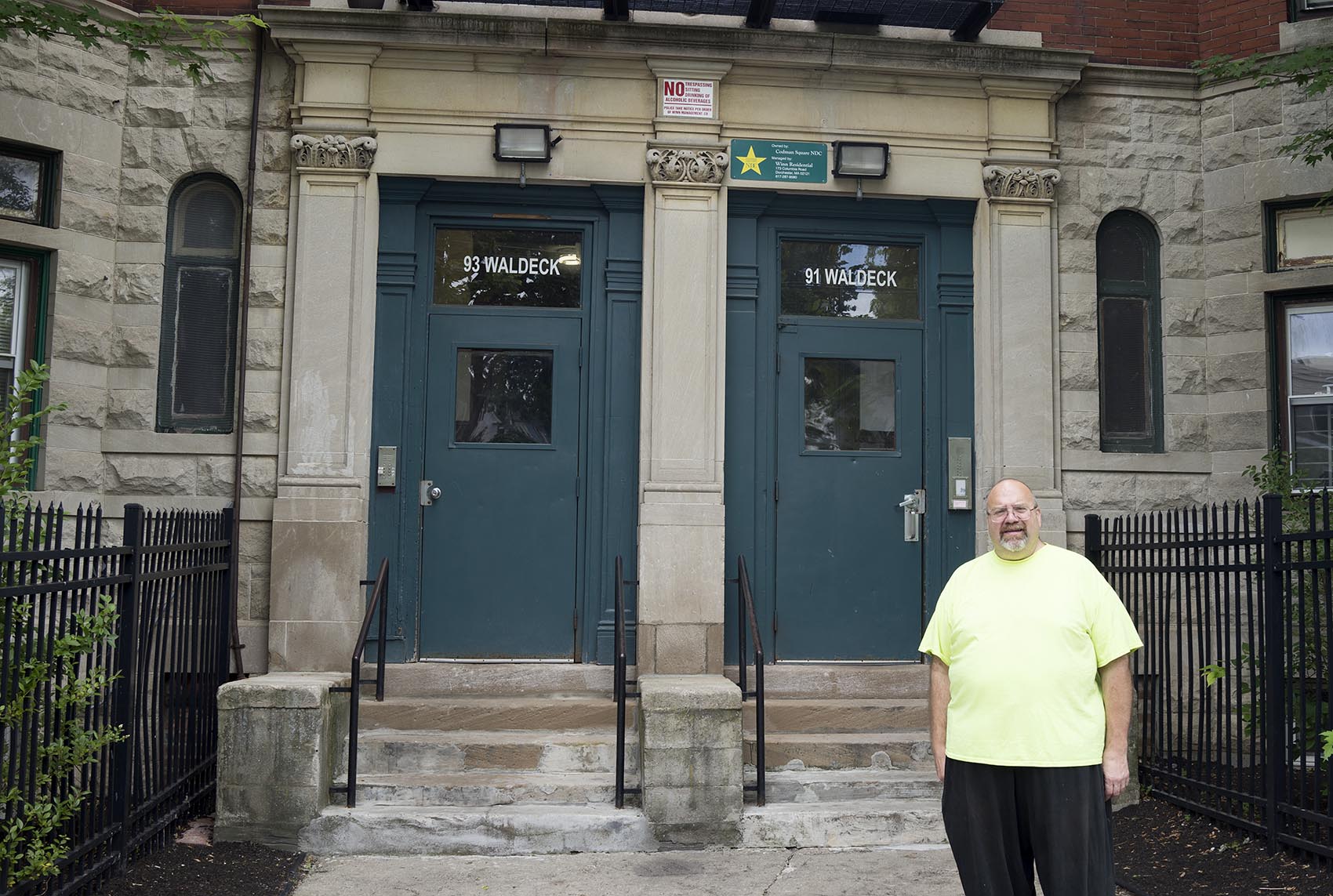
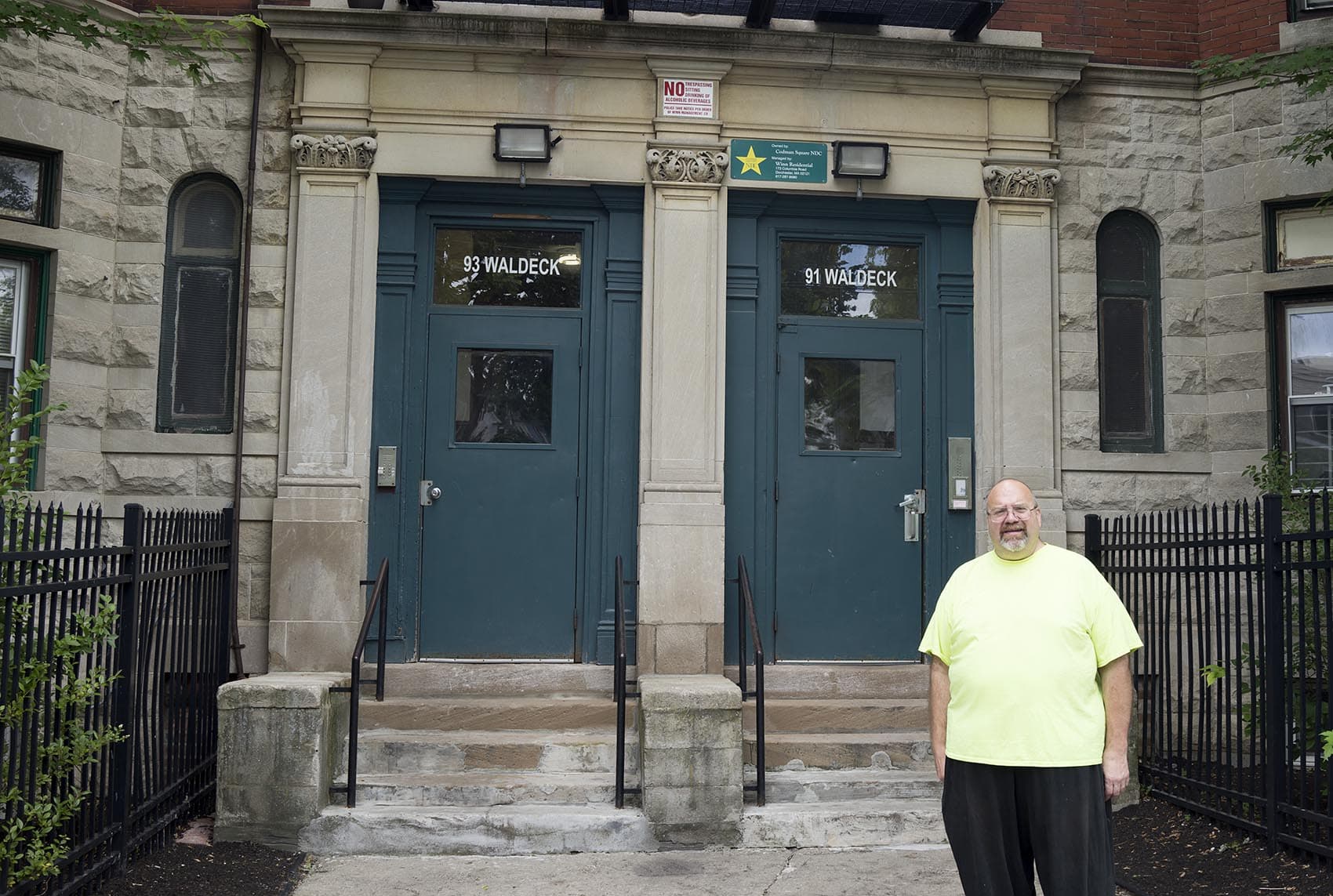
Gyukeri’s apartment is in one of four brownstones on Waldeck Street — 35 units that came close to losing their affordable status. Gyukeri was part of a tenant organizing campaign that resulted in the complex coming under the ownership of Codman Square Neighborhood Development Corp.

Conditions were so bad under the previous owner, Codman NDC officials say, that the tenants had more than $3 million in claims against him relating to negligence of the building. In exchange for dropping their complaints, a bankruptcy judge granted ownership of the Waldeck complex — and the Orlando development in Mattapan — to Codman NDC.

Now the 59 affordable units at the Waldeck and the Orlando have been preserved, but Codman NDC says there’s a long way to go before they’re even up to code.

“It’s a little roach-infested right now, I’m trying to handle that,” says Gyukeri, managing to keep a smile despite an overwhelming odor permeating his apartment. “The weird thing is that something died. It might’ve been a mouse.”

‘Social Determinants Of Health’

A third of the units in Waldeck are uninhabitable, according to Codman NDC. But now, thanks to an $800,000 investment from Boston Medical Center, Codman says it wants to turn the row of downtrodden buildings into a paragon of well-being.

“Only about 10 to 20 percent of health is actually determined by what type of health care you get,” says Dr. Megan Sandel, one of the leaders of BMC’s housing initiative. “Much more [significant are] the social determinants of health — where you live, what your environment is like. And so more and more we’re starting to screen for people’s social determinants.”

Waldeck Street's new owner is planning to invest more than $3 million in the complex, with an $800,000 boost from Boston Medical Center. (Simón Rios/WBUR)
Waldeck Street’s new owner is planning to invest more than $3 million in the complex, with an $800,000 boost from Boston Medical Center. (Simón Rios/WBUR)

Waldeck represents one of nine investments for BMC — a total of $6.5 million the hospital has designated for housing in some of Boston’s poorest areas. Advocates say BMC’s investment is part of a burgeoning shift among health care leaders to view housing as a key “social determinant of health.”

Now, a handful of area hospitals are starting to put their money into housing.

BMC’s housing investment is tied to a renovation of its campus in the South End. The state requires that 5 percent of the cost of a hospital expansion be reinvested in community health. BMC chose to spend the money on housing.

The initiative also includes $1 million to help families fight evictions, $1 million to create a housing stabilization program for people with complex medical issues, and $1 million to support a grocery store at a development in Roxbury.

Sandel says there was little resistance among BMC officials to investing in housing, but it’s an experiment that still needs to be proven.

“I think where people need to be convinced is in the business model. Can we actually show that this is something that’s going to reduce costs and improve health outcomes?” Sandel says, adding that it has to make sense for BMC’s bottom line.

BMC is not the only hospital in Massachusetts looking to improve health by improving housing. Boston Children’s Hospital recently set aside $5 million, while Baystate Medical Center in Springfield is also dedicating funds to housing.

In a statement, a spokesperson for Massachusetts General Hospital said MGH, Partners HealthCare and Brigham Health are looking at possible investments to benefit local underserved communities.

Overwhelming’ Housing Challenges

John Erwin is executive director of the Conference of Boston Teaching Hospitals, which is heading up a community needs assessment of Boston’s health care institutions that will conclude in 2019. Erwin says housing could be identified as a major social determinant of health that requires collective action from the city’s hospitals, health centers and nonprofits.

And Erwin says it’s not just about housing the poor: “We’re seeing it from the patient perspective but also as large employers in the city. It’s increasingly difficult for our own employees to find affordable housing in the city — and when you’re trying to attract workers from other parts of the country, housing becomes a factor.”

Getting health care leaders onto the housing bandwagon could make a big difference politically, says Joe Kreisberg, head of the Massachusetts Association of Community Development Corporations.

“The housing challenges we face as a city and a state are overwhelming, and the amount of money that we would need to provide affordable housing to every low- and moderate-income family is a staggering number,” Kreisberg says. “And the health care sector — even the health care sector — is not going to be able to do that.”

Kreisberg estimates Massachusetts spends about 40 percent of its money on health care, and 1 percent on housing. If health care leaders start speaking out about the need for more and better housing, he says that could help change the ratio in the long term.

But residents at the Waldeck development in Dorchester say change can’t come fast enough. They admit things have improved since Codman NDC took over — it actually maintains the building and responds to repair requests — but the tenants are ready for an end to the pest infestation and drug use.

“It’s kind of hard, you wake up in the morning and there’s someone on your hallway,” says Derrick Farley, who’s lived at Waldeck since the beginning of the year.

Farley says sometimes it falls to him to kick drug users out of the building.

“Sometimes I don’t feel safe.”

Farley says he doesn’t want to continue living at Waldeck the way it is now. “But what they’ve given me, a picture of the future, it looks like it could be better.”

Beyond the finances, it’s still unclear what kind of role hospitals could have in housing. At Waldeck, advocates are still working out important questions: Will there be a clinician onsite? Will fair housing law permit patients from certain hospitals to get to the front of the housing wait list? And what kind of assistance will be available to the residents, many of whom struggle with substances and mental health issues?

“I want it to look just as handsome on the inside as it looks on the outside,” says Codman NDC’s executive director, Gail Latimore. “I want the residents to feel like they have an ownership stake in the property. … I want the residents to actually be healthier as a result.”

SourceWBUR