MassHousing Closes on $5.5 Million in Financing for 181 Chestnut Street in Chelsea

BOSTON– MassHousing has closed on a total of $5.5 million in affordable and workforce housing financing to the non-profit The Neighborhood Developers, Inc. (TND), to transform a formerly market-rate rental property at 181 Chestnut Street in Chelsea into a mixed-income housing community.

The MassHousing financing will allow TND to extend long-term affordability to households across a wide range of incomes, from very-low-income households to middle-income households.

“By converting existing market-rate apartments to affordable homes with long-lasting affordability protections, this transaction will help ensure that Chelsea residents facing rising rents will be able to continue living and working in this vibrant city,” said MassHousing Executive Director Chrystal Kornegay. “TND is a mission-oriented housing developer, and MassHousing is pleased to partner with them on this exciting project.”

“Preserving a historic building as permanent affordable housing in Chelsea’s downtown will help advance long-term community goals and will keep families in stable and healthy housing through and beyond the COVID-19 pandemic,” said The Neighborhood Developer’s Executive Director Rafael Mares. “We believe this project will also serve as a model for how community development corporations in Massachusetts can convert naturally occurring affordable housing into deed-restricted homes for low-income families.”

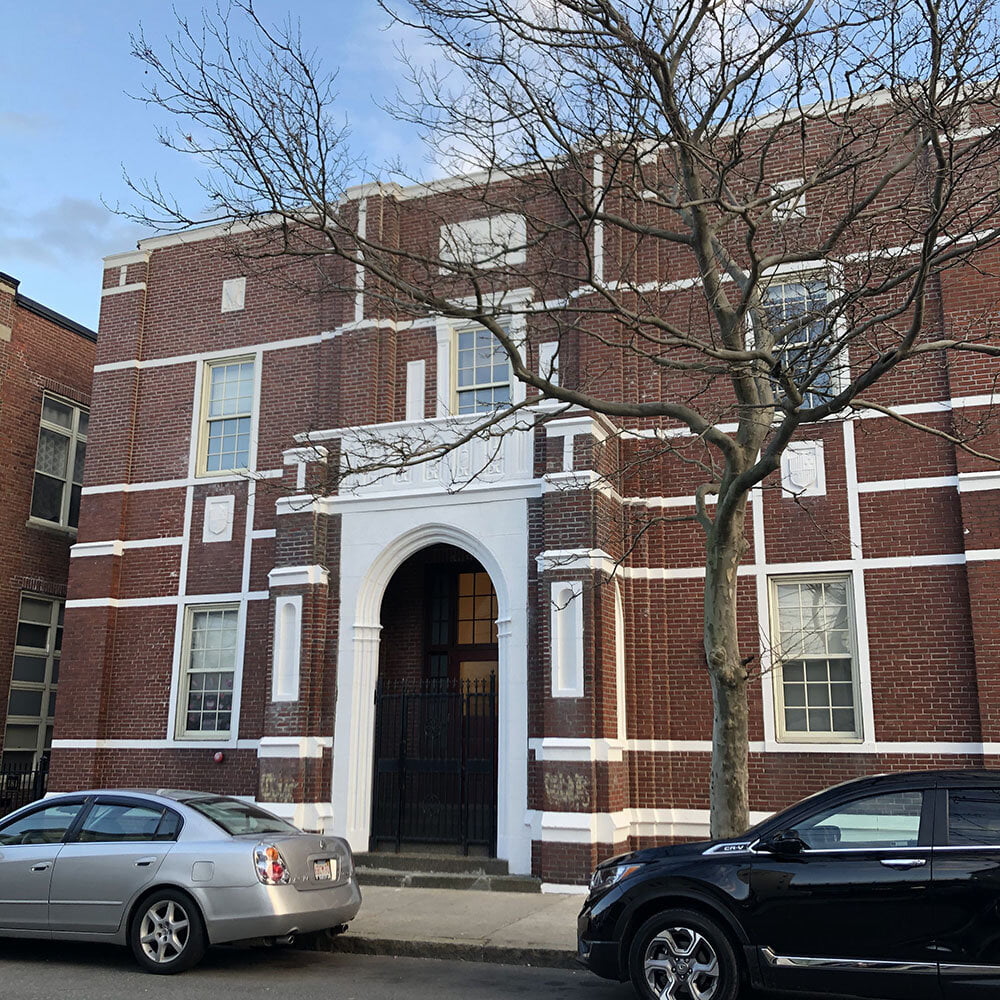
TND acquired the three-story brick and masonry building at 181 Chestnut Street in 2019. The MassHousing financing will allow TND to rent 30 of the previously unrestricted market-rate units to income-eligible households across a range of incomes, while two of the apartments will be rented at market rates.

Eight apartments will be subsidized with federal housing vouchers and restricted to households earning up to 30 percent of the Area Median Income (AMI), and nine apartments will be restricted to households earning up to 60 percent of AMI. There will be 13 workforce housing units, of which six will be restricted to households earning up to 80 percent of AMI and seven for households earning up to 120 percent of AMI. The AMI for Chelsea is $119,000 for a family of four. None of the existing tenants will be displaced.

MassHousing is providing TND with a $4.9 million permanent loan and $650,000 in financing from the Agency’s Workforce Housing Initiative.

The transaction also involved $1 million in financing from the Massachusetts Department of Housing and Community Development (DHCD), $1.1 million from the Affordable Housing Trust Fund, which MassHousing manages on behalf of DHCD, approximately $1.5 million in state HOME funds, $700,000 in local HOME funds provided by the North Suburban Consortium through the Malden Redevelopment Authority, $640,000 in financing from the Community Economic Development Assistance Corporation (CEDAC), and $238,052 from a TND loan fund. CEDAC also provided $8.5 million in acquisition financing in partnership with LISC Boston’s Equitable Transit-Oriented Development Accelerator Fund and supported by Partners HealthCare and other fund investors.

181 Chestnut Street advances the Baker-Polito Administration’s goal of creating at least 1,000 new workforce housing units affordable to middle-income households through MassHousing’s Workforce Housing Initiative. Since the inception of the initiative in 2016, MassHousing has committed or closed workforce housing financing totaling $116.5 million, to 54 projects, located in 22 cities and towns. To date, the Workforce Housing Initiative has advanced the development of 4,669 housing units across a range of incomes, including 1,308 middle-income workforce units.

181 Chestnut Street was originally built as a school and convent and was converted to housing in 2015. It is within walking distance to retail shops, restaurants and the city’s commuter rail station and serviced by multiple MBTA bus routes.

The property is managed by WinnCompanies.

MassHousing has financed seven rental housing communities in Chelsea totaling 640 units of housing with an overall original loan amount of $75.6 million. The Agency has also provided home mortgage loans to 754 homebuyers and homeowners in Chelsea with an original purchase principal balance of $90.5 million.

SourceBoston Real Estate Times

LISC Expands Funding for Affordable Housing Near Transit

FOR IMMEDIATE RELEASE
Contact:
Karen Kelleher, LISC Boston
617.410.4343 | kkelleher@lisc.org

Tia M. Vice, LISC Boston
617.410.4343 | tvice@lisc.org

LISC EXPANDS FUNDING FOR AFFORDABLE HOUSING NEAR TRANSIT
LISC is pleased to announce a new investment in the Equitable Transit-Oriented Development Accelerator Fund

BOSTON (February 11, 2020) – Local Initiatives Support Corporation (LISC) is pleased to announce an increase in the Equitable Transit-Oriented Development Accelerator Fund (ETODAF or the Fund).  The Fund is a revolving loan fund that has seeded the preservation or development of more than 1,500 apartments located near transit throughout Boston and Massachusetts since 2014, 72% of them affordable to low-income households.  The new investment will help the Fund support the development of more affordable housing with access to transit by providing critical early-stage financing.

Fund Background.  The Fund was created by LISCBoston, The Boston Foundation, and the Hyams Foundation in 2014 to provide developers of affordable housing with streamlined access to acquisition and predevelopment capital to acquire and advance key properties along transit corridors.  The foundations each invested $1.5 million for 10 years at a very low interest rate.  LISC paired that with a $1 million MassWorks grant from the Executive Office of Housing and Economic Development, through MassDevelopment for a total revolving fund of $4 million.  LISC has leveraged that capital with $7 million of its own funds and a similar amount from other community development financial institutions.  The resulting $18 million of investment has seeded the acquisition and development of more than 1,500 apartments within walking distance of transit, 1,100 of them affordable to low-income tenants, and will attract over $400 million of additional investment.

Why Transit-Oriented Development?   ETODAF-funded projects must be located within a quarter to a half-mile of a subway, train or major bus line, to ensure that residents have equitable access to affordable transit, which usually translates to access to jobs, education, health care, shopping, services, and other critical resources and amenities.  Where done successfully by a community-focused developer, transit-oriented development also attracts businesses and jobs, maximizes existing infrastructure, and capitalizes on new investments to make neighborhoods more vibrant.   The Fund can be used throughout the Commonwealth, and has invested in thirteen different neighborhoods, empowering developers revitalizing their communities in some cases, and those staving off displacement in others.

The Fund’s Impact.   The Fund has seeded the development of 22 affordable or mixed-income apartment properties near transit, all of them by nonprofit developers and most by local community development corporations.  These developments will result in more than 1,500 housing units, with 72% of those units restricted as affordable for at least 30 years.  Construction and operation of the affordable units requires additional construction and permanent financing and subsidy, but ETODAF provides critical early-stage financing that enables fast action to acquire parcels and replaces the cash equity developers otherwise need to buy properties in a hot market and to finance the early, high-risk predevelopment costs that other lenders will not finance.  The Fund has invested in both rental and homeownership units, in new construction and preservation, and in diverse communities including Gateway Cities, suburban communities, and Boston neighborhoods.

Catalyzing Community-Based Development by Sharing Risk.  While most lenders will only lend a buyer 70 or 80 percent of the property’s value, ETODAF lends more than the property value to empower affordable developers to secure these critical parcels.  This means the Fund takes on some of the risk that a developer typically bears. This makes the Fund particularly useful for community-based nonprofit developers who lack cash reserves needed to put their own equity into an acquisition.  All of ETODAF’s borrowers to-date have been nonprofit organizations.  For-profit affordable housing developers are eligible to borrow from the Fund for eligible projects, but they would pay a higher interest rate.

New Investment in the Fund.  Partners HealthCare recently became the newest investor in the Fund, joining the two foundations as a low-cost investor, with a $1.5 million investment that matches the foundations’ initial investments, making it an equal investment partner. Partners HealthCare answered LISC’s call for an investor at this level to increase the fund’s impact quickly. The Fund has been fully deployed for some time, making new loans only when prior loans are repaid.  Partners stepped in because it understands how fundamental affordable, stable housing is to health. Its investment enables LISC to achieve even greater leverage with this small but impactful fund.

A Growing Partnership Between Health Care and Community Development. With this investment, Partners HealthCare joins a growing list of healthcare institutions nationally that are partnering with community development organizations like LISC to support healthy, economically strong families and communities. Partners HealthCare, like many health institutions, understands that as much as 80% of health outcomes are determined by social factors such as whether one has safe, affordable housing, economic stability, access to healthy food and opportunities for recreation.  These so-called social determinants of health are at the heart of comprehensive community development, the focus of LISC’s work for 40 years.  Partners joins ProMedica, Sentara Healthcare, Kaiser Permanente, Dignity Health, Atrium Health and other health systems around the country working with LISC to coinvest in healthy communities.

Housing and Health Partnerships in Communities.   Most recently, the Fund invested, together with LISC and Community Economic Development Assistance Corporation (CEDAC), in an acquisition loan to The Neighborhood Developers, Inc. (TND), a nonprofit community development corporation that works in Chelsea, Revere and Everett.  TND used the financing to purchase 181 Chestnut Street, a 32-unit market-rate multifamily building in Chelsea near Bellingham Square, on the MBTA’s Silver Line.  Given the pace of development in the neighborhood, the building would otherwise have sold to a profit-motivated purchaser who would likely have raised the existing below-market rents, resulting in displacement or financial instability for the existing tenants.

Instead, TND will make modest repairs and commit to keeping most of the units affordable long-term to tenants of low- and moderate-income levels.  The Fund and LISC provided flexible, low-cost capital via a participation in a loan originated by CEDAC, a public-private community development finance institution.  The Fund’s investment would not have been possible without the recent infusion of capital from Partners.  Partners was particularly excited for the Fund to support stable, affordable housing in Chelsea where it is deeply invested at a property that is walking distance from the Mass General Hospital’s Chelsea HealthCare Center.

According to LISC Executive Director Karen Kelleher, there is great demand for additional flexible, low-cost financing for properties like this one, particularly where the city or town is willing to invest public dollars to support long-term affordability.  “The Commonwealth, particularly Greater Boston, is facing both a housing affordability crisis and a transit crisis.  We are eager to work with more civic leaders like Partners to step up and invest in solutions that prioritize community health and equity and link housing and transit.”

“Developing and protecting affordable housing within reach of transit is a game-changer for thousands of people in Greater Boston,” said Paul S. Grogan, President and CEO of the Boston Foundation. “These developments not only provide and sustain affordable housing that is so critical for individuals, workers and families, they also provide easier access to jobs and services that have a powerful impact on quality of life. We welcome Partners’ addition to the Fund.”

###

About LISC

Local Initiatives Support Corporation (LISC) provides grants, financing, and technical assistance to community development corporations (CDCs), nonprofit developers, grassroots organizations, as well as policy and advocacy organizations throughout Massachusetts. Working with local leaders, we invest in affordable housing, health, education, public safety and employment. As part of a national organization with deep local roots, LISC Boston is uniquely positioned to share resources, develop best practices, and craft innovations with the communities we serve. To learn more, visit http://www.lisc.org/boston .

About The Boston Foundation

The Boston Foundation, Greater Boston’s community foundation, seeks to bring the collective power of our region’s people and resources together to drive real change. Established in 1915, it is one of the largest community foundations in the nation—with net assets of $1.3 billion. In 2019, the Foundation received $151 million in contributions and the Foundation and its donors paid $153 million in grants to nonprofit organizations. The Foundation has many partners, including its donors, who have established more than 1,000 separate charitable funds for the general benefit of the community or for special purposes. With support from the Annual Campaign for Civic Leadership, the Foundation also facilitates public discourse and action, commissions research into the most critical issues of our time and advocates for public policy that advances opportunity for everyone.

About The Hyams Foundation

The Hyams Foundation is a private, independent foundation with a mission of increasing economic, racial and social justice and power within low-income communities in Boston and Chelsea, Massachusetts. Our vision for the future is a society in which systems and structures are transformed to create the conditions for increased collective well-being and produce equitable power, access, opportunities and outcomes, regardless of race.  For more about Hyams, visit www.hyamsfoundation.org .

About Partners HealthCare

Partners HealthCare is an integrated health care system, founded by Brigham and Women’s Hospital and Massachusetts General Hospital, that offers patients a continuum of coordinated and high-quality care. In addition to its two academic medical centers, the system includes community and specialty hospitals, a health insurance plan, a physician network, community health centers, home health and long-term care services, and other health care entities. Partners is a non-profit organization that is committed to patient care, research, teaching, and service to the community. In addition, Partners is one of the nation’s leading biomedical research organizations and is a principal teaching affiliate of Harvard Medical School.

About The Neighborhood Developers

The Neighborhood Developers (TND) promotes economic diversity, opportunity and quality of life in struggling communities. TND’s mission is to bring its core strengths—building homes, engaging neighbors, and fostering economic mobility—to community partnerships that create great neighborhoods where all people can thrive. Our work deepens the impact and scale our strengths through strategic growth, community leadership, strong partnerships, and refined programming. For additional information on TND, please visit https://theneighborhooddevelopers.org/ .

About CEDAC

CEDAC is a public-private community development finance institution that provides financial resources and technical expertise for community-based and other non-profit organizations engaged in effective community development in Massachusetts. CEDAC’s work supports two key building blocks of community development: affordable housing and early care and education.  CEDAC is also active in state and national housing preservation policy research and development and is widely recognized as a leader in the non-profit community development industry. For additional information on CEDAC and its current projects, please visit www.cedac.org .
SourceLISC Boston

Local Initiatives Support Corporation Expands Funding for Affordable Housing Near Transit

Local Initiatives Support Corporation (LISC) announced an increase in the Equitable Transit-Oriented Development Accelerator Fund (ETODAF or the Fund).

The Fund is a revolving loan fund that has seeded the preservation or development of more than 1,500 apartments located near transit throughout Boston and Massachusetts since 2014, 72% of them affordable to low-income households.  The new investment will help the Fund support the development of more affordable housing with access to transit by providing critical early-stage financing.

Fund Background

The Fund was created by LISCBoston, The Boston Foundation, and the Hyams Foundation in 2014 to provide developers of affordable housing with streamlined access to acquisition and predevelopment capital to acquire and advance key properties along transit corridors.  The foundations each invested $1.5 million for 10 years at a very low interest rate.  LISC paired that with a $1 million MassWorks grant from the Executive Office of Housing and Economic Development, through MassDevelopment for a total revolving fund of $4 million.

LISC has leveraged that capital with $7 million of its own funds and a similar amount from other community development financial institutions.  The resulting $18 million of investment has seeded the acquisition and development of more than 1,500 apartments within walking distance of transit, 1,100 of them affordable to low-income tenants, and will attract over $400 million of additional investment.

Why Transit-Oriented Development?

ETODAF-funded projects must be located within a quarter to a half-mile of a subway, train or major bus line, to ensure that residents have equitable access to affordable transit, which usually translates to access to jobs, education, health care, shopping, services, and other critical resources and amenities.  Where done successfully by a community-focused developer, transit-oriented development also attracts businesses and jobs, maximizes existing infrastructure, and capitalizes on new investments to make neighborhoods more vibrant.

The Fund can be used throughout the Commonwealth, and has invested in thirteen different neighborhoods, empowering developers revitalizing their communities in some cases, and those staving off displacement in others.

The Fund’s Impact

The Fund has seeded the development of 22 affordable or mixed-income apartment properties near transit, all of them by nonprofit developers and most by local community development corporations.  These developments will result in more than 1,500 housing units, with 72% of those units restricted as affordable for at least 30 years.  Construction and operation of the affordable units requires additional construction and permanent financing and subsidy, but ETODAF provides critical early-stage financing that enables fast action to acquire parcels and replaces the cash equity developers otherwise need to buy properties in a hot market and to finance the early, high-risk predevelopment costs that other lenders will not finance.

The Fund has invested in both rental and homeownership units, in new construction and preservation, and in diverse communities including Gateway Cities, suburban communities, and Boston neighborhoods.

Catalyzing Community-Based Development by Sharing Risk

While most lenders will only lend a buyer 70 or 80 percent of the property’s value, ETODAF lends more than the property value to empower affordable developers to secure these critical parcels.  This means the Fund takes on some of the risk that a developer typically bears. This makes the Fund particularly useful for community-based nonprofit developers who lack cash reserves needed to put their own equity into an acquisition.  All of ETODAF’s borrowers to-date have been nonprofit organizations.  For-profit affordable housing developers are eligible to borrow from the Fund for eligible projects, but they would pay a higher interest rate.

New Investment in the Fund

Partners HealthCare recently became the newest investor in the Fund, joining the two foundations as a low-cost investor, with a $1.5 million investment that matches the foundations’ initial investments, making it an equal investment partner. Partners HealthCare answered LISC’s call for an investor at this level to increase the fund’s impact quickly. The Fund has been fully deployed for some time, making new loans only when prior loans are repaid.  Partners stepped in because it understands how fundamental affordable, stable housing is to health. Its investment enables LISC to achieve even greater leverage with this small but impactful fund.

A Growing Partnership Between Health Care and Community Development

With this investment, Partners HealthCare joins a growing list of healthcare institutions nationally that are partnering with community development organizations like LISC to support healthy, economically strong families and communities. Partners HealthCare, like many health institutions, understands that as much as 80% of health outcomes are determined by social factors such as whether one has safe, affordable housing, economic stability, access to healthy food and opportunities for recreation.  These so-called social determinants of health are at the heart of comprehensive community development, the focus of LISC’s work for 40 years.  Partners joins ProMedica, Sentara Healthcare, Kaiser Permanente, Dignity Health, Atrium Health and other health systems around the country working with LISC to coinvest in healthy communities.

Housing and Health Partnerships in Communities

Most recently, the Fund invested, together with LISC and Community Economic Development Assistance Corporation (CEDAC), in an acquisition loan to The Neighborhood Developers, Inc. (TND), a nonprofit community development corporation that works in Chelsea, Revere and Everett.  TND used the financing to purchase 181 Chestnut Street, a 32-unit market-rate multifamily building in Chelsea near Bellingham Square, on the MBTA’s Silver Line.  Given the pace of development in the neighborhood, the building would otherwise have sold to a profit-motivated purchaser who would likely have raised the existing below-market rents, resulting in displacement or financial instability for the existing tenants.

Instead, TND will make modest repairs and commit to keeping most of the units affordable long-term to tenants of low- and moderate-income levels.  The Fund and LISC provided flexible, low-cost capital via a participation in a loan originated by CEDAC, a public-private community development finance institution.  The Fund’s investment would not have been possible without the recent infusion of capital from Partners.  Partners was particularly excited for the Fund to support stable, affordable housing in Chelsea where it is deeply invested at a property that is walking distance from the Mass General Hospital’s Chelsea HealthCare Center.

According to LISC Executive Director Karen Kelleher, there is great demand for additional flexible, low-cost financing for properties like this one, particularly where the city or town is willing to invest public dollars to support long-term affordability.  “The Commonwealth, particularly Greater Boston, is facing both a housing affordability crisis and a transit crisis.  We are eager to work with more civic leaders like Partners to step up and invest in solutions that prioritize community health and equity and link housing and transit.”

“Developing and protecting affordable housing within reach of transit is a game-changer for thousands of people in Greater Boston,” said Paul S. Grogan, President and CEO of the Boston Foundation. “These developments not only provide and sustain affordable housing that is so critical for individuals, workers and families, they also provide easier access to jobs and services that have a powerful impact on quality of life. We welcome Partners’ addition to the Fund.”

SourceBoston Real Estate Times

WinnCompanies joins with state and city officials to announce plans for $38.3 million mixed-income development in Lowell

WinnCompanies, an award-winning multifamily development and management company, today joined with Massachusetts Lt. Gov. Karyn Polito, state and Lowell city officials to unveil plans for a $38.3 million residential construction project in the Hamilton Canal Innovation District, a collection of 17 parcels master-planned to transform the primary gateway of downtown Lowell.

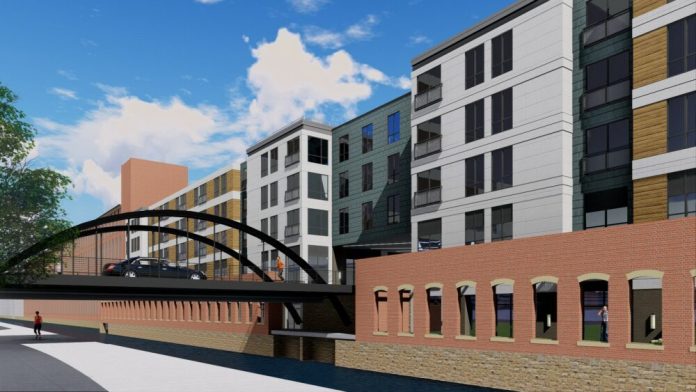
Building on vacant, side-by-side parcels separated by Canal Street, WinnDevelopment will create two five-story buildings with 125 apartments and 5,000 square feet of commercial space. It will be a true mixed income project—54 workforce apartments will rent at 100 percent of Area Median Income (AMI); 39 units will be affordable up to 60 percent of AMI; and, 32 apartments will rent at market rates.

“We’re pleased to be moving ahead with a development featuring a sizable component of workforce housing, which seems appropriate for the city seen as the cradle of the Industrial Revolution in America,” said WinnDevelopment President Larry Curtis. “This project will add a new twist to our long track record of delivering innovative mixed-income, mixed-use communities that contribute to the vitality and the economy of Lowell.”

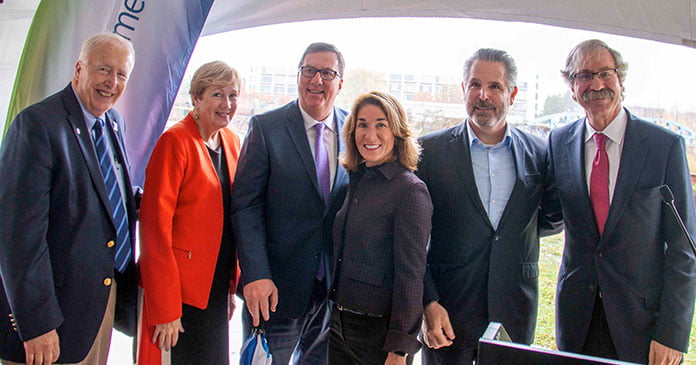
(left to right): Lowell Mayor William Samaras, Lowell City Manager Eileen Donoghue, Massachusetts State Rep. David M. Nangle, Massachusetts Lt. Gov. Karyn Polito, WinnCompanies Executive Vice President Michael O’Brien and WinnDevelopment President Larry Curtis.

The Lowell City Council cleared the way for the project on Tuesday night, unanimously voting to approve Urban Center Housing Tax Increment Financing (UCH-TIF) under a new state program designed to promote multifamily housing in urban centers. Construction is expected to begin in late December 2019 and be completed in December 2021.

“These are fun places to live. There’s a lot going on. There’s a vibe in the downtowns of these old industrial cities because of this collaboration and the willingness of all of you to take the chance, to take the risk, and move forward,” said Lt. Gov. Karyn Polito. “This is a best-of-everything project because you a mixed use project combining commercial and housing together, but it’s also mixed income. To have workforce housing, affordable housing and market rate housing all together is a really great accomplishment. It’s something to the core that WinnCompanies fully embraces.”

Construction will be financed with equity generated by Bank of America’s purchase of federal and state Low-Income Housing Tax Credits; a construction loan from Bank of America; a first mortgage and Workforce Housing funds from MassHousing; financing from the Massachusetts Department of Housing & Community Development under the state’s Affordable Housing Trust Fund, Housing Stabilization Fund and HOME program; financing from the Community Economic Development Assistance Corporation in the form of the Facilities Consolidation Fund and the Community-Based Housing program; Opportunity Zone investment and developer equity from WinnCompanies; and, funds from the Massachusetts Clean Energy Center and MassSave, both dedicated to advancing energy efficiency and clean technology.

The City of Lowell is supporting the project with HOME program funds, the UCH-TIF plan, and infrastructure investments in and around the 51,000-square-foot site.

“The City has made significant investments to put in place the infrastructure needed to support private development in the Hamilton Canal Innovation District. We are pleased that WinnCompanies has put forward a project that will capitalize on these investments and that will help meet the demand for more safe and energy-efficient housing in Lowell in a way that will also stimulate commercial growth in this key area,” said City Manager Eileen Donoghue. “This announcement marks the continuation of a positive partnership between WinnCompanies and the City that has been successful in developing high quality projects that advance our economic development goals.”

WinnDevelopment Project Director Matthew Curtin will lead the development team, which features Keith Construction; ICON Architecture; landscape architect Copley Wolff Design Group; interior designer Wolf in Sheep Design; civil engineer Vanasse Hangen Brustlin, Inc. (VHB); and, structural engineer Odeh Engineers. Deirdre Robinson, a partner at Sullivan & Worcester, serves as legal counsel for the project.

“I am thrilled to see additional private investment in the Hamilton Canal Innovation District. Bringing mixed-use developments to this area is important to ensure that our downtown continues to grow and thrive into the future,” said Lowell Mayor William Samaras.

The development will offer 15 studio apartments, 63 one-bedroom apartments and 47 two-bedroom apartments. The two residential buildings will be linked to each other by an enclosed sky bridge spanning Canal Street, a nod to Lowell’s history when similar connectors joined industrial mill buildings. The sky bridge will also compliment the new signature bridge the city recently built over the lower Pawtucket Canal.

Ambitious Energy Performance Goals

The complex will be designed, built and operated to achieve stringent energy performance goals, including certification through both Energy Star Homes and Enterprise Green Communities.

The environmentally responsible design and construction will feature high-efficiency air source heat pumps for heating and cooling, high performance building envelope details, including robust exterior wall and roof insulation, ENERGY STAR windows, LED lighting, ENERGY STAR appliances, and balanced ventilation with energy recovery for healthy indoor air quality and maximum efficiency.

Final Enterprise Green Communities certification will be achieved post-construction, following rigorous inspections, performance testing and verification provided by Boston based non-profit New Ecology Inc.

Critical incentive funding made available through the Massachusetts Clean Energy Center and MassSave Residential New Construction Program will support added construction costs associated with the project’s HVAC systems and building envelope design, which were designed and selected to reduce the project’s carbon emissions and long-term energy efficiency goals.

Located a half mile from the Lowell Connector with direct access to Route 495 and Route 3, the apartment community will be adjacent to a new 900-space parking garage that is under construction to serve downtown businesses and the new Lowell Justice Center regional court facility scheduled for completion in fall 2020. Residents also will be within walking distance of downtown retail business, a commuter rail line and bus routes served by the Gallagher Intermodal Terminal, as well as downtown retail businesses.

Lowell hosts the single largest concentration of properties owned by WinnCompanies in the United States. In addition, more than 100 company executives and accounting team members work at its regional headquarters in Boott Mills.

A member of the Lowell business community for nearly 25 years, WinnCompanies currently owns and manages seven award-winning residential properties featuring 572 apartments and condominiums, as well as 88,000 square feet of commercial space. The company’s property management arm, WinnResidential, manages an additional 250 apartments in the city.


About WinnCompanies

WinnCompanies is an award-winning national developer and manager of high-impact affordable, middle income and market rate housing communities. Supported by 3,500 team members, the company acquires, develops and manages affordable, senior, mixed-income, market rate, military and mixed use properties. Founded in 1971 and operating in 22 states and the District of Columbia, WinnCompanies is one of the nation’s leading multifamily housing managers with 100,000 units under management. It is the country’s largest manager of affordable housing and the second largest manager of privatized U.S. military housing.

SourceYield PRO Magazine

WinnCo Unveils $38.3 Million Workforce Housing Project in Lowell

WinnCompanies, a multifamily development and management company, joined with Massachusetts Lt. Gov. Karyn Polito, state and Lowell city officials to unveil plans for a $38.3 million residential construction project in the Hamilton Canal Innovation District, a collection of 17 parcels master-planned to transform the primary gateway of downtown Lowell.

Building on vacant, side-by-side parcels separated by Canal Street, WinnDevelopment will create two five-story buildings with 125 apartments and 5,000 square feet of commercial space. It will be a true mixed income project – 54 workforce apartments will rent at 100% of Area Median Income (AMI); 39 units will be affordable up to 60% of AMI; and, 32 apartments will rent at market rates.

“We’re pleased to be moving ahead with a development featuring a sizable component of workforce housing, which seems appropriate for the city seen as the cradle of the Industrial Revolution in America,” said WinnDevelopment President Larry Curtis. “This project will add a new twist to our long track record of delivering innovative mixed-income, mixed-use communities that contribute to the vitality and the economy of Lowell.”

The Lowell City Council cleared the way for the project on Tuesday night, unanimously voting to approve Urban Center Housing Tax Increment Financing (UCH-TIF) under a new state program designed to promote multi-family housing in urban centers. Construction is expected to begin in late December 2019 and be completed in December 2021.

“These are fun places to live. There’s a lot going on. There’s a vibe in the downtowns of these old industrial cities because of this collaboration and the willingness of all of you to take the chance, to take the risk, and move forward,” said Lt. Gov. Karyn Polito. “This is a best-of-everything project because you a mixed use project combining commercial and housing together, but it’s also mixed income. To have workforce housing, affordable housing and market rate housing all together is a really great accomplishment. It’s something to the core that WinnCompanies fully embraces.”

Construction will be financed with equity generated by Bank of America’s purchase of federal and state Low-Income Housing Tax Credits; a construction loan from Bank of America; a first mortgage and Workforce Housing funds from MassHousing; financing from the Massachusetts Department of Housing & Community Development under the state’s Affordable Housing Trust Fund, Housing Stabilization Fund and HOME program; financing from the Community Economic Development Assistance Corporation in the form of the Facilities Consolidation Fund and the Community-Based Housing program; Opportunity Zone investment and developer equity from WinnCompanies; and, funds from the Massachusetts Clean Energy Center and MassSave, both dedicated to advancing energy efficiency and clean technology.

The City of Lowell is supporting the project with HOME program funds, the UCH-TIF plan, and infrastructure investments in and around the 51,000-square-foot site.

“The City has made significant investments to put in place the infrastructure needed to support private development in the Hamilton Canal Innovation District. We are pleased that WinnCompanies has put forward a project that will capitalize on these investments and that will help meet the demand for more safe and energy-efficient housing in Lowell in a way that will also stimulate commercial growth in this key area,” said City Manager Eileen Donoghue. “This announcement marks the continuation of a positive partnership between WinnCompanies and the City that has been successful in developing high quality projects that advance our economic development goals.”

WinnDevelopment Project Director Matthew Curtin will lead the development team, which features Keith Construction; ICON Architecture; landscape architect Copley Wolff Design Group; interior designer Wolf in Sheep Design; civil engineer Vanasse Hangen Brustlin, Inc. (VHB); and, structural engineer Odeh Engineers. Deirdre Robinson, a partner at Sullivan & Worcester, serves as legal counsel for the project.

“I am thrilled to see additional private investment in the Hamilton Canal Innovation District. Bringing mixed-use developments to this area is important to ensure that our downtown continues to grow and thrive into the future,” said Lowell Mayor William Samaras.

The development will offer 15 studio apartments, 63 one-bedroom apartments and 47 two-bedroom apartments. The two residential buildings will be linked to each other by an enclosed sky bridge spanning Canal Street, a nod to Lowell’s history when similar connectors joined industrial mill buildings. The sky bridge will also compliment the new signature bridge the city recently built over the lower Pawtucket Canal.

SourceBoston Real Estate Times

Merrivista to add senior housing

Bethany Community Services plans to expand its Merrivista senior housing complex on Water Street with the addition of 62 affordable, age-restricted apartments, with 16 units designated for extremely low-income households.

The project recently received a $200,000 predevelopment loan from the Community Economic Development Assistance Corporation or CEDAC.

Bethany operates Merrivista senior housing at 100 Water St., Phoenix Row apartments at 22 Phoenix Row in Washington Square and Mission Towers at 180 Water St.

Jered Stewart, president and CEO of the nonprofit Bethany Community Services, said all three properties currently have long waiting lists of seniors looking for affordable apartments and that the expansion of Merrivista will help meet a significant need for senior housing.

“CEDAC is providing us with resources that we can’t obtain from traditional lenders,” Stewart said.

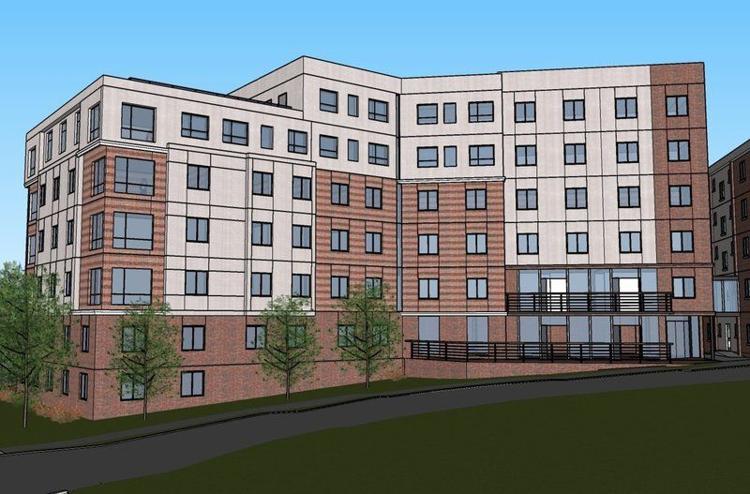
He said the proposed 62-unit project will be connected to the existing Merrivista building — a 150-unit affordable senior housing complex — through a sky bridge that will provide residents with access to a library, hair salon, dining room, and additional support services.

The project will also feature a 5,000 square foot health and wellness center operated by Bethany.

Stewart said the health and wellness center will be available to all Merrivista residents.

“This is a great thing for the city,” Mayor James Fiorentini said, noting that almost daily, he hears from senior citizens who ask for his help in finding an affordable place to live. “This is just what we need and whatever the city can do to assist, we’re all for it.”

The Merrivista expansion is estimated to cost between $17 and $20 million. Construction could begin in 2022 or 2023, depending on financing approval, Stewart said.

CEDAC has also committed $200,000 to the North Shore Community Development Corporation (NSCDC), which plans to redevelop two former Catholic schools on either side of downtown Salem, Mass, into mixed-income rental housing, including units for affordable to low- and moderate-income residents.

“CEDAC is proud to support both of these projects, which will provide much-needed affordable housing opportunities to Haverhill and Salem,” said CEDAC’s executive director Roger Herzog. “We are glad to see a variety of housing options that will benefit local residents, including supportive housing for seniors.”

Bethany held a gala fundraising event Oct. 10 at the Bradford Country Club that kicked off its capital campaign for the Merrivista expansion.

More than 160 people attended the event, which featured a silent auction, a meal and live music.

To donate to the Merrivista expansion, visit online at bethanycommunities.org/ways-to-give.

CEDAC is a public-private community development finance institution that provides financial resources and technical expertise for community-based and other non-profit organizations engaged in effective community development in Massachusetts.

CEDAC’s work supports two key building blocks of community development: affordable housing and early care and education. CEDAC is also active in state and national housing preservation policy research and development and is widely recognized as a leader in the non-profit community development industry. For additional information on CEDAC and its current projects, visit cedac.org.

SourceThe Eagle-Tribune

Unusual partners are working to build much-needed affordable housing in Chinatown

Could a parking garage lot in the heart of the Theatre District be a guide to the future of Chinatown?

A rare coalition of for-profit and nonprofit developers are betting millions that the answer could be, surprisingly, yes. But that’s getting a little ahead of the story.

The development giant Millennium Partners Boston has joined forces with the Chinatown-based Asian Community Development Corporation to build 168 units of affordable housing on a small lot nestled between the Boch Center, a hotel, and Tufts Medical Center. The project, once completed, figures to bring desperately needed affordable housing to Chinatown, a neighborhood where both housing and land are scarce.

That only hints at its importance to a community facing encroachment by development on all sides and running out of places where its predominantly immigrant, low-income residents can live.

“In Chinatown, where we really have very, very little land left, we want to do as much as possible,” said Angie Liou, executive director of Asian Community Development. “This is really a rare opportunity.”

The piece of land to be developed, known as Parcel 12, is owned by the Boston Planning and Development Agency, and the Chinatown community has eyed it for years as a spot that should be put to much better use. Plans and promises for the parcel have come and gone since at least the 1980s, Liou said. But community groups don’t have the cash to pull off major development projects, and the big developers were otherwise occupied.

Then something unexpected happened. As part of Millennium’s deal to redevelop the decrepit Winthrop Square Garage into a major office and condo tower, the company was required to pay for 1110,000 square feet of affordable housing. Under city policy, developers can — and often do — satisfy their obligation by simply writing a check to the BPDA. But the developers didn’t want to just write a check.

“We’re kind of sick of just paying into the process,” said Joe Larkin, principal of Millennium Partners Boston. “When we looked at all the millions of dollars we’ve paid in the past . . . we’ve become such an appreciator of the city that we — myself and our partners and investors — really wanted to do something more.”

“Something more” quickly became forming a partnership with the Asian CDC and finally making the long-delayed plans to build some affordable housing on Parcel 12 a reality.

“Angie literally identified the site for us,” Larkin said. “We thought in Chinatown we could do something really cool.”

For Millennium — whose projects include the Ritz-Carlton on Avery Street and the Millennium Tower in Downtown Crossing — affordable housing was a new and significantly different arena. Liou is helping to guide the rich folks through the maze of regulations and approvals, while hoping to secure more city and state funding in the process.

The current timetable calls for breaking ground in early 2021, with a two-year construction timetable. As for who will live there, the city will eventually hold a lottery to determine who gets the units. Liou says 4,000 applicants are typical for 100 units of affordable housing — a testament to the need, in Chinatown, and beyond.

Those applicants will face long odds — a realization that gave Larkin pause.

“To tell you how this relationship works, the first thing I thought of was how 100 families are going to have their lives changed. And Angie said me, ‘Yeah, and there’s going to be 3,900 families that are going to be disappointed.’ That was what hit me the hardest, how huge the need is.”

The problem of housing isn’t going to be solved by one project, of course. But any solution will require collaboration and creativity — and this unusual partnership has plenty of both. Two organizations separated by a few blocks — and untold millions in resources — have found common ground. And they’re building on it.

SourceThe Boston Globe

Way Finders secures $23M in final funding for Library Commons in Holyoke; groundbreaking Oct. 24

Way Finders will break ground Oct. 24 on Library Commons — 38 affordable, multifamily housing units in the Chestnut Street neighborhood.

Way Finders, a nonprofit developer formerly known as HAP Housing, secured $23 million from the Massachusetts Housing Investment Corporation (MHIC), the final funding needed for the project.

“We are pleased to work with our long-time partner Way Finders to build on the progress made with revitalization the Holyoke Public Library,” stated Joe Flatley, MHIC’s president. “We are confident that new housing opportunities with access to jobs, education and entertainment, will further stabilize the neighborhood and improve the lives of its residents.”

Way Finders plans to rehab two vacant historic buildings near the Holyoke Public Library and demolish a crumbling structure and replace it with a new complex.

“After much planning and investment from our staff, partners, and the community, Way Finders is thrilled to be bringing these beautiful buildings back to life and to be contributing to the continued revitalization of downtown Holyoke,” Peter Gagliardi, Way Finders president and CEO, said in statement.

Besides the $23 million from MHIC, Way Finders garnered $10.4 million in low-incoming housing tax credits, a $12.6 million construction loan, $550,000 from the Massachusetts Housing Partnership and $4.8 million from the Massachusetts Department of Housing and Community Development.

The City of Holyoke contributed $400,000 and the Community Economic Development Assistance Corporation $1 million in predevelopment and acquisition costs.

According to the statement, plans also include 940 square-feet of retail space, a property management office, laundry room, playscape, community rooms, and art gallery. Way Finders will partner with The Care Center’s Roque House for support services and set aside up to ten apartments.

The groundbreaking ceremony is scheduled for Oct. 24, 1 to 3 p.m., at the Holyoke Public Library.

Way Finders will conduct a tour of the parcels following the ceremony.

SourceMassLive

Dorchester Bay Project Receives Funding from State to Preserve Affordable Housing in Uphams Corner

Governor Charlie Baker announced Dorchester Bay Economic Development Corporation (DBEDC) as one of 28 state-wide recipients of the 2019 Affordable Rental Housing Awards. The award will support the renovation of Dudley Terrace Apartments, a 56-unit affordable housing development in Boston’s Dorchester neighborhood. The project will include funding from the Department of Housing and Community Development (DHCD) with Low Income Housing Tax Credits (LIHTC), subsidy funds, and additional local funding from the City of Boston. Community Economic Development Assistance Corporation (CEDAC) has provided critical pre-development support for the project.

The rental units located in four scattered-site buildings on Dorchester Avenue, Massachusetts Avenue, Roach Street, and Dudley Terrace offer 56 units of affordable rental housing to households earning less than 60% of AMI. Twenty units are further restricted for extremely low-income households earning less than 30% of AMI, including formerly homeless households. Three units will be set aside for residents who receive services from the Department of Mental Health.

Dorchester Bay is committed to serving Dorchester’s low-income residents and expanding affordable housing opportunities. The renovation of Dudley Terrace Apartments is in keeping with Dorchester Bay’s commitment to ensuring that Dorchester residents can remain and thrive in their neighborhoods.

“Dorchester Bay is committed to preserving Dudley Terrace Apartments as high-quality, affordable homes into the future. Of particular importance, this funding will improve the air quality and comfort of residents by improving ventilation, windows, and building envelopes. Not only are these homes affordable, but they are close to public transportation and jobs – important factors for residents,” said K. Beth O’Donnell, Director of Real Estate Development at Dorchester Bay Economic Development Corporation.

About Dorchester Bay Economic Development Corporation
Dorchester Bay Economic Development Corporation (DBEDC) is a community development corporation founded by local civic associations in 1979 to address the problems of economic disinvestment, unemployment, crime, community tensions and the shortage of quality affordable housing undermining Boston’s Dorchester neighborhoods. Over the last 40 years, we have worked in partnership with local leaders and stakeholders to build and preserve 1,100 units of affordable housing and over 200,000 square feet of commercial space, to engage residents in community life, and to support a robust economy through small business support and economic development. The structures we have built are physical manifestations of our work, but at its core, our work is about strengthening our community, which is made up of the people who live and work in our neighborhood.

For more information, visit the DBEDC website at www.dbedc.org, follow us on Twitter @dbedc, like us on Facebook, connect with us on LinkedIn, and subscribe to our email list.

###

SourceDorchester Bay Economic Development Corporation

Community Development Corporation of South Berkshire purchases new property in Great Barrington

Last Tuesday, advocates for creating more affordable housing in Great Barrington received some good news: The Community Development Corporation of South Berkshire closed on the purchase of an 8-acre plot of land at 910 South Main St. The nonprofit development organization plans to tear down the small and crumbling house at the address and replace it with 40 to 50 affordable apartments.

Tim Geller is the executive director of CDCSB, a 501(c)(3) nonprofit corporation that seeks to provide affordable housing to moderate- and low-income residents in the Southern Berkshire region (the organization is also behind the high-profile construction project at 100 Bridge St. in town). CDCSB carries out its mission with federal and state money and utilizes low-income tax credits. Acquisition Financing for the new project is being provided by The Life Initiative, a $100 million community investment fund created by the state in 1993, and Way Finders Inc. Pre-development for the project is being provided by the Community Economic Development Assistance Corporation, a public-private community development finance institution that assists projects across Massachusetts like the one at 910 South Main St.

Lionel Romain of the Community Economic Development Assistance Corporation and Community Development Corporation of South Berkshire executive director Tim Geller view plans at the Great Barrington property of 910 Main St. Photo courtesy Community Development Corporation of South Berkshire

Geller told the Edge that, while there is still a veil of uncertainty surrounding a project like this, his estimate is that construction on the new apartments will begin in the spring of 2021—a year later than currently scheduled—and that the rent will be “very affordable,” at $700 a month for a one-bedroom apartment and $970 for a three-bedroom apartment. For Geller, the project could not have come at a better time. “Right now as more and more high-end housing units are being built in downtown GB, people need an affordable alternative. The difference in what residents will pay between these new apartments and the others being built around town could be as much as $1,000 dollars a month,” he said in earnest. Geller believes the simultaneous decline and aging of Great Barrington’s population over the past decade is tightly correlated with the rising cost of rent and a lack of truly affordable housing.

Geller’s case for dramatically increasing the number of affordable housing units in the Southern Berkshires is a familiar one that has been articulated by many in Great Barrington over the years. Today the argument carries with it a new potency. According to the last U.S. census, the unemployment rate in Great Barrington is 8.4 percent, while the median value for a “housing unit” is $328,000 and the median gross rent per month for one person is $963. Over 20 percent of the residents in town are over age 65 and nearly half of all renters and one-third of home owners with a mortgage spend more than 30 percent of their incomes on housing costs. These numbers show what Geller and his colleagues suspected—that, in the Berkshires, where the economy is driven by tourism and the hospitality and service industries, a decades-long decline in wages and disproportionally high land costs have driven out many of the young people. Thus, existing businesses have struggled to recruit talent and the town as a whole has largely failed to attract entrepreneurs, artists and tradespeople.

Currently CDCSB is working on the similar projects of Forest Springs, Hillside Avenue, Pine Woods, Sawmill Brook and 100 Bridge St. Geller noted the development at the Bridge Street site has been halted until more state funding is allocated toward the project. For the time being, Geller is excited about the new purchase, seeing it as a step in the right direction. In a recent press release, he wrote, “The need for affordable housing in the southern Berkshires runs very deep and this project is another step forward in meeting this need and it’s also an excellent opportunity for CDCSB to help realize the town’s priority for building affordable housing in the newly-designated 40-R district.”

SourceThe Berkshire Edge