CEDAC Commits Over $6 Million in Early-Stage Financing for Affordable Housing Projects


CEDAC has underwritten and will assist seven supportive housing projects that received funding awards in the 11th annual Supportive Housing competitive round led by the Massachusetts Executive Office of Housing and Livable Communities (EOHLC), which will provide critical funding for projects across the Commonwealth…
When the COVID-19 pandemic began, people living in congregate facilities — spaces with shared living areas like bedrooms and bathrooms — were especially vulnerable to infection.
At MainSpring House, an emergency shelter for people experiencing homelessness in Brockton, Massachusetts, the COVID infection rate among the 140 adult shelter guests rose to more than 30 percent in the first two months of the pandemic.
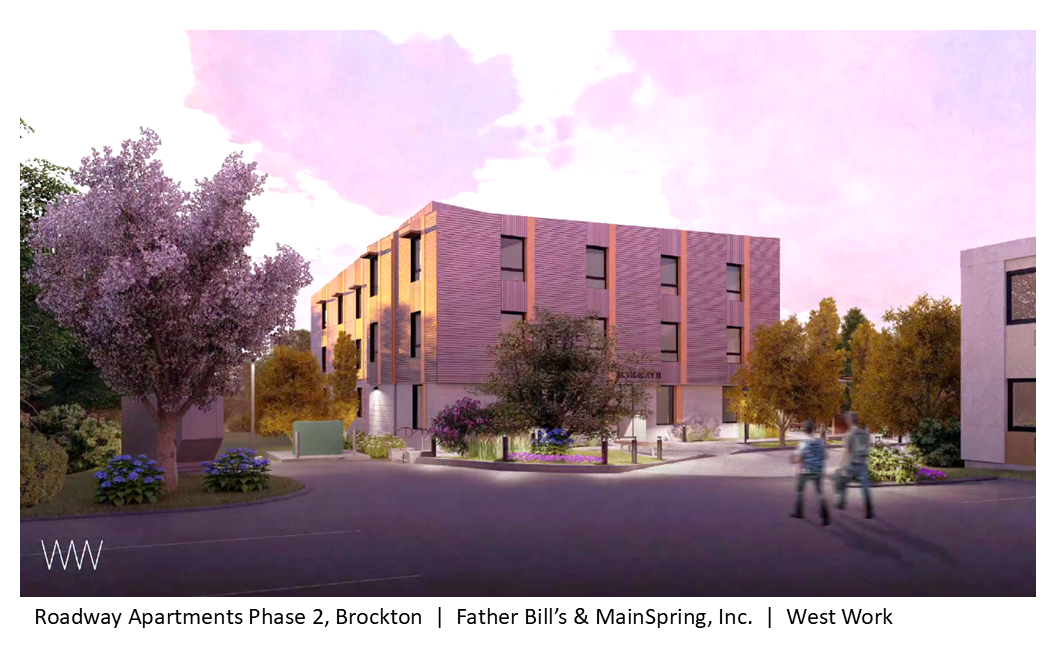
Today, those stats look very different. Some shelter guests will be moving into units of their own at the Roadway Apartments in the first quarter of 2022. What began as an emergency measure to protect MainSpring House guests’ health is now an adaptive reuse success story: An underused hotel has been transformed into 69 units of permanent supportive housing, with renovations expected to be complete this spring.
In April 2020, Father Bill’s & MainSpring (FBMS), the shelter’s operator and service provider, depopulated the facility in an effort to allow for safe social distancing and prevent further outbreaks. FBMS quickly erected outdoor tents in an adjacent parking lot and moved some guests there, but the tents were only a stopgap measure.
“We needed a viable, long-term solution to permanently reduce the shelter population, especially since many of our guests are at high risk of infection,” says John Yazwinski, FBMS’s president and CEO.
Less than three miles away from MainSpring House, the Rodeway Inn sat empty due to the surging pandemic. Seeing an opportunity, FBMS leased the entire hotel in June 2020 and swiftly relocated more than 60 shelter guests.
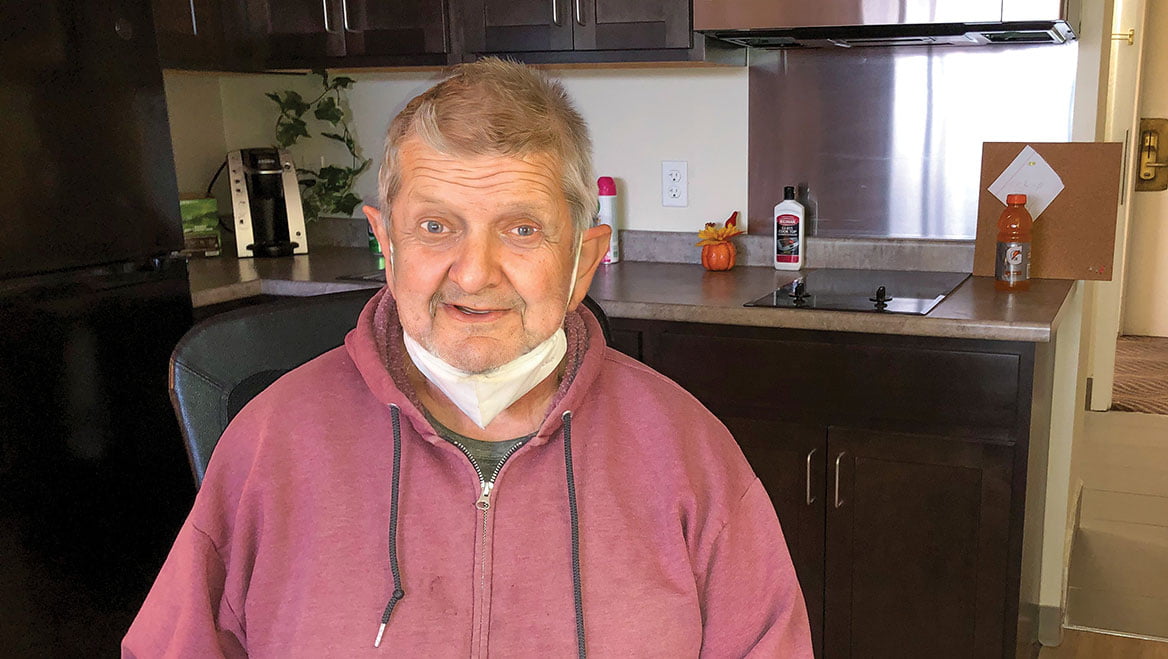
The move paid off. The COVID infection rate at MainSpring House plummeted to less than one percent. For guests like Charles, 70, who has serious health issues and has experienced homelessness for four years, the change was a lifesaver.
“It’s better because I have my own room. I have my own privacy,” he says. (Charles, like other FBMS clients quoted in this story, is using his first name only for privacy.)
Reimbursements from FEMA helped FBMS run the hotel temporarily as an emergency non-congregate shelter, but FBMS knew the subsidies wouldn’t last. FBMS approached the hotel’s owner and negotiated a purchase for $4.2 million.
As the project’s potential came into view, the state’s Department of Housing and Community Development (DHCD) announced in August 2020 that it would make up to $10 million available in capital resources for creating permanent supportive housing.
“As COVID-19 revealed, the lack of affordable housing in the Commonwealth is a public health crisis, particularly for those most vulnerable among us,” says Massachusetts Housing and Economic Development Secretary Mike Kennealy. The project received more than $7 million in subordinate debt and 69 operating subsidies from DHCD for renovation of hotel rooms into enhanced single room occupancy (SRO) units with kitchenettes. (See the table below for a fuller picture of the project’s funding.)

A former Rodeway Inn welcomes the first tenants of its newly renovated SRO units in the first quarter of 2022.
FBMS also needed the support of its partners at the local level, since the change in use from hotel to housing required city approval. But there was no time for a potentially lengthy public permitting process, given the still-surging pandemic.
FBMS used a zoning tool available in Massachusetts known as the Dover Amendment, which exempts nonprofit organizations providing educational services from land use and dimensional requirements. This tool allowed the homeless service provider to quickly secure its building permit without the need for a public process.
“We were happy to support FBMS in bringing new housing and much-needed services into our community,” says Brockton Mayor Robert Sullivan, whose administration helped confirm the applicability of the Dover Amendment.
To afford the acquisition price, FBMS needed a mission-driven lender that understood the project’s complex layering of public and private financing. FBMS turned to the Community Economic Development Assistance Corporation (CEDAC), a quasi-public community development financial institution that provides early-stage financing to nonprofits that develop affordable housing across Massachusetts.
“CEDAC was established in 1978 by then-state representative Mel King to support projects just like this one with financial and technical assistance,” explains CEDAC’s Executive Director, Roger Herzog.
In January 2021, CEDAC approved the $4.2 million acquisition loan to FBMS, which closed on its purchase of the property in March, ensuring that the 69 people living at the hotel temporarily would be able to stay permanently.

Renovated rooms include a bed, bath, dining area, and a kitchen with built-in storage. Photo courtesy of Father Bill’s and MainSpring.
Overnight, the congregate shelter population in Brockton was cut in half. The timing couldn’t have been better for Russell, who began experiencing homelessness at the height of the pandemic after struggling with substance use disorder.
“Without them, I would have nothing. I would be on the streets,” says Russell, citing FBMS’s efforts.
Brockton, with a population of 105,000, sits 25 miles south of Boston. The Roadway Apartments building is ideally located across the street from the Brockton VA Medical Center, and two nearby bus lines serve the downtown Brockton commuter rail station. A large shopping center is just a mile away and FBMS’s administrative offices lie just beyond that.
Residents also have access to a comprehensive set of wrap-around supportive services provided by FBMS’s on-site staff, which has already made a huge difference for Russell, who is celebrating one year of sobriety. “I’ve never really lived on my own, so it will be pretty cool to have my own space,” he says.
Since FBMS first proposed its hotel conversion, CEDAC has been providing technical assistance to several other organizations around the state interested in replicating this Housing First model. The success of future efforts “will require continued state capital and operating funds and dedicated service funding,” says CEDAC’s Herzog, particularly with more than 1,200 people still living completely unsheltered in Massachusetts.
FBMS began renovations in September 2021 and the first batch of units were finished soon after, in November. Charles will be one of the first residents to move into a completed unit, which will allow him to conveniently get to his doctor’s appointments. “This is the best thing that will ever happen,” he says.
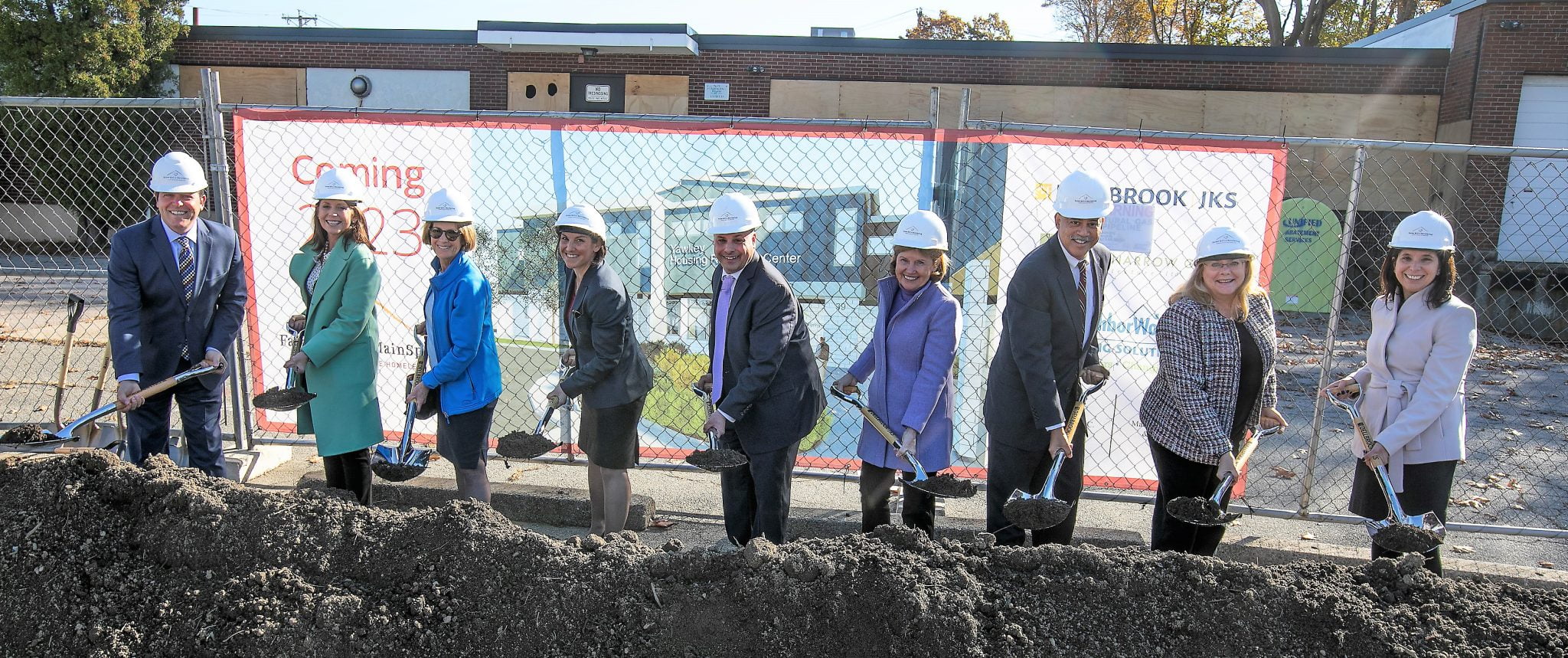
QUINCY, Mass., Tuesday, November 9, 2021] The nonprofit organization Father Bill’s & MainSpring (FBMS) is breaking ground on a new development, the Yawkey Housing Resource Center, which reimagines how a community responds to homelessness. Business and community leaders joined FBMS at the future property site Tuesday, November 9, 2021 to commemorate the start of a project they say could serve as a national model.
The Yawkey Housing Resource Center development, comprised of two new buildings, will be home to a new service-delivery model that adds daytime supports and streamlines services with the goal of ending homelessness on the South Shore and across Southern Massachusetts. The property will include a day center, an emergency shelter, and on-site efficiency apartments.
The new approach would dedicate more staff and resources to homelessness prevention, diversion and rapid re-housing, thus reducing the overall reliance on overnight shelter.
“We are grateful to our generous partners in the private and public sectors who have stepped up to invest in this bold vision,” said John Yazwinski, President & CEO of FBMS. “Our community continues to show us that we are not alone in this fight to end homelessness. One of our mission’s founders, the late Father Bill McCarthy, used to always say to me that our goal is to take down the sign at our shelter and end homelessness, not manage it. Today, our compassionate network of supporters are helping turn Father Bill’s dream into a reality.”
Other speakers at Tuesday’s event included: Arbella Insurance Group President & CEO John Donohue; Maureen H. Bleday, CEO and Trustee of the Yawkey Foundation; Quincy City Councilor Brian Palmucci; Roger Herzog, Executive Director of the Community Economic Development Assistance Corporation (CEDAC); and April Connolly, Chief Operating Officer of FBMS. The Rev. Dr. Adolph H. Wismar, Jr, a co-founder of FBMS and current board member, provided the opening prayer, and the Rev. Rebecca Froom, minister of the United First Parish Church in Quincy, provided a closing blessing.
The administration of Governor Charlie Baker and Lieutenant Governor Karyn Polito, through the Department of Housing and Community Development, has awarded $6 million in capital funding toward construction of the Yawkey Housing Resource Center two-building development.
Last week, FBMS announced the Yawkey Foundation’s gift of $2 million toward the innovative project, which will cost approximately $24 million in total. The property at 39 Broad Street will be called the Yawkey Housing Resource Center, in honor of the Yawkey Foundation’s longtime support of FBMS.
This $2 million commitment from the Yawkey Foundation serves as a lead gift in FBMS’ “A Path Home” campaign to raise $10 million privately toward the project’s capital and programmatic expenses.
The Yawkey Housing Resource Center will be constructed across the street from FBMS’ existing emergency shelter, Father Bill’s Place, which will be knocked down as part of the City of Quincy’s plans to build a new Public Safety Complex. The City of Quincy, in addition to awarding the development $1 million from its Affordable Housing Trust Fund, has signed a 99-year lease with FBMS for use of the site at 39 Broad Street.
The first phase, expected to be completed by the spring of 2023, is a two-story, 16,000 square-foot building will include the following: FBMS program and training spaces; co-located resources including a full, primary-care medical clinic, substance use and mental health services and housing assistance; shelter beds with lockers and showers for guests; a commercial kitchen space and dining area; and administrative offices.
The second phase, expected to break ground in spring of 2022 and be completed by summer of 2023, is a four-story, 20,000-square-foot building comprised of 30 units of permanent supportive housing for formerly homeless individuals. FBMS currently operates more than 600 permanent supportive housing units for formerly homeless individuals, families, and Veterans across Southern Massachusetts.
Supporters of Yawkey Housing Resource Center
Public Funders: Administration of Governor Charlie Baker & Lieutenant Governor Karyn Polito – Department of Housing and Community Development, Executive Office of Health and Human Services; City of Quincy; Quincy Affordable Housing Trust Committee; Quincy Housing Authority; Massachusetts Housing Investment Corporation; Community Economic Development Assistance Corporation (CEDAC); Property Casualty Initiative.
Private Funders: Alvarium Foundation; Arbella Insurance Foundation; Boselli Family; Patricia Conway; John Donohue & Frances Robinson; Eastern Bank; Philip & Deborah Edmundson; The Flatley Foundation; Jack Conway & Co., Inc.; Lisa Lenon & William Stanton; The McKim Family; William Murphy; The Pineau Family; Quincy Mutual Group; Rockland Trust; South Shore Bank; Jack & Kay Spurr; Yawkey Foundation.
Development Team: Property Manager and Service Provider – Father Bill’s & MainSpring; Development Consultant &
Owner’s Project Manager – NeighborWorks Housing Solutions; Architect – The Narrow Gate Architecture; General Contractor – Dellbrook | JKS; Project Attorneys – Hackett Feinberg, P.C.; Matera, Vopat, Matera & Johnson, P.C.
About Father Bill’s & MainSpring
Father Bill’s & MainSpring (FBMS) is the leading provider of services to prevent and end homelessness in Southern Massachusetts. The agency, founded in the early 1980s by a group of interfaith and community leaders, helps more than 5,000 people annually who are experiencing, or at risk of, homelessness, achieve more self-sufficiency through a range of services including homelessness prevention, emergency shelter, employment programs, and more than 600 permanent supportive housing units. FBMS, a proud partner of the United Way of Greater Plymouth County and the United Way of Massachusetts Bay and Merrimack Valley, is a 501(c)(3) non-profit agency with administrative offices in Quincy and Brockton and program offices throughout Southern Massachusetts. For more information, visit www.helpfbms.org.
August 16, 2021 — Nonprofits across Massachusetts, in collaboration with community development corporations and others, recently were awarded $11,578,537 to support affordable housing developments in cities and towns from Boston to Northampton.
“These commitments, which represent a strong second quarter of lending activity, support a variety of affordable housing projects that are tailored to the needs of the community,” said Roger Herzog, executive director the Boston-based Community Economic Development Assistance Corporation, a public-private community development finance institution.
“We are proud to support our non-profit development partners as they create affordable and supportive housing for families, seniors, and veterans. These projects will help ensure that some of our most vulnerable populations have a safe, affordable place to call home.”
Receiving funding were the following:
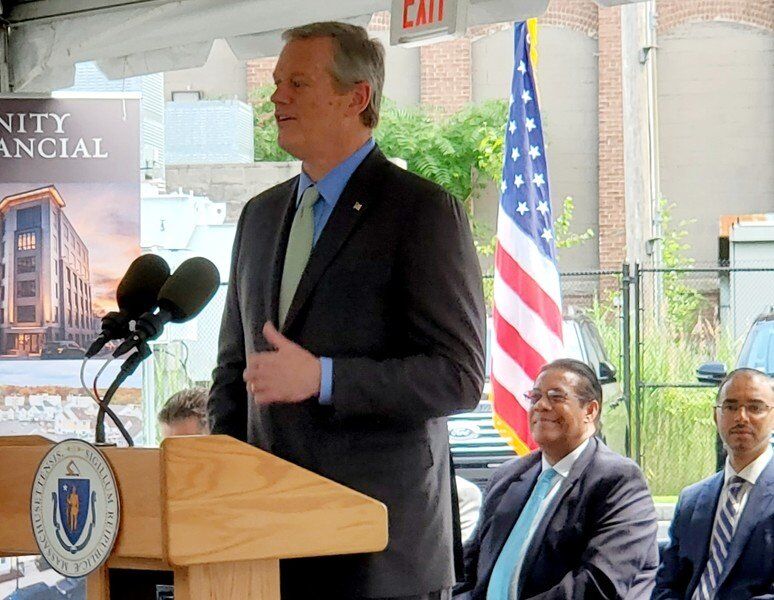
Now with state and federal backing, Rockport’s Granite Street Crossing affordable housing project will finally be able to get off the ground after nearly five years of planning.
The project is one of 28 affordable housing projects across the Commonwealth that Gov. Charlie Baker on Thursday afternoon announced will receive a total of $139 million in funding and tax credits.
“As Massachusetts continues to recover from the COVID-19 pandemic, it is important that we continue to prioritize new affordable housing development to help our most vulnerable families,” Baker said. “Stable housing is the foundation of healthy, prosperous communities, which is why our administration has proposed an immediate infusion of nearly $1 billion in federal recovery funds to rapidly increase capacity for production in every part of the state.”
With this news, Harborlight Community Partners (HCP) can move forward with the approximately $9.5 million project.
“This is around a $7.5 million state and federal investment,” explained Harborlight Executive Director Andrew DeFranza. “This is a huge deal. We’re thrilled to once again partner with the community of Rockport to create another affordable housing community. This will be intergenerational this time, so we’re really excited about that. Hopefully it will spur more support for more senior housing services, especially in the wake of COVID.”
Construction is expected to begin next spring, DeFranza said. If all goes well, the complex will open for occupancy in summer 2023.
Granite Street Crossing will feature a two-story complex with 17 supportive senior units and six, two-story family townhouses. It will be built at 5 Granite St., a plot of more than an acre previously owned by Silva Brothers Florists.
“I am so pleased Cape Ann will have another beautiful, affordable Harborlight project,” said Robert Gillis, president of Harborlight’s board of directors, in a prepared statement. “More affordable housing is needed in our community and Cape Ann Savings Bank is proud to support HCP and be part of the effort to get this done.”
Granite Street Crossing has been in the works since 2016. Despite the long planning stage, DeFranza said it was “one of the best permitting experiences we’ve ever had.”
“I want to shout out the neighbors of the project,” he said. “They’re the gold standard. We spent a year with them working on the designs, and they gave a lot a feedback. They also were robustly supportive of the project at public meetings.”
The town of Rockport has given around $500,000 to Granite Street Crossing over the years. The project received three Rockport Community Preservation Committee grants between 2017 to 2019 and a portion of the town’s federal HOME Investment Partnerships Program funding.
In addition, Federal Home Loan Bank of Boston awarded the project a $500,000 grant in 2018. Additional funding was also provided by Eastern Bank and the North Shore HOME Consortium.
This is not the first time Harborlight Community Partners requested state funding for Granite Street Crossing. The state rejected a previous application in 2018. The following year, Harborlight Director of Real Estate Development Kristin Carlson told the Times it was due to the lack of support from local organizations. Now, in addition to Rockport Community Development Corporation and HOME, project partners include include the Community Economic Development Assistance Corp., Local Initiatives Support Corp., and Enterprise Foundation.
Granite Street Crossing will be Harborlight Community Partners’s third affordable housing development in Rockport. The non-profit owns and manages Rockport High School Apartments and Pigeon Cove Ledges, which account for 40% of the town’s affordable housing stock.
Michael Cronin may be contacted at 978-675-2708, or mcronin@gloucestertimes.com.
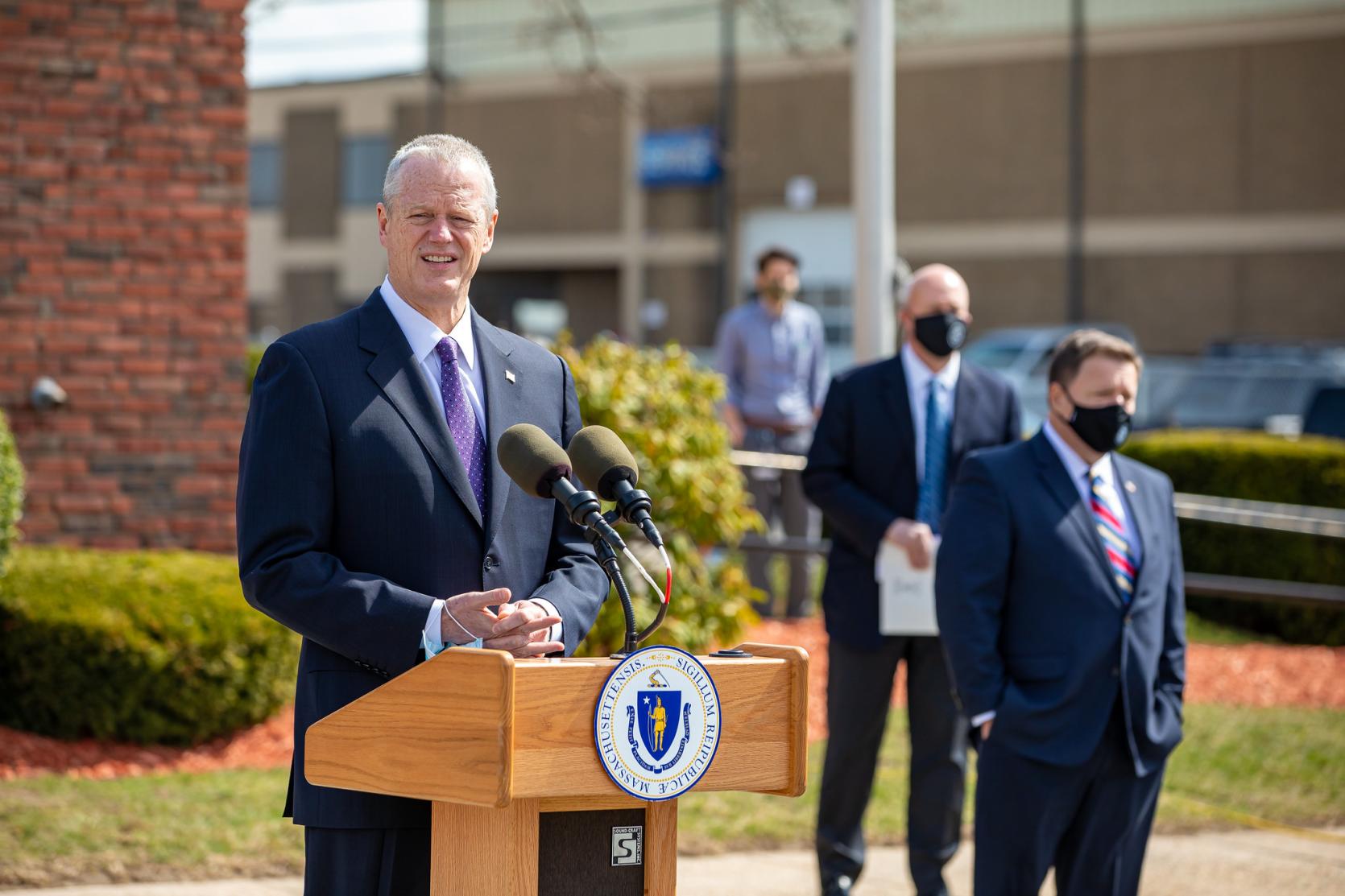
Today, Governor Charlie Baker, Lt. Governor Karyn Polito, Housing and Economic Development Secretary Mike Kennealy and Housing and Community Development Undersecretary Jennifer Maddox joined local legislators and officials to announce affordable housing awards for 28 projects in 21 communities across the Commonwealth. These awards will advance the development of 1,526 new rental units, including 1,346 rental units affordable for low- and extremely low-income households.
Through the Department of Housing and Community Development (DHCD), the Baker-Polito Administration awarded $93.3 million in direct subsidy funding and allocated $45.8 million in federal and state housing tax credits that will generate approximately $310 million in equity in support of these projects. The projects are located in every region of Massachusetts, and include new construction, historic rehabilitation, and the preservation of occupied projects in need of rehabilitation. Additionally, some projects are transit-oriented, and eight of the construction projects will be built to Passive House design standards.
“As Massachusetts continues to recover from the COVID-19 pandemic, it is important that we continue to prioritize new affordable housing development to help our most vulnerable families,” said Governor Baker. “Stable housing is the foundation of healthy, prosperous communities, which is why our administration has proposed an immediate infusion of nearly $1 billion in federal recovery funds to rapidly increase capacity for production in every part of the state.”
“We are proud to support an excellent project here in Lawrence, another step in an amazing transformation of the Arlington Mills National Historic District into a thriving residential neighborhood, zoned for up to 1,000 housing units,” said Lt. Governor Polito. “Since 2015, we’ve invested in revitalization efforts like this across the state, creating new housing, jobs, and new opportunities for cities and towns and have directed more than $1.4 billion to our affordable housing ecosystem. Cities like Lawrence are using state and federal funds to pursue a new vision that puts housing at the center of communities.”
“Here in Massachusetts, we have seen the negative impacts of our housing crisis affect nearly every region. Through our new Housing Choice reforms, new programs, and increased capital investments, the Baker-Polito Administration is helping move great projects forward, more quickly,” said Housing and Economic Development Secretary Kennealy. “Solving our housing crisis helps all of our households, enabling our working families to put down roots in communities, stabilize vulnerable families, and provide opportunities for cities and town to grow. We are excited to deploy federal recovery funding to supercharge the pipeline of affordable housing in Massachusetts.”
“Today’s awards will bring new, affordable housing that meets the diverse needs of our Commonwealth, including new senior housing in Randolph, new permanent supportive housing for unaccompanied adults in Quincy, preservation of currently affordable housing in Holyoke, and new family housing in West Roxbury,” said Housing and Community Development Undersecretary Maddox. “These projects will provide thousands of households with access to safe, quality, affordable housing in every region. Affordable housing development and preservation is an integral part of our strategy to address our housing crisis, and we are fortunate to have a rich ecosystem of stakeholders and developers committed to the future of Massachusetts and our families.”
Today’s announcement was made in Lawrence at the site of a project that will transform a former mill into new housing for residents. The historic adaptive re-use project, sponsored by Trinity Financial, Inc., will create 87 new units of housing at 608 Broadway, with 66 units restricted for households earning less than 60% of the Area Median Income, including 17 units further reserved for households with extremely low-incomes or making the transition from homelessness. DHCD will support the project with federal and state low-income tax credits (LIHTC) and subsidy funds, and the City of Lawrence will provide funding as well. MassHousing is supporting the project with a $22.75 million permanent mortgage, a tax-exempt short-term equity bridge loan, and $2.1 million in workforce housing financing.
“I am proud to be a part of the state’s efforts to expand access to affordable housing and ensure that each of our residents can find a place to call home in an increasingly expensive housing market,” said State Senator Barry Finegold. “In addition to putting a roof over the heads of the state’s most vulnerable residents, affordable housing boosts economic growth and is a crucial part of post-pandemic recovery. This is especially important in a city like Lawrence, where the unemployment rate remains double that of the state average. Congratulations to all the grant recipients and thank you for your dedicated work providing stable housing to those who need it most.”
“This funding will provide critical state investments to the City of Lawrence as we continue to make affordable housing in Massachusetts more accessible to those facing financial uncertainty,” said State Representative Frank A. Moran. “The conversion of 608 Broadway will accomplish this goal by creating 87 new units of housing, while also celebrating Lawrence’s rich industrial history by ensuring that our mill buildings are utilized and brought into the modern age. I would like to thank Governor Baker and the Executive Office of Housing and Economic Development for their continued support of initiatives such as this in Lawrence.”
“Having accessible housing options in Lawrence is a necessity for our community members and their well-being,” said Lawrence Mayor Kendrys Vasquez. “Lawrence is a community; safe and affordable housing is vital for our residents to thrive. This partnership between the city and the state will provide Lawrencians opportunities to deepen their roots in the city that they love. I am proud of the work we are doing to create housing opportunities and grateful to all the people partnering with us.”
“Trinity Financial is grateful for the Baker-Polito Administration’s leadership on affordable housing and their commitment to the Gateway City of Lawrence,” said Dan Drazen, Vice President, Development at Trinity Financial. “This tax credit award will enable us to leverage both public and private funding and undertake a transformative adaptive reuse project. Building upon the momentum of our adjacent Arlington Point project, which was completed in 2019, the 608 Broadway project will breathe new life into a historic asset, provide mixed-income housing and continue the multi-phase revitalization of the Arlington Mills Historic District.”
Last month, Governor Baker announced a plan to devote $1 billion from the Commonwealth’s direct federal aid to funding homeownership and housing priorities, a significant investment to help increase housing production and reduce barriers to owning a home as part of the ongoing COVID-19 recovery effort. This funding plan calls for $200 million to fund rental housing production and provide increased housing options to workers and residents of disproportionately impacted municipalities, and $300 million to finance the statewide production of senior and veteran housing. These new housing resources build upon over $1.6 billion in separate federal funding that has already been allocated to entities throughout the Commonwealth for housing purposes since the start of the pandemic.
The Baker-Polito Administration has shown a deep commitment to increasing the production of housing across all income levels. Since 2015, the administration has invested more than $1.4 billion in the affordable housing ecosystem, resulting in the production and preservation of more than 22,000 housing units, including over 19,000 affordable units. In 2018, Governor Baker signed the largest housing bond bill in Massachusetts history, committing more than $1.8 billion to the future of affordable housing production and preservation.
This year, Governor Baker signed economic development legislation titled An Act Enabling Partnerships for Growth that includes substantial new funding for affordable and climate-resilient housing, as well as targeted zoning reforms to advance new housing production. In June, the administration and MassHousing made the first commitments through the CommonWealth Builder program, an initiative intended to create homeownership opportunities and build generational wealth in communities of color. The administration has also supported the development of more than 17,000 mixed-income housing units through the successful MassWorks Infrastructure Program, reformed the Housing Development Incentive Program, and worked with communities to implement smart-growth development and planning efforts.
# # #
Affordable Rental Housing Awards
Rosewood Way Townhouses is a new construction project for families to be built in Agawam. The sponsor is the non-profit Way Finders, Inc. DHCD is supporting the project with federal and state low-income housing tax credits and subsidy funds. When completed, Rosewood Way Townhouses will offer 62 total units. Forty-seven units will be affordable to families earning less than 60% of area median income (AMI), with 20 units reserved for extremely low-income families earning less than 30% of AMI.
Amherst Supportive Studio Housing is a new construction project to be built in Amherst. The non-profit sponsor is Valley Community Development Corporation. DHCD will support the project with federal and state low-income housing tax credits and subsidy funds. The town of Amherst also will provide $700,000 in funds of its own to support the project. When completed, Amherst Supportive Studio Housing will offer 28 total studio units with supportive services. Twenty units will be affordable to individuals earning less than 60% of AMI, with 12 units reserved for extremely low-income individuals earning less than 30% of AMI and, in some cases, making the transition from homelessness. The sponsor intends to build the project to Passive House standards.
Hillcrest Acres is an existing occupied project in Attleboro. Schochet Companies recently acquired the project and will rehabilitate it as mixed-income rental housing for families. DHCD will support the project with federal and state low-income housing tax credits and subsidy funds. When construction is completed, the project will offer 100 rehabilitated units. Fifty-two units will be affordable to households earning less than 60% of AMI, with 13 units further restricted for households earning less than 30% of AMI.
Burbank Terrace is a transit-oriented new construction project for families to be built in Boston’s Fenway neighborhood. The sponsor is the non-profit Fenway Community Development Corporation. DHCD will support the project with federal and state low-income housing tax credits and subsidy funds. The city of Boston also will support the project with $2.8 million in its own funds. Burbank Terrace is the first project to proceed under Boston’s Compact Living Policy Pilot Program. When completed, the project will offer 27 total units, all of which will be affordable to households earning less than 60% of AMI. Seven units will be further restricted for extremely low-income households earning less than 30% of AMI and making the transition homelessness.
Eva White Apartments is an occupied public housing project for seniors located in Boston’s South End. The sponsor is a partnership between the non-profit Castle Square Tenants Association and WinnDevelopment. The partnership will fully rehabilitate this transit-oriented project with DHCD resources including federal and state low-income housing tax credits and subsidy funds. When completed, Eva White Apartments will feature 102 total units. Ninety-seven units will be restricted for seniors earning less than 60% of AMI, with 26 units further restricted for extremely low-income seniors earning less than 30% of AMI. The sponsor will continue offering extensive on-site supportive services for Eva White residents.
Old Colony Phase Four Bonds is part of the ongoing redevelopment of a massive public housing project located in South Boston. The sponsor is Beacon Communities Development LLC. With support from the federal government, the Boston Housing Authority, and DHCD, the sponsor already has completed or is completing work on over 550 units located on the South Boston site. DHCD will support this new phase with federal and state low-income housing tax credits and subsidy funds. When completed, this phase of the project will offer 75 total units. All 75 units will be affordable to households earning less than 60% of AMI, with ten units further restricted for households earning less than 30% of AMI. The Old Colony site is transit-oriented and also located in close proximity to Boston Harbor, with its beaches and extensive recreational opportunities. The sponsor intends to build this phase of Old Colony to Passive House standards.
Old Colony Phase Four Taxable also is part of the ongoing redevelopment of a massive public housing project located in South Boston. The sponsor is Beacon Communities Development LLC. With support from the federal government, the Boston Housing Authority, and DHCD, the sponsor already has completed or is completing work on over 550 units located on the South Boston site. DHCD will support this new phase with federal low-income housing tax credits. When completed, this phase will offer 26 total units. All 26 units will be affordable to households earning less than 60% of AMI, with four units further restricted for households earning less than 30% of AMI. The Old Colony site is transit-oriented and also located in close proximity to Boston Harbor, with its beaches and extensive recreational opportunities. The sponsor intends to build this phase of Old Colony to Passive House standards.
Residences Off Baker is a new construction project for families to be built in Boston’s West Roxbury neighborhood. The sponsor is the non-profit B’nai B’rith. DHCD will support the project with federal and state low-income housing tax credits and subsidy funds. The city of Boston will provide $3.8 million of its own funds to support the project. When completed, Residences Off Baker will offer 60 total units. Forty-five units will be affordable to households earning less than 60% of AMI, with 15 units further restricted for households earning less than 30% of AMI, including households transitioning from homelessness.
William Barton Rogers School is a historic adaptive re-use project for seniors located in Boston’s Hyde Park neighborhood. The sponsor is Pennrose, LLC. DHCD will support the project with federal and state low-income housing tax credits and subsidy funds. The city of Boston will support the project with approximately $4 million in its own funds. When completed, Rogers School will offer 74 total units. Fifty units will be affordable for seniors earning less than 60% of AMI, with 11 units further restricted for seniors earning less than 30% of AMI, including seniors transitioning from homelessness. The William Barton Rogers School project is transit-oriented: it is located in close proximity to two commuter rail stops as well as numerous retail and commercial opportunities. Pennrose will offer extensive on-site services for seniors and the broader community, including the senior LGBTQ community.
Zelma Lacey House is an occupied assisted living project located in Boston’s Charlestown neighborhood. The sponsor is the non-profit Affordable Housing and Services Collaborative, Inc. Using federal and state low-income housing tax credits from DHCD, the sponsor will rehabilitate the project into independent living units for seniors. When completed, Zelma Lacey House will offer 48 units for seniors. All 48 units will be affordable to seniors earning less than 60% of AMI, with seven units further restricted for seniors earning less than 30% of AMI. The sponsor will provide extensive on-site services to the residents of Zelma Lacey House.
25 Sixth Street is a new construction project for families to be built in Chelsea. The Neighborhood Developers is the non-profit sponsor. DHCD will support the project with federal and state low-income housing tax credits and subsidy funds. The city of Chelsea also will provide funds in support of the project. When completed, 25 Sixth Street will offer 56 units of rental housing, with 44 units affordable to households earning less than 60% of AMI. Eight units will be further restricted for households earning less than 30% of AMI. The completed project also will offer six for-sale condominium units. The sponsor intends to build the project to Passive House standards.
Carlson Crossing is an existing family public housing project in Framingham. The sponsor is the non-profit Framingham Housing Development Corp. Using low-income housing tax credits from DHCD and Section 8 assistance from the U.S. Dept. of HUD, the sponsor will fully rehabilitate the existing project. When construction is completed, the project will offer 68 total units. All 68 units will be affordable to households earning less than 30% of AMI.
Merrimack Place is a new construction project for seniors to be built in Haverhill. The sponsor is the non-profit Bethany Community Services, Inc. (BCS). The new project will be built on a site adjacent to an existing senior project owned and operated by BCS. DHCD will support Merrimack Place with federal and state low-income housing tax credits and subsidy funds. The city of Haverhill also will provide funds in support of the project. When completed, Merrimack Place will offer 62 total units. All 62 units will be affordable to seniors earning less than 60% of AMI, with eight units further restricted for seniors earning less than 30% of AMI. Extensive on-site services will be available to the new residents of Merrimack Place as well as to residents of the larger senior campus. The sponsor intends to build the project to Passive House standards.
Voces de Esperanza is an occupied project for individuals and families located in Holyoke. The sponsor is the non-profit Valley Opportunity Council (VOC). Using federal and state low-income housing tax credits and subsidy funds from DHCD, VOC will fully rehabilitate the project. The city of Holyoke also will provide funds in support of Voces de Esperanza. When work is completed, the project will offer 37 total units. All units will be affordable to individuals or households earning less than 60% of AMI, with ten units further restricted for individuals or households earning less than 30% of AMI, including those making the transition from homelessness.
608 Broadway is a historic adaptive re-use mill project in Lawrence. The sponsor is Trinity Financial, Inc. DHCD will support the project with federal and state low-income housing tax credits and subsidy funds. The city of Lawrence also will support the project with funds of its own. 608 Broadway is the second mill conversion in Lawrence undertaken by Trinity Financial. When completed, the project will offer 87 total units. All 87 units will carry affordable rent restrictions. Sixty-six units will be restricted for households earning less than 60% of AMI, with 17 units further restricted for households earning less than 30% of AMI, and, in some cases, making the transition from homelessness.
Eagle Mill Phase 1 is a historic adaptive re-use project in Lee. The sponsor is Rees-Larkin Development LLC. DHCD will support the project with federal and state low-income housing tax credits and subsidy funds. The town of Lee also will support the project with funds of its own. When completed, Eagle Mill Phase 1 will offer 56 total units. All 56 units will be affordable to households earning less than 60% of AMI, with eight units further restricted for households earning less than 30% of AMI, and, in some cases, making the transition from homelessness.
555 Merrimack Place is a new construction project to be built in Lowell. The sponsor is the non-profit Coalition for a Better Acre (CBA). CBA intends to develop the project to provide permanent housing and supportive services for a population in recovery from substance use disorder. DHCD will support the project with federal and state low-income housing tax credits and subsidy funds. The city of Lowell also will provide funds to support the project. When completed, 555 Merrimack Place will offer 27 total units. All 27 units will be affordable to individuals or households earning less than 60% of AMI, with eight units further restricted for individuals or households earning less than 30% of AMI and, in some cases, transitioning from homelessness. The sponsor intends to build the project to Passive House standards.
Mill 8 Apartments is a historic adaptive re-use mill project in Ludlow. The sponsor is WinnDevelopment. DHCD will support the project with federal and state low-income housing tax credits and subsidy funds. The town of Ludlow also will support the project with funds of its own. Mill 8 Apartments is the second mill conversion in Ludlow undertaken by WinnDevelopment. When completed, the project will offer 95 total units. Fifty-five units will be affordable to households earning less than 60% of AMI, with 12 units further restricted for households earning less than 30% of AMI, including some households making the transition from homelessness.
Glen Brook Way Phase 2 is a new construction project for seniors to be built in Medway. The sponsor is the non-profit Metrowest Collaborative Development, Inc. DHCD previously funded Glen Brook Way Phase 1, which currently is in construction. DHCD is supporting the second phase of the project with federal and state low-income housing tax credits and subsidy funds. The town of Medway also is providing $1 million in its own funds to support the project. When completed, Glen Brook Way Phase 2 will offer 44 units and supportive services for seniors. All 44 units will be affordable to seniors earning less than 60% of AMI. At least eight units will be further restricted for extremely low-income (ELI) seniors earning less than 30% of AMI. The sponsor is working to restrict additional units for ELI seniors. The sponsor intends to build the project to Passive House standards.
Ticcoma Green Workforce Housing is a new construction project for families to be built on Nantucket. The sponsor is HallKeen Management, Inc. DHCD will support the project with federal and state low-income housing tax credits and subsidy funds. The town of Nantucket will provide substantial funds of its own to support the project. When completed, Ticcoma Green Workforce Housing will offer 64 total units. Twenty-three units will be affordable to households earning less than 60% of AMI, with nine units further restricted for households earning less than 30% of AMI, including households transitioning from homelessness.
Broad Street is a new construction project for unaccompanied adults to be built in Quincy. The sponsor is the non-profit Father Bill’s & MainSpring, a highly-experienced operator of shelters and services for homeless individuals. Father Bill’s will construct Broad Street on land adjacent to a new shelter and office facility, which is expected to begin construction later in 2021. When completed, Broad Street will offer 30 single-room occupancy units as well as services for homeless individuals currently living in shelter. DHCD will support Broad Street with federal and state low-income housing tax credits as well as subsidy funds. The city of Quincy also is supporting the project with funds of its own.
Simon C. Fireman Expansion is a new construction project for seniors to be built in Randolph. The sponsor is the non-profit Hebrew Senior Life. DHCD will support the project with federal and state low-income housing tax credits and subsidy funds. The town of Randolph will provide its own funds to support the project. Simon C. Fireman Expansion will be built on land adjacent to an existing Hebrew Senior Life senior project in Randolph. When completed, the expansion project will offer 45 total new units. All 45 units will be affordable to seniors earning less than 60% of AMI, with nine units further restricted for seniors earning less than 30% of AMI, including seniors transitioning from homelessness. Hebrew Senior Life will offer extensive on-site services, including health-related services, to residents of the new project and of the larger campus.
Granite Street Crossing is a new construction project to be built in Rockport. The sponsor is the non-profit Harborlight Community Partners. DHCD will support this intergenerational project with federal and state low-income housing tax credits and subsidy funds. The town of Rockport also will provide its own funds to support the project. When completed, Granite Street Crossing will offer 23 total new units, with 17 units restricted for seniors. All 23 units will be affordable to seniors or families earning less than 60% of AMI, with eight units further restricted for seniors or families earning less than 30% of AMI, and, in some cases, transitioning from homelessness.
Plaza Apartments is a new construction project for families to be built in South Hadley. The sponsor is South Hadley Plaza LLC. DHCD is supporting the project with federal and state low-income housing tax credits and subsidy funds. The town of South Hadley also is supporting the project with funds of its own. When completed, Plaza Apartments will offer 60 total units. All 60 units will be affordable to families earning less than 60% of area median income (AMI), with 18 units further restricted for extremely low-income families earning less than 30% of AMI, including families transitioning from homelessness.
Knox Residences I is the first phase of a two-phase historic re-use and new construction project in Springfield. The sponsor, First Resource Development, will use federal and state historic tax credits as well as DHCD resources to adapt manufacturing buildings that have been vacant for over 70 years into residential units. First Resource Development also will construct new residential units as part of the Knox projects. At this time, DHCD will support Knox Residences I with federal and state low-income housing tax credits and subsidy funds. The city of Springfield also will support this phase of Knox Residences with funds of its own. When Knox Residences I is completed, it will offer 55 total units. All 55 units will be affordable to households earning less than 60% of AMI, with eight units further restricted for households earning less than 30% of AMI and, in some cases, transitioning from homelessness.
Littleton Drive Senior is a new construction project for seniors to be built in Wareham. The sponsor is Pennrose, LLC. DHCD will support the project with federal and state low-income housing tax credits and subsidy funds. The town of Wareham also will provide funds to support the project. When completed, Littleton Drive Senior will offer 44 total units. All 44 units will be affordable to seniors earning less than 60% of AMI, with eight units further restricted for seniors, earning less than 30% of AMI, including seniors transitioning from homelessness. As required by DHCD, Pennrose will provide supportive services to the new residents of the project.
Woodland Cove II is a new construction project for families to be built in Wareham. The sponsor is Dakota Partners, Inc. DHCD is supporting the project with federal and state low-income housing tax credits and subsidy funds. The town of Wareham also is providing funds of its own to support the project. Dakota Partners will build Woodland Cove II on land adjacent to Woodland Cove I. The first phase of the project also was funded by DHCD and will move shortly into construction. When Woodland Cove II is completed, it will offer 63 total units. Fifty-six units will be affordable to families earning less than 60% of AMI, with nine units further restricted for families earning less than 30% of AMI, including families making the transition from homelessness. Dakota Partners intends to build Woodland Cove II to Passive House standards.
Sanctuary Place is an adaptive re-use project to be developed in Wrentham. The sponsor is the non-profit Planning Office for Urban Affairs (POUA) working in partnership with Health Imperatives. POUA and Health Imperatives will redevelop a former convent as housing with supportive services for survivors of trafficking and sexual exploitation. When completed, Sanctuary Place will offer eight bedrooms, an upgraded kitchen, and community gathering areas for the intended population. DHCD will support Sanctuary Place with subsidy funds.
###

Today, Governor Charlie Baker, Lt. Governor Karyn Polito, and Housing and Economic Development Secretary Mike Kennealy joined House Speaker Ronald Mariano, Quincy Mayor Tom Koch, Senator John Keenan, and advocates to celebrate the production and preservation of 67 units of supportive housing for vulnerable populations, as well as 100 shelter beds, through $13.7 million in capital funding and project-based vouchers. Today’s event was held at the future home of the Father Bill’s & MainSpring Housing Resource Center, which has received both supportive housing funding and a Housing Choice Community Capital Grant for design and engineering work.
Each year, DHCD distributes capital funds as well as project-based vouchers to pay for supportive services through a competitive process administered by the agency’s Supportive Housing for Vulnerable Populations program. These supportive services serve veterans, older adults, persons with disabilities, individuals and families who have experienced homelessness, as well as unaccompanied youth. Some state capital subsidies have also funded emergency shelter beds, including in this most recent round.
“In 2018, our administration signed the largest affordable housing legislation in Massachusetts history, and we have worked hard to invest in the production and preservation of thousands of affordable units in every region of the Commonwealth,” said Governor Charlie Baker. “Thanks to our partners in the Legislature and local leaders, we are ensuring that supportive housing remains a key component of our broader strategy to increase production.”
“Permanent supportive housing provides necessary services to our most vulnerable populations, and I am so proud that we have invested in the development of hundreds of units of this type of affordable housing across the Commonwealth available to the families and individuals that have the greatest need,” said Lt. Governor Karyn Polito. “Every project in today’s round will result in housing with tailored services that will create an environment that will allow people to thrive.”
The Department of Housing and Community Development (DHCD), working with the Community Economic Development Assistance Corporation (CEDAC), will make available approximately $2.6 million in National Housing Trust Fund (HTF) funding, dedicated to households at 30% area median income or less; $10.7 million in state bond funds through the Housing Innovations Fund (HIF) and the Housing Stabilization Fund (HSF); and 57 state project-based housing vouchers to qualified and experienced sponsors. CEDAC, which manages HIF, works closely with DHCD to administer these rounds and review applications for funding.
Supportive housing provides residents with social and health services, including job training, case management, healthcare coordination, addiction recovery resources, and more. All 67 units are affordable to low and extremely low-income people. There are an additional 20 units that are being supported through vouchers only but are eligible to seek additional state funding in the future. Since 2015, the Baker-Polito Administration has supported the preservation and production of hundreds of supportive housing units.
“Solving our housing crisis requires housing production of all types, including permanent supportive housing for veterans, older adults, people in recovery, and individuals with disabilities, as well as shelter beds for those experiencing homelessness,” said Housing and Economic Development Secretary Kennealy. “Thanks to this innovative partnership involving DHCD, the city of Quincy, elected officials, and Father Bill’s and MainSpring, the vision of meeting the needs of the most vulnerable among us with a state-of-the-art facility is closer to being a reality.”
“Our team has worked closely with incredible partners like CEDAC to invest in projects that will meaningfully help a diverse set of people who can thrive with support and housing they can afford,” said Housing and Community Development Undersecretary Jennifer Maddox. “Our department has been committed to keeping our investments in housing development on track. Our housing crisis began before our current health crisis, and I am proud we’ve been able to continue funding the development of new affordable housing in every region and pass important zoning reform to make it easier for communities to promote housing at the local level.”
In Quincy, DHCD is awarding $4 million subsidy funds to Father Bill’s & MainSpring (FBMS) for the construction the new Housing Resource Center that will be built across from the organization’s current shelter for homeless individuals. This new multi-use facility will incorporate approximately 100 shelter beds, onsite supportive services, a respite care area, food preparation and dining facilities, administrative offices, and a clinic. DHCD will support this project with $4 million in subsidy funds. The City of Quincy is supporting the project by granting FBMS a 99-year lease at $1 per year and a capital award of $1 million in local housing trust funds, and successfully applied for a Housing Choice Community Capital Grant to cover portions of design and engineering services.
“The COVID-19 pandemic has exacerbated many of the longstanding issues that our cities and towns have faced, such as homelessness,” said Speaker of the House Ronald J. Mariano. “The grants awarded today will support organizations that serve our most vulnerable residents and provide them with a path to safe, stable and dignified housing. The Massachusetts House is proud to support the work of the awardees and provide opportunities for them to expand their services. I am proud to have worked alongside the Quincy delegation to help secure this grant for Father Bill’s, and look forward to seeing the positive impact their future facility will have in our community.”
“The Supportive Housing award, coupled with local funding from the City of Quincy, allows Father Bill’s and MainSpring to move forward with its multi-use facility, which represents a new, more comprehensive approach towards preventing homelessness in southern Massachusetts,” said Senator John Keenan, Senate Chair of the Joint Committee on Housing.
“Father Bill’s & MainSpring are an invaluable resource and advocate for our community. Their innovative work in not only providing stable housing, but also in their efforts in intervention and prevention work are critical to our community members facing homelessness,” said Representative Tackey Chan. “This grant money will make their new facilities a reality and allow their work to be more broad-reaching.”
“The innovative Father Bill’s and Mainspring Housing Resource Center is going to be a life-changer for so many of our most vulnerable community members in the City of Quincy,” said Quincy Mayor Thomas P. Koch. “I’m proud to partner in this endeavor, and deeply grateful to the Baker and Polito Administration for once again seeing the value in a such a vital local project by granting it a National Trust Fund Supportive Housing Award.”
“We want to end homelessness, not manage it — and the Housing Resource Center will move us closer to that goal,” said FBMS President & CEO John Yazwinski. “The HRC is a solutions-based, proactive approach that meets individuals further upstream in their housing crisis. By investing in day services that re-house homeless individuals more quickly and prevent more people from entering shelter, we will lower public costs, reduce reliance on shelter beds and downtown spaces, and provide our neighbors in need with stability and a pathway to self-sufficiency. Thank you to Governor Charlie Baker and his administration, Speaker Ron Mariano and the Quincy state delegation, and Mayor Thomas Koch and the Quincy City Council for supporting this innovative approach. Together, our community is taking a leap forward in our fight to end homelessness.”
“Congratulations to the non-profit organizations receiving these supportive housing funding awards. Their work is so necessary to providing housing and services to truly vulnerable populations across the Commonwealth,” said Roger Herzog, the Executive Director of the Community Economic Development Assistance Corporation (CEDAC). “CEDAC values our effective collaboration with the Baker-Polito Administration and its Department of Housing and Community Development and its strong commitment to the production of supportive housing through the eighth annual funding round dedicated for this purpose.”
The Baker-Polito Administration has shown a deep commitment to increasing the production of housing across all income levels. Since 2015, the administration has invested more than $1.4 billion in affordable housing, resulting in the production and preservation of more than 20,000 housing units, including 18,000 affordable units. In 2018, Governor Baker signed the largest housing bond bill in Massachusetts history, committing more than $1.8 billion to the future of affordable housing production and preservation. This year, Governor Baker signed economic development legislation titled An Act Enabling Partnerships for Growth that includes substantial new funding for affordable and climate-resilient housing, as well as targeted zoning reforms to advance new housing production. The administration has also supported the development of more than 17,000 mixed-income housing units through the successful MassWorks Infrastructure Program, reformed the Housing Development Incentive Program, and worked with communities to implement smart-growth development and planning efforts.
Award Recipients:
37 Wales Street, Boston: The non-profit sponsor, Heading Home, will demolish a structurally compromised building and construct a new, 23-unit building. Located in Dorchester, the project will provide permanent supportive housing to formerly homeless, extremely low-income (ELI) individuals. The project also will be highly energy efficient. DHCD will support this project with subsidy funds and 23 enhanced rental vouchers.
6 Quint Ave, Boston: 6 Quint is an existing, privately owned lodging house in Allston. The non-profit sponsor, Allston-Brighton CDC, will purchase and redevelop this property into 14 supportive housing units targeted toward extremely low-income (ELI) individuals in the advanced stages of addiction recovery. DHCD subsidy funds will support the acquisition and renovation of this project. The Boston Housing Authority also is supporting 6 Quint with project-based rental vouchers.
Ashford Street, Boston: Ashford Street is an existing 12-unit project featuring single-room occupancy (SRO) units as well as studio and one-bedroom units. The sponsor is the non-profit Allston-Brighton CDC. Located in Allston, the project serves extremely low-income (ELI) individuals. DHCD funds will support the rehabilitation and preservation of this project, including improved accessibility, with subsidy funds and four rental vouchers. The Boston Housing Authority also is supporting Ashford Street with 8 rental vouchers.
Father Bill’s Housing Resource Center, Quincy: This project, sponsored by non-profit Father Bill’s and MainSpring (FBMS), consists of a new multi-use facility next to its existing shelter facility. It will incorporate approximately 100 shelter beds, onsite supportive services, a respite care area, food preparation and dining facilities, administrative offices, and a clinic. DHCD will support this project with subsidy funds. The City of Quincy is supporting the project by granting FBMS a 99-year lease at $1 per year and a capital award of $1 million in local housing trust funds.
A Place to Live – 30 Winfield Street, Worcester: The non-profit sponsor, South Middlesex Opportunity Council (SMOC), will construct a new three-story building for chronically homeless single adults. The building will consist of 18 studio apartments for at-risk homeless individuals as well as office space for full time case management and a community room. DHCD will support 30 Winfield Street with subsidies and 10 state MRVPs. The City of Worcester is providing $100,000 in local HOME funds as well as project-based subsidies.
Amherst Supportive Studio, Amherst: Sponsored by the non-profit Valley CDC, this project consists of the creation of 28 enhanced single-room occupancy (SRO) units. The building, which will achieve Passive House certification, will include one office for onsite property management and a separate office for a Resident Services Coordinator. The site currently holds a single-family home that will be demolished. The location is highly walkable, less than 1/2 mile to the Town Center and numerous service providers. DHCD will provide the project with 10 MRVP vouchers to assist in the effort to house ten homeless individuals.
New Point Acquisitions, Salem: North Shore Community Development Coalition (NSCDC) will carry out substantial capital improvements, implement supportive services, and convert 18 unrestricted units into affordable units for homeless individuals. Located in the Point neighborhood close to Salem’s center, this project consists of units divided across three, 3-story brick walk-up buildings. The City of Salem is supporting the project with City Home funds of $25,000, CPA funds of $100,000, CDBG funds of $25,000, and 8 rental vouchers. DHCD will provide the project with 10 enhanced rental vouchers to assist NSCDC’s efforts to house homeless families. NSCDC will apply to DHCD for subsidy funds in future competitive funding rounds.
###
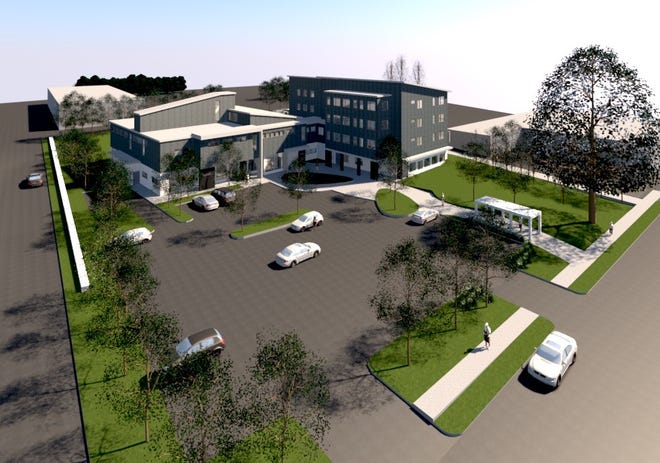
The state has vowed to chip in $4.2 million toward the planned new Father Bill’s & MainSpring facility for the homeless in Quincy.
Gov. Charlie Baker announced the funding Wednesday after touring Father Bill’s and meeting with guests there.
Baker said the money for Father Bill’s is part of $20 million that would go toward housing initiatives throughout the state.
He said the state needs more housing projects of all kinds to contend with a housing shortage in Massachusetts.
“Housing is expensive because we don’t make enough of it,” Baker said.
The current Father Bill’s building at 38 Broad St. is scheduled to be torn down to make way for a new public safety building that will hold Quincy’s police department.
The nonprofit is planning to move across the street into two new buildings.
One building, which will be built first, will consist of a day center with space for programs and training, an emergency shelter and a health care clinic, among other amenities.
The other building, which will be built in a second phase, will hold 30 small apartments for permanent housing.
The project overall will cost about $24 million, said John Yazwinski, president and CEO of Father Bill’s & MainSpring.
Yazwinski said the state money will go toward the first building.
He said the nonprofit needs to find $7 million in private funding for the new facilities, but before even starting a fundraising campaign it has already received $3.2 million in donations.
Construction on the first phase of what is being dubbed the Housing Resource Center is set to begin later this year.
Quincy Mayor Thomas Koch called the project a “new beginning.”
Lt. Gov. Karyn Polito, who was also in Quincy, said the new Father Bill’s facility exemplifies a state push toward “supportive housing” for those experiencing homelessness, combining programming and resources with places to live.
“Hopefully, some of the guests can move into affordable housing and free up room at shelters,” Polito said. “This model (lets people) access the support they need.”
The Father Bill’s project was awarded $4 million through the Department of Housing and Community Development’s supportive housing funding for construction costs and an additional $250,000 through the state’s Housing Choice Community Capital Grant Program for design and engineering services
The new emergency shelter will have 75 beds, about 60 fewer than the current shelter, but the facility will be configured to be able to expand if necessary.
“We want to end homelessness, not manage it, and the Housing Resource Center will move us closer to that goal,” Yazwinski said. “The (center) is a solutions-based, proactive approach that meets individuals further upstream in their housing crisis. By investing in day services that re-house homeless individuals more quickly and prevent more people from entering shelter, we will lower public costs, reduce reliance on shelter beds and downtown spaces, and provide our neighbors in need with stability and a pathway to self-sufficiency.”
In September 2020, Father Bill’s signed a 99-year-lease with Quincy for the new site at 39 Broad St.
Speaker of the House Ron Mariano, D-Quincy, attended Baker’s announcement Wednesday along with the rest of Quincy’s delegation to the Legislature. Mariano called Father Bill’s a “truly great mark on Quincy.”
Yazwinski said, “Father Bill is looking down from heaven and he’s very happy today.”

Thanks to our subscribers, who help make this coverage possible. If you are not a subscriber, please consider supporting quality local journalism with a Patriot Ledger subscription.
Joe Difazio can be reached at jdifazio@patriotledger.com. Follow him on Twitter @jldifazio.
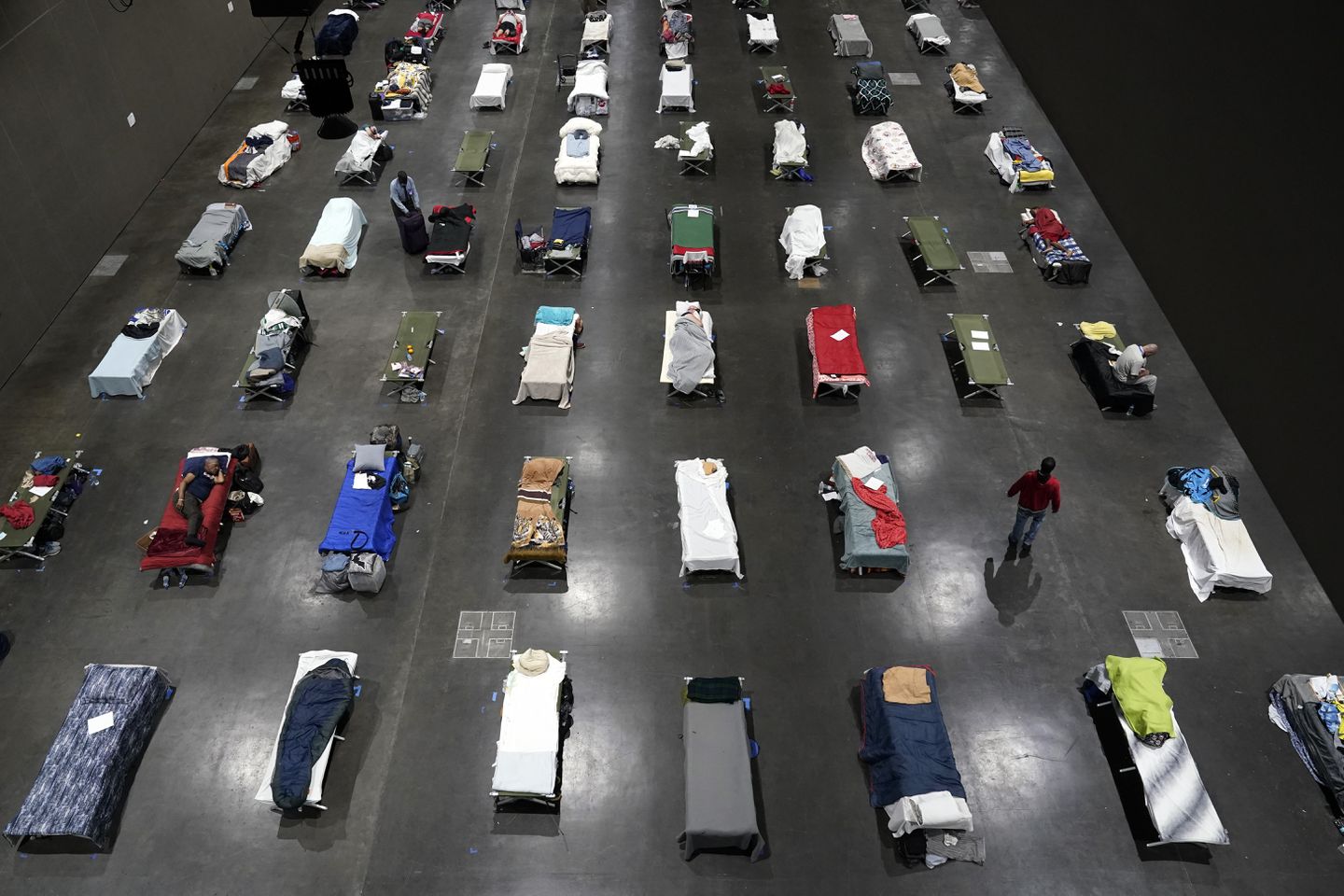
COVID-19 has exposed the flaws in our society’s response to homelessness. When the highly contagious novel coronavirus was spreading across the country early last year, emergency shelters were packed to capacity with dormitory-style beds, many with overflow mattresses spread across floors. Individuals slept within three feet of one another at a time when personal space literally meant the difference between life and death. Communities across Massachusetts reported increases in people sleeping outside, given the need to reduce shelter capacity for social distancing and some individuals’ hesitancy about sleeping in a congregate shelter during the crisis.
As a matter of public health and moral principle, we must do better.
Our organization, Father Bill’s & MainSpring, is in the process of partnering with the state and City of Brockton to purchase a hotel in Brockton to convert 69 rooms into efficiency-style apartments. This would reduce the city’s individual shelter population by 50 percent.
This is a relatively quick solution, and one that could be put to scale across Massachusetts. State and local governments must transition from the current system of overreliance on emergency shelters and grouping hundreds of people into single overcrowded buildings.
The conversion of hotels into efficiency apartments is being done on a larger scale in California, Oregon, and Washington. Hotel owners, seeing a sharp decline in travel due to the pandemic, are exploring opportunities to sell their properties at a time when there is a population in desperate need of housing.
For the past nine months, the hotel we are purchasing in Brockton has served as a satellite shelter, providing refuge to more than 60 individuals per night who are experiencing homelessness. Repurposing the hotel, which otherwise would have sat empty during the pandemic, allowed our organization to depopulate our main shelter in downtown Brockton, creating space for social distancing.
In Quincy, we are also partnering with city officials and utilizing a local hotel to depopulate our main shelter.
Once we purchase the Brockton hotel, we will install kitchenettes in each room to turn them into efficiency apartments. Case managers will provide individualized support to tenants, helping them remain housed and become more self-sufficient. This can include assistance securing employment or accessing health care and other community resources.
The national “Housing First” approach works. It prioritizes permanent housing to help individuals and families address the issues that had contributed to their homelessness. At Father Bill’s & MainSpring, we operate more than 550 permanent supportive housing units; 99 percent of our tenants stay housed for at least one year, while 93 percent stay housed for at least three years.
Converting existing properties is much easier than developing a new apartment building in an overheated real estate market. For example, it can take three years or more to site, finance, and construct a 25-unit building for homeless individuals. During that same time, dozens, if not hundreds, more individuals in that same community will become homeless and enter an already crowded and costly shelter system.
These conversions just got easier thanks to housing legislation enacted by Governor Charlie Baker and the Legislature. The law, which lowers the threshold to change zoning rules for new housing, will play an important role as communities strategize for a post-pandemic environment where empty commercial properties could be quickly repurposed for residential space.
The efficiency of converting underutilized properties into housing is a game-changer, as well as a proactive and cost-effective approach to health care. A recent study by the Blue Cross Blue Shield of Massachusetts Foundation found that expenditures by MassHealth, the Medicaid program administered by the state, were lower for formerly homeless individuals in supportive housing than they were for individuals living in shelters and on the streets.
Turning hotels into housing works because it’s cost-effective, it can happen quickly, and it leads to better health care outcomes. But for the state to achieve this on a larger scale, to help our most vulnerable neighbors, it needs political good will and backing from local communities as well as funding and support from the private and public sectors.
In times of crisis, it’s always those who have the least who suffer the most. COVID-19 is no different. But we’re hopeful that this crisis can be a turning point in our fight to end homelessness.