Housing, health care for seniors will rise on site of former Everett church
The site of the former St. Therese church in Everett will soon see new life as a mixed-use development focused on the housing and health care needs of local seniors.
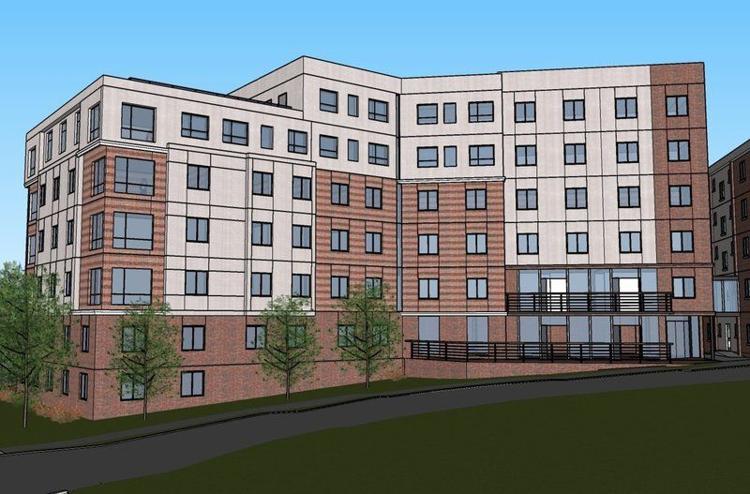
The Neighborhood Developers recently began constructing 77 affordable rental apartments for adults aged 62 and up at Broadway and Gledhill Avenue. The new building will include a ground-floor health care center for the tenants and other seniors that East Boston Neighborhood Health Center will operate through a partnership with TND.
The $33 million project also involves erecting six adjacent three-bedroom townhouses to be sold at affordable prices with no age restrictions, according to Rafael Mares, executive director of Chelsea-based TND.
The project, which has been warmly received by city officials, marks the first undertaken in Everett by the nonprofit, which owns and manages 461 rental apartments in Chelsea and Revere, many of which it developed.
“Everett is a neighboring community to Chelsea and Revere and has similar demographics,” Mares said. “There is a practical need in Everett for affordable housing for seniors so people can age in place in the community. So we felt compelled to offer our help and play whatever role we could in Everett.”
He said TND included a health care center in the project to enhance its goal of creating a place that could fully support people in their older years. Because it serves a similar region, East Boston Neighborhood Health Center was the “perfect partner” in that effort.
“We are excited about this and hope it can be a future model in our region and beyond,” Mares said of combining affordable senior housing and health care on one site.
East Boston Neighborhood Health Center maintains facilities in Boston, Revere, and Winthrop, including four community health centers, and three centers that operate under Program of All-inclusive Care for the Elderly, or PACE, a federal program which provides comprehensive care for older people with complex medical conditions, according to Greg Wilmot, East Boston’s senior vice president and chief operating officer.
The future Everett health center will serve PACE as well as regular primary care patients. But Wilmot said the focus will be employing PACE to provide medical and home health care services to tenants and other seniors that can help them remain independent.
“We know well that when seniors are able to stay in their communities, they are going to have better health outcomes,” he said, “and this partnership is going to give us a great opportunity to do that for the Everett community.”
St. Therese parish closed in 2004. TND purchased most of the site from the Archdiocese of Boston in 2018 after acquiring the remaining portion from another owner in 2017. The project is being financed with the help of federal and state low-income housing tax credits.
The church and other buildings have all been demolished. But Maras said TND is taking care to honor the history of the parish, including naming the development “St. Therese” and installing an interpretive exhibit about the church in a small park that it is renovating.
The rental units must be affordable to people earning up to 60 percent of area median income; with a portion affordable to those earning up to 30 percent of the median. Tenants above the 30 percent median will pay about $1,296 for a one-bedroom, and $1,550 for a two-bedroom. Other rents will be income-based. Townhouse prices will likely range from $235,000-$390,000.
The future apartment building will enjoy such common amenities as a large community room and a fitness center, along with activities that could range from cooking classes to potlucks and holiday celebrations. TND staff will also assist them in accessing services.
The project is set for completion in May 2022.
SourceThe Boston Globe
Urban Edge Begins Construction on 62-Unit Holtzer Park
Urban Edge is announcing that construction has begun on Holtzer Park, a 62-unit affordable housing development near Jackson Square in Jamaica Plain, MA.
Holtzer Park is part of the Boston Housing Authority’s (BHA) 125 Amory Street redevelopment, a joint venture between The Community Builders (TCB), Jamaica Plain Neighborhood Development Corporation (JPNDC), and Urban Edge.
The project has been made possible with the generous support from a number of public and private financing organizations, including the City of Boston, Massachusetts Department of Housing and Community Development (DHCD), Community Economic Development Assistance Corporation (CEDAC), MassDevelopment, MassHousing, Massachusetts Housing Investment Corporation, Citizens Bank, Massachusetts Housing Partnership, the Federal Home Loan Bank of Boston (FHLBank Boston), Boston Private, The Life Initiative, and the U.S. Department of Housing and Urban Development (HUD).
“We are so grateful to the funders for Holtzer Park,” said Emilio Dorcely, Urban Edge’s Chief Executive Officer. “Through their assistance, we will bring new units of much-needed affordable housing to the Jackson Square neighborhood. Now more than ever, it is clear that quality affordable housing is a necessity in Boston’s Black and Brown communities, and we appreciate the support from both public and private institutions to make this project a reality.”
Named for the Holtzer-Cabot Electric Company, where on the site, electrical devices were manufactured in the 20th century, Holtzer Park will meet the U.S. Green Building Council LEED Homes Gold certifiable standard and utilize a high-efficiency heating system and building envelope. The development team for the project includes Urban Edge, ICON Architecture, and NEI General Contracting.
The project will cost an estimated $32 million in total, and has received more than $2.7 million in funding from the City of Boston Department of Neighborhood Development, $750,000 from the Neighborhood Housing Trust, and more than $15.8 million in State and Federal Low Income Housing Tax Credits and more than $5 million in subsidies from DHCD.
“This project is a fantastic example of how our strong non-profit partners like Urban Edge are able to layer multiple state, federal, and local funding sources to create opportunities for our families,” said Housing and Community Development Undersecretary Jennifer Maddox. “We are excited to see the Baker-Polito Administration’s investments in the neighborhood, through MassWorks Infrastructure funding, MassDevelopment’s Brownfields program, and our own affordable housing awards help advance this great work.”
“The Life Initiative is proud to have supported Urban Edge’s efforts in the development of Holtzer Park,” said Mollye Lockwood, Vice President at The Life Initiative. “The Holtzer Park project represents a wonderful example of Urban Edge’s ability to forge partnerships to make transformative development happen. After over four years of working with community and its development partners of TCB and JPNDC, Urban Edge has made its project in the 125 Amory master plan a reality and will be providing 62 affordable homes to the Jamaica Plain community.”
“Holtzer Park is a transformative initiative that will introduce much-needed affordable rental housing in a rapidly evolving part of Boston,” said Kenneth Willis, Senior Vice President and Director of Housing and Community Investment at FHLBank Boston. “FHLBank Boston is proud to provide financial support for this transit-oriented project through our Affordable Housing Program, and we’re pleased that it is under development.”
“We are grateful to be involved in the creation of new affordable rental housing at Holtzer Park. We want to thank and congratulate our long-time partner, Urban Edge; the Federal Home Loan Bank of Boston; and our other key partners, especially Boston’s Department of Neighborhood Development and the State, in planning and financing this important development,” said Boston Private CEO Anthony DeChellis. “Boston Private was the lead lender for the construction and permanent financing. We are grateful for Urban Edge’s leadership in bringing together a complex initiative during these extraordinary times with the COVID-19 pandemic.”
“It’s exciting to see underutilized BHA land transformed into such an important use for dozens of low-income families,” said BHA Administrator Kate Bennett. “We are forging exciting opportunities in Jackson Square and I am grateful to all of our partners and staff that have made this happen.”
“Holtzer Park is yet more evidence of the innovative and successful effort to redevelop the Jackson Square neighborhood through the work of community-based non-profit developers,” said Roger Herzog, CEDAC’s executive director. “The project will result in 62 new transit-oriented affordable apartments, and will include supportive housing units. This project will set aside units for people who live with disabilities, as well as families who have experienced homelessness, providing stable, affordable homes to some of Boston’s most vulnerable residents. CEDAC could not be more pleased to support Urban Edge and to help them turn the vision of Holtzer Park into a reality.”
“We are pleased to work with our longtime partner Urban Edge to bring 62 much needed affordable housing units to Boston. We are proud to support such an important project and continue to advance the creation of healthy communities,” said Joseph Flatley, President and CEO of the Massachusetts Housing Investment Corporation.
“The Holtzer Park project in Jamaica Plain meets an important need in our community and demonstrates Citizens’ strong commitment to support more affordable housing options for Boston residents,” said Jerry Sargent, President of Citizens Bank, Massachusetts and Head of the Northeast.
“ICON Architecture is thrilled to be part of the Holtzer Park team. Creating equitable and healthy new homes for families is part of ICON’s mission,” Kendra Halliwell, Associate Principal and Practice + Design Team Leader at ICON Architecture.
“With our dedication to building affordable housing, NEI shares Urban Edge’s mission of strengthening communities and families by building affordable housing and vibrant, prosperous neighborhoods,” said Josef Rettman, president of NEI General Contracting.
“MassDevelopment is proud to support the development of Holtzer Park, with both a $27,000 award from the Brownfields Redevelopment Fund last year to assess the site and a $17.2 million tax-exempt bond more recently to aid construction,” said MassDevelopment President and CEO Lauren Liss. “Holtzer Park will add critical affordable housing units for residents of Boston’s Jamaica Plain neighborhood, and we’re pleased to be part of a tremendous team of financing partners helping to make this project a reality.”
SourceBoston Real Estate Times
Deaf-friendly home for the disabled opens in Quincy’s Germantown
The group home currently houses five adults with intellectual and developmental disabilities, has staff available 24 hours a day, and includes smart technology for the deaf staff and residents.
QUINCY — The first completely deaf-friendly group home for adults with disabilities in eastern Massachusetts has opened in Quincy’s Germantown neighborhood.
NeighborWorks Housing Solutions, a Quincy-based nonprofit that builds homes for veterans, homeless families, and people with disabilities, collaborated on the Bicknell Road project with WORK Inc., a nonprofit based that operates residential group homes for people with disabilities. The home currently houses five adults with intellectual and developmental disabilities, has staff available 24 hours a day, and includes smart technology for the deaf staff and residents.
“This has been an honor to collaborate with WORK Inc. on this project, which will truly be a home to five individuals who have a unique set of needs,” Robert Corley, chief executive officer of NeighborWorks, said in a statement. “We’re excited to show the community how important this type of housing is for the community. We look forward to partnering with WORK Inc. and other similar agencies to help create more housing like the home in Germantown.”
The group home was designed by Elton Hampton Architects and was funded by the Massachusetts Department of Housing and Community Development, the Massachusetts Department of Developmental Services and the City of Quincy.
NeighborWorks Housing Solutions is responsible for various Quincy developments, including 140 units at The Watson on East Howard Street, 24 units at Winter Gardens on Winter Street, and 1116 Sea St. — a two-family home at the former Houghs Neck American Legion Post that houses two veterans and their families.
The nonprofit also received a $500,000 federal grant in February and was approved by the Quincy Planning Board in January for a project that will demolish four Quincy Point homes to build 18 low-income apartments in their place.
SourceThe Patriot Ledger
New 6-Unit Building in Hyde Park
Dear Friends and Supporters,
We are very pleased to announce that we have acquired a new supportive housing project, a 6-unit building in Hyde Park. The project was originally developed more than twenty years ago by New Communities Services, a Cambridge-based nonprofit, to provide housing and supportive services to single adults at risk of homelessness. As the new owner, Mainstay will continue to operate the development as a supportive housing project for individuals at risk of homelessness.
This project was undertaken in partnership with the Community Economic Development Assistance Corporation (CEDAC) and the Massachusetts Department of Mental Health. Roger Herzog, executive director of CEDAC, said “I’d like to thank Mainstay for ensuring the stability of this important project and congratulate them on their incredible work serving vulnerable populations, especially during these unprecedented times. The current public health crisis demonstrates how crucial it is for everyone to have access to a safe, affordable place to live and reaffirms our commitment to supporting the non-profit community development sector across the state. We would also like to thank the Massachusetts Department of Mental Health for their longstanding partnership as we continue to work together to produce and preserve permanent supportive housing in the Commonwealth.”
We were thrilled to be asked last year to step in to preserve this Supportive Housing development as its new owner. The City of Boston needs every unit of Supportive Housing it can get in its fight to end homelessness, and safeguarding and preserving these six units helps that cause immensely.
Mainstay is proud to say that we continue to deliver the services and supports, including safe and supportive housing, and person-centered home care, that people need to thrive in their residences and communities.
Thank you for your support.
Larry Oaks and the Mainstay Team
SourceMainstay
Pelham affordable housing project gets some seed funding
A project to bring 34 affordable housing units to an Amherst Road property that features a former fly rod factory building and farmhouse is moving forward.
The Community Economic Development Assistance Corp. of Boston announced Wednesday that it would commit $200,000 in predevelopment financing, through a loan to Home City Development Inc. of Springfield, for what would be known as Amethyst Brook Apartments.
The $12 million project in West Pelham could be the first in town developed under the state’s Chapter 40B comprehensive zoning law, which allows affordable housing projects to be permitted that otherwise would not be allowed under town zoning.
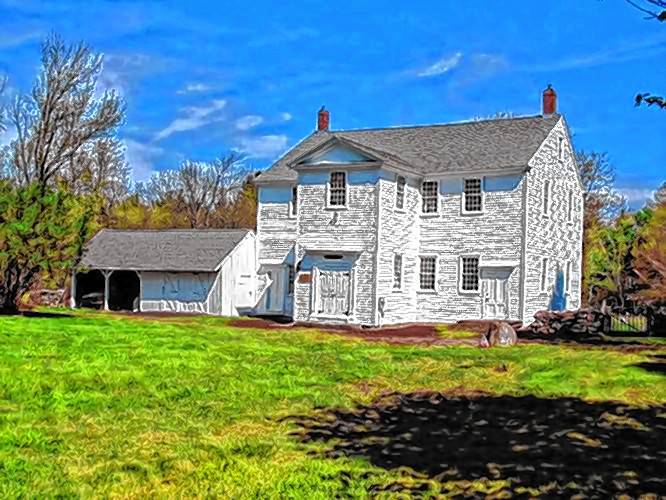
The 9½-acre site at 18 and 22 Amherst Road includes the farmhouse and several outbuildings, along with the small factory building, occupied by book publisher HRD Press, on the brook where the Bartlett Rod Shop Co. once operated. The adjacent stone dam, which had been part of the waterway since 1820, was decommissioned by the state in 2007 and demolished in 2012.
The farmhouse will be converted into six apartments, while the other buildings will be demolished and replaced with a new 28-unit building. On-site parking will be available for 49 vehicles.
To meet affordability, the units would be rented at 60% of median area income or less, which for a family of four means earning $53,000 or less annually.
The developer will dedicate five acres as conservation land.
Tilman Lukas, chairman of the Pelham Housing Committee, said his committee has been supportive of having an affordable housing project such as this, calling it a unique chance for families, couples and senior citizens.
“In my opinion, this is a project to bring the community a lot of affordable units,” Lukas said.
In fact, the committee conceived the project, which is within walking distance of the Pelham Elementary School and Pelham Library, and close to the Amherst town line.
Plans currently show 24 one-bedroom apartments, seven two-bedroom apartments and three three-bedroom apartments. Lukas said the town and developer could also enact a local preference to ensure people already living in Pelham could live at Amethyst Brook.
Lukas said Home City has sent a project eligibility letter to the Department of Housing and Community Development and anticipates applying for chapter 40B funding later this year. The project would also rely on the low-income housing tax credit financing program.
Town Meeting this spring could be asked to commit Community Preservation Act money, up to $500,000, to the project.
Even if all financing and permitting goes off without a hitch, the project likely wouldn’t break ground until 2022, Lukas said.
Roger Herzog, executive director of Community Economic Development Assistance Corp., said in a statement that rural communities need affordable housing, but have fewer opportunities than larger towns and cities to get such projects completed.
“We are excited to support the efforts of an excellent nonprofit housing developer, in partnership with local residents, to develop much-needed affordable housing in Pelham,” Herzog said.
SourceDaily Gazette Hampshire
Boston-Area Mixed-Income Asset Lands Construction Financing
NeighborWorks Housing Solutions has received $4.7 million in construction financing for Sycamore on Main, a mixed-income community in Brockton, Mass. The property will encompass 48 deed-restricted units which will be affordable for residents who earn a vast array of incomes.
The project received a $2.9 million permanent loan from MassHousing, $1.8 million from the agency’s Workforce Housing Initiative, and $1 million from the Affordable Housing Trust Fund, which it manages on behalf of the Massachusetts Department of Housing and Community Development (DHCD).
Additional funding sources for the development include $6.7 million in federal Low Income Housing Tax Credit (LIHTC) equity, $6 million in state LIHTC equity, another $2.7 million provided by DHCD, $750,000 in supportive housing funds from the Community Economic Development Assistance Corporation (CEDAC), $450,000 in local HOME funding and a $300,000 sponsor loan.
Located at 121 Main St. in downtown Brockton, the transit-oriented property is half a mile from the city’s commuter rail station. Several shopping and dining opportunities are available within walking distance.
AFFORDABLE WORKFORCE HOUSING
The community will reserve 18 units for earners of up to 90 percent of the area’s median income, 22 units for residents earning 60 percent or less, and eight units for households earning at or below 30 percent. Brockton’s area median income is $93,400 for a household of four. The workforce-apartments will include floorplans for one-, two-, and three-bedroom apartments, as well as a street-level retail space.
NeighborWorks partnered with NEI General Contracting to develop the Utile Inc.-designed project. Trinity Management will assume management responsibilities. Construction on Sycamore on Main began last October and is expected to conclude in early 2021.
SourceMulti-Housing News
Construction is Underway at Sycamore on Main in Brockton as MassHousing Closes $4.7 Million in Financing for the New, Mixed-Income Housing Community
SourceMassHousing
10 Boston developments to watch in 2020
So far, Boston’s building boom shows no signs of abating in 2020.
In the last six years, the Boston Planning and Development Agency has permitted about 65 million square feet of new development and the city has seen more than 60 million square feet built in that time, according to the city agency.
Even as some of the city’s most transformative projects of the last decade, like Hub on Causeway, continue to inch higher into the sky in 2020, we asked Jonathan Greeley, director of development review for the BPDA, to name some of the notable developments the public should keep an eye out for in 2020.
“One of the things the city is trying to do is respond to tremendous residential demand,” Greeley said. “In addition to responding to that residential demand by hopefully permitting and building as many units as possible, we’re trying to find a way to maximize the amount of those units being affordable. We put our money where our mouth is.”
The director of development review said that in 2019, guided by goals established with the city’s 2030 plan, 20 percent of all the units the BPDA approved were affordable. Officials, he emphasized, are constantly thinking about how to plan and facilitate “proper growth” in Boston.
“We want to make sure we’re creating a thriving city for all Bostonians,” he said of the efforts.
Below, 10 projects in Boston that will be ongoing or kicking-off in the coming year.
Renderings of Winthrop Square Tower. —Handel Architects
Work on the new residential and office tower at 115 Winthrop Square will push on in 2020, Greeley said.
“What’s exciting about this year is you’re going to start to see it come out of the ground,” Greeley said. “They’ve been doing a lot of work below the surface.”
The almost 1.6 million-square-foot project, on the site of the previously city-owned, shuttered Winthrop Square Garage, will feature residential, office, retail, and dining space. The tower, which will stand 691 feet tall, will contain a “Great Hall” at its base to serve as a public space.
Greeley emphasized that the project is a “one-two” punch for the city. Not only will it create new, mixed-use space, but it will contribute to other efforts city-wide. He said notably it will bring “significant investment” to the area around the site, including infrastructure improvements to Winthrop Square and the nearby park. But money from sale of the site to Millennium Partners will generate more than $150 million in funding for the City of Boston, which is slated for efforts including improvements to the Boston Common and Franklin Park and affordable housing.
“Most importantly it’s going to help to fund an all-affordable building in Chinatown,” Greeley said.
“[Winthrop Square] is a great example of a public/private partnership on public land to deliver a wide variety of results, which will add improvements on the site, but also in and around the neighborhood they sit in,” he added.
Work to redevelop the former headquarters of the Boston Globe got underway in 2019 and will continue in 2020 as the developers search for a wide variety of tenants to fill the building, Greeley said. The new name for the property at 135 Morrissey Blvd., “The Beat,” stands for “The Boston Exchange for Accelerated Technology” and pays homage to the “beat” reporters who used to call the site home.
“What’s exciting there is that they took a look at the site and said, we’re not going to demolish the whole thing, we’re going to re-envision the whole thing,” Greeley said. “So if you drive by it today, either from Morrissey Boulevard or the highway, you’ll see they are gutting and rebuilding the building.”
Development firm Nordblom envisions reconfiguring the 695,000-square-foot building into both tech and traditional office space, while maintaining ground floor use for neighborhood amenities that could serve nearby Savin Hill.
“One of the things that project has done is make sure there are pedestrian connections through Savin Hill,” Greeley said. “So they want to make sure that it’s not just ground floor uses and ground floor retail amenities that serve the building — they want those uses to be enhancements to the neighborhood as well.”
Greeley said the project is one of several exciting development efforts around the Columbia Point peninsula, and the city believes the approach taken for the “The Beat” is a precursor to other projects that could follow in and around the JFK/UMass area.
A rendering of the Fenway Center project. —The Architectural Team
Both Phase I and Phase II of the enormous development will be underway in 2020, Greeley said. When completed, the $500 million construction project will comprise four buildings and a parking garage that will extend along, and above, the Mass. Pike.
Phase 1, which features the construction of two buildings on Brookline Avenue and the creation of about 312 new residential units, broke ground in 2018 and is expected to be ready for occupancy in 2020.
“Those two new buildings will bring some life to that area, which again, it’s been a series of surface parking lots for a long time,” Greeley said of the project.
In 2020, Greeley said the BPDA is also expected to hear proposed changes to Phase II of the project, which would feature the construction of a 27-story tower above the Mass. Pike. The change would bring more space for office and life science tech to the site, replacing about 150 housing units originally planned for the site.
“We’re currently reviewing that project — those alterations,” he said. “And that project could be considered by our board in the first half of 2020.”
When the second phase over the Mass. Pike moves forward, it will be one of two so-called “air rights” projects, the first in decades, predicted to get underway in 2020.
“That’s something that was the subject of long-term planning efforts in partnership between the city and state, and we’re really thrilled to see that piece of the project go forward, built over the turnpike,” Greeley said.
Renderings of the Government Center Garage redevelopment project. —BPDA
By the end of 2020, Greeley said he expects to see the first phase of the downtown project, which will ultimately create six new high-rise and mid-rise buildings, completed.
The project includes 800 new residential units in two towers and more than 1 million square feet of office space, with the new corporate headquarters for State Street anchoring a retail tower at One Congress.
As the project moves forward, Bostonians can expect to see the existing Government Center Garage on Congress Street come down, Greeley said.
“[It’s] a dramatic change to the downtown neighborhood,” Greeley said of the project. “A dramatic change in the daylighting of Congress Street and I think just a really pleasant removal of a barrier between Government Center and North Station.”
Rendering of the proposed Back Bay Station redevelopment. —Courtesy of Boston Properties / Pelli Clarke Pelli Architects
The 1.26 million-square-foot mixed-use project that will rise above and adjacent to Back Bay Station is one the city hopes will reach into the skyline in 2020.
Some elements of the project — which features a new office building with ground floor retail, two new residential buildings, an expansion of the existing station, and redevelopment of the 165 Dartmouth Street Garage — are already already underway, Greeley said.
Improvements within Back Bay Station, such as redoing the bathrooms, are already underway as part of the project. The MBTA is responsible for platform level investments, but developer Boston Properties is responsible for the station renovations itself.
“That work is starting now,” Greeley said. “We hope and anticipate that Boston Properties will start construction in 2020 on one of those three towers.”
A rendering of the proposed development at Suffolk Downs. —Provided by BPDA
Greeley said the hope is that redevelopment of the East Boston site can get underway in 2020, pending an ongoing community review and approval by the BPDA board.
“The goal is to return what is kind of largely a surface parking lot with [an] infrequently used racing track and take it and use it to create a dynamic mixed-use community that is really anchored by two MBTA stations on the Blue Line, Suffolk Downs and Beachmont,” he said.
The project from HYM Investment Group proposes during Phase I of the project the creation of 520,000 square-feet of corporate and amenity space, three residential buildings, and town homes for the construction of more than 800 housing units. About two-thirds of the 150-acre plot sits in Boston, with a third falling in Revere.
About 40 acres of the development are proposed to remain unbuilt, serving as a mix of parks and open space, Greeley said.
“It’s going to be a really, really dynamic space and will truly be a mixed-use project that we’ll see manifest itself over the next 20 years,” he said. “One of the reasons why it’s taken us so long in the review process is that it’s been something we really want to get right, prioritizing a real mix of use, of affordability, of open space, and also making sure the design is just really dynamic as well.”
A rendering of “Building A” at the proposed Allston Yards development. —Stantec via BPDA
The project, proposed at the nexus of Allston, Brighton, and the area surrounding Boston Landing, was approved by the BPDA in December, and Greeley said he anticipates construction of the new neighborhood to get underway in 2020. The 868-unit mixed-use development would transform the existing Stop & Shop plaza at 60 Everett St. into a “transit-oriented” neighborhood featuring open space, a flagship grocery store, office and retail space, and residential units.
Greeley said the project will also create a new roadway network for better connectivity through the neighborhood and has subsidies for local transit in and around Allston/Brighton, including to help fund more frequent MBTA service for rail and bus.
“[It’s] a great mixed-use, dynamic project,” he said. “The project is getting 17 percent affordability on site and will fund another 40-plus units of affordable [housing] offsite throughout the neighborhood. So we’re really excited for the potential of that project.”
A rendering of the Dot Block project. —Provided by the BPDA
This project, located on almost an entire city block along Dorchester Avenue, first won approvals from the BPDA in 2016 and has gone through several iterations since then. A revised proposal for the project was approved in 2019, and Greeley said the hope is that it could break ground in 2020.
The project at 1205 Dorchester Ave. would include the construction of four new buildings that would contain 488 residential rental units, about 23,000 square feet of commercial space for neighborhood-oriented retail and restaurant space, as well as 1.34 acres of open space.
“That site will take what was essentially a derelict site, not a lot going on, and bring much-needed housing to the neighborhood, as well as breaking up a very large development site with new roadways and public realm,” Greeley said. “And we’re excited because it’s investment in an area that hasn’t seen as much investment traditionally, and so it would also set the tone for the types of development we want to see there long-term.”
A rendering of the proposed Mattapan Station project. —Provided by the BPDA
Construction on this $57 million mixed-use project is anticipated to start in the spring of 2020. It will feature the construction of 135 units of mixed-income apartments for rent and 10,000 square feet of commercial and retail space at 500 River Street.
Located beside the Mattapan MBTA station, it is being heralded as a transit-oriented development project that will provide affordable and market-rate housing to the neighborhood.
“We are excited to see investment in Mattapan and in the Mattapan Station area,” Greeley said. “This is a good project.”
A rendering of the proposed Pine Street Inn development for Washington Street in Jamaica Plain. —RODE Architects via Boston Planning and Development Agency
Pine Street Inn formally filed plans with the BPDA last March to construct the 225-unit building at 3368 Washington St., with the aim of serving chronically homeless disabled adults. The proposal won board approval later in the year, and Greeley said he hopes the project will secure its needed financing in 2020 in order to break ground and be under construction by the end of the year.
“One of the things that we’ve been able to do over the course of this year is that 20 percent of all new units throughout the city have some sort of deed restriction making them more affordable to Bostonians,” Greeley said of the project’s importance. “This project has a higher percentage and is an example of a nonprofit working really hard to fulfill their mission. So we’re really excited about the mission-driven outcome of this project in a neighborhood that has been really, really receptive to that type of use.”
Of the 225 affordable residential units in the six-story building, 140 would be reserved for supportive housing for individuals being served by the Pine Street Inn. The remaining 85 units would serve households earning between 60% and 80% of area median income.
SourceRealEstate
City approves supportive housing complex for homeless in Jamaica Plain
A major effort to house Boston’s homeless took an important step forward Thursday night.
The Boston Planning & Development Agency board approved plans for a 202-unit apartment building on Washington Street in Jamaica Plain that would include 140 studio spaces for formerly homeless people, along with social services they need.
The complex, being developed by Pine Street Inn and two partners, could break ground within a year, if financing comes together, said Lyndia Downie, Pine Street’s executive director. It would be the largest such “permanent supportive housing” development of its kind in Boston, she said.
“This is the kind of stuff people like us dream about,” Downie said. “We know this works for people who are stuck in homelessness. This is the answer for a lot of people.”
This type of housing, which combines affordable rents with on-site services, has become a big part of Boston Mayor Martin J. Walsh’s bid to end chronic homelessness in Boston, a problem that was exacerbated by the 2015 closure of the Long Island shelter. Walsh has pushed to raise $10 million for Boston’s Way Home Fund, which would fund ongoing services at the planned building, Downie said.
“We are committed to making sure that every individual has a place to call home and build a better life,” Walsh said in a statement. “This project is only possible because of the commitment of Pine Street Inn, The Community Builders [an affordable housing developer], and many partners and stakeholders across the city who have joined our call to bring an end to chronic homelessness.”
To go forward, the building will probably need city and state funding, along with federal low-income housing tax credits, to help finance construction. Developers expect the 144,000-square-foot building to cost about $81 million in all.
Along with 140 units run by Pine Street Inn, The Community Builders would build and run 62 apartments dedicated to low- and middle-income renters. That’s 23 fewer units than were originally proposed, the reduction coming partly in response to neighborhood concerns about the project’s size and the traffic it might generate. It’s also one floor shorter than designers RODE Architects initially envisioned. But over the course of numerous community meetings since this spring, neighbors were generally supportive, said Dana Whiteside, who oversaw review of the project for the BPDA.
“Support for the project was quite good,” he said.
The complex, near Green Street, is one of the first large buildings proposed on a stretch of Washington Street where the BPDA two years ago approved plans for thousands of new apartments and condos. Some 40 percent of those housing units are required to be affordable.
This project will make a dent in that number, BPDA director Brian Golden said, while creating a much-needed place to help homeless Bostonians get back on their feet.
“This is a really good outcome,” he said.
The BPDA on Thursday also approved a six-building, 344-unit condo and apartment complex at the corner of Harvard Avenue and Cambridge Street in Allston Square, a 60-unit affordable housing development in West Roxbury by B’Nai B’rith Housing New England, and tweaks to Millennium Partners’ Winthrop Center tower downtown. The board also gave WS Development permission to convert a planned housing building at its Seaport Square complex into an office building instead.
SourceThe Boston Globe
Merrivista to add senior housing
Bethany Community Services plans to expand its Merrivista senior housing complex on Water Street with the addition of 62 affordable, age-restricted apartments, with 16 units designated for extremely low-income households.
The project recently received a $200,000 predevelopment loan from the Community Economic Development Assistance Corporation or CEDAC.
Bethany operates Merrivista senior housing at 100 Water St., Phoenix Row apartments at 22 Phoenix Row in Washington Square and Mission Towers at 180 Water St.
Jered Stewart, president and CEO of the nonprofit Bethany Community Services, said all three properties currently have long waiting lists of seniors looking for affordable apartments and that the expansion of Merrivista will help meet a significant need for senior housing.
“CEDAC is providing us with resources that we can’t obtain from traditional lenders,” Stewart said.
He said the proposed 62-unit project will be connected to the existing Merrivista building — a 150-unit affordable senior housing complex — through a sky bridge that will provide residents with access to a library, hair salon, dining room, and additional support services.
The project will also feature a 5,000 square foot health and wellness center operated by Bethany.
Stewart said the health and wellness center will be available to all Merrivista residents.
“This is a great thing for the city,” Mayor James Fiorentini said, noting that almost daily, he hears from senior citizens who ask for his help in finding an affordable place to live. “This is just what we need and whatever the city can do to assist, we’re all for it.”
The Merrivista expansion is estimated to cost between $17 and $20 million. Construction could begin in 2022 or 2023, depending on financing approval, Stewart said.
CEDAC has also committed $200,000 to the North Shore Community Development Corporation (NSCDC), which plans to redevelop two former Catholic schools on either side of downtown Salem, Mass, into mixed-income rental housing, including units for affordable to low- and moderate-income residents.
“CEDAC is proud to support both of these projects, which will provide much-needed affordable housing opportunities to Haverhill and Salem,” said CEDAC’s executive director Roger Herzog. “We are glad to see a variety of housing options that will benefit local residents, including supportive housing for seniors.”
Bethany held a gala fundraising event Oct. 10 at the Bradford Country Club that kicked off its capital campaign for the Merrivista expansion.
More than 160 people attended the event, which featured a silent auction, a meal and live music.
CEDAC is a public-private community development finance institution that provides financial resources and technical expertise for community-based and other non-profit organizations engaged in effective community development in Massachusetts.
CEDAC’s work supports two key building blocks of community development: affordable housing and early care and education. CEDAC is also active in state and national housing preservation policy research and development and is widely recognized as a leader in the non-profit community development industry. For additional information on CEDAC and its current projects, visit cedac.org.