Baker-Polito Administration And CEDAC Award Funding In 2022 Winter Rental Round To Help Create Or Preserve More Than 1,474 Units Of Affordable Housing Across Massachusetts.

CEDAC committed predevelopment or acquisition financing to 6 of these projects – BOSTON, July 20, 2022 – The Community Economic Development Assistance Corporation (CEDAC) is proud to serve as a financing partner in the production or preservation of 11 supportive housing projects announced during the Baker-Polito Administration’s most recent Supportive Housing funding round.Projects stretch from Beverly and  Boston to Chicopee with CEDAC commitments totaling $6.5 million.


BOSTON (Aug 11, 2022) – The Community Economic Development Assistance Corporation (CEDAC) is proud to announce its work as a financing partner in the production or renovation of 26 affordable housing projects announced during the Baker-Polito Administration’s most recent Winter Rental Round. state funding represents a combination of direct subsidies, state and federal tax credits, and other resources to support the creation and preservation of affordable housing through multiple funding rounds each year. These most recent awards announced on July 26th comprise the biggest funding round of 2022 and include housing for seniors, families, and individuals.

CEDAC’s total commitment of $6.5 million in acquisition and predevelopment financing will facilitate affordable housing development by community development corporations and other non-profit entities. CEDAC provided predevelopment and/or acquisition financing to the following six projects:


Anchor Point Phase 2

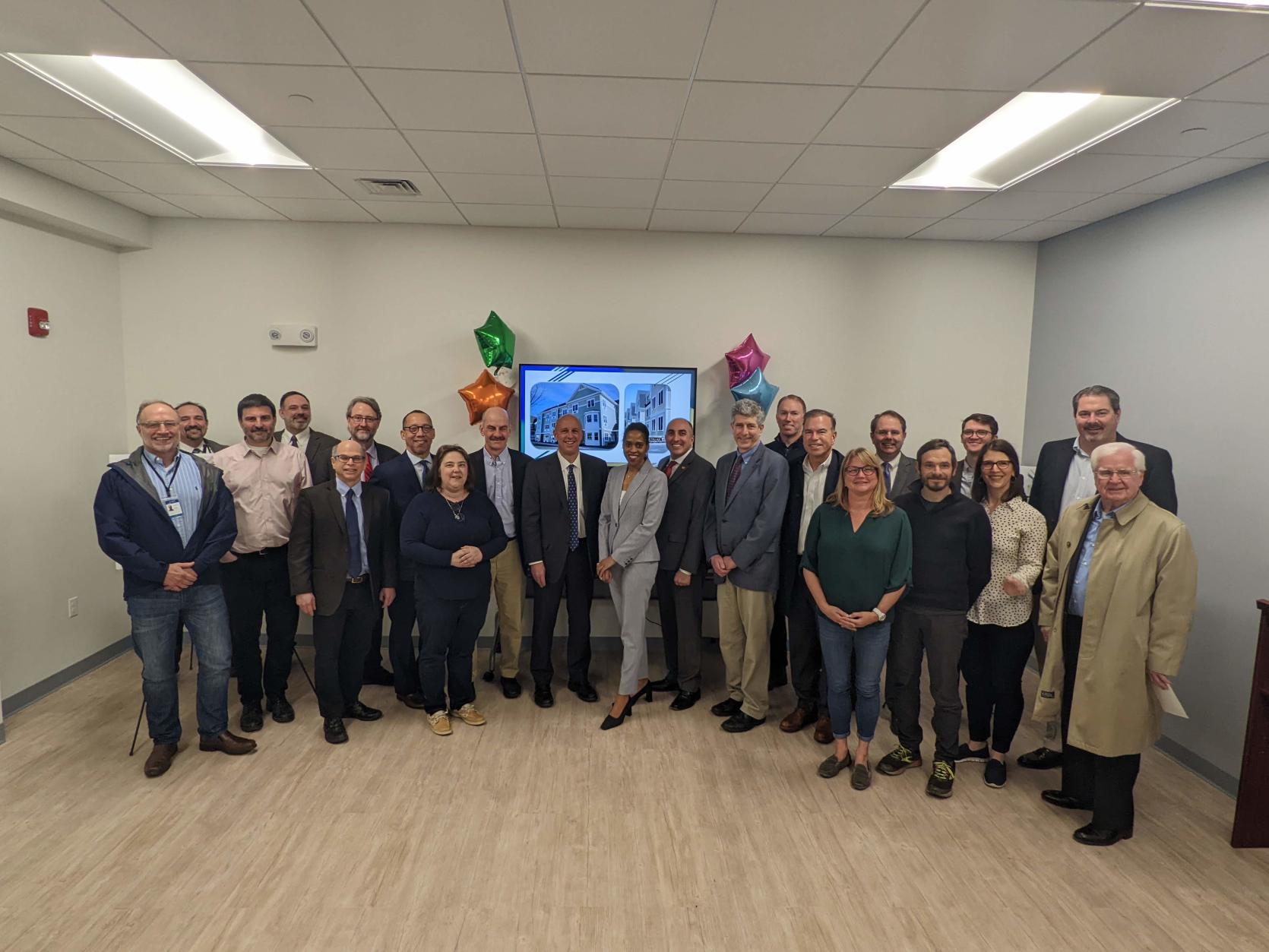
Using CEDAC acquisition financing in January of 2018, Harborlight Community Partners, Inc. (HCP) acquired a five-acre site to develop the Anchor Point project. HCP will build 77 new affordable family rental units, all two and three-bedroom units, in two phases. Each phase will consist of a three-story wood frame building with a community room, common laundry and elevator, and the two buildings will be connected by a pedestrian bridge. The first phase of the project has completed construction and celebrated its ribbon-cutting on July 29th.   Anchor Point Phase 2 (Phase 2) will include 39 units affordable to low-income households at or below 60% AMI. Sixteen units will be reserved for households at or below 30% AMI, 8 of which will house formerly homeless families. CEDAC provided $948,306 in predevelopment and $1,620,000 in acquisition funds for the project.

150 River Street

Caribbean Integration Community Development (CICD), in partnership with The Planning Office for Urban Affairs (POUA), will construct a 30-unit affordable senior housing development on a vacant, one-acre, City of Boston-owned site on River Street in Mattapan. The project consists of three studio units and 27 one-bedroom units across three floors, as well as 2,800 square feet of common space. Of the 30 units, 11 are designated for 30% AMI households, 15 are designated for 60% AMI households, and four are designated for 70% AMI households. CEDAC provided a predevelopment loan of $750,000 for the project, as well as a $15,000 loan to CICD to support this emerging minority-led community development organization.

Aileron

Neighborhood of Affordable Housing, Inc. (NOAH), is constructing 36 units of affordable rental housing and 2,550 square feet of commercial studio space for artists. The project involves a five-story building with eight units for households at or below 30% AMI, and 28 units for households at or below 60% AMI, plus a common-area work bar and art gallery, shared laundry, and a management office. In response to a neighborhood desire to support local artists, the project will also include  17 artist work-space studios (commercial) of the units, and the building will also include three shared artist studios, a common-area work bar and art gallery, shared laundry, and a management office, a building with 17 artist work-space studios (commercial) available for rent with a preference for Aileron residents. NOAH received City of Boston developer designation with their proposal which will convert the long-neglected property into productive use. At an adjacent property NOAH is developing 7 mixed income ownership units. CEDAC provided $620,000 in predevelopment loan financing.

Carol Avenue Rehab

Carol Avenue Apartments is a 100-year-old property in Brighton, which was purchased by the Allston Brighton CDC in July 2018. The project consists of the preservation of 33 units in three adjacent buildings: 6 Carol Ave. (12 units), 10 Carol Ave. (10 units) and 12 Carol Ave. (11 units).  The CDC is proposing an extensive renovation of the property which will include, among other work, new mechanical systems, windows, doors, added insulation, new ventilation, improved accessibility and new fire suppression. CEDAC provided a predevelopment loan of $250,000 for the renovation.

Belcher Apartments

Valley Opportunity Council, Inc. (VOC) will renovate an abandoned historic school building, known as Belcher School, and create 25 units of housing in Chicopee. The Belcher Apartments project will contain 25 units, including 2 one-bedroom units, 17 two-bedroom units, and 6 three-bedroom units. 22 units will serve households whose incomes are at or below 60% AMI, including 7 units reserved for households at or below 30% AMI and, in some cases, transitioning from homelessness. All residents will have access to supportive services and an on-site resident service coordinator will connect residents to various services offered by VOC and other area providers. There will be 3 market rate units and 3 fully accessible units. 43 off-street parking spaces will be created. This project received city support through inclusion in a zoning overlay district designed to assist projects like Belcher Apartments.  CEDAC committed a predevelopment loan of $290,000 for the project.

22 Johnston Way

Stow Elderly Housing Corp. (SEHC) is constructing 37 new units and rehabilitating 50 existing units for seniors with supportive services at their Stow Apartments site. Funding sources include state and federal low-income housing tax credits and subsidy funds, plus local Community Preservation Act funds. All 87 units will be restricted for seniors earning less than 60% of AMI, with additional units further restricted for seniors earning less than 30% of AMI. CEDAC provided patient acquisition and predevelopment financing totaling $2,027,500 dating back to 2011, while SEHC sought 40B zoning approvals for the new units. SEHC’s perseverance, and the town’s unwavering support, will help to address the pressing need for high quality affordable homes for seniors in Stow.


About CEDAC

CEDAC is a public-private community development financial institution that provides project financing and technical expertise for community-based and other non-profit organizations engaged in effective community development in Massachusetts. CEDAC’s work supports two key building blocks of community development: affordable housing and early care and education. CEDAC is also active in state and national housing preservation policy research and development and is widely recognized as a leader in the non-profit community development industry. For additional information on CEDAC and its current projects, please visit www.cedac.org.
Baker-Polito Administration And CEDAC Award Funds To 11 New Supportive Housing Projects

CEDAC committed predevelopment or acquisition financing to 6 of these projects – BOSTON, July 20, 2022 – The Community Economic Development Assistance Corporation (CEDAC) is proud to serve as a financing partner in the production or preservation of 11 supportive housing projects announced during the Baker-Polito Administration’s most recent Supportive Housing funding round.

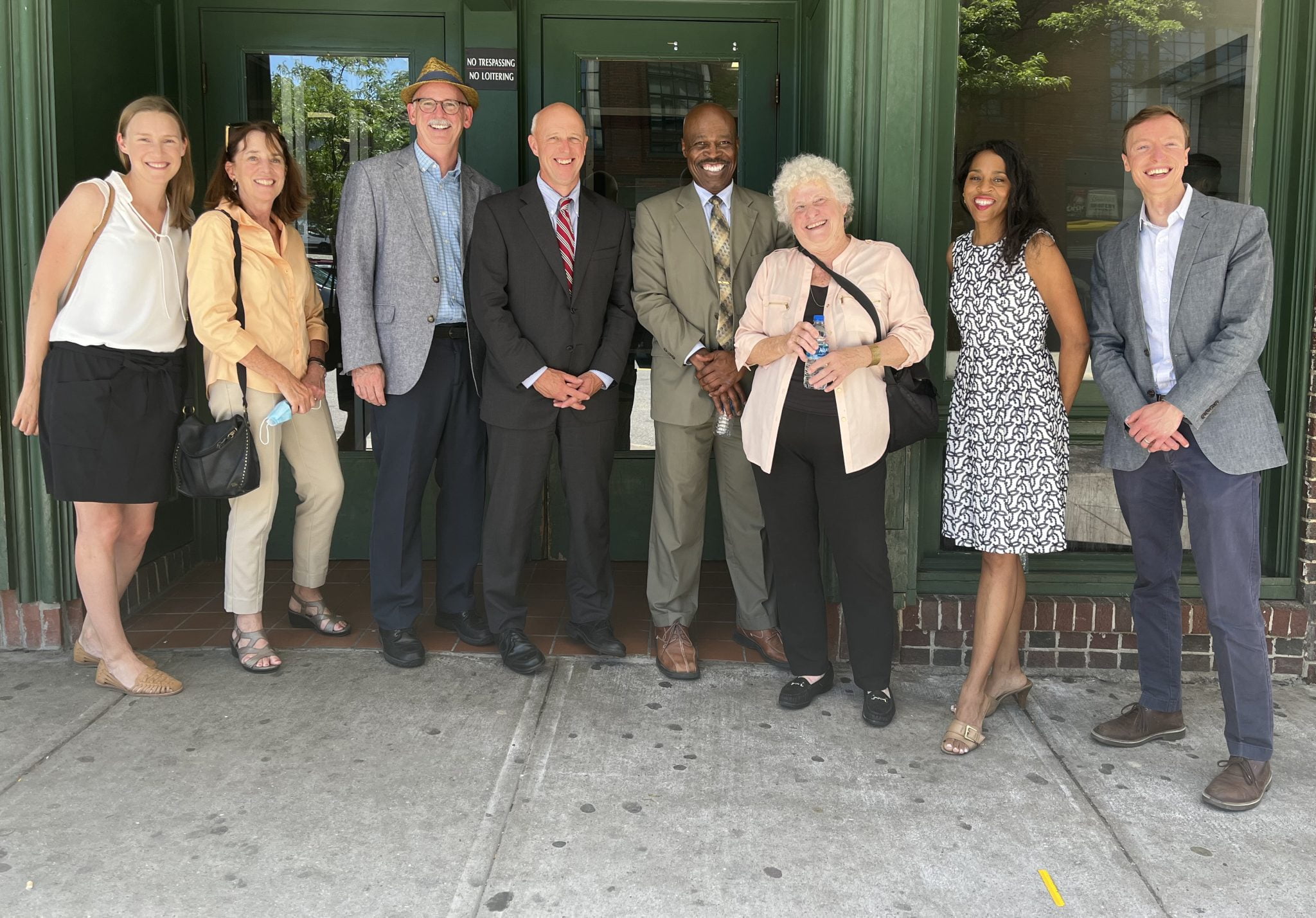
CEDAC housing team joins Secretary Kennealy, Undersecretary Maddox and Kate Racer at the supportive housing announcements in Worcester.

CEDAC committed predevelopment or acquisition financing to 6 of these projects

BOSTON, July 20, 2022 – The Community Economic Development Assistance Corporation (CEDAC) is proud to serve as a financing partner in the production or preservation of 11 supportive housing projects announced during the Baker-Polito Administration’s most recent Supportive Housing funding round. The new projects represent 437 units of supportive housing and will provide essential shelter and care for individuals and families in need across the Commonwealth. CEDAC committed a total of over $5 million in early-stage financing for the production and preservation of six of these supportive housing projects.

“CEDAC is proud to collaborate with the Baker-Polito Administration and our non-profit housing partners on these new developments, which come at a time of intense need as the Commonwealth faces an ongoing housing shortage that affects the most vulnerable members of our population,” said Roger Herzog, CEDAC’s Executive Director. “We look forward to continuing our work with Undersecretary Jennifer Maddox and her team at the Department of Housing and Community Development (DHCD) as we pursue our mission to increase housing accessibility for those in need.”

CEDAC provided predevelopment and/or acquisition loans to the following projects:

  • Warren Street Housing, Boston: Commonwealth Land Trust, Inc. acquired two buildings, located at 570 and 570R Warren Street in the Grove Hall section of Dorchester, for renovation. The developer will create 26 single room occupancy (SRO) units of permanent supportive housing for vulnerable individuals. The site is located one block from Blue Hill Avenue and one-half mile from Franklin Park. All units will be affordable to individuals at or below 50% of the area median income (AMI), including 13 reserved for formerly homeless individuals at or below 30% AMI. CEDAC provided a predevelopment loan of $300,000 for the project.
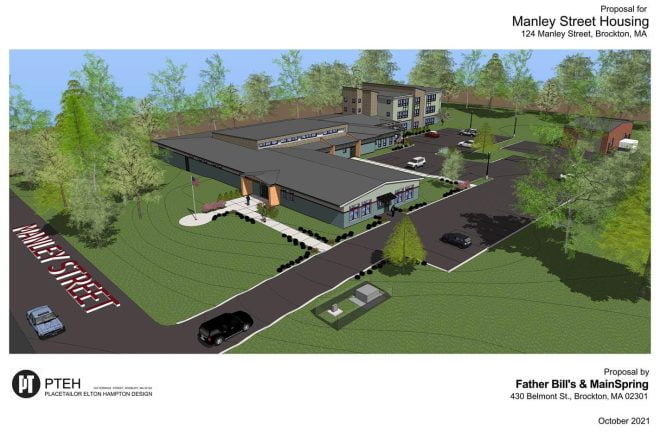
  • Manley Housing Resource Center (Phase 1), Brockton: Father Bill’s & Main Spring (FBMS) will renovate and expand the former U.S. Army Reserve Center at 124 Manley Street in Brockton, which has been vacant since 2015, to create the Manley Housing Resource Center (MHRC), a multi-use facility that will provide emergency shelter, wrap-around supportive services, and permanent supportive housing, all in one location. The MHRC will be developed in two phases. The first phase, which is the subject of this award, will consist of the renovation of the U.S Army Reserve Center into a 128-bed emergency shelter and a day program center with an on-site health clinic. A 1,500-square-foot addition will house case management offices and supportive service space. CEDAC provided a predevelopment loan of $400,000 for the project.
  • Catalyst Housing, Lynn: Harborlight Community Partners, Inc. (HCP) and The Haven Project (THP) have entered into a joint venture agreement to acquire and renovate the third and fourth floors of a historic loft building located at 57 Munroe Street in downtown Lynn. The partnership will create 23 studio units for formerly homeless unaccompanied youth and one studio resident manager unit. Twenty-three units will be affordable to youth earning less than 30% of area median income. CEDAC provided a predevelopment loan of $256,252 for the project.
  • 275 Chestnut Street, Springfield: In early 2020, Home City Development Inc. (HCDI) completed construction of 101 enhanced SRO units in the four upper floors of the former YMCA building located on Chestnut Street in Springfield. HCDI is now planning to purchase an additional section of the building and will use this space on the first and second floors to create 29 additional enhanced SRO units. CEDAC provided a predevelopment loan of $220,000 and committed acquisition financing of $350,000.
  • New Point Family Apartments, Salem: North Shore Community Development Coalition’s (NSCDC) project involves the acquisition and preservation of 18 units of naturally occurring affordable housing for families in three buildings in Salem’s Point neighborhood. The project will create long term affordability where none currently exists and will fund much needed capital improvements including enhanced energy efficiency. As the occupied units turnover, NSCDC will lease the apartments to homeless families and provide supportive services. CEDAC provided predevelopment loans totaling $437,100 and an acquisition loan of $2,874,400.
  • Gordon H. Mansfield Veterans Community, Tewkesbury: Soldier On, Inc. entered into a development agreement to purchase a 1.5-acre parcel of land at 1660 Main Street in Tewksbury to construct 21 units of permanent supportive housing for veterans who are homeless or at risk of homelessness. The project will consist of 18 one-bedroom units and three studios all affordable to households earning less than 80% of area median income, including six restricted for households earning less than 30% of area median income. CEDAC provided a predevelopment loan of $225,000.

CEDAC works with DHCD on all 11 of these funded supportive housing projects through its management of several state bond programs.

About CEDAC

CEDAC is a public-private community development financial institution that provides project financing and technical expertise for community-based and other non-profit organizations engaged in effective community development in Massachusetts. CEDAC’s work supports two key building blocks of community development: affordable housing and early care and education. CEDAC is also active in state and national housing preservation policy research and development and is widely recognized as a leader in the non-profit community development industry. For additional information on CEDAC and its current projects, please visit www.cedac.org.
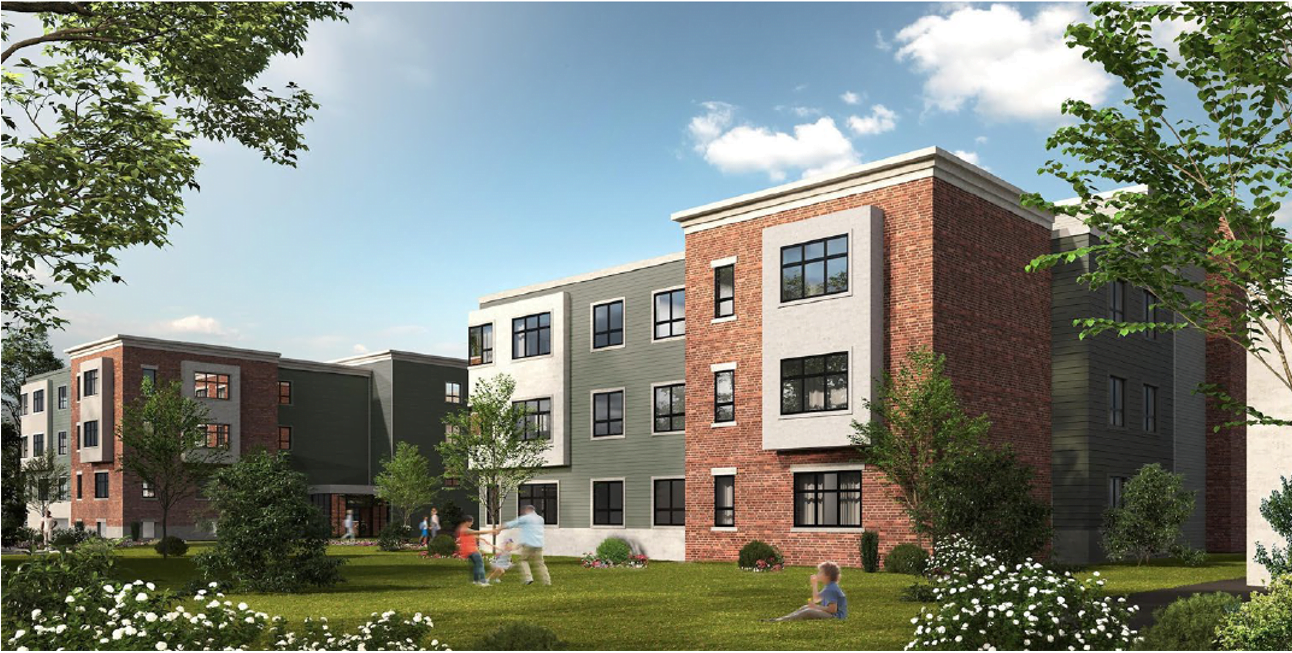
Featured images: a rendering of Manley Street Housing project; CEDAC housing team with Secretary Kennealy, Undersecretary Maddox and Kate Racer.

CEDAC Commits Over $7.1 Million in Early-Stage Financing to Six Community Development Projects in Third Quarter of FY22

CEDAC is proud to report that we have committed $7,125,700 in early stage financing for the production and preservation of affordable housing in 6 projects during the third quarter of Fiscal Year 2022.   Across the Commonwealth, we continue to see a healthy pipeline of housing development projects in urban neighborhoods and high opportunity suburban communities.  CEDAC’s financial and technical assistance supports non-profit community development partners to plan and build these projects, helping navigate the housing development process during the predevelopment phase to secure site control, zoning and local permitting approvals, and finally construction and permanent financing commitments.  As this year continues, we expect to assist in the creation of a large number of additional developments to meet the high demand for affordable housing from Massachusetts residents.

Read more about our lending commitments in Q3 of FY22.

Featured image: a rendering of East Boston CDC’s 2 Shawsheen Road project.

2021 Annual Report

We are pleased to share with you the latest annual report from the Community Economic Development Assistance Corporation (CEDAC).

Baker-Polito Administration Announces $63 Million for Affordable Housing Production

15 projects in 14 communities will create or preserve more than 700 units of rental housing

BOSTON, 29, April 2022 – Community Economic Development Assistance Corporation (CEDAC) was delighted to join Housing and Economic Development Secretary Mike Kennealy in Gloucester on April 15th for the announcement of $63 million in new funding awards for 14 affordable housing projects across the Commonwealth. The Secretary was joined by Housing and Community Development Undersecretary (and CEDAC Board Chair) Jennifer Maddox, and CEDAC Executive Director, Roger Herzog, along with several state and local officials, and many representatives of the project sponsors receiving funding awards.   The YMCA of the North Shore hosted this event in their beautiful new Gloucester facility, which also features an early education program supported by CEDAC’s affiliate, Children’s Investment Fund.

Led by the Mass Department of Housing and Community Development (DHCD), the awards will assist with the construction of 479  new units of affordable housing targeted to  low-income households, with another 150 units designated for extremely low-income families or individuals  often transitioning from homelessness. DHCD also awarded federal and state low-income housing tax credits, which are expected to generate over $200 million in equity to support both new construction and the rehabilitation of existing housing.

“With this round of affordable housing awards, we continue to expand the Commonwealth’s portfolio of new housing units to meet the needs of households of all income levels,” said Governor Charlie Baker in a press release.  “As we continue to tackle the state’s housing crisis, these projects will result in meaningful progress toward our goal of enhancing access to safe, quality, and affordable housing across Massachusetts.”

“These projects are the result of key partners working together to produce needed new housing in Massachusetts and I’m excited we can provide important financial support to make these new units reality,” said Housing and Economic Development Secretary Mike Kennealy.  “Affordable housing development is truly a team sport, and the cooperation and dedication to make these projects happen are incredible testaments to the strong affordable housing ecosystem in Massachusetts.”

“Today’s projects include a mix of new construction, historic rehabilitation, and transformative investments in our public housing stock. In Fitchburg and Springfield, we will see innovative, adaptive reuses of historic properties, and new construction will add vibrancy near the new Polar Park in Worcester,” said Housing and Community Development Undersecretary Jennifer Maddox. “We are incredibly proud to invest in projects that will invite new residents to communities, enhance neighborhoods, and ensure current residents can access stable, affordable housing. Here in Massachusetts, we have a strong network of affordable housing developers, funders, and advocates who have helped us bring thousands of new affordable units to the market over the last five years, and we look forward to continuing this work.”

“The projects announced in DHCD’s latest funding round represent the continued successes we are able to achieve through work with our non-profit partners and the Commonwealth,” said CEDAC Executive Director, Roger Herzog. “We remain committed to doing everything in our power to facilitate the creation of new affordable housing at a time of particularly acute need and look forward to working with Governor Baker and future administrations in service of that goal.”

CEDAC is proud to have committed a total of over $5.5 million in early stage predevelopment and acquisition financing  to 7  of the 15 total projects announced, including these projects that secured DHCD funding awards:

    • Chester Commons is an occupied 15-unit historic rehabilitation project located in Chester’s town center, a western Massachusetts community. CEDAC provided $400,000 in predevelopment financing and $655,000 in an acquisition loan for the project. The sponsor is the non-profit Hilltown Community Development Corporation, and DHCD will provide subsidy funds to support this project for older adults (55 and over) with an emphasis on accessibility.
    • Fitchburg Arts Community is a historic adaptive re-use project located in Fitchburg. CEDAC provided $245,000 in predevelopment financing for the project. The non-profit sponsor is NewVue Communities. DHCD is supporting the project, located across the street from the Fitchburg Art Museum, with federal and state housing tax credits and subsidy funds. The city of Fitchburg will provide its own funds in support of Fitchburg Arts Community, a key project in its local economic development strategy.  When complete, the project will offer 68 units of mixed income housing with a preference for artists. Forty-seven units will be available for artists or other households earning less than 60 percent of area median income (AMI), and 14 units further restricted for artists or other households earning less than 30 percent of AMI.
    • The John J. Meany Affordable Housing development located in Gloucester is a new construction project specifically targeted for senior residents. CEDAC provided $586,666 in predevelopment financing for the project. The sponsor is the YMCA of the North Shore, who hosted the event.  DHCD is supporting the project with federal and state low-income housing tax credits and subsidy funds.  The city of Gloucester will provide funds of its own in support of the project which will offer 44 total units.
    • Library Commons 2 is a 41-unit scattered site project located near downtown Holyoke. CEDAC provided $400,000 in predevelopment financing and $101,500 in an acquisition loan for the project. The sponsor is the non-profit Way Finders, Inc., and DHCD will support the project with federal and state low-income housing tax credits and subsidy funds. The city of Holyoke will also provide funds in support of Library Commons 2 and when complete, the project will offer 41 total units. Library Commons Phase I created and preserved 38 units of housing and was completed and leased up in August 2021.
    • Island Parkside Phase 2 is a new construction project located in Lawrence. CEDAC provided $528,065 in predevelopment financing and $1,610,104 in acquisition loans for the project. The sponsor is the non-profit Lawrence Community Works, which will develop and own 40 affordable rental units built to PASSIVE House Standards. The first floor will include a youth and community center developed by Squash Busters Lawrence DHCD is supporting the 40 rental units with federal and state low-income housing tax credits and subsidy funds. The city of Lawrence will support Island Parkside Phase 2 with a commitment of HOME funds. Island Parkside Phase 1, also involving the new construction of 40 affordable rental units, is expected to be ready for occupancy in early 2023.
    • 950 Falmouth Road is a new construction project located in Mashpee. CEDAC provided $550,000 in predevelopment financing. The sponsor is the nonprofit Preservation of Affordable Housing, and DHCD will support the project with subsidy funds. The town of Mashpee will support the project with funds of its own and when completed it will offer 39 total units.
    • Maple Woods is a new construction project for seniors located in Wenham. CEDAC provided $447,500 in predevelopment financing. The sponsor is the non-profit Harborlight Community Partners, and DHCD will support the project with federal and state low-income housing tax credits and subsidy funds. When completed, Maple Woods — zoned through a lengthy Chapter 40B process– will offer 45 total units with services for seniors.

About CEDAC

CEDAC is a public-private community development financial institution that provides project financing and technical expertise for community-based and other non-profit organizations engaged in effective community development in Massachusetts. CEDAC’s work supports two key building blocks of community development: affordable housing and early care and education. CEDAC is also active in state and national housing preservation policy research and development and is widely recognized as a leader in the non-profit community development industry. For additional information on CEDAC and its current projects, please visit www.cedac.org.
RAD FOR PRAC Forum on October 7, 2019

How Section 202 Owners Can Take Advantage of HUD’s Rental Assistance Demonstration

On October 7, 2019, CEDAC offered a forum that explained how Section 202 owners can use RAD as a preservation tool for their Section 202 PRAC projects.

Speakers included:

  • Tom Davis, Director, Office of Recapitalization, US Department of Housing and Urban Development (HUD)
  • Dan Rogers, Chief, Asset Management Division, Northeast Region, HUD
  • Emily Cooper, Chief Housing Officer, Executive Office of Elder Affairs and Special Advisor on Housing, MassHealth
  • Julie Creamer, Senior Vice President, Preservation of Affordable Housing
  • Lizbeth Heyer, Chief of Real Estate and Innovation, 2Life Communities
  • Naren Dhamodharan, President, Hampden Park Capital & Consulting

Thank you to our speakers and to all of those who were able to attend. If you couldn’t make it, we invite you to view PowerPoint presentations from the forum:

We look forward to continuing to work with our partners to prevent the loss of existing affordable housing.

»

SourceCEDAC/Housing Preservation

Commonwealth Committed to Early Childhood Education

FUNDING FOR YOUNG CHILDREN
Early Childhood Education an Important Component of Community Development

Reprinted from November 5, 2018

High-quality child care facilities benefit children, their families and society. Facilities with lots of natural light, access to play indoors and outdoors, and space that supports teacher planning and encourages parental involvement are essential to fostering children’s health and well-being, especially for children living in low-income neighborhoods. Over time, policy makers, philanthropists and other public/private financing agencies are increasingly recognizing the importance of early childhood education (ECE) and out-of-school time (OST) facilities to community development.

The most recent – and perhaps most significant – acknowledgement of the role high-quality child care plays in strengthening communities comes from the federal government. In June, the U.S. Department of Treasury’s Community Development Financial Institutions (CDFI) Fund certified the Children’s Investment Fund (CIF), an affiliate of the Community Economic Development Assistance Corporation (CEDAC), as a CDFI. This is important because CDFIs invest in neighborhoods that other financial institutions are unwilling to and expand economic opportunities in those communities by providing organizations with access to financing and technical assistance.

The certification allows CIF to apply for federal funding to offer low-cost lending capital for ECE and OST facility improvements throughout the commonwealth. We were excited to learn in September that the CDFI Fund awarded us a $300,000 financial assistance grant, one of 302 community development financial institutions to receive a total of $202.2 million in awards this year. Those resources will help expand both financial and technical assistance to child care providers from Boston to Pittsfield.

CIF has invested $56 million in support of 565 capital projects that improved learning environments for 30,500 children.

The Children’s Investment Fund is one of a very few organizations across the country with a primary focus on developing child care facilities that has received this certification. We have also become a national leader in integrating child care within community development, in large part because Massachusetts has shown a tremendous amount of vision in this area.

This past spring, Gov. Charlie Baker and state legislators signed the Housing Bond Bill, which reauthorized the Early Education and Out of School Time (EEOST) Capital Fund, a bond program created in 2013 that provides capital funds for child care providers planning to renovate or build new child care facilities. CIF co-manages EEOST with CEDAC and the Massachusetts Department of Early Education and Care (EEC). Baker in August announced the most recent awards through the fund – four providers each received $1 million.

Among the recipients were Holyoke Chicopee Springfield Head Start Inc., which is constructing a high-quality early learning center based on the nationally recognized Educare model to serve 141 infants, toddlers and preschoolers from low-income families within Springfield. The Educare model helps children from birth to age 5 grow up safe, healthy and eager to learn. With more than 20 completed projects across the country, Educare prepares children for success and also helps parents develop skills to champion their child’s education.

Educare Springfield, the first in Massachusetts, is the result of collaboration between city and state partners, the region’s philanthropic community, and Holyoke Chicopee Springfield Head Start, which worked tirelessly to bring Educare to Western Massachusetts.

At a recent groundbreaking ceremony, Lt. Gov. Karyn Polito noted the strong connection between the impact of this new facility and the city’s overall efforts to revitalize this distressed urban neighborhood through public and private investments. It underscored how early education – like housing – is an important component of community development. The 2019 EEOST Capital Fund funding round is now underway.

Since it was established in 1991, CIF has invested $56 million in support of 565 capital projects that improved learning environments for 30,500 children. Our comprehensive technical assistance, training and financing model has strengthened nonprofit community-based child care providers in urban neighborhoods like Dorchester, suburban areas like Beverly and rural towns like Granby. In 2017 alone, more than 3,300 children throughout the commonwealth were served in facilities assisted by CIF. Almost all of these children (93 percent) were from low-income households; 80 percent were children of color; 45 percent were English Language Learners; and 13 percent were children with special needs.

As important as CIF’s role is in supporting child care providers, it has been elevated by certification and funding from the federal government. Funding from the CDFI Fund, EEOST and the philanthropic community give us more opportunities to increase lending to the provider community. As our understanding grows of how early education and care strengthens local communities, it’s good to know that public and private resources are available for smart and impactful investments.

Roger Herzog is the executive director of the Community Economic Development Assistance Corporation. Theresa Jordan is director of Children’s Facilities Finance for the Children’s Investment Fund.

Commonwealth Committed to Early Childhood Education

»

SourceBanker & Tradesman

Baker-Polito Administration Successfully Preserves Affordable Housing

Challenges Ahead as Thousands of Units Approach Affordability Expiration

Preserving affordable housing is an important priority in Massachusetts, and has become a special focus of policymakers and advocates as the region’s hot real estate market has constrained the ability of nonprofit developers and others to produce new affordable units. But while some of the challenges we face in maintaining affordability are new, many of the most intractable issues are legacy challenges from decades ago. The commonwealth has spent years – decades, even – finding innovative solutions to address these old problems. Even with all of the hard work, threats remain.

Roger Herzog
Roger Herzog

March 1 marked an important date in affordable housing preservation – it was the day in which a large number of affordable housing projects built in the 1970s hit their mortgage expiration date. This “expiring use” problem stems from how many large-scale affordable developments were financed during that era – these apartments were built by private owners utilizing state and federally funded mortgage programs with 40-year terms. In return for the below market rate loans, owners are required to comply with affordable housing use restrictions. Many of those mortgages have reached or are reaching maturity in the next few years, at which point the use restrictions terminate and the owners may convert the affordable housing to market rate. And in a real estate market that is as super-charged as Greater Boston, it’s easy to imagine why an owner would be tempted to convert their development.

Affordability Preserved

First, the good news – over the past three years, the state’s Department of Housing and Community Development (DHCD) and its state agency partners have preserved the long-term affordability of over 15,000 housing units across the commonwealth. Due to significant capital investments in affordable housing by the Baker-Polito Administration more than 4,400 units maintained their affordability in 2017 alone.

Bill Brauner

It is also due to the state’s affordable housing preservation law, Chapter 40T, which was passed nine years ago to address the expiring use challenge. Chapter 40T established public notification provisions for tenants and state and local officials, purchase rights through a right of offer and right of first refusal for DHCD or its designee to acquire this housing if the owner decides to sell, and modest tenant protections for projects with affordability restrictions that terminate. The state has helped to preserve almost 30,000 units of affordable rental housing since the law was enacted. Through the investment of federal, state and local resources and Chapter 40T, the state’s affordable housing programs have ensured that families are able to stay in their homes and neighborhoods.

CEDAC offers its technical assistance and early stage financing to nonprofit developers seeking to preserve affordable multifamily housing facing expiring use restrictions. In 2017, two preserved projects exemplify our preservation success. In the high-cost market of Lexington, CEDAC supported efforts by MassHousing, the town of Lexington and its housing authority, and project residents to preserve 16 units of low- and moderate-income cooperative housing. Worcester’s Fruit Sever Apartments is another good example of the kind of affordable housing being preserved. In January 2016, CEDAC approved a $9 million acquisition loan to The Community Builders Inc. to help the nonprofit developer preserve the 132 affordable apartments there. The building was preserved through the Chapter 40T purchase process and state financing

Housing at Risk

In spite of these efforts, a significant portion of the state’s portfolio of federal and state-assisted affordable housing remains at risk. Thousands of additional affordable units continue to face the potential of  market-rate conversion. In one state mortgage program, 3,200 units are at high risk due to expiring mortgages. A decision by property owners to convert these into market-rate apartments could leave the residents, including many elders, facing much higher rents. And unlike most federally financed projects, tenants in these projects are not able to receive federal rent vouchers that allow them to remain in the housing post-conversion. State housing officials have responded to this challenge by creating a $100 million fund, combined with federal housing tax credits and bond financing, to offer new financial incentives to the private owners to preserve this housing.

The truth is that the March 1 milestone is a reminder that we will be facing crunch time over the next few years when it comes to preserving affordable housing. Thousands of vulnerable Massachusetts families and individuals are counting on us to effectively solve these old problems – and as we look at the actions of policymakers on both the state and federal levels, we must continue to find and implement innovative solutions, just as we’ve done in the past.

Roger Herzog is the executive director of the Community Economic Development Assistance Corporation (CEDAC). Bill Brauner is CEDAC’s director of housing preservation and policy.

Baker-Polito Administration Successfully Preserves Affordable Housing

SourceBanker & Tradesman

Lynn School Gets A Reason to Aspire

LYNN SCHOOL GETS A REASON TO ASPIRE
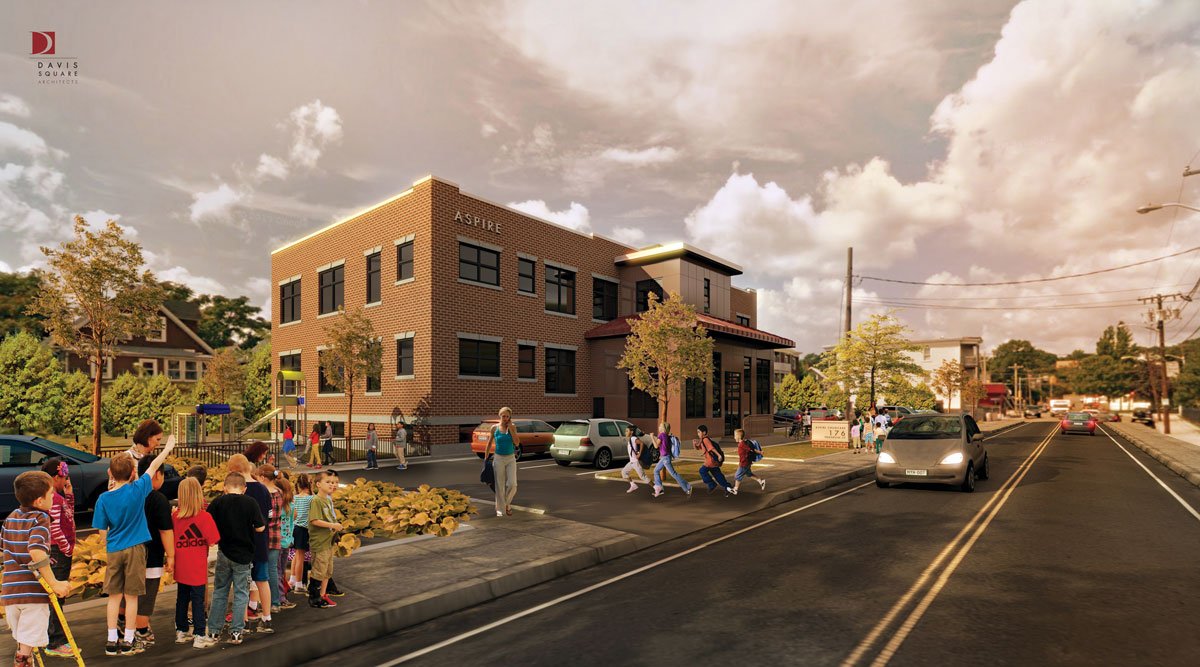
A rendering of Aspire Developmental Services’ plan to convert the former O’Keefe School on Franklin Street into an early intervention center.

BY PAUL HALLORAN

LYNN — Aspire Developmental Services’ efforts to raise funds for a new headquarters got a major boost when the agency was awarded a $1 million state grant. Aspire, which provides Early Intervention services to children up to age 3, was one of six agencies to receive the Early Education and Care and Out of School Time grant from the state Community Economic Development Assistance Corporation, in partnership with the Children’s Investment Fund. The state awarded competitive grants totaling $3.6 million to be used for major capital facilities projects. Aspire got the largest grant and was the only agency to receive the maximum of $1 million.

“We are extremely grateful to receive this funding,” said Lori Russell, acting executive director of Aspire. “This will play a major role in bringing our new building closer to reality. It was a very competitive process. We’re thrilled to be the only agency to receive $1 million.”

“We are very pleased that Aspire will be expanding their operation and capacity to provide critical services to children and families in Lynn and the surrounding area,” said Mayor Judith Flanagan Kennedy. Russell said while the grant is a big help, the capital campaign is ongoing, with the agency hoping to raise at least an additional $1 million for the $4.2 million project.

“This grant is very important, and we are extremely grateful, but we still have funds to raise in order to reach our goal,” said capital campaign committee member Debby Regan, co-owner ofMeninno Construction. “We plan to continue to make the case that this is a project worthy of the community’s support.” Aspire will renovate the former O’Keefe School building on Franklin Street. The new facility will provide 15,000 square feet of space — triple what it has now on Johnson Street. The additional space will allow Aspire to double the play group opportunities for children receiving Early Intervention Services. Aspire will also increase its capacity for child care from 20 to 49 toddlers and pre-school students.

The purpose of the grant is to improve the quality of early education settings.“The new building will allow us to serve more families in more modern and appropriate space,” Russell said. “We will also be able to provide parent-child groups and parent training workshops.”

“The Early Education and Care and Out of School Time grants are a critical resource for helping ensure that our early learning program environments support children’s learning,” said Lieutenant Governor Karyn Polito in announcing the grant recipients.

“By providing high quality facilities for children to grow and thrive in, we are both helping foster their success and building a more prosperous future for all of us.”

Aspire provided services to more than 1,850 children last year. Two-thirds of the families served were minority and 78 percent were below 200 percent of the federal poverty level.
Groundbreaking is scheduled for this fall.

6/25/2016
http://www.itemlive.com/news/lynn-school-gets-a-reason-to-aspire/
© Copyright 2016. All Rights Reserved.

SourceItem Live

39 Affordable Homes for Seniors Open in Revere

39 Affordable Homes for Seniors Open in Revere

June 10, 2016
by RealEstateRama

Revere, MA – (RealEstateRama) — At a ribbon-cutting ceremony today, The Neighborhood Developers (TND) officially opened their newest building, One Beach, in Revere. Joining The Neighborhood Developers at today’s ceremony was Mayor of Revere Brian Arrigo and Massachusetts Department of Housing and Community Development Undersecretary Chrystal Kornegay, as well as numerous funders and business partners who helped to make this development possible, including Bank of America, the TD Charitable Foundation, the Charles H. Farnsworth Trust, Massachusetts Housing Partnership, MassHousing, the Community Economic Development Assistance Corporation, the U.S. Department of Housing and Urban Development, and the North Suburban Consortium.

One Beach is a new four-story building in downtown Revere, featuring 39 affordable rental apartments for seniors. Construction began in April of 2015, after the demolition of a long vacant building, and concluded in May of this year. Residents have begun moving in and the leasing process will continue into the summer. The 39 apartments include 30 one-bedroom and 9 two-bedroom units.

“Where we live determines our quality of life – home matters – and One Beach provides beautiful high quality affordable homes that contribute to the great revitalization work happening along Broadway,” said Ann Houston, Executive Director of TND. “At One Beach, we are offering seniors the opportunity to live affordably in the heart of their community, in homes that sustain social and healthy lifestyles. We are pleased to continue our partnership with Revere to support a thriving community.”

Centrally located at the intersection of Broadway and Beach Street, One Beach offers residents convenient access to many shops and amenities. The building is a short walk from the Revere Rossetti-Cowan Senior Center, City Hall, and the Revere Public Library. The MBTA’s 116, 117, and 119 bus lines stop just outside of One Beach. They connect residents to Beth Israel Deaconess in Chelsea, MGH Healthcare Centers in Revere, and the MBTA’s Blue Line. The development is one part of Revere’s ongoing Broadway revitalization effort, intended to beautify the area and support economic development.

“The high demand at One Beach shows what an important community asset senior housing is,” said Revere Mayor Brian Arrigo. “This new project provides an opportunity for seniors to enjoy safe, secure housing in a brand new facility. We gladly welcome One Beach to our community.”

One Beach features a large ground-floor common room with a full kitchen, library, computers, television, and fitness equipment to promote health and community among the building’s residents. Outdoor amenities include a courtyard and onsite parking. The building and site are designed with enhanced accessibility features in many apartments, to accommodate seniors as they age.

One Beach meets a significant need for affordable senior housing in Revere. Fifteen percent of Revere’s population is over the age of 65, and 72% of Revere’s senior renters are cost-burdened, spending, on average, more than 30% of their annual income on rent. All apartments at One Beach are restricted to households earning 60% or less of the area median income and that include at least one member aged 55 or older.

“Affordable housing for seniors helps individuals age in place, and stay a part of a community they helped to build,” said Undersecretary for Housing and Community Development Chrystal Kornegay. “Increasing the stock of affordable housing built specifically for the needs of seniors is important for Massachusetts, and will be an important asset to Revere.”

Applications for apartments at One Beach were first made available in December 2015. Since then, TND has received more than 680 applications for the 39 apartments.
“We have had a strong working relationship with TND, so we’re pleased to provide the construction loan and low income housing tax credits that helped finance One Beach,” said Miceal Chamberlain, Massachusetts President of Bank of America. “In the past seven years, TND and Bank of America Merrill Lynch have created more than 180 affordable housing units in Revere and Chelsea, demonstrating our continued commitment to create strong neighborhoods in the communities we serve.”

TND’s first development for seniors in Revere was at Walden House in the Shirley Ave. neighborhood, offering seven affordable apartments. 525 Beach, also in the Shirley Ave. neighborhood, was opened in March of 2015 with 30 affordable apartments. TND is expanding its involvement at these buildings and at One Beach with a new Resident Services program to launch this summer. The Associate Director of Resident Services will connect residents to social services, promote healthy living, and help engage residents in their community. TND will offer residents individual case management as well as on-site opportunities to develop financial capabilities and healthy lifestyles.
With the opening of One Beach, TND’s portfolio increases to 389 affordable apartments, housing more than 950 individuals in Chelsea and Revere.

The Neighborhood Developers (TND) is a non-profit Community Development Corporation. TND’s mission is to bring its core strengths – building homes, engaging neighbors, and fostering economic mobility – to community partnerships that create great neighborhoods where all people can thrive.

Founded in 1979, TND spent its first 25 years developing great, affordable places to live in Chelsea. In 2006, TND expanded its emphasis from solely building affordable homes to building vital neighborhoods, focusing on both the people and the place. Its programs are delivered in Chelsea and Revere. Follow TND on Facebook and on Twitter, @TND_inc.

http://massachusetts.realestaterama.com/2016/06/10/39-affordable-homes-for-seniors-open-in-revere-ID01429.html
©Copyright 2016 RealEstateRama. All Rights Reserved.

SourceMA RealEstateRama