Pleasant Street, Northampton awarded $2.5 million

The City of Northampton has received one of the state’s biggest infrastructure investments this year. $2.5 million of your state tax money will help make Northampton’s Pleasant Street, more pleasant for residents, visitors and business owners, like Tess Poe of Beehive Sewing Studio.

“It’s so important for me to know that there’s an investment in making that part of Northampton a more walkable, more urban dense environment that really draws customers and visitors from all over,” Poe told 22News.

Northampton was one of just a few dozen communities in Massachusetts to receive money through the state’s highly competitive MassWorks program this year. 22News asked Massachusetts Housing and Economic Development Secretary Jay Ash why the city was overlooked for this grant money in 2015, but received one of the largest amounts this year.

“After the last round, talked to the mayor about what he could do to improve the application to move it ahead of others in line and we were all very supportive of the project,” said Secretary Ash. He said State Senate President Stanley Rosenberg and Northampton State Representative Peter Kocot advocated for the city’s proposal to MassWorks.

Technically Pleasant Street is Route 5, a highway, but the goal of this infrastructure investment is to make it more like an extension of Main Street, just a few blocks down the road. Through that investment, there will be new sidewalks, making it more accommodating for people walking and biking. Mayor David Narkewicz told 22News he hopes the new rotary will divide Pleasant Street/Route 5 into two pieces: a busy highway before the rotary, and a city street with businesses and commerce after the rotary.

That’s important to support two major housing development projects on Pleasant Street that will create 125 new housing units and mixed-use space on the street. The first, HAPHousing’s Live155 is already under construction at 155 Pleasant Street. It’s expected to open by the end of 2017. Valley CDC’s plan to redevelop the abandoned lumber yard on Pleasant Street will likely be complete by 2018.

“It’s a great example of how the City can make investments in its infrastructure, and not only sidewalks, but also storm sewer infrastructure, to help leverage private investments,” said Northampton Mayor David Narkewicz.

During the announcement Monday morning at City Hall, Senate President Rosenberg said former U.S. President and Northampton resident Calvin Coolidge would be proud of the city on a day like this.

22News asked Mayor Narkewicz if this new affordable housing would house Syrian refugees moving to Northampton. He said if the refugees can afford the units, then perhaps, but not immediately, because the refugees will be arriving almost a year before the complexes are complete.

http://wwlp.com/2016/11/28/northampton-awarded-2-5-million-to-invest-in-new-infrastructure-projects-on-pleasant-street/


SourceWWLP-22News

CEDAC Fall 2016 Newsletter

Dear Friends,

In this newsletter, we highlight recent successes and transitions for CEDAC and our affiliates, Children’s Investment Fund and Commonwealth Workforce Coalition.  As we note in the article on supportive housing, Massachusetts has a lot of good news to share when it comes to producing supportive housing units.  Through a state interagency effort, we created more than 1,750 in just three years and because of new state and federal resources, we will be able to produce even more.

SourceCEDAC

Shoe Shop Place opens officially with ribbon cutting

It’s been a long time coming, but the affordable housing planned for Shoe Shop Place, originally the Leonard, Shaw & Dean shoe company, has come to fruition — a feat commemorated with a ribbon cutting ceremony last week.

According to Executive Director of NOAH (Neighborhood of Affordable Housing, Inc.) Philip Giffee, the project’s success is the result of collaboration between the Greater Attleboro/Taunton HOME Consortium, Bank of America Merrill Lynch, Massachusetts Housing Partnership, Massachusetts Department of Housing and Community Development, MassHousng, Community Economic Development Assistance Corp., Massachusetts Historical Commission, NeighborhoodWorks America, and the town of Middleboro.

“We’re really grateful the town has been such a strong supporter for affordable and workforce housing. 25 families from both the town and region are now occupying this former shoe factory into uniquely beautiful apartments,” told The Gazette. “I think we started construction about 15 months ago and it’s been finished since June. So it’s been done for a number of months now and people are just about finished moving in.”

The Shoe Shop Place, at 151 Peirce St., features four 1-bedroom apartments, three 3-bedroom apartments, and 18 2-bedroom apartments. Giffee says not only does a project like this create a decent living space for working class residents, but it saves a building of historical significance to Middleboro.

“There is a subsidy attached, but people pay decent rent that’s slightly below market. The people who live there could be people who work in the local stores, people who work for the town, etc.,” Giffee said. “What you get out of a project like this is the restoration of a historic property, a building with good management, the creation of a number of jobs, and we pay taxes. So, it’s no longer a blight on the neighborhood sitting there vacant and deteriorating — it’s now a good living space for residents that is generating revenue for the town.”

A piece of funding for the Shoe Shop Place project came from the town’s Community Preservation Act (CPA) funds. Community Preservation Committee Chair Jane Lopes says the project was an obvious fit for CPA money.

“One of the charges of CPA is to create affordable housing so we were interested in that respect — it helps the town move toward the affordable housing quota — and then there’s the historical aspect of it. This is, I believe, the last shoe manufacturing building and shoe shop in town that’s still standing. Shoe manufacturing was once Middleboro’s claim to fame, so it’s a significant part of the town’s identity,” she said. “It’s really amazing what they did with it. It was a real eye-sore before. Hopefully it gets more people into the downtown area who will go to our museums, frequent the library, shop downtown….”

Lifelong Middleboro resident Beverly Brackett thought she was down on her luck while trying to move out of a 2-bedroom apartment in town which she could no longer afford until coming upon Shoe Shop Place by chance one day and learning that there were 1 bedroom apartments available.

“I had a 2-bedroom in The Grove (Residences at The Groves) but my family got smaller so I had to take a 1-bedroom, and they didn’t have any over there,” she said. “Middleboro is hard to find an apartment in. It took me a month and a half to find this one — I was out one day and saw the sign on this building that said they had 1-bedroom apartments — but before that, I was looking in the newspapers, books, I used my friend’s computer to look online, but I couldn’t find anything.”

When asked how things have been since moving into her new apartment, Brackett said, “I love it.”

“I love how it’s set up. There’s a laundry room around the corner and you use a card for the washer and dryer. There’s good security, there’s cameras outdoors so you can see who’s trying to come in and you buzz them in from here. It makes me feel safe,” she said. “I like how quiet it is too — the walls are nice and thick.”

At the ribbon cutting ceremony, Chair of Selectmen Diane Stewart — who noted her mother once worked at the shoe factory as a teen — expressed excitement at the accomplishment and what it means for the town.

“Anybody who knows Middleboro knows we do have a lack of affordable housing in Middleboro so I’m very glad that we were able to do this project, that we were able to provide some more adequate housing for the residents of the town, that we were able to create this beautiful building … and renovate it so it’s not an eye sore,” she said. “It’s beautiful. I’ve been inside, the apartments are very nice. And anybody who knows me knows I was particularly excited to see the handicap accessible units as well.”

“As many of you know, Shoe Shop Place is a true small town success story,” said President of Middleborough on the Move Judy Bigelow-Costa. “What was once an active vibrant shoe factory that epitomized the working class character of Middleboro and later became a vacant blighted property was reborn and now a vibrant property.”

Republican State Rep. Keiko Orrall spoke to the bipartisan work it took to accomplish the renovation and opening of Shoe Shop Place.

“In this difficult political climate I think it’s important to understand that this project began under a Democrat governor… With the beginning of that administration, which was a Democrat administration, into the Baker administration, which is a Republican administration, we have been able to accomplish and get something done here for our town that will benefit our community for years to come,” she said. “We’re all committed to getting to better communities and it doesn’t matter what political party is in charge here in Massachusetts.”

SourceSouth Coast Today

State Bonds For Early Education Prove Successful

The research has been consistent – children from low-income communities make tremendous educational gains when they have access to high quality early education programs. Early education has become an important priority for Massachusetts, which is why, three years ago, the commonwealth made history by becoming the second state to make state bond financing available to improve the quality of early education and out of school time facilities – and the first to include that financing in a larger community development bond bill.

The Housing Bond Bill that passed in 2013 created the Early Education and Out of School Time (EEOST) Capital Fund and for 16 child care providers, EEOST has made all the difference in ensuring they have quality learning space.

The physical space in which children in early childhood education (ECE) and out-of-school time (OST) programs spend most of their time is critical to their educational development. Proximity to classroom sinks, the installation of adequate HVAC systems, and access to indoor and outdoor play spaces are all as important as programming quality in early education. Nonprofit, community-based child care providers, especially those serving children in low-income neighborhoods, are often located in spaces not designed for learning – old storefronts, gloomy church basements and other sites that are inexpensive but not ideal. While many want to upgrade their facilities, most providers find it infeasible to fundraise the necessary capital or borrow loans from traditional banks.

Roger Herzog

Roger Herzog

For more than two decades, Children’s Investment Fund had offered both loans to child care providers planning to improve their facilities and the technical assistance that they require to complete those plans. But it had become apparent that to address the facility challenges of so many community-based providers, a new form of public capital funding would be needed. That’s why the EEOST Capital Fund was created. Luckily for Massachusetts, we already had a successful affordable housing financing example – of which CEDAC plays a critical role – to model the program after.

The 2013 legislation authorized $45 million to create the EEOST Capital Fund program to improve the quality of center-based child care facilities. In the first three years, Massachusetts has allocated $4 million per year for this purpose. The EEOST program, which is administrated by CEDAC and the Children’s Investment Fund in partnership with the Massachusetts Department of Early Education and Care (EEC), awards grants of up to $1 million to large group early education and out-of-school time programs for major capital facilities projects.

Theresa Jordan

Theresa Jordan

Sixteen child care centers have received grant awards from the EEOST Capital Fund program. Nearly 1,900 children across the commonwealth, of which more than 85 percent are from low-income families, will benefit from improved learning environments. The state’s $11 million of capital grants to date have leveraged more than $30 million in private investment from banks, social lenders, charitable foundations and other sources. All in all, the program is a great investment in supporting community-based nonprofits and Massachusetts’ children – and we’d be smart to build upon that success.

Among two of the providers to receive EEOST grants were the Catholic Charities Lynn Child Care Center and Valley Opportunity Council. The Lynn Child Care Center received a $750,000 EEOST award to transform a 13,000-square-foot building by replacing the roof, reconfiguring classrooms with new walls and floors, and installing a new heating and ventilation system as well as a limited use elevator, creating a more modern and child-friendly atmosphere. The center currently serves 100 children from Lynn, Nahant and Saugus, 95 percent of whom receive some form of public subsidy.

Valley Opportunity Council (VOC) in Chicopee demolished a concrete building – a cramped, dark former dentist’s office and single-family home – they had owned and operated since 2009. Through a $1 million EEOST grant, VOC constructed a new, open, bright and energy efficient 6,800-square-foot building to meet their program needs. The new facility added 50 percent more space, including expanded classrooms, and now serves 60 preschoolers and 22 out-of-school time children. VOC serves a diverse population, with 97 percent of the children coming from low income families.

Massachusetts has once again demonstrated it is a community development leader with the creation of the EEOST Capital Fund, and it is doubly sweet that the fund’s creation also reinforces our status as a national education leader. We’re looking forward to continuing our work improving environments for low-income children throughout the commonwealth.

Roger Herzog is the executive director of the Community Economic Development Assistance Corporation. Theresa Jordan is director of Children Facilities Finance for Children’s
Investment Fund.

http://www.bankerandtradesman.com/2016/11/state-bonds-early-education-prove-successful/?utm_campaign=Daily&utm_source=hs_email&utm_medium=email&utm_content=37488559&_hsenc=p2ANqtz-8b4wmUfwMSbvbnocc5StOdQdOx33G46_0DGMnJ6UQpTfb56BMr_qjktlanst_hftYAPEA2JaaVYIB0YERH8yMaSaYlVg&_hsmi=37488559

SourceBanker & Tradesman

More than just a roof over their heads

IBA’s supported-living house gets a makeover

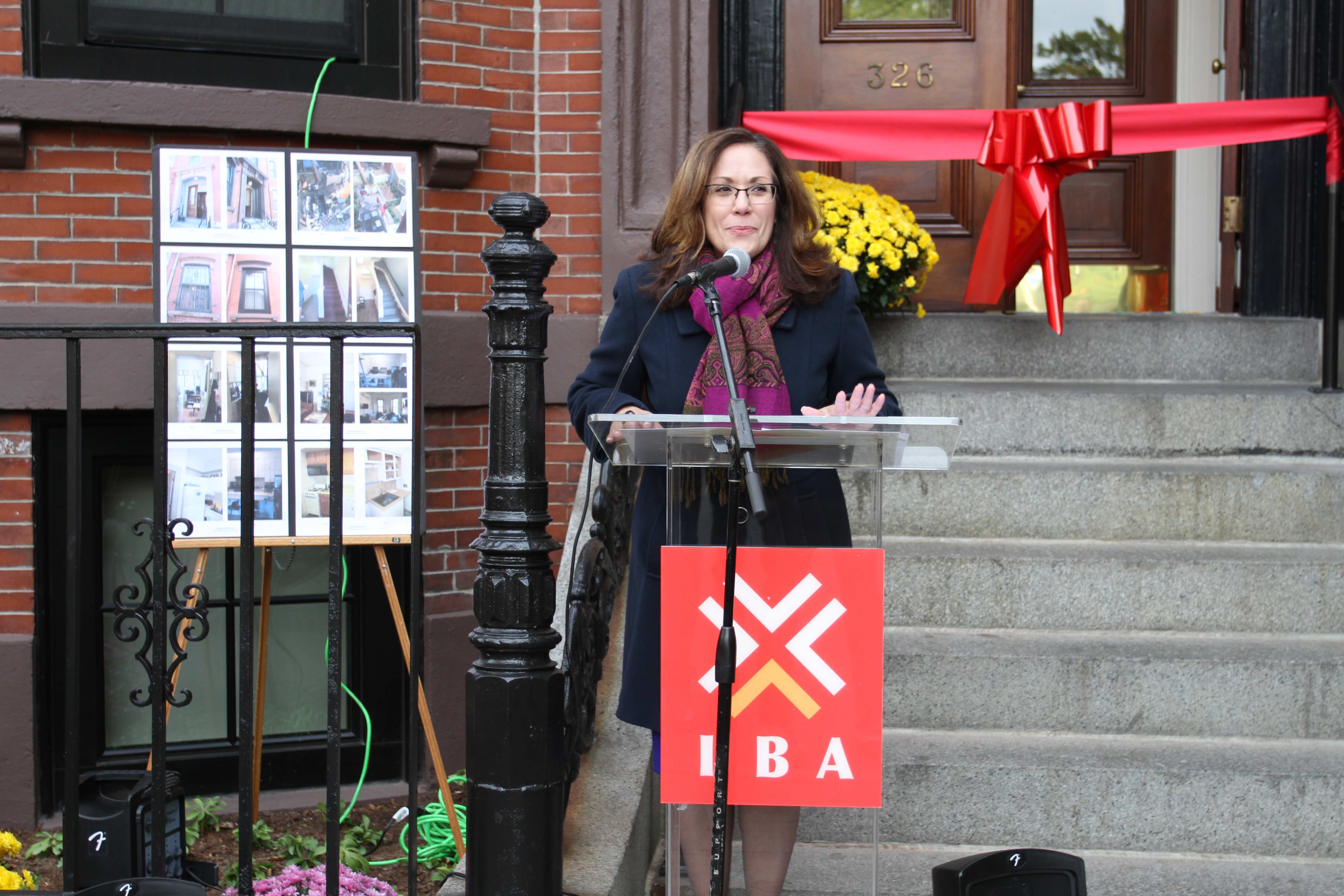
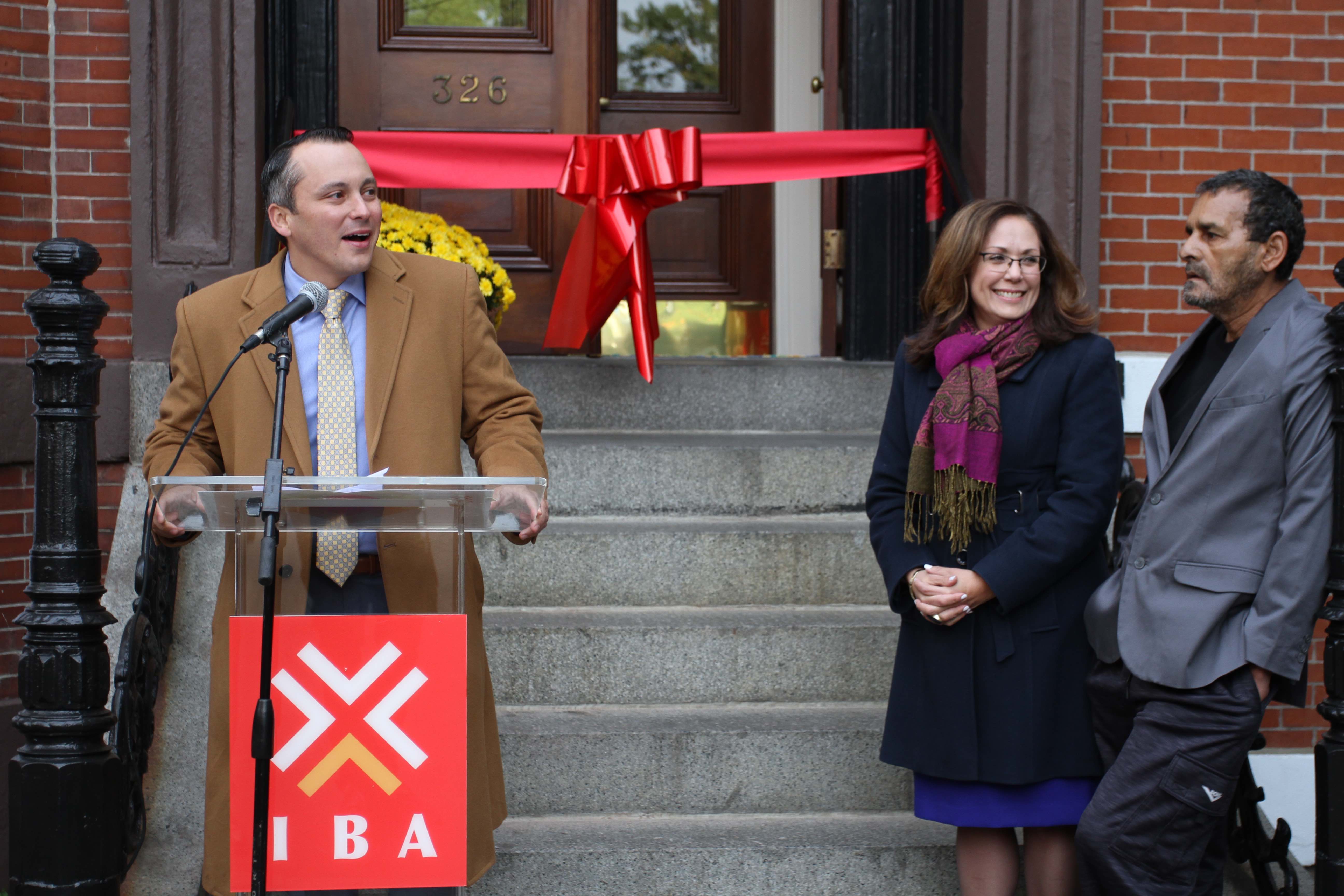
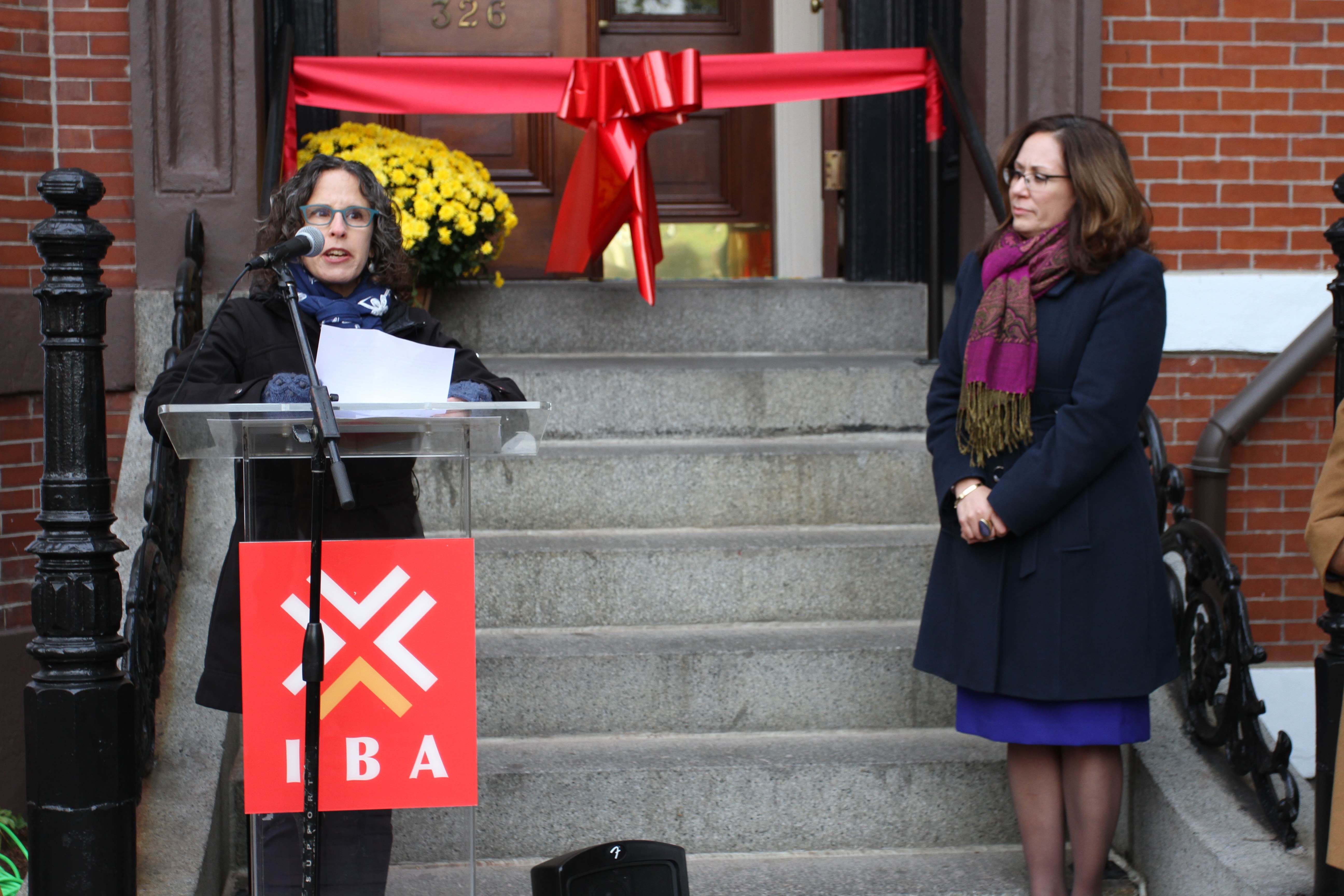
IBA’s Residencia Betances, one of only a few housing facilities in Boston offering supportive services to formerly homeless, Spanish speaking residents, received a makeover recently, and Inquilinos Boricuas en Acción (IBA) CEO Vanessa Calderón-Rosado celebrated the completed renovation on Thursday, October 27 with city and state housing and social service officials. Opened in 1993, Residencia Betances provides 11 single-occupancy units for formerly homeless residents who are clients of the Department of Mental Health, with round-the-clock, bilingual staff on site to assist residents with medication and health-care appointments, social skills symptom management and meal preparation, and to provide social, employment skills and wellness opportunities. “Residencia Betances is such a meaningful part of Boston’s South End, and we are proud to have completed renovations that will enhance the lives of our residents,” said Vanessa Calderón-Rosado. “We are grateful to those that have helped make this project happen, and look forward to continuing with more work aimed at providing affordable housing for those in need.” The renovation, which received funding from the Department of Housing and Community Development’s (DHCD) Housing Preservation Stabilization and Facilities Consolidation program and from the Community Economic Development Assistance Corporation (CEDAC), will provide a more open and client-friendly common area; historic restoration of the brick townhouse’s exterior and upgrades in the residents’ units.

State representative Aaron Michlewitz, undersecretary of Housing and Community Development Chrystal Kornegay, Laila Bernstein, advisor to the Mayor for the Initiative to End Chronic Homelessness and Community Economic Development Assistance Corporation (CEDAC) director of housing development Sara Barcan joined Vanessa Calderón-Rosado for a ribbon cutting, remarks and a luncheon at the Villa Victoria Center for the Arts. In her remarks, Bernstein noted the Mayor’s commitment to ending homelessness and particularly to helping the long-term homeless. She said, “In January 2016, there were 612 chronically homeless individuals and since then we have housed 186 of those individuals. That represents 1,015 years of homelessness because these were the individuals who have been homeless the longest. The proven formula for ending chronic homelessness is permanent, supportive housing.” Similarly, Undersecretary Kornegay said, “This is a really important project and a really important constituency for the governor. As many of you know, when the administration took office, we had 1,500 homeless families in hotels and motels and yesterday, we were down to 230. It’s because of projects like this and investment in them that we are able to keep moving families through difficult and trying times in their lives.”

The project was financed Department of Housing and Community Development (DHCD), and the funds for this project come from DHCD’s funds, and in part by CEDAC. Calderón-Rosado pointed out, “This project was completed on time and within budget and we are very proud of that accomplishment.” She noted that the renovation of the property was conducted without relocation and with the residents in place, making the adherence to budget and timeline all the more noteworthy.

http://www.mysouthend.com/news/news/206198/more_than_just_a_roof_over_their_heads

SourceSouth End News

Rebuilding a Home for those Who Need it Most

In our constant efforts to improve the lives of our community, we unveiled the new & improved Residencia Betances with a ribbon cutting ceremony at the property last Wednesday. The ceremony marked more than just the completion of renovations to the building, it celebrated the improvements that will help us provide even better care to our 11 residents, who were previously homeless and suffer from mental disabilities. Many community members attended the ribbon cutting and had nothing but praise for all those involved in making this project possible – a project that gives not just a house, but a home to these previously displaced individuals.

We are so grateful to all of our partners who made this possible – especially to the Department of Housing and Community Development (DHCD) and the Community Economic Development Assistance Corporation (CEDAC) for providing us with the funding to perform project renovations to both the interior and exterior of the property.

“Residencia Betances is such a meaningful part of Boston’s South End, and we are proud to have completed renovations that will enhance the lives of our residents,” said our CEO Vanessa Calderón-Rosado. She also remarked the impressive completion of the project “on time and within budget with our residents in place the entire time.”

img_0921

Our CEO, Vanessa Calderón-Rosado, introduced guest speakers and thanked all of our partners in this project.

Started in 1993, Residencia Betances is an 11 room, single-occupancy development located on Shawmut Ave in the South End, serving Spanish-speaking residents who are formerly homeless clients of the Department of Mental Health. Our bilingual and bicultural staff works around the clock with the residents to ensure they have access to a range of supportive services that enable them to live successfully and optimize their overall health. These services include symptom management, community skill development, support with medication administration, healthcare appointments, and meal preparation; as well as encourage all residents to partake in social, employment and wellness activities.

The ceremony was led by our CEO Vanessa, and brought together city and state officials including State Representative Aaron Michlewitz, Undersecretary of Housing and Community Development Chrystal Kornegay, Advisor to the Mayor for the Initiative to End Chronic Homelessness Laila Bernstein, and CEDAC Director of Housing Development Sara Barcan. There were also IBA supporters and community members in attendance, including the residents of the building who were excited to cut the ribbon marking the official completion of renovations to their home.

State Representative, Aaron Michlewitz, spoke during the ceremony.

State Representative, Aaron Michlewitz, spoke during the ceremony.

“We gladly celebrate the completion of such an important property in the South End, carried out by an organization dedicated to bettering the lives of others” said Undersecretary Kornegay. “Our involvement with IBA on this project dates back nearly 20 years, and we are thrilled that we were able to reinvest in housing unlike any other in the area.”

Improvements were made to the residents individual units as well as to the common areas to create a more open and welcoming floor plan for the residents to interact. There were also exterior enhancements made to the historical brownstone so many in attendance not only applauded this major milestone, but joked, “It looks like the rest of the South End!”

Barcan praised the project, “Our hats are off to IBA for having nourished and sustained this project for almost a quarter of a century – it’s really very impressive.” She continued, “it didn’t take anything away from the stability of the housing and the quality of services being provided [to the residents]. So, we really congratulate them on making this building a national example of what you can do with permanent supportive housing.”

CEDAC’s Director of Housing Development, Sara Barcan, addressed the crowd.

CEDAC’s Director of Housing Development, Sara Barcan, addressed the crowd.

Bernstein spoke on behalf of Mayor Marty Walsh, saying, “The way to end chronic homelessness – long term homelessness – for people with disabilities is through projects like this one…We’re very grateful for IBA’s leadership in developing this project and many others that are part of the solution to stabilize housing for people who are housing insecure and also ending homelessness.”

Vanessa closed the ceremony saying, “We are grateful to those that have helped make this project happen, and look forward to continuing with more work aimed at providing affordable housing for those in need.”

This property offers affordable housing to those that need it most, and provides unparalleled services to enhance the quality of life for our residents and we could not be more ecstatic about it’s completion. To ensure that we can continue projects like this one, please donate here. Remember, any amount helps to make a difference.

http://www.ibaboston.org/blog/rebuilding-a-home-for-those-who-need-it-most/


SourceInquilinos Boricuas En Accion

Aspire Developmental Services Relocates Lynn Headquarters with MassDevelopment Bond

MassDevelopment has issued a $2,420,000 tax-exempt bond on behalf of Aspire Developmental Services, Inc., an organization in Lynn and Salem that provides programs for children and adults with physical and developmental disabilities. Aspire is using bond proceeds to renovate, furnish, equip and insure the 15,912-square-foot former O’Keefe School building at 176 Franklin Street as its Lynn headquarters. The new building will allow Aspire to expand its day care, early intervention and other services. East Boston Savings Bank purchased the bond.

“Aspire Developmental Services’ focus on early intervention ensures a bright future for the children and families it serves on the North Shore,” said MassDevelopment President and CEO Marty Jones. “We are pleased to help this organization expand its services and update its Lynn headquarters with this low-cost financing.”

Founded in 1951 as the Cerebral Palsy Council of the North Shore, Aspire Developmental Services, Inc. is a private, nonprofit healthcare and educational agency that provides programs for children and adults with physical and developmental disabilities and their families. The agency was organized by parents and professionals interested in providing services for persons with cerebral palsy. In 2015, the organization became Aspire Developmental Services, Inc. Aspire provided services to 1,856 children in 10 communities in 2015 through Early Intervention, the Early Intervention Partnership Program and its Aspire Early Education Center, which is open to typically developing children and those with mild developmental delays.

“We are very excited to begin this project, which will allow for the continued growth of Aspire Developmental Services,” said Lori Russell, Acting Executive Director at Aspire. “The project, which is expected to be completed in the summer of 2017, will enable us to serve more at-risk families on the North Shore.”

MassDevelopment, the state’s finance and development agency, works with businesses, nonprofits, financial institutions, and communities to stimulate economic growth across the Commonwealth. During FY2016, MassDevelopment financed or managed 352 projects generating investment of more than $4 billion in the Massachusetts economy. These projects are projected to create about 8,200 jobs and build or rehabilitate about 4,200 residential units.

http://www.massdevelopment.com/news/aspire-developmental-services-relocates-lynn-headquarters-with-massdevelopm/

SourceMassDevelopment

IBA Completes Upgrades To South End Property

Housing nonprofit Inquilinos Boricuas en Acción (IBA) has completed renovations of Residencia Betances, an 11-room single-occupancy building on Shawmut Avenue in Boston’s South End that serves low-income individuals with mental health needs.

IBA recently completed exterior and interior upgrades to the brownstone structures, including creation of open floor plans in common areas and improvements to individual units.

The property was originally developed by IBA in 1993, one of the area’s few properties that provide around-the-clock supportive housing to Spanish-speaking residents who are formerly homeless clients of the Department of Mental Health.

The project was financed by the Department of Housing and Community Development (DHCD) and in part by the Community Economic Development Assistance Corp.

IBA was founded in 1968 by a group of Puerto Rican activists to fight displacement in the South End.

http://www.bankerandtradesman.com/2016/10/iba-completes-upgrades-south-end-property/?utm_campaign=Daily&utm_source=hs_email&utm_medium=email&utm_content=36662767&_hsenc=p2ANqtz–Lx_l_rjJoBQ0OiXiZYzK_8ISnrE6n9AfFTcnOeFV48SqBhYJ_qXfpyJp0ofIOpuHG7Gn1rc7-7tO3bzHKgFPfwpfUjA&_hsmi=36662767

SourceBanker & Tradesman

5 Ways to Help Scale Financing for Pre-K Facilities

Based in the Bronx, New York City, Little Scholars exemplifies what a preschool can become with adequate facilities funding. Children stack blocks and point at pictures in books in a classroom that is filled with natural light and has brightly painted walls. Outside, other children splash at a water table in an alley converted into a sunny playground made of natural materials. Yet, nationwide, these conditions represent an ideal that is out of reach for all but the most well-resourced schools.

Little Scholars is one of eight pre-Kindergarten (pre-K) schools that the Low Income Investment Fund (LIIF) financed in 2015 with philanthropic support from Deutsche Bank. Through the program, LIIF provided no-cost bridge financing for repairs and improvements to pre-K facilities to enable the schools to be ready to provide pre-K under contracts with the New York City Department of Education. LIIF’s new report, “Building Pre-K,” examines efforts aimed at financing quality preschool facilities at scale and highlights the potential for increasing the impact of collaborations among philanthropy, community development financiers and the public sector.The report combines LIIF’s experience with its New York pre-K program, and its 20 years of work in the field, together with findings from programs nationwide led by the Children’s Investment Fund, First Children’s Finance and Reinvestment Fund.

Little Scholars, pictured above, exemplifies what a preschool can become with adequate facilities funding.

The importance of high quality early education is well-established, but a poor facility can take away from the impact of an otherwise high quality program. A report on Massachusetts preschool and afterschool facilities found that 22 percent had elevated carbon dioxide levels in indoor air; 34 percent lacked adequate heating and cooling; 54 percent lacked indoor active play space; and 70 percent lacked classroom sinks. Nationally, the situation is comparable. Preschools commonly rent space wherever they can find it, from church basements to more unusual arrangements like a repurposed hair salon, a former bar or, in one case, a converted turkey coop.

LIIF estimates that at least $10 billion—twice the size of the current federal Child Care and Development Block Grant—is needed nationwide to upgrade existing facilities to a standard that better promotes learning. Preschools, which are largely operated as small businesses, bear the nationally underfunded mandate to finance, construct and maintain facilities that are safe, healthy and supportive of cognitive development. After paying for the immediate care and education needs of their students, insufficient funds remain for facilities maintenance, improvements, or construction. While current policy and advocacy is focused on important issues such as affordability, curriculum, teacher training and evaluation, few resources and limited attention are dedicated to preschool facilities.

LIIF estimates that at least $10 billion—twice the size of the current federal Child Care and Development Block Grant—is needed nationwide to upgrade existing facilities to a standard that better promotes learning.

Within the current context, philanthropy can play a critical role in partnering with the community development and public sectors to improve the quality of new and existing pre-K facilities. In particular, foundations could take five specific actions:

  1. Fund research and advocacy that makes the child care facilities problem tangible to politicians, funders and families. Despite a handful of studies, the evidence around preschool facility quality is primarily anecdotal.
  2. Fund community development financial institutions and nonprofit lenders to collaborate with states and localities on child care facilities financing strategies. These organizations, such as LIIF, Reinvestment Fund, Children’s Investment Fund and First Children’s Finance, have cultivated expertise and relationships over the years.
  3. Fund an expansion of preschool business technical assistance training, emphasizing partnership with existing small business training and early education training institutions. Business technical assistance training will strengthen the operations of these small businesses, helping them become more efficient and effective.
  4. Fund facilities construction and renovation technical assistance for preschool businesses in addition to initiatives to train construction industry professionals in early childhood facilities design and development.Preschools commonly manage facilities projects on their own, but more sustainable solutions are required long-term.
  5. Fund the start-up of nonprofit, turn-key child care facilities development companies, modeled after those existing in the charter school field such as Civic Builders or Pacific Charter School Development. Such companies promise to let educators focus on education rather than real estate.

http://www.liifund.org/justgoodcapital/2016/10/25/5-ways-help-scale-financing-pre-k-facilities/

SourceLow Income Investment Fund (LIIF)

CEDAC Receives Funding From Kuehn Charitable Foundation for New Grant Program

For more information and to apply for a Kuehn Planning Grant, please visit our Application Forms & Guidelines page under Housing Programs.

The Community Economic Development Assistance Corporation (CEDAC) was recently awarded $180,000 of funding by the Kuehn Charitable Foundation to establish a new planning grant program to help the non-profit community development sector across Massachusetts. Named for the foundation’s creator Robert H. Kuehn, Jr., the Kuehn Planning Grants will help non-profit corporations in Massachusetts explore the feasibility at the earliest stages of project development. The Kuehn Charitable Foundation was created by the late Robert H. Kuehn, Jr. in the late 1990s and is dedicated to preserving communities around Massachusetts. By supporting affordable housing and historic and open space preservation, the Foundation carries on the legacy of its founder who spent his life developing affordable and historic housing. The primary activity of the foundation is the Kuehn Fellows Program, which provides hands-on experience to its fellows by placing them in positions with vetted nonprofit affordable housing organizations around the Commonwealth. “There are non-profit organizations across the Commonwealth who want to improve their communities by building new affordable housing or economic development space, but are unaware of both the challenges and the funding available to do so,” said Jennifer Gilbert, Director of Kuehn Charitable Foundation. “These grants will help those agencies determine what is feasible. We are partnering with CEDAC because their expertise in this area will allow these organizations to take the steps in turning their vision into a reality.” For more than 35 years, CEDAC has provided early stage capital to non-profit, community-based organizations engaged in effective community development. The Kuehn Planning Grants of up to $15,000 each will be awarded to organizations for costs associated with affordable housing or economic development projects. There will be a preference for projects undertaken by small, community-based organizations, as well as mixed-use and/or mixed-income projects incorporating historic preservation, projects serving low- and moderate-income artists, supportive housing for vulnerable families and individuals, and smaller scale projects. “Throughout our history, CEDAC has provided early-stage financing to community development corporations and other community-based non-profit organizations to help them develop affordable housing and child care facilities,” said CEDAC’s Executive Director Roger Herzog. “But we know that there many more organizations who want to improve their communities by producing or preserving affordable units or commercial space. The Kuehn Planning Grants will allow smaller non-profits to explore opportunities that they might feel are too financially risky otherwise. We’re looking forward to working with these organizations through these grants.” More information on the Kuehn Planning Grants can be found at CEDAC’s Website at www.cedac.org.

SourceCEDAC