Far Fewer LIHTC Units Are at Risk of Losing Affordability than Predicted

Far Fewer LIHTC Units Are at Risk of Losing Affordability than Predicted

Four Key Factors Mean Potential Loss Is Much Less than 15,000 Predicted

By Roger Herzog and Bill Brauner
Special to Banker & Tradesman

Among the looming questions about housing preservation that the Commonwealth’s affordable housing advocates and public officials are debating: Will affordable units funded through the Low Income Housing Tax Credit (LIHTC) program after 1990 be preserved when they hit their 30–year restrictions?

First, a little backstory. Beginning in 1990, affordable rental housing funded under the LIHTC program is required to carry a minimum affordability restriction term of 30 years.

In recent months, there have been concerns expressed – most notably in a report issued earlier this year by the New England Public Policy Center, the research arm of the Federal Reserve Bank of Boston – that most of these housing projects will lose affordability, with a potential risk of over 15,000 units going market-rate in Massachusetts by 2030.

That would represent a huge loss to a state that struggles with high costs of living and needs to maintain as many affordable units as it can.

The good news is that there is good news on that front.

CEDAC recently conducted an in–depth analysis of the affordability restrictions of the 228 LIHTC projects placed in service from 1990 through 2000, and the results show that the assumption that we’ll lose thousands of affordable homes is not correct. Roughly 86 percent of the 15,679 LIHTC units in this cohort are subject to some form of longer–term affordability restriction and will not face the risk of market conversion before Dec. 31, 2030. This means that at least 13,466 of these LIHTC units will continue to be a resource for low income families and individuals well after 2030.

LIHTC, a federal tax credit that uses the tax code to finance the production of affordable housing, has proven to be extremely versatile in funding a wide array of rental housing. It is now the largest affordable housing funding program in the country, responsible for the production or preservation of approximately 107,000 affordable housing units each year. In Massachusetts, the program is currently funding over 3,000 affordable units statewide annually.

Factors for Longer Affordability

So why are so few projects at risk by 2030? Our research uncovered a number of key factors creating longer affordability terms. One of the most common reasons for longer affordability is a Tax Credit Regulatory Agreement (TCRA) that extends for 50 to 99 years, well in excess of the 30-year minimum term. Some developers committed to longer–term TCRAs at the time of their projects’ initial funding applications to the state to score more points in the competitive process. This factor is responsible for protecting 58 projects – comprising 3,000 units – from being at risk in the next decade.

A second cause of affordability beyond 2030 is some form of refinance using public resources that generate new affordability restrictions, adding 15 to 45 years of additional affordability. To date, roughly 3,300 units of housing have restrictions that have been extended beyond 2030 due to a refinancing event.

A third category consists of projects with long–term Section 8 contracts. These are binding federal rental assistance contracts, typically for a 20–year term, and projects with over 2,100 units have Section 8 contracts that extend affordability beyond 2030.

Finally, there were a number of smaller funding programs that were part of the original financing packages of these LIHTC developments in the 1990s that required affordability terms longer than 30 years, and together account for over 4,000 units.

The net effect of all of these different types of restrictions is striking. From 1990 through 2000, there were 15,679 LIHTC units funded in Massachusetts. Of this total, only 2,213 units (14 percent of the total) will be at risk of market conversion before the end of 2030. The remaining 13,466 units have some form of legal requirement to maintain affordability beyond 2030, ranging from expirations in 2031 to projects that have agreed to affordability in perpetuity.

Recapitalization Still Needed

So that is good news. There are still some outstanding challenges that project owners need to address to maintain these affordable units. There will continue to be a need to recapitalize these properties.

Virtually all residential properties need to be recapitalized every 20 to 30 years. This recapitalization challenge however is more manageable for public officials than trying to preserve affordability when an owner has a legal ability to convert to market.

Moving forward, policymakers should continue to assist owners with longer affordability restrictions to recapitalize these properties as needed, to allow projects to continue to serve as quality housing for decades to come.

Roger Herzog is the Executive Director of the Community Economic Development Assistance Corporation (CEDAC). Bill Brauner is CEDAC’s Director of Housing Preservation & Policy.

BT_Reprint_Herzog_LIHTC_121619 (3)

»

SourceBanker & Tradesman

RAD FOR PRAC Forum on October 7, 2019

How Section 202 Owners Can Take Advantage of HUD’s Rental Assistance Demonstration

On October 7, 2019, CEDAC offered a forum that explained how Section 202 owners can use RAD as a preservation tool for their Section 202 PRAC projects.

Speakers included:

  • Tom Davis, Director, Office of Recapitalization, US Department of Housing and Urban Development (HUD)
  • Dan Rogers, Chief, Asset Management Division, Northeast Region, HUD
  • Emily Cooper, Chief Housing Officer, Executive Office of Elder Affairs and Special Advisor on Housing, MassHealth
  • Julie Creamer, Senior Vice President, Preservation of Affordable Housing
  • Lizbeth Heyer, Chief of Real Estate and Innovation, 2Life Communities
  • Naren Dhamodharan, President, Hampden Park Capital & Consulting

Thank you to our speakers and to all of those who were able to attend. If you couldn’t make it, we invite you to view PowerPoint presentations from the forum:

We look forward to continuing to work with our partners to prevent the loss of existing affordable housing.

»

SourceCEDAC/Housing Preservation

Mayor Walsh and residents celebrate preservation of affordable housing in Lower Roxbury

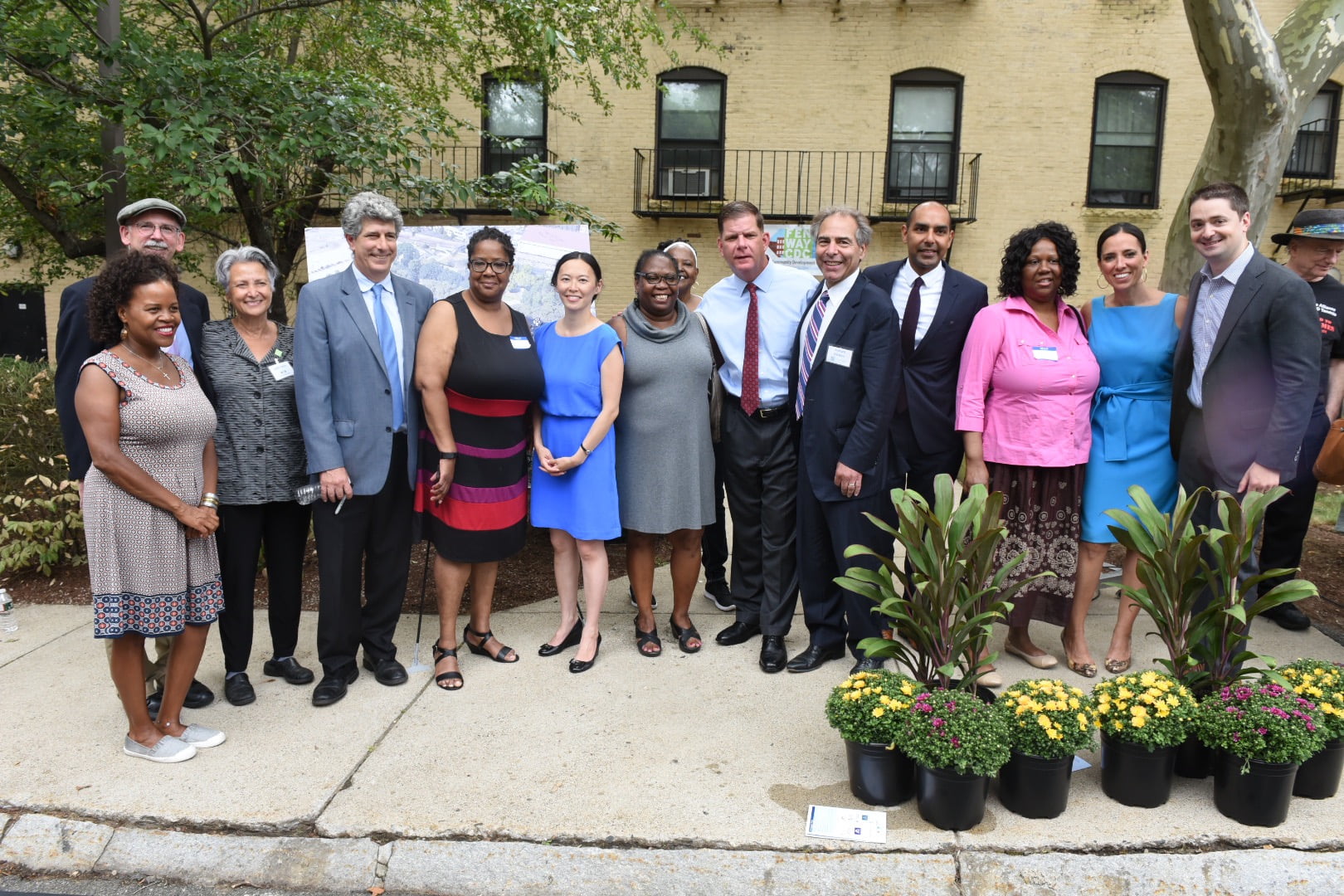
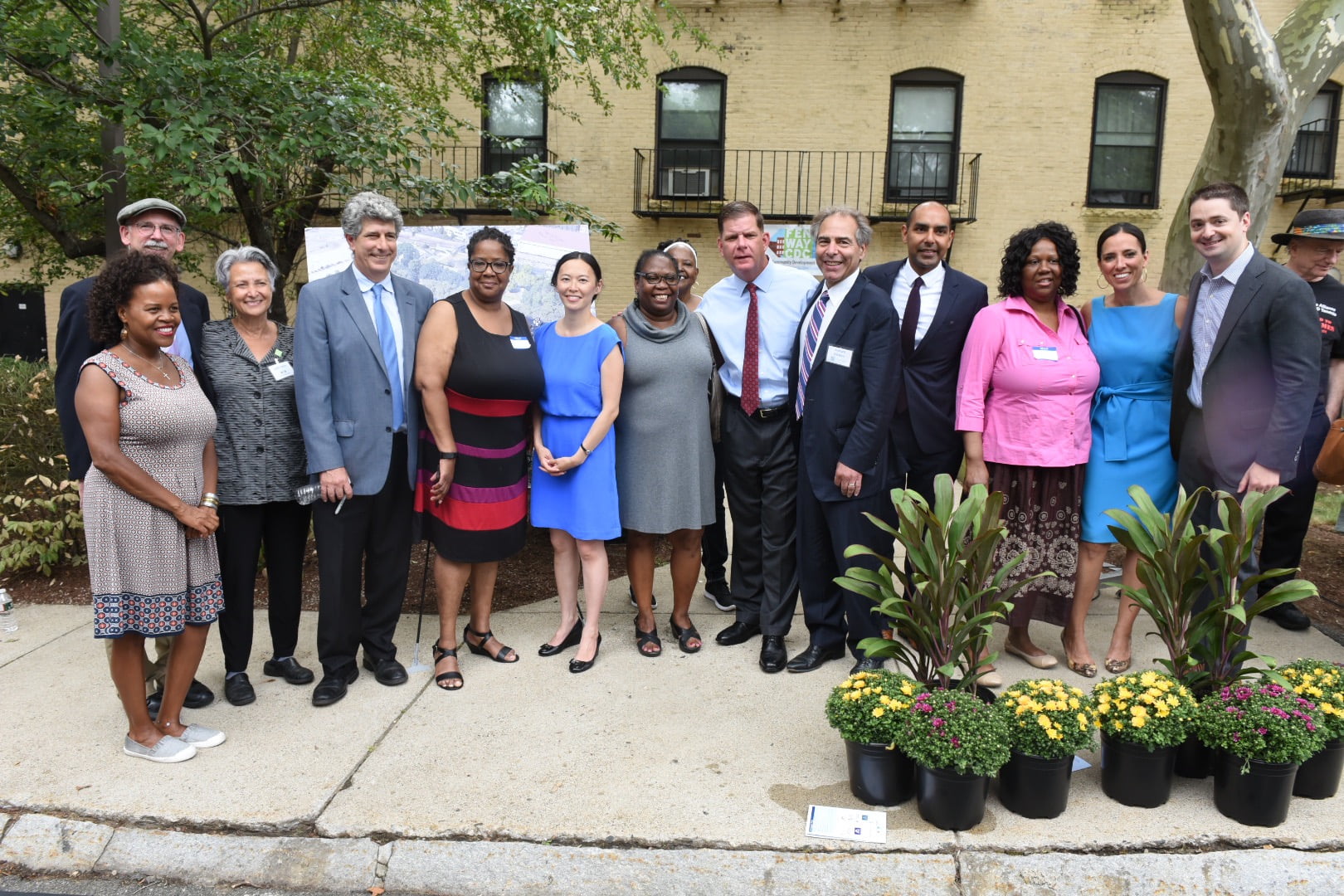
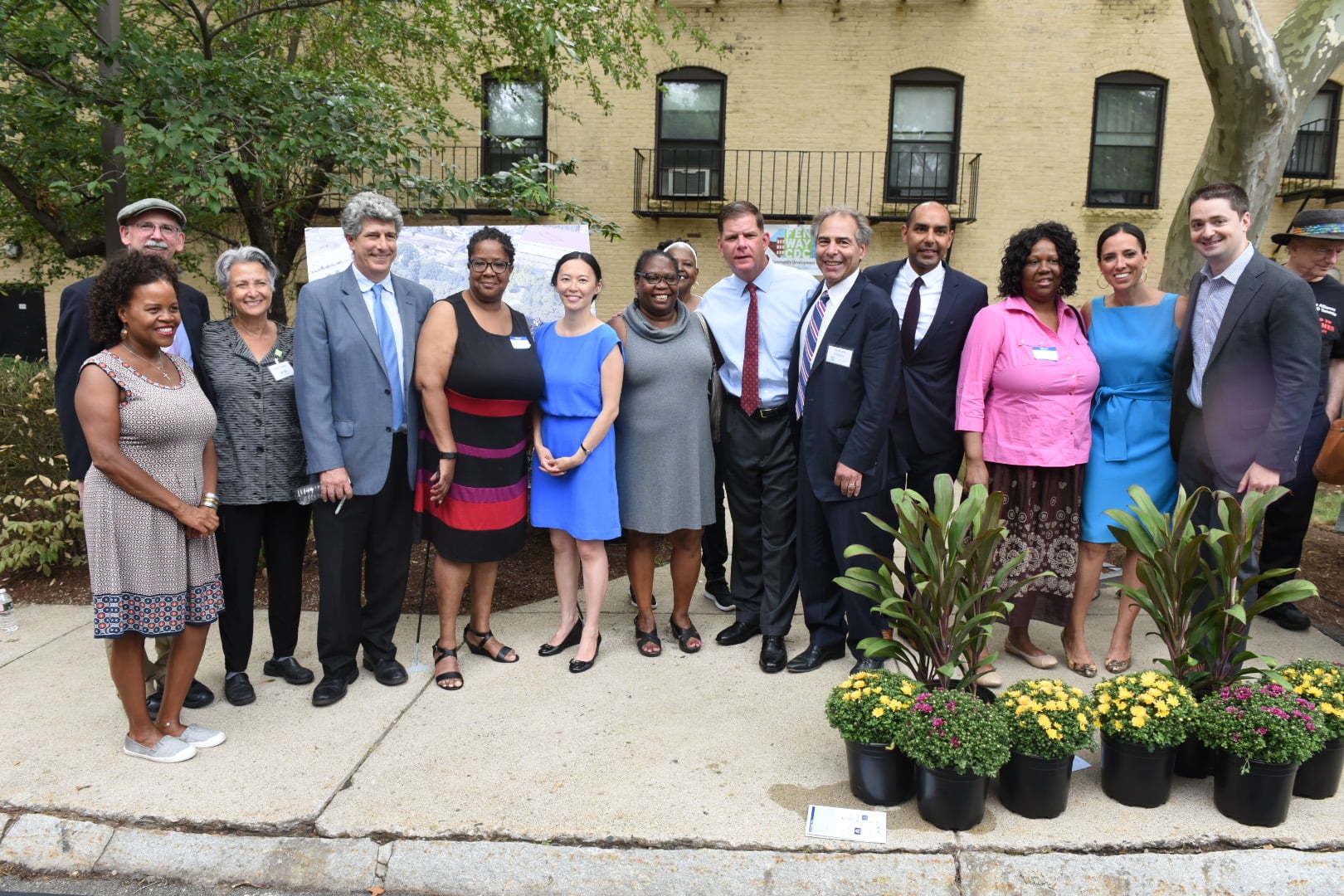
Building on his commitment to preserve affordable housing in Boston, Mayor Martin J. Walsh today joined the Fenway Community Development Corporation, their development partner Schochet Companies and Lower Roxbury residents to celebrate the acquisition and preservation of 97 affordable housing units at the Newcastle/Saranac Apartments.

“Preserving Boston’s affordability is key to ensuring everyone who wants to live here can afford to do so, and I’m particularly pleased our commitment to the Newcastle/Saranac Apartments will both preserve and renovate 97 units of our existing affordable housing stock,” said Mayor Walsh. “I want to thank the Fenway CDC and our partners for working with us to make sure families can stay in their homes. Together, we’re protecting long-time residents from displacement, and we’re helping maintain the character of this community.”

The preservation of the units is made possible through Inclusionary Development Policy (IDP) off-site unit contributions by three housing development projects: 60 Kilmarnock Street, 1000 Boylston Street, and 212 Stuart Street, negotiated by the Boston Planning & Development Agency (BPDA). IDP requires that market-rate housing developments with 10 or more units and need zoning relief contribute to income-restricted housing.

“Newcastle/Saranac has been my home for years, I raised my family here and I love this neighborhood,” said Patricia Rogers, a 30-year resident of Newcastle/Saranac Apartments. “This building is in a convenient location, but the best part of living here is my neighbors. We look out for each other. I want to thank the Mayor, Fenway CDC and all of the people here today for helping us stay in our homes.”

The City’s Department of Neighborhood Development (DND) worked with the Fenway CDC to acquire the building and assist in the plan for the renovation of its 97 apartments, located on Columbus Avenue and Northampton Street in Lower Roxbury. Newcastle Saranac’s long-term affordability restrictions were set to expire as the former owners paid off the mortgage they’d received using the MassHousing 13A program. If the building converted to market-rate, all of the tenants were likely to be displaced from homes they had lived in for decades. With help from City of Boston, Fenway CDC was able to purchase the building from its owners, protecting existing tenants from displacement, and preserving the long-term affordability of this mixed-income development.

“You know the old saying ‘It takes a village?’ Well, in order to save 97 units of affordable housing at Newcastle/Saranac, it took the City of Boston, the Commonwealth, and numerous quasi-public entities, banks and investors to rescue these apartments,” said Leah Camhi, executive director of the Fenway CDC. “The families at Newcastle/Saranac are now guaranteed affordable homes for years to come due to all their herculean efforts.”

The Newcastle/Saranac acquisition and preservation was made possible with the significant support from the City’s Department of Neighborhood Development, the Boston Planning & Development Agency, the State’s Department of Housing and Community Development, MassDevelopment, MassHousing, Massachusetts Housing Investment Corp and the Community Economic Development Assistance Corporation.

Today’s celebration builds on the release of Housing a Changing City: Boston 2030, Boston’s latest quarterly housing report, and the City’s overall housing goal of 69,000 new units by 2030, to meet Boston’s faster than expected population growth. These 69,000 new units include 15,820 new income-restricted units, which would elevate Boston’s income-restricted inventory total to 70,000, or one in five of all housing units. In addition, the plan set a goal to preserve 85 percent of Boston’s most at-risk privately-owned affordable units, and to purchase 1,000 units of rental housing stock from the speculative market and income-restrict them for perpetuity.

Mayor Walsh’s 2019 housing security legislative package focuses on expanding upon the work that Boston has done to address the region’s affordable housing crisis and displacement risks for tenants. The housing security bills proposed seek to help existing tenants, particularly older adults, remain in their homes, and creates additional funding for affordable housing.

SourceSampan

‘Herculean’ Efforts Preserve 97 Affordable Units in Lower Roxbury

A partnership led by the Fenway Community Development Corp. will renovate and preserve affordability for 97 housing units in Lower Roxbury.

The Fenway CDC and development partner Schochet Cos. of Braintree acquired the Newcastle/Saranac Apartments at Columbus Avenue and Northampton Street in January. Affordability restrictions were set to expire as the former owners paid off the mortgage they received from MassHousing’s 13A program, threatening displacement for residents of 97 units that could have been converted into market-rate housing.

“It took the city of Boston, the commonwealth, and numerous quasi-public entities, banks and investors to rescue these apartments,” Leah Camhi, executive director of the Fenway CDC, said at a groundbreaking ceremony Wednesday. “The families at Newcastle/Saranac are now guaranteed affordable homes for years to come due to all their herculean efforts.”

Funding was provided through Boston’s inclusionary development policy off-site contributions from three projects: 1000 Boylston St., 60 Kilmarnock St. and 212 Stuart St. The policy requires developers who don’t include income-restricted units on-site to make cash payments to support affordable housing in the surrounding area.

Additional funding came from the city’s Department of Neighborhood Development, the Boston Planning & Development Agency, Massachusetts Department of Housing and Community Development, MassDevelopment, MassHousing, Massachusetts Housing Investment Corp. and the Community Economic Development Assistance Corporation.

Members of the project team include The Architectural Team, attorneys Klein Hornig and Holland & Knight, Keith Construction, development consultant David Levy and Community Square Assoc.

SourceBanker & Tradesman

Affordable Housing in Lower Roxbury Preserved

Building on his commitment to preserve affordable housing in Boston, Mayor Martin J. Walsh today joined the Fenway Community Development Corporation, their development partner Schochet Companies and Lower Roxbury residents to celebrate the acquisition and preservation of 97 affordable housing units at the Newcastle/Saranac Apartments.

“Preserving Boston’s affordability is key to ensuring everyone who wants to live here can afford to do so, and I’m particularly pleased our commitment to the Newcastle/Saranac Apartments will both preserve and renovate 97 units of our existing affordable housing stock,” said Mayor Walsh. “I want to thank the Fenway CDC and our partners for working with us to make sure families can stay in their homes. Together, we’re protecting long-time residents from displacement, and we’re helping maintain the character of this community.”

Celebration of affordable housing in Lower Roxbury

The preservation of the units is made possible through Inclusionary Development Policy (IDP) off-site unit contributions by three housing development projects: 60 Kilmarnock Street, 1000 Boylston Street, and 212 Stuart Street, negotiated by the Boston Planning & Development Agency (BPDA). IDP requires that market-rate housing developments with 10 or more units and need zoning relief contribute to income-restricted housing.

“Newcastle/Saranac has been my home for years, I raised my family here and I love this neighborhood,” said Patricia Rogers, a 30-year resident of Newcastle/Saranac Apartments. “This building is in at a convenient location, but the best part of living here is my neighbors. We look out for each other. I want to thank the Mayor, Fenway CDC and all of the people here today for helping us stay in our homes.”

The City’s Department of Neighborhood Development (DND) worked with the Fenway CDC to acquire the building and assist in the plan for the renovation of its 97 apartments, located on Columbus Avenue and Northampton Street in Lower Roxbury. Newcastle Saranac’s long-term affordability restrictions were set to expire as the former owners paid off the mortgage they’d received using the MassHousing 13A program. If the building converted to market-rate, all of the tenants were likely to be displaced from homes they had lived in for decades. With help from City of Boston, Fenway CDC was able to purchase the building from its owners, protecting existing tenants from displacement, and preserving the long-term affordability of this mixed-income development.

“You know the old saying ‘It takes a village?’ Well, in order to save 97 units of affordable housing at Newcastle/Saranac, it took the City of Boston, the Commonwealth, and numerous quasi-public entities, banks and investors to rescue these apartments,” said Leah Camhi, executive director of the Fenway CDC. “The families at Newcastle/Saranac are now guaranteed affordable homes for years to come due to all their herculean efforts.”

The Newcastle/Saranac acquisition and preservation was made possible with the significant support from the City’s Department of Neighborhood Development, the Boston Planning & Development Agency, the State’s Department of Housing and Community Development, MassDevelopment, MassHousing, Massachusetts Housing Investment Corp and the Community Economic Development Assistance Corporation.

Today’s celebration builds on the release of Housing a Changing City: Boston 2030, Boston’s latest quarterly housing report, and the City’s overall housing goal of 69,000 new units by 2030, to meet Boston’s faster than expected population growth. These 69,000 new units include 15,820 new income-restricted units, which would elevate Boston’s income-restricted inventory total to 70,000, or one in five of all housing units. In addition, the plan set a goal to preserve 85 percent of Boston’s most at-risk privately-owned affordable units, and to purchase 1,000 units of rental housing stock from the speculative market and income-restrict them for perpetuity.

Mayor Walsh’s 2019 housing security legislative package focuses on expanding upon the work that Boston has done to address the region’s affordable housing crisis and displacement risks for tenants. The housing security bills proposed seek to help existing tenants, particularly older adults, remain in their homes, and creates additional funding for affordable housing.

###

SourceMayor's Office

Dorchester Bay Project Receives Funding from State to Preserve Affordable Housing in Uphams Corner

Governor Charlie Baker announced Dorchester Bay Economic Development Corporation (DBEDC) as one of 28 state-wide recipients of the 2019 Affordable Rental Housing Awards. The award will support the renovation of Dudley Terrace Apartments, a 56-unit affordable housing development in Boston’s Dorchester neighborhood. The project will include funding from the Department of Housing and Community Development (DHCD) with Low Income Housing Tax Credits (LIHTC), subsidy funds, and additional local funding from the City of Boston. Community Economic Development Assistance Corporation (CEDAC) has provided critical pre-development support for the project.

The rental units located in four scattered-site buildings on Dorchester Avenue, Massachusetts Avenue, Roach Street, and Dudley Terrace offer 56 units of affordable rental housing to households earning less than 60% of AMI. Twenty units are further restricted for extremely low-income households earning less than 30% of AMI, including formerly homeless households. Three units will be set aside for residents who receive services from the Department of Mental Health.

Dorchester Bay is committed to serving Dorchester’s low-income residents and expanding affordable housing opportunities. The renovation of Dudley Terrace Apartments is in keeping with Dorchester Bay’s commitment to ensuring that Dorchester residents can remain and thrive in their neighborhoods.

“Dorchester Bay is committed to preserving Dudley Terrace Apartments as high-quality, affordable homes into the future. Of particular importance, this funding will improve the air quality and comfort of residents by improving ventilation, windows, and building envelopes. Not only are these homes affordable, but they are close to public transportation and jobs – important factors for residents,” said K. Beth O’Donnell, Director of Real Estate Development at Dorchester Bay Economic Development Corporation.

About Dorchester Bay Economic Development Corporation
Dorchester Bay Economic Development Corporation (DBEDC) is a community development corporation founded by local civic associations in 1979 to address the problems of economic disinvestment, unemployment, crime, community tensions and the shortage of quality affordable housing undermining Boston’s Dorchester neighborhoods. Over the last 40 years, we have worked in partnership with local leaders and stakeholders to build and preserve 1,100 units of affordable housing and over 200,000 square feet of commercial space, to engage residents in community life, and to support a robust economy through small business support and economic development. The structures we have built are physical manifestations of our work, but at its core, our work is about strengthening our community, which is made up of the people who live and work in our neighborhood.

For more information, visit the DBEDC website at www.dbedc.org, follow us on Twitter @dbedc, like us on Facebook, connect with us on LinkedIn, and subscribe to our email list.

###

SourceDorchester Bay Economic Development Corporation

Baker-Polito Administration Awards Funding for Seven Affordable Housing Projects for Vulnerable Communities

Today, Lt. Governor Karyn Polito joined Worcester City Manager Edward M. Augustus, Senator Harriette L. Chandler, YWCA of Central Massachusetts Executive Director Linda Cavaioli, and local officials to celebrate the production and preservation of 147 units of supportive housing for vulnerable populations, including homeless families and individuals, veterans, survivors of domestic violence, and individuals with disabilities.

Supportive housing provides residents with social and health services, including childcare, job training, case management, healthcare coordination and more. All 147 units are affordable to low and extremely low-income people. Since 2015, the Baker-Polito Administration has supported the preservation and production of hundreds of supportive housing units.

“Our administration firmly believes that affordable housing is fundamental to our success as a Commonwealth and have been pleased to invest over $1 billion in the affordable housing ecosystem over the last four and a half years and propose Housing Choice legislation that would significantly increase housing production throughout the state,” said Governor Charlie Baker. “We are committed to working with our partners in the legislature to give our communities the tools they need to increase housing production to meet the needs of current and future Massachusetts residents, especially the most vulnerable.”

Today’s awards will fund seven projects, supporting the preservation or production of 147 units of housing with $6 million in grant funding, $2.5 million in federal funding and state project-based housing vouchers. Housing will also provide a myriad of social services tailored to the population, including mental health support, childcare, and accessibility.

“Families and individuals deserve access to the stability that permanent housing offers, and we are pleased that this funding will also give our most vulnerable residents, including veterans and survivors of domestic violence, the supportive services they need to thrive in the face of challenges,” said Lt. Governor Karyn Polito. “I’m proud of these efforts to increase the amount of affordable housing for people with the greatest need, and today’s awards are part of a commitment to ensuring Massachusetts is a place where all residents can succeed.”

“We understand the great need for more housing for extremely low-income populations. While there is no one strategy to close the gap, our funding for supportive, permanent housing, is part of the solution, and we are thrilled to support projects across Massachusetts,” said Housing and Economic Development Secretary Mike Kennealy. “We are committed to working with communities and private-sector partners to create pathways to stability for vulnerable populations, through housing, emergency assistance, job training, and social services.”

“Today’s awards will reach families, veterans, survivors of domestic abuse, seniors, and individuals with disabilities in need of reliable, quality housing they can afford,” said Acting Undersecretary of Housing and Community Development Jennifer Maddox. “Our people are our greatest asset, and we will continue to advocate for programming and resources to help residents reach their potential, ensure children have access to permanent housing, and support municipal efforts to create healthy communities.”

“Massachusetts is fortunate in that we have a strong network of non-profit organizations providing quality supportive housing to vulnerable populations throughout the Commonwealth and the kind of public/private infrastructure that helps develop these important projects,” said Roger Herzog, Executive Director of the Community Economic Development Assistance Corporation. “The developments funded today will provide much-needed housing and services to veterans, seniors, survivors of domestic violence, formerly homeless individuals, and more.  CEDAC is honored to work with the Baker-Polito administration, the Department of Housing and Community Development, and our non-profit partners to provide the state bond funds and early stage financing that turns supportive housing projects from an idea into a reality.”

“This incredibly generous award will afford the YWCA Central Massachusetts the opportunity to increase our capacity to serve more women in more effective and efficient space that ultimately helps them achieve independence and economic self-sufficiency,” said Linda Cavaioli, Executive Director of the YWCA of Central Massachusetts.

“I want to thank Governor Baker and Lieutenant Governor Polito for their continued support for Worcester organizations like the YWCA that does invaluable work,” said Worcester Mayor Joseph M. Petty. “Congratulations to Linda Cavaioli and the entire YWCA family on this announcement.  These funds will allow the YWCA to continue and expand the vital work it does every day here in the City of Worcester.”

“Providing supportive housing options to vulnerable populations in our community is a constant priority,” said Worcester City Manager Edward M. Augustus Jr. “We’re excited about the YWCA’s renovation project taking place in the heart of our City and we thank the Baker Polito Administration for their continued investment in producing more supportive housing units across the Commonwealth.”

“The awards that were announced today help communities who need stable housing the most. Stable housing allows people to ground themselves, to build a life, and to grow within their communities,” said Senator Harriette L. Chandler. “I want to thank my housing policy partners in the administration, in the legislature, in local government, and to thank all of the advocates and activists who fight for affordable housing every day.”

“The YWCA of Central Massachusetts continues to empower women and girls to achieve their best,” said Senator Michael O. Moore.  “The renovations made possible through this investment will increase access to many critical programs and services.  Congratulations to the entire team at the YWCA for their ongoing efforts to better the surrounding community, and to provide meaningful opportunities for our neighbors.”

“The YWCA of Central Massachusetts provides our community with valuable housing, education, and health programming,” said Representative Jim O’Day. “Worcester prides itself on investing in programs that support families and foster community, and so I am thrilled to hear of the building renovations, as they expand access to essential services for women and children.”

The Baker-Polito Administration has shown a deep commitment to increasing the production of housing across income levels. Since 2015, the administration has invested more than $1 billion in affordable housing, resulting in the production and preservation of more than 17,000 housing units, including 15,000 affordable units. In 2018, Governor Baker signed the largest housing bond bill in Massachusetts history, committing more than $1.8 billion to the future of affordable housing production and preservation. The Baker-Polito Administration has also advanced the development of more than 11,000 mixed-income housing units through the successful MassWorks Infrastructure Program, reformed the Housing Development Incentive Program, and worked with communities to implement smart-growth development and planning efforts.

###

Award Recipients:

123 Crawford St., Boston

This existing 24-unit Single Room Occupancy (SRO) project for formerly homeless individuals is located in the Trotter Garrison neighborhood of Roxbury. DHCD is awarding funds to the Commonwealth Land Trust to repair and upgrade the building’s envelope and major systems. Two live-in staff and case managers will provide intensive supportive services to a high need target population including individuals with major medical and/or mental health challenges.    

112-116 Emerson St., Haverhill

This existing 21-unit project provides permanent, supportive sober housing for homeless elders and individuals with disabilities at three properties and is owned and operated by Emmaus, Inc. DHCD is supporting the project with MRVP vouchers with supportive service funding. These enhanced vouchers will assist Emmaus in providing robust housing supports to both CSPECH and non-CSPECH eligible residents.     

Opening Doors, Lowell

Alternative House provides emergency shelter, transitional and permanent housing to survivors of DV. DHCD’s capital funds will finance the construction of a new eight-unit DV shelter that will accommodate eight women and up to 14 children. Their existing shelter, an aging single-family home, will be sold and the sales proceeds will help defray the cost of the new building.

420, 423, and 445 Broadway, Lowell

This existing 29-unit project consists of three multi-family properties on Broadway in Lowell. DHCD’s funding will allow Common Ground Development Corporation, an affiliate of Community Teamwork, Inc., to undertake exterior improvements to all three buildings, and convert two standard units into accessible units for residents with mobility impairments.  

2033 Ocean St., Marshfield

Marshfield Veterans House will provide supportive housing for eight homeless veterans. With DHCD’s financial support, Neighborworks Southern Massachusetts will convert a town-owned historic property into eight studios and a small archive room for the local historical society. Father Bill’s & MainSpring will provide comprehensive supportive services to the residents.   

26 Moulton St., Randolph

Father Bill’s & MainSpring developed a partnership with Envision Bank to construct 10 studio apartments for homeless veterans on a vacant parcel behind the bank. DHCD will provide state and federal funds to finance the construction. In addition to the land, the bank is providing grant funding. 

One Salem Square, Worcester

The YWCA of Central Massachusetts is renovating its main building in downtown Worcester including an existing SRO program for women, 12 child care classrooms, and its health and fitness program areas. DHCD funds will allow the YWCA to renovate 41 existing SROs and add six more rooms, for a total of 47 units. The organization has undertaken a capital campaign to renovate the non-residential portions of the building.

###
SourceOffice of Governor Charlie Baker and Lt. Governor Karyn Polito

Honoring Mel King

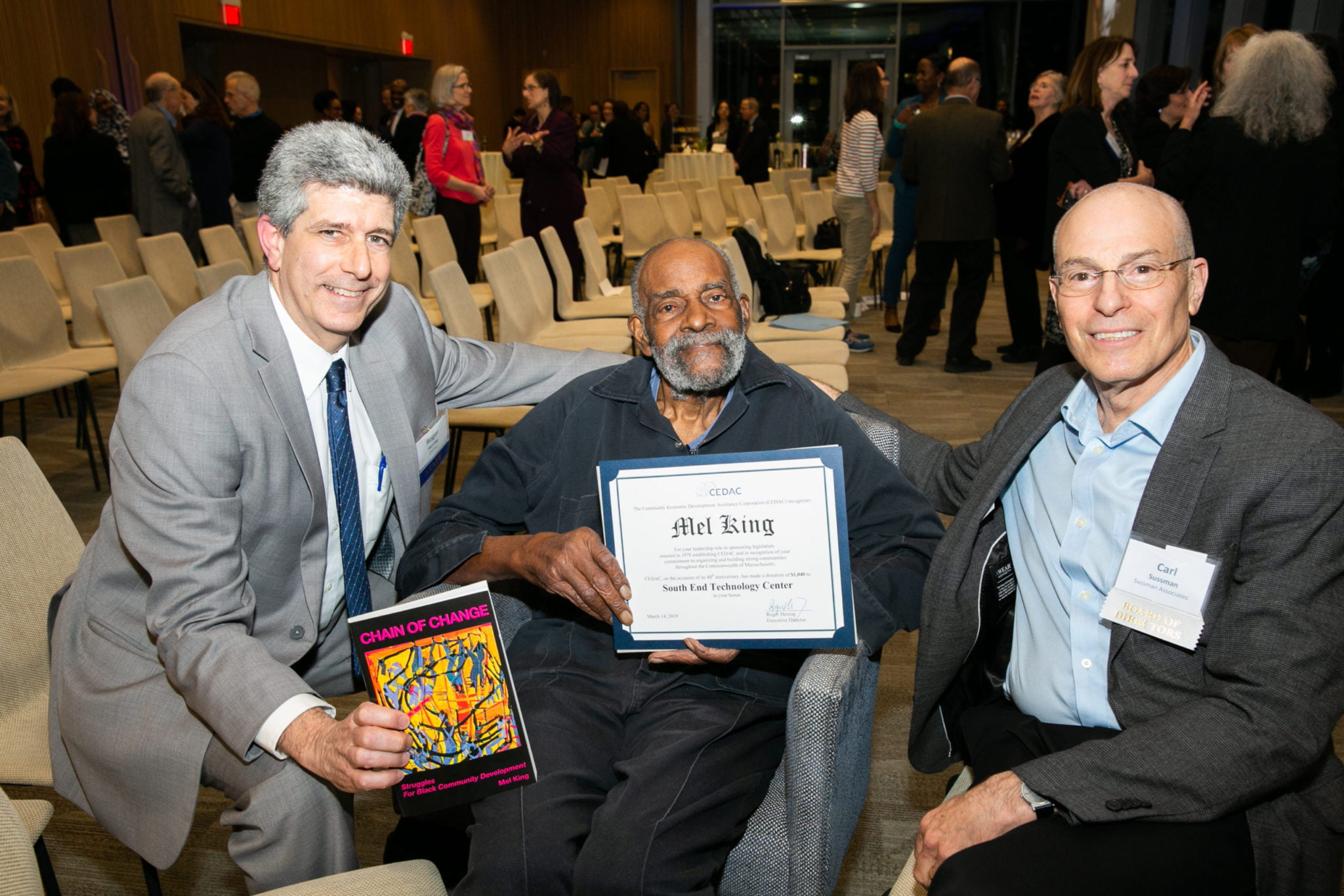
On March 14th 2019, the Community Economic Development Assistance Corporation (CEDAC) honored Mel King at its 40th anniversary celebration at the MIT Samberg Conference Center. King — a community organizer, former State Representative, and Adjunct Professor at the Department of Urban Studies and Planning — crafted the state legislation that created CEDAC in 1978. CEDAC is a community development financial institution providing financing and technical assistance to community-based and other non-profit community development organizations in Massachusetts. In addition to Mel King, CEDAC was joined by DUSP Professors Emeriti, Langley Keyes and Tunney Lee, both of whom promoted and led state and local community development activities, including the visioning and creation of CEDAC.

The event’s main program was modeled on DUSP’s ‘lightning talks,’ three-minute presentations that communicate research and work in layperson language to promote sharing and collaboration across groups. The presentations focused on affordable housing preservation; supportive housing; and early education facility development. Speaker teams, composed of current and former CEDAC staff members as well as community partners, addressed the 40 years of engagement and evolution with these fields, future challenges, and the synergistic relationship for non-profits and the communities they represented. Many CEDAC staff members and leadership are DUSP alumni/ae, including Sara Barcan (MCP ’94), Janelle Chan (MCP ’07), and Roger Herzog (MCP ’87).

“Mel King provided the inspiration and vision for the community development movement, with his experiences 40 years ago fighting for community control of development. Mel’s role as an elected official in helping to create a state infrastructure to support community development, including CEDAC, was instrumental,” said Herzog, Executive Director of CEDAC. “The Massachusetts system serves as a national model of community development, and we are honored to have the opportunity to celebrate his contributions as we mark our 40th anniversary.”

The venue for the 40th anniversary event at MIT speaks to the Institute’s role as the space where the idea for a public/private agency that provides technical expertise to non-profit community development organizations was first discussed during the weekly sessions that King hosted for 25 years while teaching at DUSP and leading the MIT Community Fellows Program. These weekly sessions were called the Wednesday Morning Breakfast Group where King cooked breakfast and led discussions between community activists, planners, and students. A regular participant of the sessions, MIT doctoral student, Carl Sussman, became the founding Executive Director of CEDAC and later played a pivotal role launching and leading its affiliated organization, the Children’s Investment Fund, one of the few community development finance institutions across the nation focused exclusively on meeting the physical capital needs of early care and education programs.

The MIT Community Innovators Lab (CoLab), founded in 2007, is the direct MIT descendant of the Community Fellows Program. CoLab facilitates the interchange of knowledge/resources between MIT students and faculty with community organizations, to build practicable models of economic democracy and self-determination. CoLab’s Mel King Community Fellows Program (MKCF), provides participants with an opportunity to examine innovative approaches to development using markets as an arena for pursuing social justice.

“The CoLab’s Mel King Community Fellows Program embodies Mel King’s approach to planning and community development through his championing of cities and the communities that comprise those cities,” said Dayna Cunningham, Executive Director of CoLab and MIT Sloan Alumna (MBA ’04). “The MKCF honors Mel’s legacy by gathering current and future leaders of community-based work and providing them with the space to collaborate, learn, and refine their efforts for a range of social justice pursuits.”

In the 40 years since CEDAC was created, the organization has committed over $402 million in early stage project financing, and has helped to fund the creation or preservation of nearly 50,000 affordable housing units across the Commonwealth. Additionally, CEDAC manages a number of supportive housing bond programs on behalf of the state’s Department of Housing and Community Development (DHCD), with commitments of more than $490 million over the past thirty years. These bond programs include the Housing Innovations Fund (HIF), the Facilities Consolidation Fund (FCF), and the Community Based Housing (CBH) program.

To learn more about CEDAC’s mission and current projects, click here.

»

SourceMIT Urban Planning News

Gripped By Housing Crisis, Boston Developers Look for Federal Help to Tackle Affordability

Boston developers and policymakers are desperate for more affordable housing tools in the city, but the biggest help may hinge on lawmakers in Washington, D.C.

“I think the biggest challenge is the limited resources,” The Community Builders Vice President of Development Andy Waxman said. “We have a lot of high-quality affordable housing developers, and if there were more resources, we could all get more projects done.”

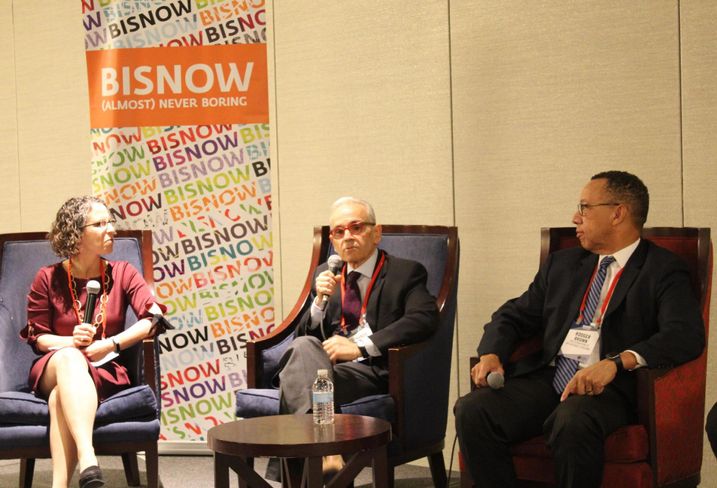
A leading tool in Boston’s affordable housing toolkit, the Inclusionary Development Policy, led to the creation of 546 new units of affordable housing in 2018, or 21% of the program’s overall production since it was implemented in 2000. While Boston Mayor Martin Walsh was pleased by the news, he and members of the private and public sector speaking Tuesday at Bisnow’s Boston Affordable Housing Conference agreed changes in policy and development practices are crucial in moving Boston’s affordability needle.

“We have members of Congress coming out of the woodwork with affordable housing legislation,” Housing Advisory Group Executive Director David Gasson said.

Gasson and Boston Capital President and CEO Jack Manning are working on reforming the Low-Income Housing Tax Credit (to be renamed the Affordable Housing Tax Credit if the new legislation is passed). The LIHTC offers 9% and 4% tax credits for affordable housing projects, with the higher rate typically reserved for new construction and the lower rate for rehabilitation or new construction projects financed with tax-exempt bonds.

The problem is the credits have often fallen short of the 4% and 9% figure and fluctuated due to market interest and borrowing rates of the federal government, according to a February report by the Congressional Research Service. One goal of the bill, expected to be introduced by U.S. Sen. Maria Cantwell (D-WA), would freeze the 4% rate at its actual level. Doing that alone would, at a conservative estimate, create 65,000 more affordable units.

Low-Income Housing Tax Credits generated in each state are based on population. Originally, the rate was $2.40 per capita. Congress has since provided a 12.5% increase through 2021, and there is a potential for the rate to increase by 50% in the new bill. But Gasson indicated the 4% fix is the top priority.

“This is a gigantic change for our industry and the people that need affordable housing,” Manning said.

Both Manning and Gasson claim to have bipartisan support in both federal legislative chambers.

Along with Cantwell, Sen. Todd Young (R-IN), Sen. Johnny Isakkson (R-GA) and Sen. Ron Wyden (D-OR) are supportive of the bill, according to Manning. Speaker of the House Nancy Pelosi (D-CA 12th), Rep. Richard Neal (D-MA 2nd) and Rep. Kenny Merchant (R-TX 24th) have also supported the bill. More are expected to join.

“There are Republicans clamoring to jump onto the bill, and it hasn’t even been introduced yet,” Gasson said with a laugh.

Beyond federal policy, panelists indicated Boston leaders and developers are doing more at the local level to rein in costs.

Walsh indicated his proposed 2020 city budget includes a historically high level of city funding for the creation and preservation of affordable housing in Boston. After citing a long list of economic accomplishments under his watch, Walsh said there were plenty of initiatives in the works to tackle affordable housing, including an increase in the affordable housing requirement for market-rate developers in the IDP.

“I’m painting a rosy picture here, but there’s still a lot of work we need to do to continue to move forward,” Walsh said.

Forward thinking in the planning and development stages is also crucial to making affordable housing a realistic goal in Boston. Construction costs have gotten so high that Preservation of Affordable Housing Managing Director for Real Estate Development Rodger Brown said his team has looked overseas for building technologies to move a project forward. Instead of stick-frame construction, the developer utilizes modular and panelized materials.

Others are looking for ways to streamline the approval process because it is easy for a project to go over budget simply due to the quick timeline of building costs rising. It can cost a developer around $450K to build a single residential unit in Boston today, and Dellbrook JKS President and CEO Mike Fish said building costs are rising at an average of 5% each year.

“The biggest challenge we see is when we price a project, and then they have to wait four years,” Fish said. “Costs just continue to go up.”

SourceBisnow Boston

For 40 Years, CEDAC Has Catalyzed Positive Change

For 40 Years, CEDAC Has Catalyzed Positive Change

Early-Stage Assistance Has Helped Build Housing, Transform Communities

By Roger Herzog

Special to Banker & Tradesman

In 1978, then- state representative Mel King introduced legislation that created the Community Economic Development Assistance Corporation (CEDAC), the nation’s first state agency designed to provide technical assistance to the burgeoning non-profit community development movement.  The idea of such an agency grew out of the Wednesday Morning Breakfast Group meetings convened by Mel at MIT with community activists and planners.  In Boston, the Group’s primary focus was the desire to establish community control over the redevelopment of acres of land in the heart of neighborhoods in the southwest area of the city that the state had taken by eminent domain for an inner belt highway.  The highway was stopped through community activism and by 1978, it had become clear that there was a need for an agency like CEDAC.

In the 40 years since we were established by an act of the legislature, Massachusetts and the community development sector have changed tremendously. And so has CEDAC.  We started as an economic development organization that provided technical assistance to community-based non-profits focused on small business development and job creation. But as the Commonwealth’s economy changed, we’ve evolved into a community development financial institution that provides early stage financing and technical assistance to non-profits seeking to produce and preserve affordable housing and non-profit early education facilities, through our affiliate, Children’s Investment Fund.

While it’s not easy to sum up 40 years of community development work, with its complications and challenges, the best way to share our accomplishments is to look at a sample of some of the non-profit development projects we’ve assisted:

Preserving affordable housing – the Chapman Arms story: since the early 1980s, CEDAC has fought to preserve the long-term affordability of subsidized multifamily housing, which is threatened by the time-limited use restrictions used as part of federal and state financing programs in the 1960s and 1970s.  In 2009, the state passed an affordable housing preservation law, Chapter 40T, which provided the Commonwealth with new tools to monitor and address this expiring use challenge. One of the key tools is purchase rights that allow the Commonwealth’s Department of Housing and Community Development (DHCD) or its designee to acquire and preserve expiring affordable housing projects if an owner proposes to sell a building.  In 2011, Chapman Arms, in Cambridge’s Harvard Square, became the first major project whose affordability was preserved through the use of Chapter 40T’s purchase rights. CEDAC delivered technical assistance to DHCD and its non-profit designee, Homeowner’s Rehab Inc., as well as a rapid commitment and closing on acquisition financing to preserve this mixed income 50-unit property.

Revitalizing neighborhoods – Northampton’s Live 155: Last year, Way Finders, a community development corporation (CDC) focused on Western Massachusetts, opened Live 155 in Northampton.  The mixed-use, mixed-income, new construction development of 70 apartments has helped to transform an important neighborhood in that city, a gateway into the downtown district.  CEDAC provided $2.6 million in early stage acquisition and predevelopment funding for that project, and similarly provided financing for Lumber Yard Apartments, a project by the Valley CDC across the street. These two projects have spurred significant public investment from the city, the state, and private partners.  This is only one recent example of the effective role of CEDAC’s early stage assistance that supports community non-profits’ transformative efforts.  Boston’s Jackson Square (where the original neighborhood battle against highway construction was waged) and Worcester’s Kilby-Gardner-Hammond are also examples where we’ve worked with community partners to reinvigorate those neighborhoods.

Supporting equitable transit-oriented development – the Residences at Fairmount Station: Late last year, Southwest Boston CDC and their development partner Traggorth Companies opened the Residences at Fairmount Station in Hyde Park, a 27-unit affordable housing development.  The Residences represent equitable transit-oriented development – affordable housing built near the MBTA’s new Fairmount Corridor commuter rail line.  Locations near transit offer opportunities for increased development density, and CEDAC and its financing partners provided $1.2 million in acquisition and predevelopment financing to ensure that low and moderate income residents can access these desirable locations.

CEDAC is celebrating our 40th anniversary at an event this March and we will honor Mel King for both his vision and his belief in the power of people to strengthen their communities.  In the four decades since he introduced that legislation, Massachusetts has evolved into a national model of community development, in large part because of the institutional framework he helped to create.  It’s gratifying for us to look at the innovative projects above and recognize we are carrying on an important legacy.

Roger Herzog is the executive director of the Community Economic Development Assistance Corporation.

BT_Reprint_Herzog_031119

»

SourceBanker & Tradesman