Historic Boston building gets blessing for housing

Gov. Charlie Baker, Mayor Martin J. Walsh and Cardinal Sean O’Malley were among the city and state leaders who attended a ceremony yesterday celebrating the transformation of a historic downtown building into a home for people who don’t have a place of their own.

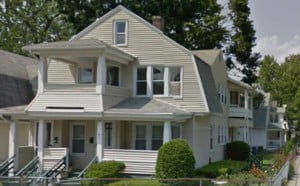
48 Boylston St., originally built by the Boston Young Men’s Christian Union in 1875, will soon be home to 46 units of affordable housing, including 26 units designated specifically for people who are homeless or have been homeless. The remaining units will be reserved for people with incomes at or below $43,440.

Baker, Walsh and O’Malley were on hand yesterday to celebrate the start of construction and signed a steel beam that will be used in the renovation.

Construction will cost an estimated $20 million, with financing from a state bond bill, the City of Boston Incentive Development Program and Neighborhood Housing Trust funds, equity from Bank of America’s purchase of housing and historic tax credits; a grant from the Federal Home Loan Bank of Boston; and a permanent mortgage provided by Eastern Bank, according to the Planning Office for Urban Affairs of the Archdiocese.

The Massachusetts Historical Commission provided $2.5 million for the project.

http://www.bostonherald.com/business/business_markets/2018/01/historic_boston_building_gets_blessing_for_housing

SourceBoston Herald

Nonprofit Service Providers Become Developers to Better Serve Families


Roger Herzog

Roger Herzog

Community-based organizations serving low-income families, women and children have long understood the benefits of integrating housing and early education services as core aspects of their missions serving these vulnerable populations.

A number of Massachusetts nonprofit service providers have entered the development arena to create projects that co-locate affordable housing and high-quality, licensed early care and education facilities. For providers considering mixed-use developments, there are challenges associated with combined affordable housing/early care and education programs, especially for those new to managing real estate projects. However, planning, a knowledgeable project team and technical assistance from organizations like the Community Economic Development Assistance Corporation (CEDAC) and our affiliate, the Children’s Investment Fund (CIF), can assist with these projects’ success. When done well, a combined facility

can provide an effective means to support residents as they seek education opportunities and create stronger communities.

The commonwealth of Massachusetts is committed to supporting the production of supportive housing and development of early care and education facilities. With the 2013 establishment of the Early Education and Out of School Time Capital Fund (EEOST), which CEDAC/CIF administer with the Department of Early Education and Care (EEC), Massachusetts’ nonprofit childcare providers have a source of capital funding to create and improve licensed early education facilities serving low-income children. Funding from EEOST, state agencies including the Department of Housing and Community Development (DHCD) and other public/private financing agency resources can make up a matrix of sources that offset the considerable real estate development costs in Massachusetts.

Bree Horwitz

Bree Horwitz

Three organizations that primarily provide supportive services recently created brick-and-mortar projects with CEDAC/CIF support, including our technical assistance and predevelopment funding, each demonstrating a novel approach to addressing their communities’ needs.

New and Expanded Services

Dorchester’s Brookview House has provided housing and early education to families and children experiencing homelessness in Roxbury and Dorchester since 1990. With 30 affordable apartments and two licensed centers providing educational programming, Brookview is about to start construction on a new $5 million facility that will provide an additional 12 affordable rental housing units for families on the upper floors and an out-of-school program located on the first floor. The project has secured funding commitments from EEOST, DHCD and the city of Boston’s Department of Neighborhood Development, in addition to commercial loans and the organization’s own fundraising.

In Roxbury, Elizabeth Stone House outgrew its outdated building containing its shelter, housing and supportive services. The new development will create 32 units of family housing for survivors of domestic violence with an early care and education and out-of-school program for 51 children, and a therapeutic program for young people recovering from trauma. The project’s funding includes federal new markets and housing tax credits, city and state support, and an extensive fundraising effort.

Finally, the YWCA of Southeastern Massachusetts in New Bedford will soon break ground on the expansion of its historic headquarters, creating housing for eight formerly homeless women and licensed year-round care for 50 children. The Y’s project required a thoughtful approach to combine these uses within a 19th century structure in a tight urban lot, but the Y’s innovative proposal gained support from federal, state and local sources.

Multi-Use Considerations

If a provider is contemplating developing a multi-use project, they should consider the following. First, they must plan for the early education and care space early in the process, due to important design considerations. High-quality spaces for children have their own set of design considerations, and teams need to find an architect experienced with early education spaces to ensure the project will meet EEC’s licensing standards.

These aspects cannot be an afterthought and must be included in the project’s initial plans. It may be necessary to bring together architects with residential design expertise in addition to early education and care, as EEOST requires high-quality physical design that often exceeds licensing requirements to create healthy spaces for children. Teams need to consult with experienced consultants to assist with the creation of a sound financing strategy, and coordinate the often complex funding sources that may include new markets and low income housing tax credits, debt, fundraising and state bond financing.

Finally, developers should reach out to CEDAC and CIF early in the conceptual planning phase. The technical assistance our staff offers can help nonprofit developers avoid pitfalls and ultimately save the project time and money by connecting teams with experienced professionals. At CEDAC/CIF, we know that these projects’ educational and residential programs create opportunities and stability for the families served within – and we’re ready to help.

Roger Herzog is the executive director of the Community Economic Development Assistance Corporation. Bree Horwitz is the senior project manager for the Children’s Investment Fund.

Nonprofit Service Providers Become Developers to Better Serve Families

SourceBanker & Tradesman

Church Green housing project would provide affordable senior apartments in Taunton

It won’t happen overnight, but a vacant property in an isolated section of Church Green could eventually feature an apartment building catering to income-eligible senior citizens.

“It’s a good site,” said Carl Nagy-Koechlin, executive director of Housing Solutions for Southeastern Massachusetts — a Kingston-based non-profit agency that develops and manages low- to moderate-income housing projects.

The now-unused L-shaped, single-story building at 68 Church Green, which sits directly behind Old Colony History Museum, in prior decades contained a row of medical offices.

According to Nagy-Koechlin, Housing Solutions Church Green LLC has a purchase-and-sale agreement with property owners Taunton Church Green Realty Trust, the members of which include Russell Martorana, Don Backlund and Richard Harris.

Nagy-Koechlin said his group plans to replace the old and dilapidated structure on the 1.5-acre site with a three-story building including 40 one-bedroom apartments for people at least 63 years of age.

Of the 40 units, he said 24 apartments would be reserved for moderate-income tenants with an income of no more than 60 percent below the area median income (AMI), or a maximum of $37,000.

Low-income elders in Taunton, he said, have an annual income less than 30 percent of AMI, which he says translates to $19,000 or less.

Nagy-Koechlin said judging from similar projects undertaken by Housing Solutions, he expects the majority of residents will be retired, single women or widows.

When asked to explain the higher percentage of women versus men, Nagy-Koechlin said the simple fact is women, on a whole, enjoy longer longevity.

“They outlive men,” he said.

He said the Church Green project is being undertaken in cooperation with Quincy-based non-profit Neighborworks Southern Mass., which, not unlike Taunton’s Pro-Home Inc., provides classes and guidance to first-time home buyers.

The Taunton project, he said, is consistent with the continued lack of affordable opportunities in the Bay State.

“There’s a real shortage of housing on all levels,” said Nagy-Koechlin, noting that Housing Solutions also has had success developing and managing housing for homeless families and group homes for adults with developmental disabilities.

He said the current estimated cost is $13 million to re-develop the site and build the apartment building.

Nagy-Koechlin said the City Council will consider granting a special permit for the project, which he said will include 80 parking spaces — two per unit — as required by city ordinance.

Nagy-Koechlin said he doesn’t expect more than 40 to 50 spaces will be used at any given time by tenants, a number of whom, he said, probably won’t own cars.

During this past week’s Planning Board meeting, a lawyer representing Housing Solutions asked that his client not be required to provide 80 parking spots.

Board member Brian Carr said he recalls the number initially requested being as low as 49, which he said was not realistic.

“There’s no way in hell I was voting for that,” said Carr, whose wife Deborah serves on the Taunton City Council.

Carr said he and other Planning Board members were concerned about a lack of parking spaces for both tenants and visitors to the history museum at 66 Church Green.

By providing an even 80, he said, there would be sufficient “overflow parking” for museum visitors attending special events and presentations on weekends and nights.

Nagy-Koechlin said the non-profit agency is amenable to the idea of providing 80 spaces to accommodate residents as well as people visiting, not just the museum, but First Parish Church, the latter of which lacks any dedicated parking.

The Planning Board made a positive recommendation to the City Council with certain conditions.

They include ensuring that 70 percent of first tenants are Taunton residents; that new PVC sewer pipes be installed in order to access city service; and that an onsite property manager work on premises in his or her office from 9 a.m. to 5 p.m.

The Planning Board also stipulated that a sidewalk be installed on the “access road” — which the museum owns and which includes an easement — that runs from the street to the rear of the museum building; and that a plan be devised so that “excess parking is allocated for use by others.”

The Conservation Commission, in a letter, said it had no concerns regarding the project.

The access road, which provides non-metered parking on one side, separates the museum from the Bethany House adult day-care center and a series of apartment buildings.

Katie MacDonald said she’s in favor of developing more residential housing in and around Taunton’s downtown district.

But as director of Old Colony History Museum at 66 Church Green she wants an assurance it won’t prove to be unsafe to her patrons and visitors.

“Housing is great for the downtown, but only if it makes sense for the existing neighborhood,” MacDonald said, adding that “our members are our number one concern.”

MacDonald said the museum has parking in front for just 11 vehicles.

“I’d like dedicated (parking) spots,” she said.

She also acknowledged that museum guests and visitors in recent years have been using the rear parking area that belongs to the owners of 68 Church Green.

MacDonald said installing new sidewalks “is a great idea” in terms of safety and will make it easier for residents of the apartments to walk downtown during the day.

If the rear property is cleaned up and redesigned, she said, it likely would discourage strangers from parking at night behind her building and diminish the likelihood of vandalism — both to the museum and the vacant, elongated structure behind it.

A small section of the 68 Church Green site has been painted with gang-related graffiti, and one of its windows is boarded up.

Nagy-Koechlin said he expects to break ground on the project “in a couple years.”

But he says that’s not unusual in his line of work.

Nagy-Koechlin said it takes time to line up funding. The main funding source of his group, he said, is the state’s Department of Housing and Community Development.

Other funding sources, he said, will include private donors and foundations as well as corporate donations.

Housing Solutions previously developed Carpenters Glen in East Taunton, an affordable-housing project with 32 units.

Nagy-Koechlin said he’s already met with representatives of the museum and church and has scheduled a 6:30 p.m. “community meeting” this Wednesday at First Parish Church, located at 76 Church Green.

He said “a sliver of the building” sits on land designated as having historic value by the city’s Historic District Commission.

But Nagy-Koechlin said he doesn’t anticipate serious difficulties working with the commission.

He noted that the look of the new building will reflect the historical character of surrounding houses and structures.

He also said it will be built on a solid slab but will remain shorter in stature than Old Colony History Museum.

Nagy-Koechlin noted that not including a basement will eliminate any chance of flooding on the low-lying site. He said one section of the former office building has had its basement flooded.

Nagy-Koechlin said a traffic study, conducted at the behest of the city, was favorable.

“It determined the impact would be very minimal and less than when the doctors’ offices were here,” he said.

The late orthopedic surgeon Dr. C. Nason Burden rented space in the old building for his office.

Jordan Fiore, a museum board member, said he’s all but certain that Burden — who was seeing patients in his office while in his nineties — was the last one to move out of the Church Green building before he relocated to Winthrop Street.

Fiore, who besides sitting on the school committee is a member of the Planning Board, said he recused himself from last week’s vote to avoid a conflict of interest.

Nagy-Koechlin said the city, through its economic and community development office, will likely also contribute to the project, possibly with funds derived from the federal HOME program that assists in the development of affordable housing.

He said Housing Solutions, which also has an office in New Bedford, has a similar mission to that of Boston-based non-profit Neighborhood of Affordable Housing, or NOAH, which is planning to develop 38 market-rate and affordable apartments downtown in the Union Block.

The main difference, he said, is that unlike NOAH, which has a wider reach and scale, Housing Solutions concentrates on Plymouth and Bristol counties and parts of Norfolk County.

http://www.tauntongazette.com/news/20180113/church-green-housing-project-would-provide-affordable-senior-apartments-in-taunton

SourceTaunton Gazette

Howland House gets second life after escaping demolition

NEW BEDFORD — Guests stepped into the Howland House Thursday evening and exchanged memories of what the
building was and now is.
At the ribbon-cutting to debut the renovations, Patrick Sullivan, director of New Bedford Department of Planning
Housing and Community Development, remembered walking into a building with a “gigantic hole in the second floor.”
The only thing holding up the house was its sound construction, which dates back to 1834.
Susan Terry of the Massachusetts Department of Housing and Community Development said when the architect walked
in, his foot went through the floor.
The scene Thursday at 38 South Sixth St. featured fresh paint with new stainless steel appliances and windows.
“WHALE is back in business,” Mayor Jon Mitchell said. “You have really stepped up and understood the core mission of the
organization and the potential here: For WHALE to bring back the life of buildings like this.”
A 2005 fire charred the 19th century 10,000-square-foot structure. It escaped demolition, and in 2010 the Waterfront
Historic Area League bought the brick Federal-Greek Revival home for $237,000.
The Resouce Inc. (TRI), WHALE and architect Christopher “Kit” Wise worked to transform the building into seven
apartments while maintaining its historic characteristics.
The house was originally built in 1834 for John and Sarah Howland Jr. as one of three similar homes in the neighborhood.
The Howlands were among New Bedford’s wealthiest families. John Howland was one of the original 15 trustees of the
New Bedford Institution of Savings.
“There’s just a lot of nit and grit that goes on beyond the high financing and construction management,” Executive Director
of WHALE Teri Bernert said.
When Bernert was interviewed for her current position four years ago, the Howland House topped WHALE’s list of
desired renovation projects.
She drove by the building and was asked if it could be done.
“I don’t know, something about the house, I said, ‘Yeah we can get this done,’” she said.
Thursday her promise became a reality.

http://www.southcoasttoday.com/news/20171221/howland-house-gets-second-life-after-escaping-demolition

SourceSouth Coast Today

MassHousing Provides $10.8M To Renovate 61 Units In Springfield

MassHousing announced yesterday it provided $10.8 million in financing to the nonprofit developer Home City Development Inc., to advance the second phase of the substantial rehabilitation of the 136-unit E. Henry Twiggs Estates in Springfield. The project will complete major renovations of 61 scattered-site apartments for low-income families in the Mason Square neighborhood of Springfield.

MassHousing is supporting the redevelopment of E. Henry Twiggs Estates by issuing $10.8 million in short-term, tax-exempt debt, in a private placement with TD Bank. TD Bank will serve as both construction and permanent financing lender on the project. Permanent financing will result from a taxable execution with the Federal Home Loan Bank of Boston. This transaction is MassHousing’s first tax-exempt conduit loan outside Greater Boston.

“MassHousing’s partnership with TD Bank, and Home City Development, will preserve a key affordable housing resource in Springfield,” MassHousing Acting Executive Director Tom Lyons said in a statement. “Safe, modern affordable housing supports healthy families. Many of properties involved in this transaction are more than 100 years old and in need of major upgrades. By delivering major renovations to the interiors and exteriors of the E. Henry Twiggs Estates properties, this project will dramatically improve the quality of life enjoyed by the residents of the Twiggs Estates, and support the revitalization of the surrounding neighborhood.”

The E. Henry Twiggs Estates are comprised of 136 affordable units located in 59 scattered-site buildings, including 41 more than 100 years old, and 18 structures built in the 1980s. Phase One of the rehabilitation effort, which MassHousing was not involved with, completely renovated 75 affordable housing units. The second phase of the project will completely upgrade the remaining 61 units, delivering upgraded heating systems and insulation, new kitchens and bathrooms in all units, new roofing and siding and energy efficiency upgrades, including the replacement of boilers and updated electrical wiring.

Of the 61 units in Phase Two, 16 will be reserved for households at or below 30 percent of the Area Median Income ($24,600 a year for a family of four), and 45 units will be for households earning at or below 60 percent AMI ($39,960 a year for a family of four). Twenty-eight of the units are supported through the Massachusetts Rental Voucher Program and four units are subsidized through the Massachusetts Supportive Housing Initiative.

In addition to the MassHousing and TD Bank financing, the transaction involved $13.8 million in equity from an allocation of Low-Income Housing Tax Credits by the Massachusetts Department of Housing and Community Development (DHCD), $1.9 million in DHCD financing, $1 million from the Affordable Housing Trust Fund, which MassHousing manages on behalf of DHCD, a $2.5 million seller note, $450,000 from the Massachusetts Facilities Consolidation Fund, which supports housing for clients of the Department of Mental Health andDepartment of Developmental Services, and $50,000 from the city of Springfield.

https://www.bankerandtradesman.com/masshousing-provides-10-8-million-to-renovate-61-units-in-springfield/?utm_campaign=Daily&utm_source=hs_email&utm_medium=email&utm_content=59536268&_hsenc=p2ANqtz–VAH-TFay6pBfGcFZEscdOFFvrW6r5LoDB5q2mcwIXW5RA0YnKsRxYsD9h4U7L3NFO-RYVaia9fMSc163CbFWrlVqr7A&_hsmi=59536268

SourceBanker & Tradesman

CDC PROJECTS CATALYZE REVITALIZATION OF NORTHAMPTON CORRIDOR

The City of Northampton has spent the last four years developing a plan to revitalize the Pleasant Street Corridor, a stretch that has been identified as an important gateway to downtown Northampton.  Two CDC affordable housing developments have played a key role in the rejuvenation of the corridor.

Way Finders’  Live 155 Apartments, currently under construction, will provide 70 mixed-income studio and one-bedroom apartments when it is completed in the spring of 2018.  Just across Pleasant Street is Valley CDC’s  Lumber Yard Apartments, which will break ground next month on 55 affordable units.  Both projects will include commercial space.

These projects complement the City’s efforts to transform Pleasant Street from a state highway into a city street that serves the needs of residents and local business.  Infrastructure improvements include new raised crosswalks, curb extensions, improved bicycle and pedestrian paths, the addition of on-street parking, landscaping, and a new rotary that provides some separation between the highway and the main city street.

Both projects were assisted by The Community Economic Development Assistance Corporation (CEDAC), a public-private community development finance institution that provides financial resources and technical expertise for community-based and other non-profit organizations engaged in effective community development in Massachusetts.

In its weekly blog, Insites, CEDAC highlights the catalytic role that these two projects are having in Northampton.

https://macdc.org/news/cdc-projects-catalyze-revitalization-northampton-corridor?utm_source=2017+December+Notebook&utm_campaign=June+22+Notebook&utm_medium=email

SourceMACDC News

Sixteen Lexington affordable housing units locked in for good

Lexington Housing Authority (LHA) is “now the proud owner of five condos at
Pine Grove Village,” according to LHA Executive Director Caileen Foley. Foley
made the announcement at the Dec. 13 Lexington Housing Authority meeting.
The announcement was not sudden, but rather a summing-up of months of
work that went into preventing 16 housing units at Pine Grove Village from
losing their affordable status and reverting to fair market value. LHA’s five newly
acquired units—they officially turned over to the agency on Dec. 1–are rental
properties, while 11 other units made the transition from a co-op to
condominiums. The five rental units, now belong to the Lexington Housing
Authority. They are, and will continue to be, leased to Section 8 voucher holders
and Massachusetts Rental Voucher Program (MVRP) voucher holders.
The latter units are owned outright by those living there. LHA is one of the
trustees on the newly created condo board, according to Foley.
Elizabeth Rust of the Regional Housing Services Office spearheaded the effort,
operating as an agent for the town of Lexington. Pine Grove Village “was
probably one of the first 40Bs in the commonwealth,” Rust said, referring to the
state’s Chapter 40B affordable housing law that lets developers skirt local zoning
regulations in return for the inclusion of a substantial percentage of affordable
units. It was created under the auspices of Massachusetts’ 13A Preservation
Initiative, begun in the 1970s. The program was set up with a 30-year restriction
that expires in 2018, Rust said, meaning that a chunk of Massachusetts’
affordable housing, Pine Grove Village included, stands to revert to market value
next year.
Project used CPA funds
Sixteen Lexington aordable
housing units
locked in for good
The town of Lexington, LHA, MassHousing and co-op (now condo) residents
worked together to make sure that wouldn’t happen. They used just over $1
million in Community Preservation Act (CPA) funds approved with the passage
of a 2017 annual Town Meeting article to fund the necessary shifts. Worried by
the prospect of losing their affordable housing, co-op residents initially
approached the town in May 2016, according to Rust. Those residents and the
town initially disagreed on how to proceed, ultimately concluding that it would
be better to forge ahead together to find a mutually agreeable solution, rather
than head to litigation, she explained.
In the end, they did, after much “work toward a common, beneficial solution for
all parties,” Rust said. “In the end, everyone had the same goal.”
The conversion of the co-op into 11 condominiums was a key component. The
key change for the five rental units is that they’re now owned by LHA.
“We’re excited for the opportunity,” Foley said in an interview after the meeting.
“It was fun to work with the town, and get it done so quickly.”
Units now affordable forever
The town contributed money to the conversion, and in return received a
“perpetual deed restriction restricting the resale of the units,” Rust said.
This deed restriction is different from that instituted under 13A. Now, “there’s
no risk of losing them, or having to do this again,” Rust said of the housing.
“They’re properly secured from the affordable housing perspective.”
It took many steps to get to this point, in what was an unusually involved
process, due to several factors. For one thing, the co-op was “a nontraditional,
nonstandard set-up,” Rust said. Moreover, the work had to be done not only for
rental properties, but for owned properties as well, and “there was a capital needs
study done, and analysis,” she explained.
“Each one was a standard piece, but it was a project that brought all pieces
together,” in an unusual way, Rust added.
The journey from potential litigation to preserving 16 affordable housing units
in a community with still-rising property values “shows that the town is really
committed to preserving its affordable housing,” Rust said. “The town was
proactive and cooperative and supportive. No one got the better deal or outdid
each other.”

http://lexington.wickedlocal.com/news/20171215/sixteen-lexington-affordable-housing-units-locked-in-for-good

SourceWicked Local Lexington

Renovations complete at Framingham’s Tribune Apartments

When he first arrived in Massachusetts in the early 1980s, Samuel Salguero had no trouble finding an affordable place to live.

The 67-year-old immigrated to the United States from Guatemala decades ago, settling first in Los Angeles, then moving to the Bay State for work.

Salguero said he didn’t worry as much back then about making rent. But Salguero — who got a job driving cars at ADESA, the auction house in Framingham — suffered a health setback. A car accident in 2004 left him with a broken neck and broken back.

He was forced into early retirement, and as housing costs began to rise, Salguero saw his options dwindling. Salguero says he was lucky to find a spot in the Tribune Apartments, a 53-unit complex on Irving Street that offers affordable rents to seniors and people with disabilities.

After living in the building for nearly a decade, Salguero was especially delighted this summer when construction crews arrived to renovate his apartment. They overhauled the kitchen, fixed the leaky ceiling and finished the work in time for his wife to cook a turkey in their brand new stove for Thanksgiving.

“I’m so happy,” Salguero said. “I live nice and comfortable. We got a brand new AC, nice kitchen and everything. I don’t have any complaints about it.”

State and local officials gathered with Salguero and other tenants of the apartment complex Friday to celebrate the completion of major renovations. The multimillion dollar project, funded in part by the state, helped shore up the century-old building, ensuring a supply of affordable housing is available in South Framingham in the future.

“We need to really make a concerted effort to ensure that people have quality affordable housing at all levels,” state Sen. Karen Spilka, an Ashland Democrat, said, “especially in light of the way that housing prices are skyrocketing and affordable housing options are becoming increasingly limited.”

Located at 46 Irving St., the Tribune Apartments comprises a pair of four-story buildings, one of which was previously the home of the Framingham Tribune newspaper. The Tribune Building was constructed in 1892 to house the weekly publication.

Next door, the Victory Building was added in the early 1900s. The buildings were joined in 1982 and converted to housing for seniors and people with disabilities. The complex is now listed on the National Register of Historic Places.

Preservation of Affordable Housing, a nonprofit that owns and operates low- and moderate-income housing in nine states, acquired the facility in 2013.

POAH looks for opportunities to preserve affordable housing in markets with rising rents. It began renovations in January 2017 on the Tribune Apartments, tapping a major grant from the state.

The organization received nearly $3.6 million from the state’s Housing Preservation and Stabilization Trust Fund. The money paid for a roof replacement, upgrades to kitchens and bathrooms, energy efficient appliances, new windows, a new sprinkler system, accessibility improvements and a new management office.

The state also helped fund a partnership with BayPath Elder Services, which will maintain a full-time office at the apartment building. BayPath will help connect tenants with health programs, financial education, computer classes and other services.

Reflecting on her own time living on the Southside, Mayor-Elect Yvonne Spicer said her first apartment in Framingham was located a short distance away on Eames Street. Working as a teacher and living on a salary of $18,000, Spicer said it was vital to find an affordable place to live in the community.

Spicer said she plans to work toward increasing the amount of affordable housing in the community when she begins her first term in office next year.

“If our people are not thriving in downtown, then we as a whole community cannot thrive,” she said, “and so I am putting a lot of my energy in thinking about our underserved areas, making sure that there’s more affordable housing — that people can stay here.”

http://www.metrowestdailynews.com/news/20171215/renovations-complete-at-framinghams-tribune-apartments

SourceThe MetroWest Daily News

By-women, for-women housing program helping to save lives

Soldier On, a Leeds, Mass.-based charity aiming to end veteran homelessness, constructed 16 units of transitional housing specifically for women in December 2015 — and they were immediately fully occupied.

“I think the need is much bigger than people realize, because it’s so hard to estimate the number of homeless female veterans, because they’re not identifying as veterans. They’re not identifying as homeless,” said Sara Scoco, the director of the women’s program at Soldier On.

“They’re oftentimes couch-surfing or staying in these relationships. A lot of women are living in their cars just to try and survive. A lot of women are taking care of families and … they’re too proud to say, ‘I’m homeless. I need help,’ ” Scoco said.

So Soldier On became one of the few nonprofits in America to construct housing specifically to meet the unique needs of female vets. The $3.1 million building in Leeds features four suites of four bedrooms for a total of 16 rooms.

There’s a shared living room, and the building sits on the Northampton VA Medical Center campus, which agreed to a 75-year lease to Soldier On for the housing property.

Women can stay for months or years at a time while they seek treatment, go back to school, save money or try to land a job, Scoco said.

Most have experienced some kind of abuse, said Scoco, including about 80 percent who are victims of military sexual trauma.

“It’s really intimidating for a woman to walk into the VA when many of the services are male-dominated,” Scoco said. “It’s often assumed that the woman is not the veteran, but the daughter or sister of the veteran herself.”

As word has spread, Scoco said Soldier On fielded calls from Colorado, Texas and as far away as Hawaii.

The organization receives funding from the VA, among other sources. And it is hoping to receive state money to build permanent housing specifically for women vets in Pittsfield.

The organization started in 1994 as United Veterans of America. As its men’s program grew, women also began to seek services, leading to the launch of the women’s program in 2005, which was mainly a separate unit within the men’s housing.

Then the all-female housing was finished in 2015.

Mary Thurber, who was an active duty Army supply specialist from 2006 to 2011, came to Soldier On after she sought treatment for alcoholism at the VA, where she was the only woman in the program.

Thurber, now one of the 16 vets at the Soldier On Leeds house, hasn’t had a drink in five months and credits much of her recovery to the nonprofit and its by-women, for-women arrangements.

“This place,” Thurber said, “has literally saved my life.”

http://www.bostonherald.com/news/local_coverage/2017/12/by_women_for_women_housing_program_helping_to_save_lives

SourceBoston Herald

Blanchard School housing project receives final financing

The Virginia A. Blanchard School has been vacant for 15 years, but after the last piece of financing fell into place Friday, it should see new occupants – renters in affordable apartments – by early 2019.

The final funding was provided by the Massachusetts Housing Investment Corporation, and included $6.2 million in federal low-income housing and historic tax credits, according to a news release from the agency.

The school will be redeveloped into one-, two- and three-bedroom units, reserved for households with incomes ranging from below 30 percent of the area median income up to 60 percent of the area median income. Developers will give priority to veterans and Uxbridge renters.

The main building will be converted into nine rental apartments, a management office and community space. A four-story addition containing 16 apartments will be constructed at the back of the existing school.

The Virginia Blanchard Memorial Housing Association, which is developing the project along with Jon Juhl of JNJUHL & Associates, has been working with the town since 2010 on a redevelopment plan. Built in 1873 as an elementary school, the building served as an educational site for more than 125 years.

Other major sources of funding include: The Life Initiative ($6 million construction loan), the state Department of Housing and Community Development ($2.2 million), Massachusetts Housing Partnership ($250,000 permanent loan), state low-income and historic tax credits ($1.7 million, purchased by UniBank) and $33,207 of historic funds from the town. The Community Economic Development Assistance Corporation provided pre-development funding.

Nunes Trabucco Architects of Needham and general contractor Sugrue & Associates, of North Scituate, R.I., are on the development team.

Harry Romasco, president of Virginia Blanchard Memorial Housing, told selectmen Monday that he would propose that the School Committee set up a Virginia Blanchard scholarship fund with $100,000 in proceeds from transfer of the school to the housing development from the town.

http://www.telegram.com/news/20171201/blanchard-school-housing-project-receives-final-financing

SourceWorcester Telegram