


Nonprofit community-building organization Inquilinos Boricuas En Accion (IBA) was formed in 1968 when urban renewal threatened the homes of longtime residents of Boston’s South End. Nearly a half-century later, housing pressures are as strong as ever, with luxury apartment and condominium development booming while waiting lists for affordable housing grow. Vanessa Calderon-Rosado joined IBA in 2003 as its chief operating officer. Now the CEO, she’s leading IBA’s bid to expand its management to nearby housing communities and refinancing its debt to improve its bargaining power acquiring additional properties.
Q: What’s the history of the 435-unit Villa Victoria property?
A: We were founded in 1968 and it was part of stopping the threat of displacement, given the urban renewal plans for this neighborhood. It had already happened in the West End, and it had started happening in what we today call the Ink Block development, which at the time was known as the New York streets. This part of the South End, designated as parcel 19 by the Boston Redevelopment Authority, was next. The primarily Puerto Rican community that lived in this parcel organized to stop the plans and as a result they created IBA to develop affordable housing for redevelopment of the parcel, along with commercial development and a number of services they recognized were needed. They also were a strong force for creation of the Blackstone (Innovation) School, the South End Community Health Center and the Blackstone Community Center. Villa Victoria was developed in phases starting in the early 1970s through the mid-1980s. Today we have 521 units of housing in our portfolio. We have developed about 1,000 units over 47 years. Some of them were turnkey developments to the Boston Housing Authority (BHA). Some of them were homeownership opportunities. Our portfolio is mostly in the South End, but we also have units in Lower Roxbury and Mattapan.
Q: How big is your waiting list right now?
A: The waiting list is really a very sad story. In fact, our waiting list right now is close to 12,000 individuals, which just underscores the need for affordable housing in the city. It tells you in a lifetime we will not be able to serve those families. It’s a staggering number. Our turnover is quite low. Our vacancy rate is very low as well. In terms of eligibility, our residents are low-income and very low-income. We have an aging-in-place component and a growing number of elders. Approximately 68 percent of our residents are Latinos and about 26 percent are Chinese.
Q: What are your plans for expanding your affordable portfolio?
A: There’s some property that abuts ours on West Newton Street and the BHA has put out a request for proposals for a total of 146 units. We presented to the BHA two weeks ago. There are two other bidders. We feel that we are the best-positioned developer for the property because of our location – across the street – where we have our program spaces with the art center and preschool program. That was one of our turnkey developments in the late 1970s. These units are a row of brownstones and it’s in a landmark historic district. The idea is to preserve them. Our plan is to rehab the units, HVAC systems, repoint the buildings and do inside renovations. And we’re looking at putting up solar panels. We contract with a security company and we take pride that our community is quite safe. We feel that extending our reach to West Newton Street will benefit the residents by creating a safer environment within the larger South End community. Also, we are a tenant-controlled organization – 51 percent of our board are residents – and those residents from West Newton will be able to run for the board if they want to be given a more direct voice.
Q: What are the income eligibility requirements?
A: Right now it’s $19,000 for a family of two and the rents are $600 to $800 a month in this neighborhood. A brownstone further up on this street would be $3 million.
Q: How is gentrification affecting South End in 2015?
A: That’s one of the biggest challenges. In this neighborhood, it’s extremely hard to acquire property that makes it feasible for development. We have been outbid by private developers who turned properties into luxury apartments and luxury condos. It is still part of our niche, however. We are refinancing part of our portfolio, which is financed through low-income tax credits. We have built great equity in those properties and we will reinvest it in renovations and to be more aggressive in terms of developing housing. If there’s an opportunity that comes along where we can bid a little higher to compete in the neighborhood, those are some things to look at. We’re also looking at our strategic business plan, whether we could densify Villa Victoria. We have already done a preliminary study for areas we feel we could we could build up on our property.
Q: How many additional units?
A: Anywhere from 40 to 70 units. We could build up, or use open spaces that are not currently used.
Q: As a member of Mayor Walsh’s transition task force, what progress do you see on the affordable housing front?
A: The Department of Neighborhood Development put together a housing task force that recommended 53,000 additional units of housing by 2030. The skeptic in me … says those are reports that go onto a shelf to collect dust. A couple of weeks ago, the mayor announced he is going to increase linkage payments and inclusionary development policy funds for development of affordable housing. So I think that is huge progress. The mayor hasn’t said what the new number will be (for the increase in payments). We don’t know what happens to those funds. They go into a black hole at the BRA. They are developing ways to track those funds and make sure they’re used for that purpose. That was a very strong recommendation that came out of the transition report, and it’s happening. I’m sure it’s not going to be enough. But we’ll see. We’ll advocate for more if it gets too low, or we’ll celebrate if it’s the right amount.
Calderon-Rosado’s Top Five Favorite Reads (In No Particular Order):
1. “Cien Años de Soledad,” by Gabriel García Márquez
2. “Lean In,” by Sheryl Sandberg
3. “From Good to Great,” by Jim Collins
4. “Don Quixote,” by Miguel de Cervantes Saavedra
5. “The Miraculous Journey of Edward Tulane,” by Kate DiCamillo
Category: CEDAC
Chinatown’s Chauncy House Gets A $16M Facelift Via MassHousing

The Community Builders (TCB) of Boston have arranged for a financing package through MassHousing to renovate its historic affordable housing apartment complex in Chinatown.
The 12-story, 88-unit Chauncy House, located at 115 Chauncy St., will receive a $16.4 million financing package for renovations including window replacements, kitchen, bathroom and elevator upgrades, improved ventilation, replacement of the fire alarm system and replacement of hot water storage tanks. The building’s terra cotta façade will be power washed, patched and repaired. Additionally, five apartments will be upgraded to be fully accessible.
As a result of the MassHousing financing the Section 8 subsidy will be extended at least 15 years.
MassHousing’s financing includes a $9.2 million construction and permanent loan, and a $7.2 million bridge loan. Other financing sources for the transaction were the use of state and federal Historic Tax Credits and federal Low-Income Housing Tax Credits.
“We are excited to be able to preserve quality affordable housing in Chinatown, a dynamic neighborhood which is under significant development pressure. Now, with financing from MassHousing, the 88 families that call Chauncy House home will have an even better place to live,” TCB President and CEO Bart Mitchell said in a statement.
Chauncy House was built in 1922 as the Wendell Phillips Building and was converted from offices to housing in 1973. The building is listed in the National Register of Historic Places. It contains 22 studio and 66 one-bedroom apartments.
MassHousing Executive Director Re-elected President Of National Council Of State Housing Agencies
MassHousing Executive Director Thomas R. Gleason has been re-elected president of the board of directors of the National Council of State Housing Agencies (NCSHA).
Gleason brings 37 years of experience with affordable housing and has been executive director of MassHousing since 2001. He has previously worked as vice president and secretary/treasurer of the NCSHA board of directors and received an Impact Award from NCSHA in 2008 for his work on an affinity agreement with Fannie Mae.
Gleason is a member of Fannie Mae’s National Customer Advisory Board and a former member of Fannie Mae’s Affordable Housing Advisory Council. He also serves on the boards of the Massachusetts Housing Investment Corp., the Community Economic Development Assistance Corp. and as a member of the Mortgage Roundtable of the National Association of Home Builders.
Just-A-Start celebrates Bishop Allen restoration
Just-A-Start recently celebrated the preservation and rehabilitation of the Bishop Allen Apartments, a 32–unit family housing development.
The ceremonial ribbon cutting brought together both state and local leaders dedicated to community development.
Speakers included Deborah Ruhe, executive director of Just-A-Start; Peter Munkenbeck, president of the board of directors, Just-A-Start; Chrystal Kornegay, undersecretary of the Massachusetts Department of Housing and Community Development; David P. Maher, mayor, City of Cambridge; Richard C. Rossi, city manager, City of Cambridge; Anne L. Randall, executive vice president and chief operating officer, Boston Private Bank & Trust; Joseph Flatley, president and CEO, Massachusetts Housing Investment Corporation; Tim Toomey, state representative; Marjorie Decker, state representative; Roger Herzog, executive director, Community Economic Development Assistance Corporation; Charles Sullivan, executive director, Cambridge Historical Commission; and Jennifer Ramsey, resident.
“Thank you all so much for what you’ve done here,” said Ramsey, who will move into the apartment buildings with her son this weekend. “My grandparents lived here, my parents live here, and thanks to Just-A-Start, I can raise my son here.”
State Struggles With Affordable Housing
The need is clear: Massachusetts requires more affordable housing, but projects aren’t being built fast enough – and the sometimes brutal approval process leaves many a bruised municipality in its wake.
A 2014 Massachusetts Housing Partnership (MHP) report says the need for affordable housing –defined as housing for families earning less than the area median income – is strong in the Bay State and only getting stronger.
In 1980, Massachusetts’ home prices were near the national average, but since then, they’ve grown faster than any other state in the union, according to the report.
Worse, more than a million Baby Boomers are projected to leave the state’s workforce by 2030 and there aren’t enough current residents to fill those jobs. Nor is there enough housing available for new residents.
40B, 40R And 40S
The state law known as Chapter 40B allows a developer to bypass local zoning and build higher-density developments if the housing stock in the community is not at least 10 percent affordable. In 2004, the state passed the lesser-known Chapters 40R and 40S. Chapter 40R encourages cities and towns to zone for compact residential and mixed-use development in “smart growth” locations by offering financial incentives and control over design. Chapter 40S deals with payments from the state to the municipalities incenting them to create 40R districts.
The town of Lynnfield created a 40R district called Market Street, a mixed-use residential, office space and retail development on the site of the former Colonial Golf Course. Richard Tisei, co-owner of Northrup Real Estate in Lynnfield, said it has become a selling point for the town.
“Market Street has been a win-win for Lynnfield,” Tisei said. “Aside from expanding the communities tax base it also helped diversify the housing stock in the community.”
Tisei said his office has worked with clients who chose to rent an apartment in the Market Street development while searching for their dream home in Lynnfield.
Gary Anderson, Easton’s town planner, said just about every municipality would prefer a 40R development, where the town has control and receives state compensation, to a 40B, where the municipality has less control over the project and receives no payment from the state.
However, just 27 40R districts have been created in Massachusetts to date, largely because they require time, money and community support.
Easton approved a 40R zone in 2008. Queset Woods, a 280-unit development with 98 affordable units and 116,000 square feet of commercial space, is nearing completion near the campus of Stonehill College. The mixed-use development is to expected to generate over $2 million in new revenue for Easton in the first 10 years of operation.
“For the most part, it’s been a positive for the town,” Anderson said. “Because it isn’t done, I’m hesitant to say it’s been a grand slam, but at some point, it will be.”
Anderson said that upfront payments and reimbursements also made 40R zones more attractive, adding that the town has a 290-unit project that is “significantly along the permitting process” that will bring Easton’s affordable housing stock over 10 percent threshold, protecting the town from any unwanted 40B proposals.
“The development is a ‘friendly’ 40B, which goes along with the town’s strategy of working with developers,” he said.
A Cautionary Tale
Paul Halkiotis, director of Planning and Economic Development in Norwood, said the town has experience with both 40Rs and 40Bs. In fact, it zoned one of the first 40R districts in the commonwealth in 2006. In 2014, Norwood approved its second 40R project. Initially proposed at 100 units, it was eventually pared it down to 40 units. Construction has already begun.
Across the street from that development is another old, run-down manufacturing facility called the Plimpton Press. A 300-unit 40R project was recently proposed for the site that would have put the town over the 10 percent threshold, protecting it from being forced to accept any future 40B developments.
“Some abutters objected to the project and campaigned hard against it,” Halkiotis said.
The town’s planning board and board of selectmen supported the project. A majority of Town Meeting members voted in favor – but not the two-thirds needed to change the zoning, and the project failed.
That may turn out to be a Pyrrhic victory for the abutters. The owners of the property currently have a purchase and sale agreement with a developer who Halkiotis expects will soon apply for a permit to build a 216-unit 40B affordable housing development.
In the meantime, a different developer has proposed another 300-unit 40B development in another part of town. That proposal was denied by the zoning board of appeals last week and will likely be appealed by the Department of Housing and Community Development (DHCD). Because Norwood didn’t approve the 300-unit Plimpton Press 40R project, the town now faces the prospect of two 40B developments totaling 516 units.
Paul Keady, a Realtor and a Norwood native, said more than 50 percent of the housing in Norwood is already rentals and that it strains the real estate market.
“Norwood has cheap utilities and cheap taxes compared to other communities,” Keady said. “Plus, you’ve got the train. That makes it a great place to build apartments.”
Town services like schools, roads and police and fire departments are used by everyone, but paid for largely by real estate taxes. He said since renters outnumber owners, services get strained, which can result in larger school class sizes and lower test scores. He said homebuyers with school-aged kids notice that and many who can afford to will look elsewhere.
“People look at class size and scores and decide to look at other towns, like Westwood, for the schools,” Keady said. “A lot of them move back to Norwood after their kids graduate.”
A Third Path
According to the DHCD, four municipalities in the commonwealth have considered creating a 40R zone, but ultimately decided not to. One of them is Melrose. At 7.6 percent, Melrose is three-quarters of the way to meeting the state’s affordable housing requirement.
Denise Gaffey is Melrose’s city planner. Gaffey said Melrose doesn’t receive many 40B proposals, so the city didn’t feel the need to create a 40R zone to defend itself against them. Instead, the Melrose board of aldermen approved their own 15.5-acre “smart growth” district within walking distance of buses and the Oak Grove MBTA station in 2008. It encourages mixed-use, preserving historic properties and requires that 10 percent of the units built there be affordable in perpetuity.
“We primarily hope to see residential and mixed-use developments there,” Gaffey said. “We contemplated doing it as a 40R, but didn’t because the aldermen didn’t want to cede control of local zoning to DHCD and 40Rs require a higher percentage of affordable housing.”
Two developments have already created 39 units of affordable housing in the zone so far.
Elderly Affordable Housing Facility Opens In Chinatown
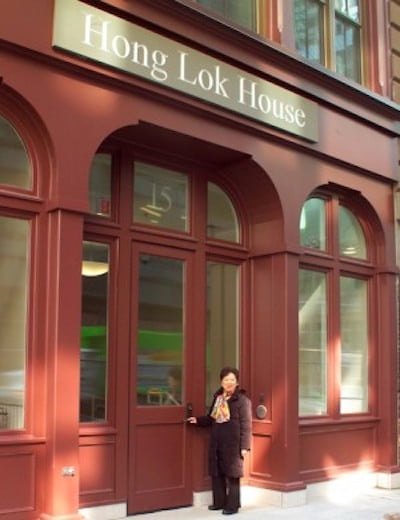
The Hong Lok House, a recently redeveloped low-income housing residence for Chinatown seniors, was recently completed.
The $37-million project features 74 new units, replacing the former 28-unit elder housing facility built in 1978.
The building was redeveloped through donor support and has incorporated a “green roof” and tai chi deck, along with other improvements to promote an active and healthy lifestyle.
The facility meets the U.S. green building council’s LEED Silver standard with many energy efficient features.
The project began in April 2006 when the Greater Boston Chinese Golden Age Center hired Rogerson Communities to redevelop the existing Hong Lok House, an outdated HUD-202 residence for low-income elders. Developers broke in August 2011 after some delay in gathering finances.
Rogerson Communities fundraised, secured the financing, designed and built the new eight-story facility.
“It was a privilege to have worked with Rogerson Communities to bring this project to fruition. The end product is something the entire community can be proud of and I am pleased to be welcoming each tenant into their new home,” Ruth Moy, executive director of Greater Boston Chinese Golden Age Center, said in a statement.
Walsh, Developers Announce Jackson Square Redevelopment Milestones
Boston Mayor Martin J. Walsh and Jackson Square Partners recently announced three milestones marking the final phases of development in the $250 million Jackson Square Redevelopment Master Plan, conceived and developed over a decade ago:
• The $21 million Jackson Commons, comprised of a 37-unit, mixed-use and mixed-income housing development near the Jackson Square MBTA stop, has been completed. Eight units are reserved for homeless/formerly homeless residents earning no more than 30 percent of average median income (AMI). The remaining 29 units are affordable to residents with income limits of 60 percent AMI to 110 percent AMI. The development also has more than 10,000 square feet of ground-floor retail space. The redevelopment consisted of the adaptive re-use and renovation of the 100-year-old Webb Building.
• Ground has been broken at 75 Amory Ave., marking the third phase of a $16 million development that will create 39 units of affordable housing for families. The site is being developed by the Jamaica Plain Neighborhood Development Corp.
• The U.S. Environmental Protection Agency awarded the city $200,000 in brownfields grant for the remediation of the former industrial sites next to Jackson Commons, at 1542 Columbus Avenue in Roxbury. This land will be transformed into a recreation center for the neighborhood.
“I am proud that the city of Boston has invested funding into the redevelopment of these once vacant and underutilized public and private parcels,” Walsh said in a statement. “I want to thank the EPA for this grant to help us move forward with the process of restoring the land to a useful state, and our partners for working with us to create transit-oriented housing that will knit the Roxbury and Jamaica Plain neighborhood together.”
Harborlight House In Beverly To Undergo Renovation
Harborlight Community Partners has received a MassDevelopment bond to fund a renovation of its affordable senior supportive living facility.
MassDevelopment issued a $4 million tax-exempt bond on behalf of Harborlight House LLC, an affiliate of Harborlight Community Partners, an affordable housing manager and developer.
The developers plan to improve the building’s energy efficiency and renovate the units to improve wheelchair accessibility. The facility is located at 1 Monument Square in Beverly.
MassDevelopment also assisted the Department of Housing and Community Development with the approval of federal low-income housing tax credits, providing approximately $2 million in equity. East Boston Savings Bank purchased the bond. The project is expected to support 14 construction jobs.
“Seniors throughout our North Shore communities deserve to be able to remain in this region where they have lived, worked and raised their families, but there is a shortage of affordable options to support them,” Andrew DeFranza, executive director for Harborlight Community Partners, said in a statement. “This critical collaboration with MassDevelopment and others ensures that Harborlight House will remain viable and affordable for decades to come.”
Citizens Kicks In $6M For Dartmouth Affordable Housing Development
A 36-unit affordable rental housing development in Dartmouth will move forward with a $6.46 million construction loan from Citizens Bank.
Local developers Paul and Robert Carrigg will build Lincoln Park Place LLC at the former Lincoln Park Amusement Center.
Besides the loan provided through Citizens’ Community Development Lending Group, financing for the project also includes $7 million in state and federal low income housing tax credit equity, $3.5 million in state funding, $100,000 in town funding and a permanent loan through Bay Coast Bank in Fall River.
“We enjoyed working with Citizens Bank on this project,” Paul Carrigg said in a statement. “Citizens Bank moved forward in a timely fashion to help get this transaction closed. This development offers Southeastern Massachusetts residents more options for affordable housing, which is an important goal for us and for Citizens.”
Lincoln Woods Apartments Receives $15.6M From MassHousing
Lincoln Woods Apartments Receives $15.6M From MassHousing
Aug 31, 2015
The Lincoln Woods Apartments in Lincoln will receive $15.6 million in MassHousing financing to improve facilities and maintain affordability at the 125-unit complex.
Lincoln Woods is owned by an affiliate of The Community Builders (TCB) of Boston. TCB is using the MassHousing financing to renovate the property, which includes 72 apartments that are affordable to lower-income families. The remaining 53 apartments are rented at market rates.
TCB will use funds to replace all windows and exterior doors, replace or repair wood siding, renovate community rooms, install a fitness area, new kitchens, bathrooms and a new boiler plant, improve ventilation and add solar panels. The number of accessible apartments will be increased from two to six and the wastewater treatment plant will be upgraded to ensure compliance with current requirements.
The 72 affordable units will remain so for at least 30 years under the Low-Income Housing Tax Credit (LIHTC) program, and of the 72 units, 32 will be subsidized through the Massachusetts Rental Voucher Program.
MassHousing’s financing includes a $12.6 million construction and permanent loan and a $2.8 million bridge loan. Other financing sources for the transaction were the state Department of Housing and Community Development, the town of Lincoln and the use of federal LIHTCs.
“At a time when the nation is talking about expanding ways for families of all incomes to live in high-opportunity communities with great schools, The Community Builders could not be more proud of Lincoln Woods Apartments, where 125 families with a wide range of incomes live in well-designed housing in the center of Lincoln, adjacent to grocery shopping, green space and the commuter rail,” Bart Mitchell, TCB president and CEO, said in a statement. “We are delighted that this investment will keep Lincoln Woods Apartments beautiful, energy-efficient and affordable for decades to come.”
Copyright © 2015 The Warren Group | All Rights Reserved
http://www.bankerandtradesman.com/2015/08/lincoln-woods-apartments-receives-15-6m-from-masshousing/?utm_source=btDaily&utm_medium=Daily&utm_campaign=btdaily083115