Baker-Polito Administration And CEDAC Award Funding In 2022 Winter Rental Round To Help Create Or Preserve More Than 1,474 Units Of Affordable Housing Across Massachusetts.

CEDAC committed predevelopment or acquisition financing to 6 of these projects – BOSTON, July 20, 2022 – The Community Economic Development Assistance Corporation (CEDAC) is proud to serve as a financing partner in the production or preservation of 11 supportive housing projects announced during the Baker-Polito Administration’s most recent Supportive Housing funding round.Projects stretch from Beverly and  Boston to Chicopee with CEDAC commitments totaling $6.5 million.


BOSTON (Aug 11, 2022) – The Community Economic Development Assistance Corporation (CEDAC) is proud to announce its work as a financing partner in the production or renovation of 26 affordable housing projects announced during the Baker-Polito Administration’s most recent Winter Rental Round. state funding represents a combination of direct subsidies, state and federal tax credits, and other resources to support the creation and preservation of affordable housing through multiple funding rounds each year. These most recent awards announced on July 26th comprise the biggest funding round of 2022 and include housing for seniors, families, and individuals.

CEDAC’s total commitment of $6.5 million in acquisition and predevelopment financing will facilitate affordable housing development by community development corporations and other non-profit entities. CEDAC provided predevelopment and/or acquisition financing to the following six projects:


Anchor Point Phase 2

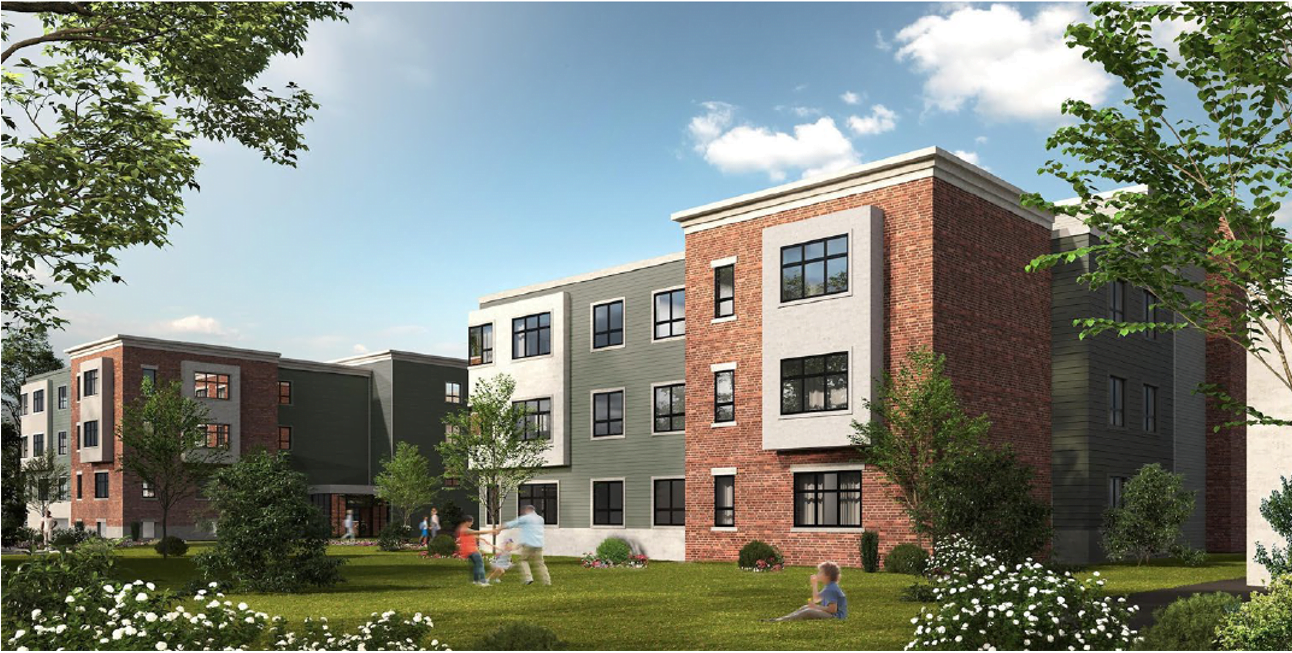
Using CEDAC acquisition financing in January of 2018, Harborlight Community Partners, Inc. (HCP) acquired a five-acre site to develop the Anchor Point project. HCP will build 77 new affordable family rental units, all two and three-bedroom units, in two phases. Each phase will consist of a three-story wood frame building with a community room, common laundry and elevator, and the two buildings will be connected by a pedestrian bridge. The first phase of the project has completed construction and celebrated its ribbon-cutting on July 29th.   Anchor Point Phase 2 (Phase 2) will include 39 units affordable to low-income households at or below 60% AMI. Sixteen units will be reserved for households at or below 30% AMI, 8 of which will house formerly homeless families. CEDAC provided $948,306 in predevelopment and $1,620,000 in acquisition funds for the project.

150 River Street

Caribbean Integration Community Development (CICD), in partnership with The Planning Office for Urban Affairs (POUA), will construct a 30-unit affordable senior housing development on a vacant, one-acre, City of Boston-owned site on River Street in Mattapan. The project consists of three studio units and 27 one-bedroom units across three floors, as well as 2,800 square feet of common space. Of the 30 units, 11 are designated for 30% AMI households, 15 are designated for 60% AMI households, and four are designated for 70% AMI households. CEDAC provided a predevelopment loan of $750,000 for the project, as well as a $15,000 loan to CICD to support this emerging minority-led community development organization.

Aileron

Neighborhood of Affordable Housing, Inc. (NOAH), is constructing 36 units of affordable rental housing and 2,550 square feet of commercial studio space for artists. The project involves a five-story building with eight units for households at or below 30% AMI, and 28 units for households at or below 60% AMI, plus a common-area work bar and art gallery, shared laundry, and a management office. In response to a neighborhood desire to support local artists, the project will also include  17 artist work-space studios (commercial) of the units, and the building will also include three shared artist studios, a common-area work bar and art gallery, shared laundry, and a management office, a building with 17 artist work-space studios (commercial) available for rent with a preference for Aileron residents. NOAH received City of Boston developer designation with their proposal which will convert the long-neglected property into productive use. At an adjacent property NOAH is developing 7 mixed income ownership units. CEDAC provided $620,000 in predevelopment loan financing.

Carol Avenue Rehab

Carol Avenue Apartments is a 100-year-old property in Brighton, which was purchased by the Allston Brighton CDC in July 2018. The project consists of the preservation of 33 units in three adjacent buildings: 6 Carol Ave. (12 units), 10 Carol Ave. (10 units) and 12 Carol Ave. (11 units).  The CDC is proposing an extensive renovation of the property which will include, among other work, new mechanical systems, windows, doors, added insulation, new ventilation, improved accessibility and new fire suppression. CEDAC provided a predevelopment loan of $250,000 for the renovation.

Belcher Apartments

Valley Opportunity Council, Inc. (VOC) will renovate an abandoned historic school building, known as Belcher School, and create 25 units of housing in Chicopee. The Belcher Apartments project will contain 25 units, including 2 one-bedroom units, 17 two-bedroom units, and 6 three-bedroom units. 22 units will serve households whose incomes are at or below 60% AMI, including 7 units reserved for households at or below 30% AMI and, in some cases, transitioning from homelessness. All residents will have access to supportive services and an on-site resident service coordinator will connect residents to various services offered by VOC and other area providers. There will be 3 market rate units and 3 fully accessible units. 43 off-street parking spaces will be created. This project received city support through inclusion in a zoning overlay district designed to assist projects like Belcher Apartments.  CEDAC committed a predevelopment loan of $290,000 for the project.

22 Johnston Way

Stow Elderly Housing Corp. (SEHC) is constructing 37 new units and rehabilitating 50 existing units for seniors with supportive services at their Stow Apartments site. Funding sources include state and federal low-income housing tax credits and subsidy funds, plus local Community Preservation Act funds. All 87 units will be restricted for seniors earning less than 60% of AMI, with additional units further restricted for seniors earning less than 30% of AMI. CEDAC provided patient acquisition and predevelopment financing totaling $2,027,500 dating back to 2011, while SEHC sought 40B zoning approvals for the new units. SEHC’s perseverance, and the town’s unwavering support, will help to address the pressing need for high quality affordable homes for seniors in Stow.


About CEDAC

CEDAC is a public-private community development financial institution that provides project financing and technical expertise for community-based and other non-profit organizations engaged in effective community development in Massachusetts. CEDAC’s work supports two key building blocks of community development: affordable housing and early care and education. CEDAC is also active in state and national housing preservation policy research and development and is widely recognized as a leader in the non-profit community development industry. For additional information on CEDAC and its current projects, please visit www.cedac.org.

Baker-Polito Administration And CEDAC Award Funds To 11 New Supportive Housing Projects

CEDAC committed predevelopment or acquisition financing to 6 of these projects – BOSTON, July 20, 2022 – The Community Economic Development Assistance Corporation (CEDAC) is proud to serve as a financing partner in the production or preservation of 11 supportive housing projects announced during the Baker-Polito Administration’s most recent Supportive Housing funding round.

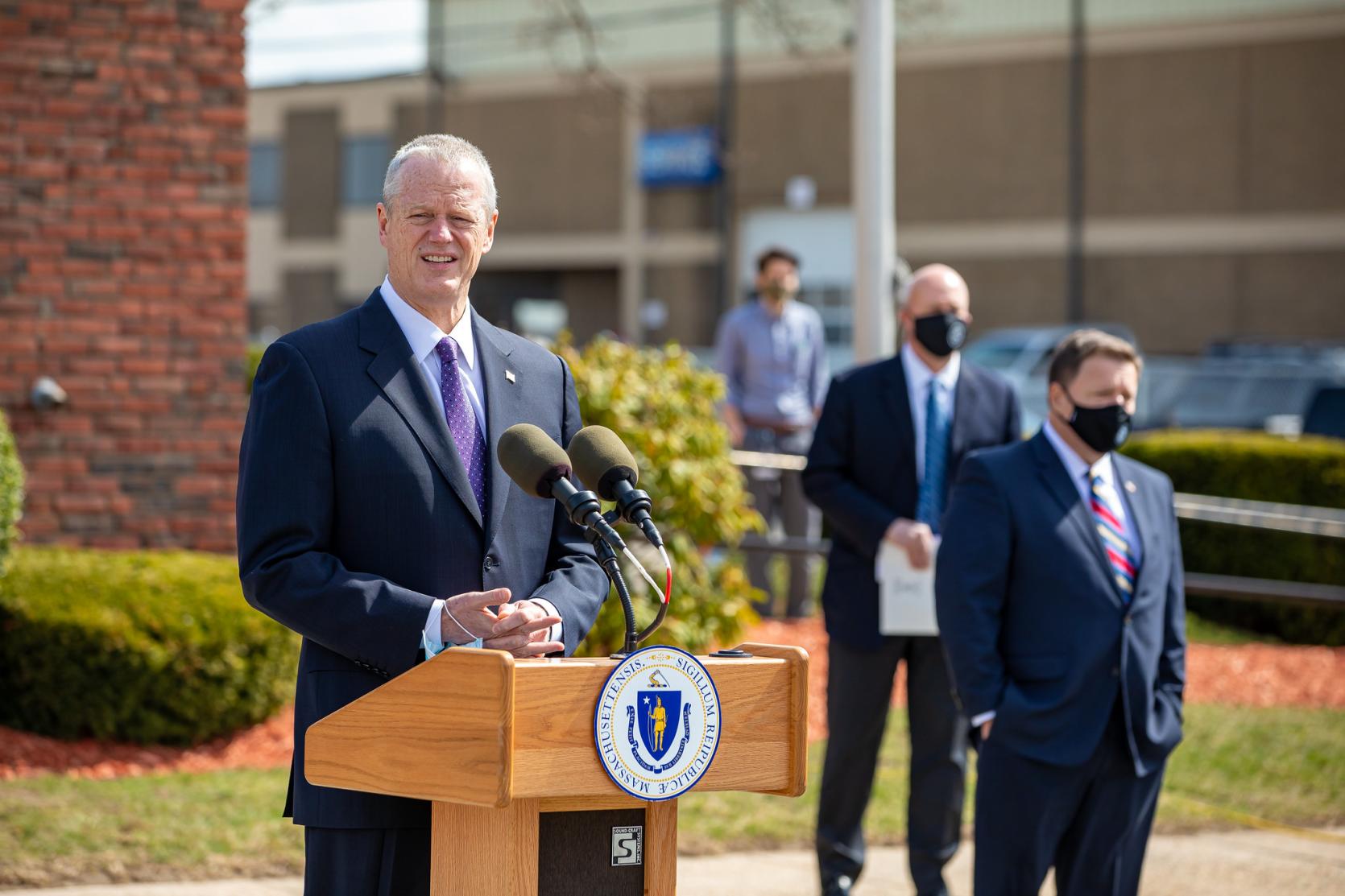
CEDAC housing team joins Secretary Kennealy, Undersecretary Maddox and Kate Racer at the supportive housing announcements in Worcester.

CEDAC committed predevelopment or acquisition financing to 6 of these projects

BOSTON, July 20, 2022 – The Community Economic Development Assistance Corporation (CEDAC) is proud to serve as a financing partner in the production or preservation of 11 supportive housing projects announced during the Baker-Polito Administration’s most recent Supportive Housing funding round. The new projects represent 437 units of supportive housing and will provide essential shelter and care for individuals and families in need across the Commonwealth. CEDAC committed a total of over $5 million in early-stage financing for the production and preservation of six of these supportive housing projects.

“CEDAC is proud to collaborate with the Baker-Polito Administration and our non-profit housing partners on these new developments, which come at a time of intense need as the Commonwealth faces an ongoing housing shortage that affects the most vulnerable members of our population,” said Roger Herzog, CEDAC’s Executive Director. “We look forward to continuing our work with Undersecretary Jennifer Maddox and her team at the Department of Housing and Community Development (DHCD) as we pursue our mission to increase housing accessibility for those in need.”

CEDAC provided predevelopment and/or acquisition loans to the following projects:

  • Warren Street Housing, Boston: Commonwealth Land Trust, Inc. acquired two buildings, located at 570 and 570R Warren Street in the Grove Hall section of Dorchester, for renovation. The developer will create 26 single room occupancy (SRO) units of permanent supportive housing for vulnerable individuals. The site is located one block from Blue Hill Avenue and one-half mile from Franklin Park. All units will be affordable to individuals at or below 50% of the area median income (AMI), including 13 reserved for formerly homeless individuals at or below 30% AMI. CEDAC provided a predevelopment loan of $300,000 for the project.
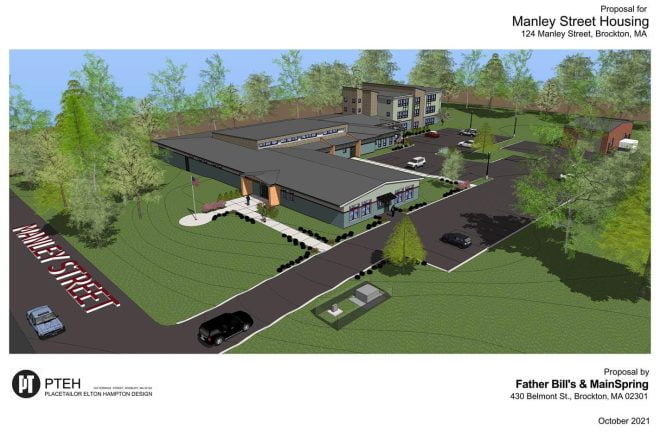
  • Manley Housing Resource Center (Phase 1), Brockton: Father Bill’s & Main Spring (FBMS) will renovate and expand the former U.S. Army Reserve Center at 124 Manley Street in Brockton, which has been vacant since 2015, to create the Manley Housing Resource Center (MHRC), a multi-use facility that will provide emergency shelter, wrap-around supportive services, and permanent supportive housing, all in one location. The MHRC will be developed in two phases. The first phase, which is the subject of this award, will consist of the renovation of the U.S Army Reserve Center into a 128-bed emergency shelter and a day program center with an on-site health clinic. A 1,500-square-foot addition will house case management offices and supportive service space. CEDAC provided a predevelopment loan of $400,000 for the project.
  • Catalyst Housing, Lynn: Harborlight Community Partners, Inc. (HCP) and The Haven Project (THP) have entered into a joint venture agreement to acquire and renovate the third and fourth floors of a historic loft building located at 57 Munroe Street in downtown Lynn. The partnership will create 23 studio units for formerly homeless unaccompanied youth and one studio resident manager unit. Twenty-three units will be affordable to youth earning less than 30% of area median income. CEDAC provided a predevelopment loan of $256,252 for the project.
  • 275 Chestnut Street, Springfield: In early 2020, Home City Development Inc. (HCDI) completed construction of 101 enhanced SRO units in the four upper floors of the former YMCA building located on Chestnut Street in Springfield. HCDI is now planning to purchase an additional section of the building and will use this space on the first and second floors to create 29 additional enhanced SRO units. CEDAC provided a predevelopment loan of $220,000 and committed acquisition financing of $350,000.
  • New Point Family Apartments, Salem: North Shore Community Development Coalition’s (NSCDC) project involves the acquisition and preservation of 18 units of naturally occurring affordable housing for families in three buildings in Salem’s Point neighborhood. The project will create long term affordability where none currently exists and will fund much needed capital improvements including enhanced energy efficiency. As the occupied units turnover, NSCDC will lease the apartments to homeless families and provide supportive services. CEDAC provided predevelopment loans totaling $437,100 and an acquisition loan of $2,874,400.
  • Gordon H. Mansfield Veterans Community, Tewkesbury: Soldier On, Inc. entered into a development agreement to purchase a 1.5-acre parcel of land at 1660 Main Street in Tewksbury to construct 21 units of permanent supportive housing for veterans who are homeless or at risk of homelessness. The project will consist of 18 one-bedroom units and three studios all affordable to households earning less than 80% of area median income, including six restricted for households earning less than 30% of area median income. CEDAC provided a predevelopment loan of $225,000.

CEDAC works with DHCD on all 11 of these funded supportive housing projects through its management of several state bond programs.

About CEDAC

CEDAC is a public-private community development financial institution that provides project financing and technical expertise for community-based and other non-profit organizations engaged in effective community development in Massachusetts. CEDAC’s work supports two key building blocks of community development: affordable housing and early care and education. CEDAC is also active in state and national housing preservation policy research and development and is widely recognized as a leader in the non-profit community development industry. For additional information on CEDAC and its current projects, please visit www.cedac.org.

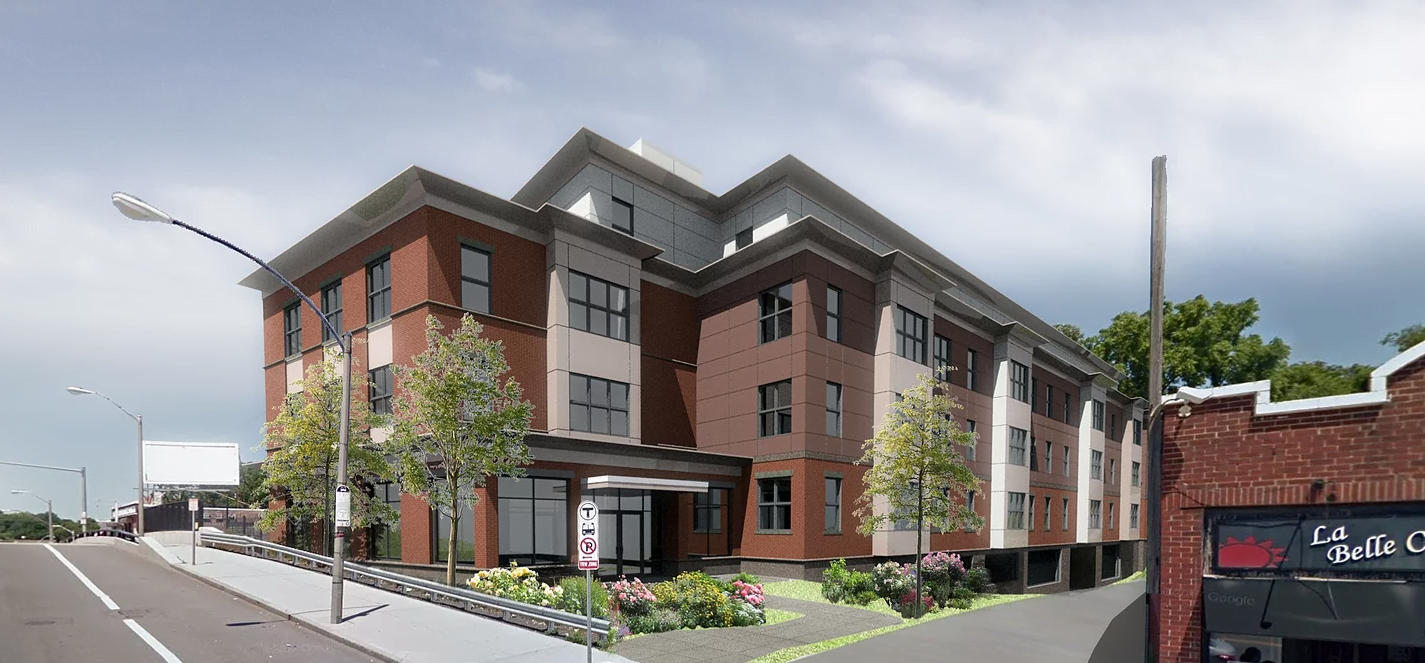
Featured images: a rendering of Manley Street Housing project; CEDAC housing team with Secretary Kennealy, Undersecretary Maddox and Kate Racer.

CEDAC Commits Over $7.1 Million in Early-Stage Financing to Six Community Development Projects in Third Quarter of FY22

CEDAC is proud to report that we have committed $7,125,700 in early stage financing for the production and preservation of affordable housing in 6 projects during the third quarter of Fiscal Year 2022.   Across the Commonwealth, we continue to see a healthy pipeline of housing development projects in urban neighborhoods and high opportunity suburban communities.  CEDAC’s financial and technical assistance supports non-profit community development partners to plan and build these projects, helping navigate the housing development process during the predevelopment phase to secure site control, zoning and local permitting approvals, and finally construction and permanent financing commitments.  As this year continues, we expect to assist in the creation of a large number of additional developments to meet the high demand for affordable housing from Massachusetts residents.

Read more about our lending commitments in Q3 of FY22.

Featured image: a rendering of East Boston CDC’s 2 Shawsheen Road project.

McElwain School Apartments Groundbreaking

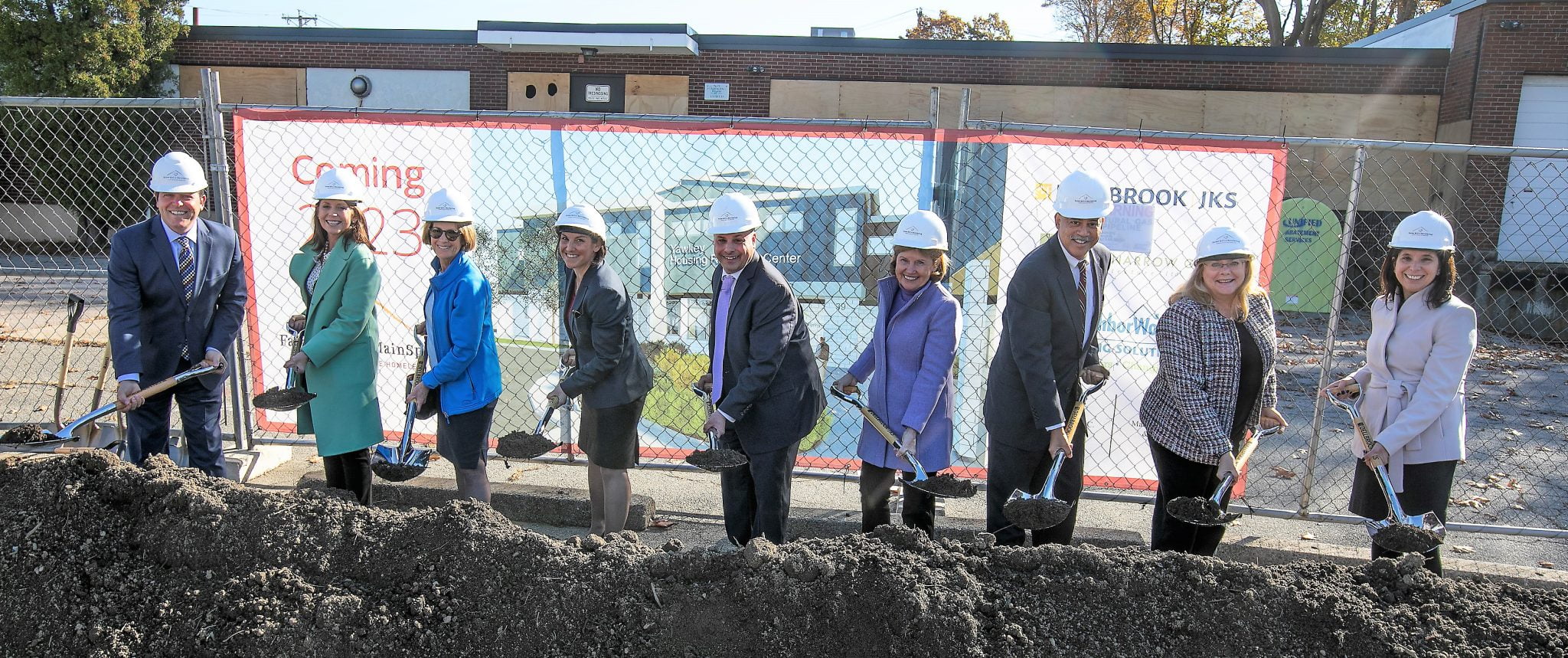
QUINCY, Mass., Tuesday, November 9, 2021] The nonprofit organization Father Bill’s & MainSpring (FBMS) is breaking ground on a new development, the Yawkey Housing Resource Center, which reimagines how a community responds to homelessness. Business and community leaders joined FBMS at the future property site Tuesday, November 9, 2021 to commemorate the start of a project they say could serve as a national model.

The Yawkey Housing Resource Center development, comprised of two new buildings, will be home to a new service-delivery model that adds daytime supports and streamlines services with the goal of ending homelessness on the South Shore and across Southern Massachusetts. The property will include a day center, an emergency shelter, and on-site efficiency apartments.

The new approach would dedicate more staff and resources to homelessness prevention, diversion and rapid re-housing, thus reducing the overall reliance on overnight shelter.

“We are grateful to our generous partners in the private and public sectors who have stepped up to invest in this bold vision,” said John Yazwinski, President & CEO of FBMS. “Our community continues to show us that we are not alone in this fight to end homelessness. One of our mission’s founders, the late Father Bill McCarthy, used to always say to me that our goal is to take down the sign at our shelter and end homelessness, not manage it. Today, our compassionate network of supporters are helping turn Father Bill’s dream into a reality.”

Other speakers at Tuesday’s event included: Arbella Insurance Group President & CEO John Donohue; Maureen H. Bleday, CEO and Trustee of the Yawkey Foundation; Quincy City Councilor Brian Palmucci; Roger Herzog, Executive Director of the Community Economic Development Assistance Corporation (CEDAC); and April Connolly, Chief Operating Officer of FBMS. The Rev. Dr. Adolph H. Wismar, Jr, a co-founder of FBMS and current board member, provided the opening prayer, and the Rev. Rebecca Froom, minister of the United First Parish Church in Quincy, provided a closing blessing.

The administration of Governor Charlie Baker and Lieutenant Governor Karyn Polito, through the Department of Housing and Community Development, has awarded $6 million in capital funding toward construction of the Yawkey Housing Resource Center two-building development.

Last week, FBMS announced the Yawkey Foundation’s gift of $2 million toward the innovative project, which will cost approximately $24 million in total. The property at 39 Broad Street will be called the Yawkey Housing Resource Center, in honor of the Yawkey Foundation’s longtime support of FBMS.

This $2 million commitment from the Yawkey Foundation serves as a lead gift in FBMS’ “A Path Home” campaign to raise $10 million privately toward the project’s capital and programmatic expenses.

The Yawkey Housing Resource Center will be constructed across the street from FBMS’ existing emergency shelter, Father Bill’s Place, which will be knocked down as part of the City of Quincy’s plans to build a new Public Safety Complex. The City of Quincy, in addition to awarding the development $1 million from its Affordable Housing Trust Fund, has signed a 99-year lease with FBMS for use of the site at 39 Broad Street.

The first phase, expected to be completed by the spring of 2023, is a two-story, 16,000 square-foot building will include the following: FBMS program and training spaces; co-located resources including a full, primary-care medical clinic, substance use and mental health services and housing assistance; shelter beds with lockers and showers for guests; a commercial kitchen space and dining area; and administrative offices.

The second phase, expected to break ground in spring of 2022 and be completed by summer of 2023, is a four-story, 20,000-square-foot building comprised of 30 units of permanent supportive housing for formerly homeless individuals. FBMS currently operates more than 600 permanent supportive housing units for formerly homeless individuals, families, and Veterans across Southern Massachusetts.

Supporters of Yawkey Housing Resource Center

Public Funders: Administration of Governor Charlie Baker & Lieutenant Governor Karyn Polito – Department of Housing and Community Development, Executive Office of Health and Human Services; City of Quincy; Quincy Affordable Housing Trust Committee; Quincy Housing Authority; Massachusetts Housing Investment Corporation; Community Economic Development Assistance Corporation (CEDAC); Property Casualty Initiative.

Private Funders: Alvarium Foundation; Arbella Insurance Foundation; Boselli Family; Patricia Conway; John Donohue & Frances Robinson; Eastern Bank; Philip & Deborah Edmundson; The Flatley Foundation; Jack Conway & Co., Inc.; Lisa Lenon & William Stanton; The McKim Family; William Murphy; The Pineau Family; Quincy Mutual Group; Rockland Trust; South Shore Bank; Jack & Kay Spurr; Yawkey Foundation.

Development Team: Property Manager and Service Provider – Father Bill’s & MainSpring; Development Consultant &
Owner’s Project Manager – NeighborWorks Housing Solutions; Architect – The Narrow Gate Architecture; General Contractor – Dellbrook | JKS; Project Attorneys – Hackett Feinberg, P.C.; Matera, Vopat, Matera & Johnson, P.C.

About Father Bill’s & MainSpring
Father Bill’s & MainSpring (FBMS) is the leading provider of services to prevent and end homelessness in Southern Massachusetts. The agency, founded in the early 1980s by a group of interfaith and community leaders, helps more than 5,000 people annually who are experiencing, or at risk of, homelessness, achieve more self-sufficiency through a range of services including homelessness prevention, emergency shelter, employment programs, and more than 600 permanent supportive housing units. FBMS, a proud partner of the United Way of Greater Plymouth County and the United Way of Massachusetts Bay and Merrimack Valley, is a 501(c)(3) non-profit agency with administrative offices in Quincy and Brockton and program offices throughout Southern Massachusetts. For more information, visit www.helpfbms.org.

»

SourceSouth Shore Chamber of Commerce

McElwain School Apartments Groundbreaking

FOR IMMEDIATE RELEASE

****************************************

Press Release

Contact: Mathieu P. Zahler
617-645-3534
mzahler@mpzdevelopment.com

MCELWAIN SCHOOL APARTMENTS GROUNDBREAKING

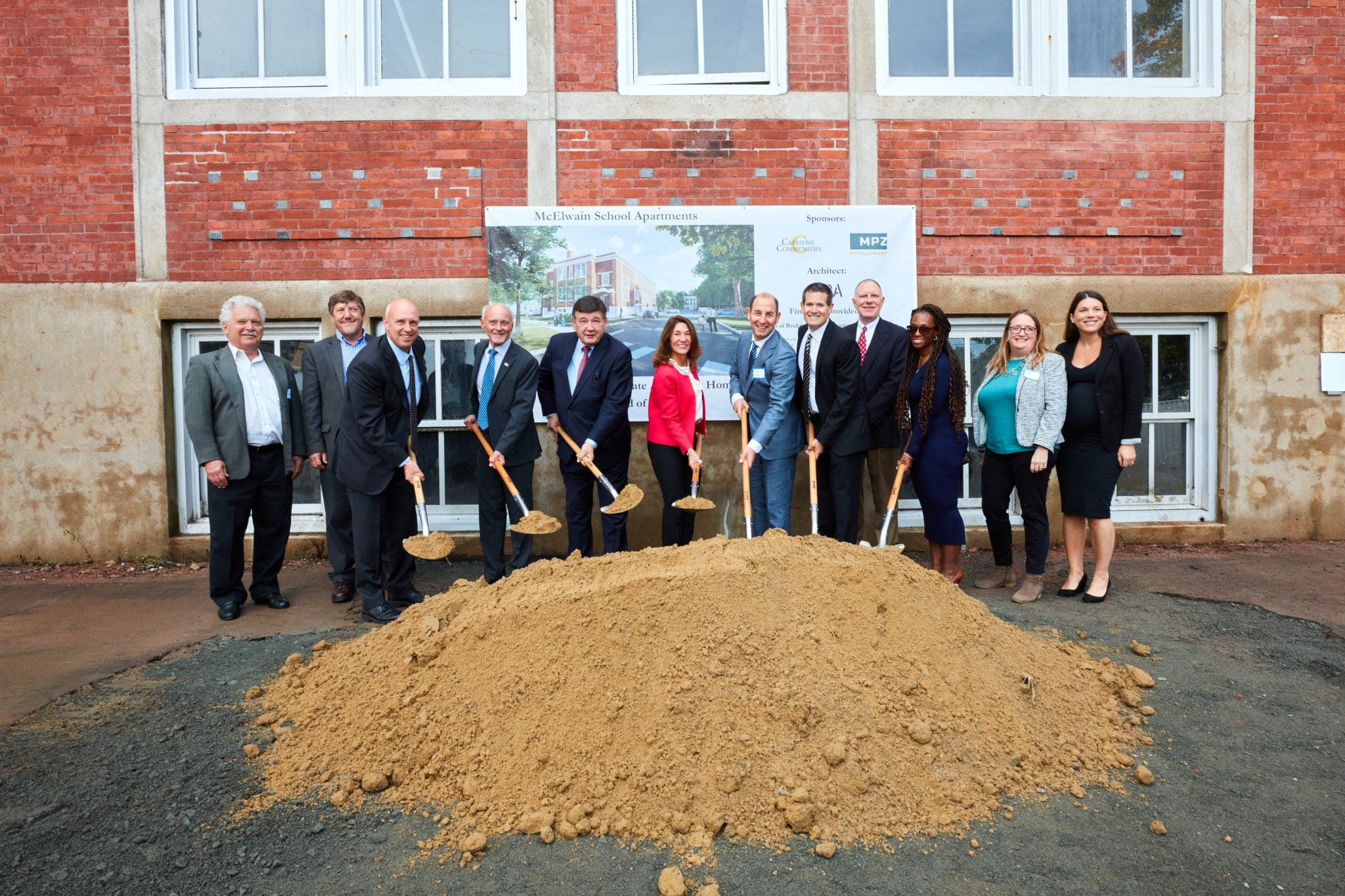
BRIDGEWATER – Tuesday, October 12, 2021 – Capstone Communities LLC and MPZ Development LLC announce the groundbreaking of McElwain School Apartments, a mixed-income 57-unit apartment community located on Main Street in the Town of Bridgewater. The groundbreaking ceremony was held on Tuesday, October 12th at 10:15am at 250 Main Street, Bridgewater, MA. McElwain School Apartments will serve the hard-working families and individuals who are looking for high quality and mixed-income housing in Bridgewater. This type of mixed-income project is the first of its kind in the Town of Bridgewater offering multiple types of affordable housing options in both new construction and rehabilitated buildings.

McElwain School Apartments provides fifty-seven (57) apartment homes with thirteen (13) one-bedroom units, thirty-six (36) two-bedroom units, and eight (8) three-bedroom units. Six (6) apartments are rented to households at market rates. 42 apartments are rented to households earning no more than 60 percent of area median income ($42,000-$64,740 depending on household size), three (3) apartments are rented to households earning no more than 50 percent of the area median income ($35,000-$53,950), and six (6) apartments are being rented to households earning no more than 30 percent of area median income ($21,000-$32,370).

The $28.9 million development is located along Main Street/Route 28 outside Bridgewater Center. The development is not far from the Bridgewater Town Green and a short walk to several local restaurants including the Juice Mill, Restoration Coffee, and the Greyhound Tavern. The McElwain School Apartments’ name pays homage to William H. McElwain (1867-1908), the founder of the William H. McElwain Shoe Company, a shoe manufacturer who was one of the major employers in Bridgewater at the turn of the 20th century.

The Town of Bridgewater through its Community Preservation Act provided $1.345 million in loans for the project.

“In 2017 Matt Zahler and Jason Korb had an ambitious vision to take an abandoned public school and make its hallways hum with activity again.” said Michael Dutton, Bridgewater Town Manager. “The Baker-Polito administration recognized that vision and together with Capstone Communities LLC and MPZ Development LLC, made it happen. The people of Bridgewater also saw the wisdom of creating quality housing for those who are challenged to find adequate housing in this market and granted over $1 million in Community Preservation Act funds to get this project done. We are thrilled to see life in this old building. And we are thrilled with the team Matt and Jason have put together to get it done.”

Massachusetts Housing Investment Corporation (MHIC), one of the development’s many financing partners, issued a $14.4 million construction bridge loan; the loan was also participated in by The Life Initiative. In addition to the construction loan, MHIC also provided $10.6 million in federal tax credit equity, solar equity, and federal historic tax credit equity for the project. The Cape Cod Five Savings bank purchased the project’s State Low Income Housing Tax Credits, and the New York Life Insurance Company purchased the project’s State Historic Tax Credits. The Community Economic Development Assistance Corporation (CEDAC) will provide $600,000 in financing for the Project. The Department of Housing and Community Development (DHCD) is providing the State and Federal Low Income Housing Tax Credits and $6.4 million in loans for the development. The Massachusetts Housing Partnership (MHP) is providing a $5.3 million permanent loan for the project.

“Our administration is excited for the groundbreaking of yet another project that will result in new, needed, high-quality, affordable housing units that meet the needs of Massachusetts families of a wide range of incomes,” said Lt. Governor Karyn Polito.  “Since the start of our administration, we’ve made affordable housing a top priority, and the McElwain School Apartments represent the best of efforts to be creative and reuse a historic property, which will breathe new life into an important part of town, while bringing new and desperately needed affordable housing to the community.”

“Producing more housing of all types has been a key area of focus since the start of the Baker-Polito Administration, and I want to congratulate the development team, the town of Bridgewater, and the project’s financing partners for the collaborative and innovative approach they took to get to this point today,” said Housing and Economic Development Secretary Mike Kennealy. “We used the term ‘Housing Crisis’ long before the COVID-19 pandemic and the public health emergency put on full display the consequences of an inadequate housing supply.  But thanks to projects like this, we continue to make progress toward addressing this crisis through new housing opportunities that support the Commonwealth’s families and our economy.”

“The Life Insurance Community Investment Initiative (the Life Initiative) is delighted to have been a partner with Jason Korb and Mathieu (Matt) Zahler in helping bring the redevelopment of the McElwain School to fruition.” said Michael Gondek, Vice President of TLI. “We’d particularly like to congratulate the Town of Bridgewater for its noteworthy financial support for the 57 unit of affordable rental housing to be produced by the adaptive reuse of the former school, and the construction on the site.”

“CEDAC is pleased to join our state and local funding partners to celebrate the groundbreaking of this important new multifamily housing in Bridgewater, said Roger Herzog, CEDAC executive director.  “We congratulate developers Jason Korb and Mathieu Zahler and commend them for the inclusive design to provide accessible housing units to support people with mobility impairments to live safe, independent lives in this community setting.”

“MassHousing is pleased to be part of this transformative effort to take an underutilized school property and create 57 new apartment homes for households with a range of incomes who will be able to live affordably in Bridgewater,” said MassHousing Executive Director Chrystal Kornegay. “With strong support from the town of Bridgewater, the development team is going to foster stable housing and economic opportunity for the individuals and families who will live at the McElwain School.”

“We congratulate Capstone Communities and MPZ Development for executing their transformative vision to turn a vacant school, three-family house, and an overgrown lot into a vibrant residential community,” said Kathy McGilvray, MHIC Director of Investment. “The McElwain School Apartments is a great example of pairing adaptive reuse of historic buildings with energy-efficient new construction. The development also represents the first time Bridgewater has used tax credit financing. MHIC is pleased to have been able to provide a comprehensive debt and equity financing package for the project.”

“Congratulations to Jason Korb and Capstone Communities, Matt Zahler of MPZ Development and the Town of Bridgewater for getting started on this exciting development,” said Clark Ziegler, executive director of the Massachusetts Housing Partnership. “As a mission-based lender, we strive to support housing like this, housing with strong local support and developers who work with the community to preserve a local landmark while adding much-needed affordable housing for individuals and families.”

“I am very pleased to have been invited to speak at the groundbreaking for this historic initiative to establish 57 new affordable housing units at the McElwain School in the Town of Bridgewater,” said Dean of the Massachusetts Senate Marc R. Pacheco (D-Taunton).  “This new housing initiative will refurbish and renovate the long-vacant property with updates designed to preserve the structure’s architectural style and complement the historic quality of the surrounding area.  Many thanks to the developer and to the Town of Bridgewater for utilizing federal and state housing support that will minimize the local resources needed to achieve impressive progress that will benefit the community.”

Jason Korb, Principal of Capstone Communities LLC and Mathieu P. Zahler, Principal of MPZ Development LLC added, “We are excited to officially break ground on McElwain School Apartments, which will provide urgently needed mixed-income housing for the Bridgewater community. Over the past four years, we worked tirelessly on the financing, design and construction of McElwain School Apartments and we are proud to provide such high-quality housing at rent levels that hard-working families can afford. We are especially thankful to the Town of Bridgewater and all the other public and private lenders that made the McElwain School Apartments possible.”

In addition to Jason Korb and Mathieu P. Zahler, speakers at the opening included:

Kimberly Williams, Assistant Town Manager, Town of Bridgewater
Fred Chase, Town Council Vice President, Town of Bridgewater
Honorable Lieutenant Governor, Karyn Polito, Commonwealth of Massachusetts
Honorable Senator Marc Pacheco, Massachusetts State Senate Dean, Massachusetts Senate
Honorable Michael Kennealy, Secretary of Housing and Economic Development, Commonwealth of Massachusetts
Clark Ziegler, Executive Director, Massachusetts Housing Partnership
Mark Teden, Vice President of Multifamily Housing, MassHousing
Kathy McGilvray, Director of Investment, Massachusetts Housing Investment Corporation
Michael Gondek, Vice President, The Life Initiative

»

One Less Stressor for Caregiver Roberto Camacho

September 29, 2021

By late September 2017, Roberto Camacho breathed a sigh of relief. Earlier that month, he had successfully helped his elderly parents relocate from their hometown of Yauco, Puerto Rico, to the one-bedroom home he was renting in Springfield, Massachusetts. Roberto had made this same move on his own several years prior, to take a job with the Gándara Center.

Less than two weeks after they arrived, Hurricane Maria devastated the island. Roberto believes the move saved his parents’ lives. Help was especially slow to reach Yauco. And his parents, Tony and Magda, lived alone and have chronic health challenges.

It was a phone call from Tony that spun their relocation into motion. “My father told me he didn’t want to drive anymore,” Roberto recalls. “After grocery shopping with my mother, he had a blackout and didn’t know where he was. They were lost for three hours, driving in his hometown.”

His father, who has type two diabetes and age-related memory loss, had been caring for Magda, who has depression and dementia.

“Something in my heart said, well, I have no choice,” Roberto says, of his decision to become his parents’ caregiver—a choice that meant resigning his job as a care manager for Commonwealth Care Alliance. “My parents left everything, they just came with a couple of bundles. And two dogs.”

The trio moved again in November 2017, when Roberto purchased a larger home in Springfield in what they believed to be a quiet neighborhood. Unfortunately, it wasn’t.

“The fire trucks took our street as a shortcut,” Roberto says. “They passed by three, four, five times a day with sirens very high. My mother got very anxious every time she heard the sirens. So I was forced to sell.”

Roberto feels lucky that he was able to buy a home in the summer of 2020, in the middle of the Covid-19 pandemic, in a truly quiet spot. But the 1931 one-floor, one-bathroom home in Springfield had a drawback that soon became a worrisome safety issue: an old antique tub with high sides.

“My parents were having difficulty getting in and out of the tub, my father was close to falling several times,” says Roberto. “I realized I needed to get rid of that tub, but I was broke!”

With his experience as a care manager, Roberto was familiar with local resources in the community. He began looking for a program that would cover the costs—nearly $25,000—to make the bathroom accessible.

“And I couldn’t find those free services! They don’t exist anymore. I was happy to find a different resource opportunity with Way Finders,” Roberto says, of the Home Modification Loan Program (HMLP).

Roberto had connected with Way Finders Homeownership Advisor Amneris Moreno Pagan, who explained how the HMLP works: Funded by the state, the program aims to help seniors and individuals with disabilities to live more independently and comfortably at home. It provides financing—a 0% interest, deferred payment loan up to $50,000—to homeowners or landlords so they can adapt or modify a home for increased safety and accessibility, such as in the kitchen or bathroom.

General home repairs are not eligible; the modification needs to directly relate to a person’s ability to function on a day-to-day basis, as documented by a professional.

Those who receive funding are not required to make monthly payments. Payment of the HMLP loan is required only when the property is sold or the property title is transferred to someone else or to a Trust (or if any condition of the loan agreement is not met).

“I analyzed the situation, and it was perfect for me,” Roberto says. “I said, ‘Well, let’s do it.’”

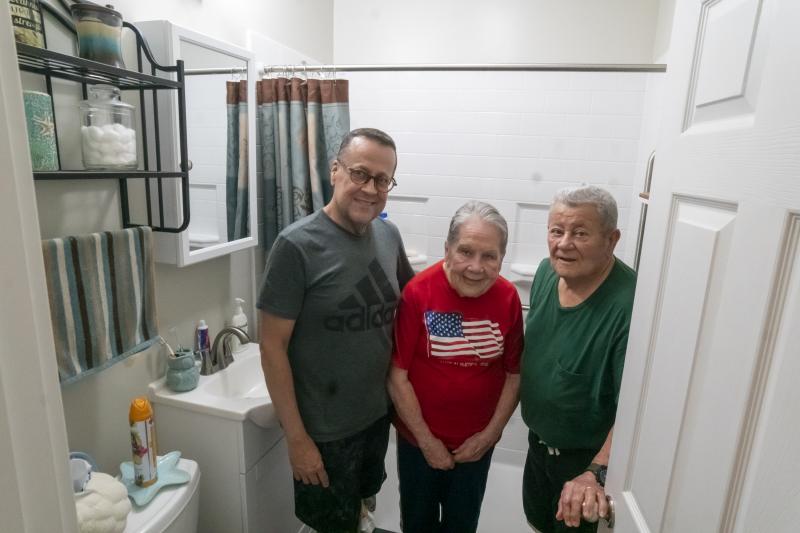
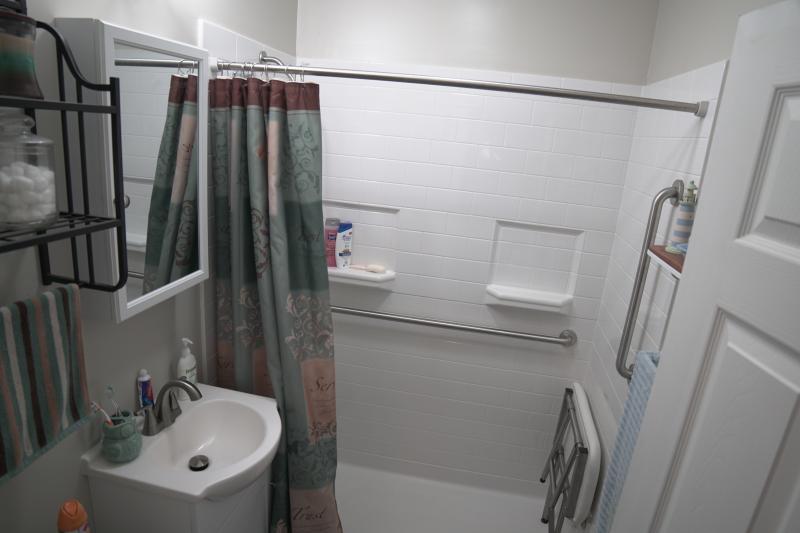
A few months after deciding to go for it, Roberto secured the loan and lined up a contractor. Then within three weeks, the contractors replaced the tub with an open shower and closed off a low window. They also installed grab bars, a higher toilet, and a handheld showerhead. And for greater ease of access, the narrow doorways to the bathroom and his parents’ bedroom were both enlarged.

“Thanks to Way Finders, my parents can enjoy a fully accessible bathroom,” says Roberto. “They feel more secure and confident. The safer environment provides them and me with peace of mind. God bless you!”

“I am happy,” says Tony, of the impact the changes brought to his daily life.

Roberto praises Amneris for her help. “She was very efficient and guided me through the whole process with a high level of professionalism. Every time I needed to speak to her, she answered. She replied to my emails and texts within minutes.”

Roberto is eager to return to the workforce but, until then, is glad to be able to care for his parents in the comfort of his home—with less worries for their safety.

»

SourceWay Finders

Mass. Nonprofits Share $11.5M to Bolster Affordable Housing

August 16, 2021 — Nonprofits across Massachusetts, in collaboration with community development corporations and others, recently were awarded $11,578,537 to support affordable housing developments in cities and towns from Boston to Northampton.

“These commitments, which represent a strong second quarter of lending activity, support a variety of affordable housing projects that are tailored to the needs of the community,” said Roger Herzog, executive director the Boston-based Community Economic Development Assistance Corporation, a public-private community development finance institution.

“We are proud to support our non-profit development partners as they create affordable and supportive housing for families, seniors, and veterans. These projects will help ensure that some of our most vulnerable populations have a safe, affordable place to call home.”

Receiving funding were the following:

  • Caribbean Integration Community Development, Mattapan: $750,000 to create 30 units of affordable, supportive housing for seniors, with 11 units designated for households at or below 30% of area median income (AMI). 
  • The Community Builders, Boston$1 million predevelopment for the first phase of a major public housing redevelopment in Jackson Square. 
  • The Community Builders, Worcester: $400,000 in predevelopment financing to subdivide a 36,595-square-foot acre lot from the existing Fruit Sever Apartments site and construct 49 new affordable apartments. 
  • The Neighborhood Developers, Chelsea$500,000 in predevelopment financing to acquire a vacant site one block from the MBTA Silver Line Station and create 66 affordable family units. 
  • North Star Family Services, Leominster: $100,000 in predevelopment financing to purchase an undeveloped site to will create 14 units of permanent supportive housing for formerly homeless families. 
  • Soldier On, Tewksbury$225,000 in predevelopment financing to purchase an undeveloped parcel, to construct 21 units of permanent supportive housing for veterans who are homeless or at risk of homelessness. 
  • Valley Opportunity Council, Chicopee: $290,000 in predevelopment financing to renovate a vacant historic school building to develop into 25 rental units along with 43 parking spaces. 
  • Valley Community Development Corporation, Northampton: $225,000 in predevelopment financing to combine the preservation of an existing 8-unit project on School Street with the creation of 24 new affordable townhouses on Laurel Street. 
  • VietAID, Boston: $926,000 in acquisition and $250,000 in predevelopment financing Vietnamese American Initiative for Development intends to purchase three lots in Dorchester’s Bowdoin-Geneva neighborhood, where they plan to construct 38 units of permanent supportive housing for older adults.

SourceMassnonprofit News

Rockport State boosts affordable housing project

Now with state and federal backing, Rockport’s Granite Street Crossing affordable housing project will finally be able to get off the ground after nearly five years of planning.

The project is one of 28 affordable housing projects across the Commonwealth that Gov. Charlie Baker on Thursday afternoon announced will receive a total of $139 million in funding and tax credits.

“As Massachusetts continues to recover from the COVID-19 pandemic, it is important that we continue to prioritize new affordable housing development to help our most vulnerable families,” Baker said. “Stable housing is the foundation of healthy, prosperous communities, which is why our administration has proposed an immediate infusion of nearly $1 billion in federal recovery funds to rapidly increase capacity for production in every part of the state.”

With this news, Harborlight Community Partners (HCP) can move forward with the approximately $9.5 million project.

“This is around a $7.5 million state and federal investment,” explained Harborlight Executive Director Andrew DeFranza. “This is a huge deal. We’re thrilled to once again partner with the community of Rockport to create another affordable housing community. This will be intergenerational this time, so we’re really excited about that. Hopefully it will spur more support for more senior housing services, especially in the wake of COVID.”

Construction is expected to begin next spring, DeFranza said. If all goes well, the complex will open for occupancy in summer 2023.

Granite Street Crossing will feature a two-story complex with 17 supportive senior units and six, two-story family townhouses. It will be built at 5 Granite St., a plot of more than an acre previously owned by Silva Brothers Florists.

“I am so pleased Cape Ann will have another beautiful, affordable Harborlight project,” said Robert Gillis, president of Harborlight’s board of directors, in a prepared statement. “More affordable housing is needed in our community and Cape Ann Savings Bank is proud to support HCP and be part of the effort to get this done.”

Granite Street Crossing has been in the works since 2016. Despite the long planning stage, DeFranza said it was “one of the best permitting experiences we’ve ever had.”

“I want to shout out the neighbors of the project,” he said. “They’re the gold standard. We spent a year with them working on the designs, and they gave a lot a feedback. They also were robustly supportive of the project at public meetings.”

The town of Rockport has given around $500,000 to Granite Street Crossing over the years. The project received three Rockport Community Preservation Committee grants between 2017 to 2019 and a portion of the town’s federal HOME Investment Partnerships Program funding.

In addition, Federal Home Loan Bank of Boston awarded the project a $500,000 grant in 2018. Additional funding was also provided by Eastern Bank and the North Shore HOME Consortium.

This is not the first time Harborlight Community Partners requested state funding for Granite Street Crossing. The state rejected a previous application in 2018. The following year, Harborlight Director of Real Estate Development  Kristin Carlson told the Times it was due to the lack of support from local organizations. Now, in addition to Rockport Community Development Corporation and HOME, project partners include include the Community Economic Development Assistance Corp., Local Initiatives Support Corp., and Enterprise Foundation.

Granite Street Crossing will be Harborlight Community Partners’s third affordable housing development in Rockport. The non-profit owns and manages Rockport High School Apartments and Pigeon Cove Ledges, which account for 40% of the town’s affordable housing stock.

Michael Cronin may be contacted at 978-675-2708, or mcronin@gloucestertimes.com.

SourceGloucester Times

Baker-Polito Administration Announces $139 Million in Funding and Tax Credits to Produce and Preserve 1,346 Units of Affordable Rental Housing

Today, Governor Charlie Baker, Lt. Governor Karyn Polito, Housing and Economic Development Secretary Mike Kennealy and Housing and Community Development Undersecretary Jennifer Maddox joined local legislators and officials to announce affordable housing awards for 28 projects in 21 communities across the Commonwealth. These awards will advance the development of 1,526 new rental units, including 1,346 rental units affordable for low- and extremely low-income households.

Through the Department of Housing and Community Development (DHCD), the Baker-Polito Administration awarded $93.3 million in direct subsidy funding and allocated $45.8 million in federal and state housing tax credits that will generate approximately $310 million in equity in support of these projects. The projects are located in every region of Massachusetts, and include new construction, historic rehabilitation, and the preservation of occupied projects in need of rehabilitation. Additionally, some projects are transit-oriented, and eight of the construction projects will be built to Passive House design standards.

“As Massachusetts continues to recover from the COVID-19 pandemic, it is important that we continue to prioritize new affordable housing development to help our most vulnerable families,” said Governor Baker. “Stable housing is the foundation of healthy, prosperous communities, which is why our administration has proposed an immediate infusion of nearly $1 billion in federal recovery funds to rapidly increase capacity for production in every part of the state.”

“We are proud to support an excellent project here in Lawrence, another step in an amazing transformation of the Arlington Mills National Historic District into a thriving residential neighborhood, zoned for up to 1,000 housing units,” said Lt. Governor Polito. “Since 2015, we’ve invested in revitalization efforts like this across the state, creating new housing, jobs, and new opportunities for cities and towns and have directed more than $1.4 billion to our affordable housing ecosystem. Cities like Lawrence are using state and federal funds to pursue a new vision that puts housing at the center of communities.”

“Here in Massachusetts, we have seen the negative impacts of our housing crisis affect nearly every region. Through our new Housing Choice reforms, new programs, and increased capital investments, the Baker-Polito Administration is helping move great projects forward, more quickly,” said Housing and Economic Development Secretary Kennealy. “Solving our housing crisis helps all of our households, enabling our working families to put down roots in communities, stabilize vulnerable families, and provide opportunities for cities and town to grow. We are excited to deploy federal recovery funding to supercharge the pipeline of affordable housing in Massachusetts.”

“Today’s awards will bring new, affordable housing that meets the diverse needs of our Commonwealth, including new senior housing in Randolph, new permanent supportive housing for unaccompanied adults in Quincy, preservation of currently affordable housing in Holyoke, and new family housing in West Roxbury,” said Housing and Community Development Undersecretary Maddox. “These projects will provide thousands of households with access to safe, quality, affordable housing in every region. Affordable housing development and preservation is an integral part of our strategy to address our housing crisis, and we are fortunate to have a rich ecosystem of stakeholders and developers committed to the future of Massachusetts and our families.”

Today’s announcement was made in Lawrence at the site of a project that will transform a former mill into new housing for residents. The historic adaptive re-use project, sponsored by Trinity Financial, Inc., will create 87 new units of housing at 608 Broadway, with 66 units restricted for households earning less than 60% of the Area Median Income, including 17 units further reserved for households with extremely low-incomes or making the transition from homelessness. DHCD will support the project with federal and state low-income tax credits (LIHTC) and subsidy funds, and the City of Lawrence will provide funding as well. MassHousing is supporting the project with a $22.75 million permanent mortgage, a tax-exempt short-term equity bridge loan, and $2.1 million in workforce housing financing.

“I am proud to be a part of the state’s efforts to expand access to affordable housing and ensure that each of our residents can find a place to call home in an increasingly expensive housing market,” said State Senator Barry Finegold.  “In addition to putting a roof over the heads of the state’s most vulnerable residents, affordable housing boosts economic growth and is a crucial part of post-pandemic recovery.  This is especially important in a city like Lawrence, where the unemployment rate remains double that of the state average. Congratulations to all the grant recipients and thank you for your dedicated work providing stable housing to those who need it most.”

“This funding will provide critical state investments to the City of Lawrence as we continue to make affordable housing in Massachusetts more accessible to those facing financial uncertainty,” said State Representative Frank A. Moran.  “The conversion of 608 Broadway will accomplish this goal by creating 87 new units of housing, while also celebrating Lawrence’s rich industrial history by ensuring that our mill buildings are utilized and brought into the modern age. I would like to thank Governor Baker and the Executive Office of Housing and Economic Development for their continued support of initiatives such as this in Lawrence.”

“Having accessible housing options in Lawrence is a necessity for our community members and their well-being,” said Lawrence Mayor Kendrys Vasquez.  “Lawrence is a community; safe and affordable housing is vital for our residents to thrive. This partnership between the city and the state will provide Lawrencians opportunities to deepen their roots in the city that they love. I am proud of the work we are doing to create housing opportunities and grateful to all the people partnering with us.”

“Trinity Financial is grateful for the Baker-Polito Administration’s leadership on affordable housing and their commitment to the Gateway City of Lawrence,” said Dan Drazen, Vice President, Development at Trinity Financial. “This tax credit award will enable us to leverage both public and private funding and undertake a transformative adaptive reuse project. Building upon the momentum of our adjacent Arlington Point project, which was completed in 2019, the 608 Broadway project will breathe new life into a historic asset, provide mixed-income housing and continue the multi-phase revitalization of the Arlington Mills Historic District.”

Last month, Governor Baker announced a plan to devote $1 billion from the Commonwealth’s direct federal aid to funding homeownership and housing priorities, a significant investment to help increase housing production and reduce barriers to owning a home as part of the ongoing COVID-19 recovery effort. This funding plan calls for $200 million to fund rental housing production and provide increased housing options to workers and residents of disproportionately impacted municipalities, and $300 million to finance the statewide production of senior and veteran housing. These new housing resources build upon over $1.6 billion in separate federal funding that has already been allocated to entities throughout the Commonwealth for housing purposes since the start of the pandemic.

The Baker-Polito Administration has shown a deep commitment to increasing the production of housing across all income levels. Since 2015, the administration has invested more than $1.4 billion in the affordable housing ecosystem, resulting in the production and preservation of more than 22,000 housing units, including over 19,000 affordable units. In 2018, Governor Baker signed the largest housing bond bill in Massachusetts history, committing more than $1.8 billion to the future of affordable housing production and preservation.

This year, Governor Baker signed economic development legislation titled An Act Enabling Partnerships for Growth that includes substantial new funding for affordable and climate-resilient housing, as well as targeted zoning reforms to advance new housing production. In June, the administration and MassHousing made the first commitments through the CommonWealth Builder program, an initiative intended to create homeownership opportunities and build generational wealth in communities of color. The administration has also supported the development of more than 17,000 mixed-income housing units through the successful MassWorks Infrastructure Program, reformed the Housing Development Incentive Program, and worked with communities to implement smart-growth development and planning efforts.

# # #

Affordable Rental Housing Awards

Rosewood Way Townhouses is a new construction project for families to be built in Agawam.  The sponsor is the non-profit Way Finders, Inc.  DHCD is supporting the project with federal and state low-income housing tax credits and subsidy funds.  When completed, Rosewood Way Townhouses will offer 62 total units.  Forty-seven units will be affordable to families earning less than 60% of area median income (AMI), with 20 units reserved for extremely low-income families earning less than 30% of AMI.

Amherst Supportive Studio Housing is a new construction project to be built in Amherst.  The non-profit sponsor is Valley Community Development Corporation.  DHCD will support the project with federal and state low-income housing tax credits and subsidy funds.  The town of Amherst also will provide $700,000 in funds of its own to support the project.  When completed, Amherst Supportive Studio Housing will offer 28 total studio units with supportive services.  Twenty units will be affordable to individuals earning less than 60% of AMI, with 12 units reserved for extremely low-income individuals earning less than 30% of AMI and, in some cases, making the transition from homelessness.  The sponsor intends to build the project to Passive House standards.

Hillcrest Acres is an existing occupied project in Attleboro.  Schochet Companies recently acquired the project and will rehabilitate it as mixed-income rental housing for families. DHCD will support the project with federal and state low-income housing tax credits and subsidy funds. When construction is completed, the project will offer 100 rehabilitated units.  Fifty-two units will be affordable to households earning less than 60% of AMI, with 13 units further restricted for households earning less than 30% of AMI.

Burbank Terrace is a transit-oriented new construction project for families to be built in Boston’s Fenway neighborhood.  The sponsor is the non-profit Fenway Community Development Corporation.  DHCD will support the project with federal and state low-income housing tax credits and subsidy funds.  The city of Boston also will support the project with $2.8 million in its own funds.  Burbank Terrace is the first project to proceed under Boston’s Compact Living Policy Pilot Program.  When completed, the project will offer 27 total units, all of which will be affordable to households earning less than 60% of AMI.  Seven units will be further restricted for extremely low-income households earning less than 30% of AMI and making the transition homelessness.

Eva White Apartments is an occupied public housing project for seniors located in Boston’s South End.  The sponsor is a partnership between the non-profit Castle Square Tenants Association and WinnDevelopment.  The partnership will fully rehabilitate this transit-oriented project with DHCD resources including federal and state low-income housing tax credits and subsidy funds.  When completed, Eva White Apartments will feature 102 total units.  Ninety-seven units will be restricted for seniors earning less than 60% of AMI, with 26 units further restricted for extremely low-income seniors earning less than 30% of AMI.  The sponsor will continue offering extensive on-site supportive services for Eva White residents.

Old Colony Phase Four Bonds is part of the ongoing redevelopment of a massive public housing project located in South Boston.  The sponsor is Beacon Communities Development LLC.  With support from the federal government, the Boston Housing Authority, and DHCD, the sponsor already has completed or is completing work on over 550 units located on the South Boston site.  DHCD will support this new phase with federal and state low-income housing tax credits and subsidy funds.  When completed, this phase of the project will offer 75 total units.  All 75 units will be affordable to households earning less than 60% of AMI, with ten units further restricted for households earning less than 30% of AMI.  The Old Colony site is transit-oriented and also located in close proximity to Boston Harbor, with its beaches and extensive recreational opportunities.  The sponsor intends to build this phase of Old Colony to Passive House standards.

Old Colony Phase Four Taxable also is part of the ongoing redevelopment of a massive public housing project located in South Boston.  The sponsor is Beacon Communities Development LLC.  With support from the federal government, the Boston Housing Authority, and DHCD, the sponsor already has completed or is completing work on over 550 units located on the South Boston site.  DHCD will support this new phase with federal low-income housing tax credits.  When completed, this phase will offer 26 total units.  All 26 units will be affordable to households earning less than 60% of AMI, with four units further restricted for households earning less than 30% of AMI.  The Old Colony site is transit-oriented and also located in close proximity to Boston Harbor, with its beaches and extensive recreational opportunities.  The sponsor intends to build this phase of Old Colony to Passive House standards.

Residences Off Baker is a new construction project for families to be built in Boston’s West Roxbury neighborhood.  The sponsor is the non-profit B’nai B’rith.  DHCD will support the project with federal and state low-income housing tax credits and subsidy funds.  The city of Boston will provide $3.8 million of its own funds to support the project.  When completed, Residences Off Baker will offer 60 total units.  Forty-five units will be affordable to households earning less than 60% of AMI, with 15 units further restricted for households earning less than 30% of AMI, including households transitioning from homelessness.

William Barton Rogers School is a historic adaptive re-use project for seniors located in Boston’s Hyde Park neighborhood.  The sponsor is Pennrose, LLC.  DHCD will support the project with federal and state low-income housing tax credits and subsidy funds.  The city of Boston will support the project with approximately $4 million in its own funds.  When completed, Rogers School will offer 74 total units.  Fifty units will be affordable for seniors earning less than 60% of AMI, with 11 units further restricted for seniors earning less than 30% of AMI, including seniors transitioning from homelessness.  The William Barton Rogers School project is transit-oriented: it is located in close proximity to two commuter rail stops as well as numerous retail and commercial opportunities.  Pennrose will offer extensive on-site services for seniors and the broader community, including the senior LGBTQ community.

Zelma Lacey House is an occupied assisted living project located in Boston’s Charlestown neighborhood.  The sponsor is the non-profit Affordable Housing and Services Collaborative, Inc.  Using federal and state low-income housing tax credits from DHCD, the sponsor will rehabilitate the project into independent living units for seniors.  When completed, Zelma Lacey House will offer 48 units for seniors.  All 48 units will be affordable to seniors earning less than 60% of AMI, with seven units further restricted for seniors earning less than 30% of AMI.  The sponsor will provide extensive on-site services to the residents of Zelma Lacey House.

25 Sixth Street is a new construction project for families to be built in Chelsea.  The Neighborhood Developers is the non-profit sponsor.  DHCD will support the project with federal and state low-income housing tax credits and subsidy funds.  The city of Chelsea also will provide funds in support of the project.  When completed, 25 Sixth Street will offer 56 units of rental housing, with 44 units affordable to households earning less than 60% of AMI.  Eight units will be further restricted for households earning less than 30% of AMI.  The completed project also will offer six for-sale condominium units.  The sponsor intends to build the project to Passive House standards.

Carlson Crossing is an existing family public housing project in Framingham.  The sponsor is the non-profit Framingham Housing Development Corp.  Using low-income housing tax credits from DHCD and Section 8 assistance from the U.S. Dept. of HUD, the sponsor will fully rehabilitate the existing project.  When construction is completed, the project will offer 68 total units.  All 68 units will be affordable to households earning less than 30% of AMI.

Merrimack Place is a new construction project for seniors to be built in Haverhill.  The sponsor is the non-profit Bethany Community Services, Inc. (BCS).  The new project will be built on a site adjacent to an existing senior project owned and operated by BCS.  DHCD will support Merrimack Place with federal and state low-income housing tax credits and subsidy funds.  The city of Haverhill also will provide funds in support of the project.  When completed, Merrimack Place will offer 62 total units.  All 62 units will be affordable to seniors earning less than 60% of AMI, with eight units further restricted for seniors earning less than 30% of AMI.  Extensive on-site services will be available to the new residents of Merrimack Place as well as to residents of the larger senior campus.  The sponsor intends to build the project to Passive House standards.

Voces de Esperanza is an occupied project for individuals and families located in Holyoke.  The sponsor is the non-profit Valley Opportunity Council (VOC).  Using federal and state low-income housing tax credits and subsidy funds from DHCD, VOC will fully rehabilitate the project.  The city of Holyoke also will provide funds in support of Voces de Esperanza.  When work is completed, the project will offer 37 total units.  All units will be affordable to individuals or households earning less than 60% of AMI, with ten units further restricted for individuals or households earning less than 30% of AMI, including those making the transition from homelessness.

608 Broadway is a historic adaptive re-use mill project in Lawrence.  The sponsor is Trinity Financial, Inc.  DHCD will support the project with federal and state low-income housing tax credits and subsidy funds.  The city of Lawrence also will support the project with funds of its own.  608 Broadway is the second mill conversion in Lawrence undertaken by Trinity Financial.  When completed, the project will offer 87 total units.  All 87 units will carry affordable rent restrictions.  Sixty-six units will be restricted for households earning less than 60% of AMI, with 17 units further restricted for households earning less than 30% of AMI, and, in some cases, making the transition from homelessness.

Eagle Mill Phase 1 is a historic adaptive re-use project in Lee.  The sponsor is Rees-Larkin Development LLC.  DHCD will support the project with federal and state low-income housing tax credits and subsidy funds.  The town of Lee also will support the project with funds of its own.  When completed, Eagle Mill Phase 1 will offer 56 total units.  All 56 units will be affordable to households earning less than 60% of AMI, with eight units further restricted for households earning less than 30% of AMI, and, in some cases, making the transition from homelessness.

555 Merrimack Place is a new construction project to be built in Lowell.  The sponsor is the non-profit Coalition for a Better Acre (CBA).  CBA intends to develop the project to provide permanent housing and supportive services for a population in recovery from substance use disorder.  DHCD will support the project with federal and state low-income housing tax credits and subsidy funds.  The city of Lowell also will provide funds to support the project.  When completed, 555 Merrimack Place will offer 27 total units.  All 27 units will be affordable to individuals or households earning less than 60% of AMI, with eight units further restricted for individuals or households earning less than 30% of AMI and, in some cases, transitioning from homelessness.  The sponsor intends to build the project to Passive House standards.

Mill 8 Apartments is a historic adaptive re-use mill project in Ludlow.  The sponsor is WinnDevelopment.  DHCD will support the project with federal and state low-income housing tax credits and subsidy funds.  The town of Ludlow also will support the project with funds of its own.  Mill 8 Apartments is the second mill conversion in Ludlow undertaken by WinnDevelopment.  When completed, the project will offer 95 total units.  Fifty-five units will be affordable to households earning less than 60% of AMI, with 12 units further restricted for households earning less than 30% of AMI, including some households making the transition from homelessness.

Glen Brook Way Phase 2 is a new construction project for seniors to be built in Medway.  The sponsor is the non-profit Metrowest Collaborative Development, Inc.  DHCD previously funded Glen Brook Way Phase 1, which currently is in construction.  DHCD is supporting the second phase of the project with federal and state low-income housing tax credits and subsidy funds.  The town of Medway also is providing $1 million in its own funds to support the project.  When completed, Glen Brook Way Phase 2 will offer 44 units and supportive services for seniors.  All 44 units will be affordable to seniors earning less than 60% of AMI.  At least eight units will be further restricted for extremely low-income (ELI) seniors earning less than 30% of AMI.  The sponsor is working to restrict additional units for ELI seniors.  The sponsor intends to build the project to Passive House standards.

Ticcoma Green Workforce Housing is a new construction project for families to be built on Nantucket.  The sponsor is HallKeen Management, Inc.  DHCD will support the project with federal and state low-income housing tax credits and subsidy funds.  The town of Nantucket will provide substantial funds of its own to support the project.  When completed, Ticcoma Green Workforce Housing will offer 64 total units.  Twenty-three units will be affordable to households earning less than 60% of AMI, with nine units further restricted for households earning less than 30% of AMI, including households transitioning from homelessness.

Broad Street is a new construction project for unaccompanied adults to be built in Quincy.  The sponsor is the non-profit Father Bill’s & MainSpring, a highly-experienced operator of shelters and services for homeless individuals.  Father Bill’s will construct Broad Street on land adjacent to a new shelter and office facility, which is expected to begin construction later in 2021.  When completed, Broad Street will offer 30 single-room occupancy units as well as services for homeless individuals currently living in shelter.  DHCD will support Broad Street with federal and state low-income housing tax credits as well as subsidy funds.  The city of Quincy also is supporting the project with funds of its own.

Simon C. Fireman Expansion is a new construction project for seniors to be built in Randolph.  The sponsor is the non-profit Hebrew Senior Life.  DHCD will support the project with federal and state low-income housing tax credits and subsidy funds.  The town of Randolph will provide its own funds to support the project.  Simon C. Fireman Expansion will be built on land adjacent to an existing Hebrew Senior Life senior project in Randolph.  When completed, the expansion project will offer 45 total new units.  All 45 units will be affordable to seniors earning less than 60% of AMI, with nine units further restricted for seniors earning less than 30% of AMI, including seniors transitioning from homelessness.  Hebrew Senior Life will offer extensive on-site services, including health-related services, to residents of the new project and of the larger campus.

Granite Street Crossing is a new construction project to be built in Rockport.  The sponsor is the non-profit Harborlight Community Partners.  DHCD will support this intergenerational project with federal and state low-income housing tax credits and subsidy funds.  The town of Rockport also will provide its own funds to support the project.  When completed, Granite Street Crossing will offer 23 total new units, with 17 units restricted for seniors.  All 23 units will be affordable to seniors or families earning less than 60% of AMI, with eight units further restricted for seniors or families earning less than 30% of AMI, and, in some cases, transitioning from homelessness.

Plaza Apartments is a new construction project for families to be built in South Hadley.  The sponsor is South Hadley Plaza LLC.  DHCD is supporting the project with federal and state low-income housing tax credits and subsidy funds.  The town of South Hadley also is supporting the project with funds of its own.  When completed, Plaza Apartments will offer 60 total units.  All 60 units will be affordable to families earning less than 60% of area median income (AMI), with 18 units further restricted for extremely low-income families earning less than 30% of AMI, including families transitioning from homelessness.

Knox Residences I is the first phase of a two-phase historic re-use and new construction project in Springfield.  The sponsor, First Resource Development, will use federal and state historic tax credits as well as DHCD resources to adapt manufacturing buildings that have been vacant for over 70 years into residential units.  First Resource Development also will construct new residential units as part of the Knox projects.  At this time, DHCD will support Knox Residences I with federal and state low-income housing tax credits and subsidy funds.  The city of Springfield also will support this phase of Knox Residences with funds of its own.  When Knox Residences I is completed, it will offer 55 total units.  All 55 units will be affordable to households earning less than 60% of AMI, with eight units further restricted for households earning less than 30% of AMI and, in some cases, transitioning from homelessness.

Littleton Drive Senior is a new construction project for seniors to be built in Wareham.  The sponsor is Pennrose, LLC.  DHCD will support the project with federal and state low-income housing tax credits and subsidy funds.  The town of Wareham also will provide funds to support the project.  When completed, Littleton Drive Senior will offer 44 total units.  All 44 units will be affordable to seniors earning less than 60% of AMI, with eight units further restricted for seniors, earning less than 30% of AMI, including seniors transitioning from homelessness.  As required by DHCD, Pennrose will provide supportive services to the new residents of the project.

Woodland Cove II is a new construction project for families to be built in Wareham.  The sponsor is Dakota Partners, Inc.  DHCD is supporting the project with federal and state low-income housing tax credits and subsidy funds.  The town of Wareham also is providing funds of its own to support the project.  Dakota Partners will build Woodland Cove II on land adjacent to Woodland Cove I.  The first phase of the project also was funded by DHCD and will move shortly into construction.  When Woodland Cove II is completed, it will offer 63 total units.  Fifty-six units will be affordable to families earning less than 60% of AMI, with nine units further restricted for families earning less than 30% of AMI, including families making the transition from homelessness.  Dakota Partners intends to build Woodland Cove II to Passive House standards.

Sanctuary Place is an adaptive re-use project to be developed in Wrentham.  The sponsor is the non-profit Planning Office for Urban Affairs (POUA) working in partnership with Health Imperatives.  POUA and Health Imperatives will redevelop a former convent as housing with supportive services for survivors of trafficking and sexual exploitation.  When completed, Sanctuary Place will offer eight bedrooms, an upgraded kitchen, and community gathering areas for the intended population.  DHCD will support Sanctuary Place with subsidy funds.

###
SourceMass.gov

CEDAC Backs Mixed-Income Housing in Mattapan

Roger Herzog, Executive Director of the Community Economic Development Assistance Corporation (CEDAC), and its Project Manager, Will Morgan, discuss the agency’s predevelopment financing for transit-oriented mixed income housing in Mattapan to be known as 872 Morton Street Village. Interview for BNN News. Aired July 13, 2021.

SourceBoston Neighborhood Network